Textile Fragments

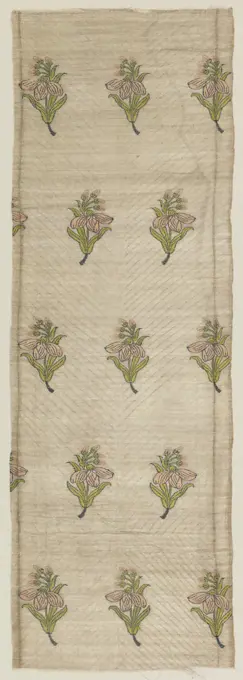
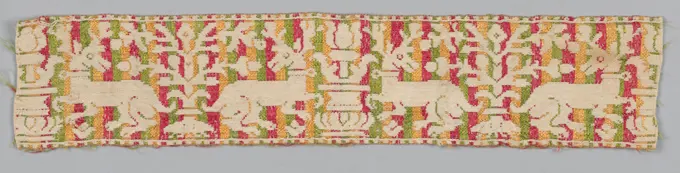
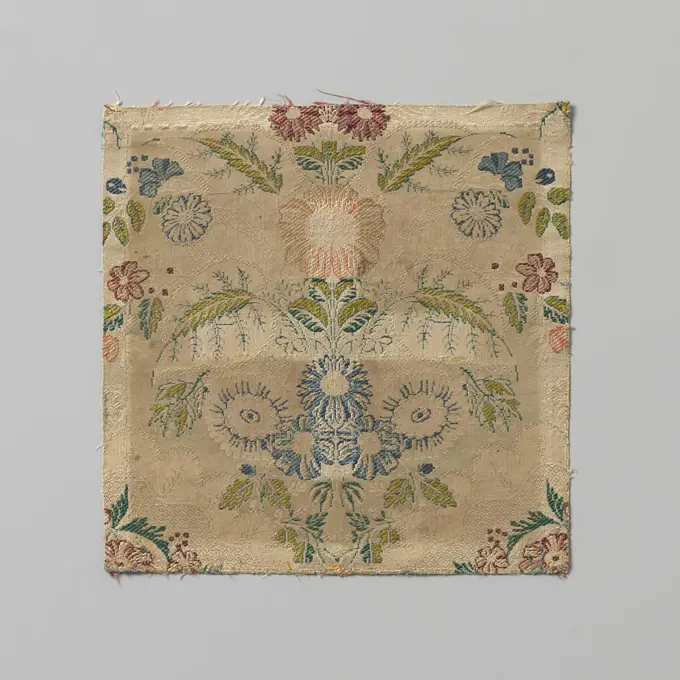
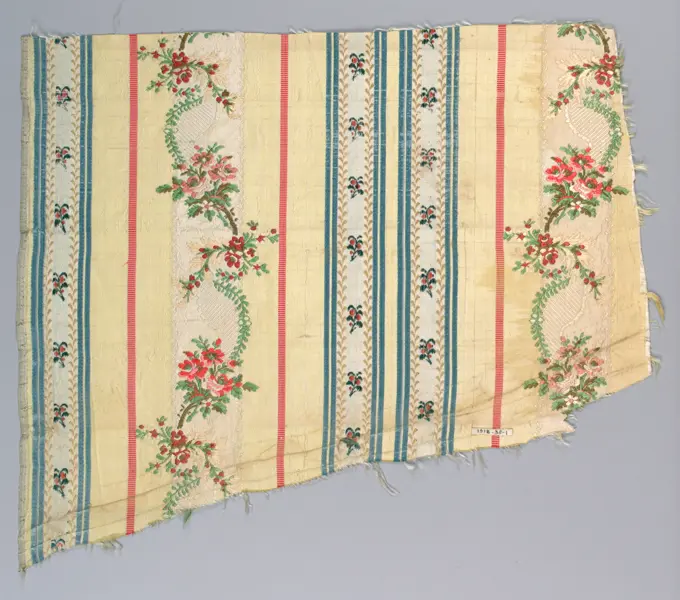
A collection of textile fragments and fabrics with intricate embroidery and brocade patterns, showcasing cultural artistry from different regions.

Pillow cover, Medium: silk on linen Technique: embroidery, White linen with two inch border or stylistic leaf and scroll pattern in red silk. Nine silk buttons - barrel type., Italy, 17th century, embroidery & stitching, Pillow cover
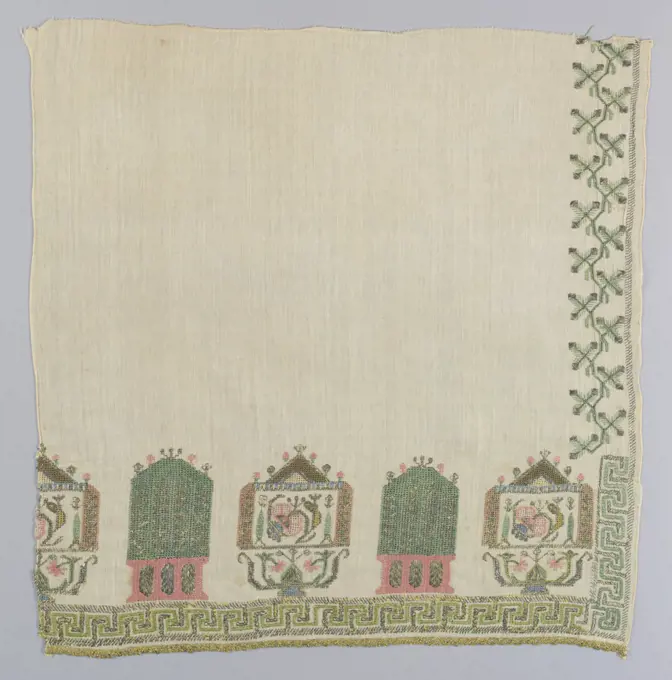
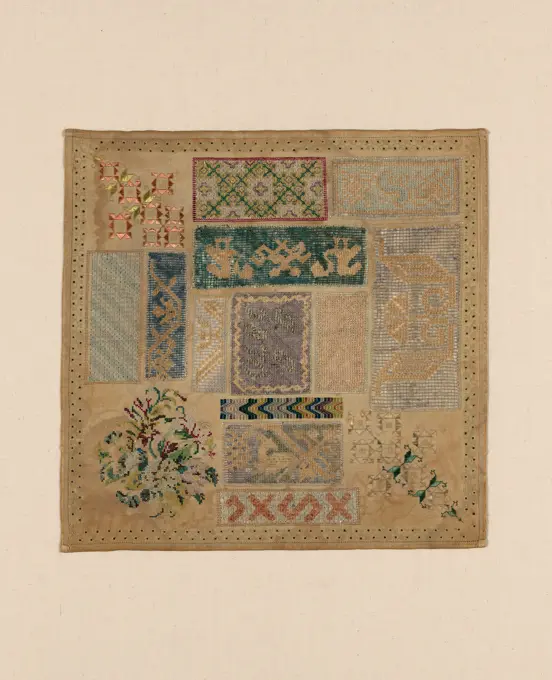
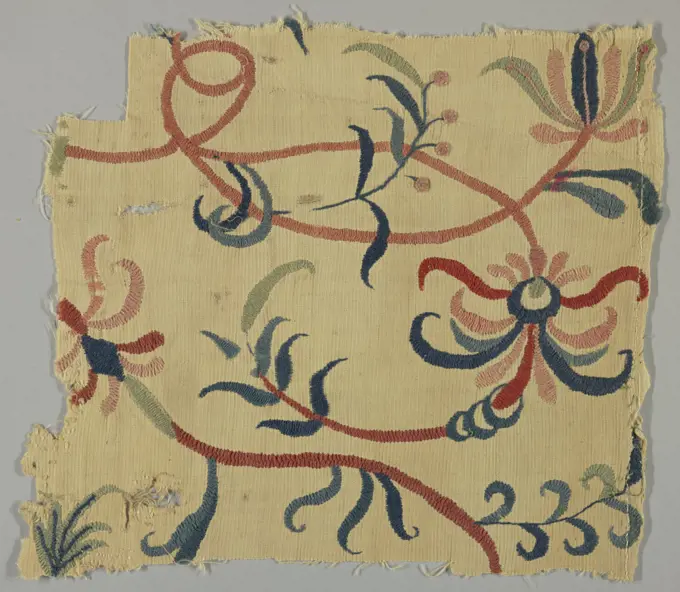
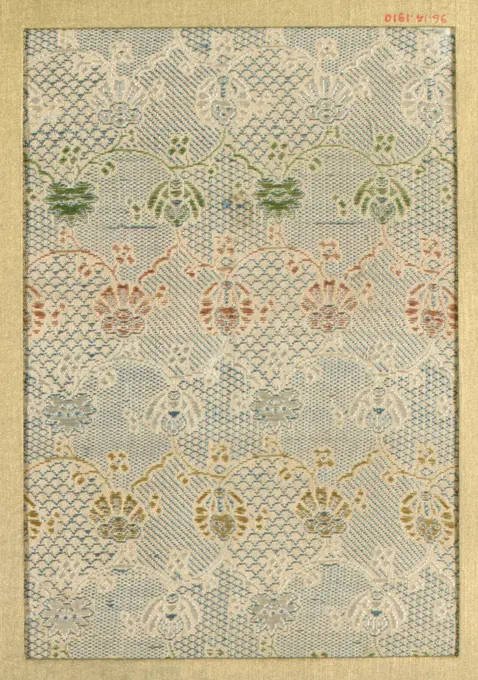
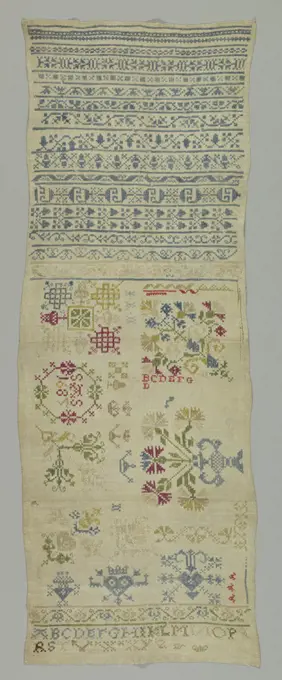
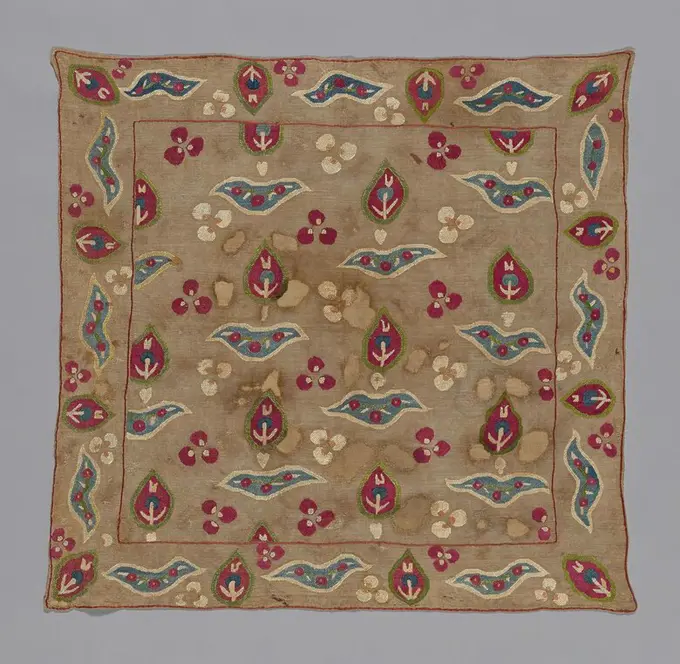
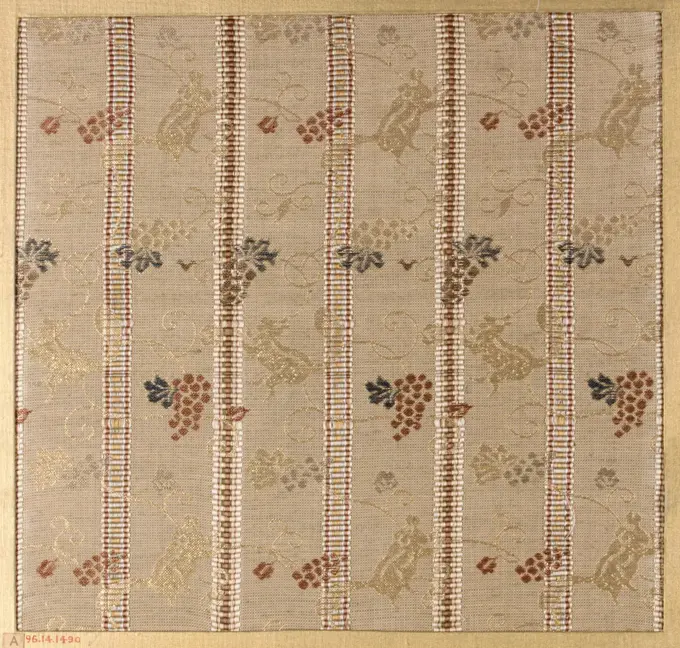
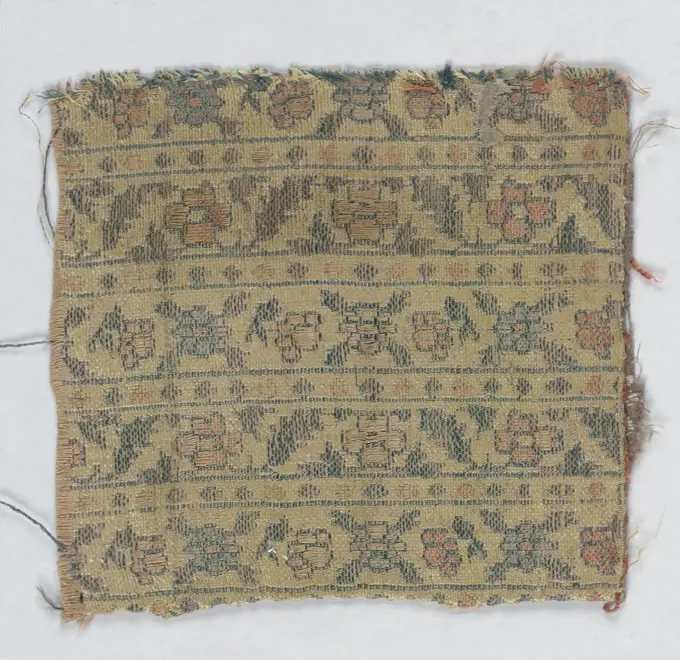
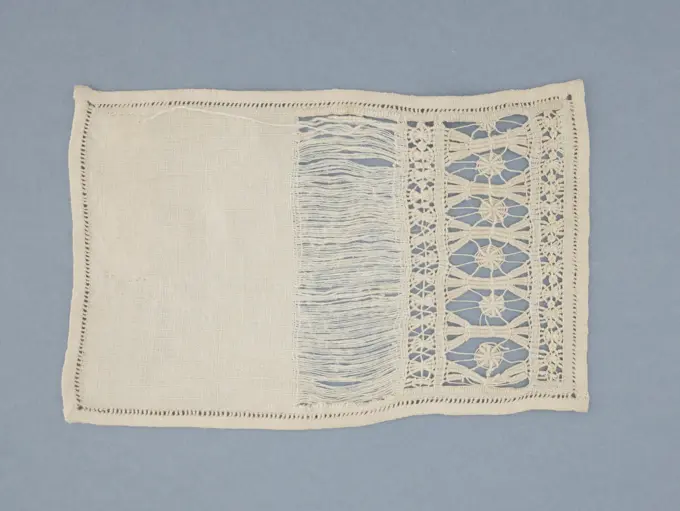
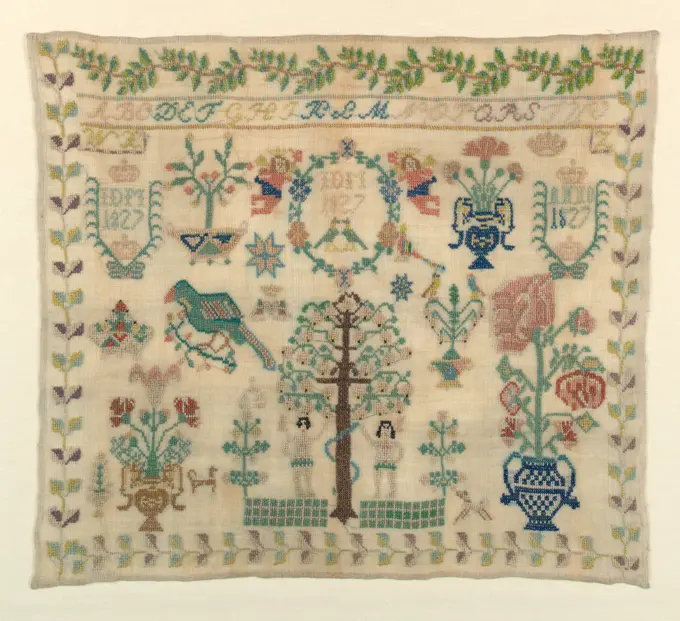
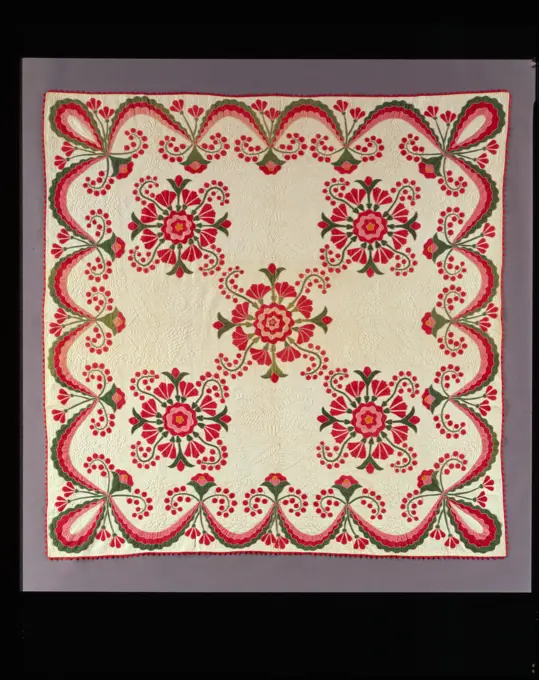
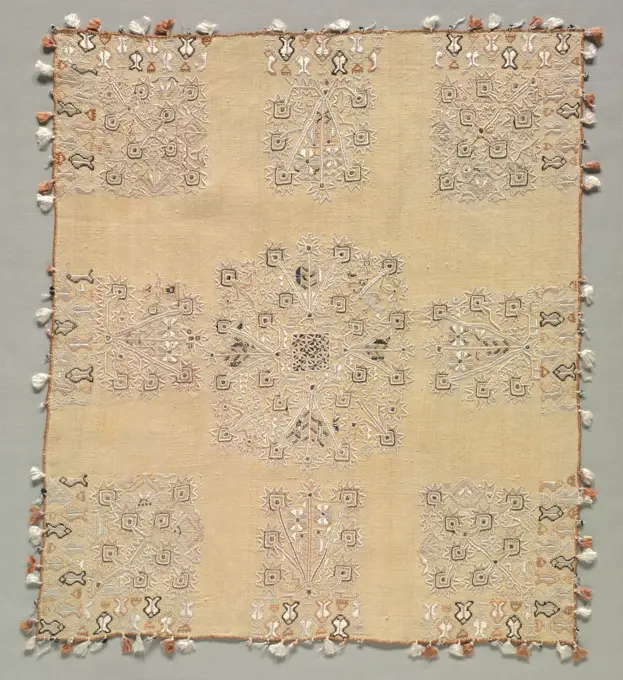
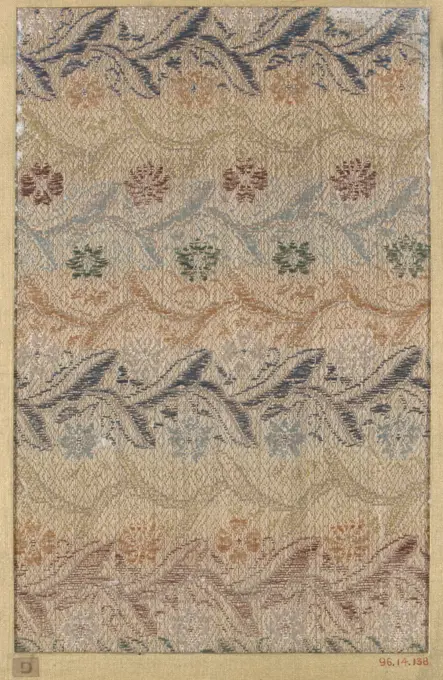
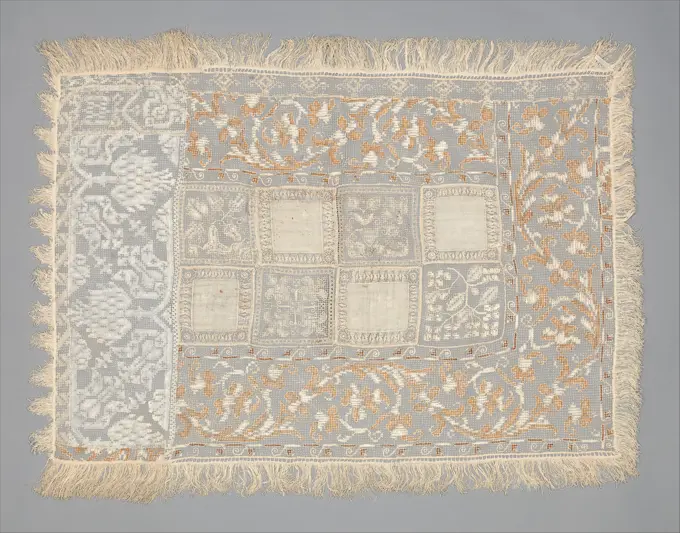
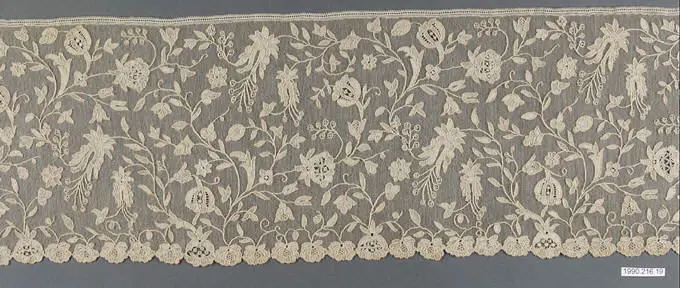
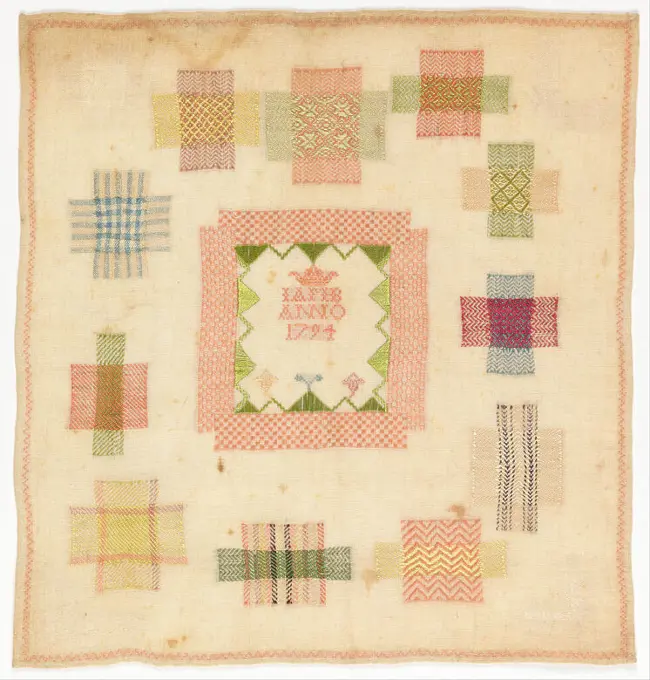
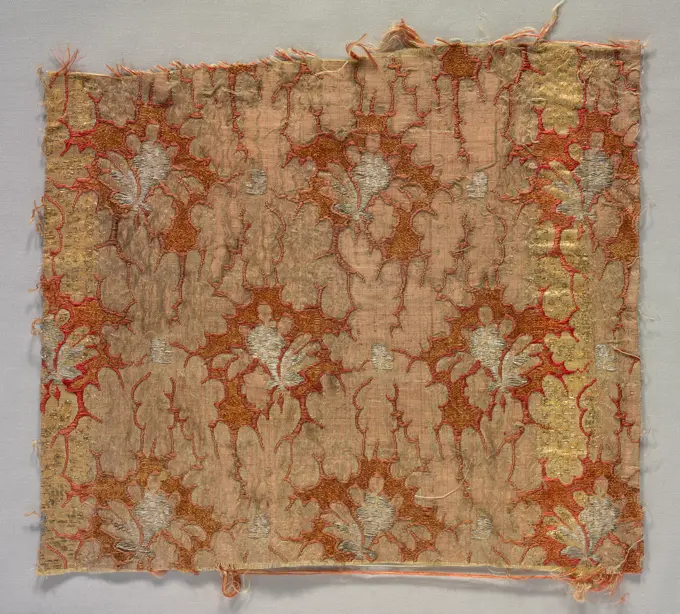
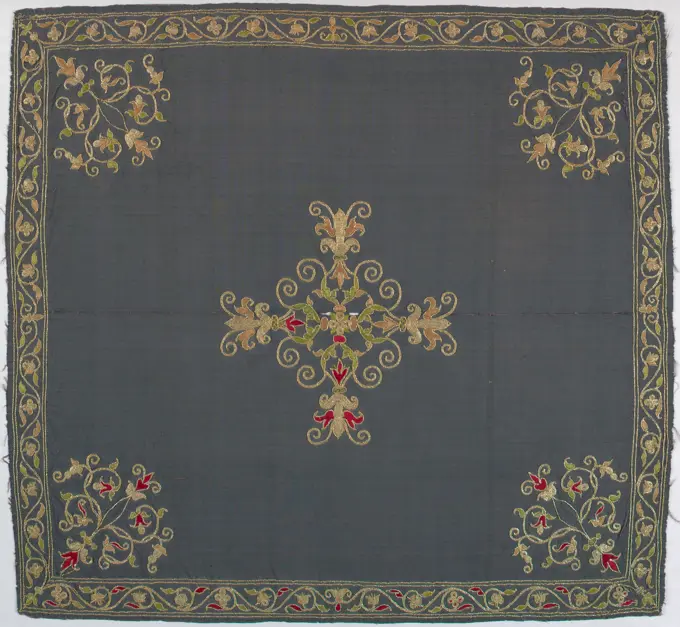
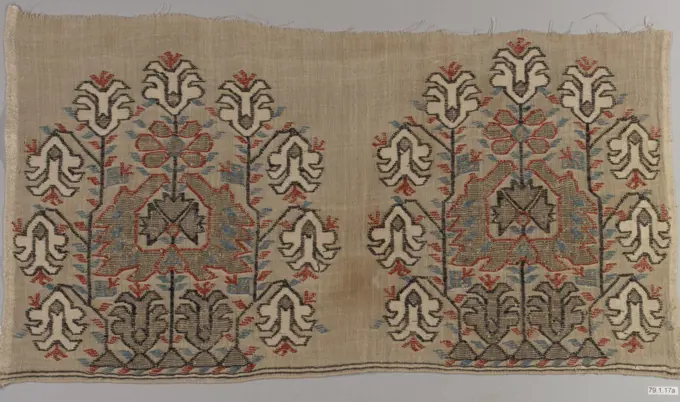
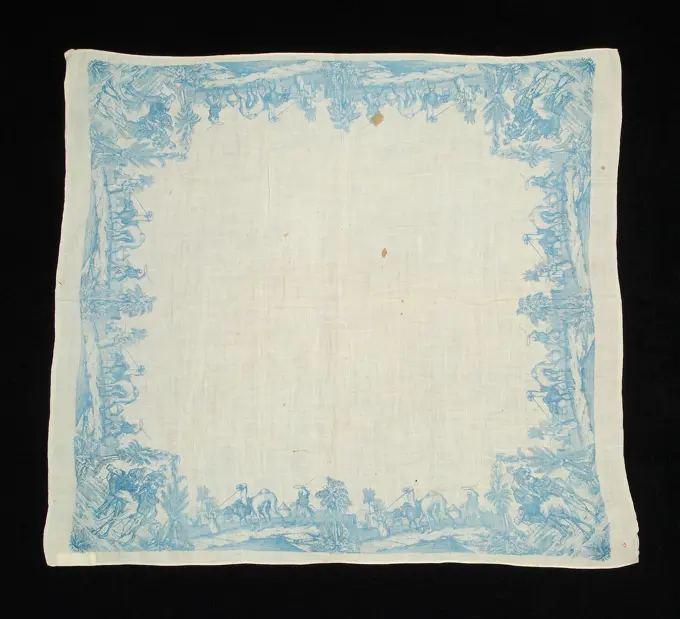
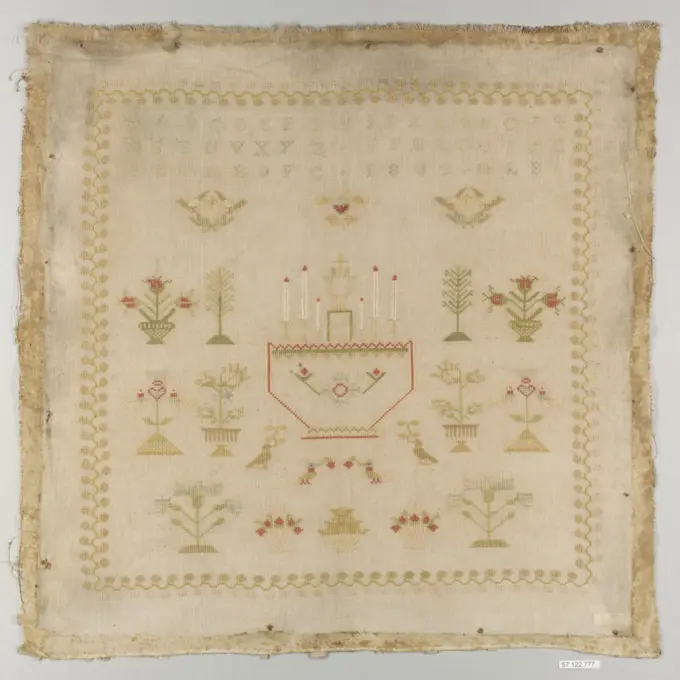
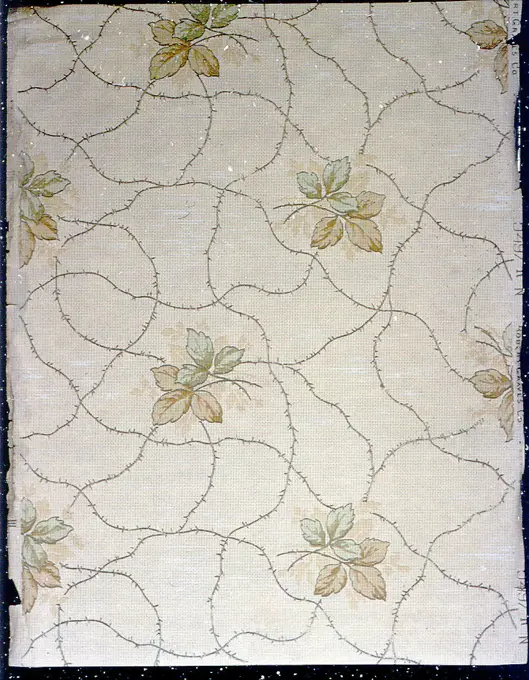
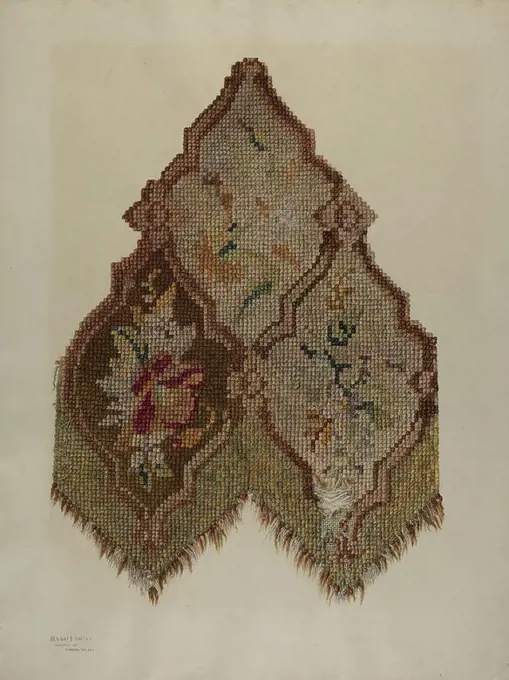
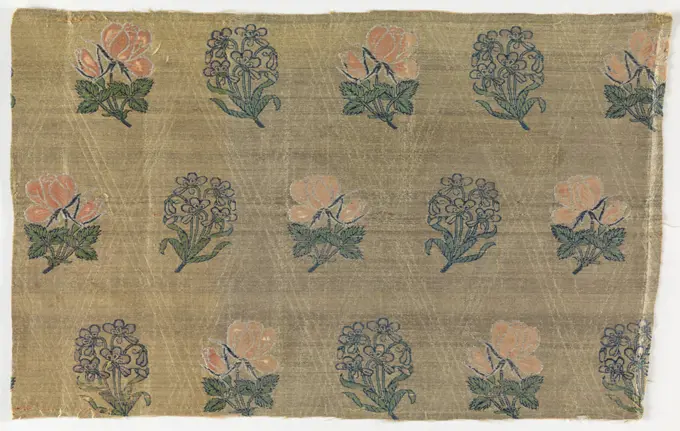
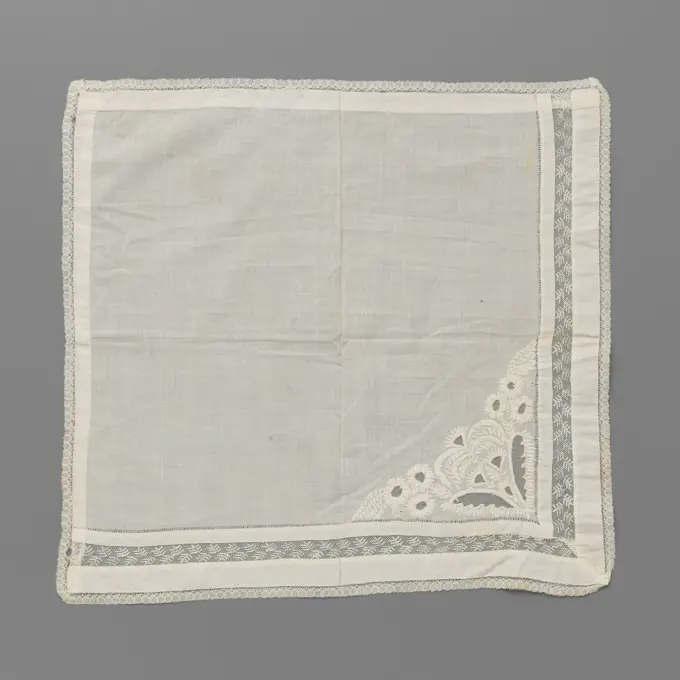
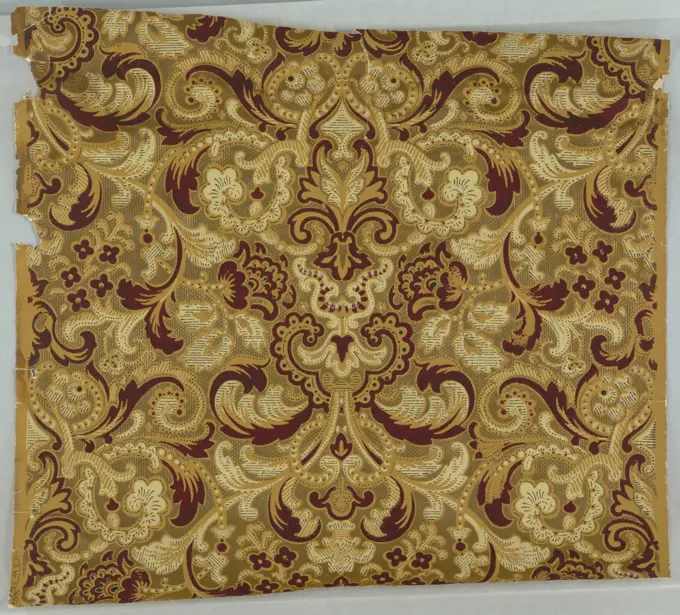
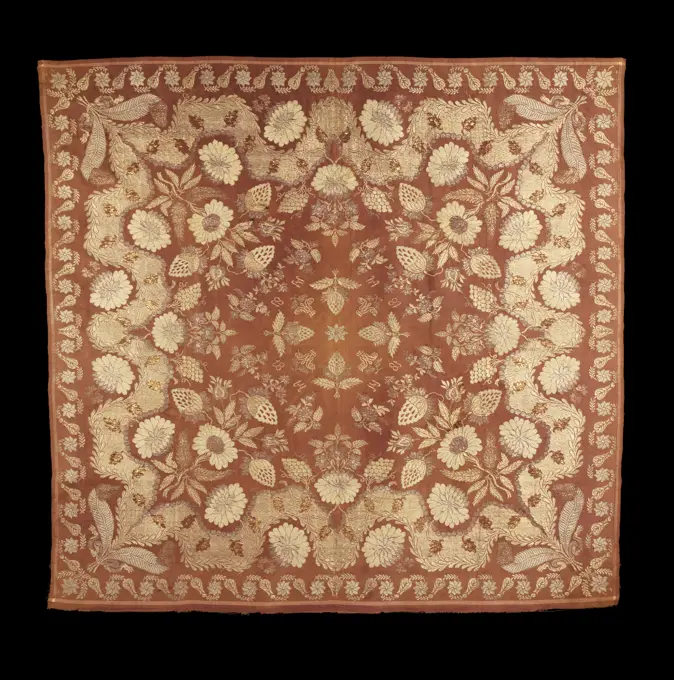
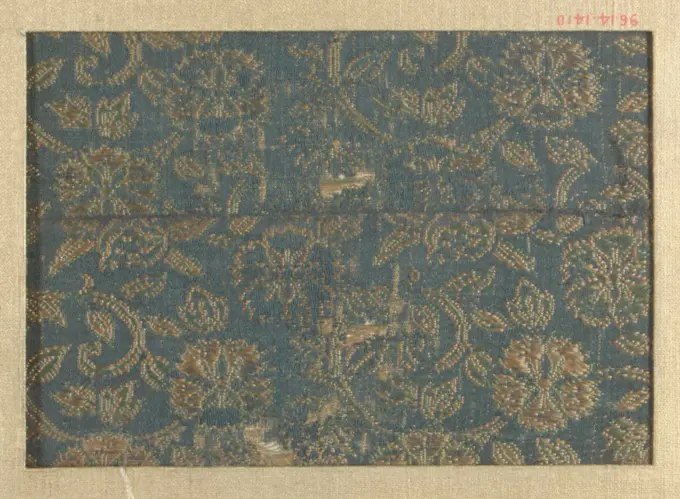
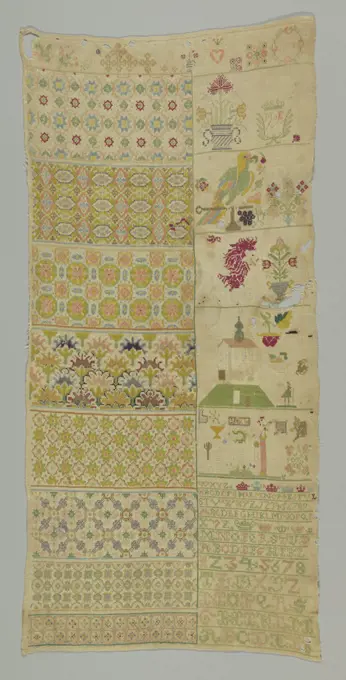
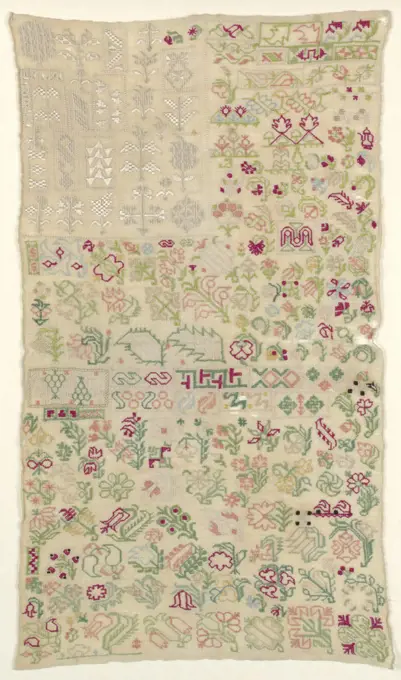
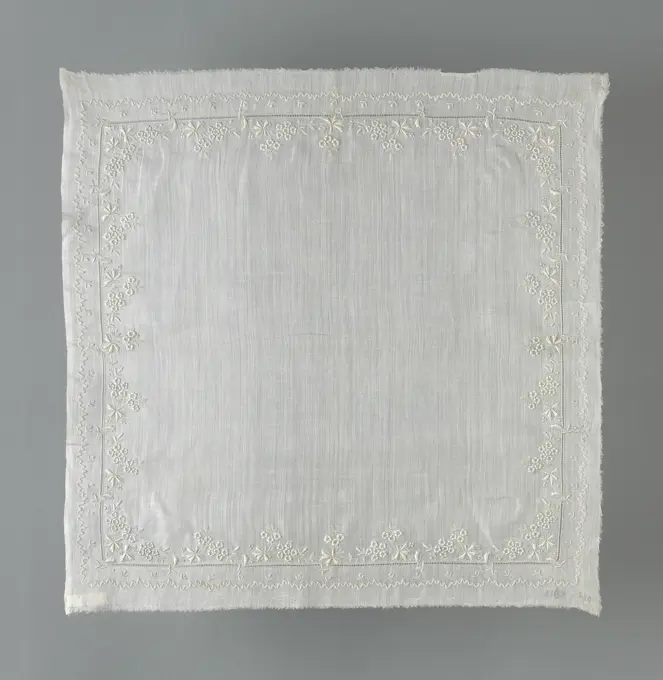
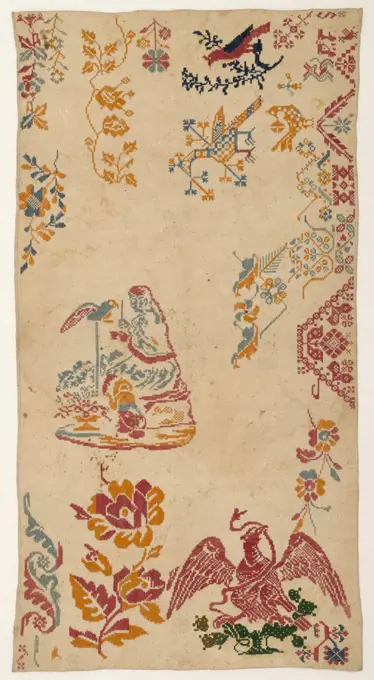
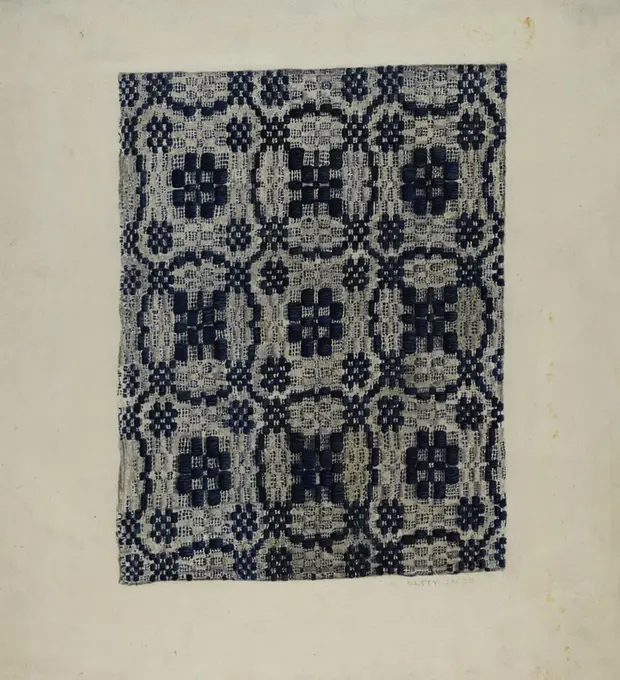
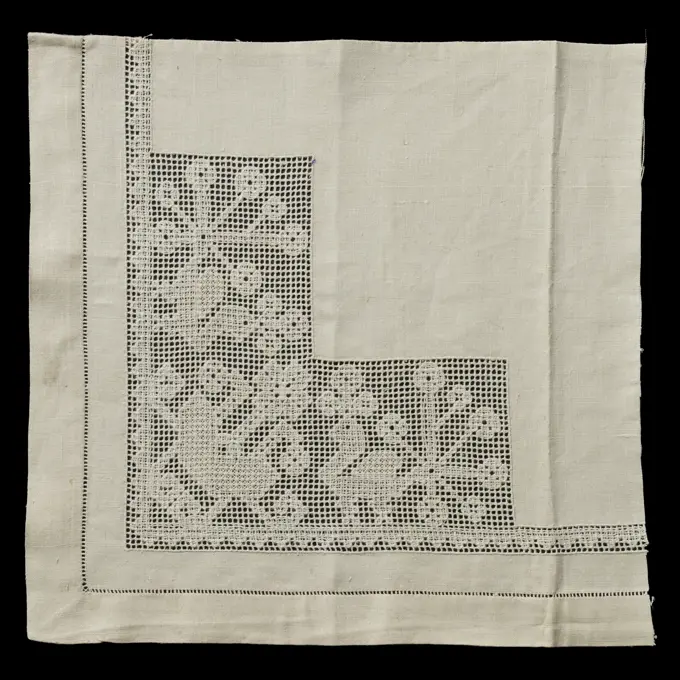
Dress of squares and rectangles alternating from linen and edge embroidery with penetration. Dress of squares and rectangles alternating from linen and edge embroidery: fillet side. In the middle of the rug there are two square pieces of filet side with a pattern of a vase with a symmetrical bouquet of grape fees and vines and with a border of flowers and leaves. The other elongated or square pieces of lace have a pattern with different flower and leaf motifs. The motifs are embroidered in the cross-linking technique on a knotted network with square meshes.Uncut Yardage (Dress Fabric). Manchu; China. Date: 1700-1725. Dimensions: 128 × 142.8 cm (50 3/8 × 56 1/4 in.). Brocaded silk. Origin: China. Museum: The Chicago Art Institute, Chicago, USA.Fragment, Medium: silk, metallic Technique: woven, Polychrome tsuba-like circles on a white background, Japan, 19th century, woven textiles, FragmentFragment, Medium: silk, metal, and cotton Technique: embroidered on plain weave, End crossed by two types of shrine forms () alternating in blue, green, and pink silk silver thread with touches of brown and cream. Fret border in cream and silver across the bottom and a short distance up the sides; Stylized floral border above this with much-rubbed silver braid across the end., Turkey, 19th century, embroidery & stitching, FragmentFragment (Japan); silk, metallic. Scarf of cream colored wool, embroidered with a floral motif in multicolored wool. Square. Middle pattern: a picture frame of palm motifs and flower refrences shows palm trees in three species with a limited indoor drawing. There are two downtown and progressed and one palm behind over. Detachment of this is always a large palm or feather in the corners with halfway nodding top; Inside decor shows smaller "mother" palms with "children's" palms on shot, jumping out of the band. In the center an eight-pointed star pattern, concentrically multiplied, o.a. one with a lied contour; There are extremely fine spring motifs. In the middle of the ides a palm with a cypress shape changed to cypres form. Edge cartridge: separately woven double length lists with rank and rosette pattern and wound single transverse lists; All with overlayed flower clards. Technique: Steelsteek.Fragment, Medium: linen Technique: needlework on hand knotted net, Fragment of a border with a pattern of alternating circles and stars., Italy, 17th century, lace, FragmentSampler Made 1870 México. Linen, plain weave; drawn work embroidered with linen, silk, and gilt-metal-strip-wrapped silk in back, cross, darning, double running, hem interlocking lace, overcast, and Russian overcast stitches; embroidered with silk in Algerian eye, antique hem, back cross, double running, running, and satin stitches .Pillow cover, Medium: silk on linen Technique: embroidery, White linen with two inch border or stylistic leaf and scroll pattern in red silk. Nine silk buttons - barrel type., Italy, 17th century, embroidery & stitching, Pillow coverEmbroidered handkerchief unknownCrewel wool fragment, Medium: wool, cotton Technique: satin, stem and basket stitch embroidery, Fragment of embroidery with linear flowing vine pattern worked in colored wools on natural colored cotton; pale green, pink, soft red and shades of blue worked in satin, stem and basket stitches., England, 18th-19th century, embroidery & stitching, Crewel wool fragmentPiece 18th-19th century Japan. Piece 67622Sampler, Medium: silk embroidery on linen foundation Technique: cross, double running and eyelet stitches on plain weave, Fifteen cross borders in geometric and floral patterns and below, in a panel, the initials 'S A S' and date '1685' in a wreath, floral ornament, crowns and alphabet., Germany, 1685, embroidery & stitching, SamplerHandkerchief unknownTapestry. unknown, authorCover. Turkey. Date: 1601-1700. Dimensions: 75.1 x 77 .5 cm (29 1/2 x 30 1/2 in.). Linen, plain weave; embroidered with silk floss in running and split stitches. Origin: Turkey. Museum: The Chicago Art Institute, Chicago, USA.Piece 18th-19th century Japan. Piece 67203Silk Fragment, 18th century. Spain, 18th century. Fancy compound satin weave: silk; average: 100.4 x 57.8 cm (39 1/2 x 22 3/4 in.).Piece 17th century Italian. Piece 222639Band, Medium: silk, linen Technique: embroidered, Italy, 17th century, embroidery & stitching, BandFragment, Medium: silk Technique: woven, Light brown fragment with horizontal rows filled with flower heads and leaves in pale muted tones of blue, orange and green., possibly Turkey, 19th century, woven textiles, FragmentDarning Sampler (Netherlands); silk embroidery on cotton foundationSampler with decorative drawn thread work unknown, a professional school in KrakowFragment of a Bed Curtain, 1600s - 1700s. Greece, Crete, 17th-18th century. Embroidery: silk on linen tabby ground; overall: 78.7 x 69.3 cm (31 x 27 5/16 in.).Bedspread. Dated: c. 1941. Dimensions: overall: 57.7 x 46.8 cm (22 11/16 x 18 7/16 in.) Original IAD Object: 68 1/2" wide; 86" long. Medium: watercolor and graphite on paper. Museum: National Gallery of Art, Washington DC. Author: Arlene Perkins.Sampler (Germany); silk embroidery on linen foundationNapkin, 1867. Germany, Dresden, 19th century. Damask: linen; overall: 43.5 x 42 cm (17 1/8 x 16 9/16 in.).Quilt, 'Buchanan's Banner' with 'Rose of Sharon,' 'Lotus Flowers,' and 'Currants'. Gillie P. and Margaret E. Wright (United States, active mid-19th century). United States, Missouri, Monroe County, 1857. Textiles; quilts. Quilted, embroidered, appliquéd, and stuffed cottonFragment; silk, metallic threadFragment; silk, metallic thread; Bequest of Richard Cranch Greenleaf in memory of his mother, Adeline Emma Greenleaf; 1962-56-177Furniture cover or hanging, c. 1775, 101 1/2 x 85 1/2 in. (257.81 x 217.17 cm), Satin, silk; needlework, China, 18th centuryFragments, Medium: silk, metal Technique: 5-harness satin foundation patterned by floats of the complementary foundation wefts and discontinuous supplementary wefts bound on the front in 1/4 twill by a supplementary warp., Vertically symmetrical pattern of flowers stemming from shell-like shapes. Very bright colors and gold and silver on a gold backgound., France, 1730-49, woven textiles, FragmentsHandkerchief with a rim of needle side with corner rocailles, anonymous, c. 1840 - c. 1860 Handkerchief with a border of natural -colored needle side: Brussels mesh side. There is a lace edge with corner rocailles, filled with open grid work, a lace rim with an open grid. Indoor and outdoor contours are composed of fine C-volutes, ovals, circles and acanthus leaves. On the Mazennet there are several nice tufts of roses, lilacs, rose buttons and forget mineites. A more closed edge shows roses, scaly edges, fan palms with godron edge and rocailles with grid filling. Brussels linen (material) Brussels Gaze Point Handkerchief with a border of natural -colored needle side: Brussels mesh side. There is a lace edge with corner rocailles, filled with open grid work, a lace rim with an open grid. Indoor and outdoor contours are composed of fine C-volutes, ovals, circles and acanthus leaves. On the Mazennet there are several nice tufts of roses, lilacs, rose buttons and forget mineites. A more cKerchief, late 1800s. Greece, Northern Islands, Chios , late 19th century. Embroidery, silk and metallic threads, on silk tabby ground; overall: 43.2 x 37.5 cm (17 x 14 3/4 in.).Stop steak from silk on linen .. Side stoppipe on linen. The embroidery has a flower pot, the initials a, ck, al, al and mva and dating in 1893.Fragment; silk, metallicSampler(Limar)Piece 18th-19th century Japan. Piece 65870Cover 17th century Italian, Old Sicily. Cover 215011Border Italian, Burano late 19th centuryFragments of Silk Textile, 18th century. Spain, 18th century. Plain cloth, brocaded; silk; average: 66.7 x 57.8 cm (26 1/4 x 22 3/4 in.).Panel Made 1725-1750 Spitalfields. Silk, plain weave with supplementary brocading wefts; self-patterned by main warp and ground weft floats .Embroidered Square, 19th century. Turkey, 19th century. Embroidery: silk and metallic threads on linen tabby ground; average: 41.9 x 44.2 cm (16 1/2 x 17 3/8 in.).Sampler. Date/Period: 1794. Sampler. Medium: linen and silk embroidery on linen foundation. Technique: darning and satin stitches on plain weave. Author: UNKNOWN.Silk Chenille, 18th century. Russia, 18th century. Fancy compound cloth, brocaded: silk and metal; average: 30.5 x 35.6 cm (12 x 14 in.).Fragments; silkTextile, Medium: silk, metallic Technique: complementary wefts 1/3 twill, silver weft is continuous and the multicolor silk wefts are discontinuous, Rows of isolated flowering plant motifs in light pink, yellow-green and light blue with stems curving left or right in alternate rows on a silver background. The textile was stamped or incised in a fine, large-scale, chevron pattern., Indo-Persia, 18th century, woven textiles, TextileSampler; Embroidered by Mary Brown; silk and linen embroidery on linen foundationFragment mid-18th century French. Fragment 215364Band (Italy); linen, silkSampler (Spain); Embroidered by Gabriella Magneda; Student of Dona Balta Sarapardo; silk embroidery on cotton foundationFragment écru silk with pattern. Fragment écru silk with pattern of slender bulbs of flowers and corners in blue, green and yellow.Fragment; silkChalice Cover (Italy); silk, metallic threadFloral silk satin fragment 1660-80 French or Italian. Floral silk satin fragment. French or Italian. 1660-80. Silk satin. Tobacco PouchesBedcover, Medium: cotton foundation, embroidery in long staple wool (crewel), silk, linen, foil-wrapped silk Technique: embroidery on plain weave foundation using satin, stem, knot and running stitches in wool; stem stitch in silk; and backstitch in linen; accents of foil-wrapped silk, Bedcover of irregular shape with 'overhangs' on each side and at foot of bed. Overhangs made of what were originally three valances belonging to the complete set. Embroidered with flowering trees, birds, and, in the center, a medallion showing a landscape with a large flowering tree surrounded by deer., England, 1720-40, embroidery & stitching, BedcoverTextile Fragment 19th century. Textile Fragment 443019Handkerchief, 1800s. Austria, 19th century. Embroidery: linen; overall: 29.8 x 29.8 cm (11 3/4 x 11 3/4 in.).Handkerchief 1800-1810 French. Handkerchief 169475Handkerchief with a needle side with double four pass, anonymous, c. 1860 - c. 1870 Handkerchief with a border of natural -colored needle side, Brussels mesh side. An eight -lobe batist's center piece is surrounded by a sides Double four pass. This contains rotating twigs of 'forget mineits' (bobbin). An indoor list of circles, cut over four times by an oval, is bordered by C-Voluten. Fine golden rain leaves hang from the same outside list. There are three large roses with imposed relief in the corners. The edge consists of rosettes and extraction leaves. Brussels linen (material) Brussels Gaze Point Handkerchief with a border of natural -colored needle side, Brussels mesh side. An eight -lobe batist's center piece is surrounded by a sides Double four pass. This contains rotating twigs of 'forget mineits' (bobbin). An indoor list of circles, cut over four times by an oval, is bordered by C-Voluten. Fine golden rain leaves hang from the same outside list. There are three large roses witSampler 1843 French. Sampler 228693Textile (France); bast fiber; Warp x Weft: 67.5 x 27.5 cm (26 9/16 x 10 13/16 in.); Bequest of Elinor Merrell; 1995-50-304Square (USA); cottonHandkerchief, 1800s. Flanders, 19th century. Embroidery and drawn work on linen ground; machine made lace edging; overall: 61 x 61 cm (24 x 24 in.).Patchwork square, Medium: cotton Technique: pieced and sewn patchwork of plain and printed fabrics, Patchwork square made up of diamonds of unbleached and printed cotton. One print has a red ground with small-scale Europeanized cone design with star and plant motifs. Other print has a tan ground with highly realistic design of leaves in shades of brown. On center square in ink is written 'Cornelia Bersteen 1849.', France and USA, 1849, embroidery & stitching, Patchwork squareSquare (USA); cottonHandkerchief ca. 1820 Catherine Hubert An accomplished young woman of the early 19th century was expected to master many types of needlework. This handerchief, made by Miss Catherine Hubert (1799-1898) when she was about 20 years old, presents intricate embroidery, drawn work and cut work as well as handmade lace. A handsome piece, it is remarkable not only for its workmanship but as a document of women's work of that period in general and of one individual in particular.. Handkerchief 155857Fragment veelkleurige gestreepte zijden mexicaine.A fragment of white, blue and red striped silk, between which leaf drinks and flower branches.Ornamental tapiser;  XVIII/19th century (1790-00-00-1810-00-00);Ceiling Paper (USA); Manufactured by Robert Graves Co. (United States); machine-printed paper; 61 x 48.5 cm (24 x 19 1/8 in.)Embroidered Table Scarf. Dated: c. 1941. Dimensions: overall: 60.8 x 45.6 cm (23 15/16 x 17 15/16 in.). Medium: watercolor and graphite on paper. Museum: National Gallery of Art, Washington DC. Author: Mabel S. Kelton.Textile, Curonne; Designed by Mariano Fortuny (Spanish, active Italy, 1871 - 1949); Italy; L x W: 54 1/2 in. × 25 in. (138.4 × 63.5 cm); 1972-52-2Sampler (Spain); Embroidered by Francisca Perez; silk embroidery on linen foundationTextile, Medium: silk, metallic yarns Technique: compound twill, stamped, with discontinuous supplementary weft patterning (brocading), Gold metallic ground with a stamped design of diagonal lines crossing in groups of three, forming diamond-shaped lozenges. Within each, brocaded roses alternating with bunches of violets in straight repeat. In purple, blue, green, pink, silver and gold., Iran, 17th century, woven textiles, TextileBatists handkerchief with embroidery and a strip of machine side, anonymous, c. 1840 - c. 1850 Natural -colored batist handkerchief with an intermediate creature of a machine side on two sides: Machine tuldoor stop work on machine tulle. The handkerchief is trimmed all around with a narrow edge machine side. In the corner along the intermediate sinks, the handkerchief is decorated with (machine) Embroidery - Whitework with Plumetis - and with inserts from Tulle in open worked parts. The embroidery pattern in the corner is symmetrical and consists of two openwork leaves that form a V and between which some skewers rise up. At the top each open -up leaf rises a branch with three openwork rosette flowers and plumes. The handkerchief is marked with a sewn label of cotton, on which the number 77 is embroidered with red wire (machine). Netherlands cotton (textile) embroidering Natural -colored batist handkerchief with an intermediate creature of a machine side on two sides: Machine tuldoor sSidewall, Machine-printed, All-over design of floral and foliate scrolls. Printed in burgundy, ocher and white on embossed gold ground, resembling weave of textile., USA, 1875-90, Wallcoverings, SidewallEmbroidered Handkerchief, 1850-1899. Italy, 2nd half 19th century. Embroidery; overall: 45.1 x 45.1 cm (17 3/4 x 17 3/4 in.).Headscarf 1814 Russian This object is from the collection of Natalia de Shabelsky (1841-1905), a Russian noblewoman compelled to preserve what she perceived as the vanishing folk art traditions of her native country. Traveling extensively throughout Great Russia, she collected many fine examples of textile art of the wealthy peasant class. From the 1870s until moving to France in 1902, Shabelsky amassed a large collection of intricately embroidered hand-woven household textiles and opulent festival garments with rich decoration and elaborate motifs. The Brooklyn Museum holdings include many fine examples including the majority of the garments. Portions of Shabelsky's collection are also housed at the Museum of Fine Arts, Boston, the Cleveland Art Museum, and the Russian Museum of Ethnography in St. Petersburg.. Headscarf 157569Apron Made 1701-1725 England. Linen, plain weave; embroidered with silk .Fragment of embroidery  dense, symmetrical floral ornamentation unknownShawl.   Maker: UnknownChef De Piece (France); Company: Torcat & Long; linen warp, cotton weft; Warp: 54 cm (21 1/4 in.). Weft: 80 cm (31 1/2 in.) Both selvedges present. Piece seamed together horizontally near the bottom. Pattern: Sophisticated concept for this period of block printing in northern France: the design does not repeat across the width of the fabric but if lengths of fabric were sewn together correctly they would form a half-drop repeat. Height of repeat not present.Piece 18th-19th century Japan. Piece 67123Handkerchief third quarter 19th century Philippine. Handkerchief 170506Sampler, Medium: silk embroidery on linen foundation Technique: embroidered in cross, eyelet, and double running stitches on a plain weave foundation, Bands of geometric pattern at left resembling mosaic tile work. At right, spot motifs followed by alphabets and numerals., Germany, 17th century, embroidery & stitching, SamplerMerklap made of multicolored silk on woolen musseline, anonymous, 1741  Brand patch from silk on wool. The embroidery has the Wapen van Amsterdam, the initials CVW, the dating in 1741, the Dutch Virgin in the Dutch garden, dogs, trees and flower pots. Amsterdam silk. wool embroideringSampler, Medium: silk embroidery on cotton foundation Technique: embroidered on plain weave, Small detached motifs of geometric and conventionalized floral forms., Turkey, 19th century, embroidery & stitching, SamplerHandkerchief of climbing side with seed beads. Handkerchief of linen batist with an edge natural colosside: Lille side. Square model with rounded linen batist cloth in the center. The side has a symmetrical pattern of coral-shaped twigs that form seed beads or cartouches with different grounds including tulet, rose ground and in the middle of the sides a grid work filling of small motifs in linen bat in a rose ground.Handkerchief Made 1676 Italy. Linen, plain weave; cut and drawn work; embroidered silk and gilt-metal-strip-wrapped silk in cross, satin, buttonhole, overcast, detached overcast, and four-sided stitches; edged with applied silk and gilt-metal-strip-wrapped silk braid .Table cover, Medium: linen, wool Technique: cross, satin and stem stitch on plain weave, Rectangular panel, probably an All Souls Day mat, of white linen with embroidery in undyed brown wool in cross, satin, stem and other stitches in design of borders with diagonally placed floral sprays around central ornament. Edged with brown woolen fringe., Spain, 18th century, embroidery & stitching, Table coverShawl 1830-40 French. Shawl 84624Sampler 19th century Spanish. Sampler 228203Fragment Made 1601-1700 Turkey. Embroidered .Handkerchief Made 1892-1900 Switzerland. .Sampler, Medium: cotton, silk and wool embroidery on cotton foundation Technique: cross stitch embroidery on plain weave foundation, Isolated motifs including Mexican eagle with snake and woman with baby and parrot, in black, blue, yellow, and pink on white., Mexico, 19th century, embroidery & stitching, SamplerJohn Oster, Applique and Patchwork Quilt, c 1936 Applique and Patchwork QuiltSampler, Medium: silk embroidery on cotton foundation Technique: embroidered in running (pattern darning) and cross stitches on plain weave foundation, Nine darning crosses, a darning corner, and a 'tear' corner; crowned initials at upper left, at lower right crowned 'oud 18' (18 years old)., Netherlands, 1816, embroidery & stitching, SamplerCoverlet. Dated: c. 1940. Dimensions: overall: 37.1 x 33.6 cm (14 5/8 x 13 1/4 in.) Original IAD Object: 81" long; 75" wide. Medium: watercolor and graphite on paper. Museum: National Gallery of Art, Washington DC. Author: Betty Jacob.Lace Pattern (USA); cotton; 1973-61-2Lace of lace pledger with peacocks, anonymous, c. 1925 - c. 1934  Lap of natural -colored lace -up work, work with pulled threads and tracing. In the corner of a linen piece, work with pulled threads has made an L-shape of traly-round on which extension work has been applied. In the corner of the L is a vase or flowerpot with an upright rosette flower and two smaller hanging rosette flowers. This motif is caught between two peacocks desired to the corner with crests and showers. The piece is finished on two sides around the pattern with a hem. The other two sides are not finished. The piece seems to be cut from a larger square or a larger rectangle. Russia linen (material).