Textile Fragments

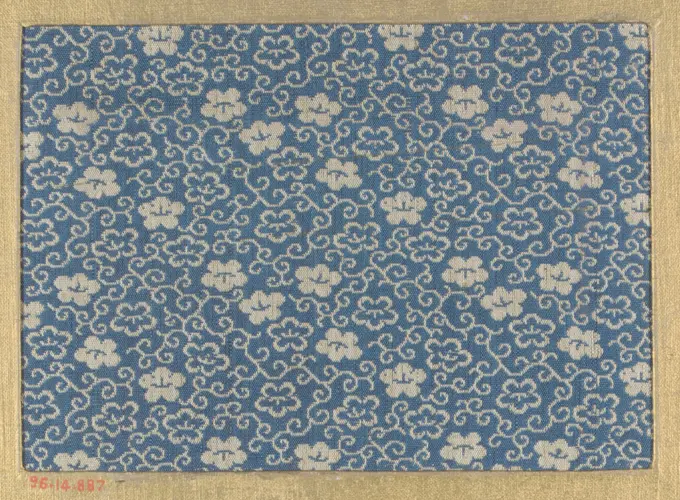
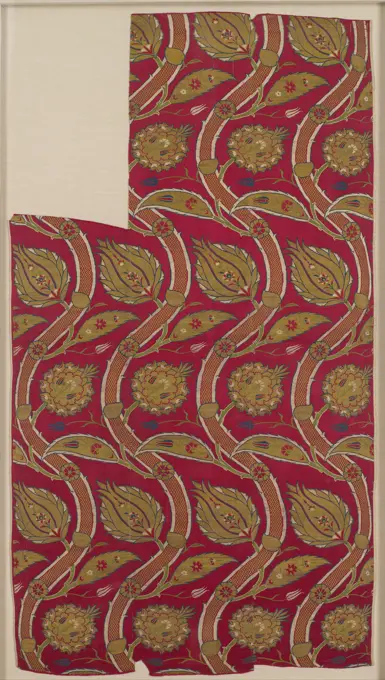
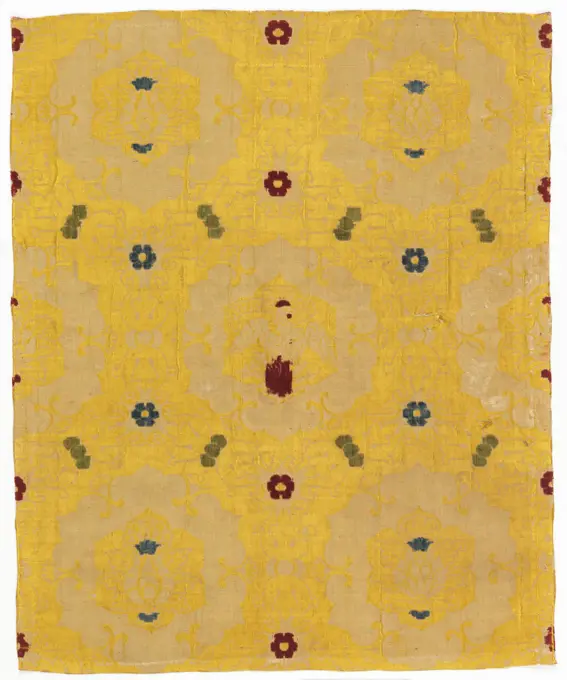
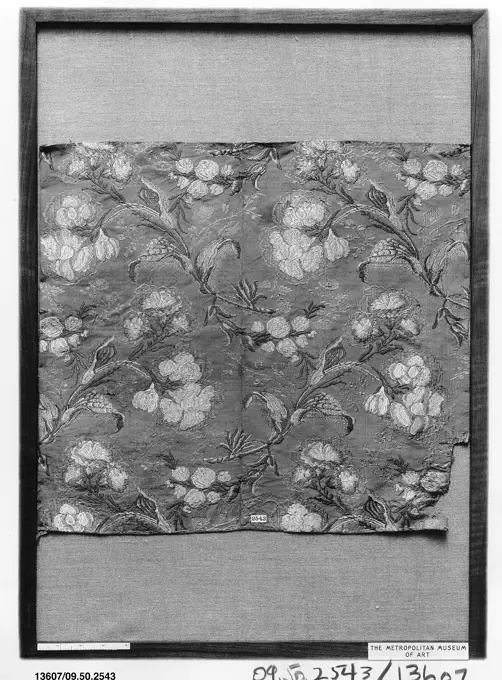
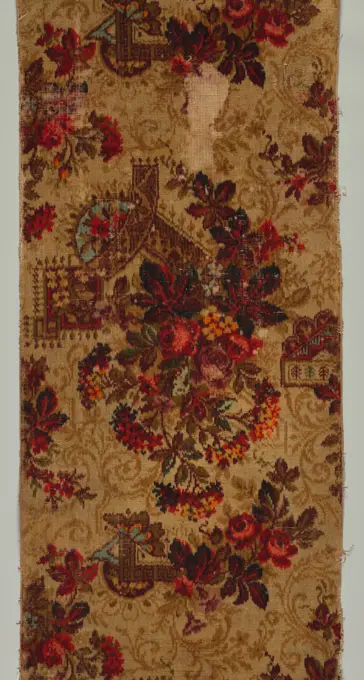
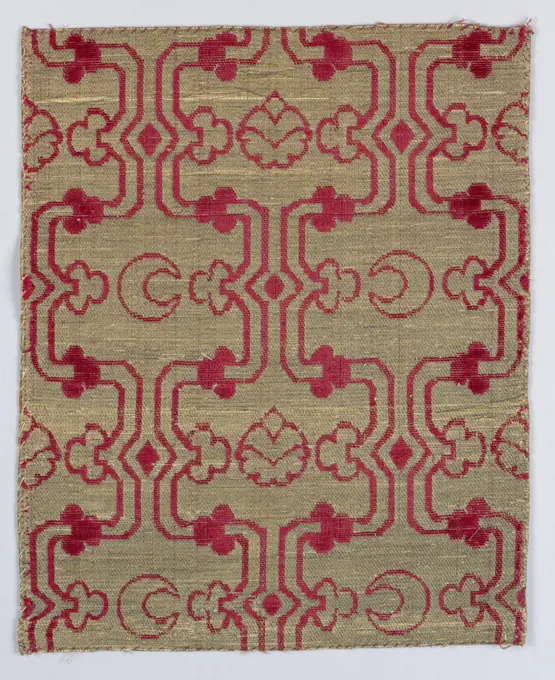
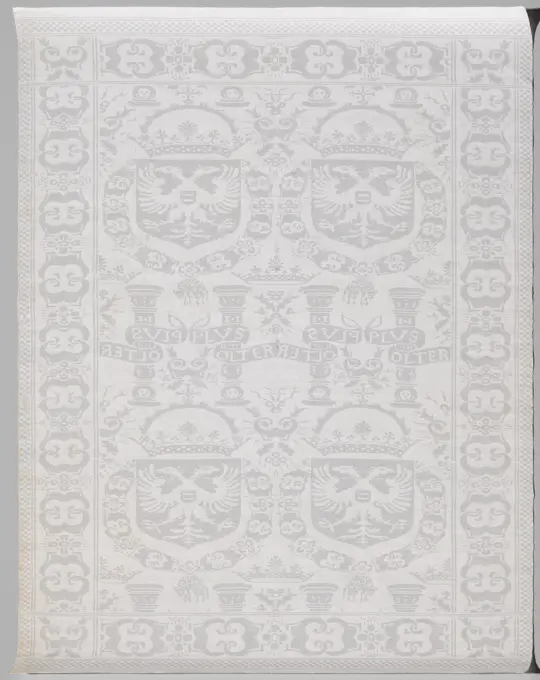
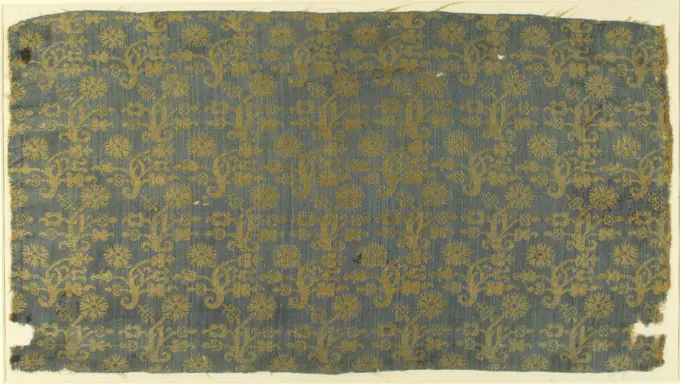
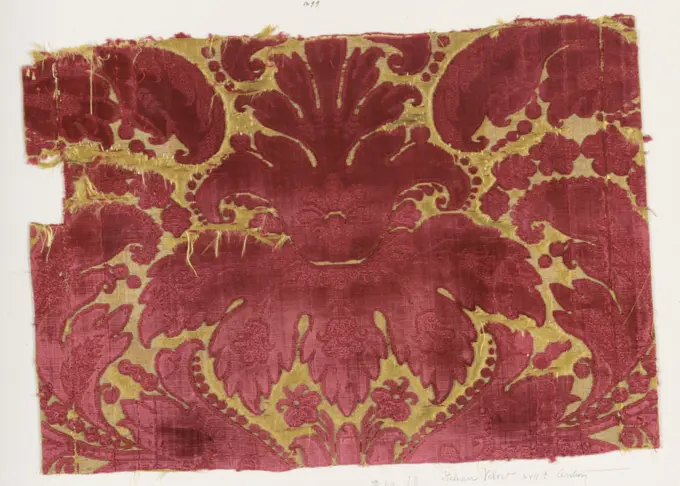
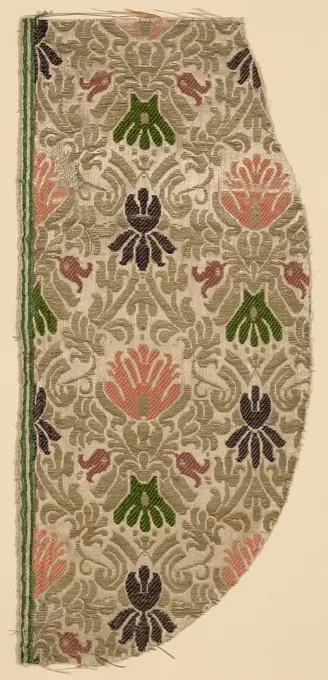
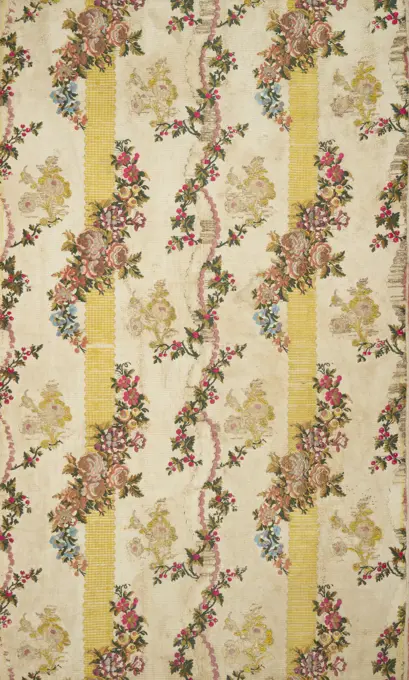
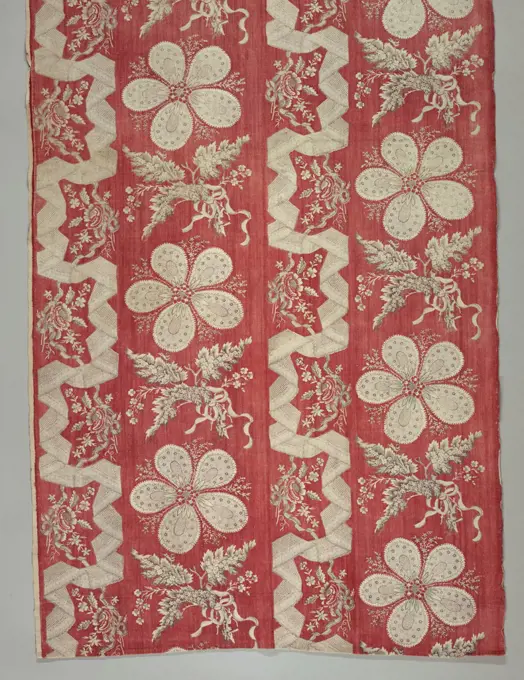
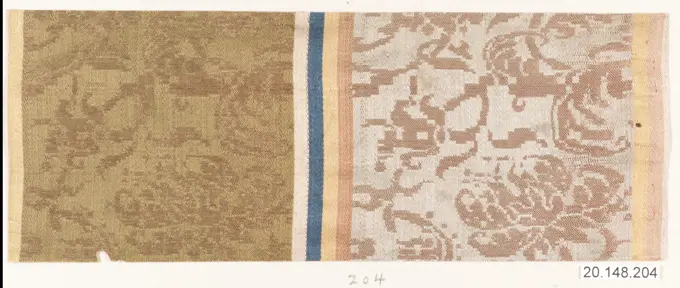
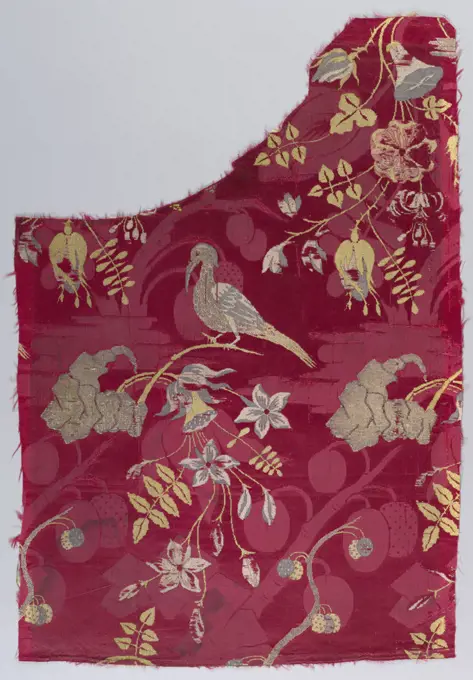
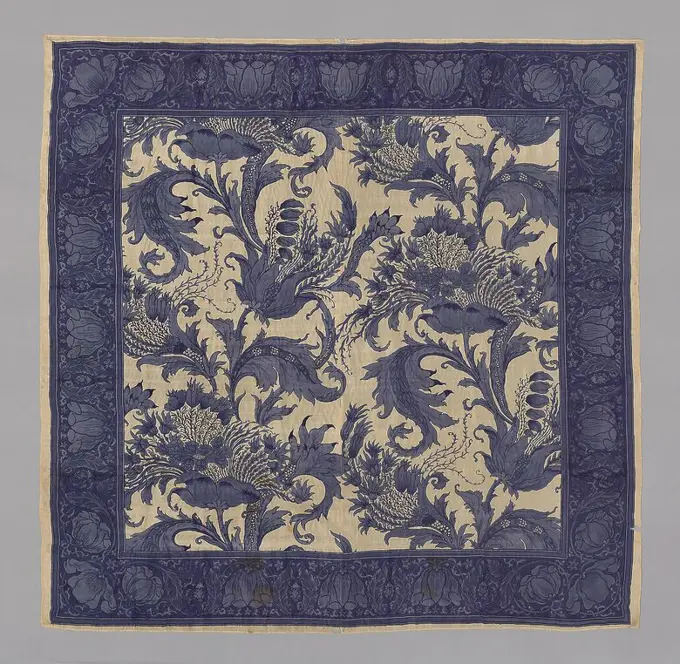
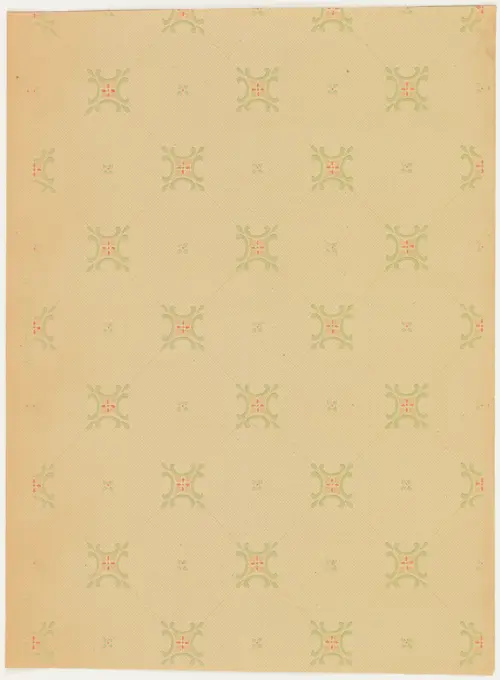
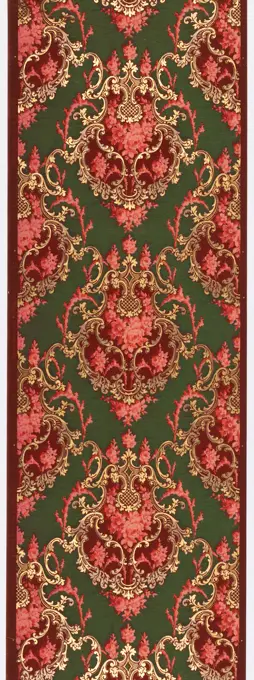
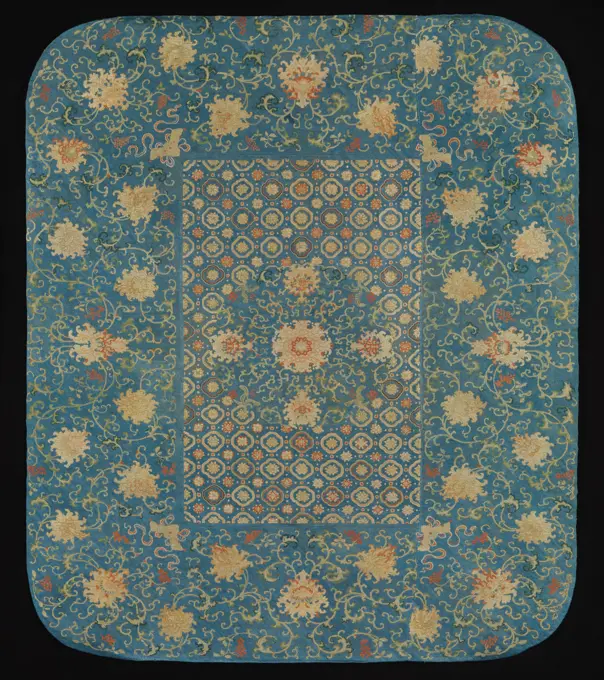
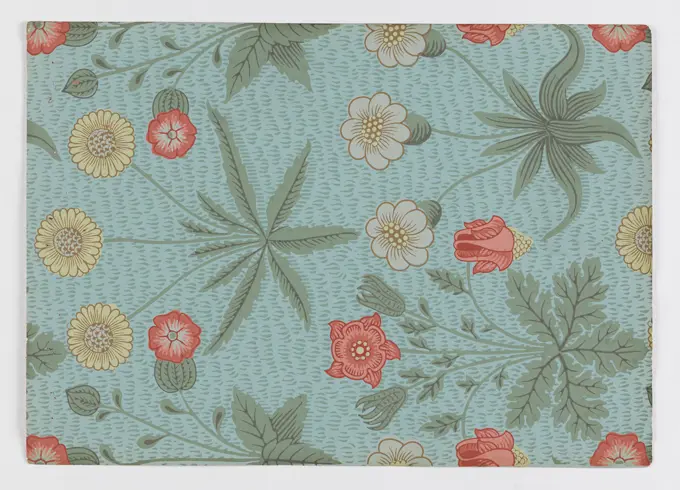
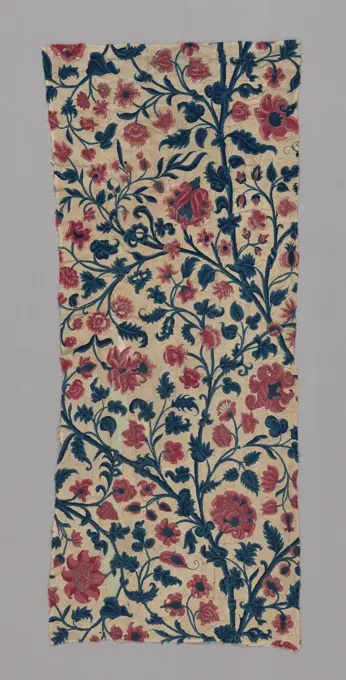
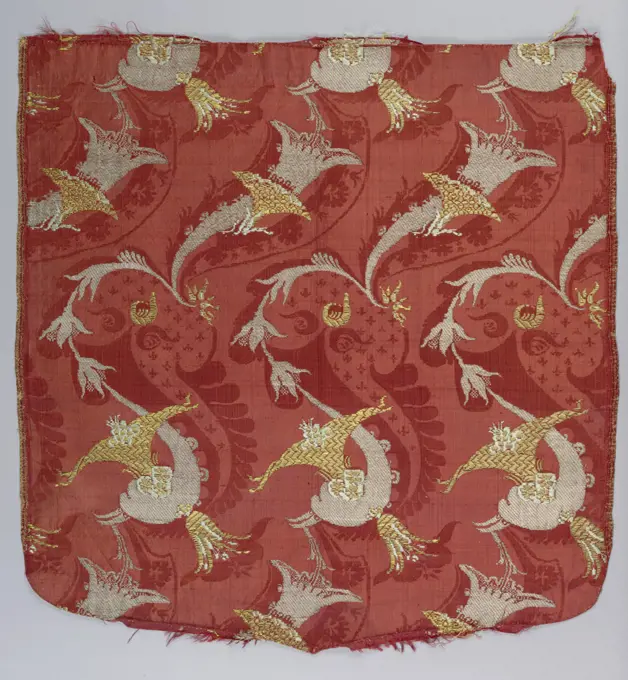
Variety of textile fragments in different colors and patterns, showcasing intricate designs from silk and cotton fabrics.

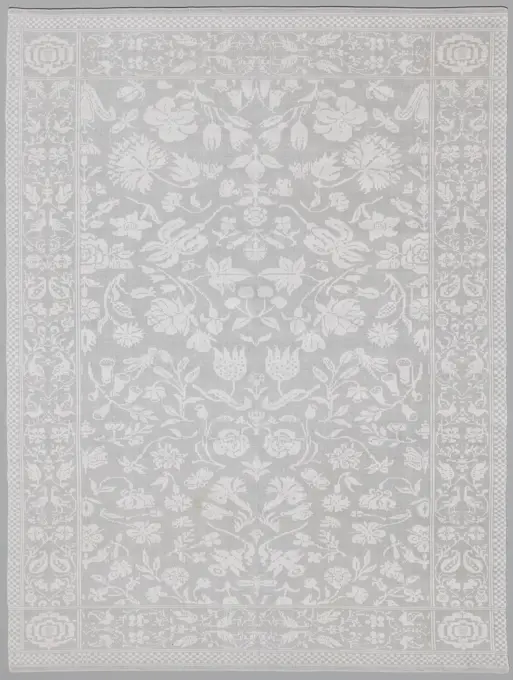
Fragment, Medium: linen Technique: bobbin lace, discontinuous tape, 17th century, lace, Fragment
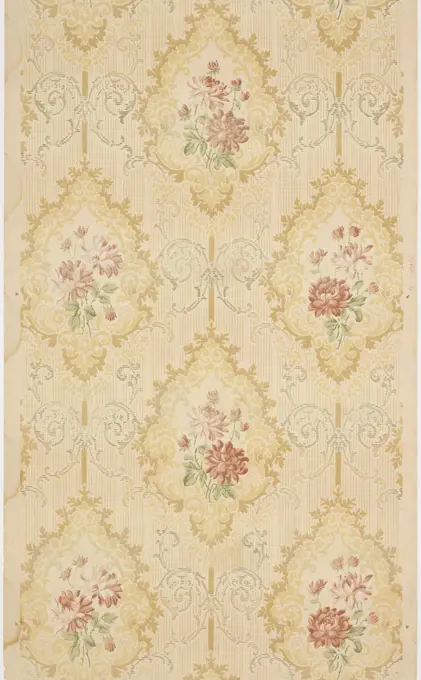
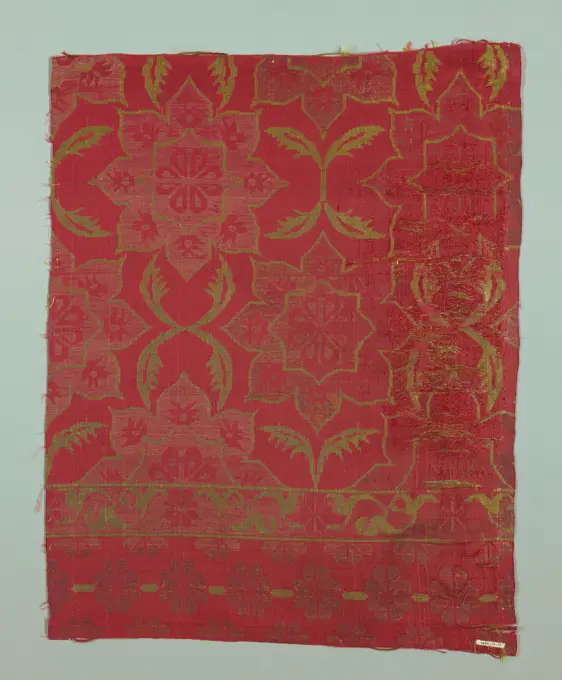
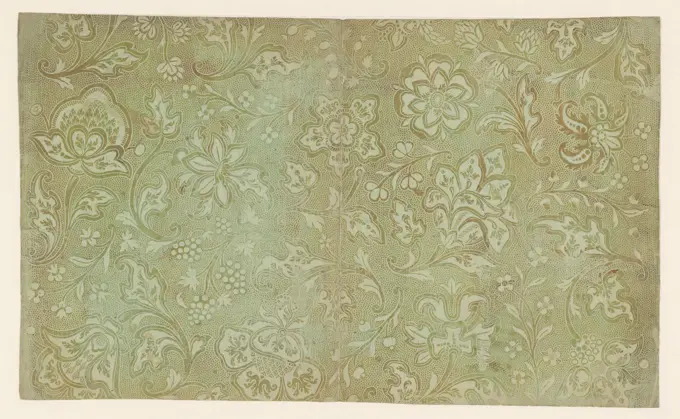
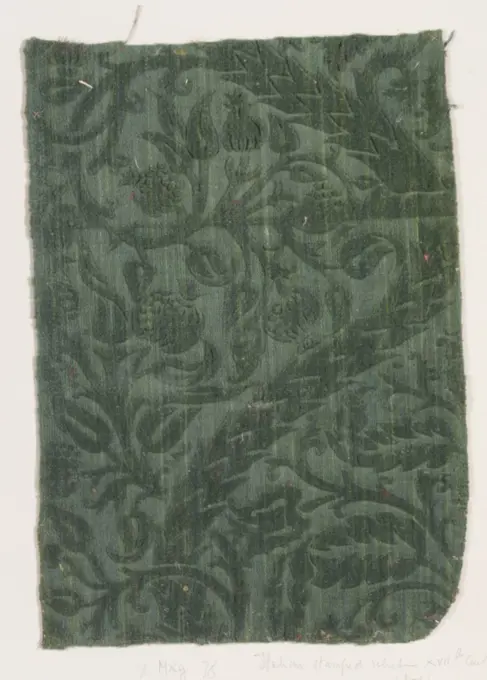
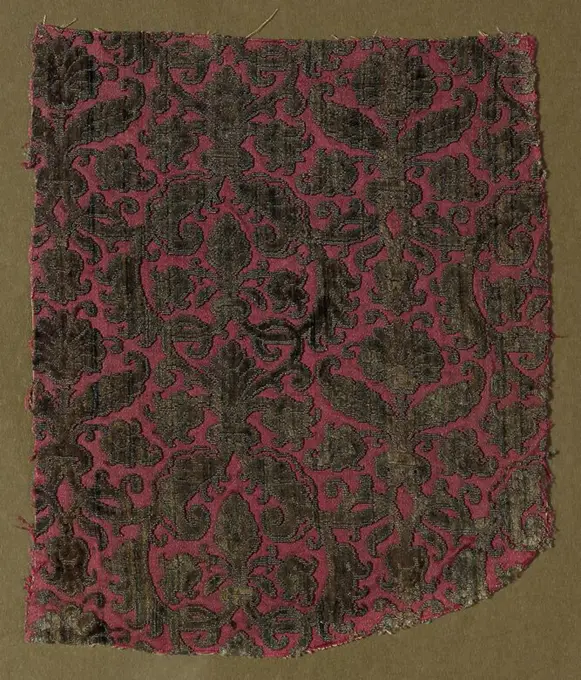
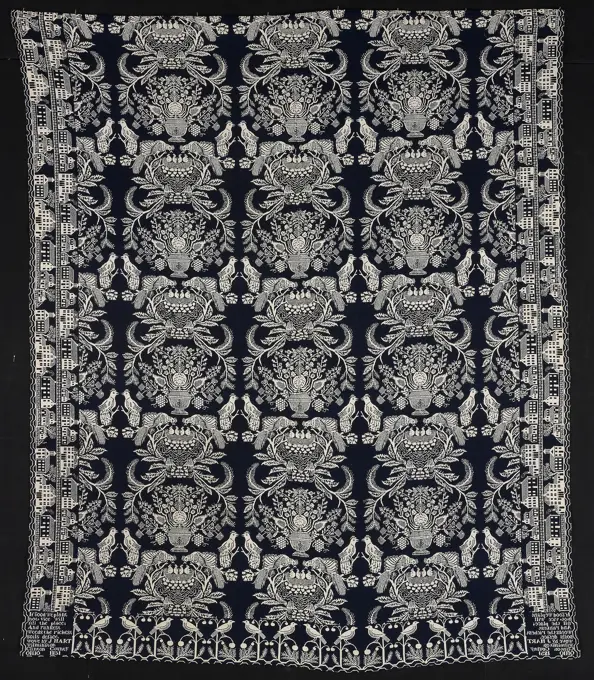
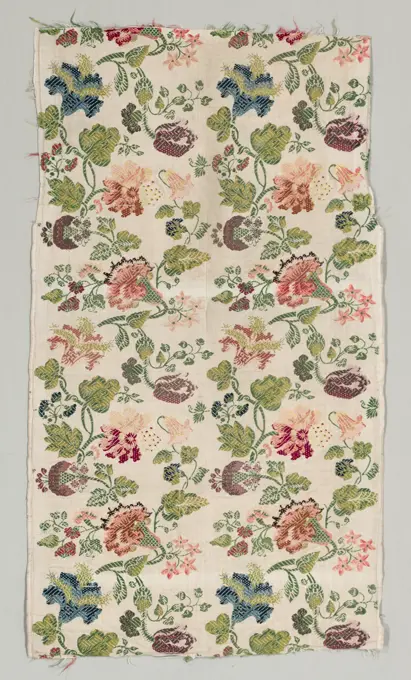
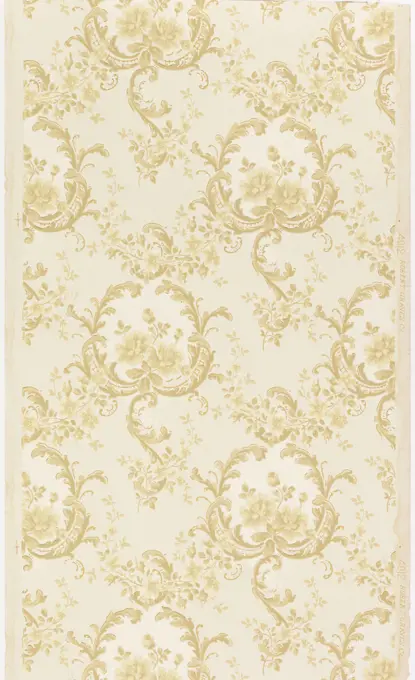
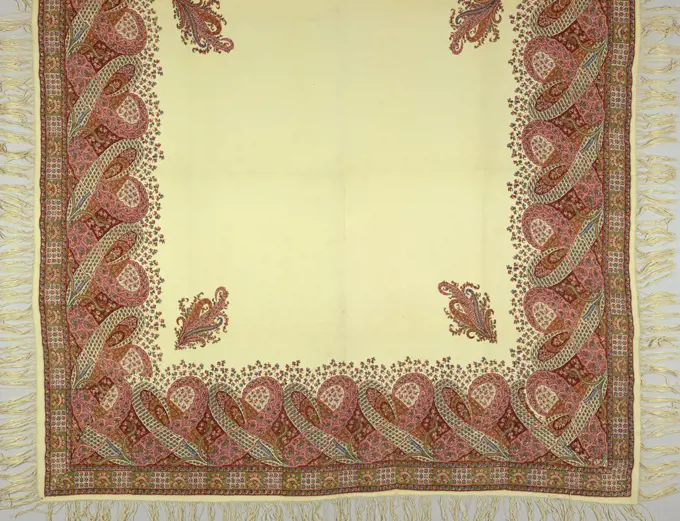
Shawl, Medium: wool Technique: printed on plain weave Label: printed on wool plain weave, A square shawl with a border of cone motifs enclosing flowers and geometrical forms. Yellow outlined in dark red and blue. In each corner of the center square is a cone motif with sprays of flowers. Background is tan. Long fringe all around., England or Scotland, ca. 1870, printed, dyed & painted textiles, ShawlFragment Zijddamast with embroidered flower branches ,, c. 1690 - c. 1700 Fragment Zijddamast with embroidered flower branches, so -called Prae Bizar, Spain, ca. 1700. Spain silk. linen (material). embroidering / damask Fragment Zijddamast with embroidered flower branches, so -called Prae Bizar, Spain, ca. 1700. Spain silk. linen (material). embroidering / damaskSidewall, Machine-printed paper, Floral medallion design. Medallions contain chrysanthemum-like flowers and are printed over vertical stripes. Scrolling foliage connect the medallions. Printed on a striped background., USA, 1905-1915, Wallcoverings, SidewallFragment, Medium: linen, wool Technique: two interconnected structures, Flowers and curling leaves in salmon and white., Spain, 17th century, woven textiles, FragmentFragment; silk, metallicsFragments of embroidery  a small network pattern unknownLeaf with patrron of flowers and fruits in point stock, anonymous, c. 1743 - c. 1783 brocade paper Leaf with patrron of flowers and fruits in point stock. Used as a cover for a publication from 1763.  paper. paint (coating) relief printing ornament derived from plant formsFragment 17th century possibly Italian. Fragment 230607Piece 18th century Japan. Piece 71422PAÑUELO DE CEREMONIA-ENCAJE DE BRUSELAS-ORNAMENTAC DE ARQUERIA CON GUIRNALDAS,ROLEAS..S XVII. Location: INSTITUTO VALENCIA DE DON JUAN-COLECCION. MADRID. SPAIN.Piece 18th-19th century Japan. Piece 66611Piece 18th-19th century Japan. Piece. Japan. 18th-19th century. Silk. Edo (1615-1868). Textiles-WovenTextile; cottonFragmentary Loom Width with Wavy-Vine Pattern ca. 1565-80 Spectacular, largepattern silks were favored materials for luxury garments among the courtly elite of sixteenth-century Istanbul, and were often used for the bold, richly colored caftans of the Ottoman sultans. The weave here, referred to in Turkish as kemha, incorporates metalwrapped thread into a lampas, or multiweave fabric. Ottoman kemha fabrics typically combine a satin ground with a design executed in twill and highlighted with gold. Catching the light, their glittering patterns appear to float above a shimmering background.. Fragmentary Loom Width with Wavy-Vine Pattern 451101Textile, Medium: silk Technique: supplementary warp pile (velvet), voided, with 1/2 twill, Heavy symmetrical leafy ogee-type grid framing blossoms in 6-lobed medallions in white on a yellow background. The medallion in the center of the fabric holds a phoenix rising from a pyre bearing a scroll 'NORS VIVE' in mirror imaged letters. Pattern embellished with red, green, and blue details in uncut pile loops. The white was cut-pile velvet, now mostly worn off; the yellow 1/2 twill., Italy, ca. 1500, woven textiles, TextilePiece 1750-60 French. Piece 217209Carpet Fragment; cotton, bast fiber, woolTextile (France); silk, metallic thread; Anonymous bequest in memory of Albert and Rebecca Elsberg; 1938-82-126-bFragment, Medium: silk, metallic Technique: woven supplementary pile (velvet), Strap motif with crescents and lotus buds in metallic and red., 17th century, woven textiles, FragmentNapkin with the plus oultre pattern, anonymous, 1600 - 1625 Napkin from white Linnamast with Plus Oultre pattern Kortrijk (Possible) linen (material) Napkin from white Linnamast with Plus Oultre pattern Kortrijk (Possible) linen (material)Ceiling Paper (USA); Manufactured by Gossler and Wilt Wall Paper Co.; machine-printed paper, mica; 45.5 x 47.5 cm (17 15/16 x 18 11/16 in.)Cover; linen, silkFragment of linen, dark brown surface, strewn with flowers, anonymous, c. 1800 - c. 1825 Fragment of linen, dark brown surface, strewn with flowers of red and white. Germany linen (material) Fragment of linen, dark brown surface, strewn with flowers of red and white. Germany linen (material)Textile 14th-15th century Italian. Textile 465963Fragment 16th century Italian. Fragment 230465Fragments (Italy); silkTextile, Medium: linen warp, cotton weft Technique: block printed with a resist medium on plain weave foundation; immersion dyed in blue, White pattern on a blue background. Vertically symmetrical pattern of swags gathered together with flowers and a tassel to form a grid enclosing two branches, each with a bird., France, 18th century, printed, dyed & painted textiles, TextileLinnamast napkin with a flower pattern, anonymous, c. 1800 - c. 1850 Napkin from Linnamast with thrown flower branches.  linen (material) damask Napkin from Linnamast with thrown flower branches.  linen (material) damaskFragment 17th century Italian. Fragment 230065Panel Made 1725-1750 France. Silk, compound weave; brocaded in silk and gold and silver metal threads .Textile Fragment 16th century. Textile Fragment 451104Fragment Made 1600-1650 Italy. Silk and gilt-metal-strip-wrapped silk, warp-float faced satin weave with supplementary patterning wefts and supplementary brocading wefts .Textile (England); cottonFragment of silk fabric  floral twigs with flowers in belt composition unknownTextile, Medium: linen warp, cotton weft Technique: block printed on plain weave foundation, Alternation of two stripes, on in straight repeat, the other in offset repeat. The straight repeat is a folded ribbon of lace, the offset repeat is a flower and a ribbon-tied branch., France, 1775-95, printed, dyed & painted textiles, TextileFragment of fabric unknownFragment complex zijdeweefsel, , 1750 Fragment silk tissue with a white soil on which a pattern of brown and white flower bouquets, connected by white winding tissures. Germany silk Fragment silk tissue with a white soil on which a pattern of brown and white flower bouquets, connected by white winding tissures. Germany silkPiece ca. 1830-35 British. Piece. British. ca. 1830-35. Cotton. Textiles-PrintedFragment Made 1590-1610 Italy. Silk, warp-float faced satin weave with supplementary binding wefts and supplementary pile warps forming cut, uncut, and voided velvet .Piece 18th century Japan. Piece. Japan. 18th century. Silk / Compound weave. Edo period (1615-1868). Textiles-WovenPiece 1750-60 French. Piece 223241Piece mid-18th century Spanish or Dutch. Piece 219743Sucker of sits with flowering tree in vase on rock., 1700 - 1725 Sucker of sits with flowering tree in vase on rock and with vases with flowers in the edges. Fed. India cotton (textile) Sucker of sits with flowering tree in vase on rock and with vases with flowers in the edges. Fed. India cotton (textile)Fragment, Medium: silk Technique: cut and uncut supplementary warp pile (velvet), Fragment of dark green velvet with a design in cut pile of small flowering branches in horizontal rows turning alternately right and left. Ground in uncut pile., Italy, 16th century, woven textiles, FragmentFragment (Cover or Turban Cover) Made 1601-1700 Turkey. Linen, plain weave; embroidered with silk in darning, double running, twined double running, and stem stitches .Napkin with thrown flowers and insects, anonymous, 1640 - 1650 Napkin made of white linen with pattern of stripped flowers and insects, brand crown wg 31. belongs to napkin bk-1980-359-b. Northern Netherlands (Possible) linen (material) damask Napkin made of white linen with pattern of stripped flowers and insects, brand crown wg 31. belongs to napkin bk-1980-359-b. Northern Netherlands (Possible) linen (material) damaskFragment, Medium: silk, metallic thread Technique: 5-harness satin damask with additional patterning by discontinuous supplementary wefts bound on the surface in 4/1 twill by every 5th satin warp (two found wefts to one supplementary weft), Bizarre-style red damask with a large pattern of angular shapes such as rock-like formations and branches bearing large fruit. Brocaded in yellow, blue, pink and white silk and silver thread. Pattern shows drooping floral spray growing out of a conglomeration of silver rock-like formations and an exotic bird perched on a branch., Italy or France, late 17th century, woven textiles, FragmentTablecloth or Bedcover probably titled "Ragged Poppy". Designed by John Scarratt Rigby (English, 1833-1914); Produced by G.P. & J. Baker for Liberty & Co.; England, London. Date: 1902. Dimensions: 182 x 184.2 cm (71 5/8 x 72 1/2 in.). Silk, plain weave; block printed. Origin: London. Museum: The Chicago Art Institute, Chicago, USA.Band (Italy); linenFragment, Medium: silk, metallic Technique; woven, Formal pattern of pointed ovals containing tulips and other plants. Predominantly in red and gold. both selvages present., Near East, 16th-17th century, woven textiles, FragmentFragment. Italy. Date: 1575-1600. Dimensions: 25.2 × 21.1 cm (9 15/16 × 8 5/16 in.). Silk, warp-float faced satin weave with supplementary pile warps forming cut, uncut and voided velvet. Origin: Italy. Museum: The Chicago Art Institute, Chicago, USA.FragmentTextile Sample from Sample Book 19th century Japan. Textile Sample from Sample Book 68266Fragment veelkleurig zijden droguet liseré.A fragment of salmon-colored silk, on which white tires slewed as a side with black stars. Note: Self edors: Mats Binding 0.4 cm.Design for a Woven Corner Motif, Brush and white, beige, yellow and black gouche on oily tracing paper; on verso: white netting, A lace cloth suspended from blossom rosettes fills the corner obliquely. Parts of a flower bough stick through vertical stripes of the cloth. A triangular crest border forms the corner., France, 1825-1850, Drawing, DrawingTwo fragments of the chasuble;  3. W. 18th century (1760-00-00-1785-00-00);fabricsSkoutari upholstery unknownKennet, Medium: cotton Technique: printed on plain weave, Large flower heads leaning left, and large leaves, on a ground of small-scale, all-over design of flowering vines. In two shades of blue on a white ground., England, designed 1883, printed, dyed & painted textiles, Textile, TextilePiece 18th century Japan. Piece 71716Piece 18th century Flemish. Piece 214547Fragment Made 1601-1625 Italy. Silk, plain weave with supplementary pile warps forming cut, uncut, and voided velvet .Napkin with grape vines and weapons Nassau, Schagen, Hornes and Thiennes. Labeled avb 13 .. white linen damask napkin with grape vines and in the corners the weapons Nassau, Schagen, Hornes and Thiennes, labeled AVB 13. Satin 5 bond.Napkin van Wit Linnamast, James Coulson & Co., 1890 - 1910 White Linnamasten Napkin with a thistle, rose and cloverleaf inside oak wreath pattern, brand MB 24. Northern Ireland linen (material) damask White Linnamasten Napkin with a thistle, rose and cloverleaf inside oak wreath pattern, brand MB 24. Northern Ireland linen (material) damaskCoverlet Made 1851 United States. Cotton and wool, plain weave double cloth; woven on loom with Jacquard attachment; full loom width; seamless . James McDougal Hart (Weaver)Fragment, Medium: silk Technique: satin damask, Palmette arrangement within strapwork bands, 17th century, woven textiles, FragmentTextile Fragment, 1700s. Italy, 18th century. Brocade, silk; overall: 91.4 x 53.7 cm (36 x 21 1/8 in.).Sidewall, Robert Graves Co., New York, New York, Machine-printed paper, liquid mica, Floral bouquet enclosed within a foliate scroll medallion, trellis fill near bottom. Medallions are arranged in diagonal format. Printed in white mica and tan on lighter tan ground., New York, New York, USA, 1905-1915, Wallcoverings, SidewallBorder; linen; 1933-1-13Piece 17th century Italian. Piece 216273Textile, Medium: silk, metallic yarns Technique: damask weave with supplementary weft patterning (brocade), Fragment of ivory damask weave silk brocaded in silver yarns, with red and pink silk, showing floral design in the bizarre’ style., France, late 17th-early 18th century, woven textiles, TextileCeiling Paper (USA); Manufactured by Maxwell & Co., S.A. (United States); machine-printed paper, ungrounded; 66.5 x 49 cm (26 3/16 x 19 5/16 in.)Fragment blue and silver colored silk tissue with chinoiser motif of temples and bouquets in vases and bowls. Fragment silk tissue, square, blue and white, with rounded down corners. The tissue has a blue ground with chinoiser motif of temples and bouquets in vases and bowls.Piece 18th-19th century Japan. Piece 67576Fragment multicolored silk damest. A fragment of yellowish white silk tissue, with colored flowers.Piece 18th-19th century Japan. Piece. Japan. 18th-19th century. Silk. Textiles-WovenSidewall (United States); Manufactured by Carey Bros. W.P. Mfg. Co.; machine-printed paper; 183 x 49.5 cm (72 1/16 x 19 1/2 in.)Fragment Made 1201-1300 Spain. Silk and gilt-animal-substrate-wrapped linen, weft-float faced three-color complementary 2 1 twill weave with inner warps .Piece 18th-19th century Japan. Piece 65851Piece 17th century Japan. Piece 71586Samples, Orinoka Mills, (Philadelphia, Pennsylvania, USA), All of these have wefts that are striped in just about all the same colors and different ground colors that are the warps., a. blue ground warp with circle of flowers around larger blosom weft in pink, green, white and gold color, b. grey ground warp with circle of flowers around larger blosom weft in pink, green, gold color and off white, c. yellow/green gound warp with circle of flowers around larger blosom weft in pink, green, off white and gold color, d. rust color ground warp with circle of flowers around larger blosom weft in pink, green, off white and gold color, e. red ground warp with circle of flowers around larger blosom weft in pink, green, white and gold color, f. green ground warp with circle of flowers around larger blosom weft in pink, green, white and gold color, g. pink ground warp with circle of flowers around larger blosom weft in pink, green, white and gold color, USA, ca. 1910, Fragment Silk Lampas in dark brown, white and green with multicolor pattern of pomegranate in bouquet shape with all kinds of flowers in diamond shape around it. Fragment silk lampas, with a brunette and white warp that alternately serve as a fund. Ways of white and green, while the fabric is passed through with red, white and blue silk and silver thread. Pattern consists of a flowering pomegranate in bouquet shape around which a diamond-shaped wreath of flower branches surrounded by a wavy wide band of S-shaped figures between which large and small flowers and leaves. Two shell sewn.Furniture Cover with Pattern of Flowers and Sonorous Stones early 18th century China This embroidered textile may have served as a table covering. At the center of the piece is a large, round, full-face flower surrounded by four flowers in profile with scrolling stems that sit in a geometric field. That field, in turn, has a wide border that repeats the theme of large flowers in profile and scrolling stems. Four sonorous stones and clusters of small, red nandina berries are also found in the border.As with the needlepoint embroidery practiced today, the embroidery stitches of this textile completely cover the foundation cloth, a yellow silk gauze.. Furniture Cover with Pattern of Flowers and Sonorous Stones 70080Fragment silk velvet with recesses with pattern of large and small stars. Fragment silk velvet with a stylized pattern of large and small stars in bronze green.Sidewall - Sample, Daisy; Designed by Morris & Co. (United Kingdom); Manufactured by Jeffrey & Company (United Kingdom); block-printed paperTextile; cottonPiece early 19th century French. Piece 223615Ottoman fabric, by Unknown, 17th Century, Unknow. Italy, Tuscany, Florence, Bargello National Museum. Detail. Sinusoid ribbons flowers leaves decoration red green yellow white.Piece ca. 1735 Italian. Piece 227402Textile with Design of Interlacing Floral Plants. France, 1755-1765. Textiles; textile lengths. Cut and uncut (voided) silk velvet on metal ground with raised metal thread embroideryCurtain Made 1601-1700 England. .Turkish embroidery unknownCeiling Paper (USA); Manufactured by Janeway & Co. Inc.; machine-printed paper, liquid mica; 95 x 49 cm (37 3/8 x 19 5/16 in.)Border (USA); Manufactured by Maxwell & Co., S.A. (United States); machine-printed paper; 91.5 x 49 cm (36 x 19 5/16 in.)Cover (Iran); silkCope hood, Medium: silk, metallic yarns Technique: 4&1 satin damask with discontinuous supplementary wefts patterning (brocade) Label: silk satin damask with discontinuous metallic supplementary weft patterning, Cope hood with brocaded silk damask in the bizarre’ style showing three vertical repeats of an elaborately curving metallic vine with chinoiserie elements. Brocaded in gold, silver and light blue. The cope hood is in the opposite direction from the direction of the pattern., France or Italy, late 17th-early 18th century, woven textiles, Cope hoodFragment multicolored striped brochure side. Fragment multicolor silk tissue. The cream-colored soil has stripes consisting of small horizontal stripes, between which sprinkled flower branches and rosettes.Dress from the application side with symmetrical tibbling game in diagonally opposite corners, anonymous, c. 1900 Red from natural -colored application side, bobbin with the needle side decorative stitches - Brussels duchesse - Applicated on mechanical tulle. Square model. The rug is finished along all the edges with a faint edge of the scaffold, along which a repeating pattern of openwork cartouches that are alternately small and slightly larger in size. From the smallest, a fine floral drink always rises that bends over the larger cartouche. From two diagonally opposite corners, a symmetrical and fine lines of wavy and curly lines develops, with a wide variety of flowers and fine leaves. This pattern blows from the corners towards the middle, and almost to the other corner along the sides. On the remaining midfield is a spray pattern of highly curved flower branches.   mixed Brussels Red from natural -colored application side, bobbin with the needle side decorative stitches - BrusselTextile (Japan); silkThe Tai Dam or Black Tai are an ethnic group found in parts of Laos, Vietnam, China, and Thailand. Tai Dam speakers in China are classified as part of the Dai nationality along with almost all the other Tai peoples. But in Vietnam they are given their own nationality (with the White Tai) where they are classified as the Thai nationality (meaning Tai people). The Tai Dam originate from the vicinity of Dien Bien Phu in Vietnam. Buddhist Vestment (Kesa) Made from a Noh Costume (Karaori) with Autumn Grasses and Butterflies. Culture: Japan. Dimensions: Overall: 46 1/2 x 79 3/4 in. (118.1 x 202.6 cm). Date: 18th-19th century.Buddhist vestments were often made from donated garments or textiles. Perhaps ironically, this kesa, once used by an old monk, was probably fashioned from a gorgeous eighteenth-century karaori, a type of costume worn by a male actor playing the role of a young woman in a Noh play. Karaori (translated literally as "Chinese weaving") is also the name of a type of multicolored brocaded silk, and this textile has a pattern of butterflies and autumn grasses on a ground of blue and red. The autumn plants all belong to the standard group of seven used in Japanese art and poetry: bush clover (hagi); Chinese bellflower (kikyo); miscanthus grass (obana); "purple trousers" flower (fujibakama); large pink (nadeshiko); pampas grass (susuki), and valerian, sometimes called maiden flower (ominaeshi). Museu