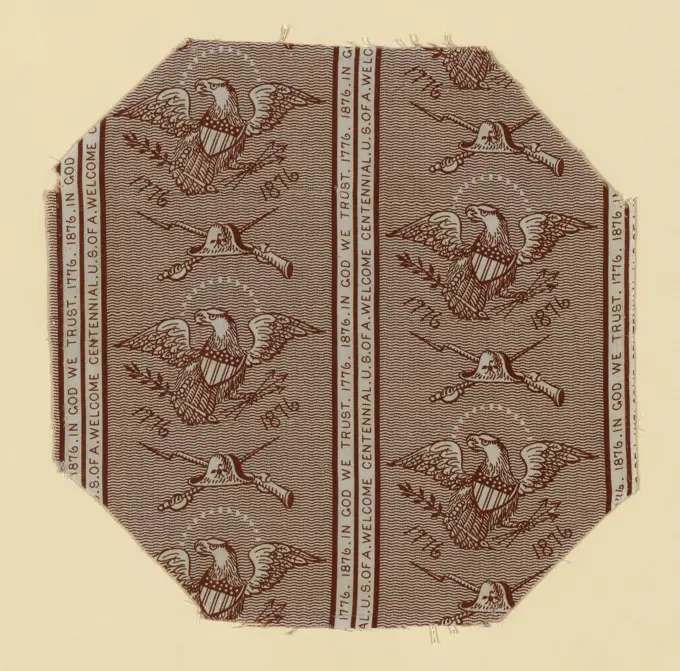
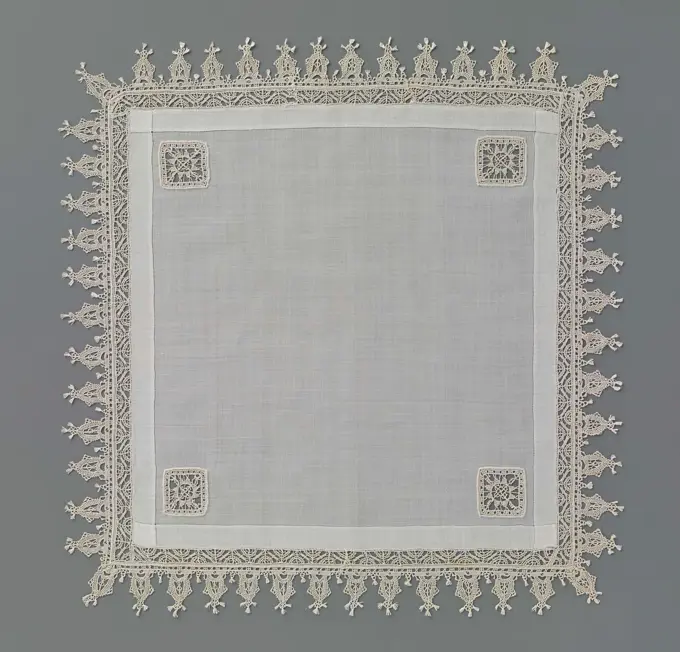
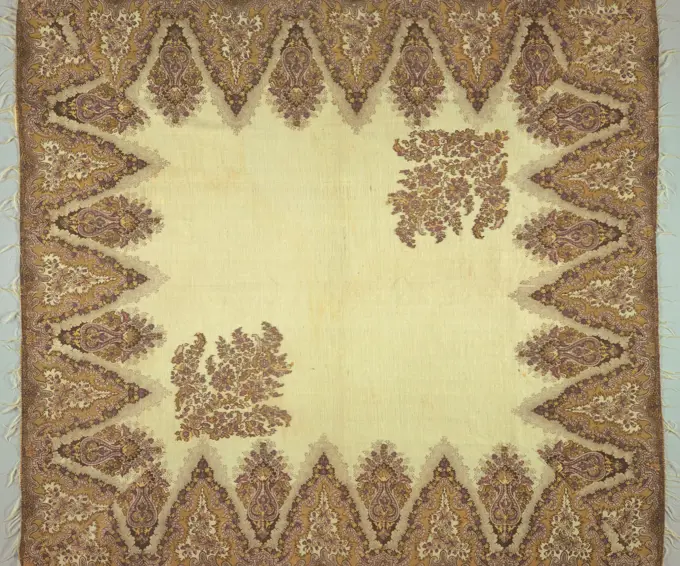
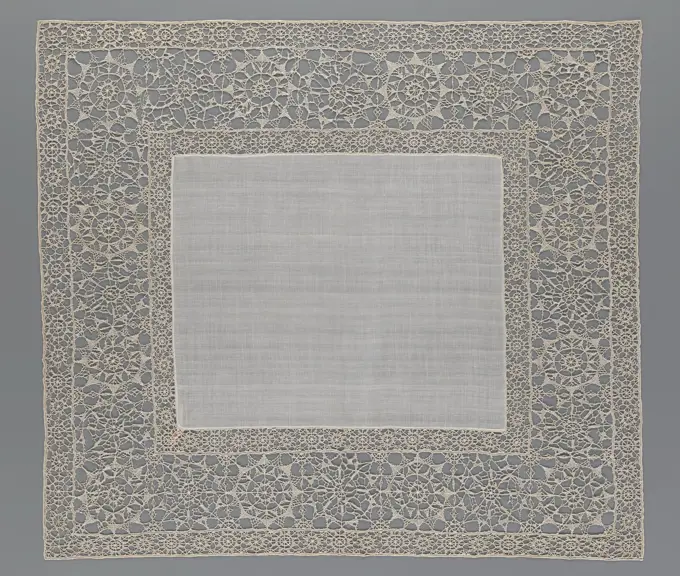
Textile Fragments

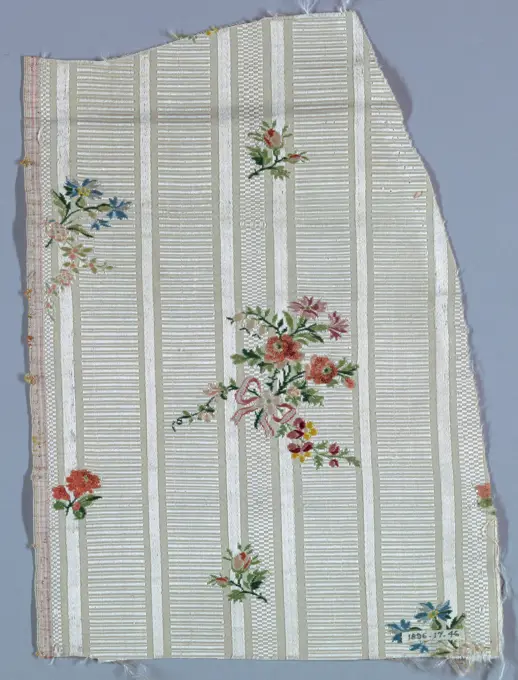
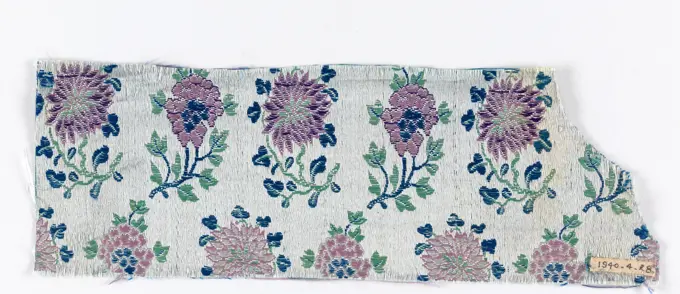
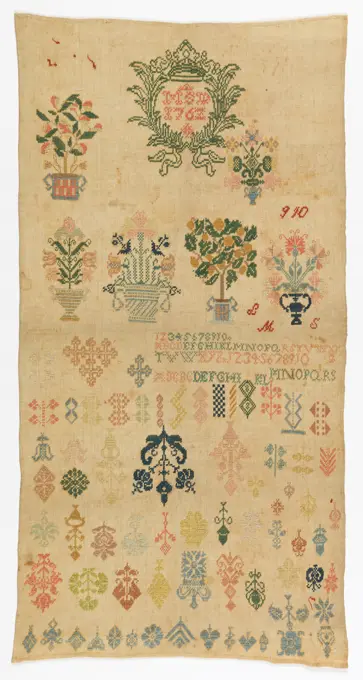
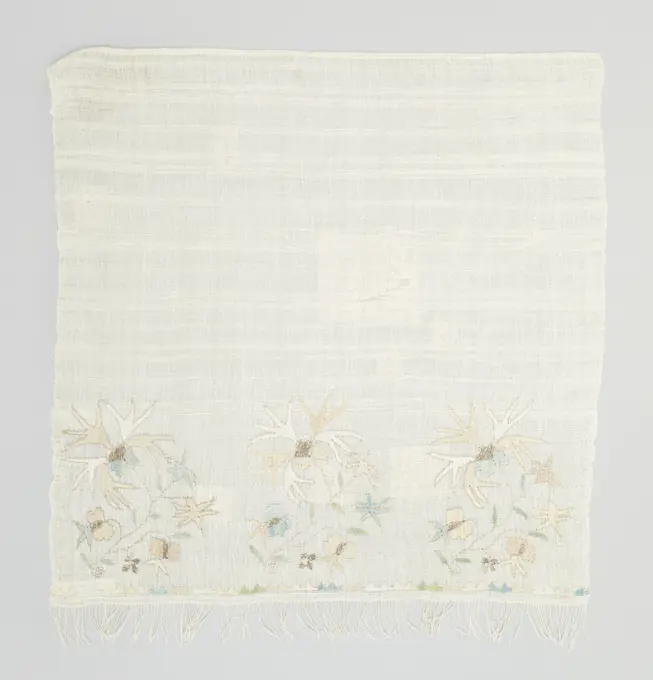
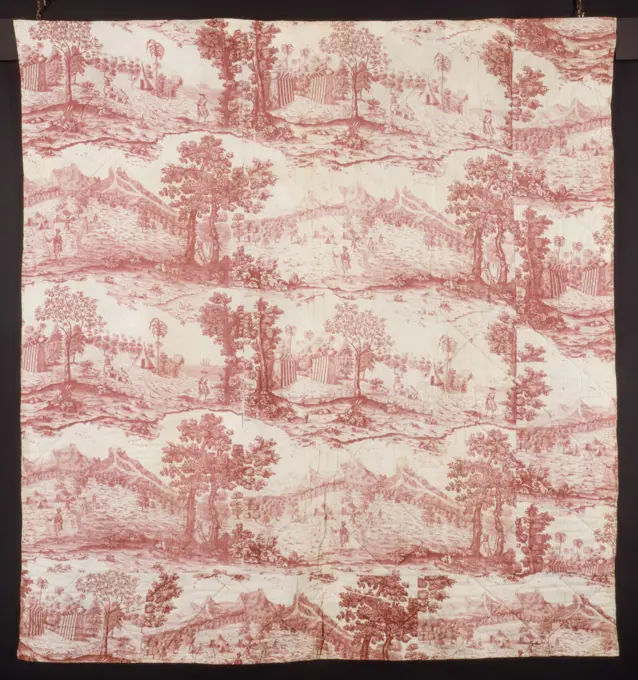
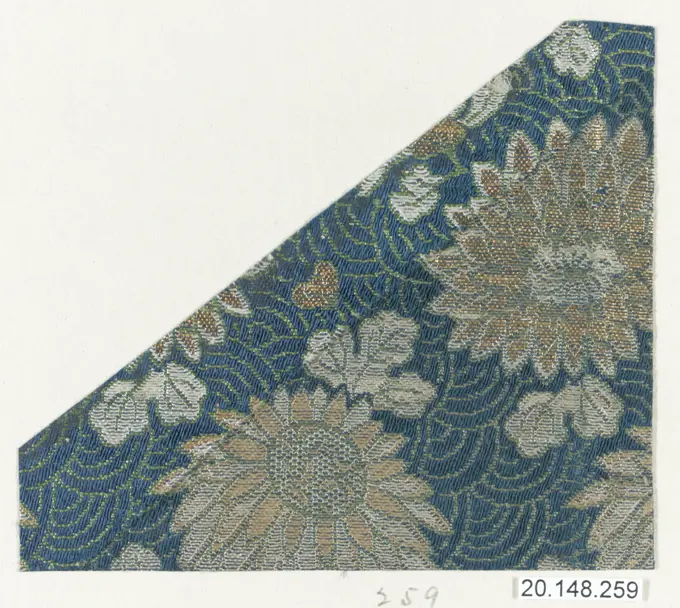
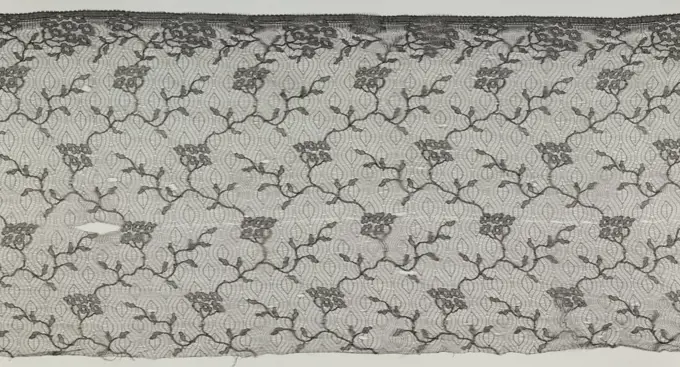
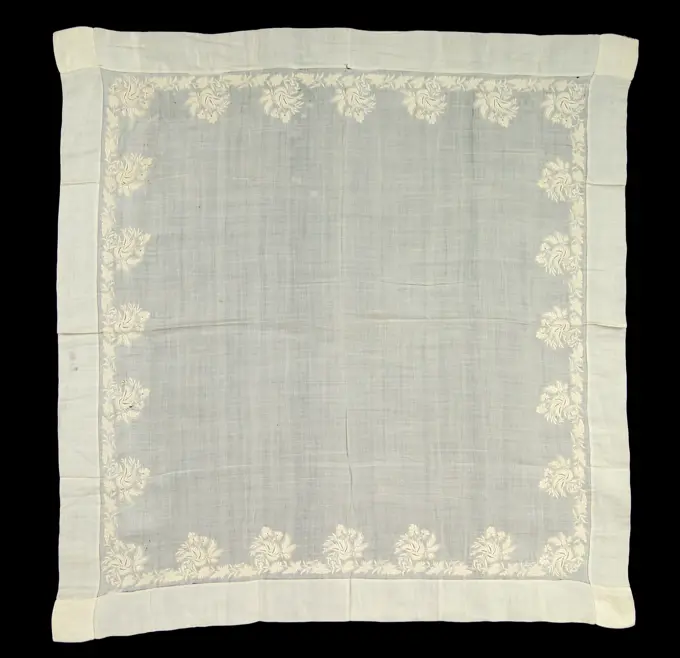
Variety of textile fragments in different colors and patterns, showcasing intricate designs from silk and cotton fabrics.

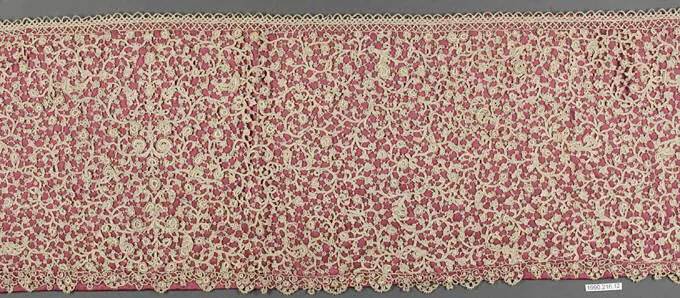
Fragment, Medium: linen Technique: bobbin lace, discontinuous tape, 17th century, lace, Fragment
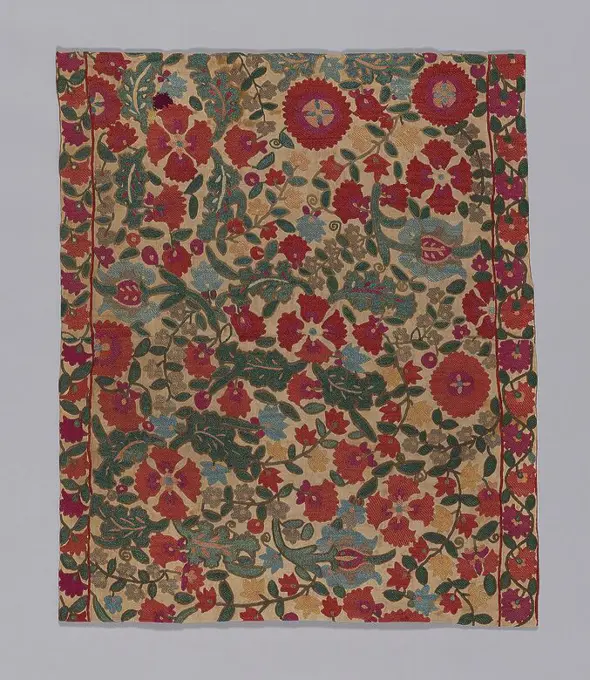
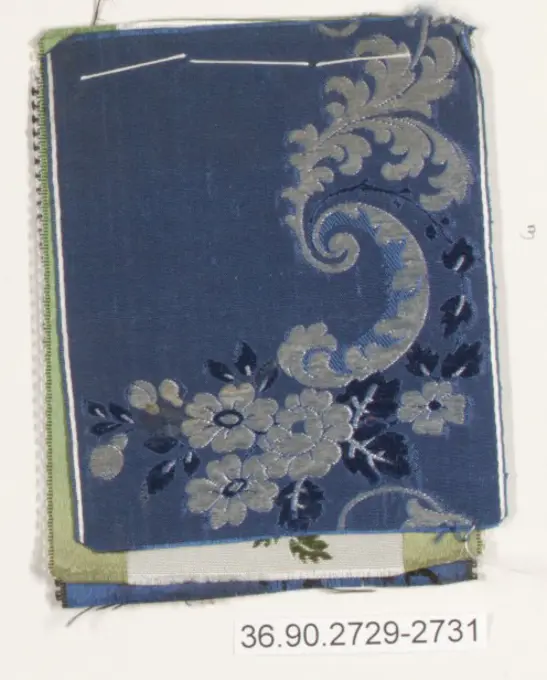
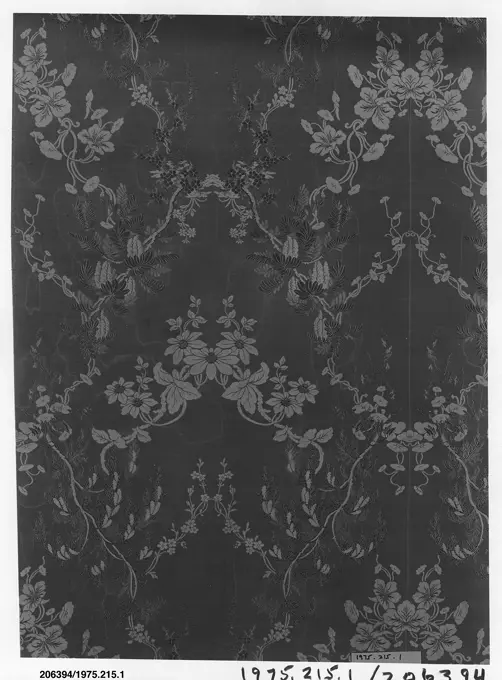
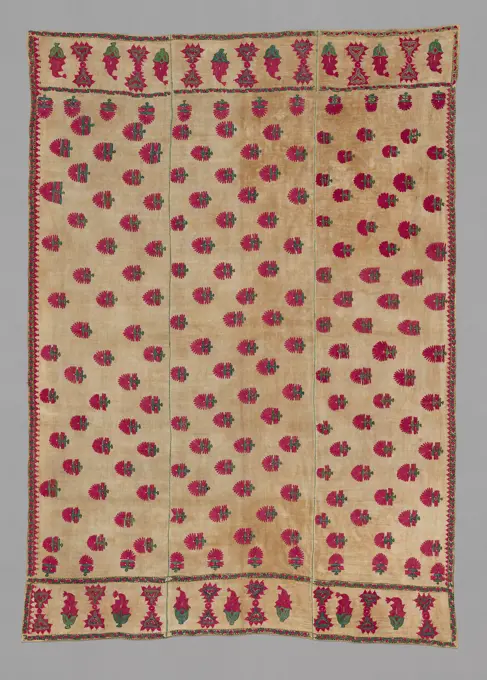
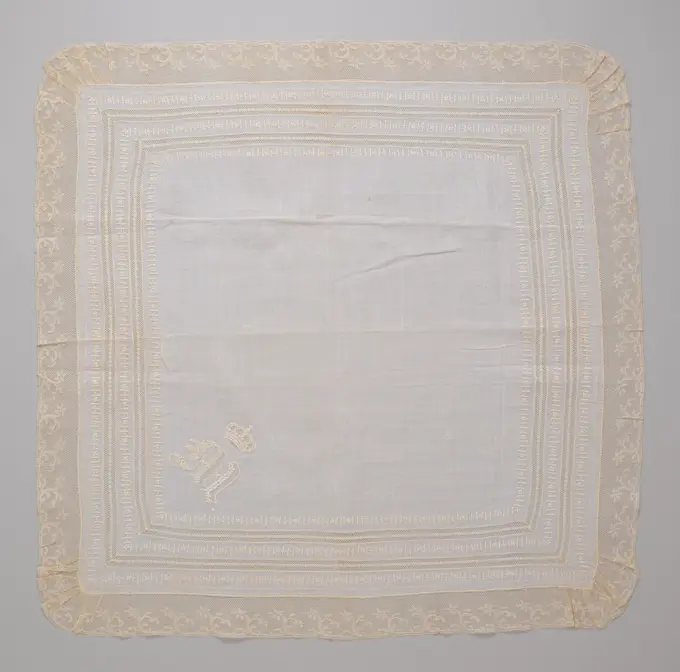
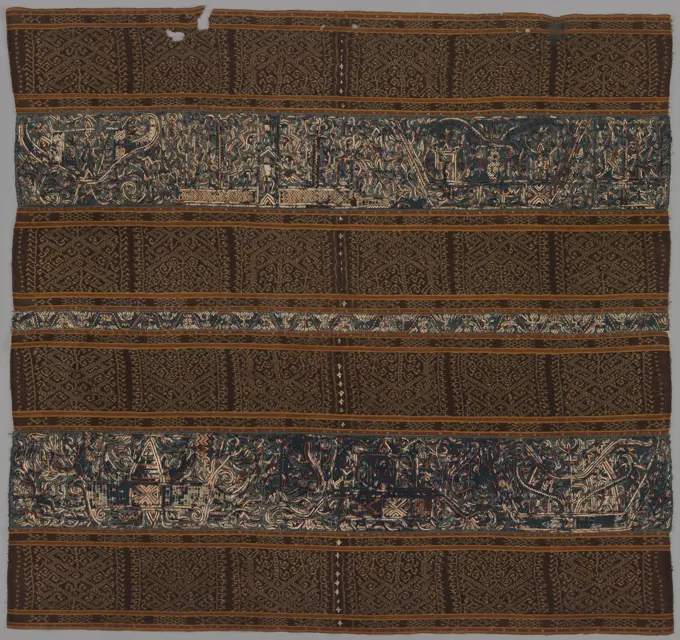
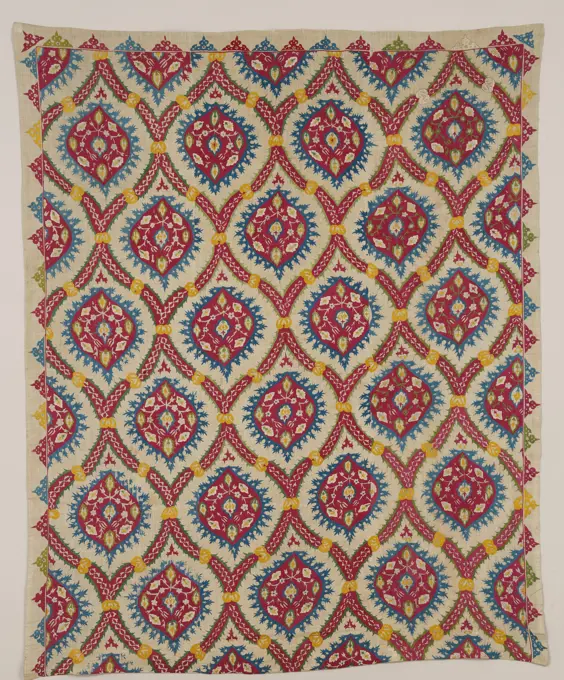
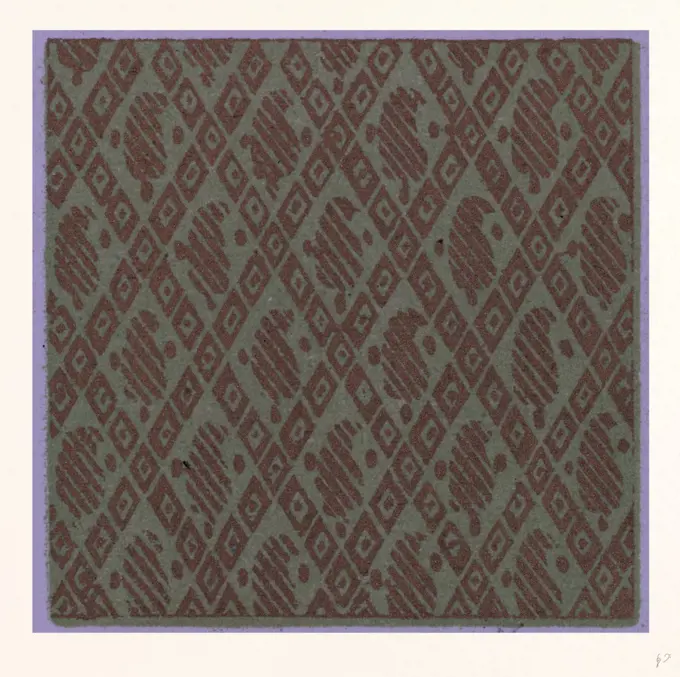
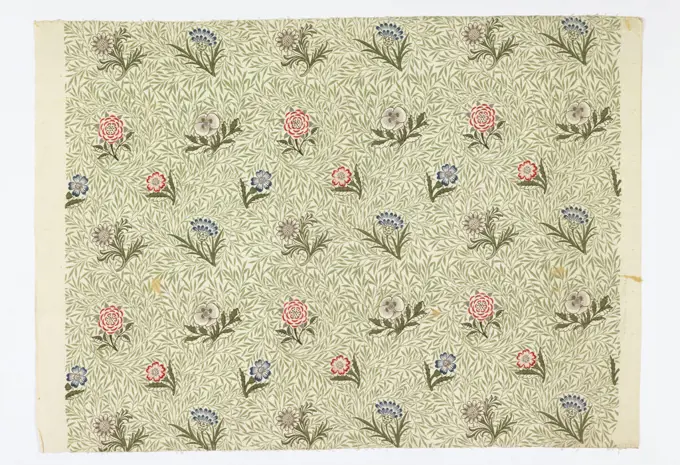
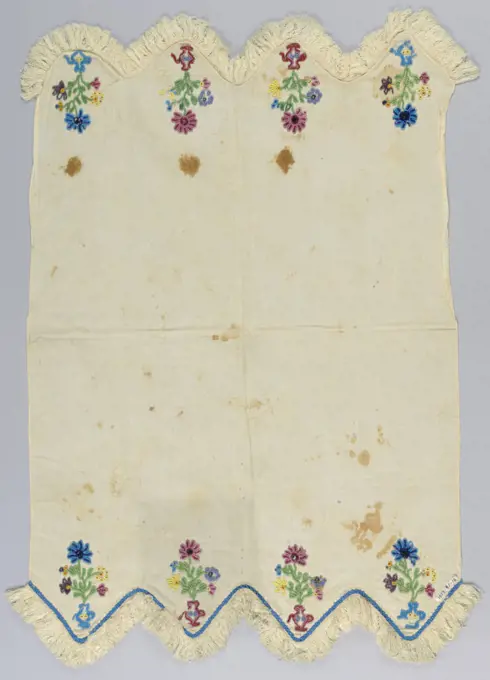
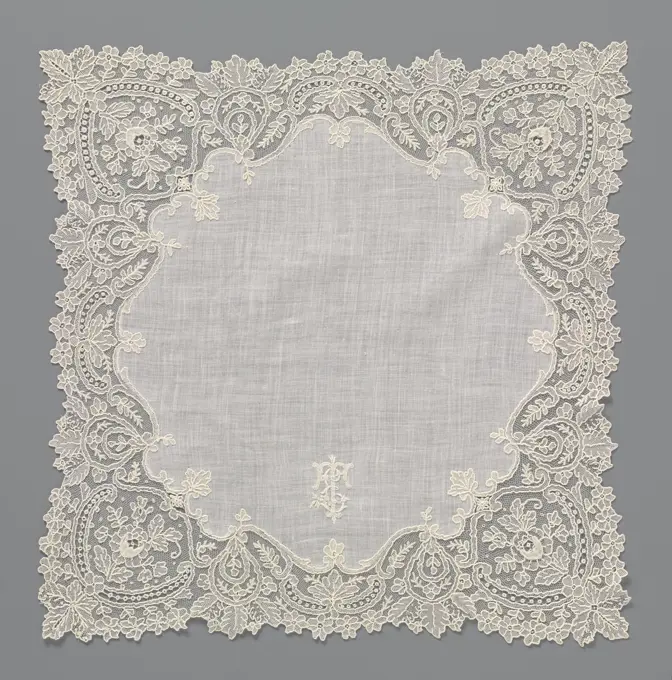
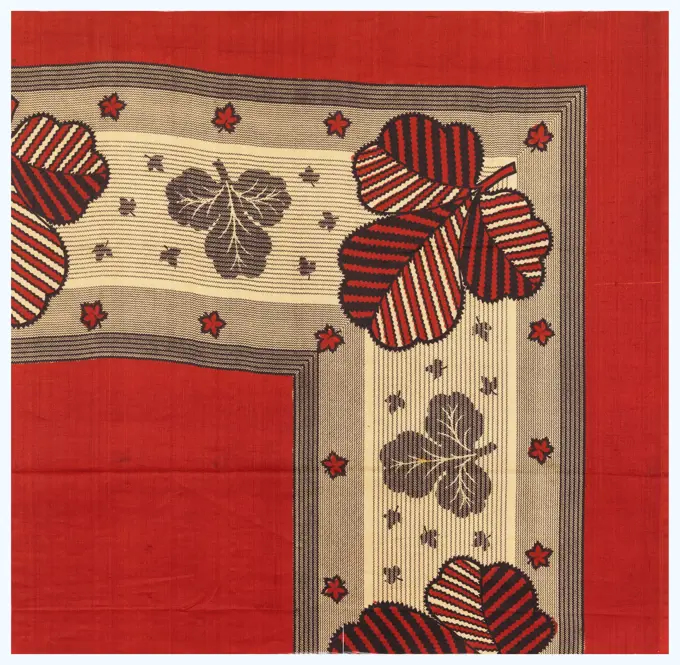
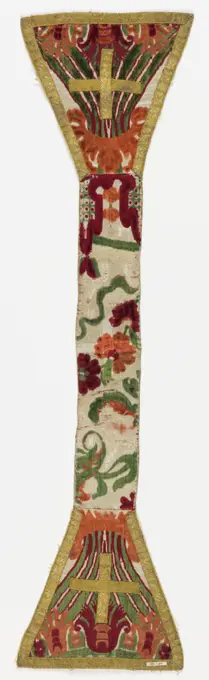
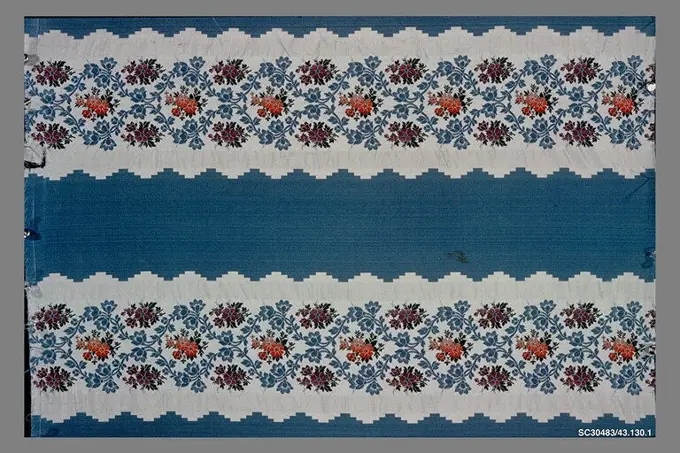
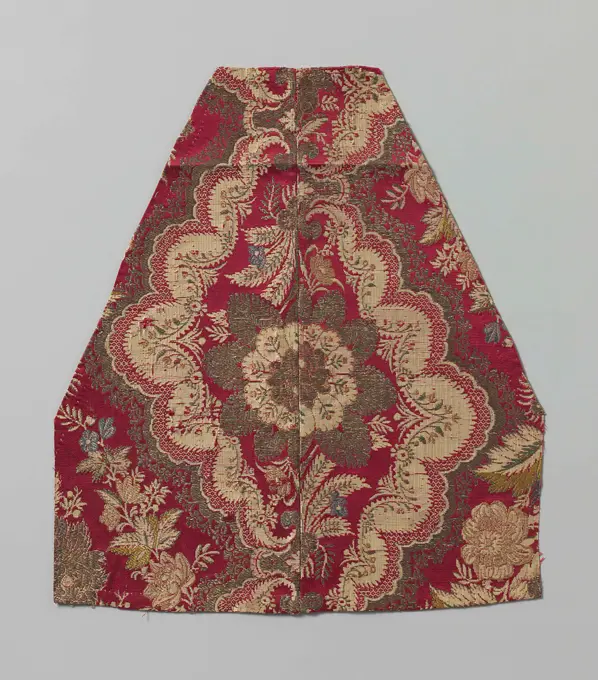
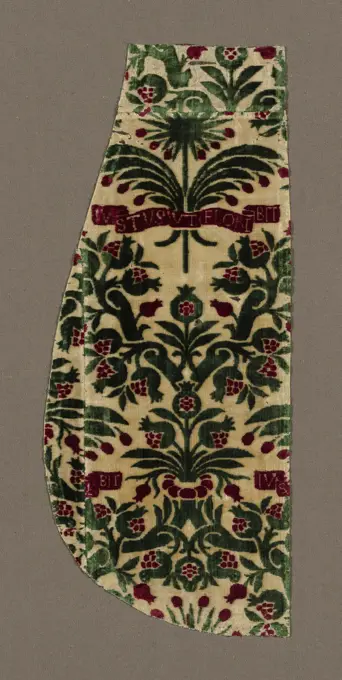
Portion of a Chasuble Made 1450-1500 Italy. Silk, satin weave, cut solid velvet .Napkin with pattern of sprinkling flowers, cherries, insects including grasshopper ,, 1640 - 1660 White linen Damas napkin with stripped flowers, cherries, grasshopper, and other insects. Netherlands (possibly) linen (material) damask White linen Damas napkin with stripped flowers, cherries, grasshopper, and other insects. Netherlands (possibly) linen (material) damaskFragment of silk fabric  lace pattern unknownPanel. Uzbekistan, Bukhara. Date: 1601-1700. Dimensions: 77.2 x 64.7 cm (30 3/8 x 25 1/2 in.). Linen, plain weave, embroidered in silk (some darning; pieced in center). Origin: Turkey. Museum: The Chicago Art Institute, Chicago, USA. Author: ANONYMOUS.Kazuifel, fragment, with silk and gold thread embroidered flowers. Fray, Fragment, With Silk and Gold Thread Embroidered Flowers on Blue VelvetEmbroidered Fabric, 17th century, 20 x 18 in. (50.8 x 45.7 cm), Linen, silk embroidery, Greece, 17th centuryPiece 18th-19th century Japan. Piece 65948Piece 15th century Italian. Piece 216217Textile Swatches Onondaga Silk Company, Inc. (1925-1981). , 1948-1959. Silk, 23 3/4 x 17 3/4 in. (60.3 x 45.1 cm).    1948-1959Fragment of a wall covering of painted and printed red silk, anonymous, 1770 - 1780 Fragment of red silk painted with flowers and leaves in yellow, blue, white and green. maker: NetherlandsFrance silk printing Fragment of red silk painted with flowers and leaves in yellow, blue, white and green. maker: NetherlandsFrance silk printingRibbon French 19th centuryFragment 16th century Italian. Fragment 230216Paper hanging by Woollams of London, 1851 - 1853. Published by Day and Son, London. Related to decorative arts and the Great Exhibition of 1851. Features lithographs and chromolithographsTextile, Medium: cotton Technique: block printed on plain weave, Half-drop repeat of two birds attending nest with four blue eggs below a flowering tree growing from a mound. Multicolors on a tan background., England, ca. 1815, printed, dyed & painted textiles, TextilePiece 18th-19th century Japan. Piece 66096Sample, Orinoka Mills, (Philadelphia, Pennsylvania, USA), Pink warp with yellow, white and grey weft making floral pattern. Cut on all four sides., USA, ca. 1910, woven textiles, SampleCope hood, Medium: silk Technique: 7&1 satin plus plain weave with supplementary weft floats, Floral and bird motifs on blue ground., 17th century, woven textiles, Cope hoodFragment of silk fabric  colourful pattern made of floral twig unknownPiece 18th-19th century Japan. Piece 67303Length 1850s French. Length 229504Border or flounce 17th century Italian. Border or flounce 229975Fragment multicolored silk, anonymous, c. 1690 - c. 1700 Fragment multicolored silk tissue. A white soil has a pattern of multicolored flowers with thick stems, between which small, brown geometric figures. The fragment consists of two sewing fragments. Netherlands silk Fragment multicolored silk tissue. A white soil has a pattern of multicolored flowers with thick stems, between which small, brown geometric figures. The fragment consists of two sewing fragments. Netherlands silkBanquet Cloth India. Linen ground with red and green silk medallions; embroidered .Piece 18th century China. Piece 72001Textile; silk, metalHandkerchief 1840-80 French or Swiss. Handkerchief 236955Betty Jacob, Coverlet, c 1940 CoverletAfrican Marigold, Morris & Co., (London, England), Medium: cotton Technique: printed, Symmetrical design of long leafy shoots intertwining to form frames containing large poppy-like flowers and smaller roses. In blue, green, and orange on a white ground., England, 1876, printed, dyed & painted textiles, Textile, TextileSample (USA); Manufactured by Orinoka Mills (United States); 1989-80-46Piece mid-18th century French. Piece 223674Textile (Spain); silk and linenExcerpt of two parts sewn together, c. 1690 - c. 1710 Fragment of two parts, predominantly green with pattern of scalloped tires with leaf and flower arrangements and parts of circles of which one can see a fruit, flowers and leaves in one. France (possibly)Netherlands (possibly) Ketting an element: Silk. lampas (textile material) Fragment of two parts, predominantly green with pattern of scalloped tires with leaf and flower arrangements and parts of circles of which one can see a fruit, flowers and leaves in one. France (possibly)Netherlands (possibly) Ketting an element: Silk. lampas (textile material)Multicolor silk tissue. Four fragments of a silk tissue. Loose asymmetrical bouquets on a light beige fond. With Saumon, Blue, Yellow And Red Colored Flowers. Two jobs leaned together. Somewhat damaged. Note: Selling; 0.6 cm, plain bond.Coverlet Made 1820-1840 Pennsylvania. Cotton and wool, plain weave with supplementary wefts in composite point twill weave (star, work, multiple shaft); two loom widths joined .Womans Ceremonial Skirt (Tapis)Cover 16th-17th century. Cover 448238Fragment; silk woven; Warp x Weft: 27 x 19.6 cm (10 5/8 x 7 11/16 in.)Textile (China); silkFragment; silk on linenFragment (France); silk; Warp x Weft: 89.3 x 13.8 cm (35 3/16 x 5 7/16 in.)Piece 18th-19th century Japan. Piece. Japan. 18th-19th century. Silk. Textiles-WovenCeiling paper, Machine-printed paper, liquid mica, Petite flowers and scrolling foliage form four-pointed star shape. These diamond shapes alternate with a floral sprig., USA, 1905-1915, Wallcoverings, Ceiling paperSampler (Germany); silk embroidery on linen foundationChalice veil. Culture: possibly Italian. Dimensions: Overall: 22 1/2 x 22 1/2 in. (57.2 x 57.2 cm). Date: early 18th century. Museum: Metropolitan Museum of Art, New York, USA.Embroidered kerchief trimming unknownPiece 18th-19th century Japan. Piece 66437Ribbon (USA); silk, cottonFragment early 19th century French, Lille. Fragment 218552Ceiling Paper (USA); Manufactured by Benton, Heath & Co.; machine-printed paper, liquid mica; 91 x 49 cm (35 13/16 x 19 5/16 in.)Napkin with fish and shellfish, anonymous, c. 1600 - c. 1649 Linnamast napkin with fish and shellfish. Midfield: Various fish. Standing edges: fishing and fishing. Lying edges: sea gods. Hoek: Krab. Haarlem linen (material) damask Linnamast napkin with fish and shellfish. Midfield: Various fish. Standing edges: fishing and fishing. Lying edges: sea gods. Hoek: Krab. Haarlem linen (material) damaskLength of Silk Fabric. UnknownBatist handkerchief with a used corner piece from Kloskant, Sophia Gerardine Cenijn-Smit, c. 1914 Natural -colored batist handkerchief with a bold corner of Kloskant: Fine Bruges flower arrangements. The symmetrical pattern consists of an overhoek -placed heart -shaped motif, formed by a heart -shaped flour from which two curling branches spring with a rosette flower at each curling end. On either side of the curling branches, another flower and some berries fan out, a bit along the sides of the handkerchief. The motifs are largely made in linen battle with openwork edges, shiny contour threads and in various places, cobbled relief contours, so -called ribs. In Bloemharten and Berries, cubes are made in shape. The motifs are connected by a traly land, a lace-hole traly. The sides of the batist are finished with a zoompje along which a narrow edge of open sewing - work with extended threads - runs. Amsterdam cotton (textile). batiste bobbin lace Natural -colored batist handkerchief withIndian ornamentTextile fragment, embroidery of petals in diamond-shaped motifs., anonymous, Japan, 1781 - 1789, Tenmei period, silk, height 19.8 cm × width 28.2 cmFragment light blue silk dam mast with floral pattern and fruits, anonymous, c. 1700 - c. 1800 Fragment light blue silk dam mast with a pattern of large flowers and fruits.  silk damask Fragment light blue silk dam mast with a pattern of large flowers and fruits.  silk damaskPowdered, Medium: cotton Technique: printed on plain weave, Gray, blue and red flowers scattered over a field of finely-drawn green foliage, on an off-white ground., England, designed ca. 1874, printed ca. 1934, printed, dyed & painted textiles, Textile, TextileDoily, Medium: cotton, glass beads Technique: embroidery, Rectangular length of white cotton with two short ends in pointed scallops. Beading and fringe only on scalloped ends. In each scallop is a vase with a blossoming plant springing from it. Polychrome beads used., Mexico, early 19th century, embroidery & stitching, DoilyFloral design for printed textiles, Louis-Albert DuBois, Swiss, 1752-1818, Brush and gouache, graphite on white wove paper, Two pink wild roses, green leaves, on grey vines, surrounded by small white flowers on slate-black ground., France, 1800-1818, textile designs, Drawing, DrawingChasuble fragment. unknown, authorNapkin with thrown flowers, fruits and birds, anonymous, 1651 White linen Damas napkin with stripped flowers and fruits with birds. Netherlands (possibly) linen (material) damask White linen Damas napkin with stripped flowers and fruits with birds. Netherlands (possibly) linen (material) damaskBatist handkerchief with an embroidered monogram "et" and finished all around with a border needle side, anonymous, c. 1850 - c. 1870 Batist handkerchief with an embroidered monogram "et" and finished all around with a border of natural needle side: Brussels mesh side. Symmetrical pattern with a overhoeks placed in each corner with a rose in it. Under the medallion, in the extreme corners of the handkerchief, a wingerd leaf. Two drop -shaped frames with three leaves underneath on either side of the medallion. In the middle of the sides there is a leaf between two C-volutes, including four flowers. Brussels linen (material). batiste embroidering / Brussels point de gaze Batist handkerchief with an embroidered monogram "et" and finished all around with a border of natural needle side: Brussels mesh side. Symmetrical pattern with a overhoeks placed in each corner with a rose in it. Under the medallion, in the extreme corners of the handkerchief, a wingerd leaf. Two drop -shaped frames witTinian 1785-90 Bromley Hall. Tinian 229803Fragment; silk, metallic thread; Warp x Weft: 45 x 23.3 cm (17 11/16 x 9 3/16 in.); 1896-17-49Ring pebble marble in green, red and brown, anonymous, 1700 - 1900 marbled paper Ring pebble marble in green, red and brown. Probably part of a cover.  paper. paint (coating) shell marbled paperPiece 18th century Japan. Piece 71249Bonnet veil, Medium: silk Technique: machine made, Oblong black veil with a ground of very open net showing an ogival pattern with a design of flower sprays worked in the border along the lower edge., France, 1800-1850, lace, Bonnet veilHandkerchief 1830-50 French. Handkerchief 170496Fragment Made 1801-1900 United States. Cotton, plain weave; printed .Piece. Culture: French. Dimensions: L. 30 1/4 x W. 21 1/4 inches (76.8 x 54.0 cm) (loom width). Date: 1750-60. Museum: Metropolitan Museum of Art, New York, USA.Panel Made 1701-1800 England. Linen, plain weave; embroidered in polychrome silk yarns in chain and running stitches .Handkerchief of linen batist, equipped with four bets and an intermediary of needle lace (Point Coupé), deposited all around with a Dito Schulchand and miniature brushes (Akers). Handkerchief of linen batist, equipped with four bets and an intermediate coniferous side side (Point Coupe), deposited all around with a ditto Schulchand and miniature brushes (Akers).Fragment (France); velvetScarf; cotton warp, wool weftPiece 18th-19th century Japan. Piece 65869Textile; Manufactured by Schwartz-HugueninTrimming (France); silkSample, Orinoka Mills, (Philadelphia, Pennsylvania, USA), Light green warp with red, white and green wefts., USA, ca. 1910, woven textiles, SampleSidewall, Machine-printed, In one flat shade of mauve on pink, geometricized sunflower, foliate medallion, pomegranate and carnation-like flowers and foliage joined by sinuous vines., England or USA, 1880-90, Wallcoverings, SidewallPiece 16th century Italian. Piece 216421Machine Lace Pillow Slip, early 19th century (after 1810). France, early 19th century (Empire Period, 1804-1815). Cotton embroidery on cotton hexagonal mesh; average: 78.8 x 78.8 cm (31 x 31 in.).SERVATE;  approx. 1600 (1590-00-00-1610-00-00);Scarf Sample (France); silkManiple, Medium: silk, linen, metallic thread, Polychrome cut and uncut velvet on a white satin ground in a floral design. Ends trimmed with gold ribbon. Backed with linen., Italy, 17th century, woven textiles, ManipleRibbon 18th century French. Ribbon 219868Fragment, Medium: silk Technique: plain compound weave with supplementary weft, Ivory-colored fragment with broad rose-colored vertical stripes sprinkled with tiny white blossoms. On ivory ground are small scenes brocaded in multicolored silks: a rooster and hen with chicks; rainbow over landscape; dolphin and trident in waves with a cloud blowing wind above., France, 1750-1800, woven textiles, FragmentPiece ca. 1860-70 French, Lyons. Piece 226970Fragment, Medium: silk Technique: supplementary warp forming raised cut and uncut pile in plain weave foundation (velvet), Scrolling forms and diamond shapes in green. Selvage at left., 17th century, woven textiles, FragmentPiece 16th century Italian. Piece 212465Fragment of two sewn parts. Fragment of two parts sewed together, predominantly red, with pattern of large flower in diamond-shaped edge surrounded by flower and leaf garlands.Woman's necktie 1870-80 French. Woman's necktie. French. 1870-80. SIlk. Textiles-WovenFragment, Medium: cotton Technique: printed, Fragment inspired by Near Eastern design has six-pointed stars and other compartments with secondary ornament in blue, green and pink., USA, late 19th century, printed, dyed & painted textiles, FragmentBack doublure.. 1899 - 1902. bindings (gathered matter components), Book covers. Spencer Collection. BookbindingTextile (Italy); silk; Warp x Weft: 19.7 x 19.7 cm (7 3/4 x 7 3/4 in.)Stole, embroidered, white  floral motifs unknownSquare, Medium: cotton Technique: plain weave, Gingham in shades of brown, green and white., USA, 1850-1900, woven textiles, SquareNapkin (from a set of table linens) Belgian late 19th centuryManipel of gold brocade, c. 1700 - c. 1725 Manipel of gold bracat. Two manipels with invnrs belong to the manipel. BK-1972-1-G and BK-1972-1-H. The manipels belong to nine ecclesiastical tissues with embroidery with invnrs. BK-1972-1-A to BK-1972-1-I and a non-corresponding stock market with invnr. BK-1972-1-J. France textile materials. brocade (textile) embroidering Manipel of gold bracat. Two manipels with invnrs belong to the manipel. BK-1972-1-G and BK-1972-1-H. The manipels belong to nine ecclesiastical tissues with embroidery with invnrs. BK-1972-1-A to BK-1972-1-I and a non-corresponding stock market with invnr. BK-1972-1-J. France textile materials. brocade (textile) embroideringGreek Ornament and Etruscan OrnamentFragment Made 1895-1905 England. Cotton, warp-floar faced twill weave; with supplementary patterning wefts forming cut pile (velveteen); roller printed .Bedcover (Album Quilt) Made 1845-1850 United States. Cotton, plain weave; quilted; appliquÈd with plain weaves, some printed, some glazed, some padded; embroidered in buttonhole, chain, satin, and straight stitches .