Textile Fragments

A variety of antique textile pieces from Japan and beyond, featuring intricate patterns and historical significance, highlighting textile artistry.

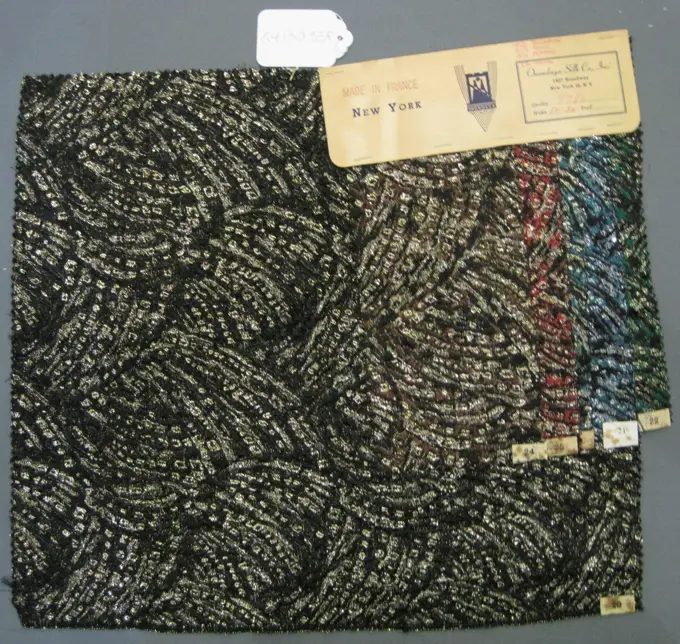
Lumbar ,, 1736 Lendloop van Linen with Entre-Deux van Kloskant, brand WG6 and 1736 Northern Netherlands linen (material). bobbin lace Lendloop van Linen with Entre-Deux van Kloskant, brand WG6 and 1736 Northern Netherlands linen (material). bobbin lace
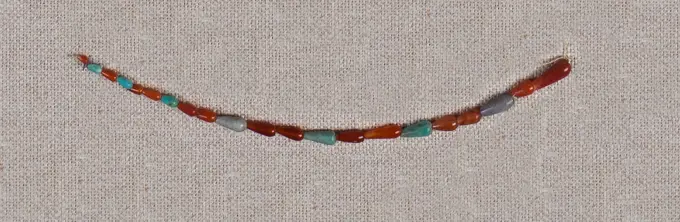
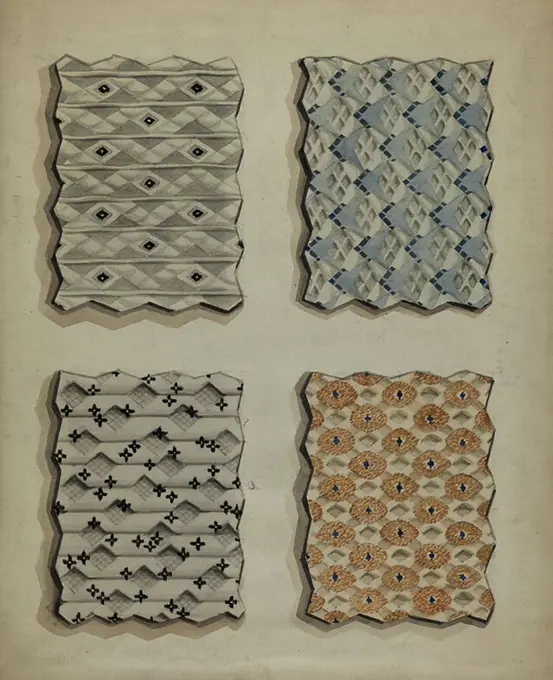
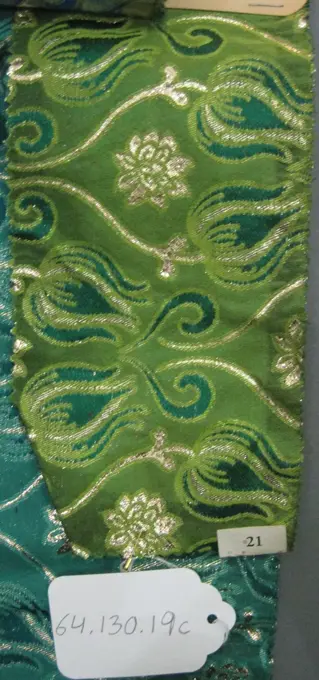
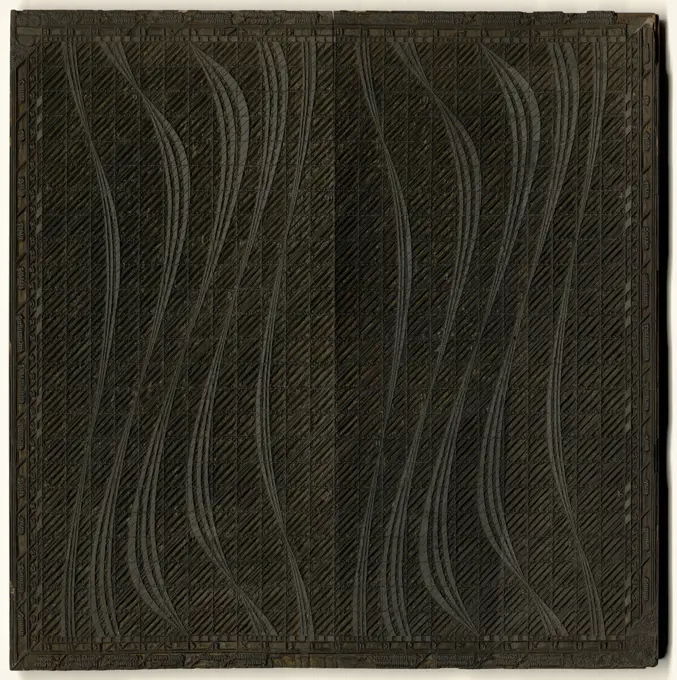
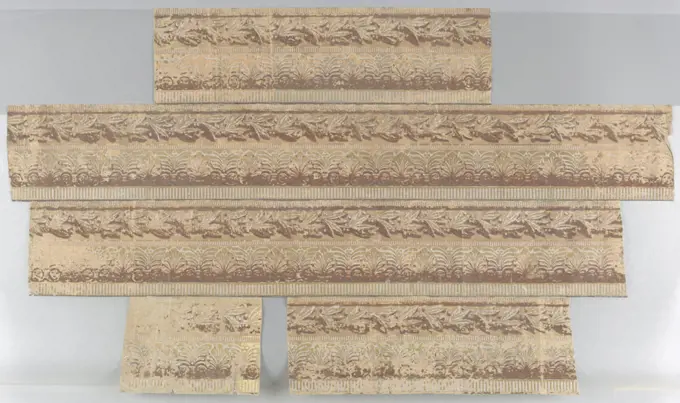
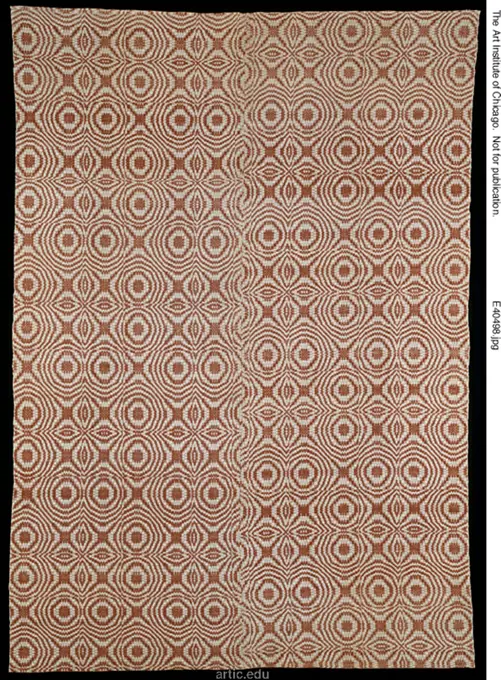
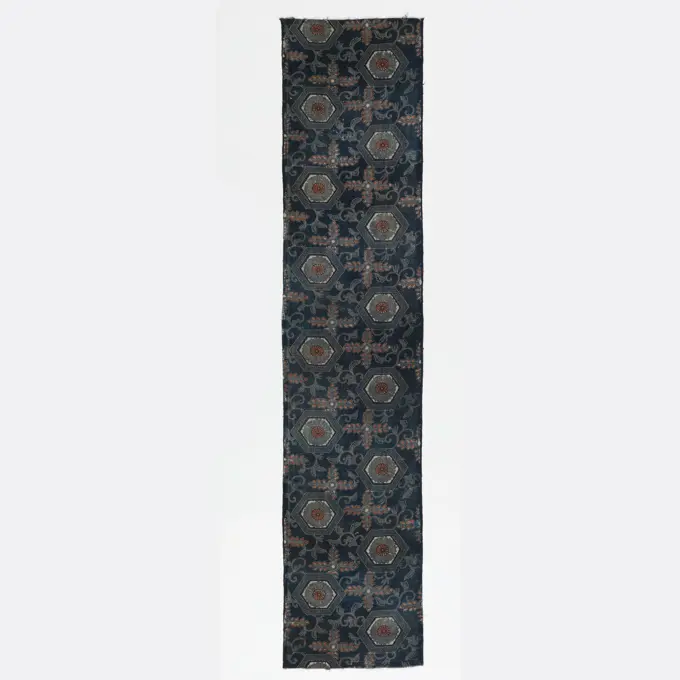
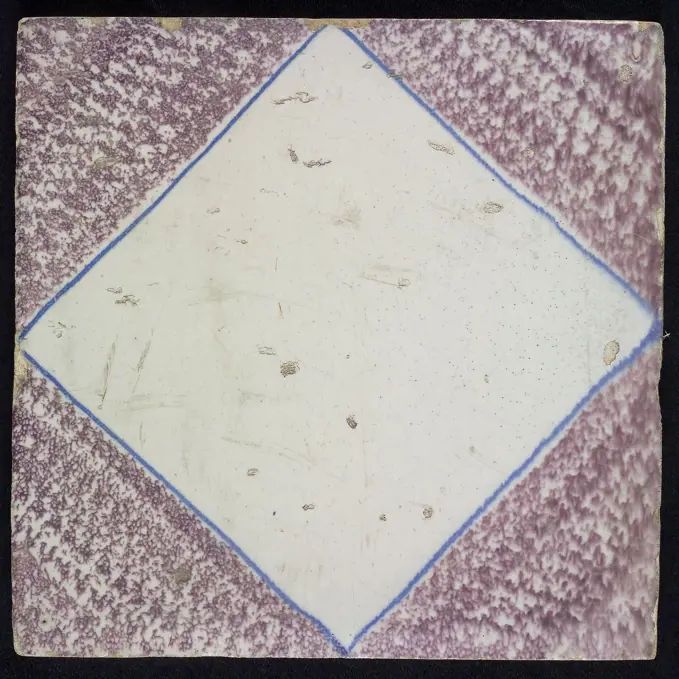
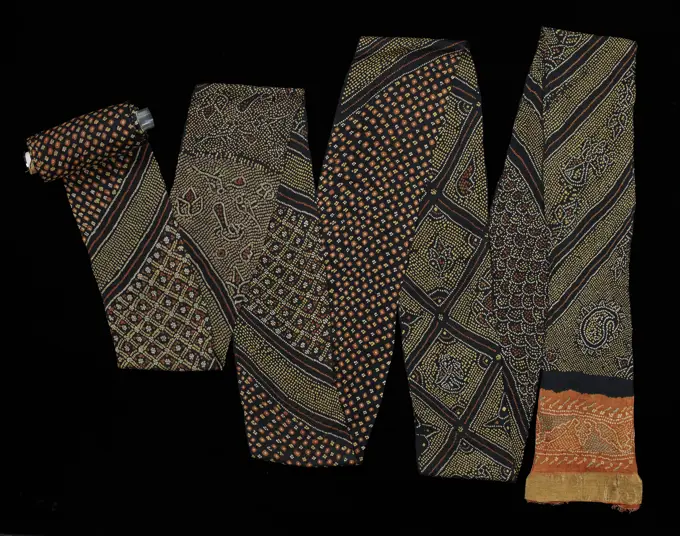
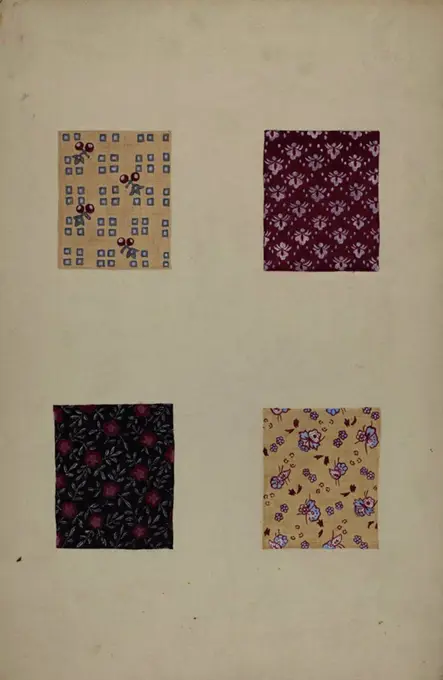
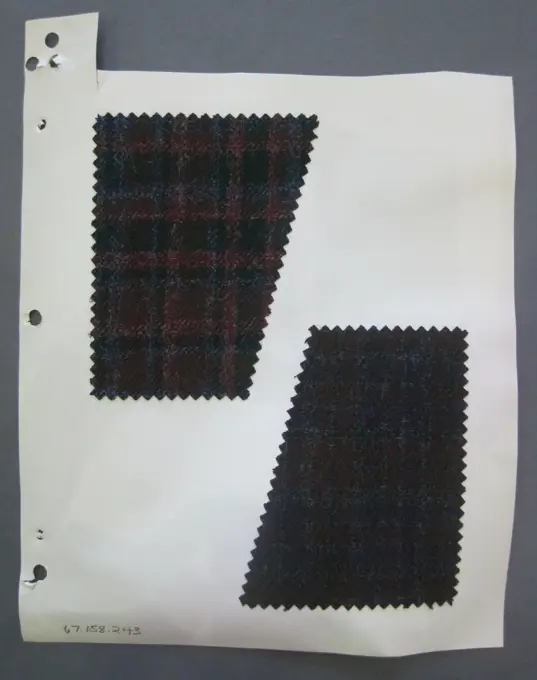
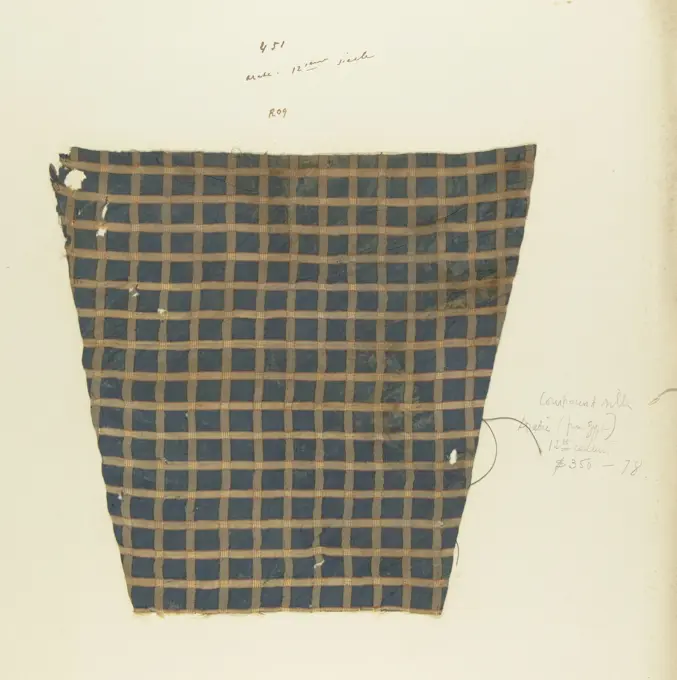
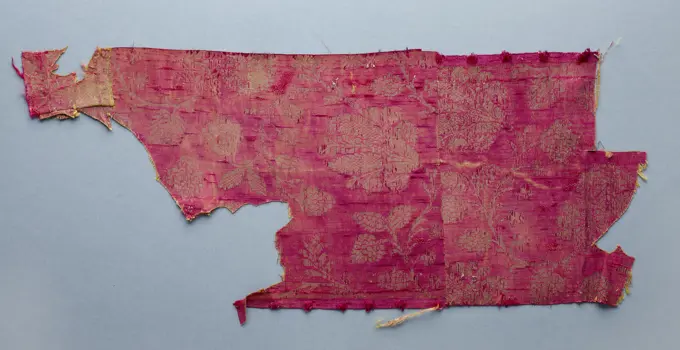
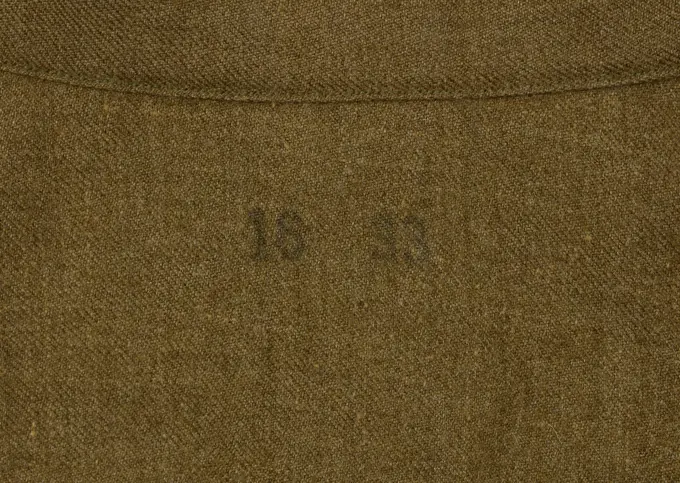
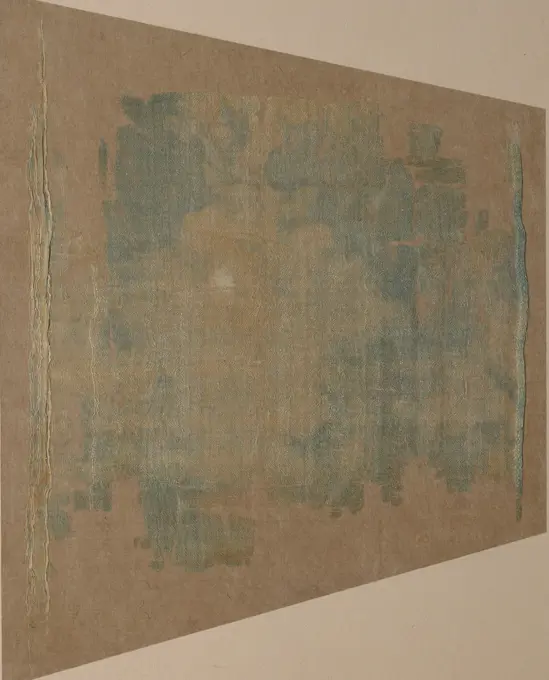
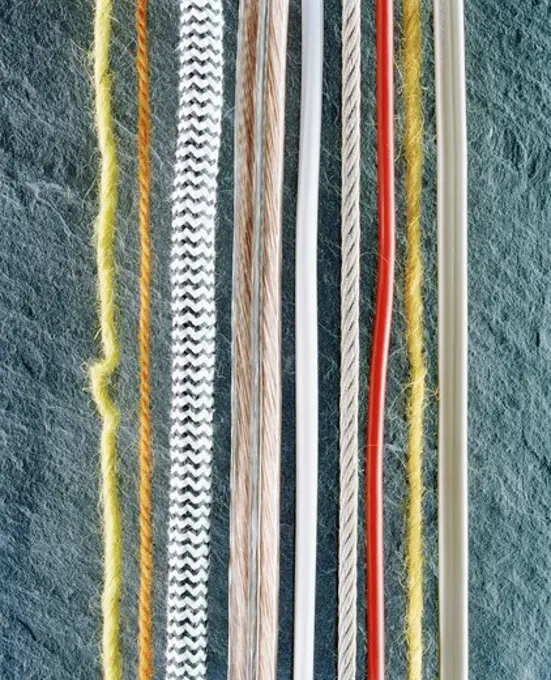
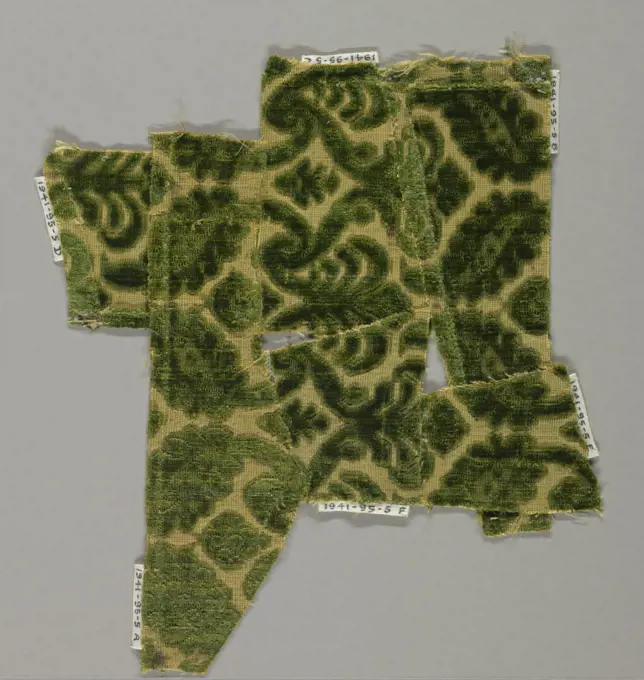
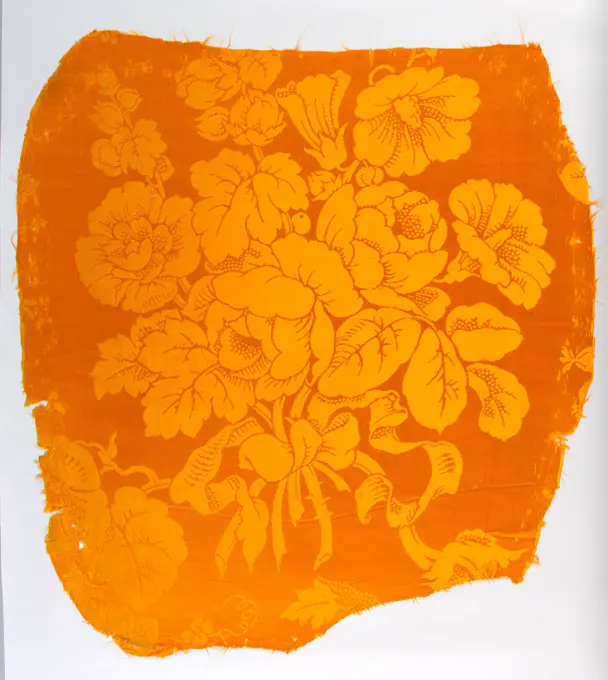
Fragment; silk; Warp x Weft: 57.1 x 53.5 cm (22 1/2 x 21 1/16 in.)Window Grill 15th-16th century Spanish. Window Grill. Spanish. 15th-16th century. Iron. Metalwork-IronTable cover, Medium: linen, cotton Technique: embroidered, Semi-circular table cover, possibly for a dressing table. White linen with a quilted design to fit shape. Center has a flower sprays. The quilted portions are stuffed and stitched around. Lined with white cotton., USA, mid-19th century, embroidery & stitching, Table coverLeaf with an oval motif lanner pattern connected by wavy line, anonymous, 1750 - 1900  Leaf with a vertical job pattern of oval motif connected by saved wavy line.  paper. lacquer (coating) block printing (relief printing process) fantasy ornamentString of carnelian, beryl and steatite drop beads ca. 1981-1295 B.C. Middle Kingdom-Early New Kingdom. String of carnelian, beryl and steatite drop beads. ca. 1981-1295 B.C.. Carnelian, beryl, steatite. Middle Kingdom-Early New Kingdom. From Egypt, Memphite Region, Lisht North, Cemetery, Debris, MMA excavations, 1920-22. Dynasty 12-18Textile Swatch Textile Swatch, 1950s to 1960s. Silk, 21 x 10 in. (53.3 x 25.4 cm).    1950s to 1960sWool Tapestry Fragment, 3rd century. Syria, 3rd century. Tapestry weave: wool; average: 21.7 x 14 cm (8 9/16 x 5 1/2 in.).Fabric Swatches. Dated: 1935/1942. Dimensions: overall: 27.9 x 22.9 cm (11 x 9 in.). Medium: watercolor and graphite on paper. Museum: National Gallery of Art, Washington DC. Author: Robert Stewart.Sector of a parasold deck of light green cotton, with two embroidered wavy leaf vines between which a wavy openwork strip, c. 1885 - c. 1900 Sector of a parasold deck of light green cotton, with two embroidered wavy leaf vines between which a wavy openwork strip. Nijmegenfrance parasoldek: cotton (textile). draad: cotton (textile) embroidering Sector of a parasold deck of light green cotton, with two embroidered wavy leaf vines between which a wavy openwork strip. Nijmegenfrance parasoldek: cotton (textile). draad: cotton (textile) embroideringTextile Swatches Onondaga Silk Company, Inc. (1925-1981). Textile Swatches, 1948-1959. 81 silk; 19 metal, (a) - (c): 8 1/2 x 4 1/4 in. (21.6 x 10.8 cm).    1948-1959Bed cover, c. 1970, 82 7/8 x 74 1/4 in. (210.5 x 188.6 cm), Nylon, metallic threads, beads; needlework, Egypt, 20th centuryWooden stick by Hans Springinklee from 1515 illustrating the astrolabe for Jacob Bannisius based on John Stabius horoscopes, with carved geometric and astronomical details.Homespun Wool. Dated: c. 1938. Dimensions: overall: 16.8 x 25.3 cm (6 5/8 x 9 15/16 in.) Original IAD Object: 3 1/2" wide; 7 1/8" long. Medium: watercolor and pen and ink on paper. Museum: National Gallery of Art, Washington DC. Author: Raymond Manupelli.Textile Swatches Onondaga Silk Company, Inc. (1925-1981). Textile Swatches, 1948-1959. 42 polyamide; 31 Rayon; 19 acetate; 8 metal, (a) - (e): 9 x 5 in. (22.9 x 12.7 cm).    1948-1959Border, Block printed on handmade paper, A band of laurel with berries above, with a band of anthemion and palmettes below. Three bands of dentilling, at the top and bottom edge and in the middle. Printed in shades of brown., H# 660, France, 1800-1825, Wallcoverings, BorderCoverlet Made 1820-1830 United States. Wool and cotton, plain weave with supplementary pattern weft (overshot) .Iron's grille in wooden window, surrounded with beautifully forged frame, decorated with oak branches and acorns, 1500 - 1550 Iron venture in wooden window, surrounded with beautifully forged frame, decorated with oak branches and acorns  iron (metal). wood (plant material) forging Iron venture in wooden window, surrounded with beautifully forged frame, decorated with oak branches and acorns  iron (metal). wood (plant material) forgingModel of a suzel. Model of a sail with a different kind of ignives on the schoot horn. An additional block has been added on the other side. Sailing inscription on label.Platte mand, anonymous, 1700 - 1900 Flat basket with handle and red braided characters on the bottom.  . Flat basket with handle and red braided characters on the bottom.  .Norwegian pattern, enlarged, necklineTextile (Japan); cottonHandwerk van macramé.Handicraft of macramé frills in vieux-rose and green on white cardboard attached. Belonging to series of eight white and ten colored needlework, manufactured by Aagje tapp for obtaining the deed beautiful and / or useful needlework to the industrial school, BK-1974-105-A to R.Stockings 1860-79 American. Stockings 104137Napkin (from a set of table linens) Belgian late 19th centuryMitts third quarter 19th century American. Mitts 169436Detail of hanging fleece fabric against black backdropFrontlet of gold leaf. Frontlet of gold leaf. Gold. Gold and SilverRed table napkins isolated on white background .Piece 18th century China. Piece. China. 18th century. Silk / Compound weave. Qing dynasty (1644-1911). Textiles-WovenPiece French 19th century View more. Piece. French. 19th century. Textiles-WovenTextile Fragment, Undetermined or Net, Fragment Nasca. , 200-600 C.E. Camelid fiber, 4 3/4 x 26 3/8 in. (12 x 67 cm).   Arts of the Americas 200-600 C.E.Piece 17th century Japan. Piece. Japan. 17th century. Silk / Compound weave. Textiles-WovenOrnament tile with blank squared and dotted decor, blue frame, purple on white background, wall tile tile sculpture ceramic earthenware glaze tin glaze, in form made baked glazed painted baked tempered Wall tile with purple and blue decor on white background. Ornament tile with blank square in the center with blue border. Corner filling: triangle with dotted decor in purple. Yellow shard Slightly slanted sides on the back in blue chalk: 17 indigenous potteryfragment of yellow cotton fabric in a cage, full frameMan's turban (Pagri), 19th century, 700 x 9 9/16 in. (1778 x 24.29 cm) (approximate), Cotton, metallic threads; tied resist dye, India, 19th centuryFabric Swatch Fab-Tex Inc.. Fabric Swatch, 1963-1966. Cotton, sheet: 8 1/4 x 10 1/2 in. (21 x 26.7 cm).    1963-1966Quilt Patches. Dated: c. 1938. Dimensions: overall: 38.6 x 25.4 cm (15 3/16 x 10 in.). Medium: watercolor, gouache, and graphite on paperboard. Museum: National Gallery of Art, Washington DC. Author: Katherine Hastings.Fragment, Medium: cotton Technique: printed, Fragment with a geometric pattern of frets and crosses in alternate rows in two shades of brown., England or USA, late 19th century, printed, dyed & painted textiles, FragmentTextile Swatches Onondaga Silk Company, Inc. (1925-1981). , 1948-1959. Silk, 23 3/4 x 18 1/2 in. (60.3 x 47 cm).    1948-1959Textile Swatch Textile Swatch, 1950s to 1960s. Silk, 22 1/2 x 12 1/2 in. (57.2 x 31.8 cm).    1950s to 1960sUntitled river mining scene.India, Rajasthan, Udaipur. Street Sari market, cloth for sale.Gold ribbon tableTextile Swatches Onondaga Silk Company, Inc. (1925-1981). , 1948-1959. Silk, 24 x 17 in. (61 x 43.2 cm).    1948-1959Textile Swatches Onondaga Silk Company, Inc. (1925-1981). , 1948-1959. 96 silk, 4 metal, a: 47 1/2 x 17 1/4 in. (120.7 x 43.8 cm).    1948-1959Textile fragment ca. 6th century A.D. Sasanian These wool fragments were once part of a pile carpet. They were excavated at Shahr-i Qumis in northern Iran, which has been identified as the ancient city of Hecatompylos, established by the Parthians as their capital by about 200 B.C. However, these fragments come from Room 23 at Site VI, which was seemingly converted into a burial chamber during the 6th century A.D., a date indicated by a coin of the Sasanian king Hormizd IV (reigned A.D. 579-590). The human remains discovered there consist of disarticulated bones, which is in keeping with Zoroastrian burial practice. Yet the bones appear to have been wrapped in leather and wool, which would be unusual for Zoroastrians, as is the inclusion of a coin with the body. Thus it is possible that in the 6th century Zoroastrian burial practices were still under development or that there were regional variations that are not recorded in surviving texts.Pile carpets are an important art form in IraTextile, Claflin's Inc., (USA, founded 1843), Medium: cotton Technique: printed on sateen; resist dyed, Fragment of black sateen with detached medallion motifs in two sizes in blotchy printing of greens, blues and reds., USA, 1900-1910, printed, dyed & painted textiles, TextileSamples (2) early 19th century French. Samples (2). French. early 19th century. Silk. Textiles-WovenFabric Swatch Fab-Tex Inc.. , 1963-1966. Wool, sheet: 8 1/4 x 10 1/2 in. (21 x 26.7 cm).    1963-1966Piece 18th-19th century Japan. Piece. Japan. 18th-19th century. Silk. Textiles-Wovenbeach hat from the sunTextile Fragment 3rd-4th century. Textile Fragment. 3rd-4th century. Wool, linen; plain weave, tapestry weave. Made in Egypt. TextilesTextile Sample from Sample Book 19th century Japan. Textile Sample from Sample Book 68172Bonnet veil, Medium: silk Technique: machine made with lace trim, Veil of embroidered black net with a border of black Chantilly-type lace in a floral pattern on three sides and beading for ribbon on the fourth side., Le Puy, France, 19th century, lace, Bonnet veilTextile 19th century Japan. Textile 68074Textile Fragment 12th century. Textile Fragment. 12th century. Cotton. Made in Egypt. TextilesGlove of white chamois leather, anonymous, c. 1900 - c. 1915 Left glove of white chamois leather. Decorated on the back with three stitched thickened. On the inside wrist with a pearl -colored knot. Netherlands whole: Chamois (Animal Material). button: Left glove of white chamois leather. Decorated on the back with three stitched thickened. On the inside wrist with a pearl -colored knot. Netherlands whole: Chamois (Animal Material). button:Nightshirt. Culture: British. Date: early 19th century. Museum: Metropolitan Museum of Art, New York, USA.Textile Swatch Textile Swatch, 1950s to 1960s. Silk, 19 3/4 x 10 in. (50.2 x 25.4 cm).    1950s to 1960sFragment of silk fabric  pattern made of floral twigs with flowers unknownSwatches, Medium: silk Technique: woven, France, late 19th century, SwatchesCHILE. característico tejido mapuche; detalle de mantaFabric Swatch Fab-Tex Inc.. , 1963-1966. Wool, paper, sheet: 10 1/2 x 8 1/4 in. (26.7 x 21 cm).    1963-1966Fringe, Medium: silk Technique: soumak weave, Green fringe with a soumak heading and looped and twisted skirt threads., Spain, 17th century, trimmings, FringeAnonymous, (US) Shirt, Flannel, OD, Coat Style - American shirt (attributed title), 1940. Wool flannel, mechanical and manual seams, ink. General Leclerc Museum of the Liberation of Paris - Jean Moulin Museum.Gloves Italian late 18th centuryFabric Swatch Fab-Tex Inc.. , 1963-1966. Wool, sheet: 8 1/4 x 10 1/2 in. (21 x 26.7 cm).    1963-1966Textile Swatches Onondaga Silk Company, Inc. (1925-1981). , 1948-1959. silk and metal, 9 x 4 3/4 in. (22.9 x 12.1 cm).    1948-1959Fragment, 700s. China, 8th century. Patterned tabby weave; silk; overall: 20 x 16 cm (7 7/8 x 6 5/16 in.).Fabric Swatch Fab-Tex Inc.. , 1963-1966. Wool, sheet: 8 1/4 x 10 1/2 in. (21 x 26.7 cm).    1963-1966Fabric Swatch Fab-Tex Inc.. , 1963-1966. Cotton, sheet: 8 1/4 x 10 1/2 in. (21 x 26.7 cm).    1963-1966Model Sheet from a Foundation Deposit for Hatshepsut's Temple ca. 1479-1458 B.C. New Kingdom. Model Sheet from a Foundation Deposit for Hatshepsut's Temple. ca. 1479-1458 B.C.. Linen. New Kingdom. From Egypt, Upper Egypt, Thebes, Deir el-Bahri, Temple of Hatshepsut, Foundation Deposit 2a (B), MMA excavations, 1921-22. Dynasty 18A sash from the celebration of the hundredth anniversary of Adam Mickiewicz's birthBand; silkKazimierz Dolny town seal. Kazimierz Dolny, signatoryPennant with lettering, For special achievements in the purchase of fruit and vegetables, GDR, Curiosity, Germany, EuropeCords in different colors, close-up.Fragments, Medium: silk Technique: cut and uncut voided supplementary warp pile (velvet) in a plain weave foundation, Green cut and uncut pile on a tan ground has a design of interconnected alternating leaves and flowers with highly conventionalized floral forms in the shape of palmettes. S-shaped leaf forms have five dots in the center., Italy, 17th century, woven textiles, FragmentsChalky uzbekistan flag painted with color chalk on old blackboardCase printing depicting flower and inscription: O. T. D.;  around 1914 1920 (1914-00-00-1920-00-00);