Textile Fragments

Historical textile fragments showcasing intricate patterns in rich colors, reflecting craftsmanship from various periods and styles.

Hexodring, Daghestan or Shirwan, Anonymous, 1800 - 1900 Hexagon rug, daghestan or shirwan. Midfield: Cobalt blue long distance with four hex corners in natural, blonde and beige with crochet motifs. Singed half triangles with stepped gable. Rand: five times. The middle one is white with so -called wine glass motif (= angular tulip) in beige tones with black contours. Here, outside of a few equal hems in yellow with rosettes. A second pair of hems in natural with rosettes. Caucasus wool Hexagon rug, daghestan or shirwan. Midfield: Cobalt blue long distance with four hex corners in natural, blonde and beige with crochet motifs. Singed half triangles with stepped gable. Rand: five times. The middle one is white with so -called wine glass motif (= angular tulip) in beige tones with black contours. Here, outside of a few equal hems in yellow with rosettes. A second pair of hems in natural with rosettes. Caucasus wool
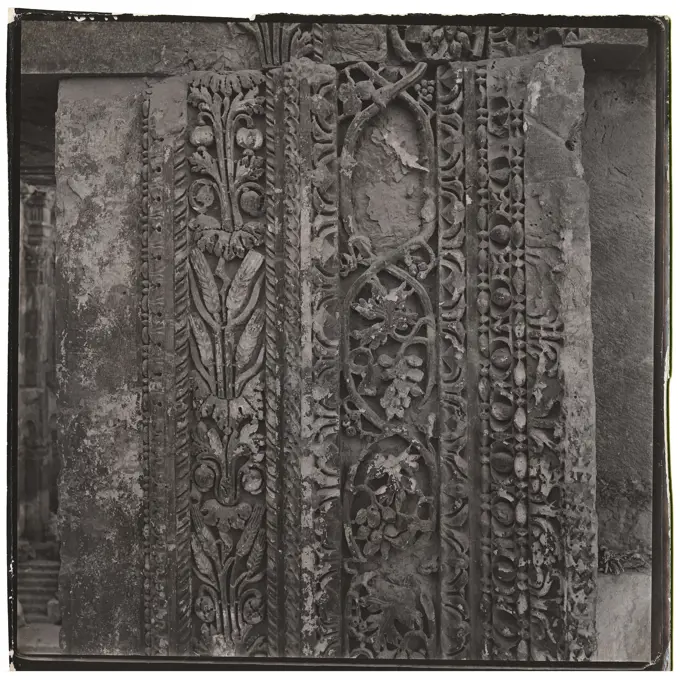
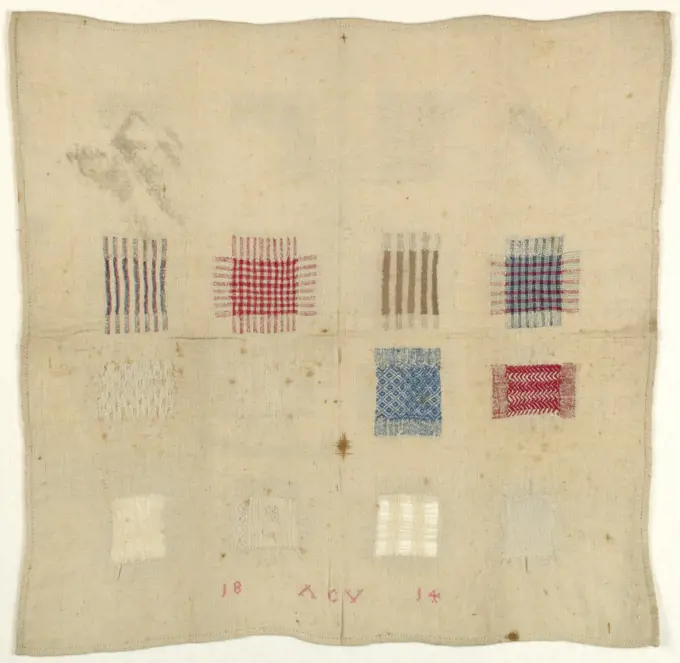
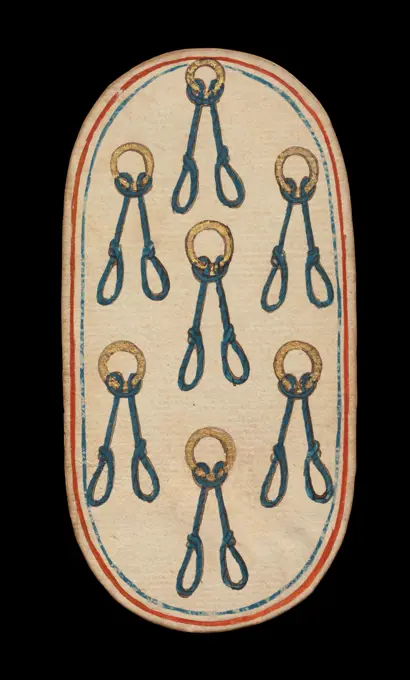
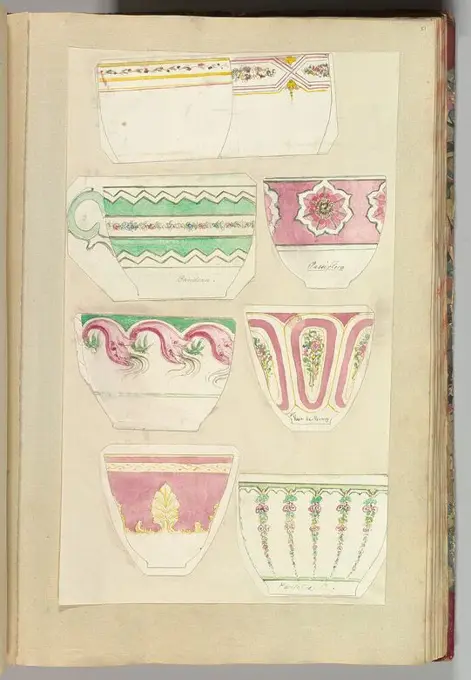
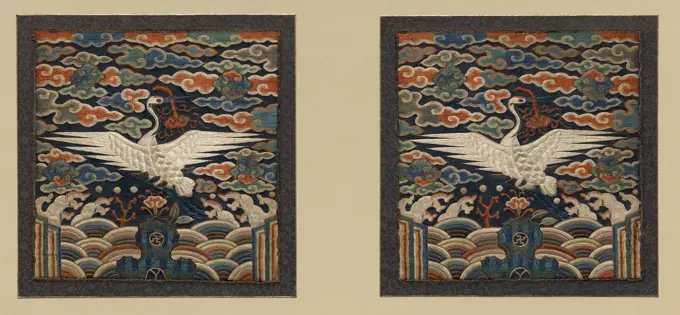
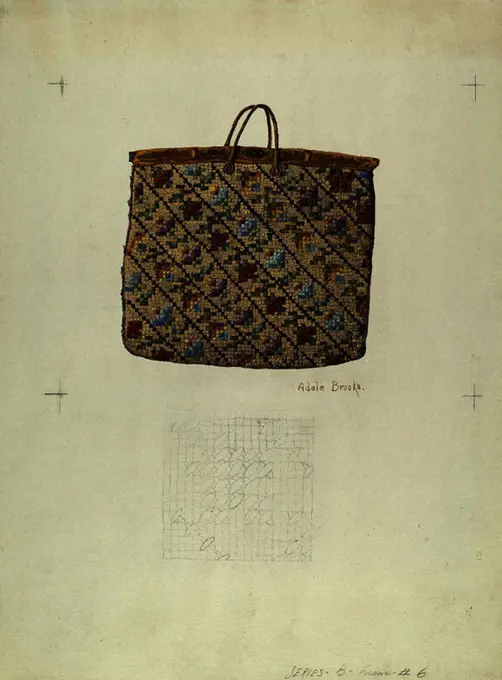
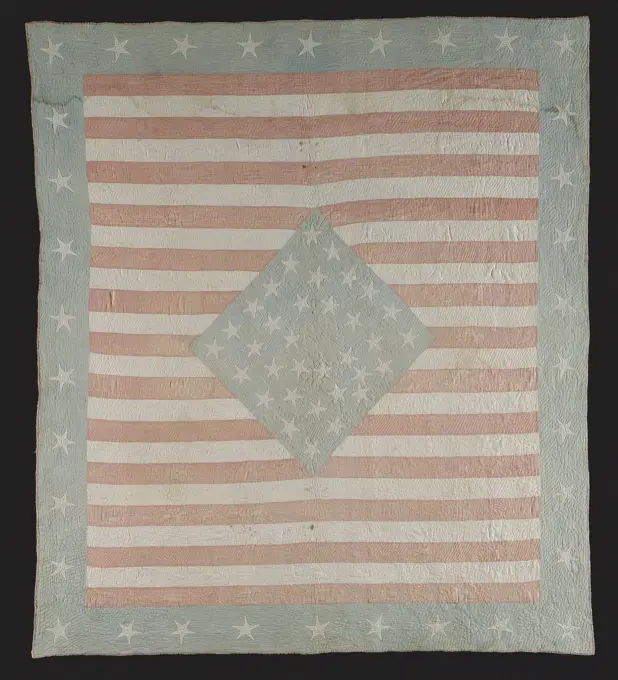
Steel bobbin with coarse wire as an example of a ribbon in linen stroke with a fierce thread that is used in Russian ribbon side of which a fragment is attached, anonymous, c. 1900 - c. 1930 sample Steel natural -colored bobbin with coarse wire as an example of a ribbon in linen stroke with a fierce thread that is used in Russian ribbon side of which a fragment belongs to the steel in which this can be seen. The date concerns the steel. West-Europa cotton (textile) bobbin lace / tape lace (bobbin lace) / Russian tape laceUnknown photographer, decorated door frame in Baalbek (without dat.): Detail. Photo, 20.4 x 20.5 cm (including scan edges) unbek. Fotograf : Verzierter Türrahmen in Baalbek (ohne Dat.)Pouch, 1800-1899, 10 3/4 x 4 7/8 in. (27.31 x 12.38 cm), Animal hide, beads, ribbon, United States, 19th centuryDarning sampler, Medium: cotton, wool, silk Technique: embroidered in running and cross stitches on plain weave foundation, Sixteen squares of pattern darning., Northern Germany, 1814, embroidery & stitching, Darning samplerCard Case (France); silk, metallic thread, pearl button7 of Nooses, from The Cloisters Playing Cards ca. 1475-80 South Netherlandish The Cloisters set of fifty-two cards constitutes the only known complete deck of illuminated ordinary playing cards (as opposed to tarot cards) from the fifteenth century. There are four suits, each consisting of a king, queen, knave, and ten pip cards. The suit symbols, based on equipment associated with the hunt, are hunting horns, dog collars, hound tethers, and game nooses. The value of the pip cards is indicated by appropriate repetitions of the suit symbol. The figures, which appear to be based on Franco-Flemish models, were drawn in a bold, free, and engaging, if somewhat unrefined, hand. Their exaggerated and sometimes anachronistic costumes suggest a lampoon of extravagant Burgundian court fashions. Although some period card games are named, it is not known how they were played. Almost all card games did, however, involve some form of gambling. The condition of the set indicates that the cards were hEight Designs for Decorated Cups. Artist: Alfred Henry Forrester Alfred Crowquill (British, London 1804-1872 London). Dimensions: sheet: 16 3/4 x 11 7/16 in. (42.5 x 29 cm). Patron: Probably commissioned by Samuel Alcock & Company (British, active ca. 1828-1859). Date: 1845-55. Museum: Metropolitan Museum of Art, New York, USA.A Pair of Rank Badges with Single Crane Motif, 1800s. Korea, Joseon dynasty (1392-1910). Silk, satin damask weave; silk thread embroidery; object: 25.4 x 25.4 cm (10 x 10 in.); mounted: 43.2 x 78.1 cm (17 x 30 3/4 in.). Traditionally, square silk badges with embroidered birds and animals were worn on the front and back of official costumes. Rather than simple ornaments, rank badges represent the status of the wearer, with different animals indicating the hierarchy of ranks. The single crane, as on these rank badges, was worn by civil officials of the fourth or higher ranks.Piece 17th century Japan. Piece 71232Commemorative Scarf; Warp x Weft: 67 x 70 cm (26 3/8 x 27 9/16 in.)Trimming fragment, Medium: silk, wool, cotton Technique: woven with raised pile, Red scrolls on yellow background., France, late 19th century, woven textiles, Trimming fragmentOld book isolated on white Dutch flag, Anonymous, 1881 flag Flag with Red-White-Blue jobs; At the top and bottom sides, narrow tracks red-white-blue with ditto short frills. On white show: left land, right sea. Left Mercury in the midst of merchandise in crates, tons and bags. Rope, credit panels, globe, anchor and horn of abundance. Behind a sailing ship. On the right to the sea Neptunus, pulled on a sled through two horses. Two ships come from the right under a red-white-blue flag; On Pennant: W III. Furthermore, the characters: 10; 20; 30. On the merchandise left: 1881; JAVA; Havana; Manella; Rappe: Nos. 1050-1065. Inscription: Commerce and sea ship. In white narrow lane under: tr.19.n.o.m. Netherlands Baan red and blue: wool. Baan white: Cotton (textile) painting sailing-ship, sailing-boat. merchant shipping, shipping trade. specific aspects, allegorical aspects of Mercury; Mercury as patron. Neptune as lord of the sea. 'Cornucopia', Horn of Plenty Java. Havana. Manilla. RappeCarpet Bag. Dated: c. 1938. Dimensions: overall: 35.6 x 26.6 cm (14 x 10 1/2 in.). Medium: watercolor and graphite on paper. Museum: National Gallery of Art, Washington DC. Author: Adele Brooks.Fragment, Mediun: Warp; S-spun linen. Wefts; S-spun linen. S-spun wool. Technique: slit tapestry with supplementary weft wrapping, Small fragment showing a leaf with elaborate volutes at each side., Egypt, 3rd-4th century, woven textiles, FragmentWooden comb from 14th Century EgyptFlag QuiltPillow Cover (France); cotton embroidery on cotton foundationOrnament with the monogram of Christ, Wierix (attributed to), 1594 print  Antwerp paper engraving / letterpress printing IHS ('Jesus man's Savior') ~ Symbol of Christ. Flowers ~ ornamentHandkerchief mid-19th century French. Handkerchief 84222Commemorative textile, Medium: cotton Technique: roller-printed on plain weave., Length of three un-cut-apart American flags with 39 stars made for the 1876 Centennial in Philadelphia. Around the border are the flags of nations that participated in the Centennial., USA, 1876, printed, dyed & painted textiles, Commemorative textileSampler; Embroidered by Sarah Knott; silk embroidery, cotton foundation; 22 x 17 cm (8 11/16 x 6 11/16 in.); Bequest of Mrs. Henry E. Coe; 1941-69-213