Textile Fragments and Decorative Fabrics

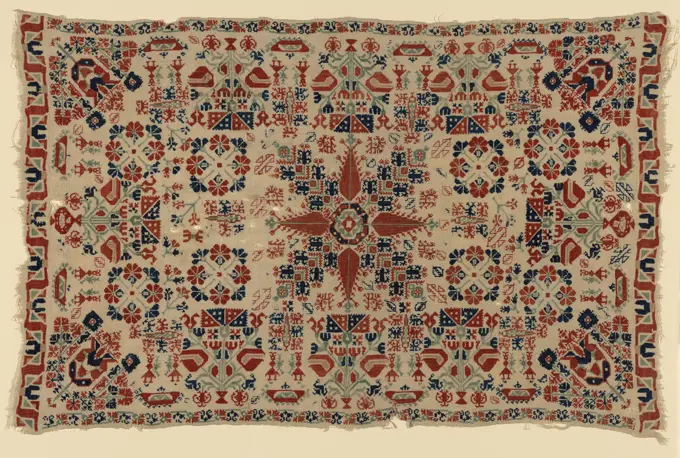
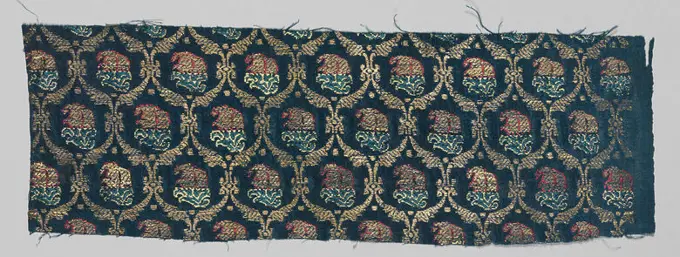
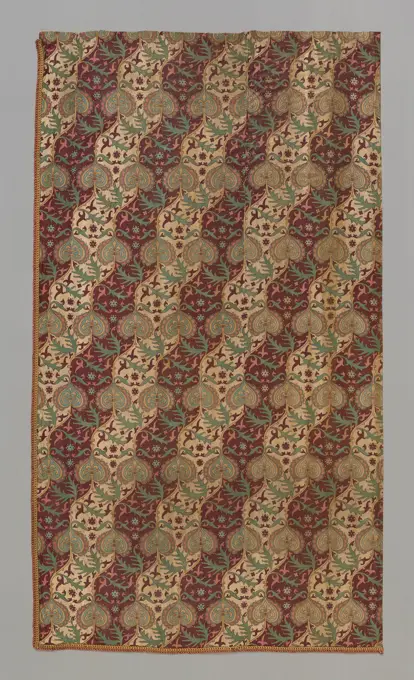
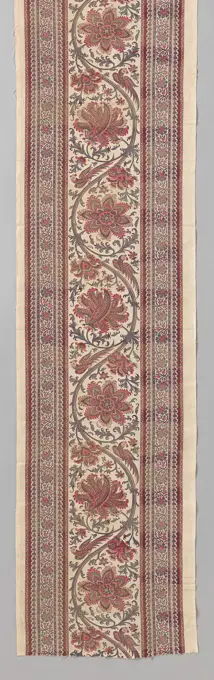
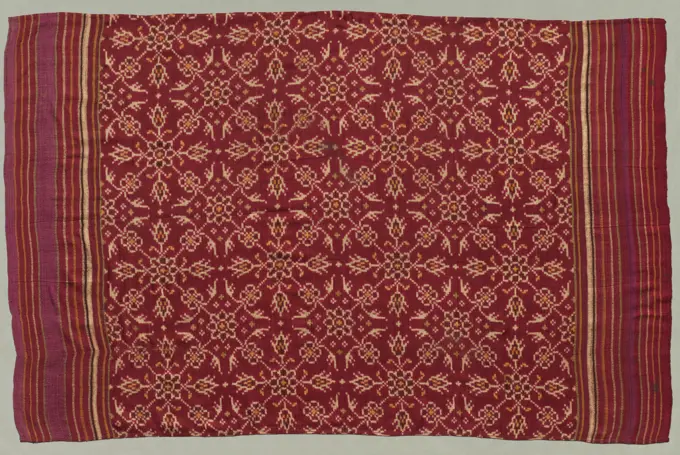
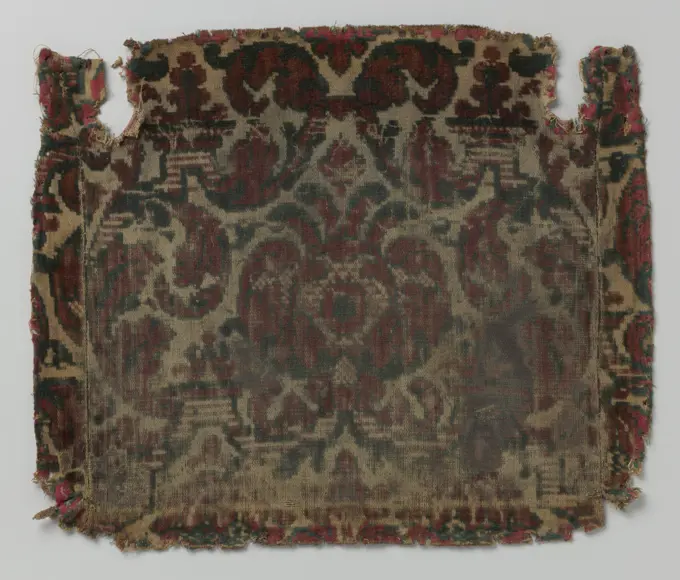
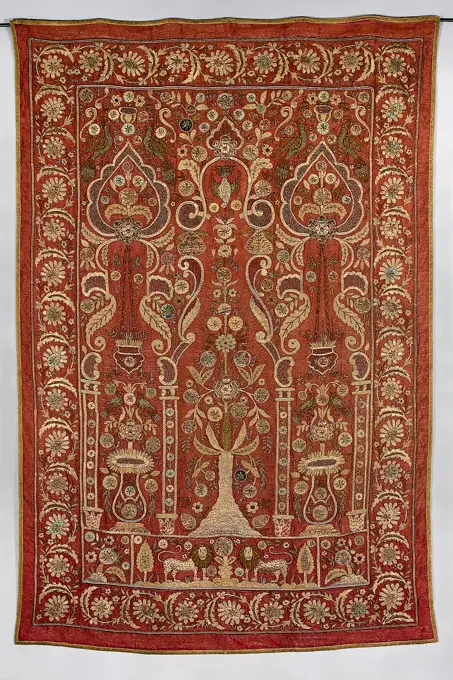
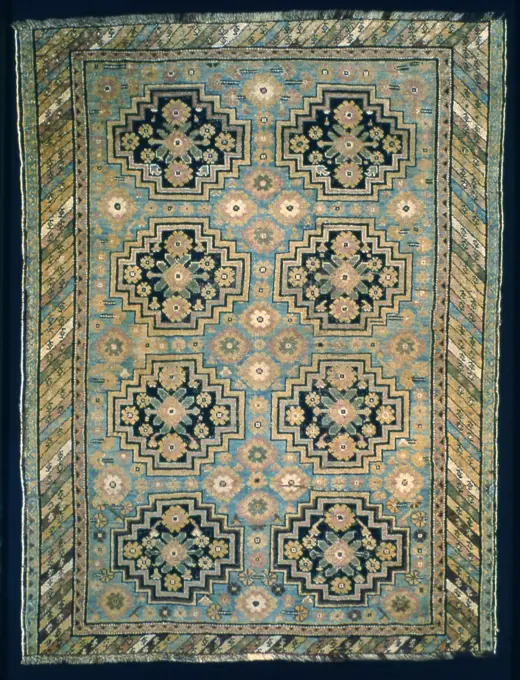
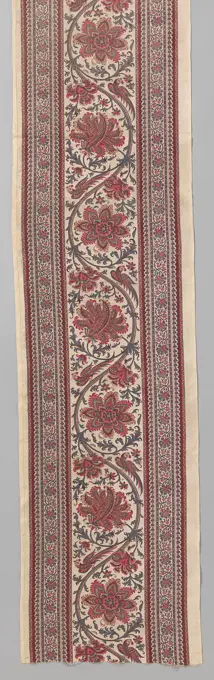
A variety of textile fragments, showcasing intricate designs and rich colors from different cultures and centuries, characterized by geometric and floral motifs.
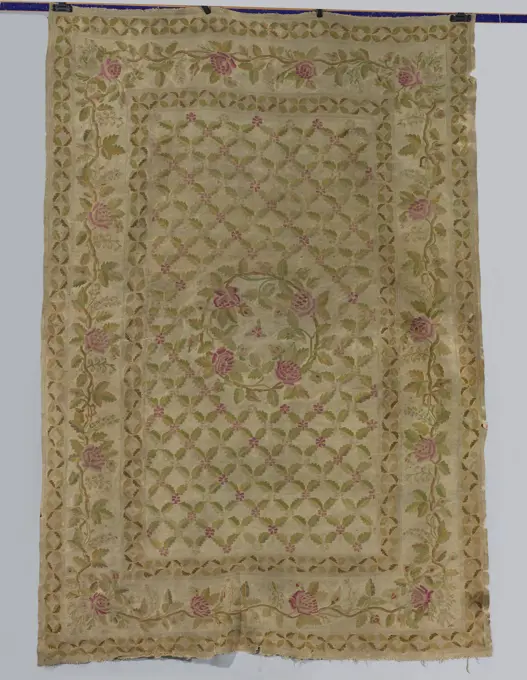
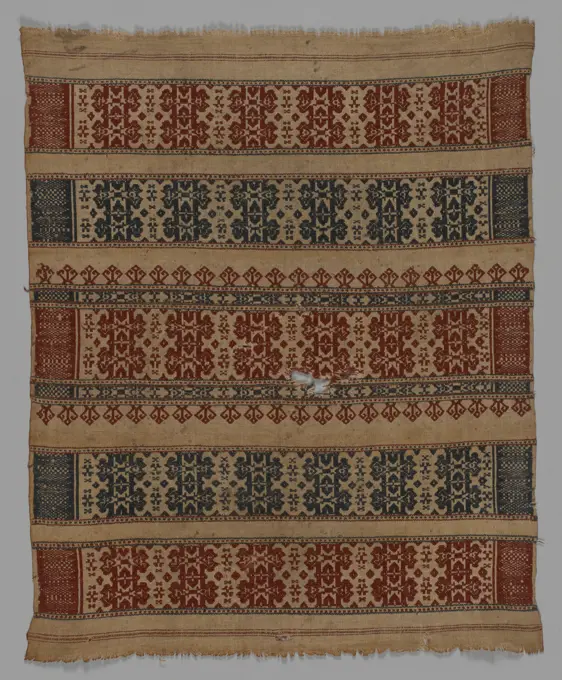
Dworski Kilim;  1. PO. 19th century (1801-00-00-1850-00-00);Wierzejski, Tadeusz (1892-1974) - collection, gift (provenance), Kilimy
Dworski Kilim; 1. PO. 19th century (1801-00-00-1850-00-00);Wierzejski, Tadeusz (1892-1974) - collection, gift (provenance), Kilimy
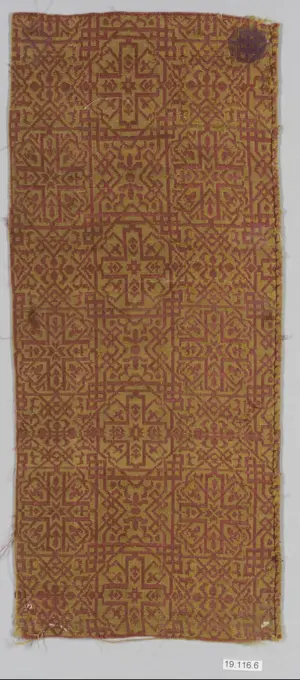
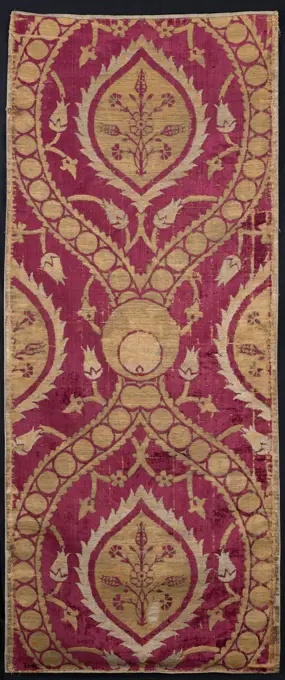
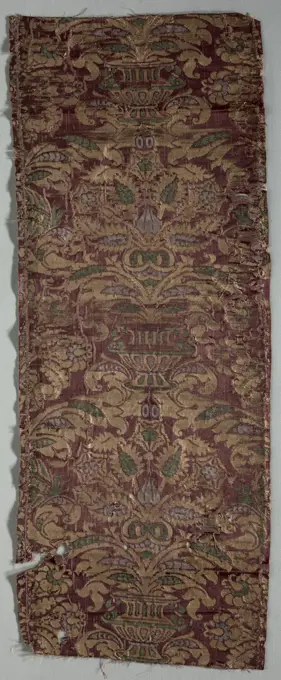
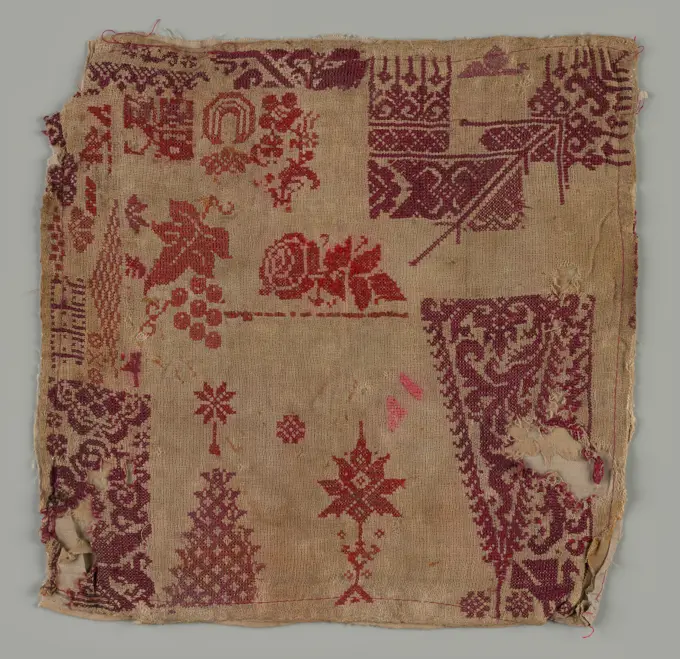
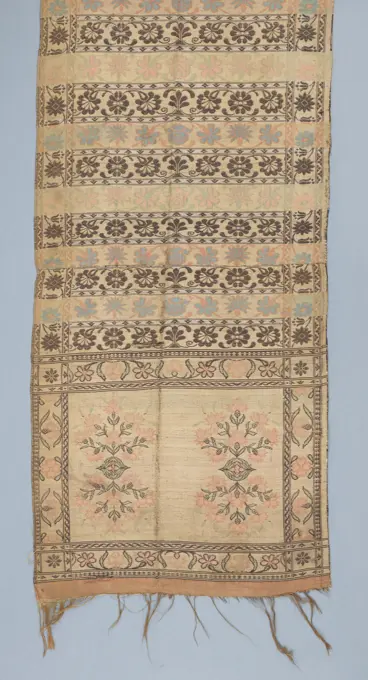
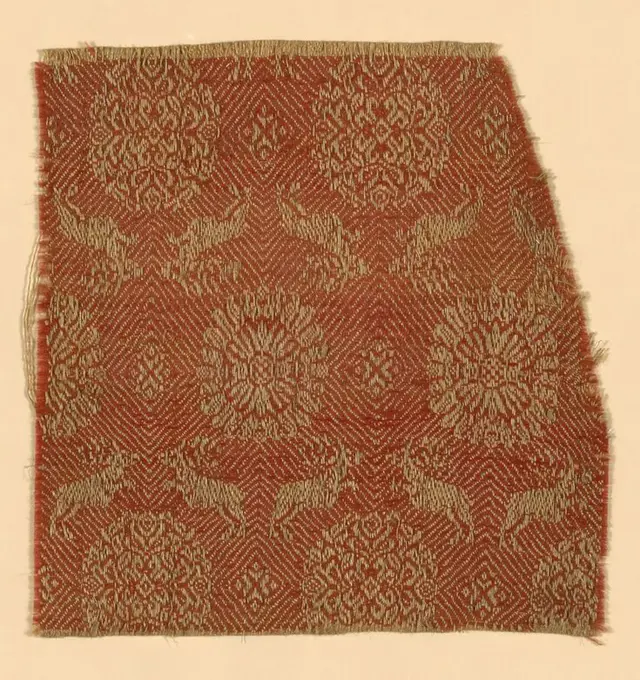
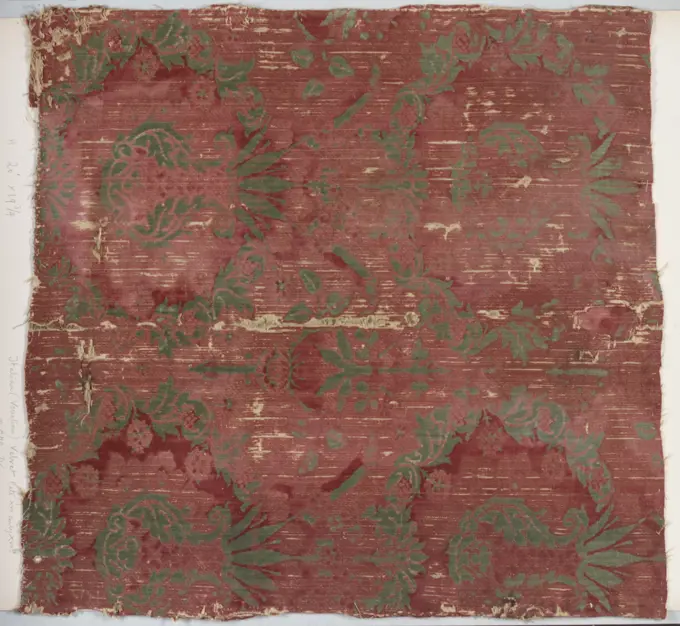
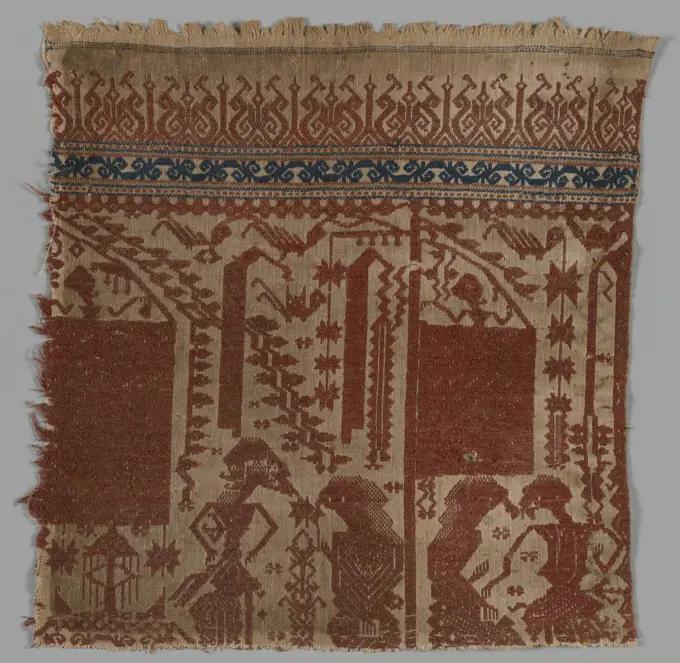
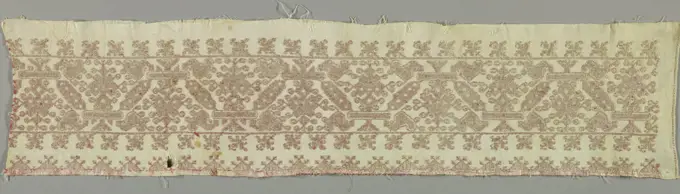
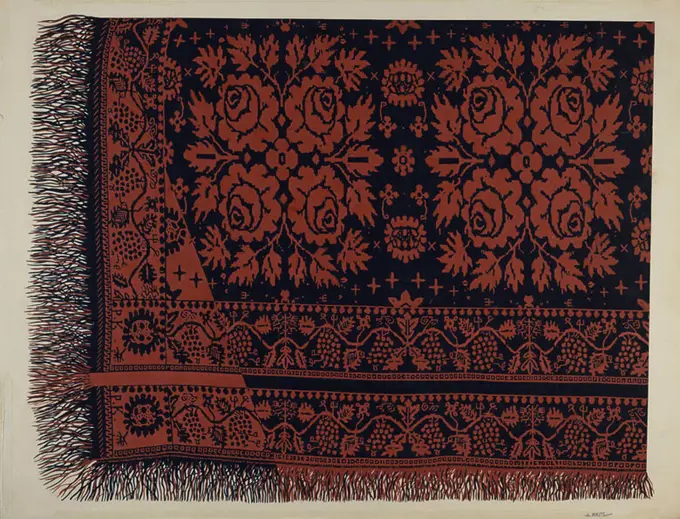
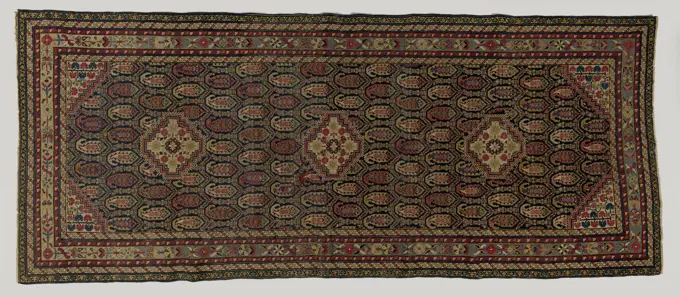
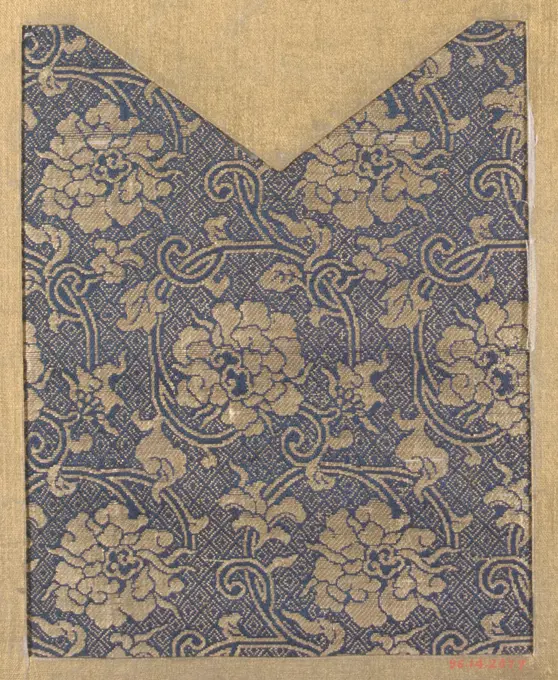
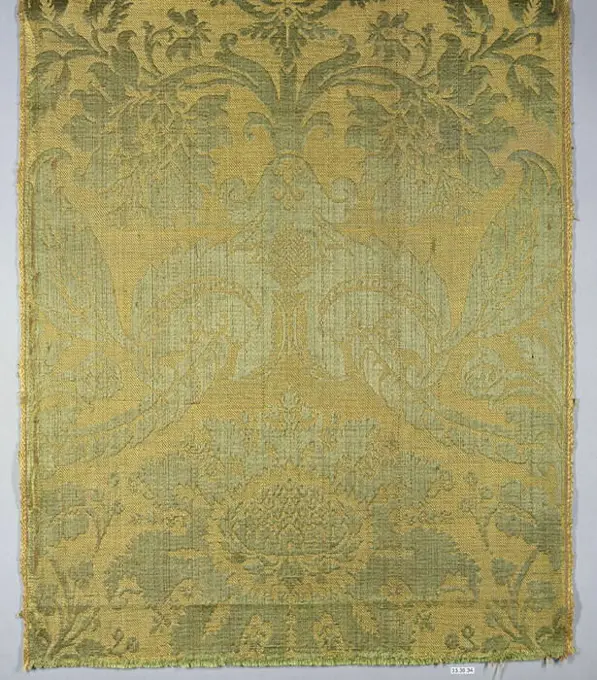
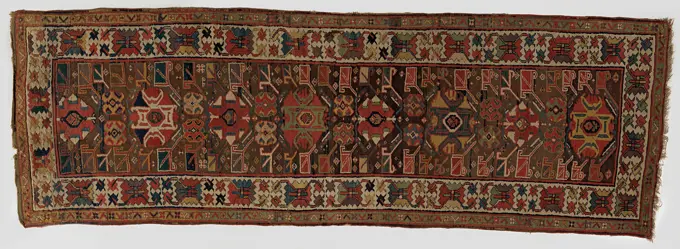
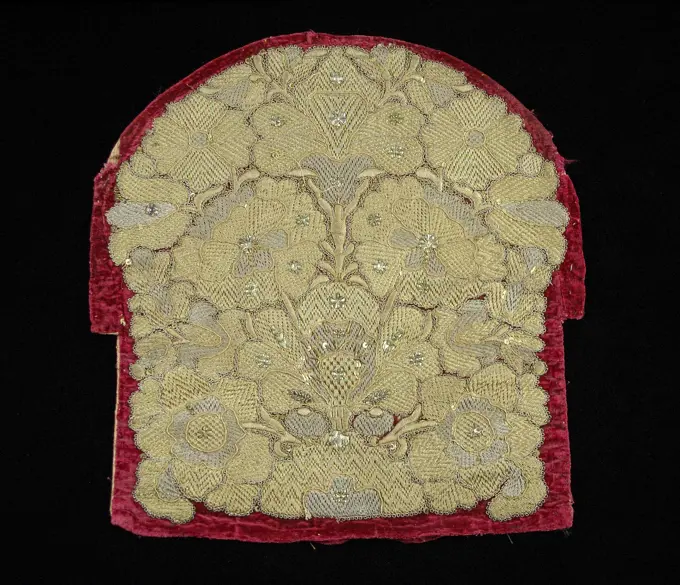
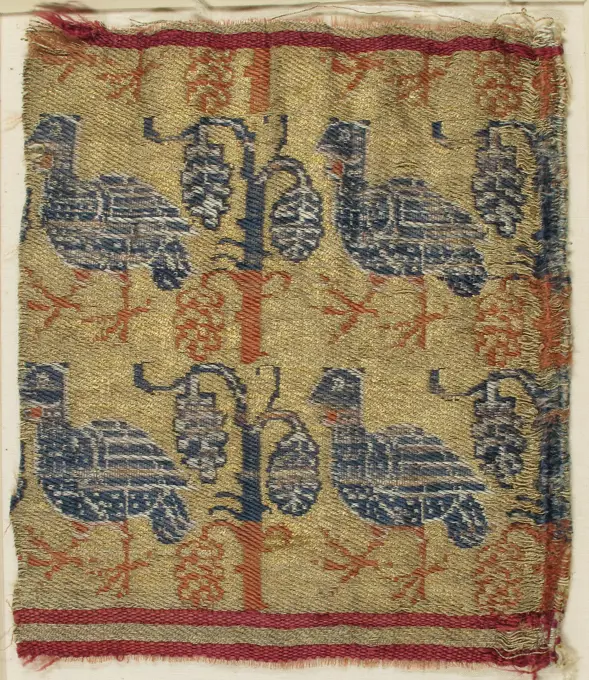
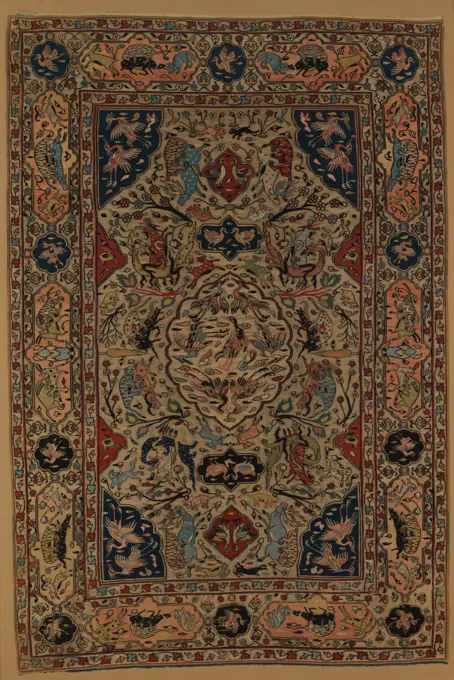
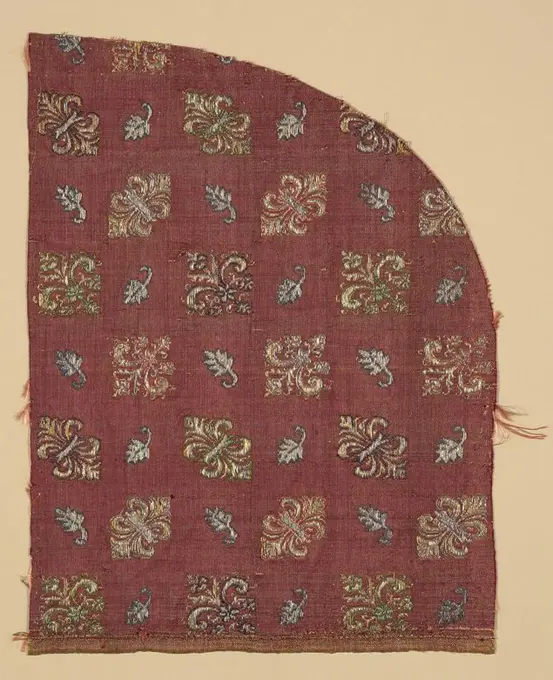
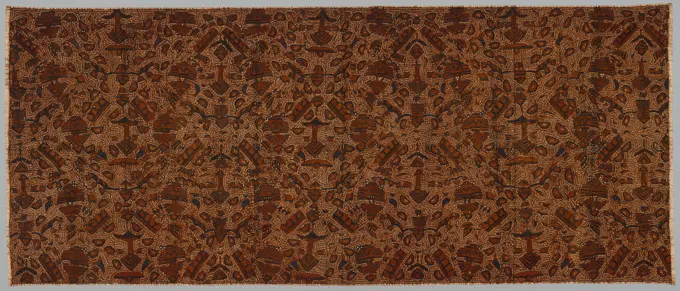
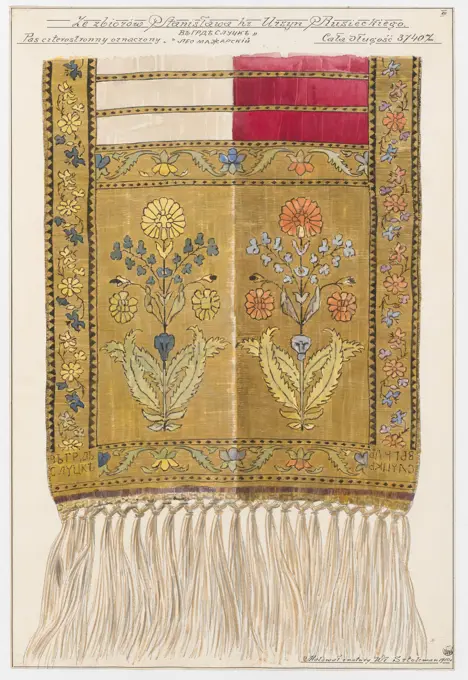
Fragment (Iran), 17th century; silkDworski Kilim;  1. PO. 19th century (1801-00-00-1850-00-00);Wierzejski, Tadeusz (1892-1974) - collection, gift (provenance), KilimyEastern carpet ,, 1800 - 1900 Oriental carpet, prayer rug, Kos-Ghiordes, of which midfield is decorated with a double Mihrab and a medallion. Light blue corner pieces with tulips. The widest edge is decorated with a zigzag and triangles. Ghiordes wool. cotton (textile) Oriental carpet, prayer rug, Kos-Ghiordes, of which midfield is decorated with a double Mihrab and a medallion. Light blue corner pieces with tulips. The widest edge is decorated with a zigzag and triangles. Ghiordes wool. cotton (textile)Sampler (Spain); Embroidered by Ramona Benyto; silk embroidery on linen foundationTextile Fragment 15th century Geometric designs such as the ones in this fragment are found ornamenting a wide variety of media produced in Nasrid period (1232-1492) Spain, including tile work, woodwork, book binding, and painted stucco. The basic principle of the design is an eight-pointed star, and this pattern expands into a lattice of geometric possibilities. Such bold designs recall the famous wall patterns in the Alhambra palace in Granada.. Textile Fragment 447085Sampler (England); Embroidered by Susan Eve; linen and silkBritain of fabric;  16th century (1501-00-00-1600-00-00);Fabrics, Turkish fabricsPiece 16th century Italian. Piece 216935Fragment (India); cottonBrocaded Textile, late 1600s. Italy, late 17th century. Brocade, silk; overall: 29.2 x 76.2 cm (11 1/2 x 30 in.).Ritual Weaving(Tampan)Sampler (Spain); silk embroidery on linen foundationSampler(Limar)Long Shawl in a Vegetal Style with Coral Center, 1848-1852. Austria, England, France, or Scotland, 19th century. 3/1 twill weave; wool; overall: 342.3 x 165.1 cm (134 3/4 x 65 in.).Piece 18th-19th century Japan. Piece. Japan. 18th-19th century. Silk. Textiles-WovenFragment of a Cover 18th century. Fragment of a Cover. 18th century. Linen; embroidered. Attributed to Turkey. Textiles-EmbroideredShawl third quarter 19th century Scottish. Shawl 168296Piece 18th-19th century Japan. Piece. Japan. 18th-19th century. Silk. Textiles-WovenRussian sash Unknown, Manufacturing Kiakow g.Fragment silk silver brocade with pattern of peonies and leaves between which staggered tires. Fragment silk silver brocade with multicolor pattern of peonies and leaves, between the staggered tires. Rinceaux styled on both sides.Fragment. Europe. Date: 1601-1700. Dimensions: 19.5 × 18.9 cm (7 3/4 × 7 1/2 in.). Linen and wool, weft-float faced point twill weave self-patterned by main warp floats. Origin: Europe. Museum: The Chicago Art Institute, Chicago, USA.Fragment late 16th-17th century Italian, Venice. Fragment 230446Sampler(Limar)Border Made 1601-1700 Italy. Linen, plain weave; embroidered with silk floss in back, hem, satin, and split stitches; edged with silk floss in buttonhole and detached buttonhole stitches .Silk Fragment, 1375-1399. Italy, last quarter of the 14th century. Lampas weave, silk; overall: 28 x 25.7 cm (11 x 10 1/8 in.).Fragment of a Ritual Weaving(Tampan)Band, Medium: silk on linen Technique: cross-stitch and double-running stitch embroidered on plain weave, Band of natural linen (possibly once a border) embroidered in pink silk; continuous geometric floral vine with a guard strip on each side composed of isolated geometric blossoms., Europe, 17th century, embroidery & stitching, BandCushionCoverTextile Fragment 17th-18th century. Textile Fragment 443020Coverlet. Dated: 1935/1942. Dimensions: overall: 50.9 x 66.1 cm (20 1/16 x 26 in.) Original IAD Object: 80" wide; 90" long. Medium: watercolor and gouache on paperboard. Museum: National Gallery of Art, Washington DC. Author: Edward White.Oriental carpet, Anonymous, 1700 - 1900 Eastern carpet, flower rug, medal cut with rows of Botehs, and three medallions. The widest edge is decorated with rosettes. Caucasus wool Eastern carpet, flower rug, medal cut with rows of Botehs, and three medallions. The widest edge is decorated with rosettes. Caucasus woolWoman's Trouser Band Made 1875-1900 China. Embroidered in shades of blue and black on gauze. . Han-ChineseTextile 1700-1899 Russian. Textile 173404Cover Made 1701-1800 Spain. Linen; cross stitch and punch work .Gold lamé silk sash unknownSari India 19th centuryFragment, Medium: silk Technique: plain compound satin, Allover geometrical design in blue and tan on a gray ground., China, 18th century, woven textiles, FragmentFragment. Italy or Turkey. Date: 1475-1525. Dimensions: 64.2 x 67 cm (25 3/8 x 26 3/8 in.)Weft repeat: 41.9 cm (16 1/2 in.). Silk, warp-float faced 4:1 satin weave with gilt-metal-strip-wrapped silk, discontinuous supplementary facing wefts and supplementary pile warps forming cut voided velvet. Origin: Italy. Museum: The Chicago Art Institute, Chicago, USA.Piece 18th-19th century Japan. Piece 66924Wall extension of linen with print in gold on gray long distance with stylized tergal pattern inside windows in which a tiger or a peacock, anonymous, c. 1400 - c. 1950 Wall extension, a sheet, of linen with print in gold on gray stock with stylized tern pattern inside windows in which a tiger or a peacock alternately.  linen (material) Wall extension, a sheet, of linen with print in gold on gray stock with stylized tern pattern inside windows in which a tiger or a peacock alternately.  linen (material)Shoulder Cloth (Limar,Sangai)Half of the Persian belt (cut along) unknownShoulder Cloth(Limar)Textile Fragment. Dimensions: L: 4 in (10.2 cm) x W: 11.5 in (29.2 cm). Date: 18th century. Museum: Metropolitan Museum of Art, New York, USA.Textile Fragment, 1800s. Japan, 19th century. Silk; average: 30.5 x 16.5 cm (12 x 6 1/2 in.).Panel Made 1849-1851 England. Cotton, plain weave; block or roller printed; glazed; edged with wool . Augustus Welby Northmore Pugin (Designer)Gordijnval van imitatiesits, op stevig wit katoen gedrukt met breed randpatroon van golvende twijgen met palmet- rozetbloemen en vogels.Curtain trap (A, B, C) of imitationits, on sturdy white cotton printed with wide edge pattern of wavy twigs with palmut and rosette flowers and birds in red, cerise, pink and gray blue with purple draft, caught in narrower red tables with a similar pattern , namely double-kicked twigs, rosette flowers and blossoms on a white ribbon. A leaf in every scallop. Divorce lists in light blue and pink with winding rank. France or Alsace Approx. 1900-1925.Fragment of Silk, early 1900s. India, early 20th century. Tabby weave, double ikat; silk; overall: 66.1 x 101.6 cm (26 x 40 in.).Back from the bishops throne, embroidered - the Poraj coat of arms unknownBedcover Made 1854 New York. Cotton, plain weave; embroidered with cotton yarns in back, chain, cross, overcast, running (pattern darning) and surface satin stitches; main warp fringe; two loom widths joined .Fragment shaved velvet, c. 1650 - c. 1700 Fragment velvet with pattern of acanthus leaves in the colors green and blue on cream -colored soil. Note: Fragment is probably part of the chair with inv.nr BK-KOG-1443-A.  linen (material). velvet (fabric weave). wool Fragment velvet with pattern of acanthus leaves in the colors green and blue on cream -colored soil. Note: Fragment is probably part of the chair with inv.nr BK-KOG-1443-A.  linen (material). velvet (fabric weave). woolTextile Fragment, 1800s. Japan, 19th century. Silk; average: 25.4 x 13.4 cm (10 x 5 1/4 in.).Church tablecover. unknown, authorPanel, 19th century, L.43 x W.36-3/8 in., cotton; needlework, India, 19th centuryPiece 17th century () Spanish. Piece 216442Carpet, so -called arabesk dress, with green edge ,, 1590 - 1650 Arabesk dress with green edge, lotto carpet. Midfield with arabesk motifs. Double edge. Button: Ghiordes Knoop. Little Asia wool Arabesk dress with green edge, lotto carpet. Midfield with arabesk motifs. Double edge. Button: Ghiordes Knoop. Little Asia woolOosters tapijt.Oriental medallion or grid rug of knotted wool, carpet format. There are two elongated medallions in midfield and four edges around them.Tapestry;  19th century (1801-00-00-1900-00-00);Tree of Life (iconogr.), Grodyński, M. (Fl. Ca 1947) - collection, arcades, embroidery, judaica, plant ornaments, parochate, purchase (provenance)ChaIIce veil made of silk fabric with flower pattern unknownCushionCoverCarpet Made 1875-1900 Caucasus. Wool and cotton, plain weave with supplementary wrapping wefts forming cut pile through a technique known as Ghiordes knots .Sample Book (France); wool, silk; 17 x 25.5 cm (6 11/16 x 10 1/16 in. ); 1970-3-1Piece 18th-19th century Japan. Piece 67789Square 17th century. Square 448681Excerpt ciselé velvet with yellow long distance purple braid, anonymous, 1500 - 1599 Fragment silk ciselé velvet with recesses, with yellow -fond purple braid, hexagons forming and always filled with a palmet. Two parts put together. Italy silk Velvet chiseled Fragment silk ciselé velvet with recesses, with yellow -fond purple braid, hexagons forming and always filled with a palmet. Two parts put together. Italy silk Velvet chiseledFragment. Egypt. Date: 1367-1400. Dimensions: 30 × 32 cm (11 3/4 × 12 5/8 in.)Repeat: 15.8 × 11.3 cm (6 1/4 × 4 1/2 in.). Silk, satin weave with plain interlacings of secondary binding warps and patterning wefts. Origin: Egypt. Museum: The Chicago Art Institute, Chicago, USA. Author: Islamic.Carpet Made 1785-1825 Spain. Silk, plain weave with supplementary patterning and brocading wefts forming uncut pile; three panels joined .Piece 18th-19th century Japan. Piece 67235Tapestry;  after. 18th century (1740-00-00-1760-00-00);Krystall, Bronisław (1887-1983) - collection, flowers, plant ornaments, decorative fabrics, testamentary record (provenance)Angle fragment of an oriental carpet. Palmet dress. The middle edge is decorated with lotus palms, fine tendrils and smaller lotuses. Lotus drinks are on the outside side.Oriental carpet ,, 1600 - 1650 Eastern carpet, medailla rug. In midfield there are two medallions, tibs and flowers. The inner edge is decorated with a stylized floral slender with rosettes. Originally this carpet was a runner, but it was shortened by the previous owner. Konya (possibly) wool Eastern carpet, medailla rug. In midfield there are two medallions, tibs and flowers. The inner edge is decorated with a stylized floral slender with rosettes. Originally this carpet was a runner, but it was shortened by the previous owner. Konya (possibly) woolFragments (Italy); silk, metallic threads; Warp x Weft (a): 42.8 x 23 cm (16 7/8 x 9 1/16 in.) Warp x Weft (b): 29 x 19.5 cm (11 7/16 x 7 11/16 in.)Sampler (Germany); silk and cotton embroidery, linen foundationPiece ca. 1710 possibly Italian. Piece 222641Fragment of appIIqué  styIIsed floral motifs composed symmetrically unknownFloral rug with stylized flower drinks against brunette fond with white border with so-called crab ornament.Oriental carpet, floral back. In Midfield, Stylized Flower Vines Are Against A Dark Brown Fond. White Border with the So-Called Crab Ornament.Headdress 1850-99 Russian. Headdress 173378Piece 18th-19th century Japan. Piece 66947Textile fragment 1700-1899 Russian. Textile fragment 173393Fragment, Medium: linen Technique: pigment printed on plain weave, Fragment of printed linen with a repeating design of closely set roundels containing a pair of addorsed regardant birds perched in the branches of a central tree-of-life, enclosed by a broad plain band with crescent hatching. Simplified rosette in the interstices with four fleur-de-lys forms extending from it. Printed in violet-blue on an undyed linen ground., Germany, 13th-14th century, printed, dyed & painted textiles, FragmentVelvet Fragment, 1600s. Italy, 17th century. Velvet; overall: 38.5 x 44.6 cm (15 3/16 x 17 9/16 in.).Textile With Chef De Piece (France); Made by Oberkampf & Cie. (France); linen warp, cotton weft; Warp: 132 cm (52 in.). Weft: 79.5 cm (31 1/4 in.) Both selvedges present. Pattern: Height of repeat: 30.5 cm (12 in.). Because stripes are offset width of full repeat is not present.Textile 13th century European. Textile 468144Brand patch worked in cross stitch in colored silk on cream cotton with linen effect, marked MLB 1781, sampler embroidery needlework images cotton silk, textile embroidery cross stitch Square piece of bleached fine cotton with indented linen effect in the thread. The lap has selvedge on the right and hem edge of 0.4 cm along the other sides. There is embroided on the rag in cross stitch with silk in the colors dark gray green gray green light green carmine pink mid blue gray blue beige ivory and light golden yellow embroided: M.L. and 1781 and the 4th of September needlework bible Adam Eva tree of knowledge Dutch Virgin Dutch GardenTextile Fragment, 19th century. Morocco, 19th century. Plain compound cloth; silk and metal; average: 19 x 11.5 cm (7 1/2 x 4 1/2 in.).Oriental carpet ,, 1875 - 1900 Oriental carpet, flower rug. In midfield a Herati pattern against a dark blue background. Multiple edge, the widest of which is decorated with flowers. Middle Persia Ketting an element: Cotton (Textile) Oriental carpet, flower rug. In midfield a Herati pattern against a dark blue background. Multiple edge, the widest of which is decorated with flowers. Middle Persia Ketting an element: Cotton (Textile)Oriental carpet, Anonymous, 1850 - 1900 Eastern carpet. In midfield an infinite pattern of tackled branches that wear Botehs and small small flowers against a dark blue field. Three -stern edge, the widest of which is decorated with a tendril pattern and flowers. West Persia (Possible) Ketting an element: Cotton (Textile) Eastern carpet. In midfield an infinite pattern of tackled branches that wear Botehs and small small flowers against a dark blue field. Three -stern edge, the widest of which is decorated with a tendril pattern and flowers. West Persia (Possible) Ketting an element: Cotton (Textile)Piece 17th century China or Japan. Piece 71930Carpet late 16th-early 17th century This tapestry-woven carpet with threads wrapped in precious metal belongs to a group produced in Kashan in the late sixteenth and early seventeenth centuries. Unlike carpets produced for shrines, this example contains a central lobed medallion with flying cranes, a motif repeated in the four corner pieces. The animal combats in the field recall earlier sixteenth-century pile carpets except that here the scale of the animals is large and the drawing quite free. Carpets of this type are known to have been sold to Polish nobility in the early seventeenth century and others were presented as gifts by Shah Abbas I (reigned 1587-1629).. Carpet. late 16th-early 17th century. Silk, metal wrapped thread; tapestry weave. Attributed to Iran, probably Kashan. Textiles-RugsCushion Cover Made 1801-1900 China. Gauze; petit point needlework .Fragment 17th century Italian. Fragment 230194Strip 18th century Italian, Sicily. Strip 212703Fragment. Italy. Date: 1625-1675. Dimensions: 28.5 x 37.7 cm (11 1/4 x 14 7/8 in.). Silk, gold, and silver gilt strips wound around silk fiber core, plain weave with supplementary brocading wefts. Origin: Italy. Museum: The Chicago Art Institute, Chicago, USA.Waist Cloth (Kain Panjeng), 1800s-early 1900s. Indonesia, Central Java, 19th century - early 20th century. Cotton: batik; overall: 248.9 x 181.6 cm (98 x 71 1/2 in.). Unlike the Chinese and sometimes European motifs of northern Javanese batiks, the motifs represented on the batiks of central Java are indigenous. However, due to the influence of Islam, they are represented in a very abstract, stylized fashion. In this batik, a celestial sceneprobably signifying the ritual renewal of community life and prosperityis repeated against a background of small filling motifs. The scene consists of a ship (represented as a divided bow and stern) bearing a Tree of Life, which signifies the community's passage to renewed life; on either side of the ship is a winged pavilion; and above is a sacred mountain, the abode of the gods, with a shrine.Five Embroidered Fragments, 18th-19th century. Morocco, Azemmur, 18th-19th century. Embroidery: silk on linen tabby ground; overall: 12.4 x 24.1 cm (4 7/8 x 9 1/2 in.).Textile (Greece); cotton embroidery on cotton foundationFragment (Spain); silk, metallicRuth M Barnes, Hooked Rug, c 1936 Hooked RugGordijnval van imitatiesits, op stevig wit katoen gedrukt met breed randpatroon van golvende twijgen met palmet- rozetbloemen en vogels.Curtain trap (A, B, C) of imitationits, on sturdy white cotton printed with wide edge pattern of wavy twigs with palmut and rosette flowers and birds in red, cerise, pink and gray blue with purple draft, caught in narrower red tables with a similar pattern , namely double-kicked twigs, rosette flowers and blossoms on a white ribbon. A leaf in every scallop. Divorce lists in light blue and pink with winding rank. France or Alsace Approx. 1900-1925.Kontusz belt from the workshop of Leon Madżarski in Słuck, from the collection of Stanisław Ursyn-Rusiecki ; drawing for the publication: `Starodawne pasy polskie przedstawione staraniem i nakładem Dominika Jeżewskiego, malował z natury Władysław Sztolcma. Sztolcman, Władysław Roman (1873-1950), painter