Textile Fragments And Embroidery

Historic textile fragments featuring intricate silk embroidery and colorful patterns, highlighting craftsmanship from various cultures and periods.

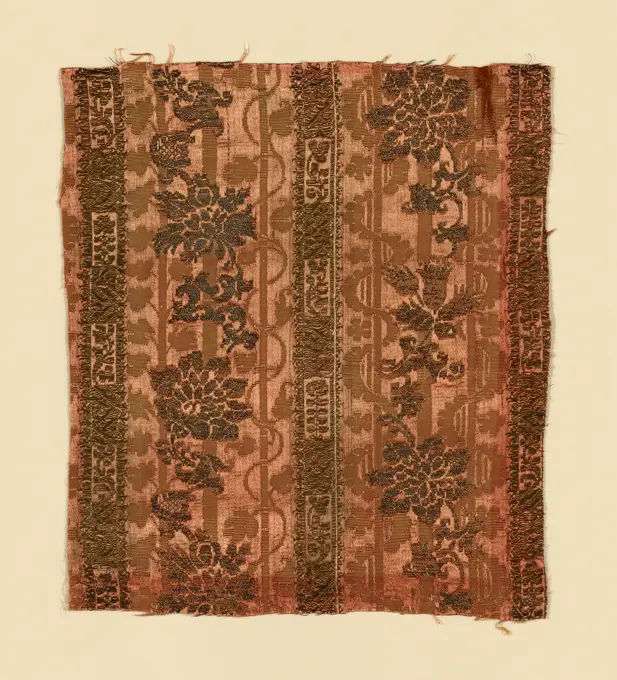
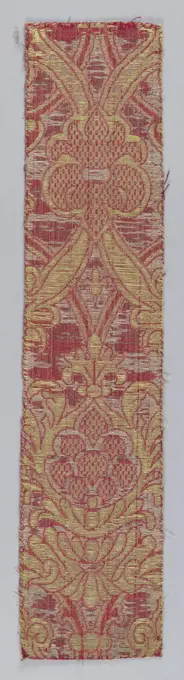
Red side fragment with pattern in gold and silver wire, anonymous, c. 1600 - c. 1699 Fragment of red silk with a pattern in a twill of browned gold and silver thread, probably in the form of cartouches, filled with feather plume-shaped figures, and surrounded by wide ornament tires. Netherlands silk.. lampas (textile material) Fragment of red silk with a pattern in a twill of browned gold and silver thread, probably in the form of cartouches, filled with feather plume-shaped figures, and surrounded by wide ornament tires. Netherlands silk.. lampas (textile material)
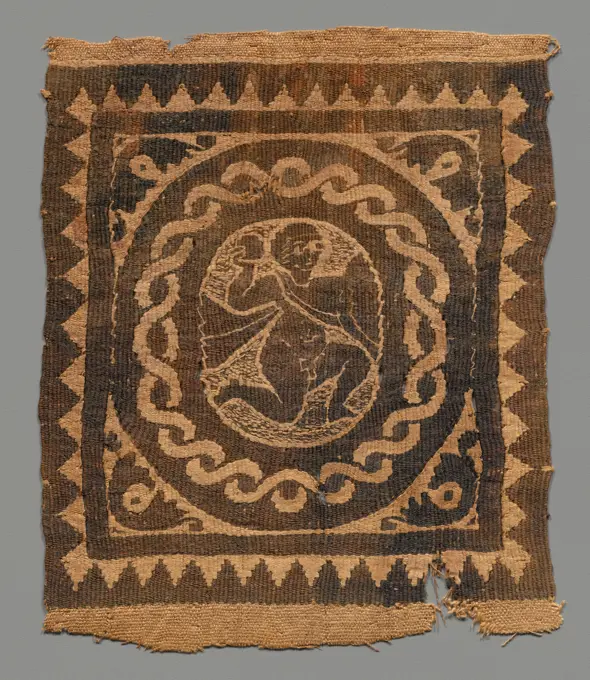
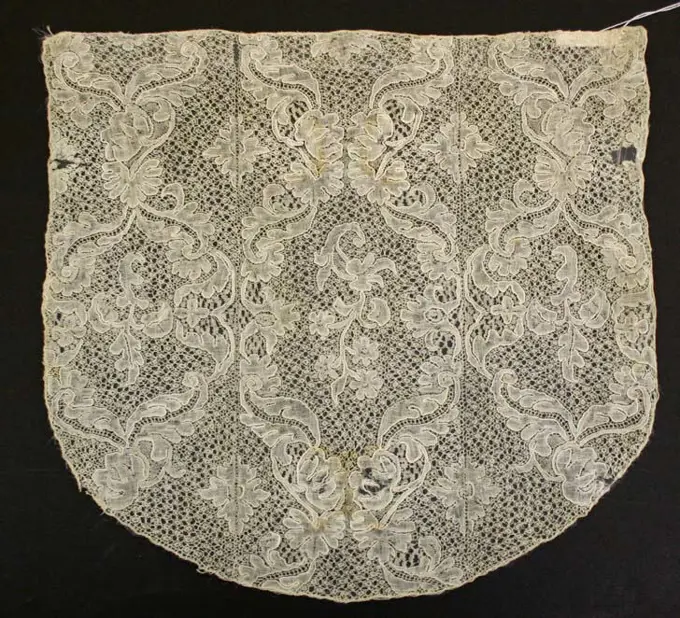
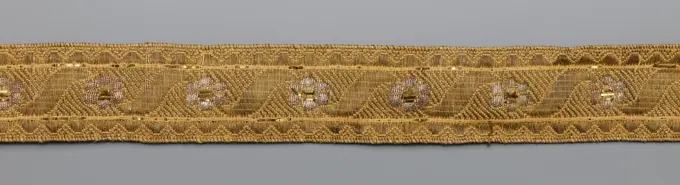
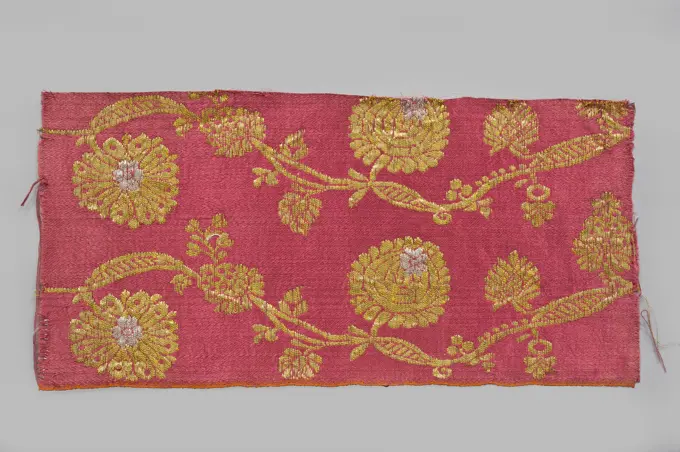
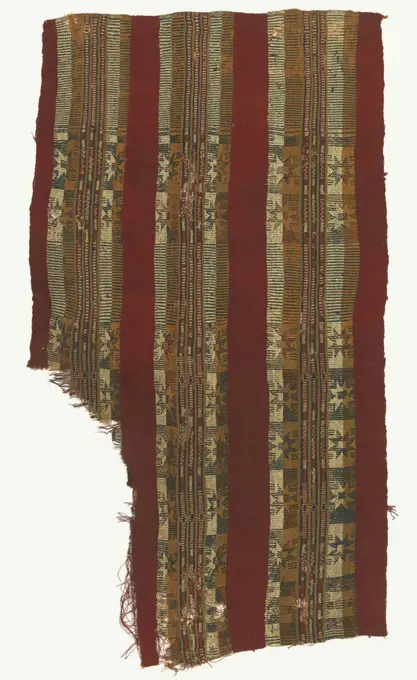
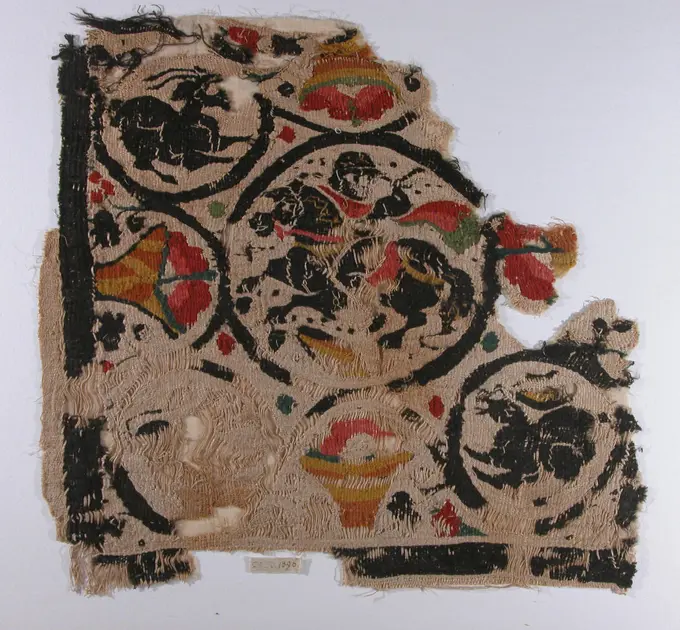
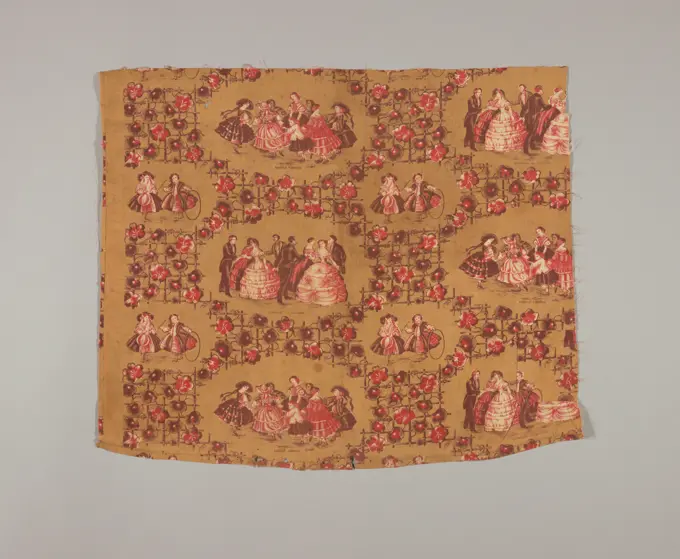
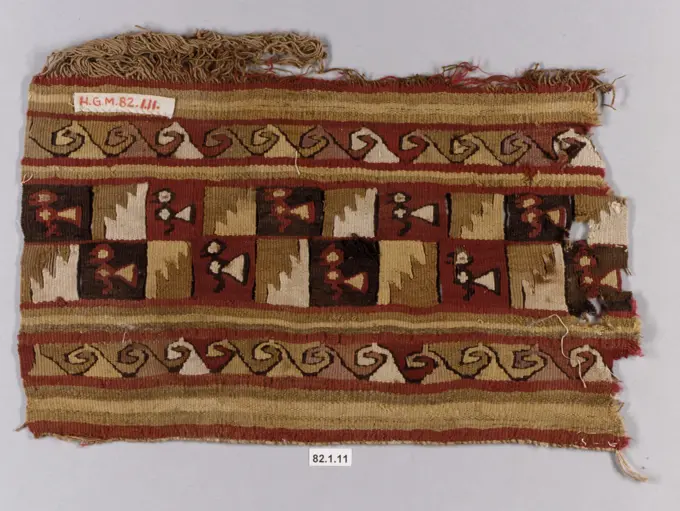
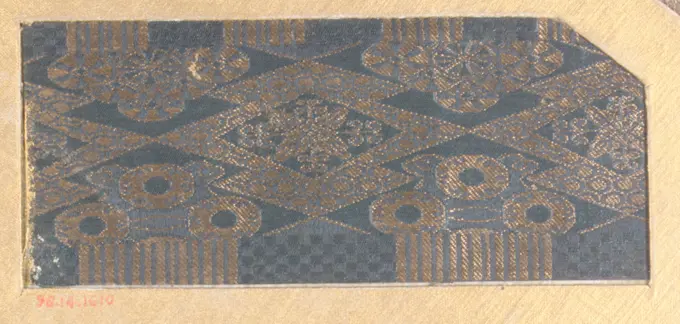
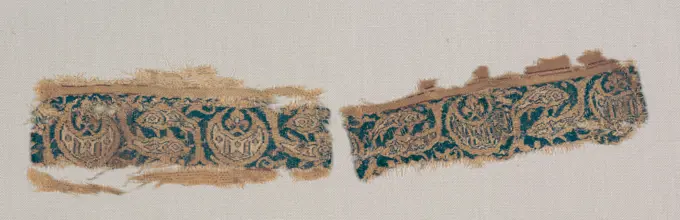
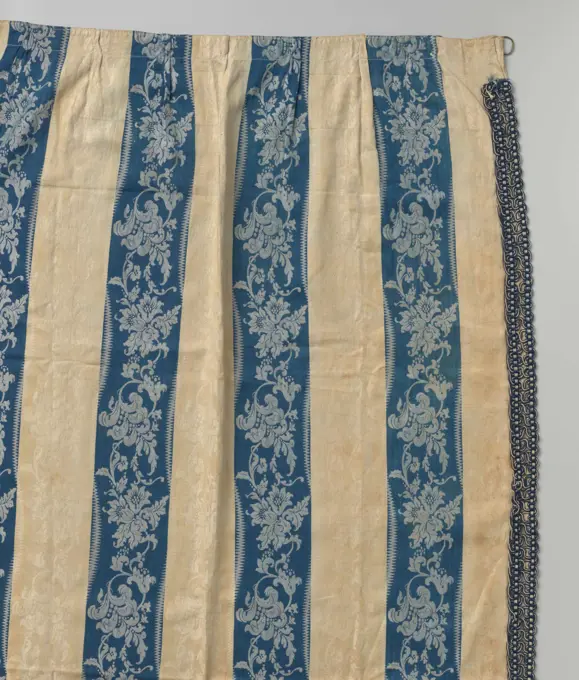
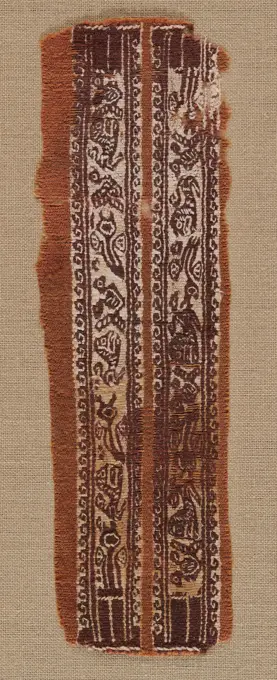
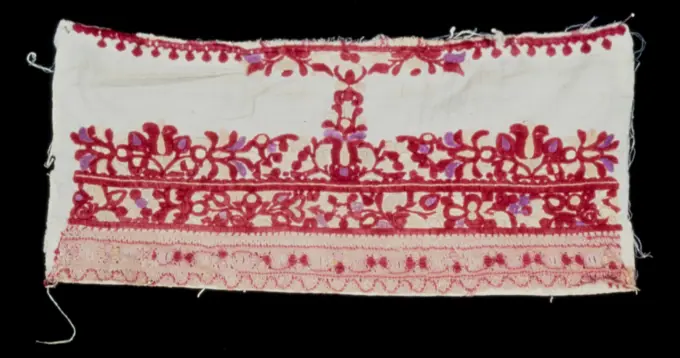
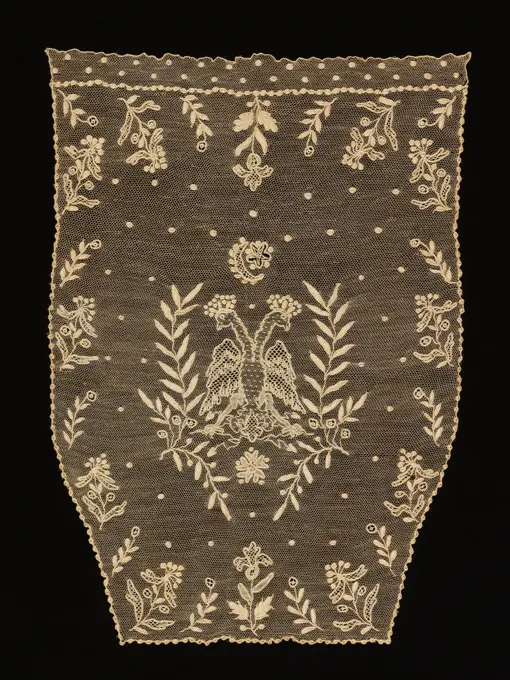
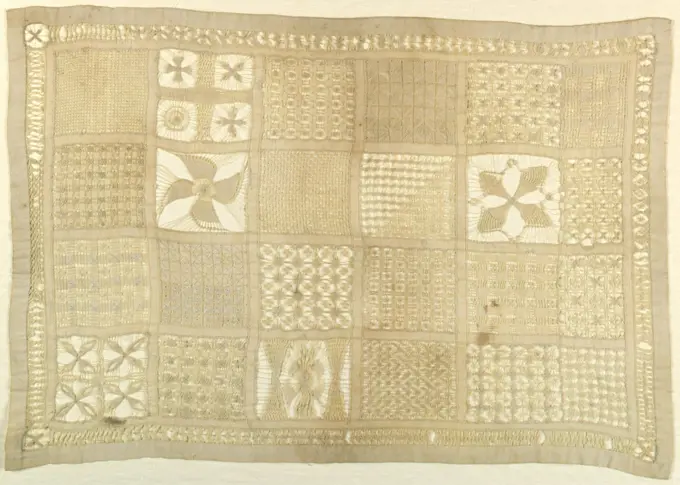
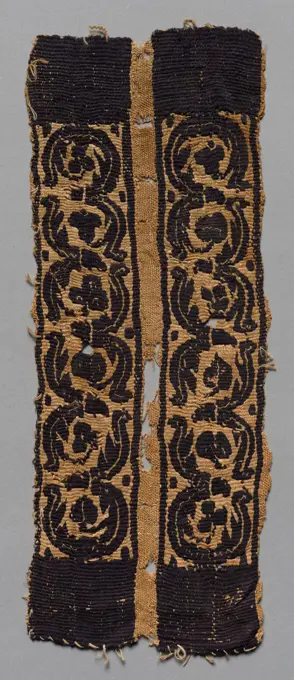
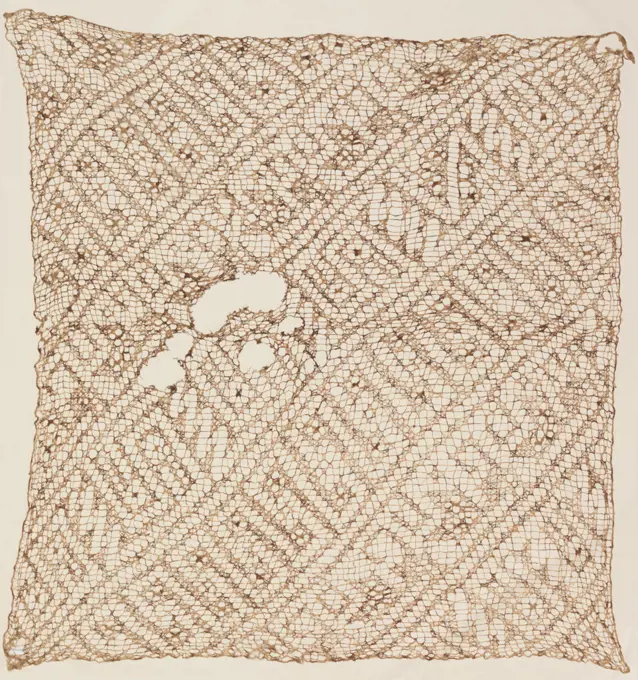
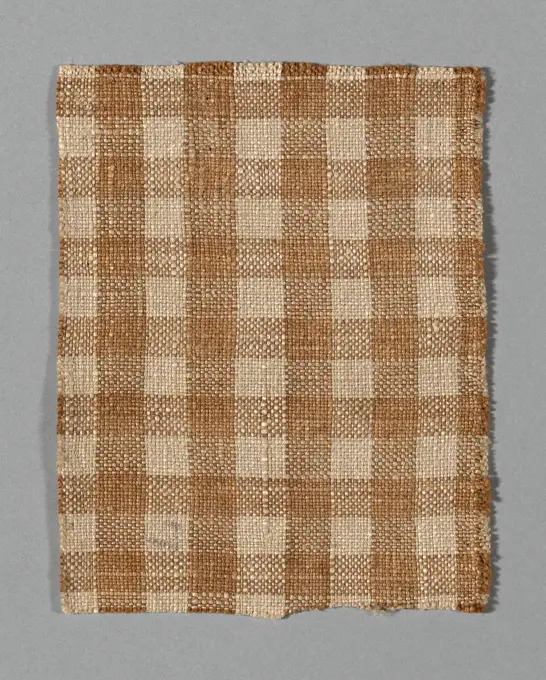
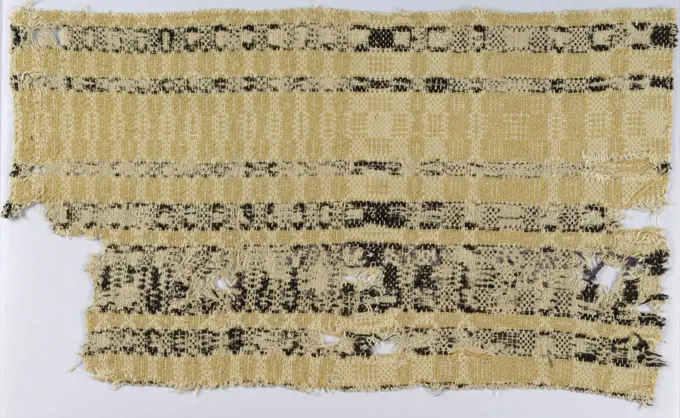
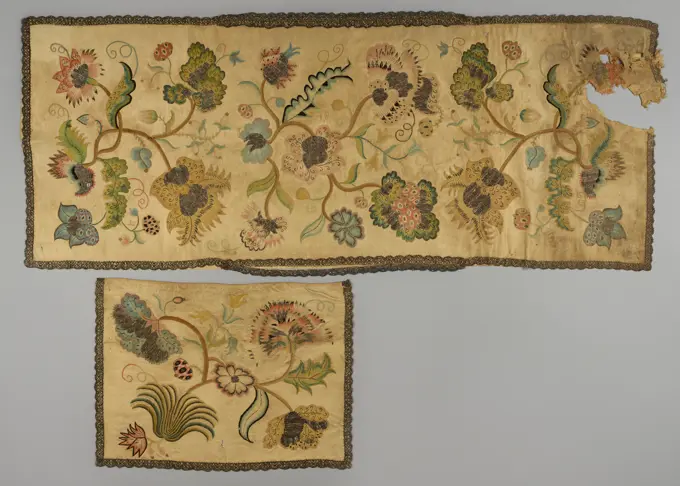
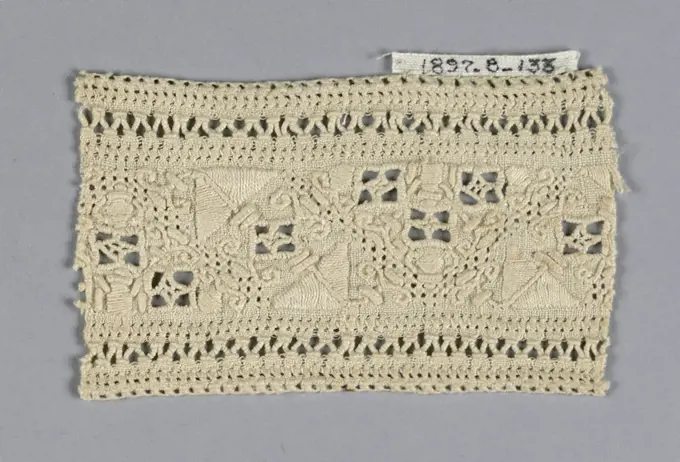
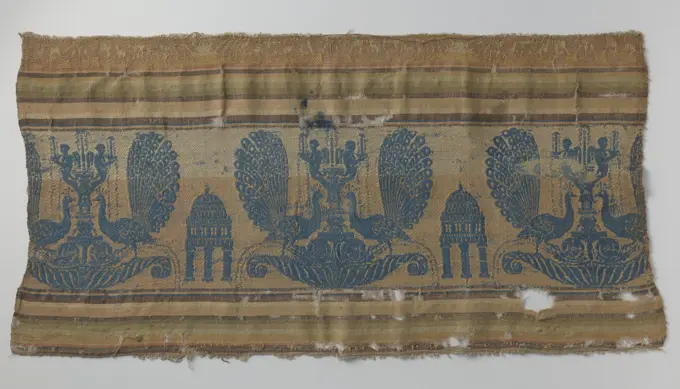
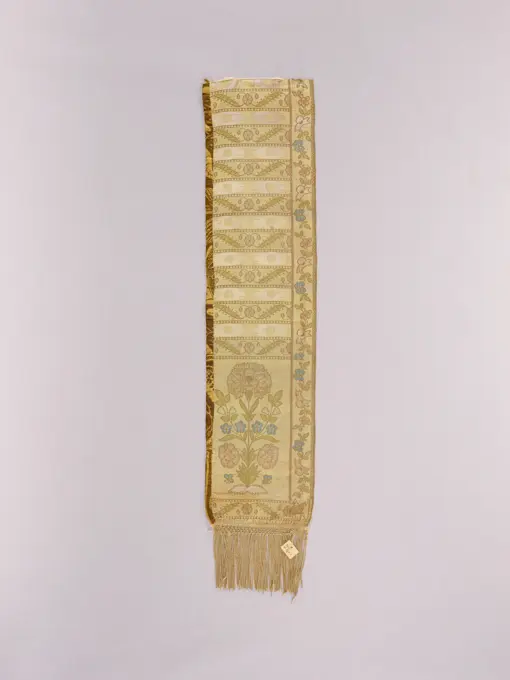
Fragments; silk, linen, metallicTextile (Greece); silk embroidery on linen foundationFragment of a shirt fourth quarter 18th century Russian. Fragment of a shirt. Russian. fourth quarter 18th century. Linen, silk, metallic. Textiles-EmbroideredBand (Italy); linen, silkRed side fragment with pattern in gold and silver wire, anonymous, c. 1600 - c. 1699 Fragment of red silk with a pattern in a twill of browned gold and silver thread, probably in the form of cartouches, filled with feather plume-shaped figures, and surrounded by wide ornament tires. Netherlands silk.. lampas (textile material) Fragment of red silk with a pattern in a twill of browned gold and silver thread, probably in the form of cartouches, filled with feather plume-shaped figures, and surrounded by wide ornament tires. Netherlands silk.. lampas (textile material)Chef De Piece (France); Company: J-D. Bridel et fils; cotton; Warp: (maximum) 83 cm (32 3/4 in.). Weft: (5 pieces sewn together) 64 cm (25 1/4 in.) Pattern: Height of repeat: 30 cm (12 in.). Width not present in these fragments.Border Russian 19th centuryFragment Made 1650-1700 Italy. Silk and gilt- and silvered-metal-strip-wrapped silk, warp-float faced satin weave self-patterned by areas of plain weave with supplementary brocading wefts;Undulating ribbons with floral sprigs; in gold and silver metallic; on red ground .Cap 18th century Flemish. Cap. Flemish. 18th century. cotton, silkStrook naaldkant met zonnen gescheiden door een x-motief.Strip natural-colored sunny side (needle side): Tenerife. The repeating pattern consists of a strip-filling circular motif, with an edge consisting of co-switched circles. On the short strip there are three of these 'sunbathing', which are separated from each other by an X-shaped motif made with two thick thread bundles. The motifs are connected by a hexagonal maas soil. One short sides and both long sides are straight finished, wherein some remains of a bow edge can be seen. One short side is not finished.Textile with Flower Motive 14th century Italo-Arabic. Textile with Flower Motive 463307Shawl Border (Pallu) Made 1810-1830 Kashmir. The earliest Kashmir shawls introduced to Europe were made of white cashmere wool with decorated ends containing rows of stylized floral buta motifs. The pattern became known as paisley in English, after the town in Scotland that was a center of shawl weaving. The fine wool of a shawlís central area was always the most fragile component, and this long shawl has been mended with two nearly invisible seams across the central white field. Europeans valued Kashmir shawls so highly that even fragments of the decorative borders were preserved, collected, and treasured.. Wool, double interlocking 2 2 'S' twill tapestry weave; main warp fringe .Textile Fragment 5th-6th century. Textile Fragment 444174Band (Italy); linenGallon;  2. PO. 18th century (1751-00-00-1800-00-00);Fragment of the fabric;  XVII century (1601-00-00-1700-00-00);fragments of silk fabrics, fabrics, patterned fabricsPiece 17th century Japan. Piece 71720Forehead cloth last quarter 16th century British. Forehead cloth 228948Fragment 17th century Italian. Fragment 230370Towel, Medium: linen Technique: withdrawn element with darned motifs; macramé, Long vertical towel of undyed linen with three broad bands of embroidery and drawn work in white linen thread in symmetrical designs. Motifs include: horsemen, floral forms, initials 'M.O.D.' and 1824, lion and a female figure, and geometrical diaper pattern. Deep macramé border at lower end hand stitched onto linen strip. One plain cloth selvage., Denmark, 1824, embroidery & stitching, TowelFragment of the belt;  1 PO. XVII century (1600-00-00-1650-00-00);promoting, metal threads, index beltsFragment; linenPieces Of A Chasuble; silk,linen, metallicPiece 16th-17th century Italian. Piece 215534Sampler (England); linen embroidery on linen foundationSilk tissue with a pattern of four-legged people, birds, palmets and arabes. Fragment of dark red side with a stylized pattern of two mirrored four-legged animals and two birds with the headlines to each other, between which palmet decoration and arabes are.Fragment, Medium: wool Technique: tapestry weave, Corner fragment of a tapestry weave textile showing two thick purple bands on an undyed ground, between which are roundels enclosing stylized birds and animals. At top, a figure and animals within an arcade., Egypt, 400-600, woven textiles, FragmentBand Fragment 6th century. Band Fragment 447862Fragment Made 1700-1800 Japan. Plain compound satin, silk and silvered paper; 2 strips to m.m. .Fragment (from a Tunic), 500s. Egypt, Byzantine period, 6th century. Compound tabby; wool; overall: 37.5 x 16.5 cm (14 3/4 x 6 1/2 in.).Textile Fragment 7th-8th century. Textile Fragment 444140Cover Made 1801-1900 Turkey. Cover, flate gold embroidery on red silk .Textile, Medium: cotton, wool Technique: rib weave; complementary warps; Section A: Complimentary warps, plain weave with inner wefts; Section B: Transposed warps; Section C: Warp faced plain weave, Horizontal bands filled with starts alternating in dark blue on half tan half natural background and contrasting light and dark values. Red bands between ornamented stripes., Peru, 1400-1600, woven textiles, TextileFragment multicolored silk lampas ,, c. 1700 - c. 1800 Fragment white silk tissue with a pattern of garlands, flowers and Chinese houses. NOTE: MEERSHIP; 0.9 cm, deployed piece is incorrect. Spain silk lampas (textile material) Fragment white silk tissue with a pattern of garlands, flowers and Chinese houses. NOTE: MEERSHIP; 0.9 cm, deployed piece is incorrect. Spain silk lampas (textile material)Gallon;  18th century (1701-00-00-1800-00-00);Half a victim belt; Manufaktura Paschalis Jakubowicz (Warsaw; label Pasów; 1788-1794); 1791-1794 (1791-00-00-1794-00-00);Square 4th century. Square 445717TextileFragmentFragment, Medium: silk, linen and metal thread Technique: brocatelle, 17th century, woven textiles, FragmentFront and Back of a Bolster Case, 1700s. Greece, Epirus, Yaninna, 18th century. Embroidery: silk on linen tabby ground; overall: 109.2 x 87.7 cm (43 x 34 1/2 in.).Tafelloper met monogram 'AL' of 'LA', anonymous, c. 1910 - c. 1914 Table runner with white embroidery on batist with bets of needle side and fillet work, trimmed with intermediate sinks and a scalloped edge in the bobbin. On the short sides twice the monogram 'Al' or 'La' in the Needle side intermediate sinks. This indicates that the runner was made on the occasion of the marriage of Anna Leyds-Carstens, or shortly thereafter. Hereby 19 tied packages of fillet work and needle side, one of which is accompanied by a piece of Chinese text. Italy linen (material). cotton (textile). batiste. embroidering / bobbin lace Table runner with white embroidery on batist with bets of needle side and fillet work, trimmed with intermediate sinks and a scalloped edge in the bobbin. On the short sides twice the monogram 'Al' or 'La' in the Needle side intermediate sinks. This indicates that the runner was made on the occasion of the marriage of Anna Leyds-Carstens, or shortly thereafter. Hereby 19 tied Fragment ; silk, metallicFragment; silk, metallicsLong sarong (kain panjang), Medium: cotton Technique: wax resist dyeing (batik) on plain weave; painted with metallic pigments (prada), Large sarong (kain panjang), batik in dark blue, showing diamond-shaped all-over pattern. Small border band on either side showing a grid-work pattern interrupted by squares. Piece painted with gold (prada technique) in lower regions leaving top free for handling and folding., Yogyakarta, Indonesia, 19th century, printed, dyed & painted textiles, Long sarong (kain panjang)Sleeve Band (China); wool on cottonArmenian sash unknownFragment (France); Printed by Lamy Godard; cottonBorder Fragment 10th-15th century Peruvian; central coast (). Border Fragment 307455Textile Fragment 4th century. Textile Fragment 443455Piece 18th century possibly French. Piece 223956Piece 18th-19th century Japan. Piece 67323Embroidered finger;  XVII/18th century (1690-00-00-1710-00-00);Fragment, Medium: silk and metallic Technique: woven, Pale blue damask with floral shapes and leaves in metallic silver, metallic gold and coral silk., 18th century, woven textiles, FragmentPiece 18th-19th century Japan. Piece. Japan. 18th-19th century. Silk. Edo (1615-1868). Textiles-WovenShoulder Cloth(Limar)Fragment, Medium: silk, cotton Technique: combination of two structures, plain weave plus plain weave, Detached leaf and stem motif in tan on grey., 17th century, woven textiles, FragmentFragment of a Band, 1300 - 1350. Egypt or Syria, Mamluk period, 1300-1350. Compound tabby, double cloth, and bands of extended tabby; silk and gold filé; overall: 5.5 x 13.5 cm (2 3/16 x 5 5/16 in.).Curtain of blue and white striped linen damask. Curtain of blue and white striped linen damask. The blue and white stripes both have an ongoing pattern of floral drinks; The blue in light blue, the white in white. The curtain belongs to three curtains (BK-1992-26-A to BK-1992-26-D) and two strips (BK-1992-26-E and BK-1992-26-F).Fragment of R Coffee with a double decorative belt;  IX-XI century (801-00-00-1100-00-00);Fragment, 19th century, 12 1/2 x 5 1/2 in. (31.75 x 13.97 cm), Cotton; embroidery, Czechoslovakia, 19th centuryFragment of a tissue, Anonymous, 1600 - 1799Stomacher 18th century Italian. Stomacher. Italian. 18th century. silkSquare Fragment with Animal and Botanical Decoration Coptic. Square Fragment with Animal and Botanical Decoration, 5th-7th century C.E. Wool, 3 1/4 x 4 1/4 in. (8.3 x 10.8 cm).   Egyptian, Classical, Ancient Near Eastern Art 5th-7th century C.E.Fragment 16th century Italian. Fragment. Italian. 16th century. Silk. Textiles-VelvetsFragment (Italy); linen, silkBliżej Kultury Unknown, West European manufactureManta (Cloak or Blanket)Fragment.   Maker: UnknownFragment, Medium: linen Technique: needlework on gauze weave, Fragment of a border with a white curving vine on white gauze weave., Italy, 17th century, embroidery & stitching, FragmentTextile, Medium: linen Technique: hand woven plain weave with supplementary weft patterning, Section of toweling in undyed linen. Two plain cloth selvedges. Raw edge at top and narrow hand hem at bottom., USA, 1800-1830, woven textiles, TextileWaist Wrapper (Sarung,Dringin)Bag Face (France); linenBand (Spain); silk, metal threads; Warp x Weft: 306 x 47 cm (10 ft. 1/2 in. x 18 1/2 in.)Towel or Napkin Made 1850-1900 Turkey. embroidered .Sampler, Medium: cotton Technique: withdrawn element and cutwork with needle made fillings, including needle knotting (tenerife), Twenty-four squares of white work pattern., Mexico, 19th century, knotted, knitted and crocheted textiles, SamplerBand Fragment (Egypt); warp; s-spun linen. wefts; s-spun linen, s-spun woolSleeve Band from a Tunic, 400s - 500s. Egypt, Byzantine period, 5th - 6th century. Tabby weave with inwoven tapestry ornament, linen and wool; overall: 10 x 26.5 cm (3 15/16 x 10 7/16 in.).Sampler, Medium: cotton, glass beads, paper backing Technique: knitting, Twenty four designs, twenty-four bands of beadwork., Germany, 1836, knotted, knitted and crocheted textiles, SamplerConciliate belt;  2nd half 18th century (1751-00-00-1800-00-00);Textile, Medium: cotton Technique: woven knotted net patterned by embroidery, tie-dyed, Sheer openwork fabric with embroidery forming diagonal bands containing interlocked shapes. Piece has been tied and dyed reddish brown., Peru, ca. 1300, woven textiles, TextileFragment Made 1801-1825 United States. Sample of stripe and check patterns of blue, white and tan .Fragment zijdeweefsel van een stoelbekleding..Fragment yellow silk tissue, from a seat cover. The pattern has pink palmets and arabesken on a yellow ground. The fragment belongs to thirteen fragments with Invnr. BK-1992-18-A T / M BK-1992-18-m.Strook naaldkant met hartvormige blaadjes.The field of the field is strewn with flowers and small rosettes; A fine mesh fence fills the edge. As a separation, a wavy branch with heart-shaped leaves and flowers serves. The outer edge is almost straight and composed of rosettes, leaves and a chain of circles. Argent tank.Fragment of fabric unknownTaoist Priest's Robe, late 19th century, L.53-3/4 in., silk, China, 19th centuryTextile Fragment. Dimensions: L: 11 in. (27.9 cm) x W: 3 in (7.6 cm). Date: 17th century. Museum: Metropolitan Museum of Art, New York, USA.Fragment (Spain); silk, metallicCoverlet, Medium: wool, cotton Technique: plain compound weave (overshot), Traditional geometric design in bands of black and tan wool pattern wefts on undyed cotton ground. One plain edge continuous with field. Reversible., USA, 19th century, woven textiles, CoverletSample, Medium: linen, paper Technique: bobbin lace, Binche ground, Design of flowers and leaves on curving stem. Lace is attached to brown paper with hand-made pins., Binche, Belgium, 18th century, lace, SampleFragment. Dimensions: H. 3 1/4 in. (8.3 cm)W. 4 in. (10.2 cm). Date: 7th-9th century. Museum: Metropolitan Museum of Art, New York, USA.Conciliate belt; Daniel Chmielewski's studio (Kraków; Pasów label; 1796-1825); around 1794-1825 (1794-00-00-1825-00-00);Fragments of embroidery  motifs of sprinkled floral stems unknownFragment of the index belt;  18th century (1791-00-00-1800-00-00);Fragment, Medium: linen Technique: cutwork, Rectangular border fragment with squares and diamond shapes filled with cutwork. Some small squares have insertions of reticella., Italy, 16th century, lace, FragmentTextile Sample from Sample Book 19th century Japan. Textile Sample from Sample Book 68221Excerpt wool tissue with symmetrical motif of peacocks, anonymous, 1400 - 1499 Excerpt with a repeating pattern in blue and ocher of paws bold to each other that stand on a shell -shaped basin with an ornament with, among other things, putti. These peacock groups are interspersed by a dome construction work. Along the edges a stripe design in white, yellow, brown, blue and green. Of this fragment is a piece with the same pattern, but in the colors yellow, brown and green, cut (BK-1955-105-B). Italy ketting: cotton (textile). inslag: wool twill / double weave Excerpt with a repeating pattern in blue and ocher of paws bold to each other that stand on a shell -shaped basin with an ornament with, among other things, putti. These peacock groups are interspersed by a dome construction work. Along the edges a stripe design in white, yellow, brown, blue and green. Of this fragment is a piece with the same pattern, but in the colors yellow, brown and green, cut (BK-1955-105-B). Italy ketting: cConciliate belt;  2nd half 18th century (1751-00-00-1800-00-00);Textile Fragment 5th century. Textile Fragment 443699Band fragment, Medium: Warp; S-spun linen. Wefts; S-spun linen, S-spun wools. Technique: slit tapestry woven with supplementary weft wrapping. Woven, Fragment contains two circles, one holds a running lion, the other something that might be a turtle with a flower on its back., Egypt, 4th-5th century, woven textiles, Band fragmentFragment 1890 Irish, Carrickmacross. Fragment 218487Fragment of the index belt; Manufaktura Paschalis Jakubowicz (Warsaw; label Pasów; 1788-1794); 1791-1794 (1791-00-00-1794-00-00);