Textile Fragments and Patterns

Historical textile pieces featuring intricate floral and decorative motifs from various regions, showcasing artistry through time.

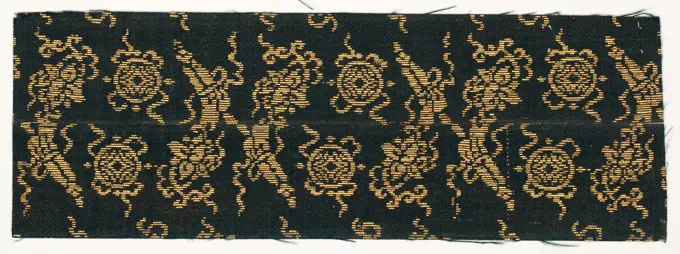
Fragment; medium, silk, metallic
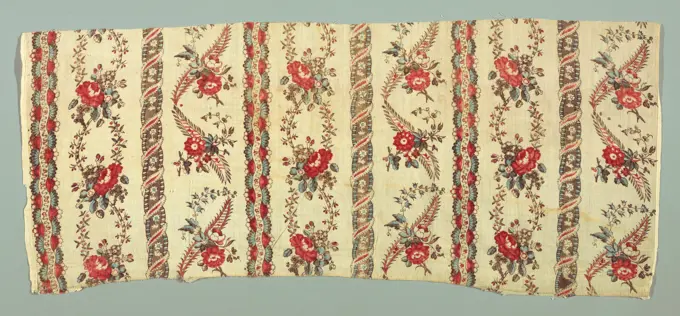
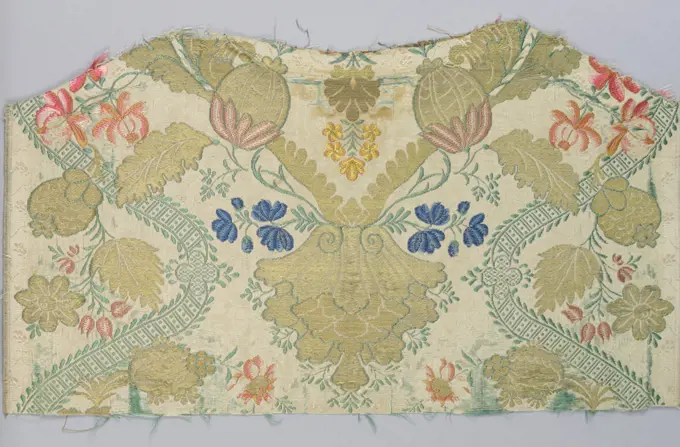
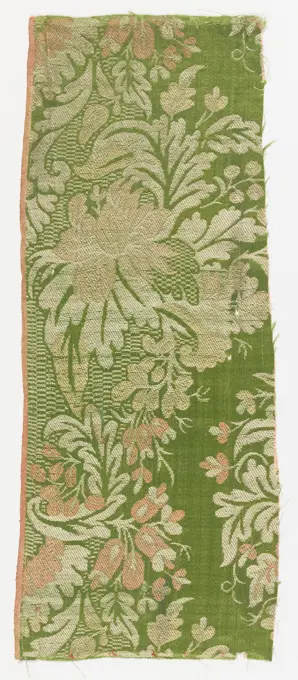
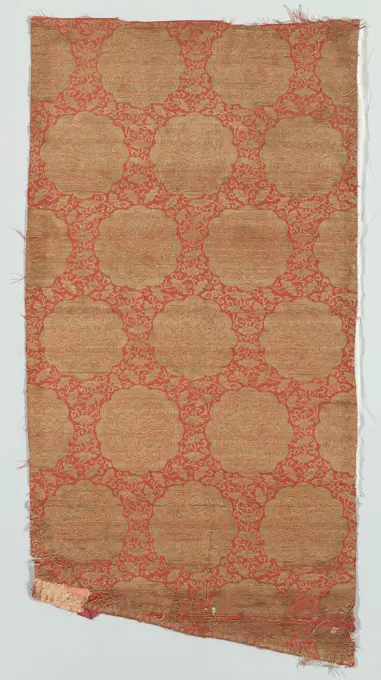
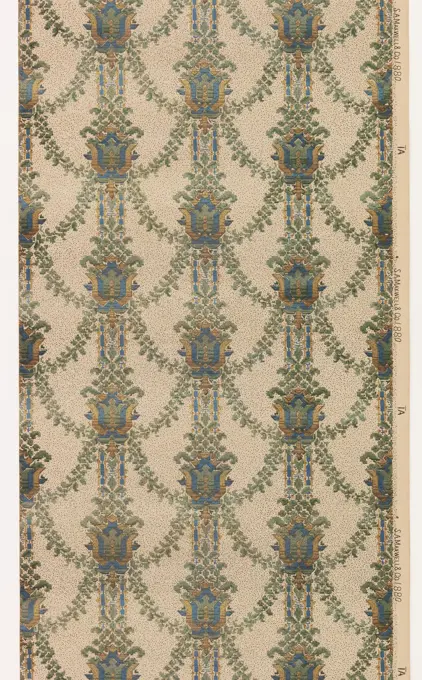
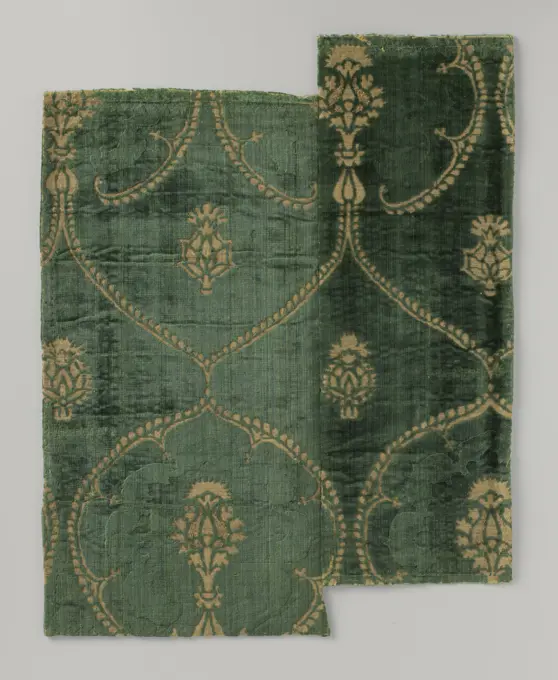
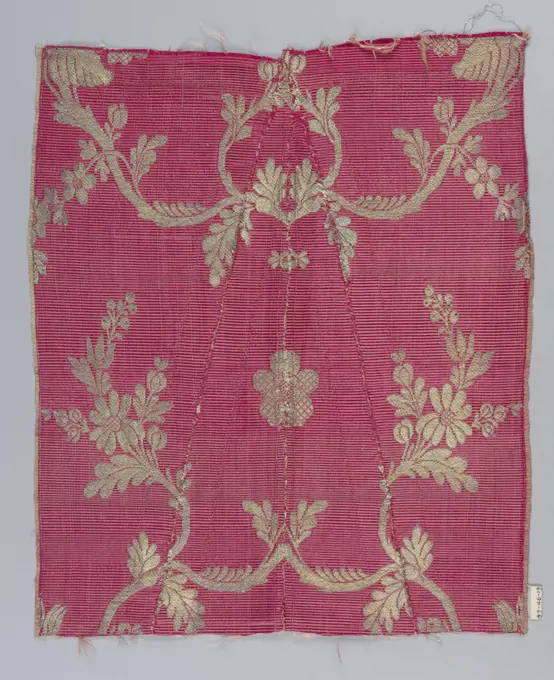
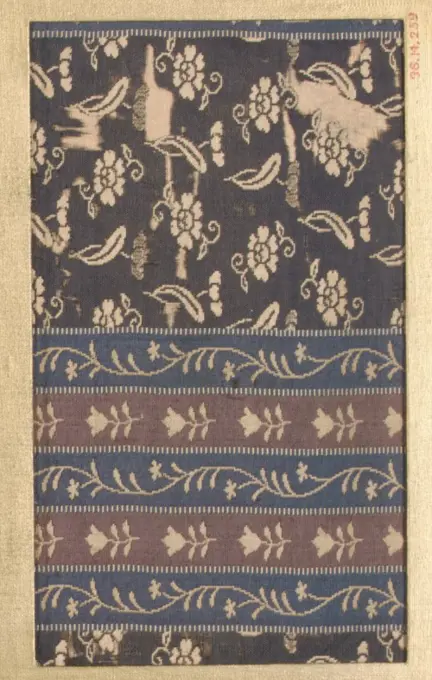
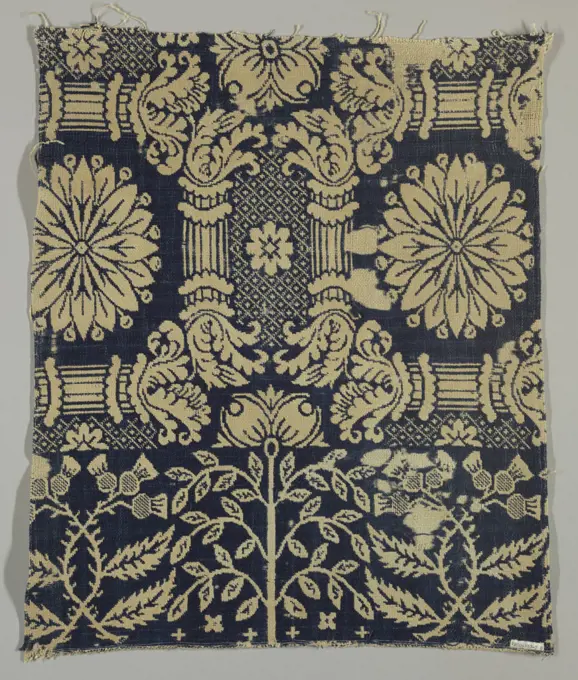
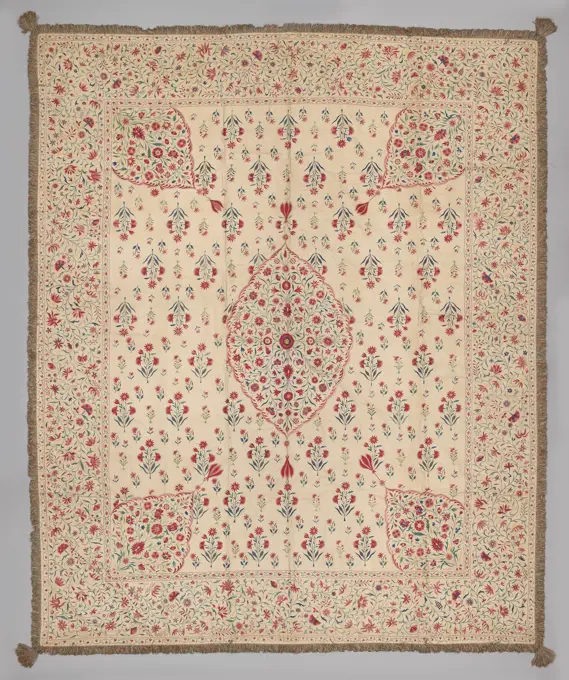
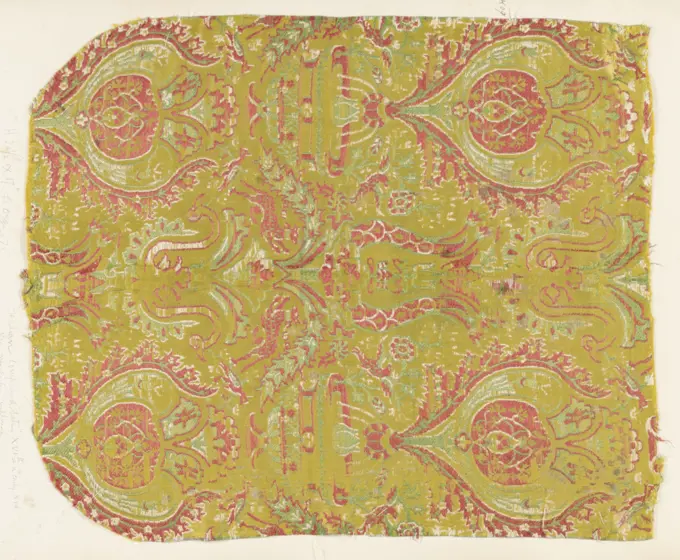
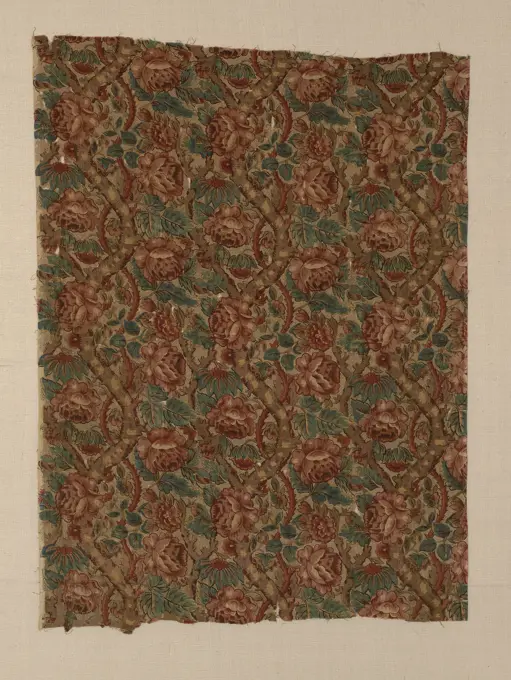
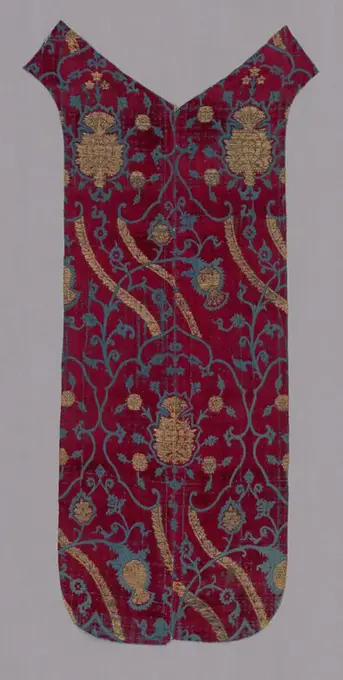
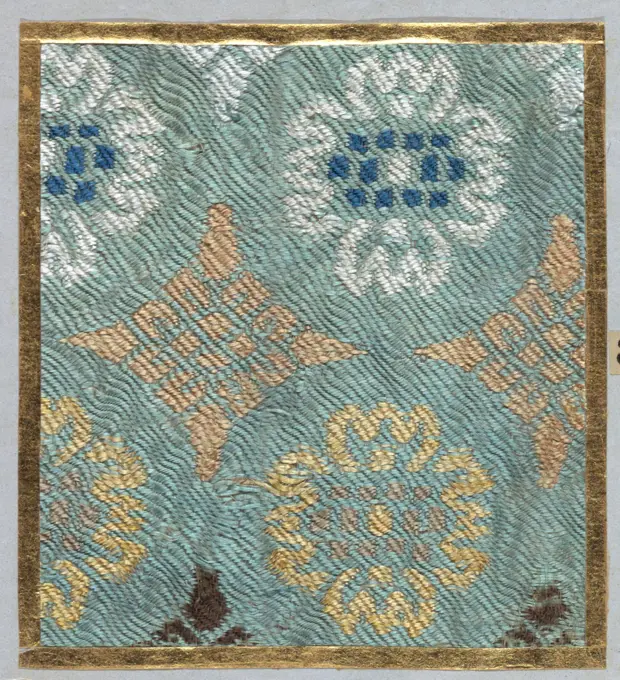
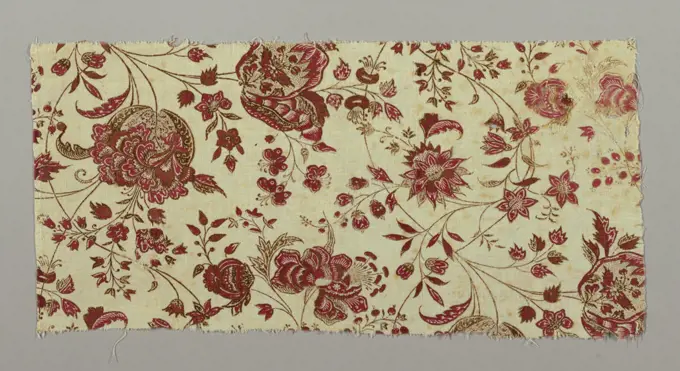
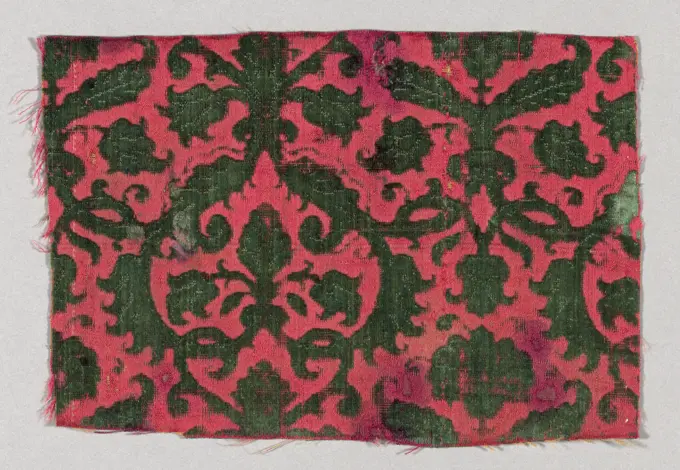
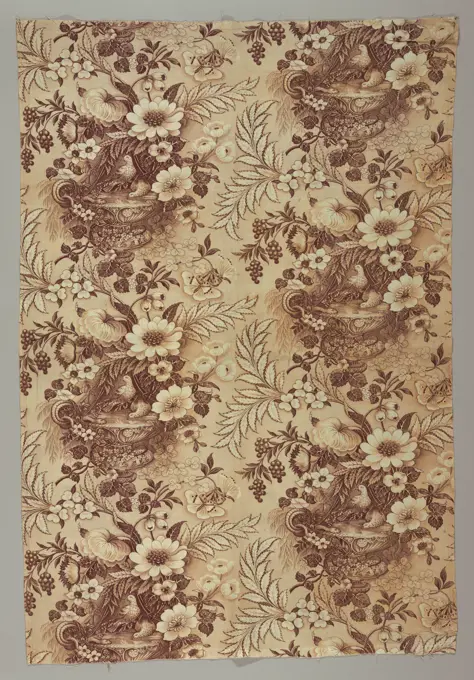
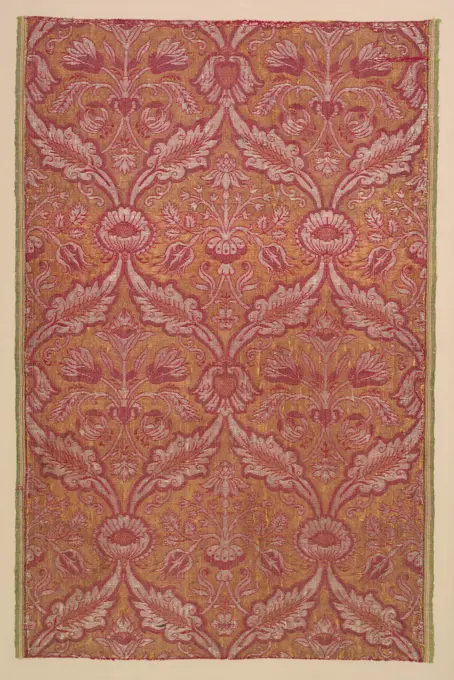
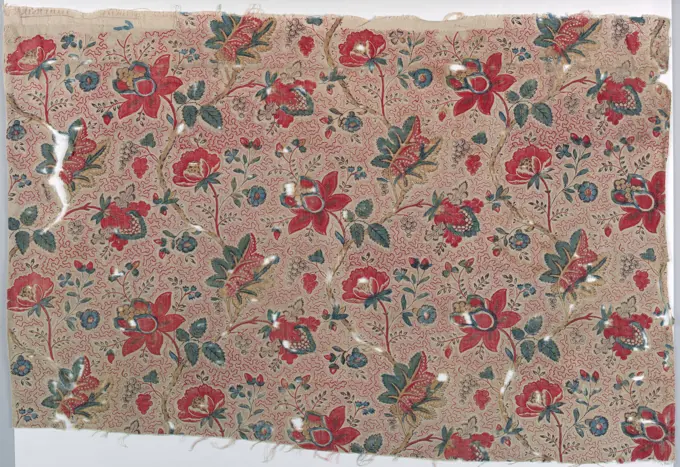
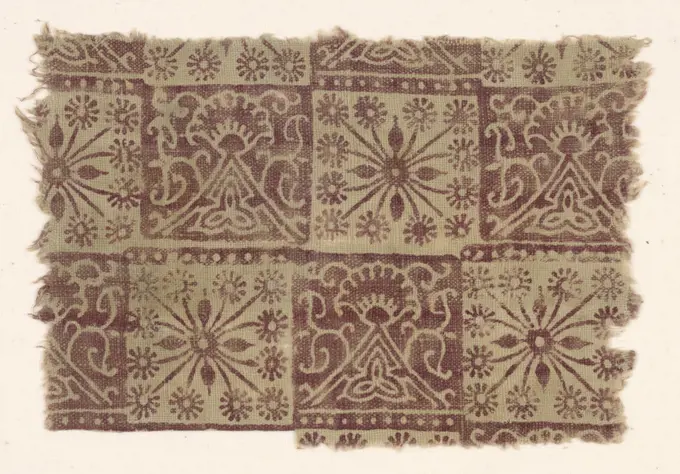
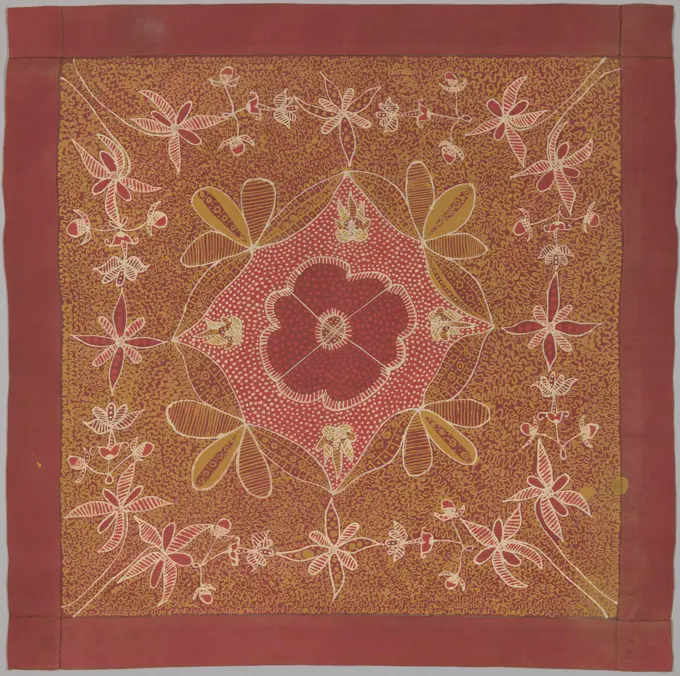
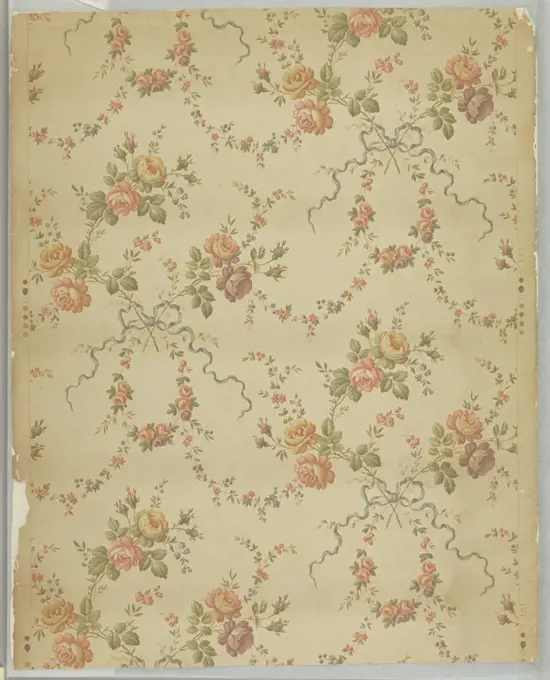
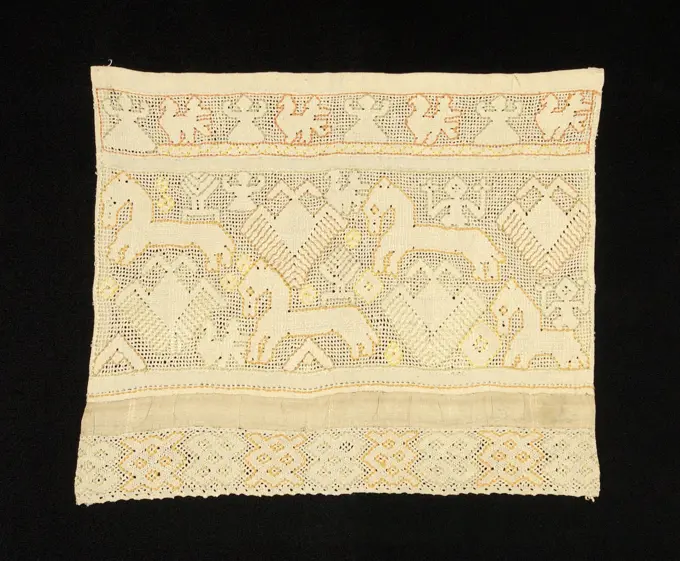
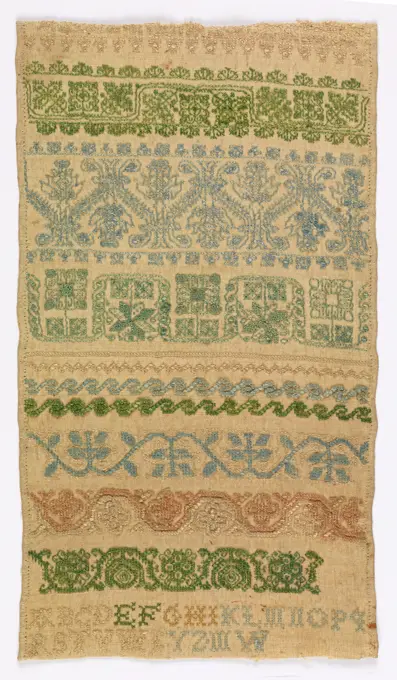
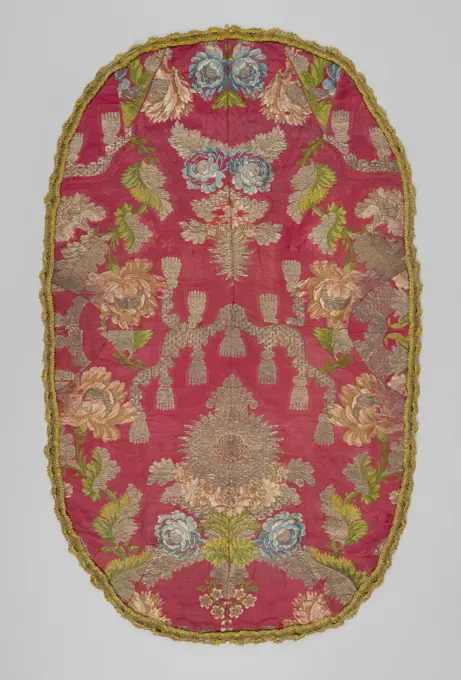
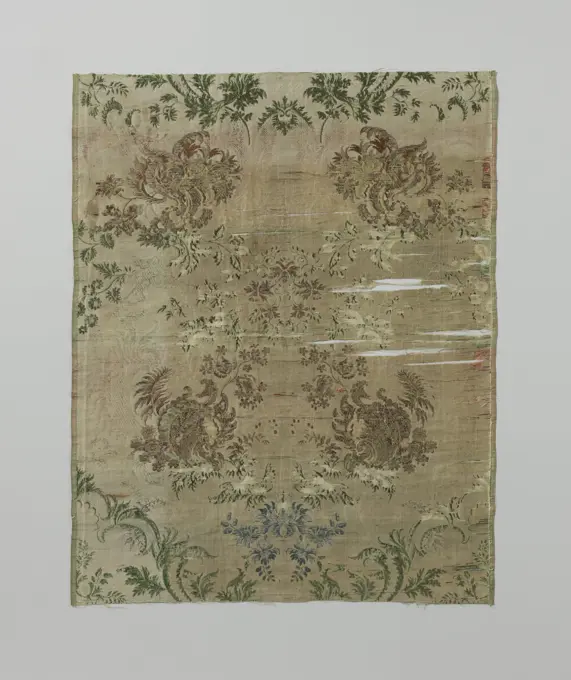
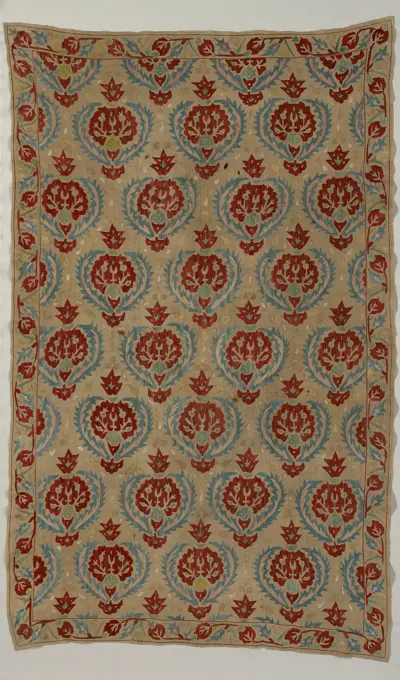
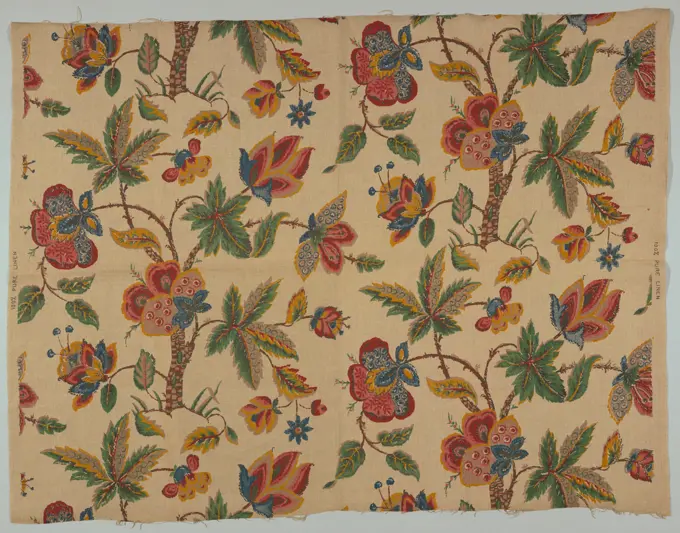
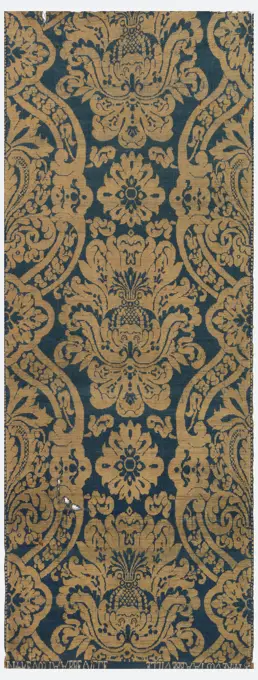
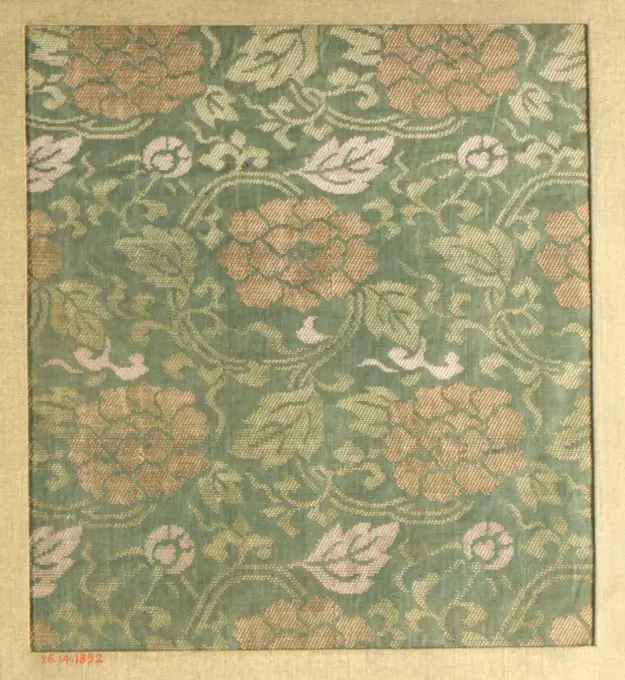
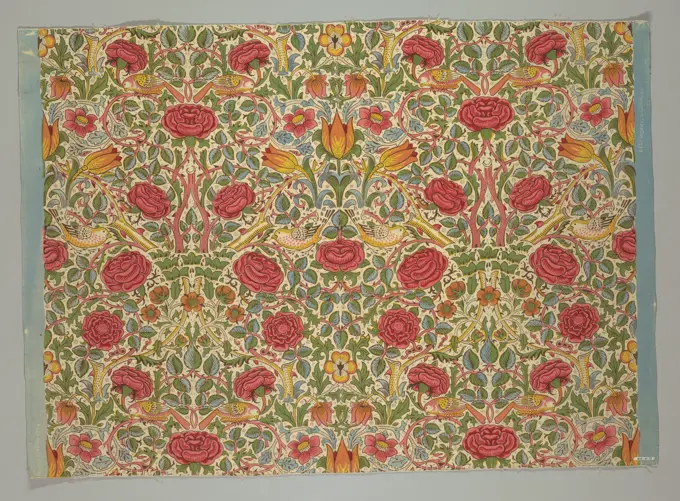
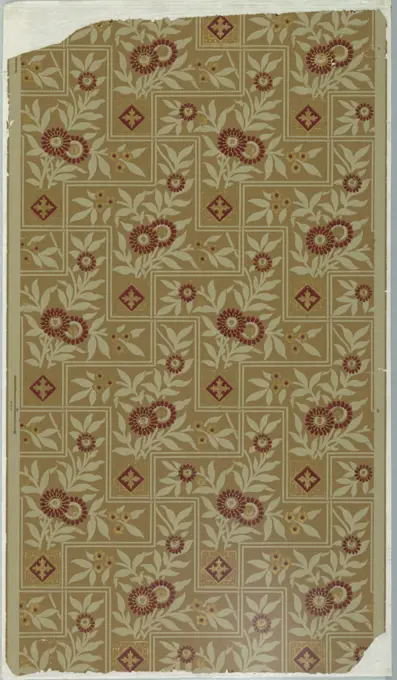
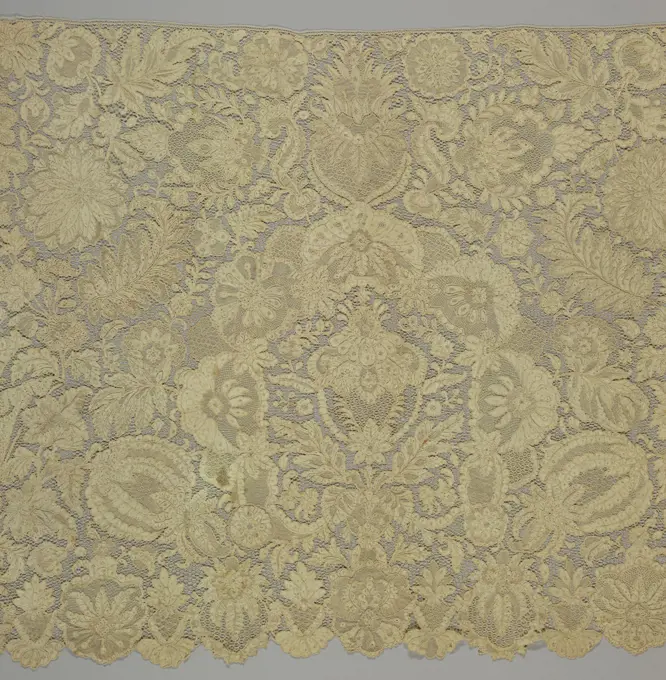
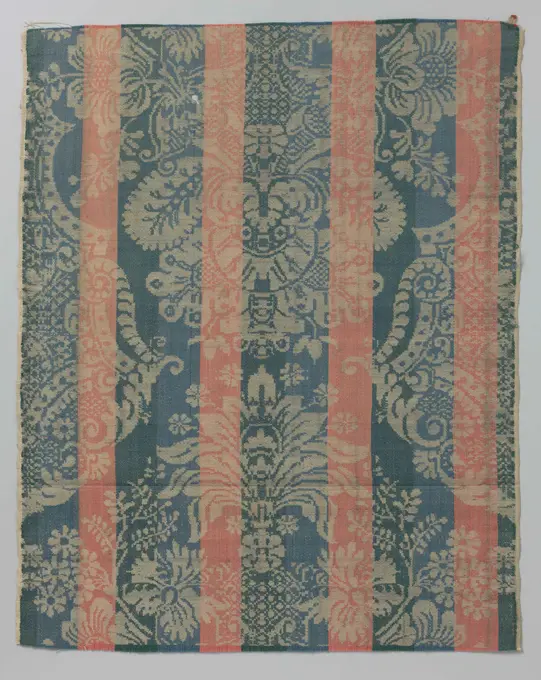
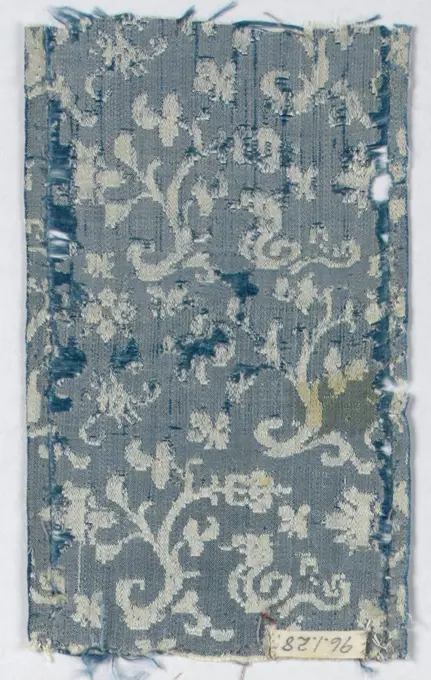
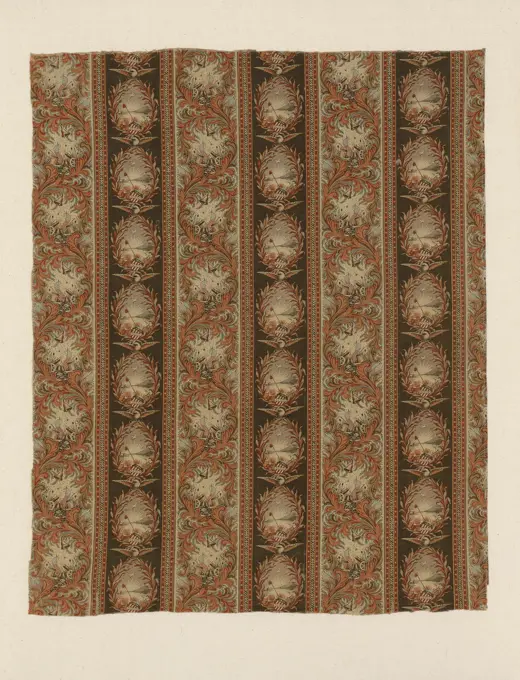
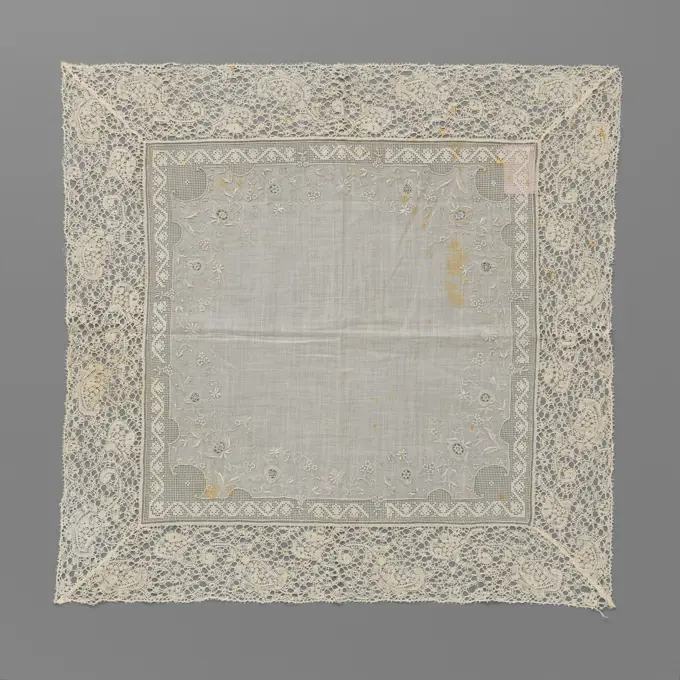
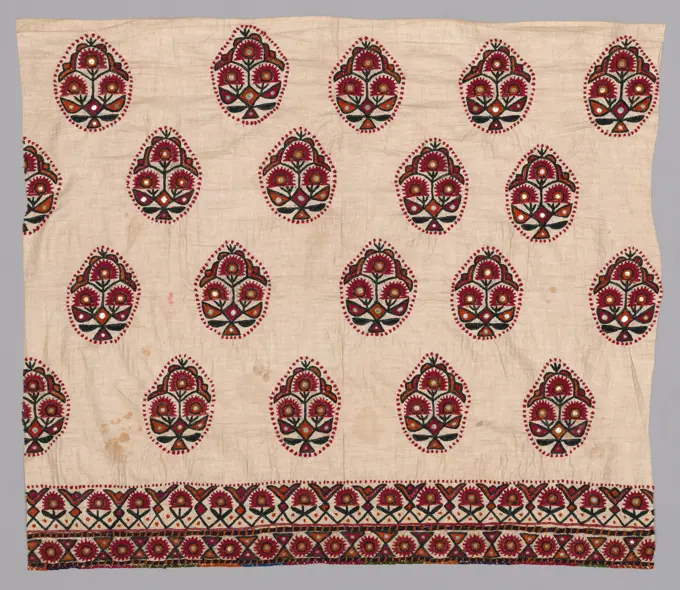
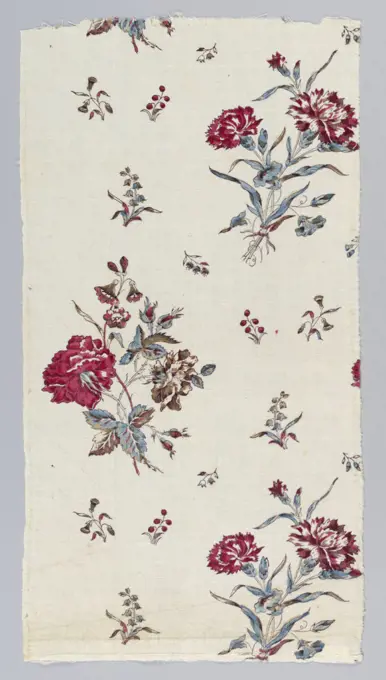
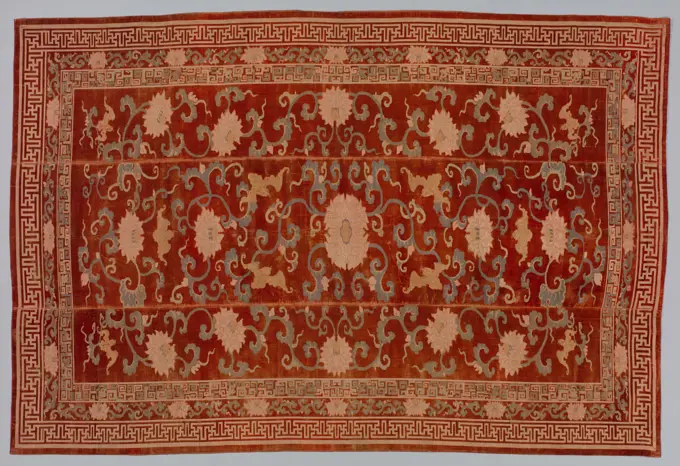
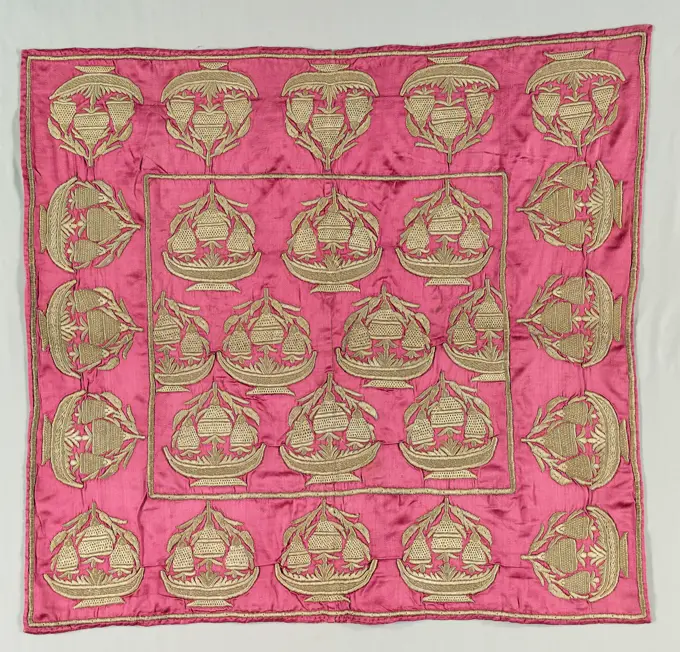
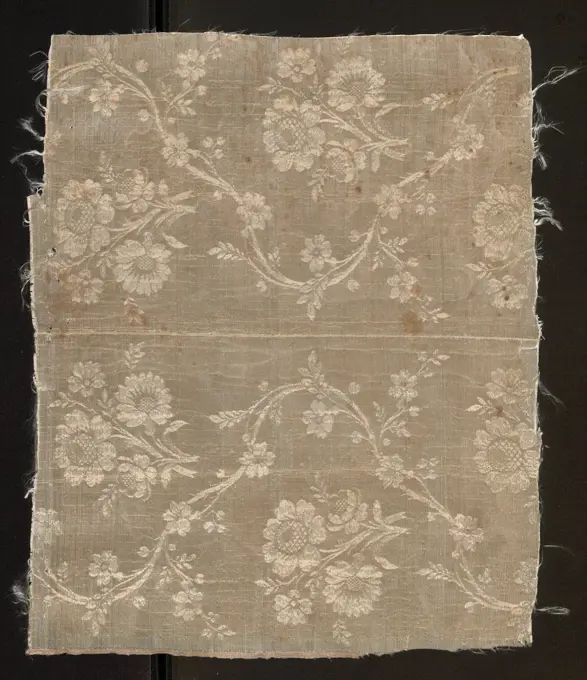
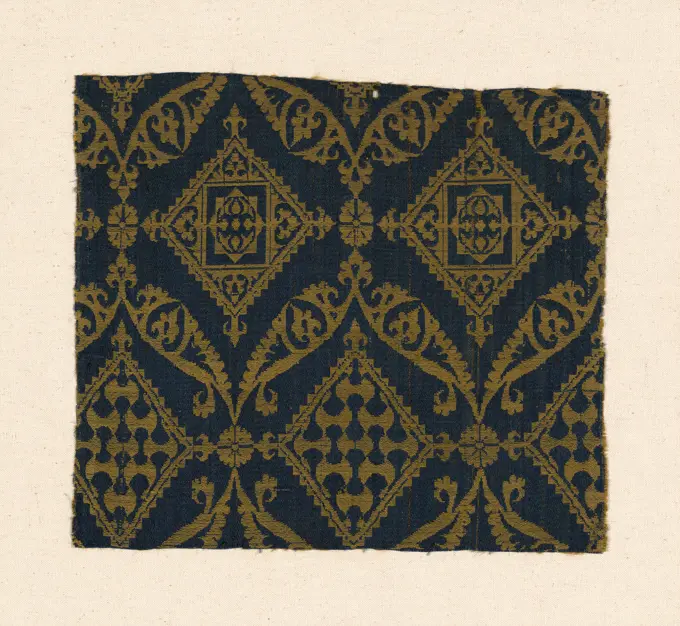
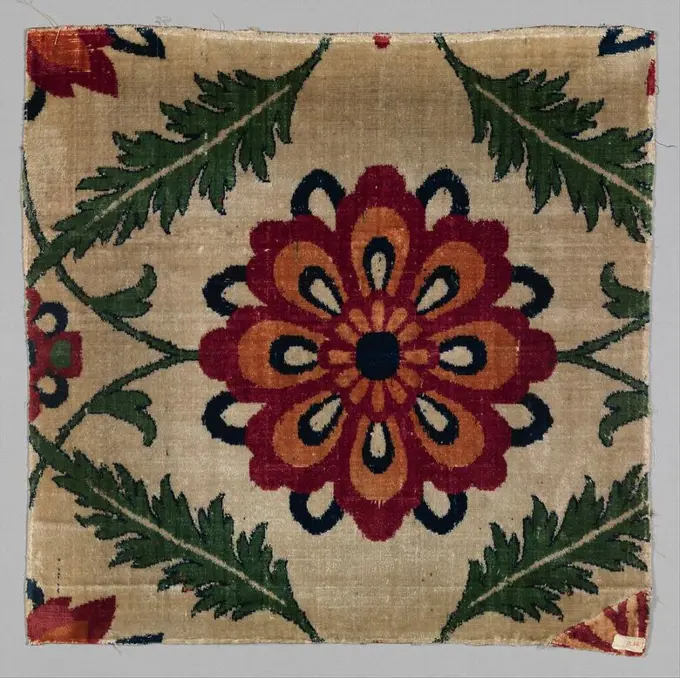
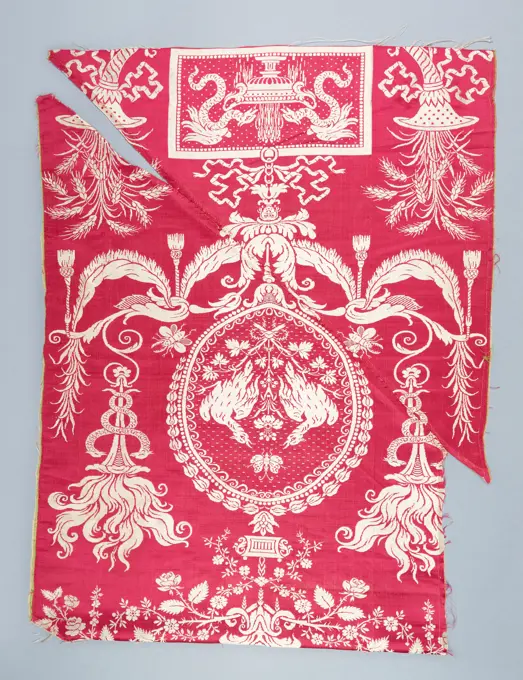
Cover Made 1601-1725 Turkey. Tray cloth embroidered over all in a repeated rose spray pattern in red, green, white, blue, rose and brown. .Fragment early 16th century probably Italian. Fragment 230040Textile (France); cottonTextile, Medium: silk, metallic thread Technique: plain compound weave with supplementary weft, Central symmetrical large-scale floral motif, derived from a pomegranate, is brocaded in gold on a white ground. On either side are green ribbon-like serpentines with rosettes. Small floral sprigs brocaded in blue, pink, tan, yellow, and gold thread are interspersed symmetrically throughout., France, 17th-early 18th century, woven textiles, TextileFragment; silkFragment; medium, silk, metallicFragment red double tissue with pattern of scalloped medallions filled with dragon. Fragment of red silk with pattern in gold of scalloped medallions filled with dragon and surrounded by Rinceaux.Sidewall (USA); Manufactured by Maxwell & Co., S.A. (United States); machine-printed paper; 91 x 47.5 cm (35 13/16 x 18 11/16 in.)Fragment. Netherlands or North Germany. Date: 1601-1700. Dimensions: . Linen and wool, compound weave (i.e: Beiderwand or lampas 2:1). Origin: Germany. Museum: The Chicago Art Institute, Chicago, USA.Russian sash Unknown, European ManufakturaFragment green velvet brocade with pomegranate moth, anonymous, c. 1500 - c. 1525 Fragment green silk velvet brokaat (two sewn pieces) with a pattern of seven -lobe leaves with pearls in which pomegrana cones. Italy silk. Fragment green silk velvet brokaat (two sewn pieces) with a pattern of seven -lobe leaves with pearls in which pomegrana cones. Italy silk.Textile, Medium: silk and metallic thread Technique: plain compound cloth, brocaded, Red ground with horizontal ribs produced by floats of secondary warps. Pattern of broadly undulating floral forms brocaded in gold thread., France, 18th century, woven textiles, TextilePiece 18th-19th century Japan. Piece 65984Coverlet fragments, Medium: cotton, wool Technique: double cloth, In navy wool and cream cotton, large ornate pattern of acanthus pillars framing large rosettes, with thistles and branches and some diaper filling. Fragment 'a' shows part of a border of plain houses flanked by small trees, and in right corner, small boat in profile, with 'Year 1840.' Reversible, with colors in interchanged positions., USA, 1840, woven textiles, Coverlet fragmentsCotton spread with multicolored embroidery; Tamboerderk. Spread with multicolored embroidery; Tamboerderk. The pattern has a wide border filled with spiral drinks with various flowers. The midfield has scattered butas (flower branches) and in the middle an oval medallion within which a tendril and floral pattern. The corners of midfield are filled with half oval medallions also filled with a tendril and floral pattern. Oriental textile.Fragment 16th-17th century Italian. Fragment 230634Fragment, Medium: silk, linen, cotton Technique: two integrated fabric structures, plain wave and plain weave, Curving leaves and pomegranites in off set arrangement in pink, tan and white, 17th century, woven textiles, FragmentFragment Made 1801-1900 England. Cotton, plain weave; block printed; glazed .Textile Fragment, 1800s. Japan, 19th century. Silk, metallic thread; average: 16.5 x 5.8 cm (6 1/2 x 2 5/16 in.).Fragment first half 18th century Italian, Venice. Fragment 230600Quilt. Ann Marie Kittle (United States, active mid-19th century). United States, 1851. Textiles; quilts. Quilted and appliquéd cottonEmbroidered Shawl (), 18th-19th century. Turkey, 18th-19th century. Embroidery: silk on silk netting; overall: 127 x 75.5 cm (50 x 29 3/4 in.).Marigold, William Morris, (British, 1834-1896), Medium: cotton Technique: printed on plain weave, Close set vertical columns of serpentine stems with flowers and bunches of leaves, on a ground of smaller flowers, leaves, and scattered dots. In natural on a dark yellow-green ground. Wide plan selvedges in natural-color cotton., England, designed 1875, printed, dyed & painted textiles, Textile, TextileFragment sits with symmetrical edge pattern and flower vines on ocher yellow stock, c. 1720 - c. 1730 Fragment sits. Dessin: Symmetrically built -up band work, filled with grid pattern, supposedly lace pattern, and flower vines; In the ashes large flower arrangements in red, blue, eggplant, yellow and green against an ocher yellow stock; The stock of the band work is white. Hindeloopens fur. Coromandelkust cotton (textile). stain (coating). paint (coating) Fragment sits. Dessin: Symmetrically built -up band work, filled with grid pattern, supposedly lace pattern, and flower vines; In the ashes large flower arrangements in red, blue, eggplant, yellow and green against an ocher yellow stock; The stock of the band work is white. Hindeloopens fur. Coromandelkust cotton (textile). stain (coating). paint (coating)Rug;  1. PO. 19th century (1801-00-00-1850-00-00);Recovery, collection, kilimSkoutari carpet unknownPortion of a Chasuble. Italy. Date: 1450-1500. Dimensions: 129.8 x 61.3 cm (51 1/8 x 24 1/8 in.). Silk and gilt-metal-strip-wrapped silk, warp-float faced 4:1 satin weave with supplementary brocading wefts and supplementary pile warps forming cut voided velvet. Origin: Italy. Museum: The Chicago Art Institute, Chicago, USA.Towel end, Medium: linen Technique: withdrawn element with embroidery, Broad lower towel end with a border of drawn work with animals confronting initials 'M.I.D.' under coronet and with floral and bird frame; symmetrical flower motif on each end. Broad geometrical guard bands n embroidery and drawn work. Deep macramé lower edge attached by band. Two plain selvages., Denmark, 19th century, embroidery & stitching, Towel endPanel, Medium: silk embroidery, linen foundation Technique: embroidered on plain weave, Closely spaced, all-over design of lozenges separated by red leaves with an eight-pointed star and the intersection, in green, yellow and taupe silks., Amorgos, Greece, 18th century, embroidery & stitching, PanelFragment (Italy); silk; Bequest of Richard Cranch Greenleaf in memory of his mother, Adeline Emma Greenleaf; 1962-56-11Ribbon, Medium: silk Technique: plain weave, Light blue silk ribbon brocaded in a blue and white floral pattern comprised of a curvilinear floral vine that intersects with a slender vine of small leaves., USA, ca. 1860, woven textiles, RibbonFragments of silk fabric unknownFragment, Medium: cotton Technique: block printed on plain weave, Twisting cord forming a lattice enclosing sprays of flowers. Black, two reds, grey, and blue., France, 1775-95, printed, dyed & painted textiles, FragmentFragment (Japan)Fragment, 1800s. India, 19th century. Brocade; silk and metal; overall: 30.5 x 14 cm (12 x 5 1/2 in.).Textile, Medium: cotton Technique: printed cloth, Fragment of cream-white cotton, hand-woven, block-printed in red and brown; design of flower sprays intertwining on very thin much carvd stems. Flowers show Indian influence in drawing and are printed with much interior desgin, of fine picotage in both red and brown. Flowers mainly red, with details in white of ground. Stems and outlines brown., England, USA, mid-18th century, printed, dyed & painted textiles, TextilePanel Made 1550-1600 Turkey. Silk, cotton, metal-wrapped silk threads, warp-float faced satin weave with supplementary brocading wefts, supplementary binding wefts, and supplementary warps forming voided and cut velvet .Textile Fragment, 1800s. Japan, 19th century. Silk; overall: 26.7 x 28.6 cm (10 1/2 x 11 1/4 in.).Fragment Made 1601-1650 Italy. Silk, satin weave with supplementary pile warps forming cut, uncut, and voided velvet .Textile (Iran); silk, metallic threadFragment of the contustion sash unknownFragment, Medium: silk, metallic Technique: brocaded plain weave, Double palmette arranged in alternating rows on blue ground., 17th century, woven textiles, FragmentTextile, Medium: silk, metallic yarns, parchment Technique: embroidered in satin and knotted stitches on plain weave over parchment shapes, Symmetrical Rococo design of silver gilt arabesques and cartouches, combined with naturalistic flowers in polychrome silks, on ivory silk ground., France or Italy, 18th century, embroidery & stitching, TextilePiece 18th-19th century Japan. Piece 67808Textile; cottonTextile with Flora, c. 1500s. Italy or Spain, 16th century. Silk, linen, silver thread; overall: 90.8 x 59.4 cm (35 3/4 x 23 3/8 in.); mounted: 97.8 x 66.7 cm (38 1/2 x 26 1/4 in.). This luxurious furnishing fabric might have been a wall covering or part of a long robe. The pattern of floral bouquets framed by curved leaves was popular in Italy, Spain, and Turkey during the 16th century. Darkened by oxidation, the fine silver weft, or horizontal, threads would have once shone brightly and glittered in the flickering candlelight that illuminated rooms before electricity. The preserved selvage edges reveal the width of the original loom; the edges color and style may even indicate the quality of the silk thread and the identity of the guild that wove it.Baan silk tissue with damask effect ,, c. 1900 - c. 1930 Baan silk tissue (brocatel) In flat binding with damask effect. Dessin: palm-shaped smell flowers, interspersed with a flower rosette framed by flower and leaf vines, with geometric fillings in white and brown. The tissue consists of a large piece and a narrow lane from the same side sewn on the underside. The design is derived from French silk tissues from the beginning of the 18th century. Stamped at the back number: 23012. Label with printed text: French and Co. Inc.; 23012; Brown and White Brocade; 17 + 8 inches. Europe silk. brocatelle damask Baan silk tissue (brocatel) In flat binding with damask effect. Dessin: palm-shaped smell flowers, interspersed with a flower rosette framed by flower and leaf vines, with geometric fillings in white and brown. The tissue consists of a large piece and a narrow lane from the same side sewn on the underside. The design is derived from French silk tissues from the beginning of the 18th cenTextile (France); linen warp, cotton weft; Warp x Weft: 50 x 75 cm (19 11/16 x 29 1/2 in.); Bequest of Elinor Merrell; 1995-50-350Length of Textile, mid 1700s. France, 18th century, Period of Louis XV (1723-1774). Lampas weave, silk; overall: 110.5 x 56.5 cm (43 1/2 x 22 1/4 in.).Fragment, Medium: cotton Technique: block-printed on plain weave, Checkerboard layout of squares with stylized floral rosette in dull red on undyed ground alternating with dull red square with line reserve of profile lotus and leaf rising from triangle base., India, 14th-15th century, printed, dyed & painted textiles, FragmentSidewall (USA); Manufactured by Robert Graves Co. (United States); machine-printed paper; 52.5 x 51 cm (20 11/16 x 20 1/16 in.)Sampler, Medium: silk embroidery on linen foundation Technique: cross and satin stitches on plain weave, Alphabet introduced by Maltese cross, floral cross borders and geometric bands., Italy, mid-19th century, embroidery & stitching, SamplerBliej Kultury Unknown, Krakow workshops, Batiki studio under the direction of Antoni BuszkaTextile, Medium: silk Technique: embroidered in chain and satin stitch with appliqued needlemade net on satin weave, White satin ornamented with embroidery in colored silks and chenille threads in a design of scrolling lines, flowers, and flowering vines. Handmade net is inserted near the bottom. Selvage has a green stripe., Europe, ca. 1780, embroidery & stitching, TextileFragment (Iran); silkSidewall, Machine-printed, oil inks, Full width printed in blue, red and yellow with swags and sprays of flowers. Color register marks on left margin and right margin; stock number 137 on right margin., USA, 1890-1900, Wallcoverings, SidewallTowel border 1800-1850 Russian. Towel border. Russian. 1800-1850. Linen, silk. Textiles-LacesPiece 16th-17th century Italian. Piece. Italian. 16th-17th century. Silk and metal thread. Textiles-VelvetsSampler (England); silk embroidery on linenFragment of silk fabric  flower pattern with wavy band unknownFragments, Medium: silk Technique: plain weave with supplementary warp floats, Barred pink stripes and stripes with a lion on a pedastel., late 18th century, woven textiles, FragmentsTapestry. unknown, authorFragment multicolored silk tampas ,, c. 1740 - c. 1760 Fragment multicolored silk tissue. Acanthus leaves, fine leaves and flower branches are medallions on a white soil. Netherlands silk lampas (textile material) Fragment multicolored silk tissue. Acanthus leaves, fine leaves and flower branches are medallions on a white soil. Netherlands silk lampas (textile material)Cover Made 1601-1700 Turkey. Linen, plain weave; embroidered with silk in running (twill darning) and stem stitches .Textile, Medium: cotton Technique: warp ikat, Oblong panel showing geometric design in the central area with vertical stripes along the sides. Done in reddish brown, black and cream color. Black and yellow along selvages. Fringe on both ends is set off with a line of black and white embroidery., 19th century, printed, dyed & painted textiles, TextileSampler. Date/Period: 1808. Sampler. Medium: silk embroidery on linen foundation. Technique: embroidered in cross, satin, stem, back, and marking cross stitches on plain weave foundation. Height: 640 mm (25.19 in); Width: 590 mm (23.22 in). Author: Fabiana Muriel.Textile (England or United States); linenFragment 17th century Italian. Fragment 230314Textile (France); linen, cotton; Warp x Weft: 153 x 58 cm (60 1/4 x 22 13/16 in.) Repeat H: 65.5 cm (25 13/16 in.); Musum purchase through gift of Mrs. Florence Matthews; 1994-23-1Piece 18th-19th century Japan. Piece 67605Factory Mark (England); Printed by Thomas Wardle (1831 - 1909); cotton; Warp x Weft: 55.5 x 98 cm (21 7/8 x 38 9/16 in.); 1934-7-3Textile (France); silk, metallic yarns (metal foil wrapped silk-core yarns)Sidewall, Machine-printed, Aesthetic or Anglo-Japanesque-style design, with stylized flowers and foliage in an asymmetrical key or fret framework., USA, 1880-90, Wallcoverings, SidewallTextile, Medium: cotton Technique: mordant painted and resist dyed on plain weave (chintz) Label: mordant painted and dyed and resist dyed cotton (chintz), Finely woven cotton with an all-over, repeating floral design of small sprays of exotic flowers and foliage in many colors on a white ground. Strong reds in the blossoms with yellow, blue and green in the foliage, with fine filling patterns within leaves or flowers, as minute white flower sprays within a red leaf or tiny red flowers on a dark green leaf. Original glaze is still present but now dark with age., Coromandel coast, India for export, 1700-1750, printed, dyed & painted textiles, TextileLeather (Netherlands); leatherFlounce, Medium: linen Technique: needle lace, Wide flounce of cream-colored lace in a symmetrical design. A vase with flowers and foliage alternates with a large bud (pomegranate) surrounded by a floral wreath., France, 18th century, lace, FlounceFragment of linen and wool with on striped fond a composed of stylized flowers and leaves, surrounded by corrugated lines. Fragment of linen and wool with striped fond a diamond shaped pattern, composed of stylized flowers and leaves, surrounded by corrugated lines.Fragment, Medium: silk Technique: 4 and 1 harness satin damask, Diagonally slanting floral scrolls and tiny sea creatures in blue and white., 17th century, woven textiles, FragmentFragment, Medium:silk, metallic Technique: supplementary warp forming cut and uncut raised pile in plain weave foundation (velvet) with supplementarty wefts, Vertical palmettes and leaf motifs in deep mauve on gold., 17th century, woven textiles, FragmentPanel (Furnishing Fabric) Made 1866-1886 New Hampshire. Cotton, plain weave; roller printed . Cocheco Manufacturing Company (Producer)Batist handkerchief with whitework that runs into a peripheral bow bleeding with zigzag pattern and around a border bobbin, anonymous, c. 1800 - c. 1899 Naturel -colored batist handkerchief with embroidery - Whitework - surrounded by an openwork edge of lace plunge: work with pulled threads that runs through and has been stuffed. The open sewing gives through the square grid that seems to be the impression of fillet side on a knotted network. On this whole is sewn around a border bobbin: binche side. Square model with straight edges. The white on white embroidery is located in a continuous pattern along the edge of the batist and consists of thin curls with small leaves and clusters of three rosette flowers with some larger flowers between them, different in shape and with openwork flower hearts. The corners each have three hollow scoops. The work with pulled threads has a square grid in which a zigzag pattern with florets has been made with tropical work. The zigzag is interrupted herWelum;  XVI/XVII century (1590-00-00-1610-00-00);Skirt Panel (), early 1900s. India, Cutch, early 20th century. Embroidery: silk on cotton tabby ground; overall: 72.4 x 85.1 cm (28 1/2 x 33 1/2 in.).Napkin with coat of arms of Catherina Vrsvla Elisabeth von Pletenberg 1664, marked AVD and 14., Anonymous, 1664 White linen damas napkin with a flower pattern and the coat of arms of Catherina Vrsvla Elisabeth von Pletenberg 1664, marked AVD and 14. Northern Netherlands linen (material) damask White linen damas napkin with a flower pattern and the coat of arms of Catherina Vrsvla Elisabeth von Pletenberg 1664, marked AVD and 14. Northern Netherlands linen (material) damaskTextile, Medium: cotton Technique: block printed on plain weave, Straight repeat of widely-spaced flowers on an undyed ground. Two large flower groups surrounded by tiny flowers., France, 1780-89, printed, dyed & painted textiles, TextileTextile (England); cottonVelvet Brocade, 1700s. China, Qing Dynasty (1644-1912), Qianlong reign (1735-1795). Velvet brocade, gold thread; overall: 289.6 x 190.5 cm (114 x 75 in.).Embroidered Square, 18th-19th century. Turkey, 18th-19th century. Embroidery: gold filé laid over cotton thread, couched at edges by cotton, on silk ground; average: 94.6 x 98.5 cm (37 1/4 x 38 3/4 in.).Piece 18th-19th century Japan. Piece 66069Textile, Medium: cotton Technique: printed by engraved roller on plain weave Label: cotton printed by engraved roller, Printed cotton with alternating scenes of a log cabin, the larger of which has barrels in front, one of which reads HARD CIDER; cannons in the background. Flowers, trees, leaves and birds surround the scenes. In brown and red, much faded, on white., USA, 1840, printed, dyed & painted textiles, TextileUchishiki (Altar Cloth) Made 1775-1800 Japan. Square piece of Kinran; fancy compound satin of silk threads and gilded paper strips finely cut .Fragment of the fabric;  18th century (1701-00-00-1800-00-00);fabricsBorder (USA); machine-printed; 35 x 23.5 cm (13 3/4 x 9 1/4 in.)Fragment Made 1367-1500 Egypt. Textiles held an important place in all Islamic courts, including that of the Mamluks in Egypt and Syria. The appeal of woven fabrics lay in their rich colors, elaborate patterns, and luxury materials, including silk and metal thread. Woven silks such as these two fragments were hung as wall decorations, made into robes worn by members of the court, or given as official gifts to rulers of neighboring regions.. Silk, warp-float faced 3 1 twill weave with supplementary patterning wefts tied by secondary binding warps in plain interlacings . IslamicTextile (England), 19th century; cotton; 1953-38-11-bEmbroidery Panel. Langdale Linen Industry (England, 1885-circa 1918). 1925. Textiles; embroidery. Linen plain weave with silk embroideryFragment of a White-Ground Velvet Carpet. Dimensions: Textile: H. 14 in. (35.6 cm) W. 13 3/4 in. (34.9 cm). Date: 17th century.Carpets composed of flowers and vines arranged on neutral backgrounds were produced in great numbers during the reign of Shah Jahan in the seventeenth century. This velvet fragment was originally part of such a composition. The large flower in the center relates to the technique of pietra dura in which precious stones, often depicting floral motifs, are inlaid into marble in architectural settings. The discrete shapes of solid, unshaded color that form the flower are reminiscent of one of the techniques seen in the inlaid stones of pietra dura, which was at its peak around the time this textile was produced. Museum: Metropolitan Museum of Art, New York, USA.Fragment of upholstery fabric  circular and square medalIIons with eagles and griffins unknownPanel. France, Lyon. Date: 1720-1729. Dimensions: 74.7 x 55.3 cm (29 1/4 x 21 3/4 in.)Warp repeat: 22.4 cm (8 3/4 in.)Weft: point repeat. Silk and silvered-metal-strip-wrapped silk, plain weave with brocading wefts. Origin: Lyon. Museum: The Chicago Art Institute, Chicago, USA.Fragment (Italy); linen, silk, metallic thread