Textile Fragments and Patterns

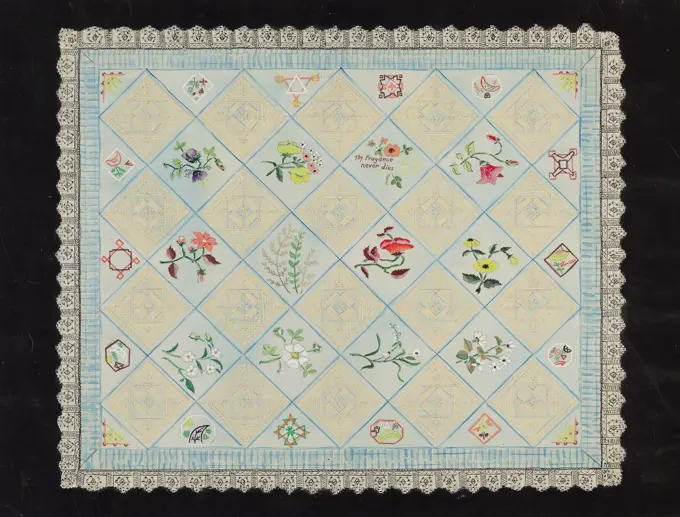
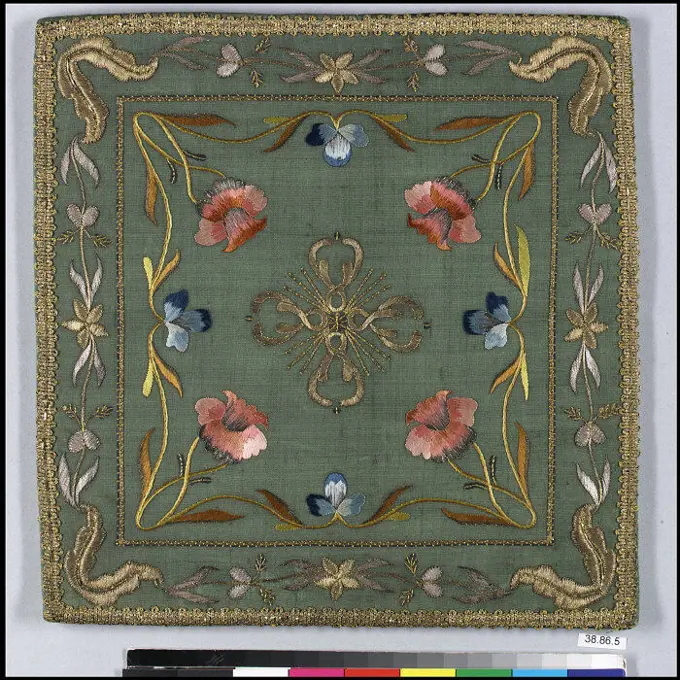
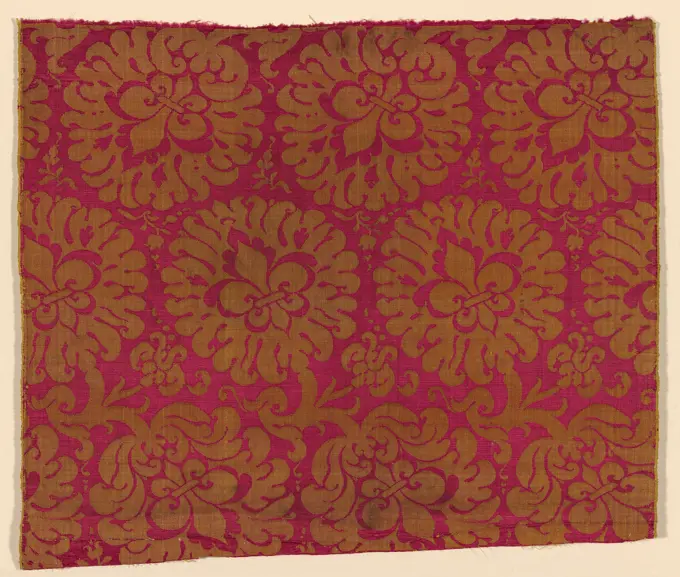
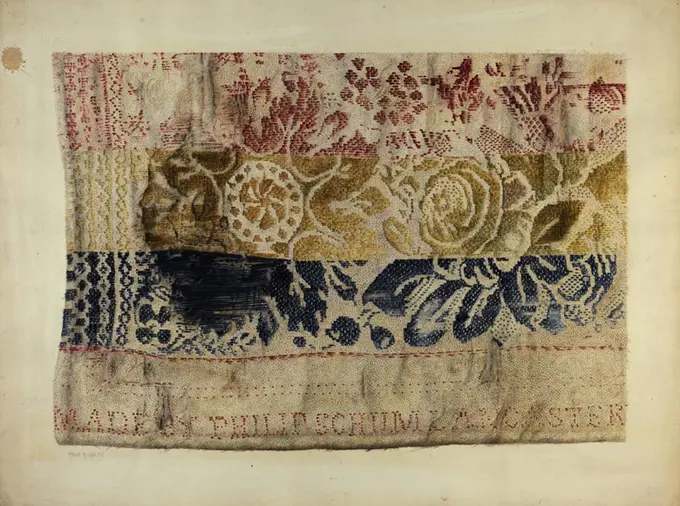
Historical textile pieces featuring intricate floral and decorative motifs from various regions, showcasing artistry through time.

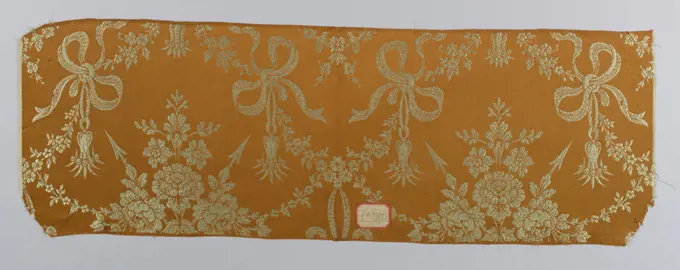
Fragment; medium, silk, metallic
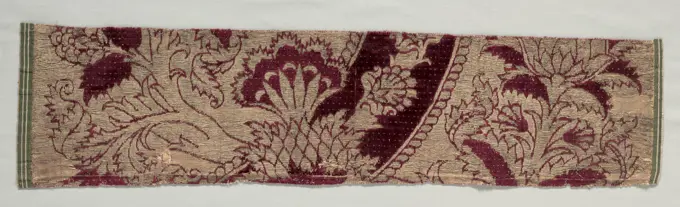
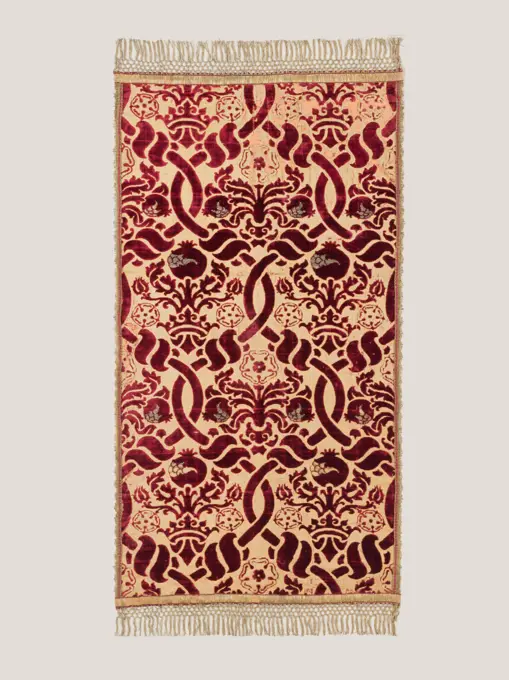
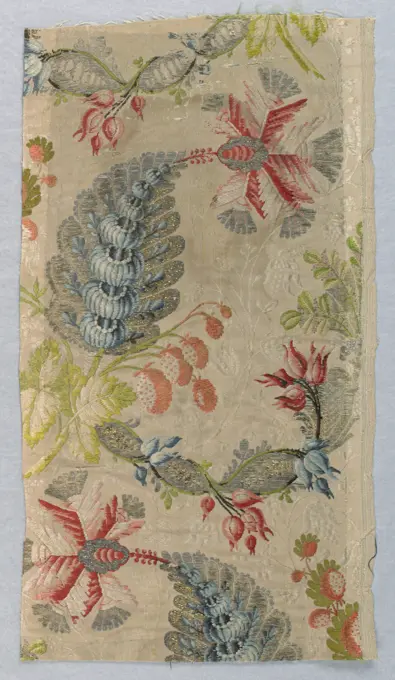
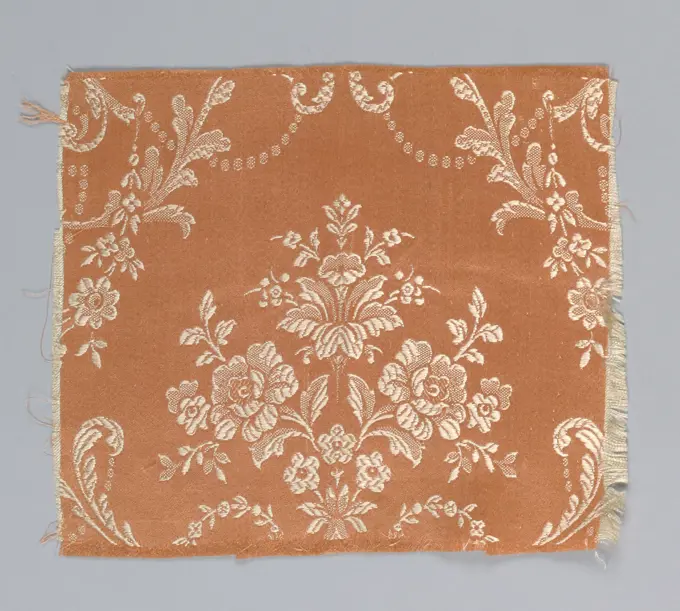
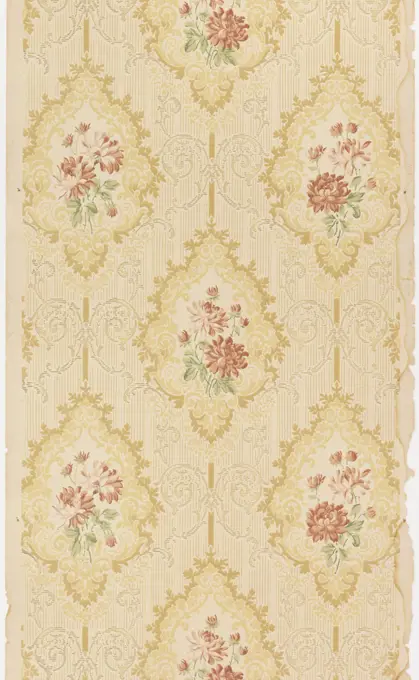
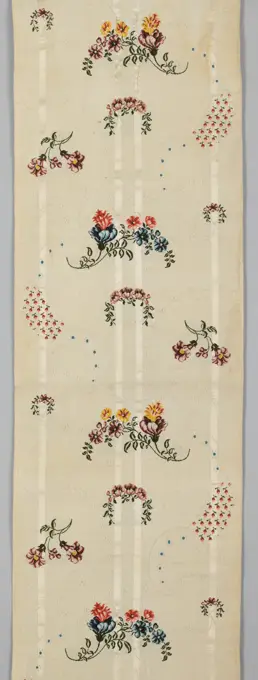
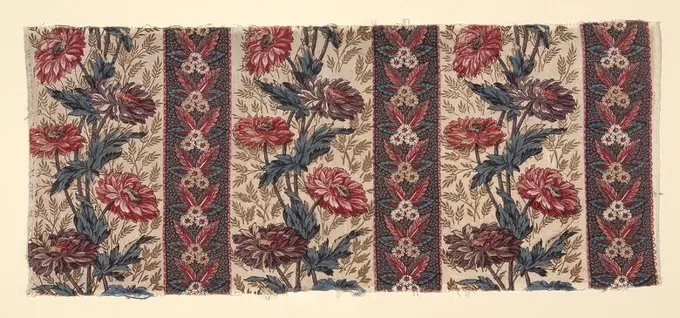
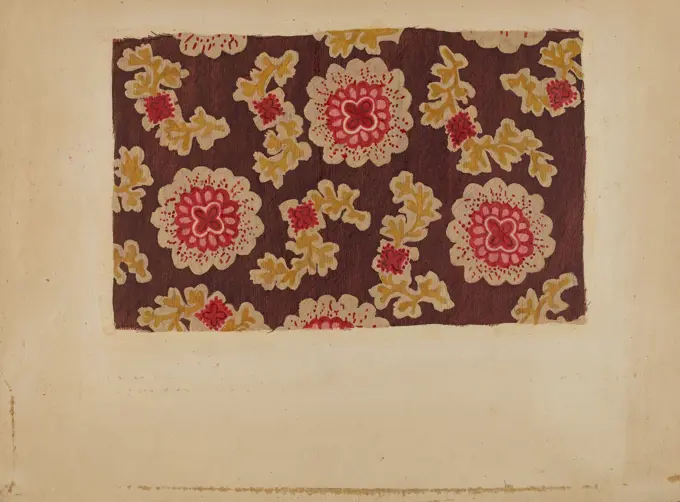
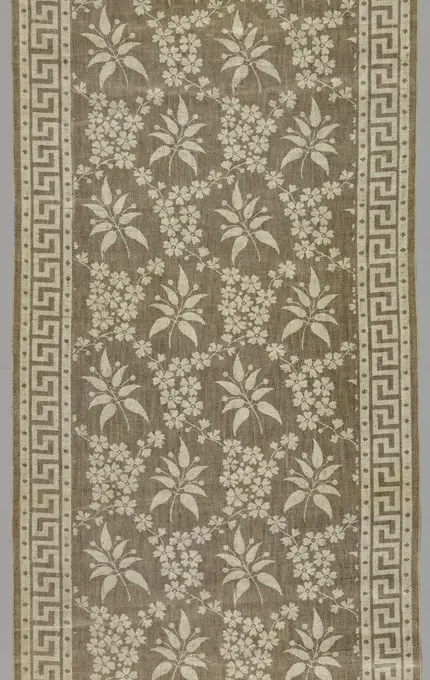
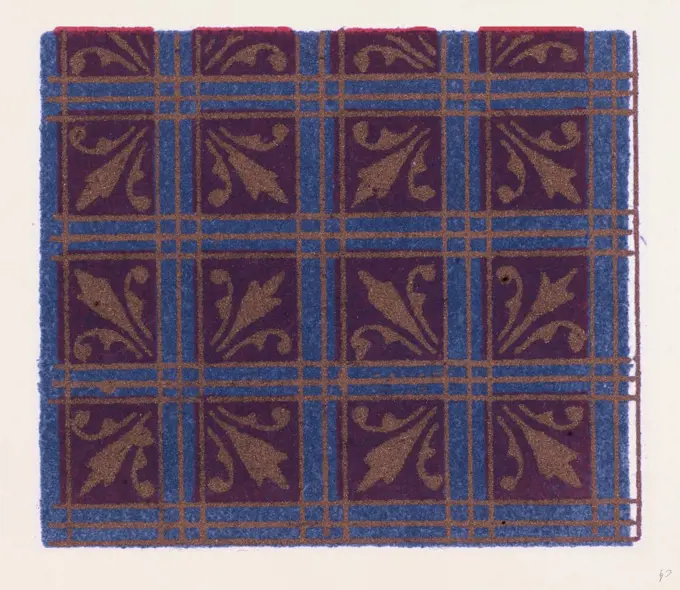
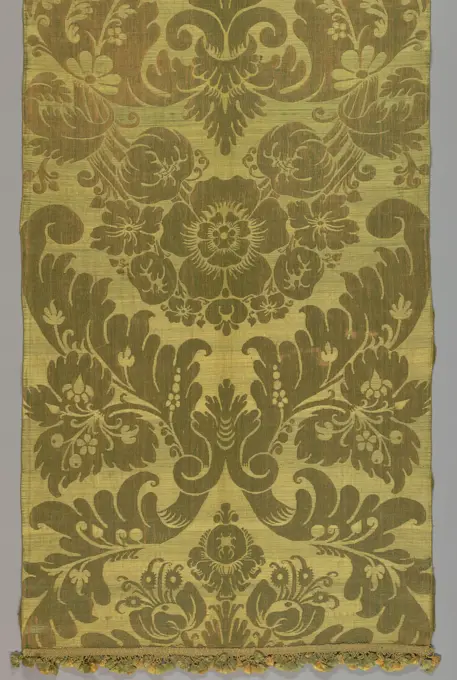
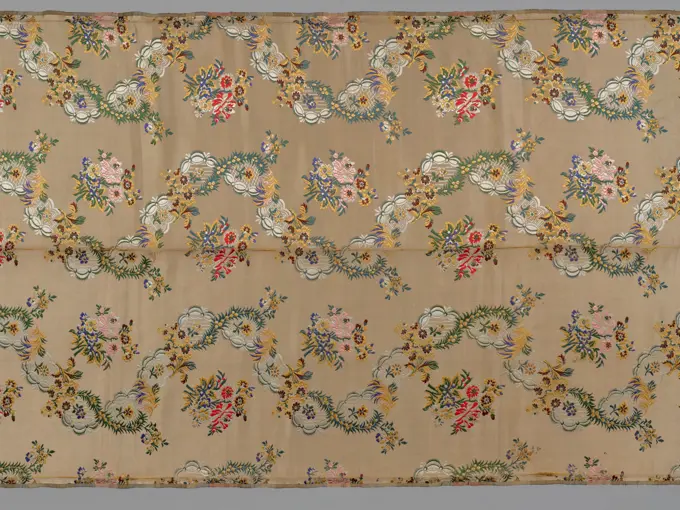
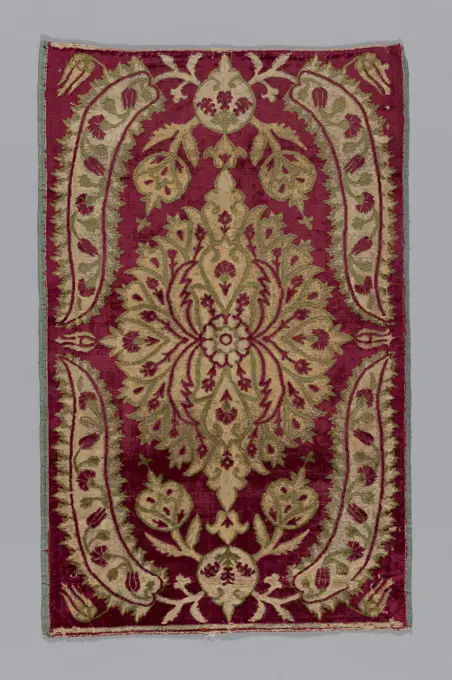
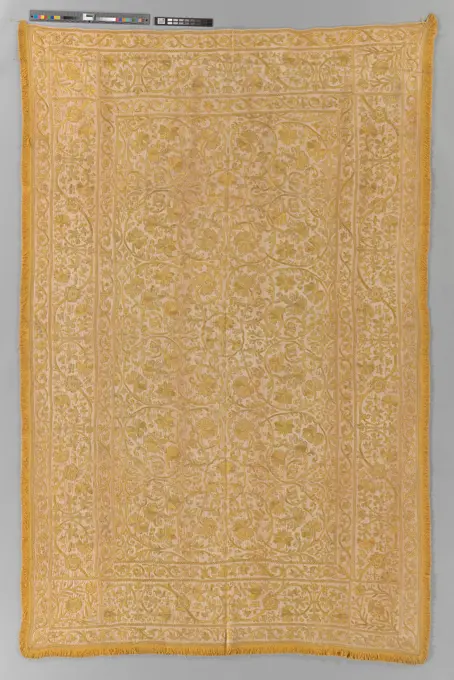
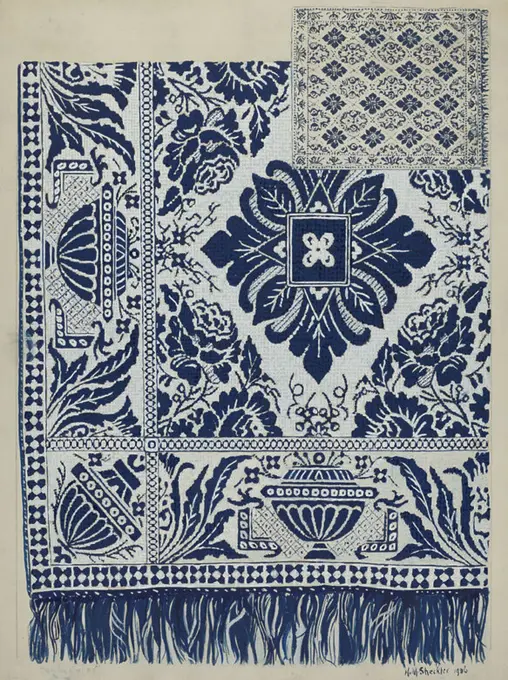
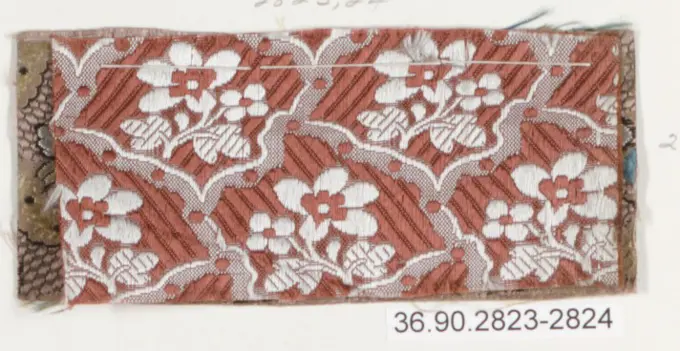
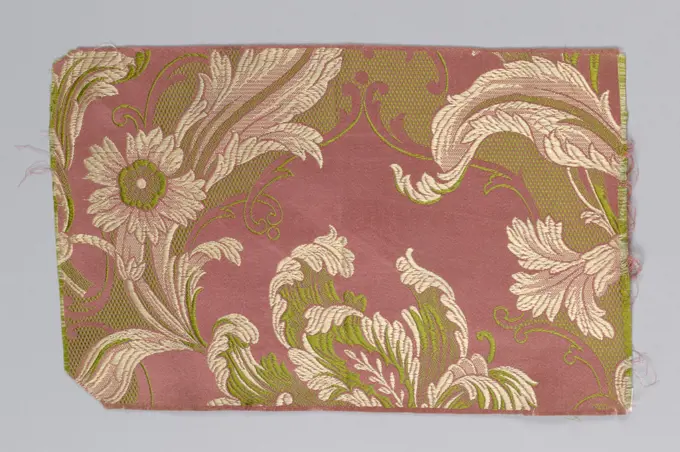
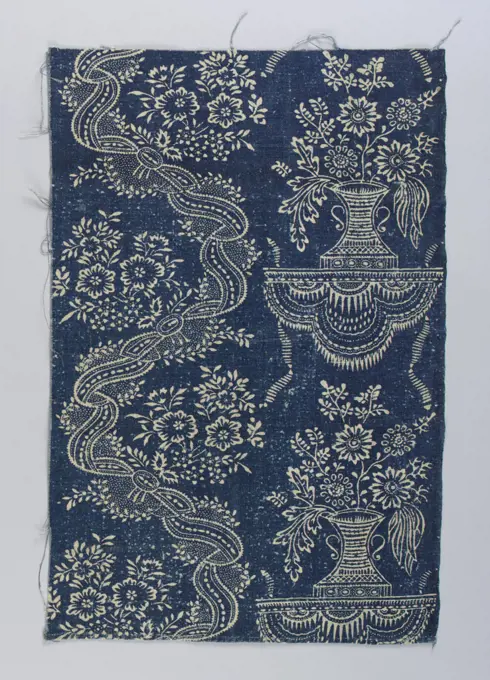
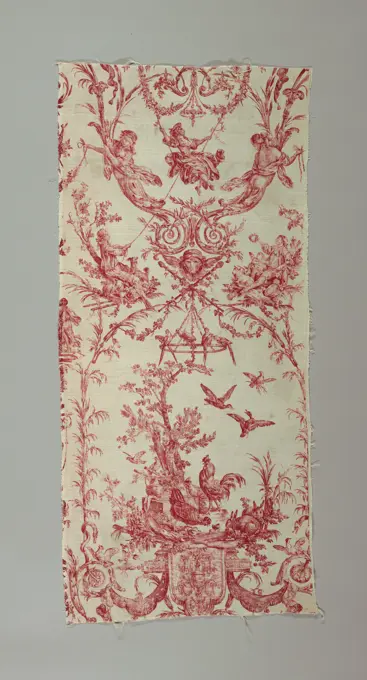
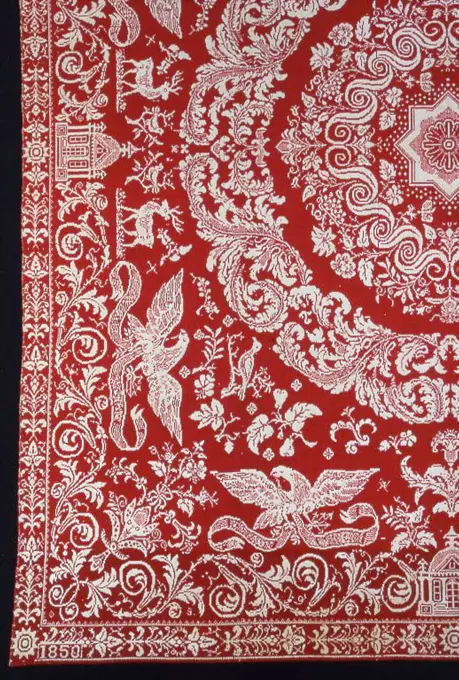
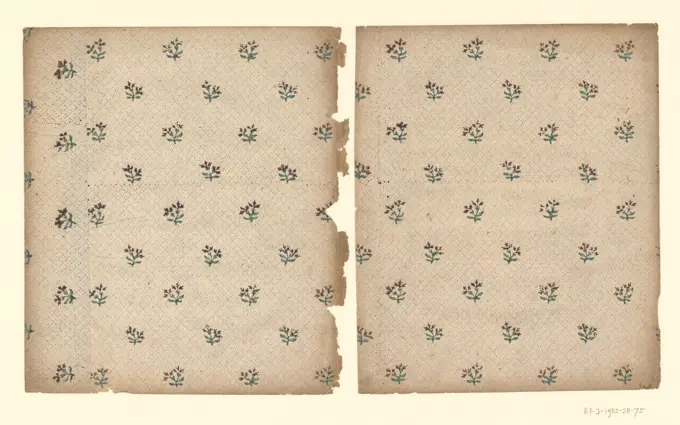
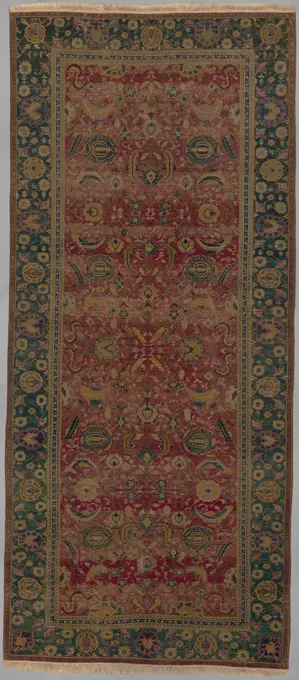
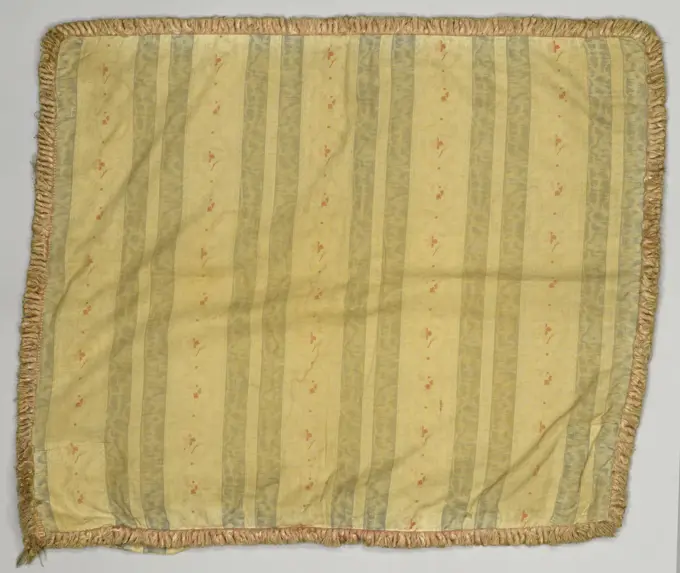
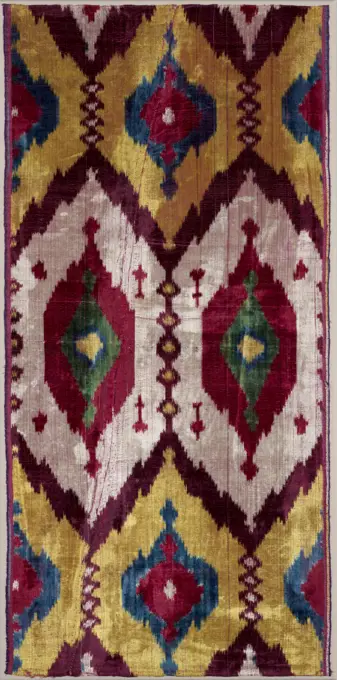
Iket (Headcloth) Made 1801-1900 Java. Cotton, batik dyed .Brocaded Textile, early 1700s. France or Italy, 18th century. Brocade; silk and metal; overall: 110.8 x 40.7 cm (43 5/8 x 16 in.).Quilt, 'Foundation Rose and Tulips'. United States, possibly Pennsylvania, Hookston, circa 1865. Textiles; quilts. Pieced and quilted cottonHeadkerchief, 1700s. Algeria. Silk on linen tabby ground; embroidery; overall: 260.4 x 40.6 cm (102 1/2 x 16 in.).Front of cotton tulle with tambourish. Front of lace embroidery: white tamboureering on ecru-colored machine tulle. The pattern has garlands of arches and olive branches, laurel wreaths and a flower pot, inside a soutache ornament. The display is finished on three sides with dot gallon and has copper rings along the top.Velvet Fragment, 1400s. Italy, 15th century. Velvet (cut, voided, and brocaded): silk and gold thread; overall: 18.5 x 72.4 cm (7 5/16 x 28 1/2 in.).CHAICE VEIL unknownTextile (France); technique: block printed using a resist medium on plain weave foundation; immersion dyed in blue; Warp x Weft: 45.5 x 41.5 cm (17 15/16 x 16 5/16 in.) Repeat H (square repeat): 21.9 cm (8 5/8 in.)Fragment (Japan)Textile Length. Italy, Genoa, circa 1500-1525. Textiles; textile lengths. Silk cut and metallic uncut velvet on silk satin ground with silk- and metallic-thread passementerie and knotted fringeFragments (France); silk and metallic threadSamples (USA); Manufactured by Orinoka Mills (United States); Warp x Weft (a): 12.5 × 30.5 cm (4 15/16 in. × 12 in.) Warp x Weft (b): 17 × 21 cm (6 11/16 × 8 1/4 in.)Leaf with alternating job pattern of winding slender and flowers, anonymous, 1700 - 1850  Leaf with alternating job pattern of winding flower lines and of loose bouquets on a continuous horizontal lines foref.  paper. block printing (relief printing process) ornament derived from plant formsFragment; Company: F. Schumacher & Co. (United States); silk, metallic, velvet; Warp x Weft: 142 x 63.5 cm (55 7/8 x 25 in.) Repeat H: 118.7 cm (46 3/4 in.)Excerpt multicolour, anonymous, 1700 - 1725 Fragment green silk tissue with colored flower vines, fruits and leaves. Spain (possibly) silk Fragment green silk tissue with colored flower vines, fruits and leaves. Spain (possibly) silkSidewall, Machine-printed paper, liquid mica, Large-scale foliate medallions, each containing a bouquet of chrysanthemums () The medallions are printed on stripes, and are connected to other medallions by foliate scrolls. Printed on a striped background pattern., USA, 1905-1915, Wallcoverings, SidewallSidewall, Block-printed on joined sheets, Arabesque design. Blue urn holding floral bouquet and wheat shafts. Scrolling foliage above and below. Strung bead pendants. Pairs of doves. Printed in polychrome on white ground. Original document for 'Bouquet.', France, ca. 1785, Wallcoverings, SidewallFragment; linenDress panels ca. 1775 British, London, Spitalfields. Dress panels. British, London, Spitalfields. ca. 1775. Silk. Textiles-WovenFragment (Russia); linenFragment 18th century Italian or French. Fragment 230246Piece 17th century Japan. Piece 71155Fragment, Medium: wool, cotton Technique: printed on plain weave, Cream coloured ground with broad vertical stripes of closely massed slender foliate design in browns and black, alternating with tiny rose buds in pink and blue., England, late 19th century, printed, dyed & painted textiles, FragmentLength first half 18th century Italian. Length 229268Cloth. unknown, authorEmbroidery patch of linen canvas on which with silk in rococo or bundle stitch are embroidered multicolored rhombus and floral motifs to tf and 1783 ... geometric flat fillings and bouquets. The linen fond was usually - around the patterns and bouquets - completely embroidered in one color side, for example golden yellow. Such embroidery was applied to pincushions, exhibitions and other decorative objects.Textile (France); silk, metallic threadFragment, Medium: silk Technique: weft floats on satin foundation, Closely spaced repeat of 'botehs' facing in alternate direction. In gold and black on magenta., Iran, 18th century, woven textiles, FragmentFragment, 1700s. China, 18th century. Silk; overall: 19.7 x 15.9 cm (7 3/4 x 6 1/4 in.).Fragment. England. Date: 1775-1800. Dimensions: 30.1 × 70.8 cm (11 7/8 × 27 7/8 in.). Cotton, plain weave; probably roller printed. Origin: England. Museum: The Chicago Art Institute, Chicago, USA.Dorothy Lacey, Block Printed Handkerchief, c 1937 Block Printed HandkerchiefFragment, Technique: Jacquard woven. 4 & 1 satin damask. Weft float face interruption, 1. Warp float face interruption, 2., Length of damask used to protect carpeting on stairs during summer. Pattern of offset leaves with berries framed by flowers forming a lattice. This pattern fills the 42.5 cm (16 3/4 in.) central section. Border on both sides, mirror images of each other, 7.5 cm (3 in.) wide with simple fret and dotted guards. Brown warp and ivory weft., USA, 19th century, woven textiles, FragmentTextile, Medium: cotton Technique: relief printed, Cream white cotton, block printed in large scale naturalistic flower design in all-over clusters; iris, lily, amaryllis, daffodil and pineapple. Shades of red, dark purple, brown, blue; remains of yellow, now faded, show in sections of leaves, indicating combining of yellow over blue for green. A background printing of fine small scale foliage, in shadow effect, light brown., France, 18th century, printed, dyed & painted textiles, TextileCushion Cover (USA); Designed by William Morris (British, 1834-1896); Embroidered by Annie-May Hegeman; Retailed by Morris & Co. (United Kingdom); mercerized cotton embroidery on cottonMedieval ornamentTextile (France); silk, metal foil-wrapped silk-core threadsFragment of Textile, 18th century. Spain, 18th century. Fancy satin, brocaded: wool; average: 109.3 x 46.1 cm (43 1/16 x 18 1/8 in.).Textile (Italy); silk, linenBorder, Technique: bobbin lace, Bobbin lace border, floral borders; late 18th century Point de Lille, late 18th century, lace, BorderPiece 16th-17th century Italian. Piece 223197Length of Textile, late 1800s-early 1900s. Japan, late 19th-early 20th century. Lampas weave, brocaded; silk and gold thread; average: 406.4 x 69.2 cm (160 x 27 1/4 in.).Fragment, Medium: silk, metallic thread Technique: plain weave patterned by supplementary weft floats, Green stems with red floral terminals on a white ground., 17th century, woven textiles, FragmentFragment, Medium: cotton Technique: blue resist on plain weave, Design of buds and blossoming flowers in white on a blue background., France, mid-late 18th century, printed, dyed & painted textiles, FragmentFabric decorated with metal thread embroidery unknownFragment (Furnishing Fabric). England. Date: 1837-1838. Dimensions: 50.8 × 53.3 cm (20 × 21 in.)Warp repeat: 34.8 cm (13 3/4 in.). Cotton, plain weave; engraved roller printed. Origin: England. Museum: The Chicago Art Institute, Chicago, USA.Taffeta, 1774-1793. France, 18th century, Period of Louis XVI (1774-1793). Taffeta, brocaded and embroidered; silk, gold and silver; overall: 60.6 x 54.6 cm (23 7/8 x 21 1/2 in.); mounted: 67 x 60.3 cm (26 3/8 x 23 3/4 in.).Sebastian Simonet, Satin Bedspread, c 1936 Satin BedspreadFragment of a shawl with embroidered trimming unknownCarpet fragment, Medium: cotton, bast fiber, wool Technique: printed supplementary warp-cut pile, Repeat of sprays of flowers within geometric brackets in bright and dark colors, mainly reds, black, browns, yellow-tans, and light blue on a vine pattern background in dark orange on ivory., USA, 1850-1900, woven textiles, Carpet fragmentSquare (possibly Germany); cottonBurse early 18th century possibly Italian. Burse 226318Fragment Made 1601-1625 France. Silk, satin weave self-patterned by reversing of faces .Handwoven Table Cover. Dated: c. 1940. Dimensions: overall: 45.6 x 61 cm (17 15/16 x 24 in.) Original IAD Object: 57" square. Medium: watercolor and graphite on paper. Museum: National Gallery of Art, Washington DC. Author: Maud M. Holme.Fragment (Cushion Cover) Made 1701-1800 Turkey. Silk, velvet .Sampler (Germany); silk embroidery on linen foundationCeiling Paper (USA); Manufactured by Cresswell & Washburn Ltd; machine-printed paper, liquid mica; 91 x 49 cm (35 13/16 x 19 5/16 in.)Piece 18th-19th century Japan. Piece 66774Fragment of silk fabric  net pattern made of floral twigs unknownTable cover late 16th-early 17th century Spanish or Portuguese Silk-embroidered linen covers were common furnishings in Iberian households. The proportions of this example indicate that it was used over a table rather than on a bed. The floral designselegant Renaissance-style scrolling vines with carnations, irises, and other flowers as well as hummingbirds seeking nectarare constructed with brilliant yellow silk embroidered on a natural linen ground (outlines in brown tannin ink, drawn for the embroiderers to follow, are still visible in some areas). The golden yellow color, a favorite in Iberia for textiles, was derived from weld, a local dyeplant that thrived in the region and was relied on for its brilliance and durability.¹ Although the contrast between the yellow silk and the ecru ground echoes that of certain Indian embroideries made in Bengal and imported into Portugal and Spain in the sixteenth and seventeenth centuries (see MMA1975.4, MMA 23.203.1), the ease of the design aSquare Shawl in Renaissance Style with Black Center and Quarter Shawl Layout, 1840s. France, Nimes; Scotland, Paisley or England, Norwich, 19th century. Supplementary weft pattern; silk and cotton; overall: 193 x 177.4 cm (76 x 69 13/16 in.).Handwoven Coverlet. Dated: 1936. Dimensions: overall: 35.5 x 26.8 cm (14 x 10 9/16 in.) Original IAD Object: 80" wide; 88" long. Medium: watercolor and gouache on paper. Museum: National Gallery of Art, Washington DC. Author: Hazel Sheckler.Textile (England); cotton; warp: 486cm(191 1/2 in.), weft (selvedge to selvedge): 80cm (31 1/2 in.) Pattern: Height of repeat: 10 in. Width of repeat: 12 in. Straight repeat.Fragment, Medium: silk Technique: 7&1 satin damask, Red damask with a symmetrical arrangement of a large flower coming from a vase., China, early 18th century, woven textiles, FragmentPiece French 19th centuryFragment. Europe, possibly Italy. Date: 1601-1700. Dimensions: . Linen and wool, compound weave (i.e. Beiderwand or Lampas 2:1). Origin: Europe. Museum: The Chicago Art Institute, Chicago, USA.Handwork with embroidered blue flowers, Aagje Tiket, c. 1900 Handwork with blue flower in Jugendstil, on a gray linen rectangle, in circulating and with various black work fillings. Belonging to series of eight white and ten colored crafts, made by Aagje Tiket for achieving the deed of beautiful and/or useful handicrafts at the industrial school, BK-1974-105-A to R. Amsterdam linen (material). silk embroidering Handwork with blue flower in Jugendstil, on a gray linen rectangle, in circulating and with various black work fillings. Belonging to series of eight white and ten colored crafts, made by Aagje Tiket for achieving the deed of beautiful and/or useful handicrafts at the industrial school, BK-1974-105-A to R. Amsterdam linen (material). silk embroideringSamples, Orinoka Mills, (Philadelphia, Pennsylvania, USA), a. emerald green ground with gold and orange, b. pink ground with green and gold, c. green/yellow ground with two gold colors, d. bright green ground with green and gold, e. red ground with gold color and orange, USA, ca. 1910, woven textiles, SamplesFragment (Japan)Fragment, Medium: linen Technique: block printed using resist, then indigo dyed on plain weave, Curving ribbon with flowers at left, vase of flowers on a table at the right., Mcon, France, 1750-1800, printed, dyed & painted textiles, FragmentTextile (Russia); silk, metal; Warp x Weft: 38 x 51.3 cm (14 15/16 x 20 3/16 in.); 1971-91-8Fragment (China); silkElizabethan ornamentTextile, L'Escarpolette; Designed by Jean-Baptiste Marie Huet (French, 1745 - 1811); France; cottonCoverlet Made 1850 New York. Cotton and wool, plain weave double cloth; woven on loom with Jacquard attachment; full loom width; seamless .Piece 17th century China. Piece. China. 17th century. Silk / Compound weave. Textiles-WovenPiece early 18th century Portuguese. Piece 227086Piece 18th century China. Piece 71437Samples, Orinoka Mills, (Philadelphia, Pennsylvania, USA), a. rust color warp and gold/tan color weft, b. rust color warp and light green weft, c. rust color warp and gold/tan color weft, USA, ca. 1910, woven textiles, SamplesPiece ca. 1873 Christopher Dresser British, Scottish Christopher Dresser was one of the most innovative and influential English textile designers of the nineteenth century, but only a small number of textiles woven from his designs have been identified. This piece is of interest because the date of the design can be firmly documented as a variant color way of the same pattern was registered at the London Public Record Office on April 18, 1873.. Piece 230007Panel Made 1875-1900 China. Forty-four pairs and eight odd pieces of embroidered sleeve, ankle bands, etc. on gauze. . Han-ChinesePiece 1750-65 French. Piece 216392Ceiling Paper (USA); Manufactured by Becker, Smith & Page, Inc.; machine-printed paper; 85.5 x 49 cm (33 11/16 x 19 5/16 in.)Silk tissue with flower pattern, including peonies, tassinari & chatel, c. 1840 - c. 1850 Silk tissue, broched with colorful silk and gold thread on a blue stock in satin binding, with a pattern of flower arrangements of peonies and, partially visible, Ziniaias contained in cartouches built up from rocailles. Label at the top right at the rear with in ink on it: 8237 followed by the letters FD & Cie in pressure and in ink: no 517-1 '' 175 Lampas Broché/Fo Bleu Fav. Lyon silk. lampas (textile material) Silk tissue, broched with colorful silk and gold thread on a blue stock in satin binding, with a pattern of flower arrangements of peonies and, partially visible, Ziniaias contained in cartouches built up from rocailles. Label at the top right at the rear with in ink on it: 8237 followed by the letters FD & Cie in pressure and in ink: no 517-1 '' 175 Lampas Broché/Fo Bleu Fav. Lyon silk. lampas (textile material)Kazuifel, fragment, with silk and gold thread embroidered flowers, anonymous, c. 1500 - c. 1525 Kazuifel, fragment, with silk and gold thread embroidered flowers on blue velvet  silk. velvet (fabric weave) Kazuifel, fragment, with silk and gold thread embroidered flowers on blue velvet  silk. velvet (fabric weave)Coverlet Fragment, c. 1760-1770. Philippe de Lasalle (French, 1723-1805). Embroidered satin and silk; overall: 73.7 x 82.6 cm (29 x 32 1/2 in.).Textile, Séguin et Cie, Medium: silk, metal-wrapped silk threads, smooth and frisé Technique: 8-harness satin patterned with continuous and discontinuous supplementary wefts and supplementary binding warp, Border woven to match 1937-63-3. Neo-classical pattern of laurel wreath and acanthus leaves in the form of a lyre brocaded in gold thread on a bright blue satin ground with a monochrome figure of slender leaves; with wide and narrown gold bands top and bottom., Lyon, France, ca. 1805, woven textiles, TextileFurniture Cover for Table 17th century China for British or Persian market (). Furniture Cover for Table 68276Fragment multicolored brochure silk, c. 1700 - c. 1750 Two fragments of purple and white striped silk, on which colored flowers and tendrils. Netherlands silk damask Two fragments of purple and white striped silk, on which colored flowers and tendrils. Netherlands silk damaskTwo blades with a flower branch of flower branch on points stock in Ruiten, Anonymous, 1750 - 1900  Two sheets with a flower branch of flower branch on points stock in windows. Two separate halves of a cover.  paper. block printing (relief printing process) ornament derived from plant formsTextile, Medium: silk, metallic thread Technique: woven, Cloth of gold brocaded in a small flower pattern of reds and greens., France, 18th century, woven textiles, TextileSidewall (USA); Manufactured by Robert Graves Co. (United States); machine-printed paper, liquid mica; 91.5 x 49 cm (36 x 19 5/16 in.)Indo-Persian carpet with vine scroll and palmette pattern second half of the 17th century Indo-Persian. Indo-Persian carpet with vine scroll and palmette pattern 461005Panel Made 1720-1725 England. Silk, warp-float faced 7 1 satin weave with supplementary binding warps tying supplementary brocading wefts and self-patterning ground wefts in weft-float faced 3 1 twill interlacing; two panels and one fragment pieced .Pillowcase of a four-poster bed. Pillow cover associated with a wall bed.Piece ca. 1750 () French. Piece 220162Shawl 1870s Scottish. Shawl 123070Chalice veil. unknown, authorLength of silk velvet ikat, 1875-1900. Uzbekistan, Bukhara. Silk: warp ikat, velvet weave; mounted: 75.9 x 40.6 cm (29 7/8 x 16 in.); overall: 69.2 x 33.7 cm (27 1/4 x 13 1/4 in.).Piece 16th century Spanish. Piece 224459Cover Made 1601-1700 Italy. Linen, plain weave; embroided in Holbein stitch .