Textile Fragments Collection

A collection of historical textile fragments including silk and cotton, showcasing intricate patterns and embroidery techniques from various cultures and time periods.

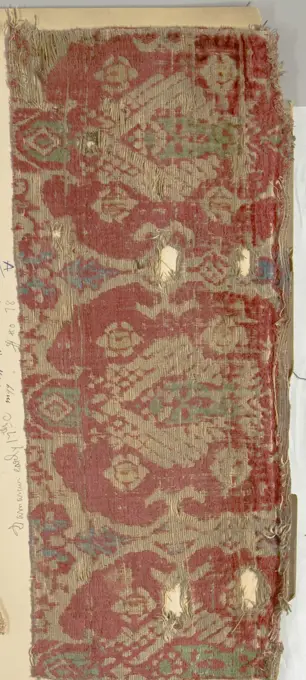
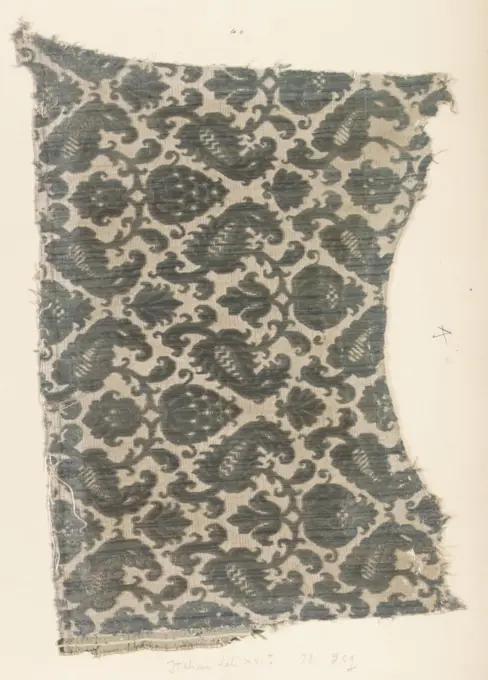
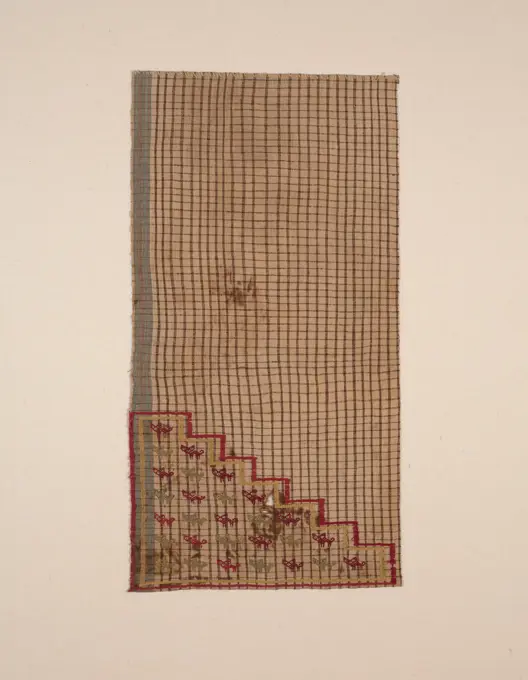
Fragments, Medium: silk, metallic Technique: woven, Pattern of red flowers in ogival shaped latticework. Bottom border of flowers., Indo-Persia, 19th century, woven textiles, Fragments
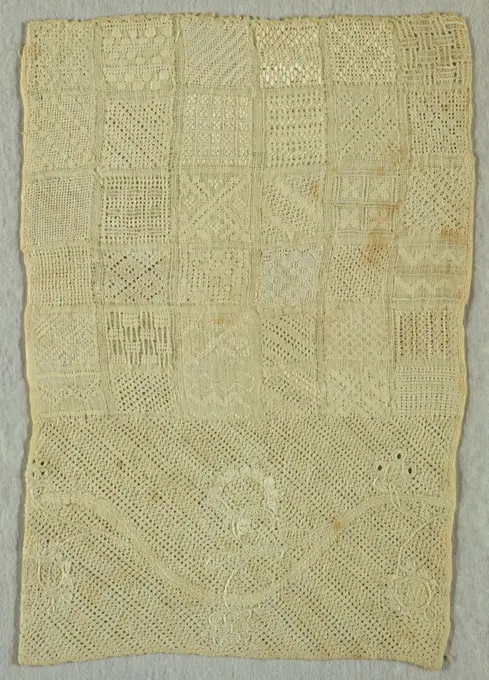
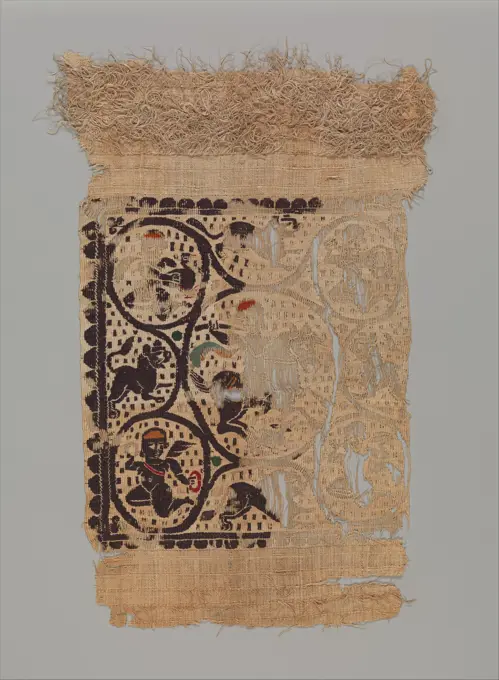
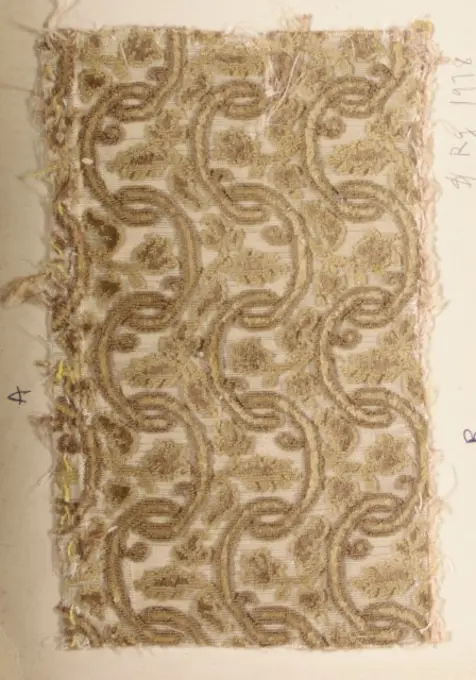
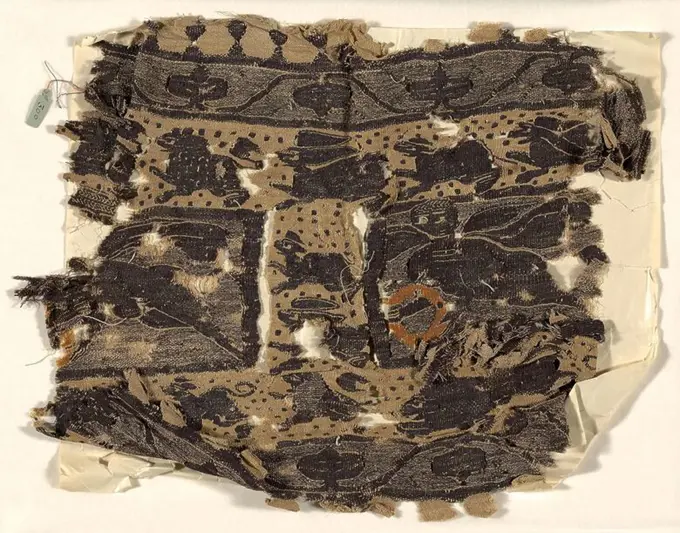
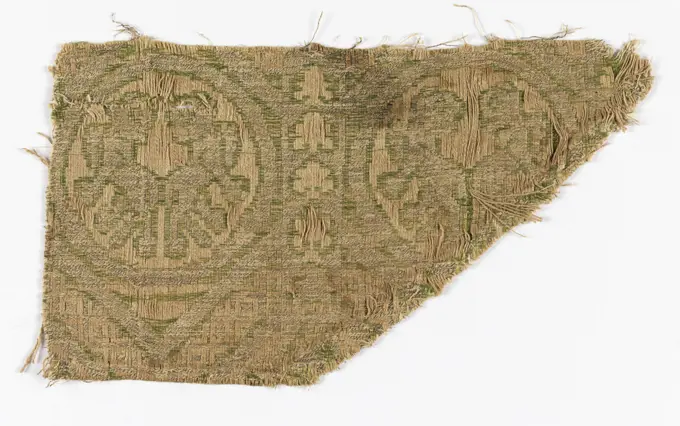
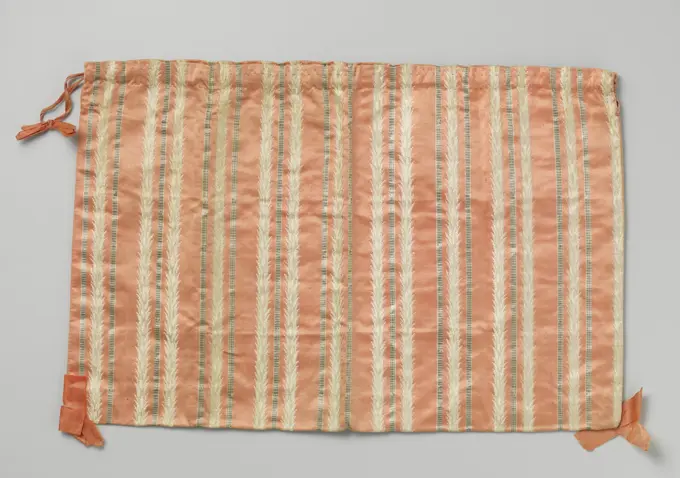
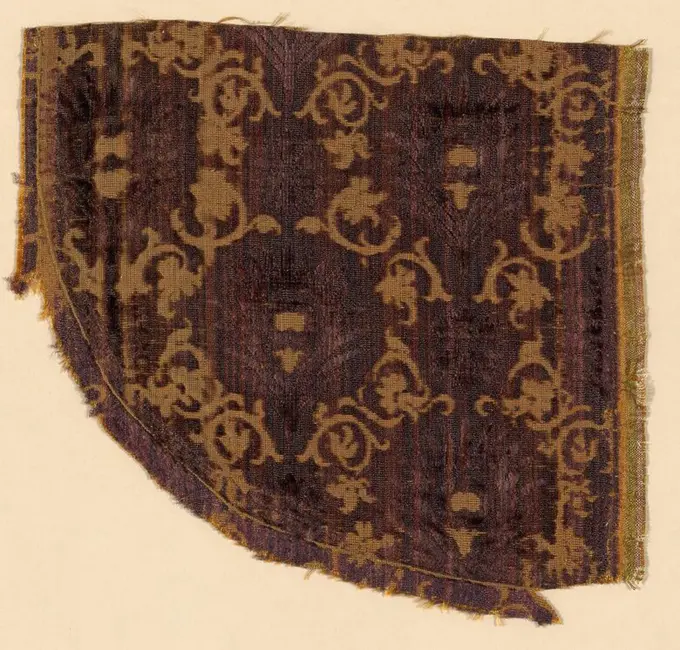
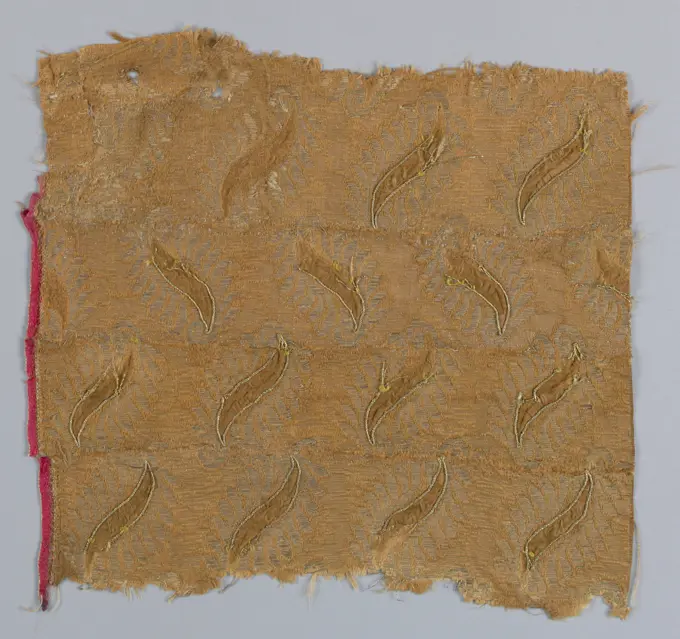
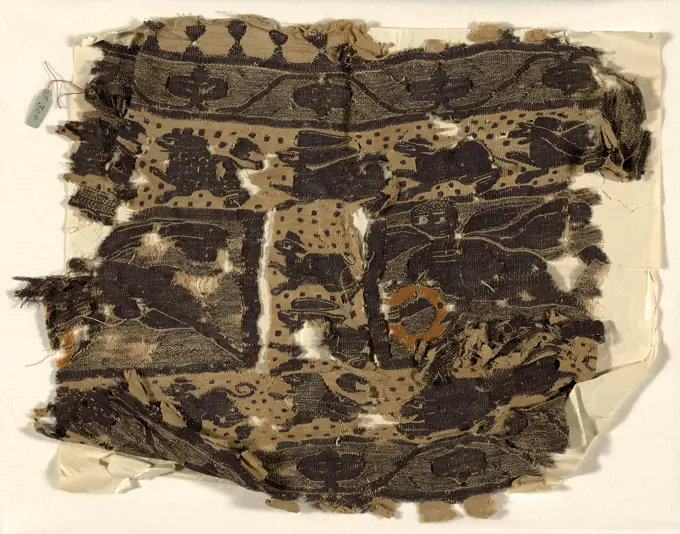
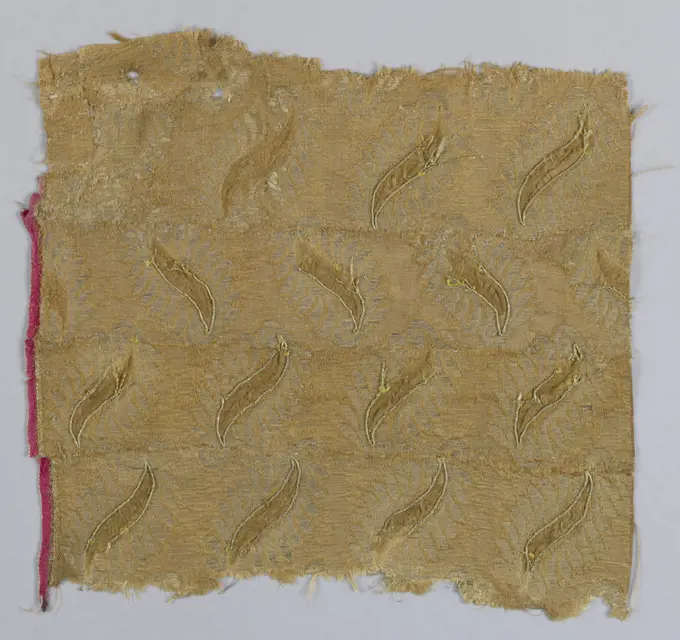
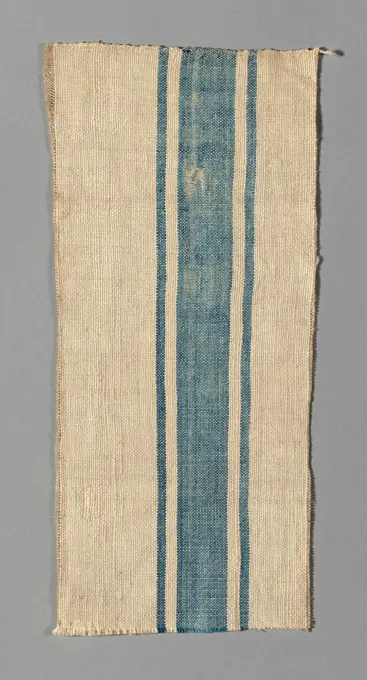
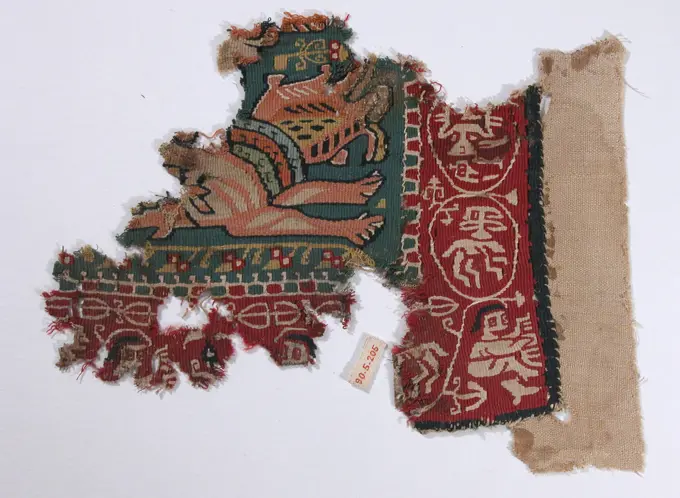
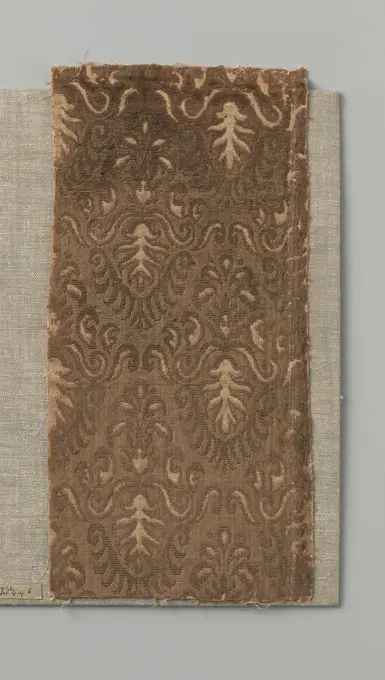
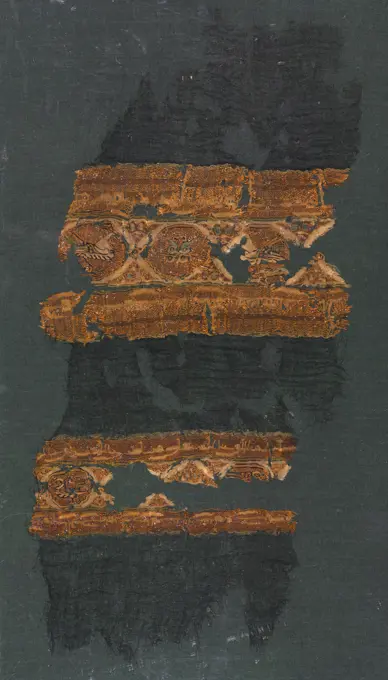
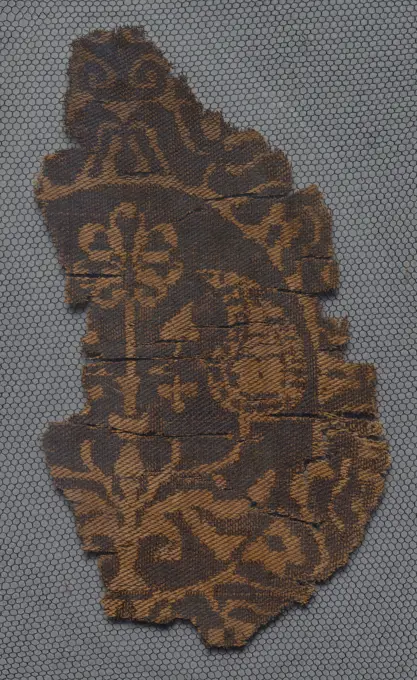
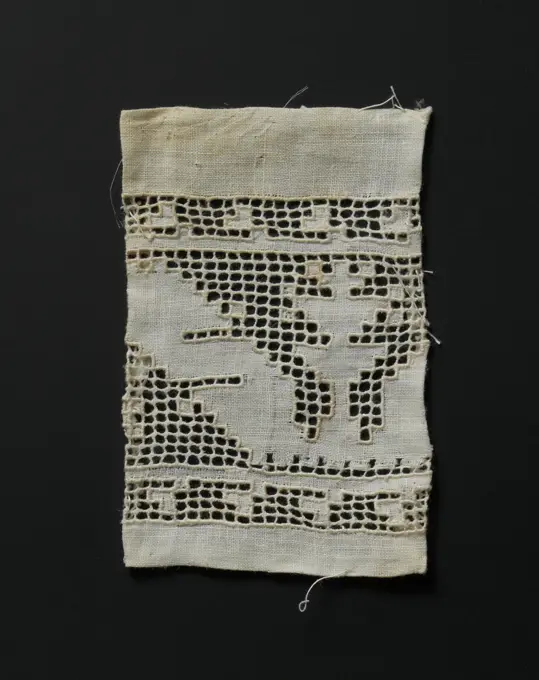
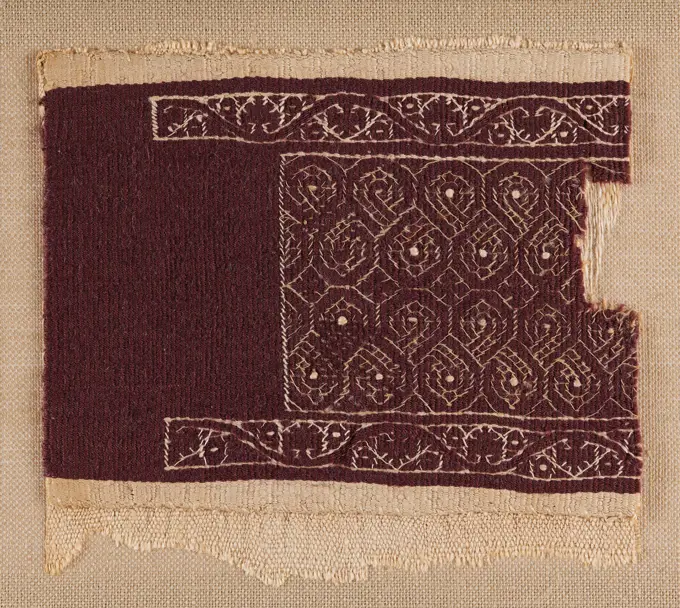
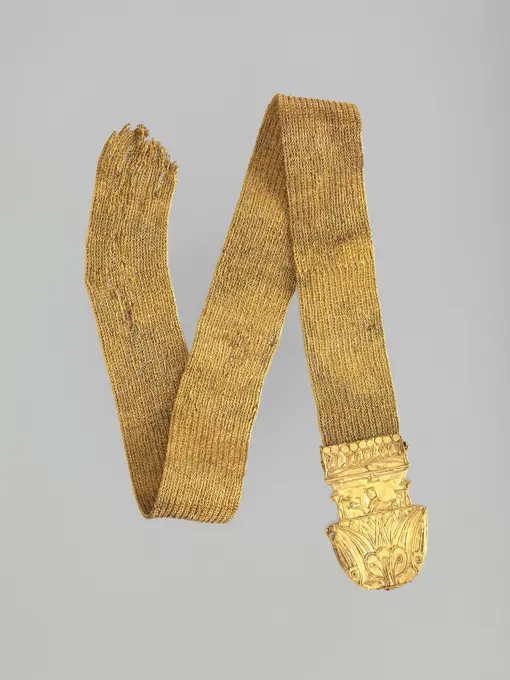
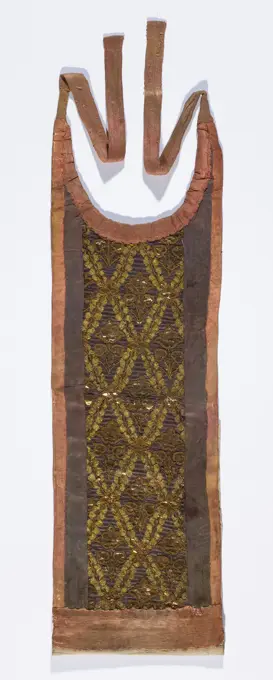
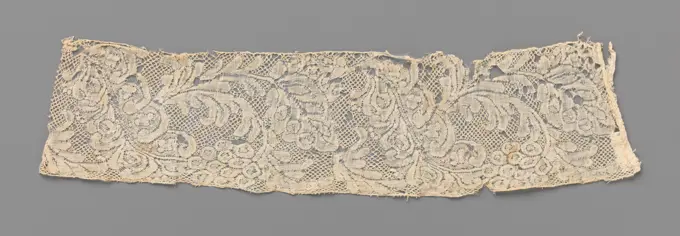
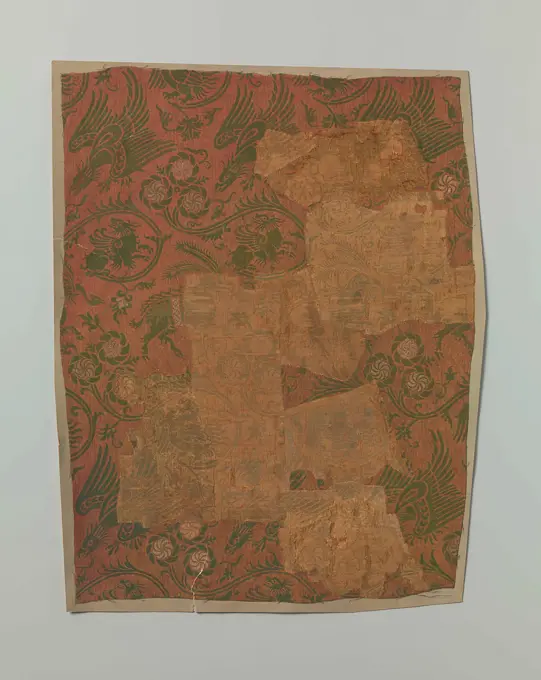
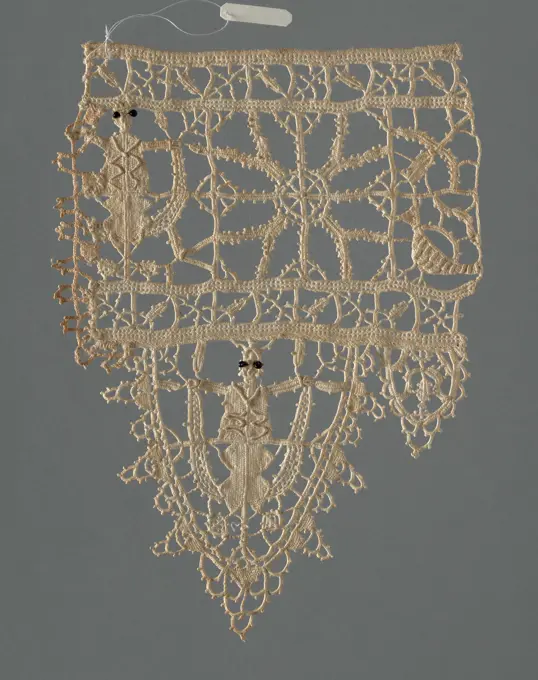
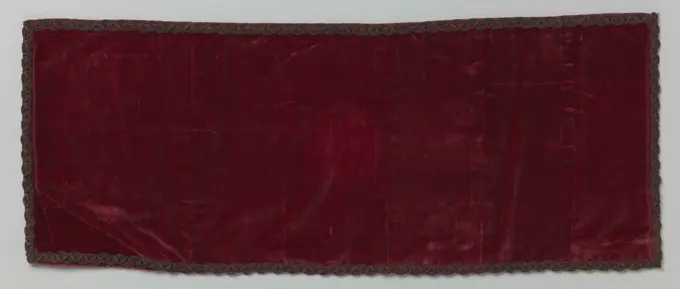
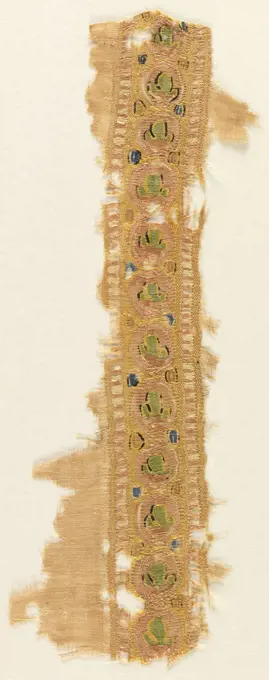
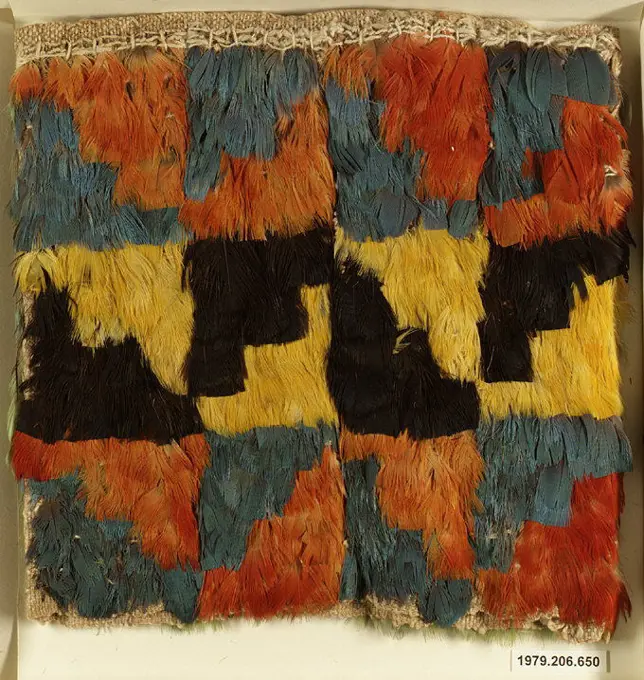
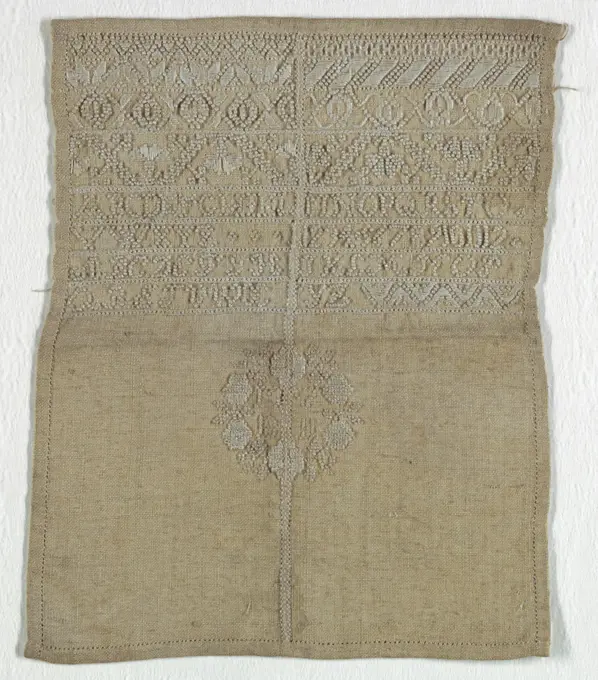
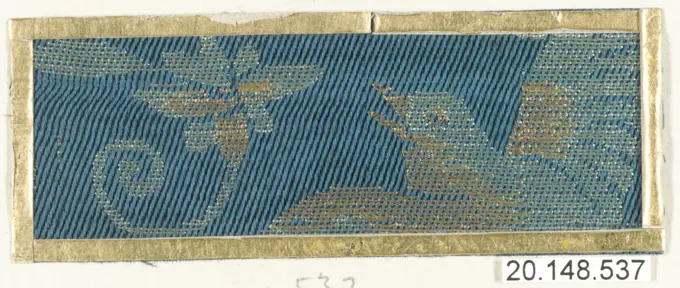
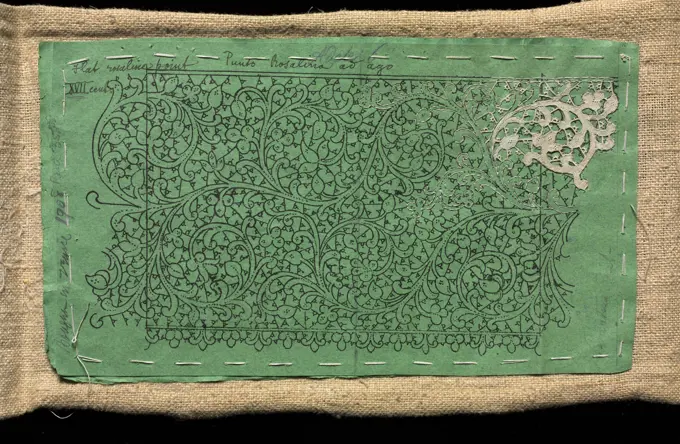
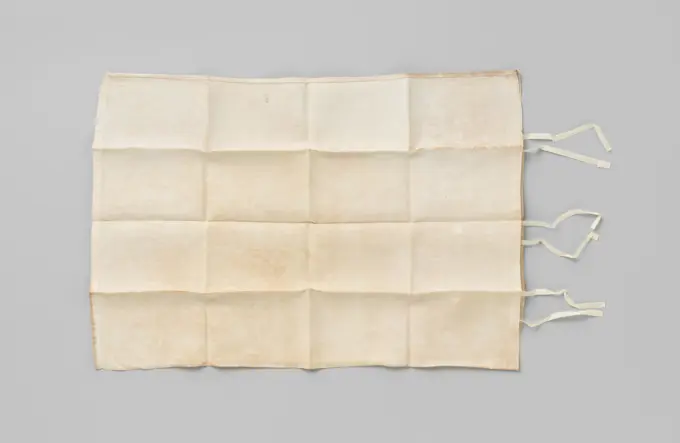
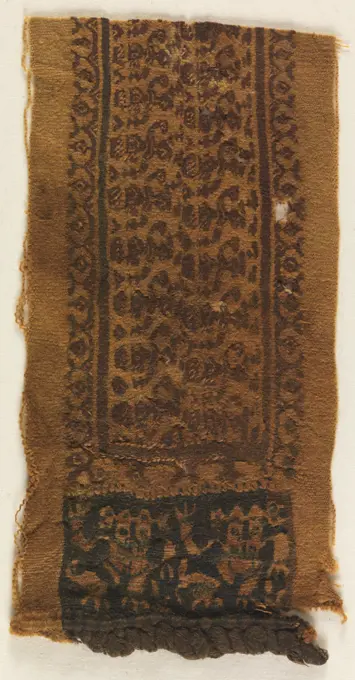
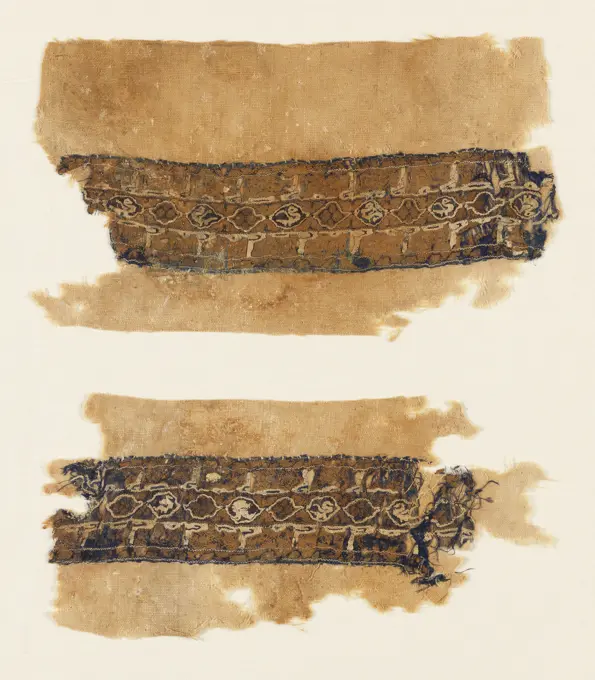
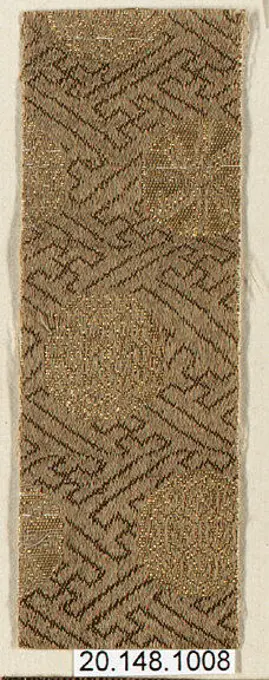
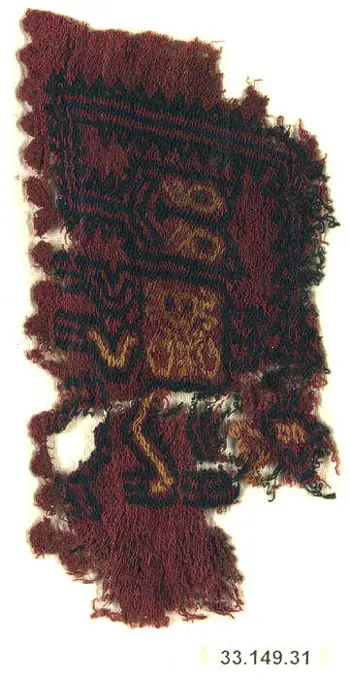
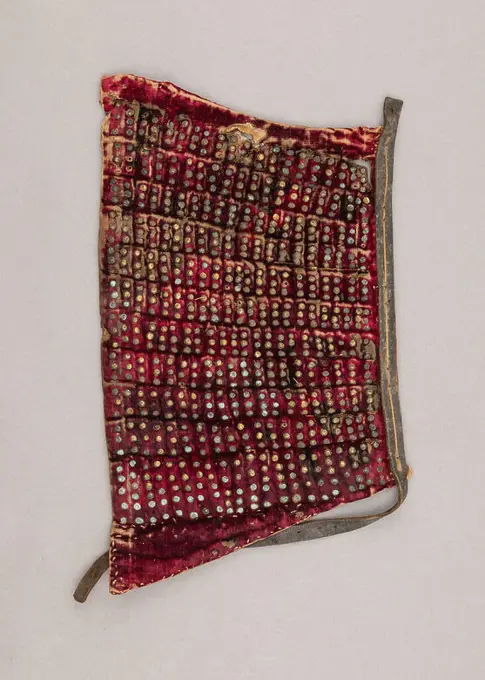
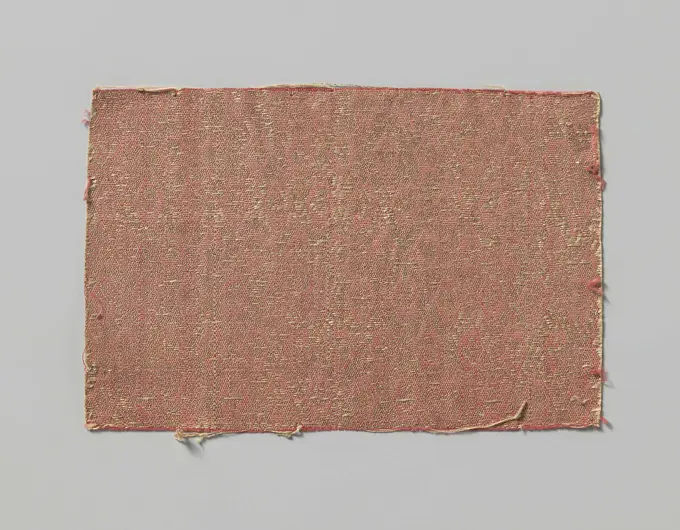
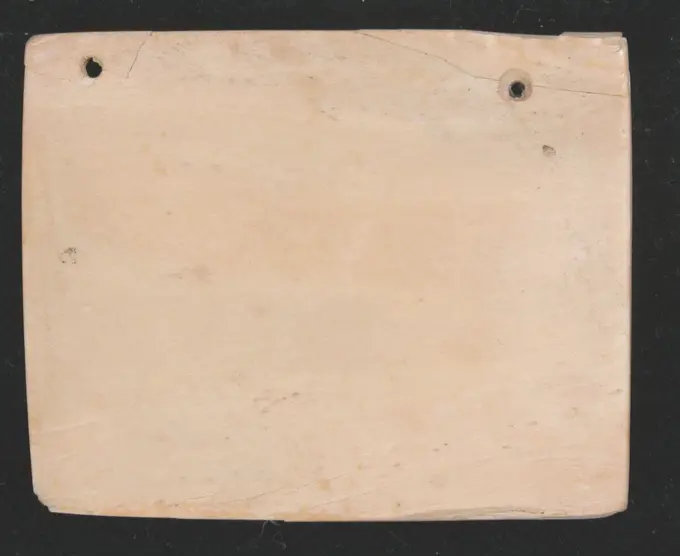
Textile Fragment early 17th century. Textile Fragment. early 17th century. Silk. Made in Turkey. TextilesFragment (India); cottonSampler, Medium: cotton Technique: drawnwork, chain, buttonhole, back and satin stitches on plain weave, Thirty-six drawnwork patterns and one stripe ornamented with flowers on curving stem., Italy or Germany, 18th century, embroidery & stitching, SamplerFragments, Medium: silk, metallic Technique: woven, Pattern of red flowers in ogival shaped latticework. Bottom border of flowers., Indo-Persia, 19th century, woven textiles, FragmentsTextile Fragment 4th-5th century. Textile Fragment 445728Piece 18th-19th century Japan. Piece 65990Fragment samiet, anonymous, c. 800 - c. 999 Tissue fragment with small, strictly geometric angular pattern and rosettes in beige on dark brown with a piece in solid purple (purple). Syria (possibly) Necklace: Linen (Material). impact: Wool samite Tissue fragment with small, strictly geometric angular pattern and rosettes in beige on dark brown with a piece in solid purple (purple). Syria (possibly) Necklace: Linen (Material). impact: Wool samiteFragment, 1800s. India, 19th century. Brocade, "kimkhwab"; silk and metal thread; overall: 31.8 x 6.4 cm (12 1/2 x 2 1/2 in.).Fragment late 16th-17th century Italian. Fragment 230121Fragments. Egypt. Date: 201 AD-1000. Dimensions: 36 × 43.5 cm (14 3/16 × 17 1/8 in.). Origin: Egypt. Museum: The Chicago Art Institute, Chicago, USA. Author: Ancient Egyptian.Fragment, Medium: silk, linen, metallic Technique: compound weft twill (samite), Horizontal band of small roundels enclosing addorsed rampant lions in gold outlined with green against cream. Ground of diamond latticework with palmettes., Spain, 13th century, woven textiles, FragmentFragment, 1100s - 1300s. India, 12th-14th century. Plain cloth, resist dyed; cotton; overall: 15.9 x 20 cm (6 1/4 x 7 7/8 in.).Frivolitétas in flat rectangular model, made of carmine rose satin with woven stripes of white silk and silver thread, with a floral cotton lining, silkwever heshuyzen (attributed to), c. 1780 - c. 1790 Bag of carmine rose satin with fine stripes in white and silver. Flat and large, lying rectangular model. The fabric folded at the bottom and sewn aside. At the top a trench in which rose ribbons, of which two bows on the lower corners. Tissue with stripes per three grouped and alternately formed from two white springs with a solid silver frame between and vice-versa. Cotton lining with red flowers on thin purple serpentines, on a black speckled white surface. maker: Haarlem (possibly)West-Europa (possibly)France (possibly) whole: Silk. Decoration: Silk. Decoration: Silver thread. lining: cotton (textile). lining: printing ink. Lint: Silk printing Bag of carmine rose satin with fine stripes in white and silver. Flat and large, lying rectangular model. The fabric folded at the bottom andFragment, 17th century; silkFragment. Italy. Date: 1650-1700. Dimensions: 32.2 x 12.5 cm (12 3/4 x 4 7/8 in.). Silk, silver gilt strips, and silver gilt strips wound around silk fiber core, plain weave with supplementary patterning and supplementary brocading wefts. Origin: Italy. Museum: The Chicago Art Institute, Chicago, USA.Fragment. Italy. Date: 1601-1625. Dimensions: 21.2cm x 23.1 cm ( 8 11/16 x 9 1/16). Cisele voided cloth velvet. Origin: Italy. Museum: The Chicago Art Institute, Chicago, USA.Fragment; 1953-162-28Fragments Made 201 CE-1000 Egypt. . Ancient EgyptianFragment, 17th century, woven textiles, FragmentFragment Made 1801-1825 United States. .Textile Fragment 5th-6th centuryFragment brown ciselé velvel with pattern of palmets with in beige veins. Fragment Brown Silk Ciselé Velvave with cut-outs with Pattern or Palmets with Gramened in beige.Fragment; silkTiraz with gold, 1075-1099. Egypt, Fatimid period. Plain weave with inwoven tapestry weave: linen, silk, and gold filé; overall: 29 x 14.8 cm (11 7/16 x 5 13/16 in.).Fragment of a Segmentum with Palmette Tree, 7th-8th century. Syria, 7th-8th century. Compound twill, silk; overall: 11.3 x 6.7 cm (4 7/16 x 2 5/8 in.).Fragments of a chasuble, Medium: wool, linen Technique: supplementary warp forming cut pile (velvet0 then stamped (embossed), Busy pattern of shaped cartouches containing urns, flowers or coats of arms in greenish/blue., 16th-17th century, woven textiles, Fragments of a chasubleTowel Fragment; linenFragment zijdeweefsel, c. 1300 - c. 1399 Fragment of green silk with pattern of horizontally ripened gstylated vine leaves on bent stems. Partly reinforced with brown linen. Heel side is green with a white edge.  Necklace and impact: Silk. Reinforcement: Linen (Material) Fragment of green silk with pattern of horizontally ripened gstylated vine leaves on bent stems. Partly reinforced with brown linen. Heel side is green with a white edge.  Necklace and impact: Silk. Reinforcement: Linen (Material)Fragment. Possibly Chimú; Possibly north coast, Peru. Date: 1250-1532. Dimensions: 7.6 x 11.4 cm (3 x 4 1/2 in.). Cotton and wool (camelid), bands of plain weave with supplementary brocading wefts and weave with paired warps. Origin: Peru. Museum: The Chicago Art Institute, Chicago, USA.Fragment; silk; Bequest of Richard Cranch Greenleaf in memory of his mother, Adeline Emma Greenleaf; 1962-56-184-eStrip of lace plunger, anonymous, c. 1925 - c. 1949  Strip of natural -colored lace -ups, work with pulled out threads and cut work. unknown .Fragment late 18th century Italian. Fragment 230641Fragment, Medium: silk Technique: embossed plain weave cut-pile velvet, Tan velvet stamped with large floral ogee pattern. Extra warp cut-pile in plain weave foundation., 17th or 18th century, FragmentFragment pasa dekoracyjnego. warsztat egipski, workshopTowel fragment, Medium: linen, cotton Technique: plain weave with supplementary weft, Supplementary blue weft floating alternatively face to face forming a design of affronted birds flanking a tree., Italy, 17th century, woven textiles, Towel fragmentFragment (India); cottonPassement of linen and yellow side in complex window pattern, anonymous, c. 1700 - c. 1899 Passement of linen and yellow side in a complex diamond pattern. Pattern equal to BK-NM-12186-24-A and BK-NM-12186-26. Europe silk. linen (material) Passement of linen and yellow side in a complex diamond pattern. Pattern equal to BK-NM-12186-24-A and BK-NM-12186-26. Europe silk. linen (material)Strap chain with one decorated terminal preserved 332-30 B.C. Ptolemaic Period 'Straps' consist of two or more loop-in-loop chains fastened side-by-side. This one consists of fourteen chains held together by linking wires at regular intervals.The terminal is decorated with the scene of an offering royal sphinx in an Egyptian shrine above a lotiform design, the scene elaborated in filigree using flattened wire and with small pieces of hammered sheet. The orientation of the scene suggests the terminal was made to hang vertically.. Strap chain with one decorated terminal preserved. 332-30 B.C.. Gold. Ptolemaic Period. Country of Origin EgyptFor a good one;  18th century (1701-00-00-1800-00-00);Binental Leopold (1886-1944) - collections, embroidery, Judaica, clothing, women's clothes, Jewish clothing, WasążkaFragment Made 1360-1380 Italy. Silk, satin damask weave .Fragment 17th century Italian. Fragment 230177Kloskant strip or cuff with a large slanted leaf and a bunch of oval flowers or berries, anonymous, c. 1740 - c. 1760 Strip of natural-colored bobbin, binche side. The repeating and continuous pattern consists of a large leaf, which goes downstairs from the top of the strip where it lies with a faint turn along the bottom. Two feathered leaves originate from the center of this oblique leaf, bending down. The bottom curls and has a bunch at the end with oval flowers or berries. At the end of the other leaf is a large drop -shaped leaf or a drop -shaped flour. The motifs are connected by a grid, a five -part ground. The motifs are made in linen battle with openwork edges and mains fillings. The top and bottom of the strip are straight finished, with the bottom with picots. The strip runs around slightly and is finished on one side with a zoompje. It may be intended or used as a cuff. Southern Netherlands linen (material) Bobbi Lace / Binche Lace Strip of natural-colored bobbin, binche siPrinting Block (India); wood, metalFragment Made 1650-1700 Italy. Cisele voided cloth velvet; Ecru ground; design in blue cut velvet outlined with uncut velvet .Fragment silk tissue. Fragment of 7 peeled pieces of silk, signed around. Pattern of flower and leaf drinks between which animals: flying bird, tapir with cowholes, backfin and peacock feathers on the head and a backvented winged four-footed animal.Pillow border, 19th century, 40 x 12 1/8 in. (101.6 x 30.78 cm), Linen, silk; embroidery, Greek Islands, 19th centuryTextile Fragment 3rd-4th century. Textile Fragment 443274Fragment (Border) Made 1501-1600 Italy. Linen, needle lace work on a plain weave cut and drawn threadgrid; glass beads; embroidered in double hem and overcast stitches .Strip of lace plunger with colored flowers, anonymous, c. 1500 - c. 1599  Strip embroidered side, Burato side. Pattern with colored flowers, blue, green, yellow, beige and pink, with tracing on a ground of chain threads with a regular twisted impact. unknown linen (material). silk embroideringFragment; silk, metallicFragment of a shirt fourth quarter 18th century Russian. Fragment of a shirt 175600Fragment of Shoulder Band 5th century. Fragment of Shoulder Band 444219Dress of red silk velvet with satin lining..a dress or red silk velvet, composed or nine pieces. Ended by a black tinted golden galon. Red Satin Lining.Fragments; silkTabula, anonymous, c. 500 - c. 699 Tabula, sewn on a natural linen tissue fragment. This consists of a red woolen soil on which fine black leaf garlands forms in which geometric ornaments in window and circle shape form. Egypt Necklace and carrier: Linen (Material). impact: Wool tapestry Tabula, sewn on a natural linen tissue fragment. This consists of a red woolen soil on which fine black leaf garlands forms in which geometric ornaments in window and circle shape form. Egypt Necklace and carrier: Linen (Material). impact: Wool tapestryFringe 17th century Italian. Fringe 224922Band, Medium: silk, linen Technique: plain weave with slit tapestry, Fragment of light tan plain woven linen with a slit tapestry band inwoven in black, blue, green, yellow, coral and white silks. Repeating design of trefoils alternating with triangles., Egypt, 10th-12th century, woven textiles, BandMiniature Dress 12th-13th century Ica Colorful bird feathers were highly prized in ancient Peru, and textiles covered with them are among the most spectacular works of the Precolumbian world. These two miniature dresses are part of a large group of similar garments reportedly found in an offering at Ullujaya, in the lower Ica Valley in southern Peru. Their manufacture follows the conventions used for full-sized male and female garments but at one-fourth to one-third the size. The womens dresses in the group have a checkerboard design on the front, as seen here. The horizontal openings for the head and arms along the top seam are sewn closed. The function of these miniature garments in ancient Andean cultures is unclear; they may have served as symbolic substitutions in votive contexts. The feathers were tied onto long strings, which in turn were sewn onto plain cotton cloth. Feather tips were often clipped to create sharp outlines, as on these examples. An unexpected patchwork of exotLoin or Ceremonial Cloth, 19th century, 40 3/4 x 9 3/8in. (103.5 x 23.8cm) not including fringe, Raffia; plaited and stenciled, Vanuatu, 19th centuryFragment of a Sleeve 5th-6th century. Fragment of a Sleeve 444105Sampler, Medium: linen embroidery on linen foundation Technique: embroidered in chain, knot, satin, running, and stem stitches on plain weave foundation, Bands of pattern with a wreath in the middle enclosing initials and date. Unfinished, Northern Germany, 1811, embroidery & stitching, SamplerPiece 18th century Japan. Piece 71531Pattern for Lace with Small Section of Venetian Flat Point Lace worked on It, 17th century. Italy, Venice, 17th century. Paper, needlepoint, lace; average: 23.2 x 13.4 cm (9 1/8 x 5 1/4 in.).Lumbar ,, 1716 Lendloop van Linen, Brand Kroon BG5 Northern Netherlands linen (material) Lendloop van Linen, Brand Kroon BG5 Northern Netherlands linen (material)Fragment, Medium: linen Technique: woven, Woven textile fragment. Central design shows repeating anthropomorphic figures, each raising one arm, within a rectangular border. Below, two anthropomorphic figures against a dark ground. Braided border fragment at bottom., Egypt, 400-600, woven textiles, FragmentFragment Figured tissue in linen and wool, anonymous, 1200 - 1599 Fragment with a stylized pattern of leaves, trees and purple from each other on Blue Fond. Birds and Fleurons. Some red and green flowers. Italy (possibly) Ketting an element: Linen (material). Entry: Wool Fragment with a stylized pattern of leaves, trees and purple from each other on Blue Fond. Birds and Fleurons. Some red and green flowers. Italy (possibly) Ketting an element: Linen (material). Entry: WoolTiraz Fragment; linen, silkBecause judge, brown wool, without thumb. Because, judge, from brown wool, without a thumb, on which a repair piece sewn from the same tissue. Rectangular piece of tissue that is folded in the middle and attached to the edges where a space is saved for the thumb. Woven into twill binding with nine Z-twisted warp threads and six S-twisted weft threads per centimeter.Piece 19th century Japan. Piece 71991Fragment Made 1601-1700 Italy. Wool, plain weave with supplementary pile warps forming cut, solid velvet; stamped .Fragment late 16th-17th century Italian. Fragment. Italian. late 16th-17th century. Silk, metal thread. Textiles-VelvetsTextile; silkHeaddress 19th century Russian. Headdress 173380Manta or Blanketfragment.   Maker: UnknownTextile Sample from Sample Book 19th century Japan. Textile Sample from Sample Book 68228Border (USA); machine-printed paper; 8 x 9 cm (3 1/8 x 3 9/16 in.)Piece 16th century Japan. Piece 71033Sampler, Medium: linen embroidery on linen foundation Technique: embroidered in satin, knot, and chain stitches with deflected element work on plain weave foundation, Vertical rectangle of white linen divided into two colums by a row of hemstitch; embroidered in white in bands of geometric and floral pattern at the top, and a heart containing the date and initials in the lower right., Germany, 1792, embroidery & stitching, SamplerFragment (France); silkFragment wollen weefsel met symmetrisch motief van pauwen.Fragment with a repeating pattern in blue and ocher from towards each other peacocks that stand on a shell-shaped basin with an ornament with O.A. Putti. These peacock groups are interspersed by a dome construction work. Along the edges a stripe design in white, yellow, brown, blue and green. From this fragment is a piece with the same pattern, but in the colors yellow, brown and green, cut (BK-1955-105-b).Sidewall - Fragment (USA); machine-printed; in 7.5x10.5 envelopeFragment, ca. 1830; brass; L x W: 13.3 × 3.6 cm (5 1/4 × 1 7/16 in.)Textile Fragment 5th century. Textile Fragment 443909Embroidered Border Fragment 5th-2nd century B.C. Paracas. Embroidered Border Fragment 308066Fragment Made 1250-1532 Peru. Cotton and wool (camelid), plain weave with brocading wefts . ChimúPair of Brigandine Tassets. Culture: Italian. Date: ca. 1500. Museum: Metropolitan Museum of Art, New York, USA.Fragment with lions and griffins in combat, 1459-1669 (radiocarbon date, 95% probability). Iran , in the style of the Buyid period (945-1055). Silk: lampas weave; overall: 50.8 x 71.1 cm (20 x 28 in.).Fragment Oriental textile. Fragment oriental textile of white and gold on red. The pattern has a network of diamond-shaped fields in which an ornament.Comforter cover, 19th century, 49 3/16 x 23 1/2 in. (124.94 x 59.69 cm), Cotton, China, 19th centuryBand; embroidery using silk on plain weave linenChair Seat Made 1701-1800 France. Linen, plain weave; embroidered with wool and silk .Frivolitétas in a flat, almost square model, from dark beige green taf side with woven vertical ecrinkeur stripes, anonymous, c. 1800 - c. 1810 Frivolitétas in a flat, almost square model, from dark beigregren taf side with woven vertical ecrinkeur stripes. The bag is folded double at the top, making the lining of the same material. A seam along the entire edge. A tunnel has been sewn by hand against the top, so that a beige -colored ribbon with serrated edges. At the two corners at the bottom of the bag two bows of the same ribbon. Wormerveer (Possible) Maker: Western Europe whole: Silk. Lining: Silk. Lint: Silk. taffeta Frivolitétas in a flat, almost square model, from dark beigregren taf side with woven vertical ecrinkeur stripes. The bag is folded double at the top, making the lining of the same material. A seam along the entire edge. A tunnel has been sewn by hand against the top, so that a beige -colored ribbon with serrated edges. At the two corners at the bottom of the bag two Plaque 5th-8th century. Plaque. 5th-8th century. Bone; pierced. From Palestine, Sbaita. Ivories and BoneFragment Made 1250-1532 Peru. Cotton and wool (camelid), bands of plain weave with supplementary brocading wefts and weave with paired warps . ChimúGallon;  19th century (1801-00-00-1900-00-00);Textile Fragment 5th-6th century. Textile Fragment 443690Beaded Wrist Ornament 12th-14th century Chancay. Beaded Wrist Ornament. Chancay. 12th-14th century. Shell beads, cord. Peru. Beads-OrnamentsKnitted vest (angin) from Echigo, Niigata Prefecture, 19th century, Unknown Japanese, 28 1/2 × 20 11/16 in. (72.39 × 52.55 cm), Bast fibers, Japan, 19th centuryOriental carpet, Anonymous, 1800 - 1900 Oriental carpet, prayer rug, knotted wool, decorated with a light green mihrab, pointed and toothed top, filled along the circumference with carnations. Light blue swing in lanes filled with carnations. Around the midfield three edges and plain gray intermediate hems. Ghiordes (possibly) wool Oriental carpet, prayer rug, knotted wool, decorated with a light green mihrab, pointed and toothed top, filled along the circumference with carnations. Light blue swing in lanes filled with carnations. Around the midfield three edges and plain gray intermediate hems. Ghiordes (possibly) woolFragment of a Band 6th-8th century. Fragment of a Band 444337