Textile Fragments History

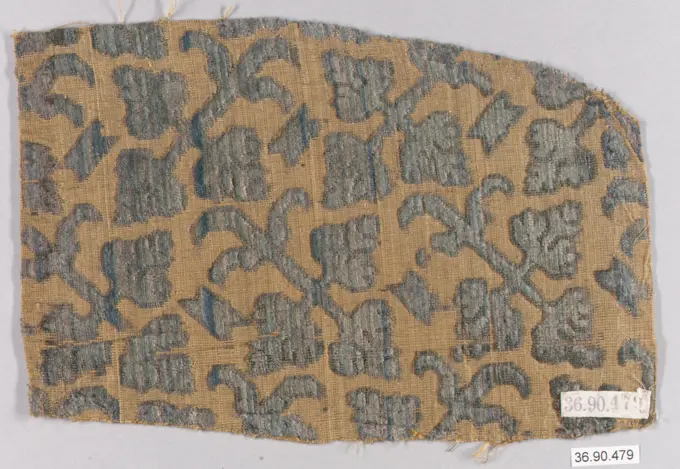
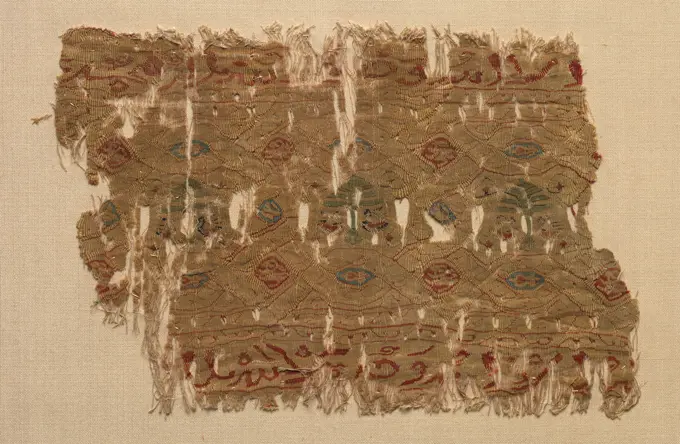
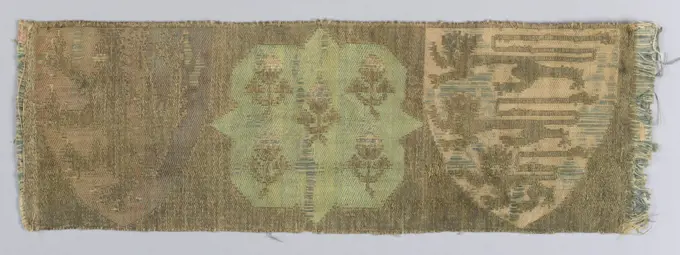
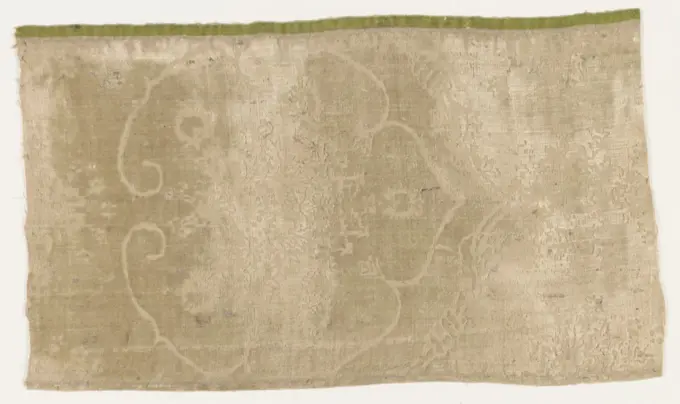
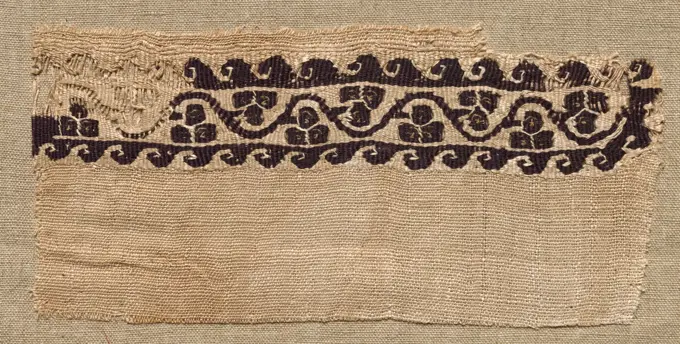
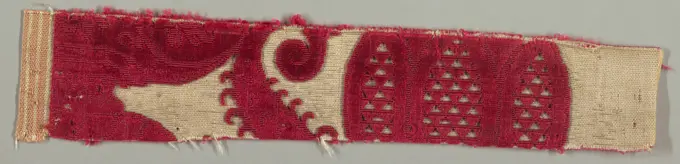
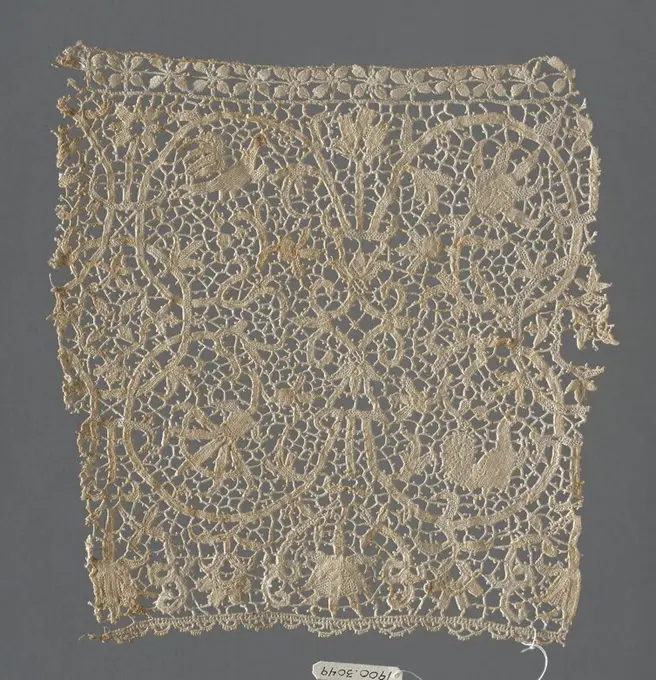
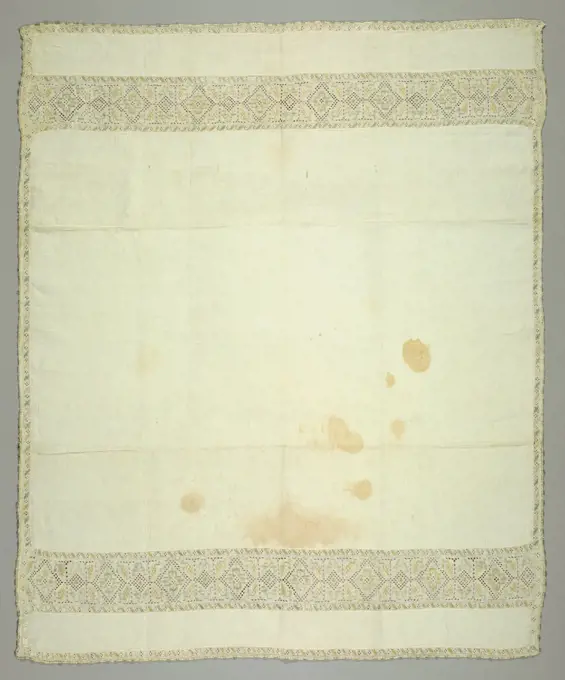
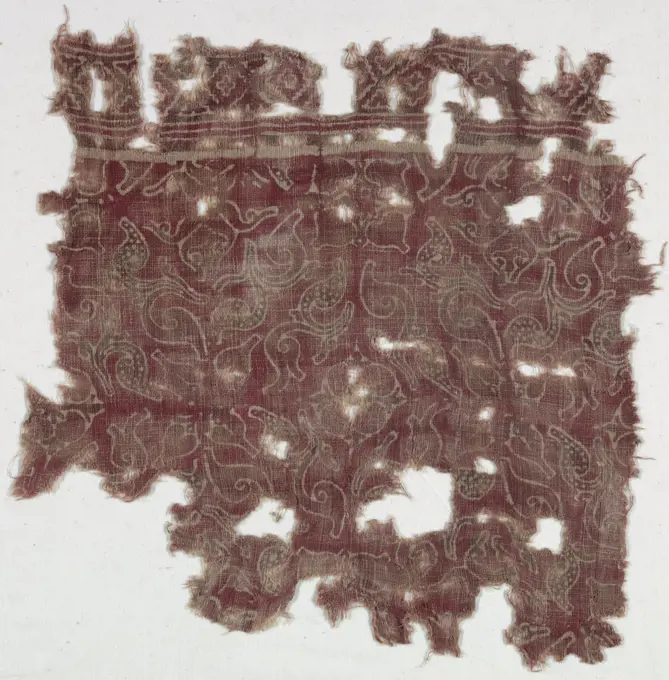
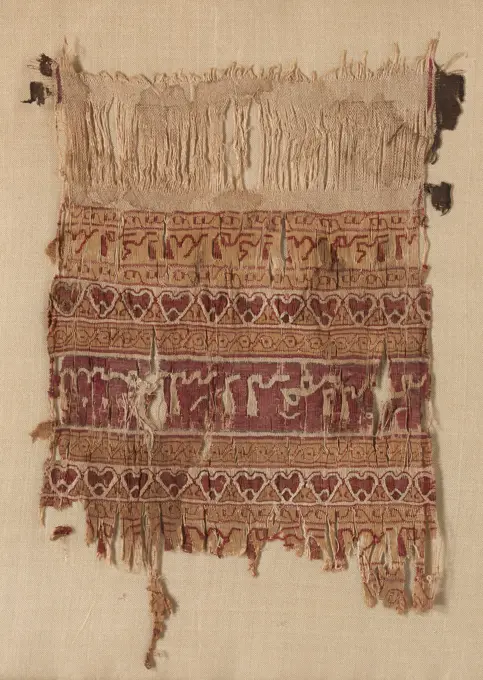
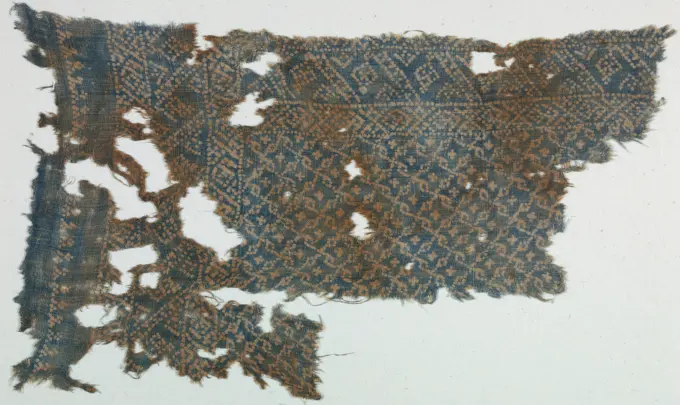
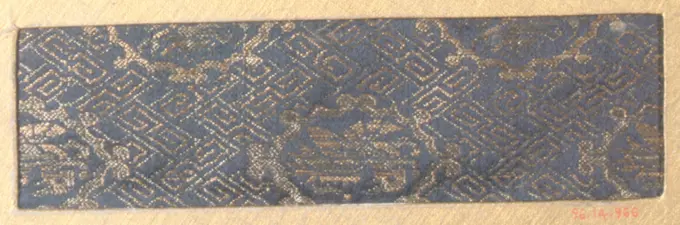
Historical textile fragments showcasing intricate patterns and vibrant colors, reflecting craftsmanship from various regions and eras.
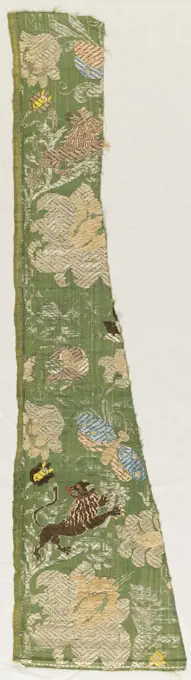
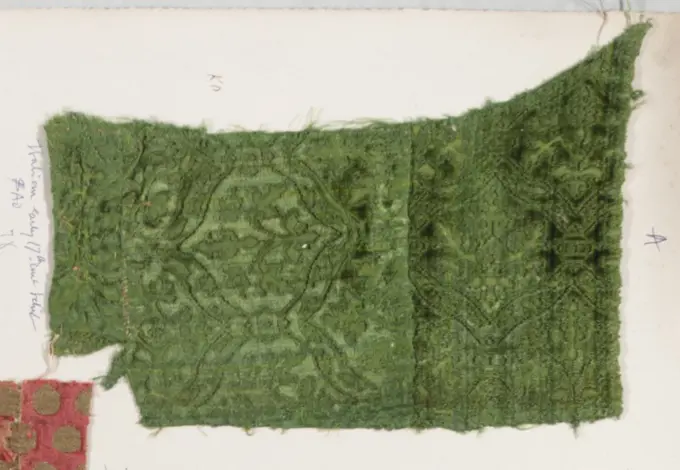
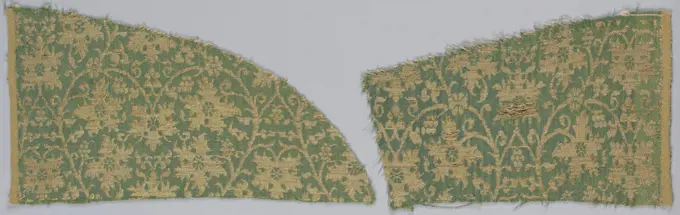
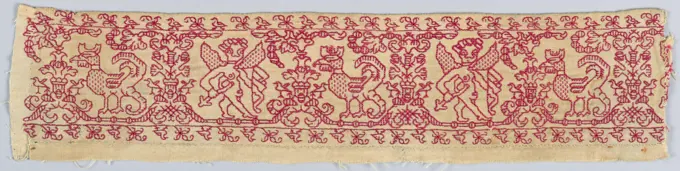
Fragments, Medium: silk Technique: plain weave with discontinuous supplementary weft floats (brocaded), Lions and peacocks on a green ground., Portugal, 17th century, woven textiles, Fragments
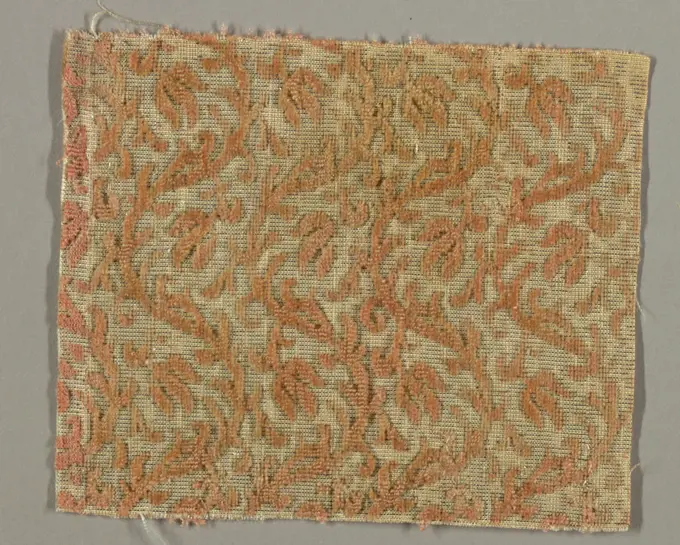
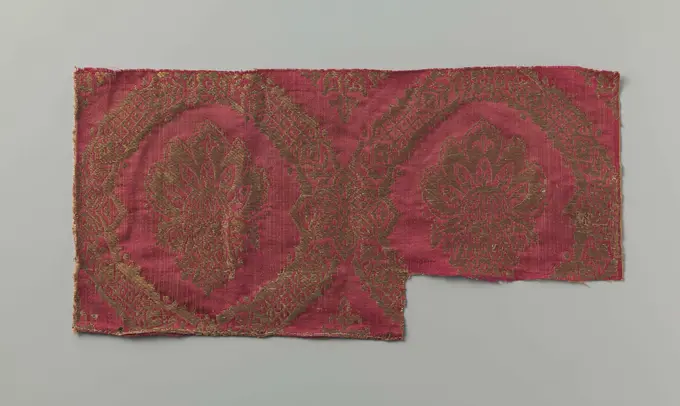
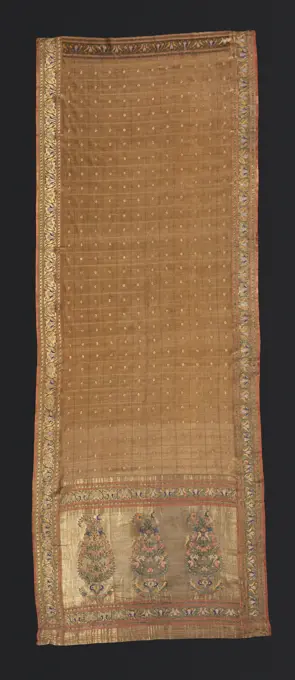
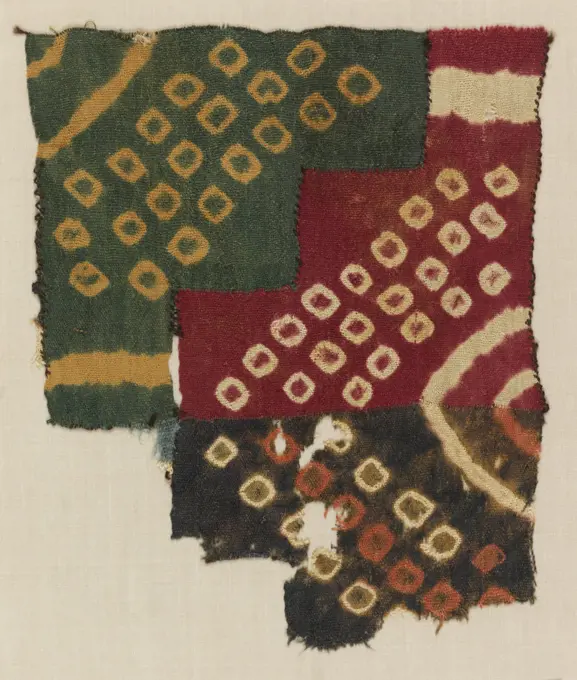
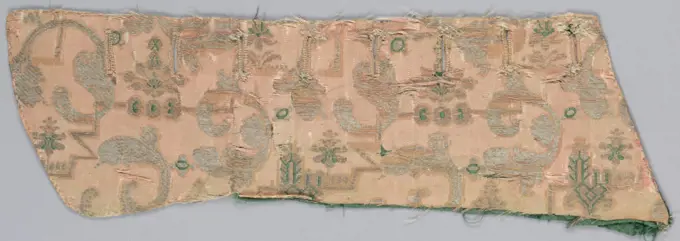
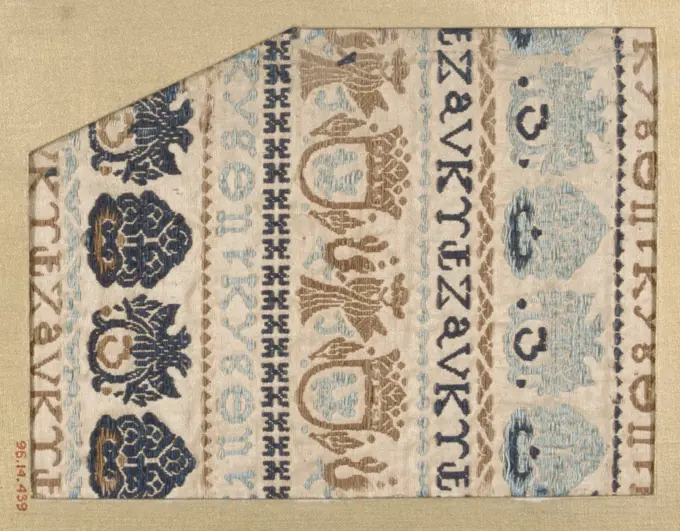
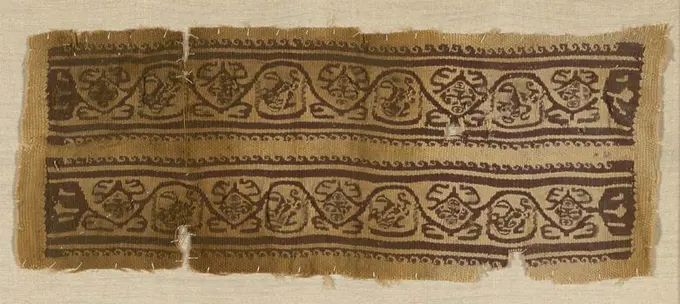
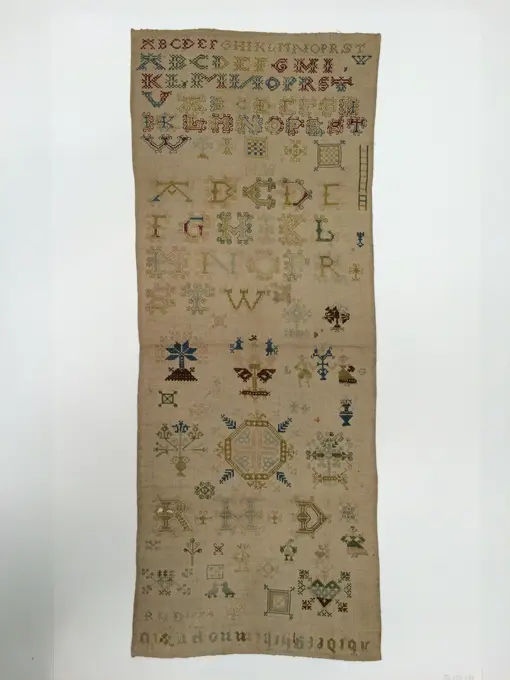
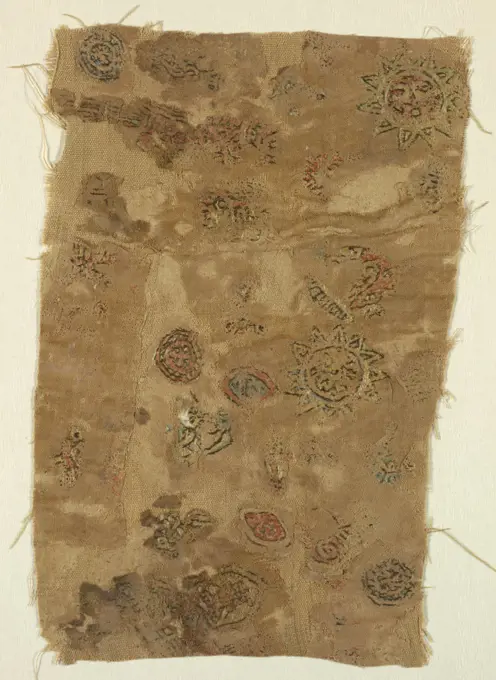
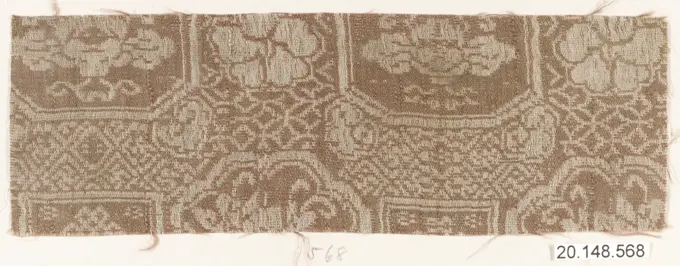
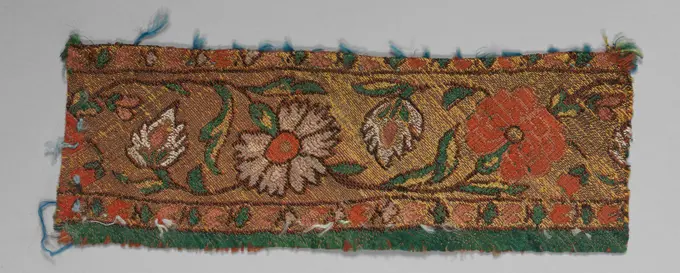
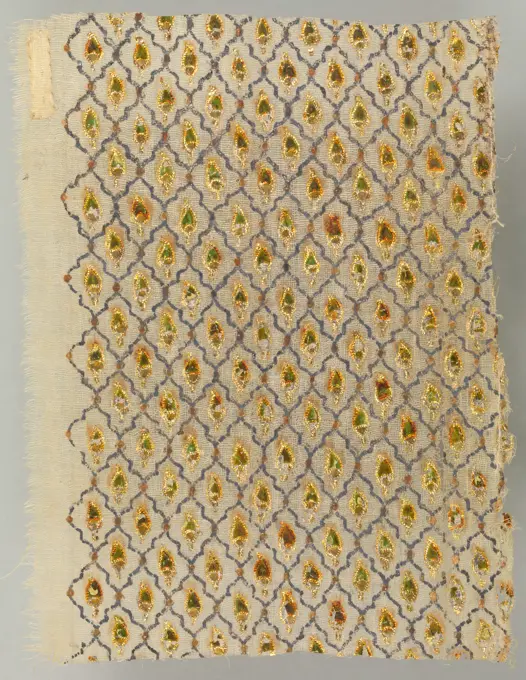
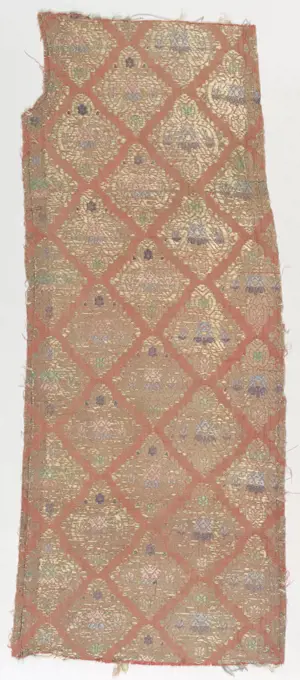
Fragments, Medium: silk, metallic thread Technique: woven, Orange ground with diamond-shaped lozenges in a staggered horizontal repeat containing plant and flower forms in gold thread, pink, purple, green, and blue., Iran, 19th century, woven textiles, FragmentsPiece 16th-17th century Italian. Piece 223581Fragment (India); cottonFragment of a Tiraz, 1130 - 1149. Egypt, Fatimid period, probably during Caliphate of al-Hafiz, AH 524-544 (A.D. 1130-1149). Tapestry (originally inwoven in a tabby ground); linen and silk; overall: 11.5 x 17.2 cm (4 1/2 x 6 3/4 in.).Fragments, Medium: silk Technique: plain weave with discontinuous supplementary weft floats (brocaded), Lions and peacocks on a green ground., Portugal, 17th century, woven textiles, FragmentsBand fragment, Medium: silk, linen., metallic Technique: complementary weft 2/1 twill, Three heraldic shields., Spain, 14th century, woven textiles, Band fragmentFragment 15th-16th century Italian. Fragment. Italian. 15th-16th century. Silk. Textiles-VelvetsScarf, early 1900s. Africa, North Africa, Egypt, Assiut, Egyptian maker. Probably cotton and silver-plated copper foil; overall: 221 x 82.2 cm (87 x 32 3/8 in.). Egyptians may have innovated tulle-bi-telli (net with metal,” also called assiut) after the French introduced machine-made netted fabric (tulle) in the late 1800s. It drew from telli, an earlier metal embroidery technique. Diamond and rectangle designs formed by knotting flattened silver wire into black tulle indicate this scarf’s early age in the genre. Urban Egyptian singers and dancers performed in heavy, shimmering tulle-bi-telli costumes during the late 1800s through the mid-1900s. Elite Egyptian city dwellers also wore it. Similar ones were sold at the 1893 World’s Columbian Exposition in Chicago and to tourists in Egypt, a possible origin for this example. In the US, tulle-bi-telli scarves were made into home decor and 1920s flapper-style clothing.Textile (Peru); cottonFragment of Embroidered Cloth, 1700s. England or Ireland, 18th century. Embroidery; cotton; overall: 86.4 x 113 cm (34 x 44 1/2 in.).Piece 14th century China. Piece 70997Strip bobbin, anonymous, c. 1800 - c. 1899  Strip of natural -colored bobbin, Eastern European side. The pattern is formed by burst ribbons that create organic shapes, which come apart and merge. Distinely distinguished are different volute leaves and a single flower challenge, including a daisy or sun hat. The ribbons are made in linen battle with openwork edges. Most space is taken by the ribbons, connections are made with, among other things, crossing couples and made with a few meshes, including round Valenciennes-Mazen. The top is finished with a straight -paced ribbon, with openwork edges on both sides. Along the underside, an alternation of a few meshes and always one small fan -shaped motif with picots ensures a sculpy edge with small shells. Eastern Europe linen (material) bobbin lace / East European laceBorder 17th century Italian or Spanish. Border 460370Fragment from Book of Textiles, 1700s. China, Qing dynasty (1644-1911). Silk; overall: 13 x 18.7 cm (5 1/8 x 7 3/8 in.).Fragment, Medium: silk, metallic thread Technique: cut and uncut supplementary warp pile (velvet) in a woven foundation, Small fragment of rose-colored cut and uncut velvet on a white foundation shot with metallic threads in an undulating vine pattern., Italy, 16th-17th century, woven textiles, FragmentSampler(Limar)Fragment, 1100s - 1300s. India, 12th-14th century. Plain cloth, resist dyed; cotton; overall: 6.4 x 27.3 cm (2 1/2 x 10 3/4 in.).Fragment van uit twee delen samengestelde rode brocatel.Fragment of two parts composed of two parts with pattern of two medallions with flour.Border; cotton, silkWedding Sari (Paithani). India, probably Maharashtra, Paithan or Madhya Pradesh, Chanderi, 19th century. Costumes; ceremonial or ritual dress. Cotton plain weave with silk and metallic-thread supplementary warp and weft patterning and cotton, silk, and metallic-thread interlocking tapestry weaveFragment Made 1 CE-1532 Peru. .Fragment 16th-17th century Italian. Fragment 230614Textile Fragment 8th-10th century Byzantine. Textile Fragment 474226Fragment of the index belt;  2nd half 18th century (1751-00-00-1800-00-00);Fragment Made 1725-1775 Poland. Made in form of a cope frontal, gold brocaded, silver ornamented with narrow bands of black and brown flowers; .Fragment 16th-17th century Italian. Fragment 230275Textile Sample from Sample Book 19th century Japan. Textile Sample from Sample Book. Japan. 19th century. Silk / Tapestry. Textiles-WovenFragment Made 1700-1799 China. .Band Fragment (Egypt); warp; s-spun linen. wefts; s-spun linen, s-spun woolGalloon 17th-18th century Unknown. Galloon 213783Velvet Fragment, early 1600s. Italy, early 17th century. Velvet; overall: 66.5 x 24 cm (26 3/16 x 9 7/16 in.).Fragment, Medium: silk Technique: plain weave, Plaid made of uneven stripes of warp and weft., Middle East, 13th century, woven textiles, FragmentTextile panel 1650-99 Russian. Textile panel 173370Fragment of cloth of silver. unknown, authorFlag, anonymous, c. 1750 - c. 1830 flag Flag with white pants with five fixing points, and a vertical blue lane with five rosettes, both shaved to the flight side. The flight is in two parts: on the pants side a red field with white rectangular pattern and white horizontal lanes on the top and bottom; On the flight side applied a red field with white crossed clefs or scepters, and pointed ends. Indonesian Archipelago linen (material). cotton (textile)  flag, colours (as symbol of the state, etc.) Dutch East Indies, TheWomans Ceremonial Skirt (Tapis)Textile Fragment 6th century. Textile Fragment 445917Fragment, Medium: wool Technique: discontinuous and interlocked warps with discontinuous and stitched wefts; tied-resist patterning Label: plain woven wool with discontinuous, interlocked warps and discontinuous wefts, with tied-resist patterning, Fragment from large mantle with woven stepped sections meeting joined by warp interlocking and stitching in the weft direction. Each individual piece is patterned by tied-resist dying, creating patterns of small and large diamonds. In yellow on green, white on red, and white and rust on dark brown grounds., Peru, ca. 600, woven textiles, FragmentFrivolita bag in flat rectangular model, of carride satin with woven stripes from white silk and silver thread, equipped with a floral cotton lining. Karmijnrose satin bag with fine stripes in white and silver. Flat and large, lying rectangular model. Folded the fabric down and sewn aside. At the top of a slot in which Rose ribbons, of which two bows on the down corners. Tissue with dashes per three grouped and in turn formed from two white spring stripes with a solid silver frame between and vice-versa. Cotton lining with red flowers to thin purple serpentines, on a black speckled white background.Fragment (Spain); silk, linen, metallicFragments, Medium: silk and metallic thread, Design of curving floral stem outlined in white on a mustard yellow satin ground., 17th century, woven textiles, FragmentsFragment, Medium: silk, metallic Technique: woven, Fragment that once was part of a western garment for it has buttonholes, 18th century, woven textiles, FragmentFragments, Medium: silk, metallic Technique: 5 harness satin patterned by plain weave, Grape vine and leaves in gold on green background, 14th century, woven textiles, FragmentsBorder (from a Tunic) Made 301 CE-400 CE Egypt. Linen and wool, slit tapestry weave . CopticPiece 18th-19th century Japan. Piece 66164Fragment; silk, metallic yarns; 1899-17-1-dFragment multicolored brochure silk, c. 1700 - c. 1750 Fragment multicolored silk. A moss green soil has a pattern of flower and leaf shapes in red brown a yellow-green. Spain silk Fragment multicolored silk. A moss green soil has a pattern of flower and leaf shapes in red brown a yellow-green. Spain silkFragment of a Tunic 5th century. Fragment of a Tunic 443758Bands (From Tunic Cuff). Coptic; Egypt. Date: 301 AD-600 AD. Dimensions: 10.3 × 25.5 cm (4 × 10 in.). Wool, tapestry weave. Origin: Egypt. Museum: The Chicago Art Institute, Chicago, USA. Author: Ancient Egyptian.Fragment (Towel or Napkin) Made 1875-1900 Turkey. Towel ends, embroidered in gold in design of running floral spray .Textile Fragment first half 18th century. Textile Fragment 447968Textile Fragment 4th-5th century. Textile Fragment. 4th-5th century. Wool, linen; tapestry weave. Attributed to Egypt. TextilesFragment, with Part of a Clavus, from a Tunic, 400s - 500s. Egypt, Byzantine period, 5th - 6th century. Tabby with inwoven tapestry ornament, wool and linen on linen ground; overall: 8.9 x 18.8 cm (3 1/2 x 7 3/8 in.).Fragment (Italy); silk, metal threadBorder (Fragment). Italy, probably Venice. Date: 1625-1650. Dimensions: 16.3 x 15.6 cm (6 3/8 x 6 1/8 in.). Linen, needle lace. Origin: Venice. Museum: The Chicago Art Institute, Chicago, USA.Textile Fragment 5th-6th century. Textile Fragment 444283Panel (Morocco); linen, silkPurse, Medium: silk and straw embroidery on silk foundation Technique: embroidered on satin weave, Off-white satin ornamented with flowers and scrolls embroidered in colored silks and straw., France, 18th century, costume & accessories, PurseFragment Made 1750-1800 France. Silk, warp-float faced satin weave with supplementary pile warps forming uncut voided velvet .Fragments (Spain); Bequest of Marian Hague; 1971-50-62-a/cFragments, Medium: silk Technique: raised supplementary warp forming pile (velvet), Leaves and heraldic motifs in mauve on gold., 17th century, woven textiles, FragmentsTextile; wool, linenTowel Fragment (Italy); cotton; H: 62.2cm (24 1/2in.)Piece 18th-19th century Japan. Piece. Japan. 18th-19th century. Silk. Textiles-WovenBand; linen. silkTable cover, Medium: linen Technique: cutwork and embroidery, Oblong table cover of white linen with cutwork bands across the ends in simple geometric patterns and highly stylized embroidered designs in tan and blue-green. Narrow border, half inch, of cutwork and simple embroidered design surrounds the entire cover. Narrow looped fringe in the same tan and blue-green trims the piece., Italy, 16th century, embroidery & stitching, Table coverHead or Waist Wrapper (Mbesa Tali Tobatu orPewo)Fragment, Medium: cotton Technique: resist-printed on plain weave, Unbleached plain weave cotton. Design in red and dull brown (possibly faded purple), stylized branch with pointed leaves; curved stem alternates with two types of fleuron formed of flower heads in profile. Remains of border in simple block pattern., India, 12th-13th century, printed, dyed & painted textiles, FragmentTextile Fragment 3rd-4th century. Textile Fragment 444091Scarf 1807-10 European. Scarf 119117Fragment of a Tiraz-Style Textile, 1140 - 1160. Egypt, Fatimid period, mid-12th century. Tabby ground with inwoven tapestry ornament; linen and silk; overall: 20.8 x 14.3 cm (8 3/16 x 5 5/8 in.).Excerpt green silk fluble with cut -outs Nipper pattern, anonymous, 1500 - 1599 Fragment silk velvet with red -purple studs placed in uneven rows with stepped contour and with slightly raised brown point in the middle. Italy, 16th century. Italy silk Fragment silk velvet with red -purple studs placed in uneven rows with stepped contour and with slightly raised brown point in the middle. Italy, 16th century. Italy silkDouble-ended Comb 12th Century. Waisted Comb. Sri Lanka.Fragment (India); linenPiece 18th-19th century Japan. Piece 66689Embroidered sampler 1674 Dutch, Friesland Samplers from Friesland, in the northwest of the Netherlands, are characterized chiefly by many alphabets and a tree of life motif. This sampler also features a central octagonal motif typical of those worked on pillows. The work also includes checkerboards, crowned and pierced hearts, and bride and groom flanking a tree of life motifs typical of samplers from the Netherlands. The letters RHD and the year 1674 are stitched onto the linen, most likely the initials of the maker and the year in which she completed her work.. Embroidered sampler 228098Towel Made 1801-1900 Turkey. Silk and cotton, plain weave with supplementary patterning weft; embroidered with silk, gilt-metal-strips and gilt-metal-strip-wrapped-silk in checkered chain, darning, double running, herring bone, Russian overcast, satin and stem stitches; plied main warp fringe terminating in knotted tassel .Vegetable pattern Guillaume Boichot (1735-1814). Vegetable pattern. Feather and ink from China on brown paper, 1739-1814.Fragment of Coptic fabric unknownFragment, Medium: silk on linen Technique: embroidered, 13th century, embroidery & stitching, FragmentPiece 18th century Japan. Piece. Japan. 18th century. Silk / Compound weave. Edo period (1615-1868). Textiles-WovenTrimming (USA)Textile, Medium: linen, silk Technique: cross stitch embroidery on plain weave, Fragmentary square of linen cloth crossed horizontally by band with angular S-shapes wiht forced ends reserved on red cross-stitch ground; blue guard strips. Indication of plaided filed on one side of band: blue cross-stitch lines running at right angles to band, red cross-stitch line to it, forming squares., Egypt, 12th-13th century, embroidery & stitching, TextileFragment late 16th century Italian. Fragment 230191Fragment, Medium: wool Technique: plain weave with discontinuous weft (slit tapestry), Fragment of a mantle with two wide patterned bands, one brown, one ocher, separated by narrow stripes of solid pink, brown and ochre. The patterned bands are divided into small rectagles by a grid of red, with large star-like stepped motifs in pink, tan and off-white., Peru, 1400-1532, woven textiles, FragmentTextile swatch, Deerfield Society of Blue and White Needlework, (Deerfield, Massachusetts, USA, 1896-1926), Deerfield, Massachusetts, USA, 1910-20, Textile swatchFragment red velvet brocade with pomegranate motif in gold. Fragment red silk velvet brocade with relief with pomegranate motif in gold.Facing brick with year 1663. ,, 1663  Lying rectangle with shaded edge and surface on which the year 1663 is broken down and is stored by the stone. Two facing bricks belong to the stone: KOG-AS-Es-147-1 with a lying, crowned lion and Kog-Eels-147-2 with Anno. Netherlands (possibly) .Band (Italy); linen, silkWomans Ceremonial Skirt (Tapis)Textile Christopher Dresser (English, 1834-1904). , Registered April 18, 1873. Silk damask, 25 x 22 in. (63.5 x 55.8 cm).    Registered April 18, 1873Piece 19th century Japan. Piece. Japan. 19th century. Silk / Compound weave. Textiles-WovenRibbon Fragment 18th century. Ribbon Fragment. 18th century. Silk and metallic thread; brocaded. Country of Origin Iran. TextilesFragment 1476-1532 Peru. Compound cloth, plain . IncaFragment (India); cotton; Warp x Weft: 18.7 x 14 cm (7 3/8 x 5 1/2 in.); 1952-58-4Fragments, 1700s. Iran, 18th century. Lampas weave; overall: 20 x 12.7 cm (7 7/8 x 5 in.).Fragment of wool of a cashmere scarf with pattern of palm shapes on blue fond. Fragment of wool of a cashmere scarf with on a blue fond a pattern in white, yellow, pink and red of horizontal row palms. Edge of small palms, closed by Rinceaux.Pair of lappets early 18th century Flemish, Brussels. Pair of lappets 227663Eat a carpet unknownBag 1740-60 American. Bag 168798