Textile Fragments History

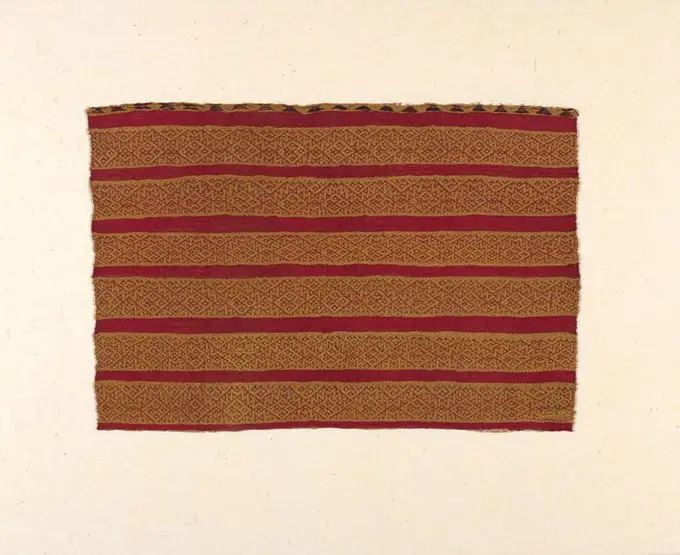
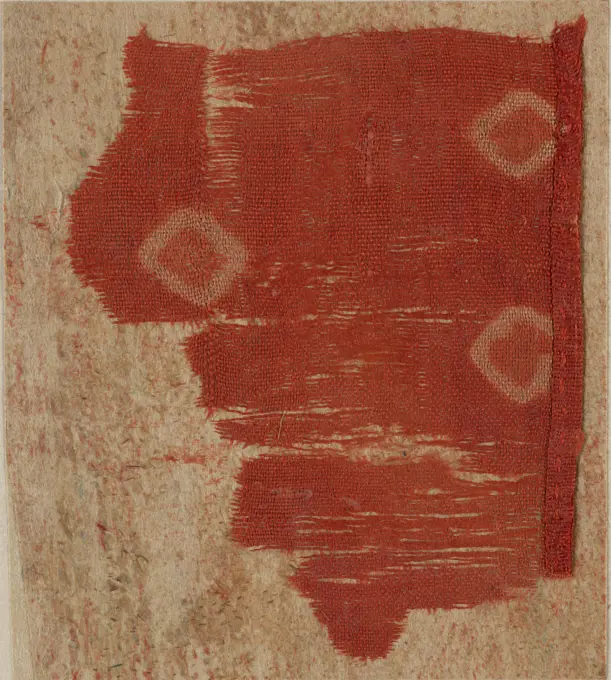
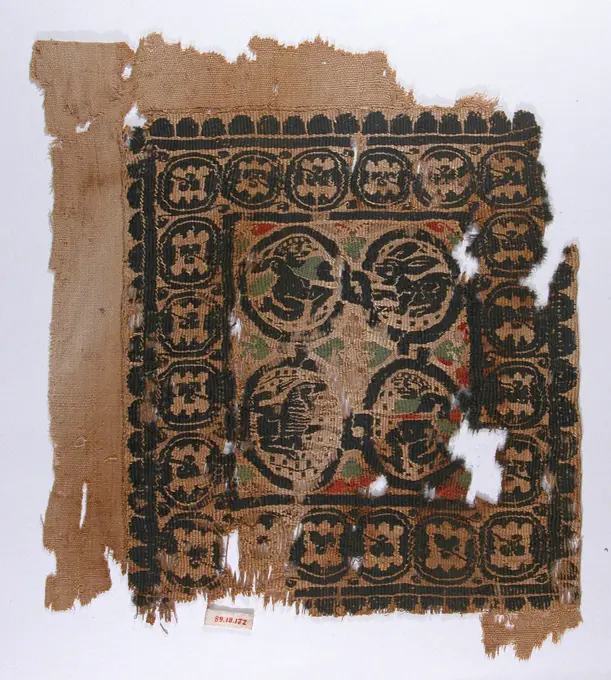
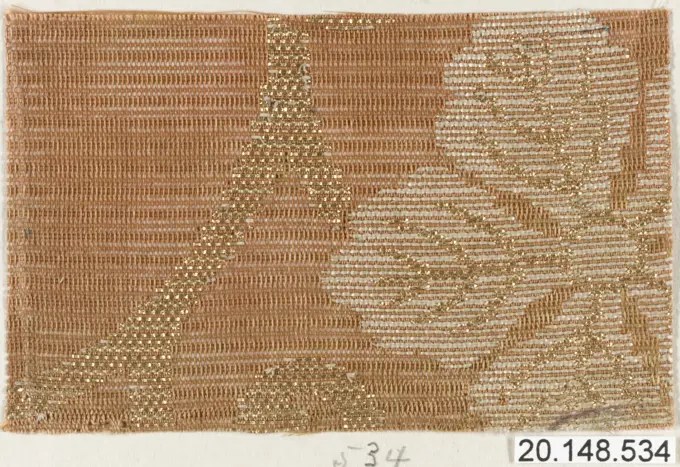
Historical textile fragments showcasing intricate patterns and vibrant colors, reflecting craftsmanship from various regions and eras.
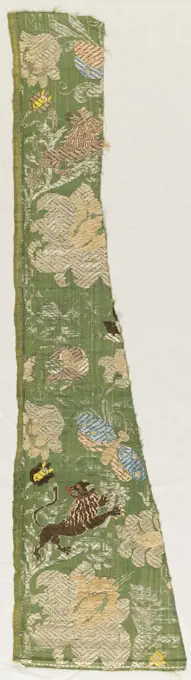
Fragments, Medium: silk Technique: plain weave with discontinuous supplementary weft floats (brocaded), Lions and peacocks on a green ground., Portugal, 17th century, woven textiles, Fragments
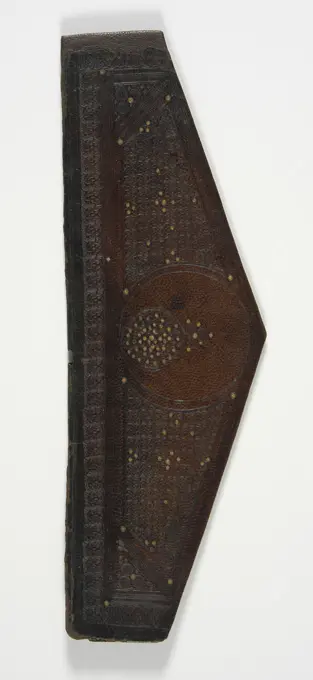
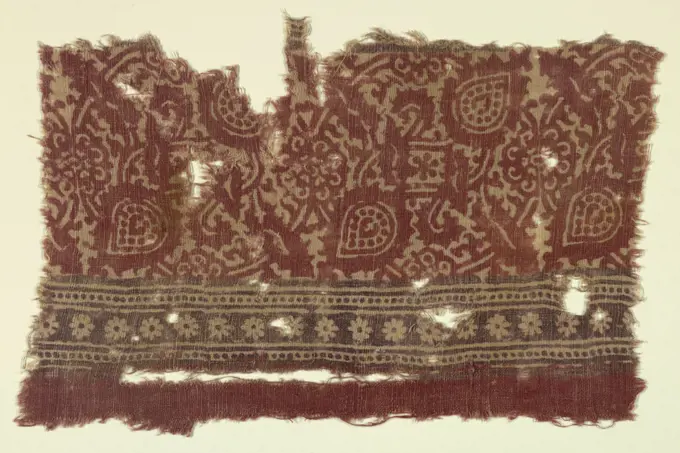
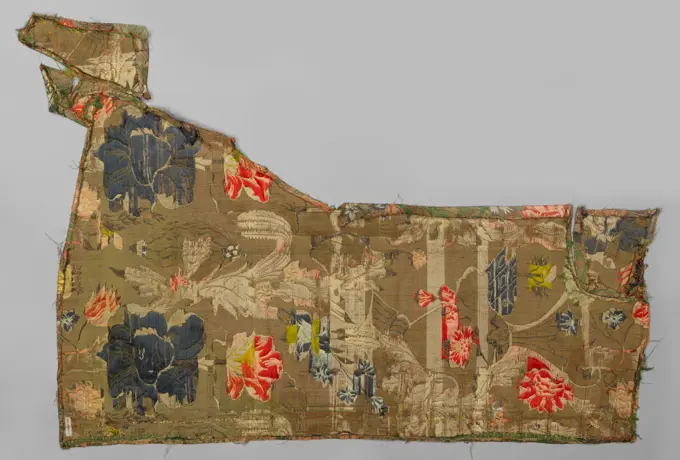
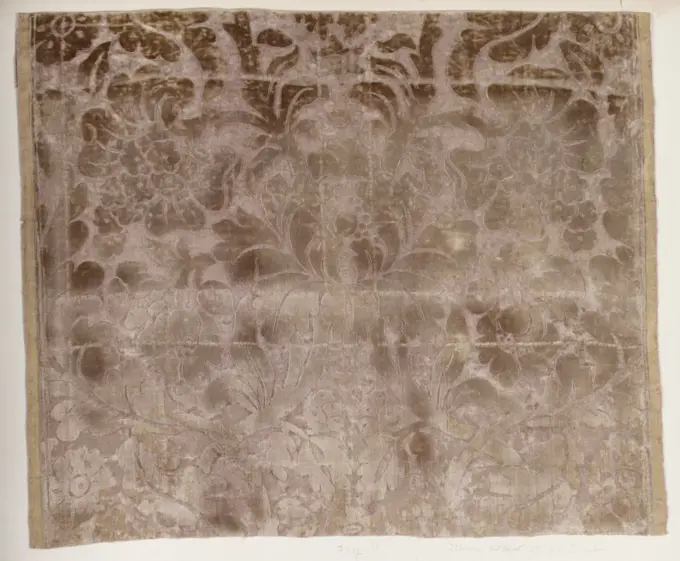
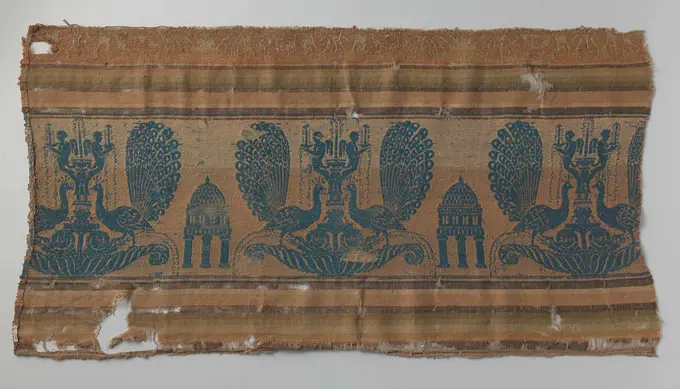
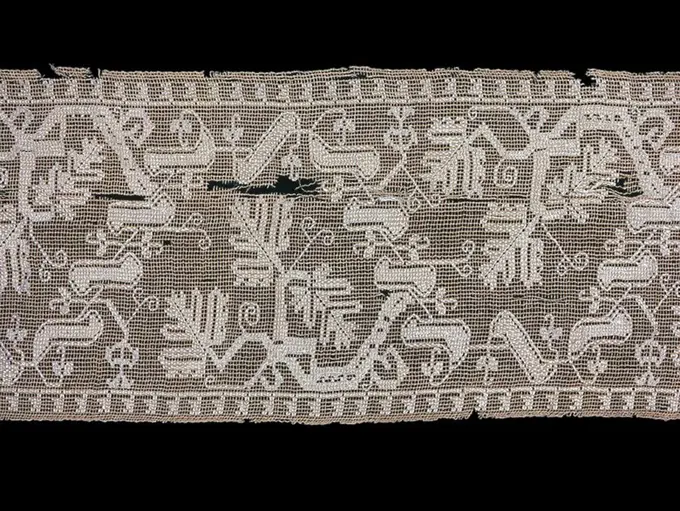
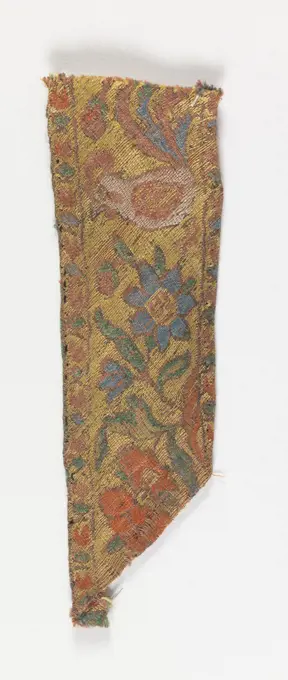
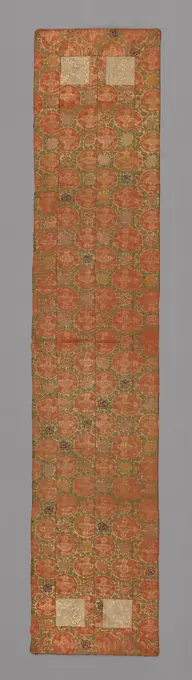
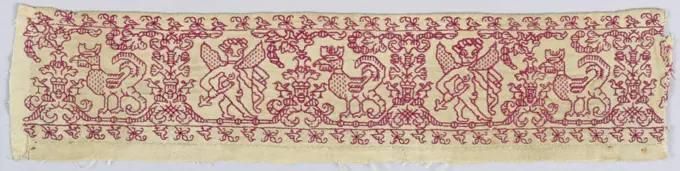
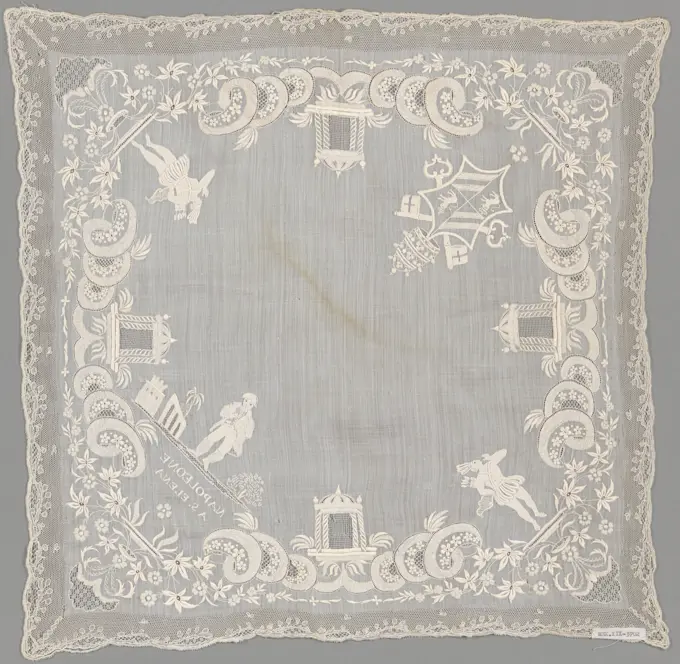
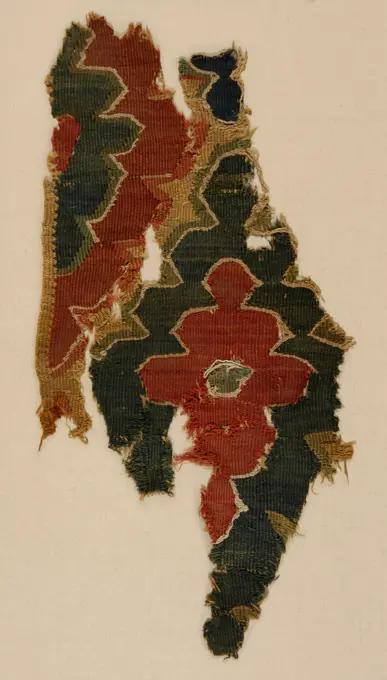
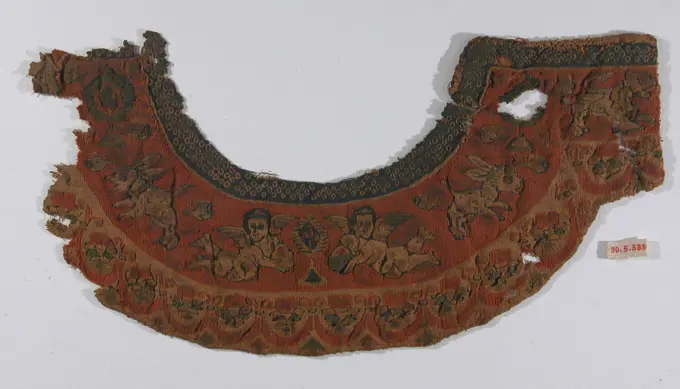
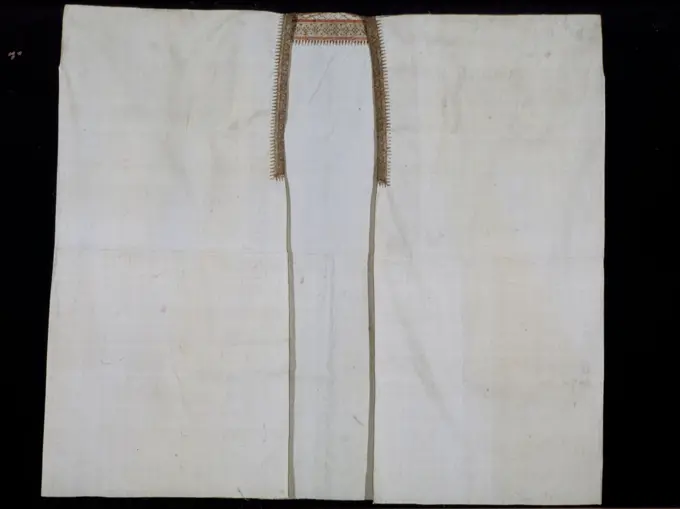
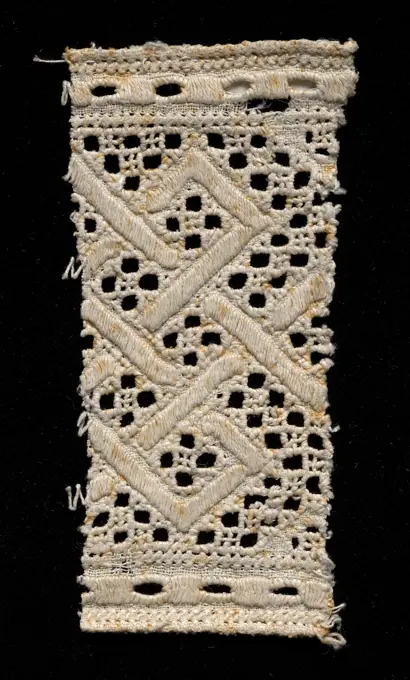
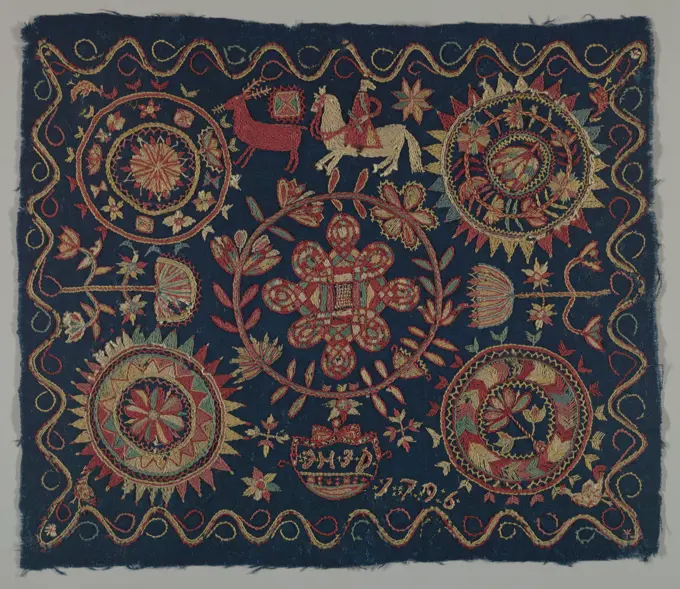
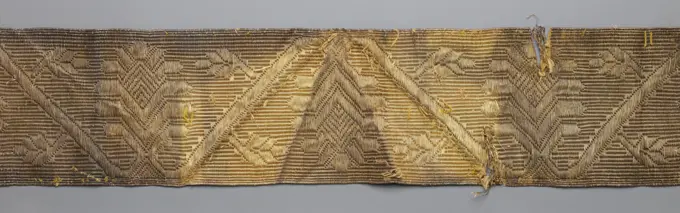
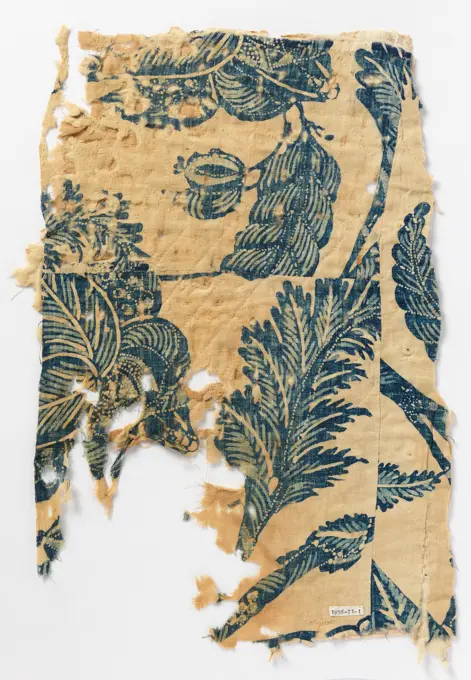
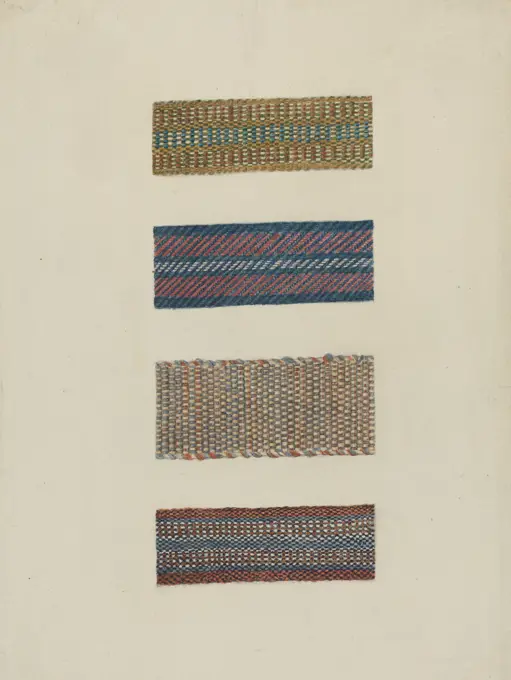
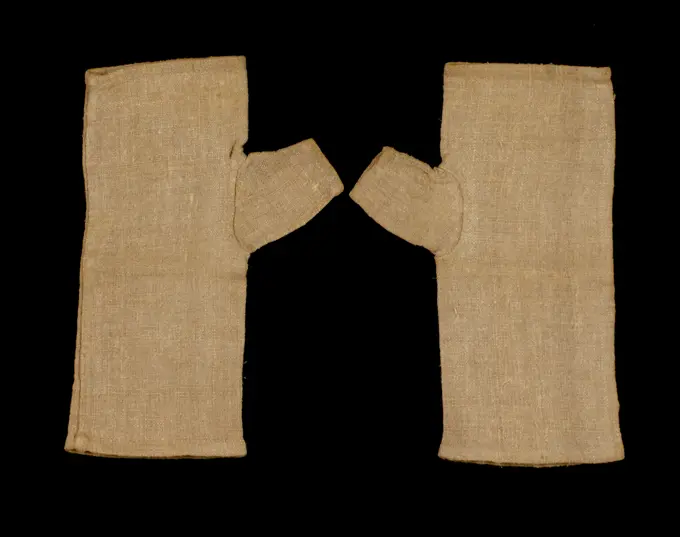
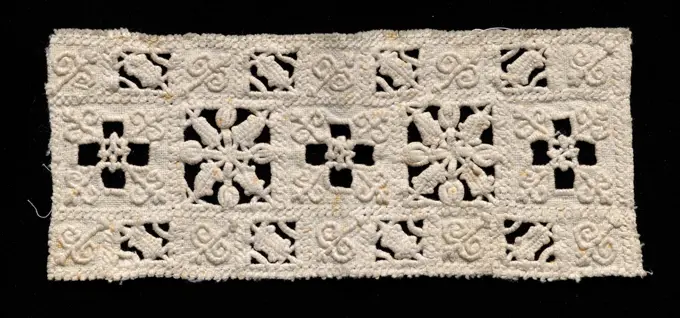
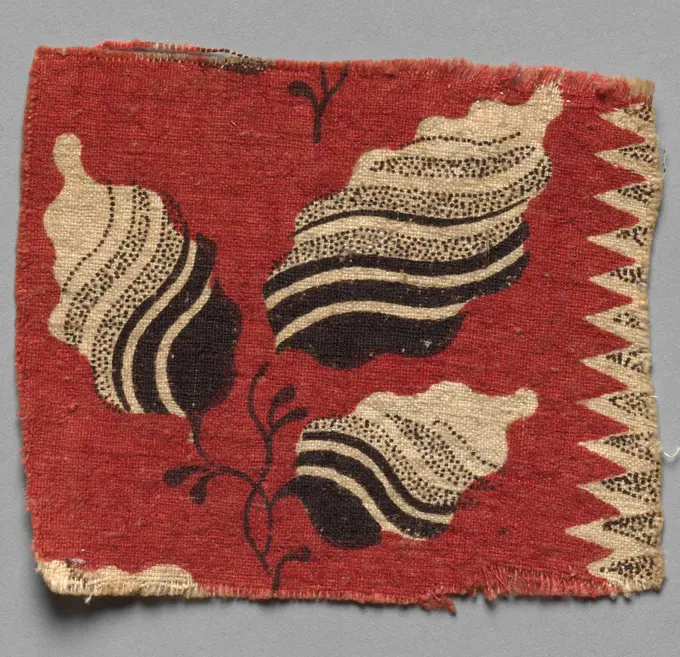
Textile Fragment 16th-17th century. Textile Fragment 454577Bookbinding. Syria or Egypt, 14th-15th century. Manuscripts; covers. Leather over paper pasteboards, blind and gold tooled, doublure block-pressedElongated cornice tile. unknown, manufacturerVelvet Fragment, 1600s. Italy, 17th century. Velvet; overall: 19 x 26 cm (7 1/2 x 10 1/4 in.).Fragment, Medium: cotton Technique: resist-printed on plain weave, Resist-printed design of tear-drop shaped forms and floral motif on red ground; bordered by blue ground with daisies with dots enclosed by thin stripes on each side. On the outer portion of the daisy design is a plain red stripe., India, 15th-16th century, printed, dyed & painted textiles, FragmentMoro Cloth, c 1900s. Philippines, early 20th century. Plain weave hemp, dyed; overall: 157.8 x 78.7 cm (62 1/8 x 31 in.).Sutra Cover Made 1590-1599 China. Silk, warp-float faced 2 1 'Z' twill weave self-patterned by ground wefts interlaced in weft float faced 1 5 'Z' twill interlacings .Fringe early 19th century probably European. Fringe 213613Fragment brocheted silk with designs of flowers and leaves. Fragment bordered side of a lamp shaft soil tissue with extra chain and weft system of gold and silver wire. Dessin: Flowers and leaves, partly growing from pedlars in horizontal rows in so-called bizarre package in gray, blue, light blue, two colors green, two colors of pink on a gold and silver and brown fond. The silk tissue consists of five pieces of different sizes sown together. Number stamped at the rear: 6513. Pached paper with the letter X. Condition: poor.Fragment Made 1476-1532 Peru. Compound Cloth . IncaPanels for a bag, Medium: silk, metallic thread Technique: tapestry weave, Two identical panels with birds, crowned birds, and floral motifs in diamond grid in gold and black on a silver ground. One piece is trimmed on three sides with gold metallic fringe., Spain, late 16th or early 17th century, woven textiles, Panels for a bagFragment 17th century Italian. Fragment 230358Fragment wollen weefsel met symmetrisch motief van pauwen.Fragment with a repeating pattern in yellow, brown and green from swung peacocks to each other that stand on a shell-shaped basin with an ornament with O.A. Putti. These peacock groups are interspersed by a dome construction work. This fragment is once cut from Fragment BK-1955-105-A.Handkerchief. North America or Western Europe, mid-19th century. Costumes; Accessories. Silk plain weave with cotton supplementary-weft patterning and human hair embroideryFragment, Medium: wool, Fragment with a reversible desgin in tan against brown ground on face and the reverse on the back. Design has octagons, each enclosing a bird., Egypt, 5th century, woven textiles, FragmentFragment of a Ship Flag. Fragment of a ship flag, pants side, blue with a red in a white cross on a white Andrieskruis. This is a unseen of the period 1606-1700.Border 17th century Italian. Border. Italian. 17th century. Embroidered net, buratto, punto à rammendo. Textiles-LacesOranjelint ,, 1775 - 1800 ribbon (material) Ribbon with four performances from top to bottom: - Oranjeboom in a round container. - Prussian eagle with a branch with orange apples above the head. - Dutch flag with a laurel wreath around the stick. Behind it a lance with a branch planted in the ground around the point and three branches. - Two branches through a ribbon connected within which the inscription. The performances are separated from each other by orange apples. Inscription; o.: vive le prince et la princesse d'Orange. Netherlands silk printingTextile Fragment 6th century Coptic. Textile Fragment 475263Cover for nine photos of the Daniël François Scheurleer collection, exhibited in Pulchri Studio in The Hague in 1893, in or after 1893  Cover with 9 photos set up on cardboard. Shown is the exhibition of musical instruments from the Daniël François Scheurleer collection in Pulchri Studio in 1893. The photos were taken by A. van der Grient. In addition, the cover contains two light prints of mathematical instruments and clocks from the Spitzer collection. NetherlandsPulchri Studio cardboard. paper. textile materials combed marbled paper temporary exhibition, 'Salon'. musical instruments; group of musical instruments Beautiful studyTextile Fragment 4th-5th century. Textile Fragment 443983Tapa (Bark Cloth) textilesBorder. Italy. Date: 1601-1625. Dimensions: 82 x 15.9 cm (32 1/4 x 6 1/4 in.)Warp repeat: 25.4 cm 25.4 cm (10 in.). Silk, plain gauze weave; embroidered with silk in darning stitches (lacis). Origin: Italy. Museum: The Chicago Art Institute, Chicago, USA.Fragment, Medium: silk, metallic yarns Technique: twill weave, Narrow band showing flowers and rooster., Iran, 17th-early 18th century, woven textiles, FragmentFragment of Roundel 6th-7th century. Fragment of Roundel 445864Fragment, Medium: silk, metal thread Technique: cut and uncut supplementary warp pile (velvet) with supplementary weft, Narrow fragment of red cut and uncut velvet on white ground with extra weft of metallic thread. Fragment shows part of a large-scale floral motif., Italy, 17th century, woven textiles, FragmentPiece 18th-19th century Japan. Piece. Japan. 18th-19th century. Silk. Textiles-WovenÔhi (Stole) Made 1775-1825 Japan. Silk and gold-leaf-over-lacquered-paper-strip, warp-float faced 4 1 satin weave with supplementary brocading wefts bound in weft-float faced 1 4 'Z' twill interlacings; patches silk and gold-leaf-over-lacquered-paper-strip, warp-float faced 2 1 'Z' twill weave with weft-float faced 1 2 'Z' twill interlacings of secondary binding warps and supplementary patterning wefts; lined with silk, plain weave self-patterned by main warp and ground weft floats .Sampler 19th century Italian. Sampler 228018Textile Fragment 14th century. Textile Fragment 446210Shirt Fragment, c. 1900, 18 7/16 x 8 3/4 in. (46.84 x 22.23 cm), Cotton, ramie; woven fabric with weft floats, Taiwan, 19th-20th centuryBorder 17th century Italian. Border 215015Excerpt yellow silk tissue with multi -colored embroidery, c. 1500 Fragment yellow silk tissue with multi -colored embroidery. The fragment consists of four sewing fragments. The embroidery has a flower branch with blue and red flowers and flower buds of green, pink, orange and silver. The fragment includes a fragment in the shape of a flower, with red embroidery. Persia silk. satin embroidering Fragment yellow silk tissue with multi -colored embroidery. The fragment consists of four sewing fragments. The embroidery has a flower branch with blue and red flowers and flower buds of green, pink, orange and silver. The fragment includes a fragment in the shape of a flower, with red embroidery. Persia silk. satin embroideringCrochet sample book, Medium: linen, cotton Technique: crochet, Oblong sample book of linen with 25 pages of samples of crochet worked in linen and cotton., USA, late 19th century, sample books, Crochet sample bookPiece 19th century Japan. Piece 71709Genevieve Sherlock, Boston Rocker, c 1940 Boston RockerPiece 18th-19th century Japan. Piece. Japan. 18th-19th century. Silk. Textiles-WovenPiece 18th century Japan. Piece 71188Band, Medium: linen, silk Technique: back and running stitches embroidered on plain weave, Small piece of deep cream linen embroidered in red silk showing a design of a highly stylized vine, symmetrically arranged to frame a figure of Amor with a bow and arrow facing a bird or wyvern. Tiny birds perch in the foliage and form a very narrow border above and below., Italy, 16th century, embroidery & stitching, BandFragment (France); linenFragment (France); silkTissue. unknownPiles of red and white bobbin with concentric circles in square fields, anonymous, c. 1850 - c. 1899  Piles of colored - red and white - bobbin: Cluny side. The repeating pattern consists of a row of square fields, marked by red lines. In each field, two picoted braids form concentric circles around a red and white window in the center. Two leaves are made in staging at each corner point. The red window in the center of each field turns into a larger white window in Linnenlag. This is half in one field and half in the next field. The red threads with which the fields are marked and with which the red windows are formed ensure a red cross in the white windows. At the top and bottom are straight finished with a red zigzag by horizontal white threads. Bohemia linen (material) bobbin lace / Cluny laceTextile Fragment. Egypt, 7th-9th century. Textiles; fragments. Wool and cotton kilimPlate. Nephritis, China, Han dynasty (206 BC AP.J.-C.). Paris, Cernuschi museum. Asian art, Chinese art, crossroads, han, nephrite dynasty, plaqueCarpet, Medium: wool, linen or hemp, cotton Technique: cut pile on plain weave (moquette or velours d'Arras), Cut pile in a plain weave foundation showing a design of large-scale, somewhat stylized pomegranate, foliage and flowers in multicolored wool pile with white cotton pile accents. Ground warp and weft are coarse linen or hemp, as is broad selvage of warp-face plain weave. Colors are faded; were formerly very bright orange, red, two shades of green, and white., France, late 17th-18th century, woven textiles, CarpetBliżej Kultury unknownNeck Band from a Tunic 5th-8th century Two diademed erotes, each carrying a bowl of flowers or fruit, fly toward the center of this playfully decorated neckline. They are flanked by a menagerie of fish, hares (), and lions amid abstract trees. The dark blue border above is studded with circles, calling to mind a jeweled necklace. The stylized tree marking the center of the neckline appears to dangle from the blue border like a gem-encrusted pendant. Red festoons accented with yellow, red, and green blossoms create the lower border. The flora, fauna, and jewels of the neckline are associated with abundance and prosperity and are frequently found on early Byzantine textiles.. Neck Band from a Tunic 444064Textile Fragment 6th-7th century. Textile Fragment 444289Piece 18th-19th century Japan. Piece 65872Textile Fragment 2nd-3rd century. Textile Fragment. 2nd-3rd century. Linen, wool. Attributed to Egypt. TextilesAntependium 15th century Italian or Spanish Fifteen fragments of medium red cult silk velvet, probably pieces of vestments were used to make this altar frontal. The pattern is a simple one of large three-lobed shields on wide, curved stems. A cope (a liturgical vestment worn during processions) from the cathedral at Burgos and now in the Art Institute of Chicago that dates to the 1430s is made from silk cut velvet with a similar design, as are a chasuble in the church of Santa Maria di Fontegiusta and a panel in the church of San Raimondo al Refugio, both in Siena. A fragment of red velvet in the Musées Royaux d'Art et d'Histoire, Brussels, has similar shields, but they contain stylized pomegranate motifs.. Antependium. Italian or Spanish. 15th century. Silk. Textiles-WovenWoman's wrapper, 20th century, 41 x 58 3/4 in. (104.14 x 149.23 cm), Cotton;, India, 20th centuryPiece 18th-19th century Japan. Piece 66780Pocket (Near East); linen, metallic thread and stripsTextile Fragment 5th-6th century. Textile Fragment 443863Fragment of a Ship Flag, anonymous, c. 1606 - c. 1700 ship flag Fragment of a ship's flag, pants side, blue with a red in a white cross on a white Andries cross. This is a Unievlag of the period 1606-1700. England wool  flag, colours (as symbol of the state, etc.) EnglandPiece early 18th century China. Piece 69958Fragment; linenFragment. Possibly Inca; Possibly central or south coast, Peru. Date: 1000-1476. Dimensions: 26 x 38.7 cm (10 1/4 x 15 1/4 in.). Cotton and wool (camelid), bands of plain weave and two- and three-color complementary weft plain weave with inner warps and patterning wefts. Origin: Peru. Museum: The Chicago Art Institute, Chicago, USA.Fragment, 700s. China or Japan, 8th century. Tabby weave; overall: 6.1 x 5.6 cm (2 3/8 x 2 3/16 in.).Textile Fragment 4th century. Textile Fragment 443377Woman's Cuff. Europe or North America, 19th century. Costumes; Accessories. Linen plain weave, cotton embroideryPiece 18th century Japan. Piece 71528Fragment (Border) Made 301 CE-500 CE Egypt. Linen and wool, slit tapestry weave . CopticFragment, Medium: silk, velvet Technique: cut and uncut pile in a satin foundation, Floral form with large leaves and blossoms in deep plum (almost black) on a white background., 17th century, woven textiles, FragmentMud cloth, 20th century, 38 x 57 1/4 in. (96.5 x 145.4 cm) (irregular), Cotton, resist dye, Mali, 20th centurySiapo (tapa cloth) textilesConciliate belt; Royal Manufacture of Jedwabna in Grodno (Grodno; Silk fabric and belt fabric factory; 1768-1780); 1768-1780 (1768-00-00-1780-00-00);Aba, c. 1960, 55 x 60 in. (139.7 x 152.4 cm), Wool, metallic threads, Syria, 20th centurySash ( ) Made 1701-1800 Turkey. Embroidered .Fragments; silk, metallicFragments; silk, linenFragment Figured tissue in linen and wool. Fragment with pattern as BK-NM-11903-26-a.Fragment, Medium: linen Technique: bobbin lace, Fragment of Binche lace with scrolling flower and foliage filling width of piece. Scalloped edge. 'Fond de neige' ground., Belgium, 18th century, lace, FragmentTrimming, Medium: silk, Dark orange trimming fragment in a design of open flowers and diagonally placed leaves between borders in twill pattern., France, ca. 1830, trimmings, TrimmingBox of King Louis IX of France, seen from the front, Léon Vidal, c. 1876 - c. 1883 photomechanical print  Paris paper  chasing, embossing (industrial process). fabulous animals (sometimes wrongly called 'grotesques'); 'Mostri' (Ripa). coat of arms (as symbol of the state, etc.). chest, cofferNeedlepoint (Cutwork) Lace Insertion, 16th century. Italy, Venice, 16th century. Lace, needlepoint: linen; average: 4.5 x 8.9 cm (1 3/4 x 3 1/2 in.).Two flags and a pennant of the ship model of a whore of the Sprout family. The Two Tricolor Flags, The Inscription: D 'Family Family Crown Sprout Aº 1756. The Pennant is Also Colored Red-White-Blue. The Flags Belong to the Ship Model of A Wheat Sprout Family (NG-NM-12047-A).Medallion, Medium: Warp: S-spun linen. Weft; S-spun linen, S-spun wool. Technique; slit tapestry with supplementary wrapping, Eight-pointed star containing jar and vine turned four different ways., Egypt, 3rd-4th century, woven textiles, MedallionTextile Sample from Sample Book 19th century Japan. Textile Sample from Sample Book 68248Roundel 4th-5th century. Roundel 445799Conciliate belt;  End of the 18th century (1791-00-00-1800-00-00);Fragment (Egypt); linen, silk; 1957-131-2Textile (Sweden); wool; Warp x Weft: 56.5 x 67.5 cm (22 1/4 x 26 9/16 in.)Embroidered Strip, 1500s. Italy, 16th century. Embroidery; silk on linen; overall: 7.6 x 35.6 cm (3 x 14 in.).Gallon;  19th century (1801-00-00-1900-00-00);Fragment; cotton, wool batting; 1956-71-1-bFragment, Medium: silk, metallic Technique: two interconnected plain weave structures (lampas) Label: silk and metallic lampas, Fragment of woven silk with a design of off-set squares, each containing a rosette or star in brilliant blue, green, red and gold, on an ivory ground. Part of the Cope of San Valero, formerly in the Cathedral of Lérida, Spain., Spain, 13th century, woven textiles, FragmentKashmier scarf, rectangular model, with black mirror around which a multi -colored richly decorated pattern, anonymous, c. 1860 - c. 1880 Cashmere scarf, rectangular model, with black mirror around which a multi -colored richly decorated pattern, especially black, green, red and white. Ending in a short fringe. West-Europa whole: Wool. whole: Silk Cashmere scarf, rectangular model, with black mirror around which a multi -colored richly decorated pattern, especially black, green, red and white. Ending in a short fringe. West-Europa whole: Wool. whole: SilkLucille Gilchrist, Tapes for Chair Seat, 1935 1942 Tapes for Chair SeatBed tent, 18th century, 87 x 19 in. (220.98 x 48.26 cm) (Irregular shape), Cotton, silk; embroidery, Greek Islands, 18th centuryEmbroidered Handkerchief, early 19th century. Switzerland, early 19th century. Embroidery: linen; average: 45.7 x 45.7 cm (18 x 18 in.).Trimming (France); silkMitts second quarter 19th century American. Mitts 169521Textile Fragment, undetermined Inca/Moquegua. Textile Fragment, undetermined. Cotton, camelid fiber, 11/16 x 2 in. (1.8 x 5.1 cm).   Arts of the AmericasCover (Furnishing Fabric) Made 1875-1900 China. brocading . ManchuNeedlepoint (Cutwork) Lace Insertion, 16th century. Italy, Venice, 16th century. Lace, needlepoint: linen; average: 7.4 x 17.2 cm (2 15/16 x 6 3/4 in.).Fragment of Printed Cotton, 18th century. America, 18th century. Printed cotton; average: 8.3 x 10 cm (3 1/4 x 3 15/16 in.).Fragment, Medium: silk Technique: woven, Red fragment has an incomplete repeat of roses with buds and leaves arranged diagonally., France, mid-19th century, trimmings, Fragment