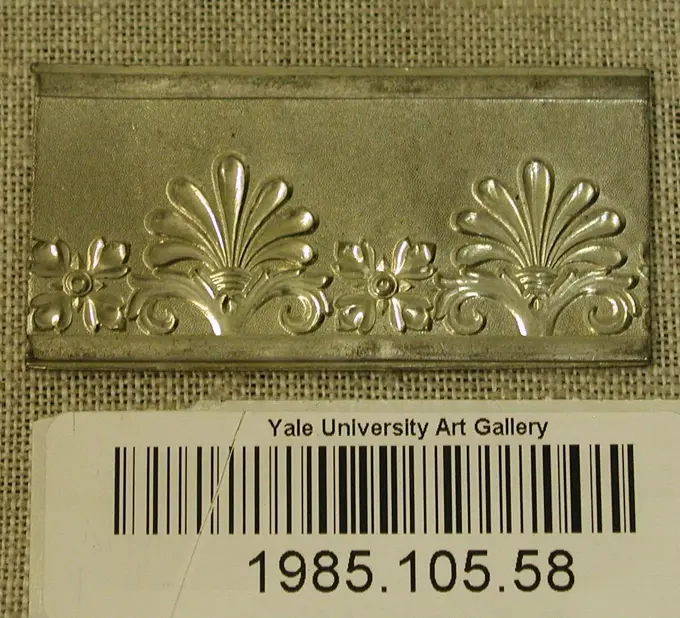
Textile Fragments History

Historical textile fragments showcasing intricate patterns and vibrant colors, reflecting craftsmanship from various regions and eras.
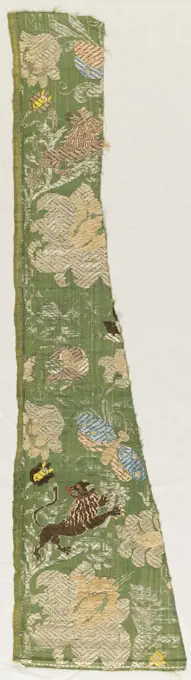
Fragments, Medium: silk Technique: plain weave with discontinuous supplementary weft floats (brocaded), Lions and peacocks on a green ground., Portugal, 17th century, woven textiles, Fragments
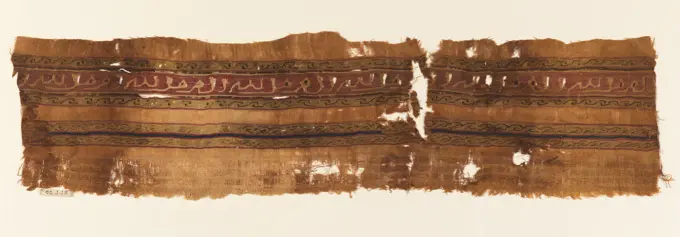
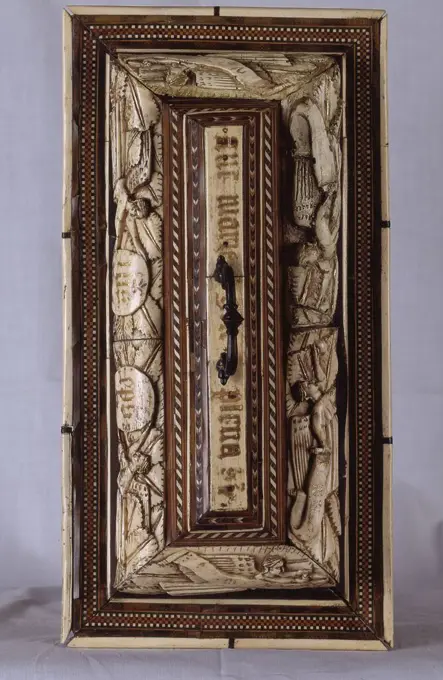
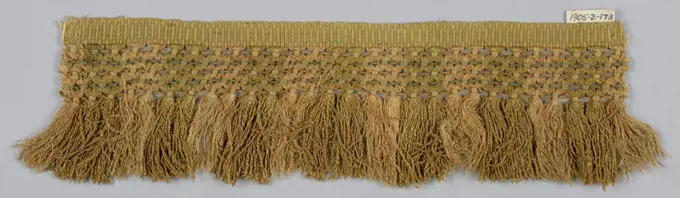
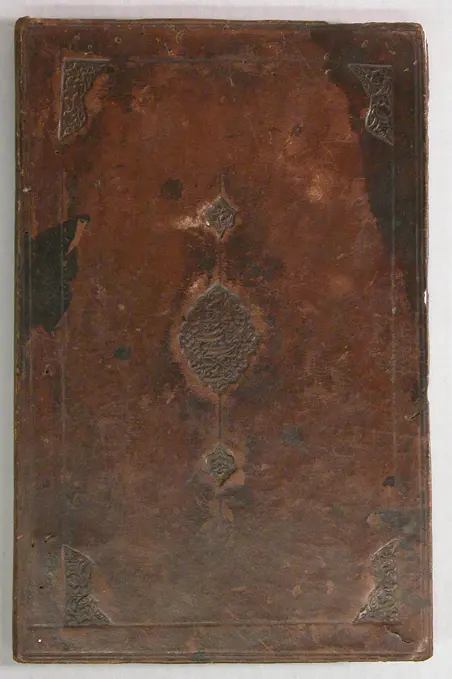
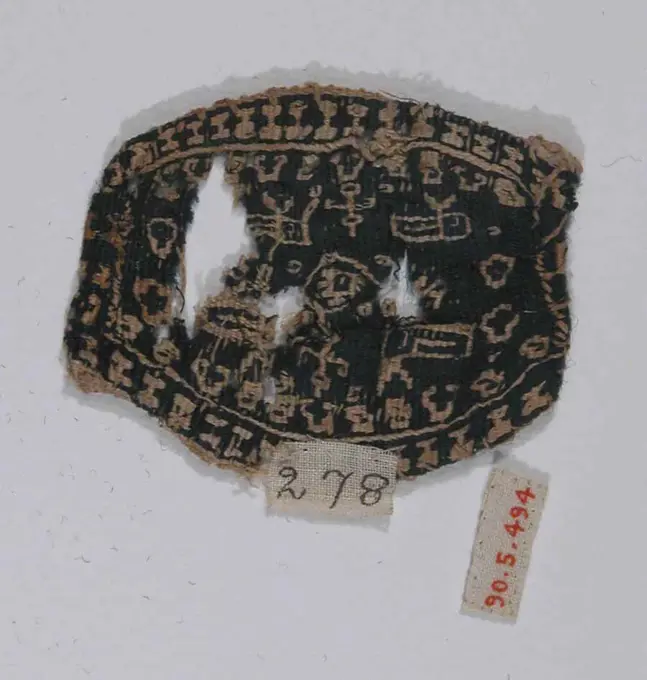
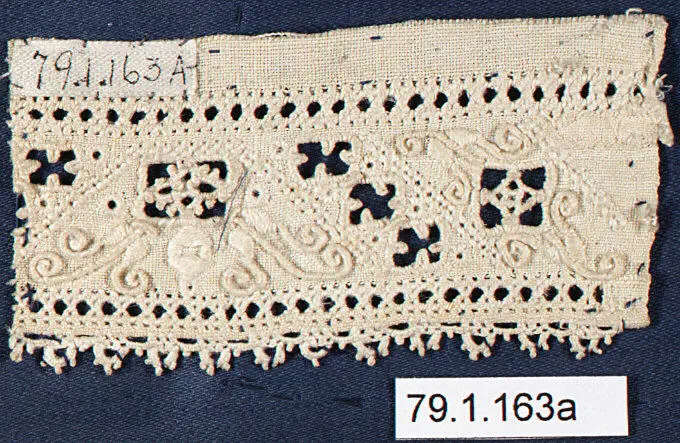
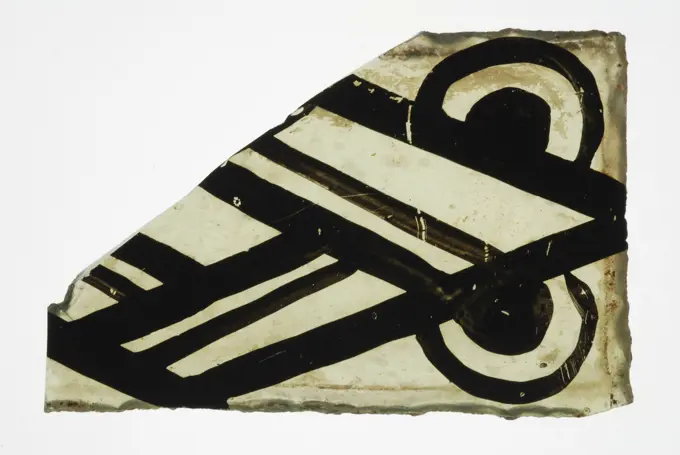
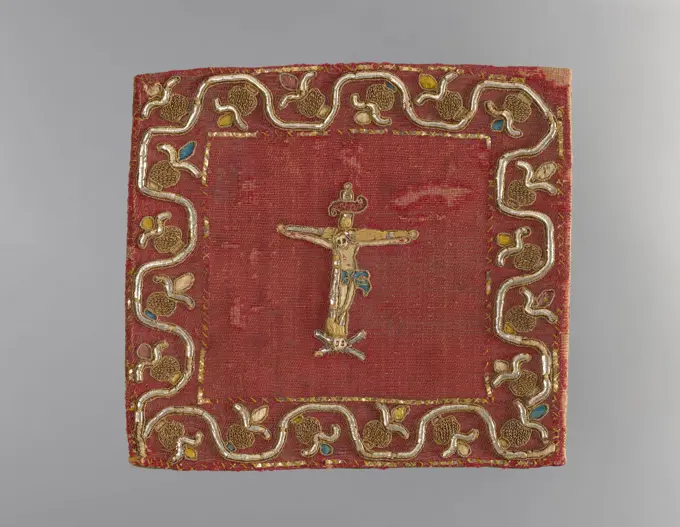
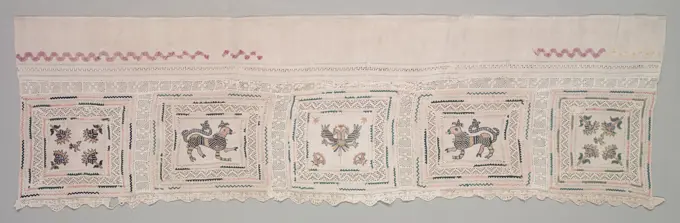
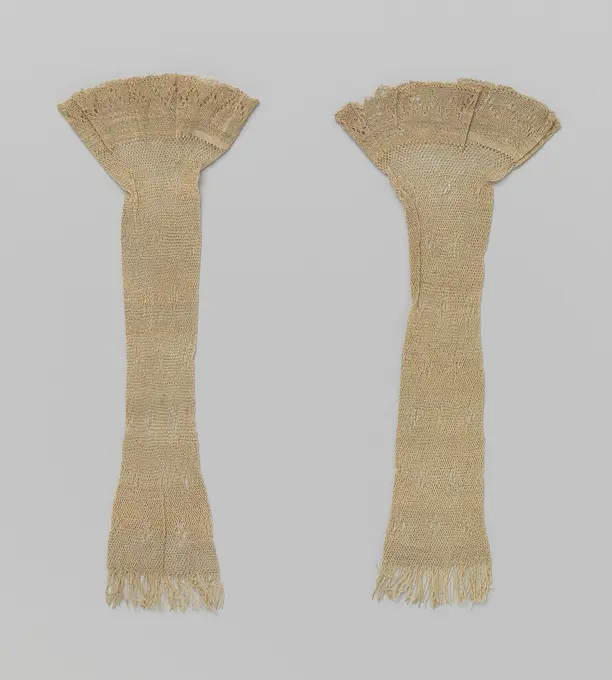
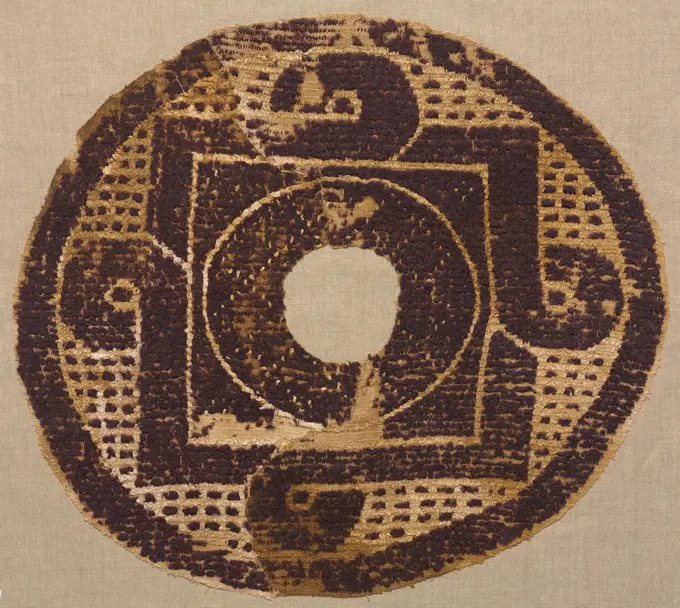
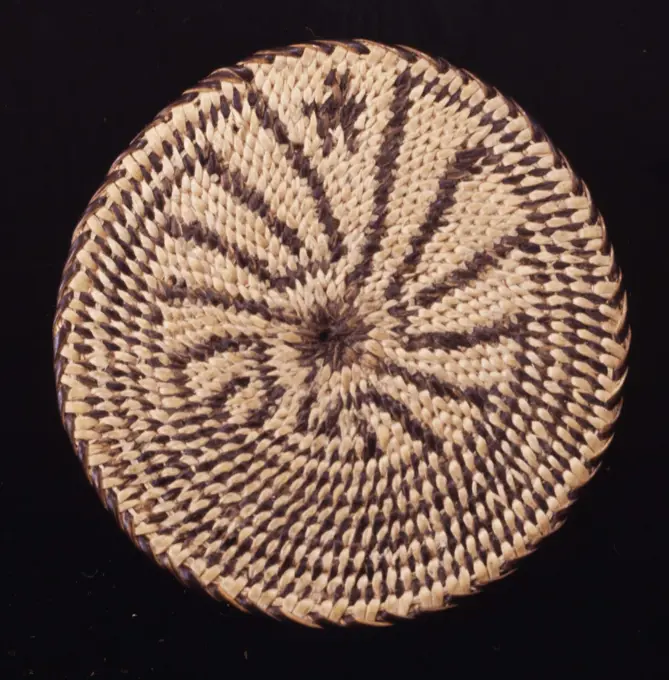
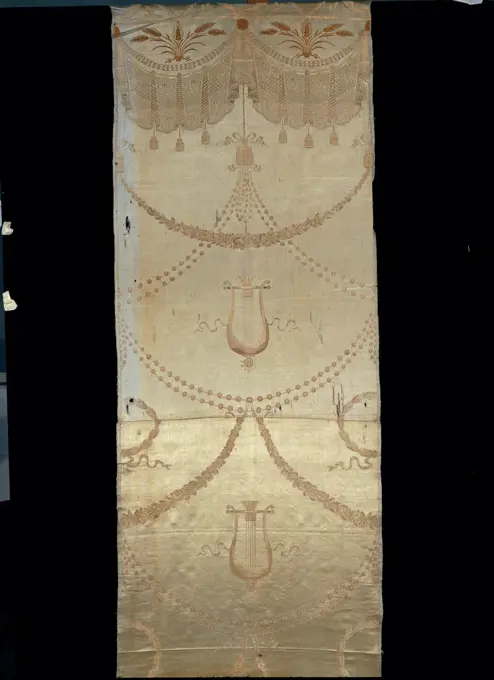
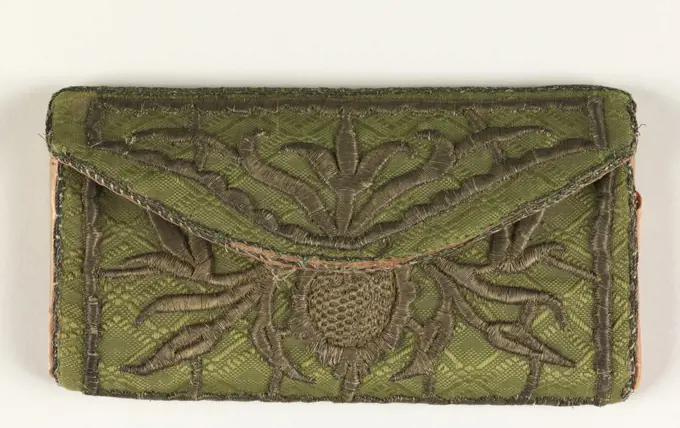
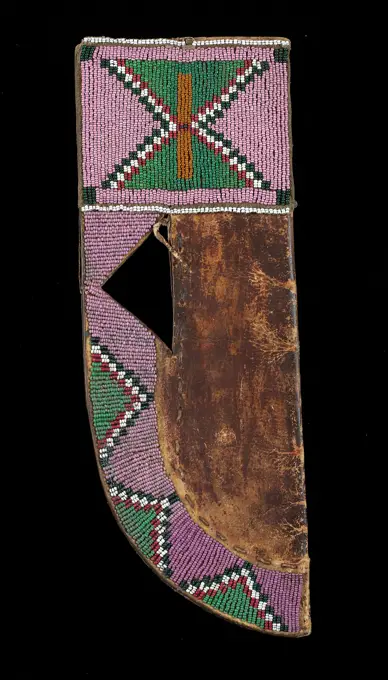
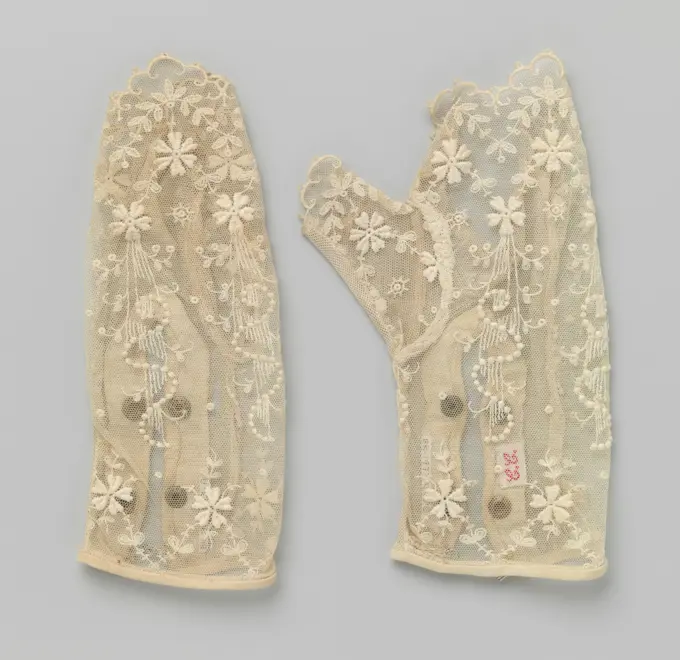
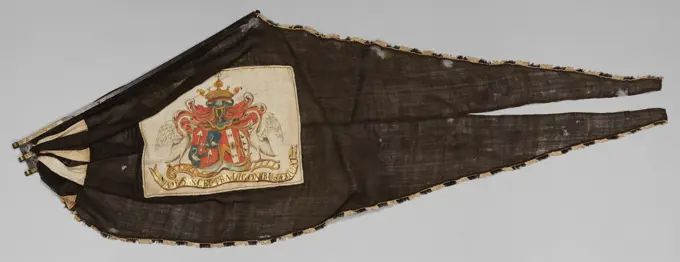
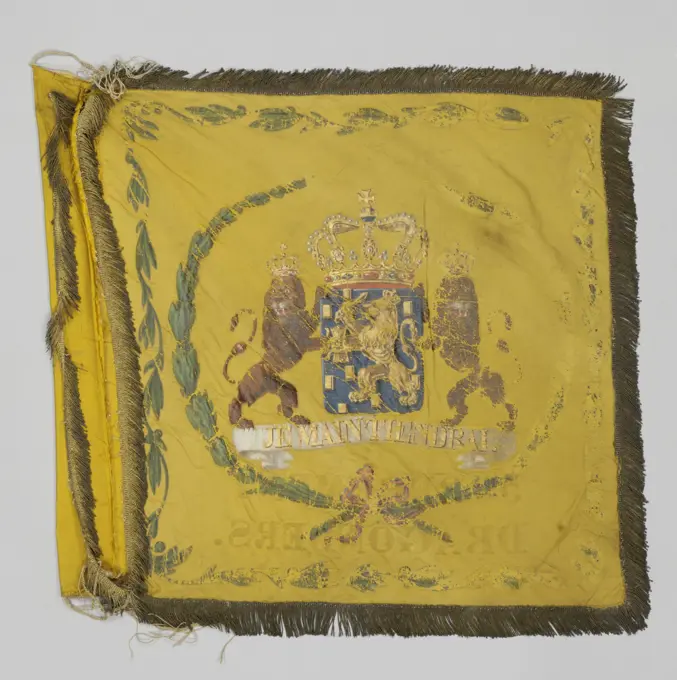
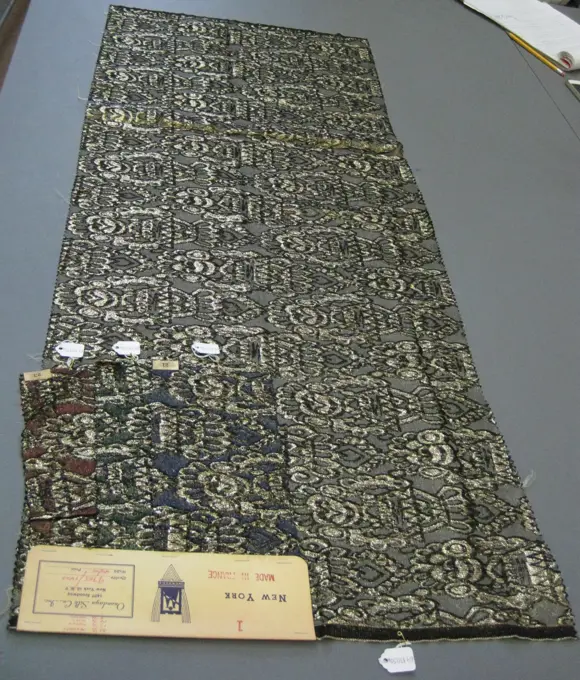
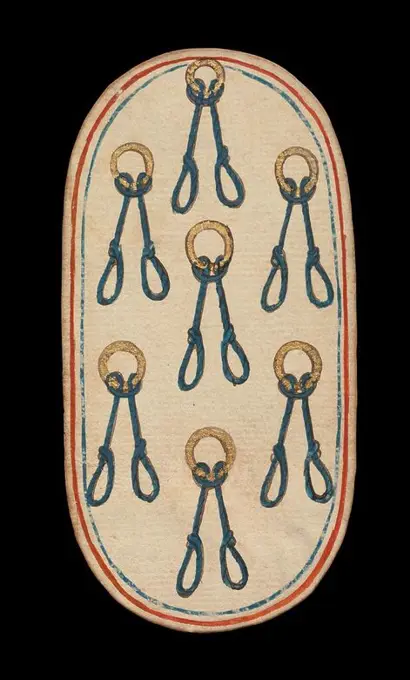
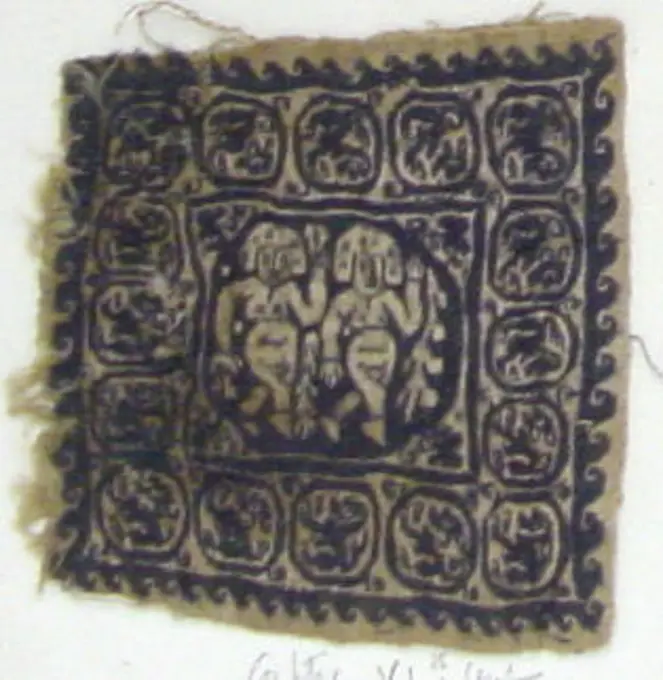
Textile Fragment 6th century Coptic. Textile Fragment 475231Tiraz; linen, warp and weft, with silk for the tapestry weftWhite side intermediate edge decorated with triangles on cardboard, Gustav Schnitzler, c. 1920 White side intermediate base decorated with triangles on cardboard. NijmegenFrance (possibly) cardboard White side intermediate base decorated with triangles on cardboard. NijmegenFrance (possibly) cardboardARQUETA DE MARFIL-TAPA. Location: MONASTERIO-INTERIOR. GUADALUPE. CACERES. SPAIN.Fragment silk tissue. Fragment red-purple silk with pattern in yellow of circles and tires surrounded by vines. In the circles with gold thread an opposite running griffin with "Grifone" on the wing. Birds sitting in the tires.Fringe, Medium: silk Technique: plain weave, Pink and green fringe with a band in a trellis pattern above silk threads forming stripes., Greece, 16th century, trimmings, FringeBookbinding 17th-18th century. Bookbinding 455077Kontusz sash/belt. unknown, authorLength of trim, cotton, silk, wool, wood, Woven looped trim in blue and white cord., England, mid-19th century, trimmings, Trimming, TrimmingArcher's Glove (right), 1800s. Japan, 19th century. Chamois leather; overall: 34.8 x 12.5 cm (13 11/16 x 4 15/16 in.).Linen mark (Type IV) ca. 1961-1917 B.C. Middle Kingdom. Linen mark (Type IV). ca. 1961-1917 B.C.. Linen. Middle Kingdom. From Egypt, Upper Egypt, Thebes, Deir el-Bahri, Tomb MMA 507 (The Slain Soldiers), MMA excavations, 1926-27. Dynasty 12Fragment, Medium: silk, metallic thread Technique: cut voided supplementary warp pile in a compound twill foundation (velvet), Small-patterned or 'miniature' velvet with a tan ground striped vertically with twill and plain weave shot with flat silver strips. Very narrow vertical stripes of minute rosebud in pink, red, green, and white cut pile. Between buds, flat strips of gold brocaded., France, 1750-1800, woven textiles, FragmentMan's Tunic. Peru, Inka, 1470-1532. Costumes. Camelid fiber and cotton tapestry weaveTextile Fragment 4th-5th century. Textile Fragment 443980Fragment 16th century Italian. Fragment 212370Shebiu Necklace of Hatnefer. Dimensions: L. of necklace including ties 84 cm (33 1/16 in.); beads only 46.5 cm (18 5/16 in.). Dynasty: Dynasty 18, early. Reign: reign of Thutmose II-Early Joint reign. Date: ca. 1492-1473 B.C..This necklace was found in the tomb of Hatnefer inside a basket that is now in the Egyptian Museum, Cairo. The basket also contained a razor, a sealed pottery juglet, a pottery jar, and a linen sheet.The necklace consists of lentil-shaped beads made of Egyptian faience, a ceramic material made of quartz frit. The beads are still strung on the original two-ply linen cord. Museum: Metropolitan Museum of Art, New York, USA.Fragment of green window glass with stained-glass decor, plaited diamond shape, window glass building material soil find glass, w 3.5 die-cast cut painted painted Half small window of green tinted window glass. Stained glass Decor of plaited diamond shape with half circles at the ends archeology Landpoortstraat Geervliet Bernisse indigenous glasswork adorn living building glazed court of Putten archaeological find in the soil Geervliet pit Landpoortstraat 1 September 1983.Fragment; linenFragment (Italy); silk, metallicComb. Dimensions: Overall: 9 13/16 x 2 13/16 x 3/16 in. (24.9 x 7.2 x 0.5 cm). Date: 7th century, possibly. Museum: Metropolitan Museum of Art, New York, USA.Piece 19th century Japan. Piece 71389Stick;  XVI/XVII century (1590-00-00-1610-00-00);Fringe early 19th century French. Fringe 224914Piece 16th century Italian. Piece 220840Ribbon mid-19th century French. Ribbon 213967Runner, c 1800s. Russia, 19th century. Embroidered linen, ribbon applique; overall: 54.6 x 188 cm (21 1/2 x 74 in.).Mitaine from beige silk Egyptian braid. Mitaine from beige silk Egyptian braid. Fingerless, finished down law. Over the entire height, four-fold moes are sprinkled over the RIsterfond. At the wrist a finer meshing starts decorated with an Ajour zigzagrand.Looped Roundel from a Blanket or Cover, AD 300s-400s. Egypt, Byzantine period, 4th - 6th century. Tapestry weave with supplementary weft wrapping; undyed linen and dyed wool; overall: 49.5 x 55.3 cm (19 1/2 x 21 3/4 in.); mounted: 59.7 x 65.4 cm (23 1/2 x 25 3/4 in.).Textile Fragment 4th-5th century. Textile Fragment 443233Lace belt so -called Saxon;  XVII/18th century (1601-00-00-1900-00-00);Sidewall, Block-printed, Floral and foliate design. Printed in green on off-white ground. Two pieces joined together with glassine., France, USA, ca. 1850, Wallcoverings, SidewallValance, 18th century, 6 1/4 x 30 x 18 in. (15.88 x 76.2 x 45.72 cm), Embroidery, England, Queen AnneBelt Plaque with Three Ibex. Culture: Northwest China. Dimensions: H. 2 5/8 in. (6.7 cm); W. 5 1/2 in. (13.9 cm). Date: 2nd-1st century B.C.. Museum: Metropolitan Museum of Art, New York, USA.Steel bobbin with coarse wire as an example of form of shape with seven ribs with a fragment side in which this technique is used, anonymous, c. 1900 - c. 1930 sample Steel natural -colored bobbin side with coarse wire as an example of shape with seven ribs with a fragment side in which this technique is used. The date concerns the steel. West-Europa cotton (textile) bobbin lace / tally (or jewel)Border fragments, Medium: silk Technique; supplementary warp forming cut and uncut raised pile in plain weave foundation (velvet), Fragments of a border showing scrolls and plants in green on gold., 17th century, woven textiles, Border fragmentsBanner of the blue regiment. Light blue banner. Front and parade side identical. Along the top three webs red-white-black. In the upper neck a light blue rectangle with the coat of arms of Amsterdam, held by two climbing plenty of lions. The weapon is covered with a royal wreath with dark red hat.Fragment met veelkleurige geometrische motieven.Fragment with multicolored geometric motifs, some of which are in diamonds in diamonds. Red edges.Basket, 20th century, 1 5/16 x 1 5/16 in. (3.3 x 3.3 cm), Plant fibers, United States, 20th century, In the early 1900s, many Euro-American women traveling through the Southwest region of the United States became infatuated with miniature Native American baskets, and some became avid collectors. Native women basket makers responded to this demand by creating ever-smaller baskets, utilizing the same harvesting, processing, and coiling techniques as those for personal use. Creating tightly woven, tiny baskets in an expanding range of designs and styles for their new clientele required the same levels of expertise and knowledgebut perhaps even more dexterity and skill.Border, Technique: bobbin lace, Bobbin lace edge, symmetrical pot of flowers; early 18th century Troilikant, early 18th century, lace, BorderFragment (Italy); linenSteel climbing side with coarse thread as an example of a ribbon in linen stroke with ornamental thread that is used in Russian ribbon side. Steel natural colosside with coarse thread as an example of a ribbon in linen stroke applied to russian ribbon side.Headdress. Culture: Russian. Date: first quarter 19th century.This object is from the collection of Natalia de Shabelsky (1841-1905), a Russian noblewoman compelled to preserve what she perceived as the vanishing folk art traditions of her native country. Traveling extensively throughout Great Russia, she collected many fine examples of textile art of the wealthy peasant class. From the 1870s until moving to France in 1902, Shabelsky amassed a large collection of intricately embroidered hand-woven household textiles and opulent festival garments with rich decoration and elaborate motifs. The Brooklyn Museum holdings include many fine examples including the majority of the garments. Portions of Shabelsky's collection are also housed at the Museum of Fine Arts, Boston, the Cleveland Art Museum, and the Russian Museum of Ethnography in St. Petersburg.This is known as a fata, a usually white muslin veil woven with silk floral designs and gold embroidery. Particularly fine examples were mFragment, Medium: linen Technique: bobbin lace (Valenciennes ground), Fragment of Valenciennes lace has a floral design with round mesh., France, late 18th century, lace, FragmentMan's Purse. Germany or Holland, 14th century. Costumes; Accessories. Leather, stitched (trapunto)Piece of cloth, by Ligurian Work, 18th Century - 19th Century, lampasso fabric. Italy, Liguria, Genoa, Palazzo Spinola National Gallery. Detail. Light blue: azure satin lyre garlands musical instrument.Pocketbook, Medium: metal-wrapped silk threads and flat gilt wire on silk foundation Technique: embroidered in padded couching stitches on damask foundation, Pocketbook with metal thread embroidery on green damask ground., 18th century, costume & accessories, PocketbookKnife Sheath, c. 1885, 12 15/16 x 4 3/4 x 1/2 in. (32.86 x 12.07 x 1.27 cm), Animal hide, beads, United States, 19th centuryFragment, 1700s - 1800s. India, Jaipur, 18th-19th century. Embroidery: silk on cotton tabby ground; overall: 14.6 x 3.8 cm (5 3/4 x 1 1/2 in.).One of the 3,000 oriental rugs from Arthur T. Gregorian Inc., 2284 Washington Street, Newton Lower Falls, Mass. 02162 , Rugs, Textile industry, Tichnor Brothers Collection, postcards of the United StatesMap sampler, Medium: silk embroidery, paint, silk foundation Technique: satin, split, and stem stitches on plain weave, Globe showing North and South America with figures representing colonists and a Native American Indian. Surrounded by flowering sprays tied with tasseled ribbon., England, late 18th century, embroidery & stitching, Map samplerMitaine van Crème-Witte from Machinally Manufactured side, with separate open thumb, anonymous, c. 1935 Left Mitaine van Creme-Witte from Machinally Manufactured Lace with Flower and Bollen Motif and a separate open thumb. At the wrist two art fabric press studs and a hook. West-Europa whole:. whole: Cotton (textile). whole: Left Mitaine van Creme-Witte from Machinally Manufactured Lace with Flower and Bollen Motif and a separate open thumb. At the wrist two art fabric press studs and a hook. West-Europa whole:. whole: Cotton (textile). whole:Embroidery patch of linen, industrial school De Windroos, c. 1880 - c. 1905 Embroidery patch of white yarn on linen. The embroidery once has the alphabet and French embroidery.  linen (material) embroidering Embroidery patch of white yarn on linen. The embroidery once has the alphabet and French embroidery.  linen (material) embroideringMedallion (Egypt); warp; s-spun linen, wefts; s-spun linen, s-spun wool; Warp x Weft: 38.1 x 26 cm (15 in. x 10 1/4 in.)Edging 17th century Italian, Venice. Edging 220991Box with Lid 19th century. Box with Lid 447397Textile Fragment, undetermined , 1400-1700 or Undetermined. Camelid fiber, (10.0 x 17.0 cm).   Arts of the Americas 1400-1700 or UndeterminedFuneral wimps on legs strip with bronze tires. Black pennant. Bed-side attached to leg strip. The pants are made up of eight triangles, which are wrinkled to the leg, so that a convex form is created. In black a white rectangle is sewn, with the weapons of Gerrit de Graeff and Christina of Herzeele, under a helmet in blue with ocher against red prainage. Above a crown with five points: three with fleurons, two with pearls, alternating, and above the middle upright trowel with ocher-colored handle and blue scoop. Terweer sides of the weapons a swan. All this is on an asymmetrical foot with praise. Below a banderole in gold, on which: Mors, Skeptra, Ligonibus, Aequat. Back of identical; Only the weapons are exchanged. Along the edges of black and white checkered frills. Flue split.Textile Fragment 3rd-4th century. Textile Fragment 443380Shawl 1850s French. Shawl 98285Standard of the fifth Dragonders Regiment, Anonymous, 1846  Yellow cream-colored bannering cloth fell off with gold frills. At the front a crowned graceful W. The inscription is below: 5th Dragonders regulation; Along the silk green branches with orange berries. On the parade side the crowned weapon of the Kingdom, with banderol on which the weapon spell: your Maintiendrai, held by two crowned lions; This whole is surrounded by two bent laurel branches, which are held together at the bottom by a rose bow; Along the silk green branches with orange berries. Netherlands silk paintingTextile Swatches Onondaga Silk Company, Inc. (1925-1981). , 1948-1959. 52 acetate, 17 Nylon, 14 wool, 8 metal, largest component (a): 45 x 18 in. (114.3 x 45.7 cm).    1948-1959Gold side strip, 1700 - 1800 Gold side strip.  . Gold side strip.  .Netherlands, Sheet from a flag book with flags from Europe, North Africa, Near and Far East, depicting the flag of, drawing, teken, paper, papier, drawings, tekeningen, height 265 mm, width 190 mm, draughtsman, tekenaar, 1669 - 1670, ink, inkt, watercolor (paint), waterverfFragment, Medium: linen Technique: needle lace, Fragment with a leaf in an openwork design and deeply scalloped edge., Venice, Italy, 17th century, lace, FragmentGreen silk damask with a pattern of pomegranate motifs. Damask from green silk with a pattern consisting of a seven-lubber leaf in which a pomegranate in flower wreath. To bend the leaf, floured branches, which are crowned at their gathering and wear a pomegranate. Similar pattern as a BK-nm-11476-b, but with other type of pomegranate. Italian manufacture. Two assigned pieces.Celtic ornamentSampler 19th century British. Sampler. British. 19th century. Silk on wool canvas. Textiles-Embroidered7 of Nooses, from The Cloisters Playing Cards. Culture: South Netherlandish. Dimensions: 5 3/16 × 2 3/4 in. (13.2 × 7 cm). Date: ca. 1475-80.The Cloisters set of fifty-two cards constitutes the only known complete deck of illuminated ordinary playing cards (as opposed to tarot cards) from the fifteenth century. There are four suits, each consisting of a king, queen, knave, and ten pip cards. The suit symbols, based on equipment associated with the hunt, are hunting horns, dog collars, hound tethers, and game nooses. The value of the pip cards is indicated by appropriate repetitions of the suit symbol. The figures, which appear to be based on Franco-Flemish models, were drawn in a bold, free, and engaging, if somewhat unrefined, hand. Their exaggerated and sometimes anachronistic costumes suggest a lampoon of extravagant Burgundian court fashions. Although some period card games are named, it is not known how they were played. Almost all card games did, however, involve some form of gaBag 17th century French. Bag 222504Drape. unknown, authorFragment of the decorative belt; Egyptian workshop; VII-VIII century (601-00-00-800-00-00);Sprei of stalks of needle side and bobbin and embroidered linen with family weapons, anonymous, c. 1635 Spread of stuffed squares of needle, bobbin and embroidered linen. Four square fillet side have a coat of arms, namely twice the coat of arms of the Pieck family and twice the coat of arms of the Balveren family. The four corners have linen squares with the same weapons. One of the squares also has the weapon of the Van de Poll family, including the year 1635. West-Europa linen (material) bobbin lace / Flanders lace / embroidering Spread of stuffed squares of needle, bobbin and embroidered linen. Four square fillet side have a coat of arms, namely twice the coat of arms of the Pieck family and twice the coat of arms of the Balveren family. The four corners have linen squares with the same weapons. One of the squares also has the weapon of the Van de Poll family, including the year 1635. West-Europa linen (material) bobbin lace / Flanders lace / embroideringTextile (Denmark); linenMilledBorders