Textile Fragments Through Ages

A visual collection of historical textile fragments from different regions and time periods, showcasing their intricate designs.

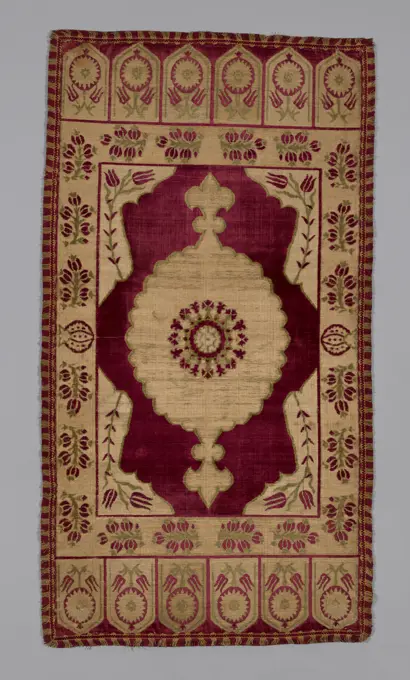
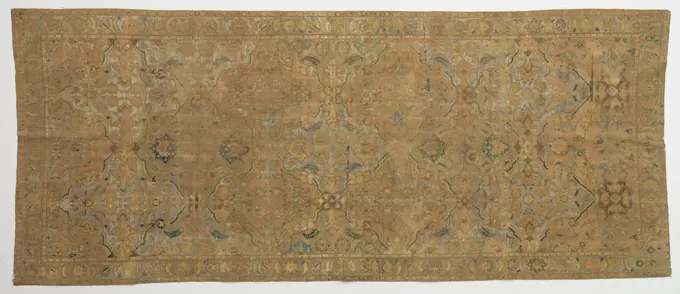
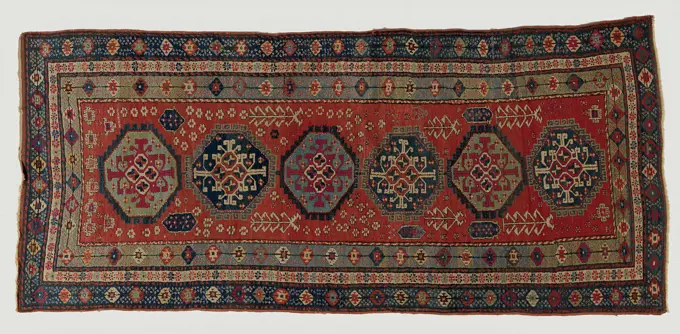
Oriental carpet, Anonymous, 1800 - 1900 Eastern carpet, medailla rug. In the middle a medallion with flowers against a solid terracotta fond. The edge is divided into red and olive -green color areas by windows and huge corners; A flower in every octagon. Chinese Turkestan Ketting an element: Cotton (Textile). Pool: Wool. Pool: Silk Eastern carpet, medailla rug. In the middle a medallion with flowers against a solid terracotta fond. The edge is divided into red and olive -green color areas by windows and huge corners; A flower in every octagon. Chinese Turkestan Ketting an element: Cotton (Textile). Pool: Wool. Pool: Silk
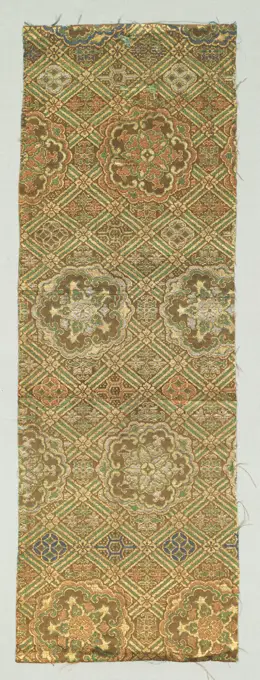
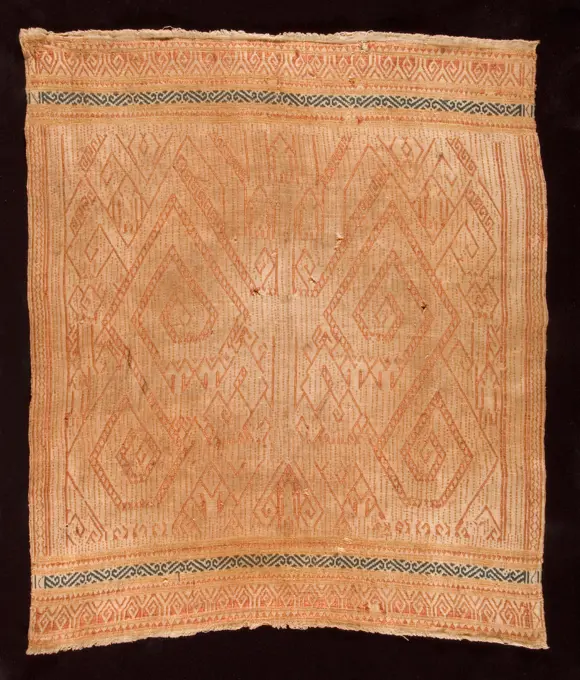
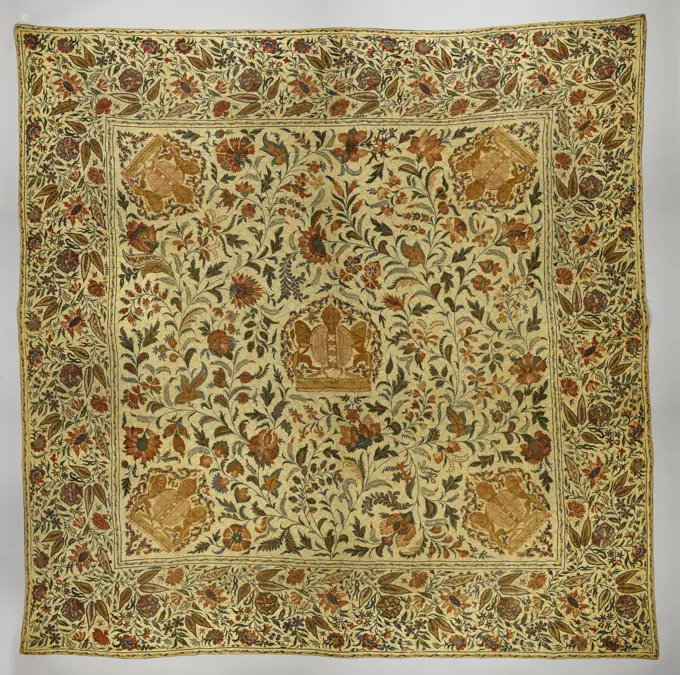
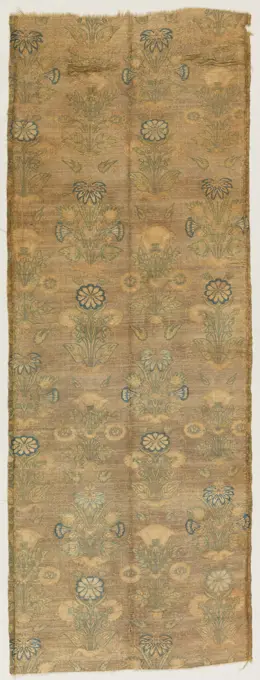
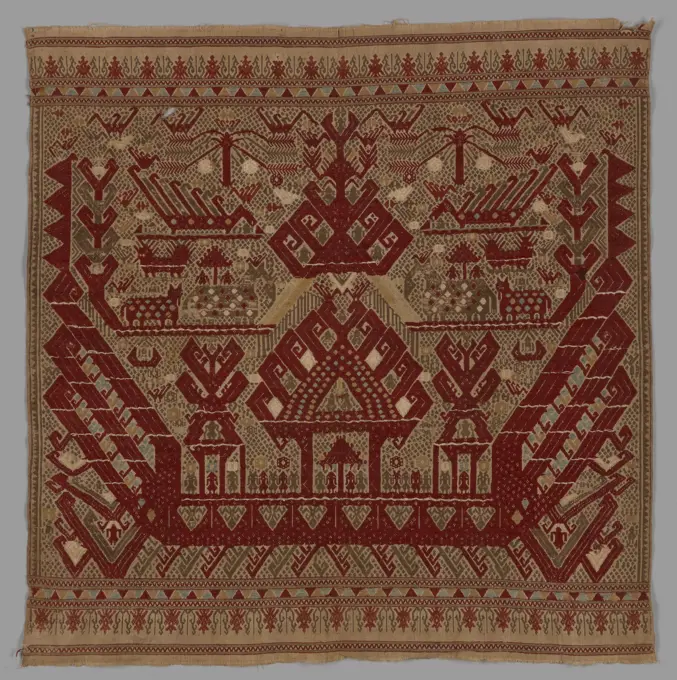
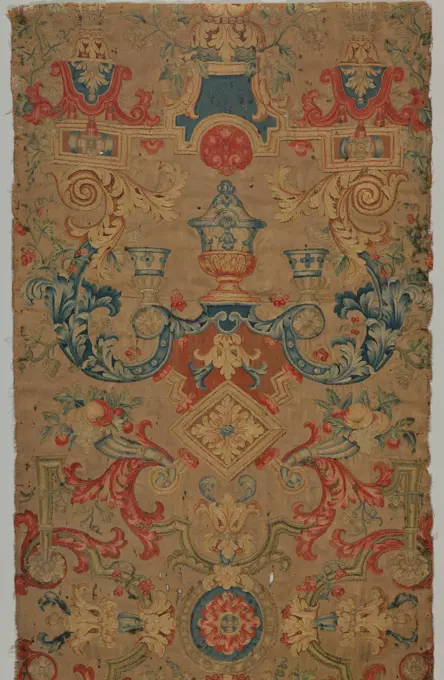
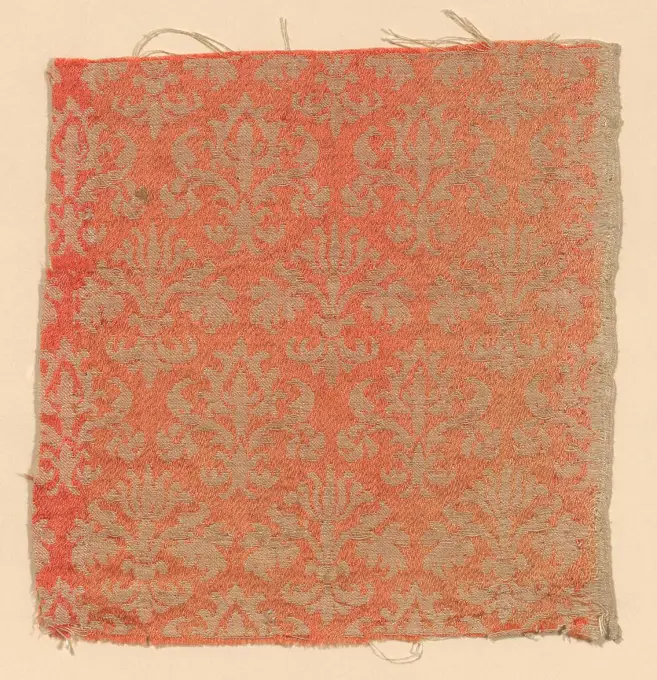
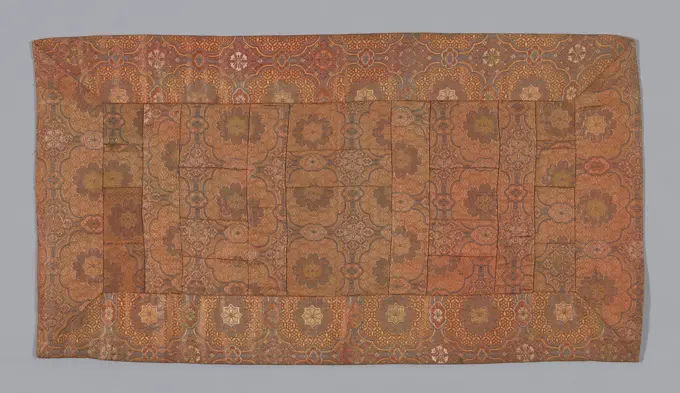
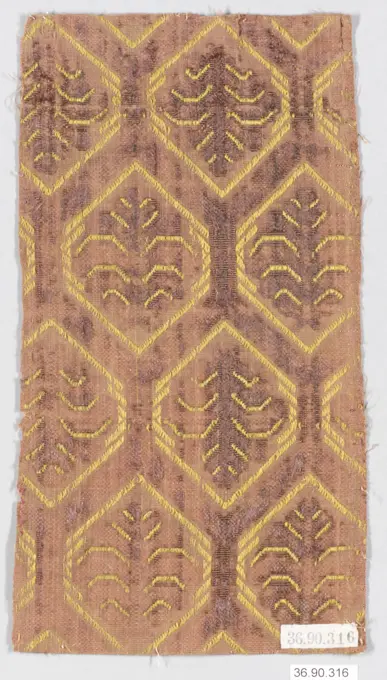
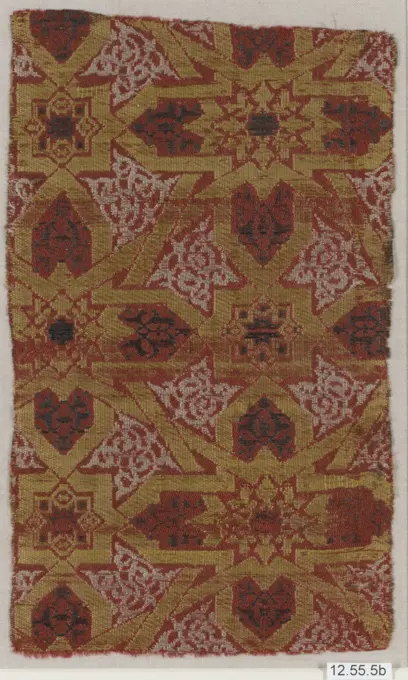
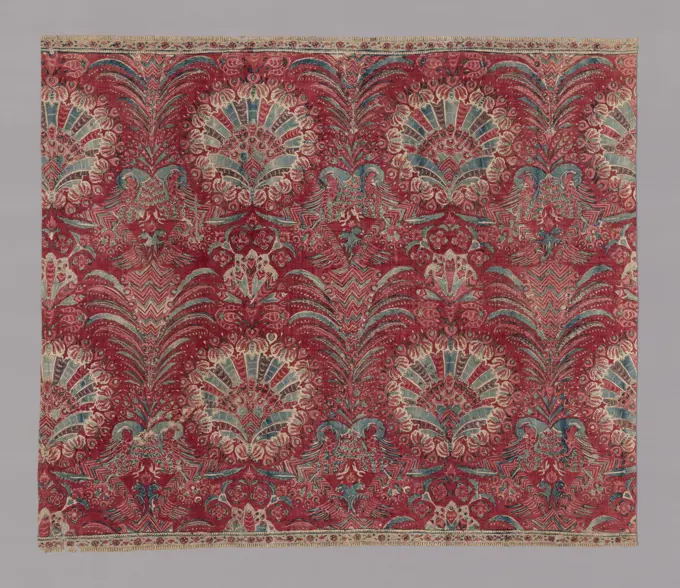
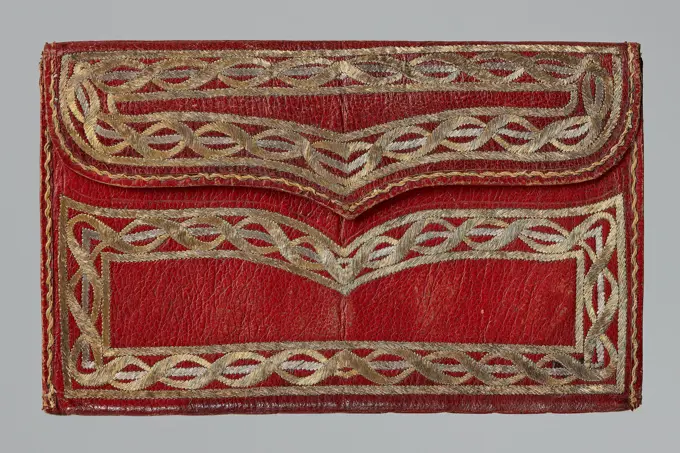
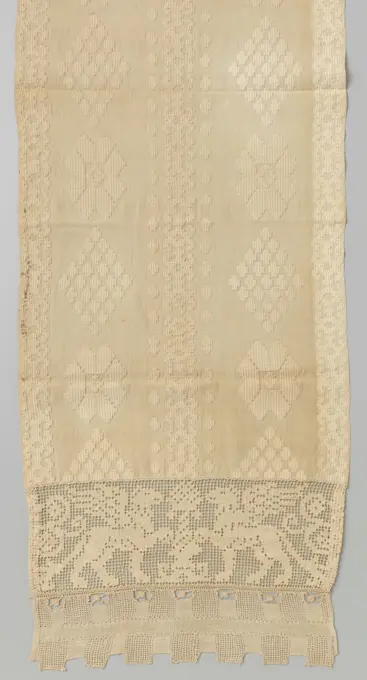
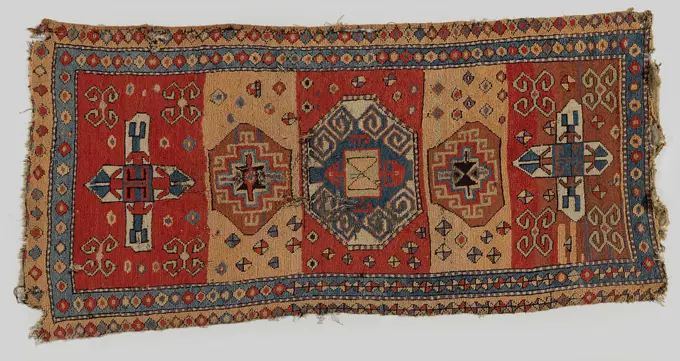
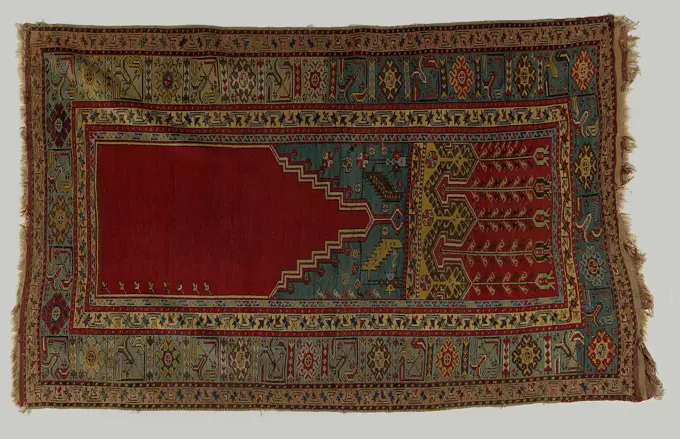
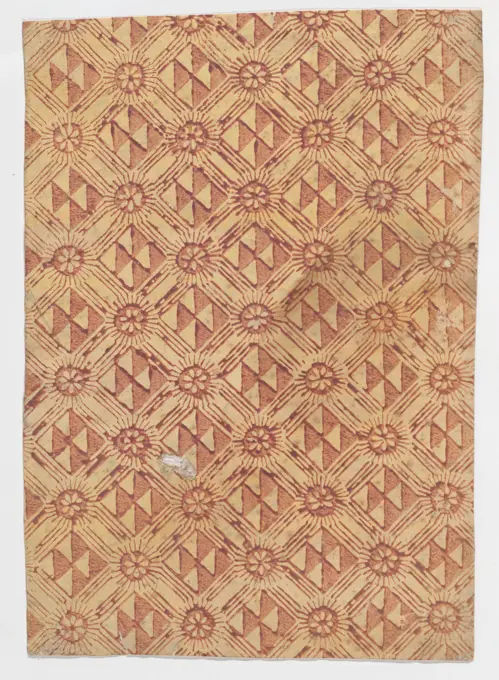
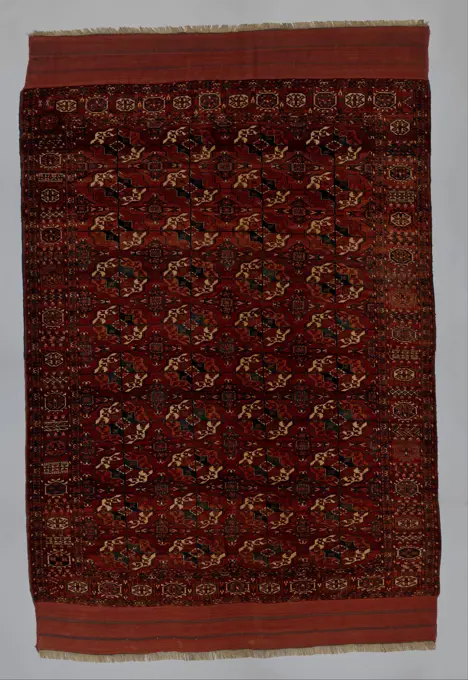
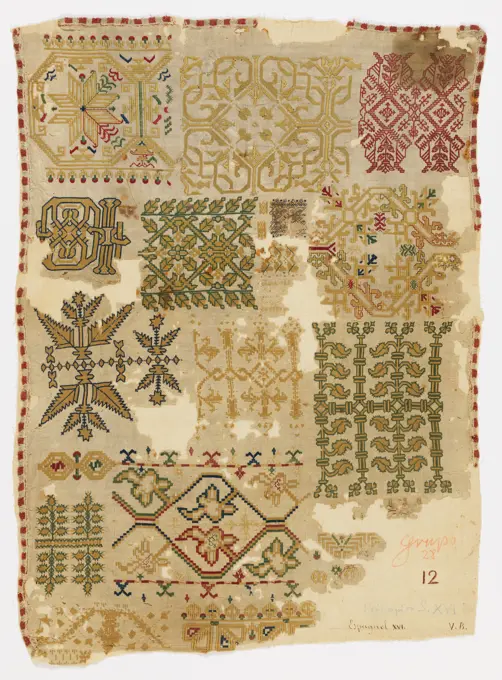
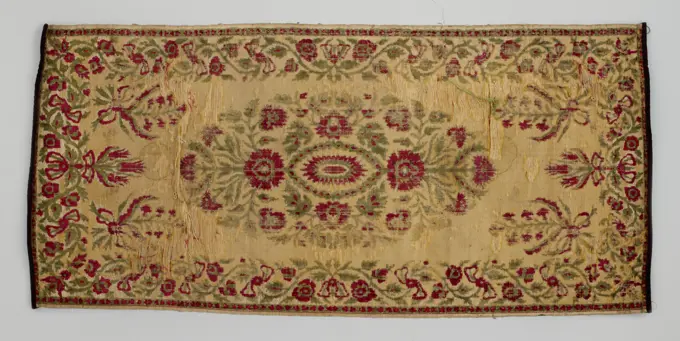
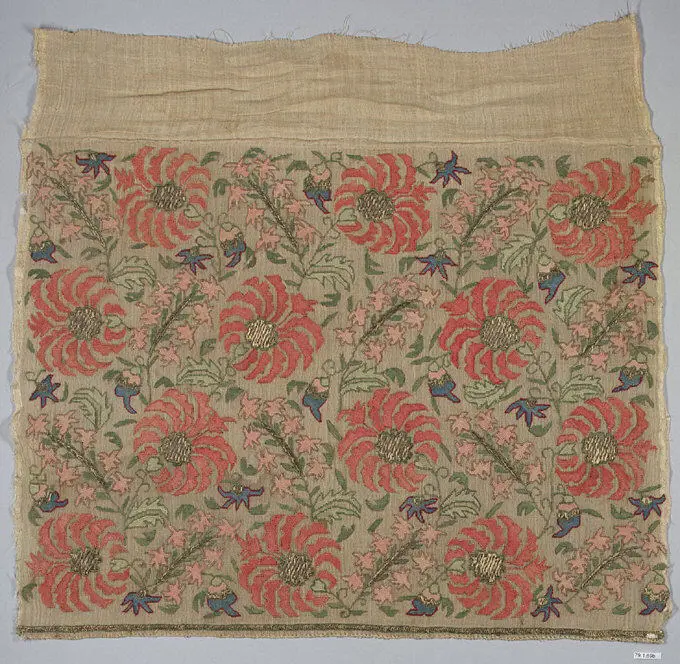
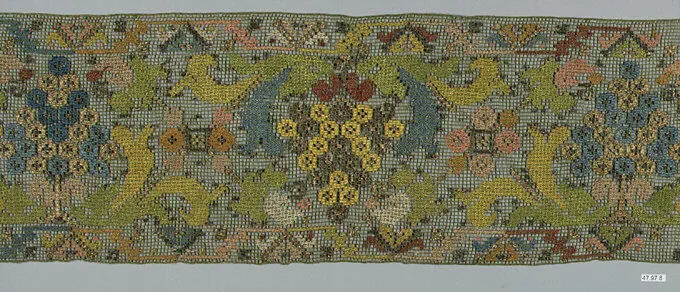
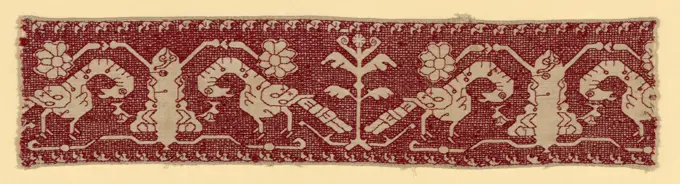
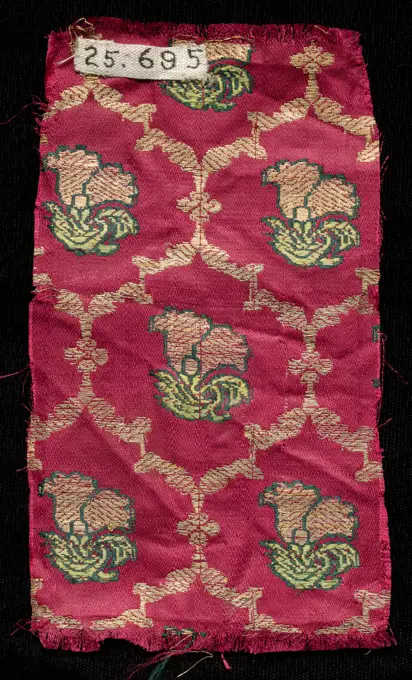
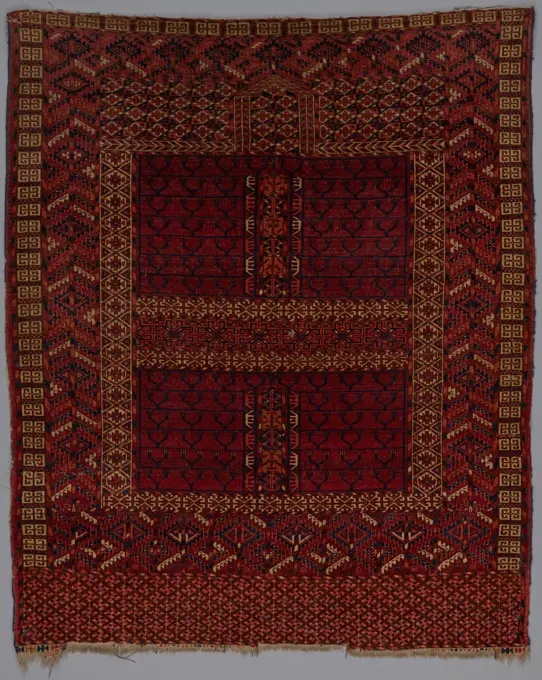
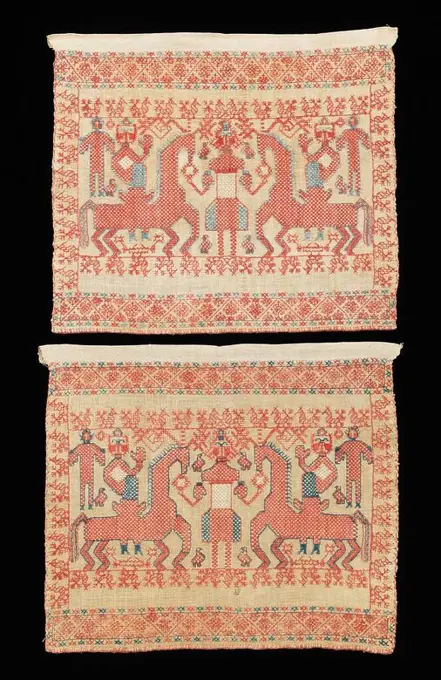
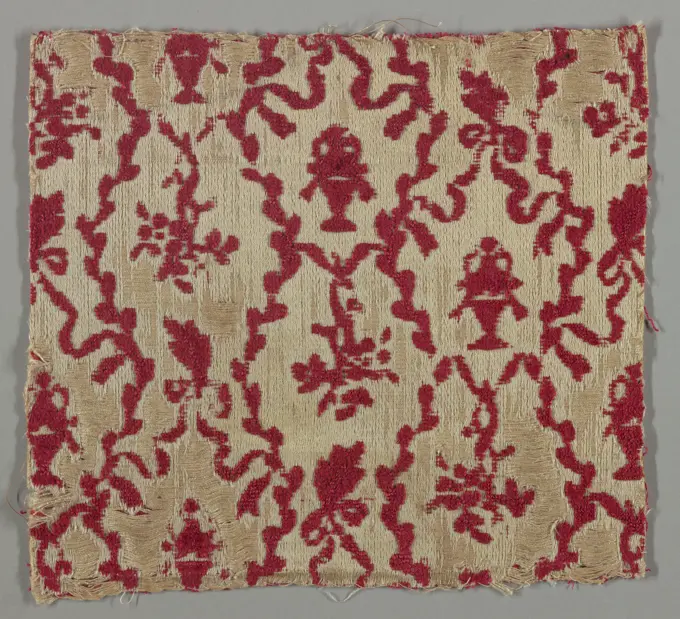
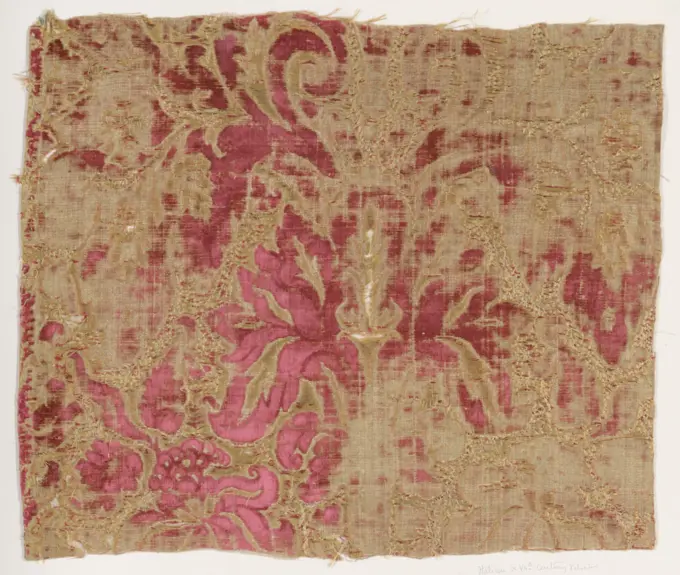
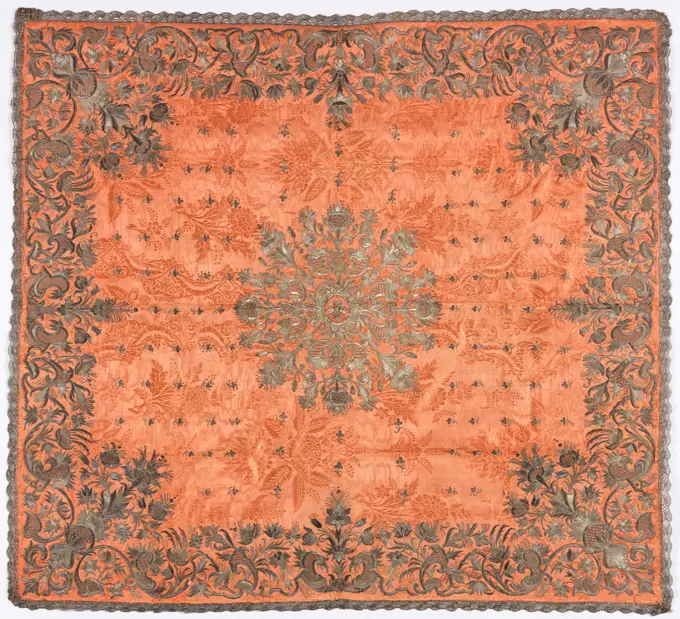
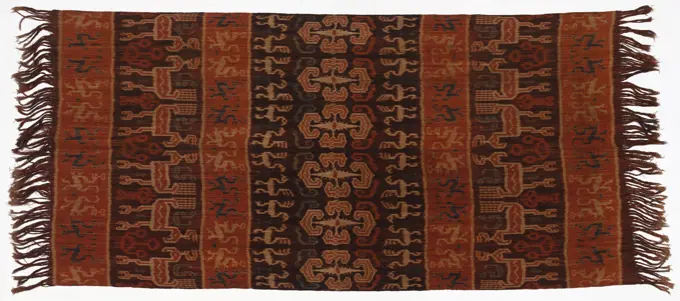
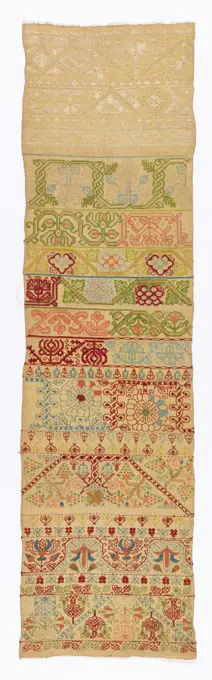
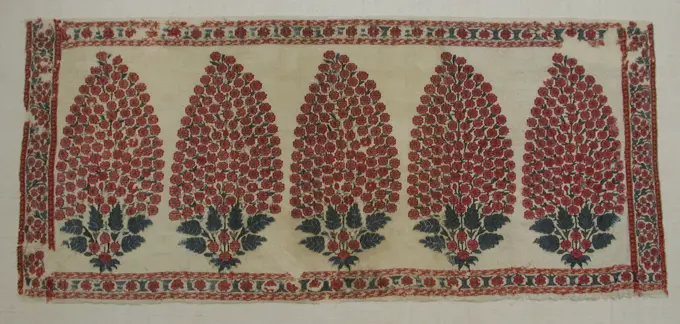
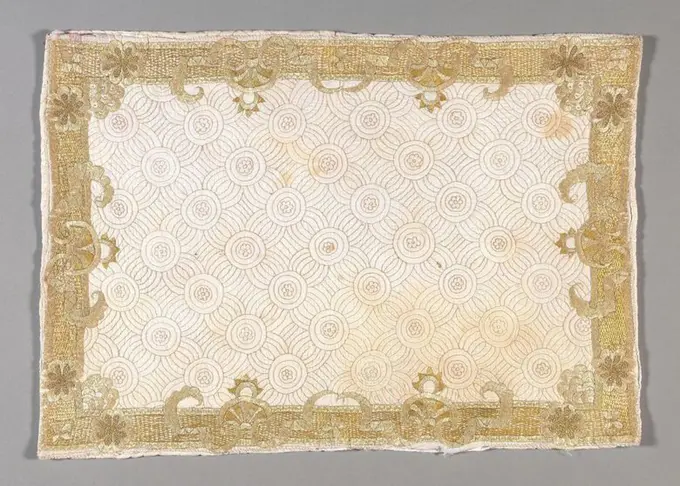
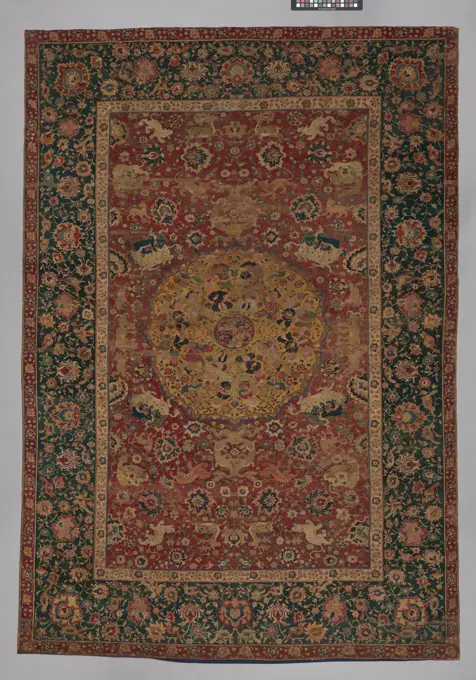
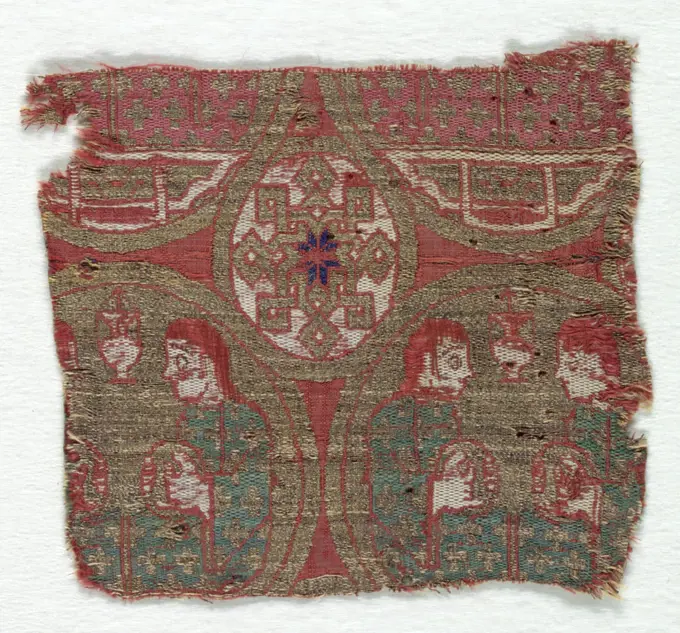
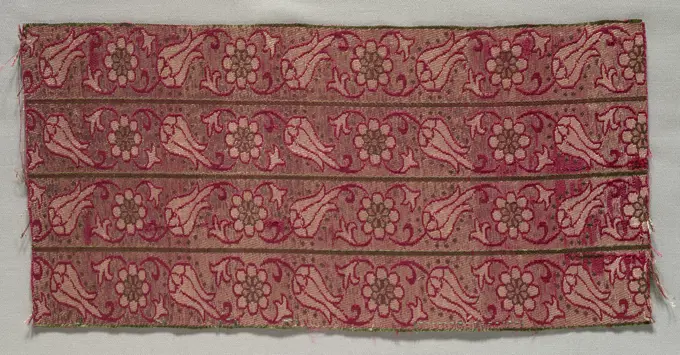
Textile Fragment, late 17th century. Turkey, late 17th century. Brocaded silk with metal thread weft; average: 33 x 16.5 cm (13 x 6 1/2 in.).Fragment Made 1650-1700 Europe. Linen and wool, plain weave with supplementary weft floats .Fragment, 1800s. Japan, 19th century. Silk; overall: 57.2 x 19.1 cm (22 1/2 x 7 1/2 in.).Oriental carpet, Anonymous, 1800 - 1900 Eastern carpet, medailla rug. In the middle a medallion with flowers against a solid terracotta fond. The edge is divided into red and olive -green color areas by windows and huge corners; A flower in every octagon. Chinese Turkestan Ketting an element: Cotton (Textile). Pool: Wool. Pool: Silk Eastern carpet, medailla rug. In the middle a medallion with flowers against a solid terracotta fond. The edge is divided into red and olive -green color areas by windows and huge corners; A flower in every octagon. Chinese Turkestan Ketting an element: Cotton (Textile). Pool: Wool. Pool: SilkFragment of a Sash 17th century. Fragment of a Sash 448935Fragment 16th century Spanish or Italian. Fragment 230159Ceremonial Textile (Tampan). Indonesia, South Sumatra, Lampung, Pasisir people, late 19th century. Textiles. Cotton plain weave and supplementary weft patterningQuilted bedcover. This bedcover bears the arms of the city of Amsterdam in its centre and the four corners. Mentions of chintz with heraldic decoration occur already in the 17th century, but the fashion became more commonplace in the 18th. Indian weavers and painters, particularly on the southern Coromandel Coast, made products for the VOC.Textile; silk, metal threadRitual Weaving(Tampan)Fragment (France); wool, linenSampler, Medium: silk embroidery on linen foundation Technique: embroidered in withdrawn element work with satin, cross, double running, four-sided and long-armed cross stitches on plain weave foundation, Bands of pattern in two columns., Mexico, 18th century, embroidery & stitching, SamplerFragment. Italy. Date: 1635-1650. Dimensions: 19 x 19 cm (7 1/2 x 7 1/2 in.). Silk, satin damask weave. Origin: Italy. Museum: The Chicago Art Institute, USA.Zagu (Seating Mat) Made 1775-1800 Japan. compound satin weave; silk and gilt-paper .Fragment (Egypt); cottonFragment; silk, metallicCushion Cover Made 1601-1700 Turkey. Silk and cotton, satin weave with supplementary facing wefts, supplementary binding wefts, and two-color cut voided velvet; edged with woven fringe .Piece 16th-17th century Italian. Piece 223417CoasterCaucasian Shirvan carpet unknownTextile Fragment 14th-15th century. Textile Fragment 446212Carpet Made 1875-1900 India. Cotton, plain weave with wool supplementary wrapping wefts forming cut pile through a technique known as Sehna knots .Fragment Made 1705-1775 India. Cotton, plain weave, painted; resist-dyed .Band, Medium: silk, linen Technique: embroidered, Italy, 17th century, embroidery & stitching, BandM Ski wallet;  around 1784 () (1780-00-00-1785-00-00);Textile Fragment ca. 1470 Geometric designs such as the ones in this fragment are found ornamenting a wide variety of media produced in Nasrid period (1232-1492) Spain, including tile work, woodwork, book binding, and painted stucco. The basic principles of this design includes scrolling and floral motifs, as well as the classic eight-pointed star, here enclosed in a scalloped medallion. Such bold designs recall the famous wall patterns in the Alhambra palace in Granada. In both the plaster and tile work of the buildings in the palace, designs are closely related to the forms in this weaving.. Textile Fragment 450730Fragments; silk, linen, metallicBuffet runner of écru cotton, decorated with woven relief motifs with rosettes and windows and furthermore a fillet side with two winged lions and bobbin with blocks., 1885 - 1915  Romania cotton (textile). bobbin lace  Romania cotton (textile). bobbin laceOriental carpet. Oriental carpet, perkal rug, the midfield of which is divided into five transverse fields with a medallion in the middle. Edges decorated with hexagons.Band (Spain); silk, linenOriental carpet. Oriental carpet, prayer cloth, of knotted wool, decorated with a terra-red mihrab, with a high step cellar. The upper field is decorated with tulips. Around three edges of which the middle decorated with flowers.Ingrain carpet runner piece ca. 1890 American. Ingrain carpet runner piece 20166Suzani, 20th century, 92 x 86 in. (233.68 x 218.44 cm), Silk, cotton; continuous-thread couching, machine chain stitch, Uzbekistan, 20th centuryCarpet, so-called "Polonaise", 17th century. Iran, 17th century. Senna knot: silk, silver and gold filé brocading; average: 398.8 x 165.7 cm (157 x 65 1/4 in.).Textile Fragment 17th century. Textile Fragment 446820Bed curtain border 1800-1850 Russian. Bed curtain border. Russian. 1800-1850. Linen, silk, metallic. Textiles-LacesSash, 1700s. Iran, 18th century. Silk taquete, brocaded; overall: 269.3 x 59.7 cm (106 x 23 1/2 in.).Sampler (Mexico); silk embroidery on linen foundationCeremonial Skirt (tapis) Made 1801-1825 Indonesia. Two panels joined cotton and silk, stripes of warp-faced, weft ribbed plain weave; warp-faced, weft ribbed plain weave with supplementary brocading wefts, and warp resist dyed (warp ikat) plain weave with supplementary brocading wefts; appliquÈd with wool, plain weave; embroidered with silk, cotton, pineapple fiber, silver-leaf-over-lacquered-paper strip wrapped cotton and silver-leaf-over-lacquered-paper strip wrapped bast fiber (probably ramie) in buttonhole, double running, split, stem, straight and surface satin; laidwork and couching; embellished with metal-backed glass mirrors . AbungQuilt (Portugal); cottonFragment Made 1601-1700 Europe. Linen and wool, weft-float faced point twill weave self-patterned by main warp floats .Bemskring ,, 1850 - 1875 Bemskleed, Kemerihisar (from A.). Midfield: light brick -red field with three rectangles on which cross -shaped medallions in utramarine, brick red and cobalt blue; Two with yellow outlines, the middle one with white, all with long sloping hooks. Half medallion at the top. In each medallion five huge corners with volute rosettes. Skewers half windows shared in red and light green and with dark blue hooks. Rand: triple. The main edge is brick -red with zigzag lines in lilac, light green, purple, yellow, blue, dark red and white, which include half stars. The inner zoom is ultramarine, on which three flowers and at the bottom of s-sen. The outside zoom is brown on which rosettes per three in many colors. KEMERİHİSAR wool Bemskleed, Kemerihisar (from A.). Midfield: light brick -red field with three rectangles on which cross -shaped medallions in utramarine, brick red and cobalt blue; Two with yellow outlines, the middle one with white, all with long sloping hooks.Fragment (Egypt); cottonCloth; PUA. Cloth with the hose motif (Buah Nabau) on the central part with there between male and female figures. Birds and plant motifs are applied to the ends and bird and lizard motifs in the sides.Sheet with overall pattern of triangles and rosettes 19th century Anonymous. Sheet with overall pattern of triangles and rosettes. Anonymous , 19th century. 19th century. Relief print (wood or metal). PrintsConciliate belt; Persjarnia Mikha A Kazimierz Radziw  before 1767 (1700-00-00-1767-00-00);Radziwiłł, Michał Kazimierz (1702-1762), Four heads, double-sided belts, Lite belts, Polish belts, Poland (culture), Szelążki (ornament), Polish clothingTekke Main Carpet early 19th century Large rectangular carpets such as this one, the most important and expensive weavings created by every Turkmen tribe, are referred to as main carpets.’ They were the primary floor covering used in Turkmen tents, and were decorated with the main gul, the most important symbol used for each tribe. The nomadic Turkmen of Central Asia are renowned for their technically skilled and visually dramatic weaving. This carpet can be attributed to the Tekke subgroup of the Turkmen nomads based on the specific form of the gul motifs, which are unique to each tribal unit. The skill of the Turkmen weavers can be seen in the expertly conceived and meticulously executed design of this carpet.. Tekke Main Carpet. early 19th century. Wool (warp), wool (weft and pile); asymmetrically knotted pile. Attributed to Turkmenistan, Central Asia. Textiles-RugsFragment, 17th century; silk; Warp x Weft: 17.7 x 12.2 cm (6 15/16 x 4 13/16 in.)Sampler (Spain); silk and metal-wrapped silk on plain weave linenBorder 16th century Italian, Sardinia. Border 214947Barred, z.g. columns restraints, with bottom panel and year, Ladik. Prayer dress, z.g. Columns restraints, with down panel and (unclear) year, Ladik. Midfield: Light blue mihrab with three-part, in the middle top façade, a year (1211 = 1796), Floating columns and stretching motifs. On red swing, four anjelieren are in yellow with blue and yellow with white. Triple zigzag panel from Ocher and brown, radically in a red down panel with three dependent tulips in white, between which a zigzag scissor line. Edges: Multiple. The main beach is in ocher yellow, on which rosette flowers grow into a straight middle stalk in red and brown. Two inland, resp. In white with angular rank and with rosettes. The outdoor zoom in light brown with acorn drink. There are between dotted multicolored lists.Skoutari” carpet unknownBid rug with downwars panel, Ladik ,, 1840 - 1860 Prayer rug with downwars panel, Ladik. Midfield: Turqoise Mihrab with stepped gable, in the middle raised top, filled with a tree of life in red. D you swing are red with two oil knots in white and anjelieren in light blue and salmon color and light blue and brown. A bilt edge or "omegalijn" separates a light brown top strip from a lower warpian in lacquer red with three brown and two light blue tulips. Edges: quadruple. The third and widest is in paint red on which alternating rosettes and sloping lilies, in dark red, amber yellow, light blue, purple and white. The first edge is white with red slender; the second light brown with rosettes; The outside zoom is purple with red slender. Ladik wool Prayer rug with downwars panel, Ladik. Midfield: Turqoise Mihrab with stepped gable, in the middle raised top, filled with a tree of life in red. D you swing are red with two oil knots in white and anjelieren in light blue and salmon color and lRug with Star Motifs and Animals. Date/Period: 16th century. Rug. Wool Wool. Height: 1,440 mm (56.69 in); Width: 890 mm (35.03 in). Author: UNKNOWN ARTIST.Prayer cloth with benedenwar panel, Ladik. Prayer cloth with benedenwar panel, Ladik. Midfield: light blue mihrab with stiff rows of three anjelieren and with three-part façade. Light red swing with toothed lancet leaves and star flowers. At the bottom of a tilt edge with white "omegaline", radically in large, dark red transverse panel with hanging tulips, alternating in light blue (3) and black (2). Edges: Quadruple. The main beach is light red with rosette flowers and sloping lilies on a angular rank. He has been caught in broad hems with angular tendrils, the inner in brown, the outer in brown black. The entire midfield was caught in a white list.Towel End 18th-19th century. Towel End 455292Star Ushak or Strengthenight. Lacquer red field with star-in-axis composition. Paint-red edge .. Star Ushak or Sterm DailLid. Lacquer red field with star-in-axis composition. Pacifier edge. Note: Shredder on the top.Cloth; Not until. Cloth with animal figures.Strengthenight. Strengthenight. Midfield: terracotta fond with a large, flets green of two palmettes with stir spendaillon with white hook contours and a yellow cross. In the corners Koblat blue quartermeda leaks with yellow blocks. Foundation of stars and flower stems. Edge: Triple. The middle is brown-purple and black with naturalistic rosette flowers in mauve, old pink, green, red, yellow, white and light blue. The indoor zoom of yellow with stars. Old pink outside pink with zigzag lines in many colors. Beard: at the bottom of a 13 cm wide beard in red, green and white stripes, at the top 14 cm wide.Band 1624 German. Band 227273Fragment from a Border Made 1601-1700 Italy. Linen, plain weave; embroidered with silk floss in double running and back stitches .HeadClothOriental carpet ,, 1800 - 1815 Oriental carpet, zigzag rug. Midfield with zigzag pattern with hooks. The widest edge is decorated with angular leaves in a zigzag pattern. Jumper wool Oriental carpet, zigzag rug. Midfield with zigzag pattern with hooks. The widest edge is decorated with angular leaves in a zigzag pattern. Jumper woolTextile, Medium: cotton Technique: wax resist dyeing (batik) on plain weave, Batik textile, probably a shoulder cloth (selendang) or breast cloth (kemben) in dark blue, brown, and cream-white. Shows an all-over pattern of the 'ship of the dead' motif, stylized and abstracted yet bearing its original meaning., Indonesia, 19th century, printed, dyed & painted textiles, TextileFragment, 1800s. India, Gulbarga , 19th century. Brocade; silk and metal; overall: 14 x 9.5 cm (5 1/2 x 3 3/4 in.).Bliżej Kultury unknownFragment Made 1650-1700 Italy. Silk, plain weave with self-patterning ground wefts .Fragment (Dress Fabric) Made 1801-1850 Iran. Design in gold, red, blue, green and white on greyish-blue ground. Horizontal rows of floral butes turned alternately in opposite direction, surrounded by smaller butes and flowers. Lined. Satin. .Towel border. Culture: Russian. Dimensions: 14 x 13 in. (35.6 x 33 cm). Date: early 19th century.This object is from the collection of Natalia de Shabelsky (1841-1905), a Russian noblewoman compelled to preserve what she perceived as the vanishing folk art traditions of her native country. Traveling extensively throughout Great Russia, she collected many fine examples of textile art of the wealthy peasant class. From the 1870s until moving to France in 1902, Shabelsky amassed a large collection of intricately embroidered hand-woven household textiles and opulent festival garments with rich decoration and elaborate motifs. The Brooklyn Museum holdings include many fine examples including the majority of the garments. Portions of Shabelsky's collection are also housed at the Museum of Fine Arts, Boston, the Cleveland Art Museum, and the Russian Museum of Ethnography in St. Petersburg.This charming work of folk art incorporates some interesting and unique interpretations of traditional Woven Coverlet. Dated: c. 1937. Dimensions: overall: 47.2 x 40.8 cm (18 9/16 x 16 1/16 in.) Original IAD Object: 88" long; 75" wide. Medium: watercolor and graphite on paper. Museum: National Gallery of Art, Washington DC. Author: Helen Bronson.Cover Made 1701-1800 Turkey. Embroidered with polychrome silk, gold, and silver in chain stitch on plain rose silk .Waist Wrapper (Sarung, Bang Biru Dlorong KapalLayar)Fragments; silkFragment 17th century Italian. Fragment 230342Sampler, 19th century. Morocco, Salé, 19th century. Embroidery: silk on cotton tabby ground; overall: 104.1 x 81.3 cm (41 x 32 in.).End of a cover 16th century Spanish. End of a cover 212696Textile Fragment 18th century. Textile Fragment 443058Cover; silk, metal-wrapped thread on a silk core, metal sequins, metal coilsSidewall And Border (USA); machine-printed; 45 x 35 cm (17 11/16 x 13 3/4 in.)Flower rug, Z.G. "Ottomaan". Flower rug, Z.G. "Ottoman" in Ceriserode Fond and Rand.Hinggi, 1800s. Indonesia, Sumba, 19th century. Warp ikat; cotton; overall: 243.8 x 116.8 cm (96 x 46 in.). Hinggi are large mantles woven in identical pairs, one worn around the waist and the other draped over the shoulder. As is characteristic of Sumbanese "hinggi," the design of this mantle relates to the traditional animistic religious and social structure of Sumba: the division of the cloth into horizontal bands reflects the layout of the traditional Sumbanese village, the rampant lions denote royal power, the trees of life between the cockatoos are symbols of fertility, and the geometric figure repeated across the center of the cloth is a symbol of royalty.Sampler (England); silk and linen embroidery on linen foundationEnd Panel of a Sash late 17th-early 18th century Through the eighteenth century, the ever popular flowering plants of the Shah Jahan period transformed into pinecone-shaped clusters of buds emanating from roots of stylized leaves.. End Panel of a Sash 453384Pillow Sham. England. Date: 1710-1730. Dimensions: 30.1 × 42 cm (11 7/8 × 16 1/2 in.). Cotton, plain weave; underlaid with linen, plain weave; embroidered with silk floss and silk yarns in back, herringbone, running, and satin stitches; laid work, couching, and French knots;. Origin: England. Museum: The Chicago Art Institute, Chicago, USA.Baby Carrier, 28 x 19 1/2 in. (71.12 x 49.53 cm), Cotton; needlework, ChinaFlounce (France); linenChalice Cover Made 1701-1725 Spain. Silk, warp-faced plain weave; edged in bobbin lace of metal thread; embroidered in silk floss, gold-metal-strip-wrapped on silk core (paired in twisted into cord, as well as lace) in long and short, block shading, satin, couching, knot, stem, and line stitches; purl, spangles .Sampler, Medium: silk embroidery on linen foundation Technique: embroidered in running, double running, stem, satin, eyelet and buttonhole stitches on plain weave foundation, Bands of pattern with isolated motifs at bottom., England, 17th century, embroidery & stitching, SamplerTop of embroidered pall unknownSampler (Netherlands); Embroidered by Griet Ruwen; silk embroidery on cotton foundationFragment; linen; Bequest of Marian Hague; 1971-50-206Salmon -colored sides dress with a floral pattern and metal wire, anonymous, c. 1600 - c. 1799 brocade (textile). silk Salmon -colored silk dress with a floral pattern of flowers in white, green, pink, gray and in metal wire. Finished along four sides with a natural -colored passement in which geometric pattern in metal wire. Lined with changeant silk in blue and purple.  silk. metal thread embroideringFragment of a Northwest Persian Medallion Carpet early 16th century This knotted-pile textile fragment likely once formed part of a large white-ground Persian medallion carpet. This fragment was located towards the top of the carpet, where the diamond-shaped design served as part of a pendant cartouche to a larger central medallion.. Fragment of a Northwest Persian Medallion Carpet 447525Bag 14th-early 16th century Peruvian. Bag. Peruvian. 14th-early 16th century. Cotton, camelid hair. Peru. Textiles-WovenMedalleled, Karabagh or Kazak. Medalleled, Karabagh or Kazak. Midfield: Ceriserode Fond with six octagonal medallions in blue, sea green and bleu; Here on quadruple blocks in purple, white and red, all surrounded with a composite cross of hooks. Furthermore. Edge: Triple. Narrow middle edge of white with eight-leaf flowers. Inner edge wider and from sea green; The outer edge also wider and blue, both with widely scattered diamond flowers on straight stem.Cushion Cover (Yastik) 17th century Yastiks are cushion covers used by the Ottoman elite to decorate the interiors of their palaces. They are distinguished by their rectangular shape, a dominant red velvet background, and a composition framed on both sides with a band formed of a linear repeating motif. These cushion covers were produced in quantity; the same pattern type was woven one after the other in a continuous length on the loom and later cut to size.. Cushion Cover (Yastik) 452098CASULLA MOZARABE. Location: CATEDRAL-INTERIOR. SANTIAGO DE COMPOSTELA. A CORUÑA. SPANIEN.Hooked Rug 1850-1900 Probably Edward Sands Frost. Hooked Rug 13951Carpet second half 16th century The scenes depicted on this carpet may allude to the bazm, or the feast that followed the battle in Iranian history and literature. In the central medallion, a group of beardless seated men are drinking, talking, and playing music, while four standing figures hold goats, perhaps in anticipation of the banquet. The vignettes of predators attacking or stalking prey signify ideas of dominance, thus relating to the razm, or battle. The figures turbans, with their low kulahs, or caps, indicate that the carpet was produced after the early Safavid taj, or cap with a high baton-like extension, had fallen out of fashion. Carpets from this period were usually woven in pairs, and The Met has a possible companion for this piece. Thirty-seven patches and adhesive were removed from the reverse and replaced with underlay support fabric. Carpet 446954Fragment, Medium: silk, metal-wrapped silk core Technique: compound plain weave, Design of two tangent roundels in gold, framing confronted seated figures, each holding a tambourine; hanging lamp in between. Faces are white, hair or caps are red, robes are blue-green with cross-shaped pattern in gold. Interstice, above, gold roundel framing interlaced ornament, blue star center., Spain, 12th-13th century, woven textiles, Fragment