Textile Fragments Through Ages

A visual collection of historical textile fragments from different regions and time periods, showcasing their intricate designs.

Oriental carpet, Anonymous, 1800 - 1900 Eastern carpet, medailla rug. In the middle a medallion with flowers against a solid terracotta fond. The edge is divided into red and olive -green color areas by windows and huge corners; A flower in every octagon. Chinese Turkestan Ketting an element: Cotton (Textile). Pool: Wool. Pool: Silk Eastern carpet, medailla rug. In the middle a medallion with flowers against a solid terracotta fond. The edge is divided into red and olive -green color areas by windows and huge corners; A flower in every octagon. Chinese Turkestan Ketting an element: Cotton (Textile). Pool: Wool. Pool: Silk
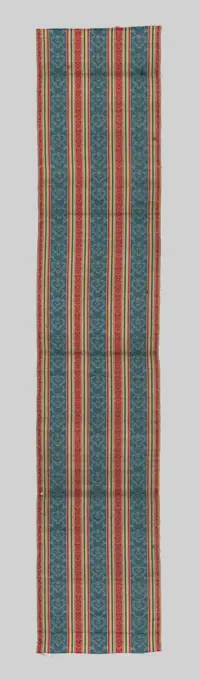
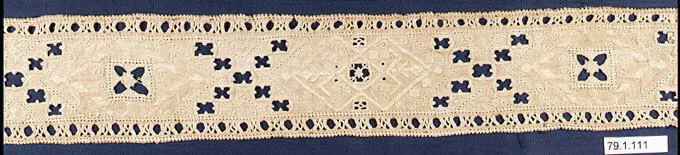
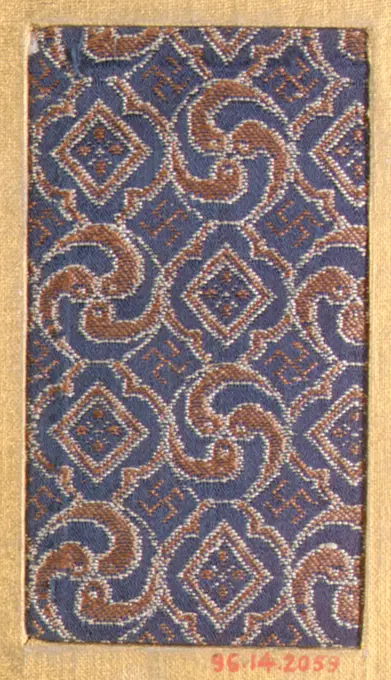
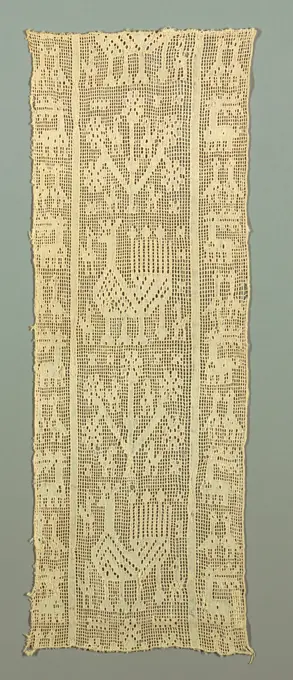
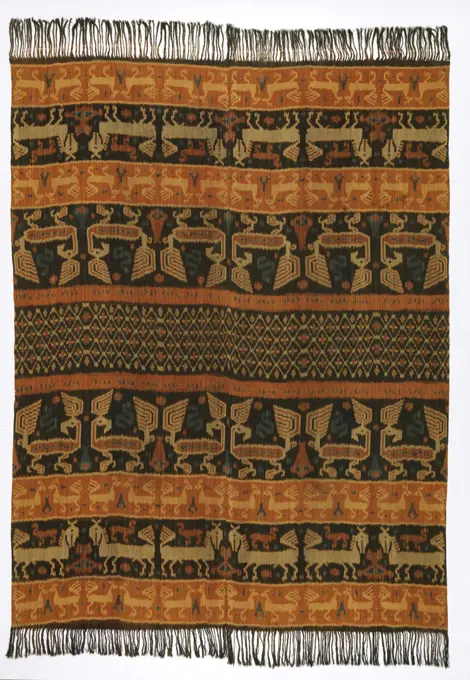
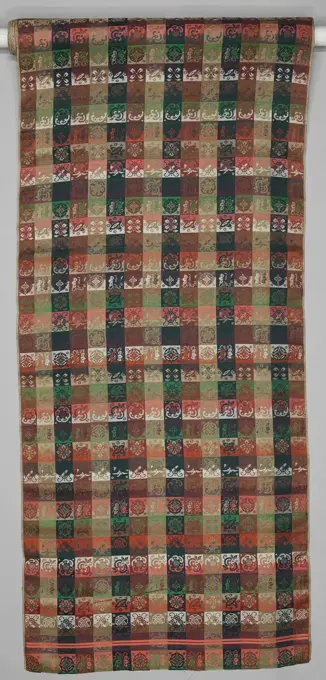
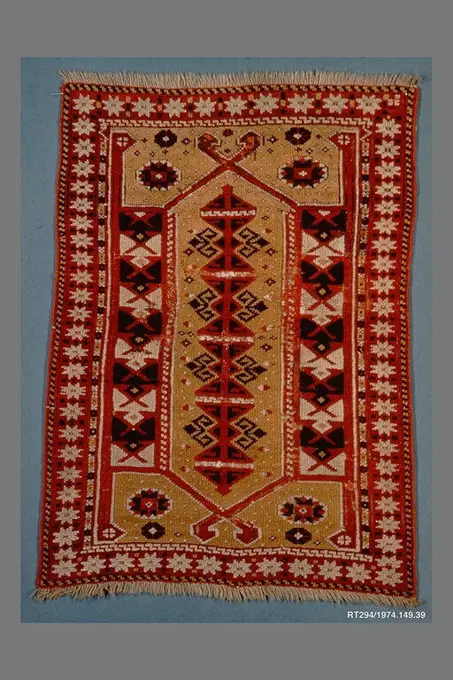
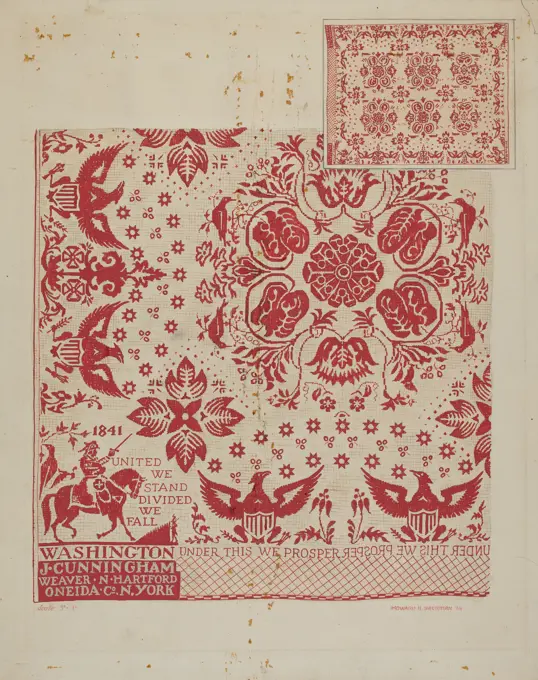
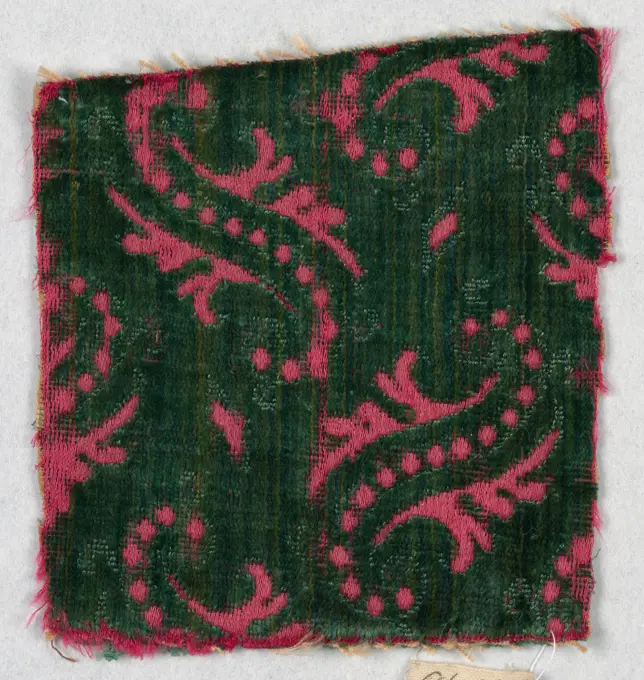
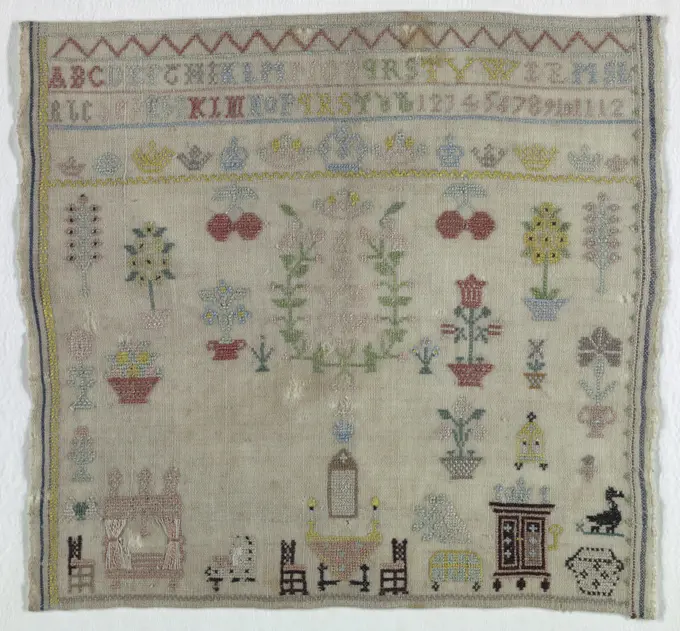
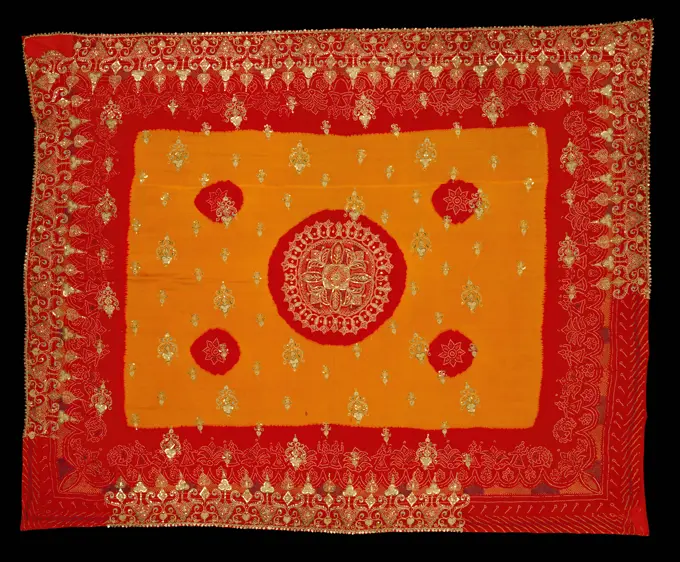
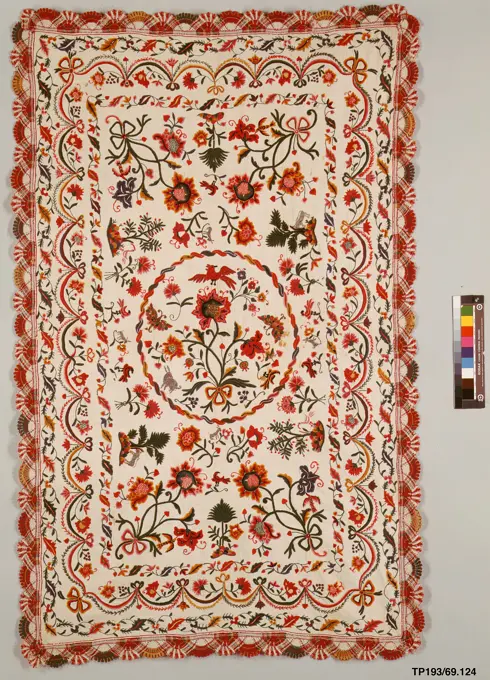
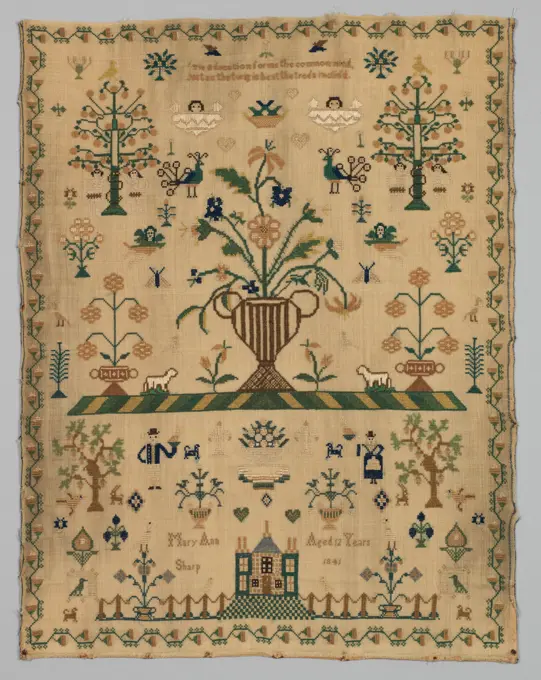
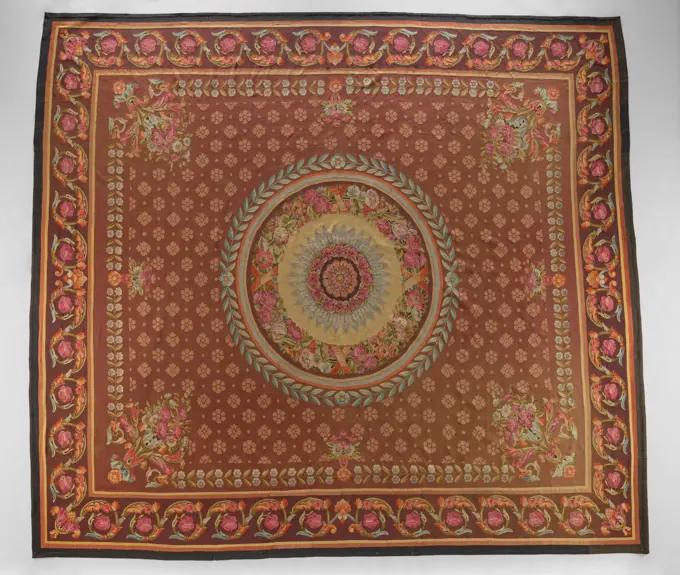
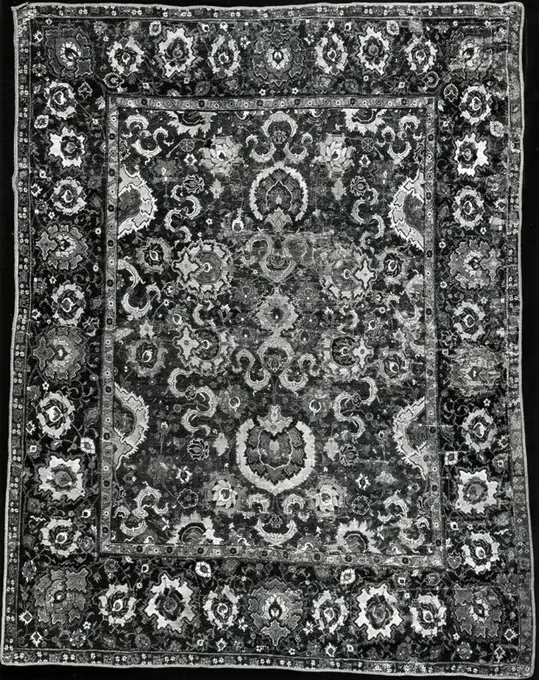
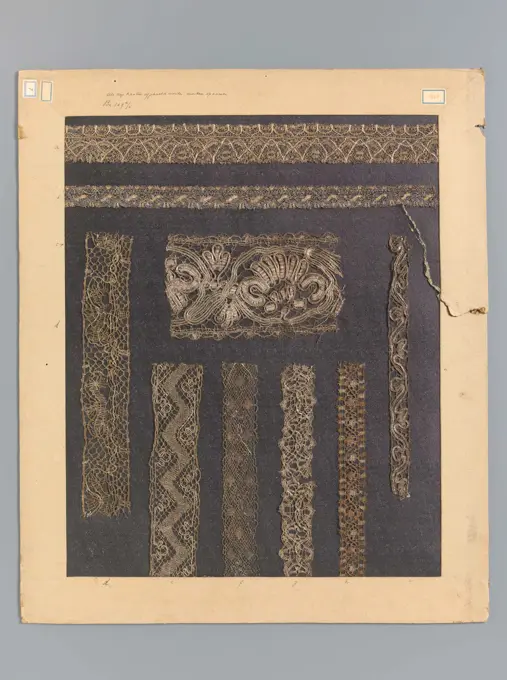
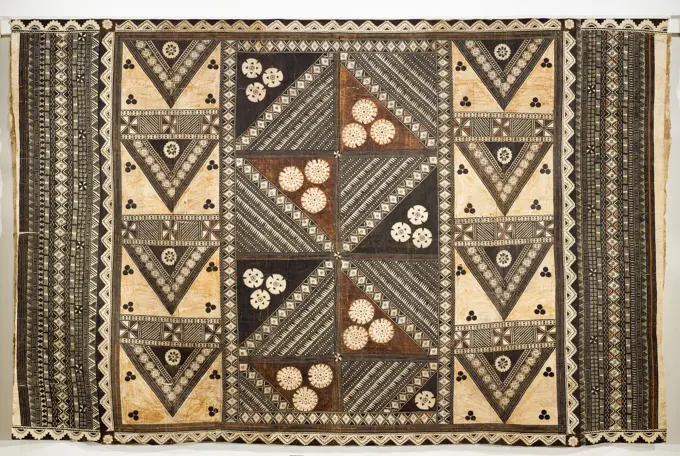
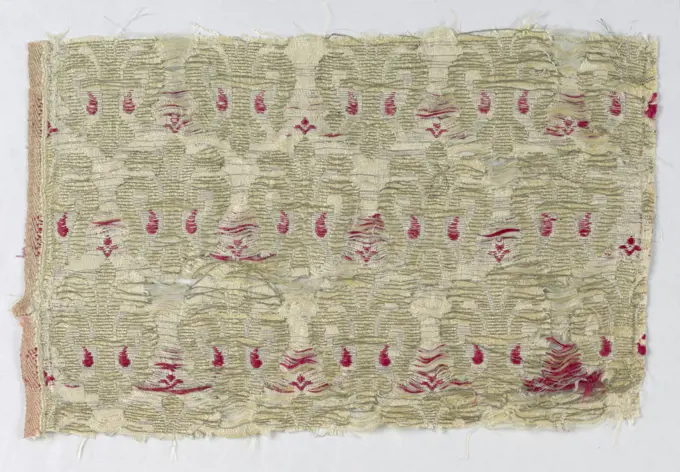
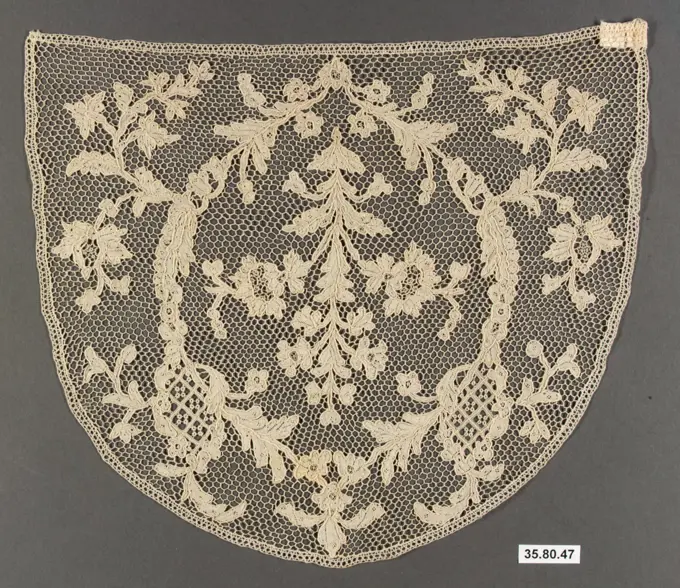
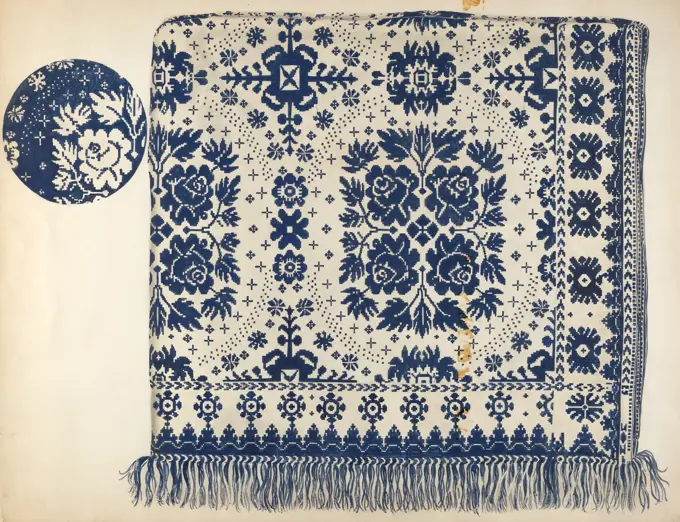
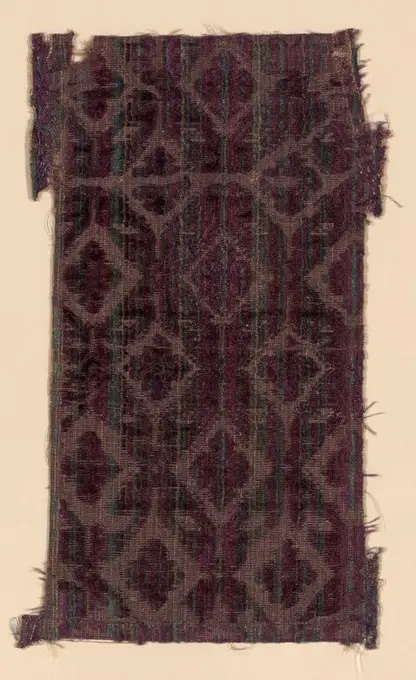
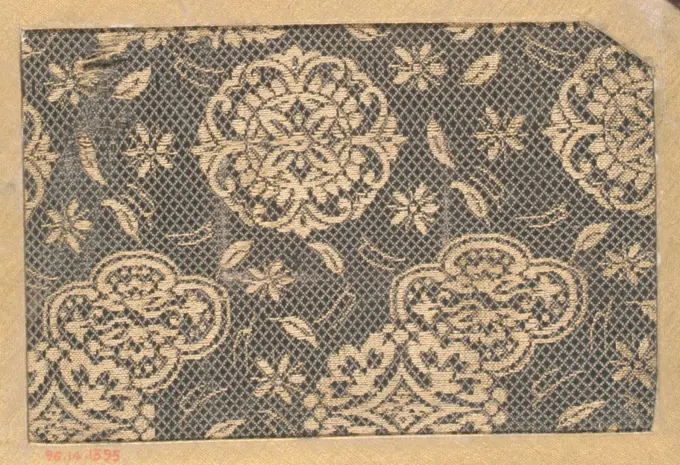
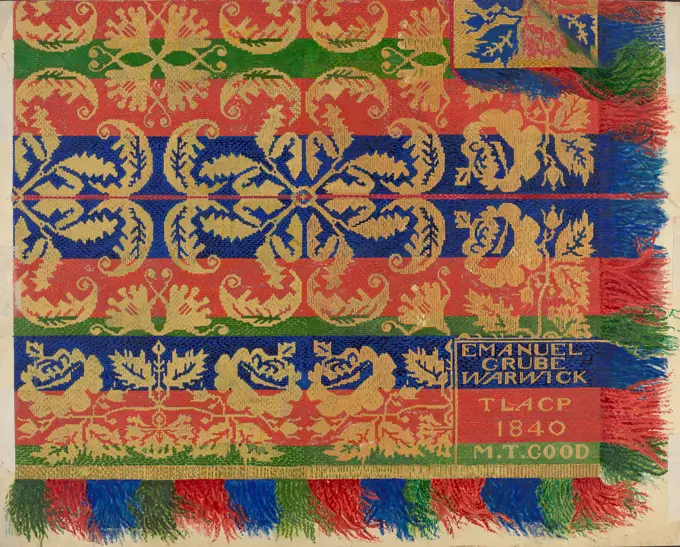
Book jacket -Shawl ca. 1860 Indian. Shawl 127201Apron, 26 1/4 x 30 5/16 in. (66.68 x 76.99 cm) (without fringe), Cotton, ChinaSample, Cheney Brothers, (South Manchester, Connecticut, USA), Medium: silk Technique: plain compound cloth, Reproduction textile with a design of a stiff conventionalized tree with leaves scattered over a dark ground. Adapted from from a medieval Italian textile in the Cooper Union Museum collection., USA, ca. 1915, woven textiles, SampleFragment; silk; Bequest of Richard Cranch Greenleaf in memory of his mother, Adeline Emma Greenleaf; 1962-56-159Cuffs (one of a pair) 18th century French. Cuffs (one of a pair) 214673Tablecloth, Medium: wool Technique: 7/1 satin damask, Concentric arrangement of floral medallion surrounded by elaborate floral borders with formal floral vines in each corner spandrel in rust red and orange-yellow., France, ca. 1830, woven textiles, TableclothPart of a Sari, 1800s. India, 19th century. Brocade (); overall: 50.2 x 109.2 cm (19 3/4 x 43 in.).Fragment of embroidered decorative fabric unknownCarpet late 18th-early 19th century. Carpet. late 18th-early 19th century. Wool (warp, weft and pile); symmetrically knotted pile. Attributed to Turkey, Ladik. Textiles-RugsFragment 17th century Italian. Fragment. Italian. 17th century. Silk, metal thread. Textiles-VelvetsCover 18th century. Cover 445231Darning sampler, Medium: silk embroidery on cotton foundation Technique: embroidered in running and cross stitches on plain weave foundation; hemmed with overcasting over withdrawn element work, Eight darning crosses, central patch 'darned' and two rectangle cuts mended., 1843, embroidery & stitching, Darning samplerLength of wool Calimanco mid-18th century British, Norwich Brightly colored wool textiles such as this length of furnishing fabric were a staple of the British textile industry. So-called "calimancos" were made of long-staple worsted wool, had a natural sheen and were long-wearing. These fabrics were used domestically and imported, especially to North America. Many bed quilts and quilted petticoats with plain calamanco linings have survived from the 18th century, but fewer of the striped patterns still exist today.. Length of wool Calimanco. British, Norwich. mid-18th century. Wool, woven. Textiles-WovenCurtain of velvet from blue, wine red, salmon color and fletschel on a white satin fond. Curtain (right) of scilated velvet of blue, wine red, salmon color and fletschel on a white satin fond. The pattern has large symmetrical acanthus leaves, ending in volutes, and with dotted contours and small carried fields. This curtain belongs to the so-called Rosendaelbed.Coverlet (USA); wool, cottonTextile. Culture: German. Dimensions: Overall: 10 5/8 × 3 7/16 in. (27 × 8.8 cm)Storage (Mat): 13 × 5 1/2 in. (33 × 14 cm). Date: 15th century. Museum: Metropolitan Museum of Art, New York, USA.Strip 16th century Italian. Strip 212317Sampler (England); Embroidered by Mary Strod; silk embroidery, linen foundation; Warp x Weft: 31 x 25 cm (12 3/16 x 9 13/16 in.); Bequest of Mrs. Henry E. Coe; 1941-69-146Square 19th century. Square 445650Piece 18th-19th century Japan. Piece 67771Sampler 1796 Dutch. Sampler 228123Piece 18th-19th century Japan. Piece. Japan. 18th-19th century. Silk. Textiles-WovenRobe, 20th century, L.113-3/4 x W.50-1/4 in., silk, gold threads, China, 20th centuryBand; linen; Bequest of Marian Hague; 1971-50-220Marian Curtis Foster, Applique Quilt, 1935 1942 Applique QuiltSampleMan's wrapper (hinggi), Medium: cotton Technique: tied resist patterning in warp (ikat) on plain weave, Men's wrapper (hinggi) with horizontal bands displaying horse, bird (maybe rooster), and snake or 'naga' motifs. Also features a middle band of diamond lattice. Colored in black, orange, tan, white, and blue. Warp fringe at both ends., Waingapu, Indonesia, 19th century, printed, dyed & painted textiles, Man's wrapper (hinggi)Loan silkedamast with a design made of horizontal jobs made from blocks filled with vegetative and abstract ornament. Job satin room with a design of horizontal jobs made up of blocks, filled with vegetative and abstract ornament in silver gray, brown, pink, blue, red, purple and green against in the same colors but locally contrasting background. Oriental textile.Conciliate belt; Ewan Mikonowicz's workshop (Constantinople; Pasów Factory; Ca 1700-1750); 1. PO. 18th century (1701-00-00-1750-00-00);Contact belts, transmission (provenance)Carpet probably late 18th-early 19th century. Carpet 452591Kontusz sash. unknown, authorPiece 18th-19th century Japan. Piece 66630Quilt, variation of the Blazing Sun” pattern. Maker member of the: Isaac Powers Family, American, active 19th centuryTextile Fragment 17th-18th century. Textile Fragment 454479Howard H Sherman, Handwoven Coverlet, 1936 Handwoven CoverletFragment of a shirt fourth quarter 18th century Russian. Fragment of a shirt 173432Fragment, 17th century; silkBangladesh, Crafts, Textiles, Detail Of Red And Purple Woven Murang Pinon Or Loin Cloth.Cloth; Kain Songket. Cloth with geometric motifs.Sampler, Medium: silk embroidery on linen foundation Technique: embroidered, A E V H 1784 in a wreath, with potted plants, funiture, alphabets and numerals., Netherlands, 1784, embroidery & stitching, SamplerBand (France); linenHead covering, 20th century, 65 3/4 x 79 15/16 in. (167.01 x 203.04 cm), Silk, metallic thread, sequins; tie-dyed, embroidery, printed fabric, India, 20th centuryFragment Made 1575-1600 Italy. Silk, plain weave with supplementary pile warps forming cut voided velvet .Towel border 1800-1850 Russian. Towel border 175587Fragment; silkCarpet 17th century. Carpet. 17th century. Cotton (warp), Wool (weft and pile); symmetrically knotted pile. Attributed to Iran. Textiles-RugsCoverlet ca. 1800 Mexican or Spanish, Catalonia The great coverlets of the seventeenth and eighteenth centuries had their charming provincial reflections. The bulls and donkeys among brilliant flowers and sequined butterflies suggest a provenance in Catalonia or New Spain for this one.. Coverlet 229272Sampler 1841 British. Sampler. British. 1841. Silk on wool canvas. Textiles-EmbroideredHead scarf, c. 1920, 44 1/4 x 27 1/2 in. (112.4 x 69.85 cm), Cotton, metal; needlework, Turkey, 20th centuryFragment (Italy); silkFragment silk tissue. Fragment of green silk with vertical stripes in yellow, white and rose, between which palmets, winger leaves and winding tendrils in white, yellow and light green.Printed Textile. Dated: c. 1941. Dimensions: overall: 36.8 x 33.3 cm (14 1/2 x 13 1/8 in.) Original IAD Object: 36" wide; 36" long. Medium: watercolor, graphite, and pen and ink on paperboard. Museum: National Gallery of Art, Washington DC. Author: Joseph Lubrano.Handkerchief 1825-50 probably French The dense embroidery on this handkerchief is complex and beautifully balanced. The whitework coronet and shield indicate that the object may have been part of a court presentation costume. The coronet motif features nine pearls, which represents the rank of a viscount.. Handkerchief 157748Bed Cover, anonymous, c. 1700 - c. 1720 Sitsen bedspread with an asymmetrical pattern on a white stock, of thin terres with flowers and leaves. A large weapon of Amsterdam is depicted in the middle and a smaller weapon in the corners. On a yellow plinth is a crowned oval shield with a pole and three crosses, held by two climbing lions. Eastern textile. Coromandelkust cotton (textile). chintz printing / chintz Sitsen bedspread with an asymmetrical pattern on a white stock, of thin terres with flowers and leaves. A large weapon of Amsterdam is depicted in the middle and a smaller weapon in the corners. On a yellow plinth is a crowned oval shield with a pole and three crosses, held by two climbing lions. Eastern textile. Coromandelkust cotton (textile). chintz printing / chintzArras. unknown, authorBand 16th century Italian. Band 228869Sampler (USA); Embroidered by Polley Thomas (American, b. 1784); silk embroidery on linen foundationFragment of the fabric;  16th century (1501-00-00-1600-00-00);Strzałecki, Antoni Jan (1844-1934) - collection, gift (provenance), fabricsCovering for a pillow;  beginning of the 18th century (1701-00-00-1710-00-00);Méyet, Leopold (1850-1912) - collection, gift (provenance), coats of arms, kurdybans, flowers, abundance horns (ornament)Trimming, Medium: silk Technique: cut supplementary warp pile on fancy ground (velvet), Red trimming fragment in a design of a serpentine stem with leaves., France, 19th century, trimmings, TrimmingCarpet. India, possibly Lahore or Abhar. Date: 1675-1700. Dimensions: 188.5 x 147.8 cm (74 1/4 x 58 1/2 in.). Cotton, wool, silk, and gilt-metal-strip-wrapped silk, plain weave with supplementary brocading wefts and supplementary wrapping wefts forming cut pile through a technique known as "Sehna (Persian) knots;" pieced. Origin: India. Museum: The Chicago Art Institute, Chicago, USA.Skirt, 19 x 22 1/8 in. (48.26 x 56.2 cm), Cotton; dyed, IndonesiaFragment; silk, metallicJohn Wilkes, Commemorative Coverlet, c 1939 Commemorative CoverletTowel border 1800-1850 Russian. Towel border 175588Nine strips of silver side and gold edge on cardboard. Cardboard on which nine strips are fixed. It concerns silver side and gold edge, whereby the silver and gold-colored wires have been used in combination or not. On the cardboard standing next to the strips from top to bottom (left) the letters A to D and from left to right (below) the letters D to I written.Tabula, anonymous, c. 300 - c. 499 Tabula in linen chain and woolen impact. On brown purple soil a pattern in flying wire technique of fine braids. Around a geometrically decorated edge of rectangles in thin, linen wire. Egypt Ketting an element: Linen (material). Entry: Wool tapestry Tabula in linen chain and woolen impact. On brown purple soil a pattern in flying wire technique of fine braids. Around a geometrically decorated edge of rectangles in thin, linen wire. Egypt Ketting an element: Linen (material). Entry: Wool tapestryWedding Tapa (Gatu Vakaviti). Republic of the Fiji Islands, 20th century. Costumes; ceremonial or ritual dress. Inner bark of the paper mulberry plantFragment, medium: silk, metallic Technique: woven, Fleur-de-lys shapes in silver with red accents. Both selvages present. badly worn and faded., 17th century, woven textiles, FragmentCap crown 18th century French. Cap crown. French. 18th century. Needle lace, point dAlençon. Textiles-LacesBorder 17th century Italian, possibly Sicily. Border 212266Eva Wilson, Coverlet, c 1937 CoverletCoverlet Made 1820-1830 Pennsylvania. Cotton and wool, plain weave with supplementary wefts in composite point twill weave (multiple shaft, 4 tie-down); two loom widths joined .Sampler (England); Embroidered by Martha Savage; silk embroidery on wool foundation; Overall: 43.2 x 31.8 cm (17 x 12 1/2 in.); Bequest of Rosalie Coe, from the collection inherited from her mother, Eva Johnston Coe; 1974-42-18Fragment. Italy. Date: 1575-1600. Dimensions: 22.2 x 13 cm (8 3/4 x 5 1/8 in.)Repeat: 7 x 9.6 cm (2 3/4 x 3 3/4 in.). Silk, plain weave with supplementary pile warps forming cut and uncut voided velvet. Origin: Italy. Museum: The Chicago Art Institute, Chicago, USA.Fragment, Medium: silk Technique: cut and uncut pile in plain weave foundation (velvet), Chevron pattern in blue cut and uncut pile on yellowish-tan ground., 17th century, woven textiles, FragmentPiece 18th-19th century Japan. Piece. Japan. 18th-19th century. Silk. Textiles-WovenHandkerchief 1880 French. Handkerchief 122460CHAICE VEIL unknownembroidery on cloth, gujarat, india Copyright: xAshaxAdatia/xDinodiaxPhotoxAlbert Eyth, Coverlet, c 1936 CoverletTextile Fragment 5th-6th century. Textile Fragment 443721Rug with tree, flower or leaf decor, c. 1800 Dress with tree, flower or leaf decor. Nomaden rug Midfield: A brick -red field has a cross voice gel over the full height to which cypress trees or leaves that have been crushed up and down; One of gray and two of blue. Three pairs of smaller dates in blue. This stem is flanked by large flower or peer motifs in corn yellow, with bending tops. There are stiff branches within this. The outlets are thick and respectively in white and dark blue. Furthermore, litter on the field of octagon, among others. Rand: Only an inner zoom present, of blue with multicolored S-s-s-sen in the form of the number three. Eastern small Asia wool. goat hair. angora wool Dress with tree, flower or leaf decor. Nomaden rug Midfield: A brick -red field has a cross voice gel over the full height to which cypress trees or leaves that have been crushed up and down; One of gray and two of blue. Three pairs of smaller dates in blue. This stem is flanked by large flower orNew Year Picture of paired vases early 20th century Unidentified artist(s). New Year Picture of paired vases. Unidentified artist(s) Chinese, early 20th century. China. early 20th century. Polychrome woodblock print; ink and color on paper. Republic period (191249). PrintsLamrequin of velvet velvet. Lice line for the sky of a four-poster bed (top right outside). The lambrequin is made of velvet velvet, wine red, salmon color and fletschel on a white satin fond. The pattern has large symmetrical acanthus leaves, ending in volutes, and with dotted contours and small carried fields. This label belongs to the so-called Rosendaelbed.Carpet 17th century. Carpet 447530Fragment, Medium: wool Technique: woven compound, complementary wefts, 1&2 twill, Fragment patterned with geometrical and rosette motifs enclosed in octagons. The intersection between octagons is filled by a rosette., Egypt, 6th century, woven textiles, FragmentPall, embroidered, white unknownTablecloth (France); woolPoncho 1864-80 Mexico. Poncho 110700Rank badge, Medium: silk and metallic embroidery on silk foundation Technique: embroidered with split, stem, and couching stitches on satin weave, Rank badge for a civil official of the fifth rank. Embroidered silk and metallic yarns showing a silver pheasant facing a sun disk, on a ground of clouds and surrounded by auspicious symbols. Diagonal lines at bottom and meandering key border., China, mid- 19th century, embroidery & stitching, Rank badgeCarpet Fragment; wool on linen and cottonCoverlet 1842 Leonard Metz. Coverlet 665553Piece 18th century Japan. Piece. Japan. 18th century. Silk / Compound weave. Edo period (1615-1868). Textiles-WovenBand Fragment with Figural and Geometric Decoration Coptic. Band Fragment with Figural and Geometric Decoration, 5th-7th century C.E. Wool, 5 1/2 x 6 in. (14 x 15.2 cm).   Egyptian, Classical, Ancient Near Eastern Art 5th-7th century C.E.Sampler Made 1770 England. Linen, plain weave; embroidered with silk in darning stitch .Shawl, Anonymous, 1900 - 1949 Shawl with bird and floral motifs and Chinese Scriptures. Soemba cotton (textile) Shawl with bird and floral motifs and Chinese Scriptures. Soemba cotton (textile)Leaf with flowers and fruits, anonymous, 1700 - 1850 brocade paper Leaf with stylized flowers and fruits. With label with inscription: 'J.J. Frytenius / de Ebrietate ... Habetur. " Used as a cover.  paper. paint (coating) relief printing ornament derived from plant formsDress of lace border border with four -lobbish rosette in square grid, anonymous, c. 1925 - c. 1936  Dress of natural-colored lace-up work: Reticella in open sewing technology. Square model. There is a four -lobbish rosette in a 4x4 squares grid. Along the edges of the rug runs a narrow edge of work with extended threads. The outer edge is finished with feston stitches placed close to each other. Venice linen (material)