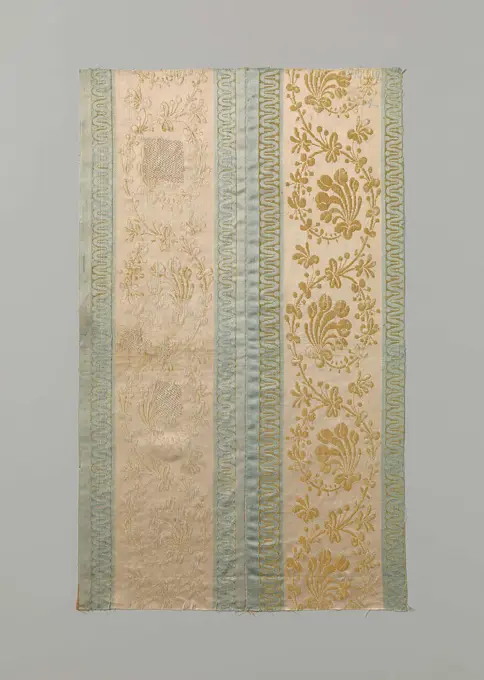
Textile Fragments with Floral Designs

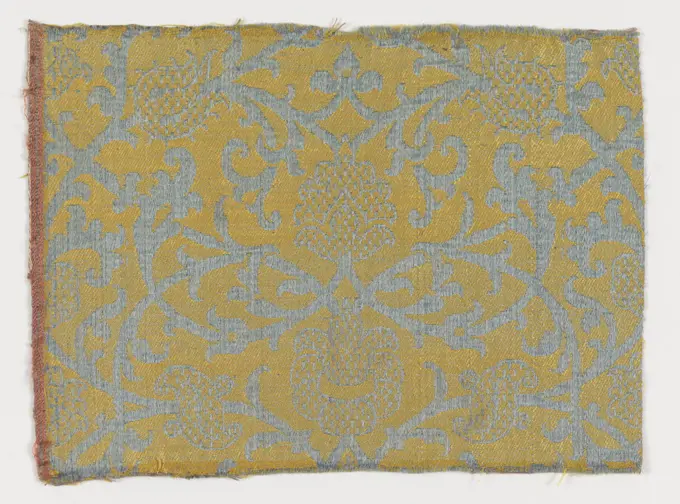
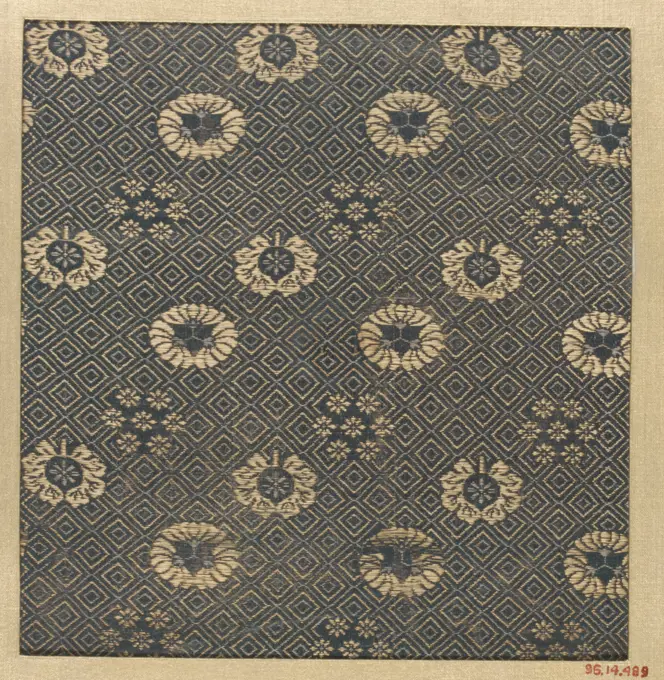
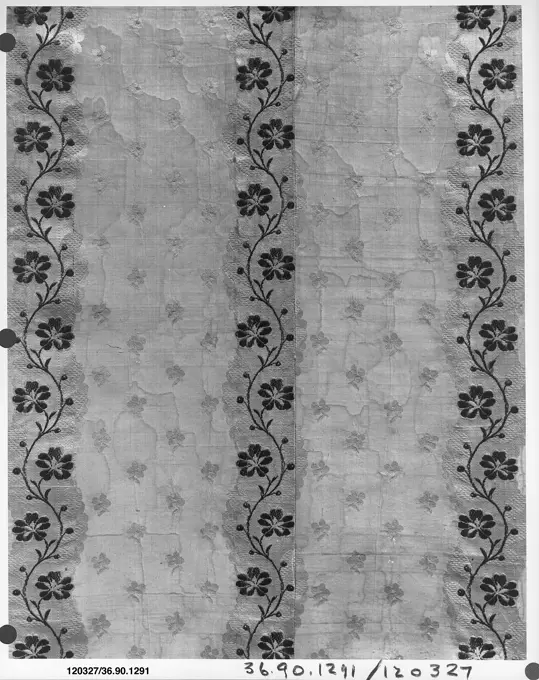
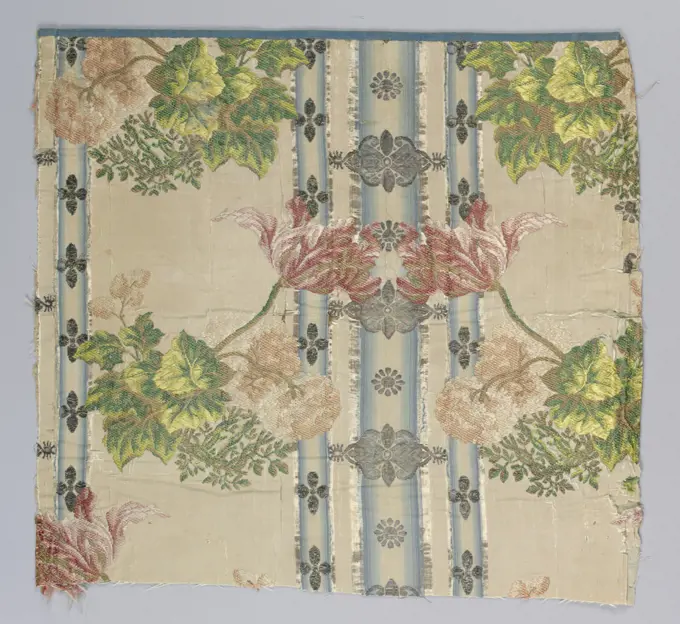
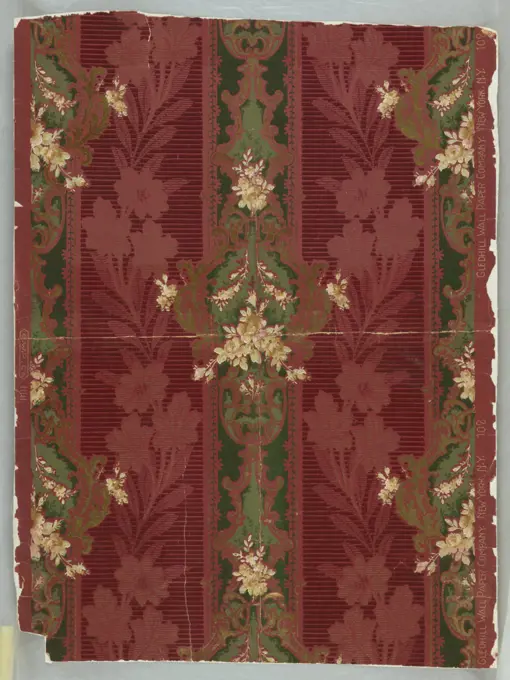
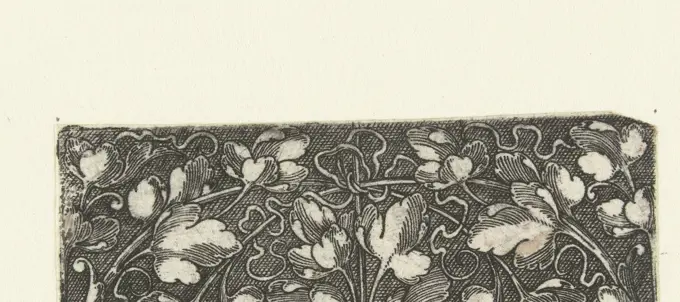
Elegant textile fragments featuring intricate floral patterns woven in silk, showcasing rich colors and detailed designs in historical styles.
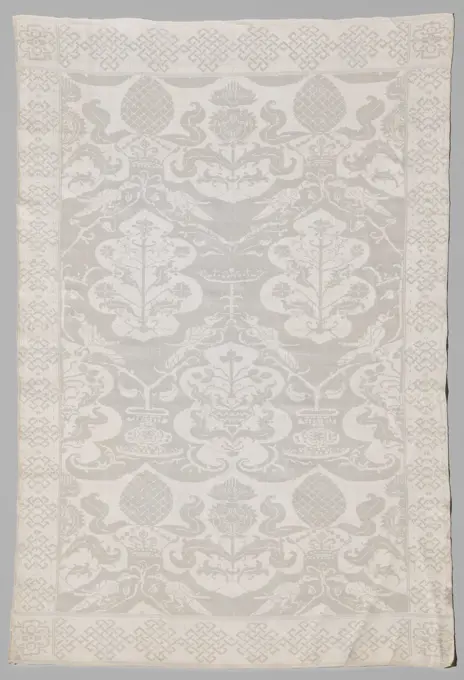
Napkin with potentially English emblems, anonymous, c. 1600 Linnamast napkin with potentially English emblems. Midfield: The symmetrical pattern placed twice next to each other, the side axes are amid a false symmetry, shows three scenes from bottom to top: 1 a pineapple and a thistle standing on a pointed arch, which carries two bold birds on a branch and is covered by a crown . 2 Half oak leaf that shows three clover leaves above Distelblad and is covered by a crown, stands on either side of a Tudorrhose. A tree above that, on which two tired and two birds of birds have been seated. The tree splits and forms a six -sided field, on which an oak leaf with a tree. 3 again scene 1. Standing and lying edges: closed by a double or triple line and consist of consecutive windows of grille, the so-called 'broken stick' motif. Corners: Tudorroos. Southern NetherlandsHaarlem linen (material) damask Linnamast napkin with potentially English emblems. Midfield: The symmetrical pattern placed twice
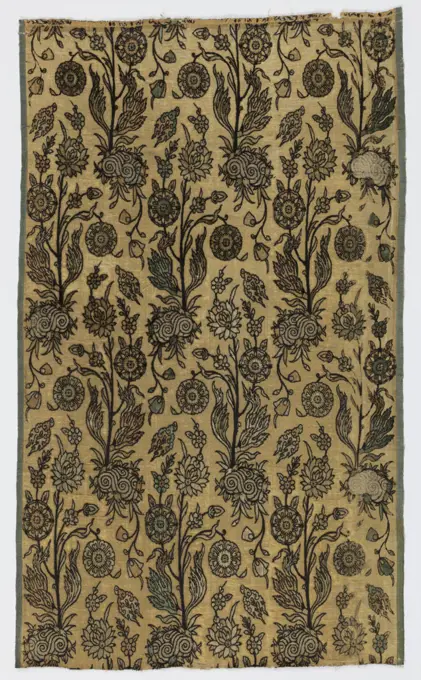
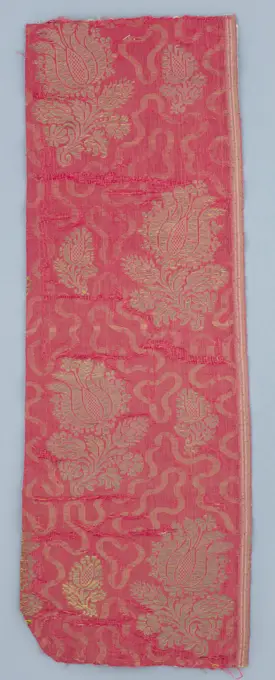
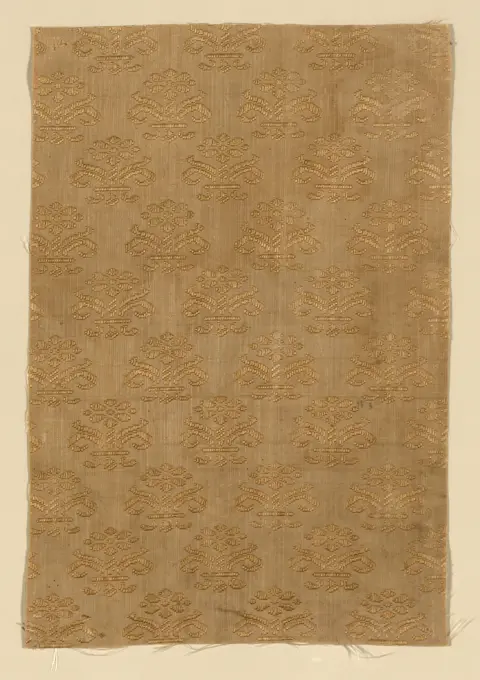
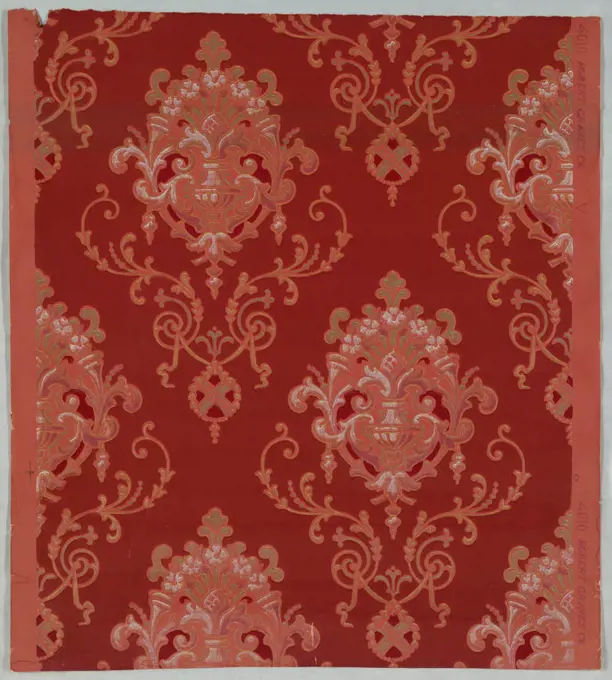
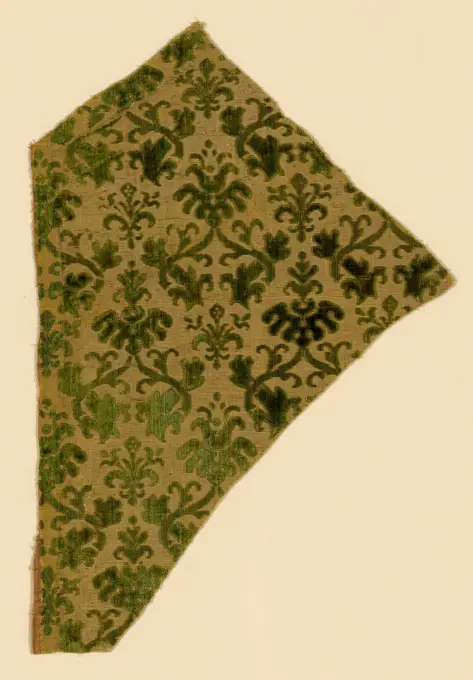
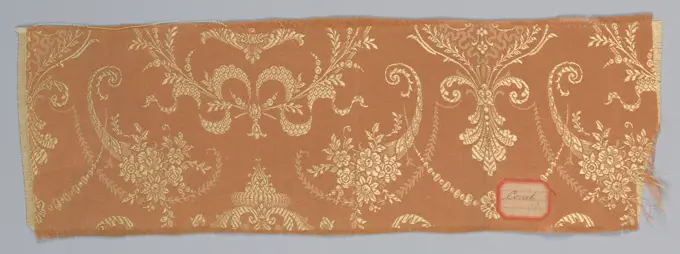
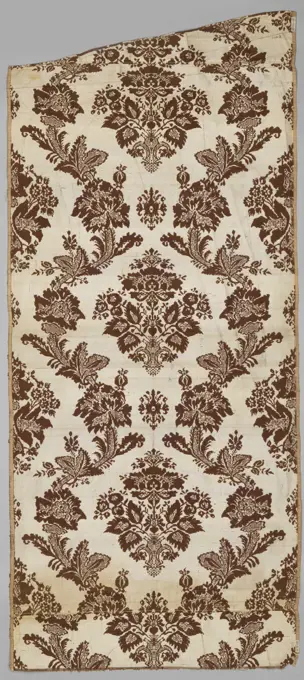
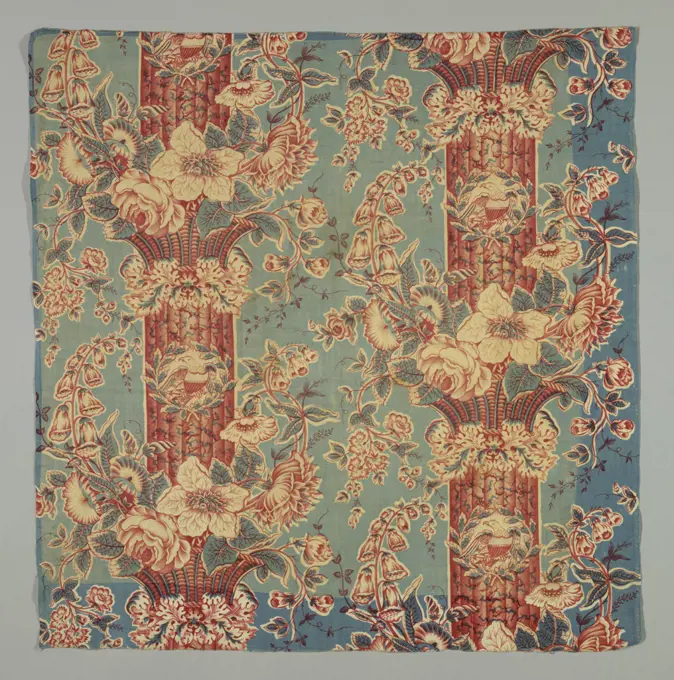
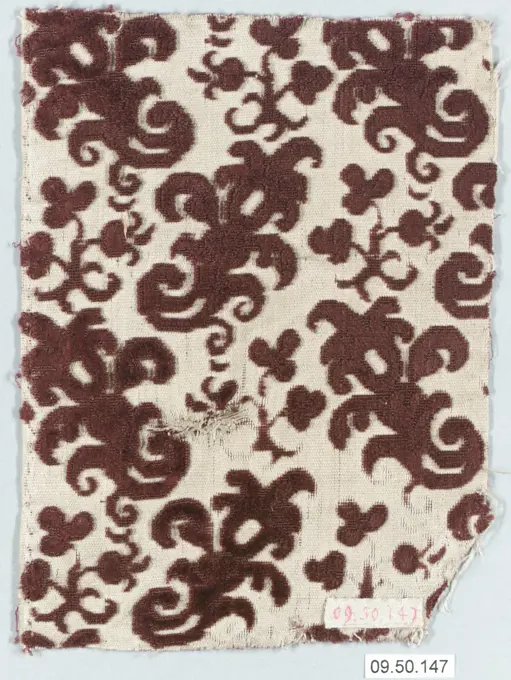
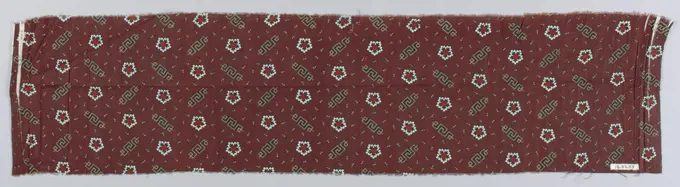
Peri, Owen Jones, (British, 1809-1874), Warner, Sillet & Ramm, 1871 - 1874, Medium: silk Technique: two interconnected structures: 41 satin and 12 twill (lampas) Label: silk lampas, Woven silk with a highly stylized design of palmettes and floral crosses with curving vines in blue, red and gold on a black ground. Red has faded into rust on the front., London, England, 1870-71, woven textiles, Textile, TextileFragment of a silk carpet, anonymous, c. 1625 - c. 1650 Fragment of a carpet, a so-called polent carpet, silk and brochure gold and silver wire. Easy repetitive lility pattern on an original red background. Edge of stylized lilies. Isfahan cotton (textile). silk. silver thread Fragment of a carpet, a so-called polent carpet, silk and brochure gold and silver wire. Easy repetitive lility pattern on an original red background. Edge of stylized lilies. Isfahan cotton (textile). silk. silver threadFragment, Medium: silk Technique: 7&1 satin with floats of complementary wefts, Polychrome plants, animals and birds on dark blue background. One selvage present., 17th century, woven textiles, FragmentFragment, Medium: silk, metallic thread (silver foil on a silk core) Technique: cut and voided supplementary warp pile in 5-harness satin foundation with supplementary weft (velvet), Panel with diagonal repeats of large flowering plants with smaller flowers on a tan satin ground. Black outlines and black steams with leaves and blossoms in color combinations of orange, green, grey, and tan. Two wide blue-green selvedges with dark blue and red pencil stripe at outer edge., Iran, 17th century, woven textiles, FragmentFragment of silk fabric  colourful pattern made of floral twig unknownFragment, Medium: silk Technique: cut and uncut supplementary warp pile (velvet) in a twill foundation, Fragment of red cut and uncut pile in a cream-colored ground in a pattern of stylized plant forms and embellished lozenges., Italy, 16th-17th century, woven textiles, FragmentNapkin with potentially English emblems, anonymous, c. 1600 Linnamast napkin with potentially English emblems. Midfield: The symmetrical pattern placed twice next to each other, the side axes are amid a false symmetry, shows three scenes from bottom to top: 1 a pineapple and a thistle standing on a pointed arch, which carries two bold birds on a branch and is covered by a crown . 2 Half oak leaf that shows three clover leaves above Distelblad and is covered by a crown, stands on either side of a Tudorrhose. A tree above that, on which two tired and two birds of birds have been seated. The tree splits and forms a six -sided field, on which an oak leaf with a tree. 3 again scene 1. Standing and lying edges: closed by a double or triple line and consist of consecutive windows of grille, the so-called 'broken stick' motif. Corners: Tudorroos. Southern NetherlandsHaarlem linen (material) damask Linnamast napkin with potentially English emblems. Midfield: The symmetrical pattern placed twiceFragments, medium: silk, metallic Technique: woven, Symmetrical floral pattern in silver and white., 18th century, woven textiles, FragmentsTextile; cotton; L x W: 171 x 78 cm (5 ft. 7 5/16 in. x 30 11/16 in.)Textile, Medium: cotton Technique: plain weave foundation. Colors added by block and brush., Non-directional pattern of small flowers surrounded by a meandering vine on a black background., France, late 18th century, printed, dyed & painted textiles, TextileFragment 16th-17th century Italian or French. Fragment. Italian or French. 16th-17th century. Silk. Textiles-WovenPortion of a Chasuble Made 1450-1500 Italy. Silk and gilt-metal-strip-wrapped silk, warp-float faced 4 1 satin weave with supplementary brocading wefts and supplementary pile warps forming cut voided velvet .Fragment of silk fabric  flower throws in the rows of the water unknownPiece 18th century European. Piece. European. 18th century. Silk. Textiles-WovenFrieze, F. E. James Co., New York, New York, Machine-printed paper, liquid mica, C-scrolls and abstract floral bouquet. Printed in white and greenish-gray on tan ground with brown stick bouquets. Two borders printed across the width., New York, New York, USA, 1905-1915, Wallcoverings, FriezeFour Lengths of Woven Silk Made 1760-1769 France. Silk fabrics patterned on a loom formed the basis of much of menís and womenís formal dress in the 18th century. Colors and patterns changed regularly; this design of small bouquets linked by ribbons was most popular in the mid-1760s. The color pink in all its shades was a perennial favorite of European women throughout the 18th century.. Silk, plain weave foundation with complementary patterning wefts and supplementary brocading wefts of silk and flat silver metal strips .Textile (India); cotton; Warp x Weft: 46 x 42 cm (18 1/8 x 16 9/16 in.) Repeat: 25.4 x 25.4 cm (10 x 10 in.)Piece 1780-90 Chinese, for French market. Piece 223213Strip 16th-17th century Italian Punto in arialiterally, "stitches in the air"is one of the earliest styles of needle lace, which is itself developed from cutwork of primarily geometric design. When lacemakers transitioned to using a foundation of threads laid out according to a pattern drawn on parchment, they were able to incorporate more fluid lines and curves into their designs.. Strip 220831Fragment; silkFragment; silk, metallic threadFragment Made 1650-1700 Italy. Linen and wool, plain weave with supplementary weft .Textile, Medium: silk Technique: 5-harness satin damask, Faded rust red damask with vertically symmetrical pattern offset rows of plants with leaves forming a loose grid enclosing rayed blossom-like medallion. Alternating rows have plant variations., Italy or Spain, 17th century, woven textiles, TextileFragment Made 1650-1700 Italy. Plain compound cloth .Sidewall, Robert Graves Co., New York, New York, Machine-printed, Scrollwork, heraldic shields, vases of flowers printed on mica/metallic pigments, gold, green, copper over reserved deep peach ground with maroon background color., New York, USA, 1900, Wallcoverings, SidewallTextile, Medium: cotton Technique: block printed, with blue and yellow applied by brush, on plain weave, Straight repeat of a slender floral wine with small flowers., France, 18th century, printed, dyed & painted textiles, TextilePiece 16th century Italian. Piece. Italian. 16th century. Silk. Textiles-VelvetsFragment, Medium: slik Technique: 5-harness satin damask, Green silk with a diaper ground and horizontal rows of flowers and fruit on curving stems with tiny leaves. Alternate horizontal rows turn left and right., Italy, 18th century, woven textiles, FragmentFragment with Sempervivum tectorum motif. Culture: Italian, Milan. Dimensions: Overall (.a only, confirmed): 15 3/4 x 23 in. (40 x 58.4 cm)Overall (.b only, confirmed): 16 3/4 x 23 in. (42.5 x 58.4 cm)Overall (Previously assembed dimensions, ): 32 1/4 x 23 in. (81.9 x 58.4 cm)Framed: 40 1/2 x 29 3/4 in. (102.9 x 75.6 cm). Date: 1475-1525.The stylized floral design of this textile is delineated by fine lines of green silk velvet; the rest of the surface is covered with gold metal-wrapped threads, lying flat in the background and forming loops in the plant forms. The large flowering plant in the center and the vine that surrounds it can be identified as Sempervivum tectorum (now commonly known as "hens and chicks"), a species of hardy succulent that has the ability to thrive in extreme mountainous conditions. Recent research has revealed that this plant motif was associated with the Sforza family of Milan starting in the mid-fifteenth century. Variations on this pattern were also proTextile, Medium: cotton Technique: block printed on plain weave, Vertical curving vines with lilacs framing roses on a natural white background., France, late 18th century, printed, dyed & painted textiles, TextileTextile Fragment, 1774-1793. France, late 18th century, Period of Louis XVI (1774-1793). Droguets Lisèrés; silk; overall: 13.7 x 19.4 cm (5 3/8 x 7 5/8 in.).Textile Fragment. Italy, 14th century. Textiles; fragments. Silk satin with linen supplementary weft patterning bound in twill (brocatelle)Sample (USA); Manufactured by Orinoka Mills (United States); 1989-80-74Fragment, Medium: silk Technique: cut and uncut velvet with satin ground, Mounted and sewn together with 1944-11-1., 1700-1710, woven textiles, FragmentTextile, Medium: cotton Technique: roller printed on plain weave, Slightly more than one repeat of a flowering branch with rose and passion flower on a fine net background. Small band stitched to the top to complete the repeat., Central Europe, 1820-29, printed, dyed & painted textiles, TextilePiece 18th-19th century Japan. Piece 66256Textile (England); cottonTwo pieces of multicolor silk tissue assembled. Two fragments of a silk tissue. Two swinging crossing tires in red and white on a green ribbed soil. Branches with yellow-green leaves and red flowers. On either side three edges, of which a wide and a narrow in various shades green. Note: Selling; 0.3 cm Skin binding (2 edging).Piece 1750-60 Italian. Piece 227591Textile, Medium: cotton Technique: printed by engraved roller and block printed; partially glazed, Ground printed in grey in an elaborate foliage pattern, probably by 'molette'. Over-printed in pattern of rose clusters in shades of brownish-red, lighter red; white areas in flowers glazed. Remains of a label, giving colors., 1851-63, printed, dyed & painted textiles, TextileCoverlet Fragment (USA); cotton, wool; 1960-153-7-hTextile, Medium: cotton Technique: printed by engraved roller and block printed, 1851-63, printed, dyed & painted textiles, TextileBorder (USA); 30 x 9 cm (11 13/16 x 3 9/16 in.); 1973-17-1a,2Piece 1770-85 French. Piece 223270Textile (England); Designed by Arthur Wilcock; Manufactured by Newman, Smith & Newman; cotton; Warp x Weft: 60 x 76 cm (23 5/8 x 29 15/16 in.)Fragment, Medium: silk on silk Technique: embroidered on crêpe foundation, Fragment of white silk crêpe with embroidery of white silk in an allover floral design., China, 19th century, embroidery & stitching, FragmentTextile, Medium: silk Technique: plain compound cloth, Brilliant yellow ground woven in cherry red with symmetrical design of alternating rows of upstanding floral shrubs surmounted by pairs of opposed birds. Wide yellow cloth selvedges. Lined; striped silk fringe., Florence, Italy, early 17th century, woven textiles, TextileTextile Fragment, 1774-1793. France, 18th century, Period of Louis XVI (1774-1793). Velvet (cut and voided); silk; overall: 5.4 x 8.6 cm (2 1/8 x 3 3/8 in.).Textile; cottonTextile; cottonCeiling Paper (USA); Manufactured by Maxwell & Co., S.A. (United States); machine-printed paper; 87 x 49 cm (34 1/4 x 19 5/16 in.)Piece 18th-19th century Japan. Piece 66131Fragment Made 1625-1650 Italy. cisele voided cloth velvet .Samples (USA); Manufactured by Orinoka Mills (United States); Warp x Weft (a): 15 × 44.5 cm (5 7/8 × 17 1/2 in.) Warp x Weft (b): 11.5 × 23.5 cm (4 1/2 × 9 1/4 in.)Baan silk tissue with damask effect. Loan silk tissue (brocatel) In flat binding with damask effect. Dessin: palm-shaped rubber flowers, interspersed by a flower rosette framed by flower and leaf refrences, with geometric fillings in white and brown. The tissue consists of a large piece and one sewn from the same side on the underside. The Dessin is derived from French silk tissues from the beginning of the 18th century. Stamped number: 23012. Label with printed text: French and CO inc.; 23012; Brown and White Brocade; 17 + 8 inches.Sample (USA); Manufactured by Orinoka Mills (United States); 1989-80-57Piece 1700-1710 possibly Italian. Piece 224532Sidewall, Maxwell & Co., S.A., Chicago, Illinois, USA, Machine-printed paper, Floral medallions, connected by foliate swags. Printed in green, burgundy, white and metallic gold on red ground., New York and Chicago, USA, 1905-1915, Wallcoverings, SidewallTextile, African Marigold; Made by Morris & Co. (United Kingdom); England; cottonLap of embroidered side, anonymous, 1725 - 1775 Fragment multicolored silk tissue. A white soil has a pattern of multicolored flower branches. France silk Fragment multicolored silk tissue. A white soil has a pattern of multicolored flower branches. France silkPiece 18th-19th century Japan. Piece 66187Fragment; silkTextile, Medium: Technique: 4 & 1 satin damask; warp float face of the satin as background, Length of blue damask has dense scrolls and flowers that create medallion shapes, enclosing alternate flower bouquets., England, mid- 19th century, woven textiles, TextileTextile Length. Italy, 16th century. Textiles; textile lengths. Silk cut and voided velvet on silk satin ground faced with metallic thread bound in twillFragment, Medium: silk Technique: cut supplementary warp pile (velvet) in a woven foundation, Small-patterned or 'miniature' velvet of cut pile in white with minute roses in pink, red and green. Center of each rose in voided ground cover with short floats of secondary white silk weft., France, 1750-1800, woven textiles, FragmentTextile, Medium: cotton Technique: roller and block printed, glazed, Pillar print of two vertical fluted columns with baskets of flowers used as capitals. Appearing on the column, between the baskets, is a wreath enclosing an American eagle with a shield flag., England, ca. 1850, printed, dyed & painted textiles, TextileFragment (Spain); silk; a) Warp x Weft: 252 x 28 cm (8 ft. 3 3/16 in. x 11 in.) b) Warp x Weft: 164 x 29 cm (5 ft. 4 9/16 in. x 11 7/16 in.) c) Warp x Weft: 162 x 29 cm (5 ft. 3 3/4 in. x 11 7/16 in.) d) Warp x Weft: 190 x 29 cm (6 ft. 2 13/16 in. x 11 7/16 in.); 1961-82-3-a/hFragment, Medium: silk, linen Technique: two interconnected structures (brocatelle), Blue and yellow brocatelle fragment with a scrolling pattern with details in diagonal hatch marks., Spain, 17th century, woven textiles, FragmentPiece 18th-19th century Japan. Piece 66213Fragment; silk, metallic thread; Bequest of Richard Cranch Greenleaf in memory of his mother, Adeline Emma Greenleaf; 1962-56-107-aSample (USA); Manufactured by Orinoka Mills (United States); 1989-80-56Table cover. Culture: Italian. Dimensions: L. 104 x W. 72 inches (264.2 x 182.9 cm). Date: 16th century. Museum: Metropolitan Museum of Art, New York, USA.Textile (France); Manufactured by Schwartz-Huguenin; cottonPiece 18th-19th century Japan. Piece 67004Fragment, Medium: silk, metal thread Techniqiue: damask weave with discontinuous supplementary weft patterning (brocade), White silk damask ground; horizontal rows of lotus blossoms, with blue and silver brocaded center alternating with silver and red palmette., France, 18th century, woven textiles, FragmentFragment; silkPiece 16th century Italian. Piece 215548Textile, Medium: cotton Technique: roller printed on plain weave, Dark reddish brown ground with an allover design of flowers, Greek frets and small dots in red, white, light brown and black., USA, 1870-80, printed, dyed & painted textiles, TextilePiece ca. 1770 French. Piece 224375Cap streamer, Medium: linen Technique: bobbin lace, Brussels style, Belgium, 18th century, lace, Cap streamerFragment 17th century Italian. Fragment 230667Piece mid-18th century French. Piece 223679Tegelveld of fourteen tiles, Anonymous, 1725 - 1825 Tile field of 14 tiles (7 x 2) with a purple painted ornament of stars, flowers, leaves and servetwork. Netherlands earthenware. tin glaze majolica Tile field of 14 tiles (7 x 2) with a purple painted ornament of stars, flowers, leaves and servetwork. Netherlands earthenware. tin glaze majolicaFragment, Medium: warp: silk, Weft: silk, metallic Technique: woven, Floral design on white ground with vertical blue stripes., France, 18th century, woven textiles, FragmentRitual Textile (PuaKumbu)Fragment multicolored brochure side. Fragment multicolor silk tissue. The beige ground has a multicolored pattern of a vase-like ornament from which leaves and flowers come, connected by winding flower branches and flower and leaf refines. Lined with silk.Fragment; silkSidewall, Gledhill Wall Paper Co., New York, New York, founded 1900, Machine-printed, Alternating vertical stripes, the wider of which has serpentine ascending flowering branches. The other, narrower stripe is set with rococo scrollwork medallions in gold, and sprays of white flowers. Printed in gold, dark red, greens and white on red ground., New York, USA, 1890-95, Wallcoverings, SidewallTextile; Manufactured by Schwartz-Huguenin; cottonLeaf vines, sprouting from the middle and from both ends of Frisian, 1500 - 1600 print The tenders are bound together in the middle of ribbons. Shaded background. One of 11 magazines. Germany (possibly) paper engravingTextile (France); printedFragment. France or Italy. Date: 1601-1700. Dimensions: 73 x 54.8 cm (28 3/4 x 21 1/2 in.). Silk, gold and silver gilt strips wound around silk fiber core, plain weave with supplementary patterning and brocading weft tied in twill interlacing polychrome. Origin: Italy. Museum: The Chicago Art Institute, Chicago, USA.Mulberry Leaves with Ivy 19th century Japan. Mulberry Leaves with Ivy 70046Floral printed cotton ca. 1780 British. Floral printed cotton. British. ca. 1780. Cotton. Textiles-PrintedDress of application edge with symmetrical reflection game in sloping opposing corners. Dress of natural application side, climbing side with coniferous lace ornamental stitches - Brussels Duchesse - applicated on machine tulle. Square model. The dress is finished along all edges with a slight sloping edge, along which a repeating pattern marks openwork cartouches that are alternately small and slightly larger in size. A fine flower rank increasingly exprceeds from the smallest that bends over the larger cartouche. From two diagonically opposite corners, a symmetrical and fine lines of wavy and curly tendrils developed, with a large variety of flowers and fine leaves. This pattern turns out from the corners towards the middle, and along the sides almost until the other corner. On remaining midfield is a scattering pattern of strongly curved flower branches.Panel Made 1715-1745 Italy. Silk, cut, uncut, voided velvet against satin weave foundation .Ritual Textile (PuaKumbu)L.C. Orrell & Co., Book No. 2, L. C. Orrell & Co., Machine-printed paper, Samples include matched sets of sidewall, frieze and ceiling papers., Chicago, Illinois, USA, 1906, Wallcoverings, Sample book, Sample bookFragment multicolor silk satin. Two knitted fragments of white silk tissue with blue tires, between whale from yellow silk.Piece 18th century Japan. Piece 71210