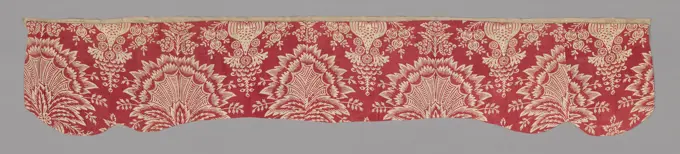
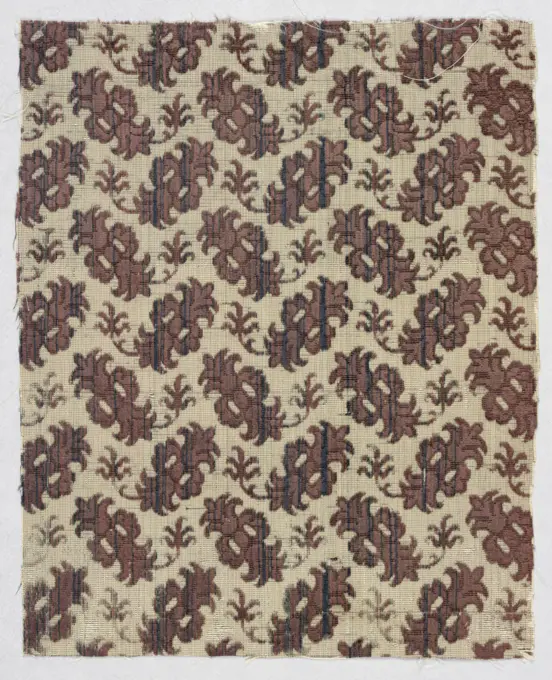
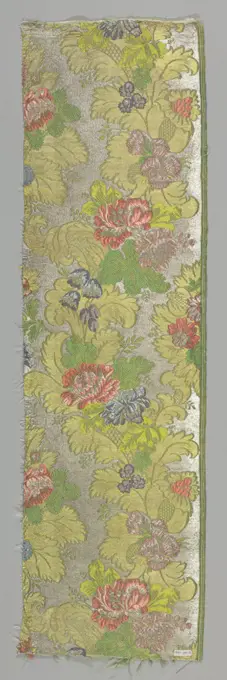
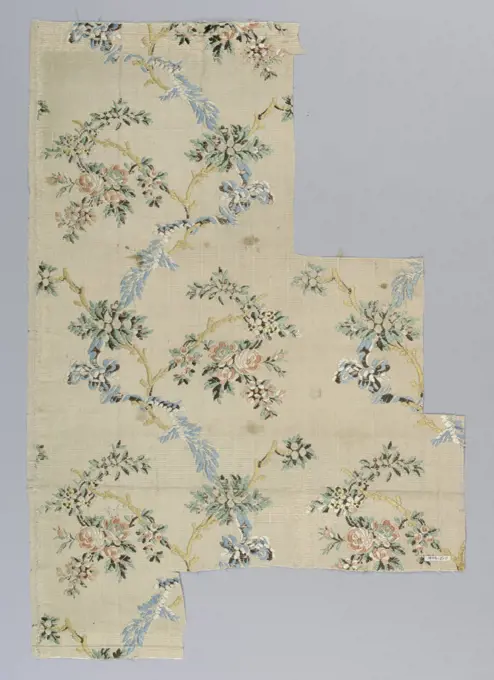
Textile Fragments with Floral Designs

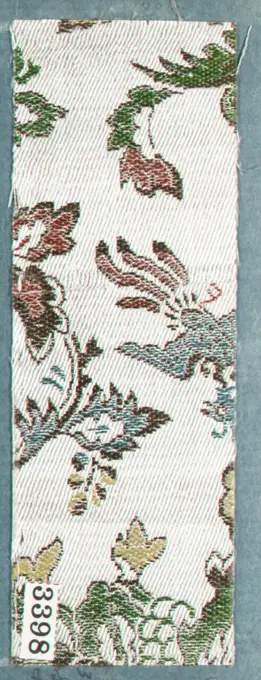
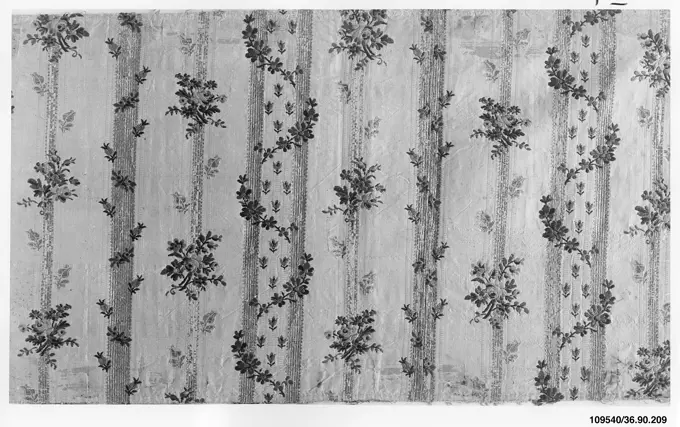
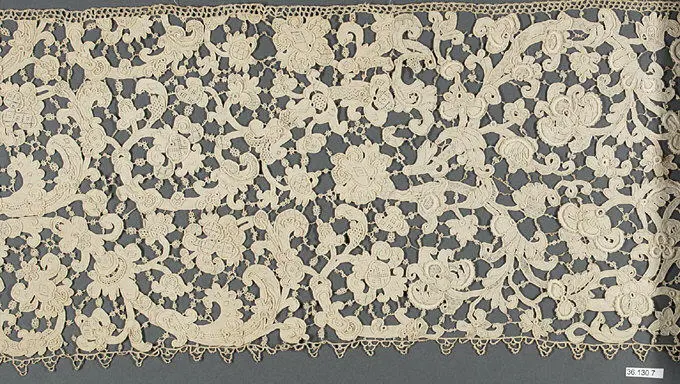
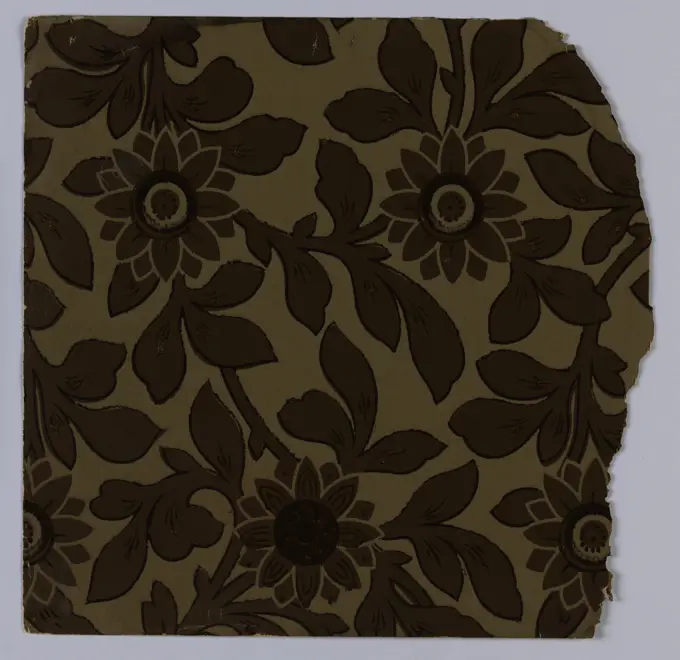
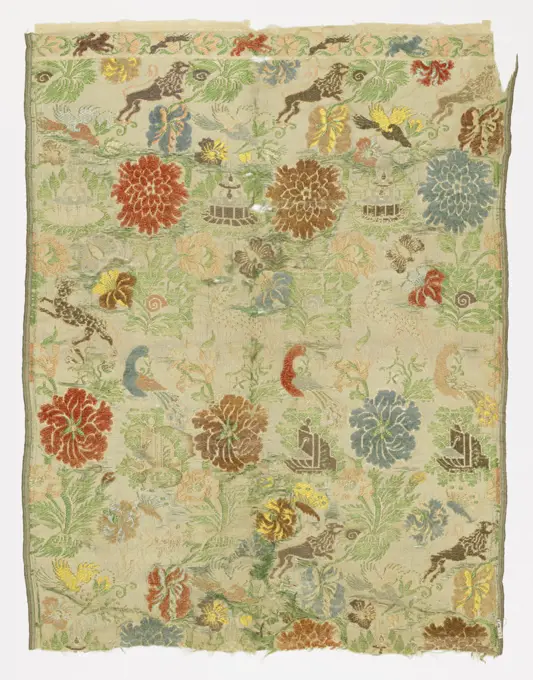
Elegant textile fragments featuring intricate floral patterns woven in silk, showcasing rich colors and detailed designs in historical styles.
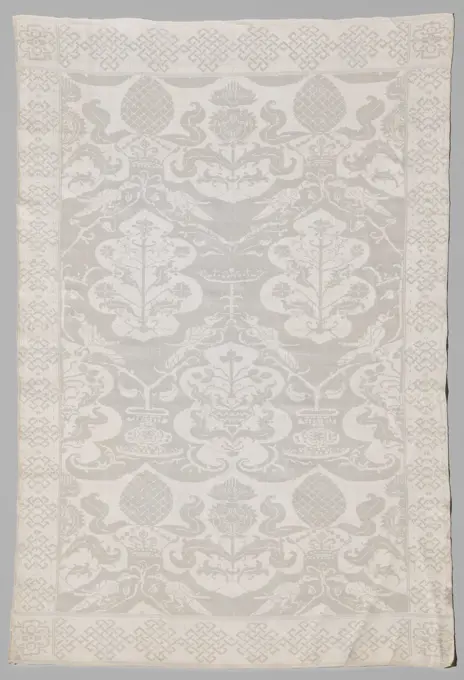
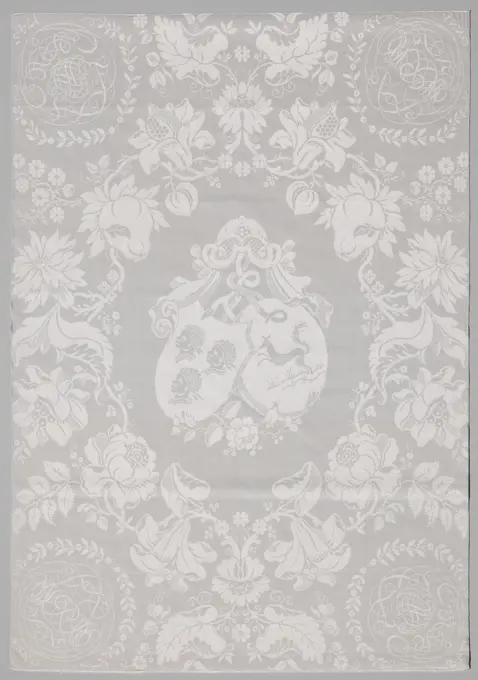
Napkin with potentially English emblems, anonymous, c. 1600 Linnamast napkin with potentially English emblems. Midfield: The symmetrical pattern placed twice next to each other, the side axes are amid a false symmetry, shows three scenes from bottom to top: 1 a pineapple and a thistle standing on a pointed arch, which carries two bold birds on a branch and is covered by a crown . 2 Half oak leaf that shows three clover leaves above Distelblad and is covered by a crown, stands on either side of a Tudorrhose. A tree above that, on which two tired and two birds of birds have been seated. The tree splits and forms a six -sided field, on which an oak leaf with a tree. 3 again scene 1. Standing and lying edges: closed by a double or triple line and consist of consecutive windows of grille, the so-called 'broken stick' motif. Corners: Tudorroos. Southern NetherlandsHaarlem linen (material) damask Linnamast napkin with potentially English emblems. Midfield: The symmetrical pattern placed twice
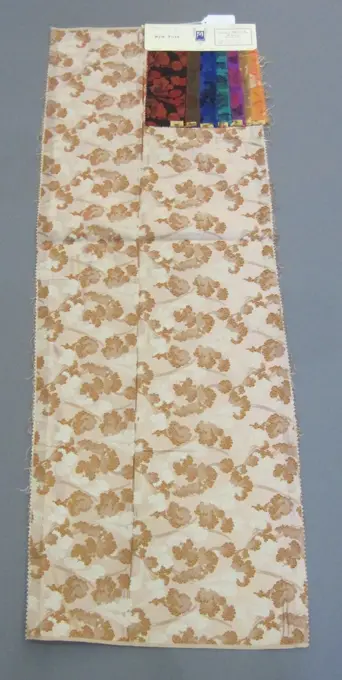
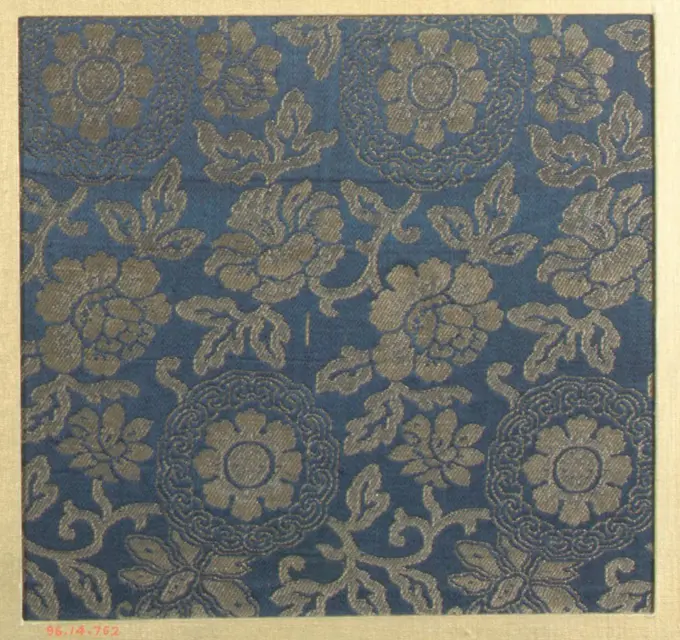
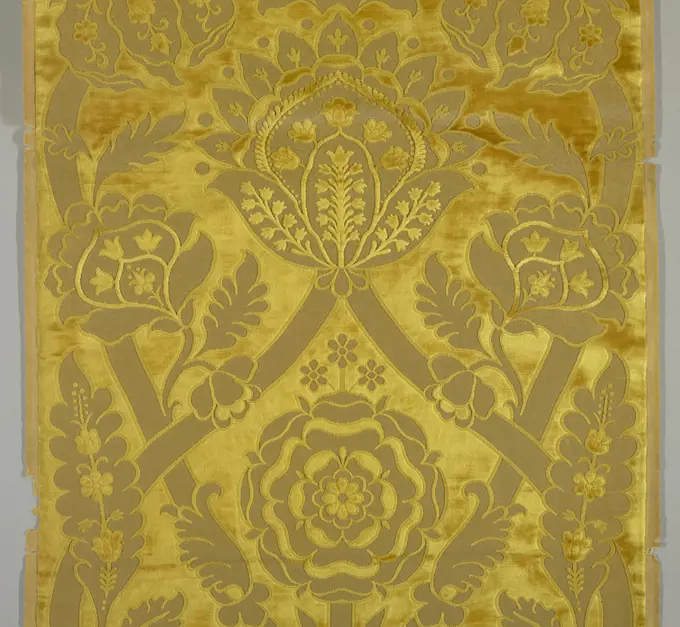
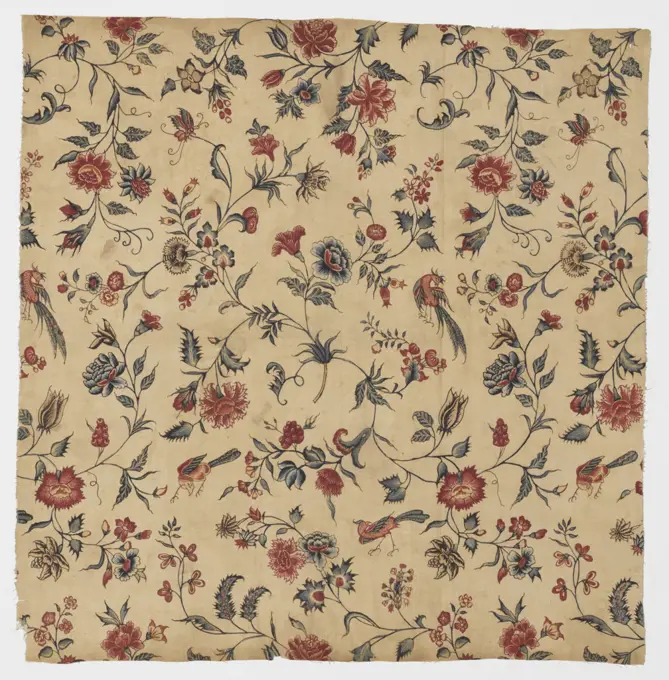
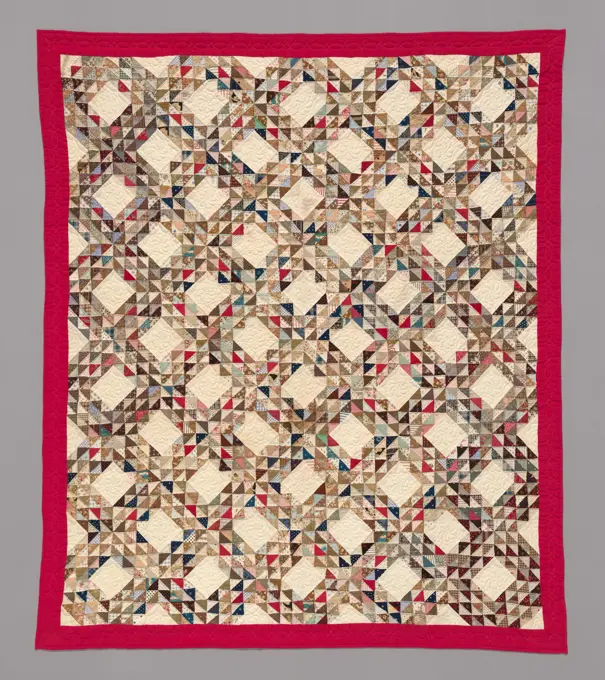
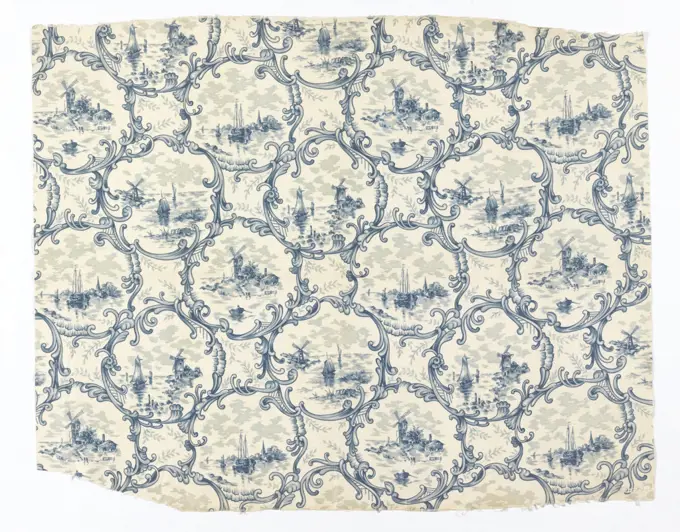
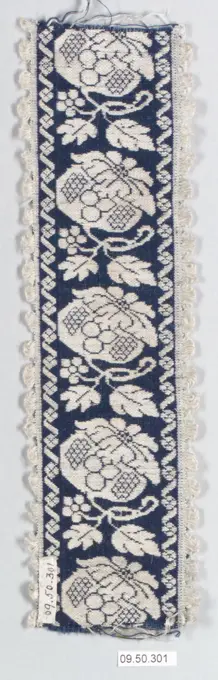
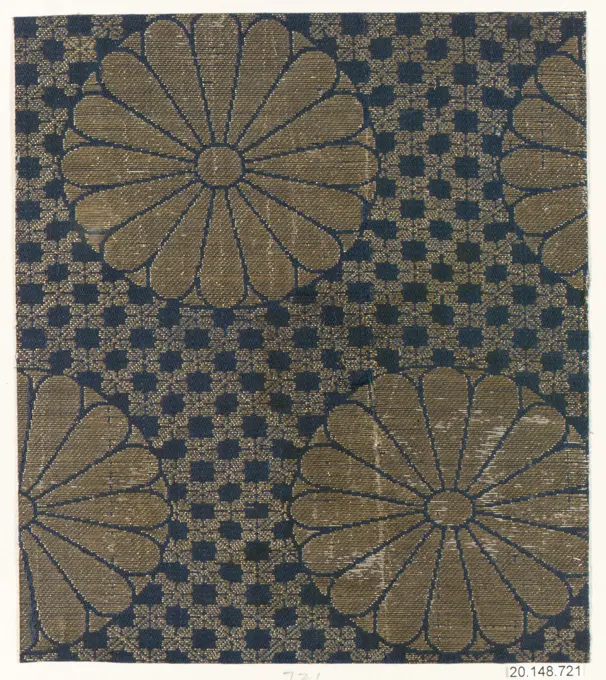
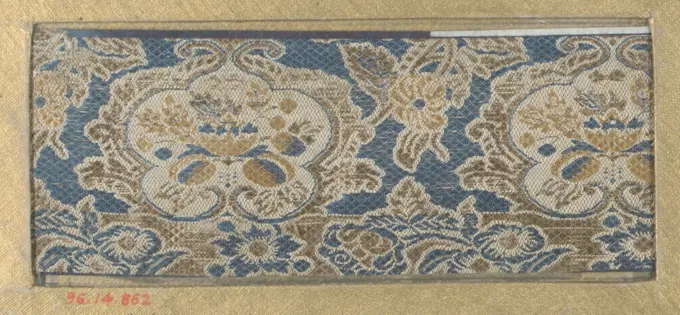
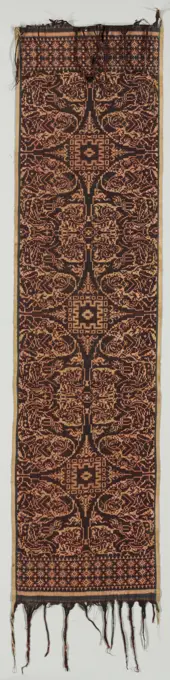
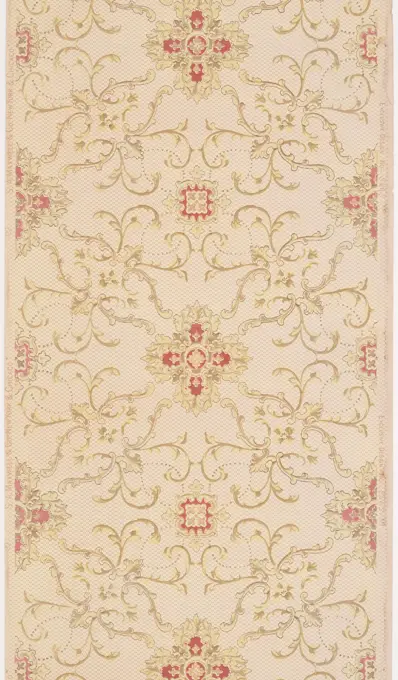
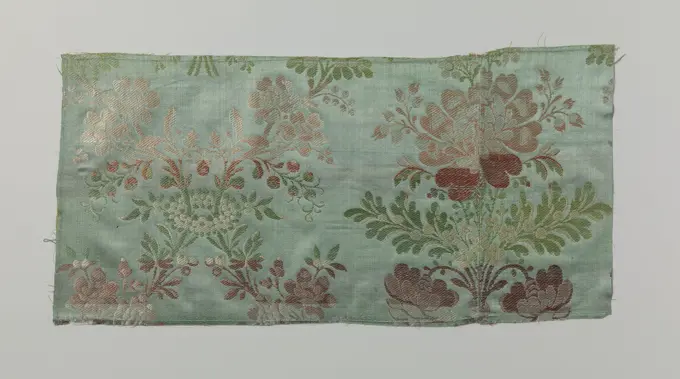
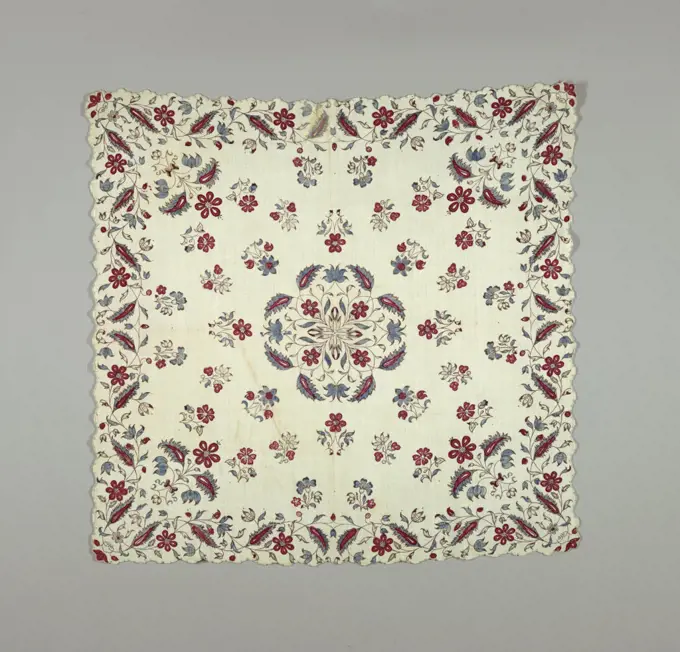
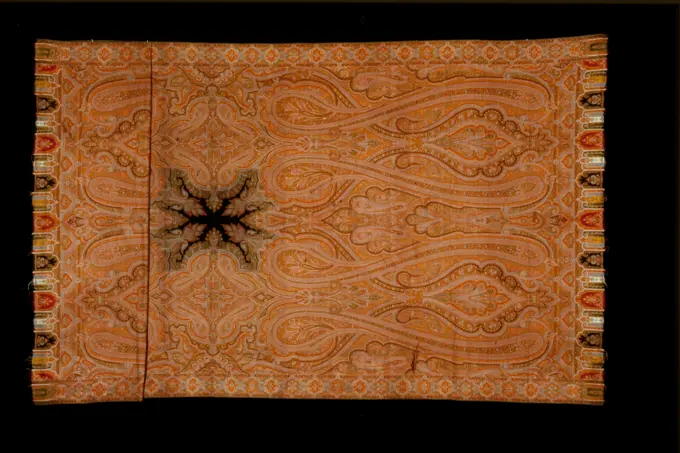
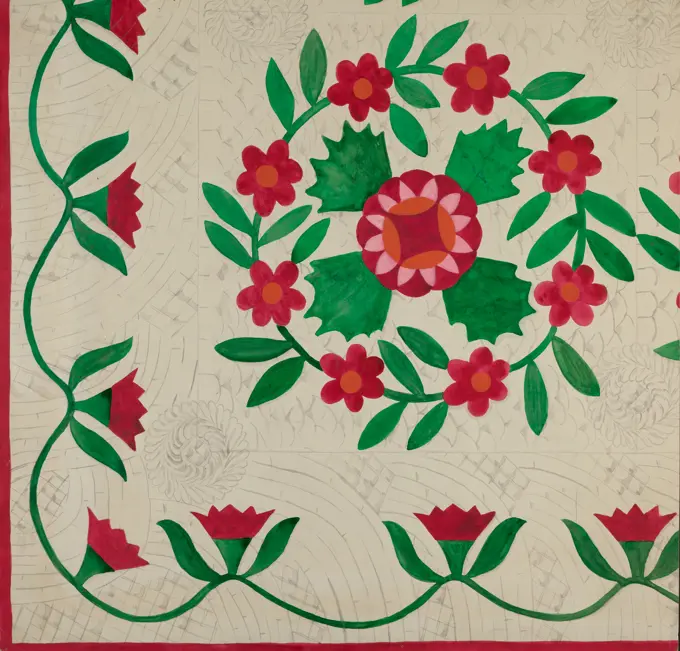
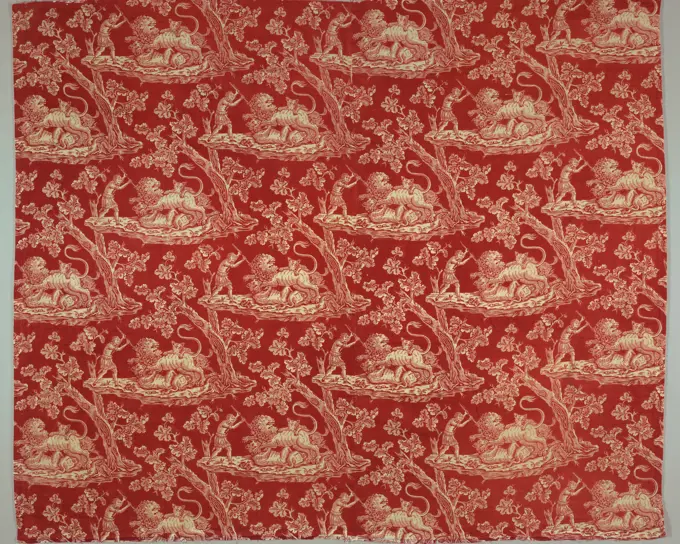
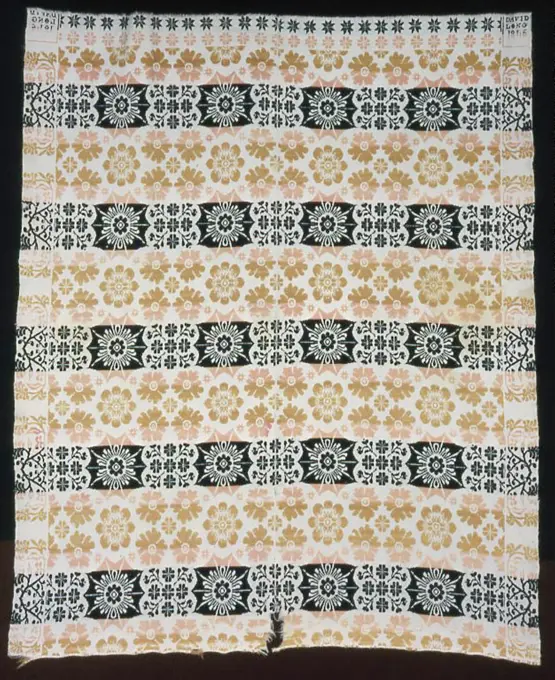
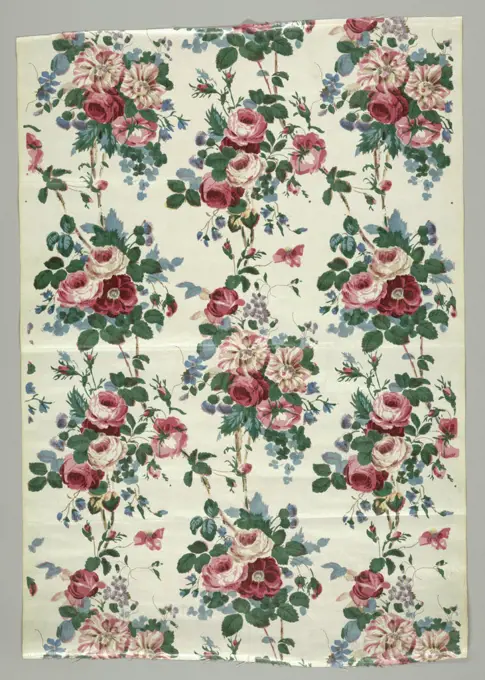
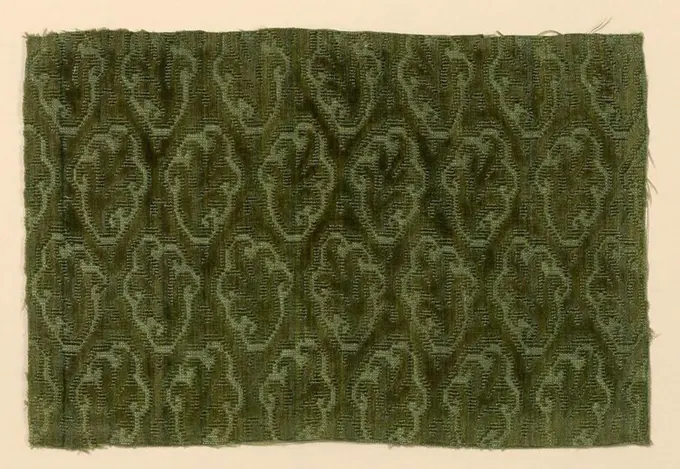
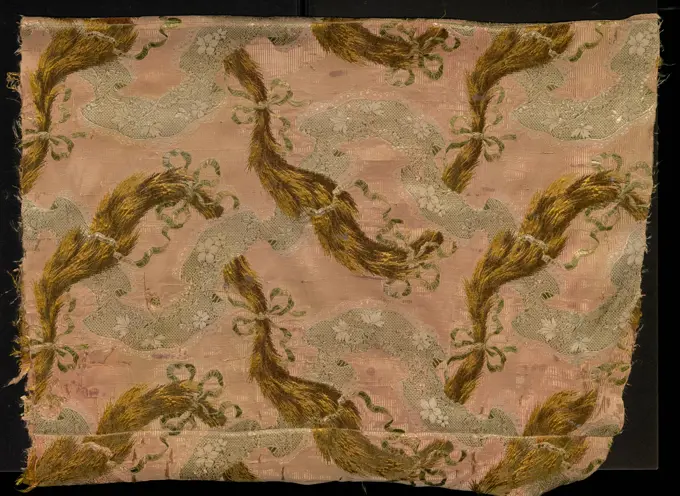
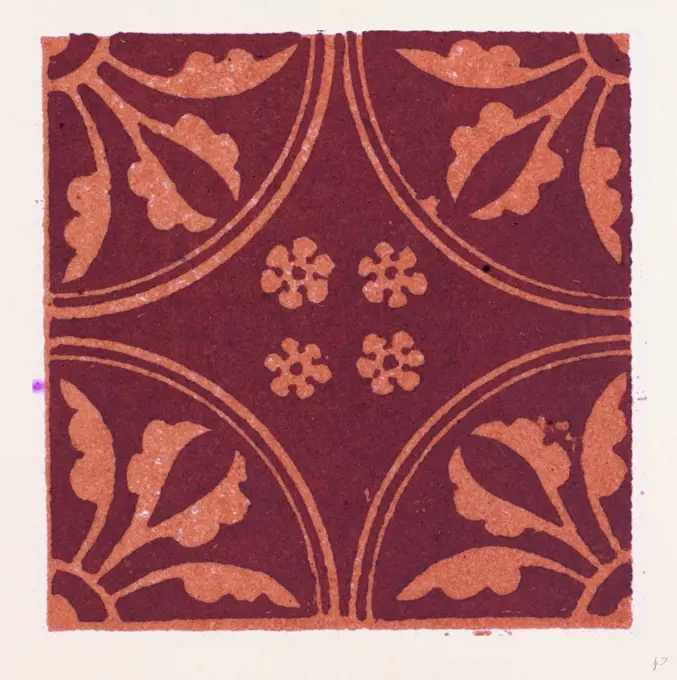
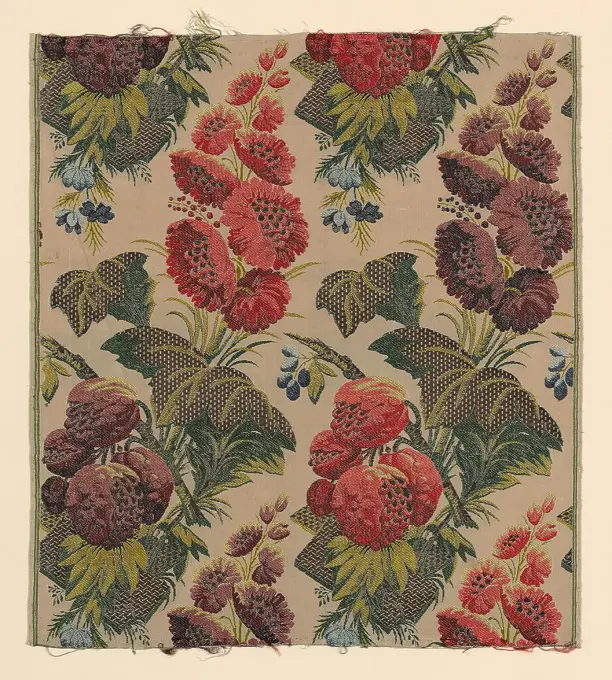
Napkin with a so -called "lace pattern", anonymous, c. 1720 - c. 1730 Napkin from white Linnamast with a so -called "lace pattern". Rounds all around with lace motifs and vases and ornaments with flowers. A rosette and lace motifs in the corners. Southern Netherlands linen (material) damask Napkin from white Linnamast with a so -called "lace pattern". Rounds all around with lace motifs and vases and ornaments with flowers. A rosette and lace motifs in the corners. Southern Netherlands linen (material) damaskPanel Made 1820-1840 France. Cotton, plain weave; block printed .Fragment, Medium: silk, metallic thread Technique: supplementary warp pile (velvet) in a woven foundation, Fragment of dark brown velvet on a cream-colored ground in a pattern of leafy medallions., Italy, 16th-17th century, woven textiles, FragmentFragment, Medium: silk Technique: 5-harness satin damask, Gray-blue damask with large symmetrical design of a vase with two heavy stems framing a curved octagon with a stylized palmette inside. Highly stylized vine and leaf pattern with elaborate interlacing. Vase, vine and branches filled with a diaper pattern. Broad satin selvages striped in salmon and yellow., Spain, late 16th-early 17th century, woven textiles, FragmentTextile (France); cottonFragment, Medium: silk, metallic yarns Technique: satin weave with supplementary weft patterning (brocade), Silk fragment showing design of flowers and acanthus leaves in gold and silver, with details in brocaded in polychrome silk. One selvage present., possibly Russia, 18th century, woven textiles, FragmentPiece late 18th century French. Piece 222045Piece of fabric. unknown, authorFragment ca. 1830 British. Fragment. British. ca. 1830. Cotton. Textiles-PrintedTextile, Medium: silk Technique: compound weave with discontinuous supplementary weft patterning (brocade), Length of woven silk with a pattern of intertwining flowering branches, with roses and other flowers. In black, blue, green, yellow, peach, pink and red, with white frise and chenille yarns, on an ivory ground., England or France, 1750-1800, woven textiles, TextileTextile Swatches Onondaga Silk Company, Inc. (1925-1981). , 1948-1959. Silk, 48 x 16 1/2 in. (121.9 x 41.9 cm).    1948-1959Fragment multicolored seals, c. 1700 - c. 1800 Fragment silk tissue. Rows of flower branches in green, red and yellow rows of flower branches, between which a small geometric triangular shape. Germany silk Fragment silk tissue. Rows of flower branches in green, red and yellow rows of flower branches, between which a small geometric triangular shape. Germany silkFragment Lampas made of gold and white on a red soil, anonymous, c. 1500 - c. 1599 Three fragments of tissue of red silk with linen gold -colored and white palmets surrounded by garlands. Italy (possibly)Switzerland (possibly) silk. cotton (textile). wool lampas (textile material) Three fragments of tissue of red silk with linen gold -colored and white palmets surrounded by garlands. Italy (possibly)Switzerland (possibly) silk. cotton (textile). wool lampas (textile material)Piece 18th-19th century Japan. Piece 66486Fragment van rode zijde.Fragment of red silk with pattern in yellow, gold and silver of leaf and tape work.Leather (Holland); leather, silvered, varnished and painted; 127.5 x 64 cm (50 3/16 x 25 3/16 in.); 1913-34-6Fragment of embroidered IInen belt unknownFragment, Medium: silk, metallic, velvet Technique: plain weave with supplementary warps forming cut and uncut pile., Design of crown, large flower and Tudor Rose and curving straps. Gold color. Woven as a sample with header top and bottom., probably Europe, ca. 1890, woven textiles, FragmentTextile (England); silkBarkcloth (Kapa moe). Hawaiian Islands, late 19th century. Textiles. Inner bark of paper mulberry plantFragment Made 1575-1725 Spain. Silk and gold gilt strips, integrated compound weave of warp-float faced satin weave and twill weave with supplementary patterning wefts and self-patterning wefts .Chintz, Medium: cotton Technique: mordant painted and dyed (chintz) on plain weave, Scattered floral sprigs and birds. Indian adaptation of European pattern. As design is hand drawn repeat is irregular., India, 18th century, printed, dyed & painted textiles, ChintzChinese ornamentBedcover ( Ocean Wave Quilt) 1873-1893 United States. Cotton, plain weaves; printed; cotton, twill weaves; pieced; edged and backed with cotton, plain weave; quilted . Frances Brooks WyldLeaf with a job pattern of festons with flowers and decorative frames, Anonymous, 1700 - 1850  Leaf with a job pattern of festons with flowers and decorative frames. Used as a cover.  paper. block printing (relief printing process) ornament derived from plant formsPiece 18th century Japan. Piece 71614Textile, Medium: cotton Technique: roller printed on satin weave, Design of two landscape scenes: one of a windmill and boats, the other a church and ships. Both are framed by scrollwork in the style of Delftware., USA, late 19th century, printed, dyed & painted textiles, TextileSamples (USA); Manufactured by Orinoka Mills (United States); Warp x Weft (a): 21.5 × 31.5 cm (8 7/16 × 12 3/8 in.) Warp x Weft (b): 22 × 26 cm (8 11/16 × 10 1/4 in.) Warp x Weft (c): 21 × 25.5 cm (8 1/4 × 10 1/16 in.) Warp x Weft (d): 24 × 16 cm (9 7/16 × 6 5/16 in.) Warp x Weft (e): 18.5 × 16 cm (7 5/16 × 6 5/16 in.)Galloon 18th century German. Galloon 215691Textile; cottonPiece 18th century Japan. Piece 71717Cover Made 1775-1825 Japan. .Fichu. Western Europe, late 18th century. Costumes; Accessories. Cotton embroidery (chain-stitch, knotted, and drawn-work) on cotton mullBorder, Medium: linen Technique: needle lace, Venetian Rose point. Design similar to 1939-66-3 of scrolls with delicate palmettes and roselike forms., Venice, Italy, 17th or early 18th century, lace, BorderNapkin of Linnendamast with a flower pattern and the Alliance Wapen Inn und Zu Kniphausen-from EWSUM. Napkin of Linnendamast with scattered flowers, insects and acorns and in the middle the coat of arms of Inn und Zu Kniphausen- of EWSUM. The running edges have a winding floral drink with grapes and birds, the landed edges have a winding floral rank and the corners a flower branch. Satin 5 binding. The napkin belongs to napkin with number BK-1974-45-b.Carpet fragments, Medium: wool, linen or hemp, cotton Technique: cut pile on plain weave (moquette or velours d'Arras), Design of large-scale, somewhat stylized tulips, roses and foliage is in multicolored wool pile with white cotton pile accents. Ground warp and weft are coarse linen or hemp, as is broad selvage of warp-face plain weave. Colors are faded, were formerly very bright orange, red, two shades of green and red., France, late 17th-18th century, woven textiles, Carpet fragmentsPiece 18th-19th century Japan. Piece 66586Piece late 18th century French. Piece 221917Light-blue-ground fragment decorated with plum blossoms, red maple leaves, pine trees, birds, and latticework, 18th-19th century, Unknown Ryukyuan, 6 15/16 × 3 5/8 in. (17.62 × 9.21 cm) (overall), Cloth: cotton; bingata (stencil resist with applied pigments), Japan, 18th-19th centuryScarf French late 19th centuryCeremonial Cloth, early 1900s. Indonesia, Bali, Tengann Pageringsingan, early 20th century. Double ikat, tabby weave; cotton; overall: 250 x 49.5 cm (98 7/16 x 19 1/2 in.).Ceiling Paper (USA); Manufactured by Maxwell & Co., S.A. (United States); machine-printed paper; 92.5 x 49 cm (36 7/16 x 19 5/16 in.)Sidewall (USA); Manufactured by York Card & Paper Co.; machine-printed paper; 42 x 49 cm (16 9/16 x 19 5/16 in.)Piece 18th-19th century Japan. Piece 67238Piece ca. 1750 French. Piece 228810Ribbon, Medium: silk Technique: warp printed compound weave, Double-faced broad ribbon with white silk horizontally ribbed plain cloth ground. Narrow stripes of pink, green, yellow, and light blue along edges, formed by extra warp. Central design of sprays of yellow and red roses, and small blue flowers, all chiné dyed., France, late 19th century, printed, dyed & painted textiles, RibbonCeiling paper, Gledhill Wall Paper Co., New York, New York, founded 1900, Machine-printed paper, liquid mica, On gray ground, light green bouquets of flowers along with colorful bouquets in green, pink and white., New York, New York, USA, 1905-1915, Wallcoverings, Ceiling paperCarpet Fragment (USA); woolExcerpt multicolour, anonymous, 1750 Fragment of a silk tissue; On green satin fond, a pattern of two large curved flower branches, held together with a wreath, alternating with a large flower owl white, yellow, green, pink and purple. MIDDINGS: sewn together with the seam 2 self -sides; 0.5 cm, keper striped. Netherlands silk Fragment of a silk tissue; On green satin fond, a pattern of two large curved flower branches, held together with a wreath, alternating with a large flower owl white, yellow, green, pink and purple. MIDDINGS: sewn together with the seam 2 self -sides; 0.5 cm, keper striped. Netherlands silkNapkin of white Linnamast, flower pattern, the weapons Kops and De Vos, Spiegelmonograms WPK and JDV and Anno 1745, Anonymous, 1745 Napkin from white Linnamast, flower pattern, the weapons kops and the fox, mirror monograms WPK and JDV and Anno 1745; Manufactured for Willem Philip Kops (1695-1756) and Johanna de Vos (1702-1758) in Haarlem, on the occasion of their silver wedding on September 22, 1745. Northern or southern Netherlands Northern Netherlands (possibly) linen (material) damask Napkin from white Linnamast, flower pattern, the weapons kops and the fox, mirror monograms WPK and JDV and Anno 1745; Manufactured for Willem Philip Kops (1695-1756) and Johanna de Vos (1702-1758) in Haarlem, on the occasion of their silver wedding on September 22, 1745. Northern or southern Netherlands Northern Netherlands (possibly) linen (material) damaskFragment; silk; Warp x Weft: 53 x 19 cm (20 7/8 x 7 1/2 in.)Textile, Medium: cotton Technique: wood block printed on plain weave, Allover design of flowers in red and blue with dark brown outlines., France, 18th century, printed, dyed & painted textiles, TextilePin cushion covered with Point de Gaze de Bruxelles, Anonymous, c. 1879 Pin cushion covered with Point de Gaze de Bruxelles, with a crowned E. Brussels linen (material). Pin cushion covered with Point de Gaze de Bruxelles, with a crowned E. Brussels linen (material).Cravat end. Date/Period: 1695-1699. Cravat end. Medium: linen. Technique: needle lace. Author: UNKNOWN.Uchishiki (Altar Cloth) Made 1801-1825 Japan. Silk, cotton and gold-leaf-over-lacquered-paper strip, warp-float faced 3 1 'Z' twill weave with plain interlacings of secondary binding warps and supplementary patterning wefts .Sidewall - Sample, Sunflower, 1887; Designed by Morris & Co. (United Kingdom); Manufactured by Jeffrey & Company (United Kingdom); block-printed paperSidewall - Sample, Loop Trail, 1887; Designed by Morris & Co. (United Kingdom); Manufactured by Jeffrey & Company (United Kingdom); block-printed paperVelvet Fragment, 1450-1499. Italy, second half of 15th century. Velvet (cut, voided, and brocaded): silk and gold thread; average: 57.2 x 31.1 cm (22 1/2 x 12 1/4 in.).Textile, Medium: wool Technique: block printed on 4&1 satin, Design of polychrome blossoms on a green and white striped background., probably France, ca. 1860s, TextileSidewall (France); print with stencil colorsPiece 17th century Japan. Piece. Japan. 17th century. Silk / Compound weave. Textiles-WovenSheet with overall stripe and dot pattern 19th century Anonymous. Sheet with overall stripe and dot pattern. Anonymous , 19th century. 19th century. Relief print (wood or metal). PrintsFragments, Medium: silk , metallic Technique: brocaded damasée; 7&1 satin plus plain weave with supplementary wefts, Exotic polychrome blooms on bright yellow silk in a large, irregular pattern with green and pink silk and silver thread in a large-scale floral and foliage pattern in the Bizarre style., France or Italy, ca. 1700, woven textiles, FragmentsFragment, Medium: wool embroidery on cotton foundation Technique: embroidered in chain stitch (needle-made), knots and satin stitch on a 2/2 twill foundation, Piece of crewel embroidery colored yarns with scattered motifs in a grid arrangement. The motifs do not repeat in a regular manner but alternate a florral motif 8 different ones, sometimes facing in different directions with an animal or bird motif 8 different ones Different colors are used when a motif is repeated., France, 18th century, embroidery & stitching, FragmentFragment late 16th-early 17th century Italian. Fragment 230188Textile 19th century Japan. Textile. Japan. 19th century. Textiles-WovenFragment ; silk, metallic threadSquare, Medium: cotton Technique: block printed on both sides, Square of white cotton has scalloped edges that are buttonhole stitched all around. Printed in red, blue and taupe with a central floral motif, scattered small sprays with larger sprays in each corner and curving floral border., France, 19th century, printed, dyed & painted textiles, SquarePaisley Shawl, 20th century, 135 x 62 in. (342.9 x 157.5 cm), Wool, Scotland, 20th centuryKatherine Hastings, Quilt, c 1936 QuiltTextile (France); linen warp, cotton weft; Warp: 108cm (42 1/2in). Weft: (2 pieces sewn together) 134cm (52 3/4in.) Width of selvage to selvage piece; 71.5cm (28 1/8in.); Bequest of Elinor Merrell; 1995-50-257Coverlet Made 1846 Pennsylvania. Cotton and wool, plain weave with plain interlacings of secondary binding warps and patterning wefts (Beiderwand); woven on loom with Jacquard attachment; two loom widths joined .Textile, Medium: cotton Technique: block printed on plain weave, glazed, Panel of glazed chintz with a white ground showing a design of roses and other flowers in clusters in a perpendicular arrangement which is well disguised by joining tendrils. In shades of red, green, blue, lavender, dark brown, and touches of yellow., England, 1850-1900, printed, dyed & painted textiles, TextileCurtain ca. 1775 American. Curtain. American. ca. 1775. Linen embroidered with wool. Made in New England, United StatesFragment. Italy. Date: 1601-1625. Dimensions: 12.9 × 19 cm (5 1/8 × 7 1/2 in.). Silk, plain weave with supplementary pile warps forming cut, uncut, and voided velvet. Origin: Italy. Museum: The Chicago Art Institute, Chicago, USA.Piece 18th century Japan. Piece 71526Piece 18th century French. Piece 223310Indian ornamentBaan so -called English Red Conseled, Cut and uncut silk flows, Tresca or Touchot & Compagnie, 1860 - 1880 Baan so -called English red ciseled, cut and uncut silk flu, the solid ground tissue in satin binding. Design: in the middle asymmetrically placed separate rising flower branches, the leaves similar to oak leaves, the flowers on Hibiscus; Common by mirror symmetrically placed S-shaped rising peacock springs with "eyes". Marked: two steps attached to lower corners in the fringes on which: T&C Lyon and Deposé Paris. Origin: Huize Molecate in Hattum (written on attached note). State: Like new. Lyon silk. velvet (fabric weave) cutting Baan so -called English red ciseled, cut and uncut silk flu, the solid ground tissue in satin binding. Design: in the middle asymmetrically placed separate rising flower branches, the leaves similar to oak leaves, the flowers on Hibiscus; Common by mirror symmetrically placed S-shaped rising peacock springs with "eyes". Marked: two steps attached to loweFlounce ca. 1660 Italian, Venice. Flounce 226027Sidewall Sample; machine-printed on paper; 22.5 x 22.5 cm (8 7/8 x 8 7/8 in.)Fragment, medium: silk Technique: plain weave with continuous and discontinuous supplementary weft floats, Flowers, fountains, peacocks and lions on white., 17th century, woven textiles, FragmentTextile; silk; Bequest of Richard Cranch Greenleaf in memory of his mother, Adeline Emma Greenleaf; 1962-56-55-a/fBorder. Date/Period: 1825-35. Border. Block-printed. Height: 1,110 mm (43.70 in); Width: 290 mm (11.41 in). Author: UNKNOWN.Piece 1750-60 French. Piece 216391Fragments (France); cotton; Warp x Weft (a): 10.5 x 47 cm (4 1/8 x 18 1/2 in.) Warp x Weft (b): 9 x 36 cm (3 9/16 x 14 3/16 in.)Napkin with the four virtues, anonymous, c. 1730 - c. 1750 Linnamast napkin with the four virtues. Midfield: The asymmetrical pattern shows five scenes from the bottom to the top: 1 belief, proposed by a female figure turned to the left, who holds a cross in one hand and shows a chalice in rays in the other. Inscription: Glaube. 2 Patience, presented by a sitting woman shaving a sheep. Inscription: Gedt. 3. Hope, presented by a standing woman who holds the arms along the sides with anchor in one hand and nimbus () In the other. To the left of her speed a ship, on whose sail a cross. Inscription: Hoffnung. 4 Love, as a sitting woman, who comes a child with flower from the right. On the right a pine tree in Kuip. Inscription: Liebe. 5. Start of again scene 1. Standing edges ± running rank, with varied peony -like flowers+ beyond: blocking edge. Germany linen (material) damask Linnamast napkin with the four virtues. Midfield: The asymmetrical pattern shows five scenes from the bottom to tTextile (Italy); silk, metal foil strips, metal foil strips wrapped around silk coreNapkin with the coat of arms of Karel III of Spain and a face on Rijssel, Anonymous, c. 1702 - c. 1713 Linnamast napkin with the coat of arms of Karel III of Spain and a face on Rijssel. The symmetrical pattern shows the following scenes from bottom to top: 1 a face on Rijssel with many towers. 2 Map of a fortress with Lille top. 3 rider on horseback (Karel III of Spain). 4 The coat of arms of Karel III of Spain flanked by banners. Standing and lying edges: weapons, including Savoye, and weapon trophies; Outside of that: blocking edge. Kortrijk (Possible) linen (material) damask  Spain. Lille Linnamast napkin with the coat of arms of Karel III of Spain and a face on Rijssel. The symmetrical pattern shows the following scenes from bottom to top: 1 a face on Rijssel with many towers. 2 Map of a fortress with Lille top. 3 rider on horseback (Karel III of Spain). 4 The coat of arms of Karel III of Spain flanked by banners. Standing and lying edges: weapons, including Savoye, and weapon troFragment of the fabric;  2. PO. 18th century (1780-00-00-1785-00-00);Tarasowicz, Helena and Konstanty - collection, gift (provenance), fabricsPiece 16th-17th century Italian. Piece 223433Chintz Fragment (India); cottonTextile, Arthur Wilcock, Medium: cotton Technique: printed by engraved copper roller on plain weave, Printed textile showing life-sized pattern of yellow wild roses, daisies, cornflowers, in white and ochre with green foliage on an aqua ground., England, ca. 1890, printed, dyed & painted textiles, TextileMedieval ornamentSleeve Band 19th century China. Sleeve Band 68741Textile (India); cottonPanel (Furnishing Fabric). Style of Jean Revel (French, 1684-1751); France. Date: 1724-1745. Dimensions: 62.2 × 55.9 cm (24 1/2 × 22 in.)Repeat: 46 × 27 cm (18 1/8 × 10 5/8 in.). Silk and silvered-metal-strip-wrapped silk, plain weave with supplementary brocading wefts. Origin: France. Museum: The Chicago Art Institute, USA.Domino (Furnishing Fabric) Made 1780-1800 France .Piece 18th-19th century Japan. Piece 66722Excerpt multicolour, anonymous, 1750 - 1775 An excerpt of blue soil, on which flowers, sheets and branches of green, yellow and purple. Note: Self -sides; 0.6 cm, plain binding (6 lace threads), satin (2 colorful). Spain silk An excerpt of blue soil, on which flowers, sheets and branches of green, yellow and purple. Note: Self -sides; 0.6 cm, plain binding (6 lace threads), satin (2 colorful). Spain silk