Textile Patterns

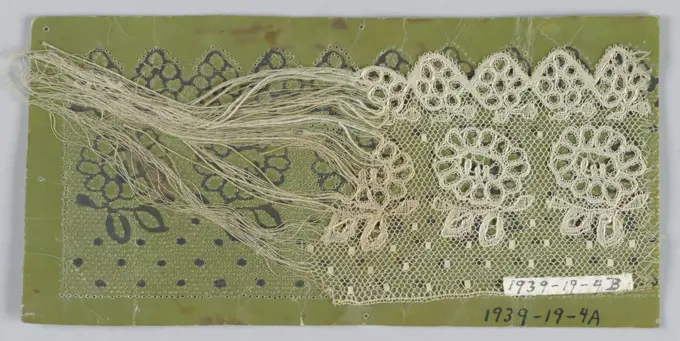
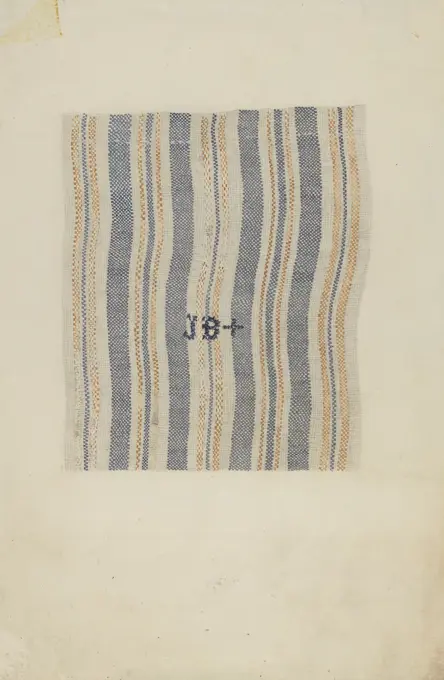
Historical textile fragments with geometric designs, showcasing intricate weaving and printing techniques from various cultures.
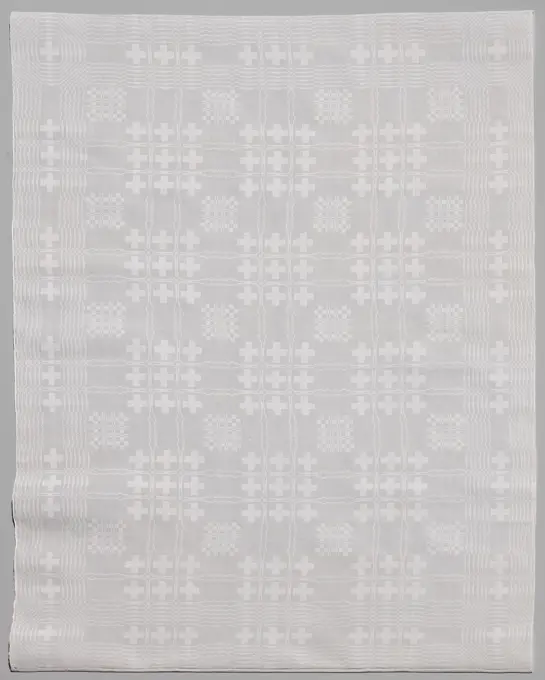
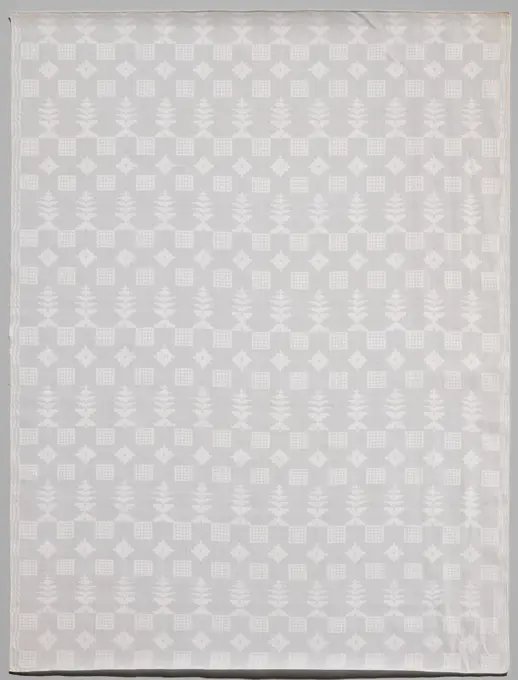
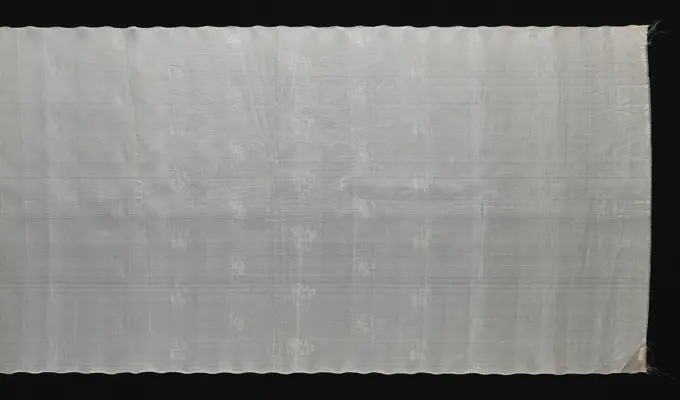
Linnamast napkin with peel pattern, c. 1800 - c. 1850 Linnamast napkin with peel pattern, marked my 12.  linen (material) damask Linnamast napkin with peel pattern, marked my 12.  linen (material) damask
Linnamast napkin with peel pattern, c. 1800 - c. 1850 Linnamast napkin with peel pattern, marked my 12. linen (material) damask Linnamast napkin with peel pattern, marked my 12. linen (material) damask
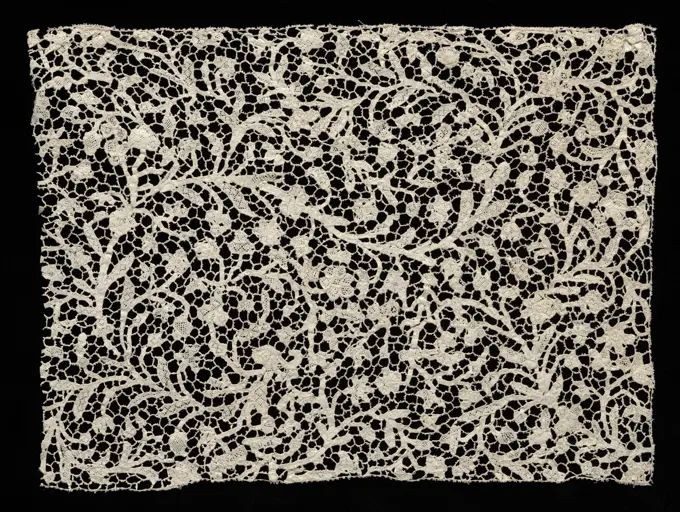
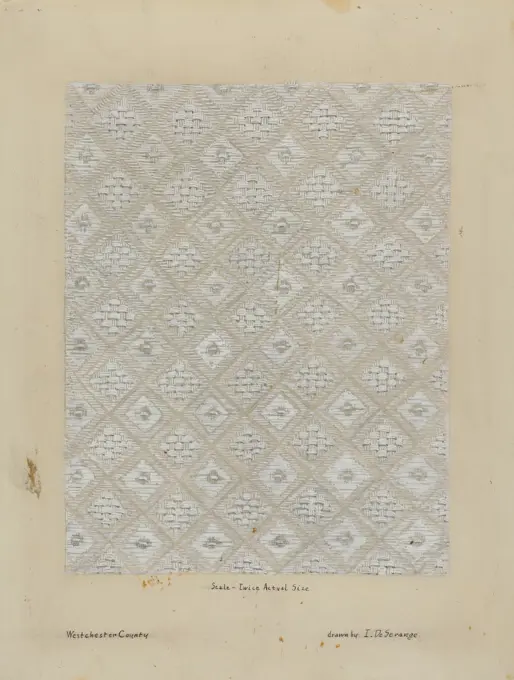
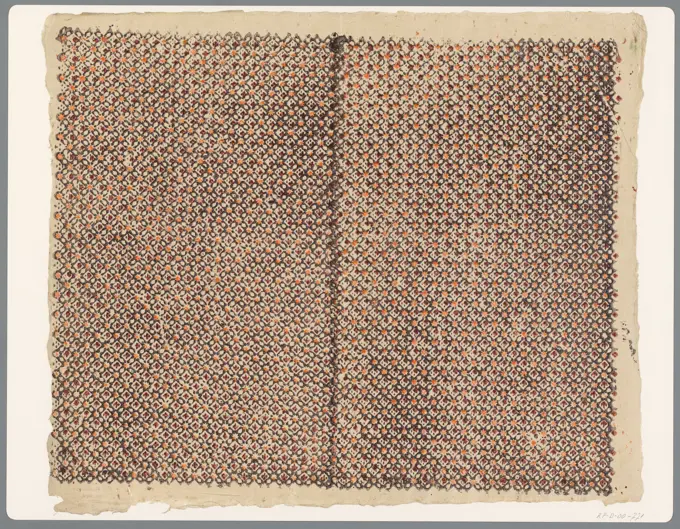
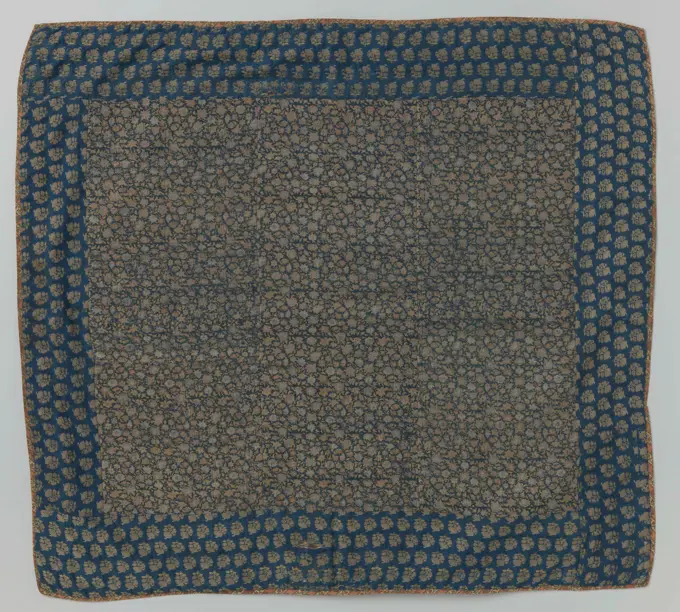
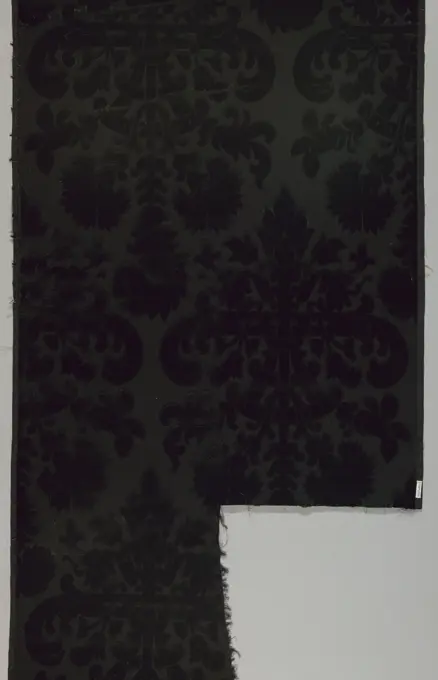
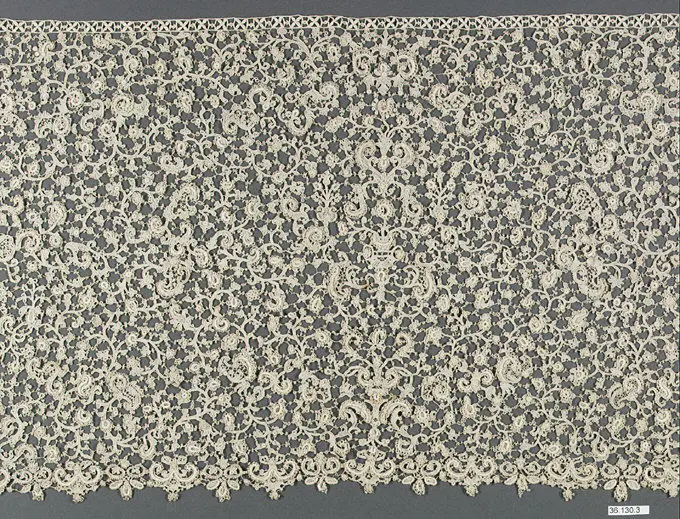
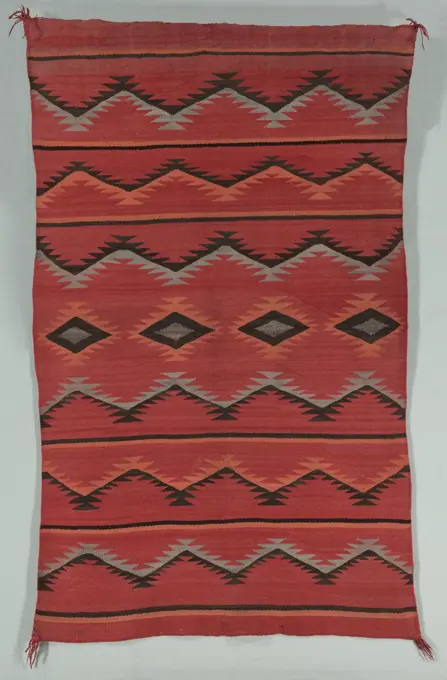
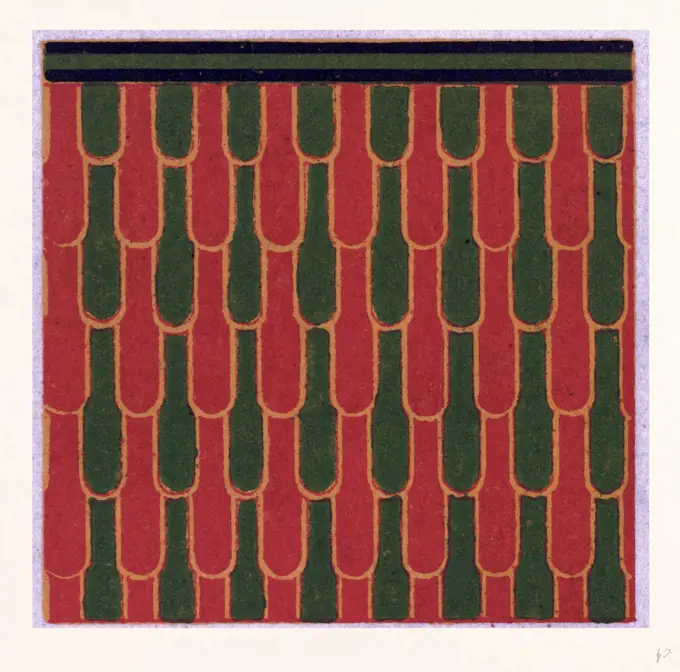
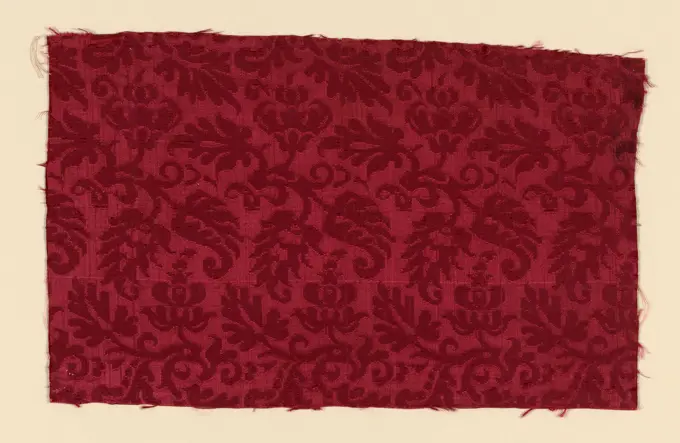
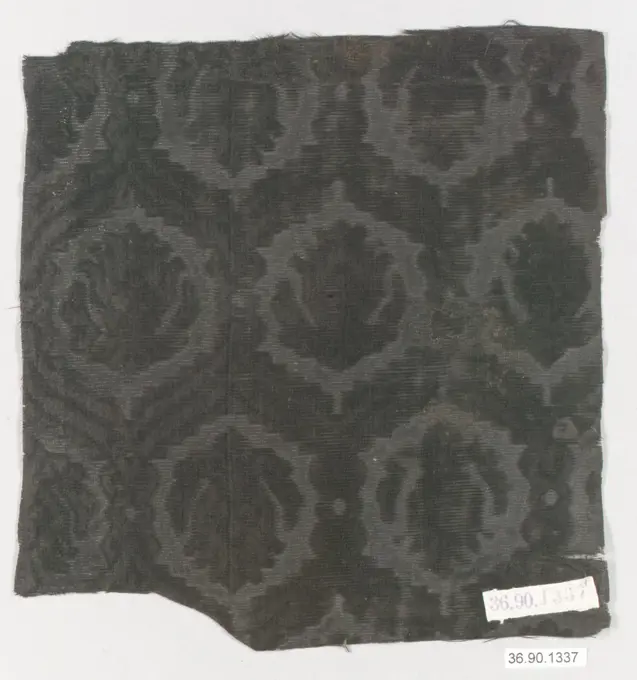
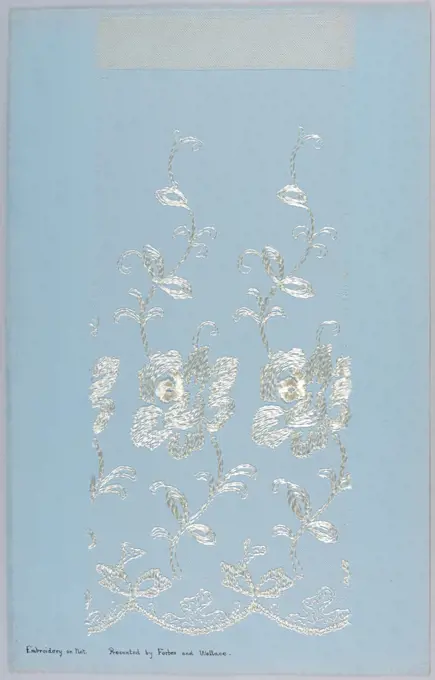
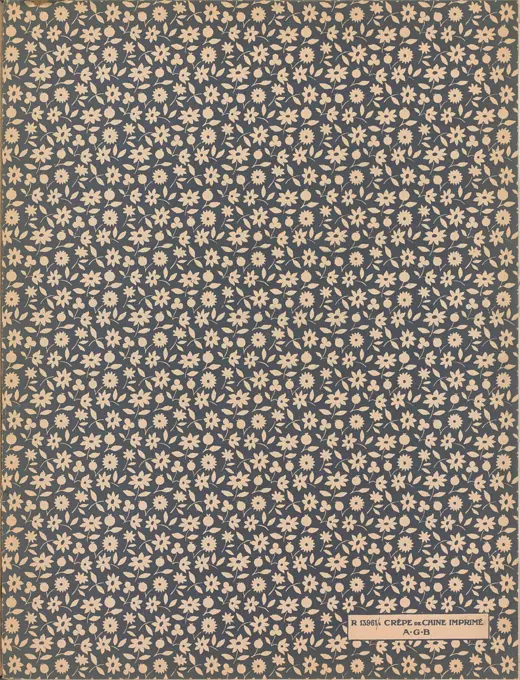
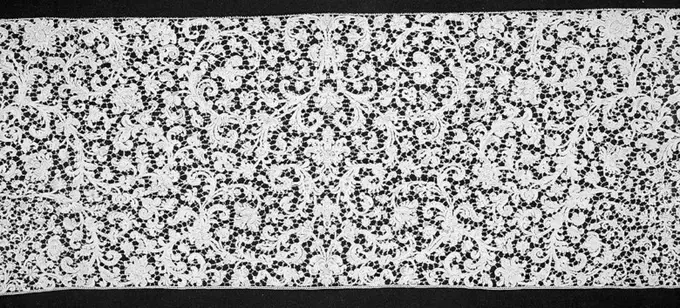
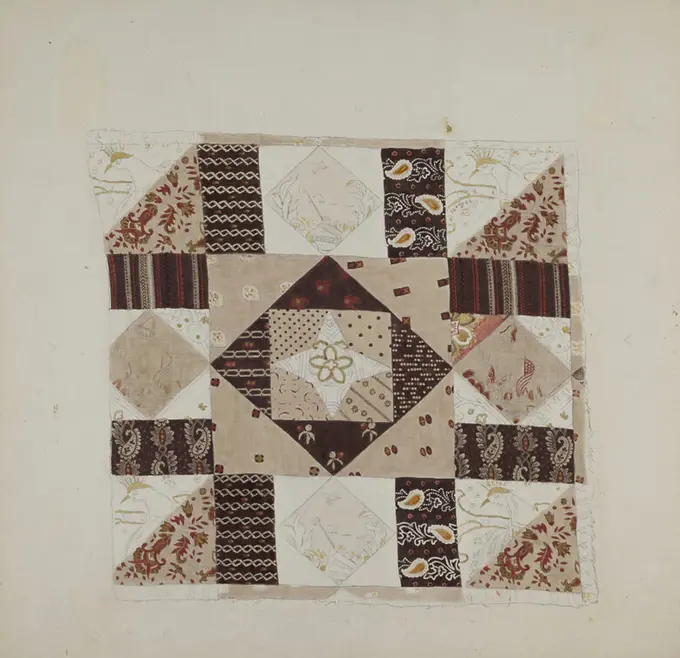
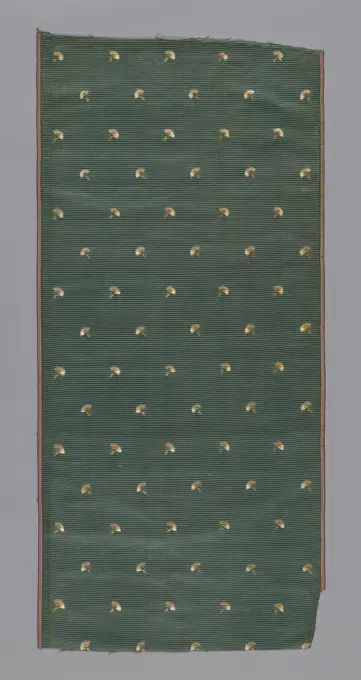
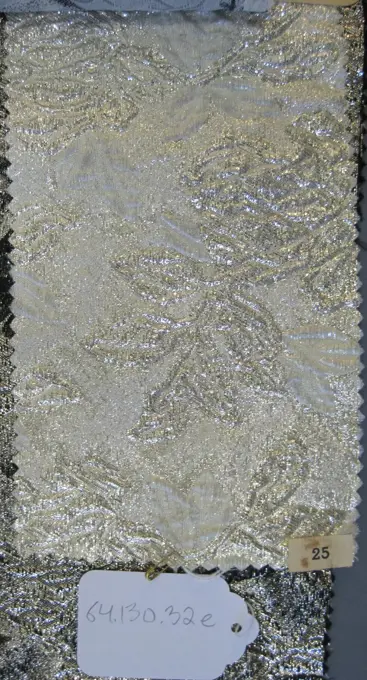
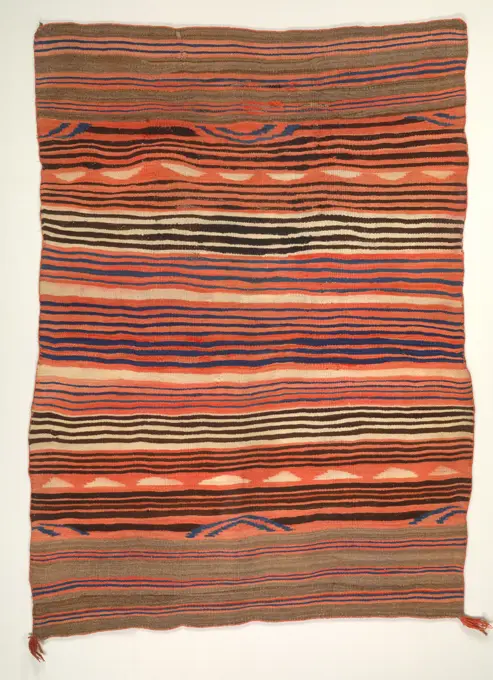
Coverlet Fragment (USA); wool; 1953-54-1Piece 18th century Japan. Piece 71240Excerpt blue ciselé velvet with red fond on which pattern of hexagons, anonymous, c. 1500 - c. 1599 Fragment blue silk ciselé velvet with recesses with red fond on which pattern of hexagons. Italy silk Cisele Velvet / Twill Fragment blue silk ciselé velvet with recesses with red fond on which pattern of hexagons. Italy silk Cisele Velvet / TwillLeaf with chessboard pattern, anonymous, c. 1700 - c. 1900  Leaf with chessboard pattern of shaded cubes on diagonal color courses.  paper. paint (coating) block printing (relief printing process) ornament ~ geometric motifsNapkin van Linen with peel pattern ,, 1730 White linen napkin with peel pattern, brand crown wg 42 and 1730 Northern Netherlands (Possible) linen (material) White linen napkin with peel pattern, brand crown wg 42 and 1730 Northern Netherlands (Possible) linen (material)Piece 18th century Japan. Piece 71661Fragment; silk and metalFragment, Medium: silk Technique: cut and uncut supplementary warp pile (velvet) in a satin foundation, Fragment of dark red cut and uncut velvet in a pattern of scrolling leaves surrounding the coat of arms of the Chigi family., Italy, 17th-18th century, woven textiles, FragmentLinnamast napkin with peel pattern, c. 1800 - c. 1850 Linnamast napkin with peel pattern, marked my 12.  linen (material) damask Linnamast napkin with peel pattern, marked my 12.  linen (material) damaskLinnamast napkin with a flower pattern, anonymous, c. 1800 - c. 1850 Napkin from Linnamast with thrown flowers. The napkin belongs to a napkin (BK-1971-247-B).  linen (material) damask Napkin from Linnamast with thrown flowers. The napkin belongs to a napkin (BK-1971-247-B).  linen (material) damaskVelvet Segment, c. 1800. Italy, early 19th century. Velvet; overall: 77.5 x 71.1 cm (30 1/2 x 28 in.).Fragment, Medium: Technique: printed, USA, 19th century, printed, dyed & painted textiles, FragmentWaist Wrapper (Kain Panjang,Remekan)Needlepoint (Venetian Flat Point) Lace Edging, 17th century. Italy, Venice, 17th century. Lace, needlepoint: linen; average: 23.5 x 31.8 cm (9 1/4 x 12 1/2 in.).Isabelle De Strange, Tablecloth, c 1936 TableclothTextile Swatches Onondaga Silk Company, Inc. (1925-1981). Textile Swatches, 1948-1959. 72 silk; 28 metal, (a) - (d): 11 1/4 x 4 1/2 in. (28.6 x 11.4 cm).    1948-1959Border 17th century Italian, Venice. Border 212548Textile Fragment 17th century. Textile Fragment 454473Curtain 18th century Italian, Venice. Curtain. Italian, Venice. 18th century. Silk. Textiles-WovenTablecloth with the history of the lost son and the coat of arms of Kortrijk. Tablecloth of Linnendamast with the history of the lost son and the coat of arms of Kortrijk.Linnamast napkin with a flower pattern, c. 1800 - c. 1825 Napkin from Linnamast with thrown flowers and a volute edge with birds. Seven napkins (BK-1976-119-A to BK-1976-119-H) belong to the napkin (BK-1976-119-H) and a tablecloth (BK-1979-118). Netherlands (possibly) linen (material) damask Napkin from Linnamast with thrown flowers and a volute edge with birds. Seven napkins (BK-1976-119-A to BK-1976-119-H) belong to the napkin (BK-1976-119-H) and a tablecloth (BK-1979-118). Netherlands (possibly) linen (material) damaskShoulder Cloth (Ragidup) Made 1801-1900 Sumatra. Three panels joined side panels cotton, warp-faced, weft ribbed plain weave; center panel Cotton, warp-faced, weft ribbed plain weave with discontinuous warp substitution and supplementary patterning wefts; andends (warp of all panels) groups of five warps are plied and replied with adjacent group and interlaced in weft-faced warp ribbed weft twining; main warp fringe; six selvages presentCIETA toile, lancÈ .Coverlet Fragment (USA); wool, linen or cotton; Warp x Weft: 87 x 63 cm (34 1/4 x 24 13/16 in.); 1953-218-45Leaf with windscreen pattern with overhoekse rosettes, anonymous, 1750 - 1950    paper. lacquer (coating) block printing (relief printing process) / lacquering ornament derived from plant formsCoverlet Made 1815-1845 Ohio. Wool, plain weave double cloth with main warp and extended ground weft fringe; two loom widths joined .Dress from silk with floral design. Dress from silk with floral design from bordered silk with a design of flower and leaf refrences in the center in the center, yellow and gray on blue fond; Broad edge of idem design of bouquets / buta motif. Lined with changing side in red / yellow and transverse edge of cotton, printed with pattern of stripes with floral drinks. Sewn label with in 19th century () Handwriting: "A tissue with multicolored little flowers, from Persia, no. 5".Turban, c. 1950, 127 3/4 x 19 3/16 in. (324.49 x 48.74 cm), Cotton, silk; needlework, Thailand, 20th centuryShawl fragment, Medium: wool Technique: twill weave with supplementary weft, Multi-colored wools brocaded on black wool twill ground in a crudely rendered small-scale floral and bird pattern. Probably machine woven., Europe, 19th century, woven textiles, Shawl fragmentTextile Sample from Sample Book Japan 19th centuryFragment Made 1601-1700 Italy. Silk, plain weave with self-patterning ground wefts .Border (England); cottonFragment (France); silkFragment Made 1625-1675 Italy. Silk and silver gilt strips, warp-faced plain weave with supplementary patterning wefts .Fragment. United States. Date: 1801-1825. Dimensions: 49.2 x 28.9 cm (19 3/8 x 11 3/8 in.). Sample of stripe and check patterns of blue, white and tan. Origin: United States. Museum: The Chicago Art Institute, Chicago, USA.Fragments (possibly Spain); silkWomans Ceremonial Skirt (Tapis)Towel of white linen ,, 1742 White linen towel with a peel pattern in crosskeper so -called 'Torenwerk', brand Kroon WG 6 1742. Northern Netherlands (Possible) linen (material) White linen towel with a peel pattern in crosskeper so -called 'Torenwerk', brand Kroon WG 6 1742. Northern Netherlands (Possible) linen (material)Flounce 17th century Italian. Flounce. Italian. 17th century. Needle lace. Textiles-LacesFragments. Date/Period: 15th century. Fragments. Medium: silk. Technique: supplementary warp pile in a 4&1 satin foundation (velvet). Author: UNKNOWN.Fragment Made 1600-1650 Italy. Silk, plain weave with supplementary pile warps forming cut and uncut voided velvet .Blanket Made 1890-1899 New Mexico. Cotton and wool, single interlocking tapestry weave; main warp knotted cut fringe; twined selvages and heading terminating in tassels; needle-made fringe . Navajo (Diné)Vector ornate frame. Perfect as invitation or announcementFragment; silkFragment, Medium: silk Technique: 5-harness satin damask, Blue damask with a medium-scale design of a symmetrical floral spray in a continuous angular ogival framework of decorated bands clasped by two dotted rings at tangent points. Two broad coarse satin selvages of faded pink., Italy, 16th century, woven textiles, FragmentNapkin, Cock: Design no. 512; Designed by Chris Lebeau (Dutch, 1875 - 1945); Manufactured by E.F.J. Van Dissel and Son; Netherlands; linen; Warp x Weft: 70.5 x 68 cm (27 3/4 x 26 3/4 in.)Piece 19th century Japan. Piece 71993Bedcover Made 1778 United States. The history of this bedcover indicates that it was made in 1778 for the dowry chest of Eliza Ann Hunnewell. Bedcovers, the majority of which were quilted or pieced, represent a significant part of a girlís dowry or hope chest. The chest would include multiple bedcovers, often with one particularly ornate and finely executed example, made for or by a young woman of marriageable age.. Wool, plain weave, glazed (calimanco); quilted with silk thread .ShoulderClothFragment (Japan)Textile 19th century Japan. Textile. Japan. 19th century. TextilesPiece mid-19th century French. Piece 216796Head Shawl ("Phulkari"), 1800s. India, Punjab, 19th century. Embroidery: silk on cotton tabby ground; overall: 273.7 x 136.5 cm (107 3/4 x 53 3/4 in.).Woman's wrapper (àdìrẹ ẹlé̩kọ) Yorùbá , unknown maker's mark. Woman's wrapper (àdìrẹ ẹlé̩kọ), 20th century. Commercial cotton cloth, synthetic indigo dye, 68 5/8 × 78 × 1/16 in. (174.3 × 198.1 × 0.1 cm).  Àdìrẹ is a Yorùbá textile whose patterns are made through resist dyeing. The àdìrẹ technique used to make this wrapper is àdìrẹ ẹlé̩kọ, wherein female artists paint cassava flour paste on fabric, preventing certain areas from soaking in blue indigo dye. This cloths name is Olókun, identifiable in part by the motif of a circular “stool” surrounded by “leaves.” As goddess of the sea, Olókuns domain is the source of wealth, lending the cloth the associated meaning “life is sweet.” Other àdìrẹ employ tie-and-dye techniques (àdìrẹ oníko), where raffia ties hold small stones or seeds in place to cover areas of the fabric during dyeing, resulting in àdìrẹ eléso patterns. One such àdìrẹ oníko was incorporated underneath a panel in the featured egúngún (see photograph). Arts of Africa 20th cElizabeth Valentine, Woven Coverlet, c 1936 Woven CoverletShoulder Cloth (), 20th century, 75 7/8 x 17 1/4 in. (192.72 x 43.82 cm) (without fringe), Cotton; needlework, Myanmar (Burma), 20th centuryPiece 18th-19th century Japan. Piece. Japan. 18th-19th century. Silk. Textiles-WovenDying template katagami cut out in the desend from the stylized Ro Linna (Karakus);  19th/20th century (1868-00-00-1912-00-00);Templates, flower wrap, purchase (provenance)Length early 20th century Korea. Length. Korea. early 20th century. Silk. Textiles-WovenBanded Eyedazzler Style Rug, ca. 1890-1900. America, Native North American, Southwest, Navajo, Post-Contact, Transitional Period. Tapestry weave: wool (handspun); overall: 225 x 139.7 cm (88 9/16 x 55 in.).Eclat (Furnishing Fabric). Designed by Anni Albers (American, born Germany, 1899- 1994); Manufactured by Knoll International; United States. Date: 1974. Dimensions: 282.3 x 143.8 cm (111 1/8 x 56 5/8 in.)Repeat: 12.7 x 45.8 cm (5 x 18 in.). Cotton, linen and rayon; plain weave with paired warps; screenprinted. Origin: United States. Museum: The Chicago Art Institute, Chicago, USA.Fragment silk, with a symmetrically ravaged pattern in emerald green ,, 1700 - 1800 Fragment silk with a symmetrically ravaged pattern in emerald green over the center of the dust fold pressed between warm rolls. Milket with a white line. France (possibly) silk. Fragment silk with a symmetrically ravaged pattern in emerald green over the center of the dust fold pressed between warm rolls. Milket with a white line. France (possibly) silk.Fragment of the lace;  2. PO. XVII century (1651-00-00-1700-00-00);Krzeszowice, collection, laceFragment; silk; Bequest of Richard Cranch Greenleaf in memory of his mother, Adeline Emma Greenleaf; 1962-56-158Ceiling paper, Maxwell & Co., S.A., Chicago, Illinois, USA, Machine-printed paper, liquid mica, Round foliate medallion having a lacy effect contains a brown inner ring of acanthus scrolls with a blue outer ring. Each medallion is enclosed within a dotted circle. Printed on a tan ground., USA, 1905-1915, Wallcoverings, Ceiling paperTextile (Mexico); cottonTextile (France); silkSquare scarf of salmon -colored crepe de chine with woven spreading motif, trimmed with machine side, anonymous, c. 1920 - c. 1930 Salmon -colored crepe de chine scarf with woven spreading motif from branch and leaf, trimmed with a 2.5 -wide edge of a machine side. NOTE: Possibly instead of a scarf a dress for toilet table. Belgium whole: Silk. edge:. Salmon -colored crepe de chine scarf with woven spreading motif from branch and leaf, trimmed with a 2.5 -wide edge of a machine side. NOTE: Possibly instead of a scarf a dress for toilet table. Belgium whole: Silk. edge:.Piece 18th-19th century Japan. Piece. Japan. 18th-19th century. Silk. Edo (1615-1868). Textiles-WovenTextile, Medium: silk, metallic thread Technique: plain weave with supplementary weft, Pink, white and pale yellow-green plaid with a brocaded design of geometric figures combined with highly stylized floral motifs., possibly Malaysia or China, 19th century, woven textiles, TextileRuth M Barnes, Coverlet (Section of), c 1940 Coverlet (Section of)Ceiling Paper (USA); Manufactured by Maxwell & Co., S.A. (United States); machine-printed paper, liquid mica; 75 x 49 cm (29 1/2 x 19 5/16 in.)Handkerchief, Medium: silk Technique: jacquard woven twill, White-on- white handkerchief depicting the Brooklyn Bridge with boats and the surrounding cityscape. The banner at top contains the legend. A patterned border in on all four side. Edges are machine hemmed., USA, 1883, woven textiles, HandkerchiefPiece 17th century Japan. Piece 71585Egyptian OrnamentSample early 19th century French. Sample 224733Piece 17th century Japan. Piece 71302Fragment Made 1600-1650 Italy. simple satin damask .Textile Swatches Onondaga Silk Company, Inc. (1925-1981). , 1948-1959. Silk, a: 45 1/2 x 17 in. (115.6 x 43.2 cm).    1948-1959Piece 16th-17th century Italian. Piece 224421Hip cloth. Cloth with geometric motifs.Textile (Japan); cottonSamples (USA); Manufactured by Cheney Brothers (United States); silk, metal thread; Warp x Weft: 18.5 x 9.5 cm (7 5/16 x 3 3/4 in.)Bedspread. Dated: c. 1936. Dimensions: overall: 22.9 x 30.8 cm (9 x 12 1/8 in.) Original IAD Object: 87" long; 72" wide. Medium: watercolor and graphite on paper. Museum: National Gallery of Art, Washington DC. Author: Mary Berner.Machine-made openwork samples, Medium: cardboard, linen, silk, metallic Technique: linen embroidery with ground cloth dissolved Examples of embroidery on net produced by the Schiffli machine Metallic embroidery on net Machine-made openwork in imitation of hand-embroidered net Mostly floral and a few geometric patterns, some designs described as 'Spanish' Imitation hand-made filet Machine filet Imitation filet crochet Ploven (burnt-out lace) Fancy curtain lace made on the Levers machines Real filet (handmade) next to Machine-made filet Spotted curtain nets, made chiefly at Nottingham, England and Caudry, France., Samples of machine-made openwork and several examples of hand made lace mounted on boards. They imitate hand-embroidered net, crochet, or needlepoint. All are floral patterns plus a few of early 1920's geometric style., 'Embroidered net' produced by the Schiffli Machine., USA, ca. 1910, lace, Machine-made openwork samplesArt - Taste - Beauty, leaflets of female elegance, March 1929, No. 103, 9th year, p. 1. Companion: Pattern with Small White Flowers We have Gray-Blue background. BOTTOM RIGHT IN BOX: R.13961 / 6 crepe from China Printed A.G.B.Flounce (Incomplete). Italy, Venice. Date: 1650-1700. Dimensions: 56.2 x 511.4 cm (22 1/8 x 201 3/8 in.)Width repeat: 198.8 cm (78 1/4 in.)Heading height: .7 cm (1/4 in.)Lower edge height: .35 cm (1/8 in.). Linen, raised needle lace. Origin: Italy. Museum: The Chicago Art Institute, Chicago, USA.Printed Cotton (Quilt). Dated: 1935/1942. Dimensions: overall: 41.7 x 43.3 cm (16 7/16 x 17 1/16 in.). Medium: watercolor and graphite on paperboard. Museum: National Gallery of Art, Washington DC. Author: John Tubrant.Panel 1775-1825 France. Silk, warp-faced plain weave, alternating with additional warp floats; embroidered in silk threads in satin stitch and French knots; paillettes .Asa Oke cloth used as Skirt, Top and Head-tie, 20th century, 70.25 x 32 in. (178.4 x 81.3 cm)(Skirt), Cotton, lurex, Nigeria, 20th centuryCoverlet Made 1820-1825 Virginia. Cotton and wool, plain weave with supplementary patterning wefts (overshot); two loom widths joined .Plain green paper, anonymous, 1800 - 1900 decorated paper   paper. paint (coating) paintingChinese ornamentSerape Made 1800-1850 México. Cotton and wool, slit and single dovetail tapestry weave; edged with cotton, knotted fringe .Textile Swatches Onondaga Silk Company, Inc. (1925-1981). Textile Swatches, 1948-1959. 46 Nylon; 25 Acetate; 16 Rayon, 13 metal, (a) - (e): 9 x 5 in. (22.9 x 12.7 cm).    1948-1959Banded Wearing Blanket (diyugi), c. 1880-1890. America, Native North American, Southwest, Navajo or Pueblo, Post-Contact, Transitional Period. Tapestry weave: wool (handspun and bayeta); overall: 172.7 x 127 cm (68 x 50 in.).Pattern with uncompleted piece of lace, Medium: parchment, linen thread Technique: bobbin lace made in Lille style with heavy outlining thread, Parachment pattern with partially worked piece of lace showing flowers with leaves., 19th century, lace, Pattern with uncompleted piece of laceIndian ornamentGreek Ornament and Etruscan OrnamentJoseph Goldberg, Linen Bag, c 1936 Linen BagSampler (Netherlands); silk embroidery on linen foundation