Textile Patterns and Fabrics

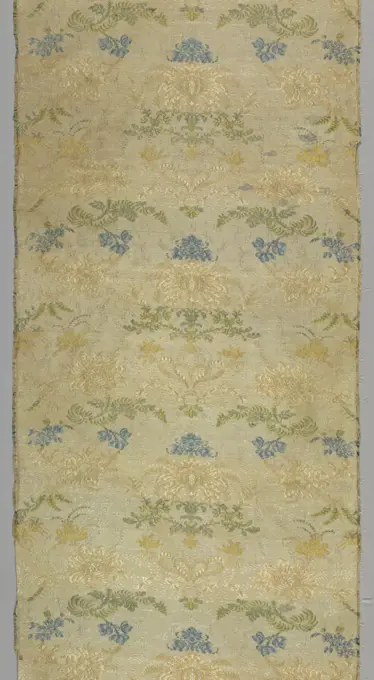
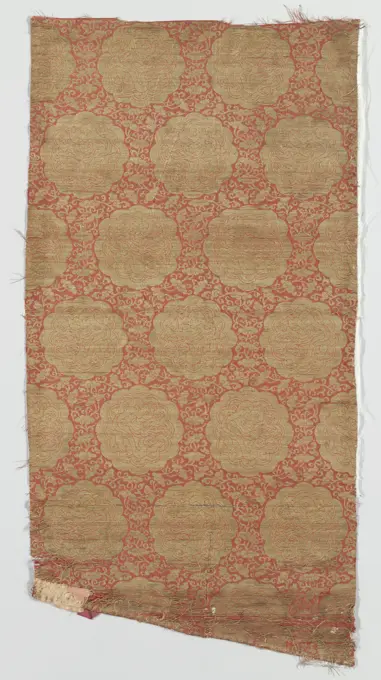
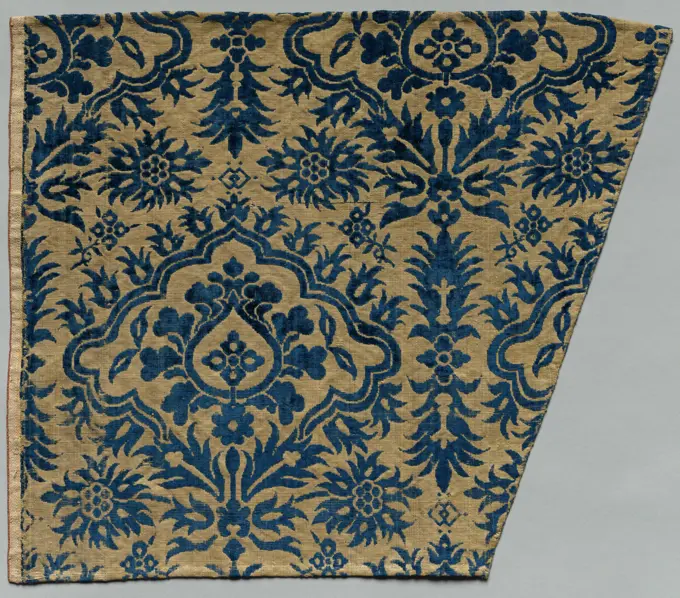
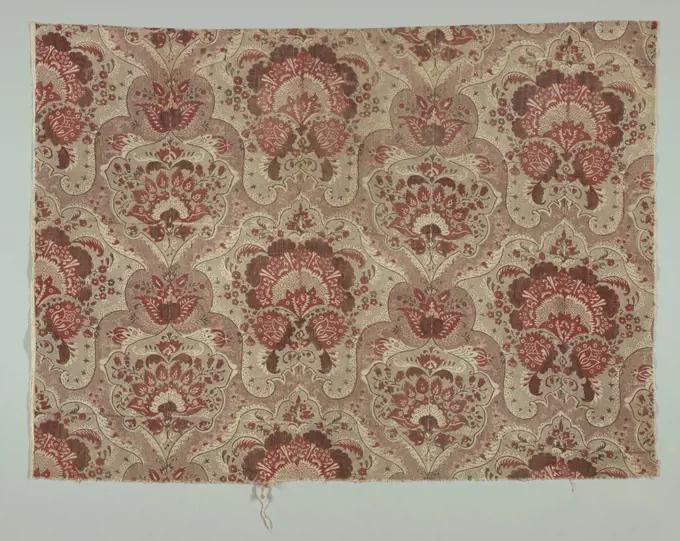
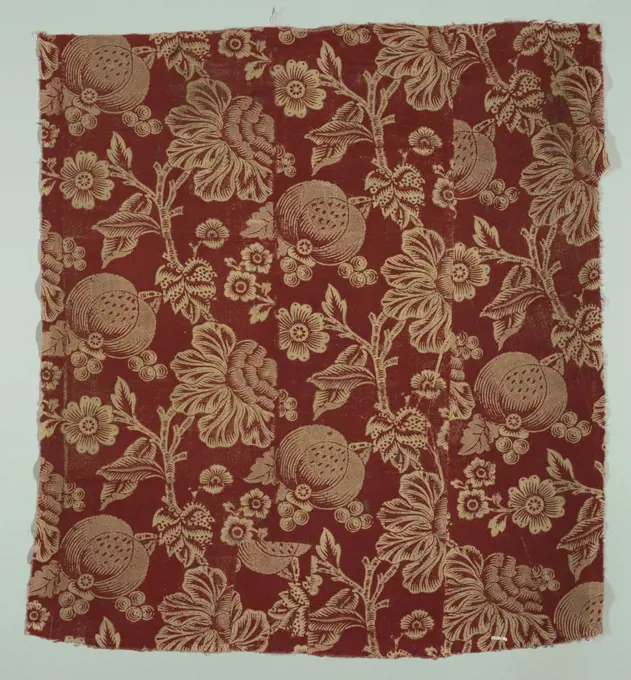
An array of woven textiles featuring floral and ornamental designs. Soft color palettes in silk and other materials depict historical craftsmanship.

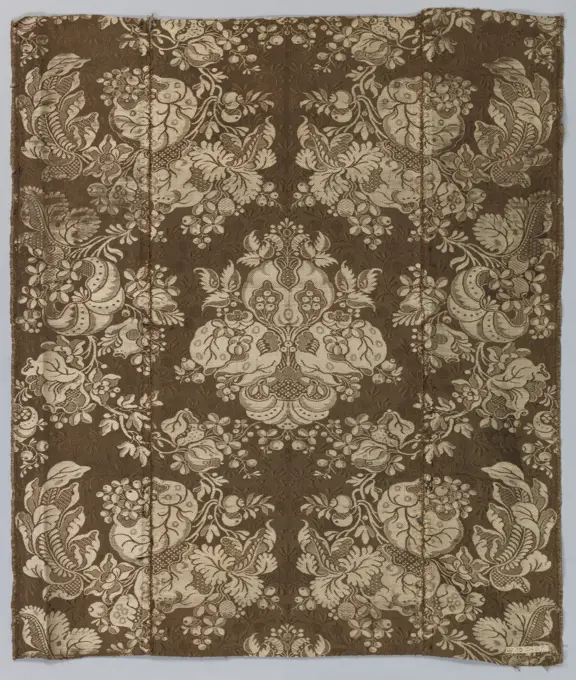
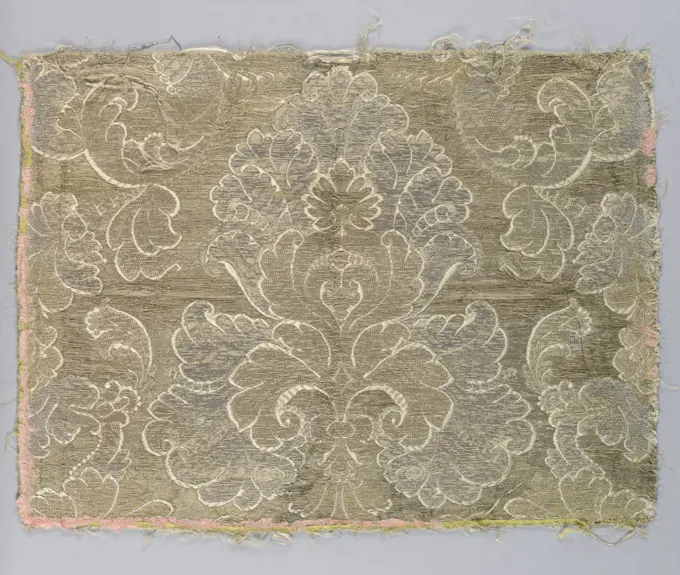
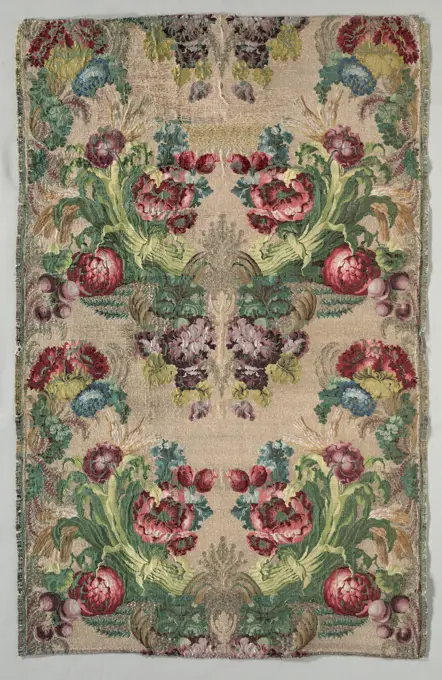
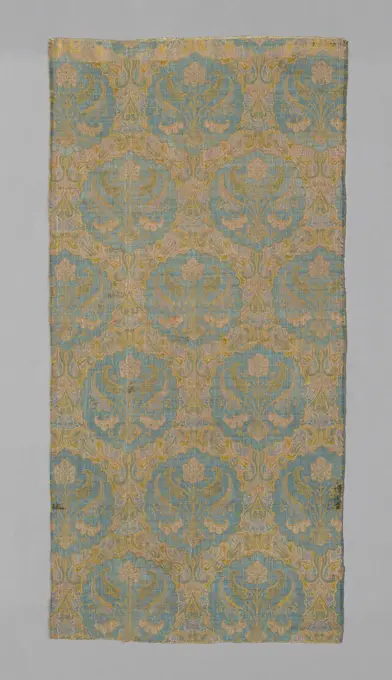
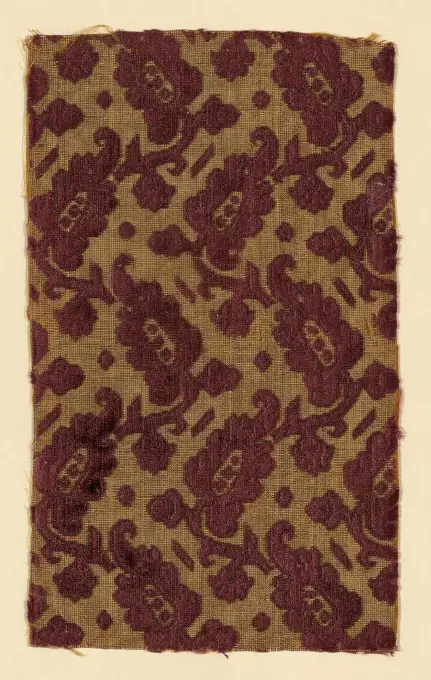
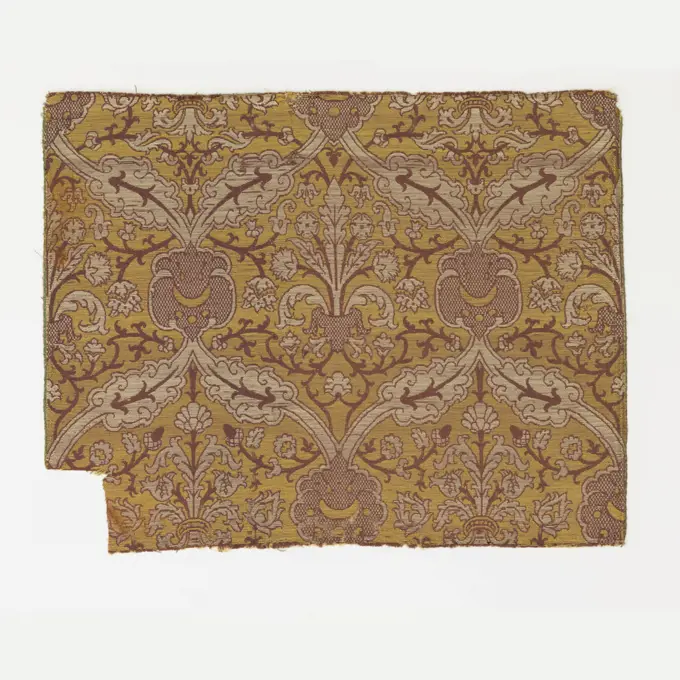
Textile, Medium: silk Technique: 5-harness satin damask, Large-scale symmetrical fantastic flower-and-fruit design. Narrow plain cloth selvages with heavy warps., Spain, 17th century, woven textiles, Textile
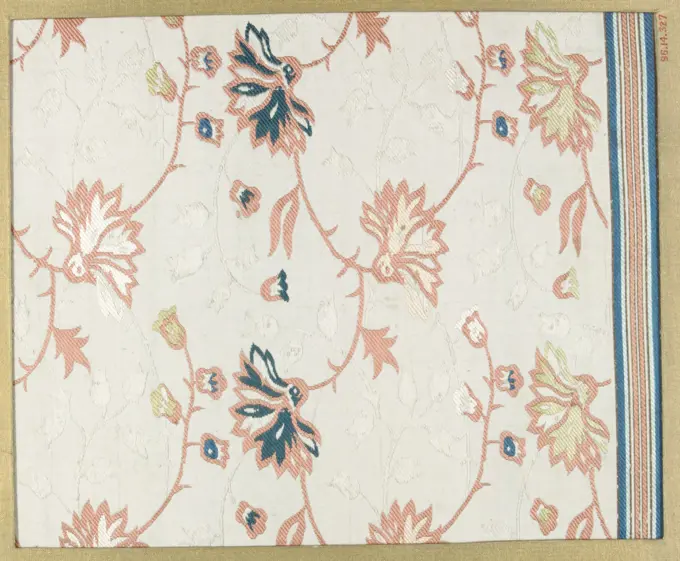
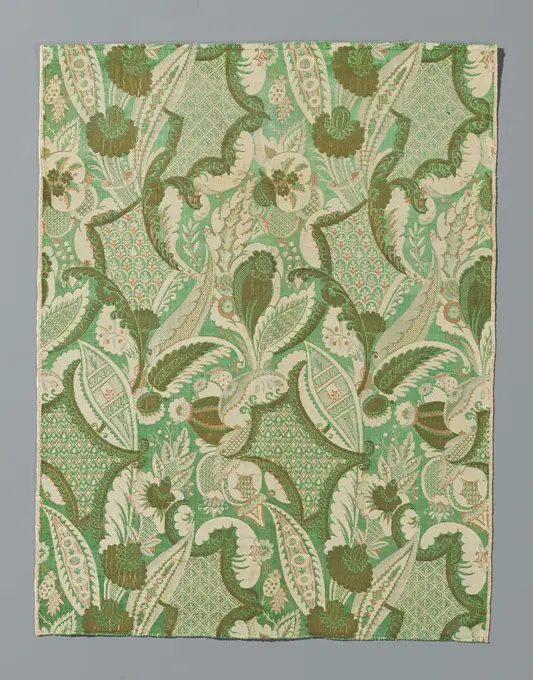
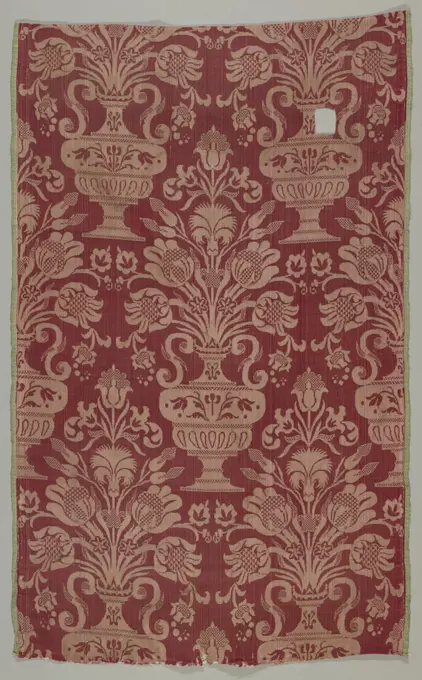
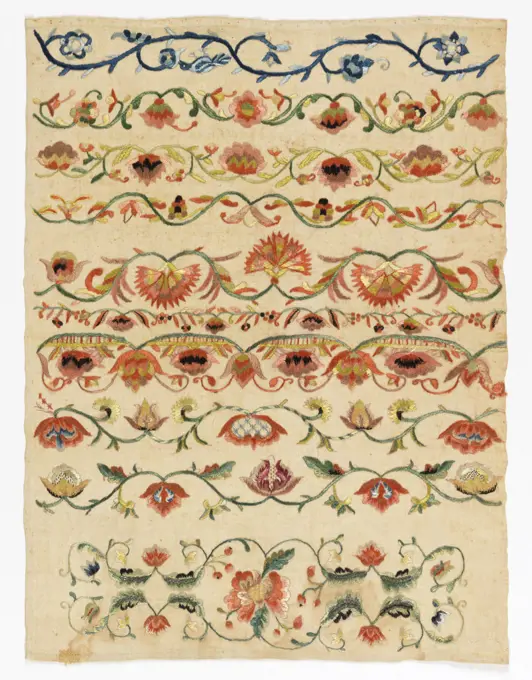
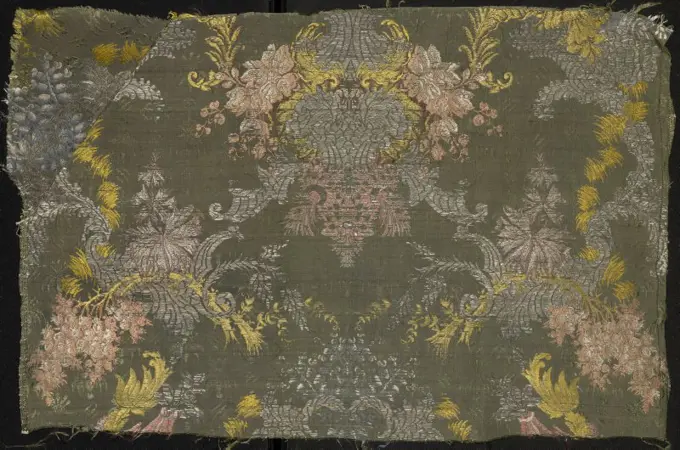
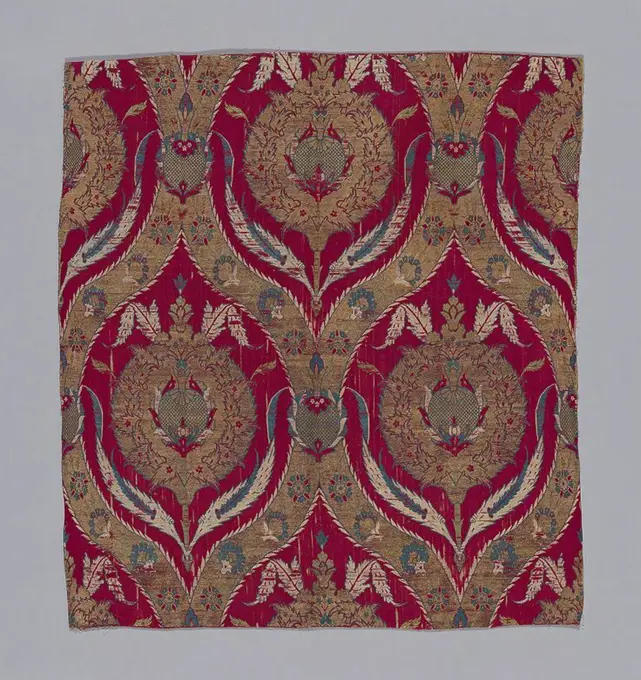
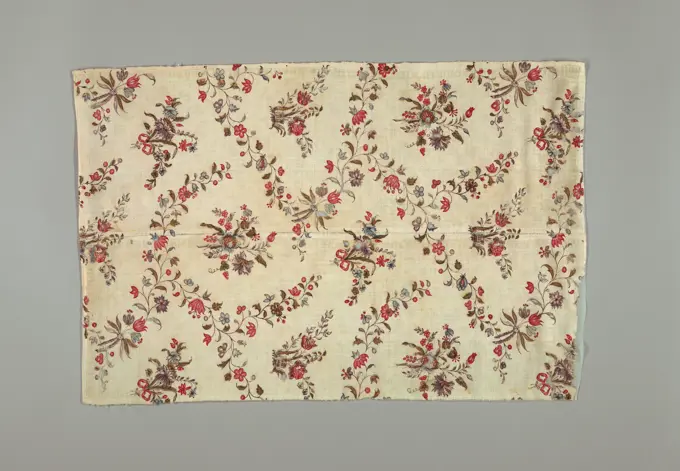
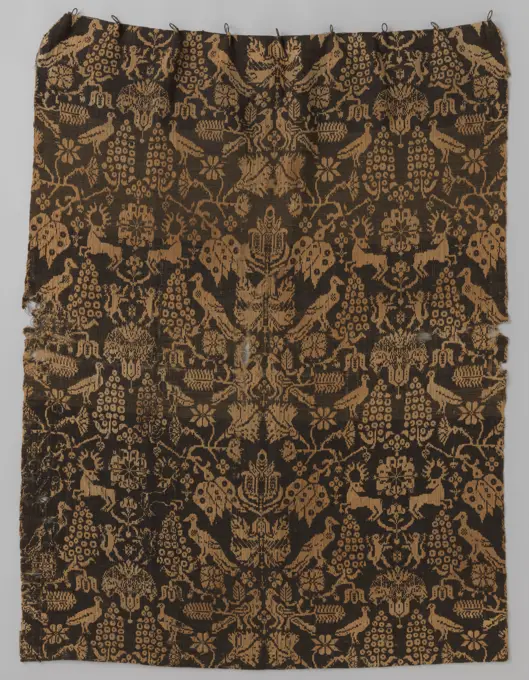
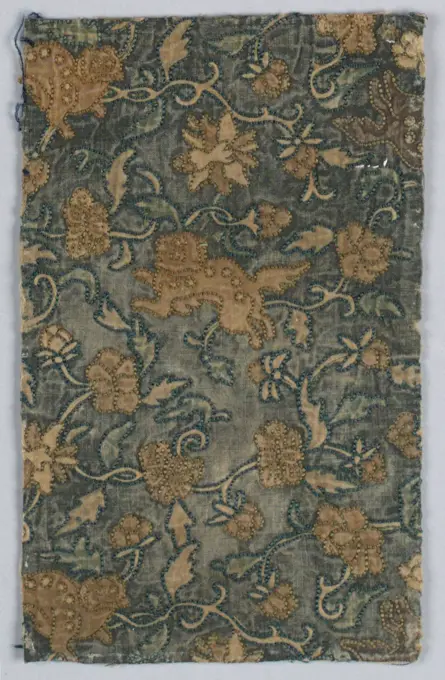
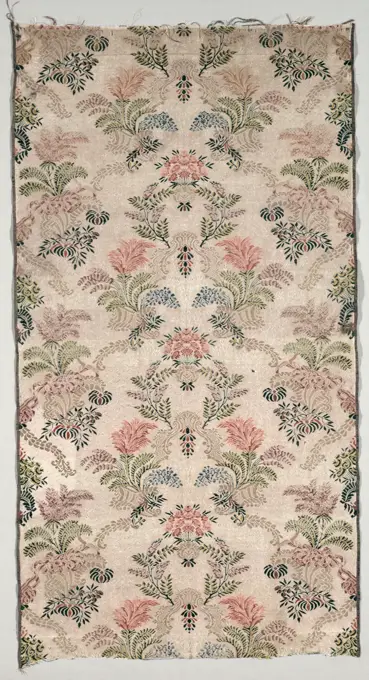
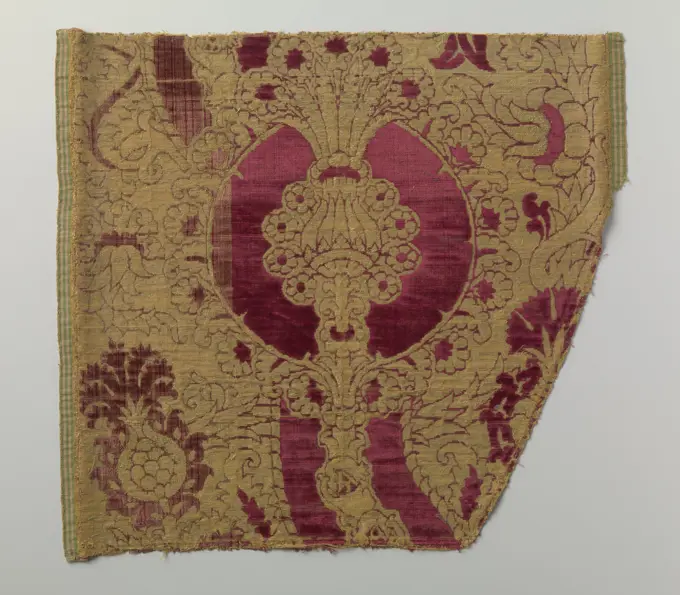
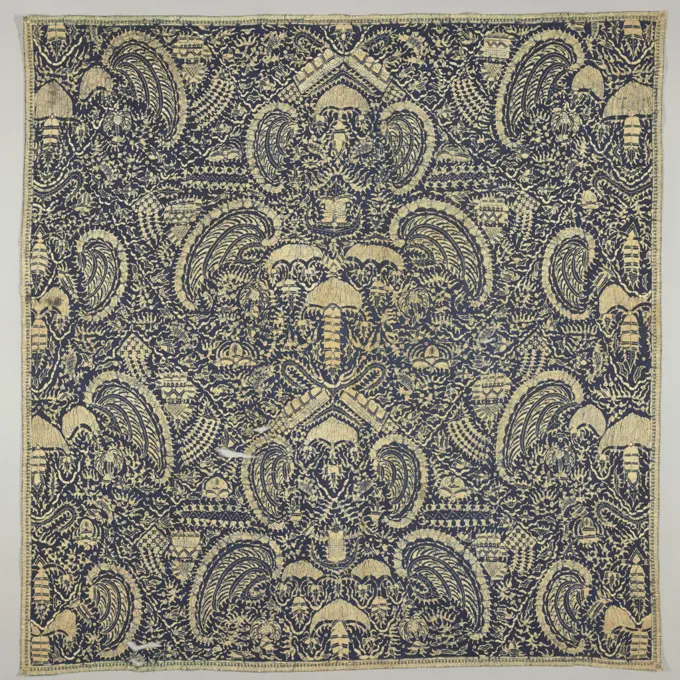
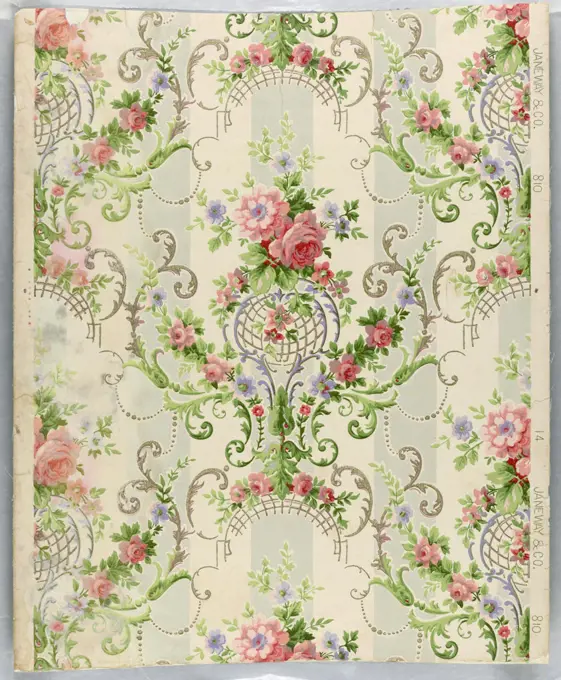
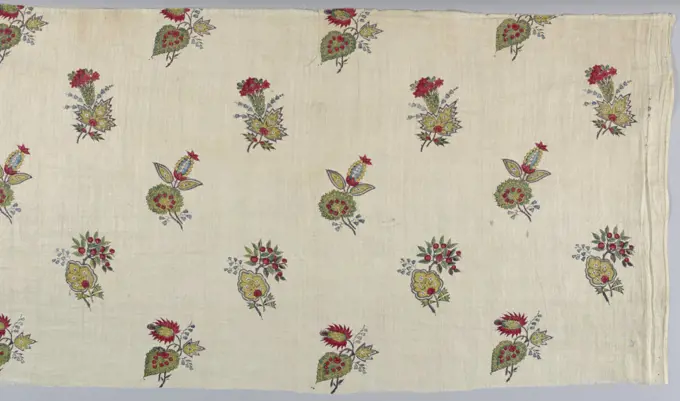
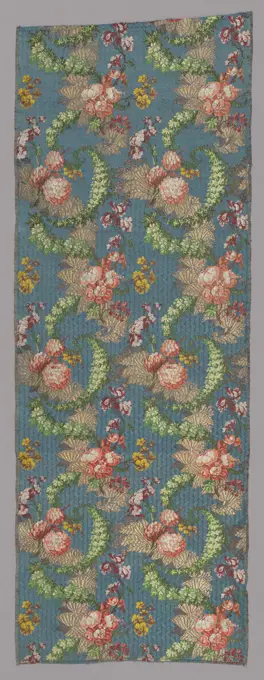
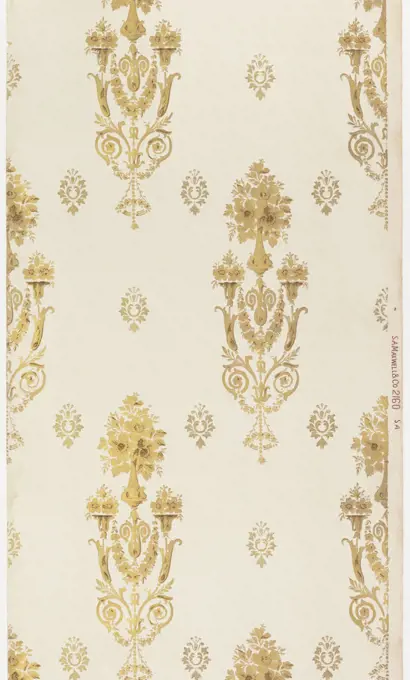
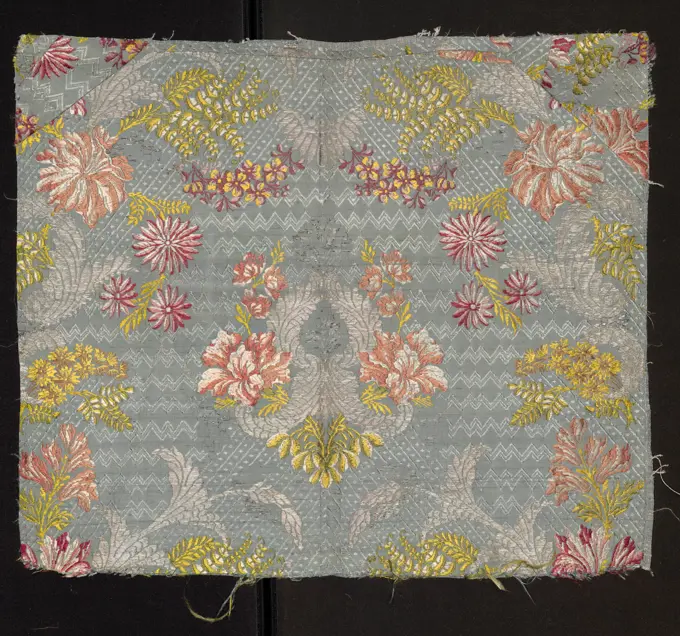
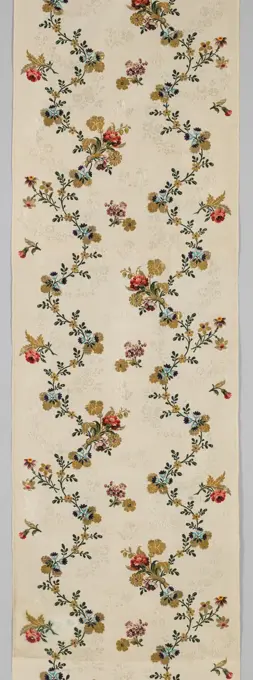
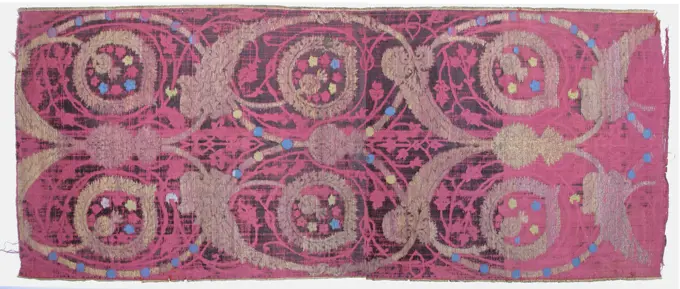
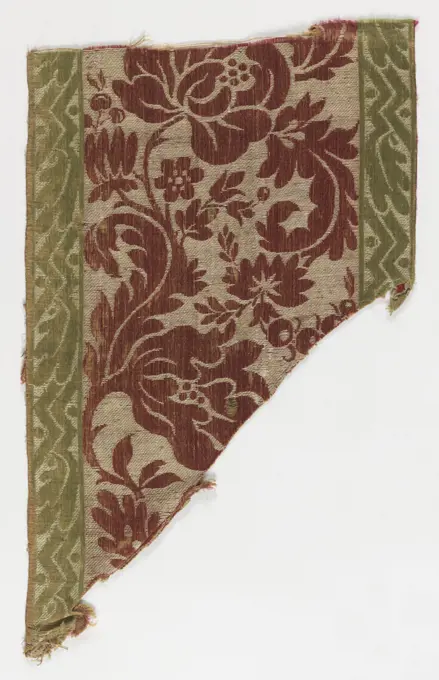
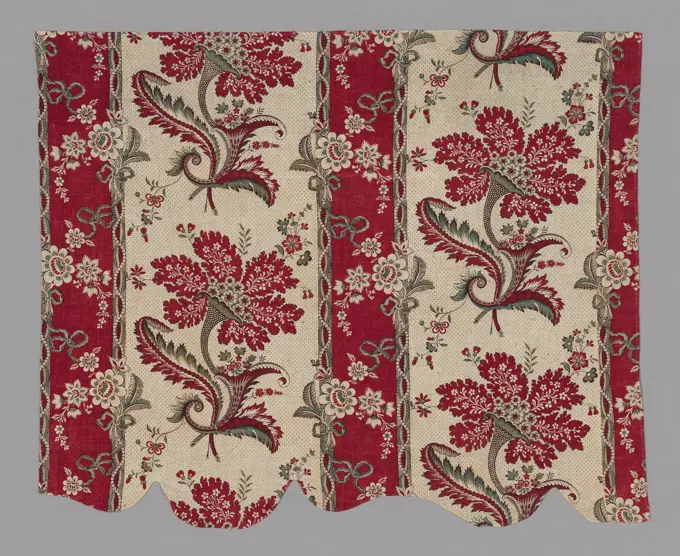
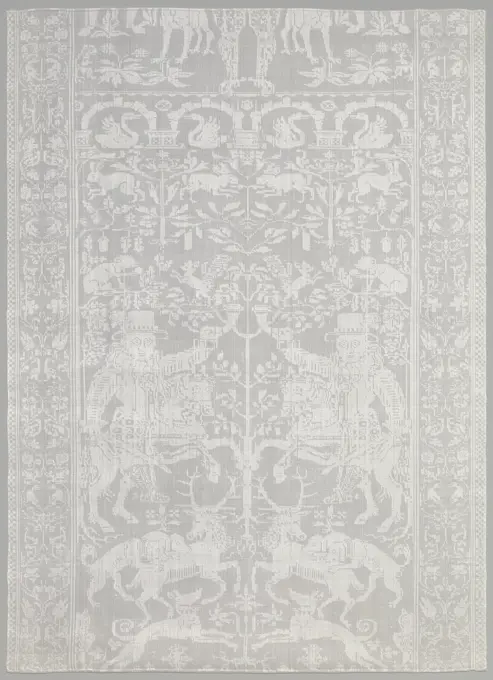
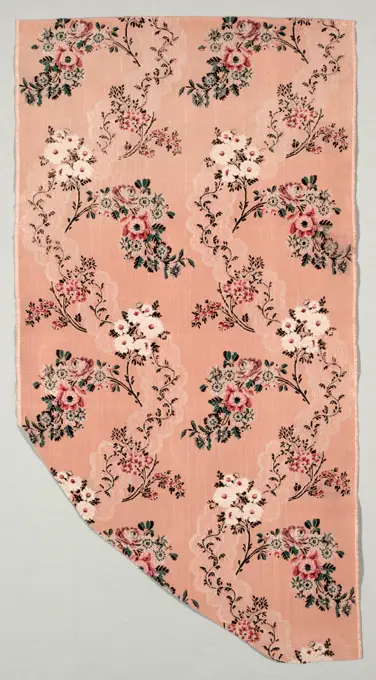
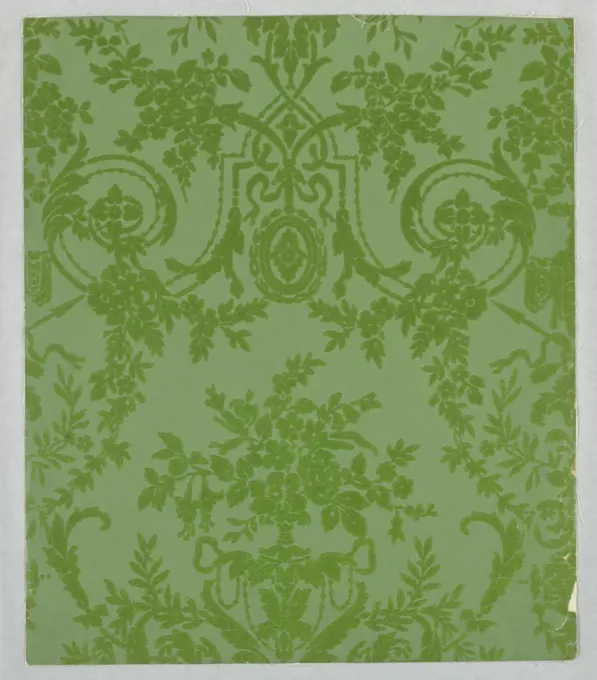
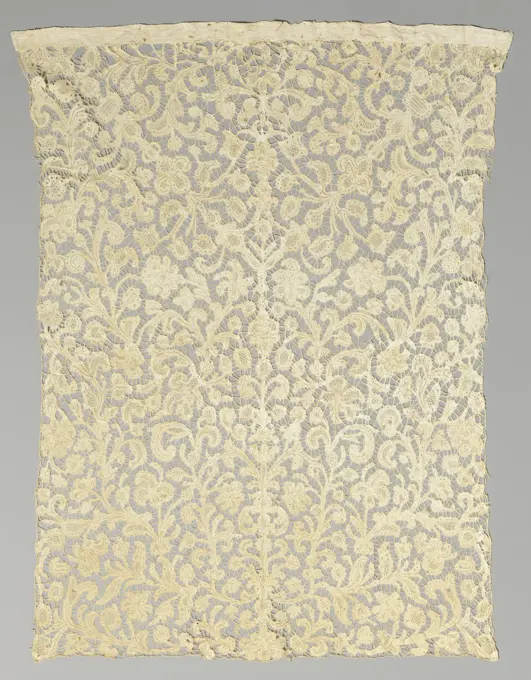
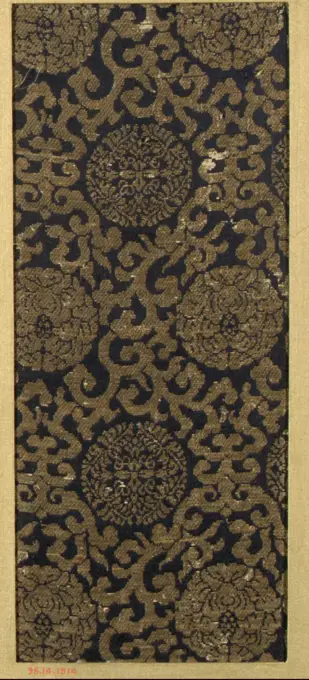
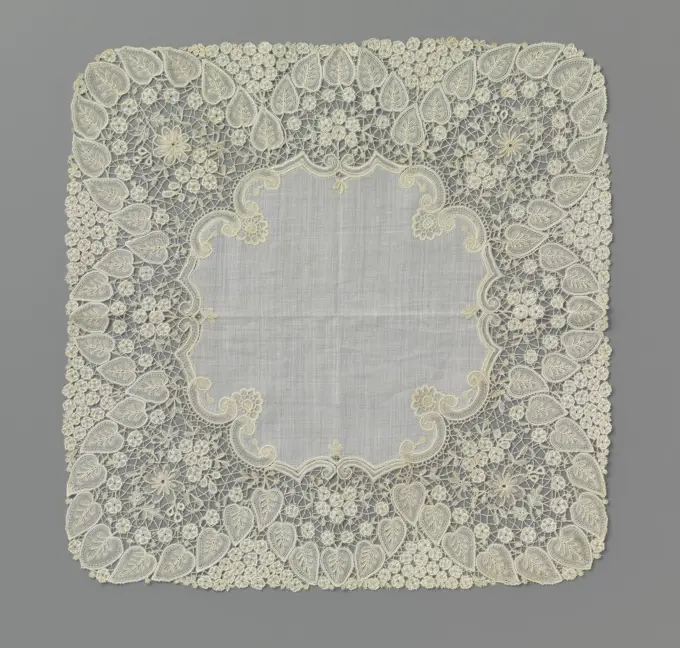
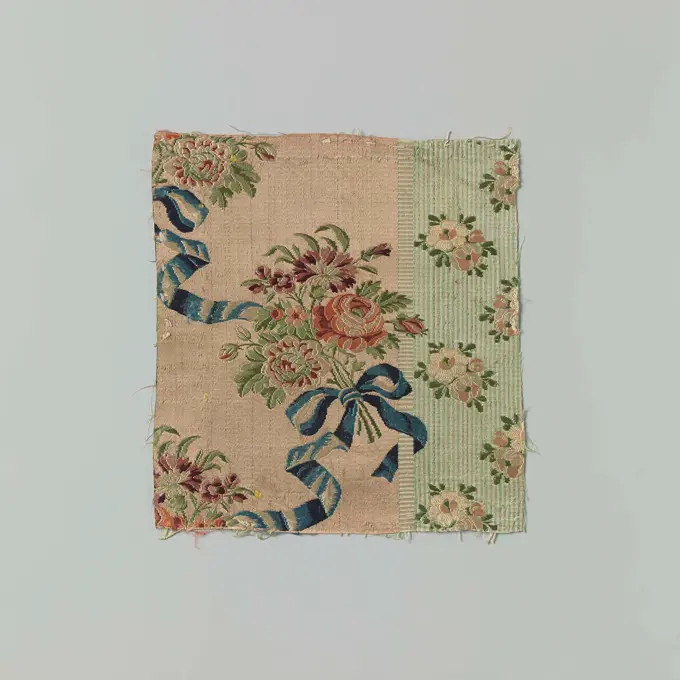
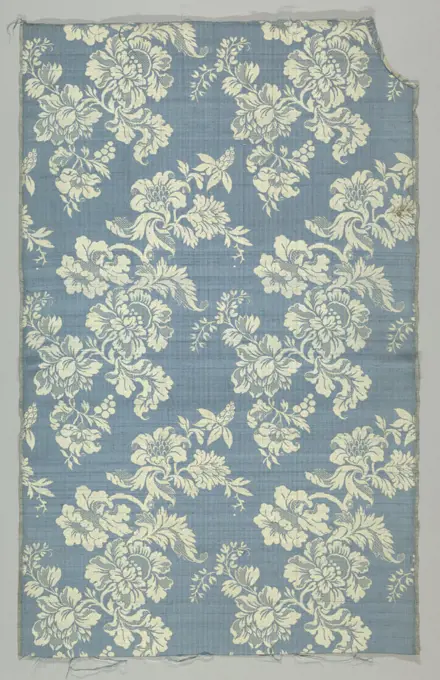
Textile, Medium: silk Technique: damask weave, Large diagonal arrangement of white flower sprays on a blue ground., England or France, 18th century, woven textiles, TextileFragment 17th century Italian. Fragment 230653Fragment of semi silksemi silk fabric  diverging rows of symmetrical flower motifs unknownTwo Joined Panels of Figured Silk, 1723-1774. France, 18th century, Period of Louis XV (1723-1774). Taffeta, brocaded; silk and silver thread; overall: 79 x 55 cm (31 1/8 x 21 5/8 in.).Piece 18th-19th century Japan. Piece 66052Textile, Medium: silk, 18th century, woven textiles, TextileFragment multicolored silk, anonymous, c. 1740 - c. 1760 A fragment silk tissue with a white soil on which white winding tendrils between which gold and multi-colored winding tifes. Netherlands silk. metal thread A fragment silk tissue with a white soil on which white winding tendrils between which gold and multi-colored winding tifes. Netherlands silk. metal threadPiece late 18th century Japan. Piece 65913Textile, Medium: silk Technique: 5-harness satin damask, Large-scale symmetrical fantastic flower-and-fruit design. Narrow plain cloth selvages with heavy warps., Spain, 17th century, woven textiles, TextileBaan silk tissue with bizarre pattern. Loan silk tissue from bubblered and launched lampas liséré. Dessin: bizarre pattern of versal with geometric motifs filled leaves and fruit shapes (pomegranates) In Écru (ground tissue), green (liséré), écru (launch), écru (launch), pink (launch) and gold thread (gold colored slats around sides core ) On green ground.Length. Artist: Anna Maria Garthwaite (British, 1690-1763). Culture: British, London, Spitalfields. Dimensions: Overall: 35 x 19 in. (88.9 x 48.3 cm). Maker: Woven by John Sabatier. Date: 1752. Museum: Metropolitan Museum of Art, New York, USA.Fragments of silk fabric  the motif of the lace river wavy with bouquets of flowers unknownTextile, Medium: silk Technique: 4&1 satin damask, An offset repetition of an eared vase holding flowers in red and white. Both selvages present., Spain, 17th century, woven textiles, TextileLeaf with berry branch swinging over a window pattern, anonymous, c. 1700 - c. 1850  Leaf with berry branch swinging over a window pattern. Half of a cover.  paper. block printing (relief printing process) ornament derived from plant forms. ornament ~ geometric motifsPiece 1735-50 British. Piece. British. 1735-50. Silk. Textiles-WovenSampler, Medium: silk and metal embroidery on linen foundation Technique: embroidered in satin, stem, running, and chain stitches on plain weave foundation, Floral bands in multicolor silk with metal sequins., Mexico, 19th century, embroidery & stitching, SamplerSidewall Sample; machine-printed on paper; 22.5 x 22.5 cm (8 7/8 x 8 7/8 in.)Fragment Made 1601-1700 Italy. Silk and linen, plain weave with supplementary patterning wefts bound by secondary binding warps in plain interlacings .Border, Medium: linen, silk Technique: plain weave embroidered using satin stitch, Cream-colored linen, plain cloth weave, worked in bright rose or magenta silk; the design arranged perpendicularly is of a symmetrical vine and flower, with confronted peacocks in the foliage, and above, framed by vines, a crowned eagle with spread wings. This section of design is set off by straight border stripe of embroidery, and at edges are borders of flower heads on curving stems. The stitch is a loose satin stitch. Parts of design characterized by a spiked outline, sometimes found in Spanish embroidery. Design ends at bottom but piece is cut at top indicating that panel was originally longer., Spain, 18th century, embroidery & stitching, BorderFragment 16th-17th century Italian. Fragment 230172Piece of fabric. unknown, authorFragment. Turkey, Bursa. Date: 1540-1560. Dimensions: 71.8 x 65.1 cm (28 x 25 5/8 in.). Silk, "gold" metal-wrapped silk threads, warp float-faced satin foundation weave with a supplementary twill weave and supplementary brocading wefts bound in a twill order. Origin: Turkey. Museum: The Chicago Art Institute, Chicago, USA.Textile, Medium: silk, metal Technique: woven, Fragment with a continuous symmetrical pattern reversed on the center line of the fabric. Ornate leaf forms, one on top of the other, surrounded by a leafy scroll frame. Pattern in gold and silver outlined by ivory silk on a gold background., Russia, 18th century, woven textiles, TextileExcerpt red double fabric with pattern of scalloped medallions filled with dragon, anonymous, c. 1250 - c. 1299 Red side fragment with pattern in gold from scalloped medallions filled with dragon and surrounded by Rinceaux. Central Asia Ketting an element: Silk. Red side fragment with pattern in gold from scalloped medallions filled with dragon and surrounded by Rinceaux. Central Asia Ketting an element: Silk.Textile; cottonPiece 18th-19th century Japan. Piece. Japan. 18th-19th century. Silk. Textiles-WovenTextile; silkTextile (Switzerland); cotton; 1955-174-4-a,bTextile, Medium: silk, metallic thread Technique: plain weave with supplementary weft, Solid gold and silver brocade. Design of serpentine branches with blossoms, grapes and wheat. Grapes and blossoms are in high relief., Russia, 18th century, woven textiles, TextileSidewall Sample; machine-printed on paper; 22.5 x 22.5 cm (8 7/8 x 8 7/8 in.)Fragment Made 1715-1729 England. Silk, silvered-metal-strip-wrapped silk, warp-float faced 7 1 satin weave with supplementary brocading wefts and self-patterned by ground wefts .Velvet, 1600s. China, 17th century. Velvet; overall: 36.2 x 41.3 cm (14 1/4 x 16 1/4 in.).Bed curtain of "Beider wall" tissue in black and white ,, 1650 - 1700 Bed curtain of so -called "both wall" tissue. The pattern in black and white, is infinite and symmetrical on vertical axes. The drawing consists of birds, deer, palmets, carnations, tulips and grape bunches. The texture is a double tissue, so that on one side the pattern is black on black on the other black and white. The curtain is made of wool and linen. East Friesland wool. linen (material) Bed curtain of so -called "both wall" tissue. The pattern in black and white, is infinite and symmetrical on vertical axes. The drawing consists of birds, deer, palmets, carnations, tulips and grape bunches. The texture is a double tissue, so that on one side the pattern is black on black on the other black and white. The curtain is made of wool and linen. East Friesland wool. linen (material)Fragment; silk on cotton; Bequest of Marian Hague; 1971-50-148Fragment (France); silk; Warp x Weft: 200 x 151.5 cm (6 ft. 6 3/4 in. x 59 5/8 in.)Cover 1730-50 Flemish, Brussels. Cover 227692Length of Silk, 1700s. Italy, 18th century. Damask, brocaded; silk and metal; average: 104.8 x 55.9 cm (41 1/4 x 22 in.).Fragment multicolor silk satin. Fragment green silk tissue with colored floral drinks, fruits and leaves.Fragments (France); silkFragment of a Hanging. Dimensions: H. 76 in. (193 cm)W. 13 1/2 in. (34.3 cm). Date: 18th century.Textile panels such as this with borders on three sides were joined and hung vertically as curtains. Many of them were finely embroidered and were intended to adorn beds, specifically those in bridal chambers. Typically the design of these panels is a vertical row of five or more floral medallions running down the center. Museum: Metropolitan Museum of Art, New York, USA.Fragment of silk fabric  pattern made of stripes filled by turns with motifs of river” and flower twig unknownE Pluribus Unum (From the Many, One) (Furnishing Fabric) Made 1825-1835 Manchester. Cotton, plain weave; engraved roller printed; glazed .Textile Fragment ca. 1570-80 The unusual length of this silk fragment suggests that it may have been used as a furnishing fabric rather than for a garment. It bears a repeating ogival pattern in silver, blue, and gold on a red ground, with red, blue, and silver floral patterns within the ogival forms. The small red-and-white checkered motifs that fill the scrolling borders around the ogival medallions may be derived from Italian textiles, demonstrating the cultural and artistic relationship between Italy and the Ottoman Empire in the sixteenth century. Textile Fragment 450518Textile; silkTextile; Manufactured by Cheney Brothers (United States); silkFragment silk velvet brokate with pattern of flowers and fruits in red and gold, anonymous, c. 1400 - c. 1499 Fragment silk velvet brokate with pattern of flowers and fruits in red and gold. Italy, 15th century. Green white striped self -sided. Italy silk. cotton (textile). metal thread Velvet chiseled Fragment silk velvet brokate with pattern of flowers and fruits in red and gold. Italy, 15th century. Green white striped self -sided. Italy silk. cotton (textile). metal thread Velvet chiseledTextile, Medium: silk, metal thread Technique: embroidery on plain/ribbed weave, Embroidered in serpentine design of leaves, tendrils and ribbons, in light colored silks and metal thread., 18th century, embroidery & stitching, TextileSidewall (USA); Manufactured by William H. Mairs and Company; machine-printed, mica; 59 x 49 cm (23 1/4 x 19 5/16 in.)Head cloth (kain kepala), Medium: cotton Technique: wax resist dyeing (batik) on plain weave, Square textile (may be a head cloth or 'kain kepala') with symmetrical 'mirong' motif (wings of Garuda, mount of Vishnu) on ground covered with crayfish, birds, etc. In beige with blue crackle on dark blue ground. Narrow border on four sides: plain cloth selvedges on two and the other two are handhemmed., Indonesia, early 19th century, printed, dyed & painted textiles, Head cloth (kain kepala)Fragment, 1700s. China, 18th century. Silk; overall: 19.7 x 15.9 cm (7 3/4 x 6 1/4 in.).Textile (France); cotton; Warp: 227cm (89in.). Weft: 71.5cm (228 1/8in.) Height of repeat: 43.5cm. ; Bequest of Elinor Merrell; 1995-50-211Sidewall, Janeway & Co. Inc., New Brunswick, New Jersey, 1848 - 1914, Machine-printed on paper, Modified rococo design of green and gold scrolls, sprays of roses are festooned over scrolls. The background is composed of two wide stripes, one gray and the other ivory. Printed on margin: '14, Janeway & Co., 810'. Printed in rose, green, mauve and gold on gray and ivory., New Brunswick, New Jersey, USA, 1890-1900, Wallcoverings, SidewallFragment; medium; linen, silk, woolLengths of Textile, 1700s. Italy, 18th century. Brocade; silk and metal; average: 83.3 x 53.7 cm (32 13/16 x 21 1/8 in.).Piece 18th-19th century Japan. Piece 66402Textile, Oberkampf & Cie., (Jouy-en-Josas, France, 1759-1815), Medium: cotton Technique: block printed and painted on plain weave, blue and yellow applied by hand, Printed cotton with a straight repeat of four offset, slightly dovetailed rows of flowers, a different flower in each row. The flowers, in black, blue, green, yellow and red, are widely spaced on the white fabric., Jouy, France, 1775-85, printed, dyed & painted textiles, TextileLength of Woven Silk Made 1735-1745 France. In the 1730s a French designer named Jean Revel invented a technique for creating color shading in woven textile designs. This allowed for an increased appearance of volume in the depicted objects, such as the flowers, fruits, and leaves in this example.. Silk, gilt-and-silvered-metal-strip-wrapped silk and silvered-metal strips, satin weave with brocading wefts and self-patterning plain interlacings of secondary binding warps and ground wefts . Style of Jean Baptiste PillementFragment; silk, metallic threadSidewall, Maxwell & Co., S.A., Chicago, Illinois, USA, Machine-printed paper, ribbed, liquid mica, Repeating motif of a floral bouquet in vase, atop two acanthus scrolls that support two more bouquets and a swag, with a wreath below. Smaller floral motifs across background. Design imitates the stamped foil designs from the mid-nineteenth century. Printed in metallic gold on white ribbed ground., USA, 1905-1915, Wallcoverings, SidewallPiece 18th century Japan. Piece 71371Silk Fragment, 1600s. Italy, 17th century. Lampas weave; overall: 40.7 x 41.3 cm (16 x 16 1/4 in.).Embroidered Fragment, 18th-19th century. Spain, 18th-19th century. Embroidered cotton; average: 23.5 x 21.3 cm (9 1/4 x 8 3/8 in.).Statue robe mid-18th century Italian. Statue robe 227786Piece 18th century China. Piece 71443Fragment of the fabric;  18th century (1701-00-00-1800-00-00);fabricsManipel of green silk flaw, c. 1500 - c. 1599 Manipel of green conseled velvet on the ground of gold -colored taf, a pattern of small leaves bent around a diamond -shaped figure, in green velvet of cutting and drawn pole. A rectangular piece has been made of the manipel, for the exhibition at the collection of tissues. The manipel belongs to a kazuifel (BK-NM-11587-A) and a Stola (BK-NM-11587-C). Italy silk. velvet (fabric weave) Manipel of green conseled velvet on the ground of gold -colored taf, a pattern of small leaves bent around a diamond -shaped figure, in green velvet of cutting and drawn pole. A rectangular piece has been made of the manipel, for the exhibition at the collection of tissues. The manipel belongs to a kazuifel (BK-NM-11587-A) and a Stola (BK-NM-11587-C). Italy silk. velvet (fabric weave)Piece ca. 1750 British, London, Spitalfields. Piece. British, London, Spitalfields. ca. 1750. Silk and metal thread. Textiles-WovenTextile (France); silk; Warp x Weft: 239 x 161 cm (7 ft. 10 1/8 in. x 5 ft. 3 3/8 in.); 1951-9-1Panel (Dress Fabric) Made 1601-1700 Iran. Silk, 2 1 twill weave, with complementary weft plain weave double cloth .Textile (France); cotton; Warp x Weft: 41 x 101 cm (16 1/8 x 39 3/4 in.); Bequest of Elinor Merrell; 1995-50-255Piece 19th century Japan. Piece 71742Fragment of a Bed Curtain, 1800s. Greece, Cyclades Islands, Naxos, 19th century. Embroidery: silk on linen tabby ground; overall: 111.8 x 45.1 cm (44 x 17 3/4 in.).Textile; silkTextile, Medium: bast fiber Technique: resist patterning on plain weave, Textile with pattern of blue resist on ivory showing an ogee lattice enclosing small rosettes and diamonds. Resist medium probably applied by block printing., France, 18th century, printed, dyed & painted textiles, TextilePiece 18th-19th century Japan. Piece 66468Textile Fragment 17th century. Textile Fragment 452091Piece 16th-17th century Italian. Piece 223582Genop and sliced velvet with stylized flower gardens, in light green blue, company H.P. Mutters, c. 1920 - c. 1930 Coverage or spancing fabric of genop and cut velvet with stylized flower gardens, in light green blue. The Hague silk velvet (fabric weave) Coverage or spancing fabric of genop and cut velvet with stylized flower gardens, in light green blue. The Hague silk velvet (fabric weave)Border, Illinois W.P. Mills, Machine-printed, Vining floral with pink and red flowers, printed over background of mica-striped white., Illinois, USA, 1900-1920, Wallcoverings, BorderFragment, Medium: silk Technique: brocatelle, Narrow band with red flowers, leaves and berries on a beige ground and borders of green leafy zigzags., Italy or Spain, 17th century, woven textiles, FragmentThe Flowering Cornucopia (La Corne Fleurie) Made 1789-1850 Bordeaux. Cotton, plain weave; block printed . J. P. Meillier et Cie. (Producer)napkin with swans under bridge, anonymous, 1610 - 1630 White linen Damas napkin with a yacht and swans under the bridge. Brand Kroon HW 23 Haarlem linen (material) damask White linen Damas napkin with a yacht and swans under the bridge. Brand Kroon HW 23 Haarlem linen (material) damaskLength of Textile, 1723-1774. France, 18th century, Period of Louis XV (1723-1774). Brocade, silk; overall: 101.9 x 53.7 cm (40 1/8 x 21 1/8 in.).Sidewall (USA); Manufactured by Alfred Peats Company; machine-printed paper, ungrounded, liquid mica; 92 x 49 cm (36 1/4 x 19 5/16 in.)Fragment. Italy. Date: 1601-1625. Dimensions: 24 x 14.5 cm (9 1/2 x 5 5/8 in.). Silk, cut, uncut, voided velvet with additional patterning wefts of gilt string against plain weave foundation. Origin: Italy. Museum: The Chicago Art Institute, USA.Textile, Medium: cotton Technique: block printed on plain weave, Fragment of printed cotton with a square arrangment of symmetrical cartouches containting floral ornament, with another symmetrical floral cartouche filling the interspace. In red and black on a white ground with red and black picotage., 1750-1800, printed, dyed & painted textiles, TextileFragment; silk; Bequest of Richard Cranch Greenleaf in memory of his mother, Adeline Emma Greenleaf; 1962-56-42Textile, Medium: linen Technique: block printed on plain weave Label: block printed on linen, Realistic large-scale design of branches with blossoms and fruit turning off the stem alternately to left and right. The red is printed by wood block on a tan ground, with sable effect in the petals and fruits., Russia, 18th century, printed, dyed & painted textiles, TextileSidewall, Block-printed, flocked, embossed, Design derived from a French silk voided velvet of the Louis XVI period. Urns filled with bouquets of assorted flowers, connected with delicate festoons and slender scrolls of acanthus leaves, typical of the period. Silk flock design on an embossed field of fine horizontal lines., USA, 1920, Wallcoverings, SidewallPredicted cloth or church van van Kloskant with Kandelaber motif, anonymous, c. 1675 - c. 1699 Predicted for an altar or a church van of natural -colored bobbin: Old Flemish bobbin with braid soil. Standing rectangular model. The symmetrical pattern consists of a candle pattern in the center from which volute vines waves with branches. The motifs are made in linen battle with openwork edges and substantial recesses. The motifs are connected by a potented braid ground. Decorative lands have been used in leaves and flower hearts. At the top the side is finished with a woven linen strap, the other sides are finished with a straight trens with picots. Flanders linen (material) bobbin lace / Flemish lace with plaited ground Predicted for an altar or a church van of natural -colored bobbin: Old Flemish bobbin with braid soil. Standing rectangular model. The symmetrical pattern consists of a candle pattern in the center from which volute vines waves with branches. The motifs are made in linenBedcover (Album Quilt) Made 1857 Pennsylvania. Cotton, plain weave, pieced; appliquÈd with cotton, plain weave, printed, embroidered in cotton threads in buttonhole and chain stitches; quilted; backed with cotton, plain weave .Piece 18th-19th century Japan. Piece 65826Band 18th century China. Band. China. 18th century. Brocaded satin with two running dragons. Qing dynasty (1644-1911). Textiles-WovenPiece 18th-19th century Japan. Piece 67626Handkerchief with a border of bobbin with lilac leaves, anonymous, c. 1900 Handkerchief with a lobed batist center and a border of natural-colored bobbin side: Duchesse side. Around a lobbed batist center, an edge of the side runs with an open braid ground. A symmetrical pattern shows eight large, deep scumples that are made up of a pendulum of hanging poding leaves. Inside there is a daisy between loose blossoms. There are bunches of lilac flowers in the swing, creating a rounded, almost square circumference. Brussels linen (material) bobbin lace Handkerchief with a lobed batist center and a border of natural-colored bobbin side: Duchesse side. Around a lobbed batist center, an edge of the side runs with an open braid ground. A symmetrical pattern shows eight large, deep scumples that are made up of a pendulum of hanging poding leaves. Inside there is a daisy between loose blossoms. There are bunches of lilac flowers in the swing, creating a rounded, almost square circumference. BrussFragment of silk fabric  brocade, colourful sprays of flowers unknownFragment Multicolored silk Mexicainian. Fragment multicolor silk tissue. Part of the fragment has a green striped soil on which pink flowers. Part of the fragment has a brown soil on which flower bouquets in Roo, purple and white, stretched through a blue ribbon and connected to each other.Cover clothing, made of four strips of Zijddamast, lined with silk and trimmed with galon., 1900 - 1950 Cover clothing, made of four strips sewn together yellow silk daamast with a large -scale design of flowers and leaves. Paid with metal strips galon. North Europe silk. metal thread damask Cover clothing, made of four strips sewn together yellow silk daamast with a large -scale design of flowers and leaves. Paid with metal strips galon. North Europe silk. metal thread damaskSidewall (USA); Manufactured by F. E. James Co.; machine-printed paper, liquid mica; 93 x 49 cm (36 5/8 x 19 5/16 in.)Fragment, Medium: silk, linen Technique: woven (brocatelle), Strapwork with checkerboard shield shapes and foliage in red, yellow and white. Both selvages present., 17th century, woven textiles, Fragment