Textile Patterns and Fabrics

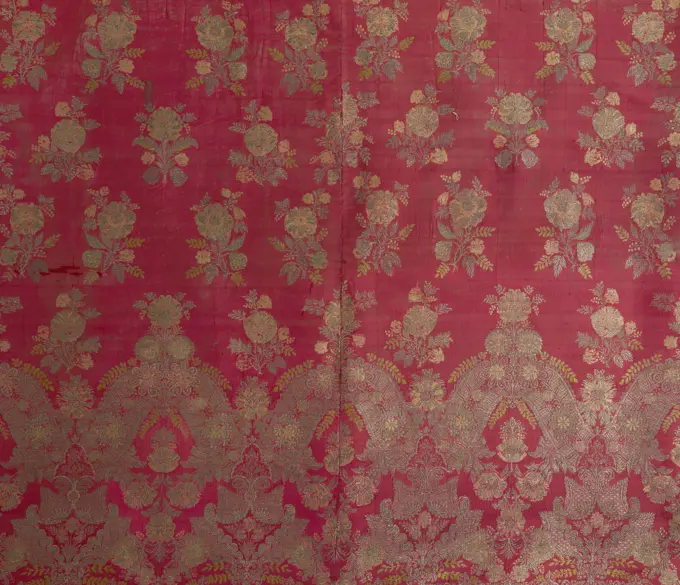
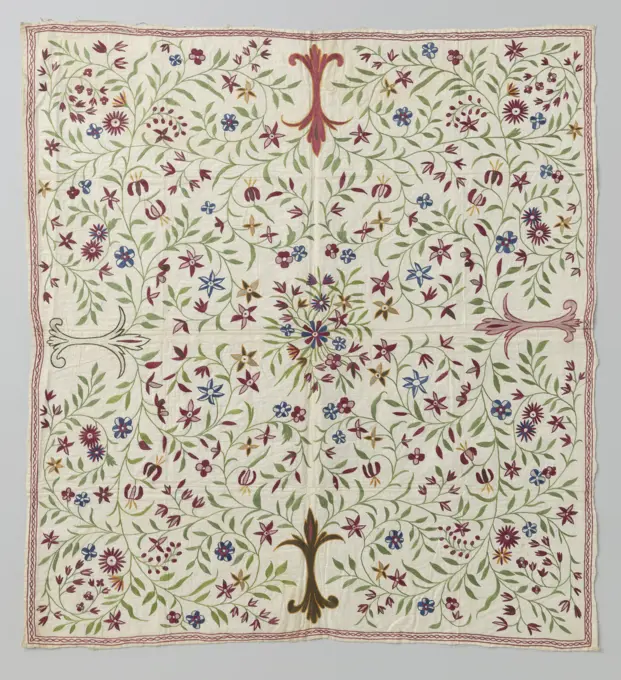
An array of woven textiles featuring floral and ornamental designs. Soft color palettes in silk and other materials depict historical craftsmanship.

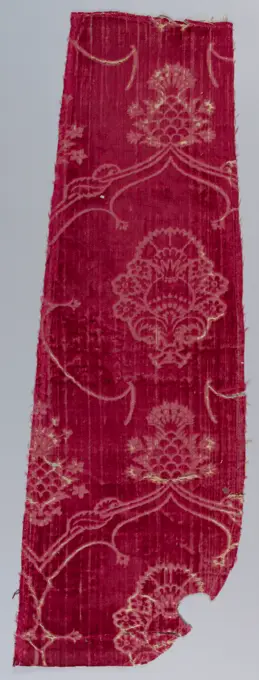
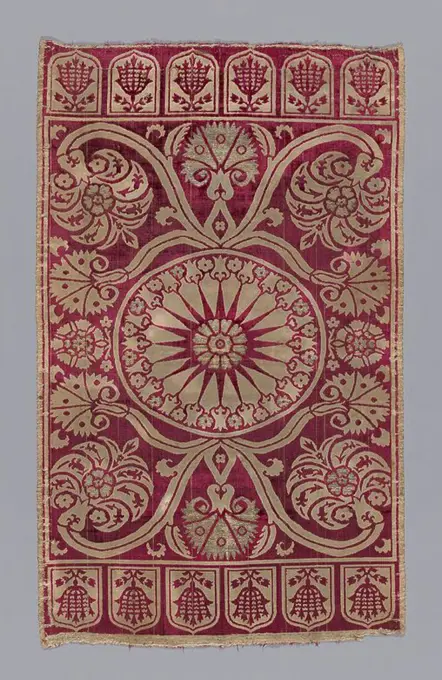
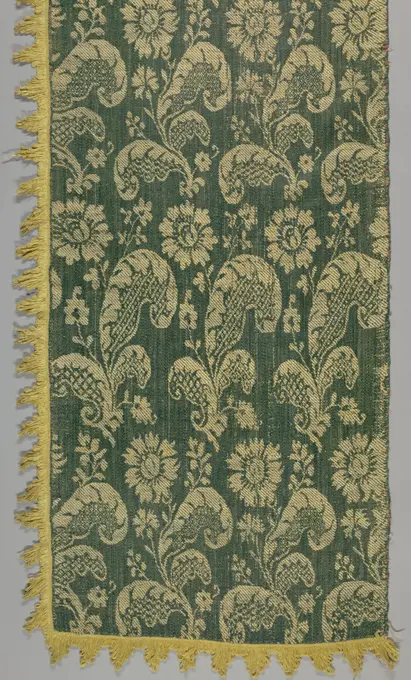
Textile, Medium: silk Technique: 5-harness satin damask, Large-scale symmetrical fantastic flower-and-fruit design. Narrow plain cloth selvages with heavy warps., Spain, 17th century, woven textiles, Textile
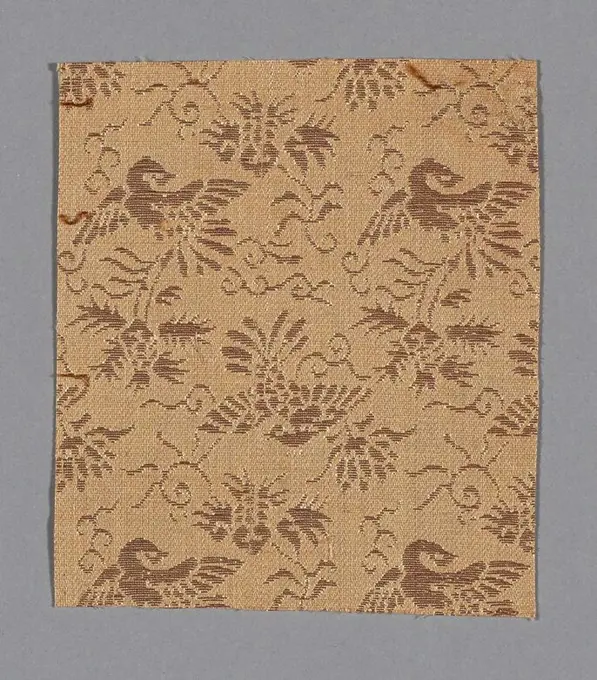
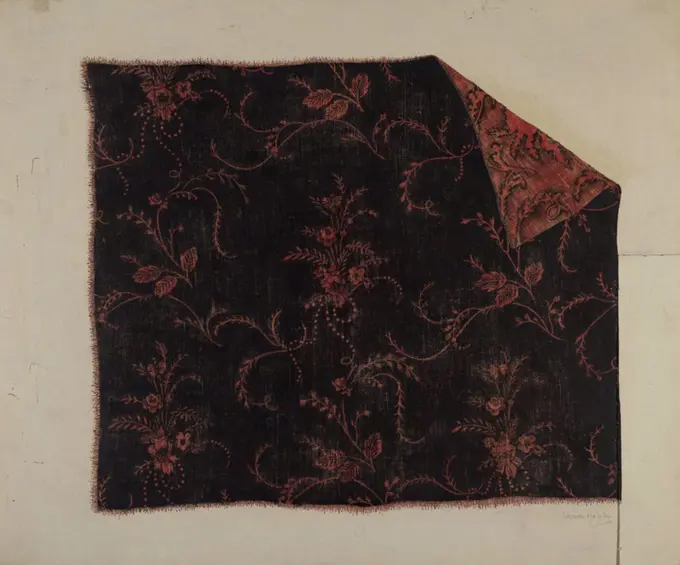
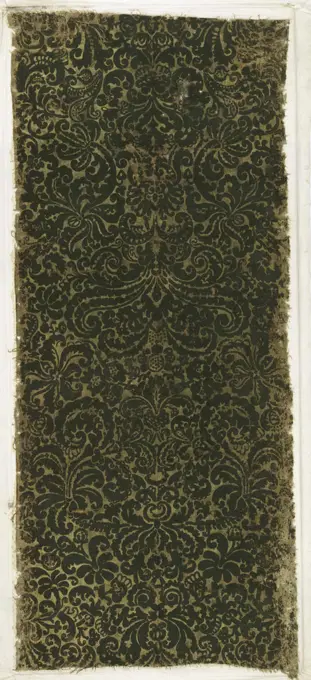
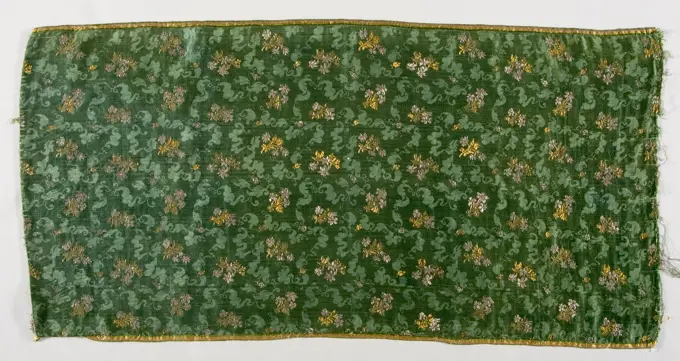
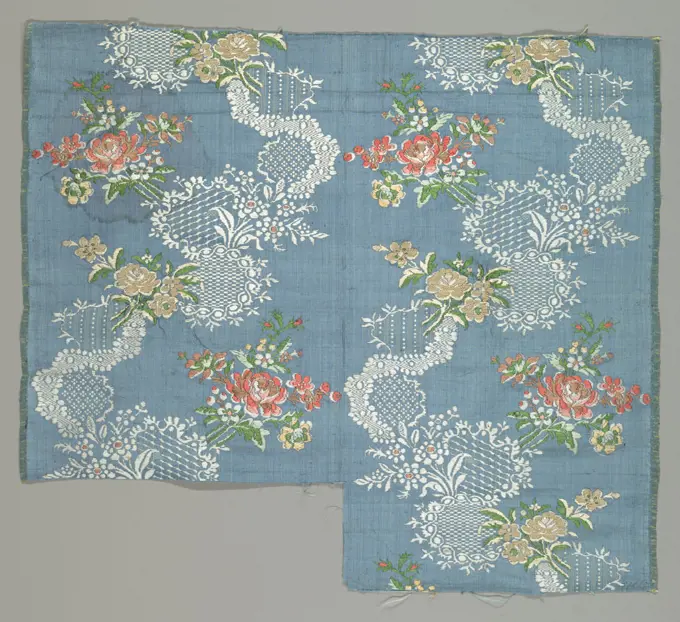
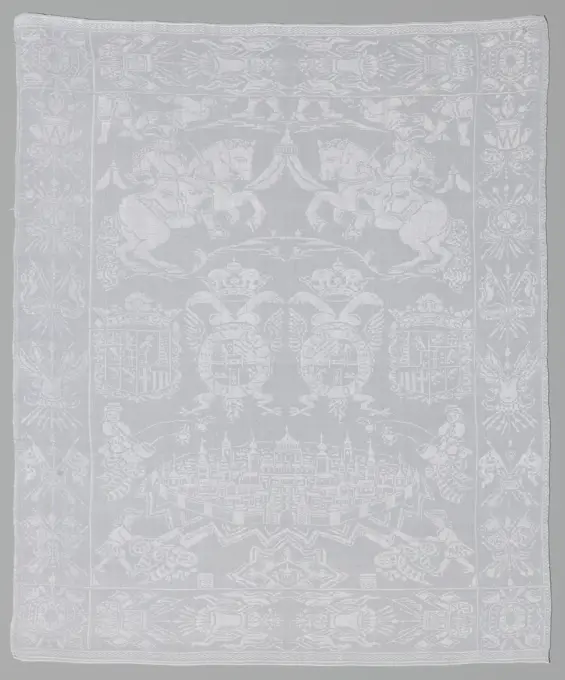
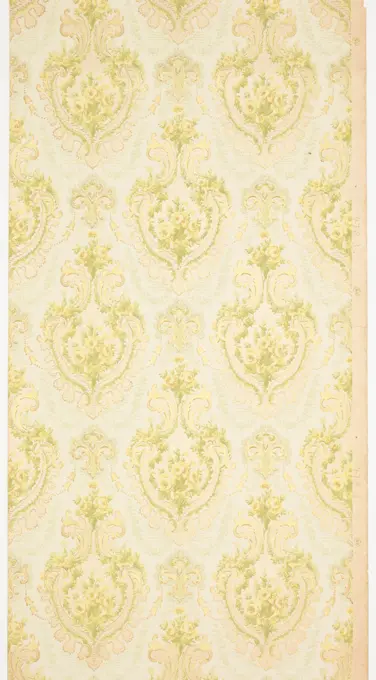
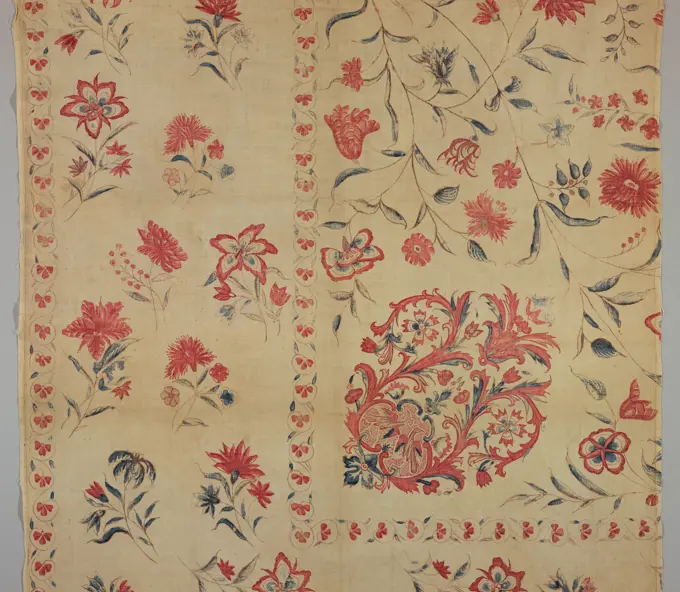
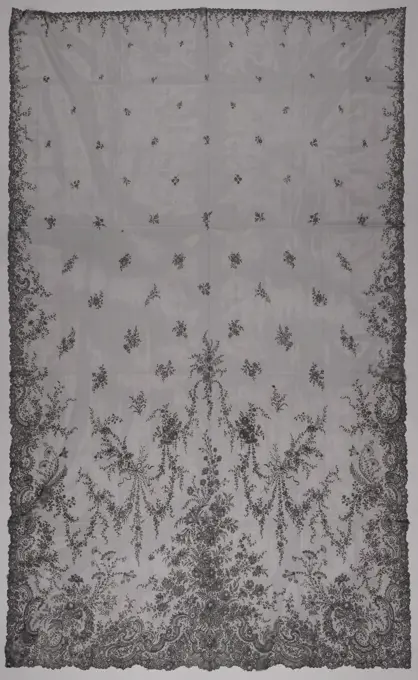
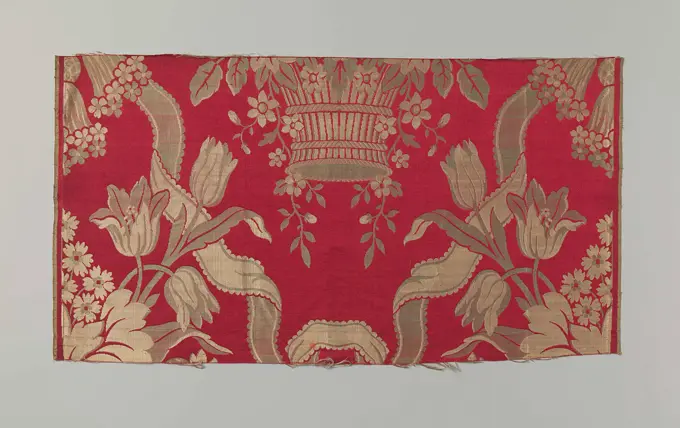
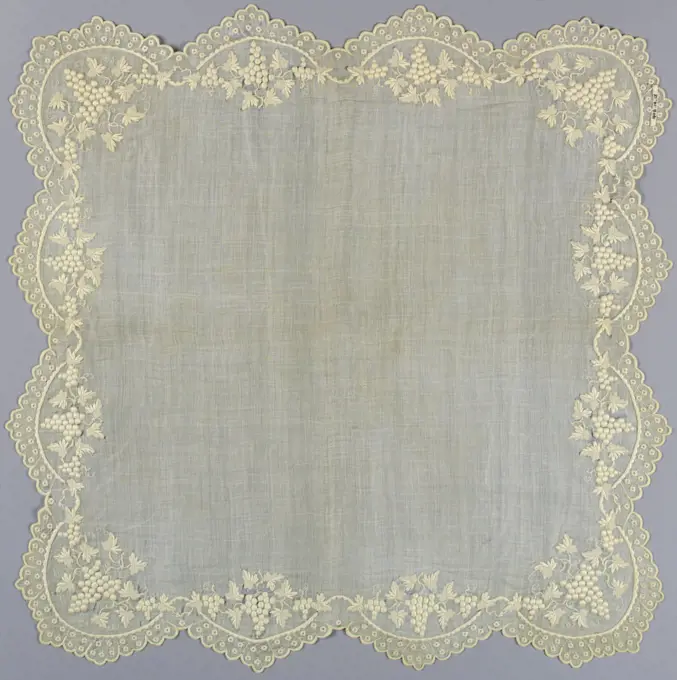
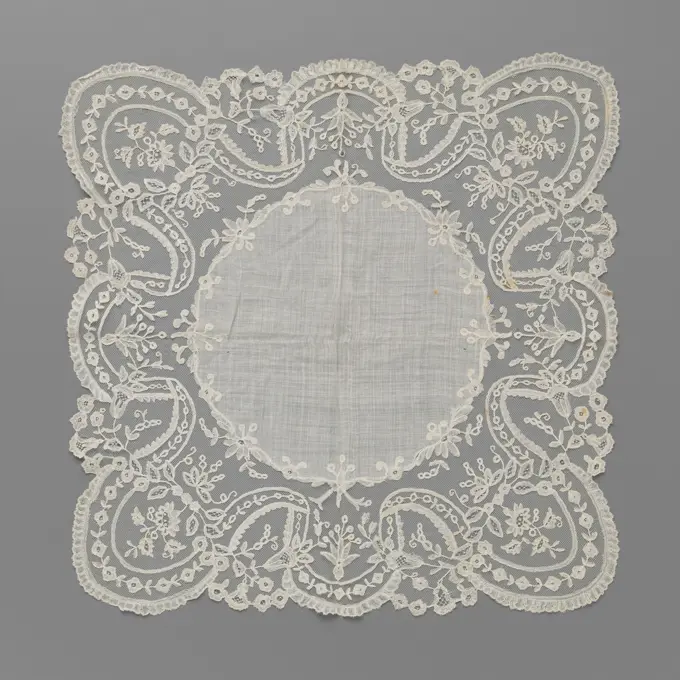
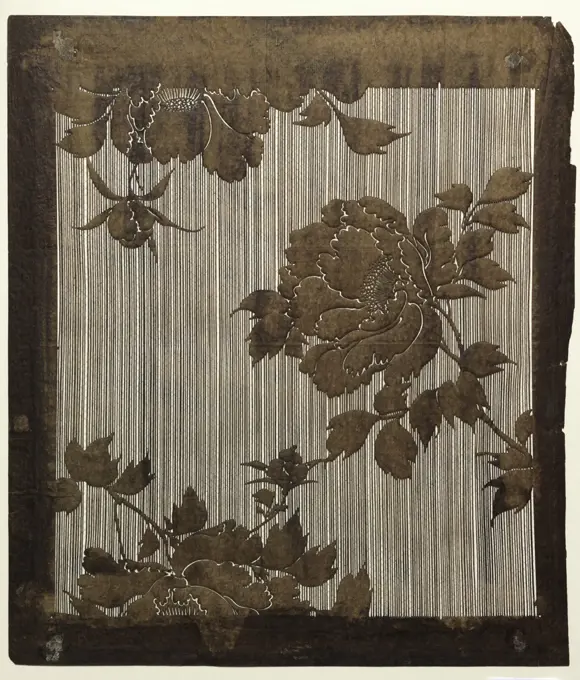
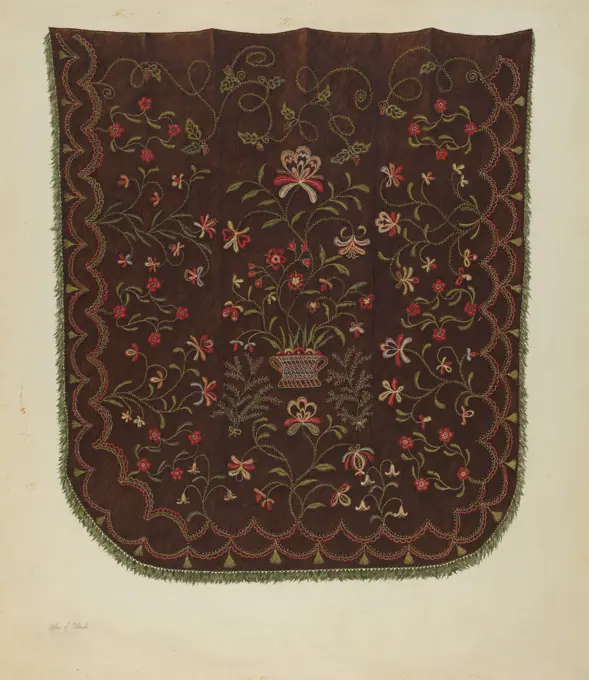
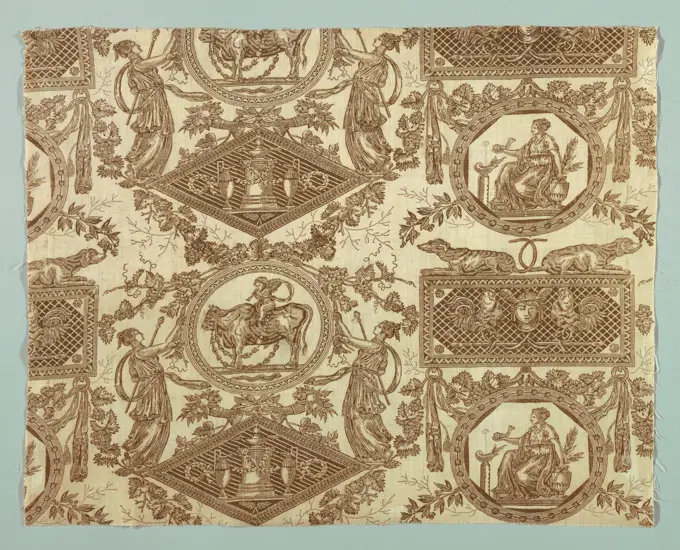
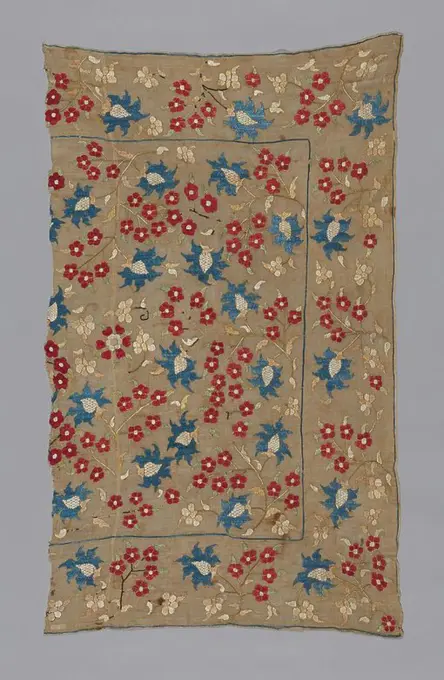
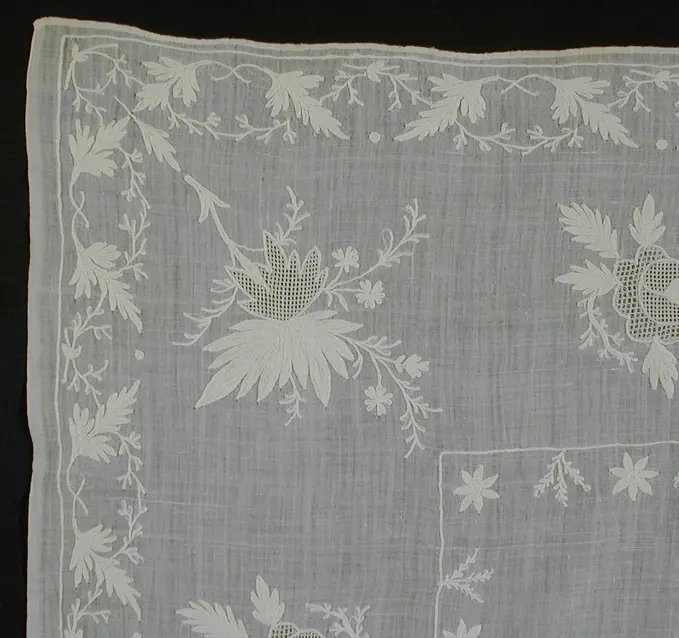
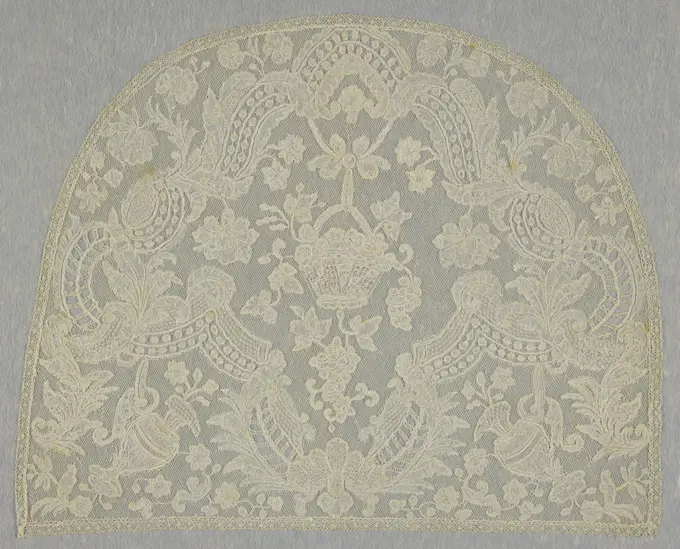
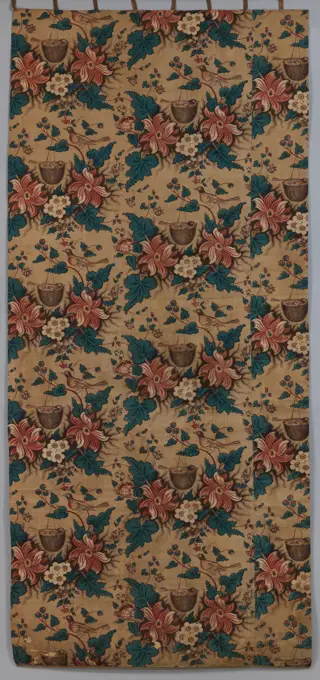
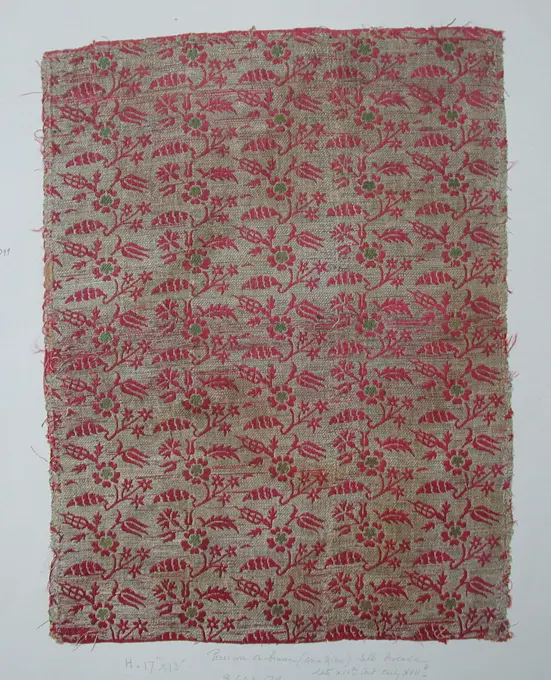
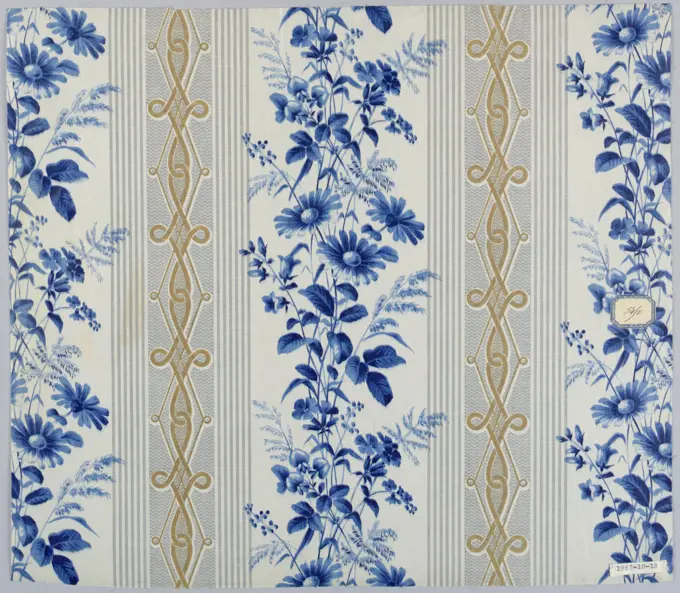
Fragment, Medium: silk, metallic Technique: woven, Yellow ground with repeat of ornamental flowers on slender stems growing in shell-shaped vessel. Repeat in green, blue, rose, and gray silk extra weft and silver metallic brocade., Iran, 19th century, woven textiles, FragmentFragment. Japan. Date: 1775-1800. Dimensions: 12.9 × 11.2 cm (5 1/16 × 4 3/8 in.). Silk, cotton, and gilded paper strip, twill weave with supplementary patterning wefts bound with secondary binding warps in twill interlacings. Origin: Japan. Museum: The Chicago Art Institute, Chicago, USA.Textile. Dated: 1938. Dimensions: overall: 38.1 x 45.9 cm (15 x 18 1/16 in.). Medium: watercolor and graphite on paperboard. Museum: National Gallery of Art, Washington DC. Author: Grace Halpin.Fragment, Medium: silk Technique: plain weave with discontinuous supplementary weft patterning (brocade), bound in twill, Fragment of brocaded silk with white symmetrical floral and lace-like pattern on orange ground. Supplementary weft floats of yellow, green, blue and cream. Wide selvage, warp-corded and striped., France, England, late 17th-early 18th century, woven textiles, FragmentTextile; woolFragment, Medium: linen Technique: bobbin lace, Mechlin style with Point de Paris ground, Belgium, 18th century, lace, FragmentFragment multicolor, striped silk Pekin. A fragment of blue and white striped silk, between colored bouquets and stree pin. Note: 0.2 cm, plain bond.Piece 18th century Japan. Piece 71675Band, Medium: silk on linen Technique: double running embroidery stitch, Border desgin of upright ornaments; band of flower motifs arranged diagonally; worked in double running., Europe, 17th century, embroidery & stitching, Band, Band, Medium: silk on linen Technique: double running embroidery stitch, Border desgin of upright ornaments; band of flower motifs arranged diagonally; worked in double running., Europe, 17th century, embroidery & stitching, BandExcerpt écru silk with pattern, c. 1690 - c. 1710 Fragment écru silk with pattern of slender tunes of flowers and corners in blue, green and yellow. France Ketting an element: Silk lampas (textile material) Fragment écru silk with pattern of slender tunes of flowers and corners in blue, green and yellow. France Ketting an element: Silk lampas (textile material)Textile with Brocade 14th-15th century Spanish or Near Eastern. Textile with Brocade. Spanish or Near Eastern. 14th-15th century. Satin and plain weave; silk and metal threads. Textiles-Woven-BrocadeHandkerchief with rosary of dick edge. Around a lobed batters center piece runs a edge of lace with a fond of square meshes. There are large hanging roses along the outside, which also form the slot. A wavy branch with rose knobs runs along the inside. Valenciennes side.Fragment; silk, linen and metallic thread; Warp x Weft: 30.5 x 20.3 cm (12 x 8 in.)Piece 16th-17th century Italian. Piece 223517Sidewall (USA); Manufactured by Hitchner and Yerkes; machine-printed paper, liquid mica; 92 x 49 cm (36 1/4 x 19 5/16 in.)Sidewall, Flocking on gilt canvas, Symmetrical non-repeating design, in close arrangement, of foliate and floral forms. Dark green flock on gold., possibly France, 1690-1700, Wallcoverings, SidewallTrimming, Medium: silk Technique: woven, Trimming fragment in a design of alternating ornaments comprised of leaves, scrolls and dots in mauve on a yellow ground., France, 19th century, trimmings, TrimmingTextile Fragment. Dimensions: L: 5 in (12.7 cm) x W: 8.5 in (21.6 cm). Date: 18th century. Museum: Metropolitan Museum of Art, New York, USA.Piece 18th century Japan. Piece 71406Textile Length with Pattern of Stylized Floral Meanders (Bizarre)Textile, Medium: linen, cotton Technique: block printed on plain weave, Fragment of printed cotton with a fine curving vine with scattered exotic blossoms in shades of blue, purple and red on a white ground, which is filled with very fine red branching vines., France, 1760-70, printed, dyed & painted textiles, TextileTextile (England); cottonFragment, Medium: silk Technique: plain weave with discontinuous supplementary wefts, Serpentine lace ribbons with floral sprigs on blue ground., 18th century, woven textiles, FragmentNapkin from white Linnamast ,, 1708 - 1710 White linen Damas napkin with achievements from the Spanish Succession War. Marked a m v p 16 and crowned V. Flanders (Possible) linen (material) damask White linen Damas napkin with achievements from the Spanish Succession War. Marked a m v p 16 and crowned V. Flanders (Possible) linen (material) damaskSidewall (USA); Manufactured by C. & W., Cresswell & Washburn Ltd; machine-printed paper, ribbed, liquid mica; 92 x 47 cm (36 1/4 x 18 1/2 in.)Handkerchief with a border of mixed side with shaded rocailles, anonymous, c. 1870 - c. 1890 Handkerchief with a border of natural -colored mixed side, Brussels bobbin and needle side with needle -sided soil. A scalloped batist's center piece is surrounded by a lace edge with asmetrical pattern. The closed, wavy interior and outer edges consist of small rocailles with a filling of open arcs, from C-voluten with wheel edge, with relief contours and racing filling and feather leaves. In the corners there is always a large Christmas rose inside and outside these edges. The Christmas roses appear three times on the sides. Brussels linen (material) mixed lace / Brussels bobbin lace Handkerchief with a border of natural -colored mixed side, Brussels bobbin and needle side with needle -sided soil. A scalloped batist's center piece is surrounded by a lace edge with asmetrical pattern. The closed, wavy interior and outer edges consist of small rocailles with a filling of open arcs, from C-volutEmbroidered chasuble orphrey unknownCover (India); cottonTextile; Company: F. Schumacher & Co. (United States); silk; 1979-9-2Piece 18th-19th century Japan. Piece 66654Brocade, 1800s. India, Benares , 19th century. Brocade, "kimkhwab"; silk and gold; overall: 12.7 x 9.5 cm (5 x 3 3/4 in.).Textile (France); silk; Warp x Weft: 254.3 x 57.2 cm (100 1/8 x 22 1/2 in.)Brocaded velvet cushion cover with carnations, late 1500s. Turkey, Bursa. Velvet, brocaded: silk, gilt-and-silver-metal thread; overall: 128.9 x 66.7 cm (50 3/4 x 26 1/4 in.); mounted: 136.5 x 74.3 cm (53 3/4 x 29 1/4 in.).Fragment, second half of 16th century. Spain, second half of 16th century. Brocaded silk with metal thread; average: 26.1 x 40.7 cm (10 1/4 x 16 in.).Piece 18th-19th century Japan. Piece 67627Veil of climbing side with field bouquets. Veil of black climbing side: Chantilly side. A standing rectangle has a wide lower edge, a narrow top edge and side edges, which go to the top narrower. The field is littered with hanging and standing flour pods, symmetrically composed next to a standing ash. In the middle of the bottom is a large asymmetrical field bouquet, in the corners two overhanging bouquets, which are suitable symmetrically relative to each other. This includes screen flowers, possibly fennel. Throw strawed garlands of three deep arches move between the top of the middle bouquet and the smaller bouquets in the side edges. The ruling edges are thickened from the middle at the bottom with lobed and hollow-scalloped medallions, between which jointed C-Volutes swing with open rasters and Campane contours.Fragment rood zijdeweefsel met bloemen in blauw en wit.A fragment of red silk tissue, on which a basket with flowers surrounded by ribbons, flower bouquets and tulips.Chinese ornamentHandkerchief, Medium: cotton, linen Technique: embroidered, Large square handkerchief of sheer white linen embroidered around border with grapevine design. Scalloped edges., France, early 19th century, embroidery & stitching, HandkerchiefPiece 18th-19th century Japan. Piece. Japan. 18th-19th century. Silk. Edo (1615-1868). Textiles-WovenLinnamast finger cloth with a flower pattern, c. 1920 - c. 1930 Finger cloth from Linnamast with multicolored woven edges (cotton). In the middle rose branches in white, rose branches in the green, red and white rose branches against a yellow stock. Around Ajourzomen. In a corner a green -embroidered monogram pvr. The finger cloth belongs to five finger cloths (BK-1980-168-A to BK-1980-168-F) and a tablecloth (BK-1980-167). Germany (possibly) linen (material) damask Finger cloth from Linnamast with multicolored woven edges (cotton). In the middle rose branches in white, rose branches in the green, red and white rose branches against a yellow stock. Around Ajourzomen. In a corner a green -embroidered monogram pvr. The finger cloth belongs to five finger cloths (BK-1980-168-A to BK-1980-168-F) and a tablecloth (BK-1980-167). Germany (possibly) linen (material) damaskFabric fragment. unknown, authorTextile, Medium: silk Technique: plain weave (pink) patterned by floats of complementary wefts (pink and white) and by floats of a supplementary warp (pink), France, 1860s, woven textiles, TextileSampler, Medium: silk embroidery on linen foundation Technique: embroidered in rococo (Queen) stitch on plain weave foundation, Multicolor flowers, hearts, and geometric patterns., Netherlands, 18th century, embroidery & stitching, SamplerPiece 1760-70 French. Piece 223352Pricked Pattern For Lace (Belgium); paper; 1938-49-2Ceiling Paper (USA); Manufactured by Maxwell & Co., S.A. (United States); machine-printed paper, liquid mica; 79 x 49.5 cm (31 1/8 x 19 1/2 in.)Leaf with flowers with fruits, anonymous, 1700 - 1850 brocade paper Leaf with flowers with fruits, with coloring in windscreen pattern. Half of a cover.  paper. paint (coating) relief printing ornament derived from plant formsZakdoek van batist afgezet met een brede rand applicatiekant met u-vormige sierbanden.Batist handkerchief with a wide edge of natural applicators: dick side applicated on machine tulle. Square model with round middle piece of batist. The pattern is symmetrical along each side and consists in the corners from a U-shaped decorative tire with a concatenation of rosette flowers in it. In the center of the u is a roster branch with one large flower and three smaller leaves. Left and right light branches with bowl flowers from the decorative tires in the corners in the direction of each middle. Here a decorative tire forms a stiffer picture frame in the form of a you, with a palm with berry branches. The sloping edge is formed by the U-shaped picture frames and a few rosette and chali flowers. The motifs are made in linen stroke with contour wires and partly with clost relief contours. Grid work has been applied in the flower hearts and in several leaves.Fragments; silkTextile (USA); Designed by Sophia L. Crownfield (American, 1862-1929); Manufactured by Cheney Brothers (United States); silkPiece 18th-19th century Japan. Piece 67141Piece 18th-19th century Japan. Piece 66095Indian ornamentTextile; cotton; Warp x Weft: 89 x 66 cm (35 1/16 in. x 26 in.) Repeat H: 41 cm (16 1/8 in.)Fragment of a Cover. Dimensions: 24 in. high 24.00 in. wide (61 cm high 61 cm wide). Date: 17th century. Museum: Metropolitan Museum of Art, New York, USA.Textile (England); cottonCushion Cover. Turkey, Bursa. Date: 1601-1625. Dimensions: 108.3 x 65.2 cm (42 5/8 x 25 5/8 in.). Silk, velvet. Origin: Turkey. Museum: The Chicago Art Institute, Chicago, USA.Fragment (China); silk; temperaFragment, Medium: silk Technique: damassé (5-harness satin, interruption of 2, warp-faced for background plus 4/1 twill, weft-faced for pattern), Allover pattern in yellow and green of two types of long curved flowering plants: one type in one row, the other in the next row in offset alignment. Yellow silk woven weft-loop fringe attached to top, bottom and one side., Spain, late 17th century, woven textiles, FragmentPiece 18th century Japan. Piece 72067Fragment multicolor, striped silk satin. A fragment of white striped silk tissue with flowers of red and green.Sidewall - Sample (USA); machine-printed; 69 x 48 cm (27 3/16 x 18 7/8 in.)Katagami, Peonies; Japan; cut mulberry paper treated with persimmon tannin and silk threadFragment multicolored brochure side. Fragment multicolor silk tissue with a symmetrical pattern of large flower branches on a green soil that contains medallions in which a basket with flowers.Fragment; silkMae A Clarke, Coverlet, 1935 1942 CoverletTextile (Northern France); cotton; height of repeat; 10 1/4in.; 1975-79-30Fragment (Cover or Turban Cover). Turkey. Date: 1601-1700. Dimensions: 101.2 x 60.3 cm (39 3/4 x 23 3/4 in.). Linen, plain weave; embroidered with silk in darning, double running, twined double running, and stem stitches. Origin: Turkey. Museum: The Chicago Art Institute, Chicago, USA.Fichu. Western Europe, 1790s-1810s. Costumes; Accessories. Cotton embroidery and drawn work on cottonCap crown, Medium: linen Technique: bobbin lace, Brussels style, Cap crown with a flower basket in center suspended from a ribbon that is attached to an elaborate framework, with pitchers in the two lower corners., Belgium, 1740-55, lace, Cap crownFragment, Medium: silk Technique: 5-harness satin damask, Red damask with a design of symmetrical ogive with crown, etc., Italy, 16th century, woven textiles, FragmentFragment textile. Textile fragment, embroidery of flowers and plants on crêm-colored background.Curtain ca. 1830 British. Curtain. British. ca. 1830. Cotton. Textiles-PrintedElizabethan ornamentFragment; silkCeiling Paper (USA); Manufactured by Maxwell & Co., S.A. (United States); machine-printed paper, liquid mica; 87.5 x 49 cm (34 7/16 x 19 5/16 in.)Textile Swatches Onondaga Silk Company, Inc. (1925-1981). , 1948-1959. silk; metal, 15 1/2 x 9 in. (39.4 x 22.9 cm).    1948-1959Textile Fragment 16th-17th century. Textile Fragment 454596Fragment 17th century Italian. Fragment 230338Fragments (France); silk, metallic threadTextile; silkFragment (Japan)Textile, Medium: cotton, silk, metallic thread Technique: supplementary warp pile (velvet); continuous supplementary weft, Woven velvet with two side-by-side symmetrical leaf and palmette forms (reversed at center line). Red silk pile in a red foundation with metallic gold supplementary weft patterning., France, 1880-1900, woven textiles, TextileSidewall (USA); Manufactured by Maxwell & Co., S.A. (United States); machine-printed paper, mica, liquid; 91 x 49.5 cm (35 13/16 x 19 1/2 in.)Germany, Berlin,  Humboldt Forum, Ethnological Collection, exhibits,Textile, Schwartz-Huguenin, Medium: cotton Technique: printed by engraved roller and/or block printed on plain weave; glazed, Two pieces, same design, different colors. A) White ground with broad stripes made of pin stripes of minute bars in rose color, centre area in minute zig-zag with elongated interlace in brown; in white area, sprays of field flowers in shades of red, block-printed or surface roller. Ground probably 'molette.' B) Same design in blue. Glazed., Mulhouse, Alsace, France, 1851-63, printed, dyed & painted textiles, TextileFragment of silk fabric for womans skirt unknownNapkin from white Linnamast ,, 1640 - 1660 Wit linen Damas napkin with a pattern of stripped flowers and a Fleur de Lis, marked DVDM 40. Northern Netherlands linen (material) damask Wit linen Damas napkin with a pattern of stripped flowers and a Fleur de Lis, marked DVDM 40. Northern Netherlands linen (material) damaskPiece 18th-19th century Japan. Piece 66368Handkerchief (Switzerland); linenTextile (China); silkFlorence Hastings, Hand Made Quilt, c 1938 Hand Made QuiltTextile, Medium: cotton Technique: pile formed by supplementary wefts in a plain weave foundation with stamping (embossed velveteen), Radiating feather on a field of scrolls. Brownish yellow color., England, 19th century, woven textiles, TextileBand, Medium: silk on linen Technique: embroidery (deflected element work using wrapping stitches to create a grid), Pattern of diagonal floral sprays reserved in white on red background., Italy, 17th century, embroidery & stitching, BandDress of Eastern textile with multi -colored embroidery ,, c. 1800 - c. 1899 Dress of multi -colored tambourized cotton, decorated with flower vines and ornament, lined with cotton. India cotton (textile). silk embroidering Dress of multi -colored tambourized cotton, decorated with flower vines and ornament, lined with cotton. India cotton (textile). silk embroideringTextile Fragments (China); silkTextile (France); Manufactured by Schwartz-Huguenin; cottonTextile (India); cotton; Warp x Weft (a): 50.2 x 50.8 cm (19 3/4 x 20 in.) Warp x Weft (b): 52.7 x 11.1 cm (20 3/4 x 4 3/8 in.) Repeat: 55.9 x 43.2 cm (22 x 17 in.)Bliżej Kultury unknown