Textiles And Decorative Bags

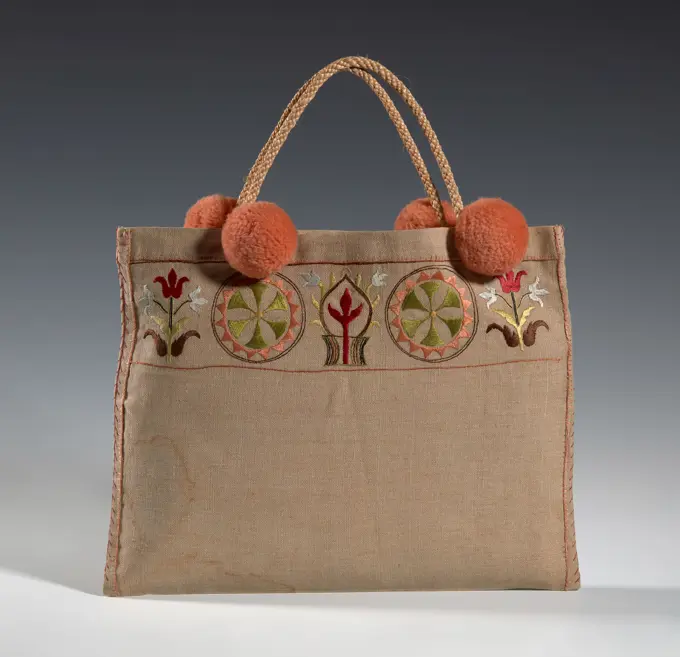
Images of various fabric bags and textiles with intricate patterns, some dated to historical periods.

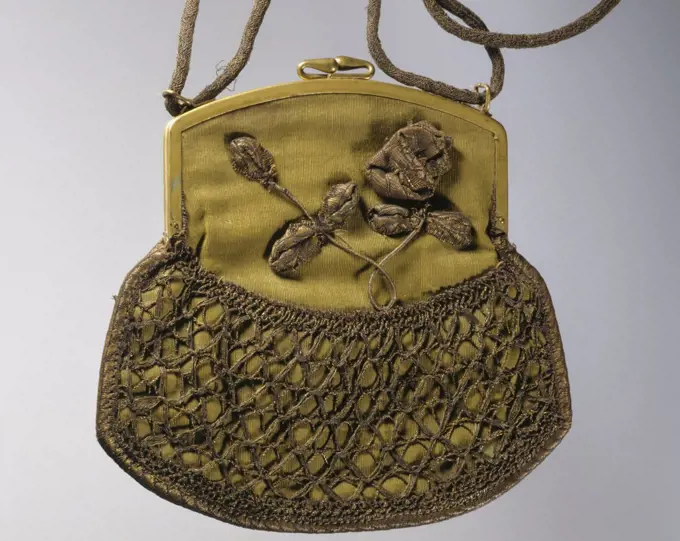
Rust-colored moire bag and floral crochet application in brocade lame, fashion accessories, Italy, early 20th century.
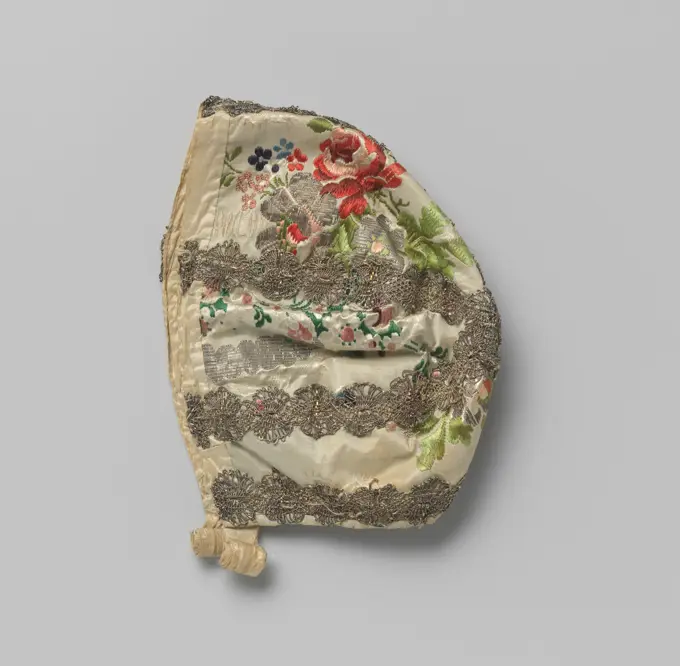
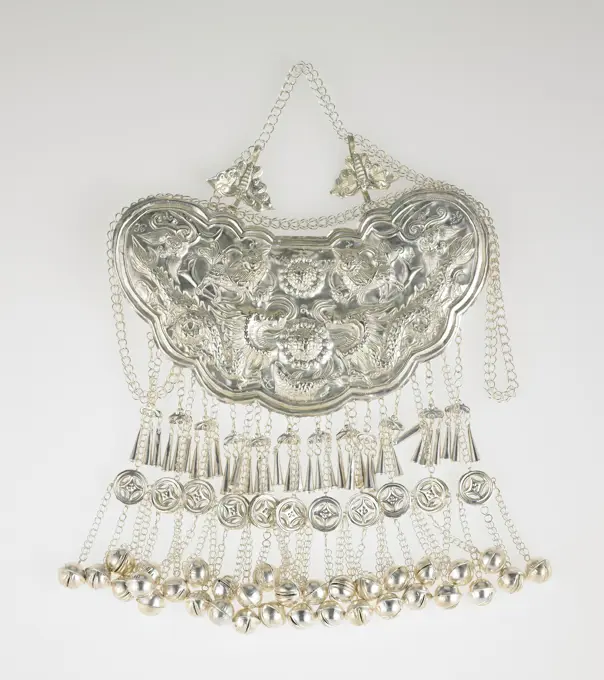
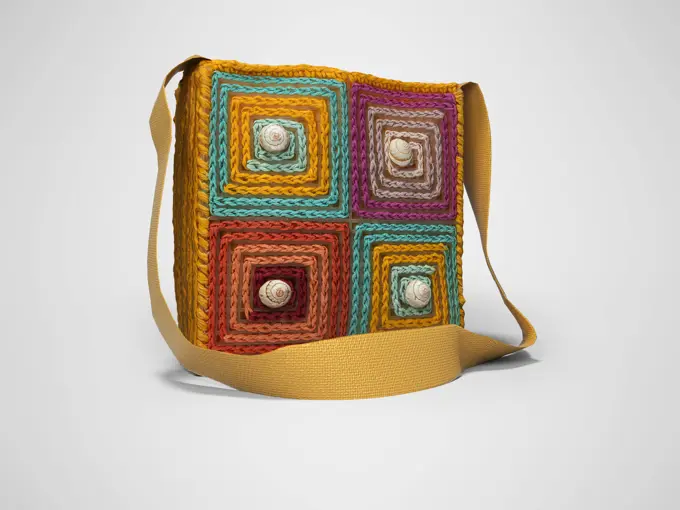
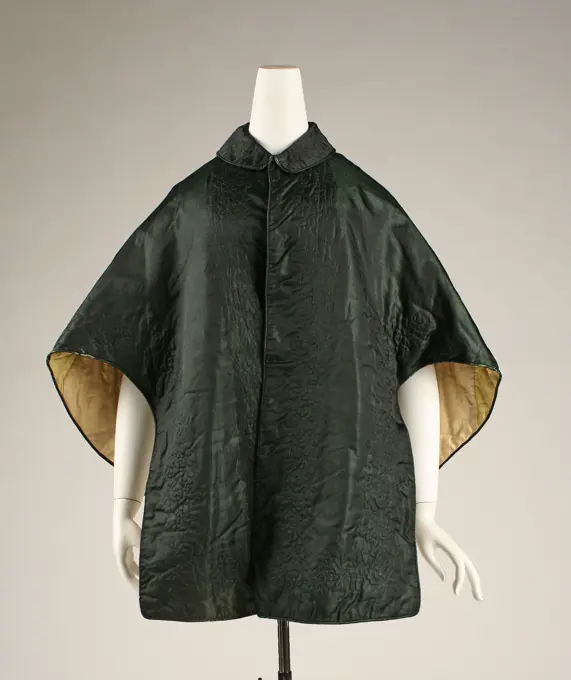
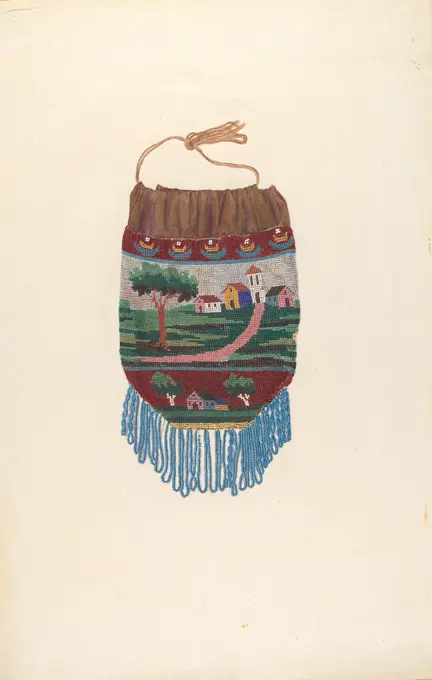
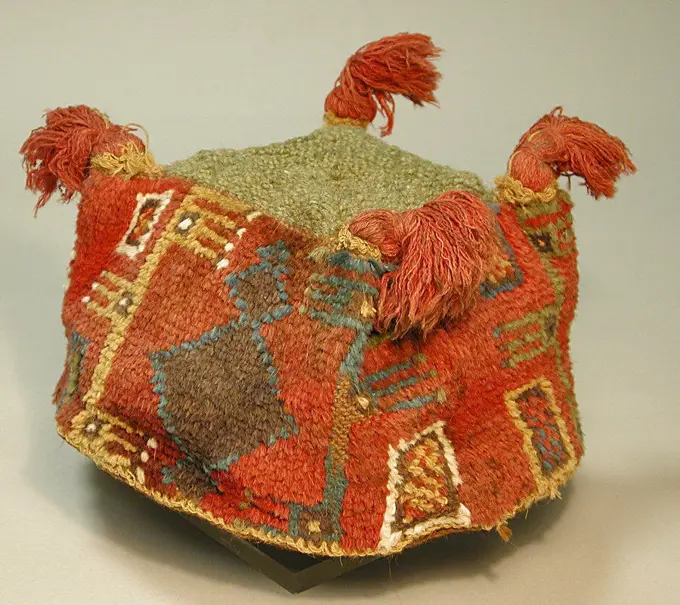
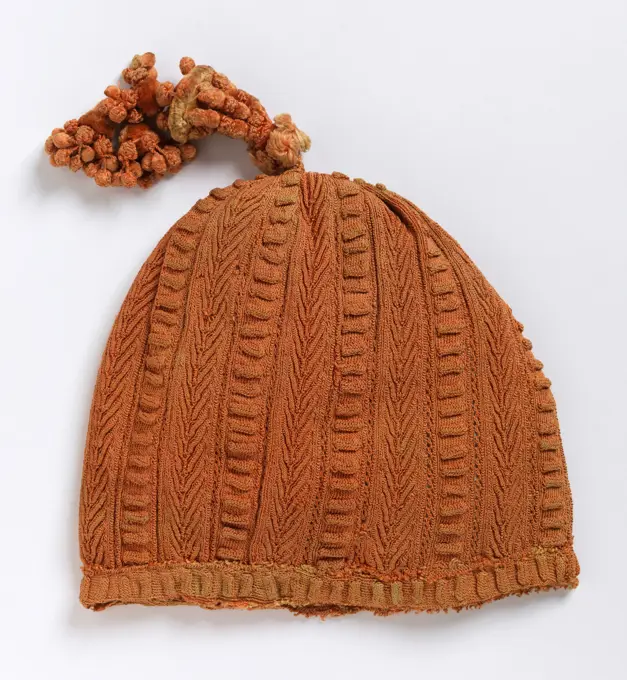
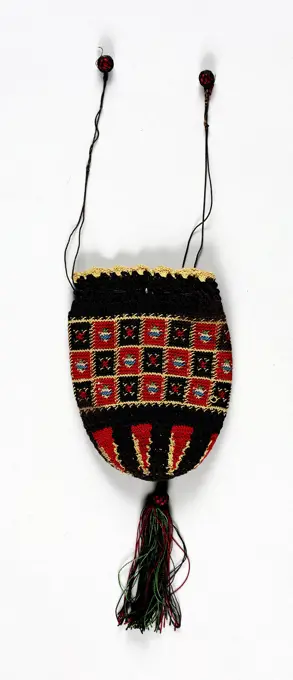
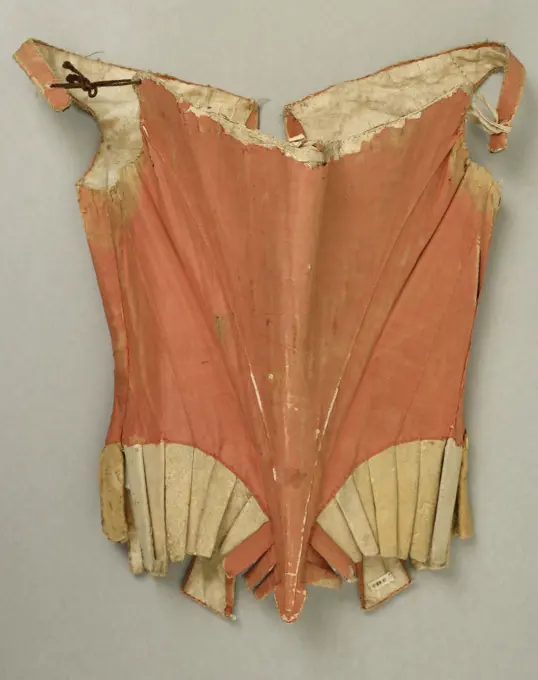
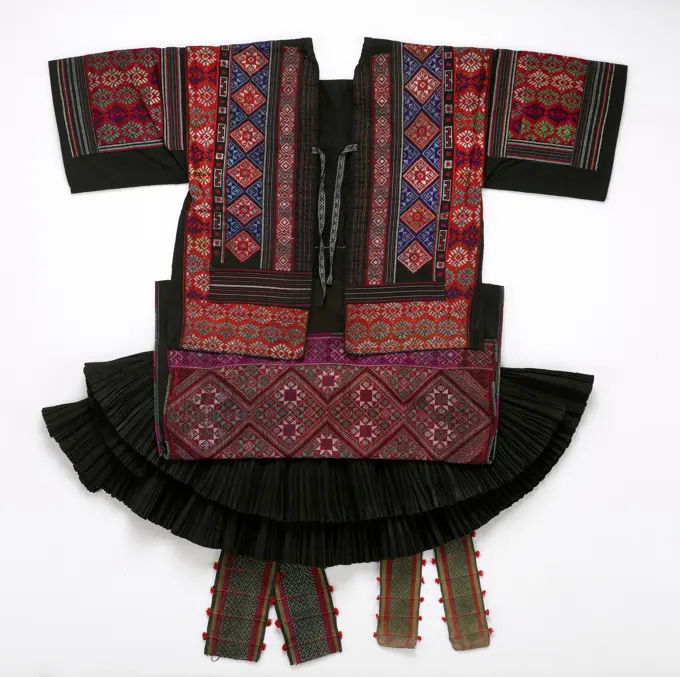
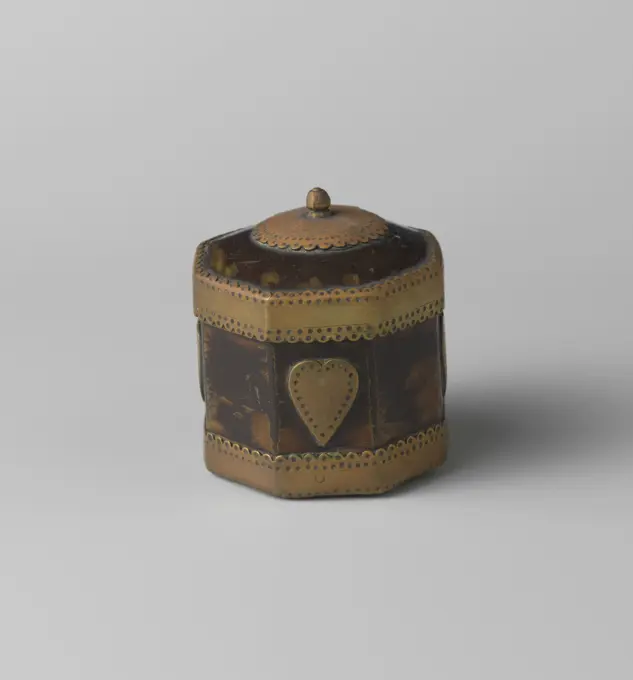
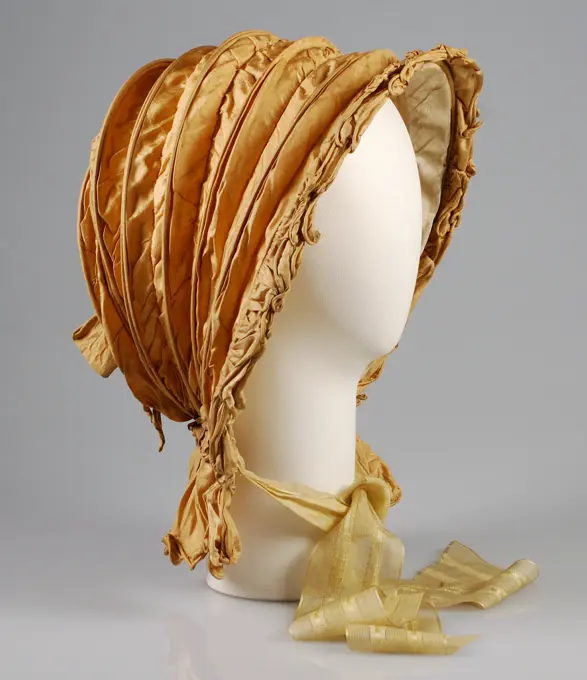
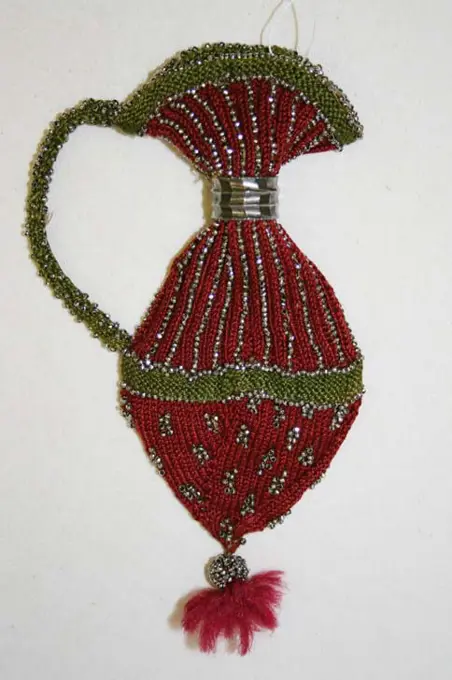
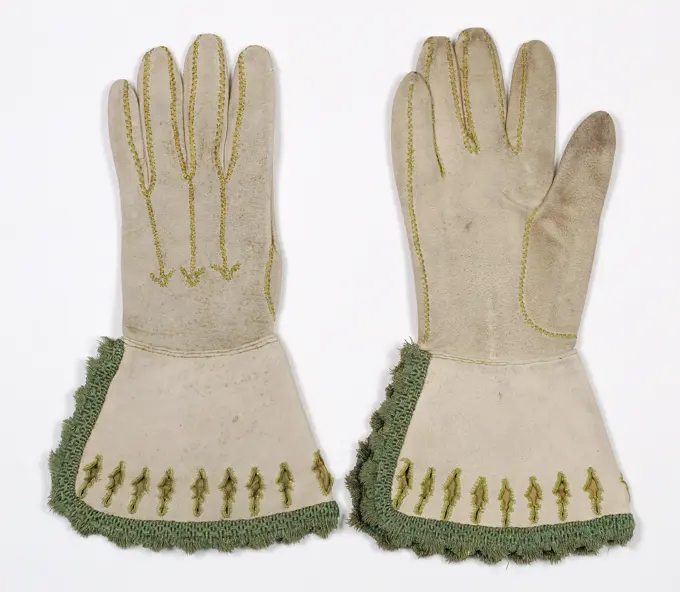
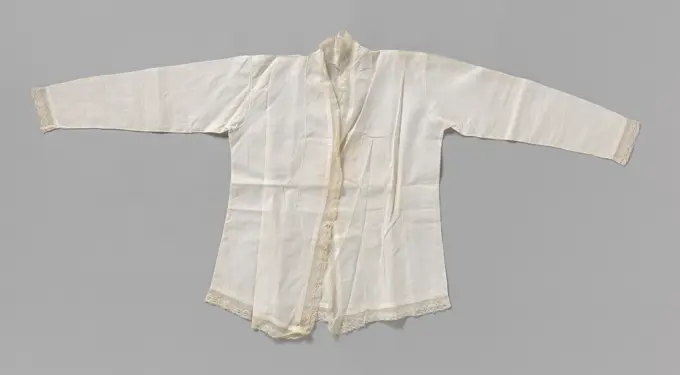
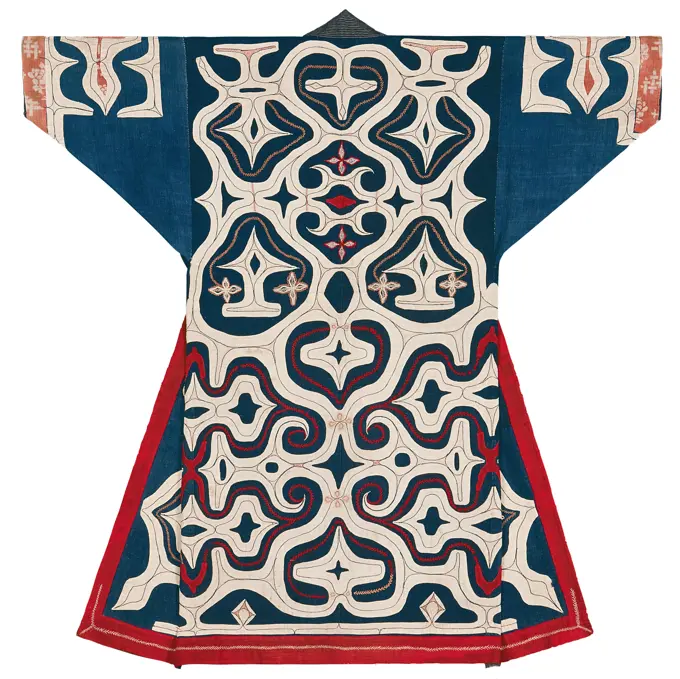
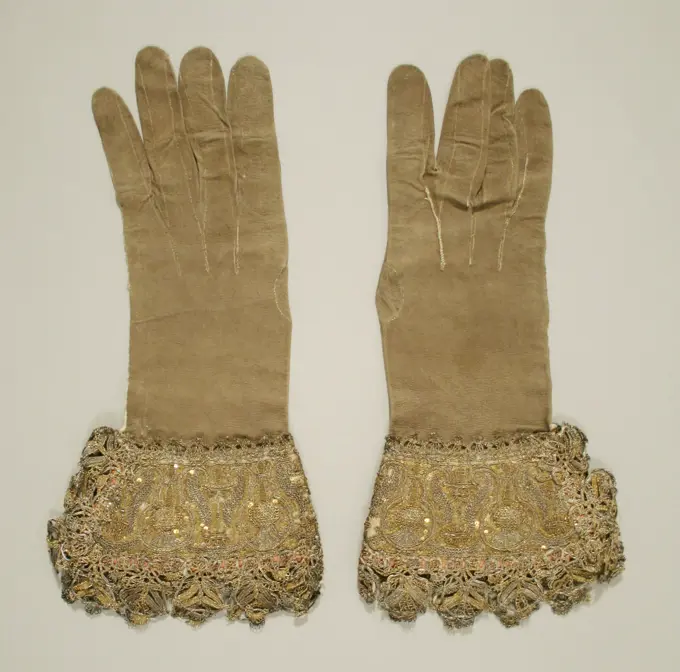
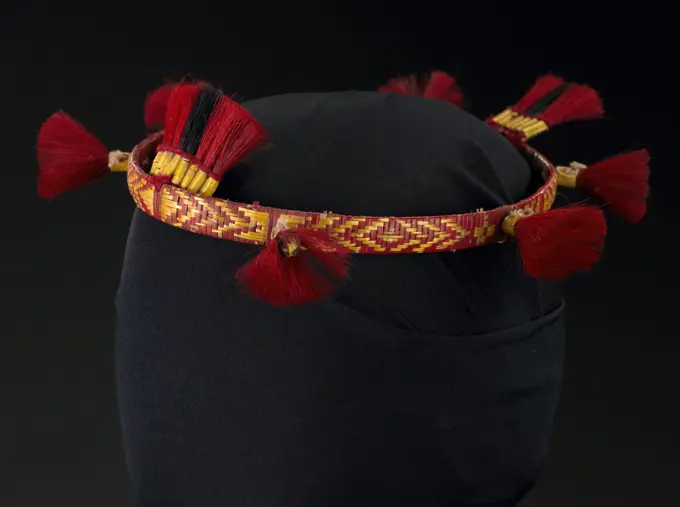
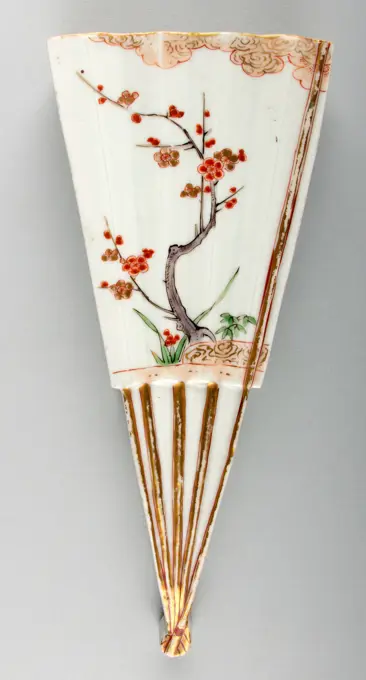
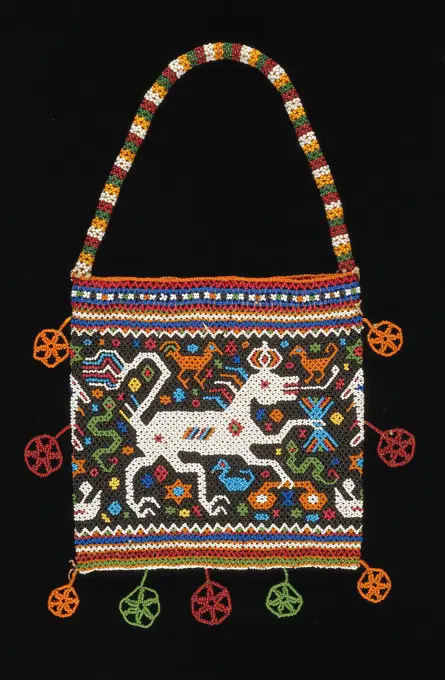
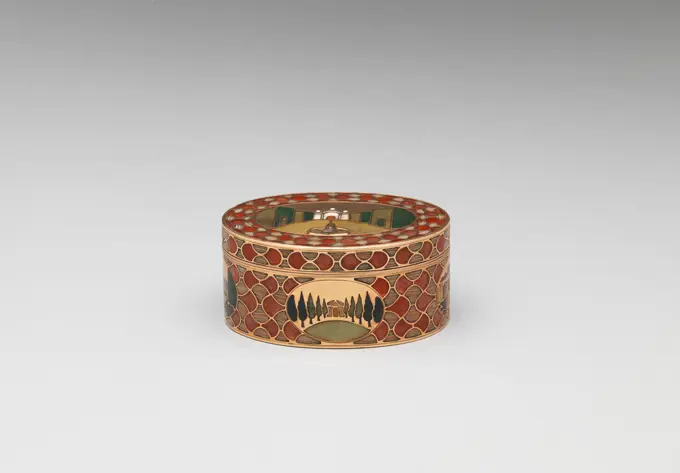
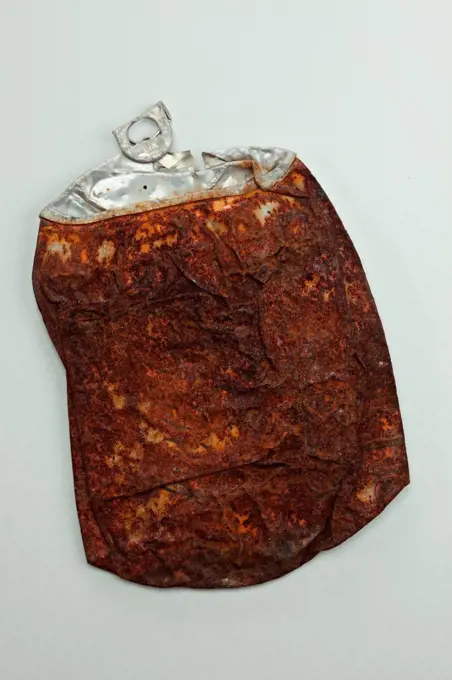
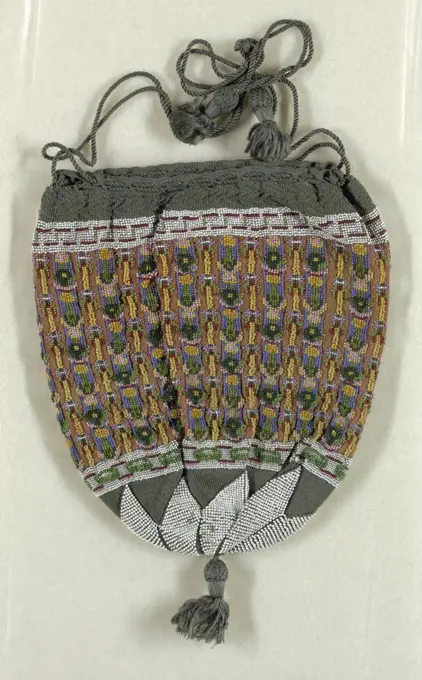
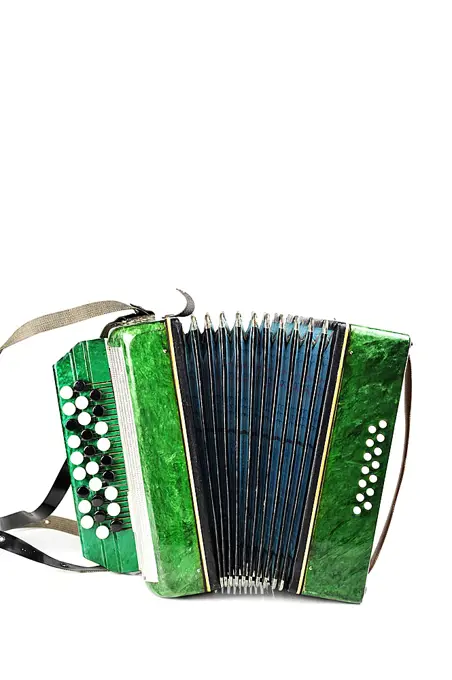
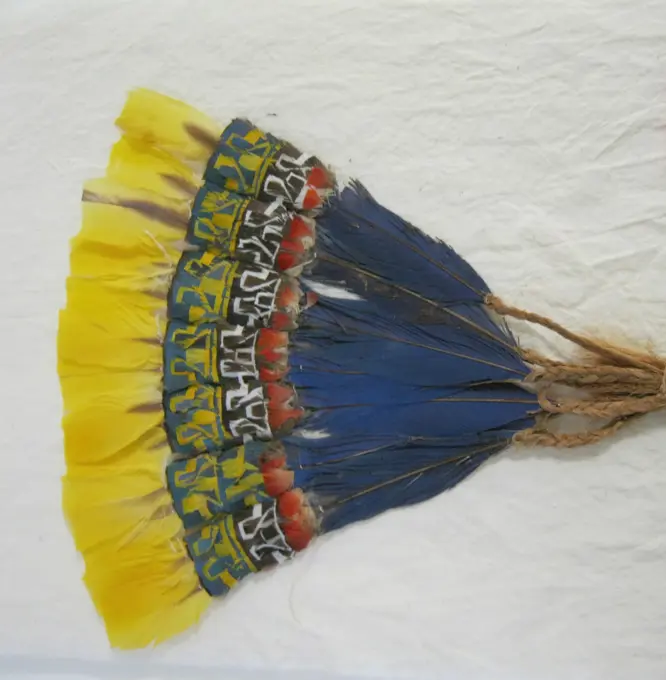
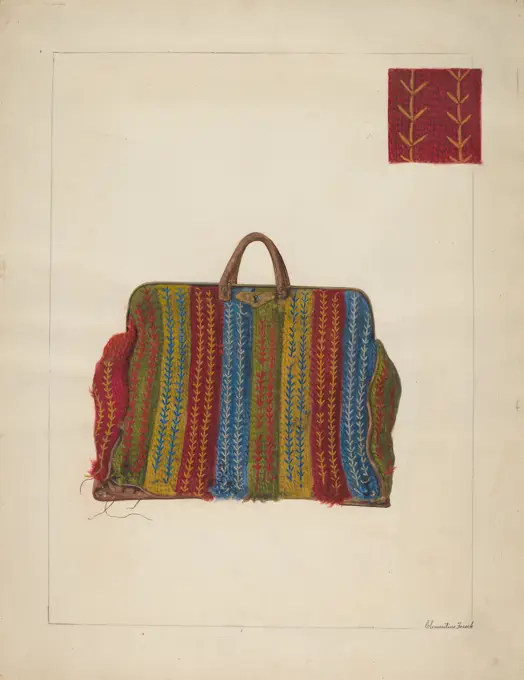
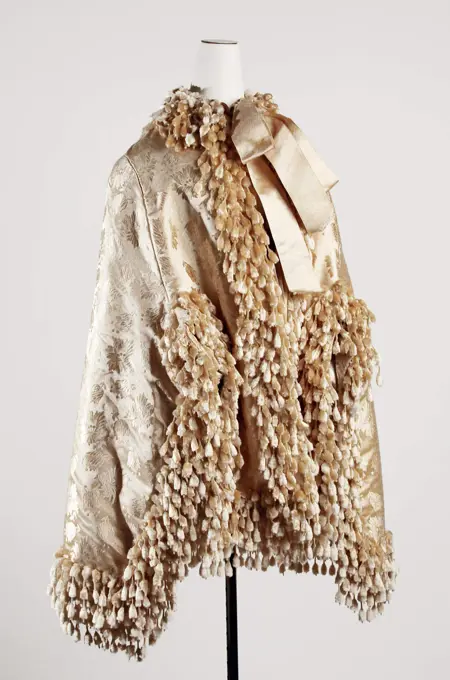
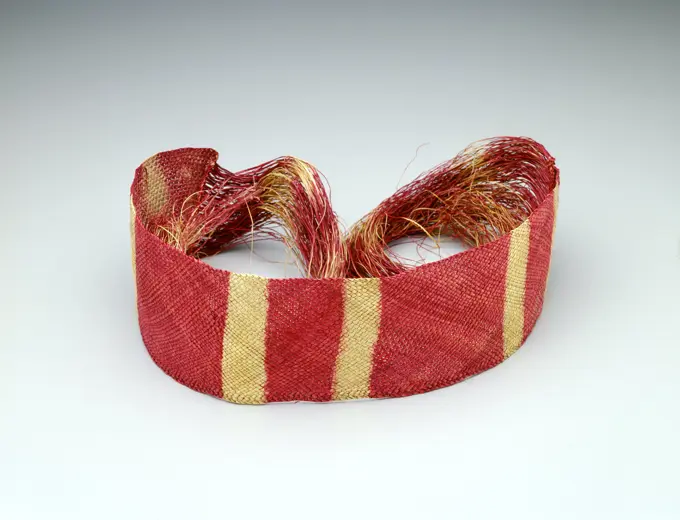
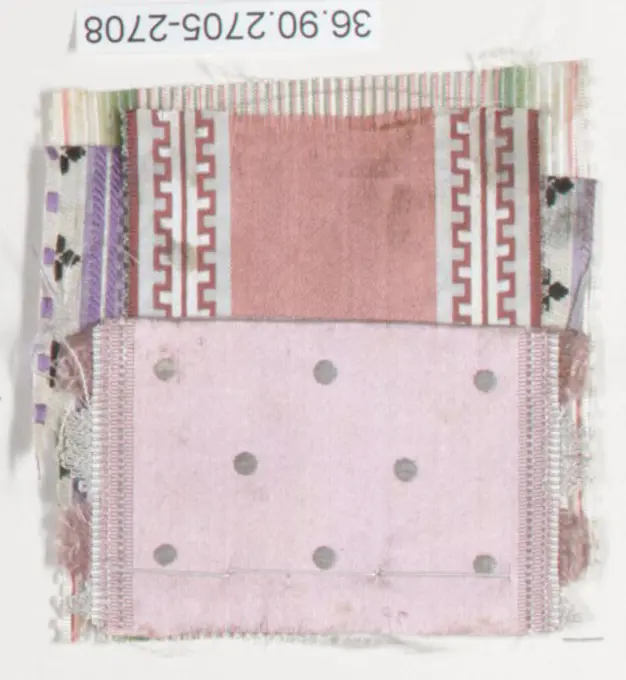
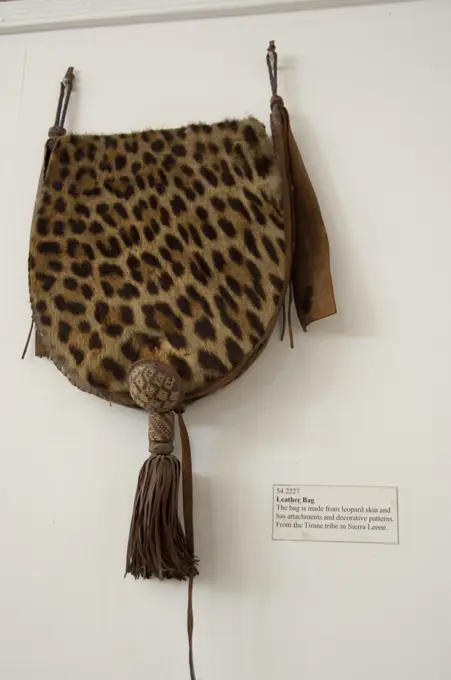
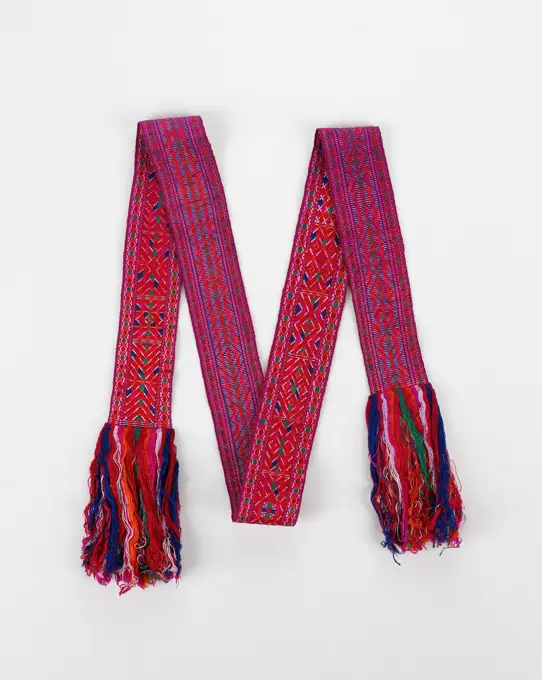
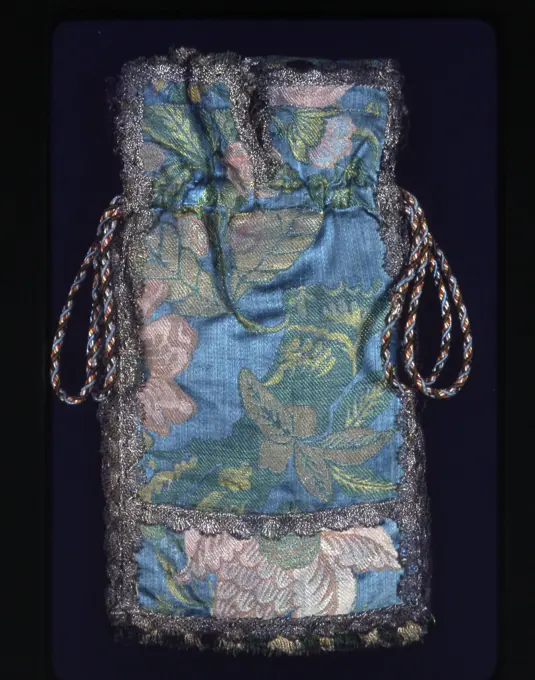
Decorated loincloth, with zip-fasteners, worn by Turkana tribeswoman from Kenya, East Africa.Purse (France); silk, metalDelia. unknown, authorHat of light blue silk brokaat, interwoven with bouquets in red, green and silver, anonymous, c. 1785 - c. 1800 Boy's hat of light blue silk brokaat, weaving with bouquets in red, green and silver. From the crown the hat is divided into six courses, which are separated by a scalloped shot silver side. West-Europa silk. brocade (textile). bobbin lace Boy's hat of light blue silk brokaat, weaving with bouquets in red, green and silver. From the crown the hat is divided into six courses, which are separated by a scalloped shot silver side. West-Europa silk. brocade (textile). bobbin laceCollar of Mail 1450-1500 Europe. Steel .Chasuble;  XVIII/19th century (1890-00-00-1910-00-00);Purse 1790-1810 American. Purse 156535Noh Robe. Culture: Japan. Dimensions: Overall: 68 x 50 3/4 in. (172.7 x 128.9 cm). Date: 18th century. Museum: Metropolitan Museum of Art, New York, USA.Purse ca. 1800 French. Purse 117188Pouch third quarter 19th century American. Pouch 168403Hat -Sector of a parasold deck of soft green cotton, with a batist edge embroidered with wold wire, c. 1885 - c. 1900 Sector of a parasold deck of soft green cotton, with a batist embroidered with wold wire. Nijmegenfrance parasoldek: cotton (textile). cotton (textile). draad: wool embroidering Sector of a parasold deck of soft green cotton, with a batist embroidered with wold wire. Nijmegenfrance parasoldek: cotton (textile). cotton (textile). draad: wool embroideringCommemorative medals for the suppression of the January Uprising unknown labelLock Necklace, 20th century, 18 x 9 x 7/8in. (45.7 x 22.9 x 2.2cm), Silver, China, 20th centuryLavender bag from silk. Lavender bag made of multicolored silk with a ribbon begged.Tissue fragment in tapestry, anonymous, c. 500 - c. 899 Multicolored tissue fragment with a four -legged friend with a raised tail and claws in green, yellow, red and natural. Up and bottom lines and decorative borders in red, green, yellow, light and dark blue. Egypt Ketting an element: Linen (material). Entry: Wool tapestry Multicolored tissue fragment with a four -legged friend with a raised tail and claws in green, yellow, red and natural. Up and bottom lines and decorative borders in red, green, yellow, light and dark blue. Egypt Ketting an element: Linen (material). Entry: Wool tapestryCoin purse 1799-1820 American or European. Coin purse 117298Apron 1820-29 American. Apron. American. 1820-29. cottonRussian National Wooden Tableware Russian national handmade wooden container on an isolated studio background Copyright: xZoonar.com/AndreyxSkatx 9861165Evening bag of black printed textile, anonymous, c. 1910 - c. 1940 Rectangular black bag with floral printing. The bag closes with a silver -colored zipper and is lined white on the inside. There is a black brush on the zipper. Europe textile materials printing Rectangular black bag with floral printing. The bag closes with a silver -colored zipper and is lined white on the inside. There is a black brush on the zipper. Europe textile materials printingCoin Purse (France); metal beadsMiser's purse, Medium: silk, metal Technique: crochet, Crocheted dark green silk with eight small areas crocheted in pink and white silk. Gold beads outline these small areas in a fretwork pattern. Opening controlled by two gold rings with cut steel insets. Gold drops at either end; one an acorn shape, the other, a ball., France, early 19th century, costume & accessories, Miser's purseBag, Medium: silk Technique: knitted, Red and white silk knitted bag with drawstring top and tassel at bottom. Ornamented with bands of spot motifs including ships, figures, birds, etc., Spain, 17th century, costume & accessories, BagPrinting block, Medium: wood, metal, Part of a design for a table cloth with squares formed by dots and a rose alternating. A border of five flat metal strips., USA, 19th century, appliances & tools, Printing blockYellow knitted shoulder bag 3d rendering on gray background with shadow Yellow knitted shoulder bag 3d rendering on gray background with shadow Copyright: xZoonar.com/OlegxLivinskyix 16697736BroochHousecoat, anonymous, c. 1760 - c. 1780 Japanese rock of sits with large flowers on white stock. Narrow standing board, along front buildings a border with a small pattern. Fabric nodes, two loops on front buildings. Bags in the side seams (lining is missing). Lining of white cotton () Or linen (). The fabric is painted in the British East Indies, Coromande coast. Coromandelkust cotton (textile). chintz chintz Japanese rock of sits with large flowers on white stock. Narrow standing board, along front buildings a border with a small pattern. Fabric nodes, two loops on front buildings. Bags in the side seams (lining is missing). Lining of white cotton () Or linen (). The fabric is painted in the British East Indies, Coromande coast. Coromandelkust cotton (textile). chintz chintzFan ca. 1868 French. Fan 120664Pitcher 1880 Worcester factory The patterning of this pitcher and a lozenge-form tray (1989.186.1), made four years later, was inspired by Japanese porcelains acquired by the Worcester factory from the 1876 Centennial Exhibition in Philadelphia.. Pitcher. British, Worcester. 1880. Bone china. Worcester factory (British, 1751-2008). Ceramics-PorcelainMantle 1840-69 American. Mantle 108141Lucille Lacoursiere, Beaded Bag, c 1939 Beaded BagFour-Cornered Hat 7th-9th century Tiwanaku Finely woven, brightly colored hats, customarily featuring a square crown, four sides, and four pointed tips, are most frequently associated with two ancient cultures of the Andes: the Wari and the Tiwanaku. The Wari Empire dominated the south-central highlands and the west coastal regions of what is now Peru from 500-1000 A.D. The Tiwanaku occupied the altiplano (high plain) directly south of Wari-populated areas around the same time, including territory now part of the modern country of Bolivia. The cultures not only developed and flourished as contemporaries, but also occupied adjacent lands for nearly four centuries. A Wari ceremonial center called Cerro Baúl was located a mere five miles from Tiwanaku-settled fields in the Moquegua Valley of Peru. The two cultures likely encountered each other at Cerro Baúl and elsewhere, but the nature of these interactions remains largely unknown. Four-cornered hats from both the Wari and the Tiwanaku wWinter hat isolated on whiteCap (Spain); silkBourse. GAL1958.69.38Brush 17th century French. Brush 102481Stays late 18th century British. Stays 90447Belt, from a seven-piece festival dress, 20th century, 39 3/8 x 5 1/4 in. (100.01 x 13.3 cm), Cotton, China, 20th centuryPouch thrid quarter 19th century American. Pouch 168418Octagonal box of turtle, c. 1600 - c. 1699 Octagonal turtle box with copper mounted. With copper button on the lid.  copper (metal). Octagonal turtle box with copper mounted. With copper button on the lid.  copper (metal).SandbagCurtain of écru silk damask with design of large flower and leaf refines. Curtain of Écru silk damask with dessess of true flower and leaf drinks and lined with yellow silk passion. On top of seven straps with rings.Men Nagajuban with the Mukden and Shanghai Incidents, 1932 Onderkimono (Nagajuban) For a man with a repeating decoration all over the entire plane of four partly overlapping rectangular images of two maps, a harbor scene with ships in battle and soldiers who attacked a train moving in the snow, against a background in Silhouette Soldiers with horses and guns in the night snow. Reference to the Mukden Incident of 1931, in which radical elements in the army entered an attack by Chinese soldiers on a train to push through a conquest campaign of Manismae, and the Shanghai incident of 1932, in which Western powers in hostility between Japanese ships and Chinese arm the forces in The port of Shanghai condemned. The maps of the surroundings of Mukden and Shanghai. Crepe silk (Chirimen) with stenciled Yuzen decorations and detailing in gold foil. Lining of blue and white silk. Japan silk painting Onderkimono (Nagajuban) For a man with a repeating decoration all over the entire plane of four paSluitmand, anonymous, c. 1725 - c. 1750 Oval lid basket of braided silver wire. The basket has a hinged lid, two handles and a padlock. The shape of the basket is Canopic. The basket is not marked. Netherlands silver (metal) filigree Oval lid basket of braided silver wire. The basket has a hinged lid, two handles and a padlock. The shape of the basket is Canopic. The basket is not marked. Netherlands silver (metal) filigreeSilversmith: Hendrik van Abeele, Braided bag with gold braces and bag of colored beads, clamp bag bag clothing accessory clothing gold textile glass, cast Rectangular patterned model inner clamp lock button on both sides bead bag inside side bracket (beaten) saveCalash ca. 1790 American. Calash 168696. Collar of climbing side - Dutch lace - for which unpainted and hand spun wool has been used from a gray colored sheep. Semi-circular model. The repeating pattern consists of nozzles placed outs that are alternately made in linen stroke and scroll. The collar is finished along the outside and short sides with an open picro edge. The collar was made by Mrs. Schutten-Putters, director of Kantklosvereniging Het Molenwiekje. The association had a 'cloud crook' called 't web, specialized in the lace bobbin with wool.Belt, early 20th century, 129 x 1 3/4 in. (327.66 x 4.45 cm), Wool, glass, animal hair, Turkey, 20th centuryPurse mid-19th century European. Purse 117336Embroidery, circa 1890, by Arthur Crum. Gift of Mrs Ruby Carman, 1966.Flask And Stopper; glass, straw, corkGloves second quarter 18th century French. Gloves 170538Glass Fragment 15th-16th century European. Glass Fragment. European. 15th-16th century. Colorless glass, paint. Glass-StainedLeather carrying-bag from the Turkana tribe in Kenya, Africa.Kabaja from white linen batist all around with a scalloped strip of machine side, anonymous, c. 1900 - c. 1920 Kabaja from white linen batist all around with a scalloped strip of machine side. Model: lightly tailored, without closure, hipang, without a collar and with close -fitting long sleeves. Decoration: A scalloped strip of machine side on the neck (forms type of raised collar), along the front buildings, the hem and the cuffs. Dutch East Indies, The whole: Linen (Material). side: cotton (textile)   Dutch East Indies, The Kabaja from white linen batist all around with a scalloped strip of machine side. Model: lightly tailored, without closure, hipang, without a collar and with close -fitting long sleeves. Decoration: A scalloped strip of machine side on the neck (forms type of raised collar), along the front buildings, the hem and the cuffs. Dutch East Indies, The whole: Linen (Material). side: cotton (textile)   Dutch East Indies, TheTextile Fragment 5th century Coptic. Textile Fragment 475273Meret Oppenheim (1913- 1985 ). Object. Paris, 1936. Fur-covered cup, saucer, and spoon. Cum 10,9 cm in diameter, saucer 23,7 cm in diameter, spoon 20,2 cm long, overall height 7,3 cm. Museum: MoMA, The Museum of Modern Art, NEW YORK, USA.Kernel Unknown, company: Zarzycki JózefRed, blue, and white kaparamip robe, late 19th century, Unknown Ainu, 51 × 49 in. (129.54 × 124.46 cm) (overall), Cloth: cotton; cotton appliqué and embroidery, Japan, 19th centuryBonnet 1800-1875 American. Bonnet 113080Coin purse. Culture: Mexican. Date: 1820-40.The nesting birds, seen here, convey a strong sense of the domestic realm. The fine construction of the purse itself makes it a good example of its type, particularly in the application of details: especially the gilt metal edging and the beautiful coloration in the ombréd ribbon, which forms a lover's knot on the flap. The purse is part of the Mexican beadwork collection of over 600 pieces assembled by Elizabeth Morrow (1873-1955), mother of writer Anne Morrow Lindbergh, the wife of renowned aviator Charles Lindbergh. Morrow collected the objects between 1927 and 1930, when her husband, Dwight Morrow, Sr., served as U.S. ambassador to Mexico. She lent the collection to the Brooklyn Museum in 1938 and upon her death, her children donated it. A collection of 155 pieces of Mexican ceramics and other decorative arts were given to Amherst College, her husband's alma mater. Mrs. Morrow collected Mexican beadwork, along with other examples of colGloves ca. 1630 British. Gloves 121933Woman's head band, c. 1970s, 2 7/16 x 9 3/4 x 9 1/2 in. (6.19 x 24.77 x 24.13 cm) (including 'tassels'), Plant fibers, hair, India, 20th centuryCoin purse 1830-60 American. Coin purse 169689Mesh glove unknownClose-up of baby's wicker cradle with striped fabric hoodOne of a Pair of Fan-Shaped Hanging Wall Vases late 17th century Japan. One of a Pair of Fan-Shaped Hanging Wall Vases 49340Beaded Bag, 1910-1930, 19 1/2 x 10 7/8 in. (49.53 x 27.62 cm), Glass beads, natural fiber, Indonesia, 20th centurySnuffbox late 18th century Attributed to Johann Christian Neuber German. Snuffbox 193807Shawl. Culture: American or European. Date: ca. 1850. Museum: Metropolitan Museum of Art, New York, USA.Saddle Flaps (Aori) 18th century Japanese. Saddle Flaps (Aori). Japanese. 18th century. Leather, gold, pigment, silk. Saddle PlatesChild's Hat, 20th century, 4 1/2 x 6 x 7 1/2 in. (11.4 x 15.2 x 19 cm), Silk, China, 20th centuryKloskant pompon with rush -hour belongings belonging to a parasol, anonymous, c. 1850 - c. 1870 Pompon made of black bobbin: chantilly side. At eight sectors with an empty Mazenfond there are Spitsovale fields, flanked by narrow Spitsovalen. The outlets consist partly of climbing profits, partly of court work; The fillings consist of a flower cancer. Heart -shaped medallions and an edge of oak leaves form wide scoops; A rose contained in two leaves forms small scallops. Belgium silk bobbin lace Pompon made of black bobbin: chantilly side. At eight sectors with an empty Mazenfond there are Spitsovale fields, flanked by narrow Spitsovalen. The outlets consist partly of climbing profits, partly of court work; The fillings consist of a flower cancer. Heart -shaped medallions and an edge of oak leaves form wide scoops; A rose contained in two leaves forms small scallops. Belgium silk bobbin laceExcerpt or steel white cotton with woven line, anonymous Fragment or steel white cotton with woven line. Numbered in pencil: "D52".  cotton (textile) Fragment or steel white cotton with woven line. Numbered in pencil: "D52".  cotton (textile)Ensemble 19th century. Ensemble 126842Basket 6th-11th century Tiwanaku. Basket 318956Rusted can in studioTobacco pouch, Medium: cotton, glass and ceramic beads, doe skin lining Technique: knitted with beads, Pouch of finely knitted green cotton with a drawstring at the top and tassel at the bottom. Geometric designs in white beadwork at top and bottom, middle section has vertical stripes of polychrome beads on a brown ground. Lined with doeskin., Germany, 1815-40, costume & accessories, Tobacco pouchgreen bayan  isolated on white backgroundEmbroidered bag National Embroidery School in Maków PodhaleFan, c. 1000, 10 3/4 x 8 3/4 x 3/8 in. (27.3 x 22.2 x 1 cm) (approximately), feathers, plant fibers, thread, Peru, 10th-11th century, Colorful tropical birds were rare in South Americas Andes highlands and arid Pacific coast region, so feathered accessories and garments in those areas were luxury items reserved for nobility. Brilliantly colored feathers and live birds were imported from the eastern slopes of the Andes and the Amazon rain forest and symbolized authority, spiritual power, hunting prowess, and masculine virility. Feather fans like this one would have been part of regalia worn for special occasions, such as the declaration or conclusion of war, ceremonies and festivals. Feathered items were also offered as sacrifices in religious ceremonies. Owing to the delicacy of feathers, and their ritual sacrifice, limited examples of Andean feather work survive.Stick from a Gala costume of member honorary guard during the inauguration of Queen Juliana, J.S. Meeuwsen, 1909 - 1948 bicorne Stick black fluffy fabric with white ostriches with an orange rosette on one side. Worn by Ernst Hartmann, member of the guard of honor, during the inauguration of Queen Juliana on 6 September 1948. Netherlands cloth.   AmsterdamBag. Culture: French or British. Dimensions: H. 5 1/2 x W. 4 1/2 inches (14 x 11.4 cm). Date: 1600-1650. Museum: Metropolitan Museum of Art, New York, USA.Comb Morion Made 1560-1590 France. The morion was the most common helmet throughout Europe in the 16th century. Its popularity owes to a design that was as stylish as it was practical. The pointed broad brim and comb were crafted to protect the open face, neck, and top of the head by trapping or sliding away an assailantís blows.. Steel, iron, brass, and leather .Textile Swatch , 1950s to 1960s. Silk, 20 x 17 1/4 in. (50.8 x 43.8 cm).    1950s to 1960sClementine Fossek, Carpet Bag, 1935 1942 Carpet BagTobacco Pouch 1850-80 Japan. Tobacco Pouch. Japan. 1850-80. Lacquer. Edo (1615-1868) or Meiji period (1868-1912). Tobacco PouchesCape ca. 1882 American. Cape 106947Kontusz sash. Manufaktura Karola Stanisława Radziwiłła (Słuck ; wytwórnia pasów ; ca 1767-1790), manufacture, Madżarski, Jan (fl. ante 1757-ca 1800), manufacturerSash, 20th century, 19 1/8 x 3 3/4 in. (48.56 x 9.53 cm), Raffia; oblique interlacing, resist dyed, Vanuatu, 20th centuryMitts 1850-60 Italian. Mitts 96180Ribbon French 19th centurySkirt, 2007, 38 1/8 x 18 1/8 in. (96.84 x 46.04 cm) (at waist, without ties)76 1/2 x 7/8 in. (194.31 x 2.22 cm) (object part, ties, each), Cotton, hemp, China, 21st centuryAmauti -Africa, Ghana, Accra. National Museum, regarded as one of the finest museums in sub-Saharan Africa. Leopard skin bag from the Timme tribe from Sierra Leone.Closeup of a colorful  zipper with metal teethBelt, 77 in. (195.58 cm) (including fringe), Silk, cotton, ChinaDouble Bag Made 1701-1725 France. Silk, warp float-faced satin weave; with supplementary patterning and brocading wefts tied by main warp in twill weave; under side silk, satin damask weave; blue lining silk, satin damask weave; red lining silk, warp-faced weft rib plain weave with ground weft fringe; braid and drawstring of silk .Velvet tubeteika -tradicional asian scullcap isolated on white