Textiles And Decorative Bags

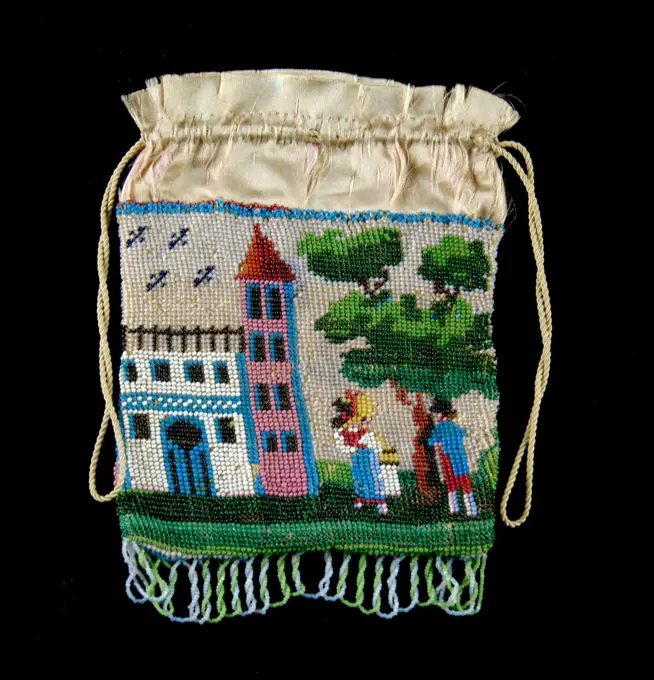
Images of various fabric bags and textiles with intricate patterns, some dated to historical periods.

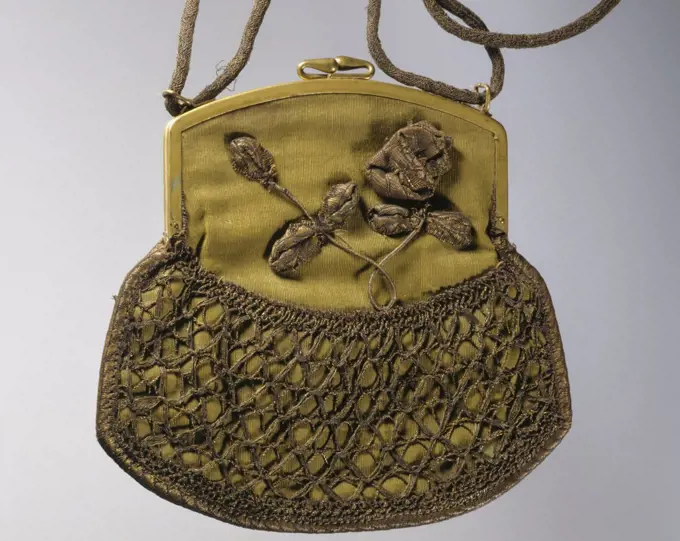
Rust-colored moire bag and floral crochet application in brocade lame, fashion accessories, Italy, early 20th century.
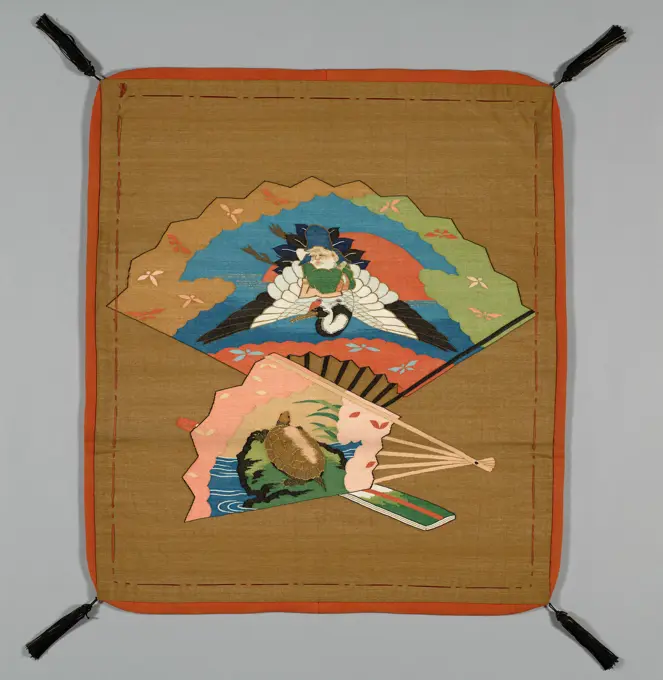
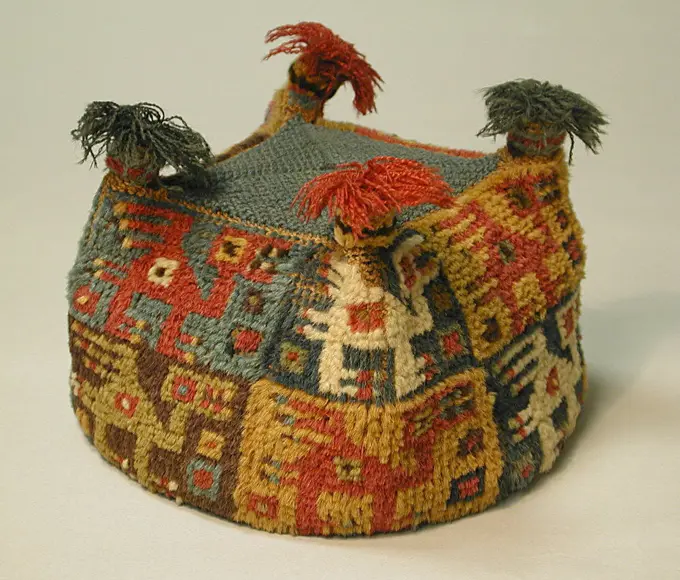
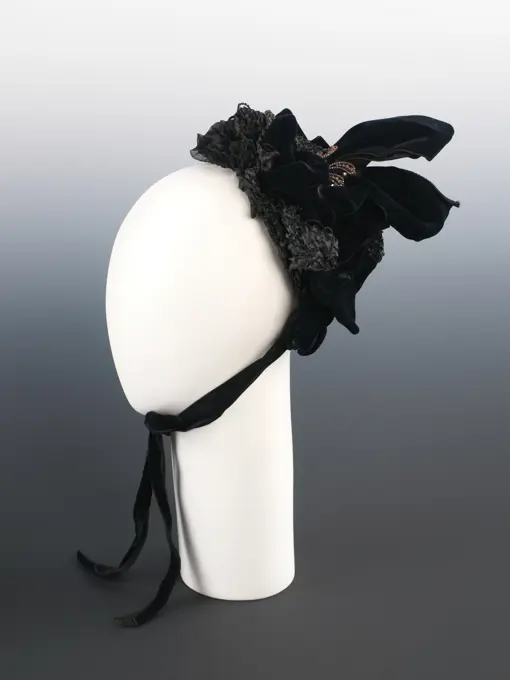
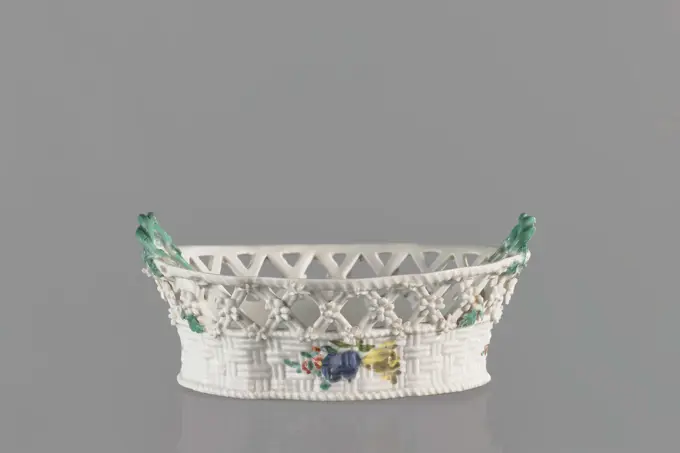
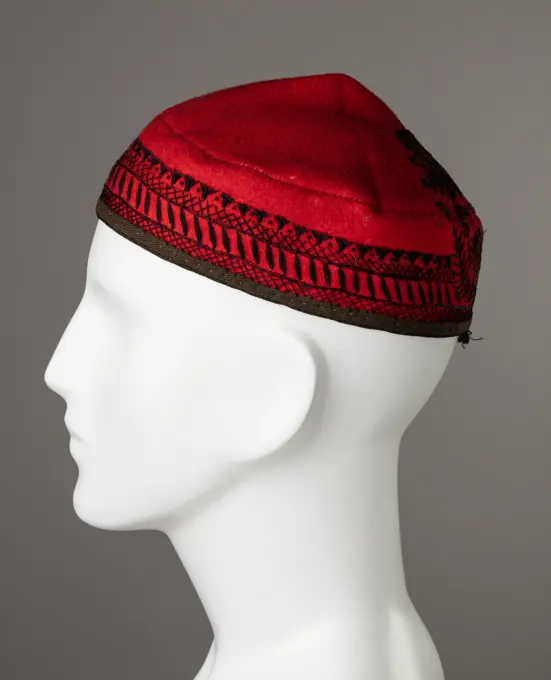
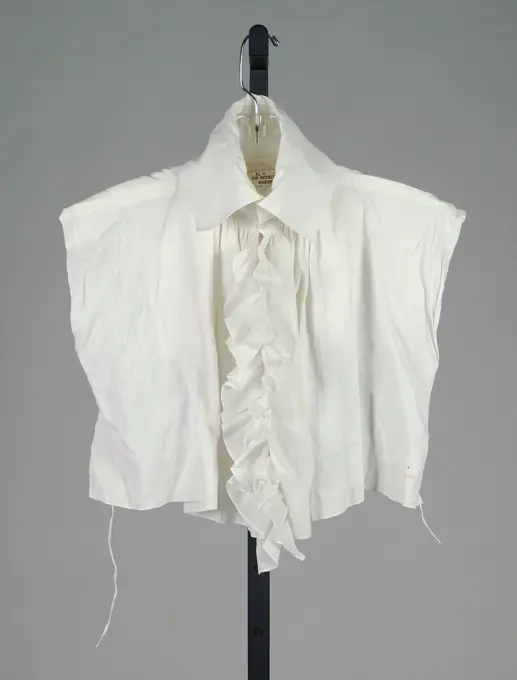
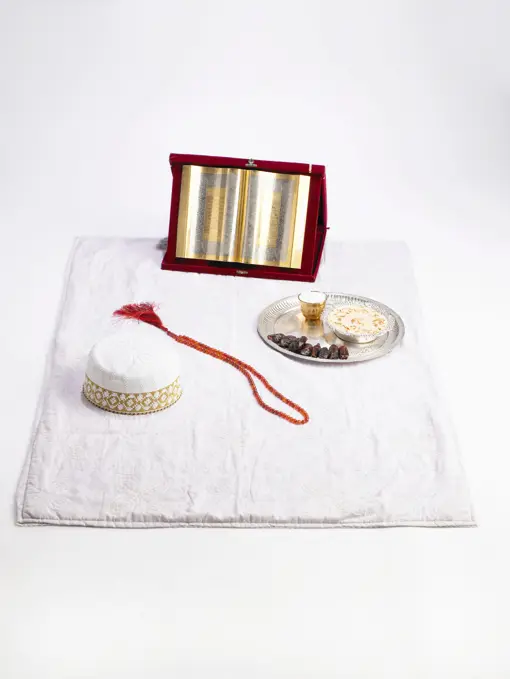
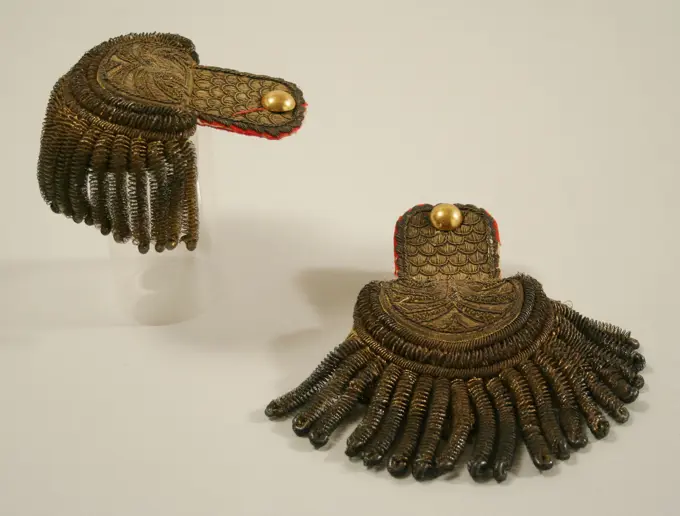
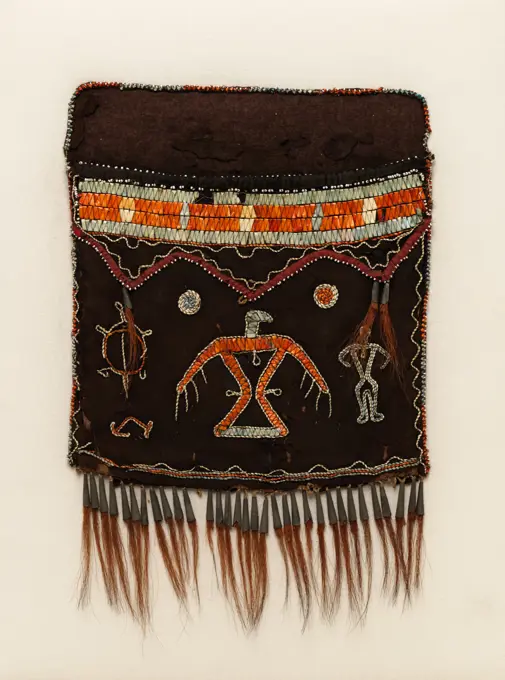
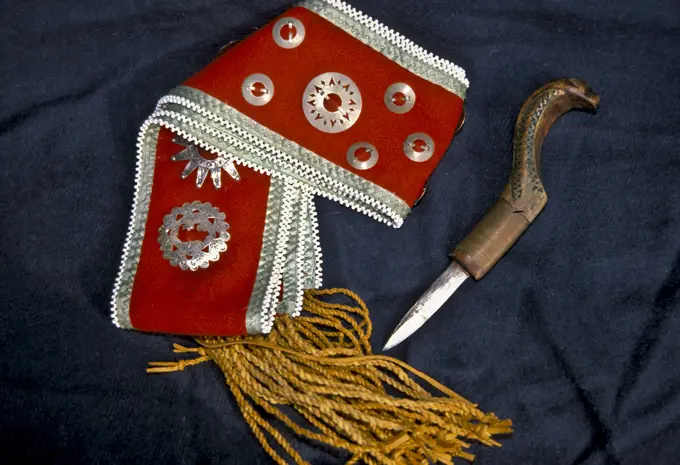
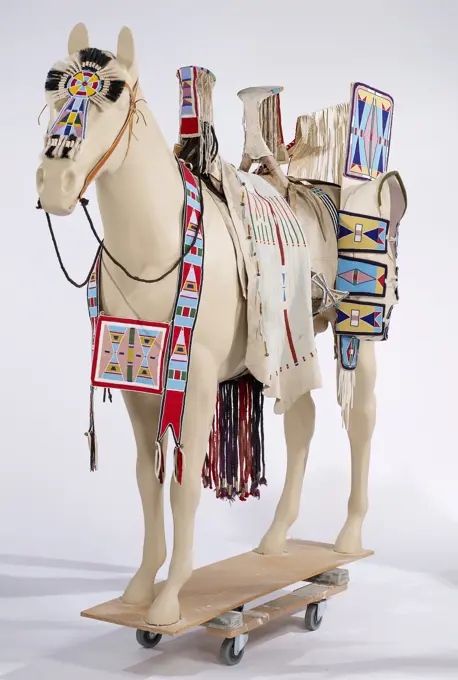
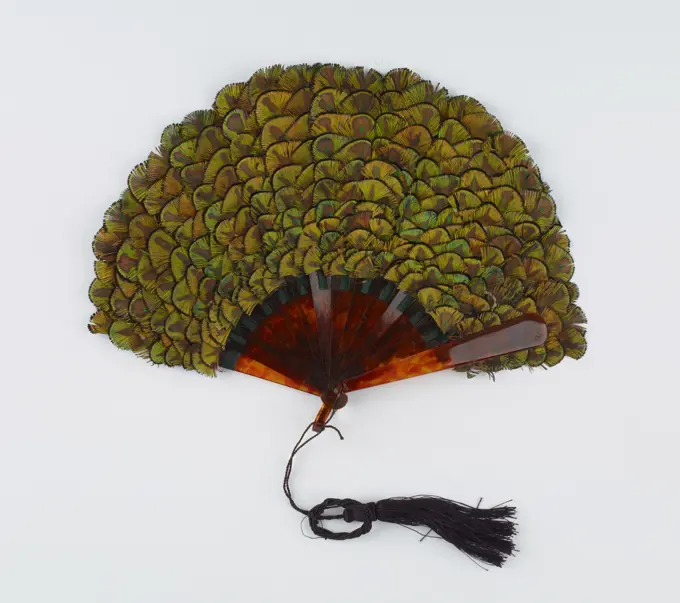
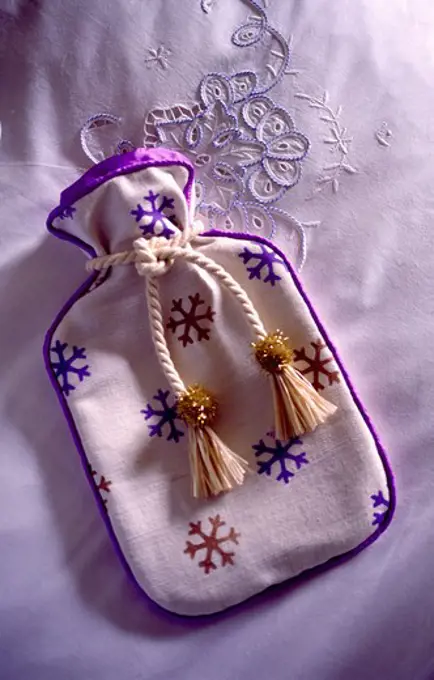
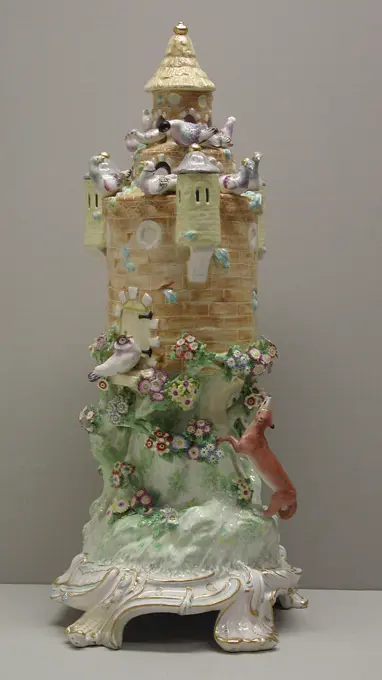
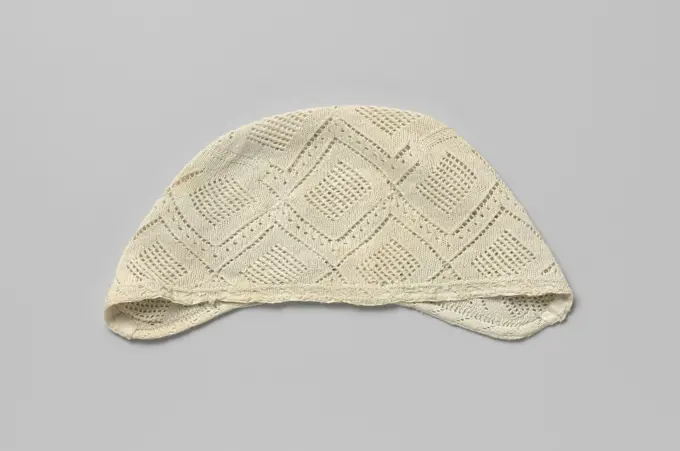
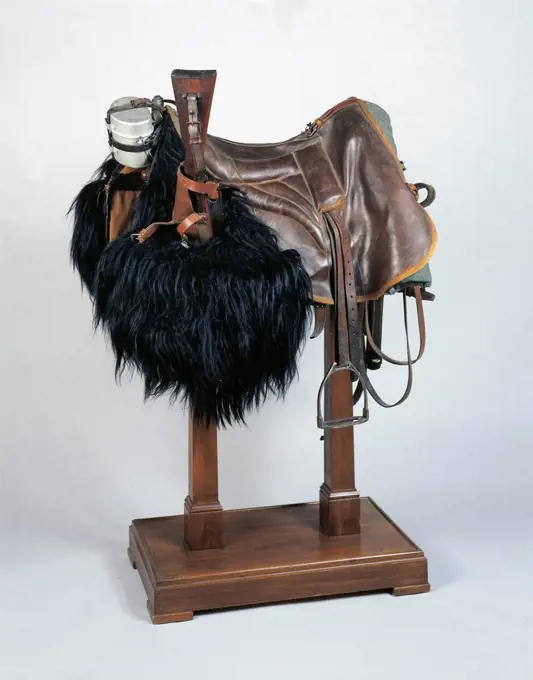
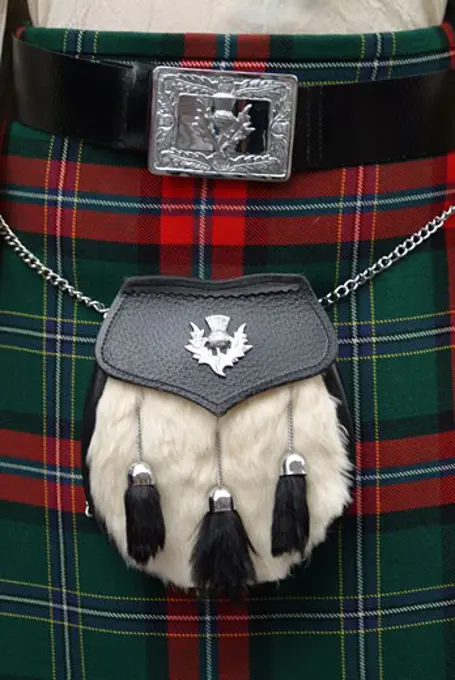
Fukusa (Gift Cover) Made 1801-1900 Japan. Pattern side silk, gold-leaf-over-lacquered-paper-strip-wrapped cotton, slit and single interlocking tapestry weave with outlining wefts (tsuzure); lining silk, plain weave with creped wefts (chirimen, hitokoshi); sewn with padded lining extending beyond front at center on all four sides (yatsuzuma); controlling stitches silk, running ìcontrollingî stitches along all edges; corners silk, four-strand square braid; knotted atop open buttonhole filling stitch covered gold-leaf-over-lacquered-paper cap over cotton ball; silk and gold-leaf-over-lacquered-paper-strip-wrapped cotton re-plied fringe tassels .Terracotta fragment of a kylix (drinking cup) 500-480 B.C. Greek, Attic Interior, right foot. Terracotta fragment of a kylix (drinking cup) 691822Textile Swatch , 1950s to 1960s. Silk, 21 1/2 x 9 1/2 in. (54.6 x 24.1 cm).    1950s to 1960sCap 18th century German. Cap 89131Four-Cornered Hat 7th-9th century Wari Finely woven, brightly colored hats, customarily featuring a square crown, four sides, and four pointed tips, are most frequently associated with two ancient cultures of the Andes: the Wari and the Tiwanaku. The Wari Empire dominated the south-central highlands and the west coastal regions of what is now Peru from 500-1000 A.D. The Tiwanaku occupied the altiplano (high plain) directly south of Wari-populated areas around the same time, including territory now part of the modern country of Bolivia. The cultures not only developed and flourished as contemporaries, but also occupied adjacent lands for nearly four centuries. A Wari ceremonial center called Cerro Baúl was located a mere five miles from Tiwanaku-settled fields in the Moquegua Valley of Peru. The two cultures likely encountered each other at Cerro Baúl and elsewhere, but the nature of these interactions remains largely unknown. Four-cornered hats from both the Wari and the Tiwanaku were Old radio on a white backgroundEvening bonnet ca. 1892 Healy This quintessential form of the 1890s achieves the milliner's goal of artful decoration and refined taste. Feathers and stiffened bows were a popular choice to add to the height of a bonnet. The treatment of straw as ribbon makes an interesting statement, adding a level of integrity as well as femininity.. Evening bonnet 156730Openwork basket. Porzellanmanufaktur Prinz Friedrich W.E. von Hildburghausen (1760-1795), manufactureBliżej Kultury unknownChemisette 1790-1805 British. Chemisette 170074Koran prayer beads shawl mass Allah bohri Muslim topi cap eid ul-fitr or id-ul-fitr with sewaiya khajoor salt for Id festival Copyright: xVirenxDesai/DinodiaxPhotoxEpaulets early 19th century Italian. Epaulets 98374Sewing Instruction Book Samples (USA); 1945-20-17Hat ca. 1890 American. Hat 107279Floral Decoration Matchsafe; China; brass, cloisonné enamel; 5.8 x 3.3 x 1.2 cm (2 5/16 x 1 5/16 x 1/2 in. )Men's Haori with Genji scenes. Haori for a man with an adornment to the lining of a part of a room screen: two ragged folding fan-shaped images, one with a courtly playing Koto on a veranda, the other with two courtesettes and a child on a veranda at running water, against A background of a painting of a man on a raft and pine trees with a text on a irregular surface of leaf leaf. Perhaps scenes from the Genji Monogatari. Black glossy silk (habutae) with stenciled yuzen decoration. Five family weapons (mon) of a putrand (Igeta) motif.Cap; linen, woolShoulder bag (missing strap) ca. 1800 Anishinaabe, possibly Mississauga Ojibwa, Native American The images on this black-dyed bag, traditionally used to hold amulets and other personal possessions, are part of the pictorial language of Great Lakes cultures. The figures and abstractions express a complex universe alive with seen and unseen forces. In 1845 the Anishinaabe Methodist minister Peter Jones wore the pouch in Edinburgh, posing for a group of photographs that are considered the earliest of an identified Native North American. The strap is now missing.. Shoulder bag (missing strap). Anishinaabe, possibly Mississauga Ojibwa, Native American. ca. 1800. Tanned leather, porcupine quills, dye, glass beads, silk ribbon, metal cones, and deer hair. Possibly made in Ontario, Canada; Possibly made in Michigan, United States; Possibly made in Wisconsin, United StatesShawnee sash made with red trade cloth and decorated with metal trade silver conchos with gold fringe. A metal hole punch awl with decorative wooden handle lays next to belt.Pleated cockade fan, Glazed cotton leaf, tortoise shell handle, silk cord, Pleated cockade fan. Leaf of glazed cotton with silk cords attached--one to the upper center of leaf and the other to the lower center through a hole in the tortoiseshell tube. Pulling the cord at the bottom of the tube retracts the telescoping cockade fan into its cylindrical handle. The leaf, when pulled upward, has a circular or 'flabellum' form., USA, 1870-90, costume & accessories, Pleated cockade fanHat embroidered with sequinsBuffalo Hair Rope, 20th century, 405 in. (1028.7 cm) (a), Buffalo hair, United States, 20th centuryPeacock feathers fan unknownTSUBA; Sword Hilt and Final, Unknown Japanese, Bronze, JapanDetail shot of a hot water bottle coverPerfume burner in the form of a dove-cote 1759-65 Chelsea Porcelain Manufactory A model produced in both the red and gold anchor periods at Chelsea but apparently in very limited numbers. The chamber for burning perfumed pastilles was in the dovecote, closed by a conical roof.. Perfume burner in the form of a dove-cote. British, Chelsea. 1759-65. Soft-paste porcelain. Chelsea Porcelain Manufactory (British, 1745-1784, Gold Anchor Period, 1759-69). Ceramics-PorcelainNohRobeReticule. Dated: 1935/1942. Dimensions: overall: 26.6 x 35.4 cm (10 1/2 x 13 15/16 in.). Medium: watercolor, graphite, and silver paint on paper. Museum: National Gallery of Art, Washington DC. Author: Edith Towner.Knitted hat of white cotton with zigza edges and diamond shapes with grid, anonymous, c. 1800 - c. 1900 Knitted hat of white cotton with zigza edges and diamond shapes with gridwork. Europe cotton (textile) knitting Knitted hat of white cotton with zigza edges and diamond shapes with gridwork. Europe cotton (textile) knittingCord With Two Tassels, Tasseled tie-back; possibly England; cotton, silk, wool, wood; Warp x Weft: 79 cm (31 1/8 in.), looped into fourths; given by Miss Amy R. Knox; 1968-116-2-dPP1-47 (3) Boys on board the reformatory ship Cornwall 1887 Description: From Boys on board the reformatory ship Cornwall: address to Queen Victoria on her Golden Jubilee. Illuminated; with a small cushion covered with coloured bead work. Date: 1887 jubilee, queenvictoria, pp1, loyaladdressHandkerchief, circa 1940, maker unknown.Pouch 1830-60 American. Pouch 168416Militaria, Italy, 20th century. Packed up cavalry saddle.Sporran on tartan background, ScotlandBag (morral), c. 1972, 13 1/2 x 14 1/2 in. (34.29 x 36.83 cm) (pouch only, without strap or loops), Wool; knitting, Guatemala, 20th century