Textiles and Patterns

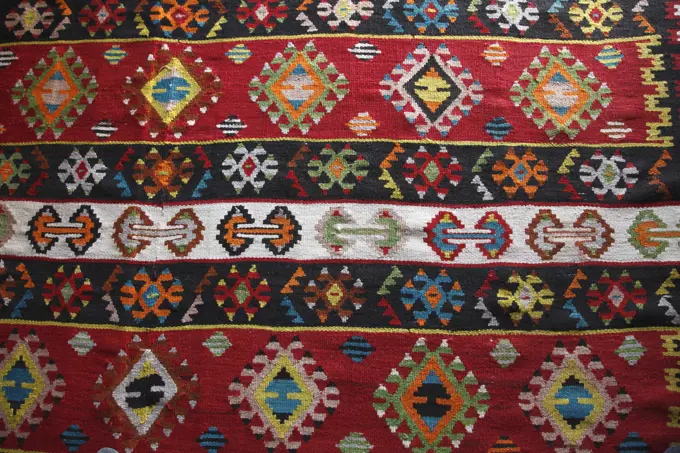
Vibrant and intricately designed textiles, including serapes and scarves from various cultures, showcasing rich colors and patterns.

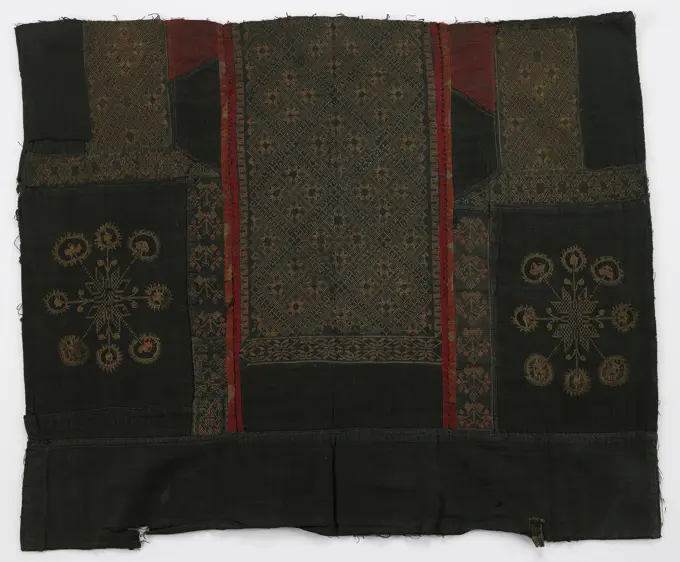
Baby Carrier, 31 1/2 x 25 1/2 in. (80.01 x 64.77 cm), Silk, cotton; needlework, China
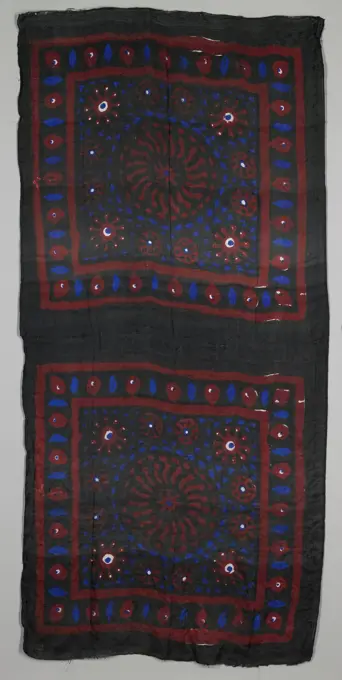
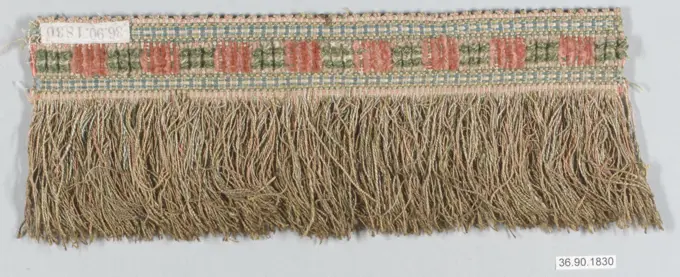
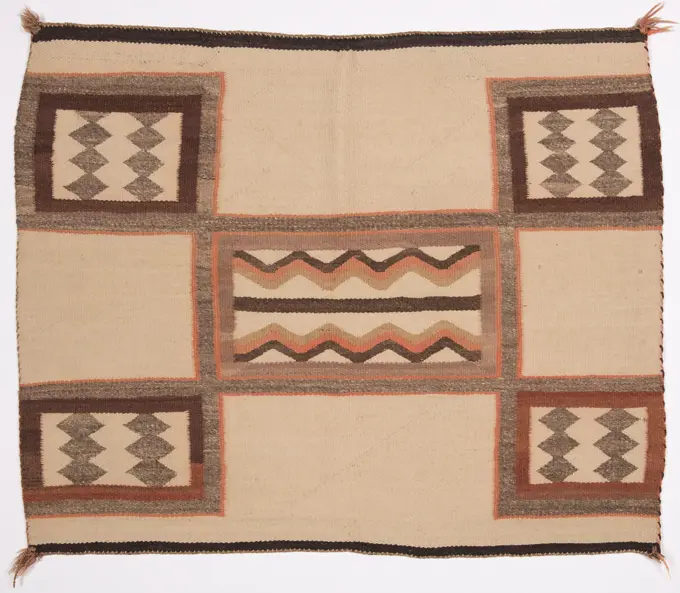
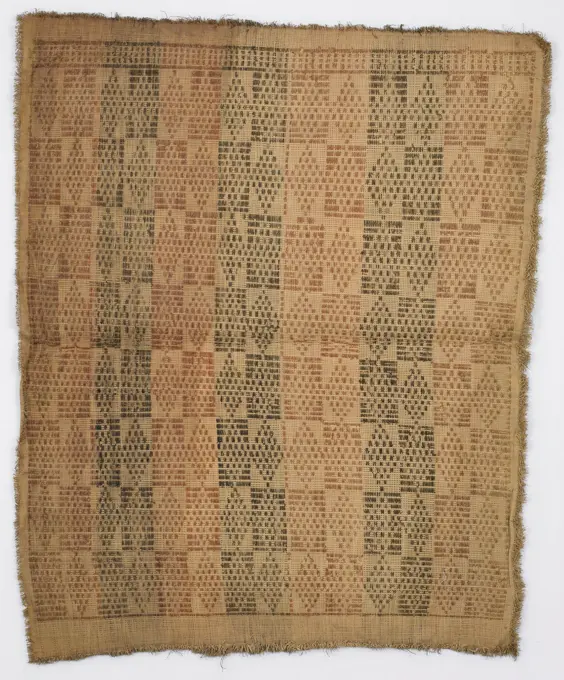
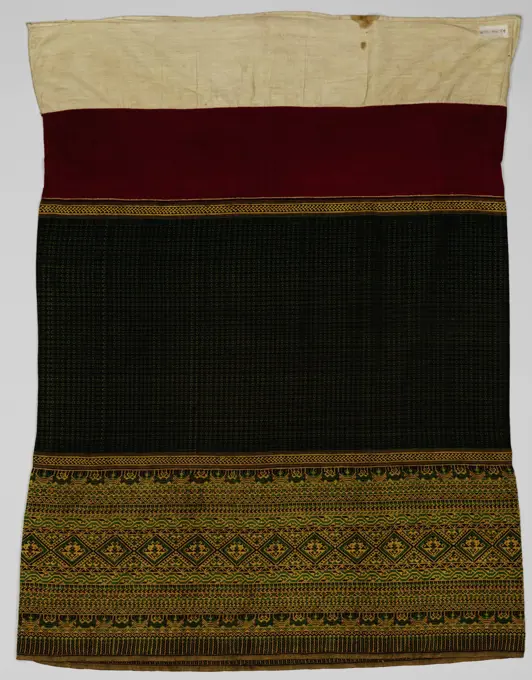
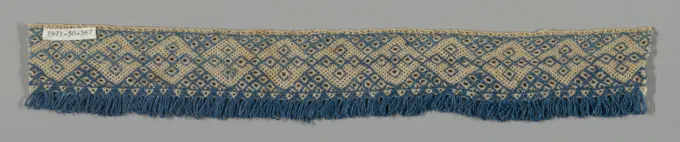
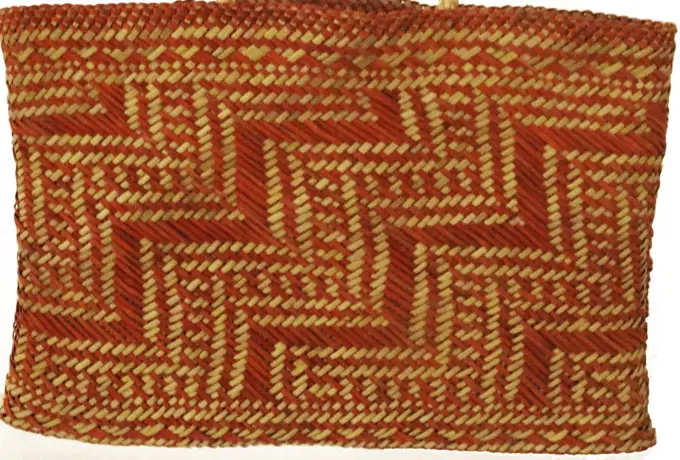
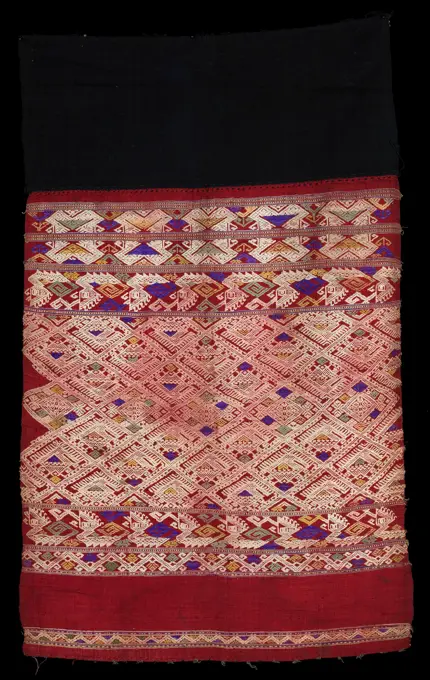
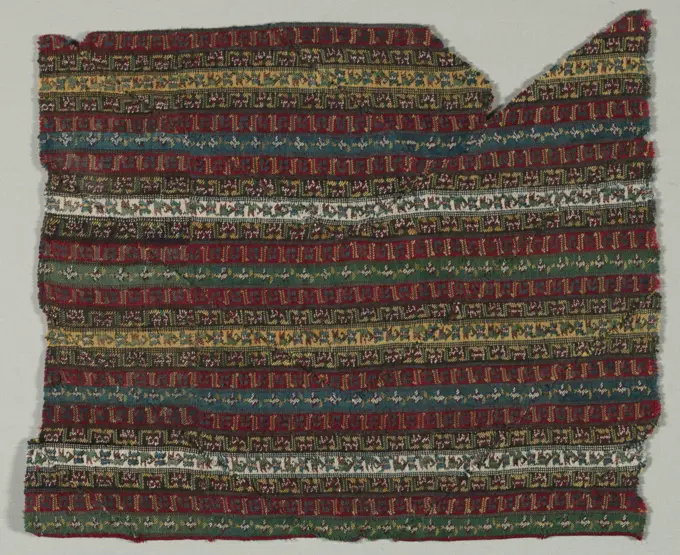
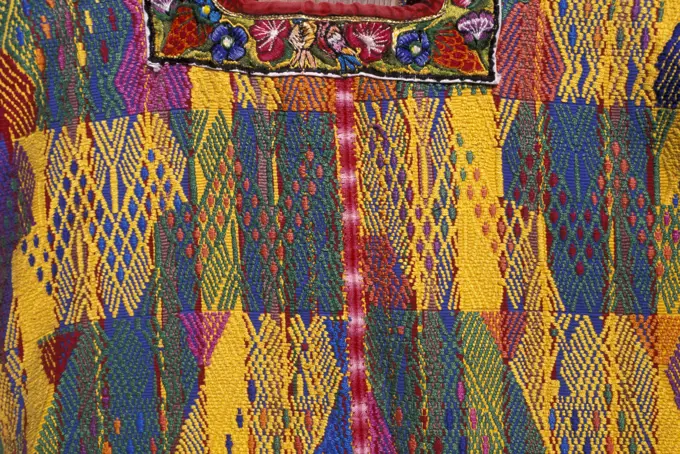
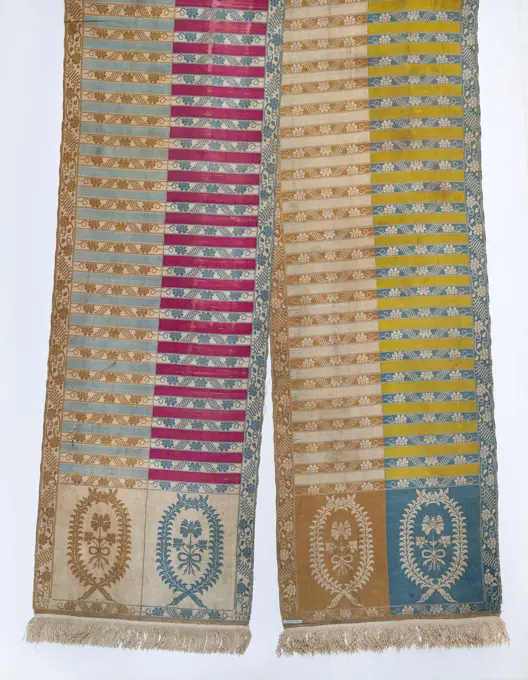
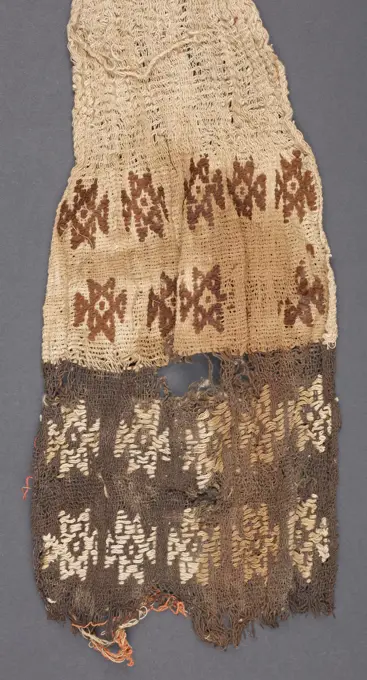
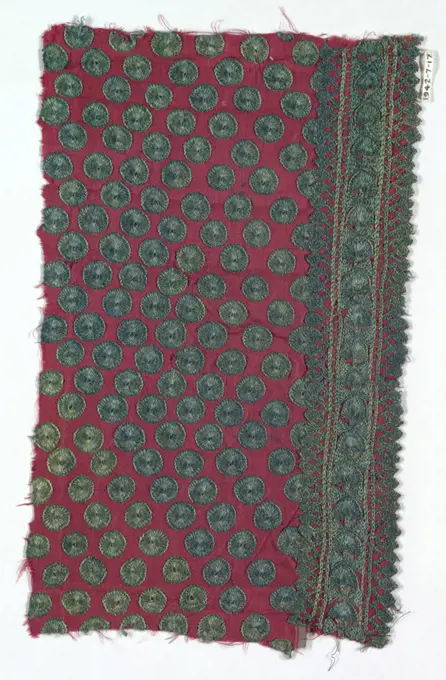
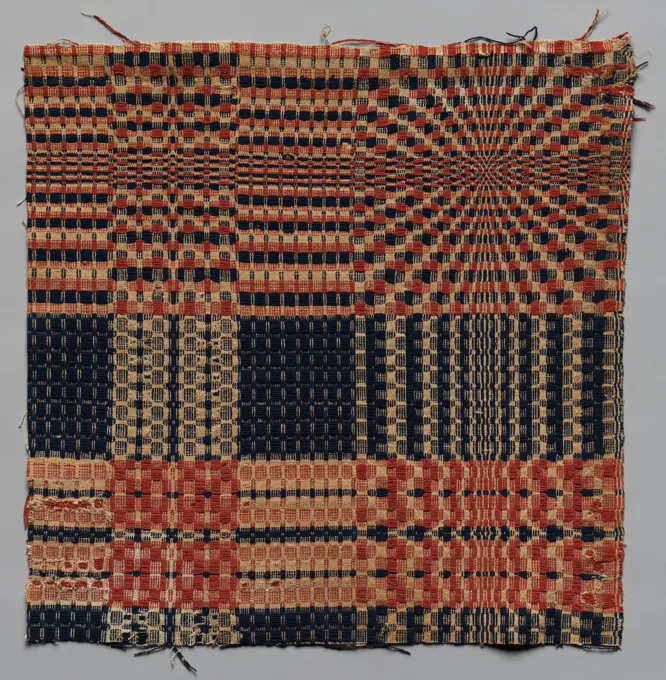
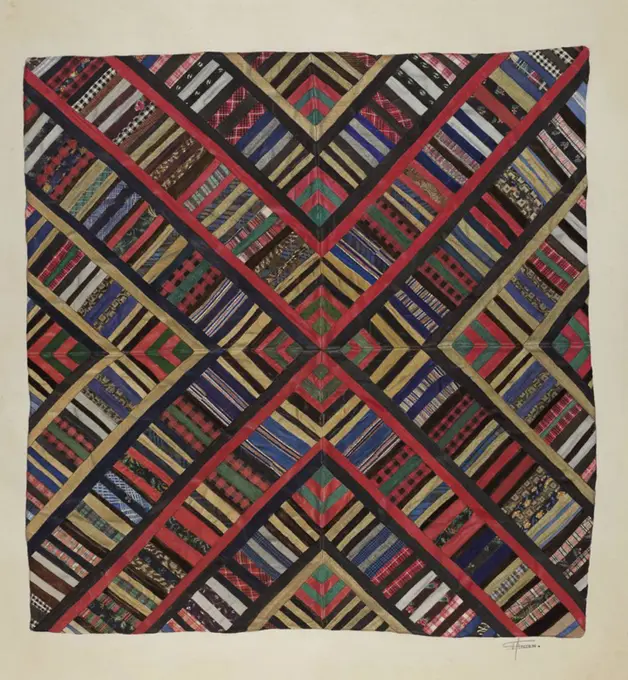
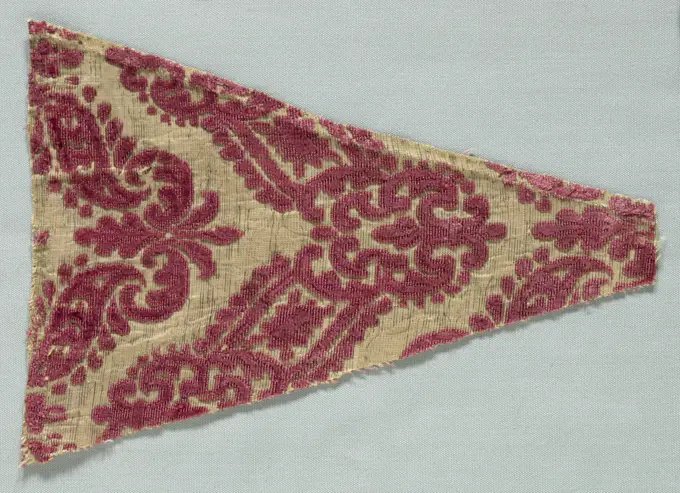
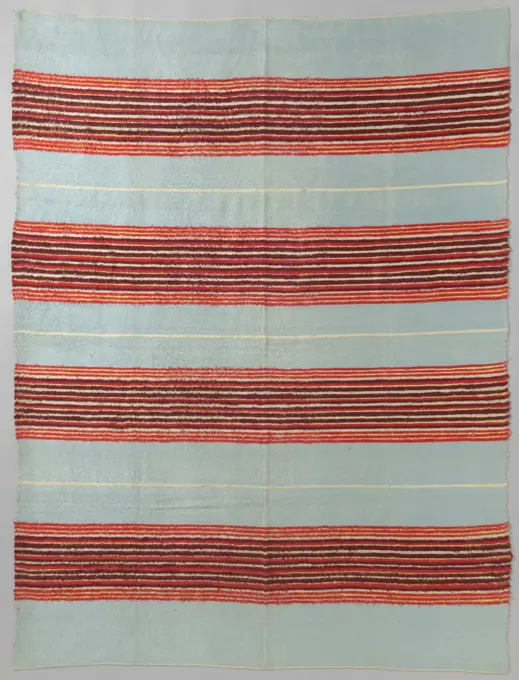
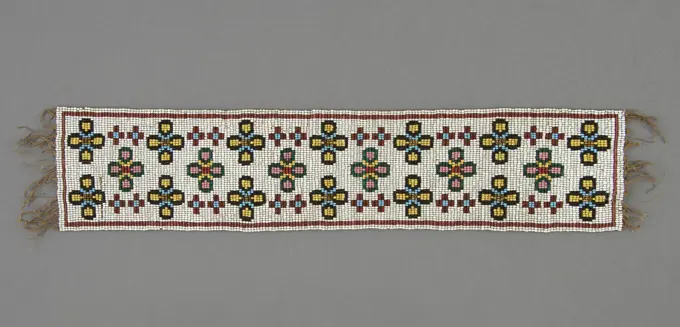
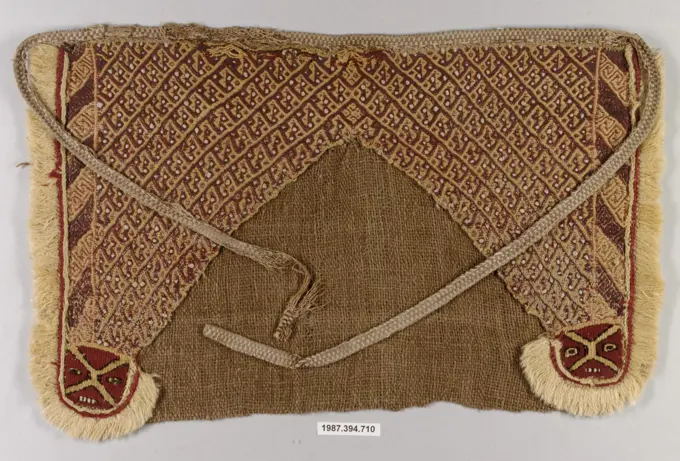
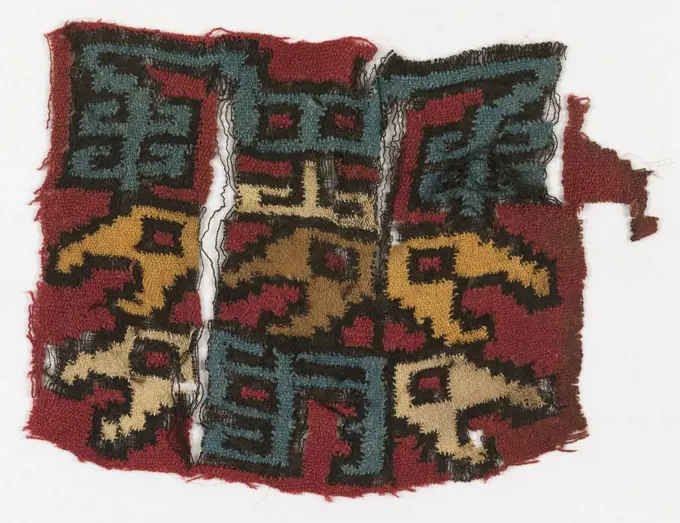
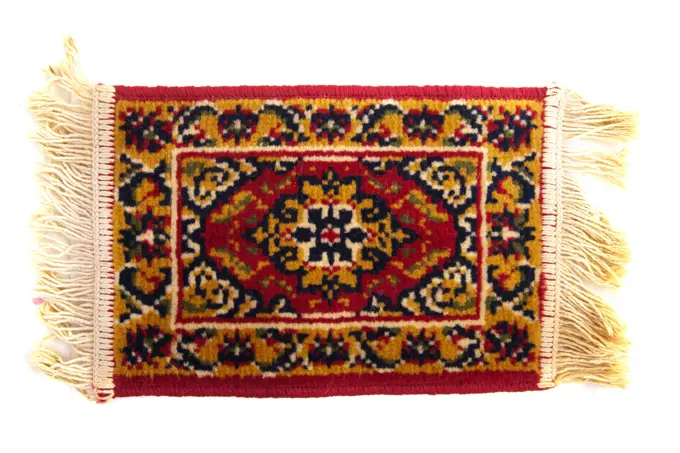
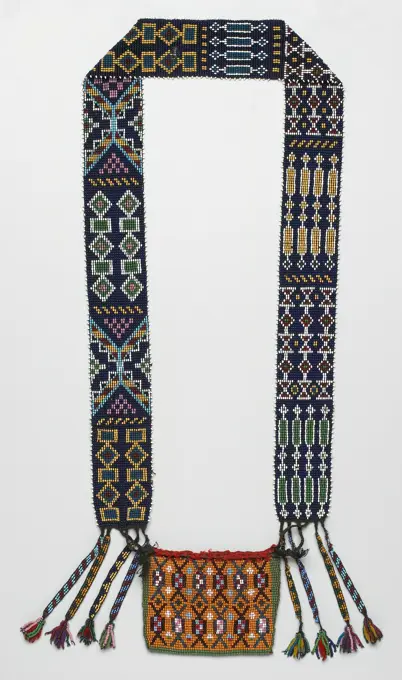
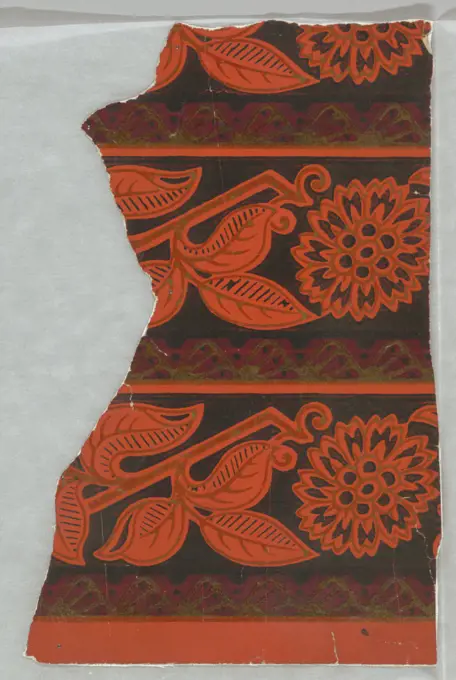
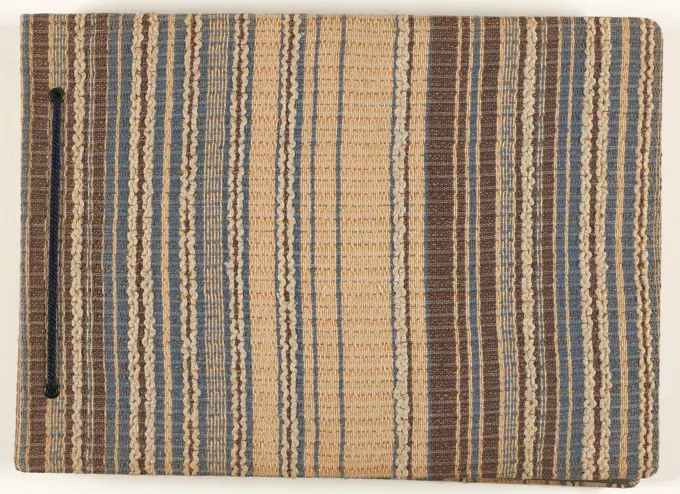
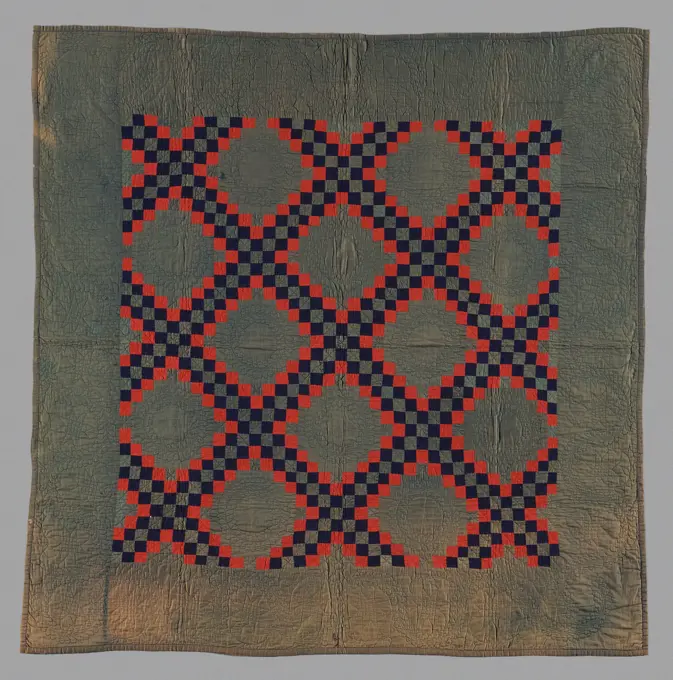
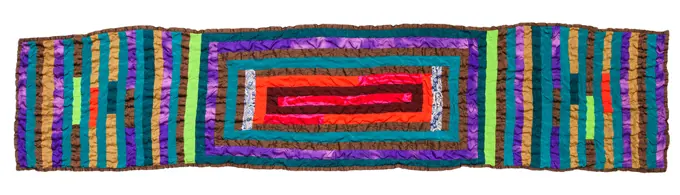
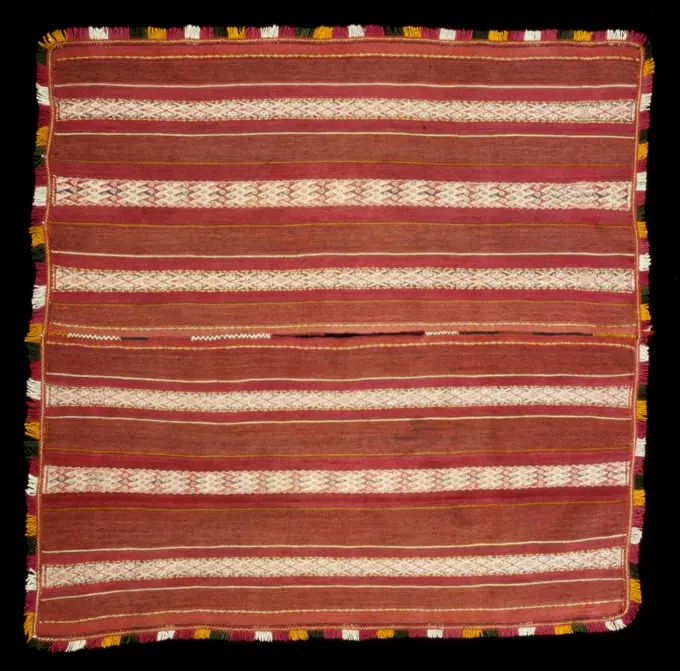
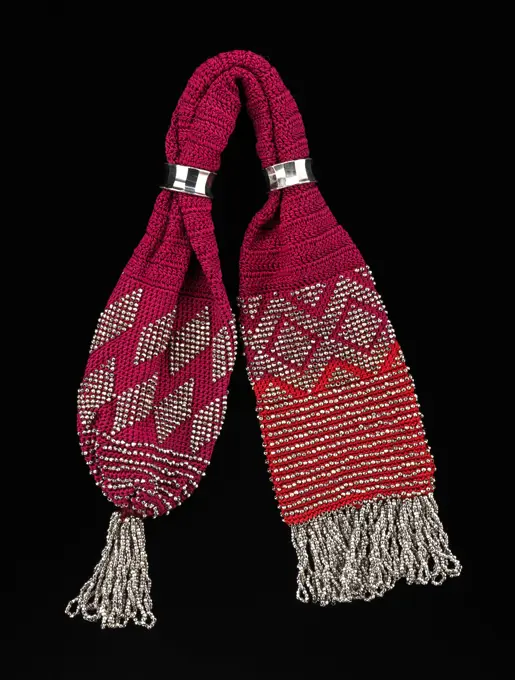
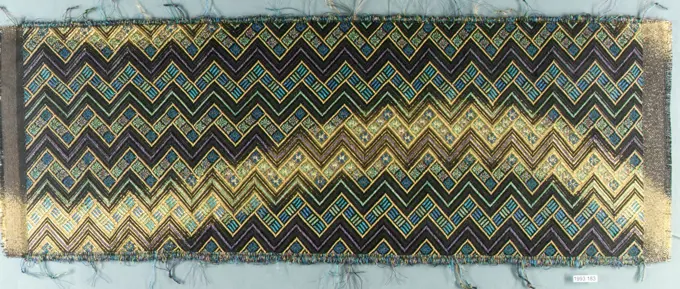
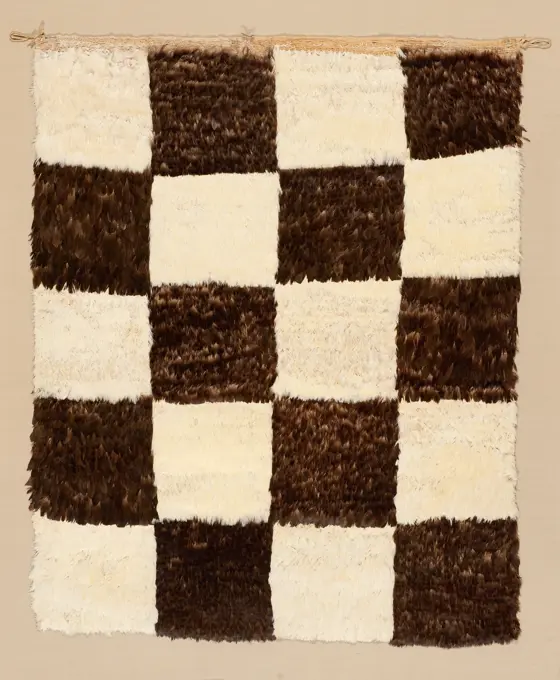
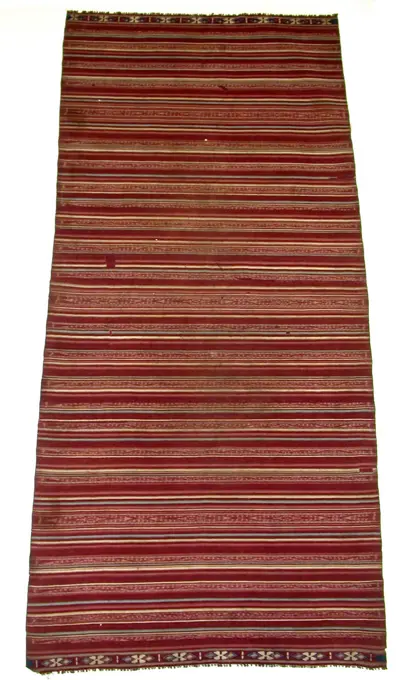
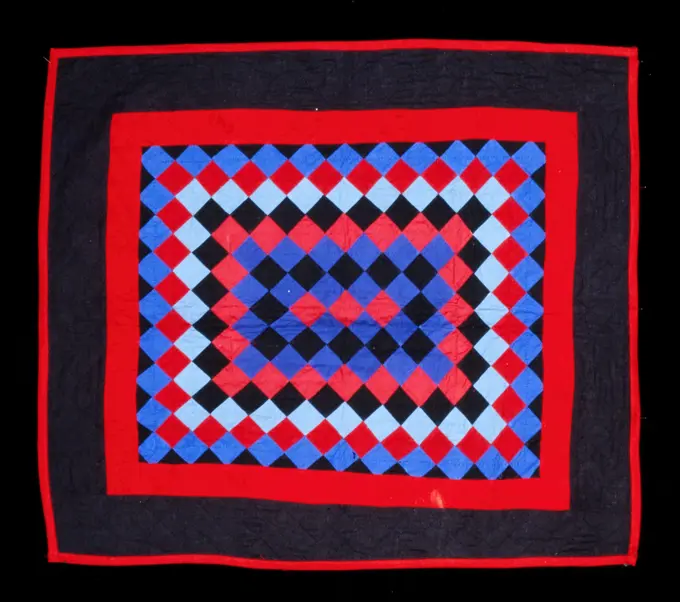
Serape ca. 1840-50 Unidentified Serapes (the Spanish term for blanket) are a prominent form of Navajo weaving. In the early nineteenth century, they became seen as garments of prestige among a range of Southwest residents, as well as a high-value trade item. Vibrantly colored and vividly patterned, these so-called wearing blankets build on long-established design themes. The horizontal lines and diamond shapes of this classic examplereferred to by some as a rare "radio-wave" patternare characteristic of Southwest Native American design, reflecting varied weaving traditions and artistic exchange among Native and Hispanic communities.. Serape. Unidentified Navajo Artist. Diné/Navajo. ca. 1840-50. WoolPoncho, late 19th-early 20th century, 51 1/2 x 68 1/2 in. (130.8 x 174.0 cm) (open, laid flat, uneven), Natural dye, cotton, alpaca, Bolivia, 19th centuryScarf, c. 1987, 76 x 38 in. (193.04 x 96.52 cm), Silk; dyed, Syria, 20th centuryTextile 1840-70 Russian. Textile 173427Sample of embroidered galloon unknown, a professional school in KrakowFringe late 18th century French. Fringe 224917Shroud(Porisitutu’)Fragment (Spain); wool, linenBaby Carrier, 31 1/2 x 25 1/2 in. (80.01 x 64.77 cm), Silk, cotton; needlework, ChinaFace from Half of Double Saddle Bag (Khorjin) ca. 1850. Face from Half of Double Saddle Bag (Khorjin). ca. 1850. Wool; sumak brocaded. From Northwestern Iran. Textiles-Woven-BrocadeSingle Saddle Blanket; hand-spun woolWomans Ceremonial Skirt (Tapis)Festival Apron, 19th-20th century, 29 x 24 1/4 in. (73.66 x 61.6 cm), Bast fiber, indigo dye, China, 19th-20th centuryDoek, Anonymous, 1900 - 1949 Cloth with geometric motifs. Thailand cotton (textile) Cloth with geometric motifs. Thailand cotton (textile)Currency cloth, 19th century, 23 7/16 x 29 in. (59.5 x 73.7 cm) (without fringe), Plant fibers; printed, Angola, 19th centuryFragment of lamp axle with pattern shaped by yellow bandwalk. Fragment of wine red side with yellow bandwalk patterned pattern of cross shapes and stars, between Arabesque. Along the right-hand side horizontal band with heart shapes.Legging strip -Cushion Cover Made 1801-1825 United States. Wool, cotton, and jute, stripes of four-color complementary weft warp-faced twill weave self-patterned by weft-float faced twill weave .Jordan, Kings Highway, Madaba, Jordanian souvenirs, rugDoek, Anonymous, 1900 - 1949 Cloth with geometric motifs. Thailand cotton (textile) Cloth with geometric motifs. Thailand cotton (textile)Trimmimg (Russia ); linen; Bequest of Marian Hague; 1971-50-367Kete Whakairo (patterned flax baskets)made and used by New Zealand's Mori people. Dated 20th CenturyEnd panel, 19th century, 29 1/4 x 18 7/8 in. (74.3 x 47.94 cm), Cotton, silk, Laos, 19th centuryArrow sash -Belt, 114 x 4 in. (289.56 x 10.16 cm) (including fringe), Silk, ChinaBack Apron (Arkalik), c. 1940, 25 1/2 x 25 1/2 in. (64.77 x 64.77 cm), Wool; needlework, Turkey, 20th centuryFragment Made 1775-1825 China. Fancy compound satin, silk. .Textile, Medium: silk, metal wrapped silk Technique: satin woven with supplementary wefts, Gold diamond lattice containing blossom on red background, India, 19th century, woven textiles, TextileFragment of a Shawl, 19th century. India, Kashmir, 19th century. Twill weave, brocaded; wool; overall: 43.1 x 36 cm (16 15/16 x 14 3/16 in.).Jacquard Coverlet, 19th century, 94 x 87 in. (238.76 x 220.98 cm), Red, green and blue wool, United States, 19th centuryTrimming; silkBaby Carrier, 34 1/2 x 15 in. (87.63 x 38.1 cm)14 1/2 x 6 in. (36.83 x 15.24 cm) (object part, top section)20 x 15 in. (50.8 x 38.1 cm) (object part, bottom section), Cotton; needlework, ChinaCA, Guatemala.Curtain Made 1889-1890 Germany. Linen and cotton, strips of plain weave; plain weave with bands of weft floats; plain weave and alternating weft-float weave; plain weave, open work with crossed wefts; and plain weave, open work with knotted weft wrapping; joined with cotton, crochet and crocheted borders . Elise Grill (Weaver)Conciliate belt; Manufaktura Aleksander Unruga (Koby Koby; Pasów label; 1781-1787); 1781-1784 (1781-00-00-1784-00-00);Contact belts, purchase (provenance)Textile Fragment 4th century. Textile Fragment 443460Part of a cotton sash unknownTextile 1700-1899 Russian. Textile 173395Textile; silkStrook kloskant met gestileerde rode bomen.Strip colored dick edge: sloping side. The colors used are red, natural and blue. The repeating pattern consists of a stylized red tree, which hangs down with a straight trunk from the top of the strip. The successive trees touch each other at the widest point of the impeller-shaped leaf wires. The leaf wires form the slip edge along the bottom. A wide border along the top of the strip, as wide as the tree trunks are long, consists of a natural-colored base with red and blue horizontal lines running through horizontal lines. Between the leaf wires in the trees are connected by a natural-colored grille: a nozzle ground. The top of the strip is straight finished.Tunic fragment, Medium: silk Technique: buttonhole and chain stitch embroidery on plain weave, Fragment of a child's tunic with a ground of red silk decorated with green discs and a border at one side of semi-circles and ovals placed in a lattice format with connecting chevrons., India, 19th century, embroidery & stitching, Tunic fragmentCoverlet Fragment, c. 1800. America, early 19th Century. Hand weave: wool and cotton; average: 49.5 x 49.5 cm (19 1/2 x 19 1/2 in.).Textile Fragment 4th-5th century. Textile Fragment 445813Bedspread. Dated: 1935/1942. Dimensions: overall: 55.5 x 52.3 cm (21 7/8 x 20 9/16 in.). Medium: watercolor, pen and ink, and graphite on paper. Museum: National Gallery of Art, Washington DC. Author: Esther Hansen.Bornean bead painting, from Kota-Kinabalu.Coca Bag(Chuspa).  Artist: UnknownHinggi (ceremonial Men's Wrapper) (Indonesia); cottonBaby Carrier, 21 1/2 x 26 1/2 in. (54.61 x 67.31 cm), Cotton; needlework, ChinaFragment, Medium: linen, wool Technique: plain weave with discontinuous wefts (tapestry), Fragment with continuous overlapping leaf pattern in natural wool, blue, red and purple, Egypt, 300-900, woven textiles, FragmentHeadband late 19th century. Headband 446848Purse (USA); wool on linen groundTapestry Panel with Stars 15th-16th century Inca. Tapestry Panel with Stars. Inca. 15th-16th century. Camelid hair, cotton. Peru. Textiles-WovenVelvet Fragment, 1650-1699. Italy, 2nd half 17th century. Velvet; overall: 24.5 x 17.5 cm (9 5/8 x 6 7/8 in.).Light blue children's blanket ,, 1860 - 1870 Light blue children's blanket with red, purple, white and yellow cross stripes. Netherlands (possibly) wool Light blue children's blanket with red, purple, white and yellow cross stripes. Netherlands (possibly) woolStrip -Fragments of embroidery unknownTapestry Panel 12th-15th century Peruvian. Tapestry Panel 315790Fragment 16th century Italian. Fragment 230553Fragment, Medium: Warp; S-spun linen. Wefts; S-spun linen, S-spun wools Technique: supplementary weft loops (wool) in plain weave linen ground, Oblong with polychrome weft loops forming geometric pattern., Egypt, 5th-8th century, woven textiles, FragmentCurtain panel, Medium: cotton, viscose rayon Technique: plain weave with discontinuous supplementary weft, Open weave curtain panel with concentric circles of dark orange, salmon pink and light brown. Elongated triangular forms along bottom edge., USA, ca. 1905, woven textiles, Curtain panelBedcover (Basket Pattern Quilt) Made 1861 Southern Illinois. Cotton, plain weave, pieced with cotton, plain weave, printed in small scale design, quilted, batting, backed with cotton, plain weave, basket pattern; handles appliqued with machine stitching . Mary Katharine Ashbrook Hill (Maker)Fragment, Medium: wool Technique: discontinuous and interlocked warps and wefts, Red ground with geometric design in blue, black, white, yellow and tan., Peru, ca. 600, woven textiles, FragmentBag, Medium: wool Technique: doublecloth, Woven bag that depicts rows of animals on one side. The other has a diamond shape with enclosed stars. Shoulder band in plain weave., Mexico, probably 19th century, woven textiles, BagTurban, c. 1940, 238 x 26 in. (604.52 x 66.04 cm) (approx.), Silk; dyed, India, 20th centuryPassement consisting of a band of woven white wool, which has been removed on one of the long sides so that a fringe has been created; The decoration consists of silk -embroidered rosettes, anonymous, c. 1750 - c. 1790 Passement of white wool, decorated with colored embroidery. The passion consists of a tire of woven wool, which has been removed on one of the long sides so that a fringe has been created. The wool is decorated lengthwise with embroidered rosettes in the colors orange and beige; A green embroidered line runs along the edges. Possibly a passement for clothing or furniture covering. Netherlands (possibly) whole: Wool. Decoration: Silk embroidering Passement of white wool, decorated with colored embroidery. The passion consists of a tire of woven wool, which has been removed on one of the long sides so that a fringe has been created. The wool is decorated lengthwise with embroidered rosettes in the colors orange and beige; A green embroidered line runs along the edges. PossCarpet Red carpet with colorful decoration isolated over white Copyright: xZoonar.com/IvonnexWierinkx 7134782Charm Bag, c. 1870, 24 3/4 x 6 1/2 in. (62.87 x 16.51 cm) (including strap), Beads, cotton, United States, 19th centuryHeadscarf 19th century Russian. Headscarf 98454Sampler, 9 1/2 x 12 5/8 in. (24.13 x 32.07 cm)Border, Machine-printed paper, Small fragment displaying two and one half bands set with conventional chrysanthemum flower, and foliage clusters. Printed in black, red and gold on orange ground., USA, ca. 1890, Wallcoverings, BorderHoliday trips around the Second World War (album 1). Album with fabric wrap with vertical stripes in beige, brown and blue. With 24 brown cardboard album blades with multiple black and white photos per leaf. Recordings of three different vacations. 1) Trek from father and son () On the bike from 10 to 23 September 1939 by the Netherlands: Ootmarsum, Hardenberg, Coevorden, Exloo, Ruinen, Borger, Rolde, Giethoorn, Hasselt, Wezep, Nunspeet, Soestdijk, Bussum. 2) Trek by bike from 6 to 13 July 1940 by the Netherlands: Rhenen, Grebbeberg, Arnhem, Nijmegen, Grave, Sint Oedenrode, Breda, Bergen op Zoom, Goes, Middelburg, Nieuwland, Oosterschelde, Halsteren, Standdaarbuiten, Zevenbergen, Moerdijk bridge , Delft, Den Hoorn, De Lier, Hoek van Holland, Monster, The Hague. 3) Car holidays by the Netherlands, Belgium and Luxembourg from 18 to 25 June 1949: Valkenburg, Heerlen, Malmédy, Ardennes, Vianden, Clervaux, Verviers, Slenaken, Vaals, Drielandenpunt, Maastricht, St. Pietersberg, Brunssum, OiFringe Made 1601-1800 France. Silk and gold gilt strip wound around a silk fiber core, plain weave with supplementary patterning warps and extended ground weft cut fringe, grouped and wrapped with gold gilt strips wound around a silk fiber core; additional fringes wrapped .Bedcover Made 1807-1817 United States. Wool, pieced plain weaves, some glazed, some with supplementary brocading wefts; quilted . Almeda and Lucinda RobinsonQuilt, 'Double Irish Chain'Traditional turkish handmade bagtop view of stitched patchwork scarf from silk strips isolated on white backgroundTassel Made 500 CE-900 CE Peru. Wool; tubular plain weave, patterned in five-color, three-span floats, warp substitution; oblique twill interlacing with paired elements; cross-knit looping; plain oblique interlacing with four elements; strips of tubular plain weave double cloth and five-color complementary warp weave with warp substitution strips of plain weave double cloth and five-color complementary warp weave; oblique twill interlacing with three elements . NazcaSaltillo serape, Medium: two-ply machine spun undyed cotton (warp); handspun undyed wool (brown and white), handspun indigo-dyed wool, handspun synthetic-dyed wool (weft) Technique: weft-faced dovetail tapestry weave, Late Classic Saltillo serape with a brown field and a central aggregate diamond. Brown field has a repeating red dot pattern with a white wavy dot stripe on either side. Warp ends have multicolored stripes and short off-white fringe. Side borders are stacked, variegated rhombuses in red, purple, yellow-green, dark blue, and light blue., northern Mexico, ca. 1880, woven textiles, Saltillo serapeFragment Made 1000-1476 Peru. Cotton, plain weave double cloth; edged with cotton, plain weave .Fragment 18th century Greek Islands, possibly Cyclades or Patmos. Fragment 216491Bag, late 19th-early 20th century, 7 11/16 x 5 3/8 in. (19.53 x 13.65 cm) (without cord), Cotton, silk; ikat, printed, embroidered, loop manipulated braid, Turkmenistan, 19th-20th centuryWoman's head covering, early 20th century, 72 1/2 x 41 7/16 in. (184.15 x 105.25 cm), Silk; tie dye, India, 20th centuryPonchito (small poncho), 19th century, 40 1/2 x 41 in. (102.9 x 104.1 cm) (opened flat, including fringe), Alpaca, Bolivia, 19th centuryGallon;  19th century (1801-00-00-1900-00-00);Trimming (Spain); silk; Overall: 14.5 x 4.3 cm (5 11/16 x 1 11/16 in.)Textile. Santa Fe, New Mexico.Miser's purse 1840-60 American. Miser's purse. American. 1840-60. cotton, metalMan's ceremonial tzute, 20th century, 26 x 21 in. (66.04 x 53.34 cm) (includes fringe), Cotton, rayon; jaspé (ikat) and supplementary weft patterning, Guatemala, 20th centuryWoven Tapestry 20th century Japan. Woven Tapestry 53704 Japan, Woven Tapestry, 20th century, Gold and multicolor lacquered thread, synthetic fiber, 24 3/4 x 9 in. (62.9 x 22.9 cm). The Metropolitan Museum of Art, New York. Gift of Kiriyo Kuchina, 1993 (1993.183)Wrapper, 20th century, 70.75 x 46 in. (179.7 x 116.8 cm)(w/o fringe), Cotton, Nigeria, 20th centuryBanner or One-Quarter Man's Tunic. Peru, North or Central Coast, Inka, 1470-1534. Textiles. Cotton plain weave, feathersCeremonial Textile (Sokong) 18th-early 19th century Sasak. Ceremonial Textile (Sokong) 318073Amish crib quilt, 1930, L.35 x W.31-3/4 in., cotton, wool; quilted, Canada, 20th centuryBliżej Kultury unknownAmerican 20th Century, Quilts  Pieced, 1935 1942 Quilts - PiecedBand.  Artist: UnknownBag, Medium: leather, felt, glass beads Technique: embroidered with beads Label: leather embroidered with beads, trimmed with felt, Small leather bag with drawstring closure, with red felt trim and flower motifs embroidered with colored beads., possibly Wyoming, USA, late 19th century, costume & accessories, BagTextile Fragment 4th-5th century. Textile Fragment 445900Trimming, Medium: silk Technique: woven, Trimming fragment in a design of flower spray with scrolling stem in red and yellow on a white ground. Borders showing scallops in red and yellow., France, 19th century, trimmings, TrimmingBosnia and Herzegovina, Mostar, Muslibegovic House, carpet detail,