Thangka Paintings in Tibetan Culture

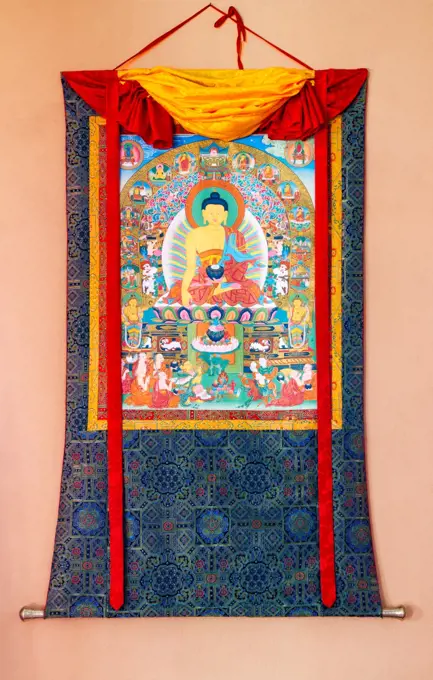
Vibrant thangka paintings illustrating Tibetan Buddhist themes and figures. They showcase intricate designs and rich colors, encapsulating spiritual stories and cultural heritage.
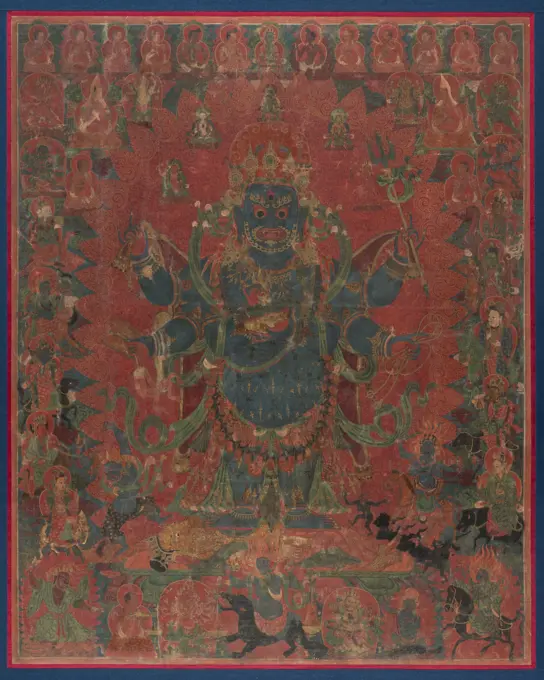
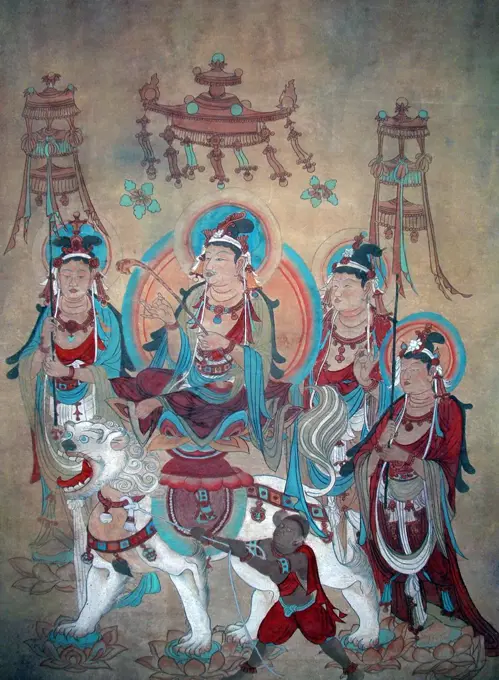
Mahakala and his Entourage. Central Tibet, Gyantse (), circa 1450-1500. Paintings. Mineral pigments, gold, and ink on cotton cloth
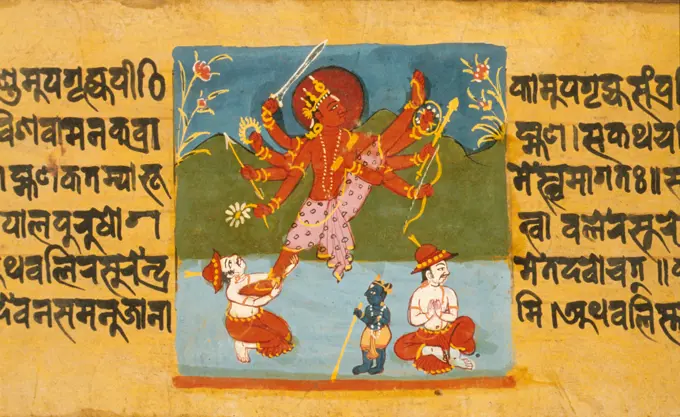
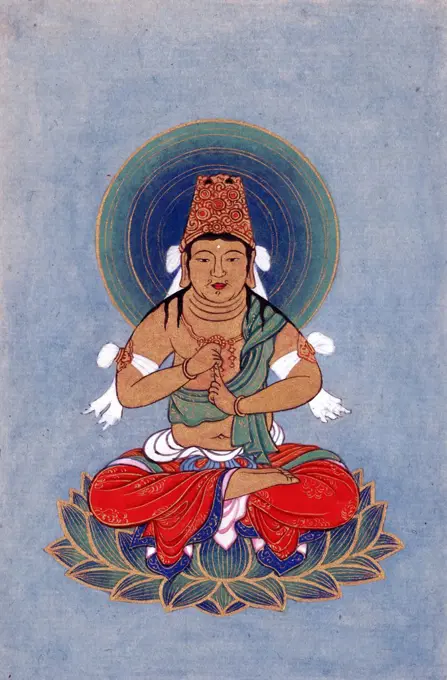
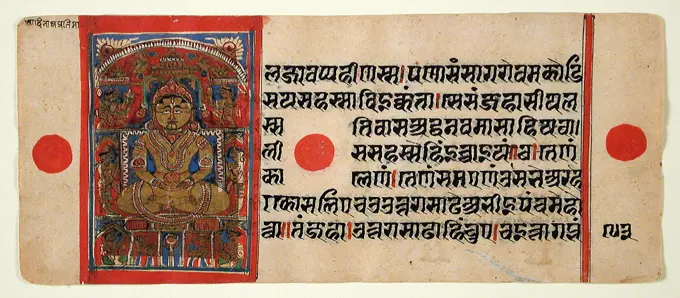
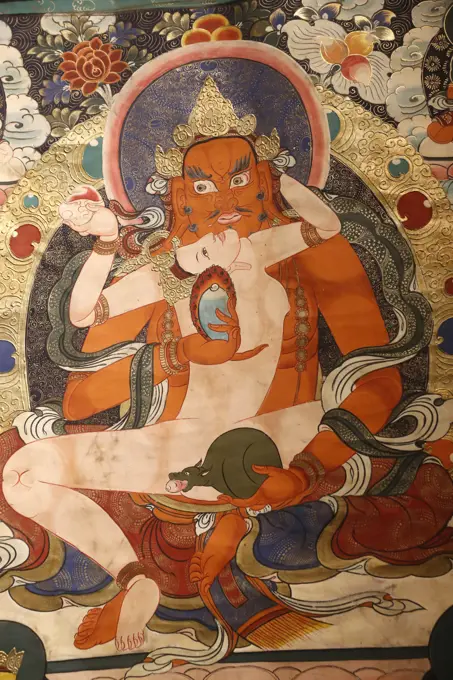
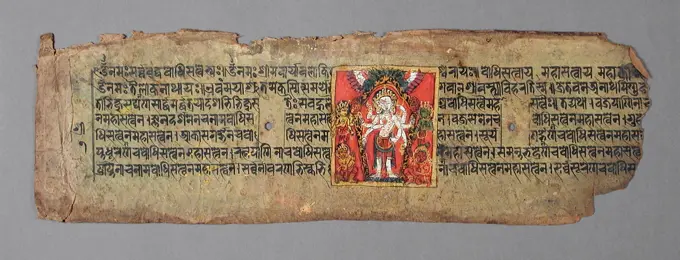
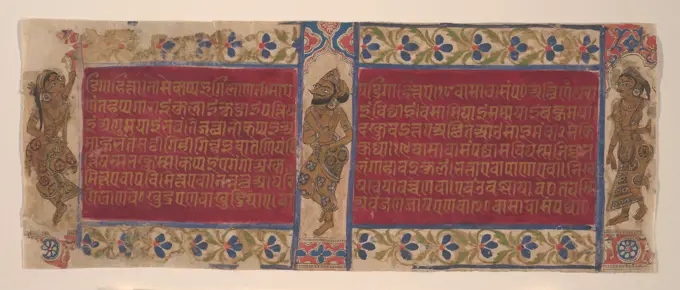
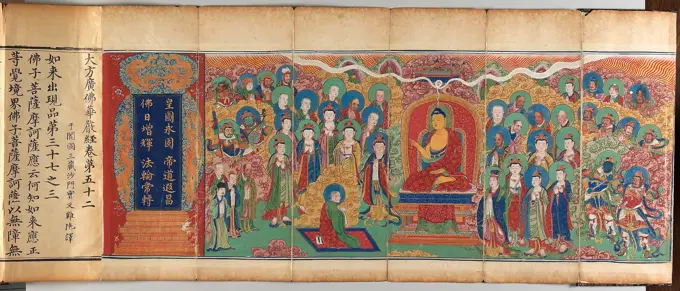
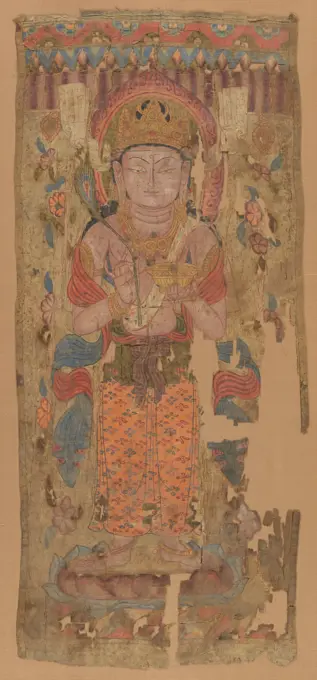
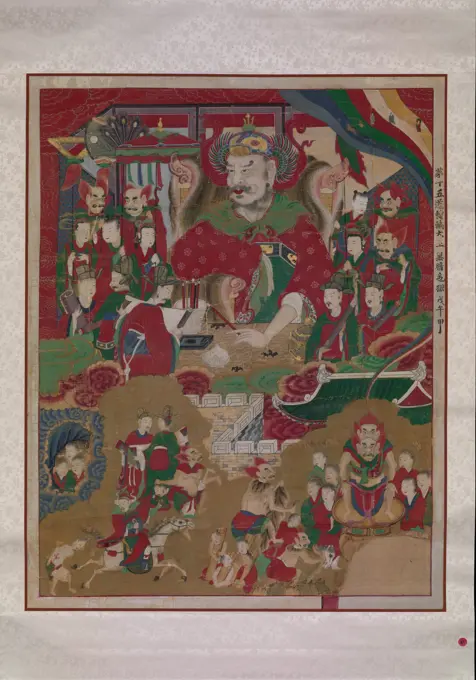
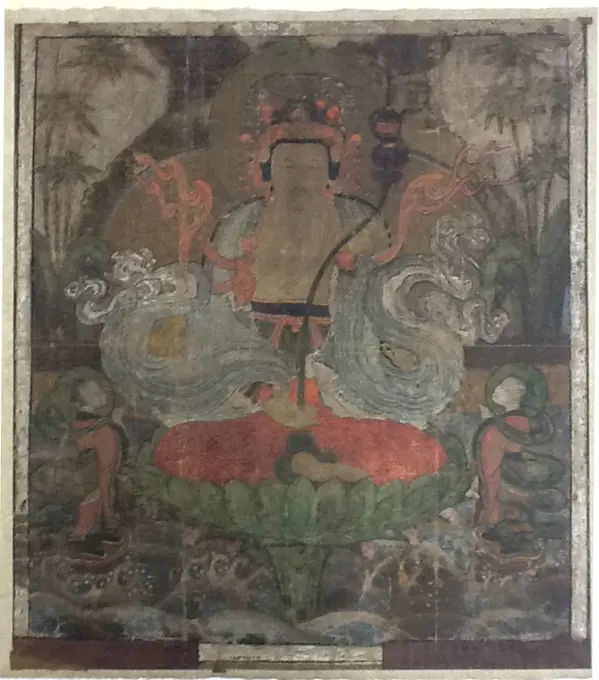
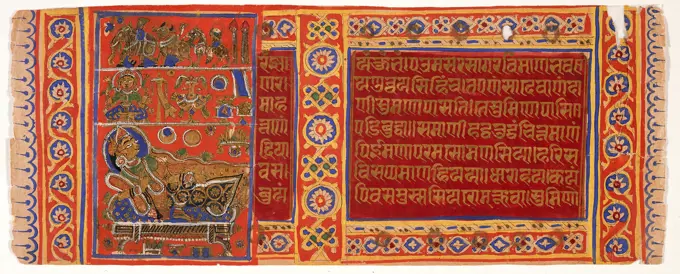
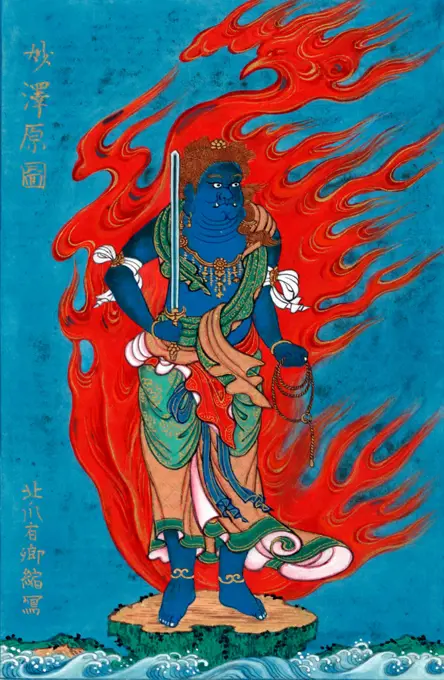
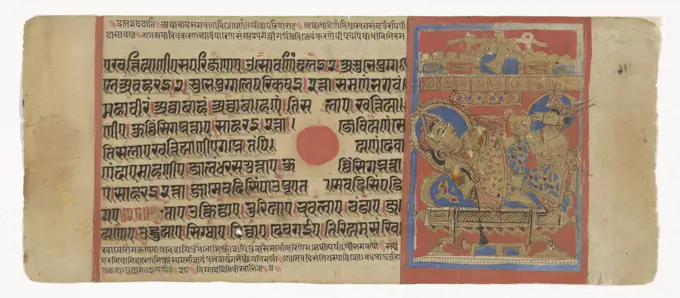
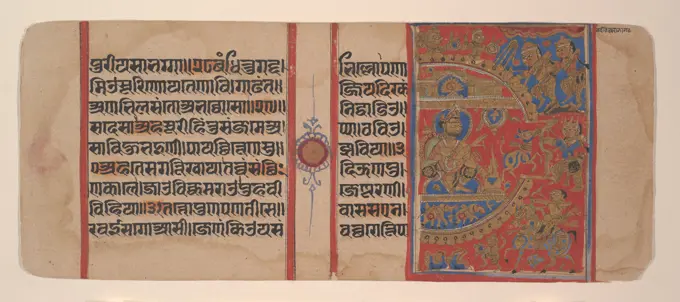
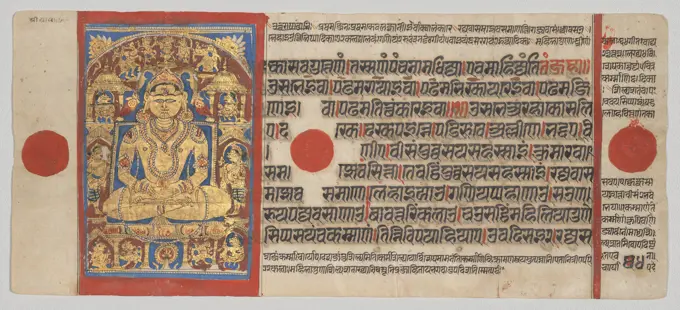
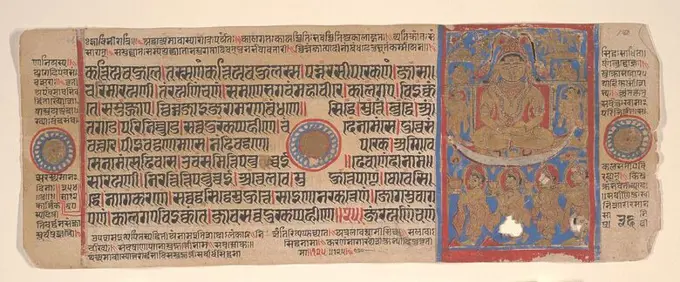
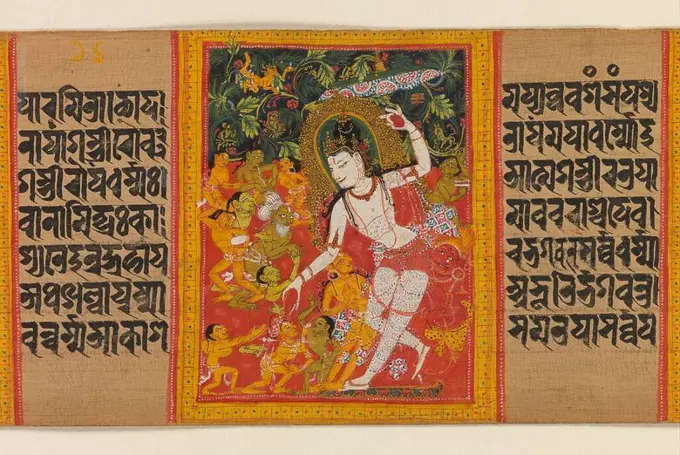
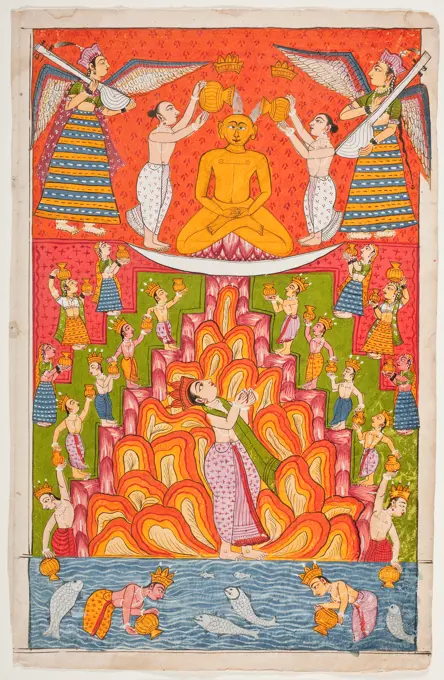
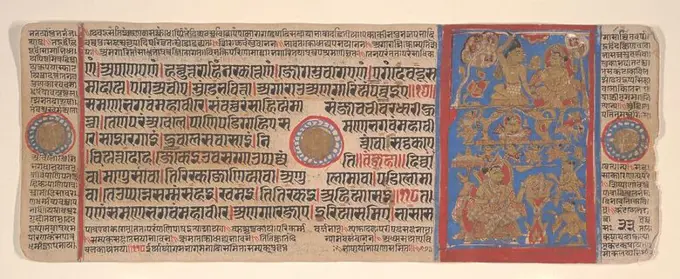
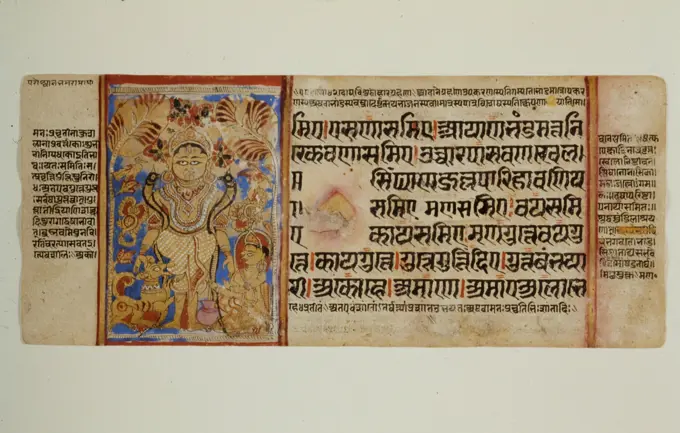
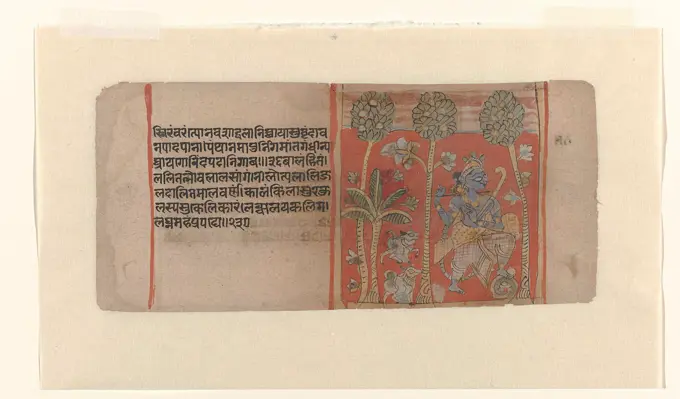
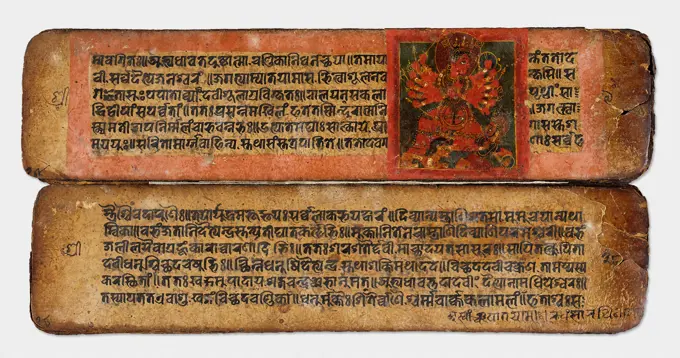
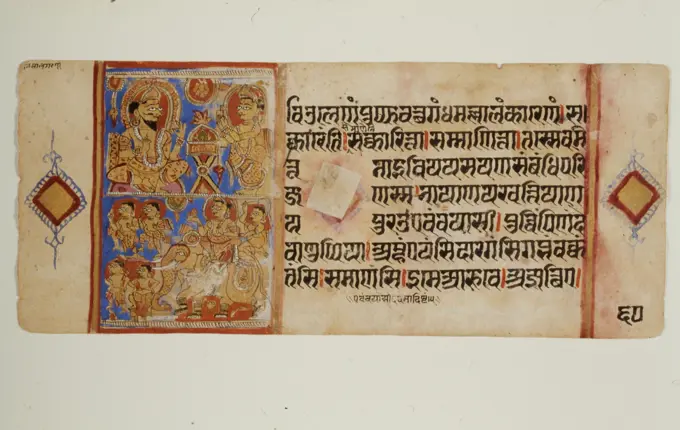
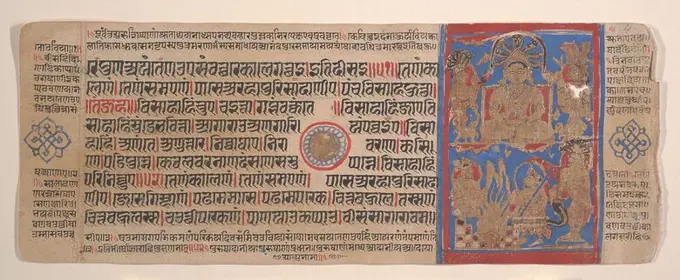
Queen Trishala Gives Birth to Mahavira, from a copy of the Kalpasutra 1475-1495 India. Opaque watercolor, gold, and ink on paper .The Jina Buddha Vairochana, Folio from a Pancharaksha (The Five Protective Charms). Nepal, late 16th century. Books. Opaque watercolor and ink on paperReligious figure, possibly Buddha, sitting on a lotus, facing front, with blue-green halo behind his head 1878Page 45 from a manuscript of the Kalpasutra: recto text, verso image of the great gift Page 45 from a manuscript of the Kalpasutra: recto text, verso image of the great gift, 1472. Opaque watercolor and ink on gold leaf on paper, 4 3/8 x 10 1/4 in. (11.1 x 26 cm).   Asian Art 1472Enthroned Jina Rishabhanatha (Adinatha) in Heaven (recto); Text (verso); Folio from a Kalpasutra (Book of Sacred Precepts). India, Gujarat, circa 1490. Manuscripts. Opaque watercolor, gold and ink on paperLife of the Buddha. Date/Period: Second half of the 14th century. Painting. Pigment on cloth Pigment on cloth. Height: 752.47 mm (29.62 in); Width: 609.60 mm (24 in). Author: UNKNOWN.World Erotic Art Museum.  Love and passion in Tantric Buddhist art. Unknown artist Tibet.  Thangka.  Miami, Florida, USA.Buddhist thangka - a Tibetan Buddhist painting on cotton, or silk applique - in a monastery in Gangtok, Sikkim, IndiaKalpasutra. 1501 - 1600. text. Manuscripts. Spencer Collection. Jaina miniature painting, Miniature painting, IndicPage 15 from a Manuscript of the Kalpasutra: recto image of Devananda with Harinegamesin, verso image of Queen Trishala with Harinegamesin Page 15 from a Manuscript of the Kalpasutra: recto image of Devananda with Harinegamesin, verso image of Queen Trishala with Harinegamesin, 1472. Opaque watercolor and ink on gold leaf on paper, sheet: height: 4 3/8 in.   Asian Art 1472Amoghapasha Lokeshvara (), Folio from a Pancharaksha (The Five Protective Charms). Nepal, late 16th century. Books. Opaque watercolor and ink on paperCelestial Performers: Folios from a Kalpasutra Manuscript ca. 1490 India (Gujarat) In Jain cosmology, Shakra's heaven is a blissful place where the jinas reside for eternity. It is populated by celestial dancers, seen here as beautiful maidens sensuously poised in the text margins. On the lower folio a male dancer accompanies the female dancers. These scenes are echoed in the textual descriptions of the Kalpasutra celebrating the jina Mahavira. The manuscript displays innovative use of red, blue, and green marginal designs that anticipate sixteenth-century styles and a lavish use of gold script on a red ground.. Celestial Performers: Folios from a Kalpasutra Manuscript 37837Volume 55 from the Garland Sutra, 1457, 13/16 x 4 7/8 x 13 7/8 in. (2.1 x 12.4 x 35.2 cm), Ink on white paper with hand painted color illustrations on silk, China, 15th century, This volume is from a luxuriously decorated set of the Garland Sutra, a Buddhist text. The five-fold frontispiece features the Buddha seated on a throne encircled by a red halo and decorated with exquisite gold scrolling. The surrounding figures include arhats (enlightened disciples of Buddha and protectors of the Buddhist law), bodhisattvas (beings who delay enlightenment to help suffering beings on earth), the Four Guardian Kings (protectors of the four cardinal directions), and various minor deities and devotees.Page 37 from a manuscript of the Kalpasutra: recto image of Trishala's grief, verso text Page 37 from a manuscript of the Kalpasutra: recto image of Trishala's grief, verso text, 1472. Opaque watercolor and ink on gold leaf on paper, sheet: height: 4 3/8 in.   Asian Art 1472Kichaka and Bhimasena, Folio from a Dispersed Mahabharata Series Indian. Kichaka and Bhimasena, Folio from a Dispersed Mahabharata Series, 1670. Opaque watercolor and gold on paper, 6 1/4 x 15 1/2 in. (15.9 x 39.4 cm).   Asian Art 1670Prajnaparamita with Devotees, Folio from a Shatasahasrika Prajnaparamita (The Perfection of Wisdom in 100,000 Verses). Western Tibet, Maryul district, Tholing Monastery, 11th century. Manuscripts. Ink, opaque watercolor, and gold on paperBanner with Bodhisattva, possibly Mahamayuri 9th-10th century China (Dunhuang area, Gansu Province) This colorful banner from the renowned Buddhist cave temples near Dunhuang is an important example of early Chinese Buddhist painting. It consists of two parts that may or may not have matched each other originally. The smaller triangular piece features a Buddha seated on a lotus flower in a meditative posture. A bodhisattva standing on a lotus pedestal, richly decorated with precious accessories, fills the scroll.The banner was likely displayed in a temple or the interior of a cave sanctuary, possibly in honor of the main icon in a complex. It could also have been hung outside a building or carried on a pole in ceremonies of various types.. Banner with Bodhisattva, possibly Mahamayuri. China (Dunhuang area, Gansu Province). 9th-10th century. Ink and pigment on silk. Tang dynasty (618-907) or Five Dynasties period (907-960). PaintingsEngland, London, Kensington, Victoria and Albert Museum aka V&A, The China Room, Embroided Silk depicting a Bodhisattva dated 1777Kalaka Becomes a Jain Monk; Kalaka Abducts the Nun, Two Leaves from a Dispersed Jain Manuscript of the Kalakacharya-katha Indian. Kalaka Becomes a Jain Monk; Kalaka Abducts the Nun, Two Leaves from a Dispersed Jain Manuscript of the Kalakacharya-katha, ca. 1465. Opaque watercolor and gold on paper, sheet: 4 3/8 x 10 1/2 in. (11.1 x 26.7 cm).   Asian Art ca. 1465The Tenth King of Hell 1798 Korea In the Buddhist world, the Ten Kings of Hell serve as judges of the deceased to determine their fate, including the type and severity of punishment and the course of their cycle of rebirth. This painting depicts the Tenth King of Hell in the standard guise of a warrior, and originally formed part of a set of ten scrolls (six of which are now in the collection of the Los Angeles County Museum of Art). Seated prominently in the center, the king is surrounded by a retinue of attendants and significant figures of the underworld, including messengers, judges, and wardens. At the top right corner, tiny figures float on a rainbowlike stream (a symbol of the six paths of rebirth) emanating from a double-headed beastly figure (representing the Evil Spirit) at the lower right. The dead, receiving punishments for their transgressions, populate the lower half of the painting. The inscription written in Chinese characters at the top right??????????????? (Korean: ?Guanyin Seated on a Lotus Throne 15th century Korea. Guanyin Seated on a Lotus Throne. Korea. 15th century. Ink on silk. Joseon dynasty (1392-1910). PaintingsPage 42 from a manuscript of the Kalpasutra: recto text, verso text Page 42 from a manuscript of the Kalpasutra: recto text, verso text, 1472. Opaque watercolor and ink on gold leaf on paper, sheet: height: 4 3/8 in.   Asian Art 1472Leaf from a Jain Manuscript: Shalibhadra: Jain Monk Teaching with a Manuscript Page a Disciple and Two Laywomen and Two Laymen Below (recto), 1279. Pradyumnasuri (Indian). Opaque watercolor and ink on palm leaf; overall: 6.7 x 32.4 cm (2 5/8 x 12 3/4 in.).Mahavira Preaching at the Gunashilaka Shrine, Leaf from a Dispersed Jain Manuscript of the Kalpasutra Indian. Mahavira Preaching at the Gunashilaka Shrine, Leaf from a Dispersed Jain Manuscript of the Kalpasutra, 15th century. Opaque watercolor and gold on paper, sheet: 4 1/2 x 11 3/8 in. (11.4 x 28.9 cm).   Asian Art 15th centuryIndra Reverences Mahavira's Embryo: Folio from a Kalpasutra Manuscript 1461 (Samvat 1519) India (Gujarat). Indra Reverences Mahavira's Embryo: Folio from a Kalpasutra Manuscript 38037Interior of a Book Cover: Manjuvajra Embracing His Consort, with Attendant Lamas late 13th century Tibet Paintings on the interiors of book covers consecrate and protect the sacred texts within. The deity Manjuvajra is an esoteric expression of the wisdom bodhisattva Manjushri and is seen here in a sexual embrace with one of the wisdom goddesses, or Vidyadharas. They wield identical weapons to drive away impediments to spiritual awakening. Meditations on Manjuvajra serve to enhance understanding and intelligence, necessary tools on the path to wisdom and enlightenment.. Interior of a Book Cover: Manjuvajra Embracing His Consort, with Attendant Lamas. Tibet. late 13th century. Distemper on wood. PaintingsBuddhism in Mongolia derives much of its recent characteristics from Tibetan Buddhism of the Gelugpa school. Traditionally, Mongols worshiped heaven (the 'clear blue sky') and their ancestors, and they followed ancient northern Asian practices of shamanism, in which human intermediaries went into trance and spoke to and for some of the numberless infinities of spirits responsible for human luck or misfortune. Although the emperors of the Yuan Dynasty in the 14th and 15th century had already converted to Tibetan Buddhism, the Mongols returned to their old shamanist ways after the collapse of their empire. In 1578 Altan Khan, a Mongol military leader with ambitions to unite the Mongols and to emulate the career of Chinggis, invited the head of the rising Yellow Sect of Tibetan Buddhism to a summit. They formed an alliance that gave Altan Khan legitimacy and religious sanction for his imperial pretensions and that provided the Buddhist school with protection and patronage. Page 64 from a manuscript of the Kalpasutra: recto image of Neminatha and Krishna standing in water, verso 2-tiered image of Neminatha's wedding Page 64 from a manuscript of the Kalpasutra: recto image of Neminatha and Krishna standing in water, verso 2-tiered image of Neminatha's wedding, 1472. Opaque watercolor and ink on gold leaf on paper, sheet: height: 4 3/8 in.   Asian Art 1472Nemi, who was the cousin of the Hindu god Krishna, lived in the ancient mythic past. Like every other Jina, after achieving enlightenment he gave a mystical teaching to all the gods and animals and appeared to the assembly simultaneously in all directions. This exposition of Jain teachings is depicted by the circular diagram with Nemi seated in the center. The crescent moon under the seated figure of Nemi at the top of the page reveals that he is depicted in the realm of liberation, above the world of birth and death, in eternal meditative bliss. Nemi's Omniscience and First Teaching (below) and Nemi in the Realm of Liberation (above), Folio 51 (recto), from a Kalpa-sutra, c. 1475-1500. Western India, Gujarat. Gum tempera, ink, and gold on paper; overall: 12.5 x 25.7 cm (4 15/16 x 10 1/8 in.).Mandala on a thangka, Bhaktapur, Nepal, AsiaKalpa-sutra Manuscript with 24 Miniatures: King Siddhartha Rises and Bathes, c. 1475-1500. Western India, Gujarat, last quarter of the 15th century. Color and gold on paper; overall: 12.5 x 25.7 cm (4 15/16 x 10 1/8 in.).Queen Trisala on Her Couch, c. 1500, 4 1/2 x 10 3/4 in. (11.43 x 27.31 cm), Opaque watercolor and gold on paper, India, 15th-16th century, Growing contacts between northern Indian and the Islamic cultures of Mamluk Egypt and Timurid Persia transformed Jain manuscript painting during the fifteenth century. Paper, introduced from Persia in the twelfth century, gained popularity and by 1350 had replaced palm leaves as the preferred ground for Jain album painting. The importation of illustrated Islamic manuscripts, decorative book bindings, and luxury carpets enriched the visual vocabulary of the Indian subcontinent. The more generous paper format permitted artists to develop ornamental border decorations like those seen here. Continuous-knot designs, the deep crimson ground, and floral medallions are further indications of Persian influence on Jain manuscript illumination.The king and queen seated in the upper register are the parents of Mahavira, founder of the Jain religion. The two bearded figures in the lower register are the learned men versed in the interpretation of dreams. One writes with a pen; the other consults a scroll. They predict that the auspicious dreams of the queen foretell the birth of a son who will either be a powerful hero and king or a religious leader of the world. King Siddhartha and Queen Trishala with the Dream Interpreters, Folio 25 (verso), from a Kalpa-sutra, c. 1475-1500. Western India, Gujarat. Gum tempera, ink, and gold on paper; overall: 12.5 x 25.7 cm (4 15/16 x 10 1/8 in.).Tantric Temple Banner of a Dancing Goddess Flanked by Dakinis 1601-1700 Nepal. This horizontal scroll (bilampo) from Nepal features three dancing Buddhist deities framed within aureoles and interspersed with flowers. The white multi-armed goddess at the center is the largest and most powerful figure and is probably White Tara (the Savioress); she has a third eye and holds a lotus in each of her 18 hands. The goddess is flanked by two bird-headed female attendants, one blue and one green, each wearing a necklace of human skulls and trampling a nude male figure (a symbol of ignorance). These are probably dakinis, tantric sky dancers who play a supportive role helping humans to overcome ignorance. This type of banner was and still is displayed outdoors, often on the walls of a temple, during festivals.. Pigment and black ink on cloth .A Bodhisattva in a Shrine, Folio from a Shatasahasrika Prajnaparamita (The Perfection of Wisdom in 100,000 Verses). Western Tibet, Maryul district, Tholing Monastery, 13th-14th century. Manuscripts. Ink and opaque watercolor on paperDwarf Incarnation of Vishnu (Trivikrama). Nepal, late 18th century. Books. Opaque watercolor on paperJapanese Drawing, showing Mythological blue Buddhist or Hindu figure, full-length, standing on small island among waves, facing right, against backdrop of flames with phoenix head. Published 1878 Unsigned, possibly by Kano, 1878.Followers of the Jain religion recognize 24 Jinas, individuals who reached liberation from the cycles of death and rebirth. Arishtanemi was the 22nd of the 24 and was a cousin of Krishna. Here Arishtanemi sits in eternal meditative bliss, crowned and bejeweled in a shrine. His attendants are sometimes recognized as the Hindu deities Krishna and Balarama. Followers of the Jain religion do not view Krishna as a supreme deity; instead, they view him and his brother Balarama as semidivine heroes with access to the liberated being. Nemi Enthroned, Folio 54 (verso), from a Kalpa-sutra, c. 1475-1500. Western India, Gujarat. Gum tempera, ink, and gold on paper; overall: 12.5 x 25.7 cm (4 15/16 x 10 1/8 in.).Mahavira Gives Away his Possessions, Folio 35 (verso), from a Kalpa-sutra, c. 1475-1500. Western India, Gujarat, last quarter of the 15th century. Gum tempera, ink, and gold on paper; overall: 12.5 x 25.7 cm (4 15/16 x 10 1/8 in.).The large, seated figure in the center of the composition is Indra, king of the gods, who holds in his lap the infant Mahavira, founder of the Jain religion. Indra had taken him to Mount Meru, indicated by the jagged peaks at the bottom of the painting, for his first bath. Two priests flanking them hold vessels for the bath, and the two cows above indicate that the vessels are full of milk. The milk bath washed away all the impurities of the birth. Ritual Bath of Mahavira, Folio 31 (recto), from a Kalpa-sutra, c. 1475-1500. Western India, Gujarat. Gum tempera, ink, and gold on paper; overall: 12.5 x 25.7 cm (4 15/16 x 10 1/8 in.).A Buddha in a Shrine, Folio from a Shatasahasrika Prajnaparamita (The Perfection of Wisdom in 100,000 Verses). Western Tibet, Maryul district, Tholing Monastery, 11th-13th century (). Manuscripts. Ink, opaque watercolor, and gold on paperThe Congregation Platform and the Salvation of Parsvanatha, folio 87 from a Dispersed KalpaSutra, late 15th-early 16thcentury, Ink, opaque watercolor, and gold on paper, sheet: 4 7/16 × 10 1/4 in. (11.3 × 26cm), India, Indian, Gujarat sultanate(1407-1573), Works on Paper -ManuscriptsOn the right side of a long, narrow strip the god Mahavira is depicted as an embryo, the left side contains a text in Old Indian writing in red and black, the upper and lower lines in a smaller writing. On verso more text in the same way, on both sides a narrow undescribed column, a large red dot is placed in the middle of the strip. Two thirds text column on recto, one third representation, verso: text, wide red brush line along text and representation, red dots in the middle of strip, also on verso text and three dots., Transfer of the embryo of Mahariva, draughtsman: anonymous, Gujarat, 1460 - 1480, paper, brush, brush, h 110 mm × w 75 mm, w 256 mm, w 201 mmThe Siege of Ujjain and the Magic She-Ass: Folio from the Kalakacarya Section of a Kalpasutra Manuscript 16th century India (Gujarat) This scene depicts the city of Ujjayini (Ujjain), the capital of Malwa, in which the evil king Gardabhilla is seated while under siege by the armies of the Shahi princes. The ninety-six princes of the Saka clan crossed the Indus River from the northwest and entered western India at the invitation of the Jain monk Kalakacarya, whose sister, a nun, had been abducted by the king of Ujjain. The armies of the Saka clan attacked Ujjain, and a Shahi prince is shown slaying the magic she-ass that guarded the city gate, bringing defeat to the city. The evil king is spared but condemned to an endless cycle of miserable rebirths.. The Siege of Ujjain and the Magic She-Ass: Folio from the Kalakacarya Section of a Kalpasutra Manuscript 37844Shri Arishtanemi, folio 54 verso from a Kalpa-sutra, c. 1475-1500. Western India, Gujarat. Gum tempera, ink, and gold on paper; overall: 12.5 x 25.7 cm (4 15/16 x 10 1/8 in.). Followers of the Jain religion recognize 24 Jinas, individuals who reached liberation from the cycles of death and rebirth. Arishtanemi was the 22nd of the 24 and was a cousin of Krishna. Here Arishtanemi sits in eternal meditative bliss, crowned and bejeweled in a shrine. His attendants are sometimes recognized as the Hindu deities Krishna and Balarama. Followers of the Jain religion do not view Krishna as a supreme deity; instead, they view him and his brother Balarama as semidivine heroes with access to the liberated being.Page from a Buddhist Manuscript Depicting One of the Pancharaksha Goddesses , 16th-17th century. Ink and opaque watercolor and gold on paper, 3 9/16 x 12 1/4 in. (9 x 31.1 cm).   Asian Art 16th-17th centuryIndra Commands Harinaigameshin to Transfer the Embryo of Mahavira, Folio 9 (verso), from a Kalpa-sutra, c. 1475-1500. Western India, Gujarat, last quarter of the 15th century. Gum tempera, ink, and gold on paper; overall: 12.5 x 25.7 cm (4 15/16 x 10 1/8 in.).Leaf from a Kalpa Sutra (Jain Book of Rituals) 15th century Bhadrabahu Indian. Leaf from a Kalpa Sutra (Jain Book of Rituals) 75092HEVAJRA MANDELA, Tibetan, Buddhist, 15th c., painting, distemper on cloth. Hevajra is one of the main yidams (enlightened beings) in Tantric, or Vajrayana Buddhism. Hevajra and his consort, Nairatmya, dance at the intersection of four vajra gateways, indicating their position at the center of the cosmos (BSLOC_2017_16_16)Arhat bhadra on a pillow's dough, under a canopy of ga  zek;  20th century () (1890-00-00-1910-00-00);Leaf from a Kalpa Sutra (Jain Book of Rituals). Artist: Bhadrabahu (Indian, died ca. 356 B.C.). Culture: India (Gujarat). Dimensions: (Average size .1-.71): 4 1/2 x 11 3/8 in. (11.4 x 28.9 cm). Date: 15th century. Museum: Metropolitan Museum of Art, New York, USA.Kalaka Hears Gunakara Preach; Kalaka Exercises the Horse, Page from a Dispersed Jain Manuscript of the Kalakacharya-katha Indian. Kalaka Hears Gunakara Preach; Kalaka Exercises the Horse, Page from a Dispersed Jain Manuscript of the Kalakacharya-katha, ca. 15th century. Opaque watercolor and gold on paper, sheet: 4 3/8 x 10 1/16 in. (11.1 x 25.6 cm).   Asian Art ca. 15th centuryOne of Three Leaves from a Copy of the Perfection of Wisdom Sutra (Ashtasahasrika Prajnaparamitasutra) 1155-1185 India. Opaque watercolor and ink on palm leaf .Manuscripts of the Kalpa-sutra are sacred embodiments of Jain doctrine. For this reason, they are worthy of beautification, adornment, and celebration by the inhabitants of heaven, such as the celestial dancers under cusped arches on this page.The commissioning of a manuscript is believed to cleanse donors of the karmic effects of past wrongdoing. Wealthy donors gained prestige in the community with the costly production of a sacred manuscript. Text, folio 5 (verso), from Brahman Rishabhadatta's speech, from a Kalpa-sutra, c. 1475-1500. Western India, Gujarat. Gum tempera and gold on paper; overall: 11.5 x 29.3 cm (4 1/2 x 11 9/16 in.).Indra Reverences Mahavira's Embryo: Folio from a Kalpasutra Manuscript. Culture: India (Gujarat). Dimensions: 4 3/8 x 10 1/8 in. (11.1 x 25.7 cm). Date: 1461 (Samvat 1519). Museum: Metropolitan Museum of Art, New York, USA.Opening Page of a Dispersed Manuscript late 17th century Tibet. Opening Page of a Dispersed Manuscript 73233Mahavira in Puspottara Heaven: Folio from a Kalpasutra Manuscript 1461 (Samvat 1519) India (Gujarat). Mahavira in Puspottara Heaven: Folio from a Kalpasutra Manuscript 37838Leaf from a Jain Manuscript: Kalpa-sutra: text (verso), 1278. Western India, Gujarat, 13th century. Opaque watercolor and ink on palm leaf; Manuscript 2; overall: 5.7 x 18.4 cm (2 1/4 x 7 1/4 in.).This page discusses the pregnancy of Queen Trishala when she was anxious about why she could not feel the baby move. In the painting she addresses her handmaids: Has the child in my womb been destroyed Has he been killed Have I suffered a miscarriage The child used to move, but now he does not move. The baby is Mahavira, who will grow to be the historical founder of the Jain religion. According to the text, he remained motionless out of compassion for his mother, not wishing to disturb her. Once he realized how worried she was, he made a little movement, and this filled her with joy. Queen Trishala's Grief and Happiness, Folio 29 (recto), from a Kalpa-sutra, c. 1475-1500. Western India, Gujarat. Gum tempera, ink, and gold on paper; overall: 12.5 x 25.7 cm (4 15/16 x 10 1/8 in.).Rank Badge with Crane. Culture: China. Dimensions: Overall: 13 1/2 x 12 1/4 in. (34.3 x 31.1cm). Date: late 17th-early 18th century.The Qing government generally adopted the earlier Ming system of rank badges, with the exception of some minor changes in the choice of animals. The crane on this badge corresponds to the highest civil rank. Museum: Metropolitan Museum of Art, New York, USA.Folio with Dancing Women, early 1500s. India, Western, Jain, Gujarat, early 16th century. Ink and color on paper; overall: 11.5 x 29.3 cm (4 1/2 x 11 9/16 in.).GAURDIAN OF THE SOUTH (originally Bon deity), WALL FRESCO to protect gompa (monastery) entrance, LAMAYURU - LADAKHPage 43 from a manuscript of the Kalpasutra: recto text, verso image of the snake confronting Mahavira Page 43 from a manuscript of the Kalpasutra: recto text, verso image of the snake confronting Mahavira, 1472. Opaque watercolor and ink on gold leaf on paper, 4 3/8 x 10 1/4 in. (11.1 x 26 cm).   Asian Art 1472Bodhisattva Avalokiteshvara Dispensing Boons: Folio from an Ashtasahasrika Prajnaparamita Manuscript. Artist: Mahavihara Master. Culture: Bengal, eastern India or Bangladesh. Dimensions: Page: 2 3/4 x 16 7/16 in. (7 x 41.8 cm)Image: 2 1/2 x 1 15/16 in. (6.4 x 4.9 cm). Date: early 12th century.About the ArtistMahavihara Master Active in the early 12th century, in BengalThis master painter of the Pala-era Buddhist monastic tradition is known from one extant palm-leaf manuscript, now shared between New York and Lhasa. The illustrated manuscript is a deluxe edition of the Ashtasahasrika Prajnaparamita (Perfection of Wisdom in 8,000 Verses), a Mahayanist text of profound importance to the development of esoteric Buddhist practice. The paintings that accompany this text display not only highly sophisticated painting skills but also such a sensitivity and empathy for the subject matter that one cannot avoid assuming the artist was a monk, deeply versed in the text he was engaged to illusLiberation of Jina Parshvanatha, Folio from a Kalpasutra (Book of Sacred Precepts) Manuscript. India, Madhya Pradesh, Mandu, 1439. Drawings; watercolors. Ink, opaque watercolor, and gold on paperTanka Portraying the Bon-po Deity gSen-lha 'od-dkar , 18th century. Opaque colors on cotton, Image: 37 1/4 x 24 7/8 in. (94.6 x 63.2 cm).   Asian Art 18th centuryPerfection of Charity, Folio from a Shatasahasrika Prajnaparamita (The Perfection of Wisdom in 100,000 Verses). Western Tibet, Maryul district, Tholing Monastery, 11th century. Manuscripts. Ink, opaque watercolor, and gold on paperPage 37 from a manuscript of the Kalpasutra: recto image of Trishala's grief, verso text Page 37 from a manuscript of the Kalpasutra: recto image of Trishala's grief, verso text, 1472. Opaque watercolor and ink on gold leaf on paper, sheet: height: 4 3/8 in.   Asian Art 1472Birth of Parshva to Queen Vama, from the Kalpa-sutra, c. 1500. Western India, Gujarat, late 15th-early 16th century. Opaque watercolor, ink, and gold on paper; overall: 12.5 x 25.7 cm (4 15/16 x 10 1/8 in.).Folio from a Manuscript of the Ashtasahasrika Prajnaparamita (Perfection of Wisdom) 12th century India (Bihar or West Bengal). Folio from a Manuscript of the Ashtasahasrika Prajnaparamita (Perfection of Wisdom). India (Bihar or West Bengal). 12th century. Ink and color on palm leaf. Pala period. PaintingsBuddhist Prayer Flag.Guimet Museum. Purusha, Nepal 1806. Purusha is a complex term with diverse meanings. Paris. France.Lustration of Jina Rishabhanatha (Adinatha), Folio from a Bhaktamara Stotra (Hymn of the Immortal Devotee). India, Gujarat, circa 1800-1825. Drawings; watercolors. Opaque watercolor on paperPower of Faith, Folio from a Shatasahasrika Prajnaparamita (The Perfection of Wisdom in 100,000 Verses). Western Tibet, Maryul district, Tholing Monastery, 11th century. Manuscripts. Ink, opaque watercolor, and gold on paperLeaf from a Kalpa Sutra (Jain Book of Rituals). Artist: Bhadrabahu (Indian, died ca. 356 B.C.). Culture: India (Gujarat). Dimensions: (Average size .1-.71): 4 1/2 x 11 3/8 in. (11.4 x 28.9 cm). Date: 15th century. Museum: Metropolitan Museum of Art, New York, USA.Kalaka Becomes a Jain Monk; Kalaka Abducts the Nun, Two Leaves from a Dispersed Jain Manuscript of the Kalakacharya-katha Indian. Kalaka Becomes a Jain Monk; Kalaka Abducts the Nun, Two Leaves from a Dispersed Jain Manuscript of the Kalakacharya-katha, ca. 1465. Opaque watercolor and gold on paper, sheet: 4 3/8 x 10 1/2 in. (11.1 x 26.7 cm).   Asian Art ca. 1465King Gardabhilla Brought Captive to Kalaka. India, Gujarat, circa 1450. Manuscripts. Ink, opaque watercolor, and gold on paperLeaf from an Illuminated Buddhist Manuscript 14th century Nepal (Kathmandu Valley). Leaf from an Illuminated Buddhist Manuscript 74879Samvara Mandala. Represents detachment and impermanence. 18th cent. Tibet.Leaf from a Kalpa Sutra (Jain Book of Rituals) 15th century Bhadrabahu Indian. Leaf from a Kalpa Sutra (Jain Book of Rituals) 75086Crowned red figure on horseback with demons, Folio from a Pancharaksha (The Five Protective Charms). Nepal, late 16th century. Books. Opaque watercolor and ink on paperImage from a Set of Initiation Cards (Tsakali) 1299-1499 Tibet. Ink and watercolor on paper .Leaf from a Kalpa Sutra (Jain Book of Rituals) 15th century Bhadrabahu Indian. Leaf from a Kalpa Sutra (Jain Book of Rituals) 75087fine arts, Tibet, meditation picture, ""Than-ka"", Dpal-Idan Lha-mo riding through the Sea of blood, fabric painting, silk, early 19th century, private collection,The Yulin Caves are a Buddhist cave temple complex in Guazhou County, Gansu Province, China. The site is located some 100 km east of the oasis town of Dunhuang and the Mogao Caves. It takes its name from the eponymous elm trees lining the Yulin River, which flows through the site and separates the two cliffs from which the caves have been excavated. The forty-two caves house some 250 polychrome statues and 4,200 square metres of wall paintings, dating from the Tang Dynasty to the Yuan Dynasty (7th to 14th centuries). The site was among the first in China to be designated for protection in 1961 as a Major National Historical and Cultural Site. In 2008 the Yulin Grottoes were submitted for future inscription on the UNESCO World Heritage List as part of the Chinese Section of the Silk Road.One of Three Leaves from the Perfection of Wisdom Sutra (Ashtasahasrika Prajnaparamitasutra) 1155-1185 Bangladesh. Opaque watercolor and ink on palm leaf .Kalaha Preaches to King Sahr; Mahaviras Departure with Indra (top); Adoration of a Tirthankara (bottom), c. 1500, 4 3/8 x 10 3/8 in. (11.11 x 26.35 cm), Opaque watercolor and gold on paper, India, 15th-16th century, The Kalpasutra (Book of Ritual) is a major canonical text that provides an extended biography of Mahavira, the founder of Jainism. It is the principal text of the Svetambara Jains, rulers of the Gujarat state in western India and committed art patrons. Because the commissioning of a Jain text for a temple library was deemed an act of religious merit, probably the more closely a copy resembled previous versions, the more ritually 'correct' it was thought to be. This accounts for the stylistic unity found in several fifteenth-century Jain manuscripts displayed here.The tiny captions written in Sanskrit to the right of the painting identify the subject of this scene: abduction of the embryo and transfer of the embryo. The embryo is the unborn founder of the Jain religion. In this miraculous episode, a goat-headed divinity who presides over miscarriage and childbirth gently takes the embryo in his cupped hands away from the reclining Brahmin lady in the scene above. Below, he carries it to a queen, who will be the birth mother. Transfer of the Embryo of Mahavira, Folio 12 (recto), from a Kalpa-sutra, c. 1475-1500. Western India, Gujarat. Gum tempera, ink, and gold on paper; overall: 12.5 x 25.7 cm (4 15/16 x 10 1/8 in.).This manuscript is open to a page with a painting that depicts the story of a Jain monk who transformed himself into a composite beast when his sisters, two nuns, came to visit him. Terrified, the nuns ran to a senior monk, at the lower left, who admonished their brother for his overly prideful display of power. Remarkably, this story is not told in the text itself, which contains only their names among a list of prominent Jain teachers. The painting would remind a reader of the story that is found in many commentaries to the text. The Lion's Cave with Sthulabhadra and His Sisters, Folio 60 (verso), from a Kalpa-sutra, c. 1450. Western India, Gujarat. Gum tempera, ink, and gold on paper; overall: 12.5 x 25.7 cm (4 15/16 x 10 1/8 in.).Krishna gevolgd door zijn kudde in Vrindavan.Two of these performances were stuck on a passepartout; On the upper state Krishna between trees in a red-colored background, his right foot rests on a round bulb, between the trees two cows; Next to it a Sanskrit text in West Indian Nagari from the Balagopalastuti. The first of two blades with representations from the Balagopalastuti; Damage on the back stuck with white.Page 42 from a manuscript of the Kalpasutra: recto text, verso text Page 42 from a manuscript of the Kalpasutra: recto text, verso text, 1472. Opaque watercolor and ink on gold leaf on paper, sheet: height: 4 3/8 in.   Asian Art 1472Devimahatmya (Glory of the Goddess) manuscript. Nepal, 17th century. Manuscripts. Opaque watercolor and ink on paper; wood cover with colored unguentsDeity - carer of the home;  1. PO. 20th century (1901-00-00-1950-00-00);Choijin Lama Temple, Thangka painting representing the deity Sita Mahakala, Ulaanbaatar, Mongolia, AsiaThree Deities, Folio from a Prajnaparamita (The Perfection of Wisdom). India, Bihar, circa 1050. Books. Ink and opaque watercolor on palm leafKalaha Preaches to King Sahr / Mahaviras Departure with Indra / Adoration of a Tirthankara, c. 1500, 4 3/8 x 10 3/8 in. (11.11 x 26.35 cm), Opaque watercolors and gold on paper, India, 15th-16th century, The Kalpasutra (Book of Ritual) is a major canonical text that provides an extended biography of Mahavira, the founder of Jainism. It is the principal text of the Svetambara Jains, rulers of the Gujarat state in western India and committed art patrons. Because the commissioning of a Jain text for a temple library was deemed an act of religious merit, probably the more closely a copy resembled previous versions, the more ritually 'correct' it was thought to be. This accounts for the stylistic unity found in several fifteenth-century Jain manuscripts displayed here.Krishna omhelst Radha.Two of these performances were stuck on a passepartout; On this lower Krishna Radha embraces, next to a text in Sanskrit, from the Balagopalastuti. The second of two blades with representations from the Balagopalastuti; Damage on the back stuck with white.Kichaka and Bhimasena, Folio from a Dispersed Mahabharata Series Indian. Kichaka and Bhimasena, Folio from a Dispersed Mahabharata Series, 1670. Opaque watercolor and gold on paper, 6 1/4 x 15 1/2 in. (15.9 x 39.4 cm).   Asian Art 1670The Tibetan alphabet is an abugida of Indic origin used to write the Tibetan language as well as the Dzongkha language, Denzongkha, Ladakhi language and sometimes the Balti language.Leaf from a Kalpa Sutra (Jain Book of Rituals). Artist: Bhadrabahu (Indian, died ca. 356 B.C.). Culture: India (Gujarat). Dimensions: (Average size .1-.71): 4 1/2 x 11 3/8 in. (11.4 x 28.9 cm). Date: 15th century. Museum: Metropolitan Museum of Art, New York, USA.