Thangka Paintings in Tibetan Culture

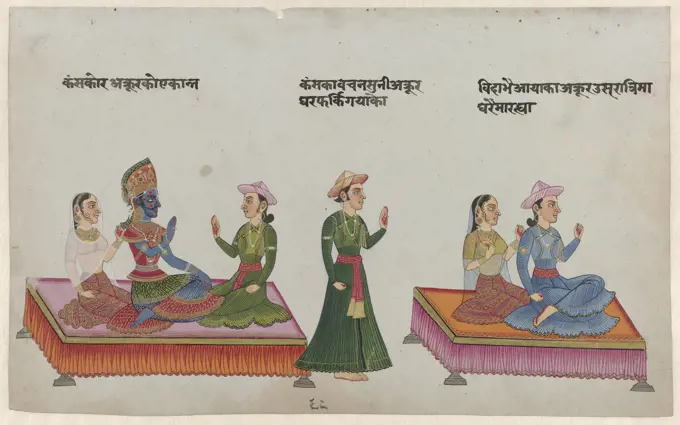
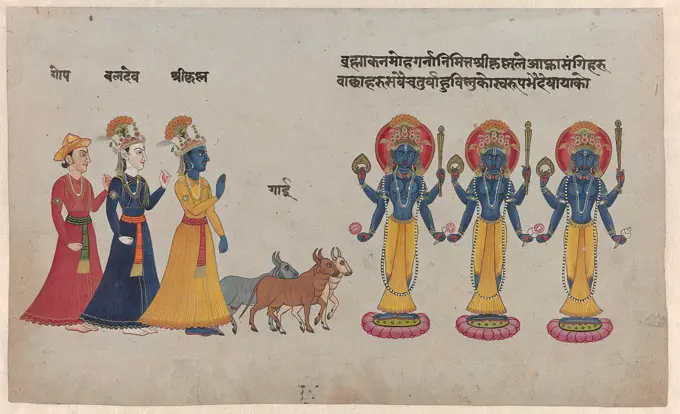
Vibrant thangka paintings illustrating Tibetan Buddhist themes and figures. They showcase intricate designs and rich colors, encapsulating spiritual stories and cultural heritage.
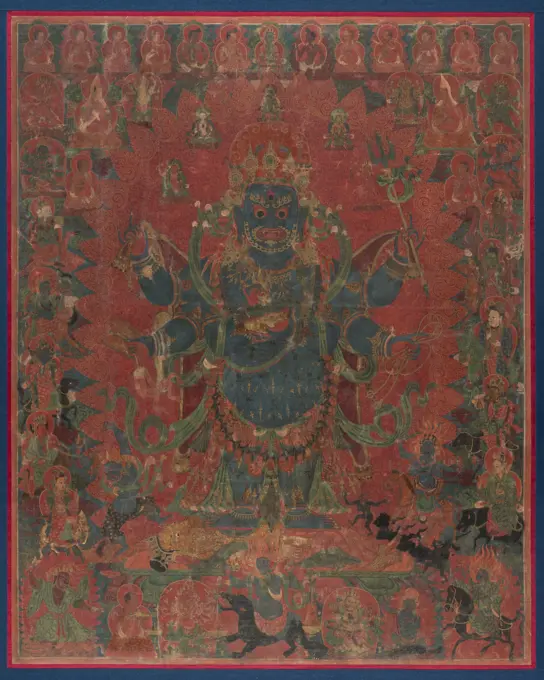
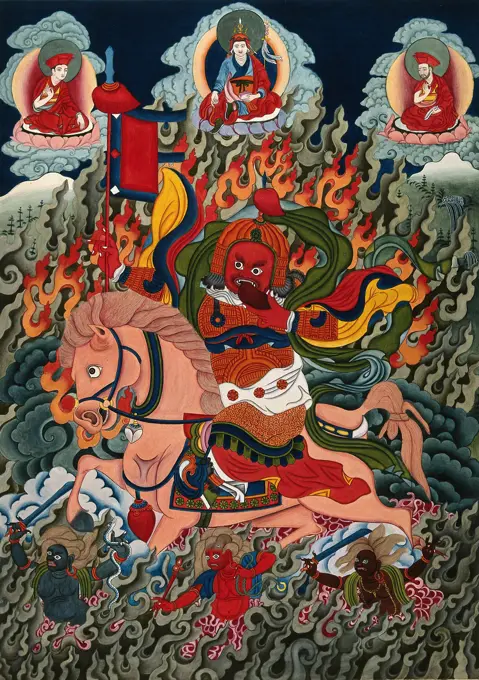
Mahakala and his Entourage. Central Tibet, Gyantse (), circa 1450-1500. Paintings. Mineral pigments, gold, and ink on cotton cloth
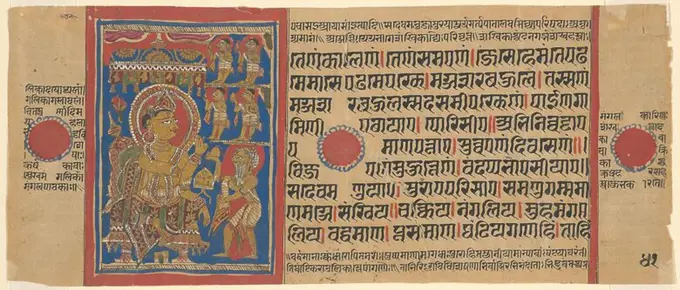
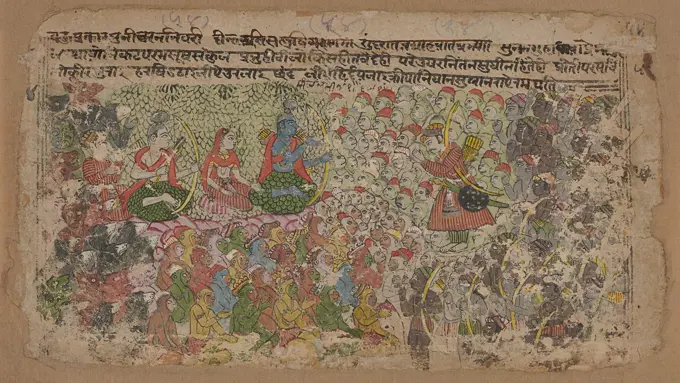
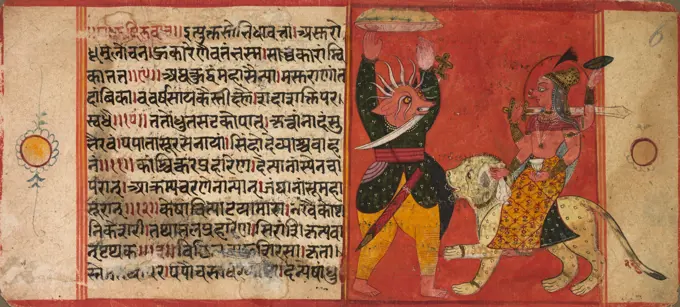
Page from a Dispersed Kalpa Sutra (Jain Book of Rituals) 15th century India (Gujarat). Page from a Dispersed Kalpa Sutra (Jain Book of Rituals) 75082Page from a Dispersed Kalpa Sutra (Jain Book of Rituals) 15th century India (Gujarat). Page from a Dispersed Kalpa Sutra (Jain Book of Rituals). India (Gujarat). 15th century. Ink, opaque watercolor, and gold on paper. PaintingsLeaf from a Kalpa Sutra (Jain Book of Rituals) 15th century Bhadrabahu Indian. Leaf from a Kalpa Sutra (Jain Book of Rituals) 75140Page from a Dispersed Kalpa Sutra (Jain Book of Rituals) 15th century India (Gujarat). Page from a Dispersed Kalpa Sutra (Jain Book of Rituals). India (Gujarat). 15th century. Ink, opaque watercolor, and gold on paper. PaintingsPage 48 from a manuscript of the Kalpasutra: recto text, verso image of Mahavira's initiation Page 48 from a manuscript of the Kalpasutra: recto text, verso image of Mahavira's initiation, 1472. Opaque watercolor and ink on gold leaf on paper, 4 3/8 x 10 1/4 in. (11.1 x 26 cm).   Asian Art 1472Page 73 from a manuscript of the Kalpasutra: recto image of Rishabanatha's initiation, verso text Page 73 from a manuscript of the Kalpasutra: recto image of Rishabanatha's initiation, verso text, 1472. Opaque watercolor and ink on gold leaf on paper, sheet: height: 4 3/8 in.   Asian Art 1472Page from a Dispersed Kalpa Sutra (Jain Book of Rituals) 15th century India (Gujarat). Page from a Dispersed Kalpa Sutra (Jain Book of Rituals) 75073Page from a Dispersed Kalpa Sutra (Jain Book of Rituals) 15th century India (Gujarat). Page from a Dispersed Kalpa Sutra (Jain Book of Rituals) 75055Leaf from a Kalpa Sutra (Jain Book of Rituals) 15th century Bhadrabahu Indian. Leaf from a Kalpa Sutra (Jain Book of Rituals) 75105Page from a Dispersed Kalpa Sutra (Jain Book of Rituals) 15th century India (Gujarat). Page from a Dispersed Kalpa Sutra (Jain Book of Rituals) 75024Image from a Set of Initiation Cards (Tsakali) 1301-1500 Tibet. Ink and watercolor on paper .Buddhist temple, Namche Bazaar, Solukhumbu, Nepal.Kalpasutra (Book of Sacred Precepts) Manuscript. India, Gujarat or Rajasthan, 1502, covers late 19th-early 20th century. Manuscripts. Folios: Ink, opaque watercolor, and gold on paper; Covers: Black silk brocadeLeaf from a Kalpa Sutra (Jain Book of Rituals) 15th century Bhadrabahu Indian. Leaf from a Kalpa Sutra (Jain Book of Rituals) 75142Page from a Dispersed Kalpa Sutra (Jain Book of Rituals) 15th century India (Gujarat). Page from a Dispersed Kalpa Sutra (Jain Book of Rituals). India (Gujarat). 15th century. Ink, opaque watercolor, and gold on paper. PaintingsKalaka Converts the Bricks to Gold, Leaf from a Dispersed Jain Manuscript of the Kalakacharya-katha Indian. Kalaka Converts the Bricks to Gold, Leaf from a Dispersed Jain Manuscript of the Kalakacharya-katha, ca. 15th century. Opaque watercolor and gold on paper, sheet: 4 1/2 x 11 1/4 in. (11.4 x 28.6 cm).   Asian Art ca. 15th centuryPage from a Dispersed Bhagavata Purana (Ancient Stories of Lord Vishnu) ca. 1630-50 India (Rajasthan, possibly Mewar). Page from a Dispersed Bhagavata Purana (Ancient Stories of Lord Vishnu) 37901A Monk Preaching: Folio 2 (recto), from a Kalpa-sutra, c. 1275. Western India, Gujarat. Gum tempera and ink on paper; overall: 5.7 x 18.4 cm (2 1/4 x 7 1/4 in.).Page 43 from a manuscript of the Kalpasutra: recto text, verso image of the snake confronting Mahavira Page 43 from a manuscript of the Kalpasutra: recto text, verso image of the snake confronting Mahavira, 1472. Opaque watercolor and ink on gold leaf on paper, 4 3/8 x 10 1/4 in. (11.1 x 26 cm).   Asian Art 1472Tse Mara (), a form of Dharmapala (protector of teachings), guardian of the Samye Monastery. Gouache painting by a Tibetan artist.Page from a Dispersed Kalpa Sutra (Jain Book of Rituals) 15th century India (Gujarat). Page from a Dispersed Kalpa Sutra (Jain Book of Rituals) 75005Page from a Dispersed Kalpa Sutra (Jain Book of Rituals) 15th century India (Gujarat). Page from a Dispersed Kalpa Sutra (Jain Book of Rituals) 75048Sthulabhadra Takes the Form of a Lion, folio 69; and Mahavira Gives His Possessions to a Brahmin and Renounces His Worldly Life, folio 40 from a Dispersed KalpaSutraPage from a Dispersed Kalpa Sutra (Jain Book of Rituals) 15th century India (Gujarat). Page from a Dispersed Kalpa Sutra (Jain Book of Rituals) 75036Parshva stands in a yogic posture of meditation, bearing the hardship of the elements, unmoved. When stormwaters threatened his life, serpents shielded him so that he could complete his meditations and reach liberation. One cobra stretched his seven-hooded canopy over his head like an umbrella, while a serpent king and his wife praise him. The abstract gold lines on the blue background represent the waters that rose to the level of his shoulders. In this painting, the image of Parshva wears a white lower garment, which indicates that this manuscript was made for the prominent branch of Jainism that allows monks and nuns to wear white robes. Text, Folio 46 (verso), from a Kalpa-sutra, c. 1500. Western India, Gujarat, late 15th-early 16th century. Gum tempera, ink, and gold on paper; overall: 12.5 x 25.7 cm (4 15/16 x 10 1/8 in.).Followers of the Jain religion recognize 24 Jinas, individuals who reached liberation from the cycles of death and rebirth. Arishtanemi was the 22nd of the 24 and was a cousin of Krishna. Here Arishtanemi sits in eternal meditative bliss, crowned and bejeweled in a shrine. His attendants are sometimes recognized as the Hindu deities Krishna and Balarama. Followers of the Jain religion do not view Krishna as a supreme deity; instead, they view him and his brother Balarama as semidivine heroes with access to the liberated being. Text, Folio 54 (recto), from a Kalpa-sutra, c. 1475-1500. Western India, Gujarat. Gum tempera, ink, and gold on paper; overall: 12.5 x 25.7 cm (4 15/16 x 10 1/8 in.).Page from a Dispersed Kalpa Sutra (Jain Book of Rituals) 15th century India (Gujarat). Page from a Dispersed Kalpa Sutra (Jain Book of Rituals) 75039Leaf from a Kalpa Sutra (Jain Book of Rituals) 15th century Bhadrabahu Indian. Leaf from a Kalpa Sutra (Jain Book of Rituals). Bhadrabahu (Indian, died ca. 356 B.C.). India (Gujarat). 15th century. Ink, opaque watercolor, and gold on paper. PaintingsPage from a Dispersed Kalpa Sutra (Jain Book of Rituals) 15th century India (Gujarat). Page from a Dispersed Kalpa Sutra (Jain Book of Rituals) 75018The Jina Buddha Ratnasambhava, Folio from a Pancharaksha (The Five Protective Charms). Nepal, late 16th century. Books. Opaque watercolor and ink on paperLeaf from a Kalpa Sutra (Jain Book of Rituals) 15th century Bhadrabahu Indian. Leaf from a Kalpa Sutra (Jain Book of Rituals) 75089Twenty-three Deity Nairatma Mandala, c. 1375. Central Tibet, Sakya-affiliated monastery, 14th century. Opaque watercolor, gold, and ink on cloth; overall: 82.5 x 72.4 cm (32 1/2 x 28 1/2 in.).Page from a Dispersed Kalpa Sutra (Jain Book of Rituals) 15th century India (Gujarat). Page from a Dispersed Kalpa Sutra (Jain Book of Rituals) 75067Priest's Manual. Nepal, 1681. Books. Opaque watercolor and ink on paper; wood cover with colored unguentsPage from a Dispersed Kalpa Sutra (Jain Book of Rituals) 15th century India (Gujarat). Page from a Dispersed Kalpa Sutra (Jain Book of Rituals) 75044Mahavira Gives Away his Possessions, from a copy of the Kalpasutra. India; Gujarat. Date: 1480-1490. Dimensions: Image: 9.6 x 6.6 cm (3 3/4 x 2 9/16 in.); Paper: 11.2 x 23.3 cm (4 3/8 x 9 3/16 in.). Opaque watercolor, gold, and ink on paper. Origin: India. Museum: The Chicago Art Institute, Chicago, USA.Rama en Sita met apenleger.King Rama and his wife Sita seated on a throne, to the right of the throne Rama's brother Laksmana who delete them coolness; The AAP Hanuman stands with folded hands for the king, around an army of monkeys and soldiers. At the top three Rules Inscription in Hindi in black ink.Page from a Dispersed Kalpa Sutra (Jain Book of Rituals) 15th century India (Gujarat). Page from a Dispersed Kalpa Sutra (Jain Book of Rituals) 75046Page from a Dispersed Kalpa Sutra (Jain Book of Rituals) 15th century India (Gujarat). Page from a Dispersed Kalpa Sutra (Jain Book of Rituals) 75052Page from a Dispersed Kalpa Sutra (Jain Book of Rituals) 15th century India (Gujarat). Page from a Dispersed Kalpa Sutra (Jain Book of Rituals). India (Gujarat). 15th century. Ink, opaque watercolor, and gold on paper. PaintingsLeaf from a Kalpa Sutra (Jain Book of Rituals) 15th century Bhadrabahu Indian. Leaf from a Kalpa Sutra (Jain Book of Rituals) 75124Leaf from a Prajnaparamita Manuscript Leaf from a Prajnaparamita Manuscript, 11th-12th century. Palm leaves, ink and color, 2 1/4 x 22 5/8 in. (5.7 x 57.5 cm).   Asian Art 11th-12th centuryPage from a Buddhist Manuscript with an Illustration of Akshobhya , 16th-17th century. Ink and opaque watercolor and gold on paper, 3 9/16 x 12 3/16 in. (9 x 31 cm).  Unlike Vajrabhairava, Akshobhya is distinctly placid. He is one of the five primary Buddhas and the guardian of the Eastern Paradise. Akshobhya means Immovable One,” and his emblem is the similarly unyielding elephant, two of which are included in the base of his throne. Akshobhya’s blue color represents the coolness of his temperament: he made a vow to reject all passionate emotions that might disturb his meditation. The horizontal orientation of this manuscript page is typical of traditional books in southern Asia, where long, narrow palm leaves were used as a writing surface for millennia before the introduction of paper. The script is a Nepalese form of Sanskrit. Asian Art 16th-17th centuryDevi Attacking a Demon, c. 1630. India, Rajasthan, Possibly Sirohi, 17th century. Color on paper; image: 12.5 x 10.2 cm (4 15/16 x 4 in.); overall: 12.5 x 27.5 cm (4 15/16 x 10 13/16 in.). The horizontal format of this sacred text is derived from the earlier use of palm leaves instead of paper. This page is from the foundational work of scripture for worshippers of the great goddess Devi.In her warrior aspect, or incarnation, Devi is multiarmed, rides a lion, and conquers demons more powerful than all the male gods. The demon holding a mountain above his head as a missile is dressed in the Central Asian belted tunic and pants of the Mughals, who ruled most of India at the time this painting was made. Devi wears the Mughal womens style of tall flat-topped feathered headdress, and she holds a bottle and cup of liquor. Aside from these Mughal elements, the style remains staunchly indigenous, with unmodeled figures in strict profile against a flat red ground.Page from a Dispersed Kalpa Sutra (Jain Book of Rituals) 15th century India (Gujarat). Page from a Dispersed Kalpa Sutra (Jain Book of Rituals) 75066Page from a Dispersed Kalpa Sutra (Jain Book of Rituals) 15th century India (Gujarat). Page from a Dispersed Kalpa Sutra (Jain Book of Rituals). India (Gujarat). 15th century. Ink, opaque watercolor, and gold on paper. PaintingsLeaf from a Kalpa Sutra (Jain Book of Rituals) 15th century Bhadrabahu Indian. Leaf from a Kalpa Sutra (Jain Book of Rituals). Bhadrabahu (Indian, died ca. 356 B.C.). India (Gujarat). 15th century. Ink, opaque watercolor, and gold on paper. PaintingsPage from a Dispersed Kalpa Sutra (Jain Book of Rituals) 15th century India (Gujarat). Page from a Dispersed Kalpa Sutra (Jain Book of Rituals) 75061The Buddha distributes honey, from a Prajnaparamita manuscript. Date: 12th century. Opaque watercolor and ink on palm leaf. Origin: West Bengal state, India. Museum: Freer Gallery of Art and Arthur M. Sackler Gallery.Leaf from a Kalpa Sutra (Jain Book of Rituals) 15th century Bhadrabahu Indian. Leaf from a Kalpa Sutra (Jain Book of Rituals) 75097Leaf from a Kalpa Sutra (Jain Book of Rituals) 15th century Bhadrabahu Indian. Leaf from a Kalpa Sutra (Jain Book of Rituals) 75112Page from a Dispersed Kalpa Sutra (Jain Book of Rituals) 15th century India (Gujarat). Page from a Dispersed Kalpa Sutra (Jain Book of Rituals) 75011Kalaka Converts the Bricks to Gold, Leaf from a Dispersed Jain Manuscript of the Kalakacharya-katha Indian. Kalaka Converts the Bricks to Gold, Leaf from a Dispersed Jain Manuscript of the Kalakacharya-katha, ca. 15th century. Opaque watercolor and gold on paper, sheet: 4 1/2 x 11 1/4 in. (11.4 x 28.6 cm).   Asian Art ca. 15th centuryLeaf from a Jain Manuscript: Kalpa-sutra: Text (recto), c. 1400. Western India, Gujarat, Jain school, early 15th Century. Ink and color on paper; overall: 9.4 x 28.4 cm (3 11/16 x 11 3/16 in.). The tiny golden-hued infant in the palace chamber will grow to be Mahavira, historical founder of the Jain religion who lived during the 500s BC in northern India. He and his mother Queen Trishala gaze intently and lovingly at one another as two handmaidens holding fly whisks to honor them. Many elements of the image are characteristic of painting styles during the 15th century: the flat red background, two-dimensional sense of space, and the eye extended beyond the boundary of the faces, which are a combination of profile and three-quarter view. The text on this page describes her joyous and peaceful pregnancy of 9 months, 7-and-a-half days. It goes on to say that Mahavira was born at midnight on the 13th day of the first month of summer, and all omens augured success.Leaf from a Kalpa Sutra (Jain Book of Rituals) 15th century Bhadrabahu Indian. Leaf from a Kalpa Sutra (Jain Book of Rituals) 75123Rama and Sita with monkey army, Murshidabad, 1670 - 1690, paper, brush, h 150 mm × w 265 mmPage from a Dispersed Kalpa Sutra (Jain Book of Rituals) 15th century India (Gujarat). Page from a Dispersed Kalpa Sutra (Jain Book of Rituals) 75035Leaf from a Kalpa Sutra (Jain Book of Rituals) 15th century Bhadrabahu Indian. Leaf from a Kalpa Sutra (Jain Book of Rituals) 75115Page from a Dispersed Kalpa Sutra (Jain Book of Rituals) 15th century India (Gujarat). Page from a Dispersed Kalpa Sutra (Jain Book of Rituals) 75031Leaf from a Kalpa Sutra (Jain Book of Rituals) 15th century Bhadrabahu Indian. Leaf from a Kalpa Sutra (Jain Book of Rituals). Bhadrabahu (Indian, died ca. 356 B.C.). India (Gujarat). 15th century. Ink, opaque watercolor, and gold on paper. PaintingsPage 60 from a manuscript of the Kalpasutra: recto text, verso image of Parshvanatha beneath the cobra canopy Page 60 from a manuscript of the Kalpasutra: recto text, verso image of Parshvanatha beneath the cobra canopy, 1472. Opaque watercolor and ink on gold leaf on paper, sheet: height: 4 3/8 in.   Asian Art 1472Leaf from a Kalpa Sutra (Jain Book of Rituals) 15th century Bhadrabahu Indian. Leaf from a Kalpa Sutra (Jain Book of Rituals) 75127Page from a Dispersed Kalpa Sutra (Jain Book of Rituals) 15th century India (Gujarat). Page from a Dispersed Kalpa Sutra (Jain Book of Rituals) 75033Leaf from a Kalpa Sutra (Jain Book of Rituals) 15th century Bhadrabahu Indian. Leaf from a Kalpa Sutra (Jain Book of Rituals) 75138Rama and Sita with monkey army, Anonymous, 1670 - 1690 Indian miniature. drawing King Rama and his wife Sita sat on a throne, to the right of the throne Rama's brother Laksmana who cools them up; The monkey Hanuman stands with folded hands in front of the king, around an army of monkeys and soldiers. At the top three lines of inscription in Hindi in black ink. Murshidabad paper brushIndra Venerates the Embryo of Mahavira, Folio 7 (recto), from a Kalpa-sutra, c. 1475-1500. Western India, Gujarat, last quarter of the 15th century. Gum tempera, ink, and gold on paper; overall: 12.5 x 25.7 cm (4 15/16 x 10 1/8 in.).Leaf from an Illuminated Buddhist Manuscript 14th century Nepal (Kathmandu Valley). Leaf from an Illuminated Buddhist Manuscript 74875Leaf from a Kalpa Sutra (Jain Book of Rituals) 15th century Bhadrabahu Indian. Leaf from a Kalpa Sutra (Jain Book of Rituals) 75096Page from a Dispersed Kalpa Sutra (Jain Book of Rituals) 15th century India (Gujarat). Page from a Dispersed Kalpa Sutra (Jain Book of Rituals) 75023Leaf from a Kalpa Sutra (Jain Book of Rituals) 15th century Bhadrabahu Indian. Leaf from a Kalpa Sutra (Jain Book of Rituals) 75110The founder of Jainism, Mahavira, had 11 main disciples, all depicted as identical to one another. They all sit in a meditative posture, with the left hand in the lap, while the right hand is in the gesture of teaching. They each have shaven heads, elongated earlobes, and white robes, indicating that this manuscript was used by the Shvetambara (White Clad) sect. In the upper central grid, decorated with flowers, is a stylized om-hrim, mystic syllables visually combined to invoke the essence of all Jain teaching. Text, Folio 57 (recto), from a Kalpa-sutra, c. 1475-1500. Western India, Gujarat. Gum tempera, ink, and gold on paper; overall: 12.5 x 25.7 cm (4 15/16 x 10 1/8 in.).Kalaka Hears Gunakara Preach; Kalaka Exercises the Horse, Page from a Dispersed Jain Manuscript of the Kalakacharya-katha Indian. Kalaka Hears Gunakara Preach; Kalaka Exercises the Horse, Page from a Dispersed Jain Manuscript of the Kalakacharya-katha, ca. 15th century. Opaque watercolor and gold on paper, sheet: 4 3/8 x 10 1/16 in. (11.1 x 25.6 cm).   Asian Art ca. 15th centuryMahavira Gives Away His Possessions, c. 1500, 4 3/8 x 10 3/8 in. (11.11 x 26.35 cm), Opaque watercolors and gold on paper, India, 15th-16th century, These typical western Indian Jain manuscripts both illustrate scenes from the Kalpasutra. In the top example, the Jina Mahavira, founder of Jainism, is seated on a throne, giving his possessions to an old man. This represents Mahavira's renunciation of title, position, vanity, and wealth in preparation for his life as an ascetic and teacher. The bottom page illustrates the adoration of a tirthankara, one of the twenty-four Jain saints, including Mahavira, whose righteous existence and fine example allowed them to escape the cycle of reincarnation.Page from a Dispersed Kalpa Sutra (Jain Book of Rituals) India (Gujarat) 15th centuryLeaf from a Kalpa Sutra (Jain Book of Rituals) 15th century Bhadrabahu Indian. Leaf from a Kalpa Sutra (Jain Book of Rituals). Bhadrabahu (Indian, died ca. 356 B.C.). India (Gujarat). 15th century. Ink, opaque watercolor, and gold on paper. PaintingsTibetan fortune telling card. Watercolour, Tibet.Page from a Dispersed Kalpa Sutra (Jain Book of Rituals) 15th century India (Gujarat). Page from a Dispersed Kalpa Sutra (Jain Book of Rituals) 75069Page 47 from a manuscript of the Kalpasutra: recto text, verso image of Mahavira on a palanquin Page 47 from a manuscript of the Kalpasutra: recto text, verso image of Mahavira on a palanquin, 1472. Opaque watercolor and ink on gold leaf on paper, 4 3/8 x 10 1/4 in. (11.1 x 26 cm).   Asian Art 1472Leaf from a Kalpa Sutra (Jain Book of Rituals) 15th century Bhadrabahu Indian. Leaf from a Kalpa Sutra (Jain Book of Rituals) 75135On a leaf with text in Indian Scripture, a river has been painted almost at the bottom of the top right into a square commitment; In the river, the black hose swims with a wide head from which fan-shaped eight snake heads insert; Krishna is surrounded by the snake while four naked shepherd boys watches on the shore; The background is light yellow. The text is in black with some orange letters, numbers and words, at the bottom of a piece in dark red; The whole is trimmed vertically with a narrow red trim in double frame lines and rectangularly sinked in green, yellow and orange watercolor with hand drawn; Leaf edge left is screwed off and the lower right corner is partly torn off; On the right a broken strip, left and right on the leaf edge two circles with scriptures and between the outer edge and the vertical bies also scripture and red dots.Page from a Dispersed Kalpa Sutra (Jain Book of Rituals) 15th century India (Gujarat). Page from a Dispersed Kalpa Sutra (Jain Book of Rituals) 75083Balarama Pulling Hastinapur toward the Ganages, Page from a Bhagavata Dasamskanda series Indian. Balarama Pulling Hastinapur toward the Ganages, Page from a Bhagavata Dasamskanda series, mid 17th century. Opaque watercolor on paper with gold and silver details on paper, sheet: 7 5/16 x 12 3/8 in. (18.6 x 31.4 cm).   Asian Art mid 17th centuryDouble-Sided Folio from a Bhagavata Purana Series Indian. Double-Sided Folio from a Bhagavata Purana Series, ca. 1610-1650. Opaque watercolor on paper, sheet: 8 1/8 x 14 3/4 in. (20.6 x 37.5 cm).   Asian Art ca. 1610-1650Leaf from a Kalpa Sutra (Jain Book of Rituals) 15th century Bhadrabahu Indian. Leaf from a Kalpa Sutra (Jain Book of Rituals) 75147King Kamsa sits on the left on a tabouret with Akrura, a third figure sits facing the pair, on a smaller tabouret on the right is another pair, between the two tabouches is the same man as the sitting figure with Kamsa, but now his face is turned in the opposite direction and he walks away from the pair with his left hand raised. Above the figures is an inscription in ancient Indian writing in black ink, King Kamsa and Akrura., draughtsman: anonymous, Nepal, 1820 - 1849, paper, brush, h 185 mm × w 297 mmBuddha Shakyamuni, Folio from a Shatasahasrika Prajnaparamita (The Perfection of Wisdom in 100,000 Verses). Western Tibet, Maryul district, Tholing Monastery, 11th century. Manuscripts. Ink, opaque watercolor, and gold on paperPage from a Dispersed Kalpa Sutra (Jain Book of Rituals) 15th century India (Gujarat). Page from a Dispersed Kalpa Sutra (Jain Book of Rituals) 75020Page from a Dispersed Kalpa Sutra (Jain Book of Rituals) 15th century India (Gujarat). Page from a Dispersed Kalpa Sutra (Jain Book of Rituals) 75050The Seige of Ujjain and the Defeat of the Magic She-Ass, Page from a Dispersed Jain Manuscript of the Kalakacharya-katha Indian. The Seige of Ujjain and the Defeat of the Magic She-Ass, Page from a Dispersed Jain Manuscript of the Kalakacharya-katha, ca. 15th century. Opaque watercolor and gold on paper, sheet: 4 5/16 x 10 3/16 in. (11.0 x 25.9 cm).   Asian Art ca. 15th centuryLeaf from a Kalpa Sutra (Jain Book of Rituals) 15th century Bhadrabahu Indian. Leaf from a Kalpa Sutra (Jain Book of Rituals) 75137Page from an Illustrated Manuscript of the Nemi Purana , ca. 1625. Ink and color on paper, Image: 4 x 4 1/4 in. (10.2 x 10.8 cm).   Asian Art ca. 1625The Seige of Ujjain and the Defeat of the Magic She-Ass, Page from a Dispersed Jain Manuscript of the Kalakacharya-katha Indian. The Seige of Ujjain and the Defeat of the Magic She-Ass, Page from a Dispersed Jain Manuscript of the Kalakacharya-katha, ca. 15th century. Opaque watercolor and gold on paper, sheet: 4 5/16 x 10 3/16 in. (11.0 x 25.9 cm).   Asian Art ca. 15th centuryLeaf from a Kalpa Sutra (Jain Book of Rituals) 15th century Bhadrabahu Indian. Leaf from a Kalpa Sutra (Jain Book of Rituals) 75139The large, seated figure in the center of the composition is Indra, king of the gods, who holds in his lap the infant Mahavira, founder of the Jain religion. Indra had taken him to Mount Meru, indicated by the jagged peaks at the bottom of the painting, for his first bath. Two priests flanking them hold vessels for the bath, and the two cows above indicate that the vessels are full of milk. The milk bath washed away all the impurities of the birth. Text, Folio 31 (verso), from a Kalpa-sutra, c. 1475-1500. Western India, Gujarat. Gum tempera, ink, and gold on paper; overall: 12.5 x 25.7 cm (4 15/16 x 10 1/8 in.).Page from a Dispersed Kalpa Sutra (Jain Book of Rituals) 15th century India (Gujarat). Page from a Dispersed Kalpa Sutra (Jain Book of Rituals) 75060Double-Sided Folio from a Bhagavata Purana Series Indian. Double-Sided Folio from a Bhagavata Purana Series, ca. 1610-1650. Opaque watercolor on paper, sheet: 8 x 15 1/8 in. (20.3 x 38.4 cm).   Asian Art ca. 1610-1650Page from the Perfection of Wisdom Sutra (Astasahasrika Prajnaparamitasutra) 1499-1599 Western Tibet. Colors and gold on paper .Nemi, who was the cousin of the Hindu god Krishna, lived in the ancient mythic past. Like every other Jina, after achieving enlightenment he gave a mystical teaching to all the gods and animals and appeared to the assembly simultaneously in all directions. This exposition of Jain teachings is depicted by the circular diagram with Nemi seated in the center. The crescent moon under the seated figure of Nemi at the top of the page reveals that he is depicted in the realm of liberation, above the world of birth and death, in eternal meditative bliss. Text, Folio 51 (verso), from a Kalpa-sutra, c. 1475-1500. Western India, Gujarat. Gum tempera, ink, and gold on paper; overall: 12.5 x 25.7 cm (4 15/16 x 10 1/8 in.).Krishna met Baladeva tegenover drie goden gopi's.Krishna in triplicate is on the right of the leaf on a lotus; In the middle to him in three bokjes and left three gods; The descriptions are above the figures in old Indian script in black ink.Mahavira Preaching at the Gunashilaka Shrine, Leaf from a Dispersed Jain Manuscript of the Kalpasutra Indian. Mahavira Preaching at the Gunashilaka Shrine, Leaf from a Dispersed Jain Manuscript of the Kalpasutra, 15th century. Opaque watercolor and gold on paper, sheet: 4 1/2 x 11 3/8 in. (11.4 x 28.9 cm).   Asian Art 15th century