Thangka Paintings in Tibetan Culture

Vibrant thangka paintings illustrating Tibetan Buddhist themes and figures. They showcase intricate designs and rich colors, encapsulating spiritual stories and cultural heritage.
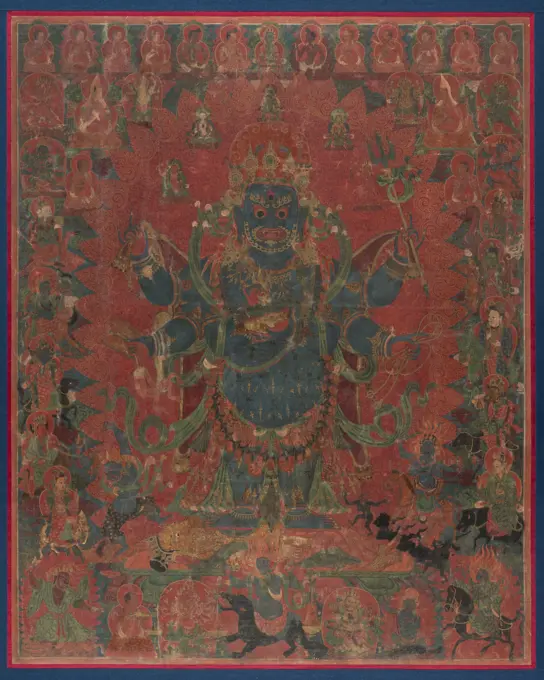
Mahakala and his Entourage. Central Tibet, Gyantse (), circa 1450-1500. Paintings. Mineral pigments, gold, and ink on cotton cloth
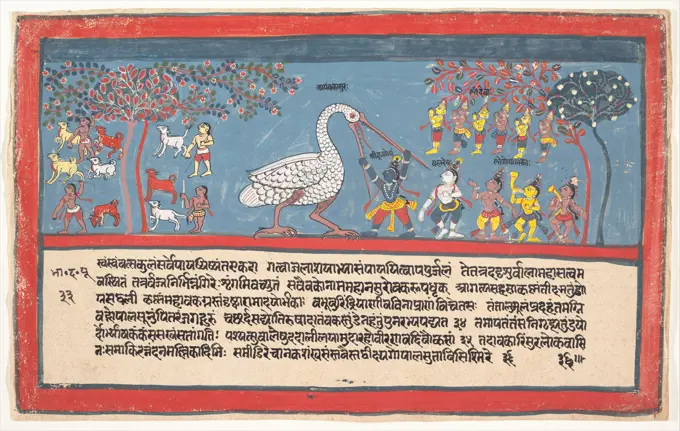
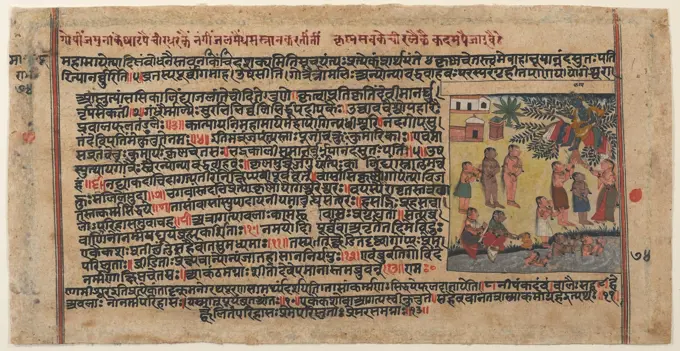
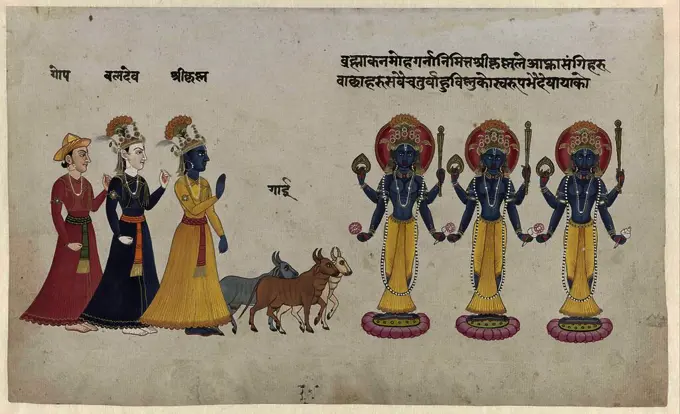
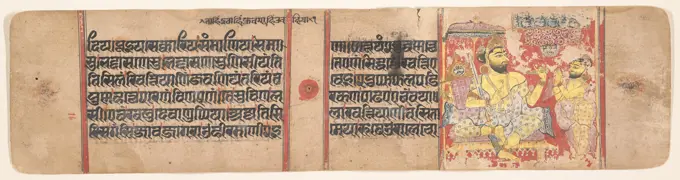
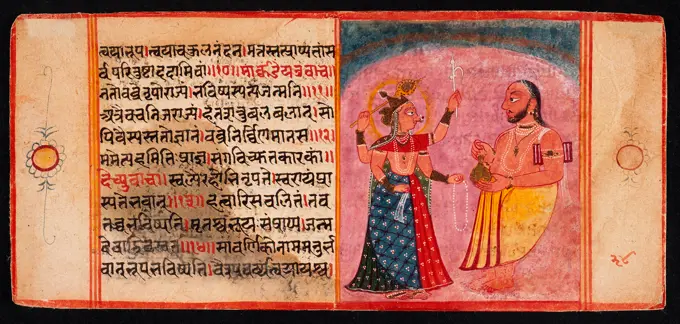
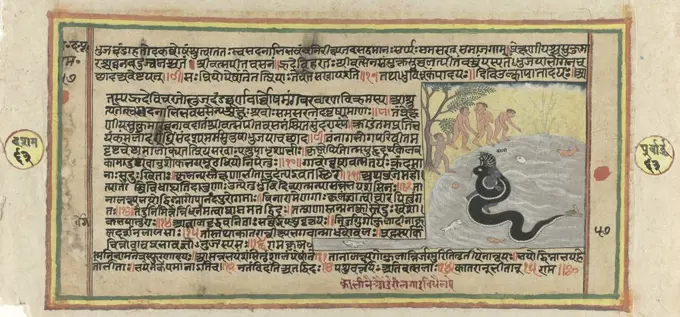
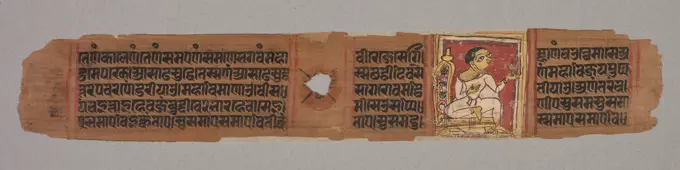
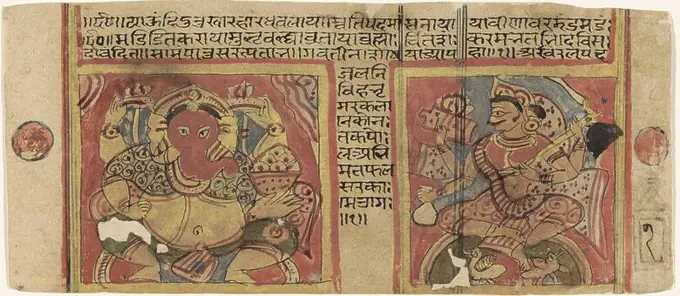
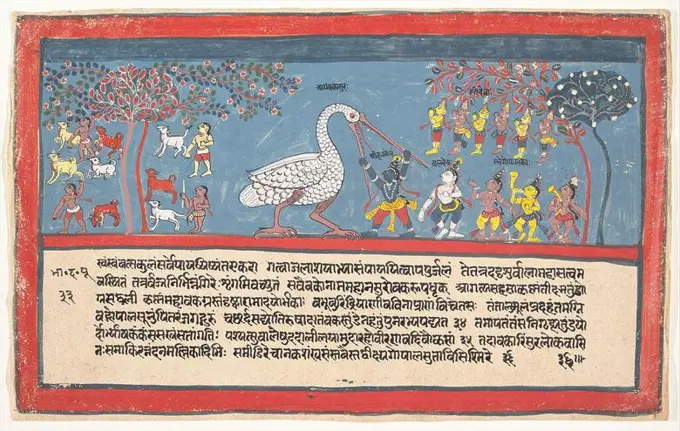
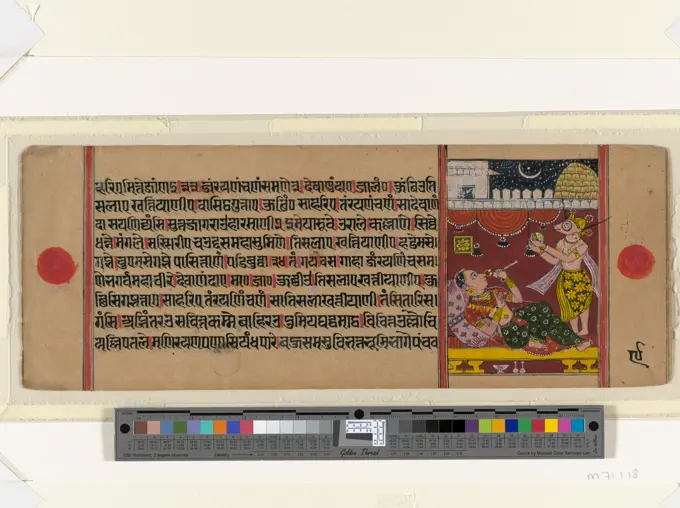
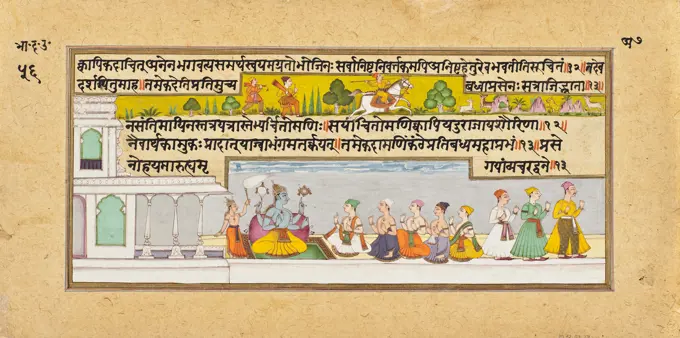
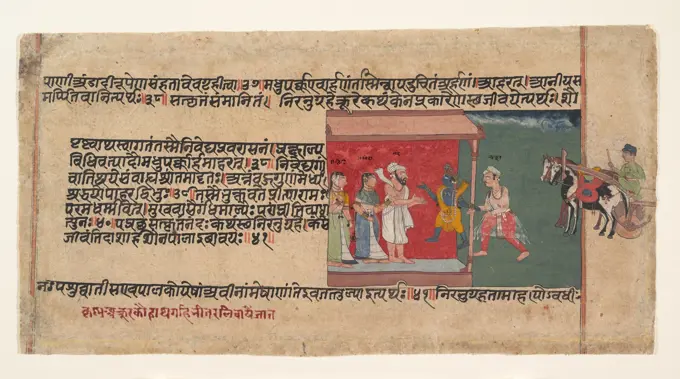
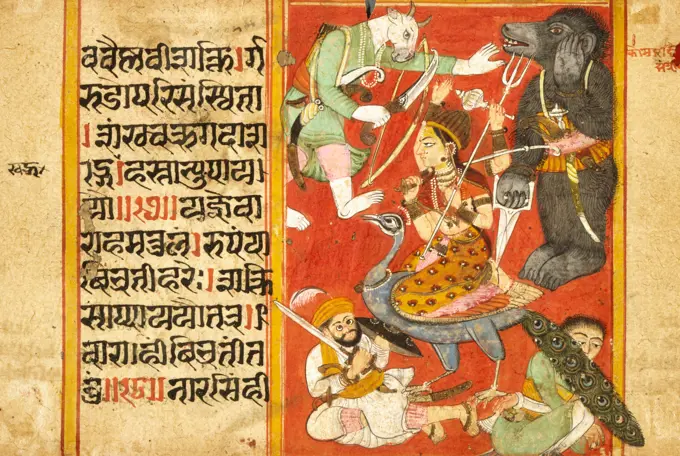
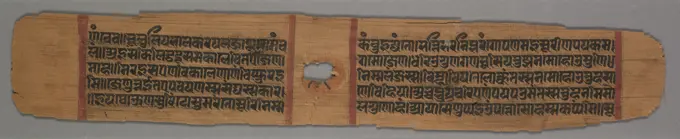
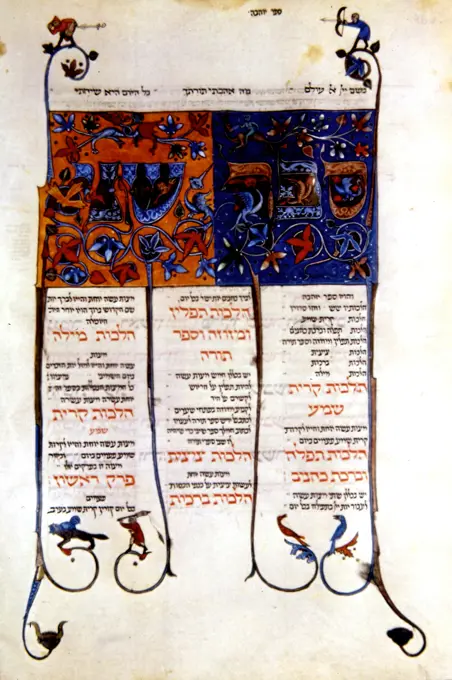
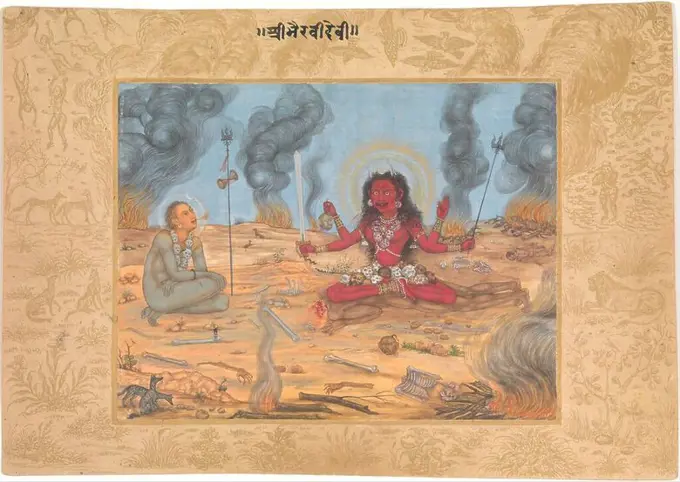
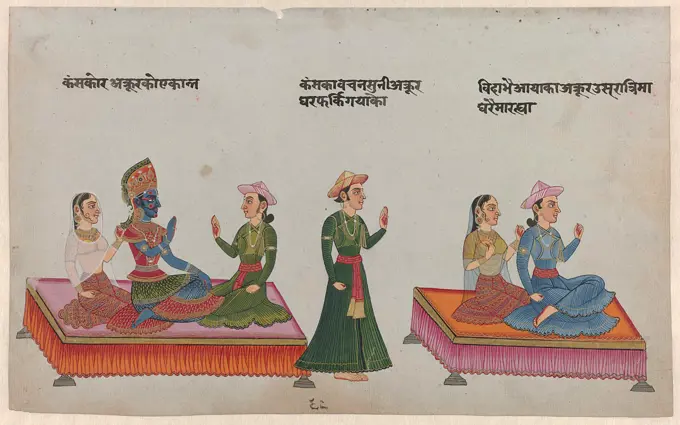
Koning Kamsa en Akrura.King Kamsa sits on the left on a tabouret with Akrura, a third figure is sitting with his face to the couple, on a smaller taboo on the right is another couple, between the two tabo farms, the same man stands as the sitting figure at Kamsa, but now his face is his face turned into the opposite direction and walks away from the couple with abandoned left hand. Above the figures there is an inscription in old Indian script in black ink.Page from a Dispersed Kalpa Sutra (Jain Book of Rituals) 15th century India (Gujarat). Page from a Dispersed Kalpa Sutra (Jain Book of Rituals) 75064On the right side of a long, narrow strip the god Mahavira is depicted as an ascetic, the left side contains a text in Old Indian script in red and black, the top and bottom line in a smaller script. On verso more text in the same way, on either side a narrow undescribed column, a large red dot is placed in the middle of the strip. Two thirds text column on recto, one third representation, verso: text, wide red brush line along text and representation, one red dot in the middle of the strip, also on verso text and three dots., Mahavira as asceticet, draughtsman: anonymous, Gujarat, 1460 - 1480, paper, brush, brush, h 109 mm × w 75 mm, w 258 mm, w 200 mmLeaf from a Kalpa Sutra (Jain Book of Rituals) 15th century Bhadrabahu Indian. Leaf from a Kalpa Sutra (Jain Book of Rituals) 75145Krishna Slays Bakasura, the Crane Demon: Page from a Dispersed Bhagavata Purana (Ancient Stories of Lord Vishnu)) 1800-1825 India The gopas (cowherds) of Brindavan were drinking at a tank when they were suddenly disrupted by Bakasura, a demon sent by Kamsa to kill Krishna. The demon swallows the god but is quickly forced by the intense heat in its throat to disgorge him. Krishna then grabs Bakasura's beak and breaks it in two.. Krishna Slays Bakasura, the Crane Demon: Page from a Dispersed Bhagavata Purana (Ancient Stories of Lord Vishnu)) 37997Summer Palace, Beijing, China. a vast ensemble of lakes, gardens and palaces in Beijing. It was an imperial garden in the Qing Dynasty. Mainly dominated by Longevity Hill and Kunming Lake. In December 1998, UNESCO included the Summer Palace on its World Heritage List.When Mahavira chose to renounce his life as a prince to seek omniscience and ultimate liberation, he traveled from his palace to the countryside until he came to a wooded park. The text states that under an ashoka tree in the park, Mahavira removed his ornaments and garlands and plucked out his hair with his fists in five handfuls. In the illumination he unflinchingly grasps a fistful of hair, his pectoral muscle flexed with the effort. Indra, the four-armed king of the gods, sits under a royal canopy on a lower level than Mahavira and praises his extreme act of self-mortification. The dramatic moment is effectively conveyed through the pert and wiry line drawing and bold palette of pigments made from lapis lazuli, vermilion, and lavish amounts of gold. Text, Folio 37 (recto), from a Kalpa-sutra, c. 1475-1500. Western India, Gujarat, last quarter of the 15th century. Gum tempera, ink, and gold on paper; overall: 12.5 x 25.7 cm (4 15/16 x 10 1/8 in.).Illustration from a Jain Kalpasutra Manuscript Indian. Illustration from a Jain Kalpasutra Manuscript, late 15th century. Opaque watercolor and gold on paper, sheet: 4 1/4 x 10 1/8 in. (10.8 x 25.7 cm).   Asian Art late 15th centuryPage from a Dispersed Kalpa Sutra (Jain Book of Rituals) 15th century India (Gujarat). Page from a Dispersed Kalpa Sutra (Jain Book of Rituals). India (Gujarat). 15th century. Ink, opaque watercolor, and gold on paper. PaintingsThailand, Ko Samui (aka Koh Samui). Wat Plai Laem aka Plai Laem Temple, inside prayer house. Colorful wall mural depicting life of Buddha.Page from a Dispersed Kalpa Sutra (Jain Book of Rituals) 15th century India (Gujarat). Page from a Dispersed Kalpa Sutra (Jain Book of Rituals) 75047Page from a Dispersed Kalpa Sutra (Jain Book of Rituals) 15th century India (Gujarat). Page from a Dispersed Kalpa Sutra (Jain Book of Rituals) 75037Page from a Dispersed Kalpa Sutra (Jain Book of Rituals) 15th century India (Gujarat). Page from a Dispersed Kalpa Sutra (Jain Book of Rituals) 75029Illustration from a Jain Kalpasutra Manuscript Indian. Illustration from a Jain Kalpasutra Manuscript, late 15th century. Opaque watercolor and gold on paper, sheet: 4 1/4 x 10 1/8 in. (10.8 x 25.7 cm).   Asian Art late 15th centuryKrishna Steals the Gopis Clothing: Page from a Dispersed Bhagavata Purana Manuscript ca. 1620-30 India (Rajasthan, Mewar) This early Mewari manuscript tells of Krishnas exploits as recounted in the tenth book of the Bhagavata Purana. Here, the young Krishna has stolen the Gopis clothing while they were bathing and is shown sitting in a kadamba tree teasing the naked cowherdesses shivering in the cold water. As in many sections of this text, social conventions and family obligations are challenged, as the true devotee must abandon all attachments in order to be one with God. The vitality and color palette of the compositions in this manuscript link them to the painting traditions of Malwa, while the early figures types are analogous to those of Gujarat.. Krishna Steals the Gopis Clothing: Page from a Dispersed Bhagavata Purana Manuscript. India (Rajasthan, Mewar). ca. 1620-30. Ink and opaque watercolor on paper. PaintingsPage from a Dispersed Kalpa Sutra (Jain Book of Rituals) 15th century India (Gujarat). Page from a Dispersed Kalpa Sutra (Jain Book of Rituals) 75016Krishna with Baladeva versus three gods gopis. Draughtsman: anonymous. Dating: 1820 - 1849. Place: Nepal. Measurements: h 185 mm × w 297 mm. Museum: Rijksmuseum, Amsterdam.Mahavira als asceet.On a long, narrow strip, the God Mahavira is depicted as Asceet on the right. The left side contains a text in old Indian Scripture in red and black, the upper and bottom line in a smaller scripture. On verso more text in the same way; On both sides a narrow unwritten column; A large red dot is placed in the middle of the strip. Two-thirds text column on recto, one-third show; Verso: text; wide red brush line along text and show, a red dots in the middle of strip; Also on verso text and three dots.Page 53 from a manuscript of the Kalpasutra: recto image of Moksha of Mahavira, verso text Page 53 from a manuscript of the Kalpasutra: recto image of Moksha of Mahavira, verso text, 1472. Opaque watercolor and ink on gold leaf on paper, 4 3/8 x 10 1/4 in. (11.1 x 26 cm).   Asian Art 1472Mahavira as an ascetic. Draughtsman: anonymous. Dating: 1460 - 1480. Place: Gujarat. Measurements: h 109 mm × w 75 mm; w 258 mm; w 200 mm. Museum: Rijksmuseum, Amsterdam.Jain Manuscript Page Jain Manuscript Page, ca. 1675. Watercolor and gold on paper, 8 3/4 x 11 1/4in. (22.2 x 28.6cm).   Asian Art ca. 1675Mani wall at the Korila pass, Mongar, Mongar District, Bhutan, AsiaHanuman, a Hindu deity, is a central character in the Indian epic Ramayana.King Siddharta Listens to an Astrologer Forecast the Conception and Birth of His Son, the Jina Mahavira: Folio from a Kalpasutra Manuscript late 14th century India (Gujarat) The story of Mahavira as recounted by Hemachandra tells of the jina's father, King Siddhartha, summoning astrologers to his court to interpret Queen Trisala's dreams of a future son. They foretell that their son will be either a universal ruler (chakravartin) or a universal religious savoir, a jina. The dynamic and engaging scene shows a masterful control of form-defining line and a sensitive use of gesture. Both figures wear finely embroidered translucent muslins and are sheltered by honorific umbrellas.. King Siddharta Listens to an Astrologer Forecast the Conception and Birth of His Son, the Jina Mahavira: Folio from a Kalpasutra Manuscript. India (Gujarat). late 14th century. Opaque watercolor on paper. PaintingsBhairava raga with shiva. Shiva in the form of Bhairava is sitting with crossed legs on an elephant he killed, in his left hand he holds a whistle, a snake writhes around his upper arm and head, from his forehead the Ganges expression; Opposite Him kneels Parvati, behind her is a servant with a basket of food, her head is reflected in a mirror on the wall, in the background behind the roof of the temple are two peacocks partially visible to a nocturnal starry sky; Above the show a yellow strip with red decorative line and inscription in black. Around the show a green piping with black and white frame lines and a dark red glossy border with white frame lines.Leaf from a Kalpa Sutra (Jain Book of Rituals) 15th century Bhadrabahu Indian. Leaf from a Kalpa Sutra (Jain Book of Rituals) 75136Page 99 from a manuscript of the Kalpasutra: recto text (including colophon), verso images of a monk preaching and 4 tiers of devotees Page 99 from a manuscript of the Kalpasutra: recto text (including colophon), verso images of a monk preaching and 4 tiers of devotees, 1472. Opaque watercolor and ink on gold leaf on paper, sheet: height: 4 3/8 in.   Asian Art 1472Page from a Dispersed Kalpa Sutra (Jain Book of Rituals) 15th century India (Gujarat). Page from a Dispersed Kalpa Sutra (Jain Book of Rituals) 75078Leaf from a Kalpa Sutra (Jain Book of Rituals) 15th century Bhadrabahu Indian. Leaf from a Kalpa Sutra (Jain Book of Rituals) 75132Mahavira als asceet, anonymous, 1460 - 1480 Indian miniature. drawing On a long, narrow strip, the god Mahavira is shown on the right; The left side contains a text in Oud-Indian script in red and black, the upper and bottom line in a smaller script. More text in the same way; A narrow unwritten column on either side; A large red dot is placed in the middle of the strip. Two -thirds text column on recto, one -third show; Verso: text; wide red brush line along text and show, a red dots in the middle of strip; Also on Verso text and three dots. Gujarat paper brush / brushPage from a Dispersed Kalpa Sutra (Jain Book of Rituals) 15th century India (Gujarat). Page from a Dispersed Kalpa Sutra (Jain Book of Rituals) 75006Leaf from a Kalpa Sutra (Jain Book of Rituals) 15th century Bhadrabahu Indian. Leaf from a Kalpa Sutra (Jain Book of Rituals) 75129Yogi Image of Madhusudhanam Vishnu 18th C. Indian Art Private CollectionPage from a Dispersed Kalpa Sutra (Jain Book of Rituals) 15th century India (Gujarat). Page from a Dispersed Kalpa Sutra (Jain Book of Rituals). India (Gujarat). 15th century. Ink, opaque watercolor, and gold on paper. PaintingsTwo Buddhas; Folio from a Gyalpo Kachem (Will and Testament of the King). Central Tibet, circa 1500. Manuscripts. Opaque watercolor and gold on paperPage from a Dispersed Kalpa Sutra (Jain Book of Rituals) 15th century India (Gujarat). Page from a Dispersed Kalpa Sutra (Jain Book of Rituals) 75025Page from a Dispersed Bhagavata Purana (Ancient Stories of Lord Vishnu). Culture: India (Rajasthan, possibly Mewar). Dimensions: 6 1/2 x 13 1/8 in. (16.5 x 33.3 cm). Date: ca. 1630-50. Museum: Metropolitan Museum of Art, New York, USA.Krishna in triplicate is on the right side of the leaf on a lotus flower, in the middle three buckles towards him and on the left three gods, the descriptions are above the figures in old Indian writing in black ink, Krishna with Baladeva facing three gods gopis., draughtsman: anonymous, Nepal, 1820 - 1849, paper, brush, h 185 mm × w 297 mmKrishna with Baladeva opposite three gods Gopi's, Anonymous, 1820 - 1849 Indian miniature. drawing Krishna in Drievoud is on a lotus flower on the right of the leaf; In the middle to him, three goats and left three gods; The descriptions are above the figures in Old Indian script in black ink. Nepal paper brushPage 51 from a manuscript of the Kalpasutra: recto text, verso mandala of Mahavira's enlightenment Page 51 from a manuscript of the Kalpasutra: recto text, verso mandala of Mahavira's enlightenment, 1472. Opaque watercolor and ink on gold leaf on paper, 4 3/8 x 10 1/4 in. (11.1 x 26 cm).   Asian Art 1472Page 73 from a manuscript of the Kalpasutra: recto image of Rishabanatha's initiation, verso text Page 73 from a manuscript of the Kalpasutra: recto image of Rishabanatha's initiation, verso text, 1472. Opaque watercolor and ink on gold leaf on paper, sheet: height: 4 3/8 in.   Asian Art 1472Page from a Dispersed Kalpa Sutra (Jain Book of Rituals) 15th century India (Gujarat). Page from a Dispersed Kalpa Sutra (Jain Book of Rituals) 75065Leaf from a Kalpa Sutra (Jain Book of Rituals) 15th century Bhadrabahu Indian. Leaf from a Kalpa Sutra (Jain Book of Rituals) 75100Hindoe goden, Ganesha en Shri.On a narrow, long strip, two representations of gods are placed on either side of a middle piece; Text in Old Indian Scripture on top edge and middle piece, two unwritten sides with a large red dot, under the right stitch a geometric motif. Damage in the performances.Page from a Dispersed Kalpa Sutra (Jain Book of Rituals) 15th century India (Gujarat). Page from a Dispersed Kalpa Sutra (Jain Book of Rituals). India (Gujarat). 15th century. Ink, opaque watercolor, and gold on paper. PaintingsRama and Sita with monkey army for palace. King Rama and his wife Sita seated on a throne for a palace, around them armies of soldiers and monkeys. At the top right a text in Hindi, a few line of text at the top left.Leaf from a Kalpa Sutra (Jain Book of Rituals) 15th century Bhadrabahu Indian. Leaf from a Kalpa Sutra (Jain Book of Rituals) 75134Page from a Dispersed Kalpa Sutra (Jain Book of Rituals) 15th century India (Gujarat). Page from a Dispersed Kalpa Sutra (Jain Book of Rituals) 75041Kichaka and Bhimasena, Folio from a Dispersed Mahabharata Series Indian. Kichaka and Bhimasena, Folio from a Dispersed Mahabharata Series, 1670. Opaque watercolor and gold on paper, 6 1/4 x 15 1/2 in. (15.9 x 39.4 cm).   Asian Art 1670Kalaka with Shakra Disguised and Revealed, Leaf from a Dispersed Jain Manuscript of the Kalakacharya-katha Indian. Kalaka with Shakra Disguised and Revealed, Leaf from a Dispersed Jain Manuscript of the Kalakacharya-katha, ca. 15th century. Opaque watercolor and gold on paper, sheet: 4 1/4 x 10 1/4 in. (10.8 x 26.0 cm).   Asian Art ca. 15th centuryLeaf from a Kalpa Sutra (Jain Book of Rituals) 15th century Bhadrabahu Indian. Leaf from a Kalpa Sutra (Jain Book of Rituals) 75101Page from a Dispersed Kalpa Sutra (Jain Book of Rituals) 15th century India (Gujarat). Page from a Dispersed Kalpa Sutra (Jain Book of Rituals) 75038Kalaka Converts the Bricks to Gold, Leaf from a Dispersed Jain Manuscript of the Kalakacharya-katha Indian. Kalaka Converts the Bricks to Gold, Leaf from a Dispersed Jain Manuscript of the Kalakacharya-katha, ca. 15th century. Opaque watercolor and gold on paper, sheet: 4 1/2 x 11 1/4 in. (11.4 x 28.6 cm).   Asian Art ca. 15th centuryAncient Buddhist temple mural painting of the life of BuddhaPage from a Dispersed Kalpa Sutra (Jain Book of Rituals) 15th century India (Gujarat). Page from a Dispersed Kalpa Sutra (Jain Book of Rituals). India (Gujarat). 15th century. Ink, opaque watercolor, and gold on paper. PaintingsRama and Sita with monkey army for Palace, Anonymous, 1670 - 1690 Indian miniature. drawing King Rama and his wife Sita sat on a throne in front of a palace, around them armies of soldiers and monkeys. At the top right a text in Hindi, at the top left a single line of text. Murshidabad paper. deck paint brushKrishna fights the Serpent Kalya while four shepherd boys watch. Draughtsman: anonymous. Dating: c. 1614 - c. 1640. Place: Mewar. Measurements: h 230 mm × w 405 mm; h 17.2 mm × w 342 mm. Museum: Rijksmuseum, Amsterdam.Battle Scene in a City, Folio from a Ramayana (Adventures of Rama). India, Uttar Pradesh, Varanasi (), circa 1600-1625. Manuscripts. Ink and opaque watercolor on paperThe king and queen seated in the upper register are the parents of Mahavira, founder of the Jain religion. The two bearded figures in the lower register are the learned men versed in the interpretation of dreams. One writes with a pen; the other consults a scroll. They predict that the auspicious dreams of the queen foretell the birth of a son who will either be a powerful hero and king or a religious leader of the world. Text, Folio 25 (recto), from a Kalpa-sutra, c. 1475-1500. Western India, Gujarat. Gum tempera, ink, and gold on paper; overall: 12.5 x 25.7 cm (4 15/16 x 10 1/8 in.).Leaf from a Jain Manuscript: Yoga-shastra: Jain monk with Disciple and Two Laymen, Two Nuns and a Laywoman below (verso), 1279. Hemachandra (Indian). Opaque watercolor and ink on palm leaf; overall: 5.3 x 30.2 cm (2 1/16 x 11 7/8 in.).This page discusses the pregnancy of Queen Trishala when she was anxious about why she could not feel the baby move. In the painting she addresses her handmaids: Has the child in my womb been destroyed Has he been killed Have I suffered a miscarriage The child used to move, but now he does not move. The baby is Mahavira, who will grow to be the historical founder of the Jain religion. According to the text, he remained motionless out of compassion for his mother, not wishing to disturb her. Once he realized how worried she was, he made a little movement, and this filled her with joy. Text, Folio 29 (verso), from a Kalpa-sutra, c. 1475-1500. Western India, Gujarat. Gum tempera, ink, and gold on paper; overall: 12.5 x 25.7 cm (4 15/16 x 10 1/8 in.).Mahaviras Parents Show Him the Sun and Moon, and They Celebrate His Birth, folio 19; and Mahavira Is Sent to School, and Mahavira is Married, folio 22 from a Dispersed Kalpa SutraPage from a Dispersed Kalpa Sutra (Jain Book of Rituals) 15th century India (Gujarat). Page from a Dispersed Kalpa Sutra (Jain Book of Rituals) 75075The Goddess and a Worshipper, Folio from a Devimahatmya (Glory of the Goddess). India, Rajasthan, Sirohi, circa 1630. Books. Opaque watercolor, gold, and ink on paperKrishna fights the snake Kalya while four shepherd boys watch, Mewar, c. 1614 - c. 1640, paper, brush, h 230 mm × w 405 mm h 17.2 mm × w 342 mmPage from a Dispersed Kalpa Sutra (Jain Book of Rituals) 15th century India (Gujarat). Page from a Dispersed Kalpa Sutra (Jain Book of Rituals). India (Gujarat). 15th century. Ink, opaque watercolor, and gold on paper. PaintingsWorship of Parshvanatha, Folio from a Jain text of Sanskrit Grammar, the Siddhahemashabdanushasana by Hemachandra (1089-1172). India, Gujarat, circa 1350. Books. Ink and opaque watercolor on palm leafLeaf from a Jain Manuscript: Kalpa-sutra: Monk Holding a Flower (recto); Leaf from a Jain Manuscript: Kalpa-sutra: text describing descent of Mahavira into the womb of the Brahman woman Devananda (verso), 1279. Western India, Gujarat, 13th century. Opaque watercolor and ink on palm leaf; Manuscript 1; overall: 5.3 x 17.1 cm (2 1/16 x 6 3/4 in.).Hindu gods, Ganesha and Shri. Draughtsman: anonymous. Dating: 1590 - 1610. Place: Gujarat. Measurements: h 111 mm; w 255 mm; w 218 mm. Museum: Rijksmuseum, Amsterdam.Krishna Slays Bakasura, the Crane Demon: Page from a Dispersed Bhagavata Purana (Ancient Stories of Lord Vishnu)). Culture: India. Dimensions: 13 7/8 x 8 1/4 in. (35.2 x 21 cm). Date: 1800-1825.The gopas (cowherds) of Brindavan were drinking at a tank when they were suddenly disrupted by Bakasura, a demon sent by Kamsa to kill Krishna. The demon swallows the god but is quickly forced by the intense heat in its throat to disgorge him. Krishna then grabs Bakasura's beak and breaks it in two. Museum: Metropolitan Museum of Art, New York, USA.Harinaigameshin Brings the Embryo of Jina Mahavira to Queen Trishala, Folio from a Kalpasutra (Book of Sacred Precepts). India, Rajasthan, Sirohi, mid-17th century. Manuscripts. Opaque watercolor and ink on paperKrishna Conquers the Serpent Kaliya, Page from a Dispersed Bhagavata Purana Series Indian. Krishna Conquers the Serpent Kaliya, Page from a Dispersed Bhagavata Purana Series, ca. 1775. Opaque watercolor and gold on paper, sheet: 9 3/4 x 14 5/8 in. (24.8 x 37.1 cm).   Asian Art ca. 1775The Jina Buddha Ratnasambhava, Folio from a Shatasahasrika Prajnaparamita (The Perfection of Wisdom in 100,000 Verses). Western Tibet, Maryul district, Tholing Monastery, 11th century. Manuscripts. Ink, opaque watercolor, and gold on paperreligion hinduism tantrism meditation picture Sanghrani Sutra Rajasthan 18th century private collection,Vishnu Discoursing (recto), Prince Worshipping and Discoursing (verso); Folio from a Vaishnava manuscript. India, Jammu and Kashmir, Kashmir region (), 19th century. Manuscripts. Opaque watercolor and ink on paperGolden Temple, Amritsar. Coloured transfer lithograph.Pages of text from the Guru Granth Sahib the sacred Sikh prayer bookKrishna Brings the Messenger Akrura Inside Nandas House: Page from a Dispersed Bhagavata Purana Manuscript ca. 1620-30 India (Rajasthan, Mewar) Akrura was dispatched by the evil king Kamsa to invite Krishna and Balarama to a function at his palace. While traveling to reach the gods, Akrura becomes a fervent devotee and therefore reveals the evil kings plan to have them killed. As with many of the pages in this manuscript, inscriptions on the painted surface identify the characters represented; this feature, coupled with the simplified compositions, might suggest that this manuscript was commissioned by a non-royal patron.. Krishna Brings the Messenger Akrura Inside Nandas House: Page from a Dispersed Bhagavata Purana Manuscript 37902Scriptures, India, Asia Copyright: xAnilxDave/DinodiaxPhotoxThe Seige of Ujjain and the Defeat of the Magic She-Ass, Page from a Dispersed Jain Manuscript of the Kalakacharya-katha Indian. The Seige of Ujjain and the Defeat of the Magic She-Ass, Page from a Dispersed Jain Manuscript of the Kalakacharya-katha, ca. 15th century. Opaque watercolor and gold on paper, sheet: 4 1/2 x 10 1/8 in. (11.4 x 25.7 cm).   Asian Art ca. 15th centuryPage from a Dispersed Kalpa Sutra (Jain Book of Rituals) 15th century India (Gujarat). Page from a Dispersed Kalpa Sutra (Jain Book of Rituals) 75030Vaishnavi and Varahi Fighting Asuras (Recto), Kumari Fighting Asuras (Verso), Folio from a Devimahatmya (Glory of the Goddess). India, Rajasthan, Sirohi, 1675-1700. Drawings; watercolors. Opaque watercolor and ink on paperTibetan Buddhist mantras engraved in stone, Tongde monastery, Zanskar valley, Zanskar, Ladakh, Jammu and Kashmir, Indian Himalayas, northern India, India, AsiaJain Monk Holding a Flower Venerated by a Royal Follower, colophon page from a Story of the Religious Teacher Kalaka (Kalakacharya-katha, verso), 1279. Western India, Gujarat. Opaque watercolor and ink on palm leaf; overall: 5.6 x 33 cm (2 3/16 x 13 in.). Palm leaf was the preferred material for sacred texts before the 1400s in India. The text here was often appended to the Kalpa-sutra, the most sacred book of Jainism. This story concerns the life of a Jain teacher named Kalaka, a prince who developed the ability to work magic after he become a monk, inspired by the teachings of a holy man.The painting on this page shows a monk clad in white, indicating his affiliation with the Shvetambara (white clad”) branch of Jainism. It is the second to the last page of the manuscript and includes the beginning of the colophon, which contains information about when and where this manuscript was produced.Kalaka with Shakra Disguised and Revealed, Leaf from a Dispersed Jain Manuscript of the Kalakacharya-katha Indian. Kalaka with Shakra Disguised and Revealed, Leaf from a Dispersed Jain Manuscript of the Kalakacharya-katha, ca. 15th century. Opaque watercolor and gold on paper, sheet: 4 1/2 x 11 3/8 in. (11.4 x 28.9 cm).   Asian Art ca. 15th centuryMishmeh Torah of Maimonides. 1295-1296. Book of Love. mythological animals. German Hebrew manuscript.Lolei is the northernmost temple of the Roluos group of three late 9th century Hindu temples at Angkor. Lolei was built as part of the city of Hariharalaya that once flourished at Roluos, and in 893 the Khmer king Yasovarman I dedicated it to Shiva and to members of the royal family. Once an island temple, Lolei was located on an island slightly north of centre in the now dry Indratataka baray, construction of which had nearly been completed under Yasovarman's father and predecessor Indravarman I. Scholars believe that placing the temple on an island in the middle of a body of water served to identify it symbolically with Mount Meru, home of the gods, which in Hindu mythology is surrounded by the world oceans. The tiny captions written in Sanskrit to the right of the painting identify the subject of this scene: abduction of the embryo and transfer of the embryo. The embryo is the unborn founder of the Jain religion. In this miraculous episode, a goat-headed divinity who presides over miscarriage and childbirth gently takes the embryo in his cupped hands away from the reclining Brahmin lady in the scene above. Below, he carries it to a queen, who will be his birth mother. Text, folio 12 (verso), from a Kalpa-sutra, c. 1475-1500. Western India, Gujarat. Gum tempera, ink, and gold on paper; overall: 12.5 x 25.7 cm (4 15/16 x 10 1/8 in.).Balarama Pulling Hastinapur toward the Ganages, Page from a Bhagavata Dasamskanda series Indian. Balarama Pulling Hastinapur toward the Ganages, Page from a Bhagavata Dasamskanda series, mid 17th century. Opaque watercolor on paper with gold and silver details on paper, sheet: 7 5/16 x 12 3/8 in. (18.6 x 31.4 cm).   Asian Art mid 17th centuryDraupadi's Meeting with Queen Sudeshna, Folio from a Mahabharata (War of the Great Bharatas). India, Karnataka, Mysore, Seringapatam, 1670. Manuscripts. Opaque watercolor, gold, and ink on paperFolio 20, from a Gandavyuha-sutra (Scripture of the Supreme Array), 1000-1100s. Nepal. Gum tempera and ink on palm leaf; average: 4.2 x 52.4 cm (1 5/8 x 20 5/8 in.). A young male figure, probably the pilgrim Sudhana, sits on a cushion with a bolster and interacts with a parrot, perched on the trunk of a tree. Sudhana's gesture indicates that the bird should not be afraid. Most pages from this dispersed 355-folio manuscript have a single painting only on the recto side.Manuscript page of Vajrapani & Manjushri. Date/Period: 13th century-14th century. Painting. Pigments on paper Pigments on paper. Height: 187.45 mm (7.37 in); Width: 685.80 mm (27 in). Author: UNKNOWN.The Goddess Bhairavi Devi with Shiva. Artist: Attributed to Payag (Indian, active ca. 1591-1658). Dimensions: H. 7 1/4 in. (18.5 cm)W. 10 3/8 in. (26.5 cm). Date: ca. 1630-35.In this painting attributed to the Mughal artist Payag, a demonic form of the Hindu goddess Bhairavi, female counterpart to Shiva, sits on the body of a decomposing corpse. Wearing jewelry and a skirt made of skulls, and horns in the form of spear heads, she is accompanied by Shiva who appears in the form of a devotee. Three of her hands carry symbols of destruction, while her fourth extends a gesture of blessing. The borders, executed in gold monochrome, form a continuation of the desolate landscape in the painting itself. The inscription above the image, written in Devanagari script, identifies Bhairavi. Museum: Metropolitan Museum of Art, New York, USA.Folio 2, from a Kalpa-sutra: A Monk Preaching (recto); Text (verso), c. 1275. Western India, Gujarat. Gum tempera and ink on palm leaf; overall: 5.7 x 18.4 cm (2 1/4 x 7 1/4 in.).Protective diagram;  2. PO. XIX W.-1. after. 20th century (1851-00-00-1950-00-00);Deposits, the art of Tibetan BuddhismPage 86 from a manuscript of the Kalpasutra: recto text, verso image of monk preaching Page 86 from a manuscript of the Kalpasutra: recto text, verso image of monk preaching, 1472. Opaque watercolor and ink on gold leaf on paper, sheet: height: 4 3/8 in.   Asian Art 1472Kalayavana Surrounds Mathura, Page from a Dispersed Bhagavata Purana Series Indian. Kalayavana Surrounds Mathura, Page from a Dispersed Bhagavata Purana Series, ca. 1800. Opaque watercolor on paper, sheet: 9 1/2 x 14 3/4 in. (24.1 x 37.5 cm).   Asian Art ca. 1800Leaf from a Kalpa Sutra (Jain Book of Rituals) 15th century Bhadrabahu Indian. Leaf from a Kalpa Sutra (Jain Book of Rituals) 75131Kalaka with Shakra Disguised and Revealed, Leaf from a Dispersed Jain Manuscript of the Kalakacharya-katha Indian. Kalaka with Shakra Disguised and Revealed, Leaf from a Dispersed Jain Manuscript of the Kalakacharya-katha, ca. 15th century. Opaque watercolor and gold on paper, sheet: 4 1/4 x 10 1/4 in. (10.8 x 26.0 cm).   Asian Art ca. 15th centuryBalarāma, Subhadrā and Jagannāth in the temple at Puri, with other figures in a courtyard around. Oil painting by a painter of Puri, Odisha, ca. 1880/1910.