Traditional Arms and Blades

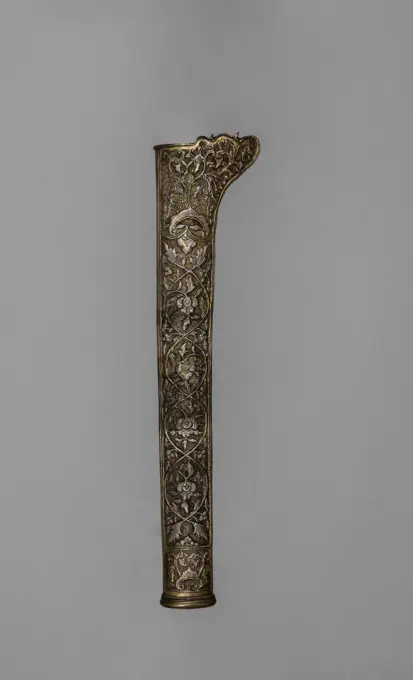
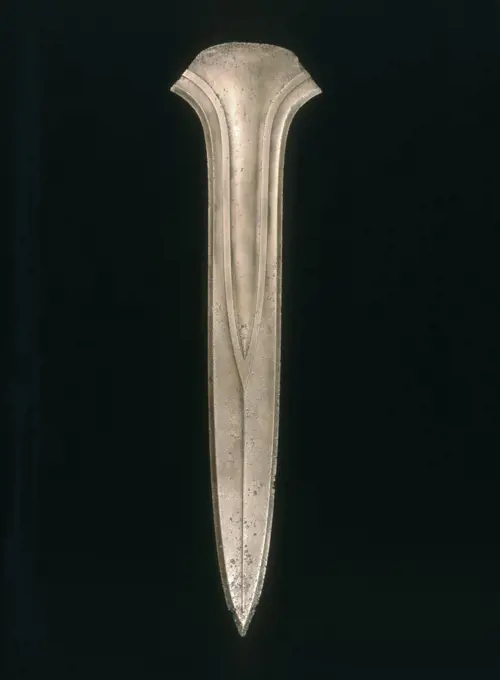
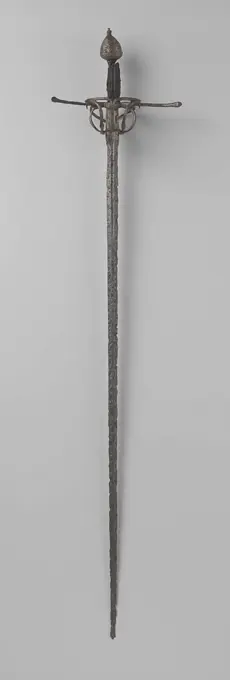
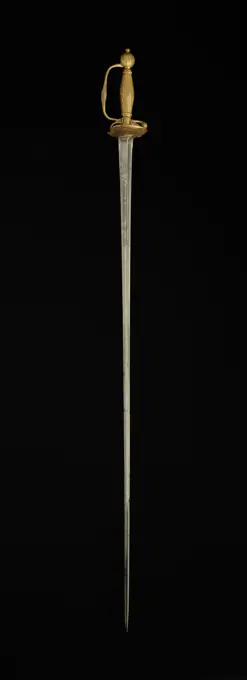
Display of historical weapons, including swords, daggers, and arrowheads, reflecting craftsmanship from various cultures and periods.

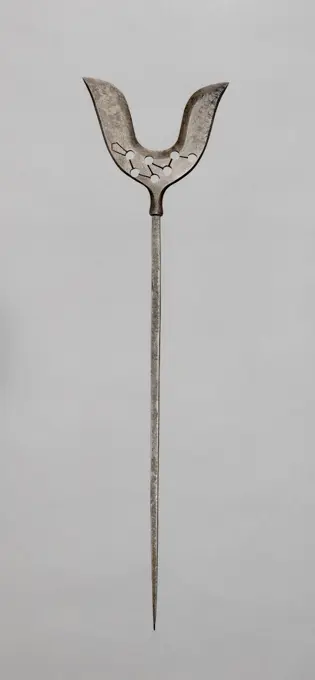
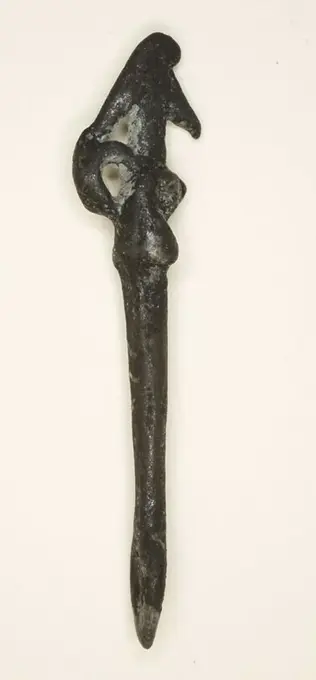
Skewers, Silver, Skewer (a,b): tapering pointed stem or pin. Cast relief terminal depicting caduceus and winded cap of Hermes., France, 19th century, cutlery, Decorative Arts, Skewers
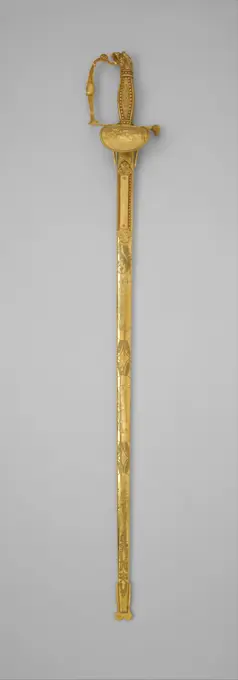
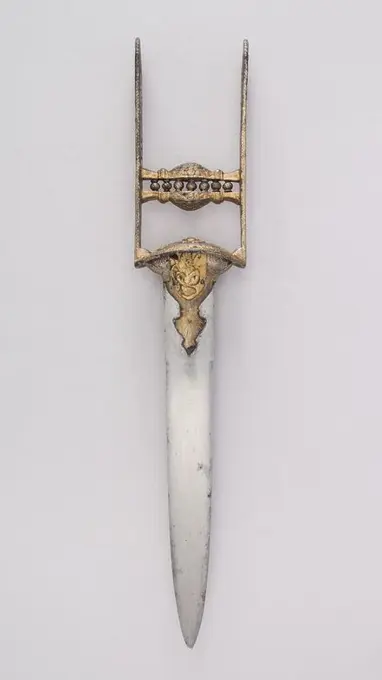
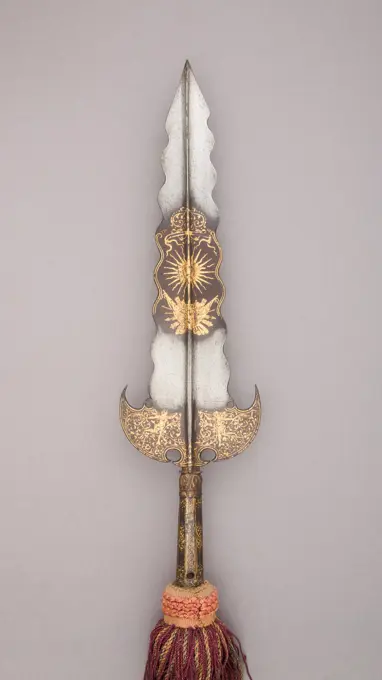
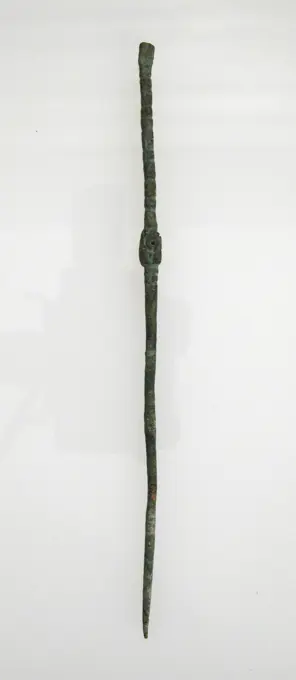
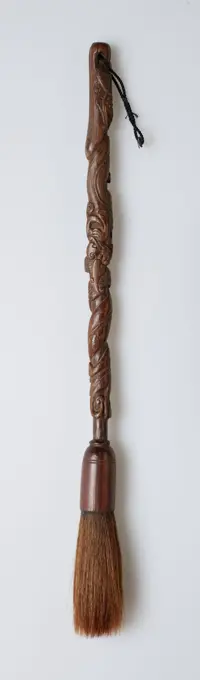
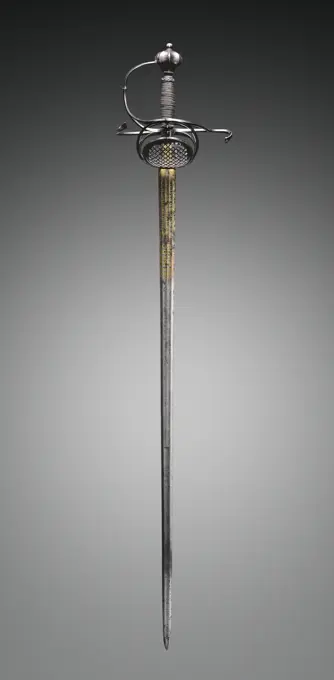
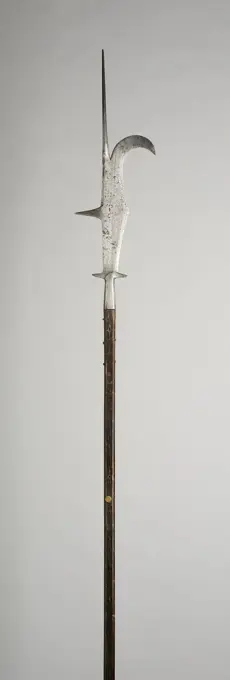
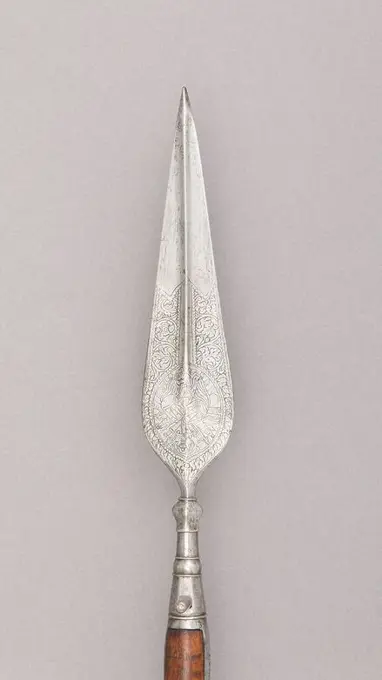
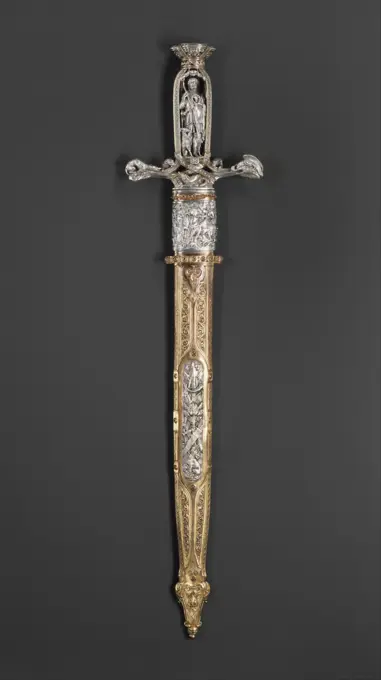
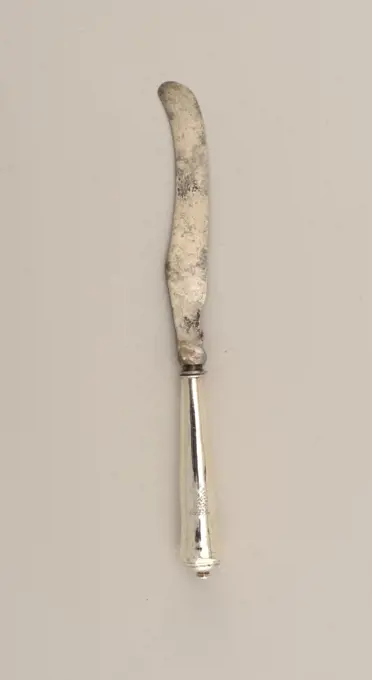
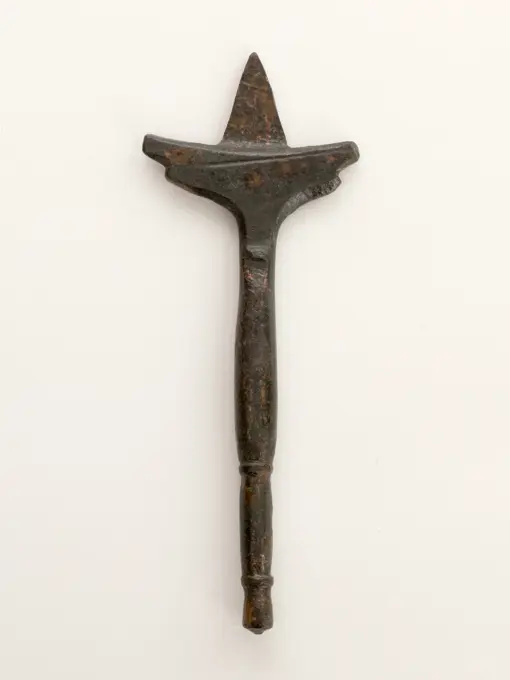
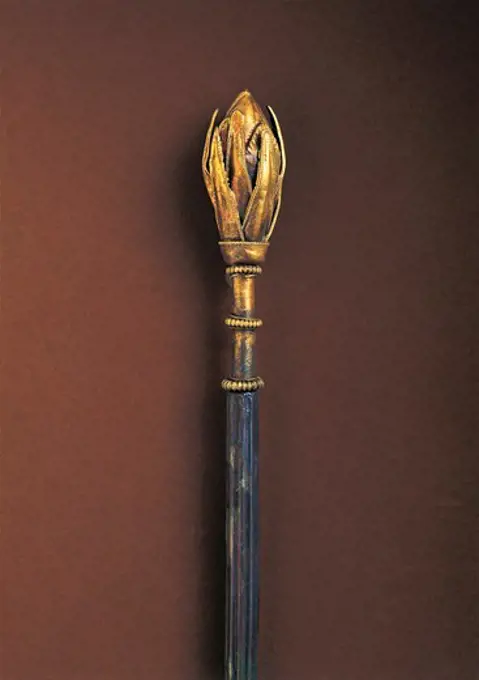
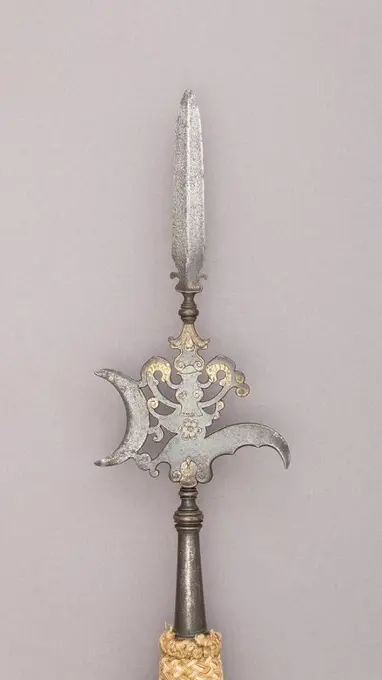
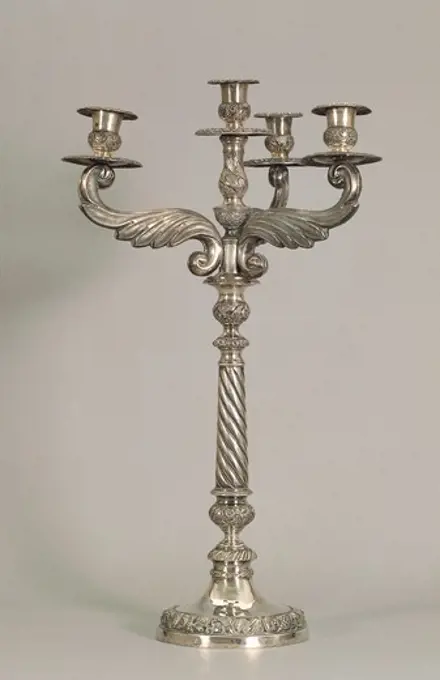
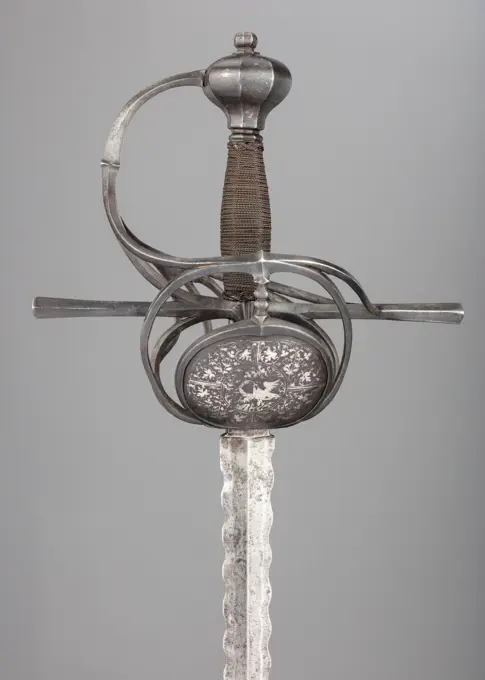
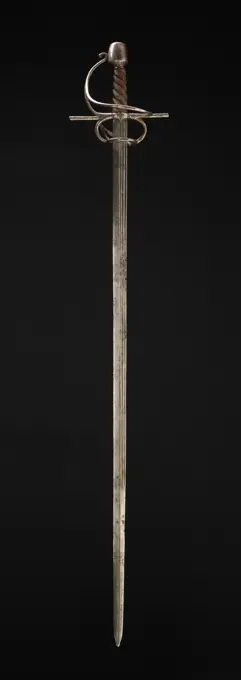
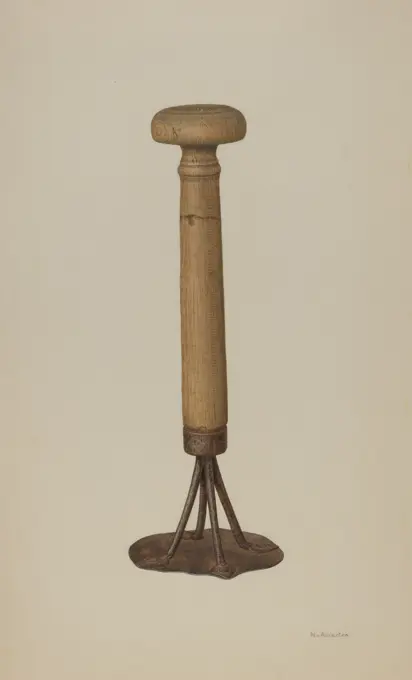
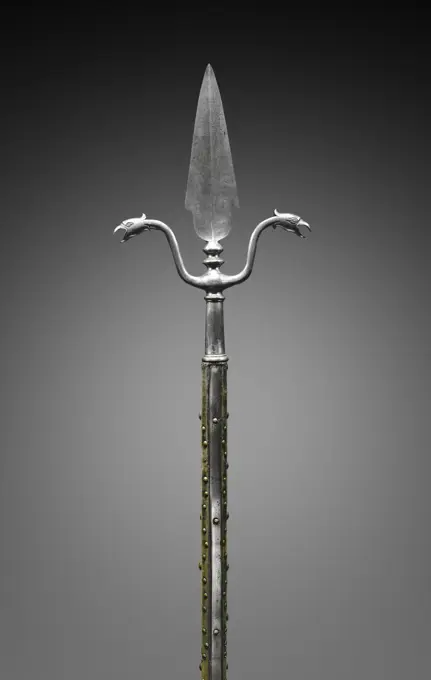
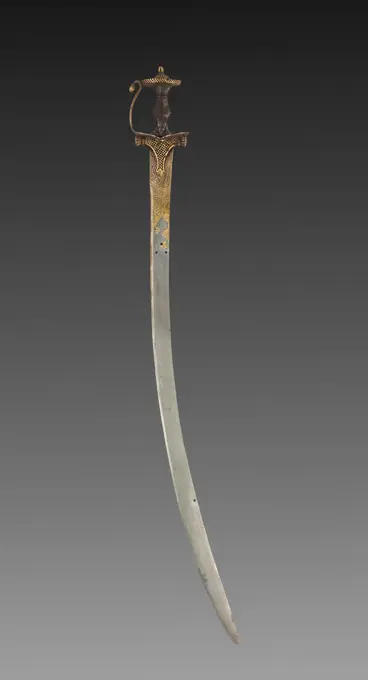
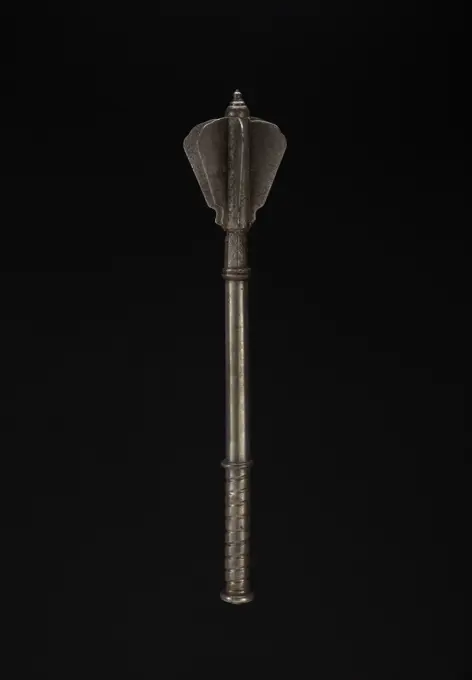
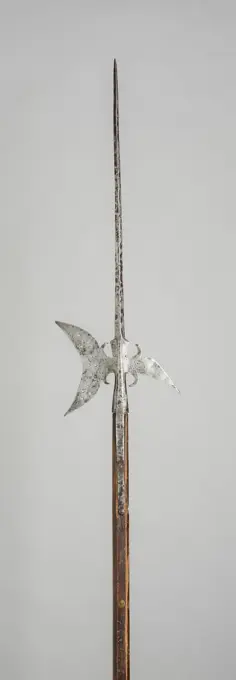
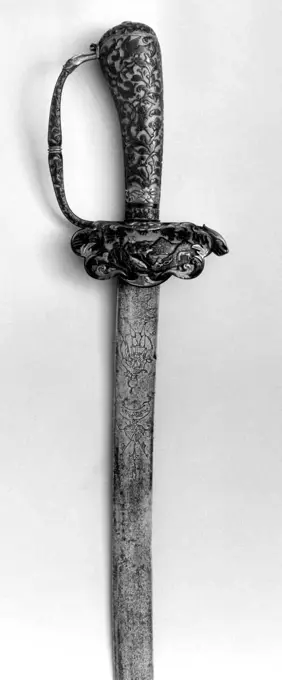
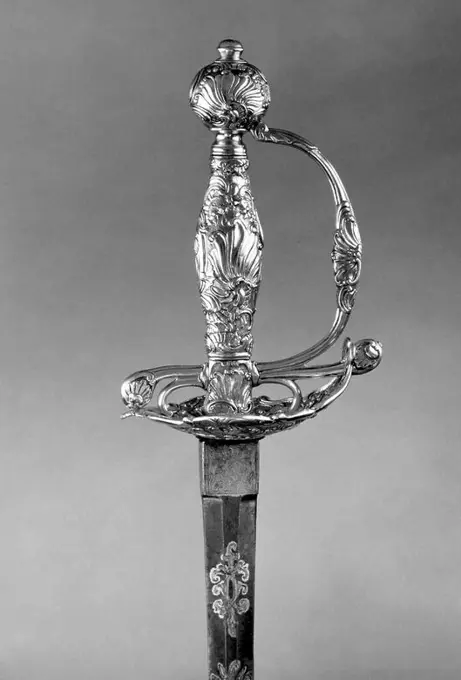
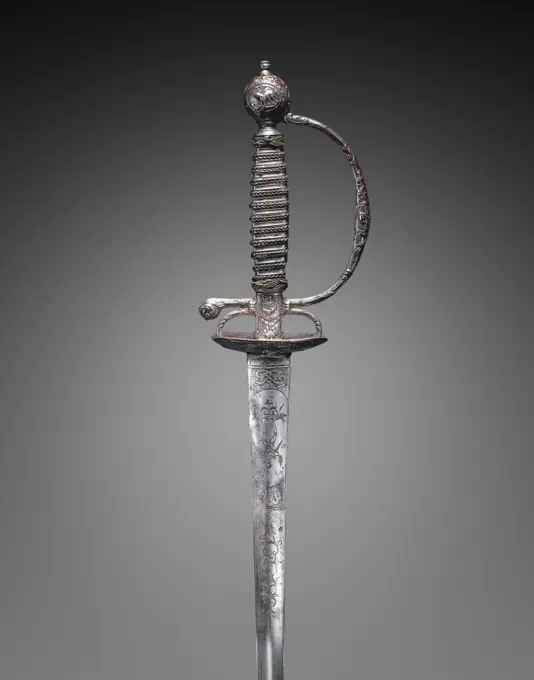
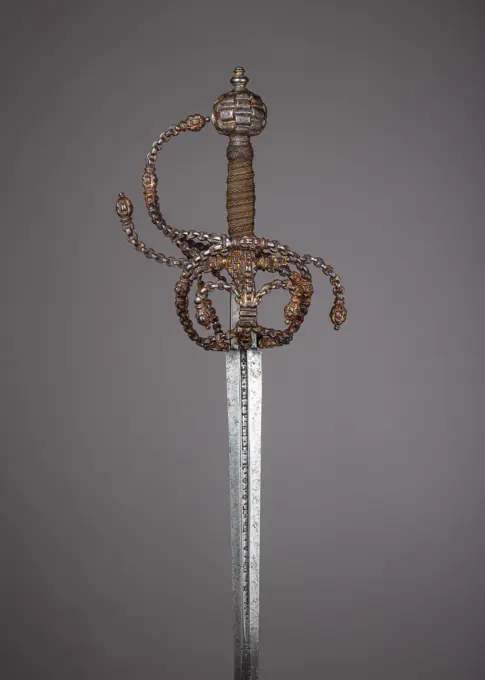
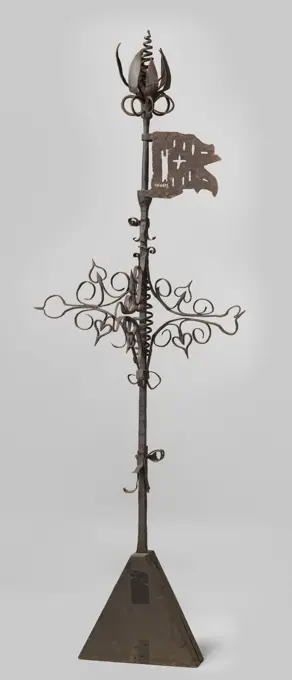
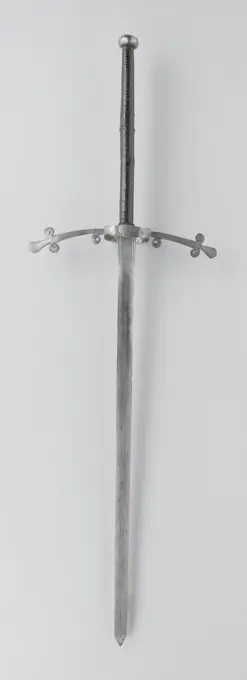
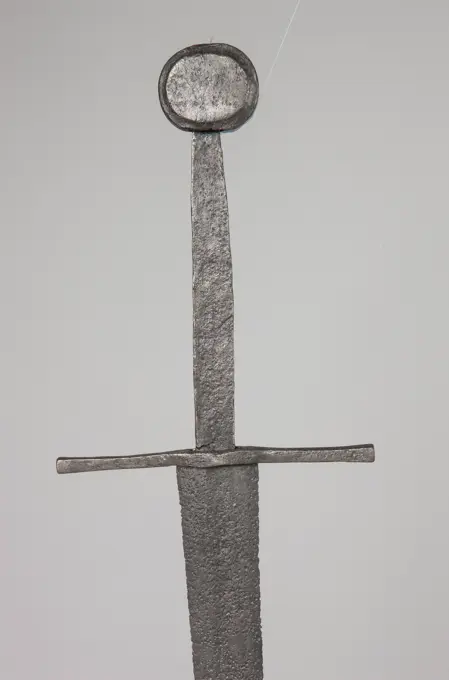
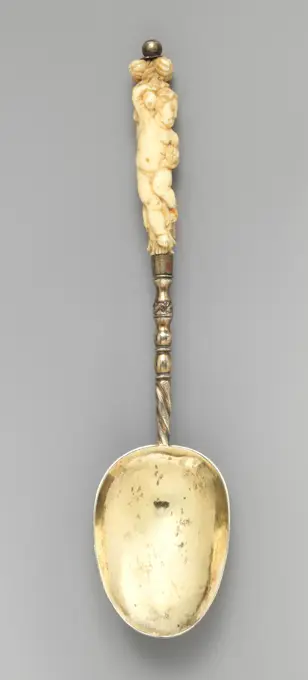
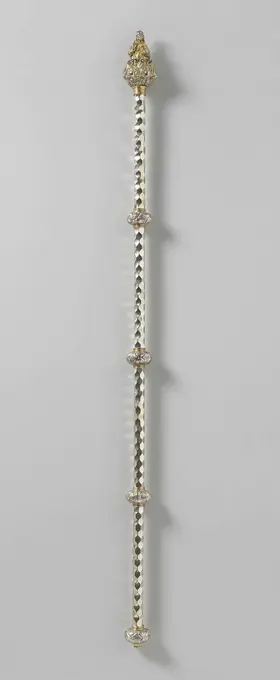
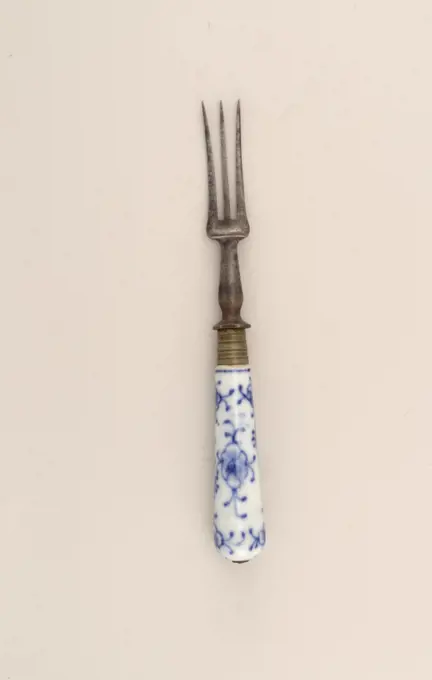
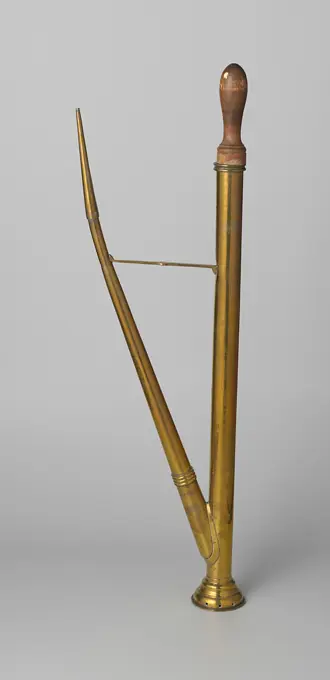
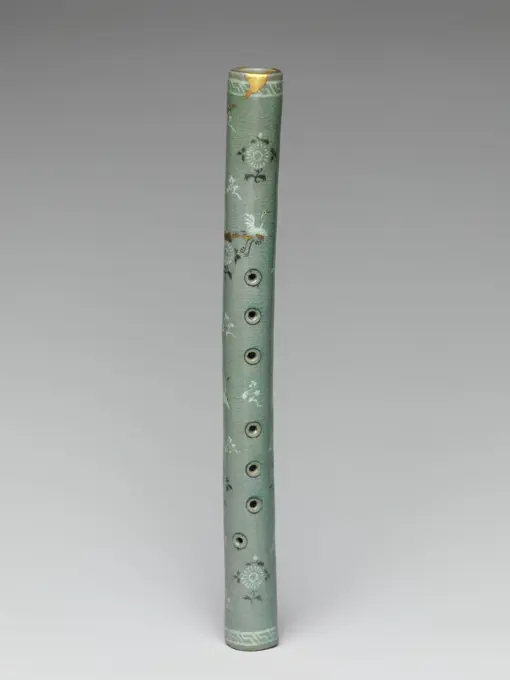
Arrow Head, 1600s. Japan, Edo period (1615-1868). Iron; overall: 25.4 cm (10 in.).Spoon (France); silver; L x W x D: 18.5 x 3.1 x 2 cm (7 5/16 x 1 1/4 x 13/16 in.)Presentation Sword and Scabbard of Brigadier General Daniel Davis (1777-1814) of the New York Militia ca. 1815-17 John Targee American Following the War of 1812, the State of New York awarded twelve swords to military officers who commanded troops within its borders. This example was presented posthumously to Brigadier General Daniel Davis (1777-1814) of the New York Militia, who died during an engagement at Fort Erie on September 17, 1814.The sword's design reflects the classical inspiration of the Federal period. The hilt, with its downturned shell, is based on French Empire models. The image of Hercules and the Nemean Lion, emblematic of strength and courage, is probably copied from an English engraving after a Classical gem or cameo. The eagle-headed pommel, on the other hand, is typically American, as is the style of engraving on the scabbard, illustrating the battle.. Presentation Sword and Scabbard of Brigadier General Daniel Davis (1777-1814) of the New York Militia 22769Dagger (Katar). Culture: South Indian; blade, European. Dimensions: L. 17 3/4 in. (45.1 cm); W. 3 5/16 in. (8.4 cm); Wt. 1 lb. 4.6 oz. (584 g). Date: 17th-18th century. Museum: Metropolitan Museum of Art, New York, USA.Partisan ca. 1690 French. Partisan 26784Furniture key;  XVIIIw. (1701-00-00-1800-00-00);Sword (byongi), late 1800s to early 1900s. Democratic Republic of Congo, Ekonda or Kundu people. Iron alloy and wood; overall: 53.9 cm (21 1/4 in.).Hairpin 7th century Frankish. Hairpin 464915 Frankish, Hairpin, 7th century, Copper alloy, Overall: 6 5/16 x 3/16 in. (16 x 0.5 cm). The Metropolitan Museum of Art, New York. Gift of J. Pierpont Morgan, 1917 (17.191.214)Hairpin 3rd-4th century Late Roman. Hairpin 465320Skewers, Silver, Skewer (a,b): tapering pointed stem or pin. Cast relief terminal depicting caduceus and winded cap of Hermes., France, 19th century, cutlery, Decorative Arts, SkewersCalligraphy brush, late 19th century, 14 × 7/8 × 7/8 in. (35.56 × 2.22 × 2.22 cm) (without hanging loop), Horn, hair, China, 19th century, In Chinese literati culture, the brush, a writing implement, is known as one of the 'four treasures of the study' along with the inkstick, inkstone, and paper. Brush handles are commonly constructed from bamboo, but some brushes have handles of sandalwood, jade, carved bone or ivory, and other precious materials as demonstrated by these examples. During late imperial times, artists catered to the tastes of gentlemen collectors and elaborated brushes with motifs derived from folklore, legends, superstitious beliefs as well as religious subjects from Confucianism, Buddhism, and Daoism.Rapier, c. 1620-30. Clemens Horn (German, 1586-1617). Steel, blued and gilded; overall: 111.1 cm (43 3/4 in.); blade: 89.2 cm (35 1/8 in.); quillions: 21.3 cm (8 3/8 in.). This weapon has an especially handsome configuration of hilt, pommel, quillons, and guard. The blade is also very finely wrought and bears the mark (a unicorn head) of the German swordsmith, Clemens Horn, of Solingen, a town near Düsseldorf. The Latin inscription on the blade reads in translation: "Neither without cause, nor fearfully/Between arms and silent law/ Prize truth and the fight for one's country."Bass Recorder.Bass block flute with valve and copper nozzle.Bill (Roncone) 1501-1533 Milan. Steel and wood (oak) .Spontoon. Culture: French. Dimensions: L. 85 7/8 in. (218.3 cm); L. of head 11 5/8 in. (29.5 cm); W. 2 3/8 in. (6 cm); Wt. 2 lbs. (907.2 g). Date: 17th century. Museum: Metropolitan Museum of Art, New York, USA.Scheepsmadermanpasser with straight legs, an oval / round head and no Scharnier.scheepsmimman Pin with Straight Legs, An Oval / Round Head and No Hinge. The Passer Has Been Forged From One Piece.Hunting Sword with Scabbard ca. 1851 French, Paris This hunting sword is a masterpiece of the Gothic Revival style and a virtuoso demonstration of mid-nineteenth-century design and craftsmanship, which were greatly stimulated by the series of international exhibitions held in London and Paris in the 1840s-60s. It is virtually identical to one executed by an otherwise unrecorded craftsman, Marcet, for the Paris firm of silversmiths and jewelers Marrel Frères, which was shown at the Great Exhibition held at the Crystal Palace, London, in 1851. That sword was especially praised by the exhibition's jurors, who noted that its design "left nothing to be desired." As a measure of their success, Marrel Frères received a medal for their display, and no fewer than five of their objects were purchased by the English commissioners for the new Museum of Practical Art, the forerunner of the Victoria and Albert Museum. The hunting sword was among these, valued at the substantial sum of £200, and is nknife, Silver, steel, Scimitar-shaped blade, shaped bolster. Tapered plain silver cylindrical handle (seamed) with rounded end and raised button; engraved with crest: 'gryphon's head' (unidentified)., probably Netherlands, ca. 1700, cutlery, Decorative Arts, knifeMirror handle. Copper alloy. Gallo-Roman. Paris, Carnavalet museum. 51467-4 Copper alloy, Gallo-Roman, Gallo-Roman time, mirror handleWalking Staff with Sword Hilt 1663 Germany. Wood, iron, and bone .Arrow Point, 1700s. Japan, Edo period (1615-1868). Steel; overall: 10.8 cm (4 1/4 in.); head: 3.2 cm (1 1/4 in.).EMPUÑADURA DE LA ESPADA DE DON JUAN AUSTRIA-S XVI. Location: MUSEO NAVAL / MINISTERIO DE MARINA. MADRID. SPANIEN.Knife, silver, steel, Leaf-shaped blade, point broken of. Tapered handle with flat sides, openwork scrolls at the top of handle. Engraved figural design: one side 'SUSANNA' and a woman in costume, the other side 'S.CATHARI' and a man in costume playing the lute. Engraved on handle: 'Elisabet * Le * Brun * Sans Dieu Rien. Anno.1.6.2.2.', Netherlands or Flanders, ca. 1621, cutlery, Decorative Arts, KnifeMiniature Lacrosse Stick. Culture: Mesquakie or Potawatomi. Dimensions: H. 2 x W. 12 1/2 in. (5.1 x 31.8 cm). Date: 1790-1890. Museum: Metropolitan Museum of Art, New York, USA.Etruscan gold and silver large pin, from Bernardini Tomb at Palestrina (ancient Praeneste), Rome province, Italy, 7th Century B.C.Scabbard, 1500s - 1800s. Sumatra. overall: 28.6 cm (11 1/4 in.); blade: 20.6 cm (8 1/8 in.).Decorative Handle. Egypt, Late Period - Roman Period (711 BCE - 395 CE). Tools and Equipment; handles. BronzeTwo-Handed Sword Made 1580-1600 Germany. Steel, iron, wood, and leather .Ivory hairpin ca. 1st century A.D. Roman The head of the pin is decorated with the figure of a seated monkey.. Ivory hairpin 250139Hunting Sword combined with Flintlock Pistol 1725 England. Steel, brass, and horn .Ceremonial Bronze Dirk, A  1500-1350 B.C. Artifacts(- ) Christie's Images, London, England Rapier met ijzeren korf en knop en brede pareerstang.Rapier with iron basket and button and wide pearl rod. Wooden hilt, partly still with copper wire. Very rusted. Soil find Haarlemmermeer.Dagger 1380-1400 British. Dagger 32786PitchTorenkruis, from Zeeland, Anonymous, in Or Before 1913 Tower cross of wrought iron, executed in Gothic style. Coming from Zeeland. unknown iron (metal) forging Tower cross of wrought iron, executed in Gothic style. Coming from Zeeland. unknown iron (metal) forgingMacePartisan. Culture: British. Dimensions: L. 77 5/8 in. (197.2 cm); L. of head 15 1/8 in. (38.4 cm); W. 5 3/4 in. (14.6 cm); Wt. 2 lbs. 11.1 oz. (1221.9 g). Date: 18th century. Museum: Metropolitan Museum of Art, New York, USA.Hinge to the chest;  1st half XVII W (1601-00-00-1700-00-00);Silversmith's Art, Italy 19th century. Silver, four-branched candlesticks with spiral sterns.Memorial badge of the act on November 5, 1916Rapier ca. 1620-40 Italian The rapier was the principal civilian sidearm throughout the sixteenth and seventeenth centuries. Designed for cut-and-thrust fencing of progressively complex techniques, the rapier is characterized by a double-edged blade with an acute point and an elaborate guard for the hand. The guards, usually of iron or steel, were subject to a variety of embellishment. They were engraved, chiseled, gilded, damascened, and encrusted in gold and silver in keeping with fashionable styles. Unless otherwise noted, the materials, attributions, and dating given here refer to the hilts. Rapier blades, invariably of steel, bear a variety of makers marks denoting their origin in the two principal centers of blademaking, Toledo in Spain and Solingen in Germany.. Rapier. Italian. ca. 1620-40. Steel, copper alloy. SwordsHairpin 7th century Frankish. Hairpin 465305 Frankish, Hairpin, 7th century, Gold plate over wood core, Overall: 4 13/16 x 1/4 in. (12.3 x 0.6 cm). The Metropolitan Museum of Art, New York. Gift of J. Pierpont Morgan, 1917 (17.192.237)Scabbard, Before 1916. Philippines. overall: 29.1 cm (11 7/16 in.); blade: 22 cm (8 11/16 in.).Dagger 19th century India. Dagger 56248Bow Brooch first half 6th century Visigothic. Bow Brooch 468182Smallsword and Scabbard Made 1734-1754 England. Steel, silver, wood, leather, silver thread, and textile .Amulet of the Harpoon of Horus. Egyptian. Date: 1070 BC-332 BC. Dimensions: L. 6.4 cm (2 1/2 in.); diam. 0.5 cm (3/16 in.). Bronze. Origin: Egypt. Museum: The Chicago Art Institute, Chicago, USA. Author: Ancient Egyptian.Oboe, Johann Gottfried Sattler (attributed to), c. 1725 - c. 1739 Hobe of palmhout with a round and a trapezoid -shaped brass valve. The third and fourth gap are double. There is a hole in the cup. Leipzig boxwood. kleppen: brass (alloy) Hobe of palmhout with a round and a trapezoid -shaped brass valve. The third and fourth gap are double. There is a hole in the cup. Leipzig boxwood. kleppen: brass (alloy)Przeszo Przyszoci unknownRapierDagger (Chilanum). Culture: South Indian. Dimensions: H. 13 5/8 in. (34.6 cm); W. 2 3/4 in. (7 cm); Wt. 11.3 oz. (320.3 g). Date: 17th century. Museum: Metropolitan Museum of Art, New York, USA.Falchion, blade: 1700s. Italy (), blade: 18th century. Steel, ; overall: 78.7 cm (31 in.); blade: 64.9 cm (25 9/16 in.); quillions: 20.3 cm (8 in.).Nicholas Amantea, Masher, c 1940 MasherDagger with Hilt of Leafy Plants. Dimensions: Max length with handle: 14 3/8 in. (36.5 cm)Length of the Handle: 4 13/16 in. (12.2 cm)Length of the Blade: 9 11/16 in. (24.6 cm)Width of bottom of the handle: 2 in. (5.1 cm). Date: ca. 1640.Often tucked into a sash or horseman's boot, daggers in Mughal India displayed the wealth and power of their owners. The white jade hilt of this dagger is carved with flowers arranged in a formal pattern. A long serrated leaf runs the length of the hilt, following its curve; this curved shape, called a pistol grip, originated in the Deccan and first appeared in Mughal paintings during the reign of Shah Jahan, around the time in which this dagger was made. Museum: Metropolitan Museum of Art, New York, USA.Bill ca. 1450 British. Bill 26193Umbrella button or umbrella button, with a tangled decoration in the form of sunflowers, Gustav Schnitzler, c. 1920 Parasol button or umbrella button of painted wood. Sunflowers have been carved on the kegel button. Nijmegen wood (plant material) Parasol button or umbrella button of painted wood. Sunflowers have been carved on the kegel button. Nijmegen wood (plant material)Partisan ca. 1575 French. Partisan 26760Baton, c 1875-1925. Unassigned, Late 19th- Early 20th century. Wood, ivory; overall: 5.1 cm (2 in.).Lime Spoon, Figure. Culture: Inca. Dimensions: L. 3 5/16 in. (8.4 cm). Date: 15th-16th century. Museum: Metropolitan Museum of Art, New York, USA.Boar Spear ca. 1550 German. Boar Spear 25855Krzyż ręczny. unknown, authorLinstock, c. 1600-25. France, 17th century. Steel; octagonal wood haft covered with green velvet, brass studs; overall: 201 cm (79 1/8 in.); blade: 25.2 cm (9 15/16 in.). This specialized staff weapon was used primarily to ignite the charge in pieces of artillery. The two lateral projections ending in eagles' heads are actually clips designed to hold the smoldering matches that allowed the firer to stand a little further from the cannon. The short, leaf-shaped blade allowed the linstock to be used as a weapon if necessary.Tulwar Sword, 1700s. India, probably Deccan. Iron hilt with gold; steel blade with gold; overall: 96.6 cm (38 1/16 in.). This long curved sword and scabbard are of the kind used and worn by Mughal nobility, as seen often in paintings. The openwork hilt is a characteristic of swords from the southern Indian region known as the Deccan. By the end of the 1500s, the Mughals began making regular incursions into the Deccan as they attempted to expand their empire, increasing the exchange of art forms. Repeated four times, twice on one side of the blade and twice on the other in gold inlay, is the same line from the Qur'an 61:13: Help [comes from God, and Victory is imminent.” This is a popular inscription on daggers, banners, and other instruments of war, as it reassures the combatants that God is on their side, and therefore they can in good faith expect a speedy victory if they fight valiantly.BUZDYGAN BUTTERSmallsword, 1815, 39 3/4 x 4 1/4 x 6 3/16 in. (101 x 10.8 x 15.72 cm), Silver, steel, Netherlands, 19th centuryHalberd 1525 Germany. Steel and wood .Hunting Sword hilt, ca. 1700-1725; blade, ca. 1750 hilt, Japanese, made for the European market; blade, Western European. Hunting Sword 22921Otoe, Richard so, c. 1690 - c. 1700 Hobe of Palmhout with three brass valves. Marked in three places in banderollen: R. Haka. The third and fourth gap are double. There are two voice holes in the cup. The ring on the cup is made of Hoorn (probably not original). Amsterdam boxwood. kleppen: copper (metal). horn (animal material). brass (alloy) Hobe of Palmhout with three brass valves. Marked in three places in banderollen: R. Haka. The third and fourth gap are double. There are two voice holes in the cup. The ring on the cup is made of Hoorn (probably not original). Amsterdam boxwood. kleppen: copper (metal). horn (animal material). brass (alloy)Parrying Dagger. Spanish. Date: 1660-1700. Dimensions: L. 57.2 cm (22 1/2 in.). Steel. Origin: Spain. Museum: The Chicago Art Institute, Chicago, USA.Key;  1st half 19th century (1801-00-00-1900-00-00);Smallsword. Culture: probably German. Dimensions: L. 39 1/4 in. (99.7 cm); L. of blade 32 1/2 in. (82.6 cm); W. 3 3/8 in. (8.6 cm); D. 3 1/4 in. (8.3 cm); Wt. 1 lb. 8 oz. (680 g). Date: ca. 1750-60. Museum: Metropolitan Museum of Art, New York, USA.Small Sword, c.1770-80. France, 18th century. Steel; chiseled relief decoration; blade engraved; wire grip; overall: 97 cm (38 3/16 in.); blade: 79.2 cm (31 3/16 in.); grip: 13.8 cm (5 7/16 in.); guard: 7.6 cm (3 in.). During the 1700s, the small-sword emerged as a light, quick weapon. Like the rapier it was carried by unarmored civilians, the noblemen of the upper classes. Over time this delicate sword became more an accessory of male attire than a weapon essential to life and death. The sword hilt, which shows even when the blade is sheathed, became the ground for elaborate decoration. These small-swords thus represent the final stage in the evolution of the sword, from the edged weapons of antiquity to the elegantly refined blades of the 1700s and 1800s.Halberd-Spontoon ca. 1600 French. Halberd-Spontoon 26712Guarded Dagger (Katar). Culture: Indian, Thanjavur. Dimensions: L. 17 9/16 in. (44.6 cm); W. 3 3/4 in. (9.5 cm); Wt. 1 lb. 2.4 oz. (521.6 g). Date: 17th century. Museum: Metropolitan Museum of Art, New York, USA.Battle Axe, 1400s. Scandinavia (), 15th century. Steel and wood; overall: 93.3 cm (36 3/4 in.); blade: 18.7 cm (7 3/8 in.).Helmet early 16th century Southern Russian or Iranian This extremely tall conical helmet is noteworthy as an example of a type worn in Iran and Russia in the late fifteenth and early sixteenth centuries. Similar helmets depicted in miniature paintings often show a small pennon attached to the long finial.. Helmet 35952Vase 17th century Italian, Venice (Murano). Vase 202233Rapier ca. 1600 Italian The rapier was the principal civilian sidearm throughout the sixteenth and seventeenth centuries. Designed for cut-and-thrust fencing of progressively complex techniques, the rapier is characterized by a double-edged blade with an acute point and an elaborate guard for the hand. The guards, usually of iron or steel, were subject to a variety of embellishment. They were engraved, chiseled, gilded, damascened, and encrusted in gold and silver in keeping with fashionable styles. Unless otherwise noted, the materials, attributions, and dating given here refer to the hilts. Rapier blades, invariably of steel, bear a variety of makers marks denoting their origin in the two principal centers of blademaking, Toledo in Spain and Solingen in Germany.. Rapier. Italian. ca. 1600. Steel, iron, copper wire. SwordsTapper (Iroke Ifa) 1601-1800 Nigeria. A Yoruba diviner strikes a tapper against his tray to call the deity of fate, Orunmila, to the proceedings. The middle section of this ivory tapper depicts a kneeling hunter who clutches a bow and arrow in his right hand and a large crocodile in his left.. Ivory . YorubaWindwijzer with Vaan, richly decorated, c. 1500 - c. 1550 Iron Windwijzer, richly entard.  iron (metal) Iron Windwijzer, richly entard.  iron (metal)Two-hander, anonymous, c. 1575 - c. 1600 two-handed sword Twohander for ceremonial use, possibly composed of various original parts. Round rigid button, grabbed wrapping with leather, somewhat downstairs pare rod with curls that are decorated with a simple shadow. Parentring front and rear. Straight, two -edged blade reminiscent of the blade of a battle sword. Geul with three grooves. Varied a chosen brand visible with blade shoulder. Germany (possibly) iron (metal). leather. wood (plant material) forging / cuttingKnight's swordThe shovel used during the Sept. 26, 1921 ground breaking ceremony of the Airship Hangar at Scott Air Force Base, Illinois, is photographed April 29, 2022. After the ceremony in 1921, the shovel was lost at the conclusion of the ceremony for more than 100 years and was later brought back to Scott as a historic artifact.Lampstand. Afghanistan, 12th-early 13th century. Metal. Bronze, cast in three interlocking sectionsSpoon with putto handle late 17th-early 18th century German. Spoon with putto handle. German. late 17th-early 18th century. Silver gilt, ivory. Metalwork-Silver In CombinationCeremonial staff.A staff was often a sign of authority. This one belonged to the bailiff of the chapter of the Old Munster church in Utrecht. He administered justice in the regions and villages under the chapters jurisdiction. The religious background of this authority is indicated by the crown on the staff: Christ as Saviour of the World.Zaanse Klok, Reyn de Jong, c. 1770 Zaanse clock with wooden cupboard and brass ornament. Zaandam brass (alloy). rosewood (wood). velvet (fabric weave). iron (metal). oak (wood). glass Zaanse clock with wooden cupboard and brass ornament. Zaandam brass (alloy). rosewood (wood). velvet (fabric weave). iron (metal). oak (wood). glassHalberd. German (Saxony). Date: 1500-1600. Dimensions: L. 226.1 cm (89 in.). Steel, wood, and velvet. Origin: Saxony. Museum: The Chicago Art Institute, Chicago, USA.Prayer Wheel. Tibet, 19th century. Tools and Equipment. Bone and silver inlaid with gemstonesSpoon, from a flatware dessert service, 18th century, Meissen Porcelain Factory, Meissen, Germany, est. 1710, Hard paste porcelain, gilt metal, Germany, 18th centuryHuntdolk with man's head., Anonymous, c. 1499 - c. 1899 dagger Iron dagger, tapered, blade with a double blood channel. The head of the handle has the shape of a bearded man's head, with a beaver as a headgear. The pare bar is curled down on both sides with a rosette in the middle. The grip of the dagger is decorated with spiral floramotives. Europe (possibly) iron (metal)   EuropeFork and Knife with Porcelain Handles, Meissen Porcelain Manufactory, German, active from 1710 to the present, F. & E. Marcus, German, 18th century onwards, hard paste porcelain, vitreous enamel, gold, nickel, steel, knife (a): Slightly curved rounded steel blade and tapering tubular porcelain handle. Nickel socket. Blue and white porcelain handle comprising stylized blue flowers and sprigs on a white ground., fork (b): three tine fork and tubular tapering porcelain handle, nickel socket. Blue and white handle decorated wtih stylized blue flowers on a white ground., Germany, 18th century, ceramics, Decorative Arts, fork and knife, fork and knifeTongs (part of a set). Culture: British. Dimensions: Length: 32 11/16 in. (83 cm). Date: ca. 1675.This set of fire tools 68.141.156-.159) was probably made for John Maitland on the occasion of his wedding to the Countess of Dysart. In 1647 Maitland raised an army to rescue Charles I. After the Battle of Worcester, when he was taken prisoner by Commonwealth troops, he was sent to the Tower. After his release (166) he became Prime Minister and Secretary of State. On May 1, 1672, he was created Marquess of March and Duke of Lauderdale, and on June 3 he was installed at Windsor as Knight of the Garter. Museum: Metropolitan Museum of Art, New York, USA.Hair pin, 7 1/2 x 3/4 x 1/2 in. (19.05 x 1.91 x 1.27 cm), Silver, ChinaGlazenspuit op geprofileerde voet.The main object mainly made from copper plate and from many parts compiled consists of a round tube placed on a profiled and perforated pedestal, against which a round nasar is placed at the end. They are connected by a flat rod at the top. In the vertical tube there is the round piston of pine, which has a turned handle at the top and at the bottom of a rope-filled notch, which acts as a piston.Halberd 1550-1600 Italian. Halberd 25019Vertical flute decorated with chrysanthemums, cranes, and clouds early 13th century Korea An extremely rare celadon flute, this piece was probably custom-made and intended primarily as a decorative object rather than a functional instrument. The flying cranes, mushroom-shaped clouds, and miniature chrysanthemum blossoms inlaid along its body appear frequently on Goryeo celadon.. Vertical flute decorated with chrysanthemums, cranes, and clouds 74426Figurine. UnknownBalic crisis, Anonymous, 1500 - 1900 Kris, flamed and flamed Schede, with wooden handle. Pamor technology. Bali iron (metal). nickel (metal). wood (plant material) Kris, flamed and flamed Schede, with wooden handle. Pamor technology. Bali iron (metal). nickel (metal). wood (plant material)Bronze incense burner. Culture: Etruscan, Faliscan. Dimensions: H. 14 1/4" (36.2 cm)Width 7 1/4" (18.4 cm). Date: ca. 300 B.C..The incense burner has three equine legs, a diagonally articulated shaft originally with a small animal running up it, and a square element at the top with four birds surrounding the container for the grains of incense. It belongs to a group of pieces made in the Faliscan area of southern Etruria. Museum: Metropolitan Museum of Art, New York, USA.