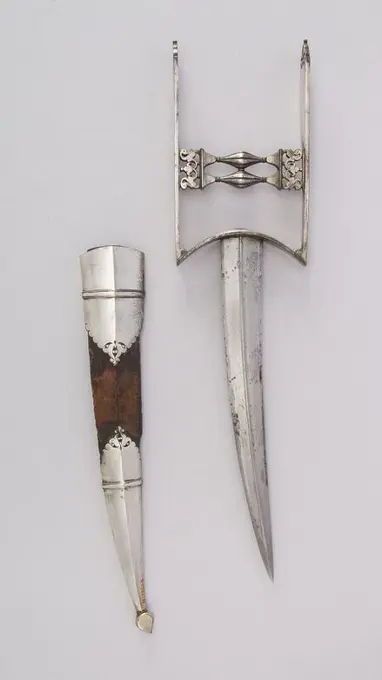
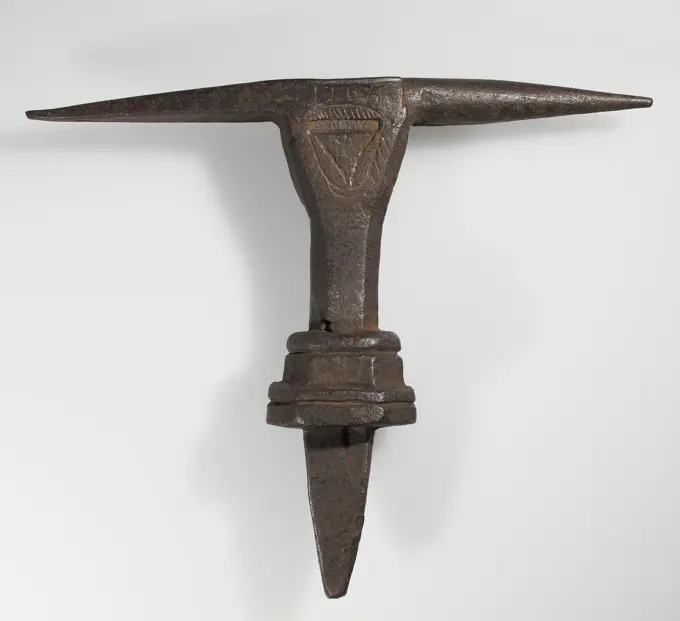
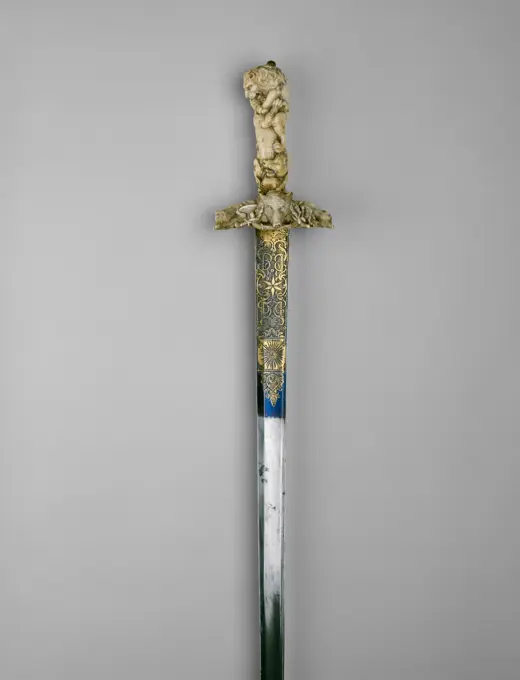
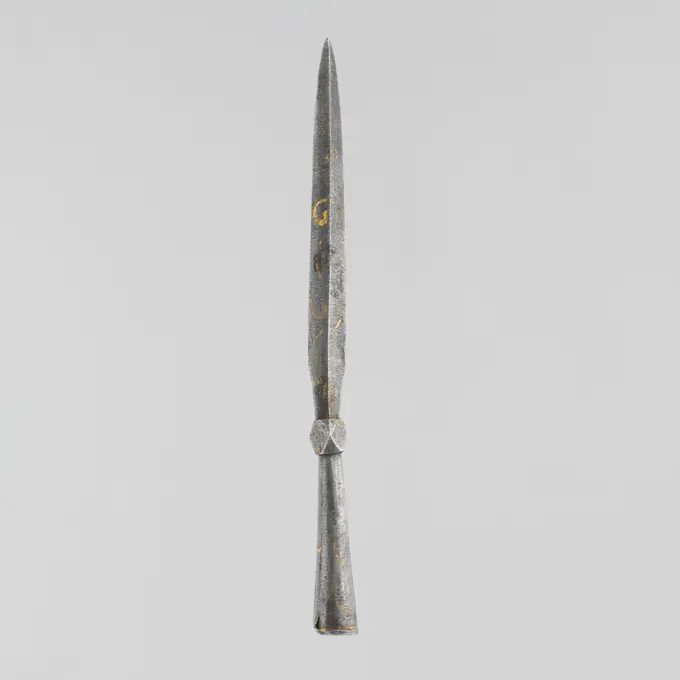
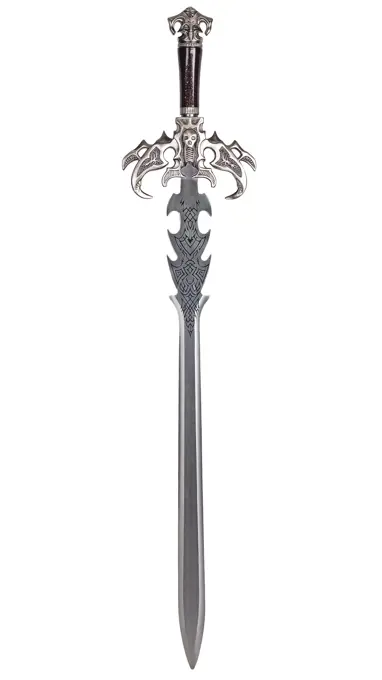
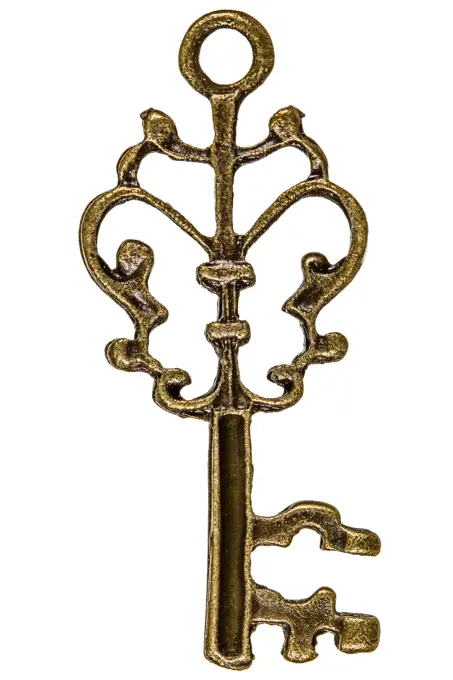
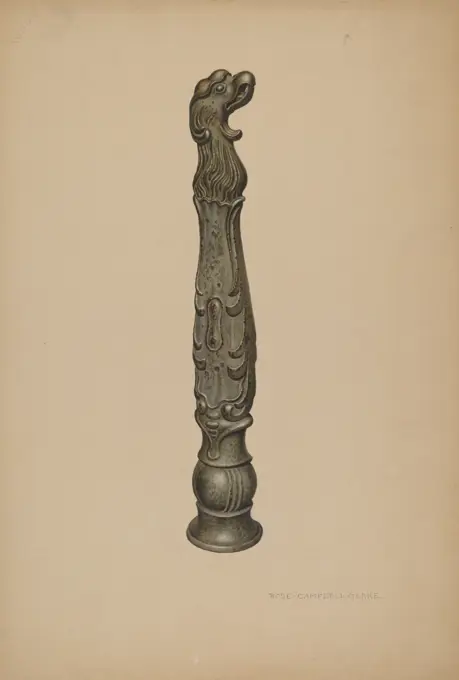
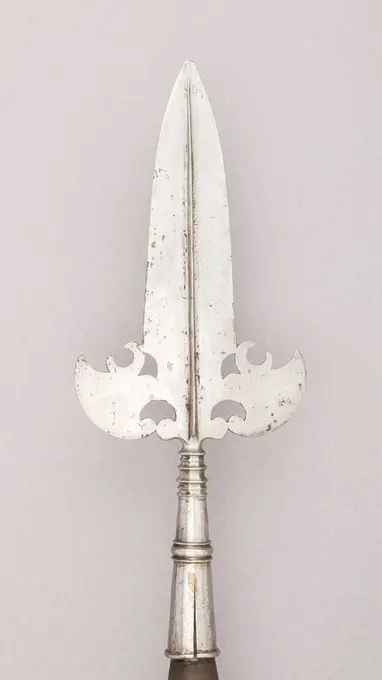
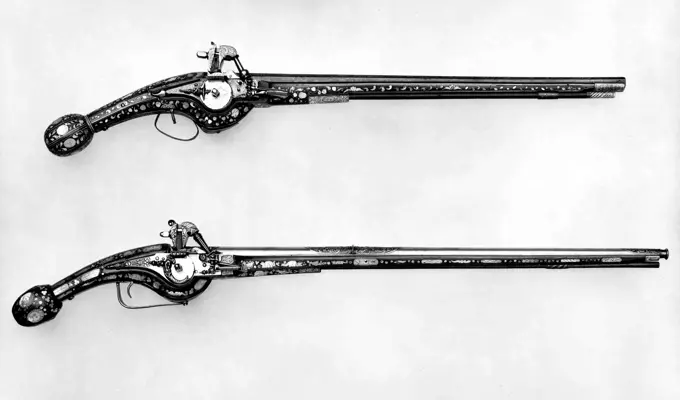
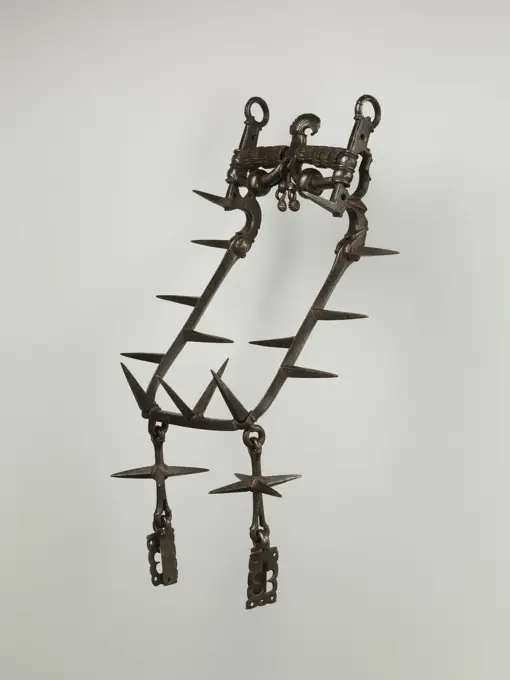
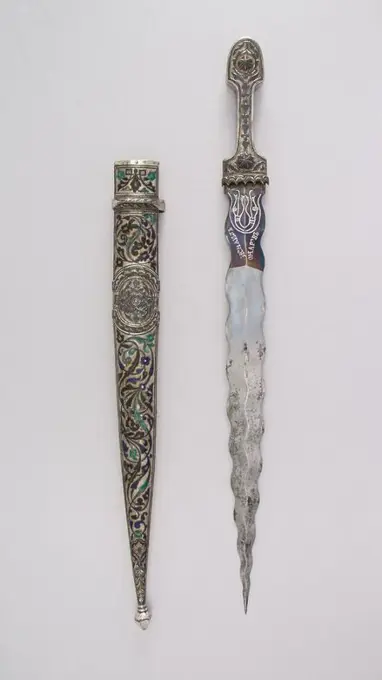
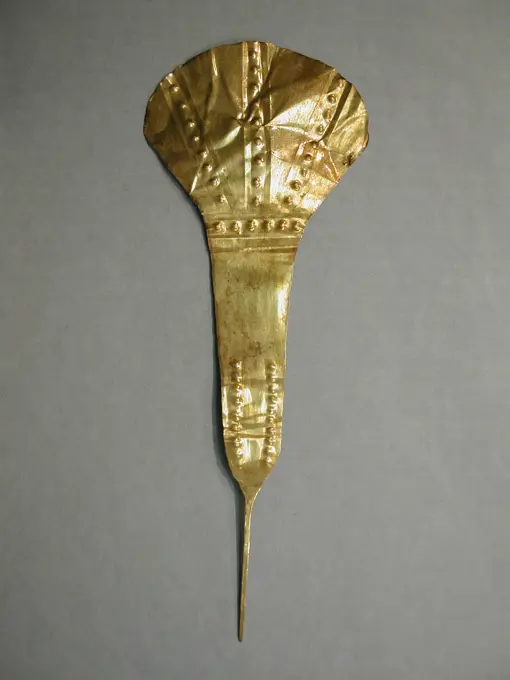
Traditional Arms and Blades

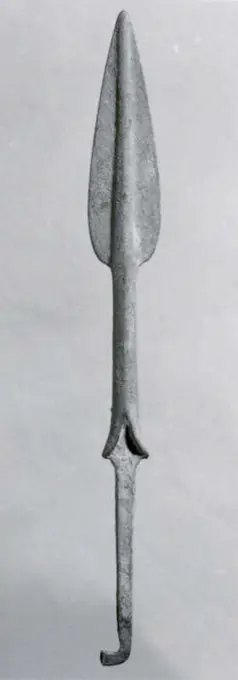
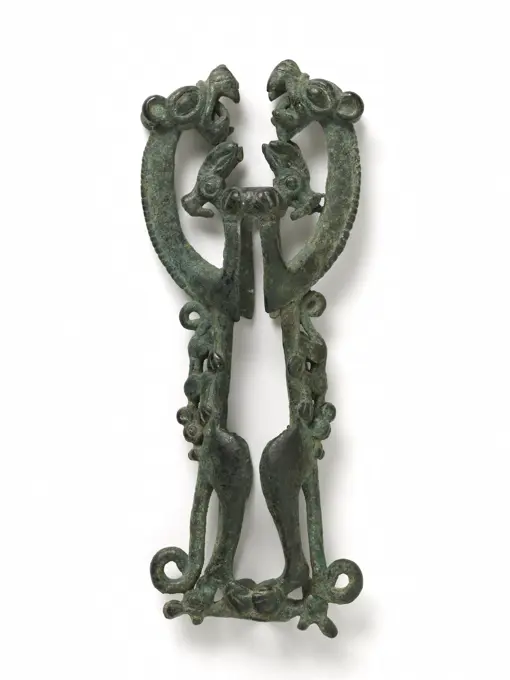
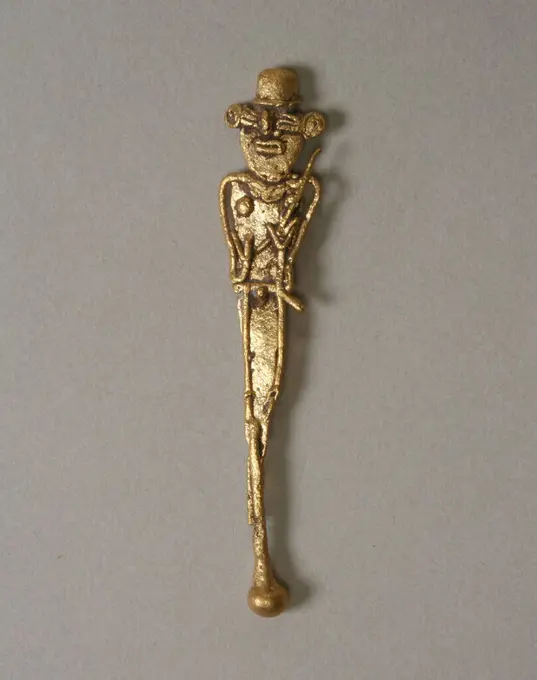
Display of historical weapons, including swords, daggers, and arrowheads, reflecting craftsmanship from various cultures and periods.

Skewers, Silver, Skewer (a,b): tapering pointed stem or pin. Cast relief terminal depicting caduceus and winded cap of Hermes., France, 19th century, cutlery, Decorative Arts, Skewers
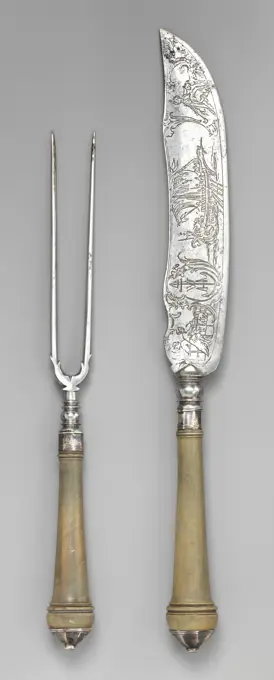
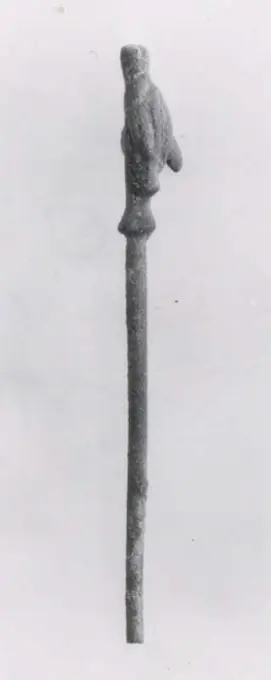
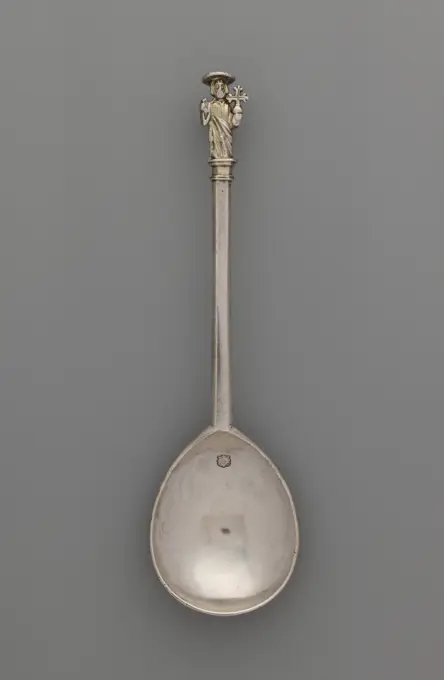
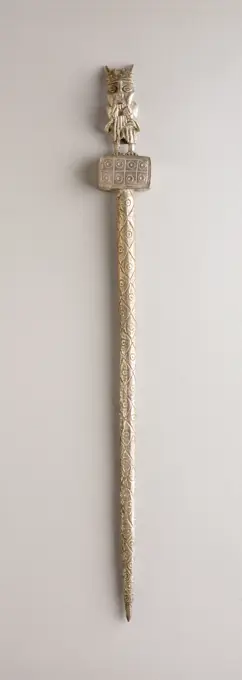
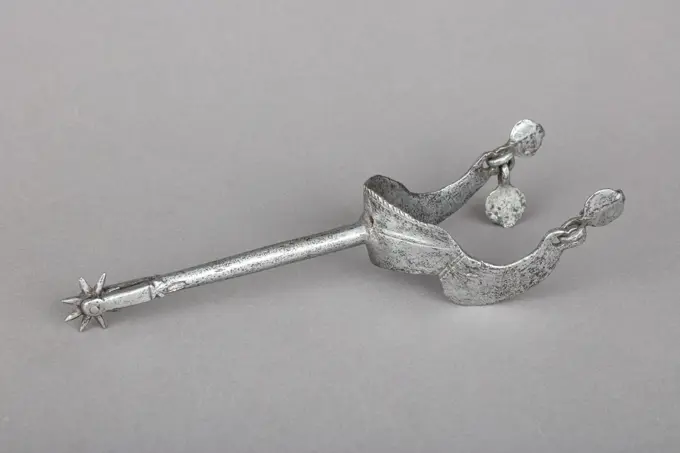
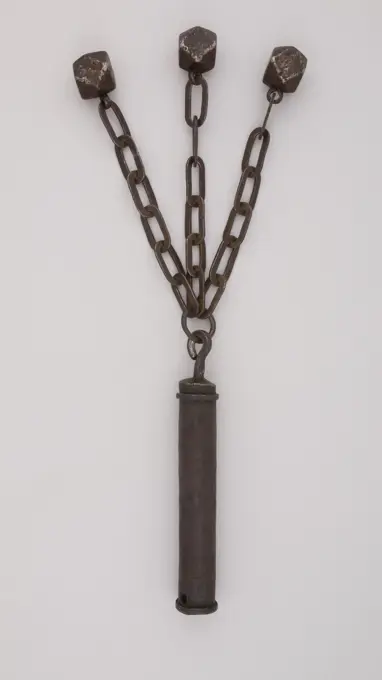
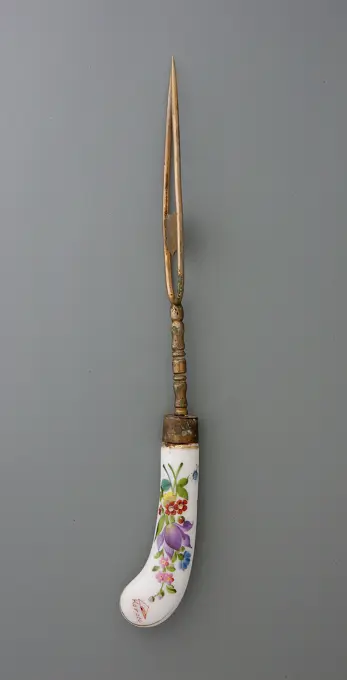
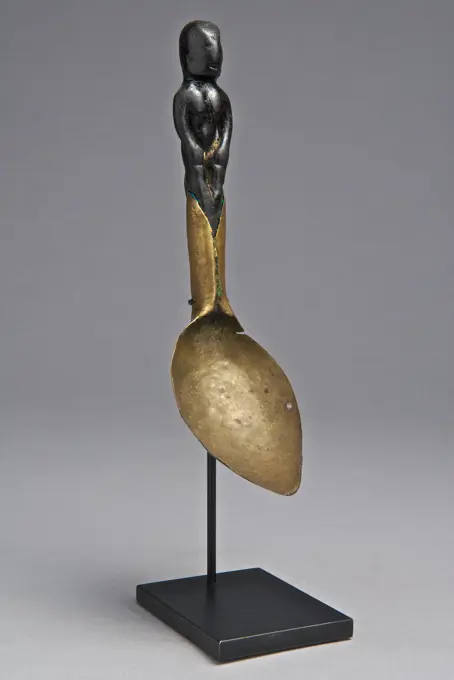
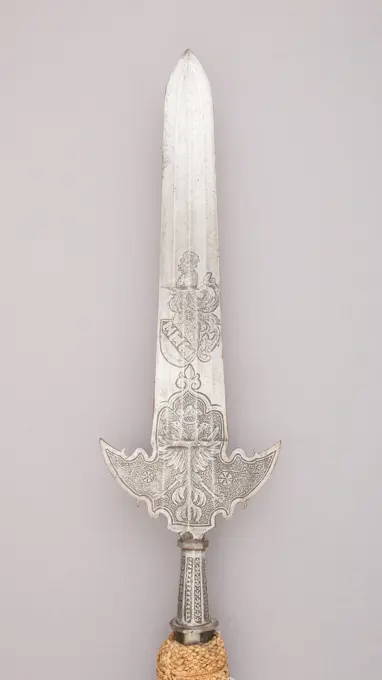
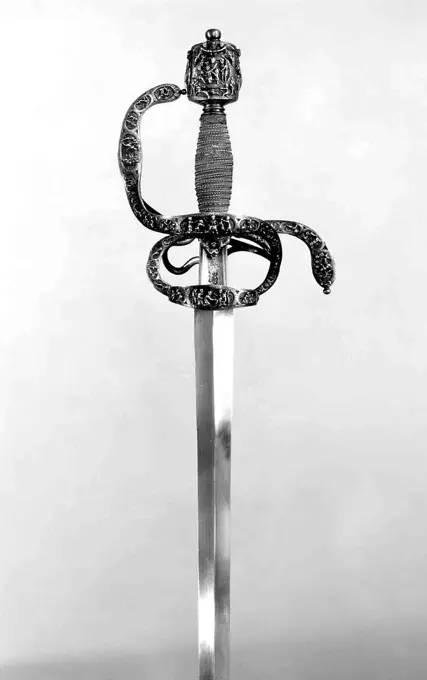
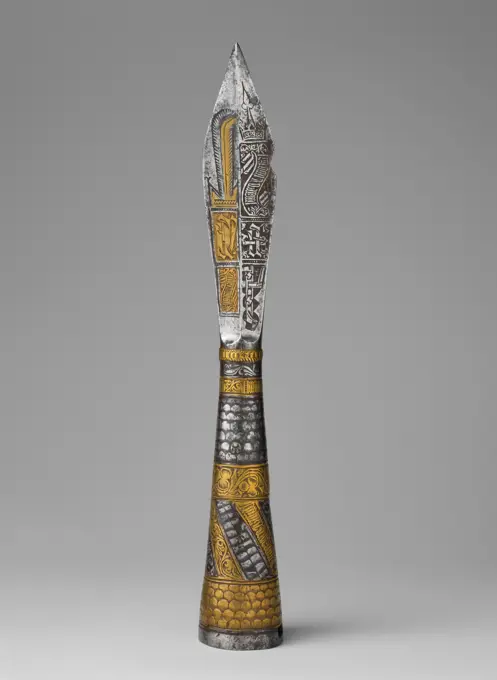
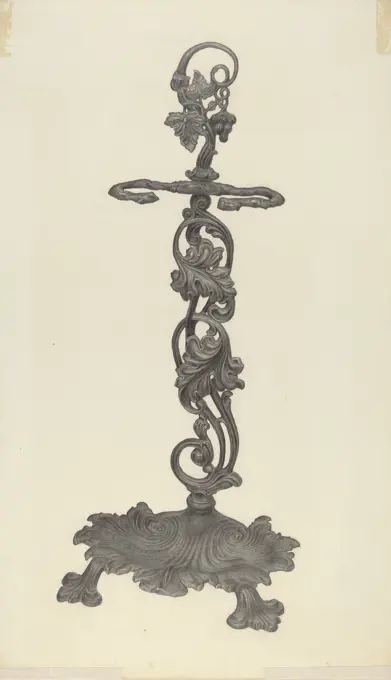
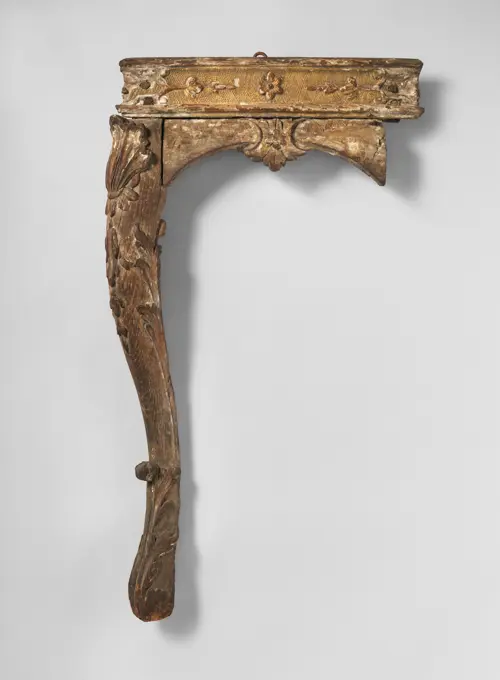
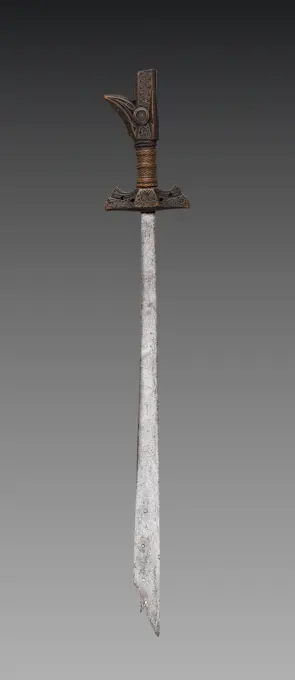
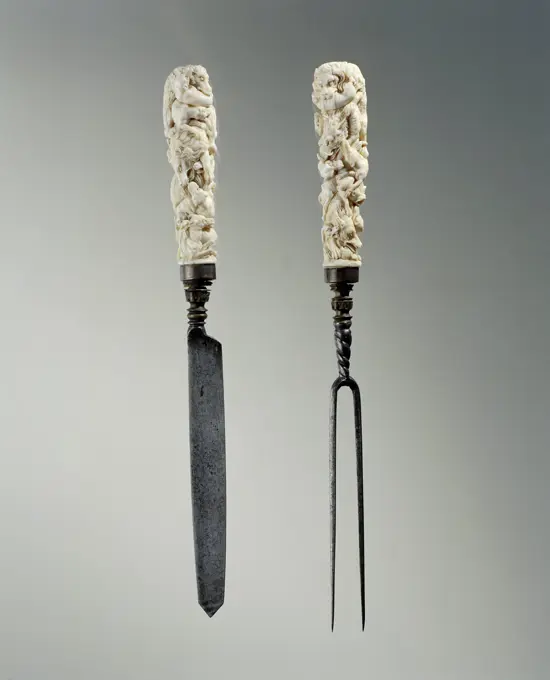
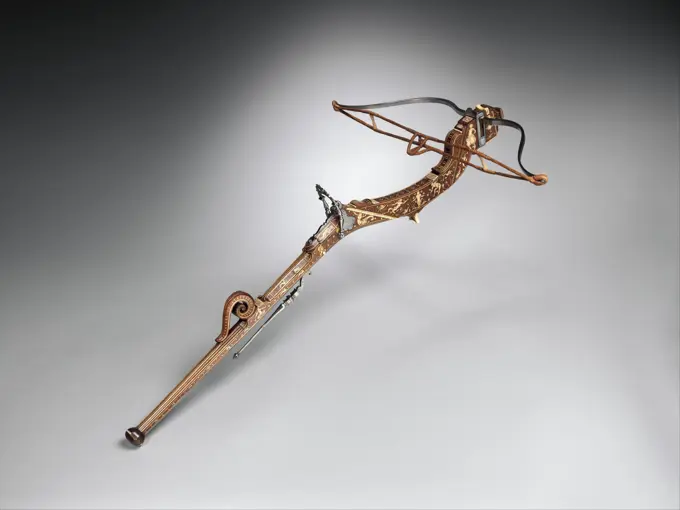
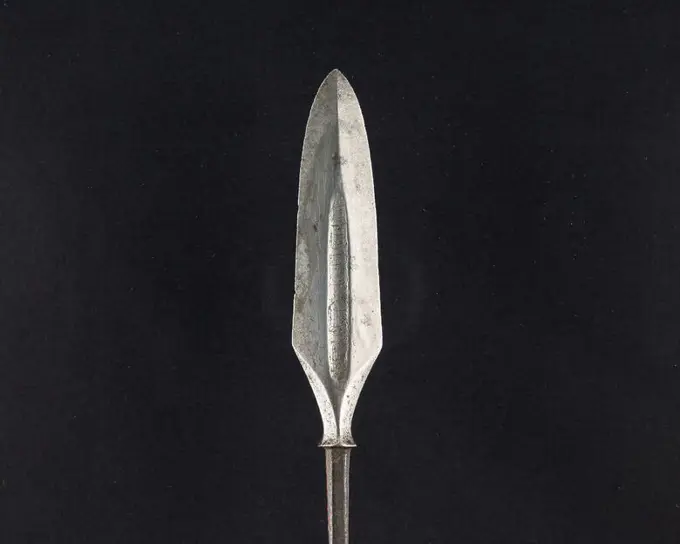
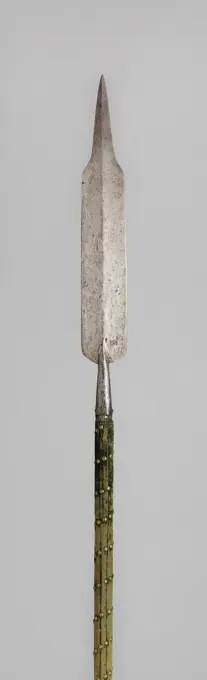
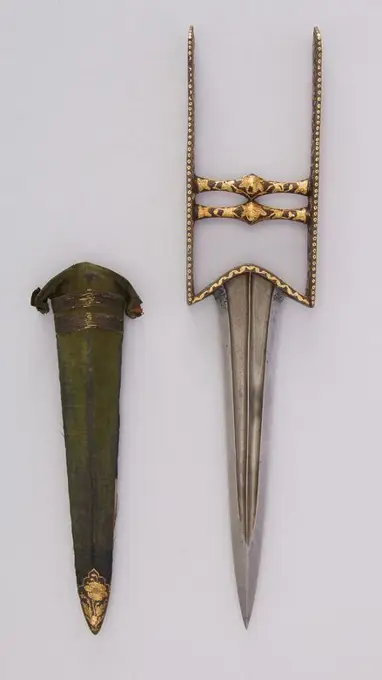
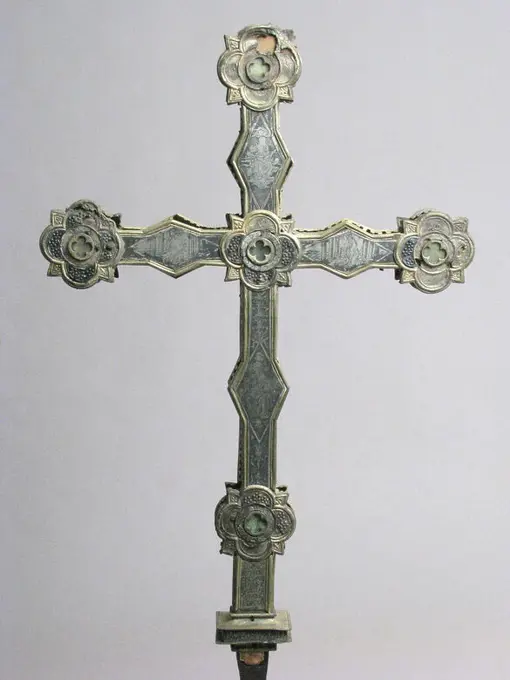
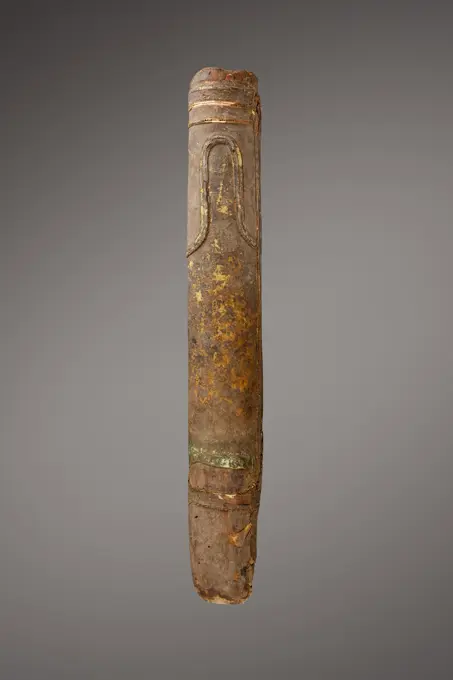
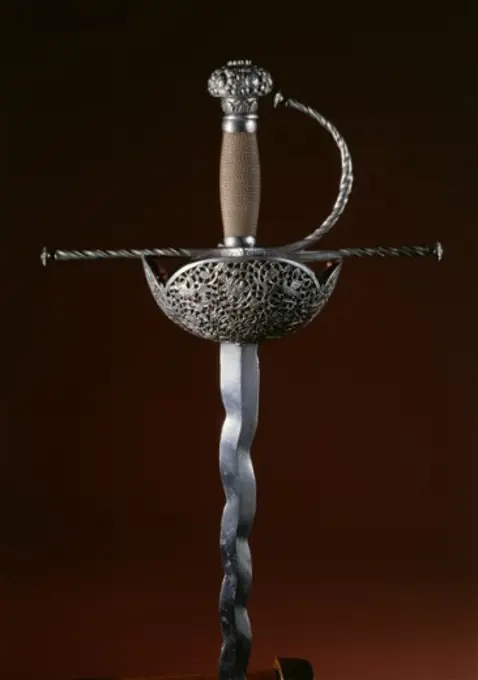
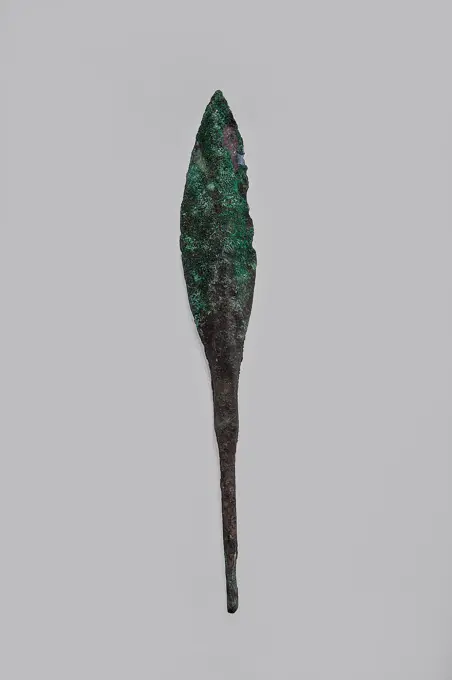
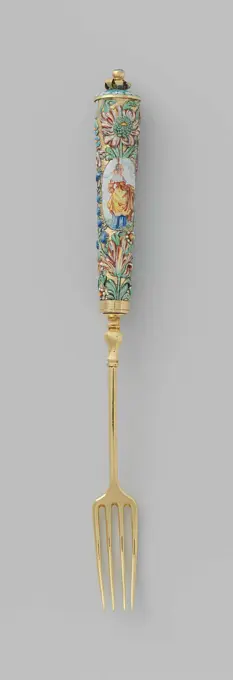
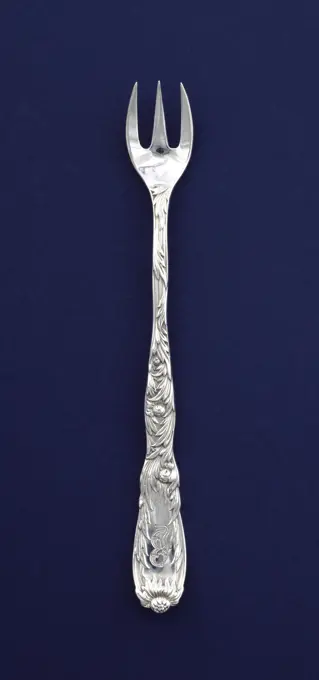
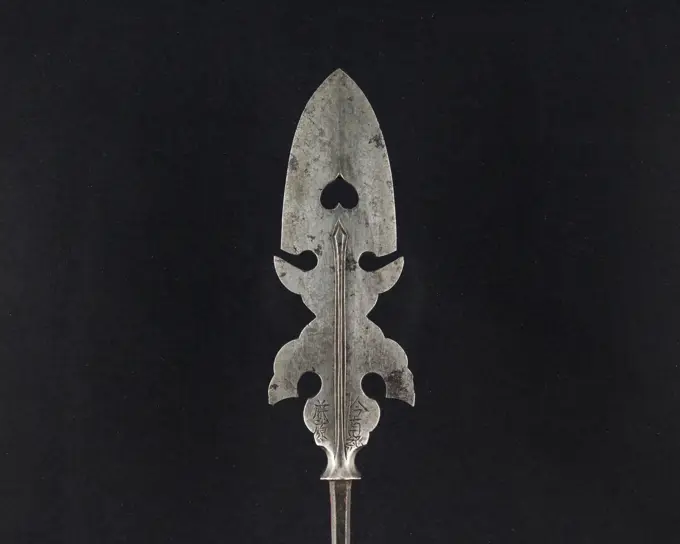
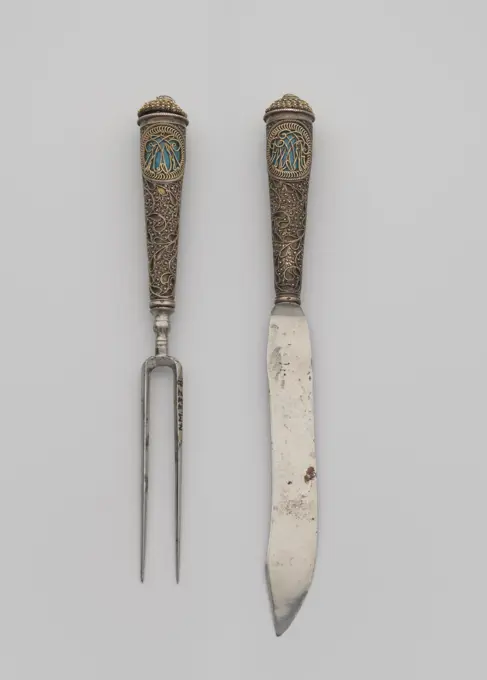
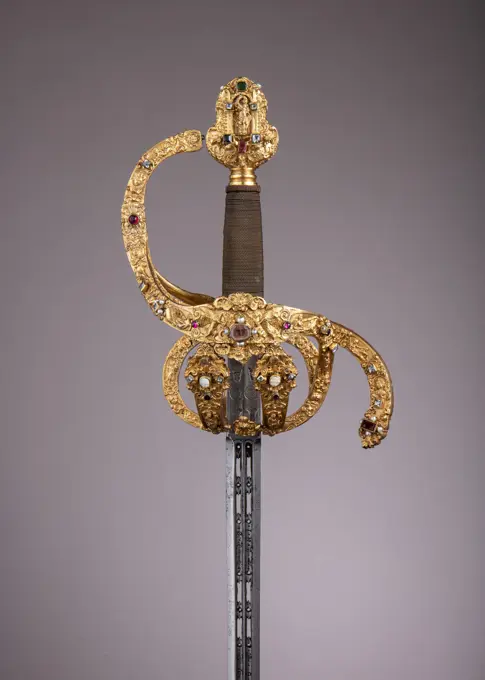
Rapier of Prince-Elector Christian II of Saxony (1583-1611) dated 1606 Hilt by Israel Schuech German This hilt is the only recorded work of the Dresden sword cutler Israel Schuech. It is one of the best examples of a rapier hilt made with the same materials, techniques, and quality as the fine sculpture, jewelry, and goldsmiths' work for which the Saxon Court was famous. Listen to experts illuminate this artwork's story Listen Play or pause #4412. Rapier of Prince-Elector Christian II of Saxony Supported by Bloomberg Philanthropies We're sorry, the transcript for this audio track is not available at this time. We are working to make it available as soon as possible.. Rapier of Prince-Elector Christian II of Saxony (1583-1611). hilt, German, Dresden; blade, Spanish, Toledo. dated 1606. Steel, bronze, gold, enamel, paste jewels, cameos, pearls, wood. Dresden; Toledo. SwordsCarving fork late 18th century Southern German, Tyrol. Carving fork. Southern German, Tyrol. late 18th century. Prongs: steel; handle: horn, silver. Metalwork-SteelArrowhead (Yanone) 18th century Japanese Although today Japanese warriors are renowned most for their swordsmanship, archery, especially from horseback, has been an essential part of samurai warfare and culture for centuries. Arrows were fitted with heads of varying shape according to their intended use in war, the hunt, or target practice. Arrowheads made for use on the battlefield incorporated different designs intended for specialized purposes such as the piercing of armor or to cause maximum damage to horses and unarmored personnel.Large arrowheads, pierced and elaborately chiseled with landscapes, birds, flowers, dragons, and Buddhist divinities, were created to be admired for the beauty of their metalwork and design rather than for use in archery. Such highly elaborate examples may have been made for presentation or as a votive offerings to a shrine.. Arrowhead (Yanone). Japanese. 18th century. Steel. Archery Equipment-ArrowheadsPin ca. 8th-7th century B.C. Iran This cast bronze pin has a head in the form of a horned animal, possibly an antelope, with a tubular snout and pointed ears. It was excavated at Surkh Dum, a settlement site in Luristan in the Zagros Mountains of western Iran. It was found in a structure interpreted as a sanctuary and was thus probably an offering to a god. Such pins were probably used to fasten clothing and as objects of adornment in their own right. Many have been attributed to Luristan, but this is one of the few examples from an archaeological excavation.. Pin. Iran. ca. 8th-7th century B.C.. Bronze. Iron Age II. Iran, Luristan, Surkh DumKris with Sheath 16th-19th century Madurese. Kris with Sheath 31354Oboe, anonymous, c. 1800 Hobo of boxwood wood with four valves. Germany (possibly) boxwood (hardwood) Hobo of boxwood wood with four valves. Germany (possibly) boxwood (hardwood)Apostle spoon: Master 1592/93 William Cawdell Silver spoons with finials in the form of the Apostles of Christeach with his identifying emblemwere commonly owned by the wealthy gentry or merchants. A full set would have included a "Master Spoon," representing the figure of Christ.. Apostle spoon: Master. British, London. 1592/93. Silver, partly gilded. Metalwork-SilverBerdysh 1501-1700 Eastern Europe. Steel and wood (ash) .Tupu with Figure of Panpipe Player. Peru, North Central Coast, Chimú, 1100-1500. Metal. SilverRowel Spur (Left) 15th century German In the 15th century, rowel spurs with very long necks were of common use in Western Europe. At this period, the elevated war saddles and the very specific riding style, with long stirrup leathers and legs extended forward, had the consequence of taking away the riders feet from the horses flank. Thus, these long necks gave them easier access without having to disturb the riders position.. Rowel Spur (Left). German. 15th century. Iron alloy. Equestrian Equipment-SpursMilitary Flail possibly 16th to 19th century Possibly German. Military Flail 33867Messenheft van Zilver, Anonymous, 1575 - 1600 Silver kneft, engraved on both sides with two female figures. On one side is incised: Gretien Arys. End of 16th century.  silver (metal) Silver kneft, engraved on both sides with two female figures. On one side is incised: Gretien Arys. End of 16th century.  silver (metal)Dagger with Sheath. Culture: Indian, probably Deccan. Dimensions: L. with sheath 15 5/16 in. (38.9 cm); L. without sheath 14 1/8 in. (35.9 cm); L. of blade 9 1/2 in. (24.1 cm); W. 1 11/16 in. (4.3 cm); Wt. 8.7 oz. (246.6 g); Wt. of sheath 1.4 oz. (39.7 g). Date: 18th-19th century.Like their martial counterparts, ceremonial daggers and swords were also often decorated with talismanic motifs and inscriptions. The blade of this dagger bears Arabic inscriptions praising Allah, 'Ali, and the Prophet Muhammad. One side features verses from the popular prayer Nad-i 'Ali. The inclusion of rubies and emeralds on the hilt may point to the Hindu belief in the efficacy of precious gems to ward off evil. Museum: Metropolitan Museum of Art, New York, USA.Two-pronged fish fork. Korzec (manufaktura porcelany ; 1790-1832), factoryArrow Point, 1700s. Japan, Edo period (1615-1868). Steel; overall: 16.8 cm (6 5/8 in.); head: 4.8 cm (1 7/8 in.).ARTE IRANI-LAMPADARIO DE BRONCE FUNDIDO. Location: MUSEO ARQUEOLOGICO NACIONAL-COLECCION. MADRID. SPAIN.SpoonDagger (Katar) with Sheath. Culture: North Indian. Dimensions: H. with sheath 16 3/8 in. (41.6 cm); H. without sheath 15 1/8 in. (38.4 cm); W. 3 3/4 in. (9.5 cm); Wt. 1 lb. 0.8 oz. (476.3 g); Wt. of sheath 5.7 oz. (161.6 g). Date: 18th century. Museum: Metropolitan Museum of Art, New York, USA.Armorer's Anvil 16th century European. Armorer's Anvil. European. 16th century. Iron. Metalwork-IronHunting Hanger Made 1660-1760 Germany. Steel, gilding, ivory, staghorn .Miniature Votive Spearhead 18th-19th century Tibetan. Miniature Votive Spearhead 26610Knife and Fork with Sheath (Fork), late 1500s. Italy, Venice, late 16th century. Gold, enamel, crystal, steel, leather; average: 16.7 cm (6 9/16 in.).Gift sword. Isolated on white Gift sword. Isolated on white Copyright: xZoonar.com/PavelxSytilinxxxxxVolgograd,xRussia.x 22041531Key, decorative element, isolated on white background Key, decorative element, isolated on white background Copyright: xZoonar.com/OleksandrxKostiuchenkox 9749945Mirror ca. 1492-1473 B.C. New Kingdom This mirror is made of copper alloy cast in two pieces. The disk has a tang that fits into a hole in the handle and is held in place by a small bronze peg. The handle is decorated with the emblem of the goddess Hathor. The mirror was found in the bottom of a coffin discovered in the tomb of Hatnefer (36.3.1). A number of other objects in the Museum's collection had been placed in the same coffin including a bowl and two dishes made of faience (36.3.8-.10), a wood cosmetic box (36.3.11a, b), another mirror (36.3.12a, b), and five amulets (36.3.20-.24).. Mirror. ca. 1492-1473 B.C.. Copper alloy. New Kingdom. From Egypt, Upper Egypt, Thebes, Sheikh Abd el-Qurna, Tomb of Hatnefer and Ramose (below TT 71), coffin III, MMA excavations, 1935-36. Dynasty 18, earlySlagzwaard.Two-hunter with wooden hilt of later date and straight, double-edged blade with central trench. On either side of the Geul and centrally in the trench grooves. The pearl rod and pearl brackets have spiral wound ridges and grooves. The pearl rod ends on both sides with a button that is equipped with grooves. The anti-clock is also decorated with grooves. The straight blade is decorated on the message shoulder on either side with brass assistant.Rose Campbell Gerke, Iron Hitching Post, c 1939 Iron Hitching PostCup-Hilted Rapier Spanish ca. 1650 The rapier was the principal civilian sidearm throughout the sixteenth and seventeenth centuries. Designed for cut-and-thrust fencing of progressively complex techniques, the rapier is characterized by a double-edged blade with an acute point and an elaborate guard for the hand. The guards, usually of iron or steel, were subject to a variety of embellishment. They were engraved, chiseled, gilded, damascened, and encrusted in gold and silver in keeping with fashionable styles. Unless otherwise noted, the materials, attributions, and dating given here refer to the hilts. Rapier blades, invariably of steel, bear a variety of makers marks denoting their origin in the two principal centers of blademaking, Toledo in Spain and Solingen in Germany. View more. Cup-Hilted Rapier. Spanish. ca. 1650. Steel, copper wire. SwordsPartisan. Culture: French. Dimensions: L. 85 1/4 in. (216.6 cm); L. of head 12 1/8 in. (30.9 cm); W. 4 3/4 in. (12.1 cm); Wt. 2 lbs. 6 oz. (1077.3 g). Date: ca. 1700. Museum: Metropolitan Museum of Art, New York, USA.Harry G Aberdeen, Bishop Hill  Auger, c 1936 Bishop Hill: AugerBusk 17th century French The love poem reads, "I have from the Lady this favor to be long on her bosom. Whence I hear a lover sigh who covets my place.". Busk. French. 17th century. metalFork (probably France); steel, silver, earthenware; L x W: 19.4 x 2.5 cm (7 5/8 x 1 in.); The Robert L. Metzenberg Collection, gift of Eleanor L. Metzenberg; 1985-103-212Mace. Culture: probably Turkish. Dimensions: L. 28 in. (71.12 cm); L. of head, 4 1/2 in. (11.43 cm); Diam. of head 3 in. (7.6 cm); Wt. 2 lb. 12 oz. (1256 g). Date: mid-16th century.The spiral fluting on the shaft of this mace represents a style developed by the Mamluks and then spread to other parts of the Middle East. Museum: Metropolitan Museum of Art, New York, USA.Unknown photographer, Berlin city palace. Brandenburg Kurschwert (around 1460) from the crown resore (1890): View Schwert, today Foundation Prussian Palaces and Gardens Berlin-Brandenburg. Photo, 30 x 16.5 cm (including scan edges) unbek. Fotograf : Berliner Stadtschloss. Brandenburgisches Kurschwert (um 1460) aus dem Krontresor (1890)Arrow Head, 1600s. Japan, Edo period (1615-1868). Iron; overall: 26.8 cm (10 9/16 in.).Arrowhead (Yanone). Culture: Japanese. Dimensions: L. 10 in. (25.4 cm); L. of head 2 in. (5.1 cm); W. 1 1/4 in. (3.2 cm); Wt. 0.9 oz. (25.5 g). Date: 18th century. Museum: Metropolitan Museum of Art, New York, USA.Knife (possibly England); silver, gold, porcelain; L x W: 19.6 x 2 cm (7 11/16 x 13/16 in.); The Robert L. Metzenberg Collection, gift of Eleanor L. Metzenberg; 1985-103-220Elephant Goad (Ankus). Culture: South Indian. Dimensions: L. 16 in. (40.6 cm). Date: 17th century.A goad is carried by the mahout or elephant driver. The sharp point and hook was used to guide the animal to behave or move in a specific way, making it a crucial tool for hunting expeditions. The steel blade here features fantastical creatures, while the brass butt is formed by a dog-like animal issuing from a tiger's mouth. Since it is ornately decorated, it may have also been intended for display in ceremonial processions. Museum: Metropolitan Museum of Art, New York, USA.Rabba Egyptian late 19th century Rabba or kamnja agz, a spike fiddle used today to accompany folk singers. Two horsehair string pass over a coconut resonator covered with skin. The resonator can be turned on the spike to facilitate bowing. Once an integral part of the Arabic ensemble, it is today replaced by the violin and used only to accompany folk singers. The player may either sit cross-legged on the ground with the instrument to the front or on a chair with the spike resting on the chair between his legs or in a cup on his knee. Rabba also refer to a quadrangular single-string instrument used in Saudi Arabia and the term kamnja agz is an obsolete Egyptian name derived from the Persian term for this type of bowed lute. View more. Rabba. Egyptian. late 19th century. Coconut shell, wood, hide, ebony, pearl, iron, horsehair. Egypt. Chordophone-Lute-bowed-unfrettedPartisan ca. 1600 German. Partisan 26693Fruit knife, F. Nicoud, French, active 1890, Silver, steel, mother-of-pearl, gilding, One of twelve fruit knives with mother-of-pearl handles and engraved and gilt decoration on blades., ca. 1890, cutlery, Decorative Arts, Fruit knifeSpearhead late 2nd-early 1st millennium B.C. Iran. Spearhead 325359Taught. Two faces facing two animal heads in their legs. Bronze. LURISTAN. 1000/750 BC. J-C. Paris, Cernuschi museum. 35176-8 Confront, iron age, bronze, sign, feline, leg, animal headMale Figure (tunjo). Culture: Muisca. Dimensions: H. 2 1/2 x W. 1/2 in. (6.4 x 1.3 cm). Date: 10th-16th century. Museum: Metropolitan Museum of Art, New York, USA.Spoon, from a flatware dessert service, 18th century, Meissen Porcelain Factory, Meissen, Germany, est. 1710, Hard paste porcelain, gilt metal, Germany, 18th centuryCandle holder. Baluster with rotatable arm and candle holder, from brass.Rapier of Ambrogio Spinola (1569-1630) with Scabbard Chape. Culture: Northern European, possibly France. Dimensions: L. of sword 46 1/8 in. (117.1 cm); L. of blade 39 3/4 in. (101 cm); L. of chape 3 in. (7.6 cm). Hilt Maker: Hilt inscribed M. I. F. (northern European, active ca. 1600). Date: ca. 1600.The hilt is finely decorated with small yet amazingly detailed scenes from the Old Testament, encircled by identifying inscriptions in Latin and French. The hilt is initialed M.I.F. three times by an unidentified medalist or sculptor. Inscribed on the back of the knuckle guard is the name of the owner, Ambrogio Spinola (1569-1630), commander in chief of the Spanish forces in the sourthern Netherlands from 1604 to 1609. Museum: Metropolitan Museum of Art, New York, USA.Ceremonial Arrowhead ca. 1437-39 Bohemian, probably Prague Originally mounted on a wooden shaft, this extremely large arrowhead probably served as a symbol of rank or a baton of command. It is decorated with royal Bohemian monograms and badges in addition to religious invocations in medieval Czech. It bears the monogram AR for Albert, king of Bohemia and Hungary (reigned 1437-39), and also the monogram AE, probably for Albert and Elizabeth, his queen. It is also stamped with the so-called Turkish arsenal mark, indicating that it was captured by Ottoman forces, perhaps in the campaign of 1439 in which Albert was killed, and was subsequently stored in the Turkish arsenal in Constantinople (now Istanbul).. Ceremonial Arrowhead 35794Key. Culture: Edo peoples. Dimensions: Length 7-1/8 in.. Date: 16th-19th century. Museum: Metropolitan Museum of Art, New York, USA.Pin Part 200-500 Roman. Pin Part 465121 Roman, Pin Part, 200500, Copper alloy, Overall: 1 9/16 x 1/16 in. (4 x 0.2 cm). The Metropolitan Museum of Art, New York. Gift of J. Pierpont Morgan, 1917 (17.191.71)2009.0002.. Argand Lamp. Manufacturers: Matthew Boulton & John FothergillMilton Grubstein, Umbrella Stand, c 1940 Umbrella StandSmall table leg late 17th-early 18th century French. Small table leg 189653 French, Small table leg, late 17thearly 18th century, Oak, carved; remnants of gesso and gilding, 23 1/4  13 in. (59.1  33 cm). The Metropolitan Museum of Art, New York. Gift of J. Pierpont Morgan, 1906 (07.225.390)Báculo del Papa Luna. Remate superior del báculo papal, obra de un platero de Aviñón al servicio de Clemento VI. Plata y esmalte, S. XIV. Museum: MUSEO ARQUEOLOGICO, MADRID, SPAIN.Sword (Kampilan), Before 1916. Philippines. overall: 95.3 cm (37 1/2 in.); blade: 71.6 cm (28 3/16 in.).Wheellock Pistol ca. 1600-1610 French French wheellock pistols of the early seventeenth century are distinguished by their extreme length, small-caliber barrels, and delicate decoration of engraved mother-of-pearl, staghorn, and brass. Innovations in the wheellock mechanism, such as the placement of the mainspring within a recess in the grip rather than on the interior of the lockplate (as was usual on German wheellocks), allowed the stocks of the French pistols to be lighter, more slender, and more gracefully proportioned.. Wheellock Pistol 22385Curb Bit mid-16th century probably Italian According to contemporary equestrian manuals, the mouthpiece of this bit was designed for a horse with a hard mouth and a thick tongue. Medieval style U-shape swinging shanks, visible on most horse bits until the 14th century, were still occasionally used in the 16th century, but they were rare, and essentially meant for mules (said to have very bad and hard mouths) or recalcitrant horses. The few representations of spiky shanks found in bit books assign them different purposes, some stating that they prevent the horse from catching the shanks and putting them in its mouth’, others that they are war shanks for preventing catching them with the hand’. Yet, in any case, the spikes of this bit seem too long and widely spaced to match with the published examples.The way these shanks are articulated, however, corresponds to a type of bit recommended for hunting by the Italian Pirro Antonio Ferraro in his equestrian treatise published in 1602 (CavDagger (Kindjal) with Sheath. Culture: Caucasian. Dimensions: L. with sheath 21 5/8 in. (54.9 cm); L. without sheath 20 1/2 in. (52.1 cm); L. of blade 15 1/2 in. (39.4 cm); W. 1 9/16 in. (3.4 cm); Wt. 15.4 oz. (436.6 g); Wt. of sheath 12.5 oz. (354.4 g). Date: 19th century. Museum: Metropolitan Museum of Art, New York, USA.Knife with Porcelain Handle, silver, gold, porcelain, Silver gilt blade leaf-shaped, waisted bolster. Banded ferrule, tapering porcelain handle, irregular in shape. Multi-colored handle on white ground. On front a man in costume, standing next to a tree, on the back a woman in similar position. Gold decoration on dark blue ground along the sides and top of handle., England, 18th century, cutlery, Decorative Arts, knife, knifePlume 13th-15th century Inca (). Plume. Inca (). 13th-15th century. Gold. Peru. Metal-OrnamentsCommemorative badge of the National Course in Warsaw on May 3, 1916Brisé Carnet de Bal, Carved ivory and mother-of-pearl sticks, metal pencil holder, Brisé Carnet de Bal (dance card) fan. Ivory and carved mother-of-pearl sticks and guards with floral motif. Metal pencil holder., France, 19th century, costume & accessories, Brisé Carnet de BalRoncone ca. 1500 Italian. Roncone 25856Torenkruis, anonymous, c. 1400 - c. 1950 Iron cross of a spire. Leave Gothic. unknown iron (metal) forging Iron cross of a spire. Leave Gothic. unknown iron (metal) forgingKnife with a handle of fighting animals, anonymous, 1675 - 1725 It means an accumulation of fighting and each other biting animals. Germany ivory It means an accumulation of fighting and each other biting animals. Germany ivoryPellet Crossbow late 16th or early 17th century probably French. Pellet Crossbow 33749Arrowhead (Yanone). Culture: Japanese. Dimensions: L. 18 in. (45.7 cm); L. of head 4 in. (10.2 cm); W. 1 in. (2.5 cm); Wt. 1.8 oz. (51 g). Date: 18th century. Museum: Metropolitan Museum of Art, New York, USA.Glaive 1500-1600 France. Steel, wood, brass, velvet, and cotton tassel .Round Spoon; Dorset, Britain; 2nd century A.D; Bronze; 13.6 × 2.5 cm (5 3,8 × 1 in.)State Halberd 1600-1610 Saxony. Pole arms (staff weapons) were used not only in warfare and hunting, but also in sporting combat and ceremonies. The term refers to a family of edged weapons attached to wooden staffs. With the exception of the lance, which remained the weapon of the mounted knight, all other staff weapons were wielded by men on foot by 1600. With the development of firearms and their introduction as infantry weapons, pole arms lost their importance on the field, and from the mid-16th century, they were reserved for use in sporting contests and by princely bodyguards for ceremony and parade. The blades lent themselves to embellishmentóengraving, etching, or other forms of decorationóand provided a perfect surface for the coats of arms of noble or princely families. The ceremonial use of staff weapons continues to this day with the Swiss Guards at the Vatican and Britainís Yeomen of the Royal Guard.. Steel, iron, wood, velvet, and attached tassel .Dagger (Katar) with Sheath. Culture: South Indian, possibly Deccan. Dimensions: L. with sheath 14 5/16 in. (36.4 cm); L. without sheath 14 in. (35.6 cm); W. 3 1/16 in. (7.8 cm); Wt. 14.2 oz. (402.6 g); Wt. of sheath 0.7 oz. (19.8 g). Date: 18th-19th century. Museum: Metropolitan Museum of Art, New York, USA.Edward Unger, Eel Spear, 1938 Eel SpearProbably William Devenport, Caddy Spoon, 1898/99, silver.Bracelet or anklet with lions ca. 8th-7th century B.C. Iran. Bracelet or anklet with lions 324543Small knife with a scabbardHanging lamp late 16th-early 17th century possibly French. Hanging lamp 188511 possibly French, Hanging lamp, late 16thearly 17th century, Iron, H. 11 1/4 in. (28.6 cm). The Metropolitan Museum of Art, New York. Gift of Henry Victor Burgy, 1901 (01.23.71)Reliquary Cross. Culture: Italian. Dimensions: Overall: 22 5/8 x 11 3/4 x 1 3/4 in. (57.5 x 29.9 x 4.4 cm). Date: 16th century. Museum: Metropolitan Museum of Art, New York, USA.Quiver New Kingdom ca. 1550-1295 B.C. View more. Quiver. ca. 1550-1295 B.C.. Leather over linen cartonnage. New Kingdom. From Egypt; Probably from Upper Egypt, Thebes. Dynasty 18Mirror engraved with Athena and Hercules. Etruscan art. Decorative Arts. SPAIN. MADRID (AUTONOMOUS COMMUNITY). Madrid. National Museum of Archaeology.Standard of the branch of the horse Alice that was ridden by the Prince of Orange on 12 August 1831, Anonymous, 1831 stand (support object) Wooden black painted standards consisting of one long and two shorter parts with a wide round pedestal and a narrower round top piece between which a circumcised stake is attached. On the standard is a paper with a wax stamp and a description of the origin of the object. On the above date at Bautersem, the horse was shot by a cannonball. Netherlands wood (plant material)   BoutersemSword (Detail) 17th Century Italy Antiques Hermitage Museum, St Petersburg, Russia Grot oszczepu. unknown, authorLens of a Lighthouse Light, Chance Brothers & Co, after 1851 - before 1889 scale model Lighthouse lens on a green painted standard. The view consists of three sides with fresnel lenses, one side is open. A suspension point for the light source has been applied in the middle of the optic. Birmingham iron (metal). copper (metal). glassSpice boxVork met in reliëf geëmailleerde bloemen en een figuur in een landschap.Fork of gold, with 4 teeth. The lifts is decorated with embossed flowers, with a medallion in between in a landscape. It is crowned by a knob with diamond.Filigree sugar tongs. unknown, authorCandlestick old objectsChrysanthemum Oyster Fork, 1880-91; Manufactured by Tiffany and Co. (United States); USA; silver; L x W x D: 15 x 2 x 1 cm (5 7/8 x 13/16 x 3/8 in.)Chrysanthemum Oyster Fork, 1880-91; Manufactured by Tiffany and Co. (United States); USA; silver; L x W x D: 15 x 2 x 1 cm (5 7/8 x 13/16 x 3/8 in.)Hand-and-a-Half Sword, c. 1500. South Germany, early 16th Century. Steel, wood, leather; quillions and spirally fluted pommel of blackened steel; overall: 117.5 cm (46 1/4 in.); blade: 90.2 cm (35 1/2 in.); quillions: 26.4 cm (10 3/8 in.); grip: 21 cm (8 1/4 in.).Guisarme 16th century Italian. Guisarme 33578Bells 1st millennium B.C. Iran. Bells 326595Key;  XVII century (1601-00-00-1700-00-00);Architectural Fragment from a Retable, Tabernacle, or Tomb ca. 1400 French. Architectural Fragment from a Retable, Tabernacle, or Tomb. French. ca. 1400. Marble. Made in Burgundy or Île-de-France, France. Sculpture-StoneArrowhead (Yanone) 18th century Japanese Although today Japanese warriors are renowned most for their swordsmanship, archery, especially from horseback, has been an essential part of samurai warfare and culture for centuries. Arrows were fitted with heads of varying shape according to their intended use in war, the hunt, or target practice. Arrowheads made for use on the battlefield incorporated different designs intended for specialized purposes such as the piercing of armor or to cause maximum damage to horses and unarmored personnel.Large arrowheads, pierced and elaborately chiseled with landscapes, birds, flowers, dragons, and Buddhist divinities, were created to be admired for the beauty of their metalwork and design rather than for use in archery. Such highly elaborate examples may have been made for presentation or as a votive offerings to a shrine.. Arrowhead (Yanone). Japanese. 18th century. Steel. Archery Equipment-ArrowheadsKnife Handle (Kozuka), early to mid-1800s. Japan, Edo period (1615-1868). Inlaid bronze; overall: 1.4 cm (9/16 in.).Arabian oilcan, close-upHair Pin, 1800s. Siam. Silver; overall: 16.6 cm (6 9/16 in.).Fork, Anonymous, 1800 Forkje with silver lifts with filigrein in which initials and a Karolyntje ().  silver (metal) filigree Forkje with silver lifts with filigrein in which initials and a Karolyntje ().  silver (metal) filigreeBetty Lamp 1725-75 American. Betty Lamp. American. 1725-75. Iron. Made in Pennsylvania, United States