My Boards
View Pictures
  • My Boards

Traditional Asian Garments

A collection of intricately designed traditional garments from Central Asia and China, showcasing rich textiles and historical craftsmanship from the 19th and 20th centuries.

Jacket with Vest, 67 x 53 1/2 in. (170.18 x 135.89 cm), Cotton, China
250 assets in this story
6145-29161483
Summer Jacket Court early 18th century () China. Summer Jacket Court. China. early 18th century (). Silk, metallic thread. Qing dynasty (1644-1911). Costumes-Embroidered
4443-28743891
Vest, 22 3/4 x 22 1/2 in. (57.79 x 57.15 cm), Linen, cotton, silk (), China
6145-29791528
Ensemble 1882 Greek. Ensemble 86082
4443-28725660
Skirt, 24 x 34 in. (60.96 x 86.36 cm) (at waist, without ties), Cotton, silk; needlework, Laos
4443-28728551
Blouse, late 19th century, 40 7/8 x 51 7/16 in. (103.82 x 130.65 cm), Silk, cotton, China, 19th century
6145-29156303
Woman's Short Informal Robe ca. 1900 China. Woman's Short Informal Robe. China. ca. 1900. Silk, metallic thread. Qing dynasty (1644-1911). Costumes-Embroidered
1746-19698006
Boys coat in red silk embroidered with gilt thread and sequins; 1900
4409-17502481
Woman's Ensemble of Robe and Coat with Shou Medallions. Culture: China. Dimensions: Overall: 56 1/2 x 57 in. (143.5 x 144.8 cm). Date: 19th century.This ensemble of robe and coat constittued formal wear for the wife of a nobleman or official on auspicious occasions such as birthdays. The darker, simpler coat which fastens down the front, was worn over the more elaborate robe. the ensemble is decorated with large medallions of the character shou, meaning longevity. This version of shou incorporates the swastika, wan, denoting ten thousand years. Museum: Metropolitan Museum of Art, New York, USA.
4443-28728753
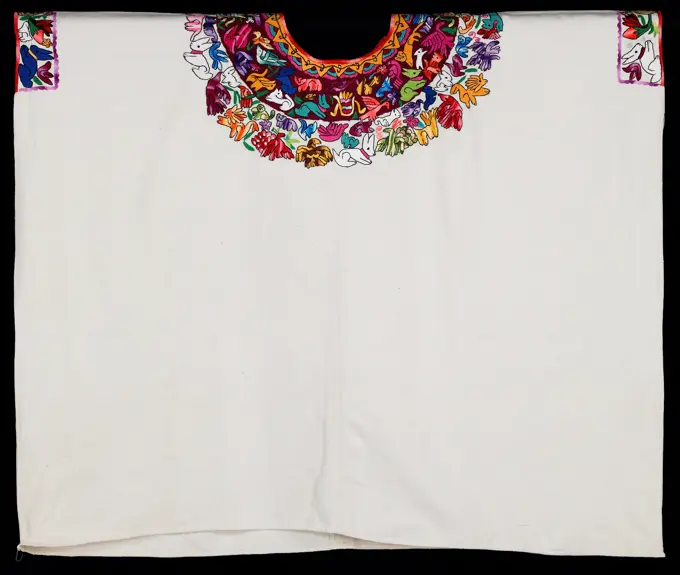
Woman's blouse (Huipil), 20th century, 36 3/8 x 46 1/4 in. (92.4 x 117.5 cm), Cotton; embroidery, Guatemala, 20th century, The use of dark colors, such as deep purple, black, and blue-black, is a primary characteristic of Maya mourning huipiles, both woven and embroidered. The general layout of the garment is similar to the everyday huipil, but the imagery is simplified by the use of a monchromatic palette.
4443-19533850
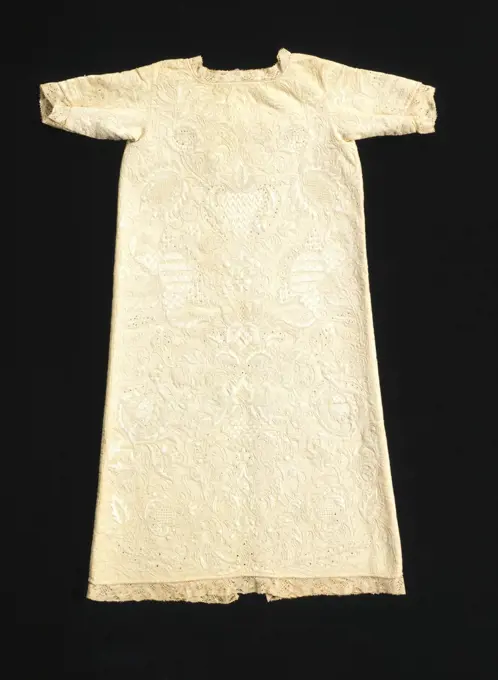
Child's gown, Medium: linen, cotton Technique: embroidery (satin, overcast cord, back, herringbone, laid work, coral, knot, buttonhole, and detached chain stiches), Dress or coat cut without fullness. Has opening from neck to bottom and long sleeves. Foundation 2 & 2 twill weave nearly covered with white linen embroidery (using satin, overcast cord, back, herringbone, laid work, coral, knot, buttonhole, and detached chain stitches) in design of flowers, leaves, and fruit worked solidly in ornamental stitches. Binche lace sewed in neck at bottom of sleeves and of dress., England, 17th century, costume & accessories, Child's gown
6145-58933101
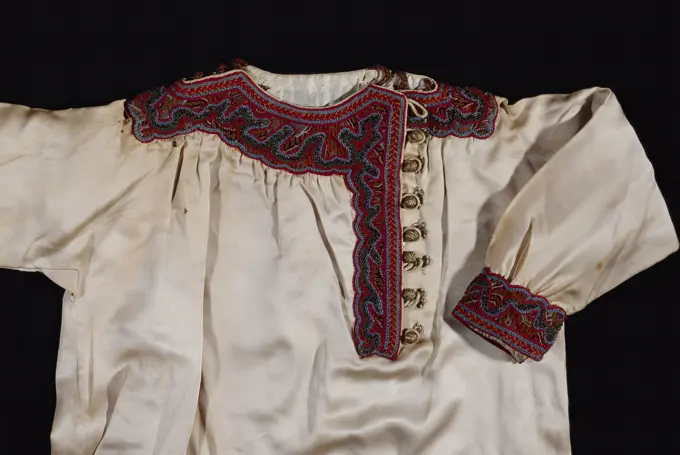
Shirt -
6145-59018284
Profiles of two male tunics. Anonymous photography. Gelatin aristotype. Paris, Carnavalet museum. 123098-26
4443-28744810
Coat, late 19th century, 51 x 46 in. (129.54 x 116.84 cm), Silk, cotton, Uzbekistan, 19th-20th century
6145-29852733
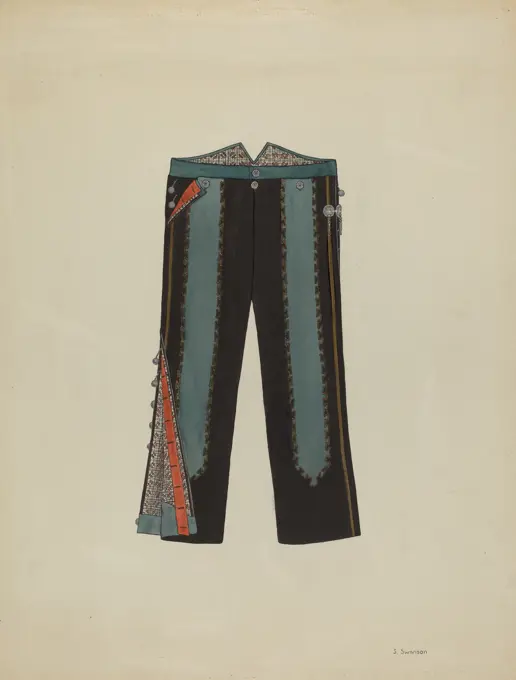
Syrena Swanson, Man's Trousers, c 1937 Man's Trousers
4443-28725858
Jacket, late 19th-early 20th century, 15 5/16 x 54 in. (38.89 x 137.16 cm), Velvet, metallic threads, cotton; needlework, Turkey, 19th-20th century
6145-29153339
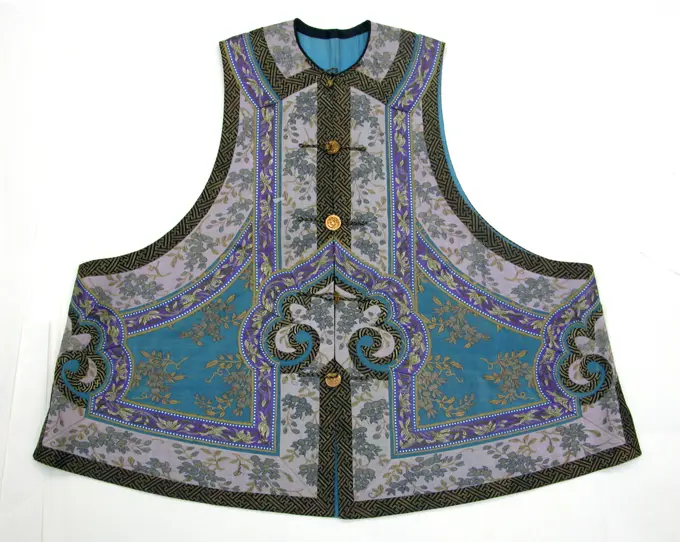
Sleeveless Jacket with Flowering Vine Pattern and Bands late 19th-early 20th century China The elaborate banding at the edges of this garment is typical of Chinese women's clothing of the late nineteenth and early twentieth centuries. The especially complex forms seen at the center front and sides are used here as an independent design motif, but in earlier times, four such lobes constituted the "cloud collar" pattern, which decorated the upper part of garments.. Sleeveless Jacket with Flowering Vine Pattern and Bands. China. late 19th-early 20th century. Silk tapestry (kesi). Costumes-Tapestries
1899-28660076
Ancient Chinese clothes, tunic with large sleeves and embroidery, Qing dynasty, nineteenth century.
4443-28743828
Under Apron, 28 1/4 x 21 1/8 in. (71.76 x 53.66 cm) (with ties), Cotton, silver thread, China
6145-29721768
Imperial Court Robe 19th century China. Imperial Court Robe 68519
6145-58990665
Lanvin Jeanne Garçonnet tunic in ivory silk satin, embroidery of polychrome wool wool and metal threads on a cashmere background, gold metal buttons, around 1914 (front view posed flat) 1914 Silk Degraces wool Briant Remi Galliera, fashion museum of the city of Paris. 26124-11 FEMININE, HAUTE-COUTURE
4443-28745438
Dress, c. 1960, 41 x 48 in. (104.14 x 121.92 cm), Cotton, metallic threads; needlework, Yemen, 20th century
6145-29125079
Man's Samurai Class Ceremonial Fire Coat (Kajibanten) and Plastron
6145-30162388
Attus Amip (Man's Coat) Made 1850-1870 Japan. The fiber of this coat, seen here in its natural color, is made from the inner bark of the ohy tree, a member of the elm family. The geometric patterns are made of indigo-dyed cotton attached with an appliquÈd techinque.. Elm tree bark fiber, plain weave; center back and outer edges appliquÈd with cotton, plain weave; underlaid with cotton, plain weave; embroidered with cotton in laid work and couching . Ainu
4443-28743573
Shaman's Coat, from a two-piece set, 20th century, 46 1/4 x 33 15/16 in. (117.48 x 86.2 cm), Cotton, ink; appliqué; needlework, Vietnam, 20th century
6145-29224529
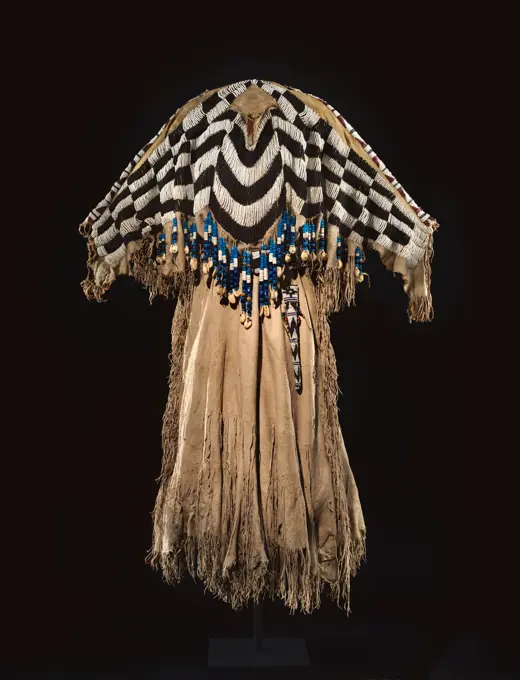
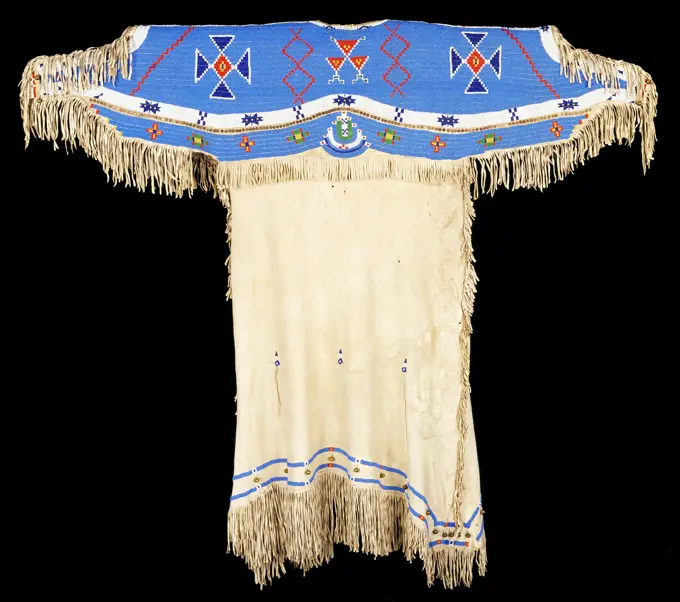
Dress and belt with awl case ca. 1870 Wasco, Native American Plateau cultures thrived in the hilly steppe region between the Cascades in Washington and Oregon and the Rockies in Idaho and Montana. Garments of superior craftsmanship incorporating trade goods, such as this example, expressed personal identity and a familys high status. The woman who made this two-hide dress lavishly covered the torso and sleeves with black-and-white beadwork, which she framed with fringes embellished with glass beads, cowry shells, bone, and two highly prized elk canines. The dress is accompanied by its own belt and awl case: awls were among the tools that women used in the preparation of animal skins.. Dress and belt with awl case. Wasco, Native American. ca. 1870. Dress: tanned leather, glass beads, shell, bone, elk teeth, and brass thimblesbelt: commercial leather, glass beads, and metal studsawl case: tanned leather, and glass beads. Possibly made in Oregon, United States; Possibly made in Washingto
4443-28738618
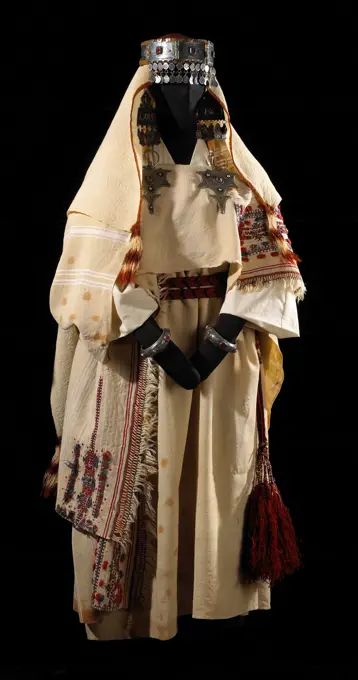
Draped garment (afaggou), 20th century, Wool, cotton; plain weave with supplementary weft patterning and henna paint; dyed, Morocco, 20th century
6145-48514823
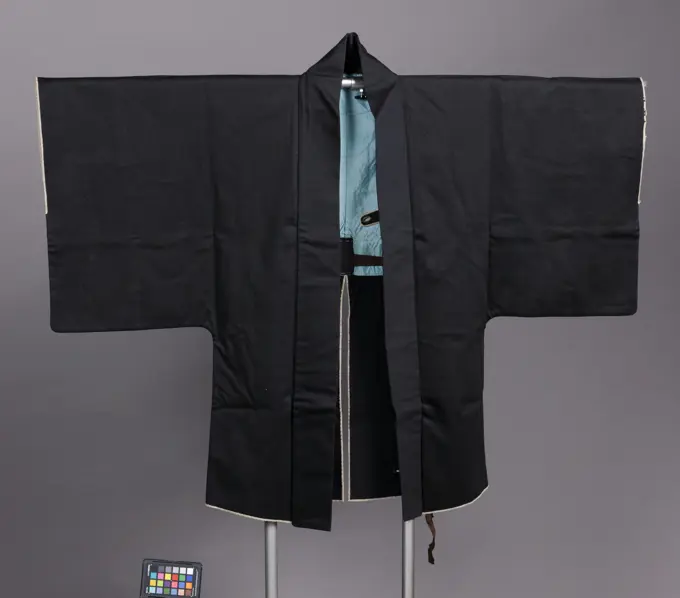
Short Coat (Japan); silk; H: 92 cm (36 1/4 in.); 1955-161-4
4443-28725632
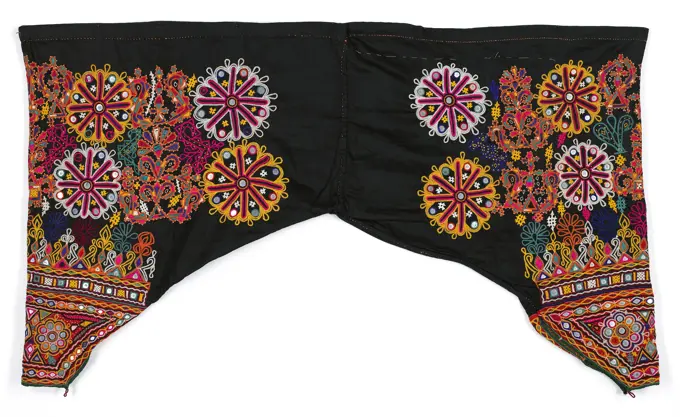
Pair of boy's pants, mid 20th century, 29 x 49 in. (73.66 x 124.46 cm) (at waist), Cotton, mirrors; needlework, India, 20th century
4443-28730991
Coat, 19th century, L.48 x W.61-1/2 in., wool, metallic thread; needlework, Iran, 19th century
6145-29804098
Skirt 18th-19th century China. Skirt. China. 18th-19th century. Silk. Qing dynasty (1644-1911). Costumes-Velvets
4443-28743606
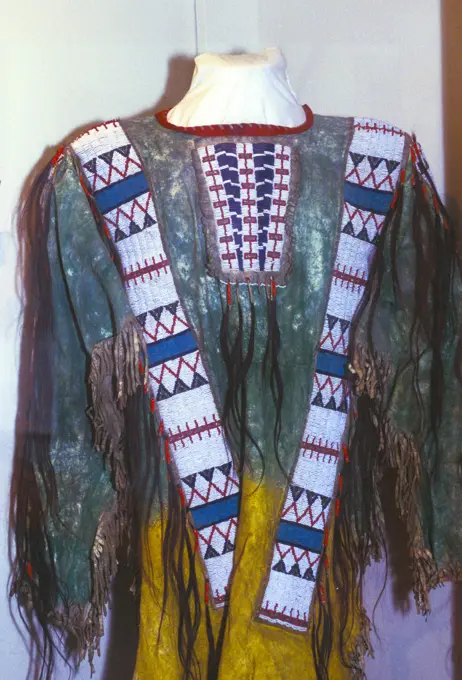
Shirt, c. 1890, 35 x 56 in. (88.9 x 142.24 cm) (including sleeve fringe), Animal hide, beads, fur and animal pelts (ermine), felt, cotton, United States, 19th century
7073-70251028
Blackfeet man's painted leather fringed shirt with beaded strips decorating the front yoke and shoulders
4443-28744023
Baby Carrier, 29 1/2 x 202 x 3 1/2 in. (74.93 x 513.08 x 8.89 cm), Cotton, silk, metallic thread; needlework, China
4443-28734931
Female Impersonator's Costume, 20th century, 60 x 67in. (152.4 x 170.2cm), Cotton, jute, wool, rayon, applique, and embroidery, Nigeria, 20th century
4409-17394133
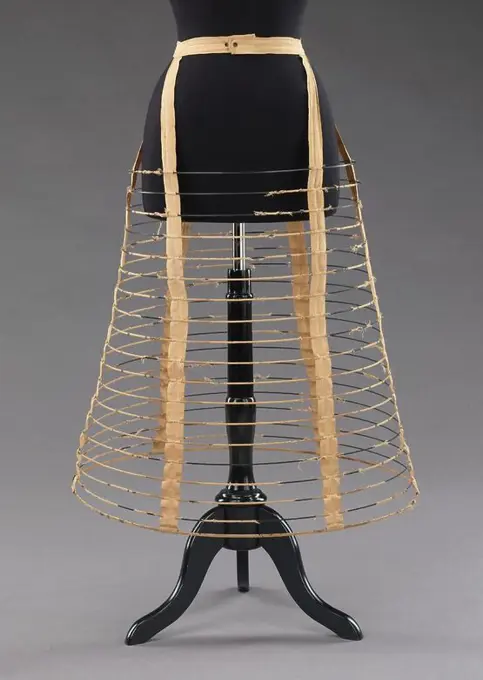
Cage crinoline. Culture: American. Manufacturer: Worcester Skirt Company (American, 1861-1872). Date: 1862-63.In 1950, E.A. Meister, then president of the Royal Worcester Corset Co., donated a collection of 171 corsets to the Brooklyn Museum in the memory of Isidor Roth, his father-in-law and former president of the company,who had assembledthe collection. The stated dual purpose of the donation was to honor Mr. Roth for his outstanding contributions to the growth of the field of corsetry and to establish a place where the collection could be used as a resource for the history of corsetry.Overall, the collection of corsets represents prime examples of the stylistic and technological developments which took place from1745-1939. It represents not only the changing silhouette of the past 200 years but also the innovative culture of the corset industry, where solutions to further comfort and increasing flexibility were continually being sought. Known first as The Worcester Skirt Company,
4266-26232
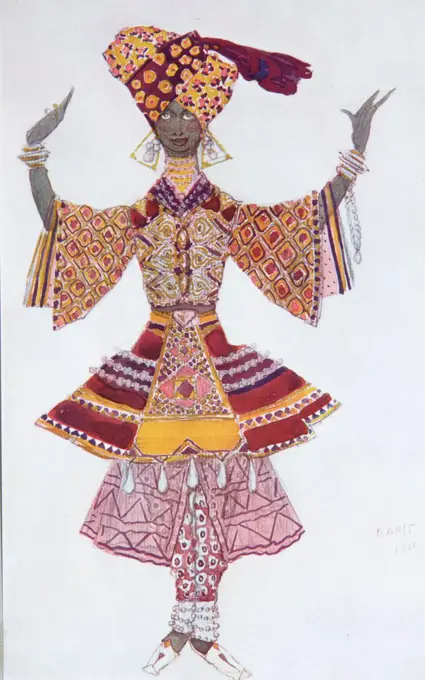
Costume design for the Ballet 'Blue God' by R. Hahn by Bakst, Leon (1866-1924)  Private Collection  1912  Russia  Colour lithograph  Graphic arts  Opera, Ballet, Theatre
4409-17447836
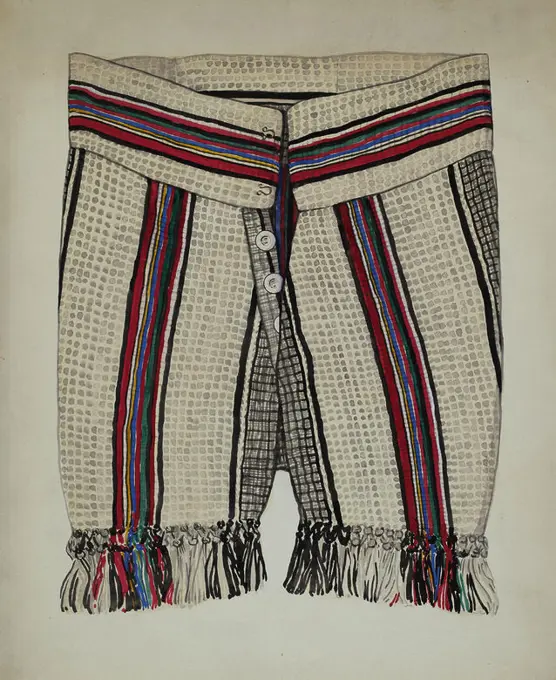
Boy's Pants. Dated: c. 1937. Dimensions: overall: 27.9 x 22.9 cm (11 x 9 in.). Medium: watercolor and graphite on paper. Museum: National Gallery of Art, Washington DC. Author: Florence Huston.
1525-25399371
Mexican style knitted jacket isolated
1848-55365509
Bavarian Lederhosen or leather pants at the Auer Dult Market, Munich, Bavaria, Germany, Europe
4409-17458556
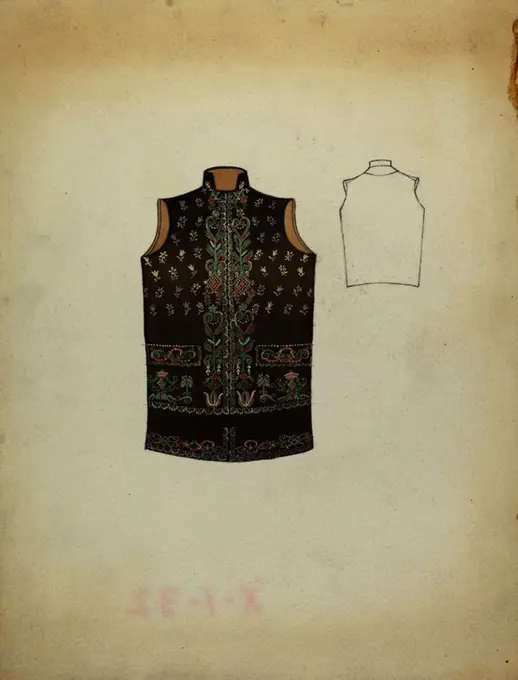
Sleeveless Jacket. Dated: 1935/1942. Dimensions: overall: 29.9 x 22.9 cm (11 3/4 x 9 in.). Medium: watercolor, graphite, and gouache on paper. Museum: National Gallery of Art, Washington DC. Author: American 20th Century.
6145-59043206
EVENTAIL. Embroidered peacock feathers and sequins. Black muslin, black wood. Paris, Carnavalet museum. Eventail: embroidered peacock feathers and sequins Fashion accessory, Eventail
4443-28733286
Dress, c. 1880-1890, 51 in. (129.5 cm), Leather, cotton, copper disks, bells, glass beads, United States, 19th-20th century, As the Lakȟóta world became more and more restricted because of Euro-American expansion, Lakȟóta women focused their time and energy on larger-scale art projects like the completely beaded yoke found on this three-hide dress. Lakȟóta women wore these dresses to ceremonies or when they would come together to dance and celebrate with their communities and families. The weight of this dress, probably about 20 pounds, was easily supported by these strong and remarkable women. They were accustomed to putting up and taking down tipis, scraping and tanning buffalo hides, and moving the entire contents of their homes quickly and efficiently.
7012-69874923
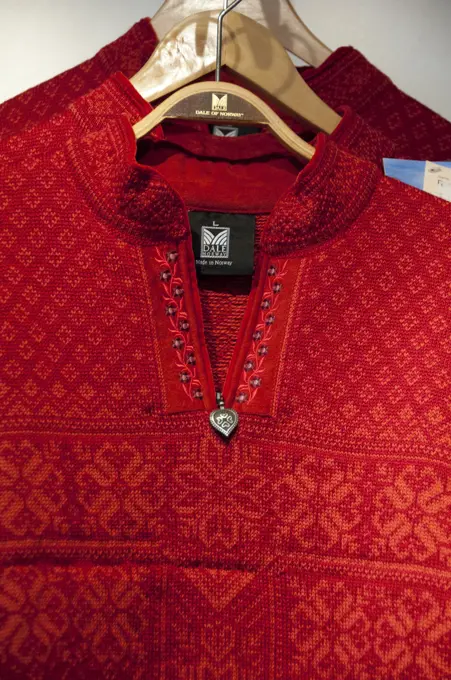
Norway, Honningsvag, North Cape. The Northern most city in Europe. Typical wool Norwegian sweaters.
4141-20216633
Hungary, Budapest, Cham costume, Mongolian Treasures, Museum of Asiatic Arts,
6145-29161548
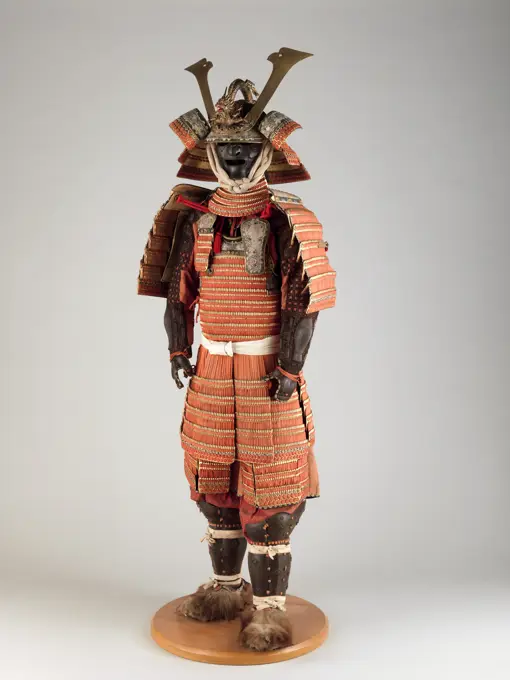
Armor (Gusoku) 19th century Japanese Although constructed in the traditional sixteenth-century gusoku (complete set) fashion, this is actually an example of the revival of earlier armor styles during the Edo period. It was part of the large collection of Japanese arms and armor formed by Arms and Armor Department founding curator Bashford Dean around 1900, during his extended stays in Japan for scientific research. The armor was included in the Metropolitan Museum's 1903 loan exhibition of Japanese arms and armor from Dean's private collection, which the Museum purchased in 1904.. Armor (Gusoku) 22020
6176-59902885
First Nations fashion clothing for sale at the Tsuut'ina  Nations Powwow. Alberta Canada
6145-58933091
Shirt -
6145-46858958
Multi-Tiered Tassel from a CeremonialGarment.  Artist: Unknown
1746-29958723
Image from Creation Jenny showing example number 10, black and white combination of white blouse and jacket with white shoes and a black satin skirt.
6188-65105709
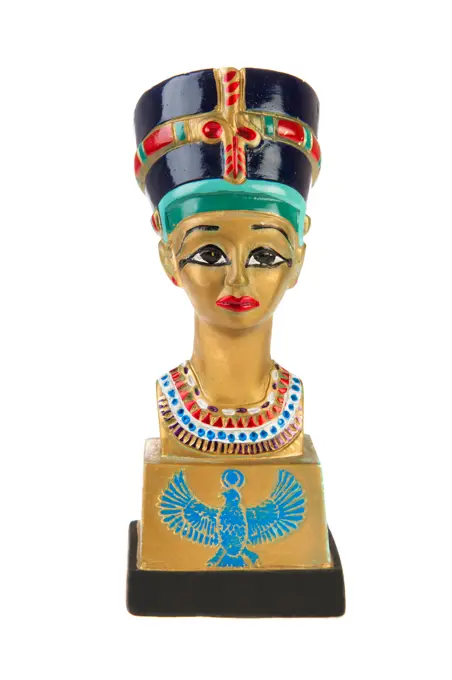
Nefertiti from Eqypt Famous buste from Nefertiti in Eqypt on white background Copyright: xZoonar.com/IvonnexWierinkx 7406996
PREVIOUS
of 3
NEXT
2401 S. Ervay, Suite 206
Dallas, Texas 75215
United States
Get Started
Free ResearchMy BoardsMy Cart
For Creators
How To License Your ContentContributor PortalFrame of Mind
Resources
API accessPricing
Contact
+1 866 236 0087help@viewpictures.co.uk Contact form
©2026 View Pictures. All Rights Reserved. -B
This site is protected by reCAPTCHA and Google Privacy Policy and Terms of Service apply.