Traditional Craft Containers

An array of decorative containers and molds, including baskets and boxes, made from natural materials and showcasing cultural designs and craftsmanship.
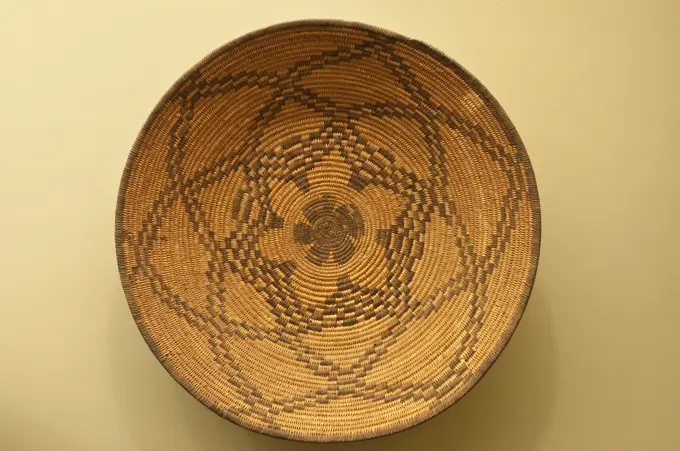
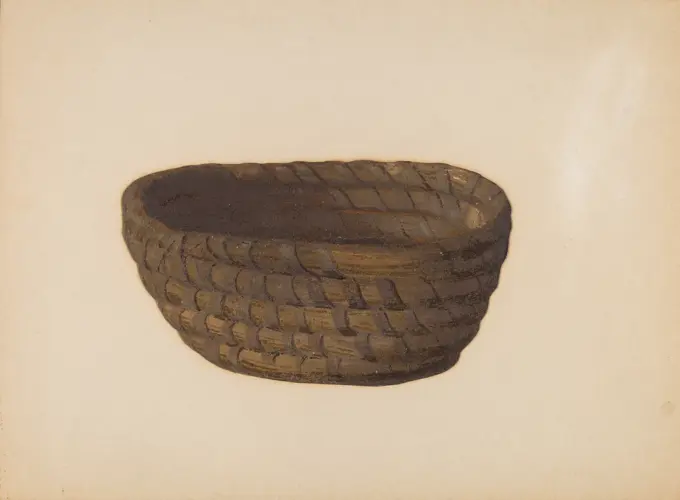
San Diego, California. Ancient Native American baskets, Mission Basilica San Diego de Alcala.
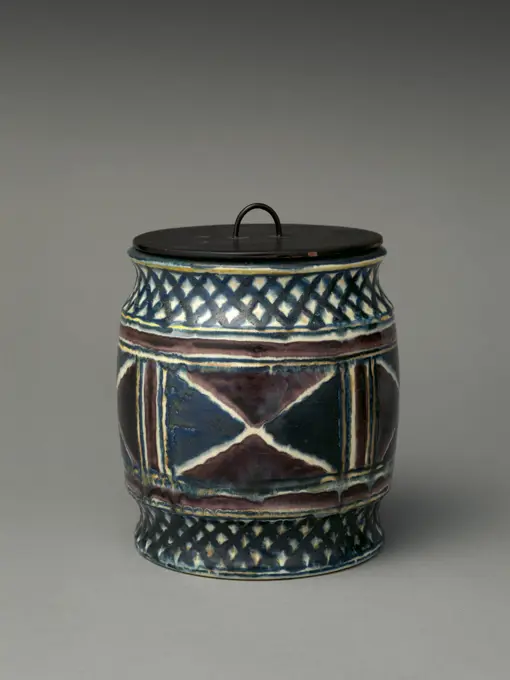
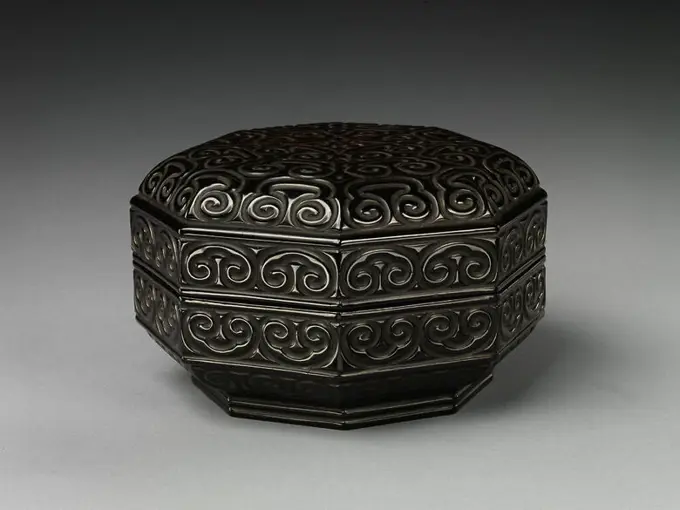
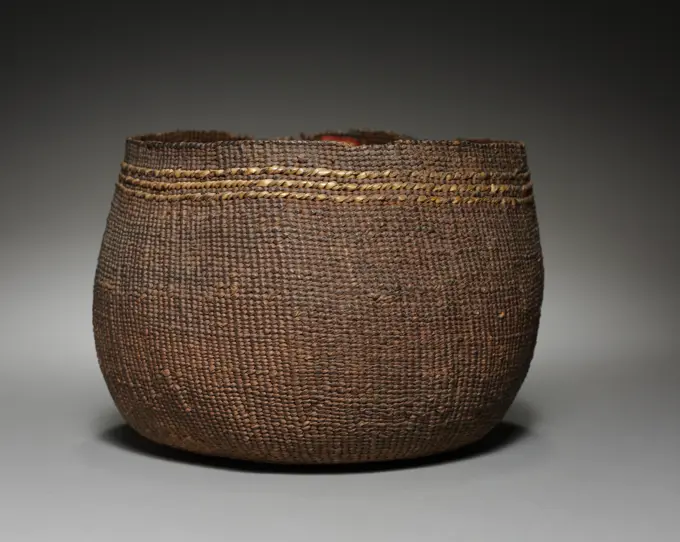
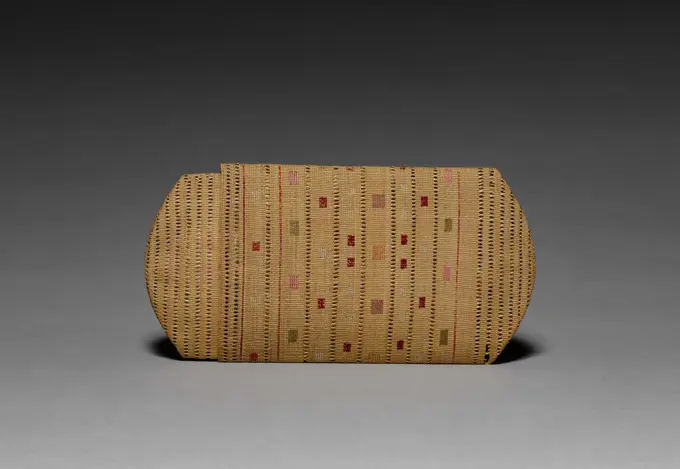
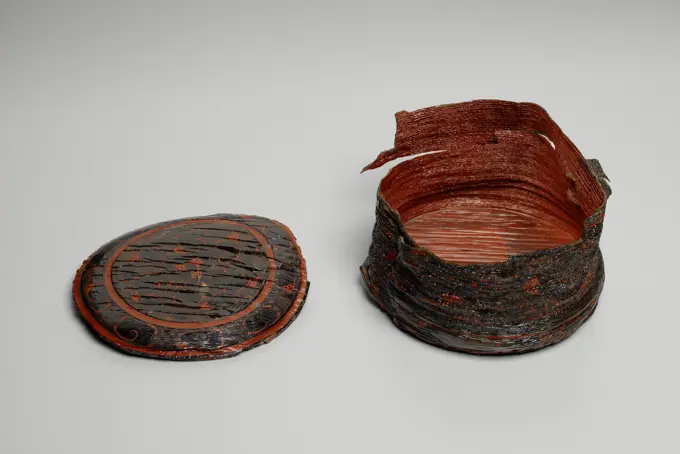
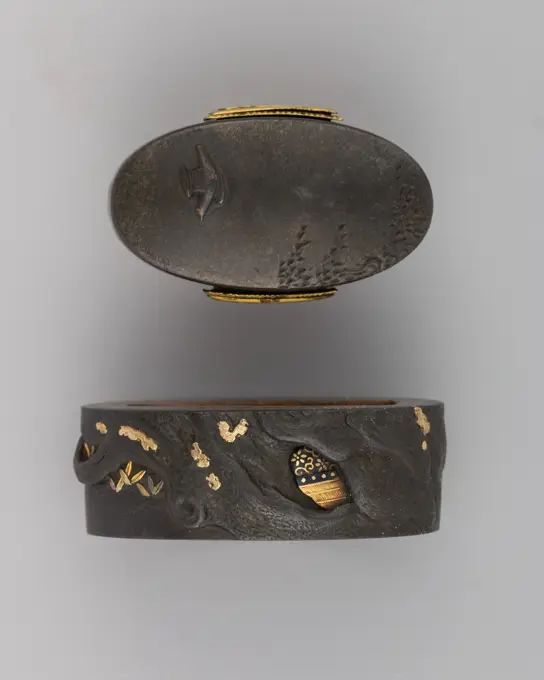
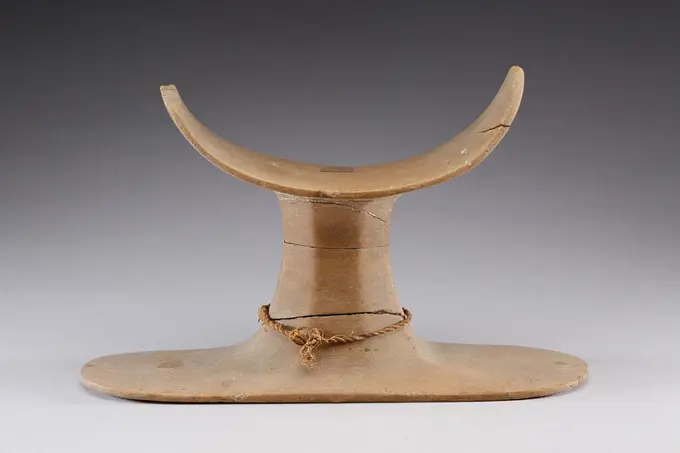
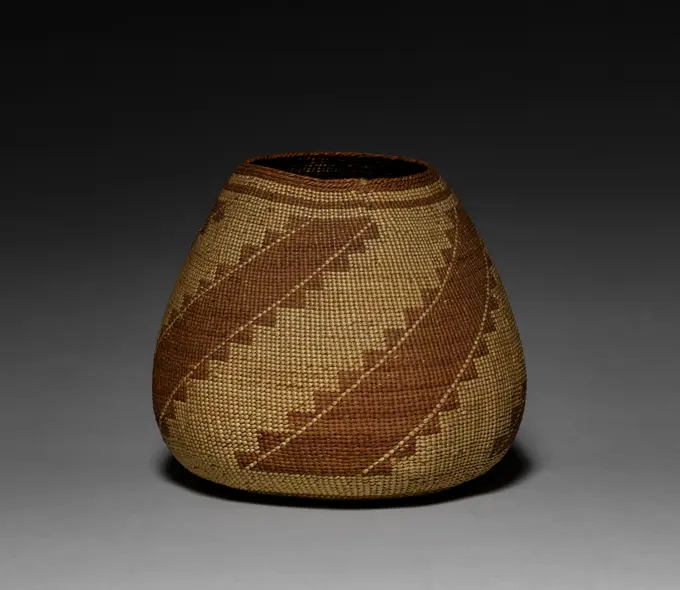
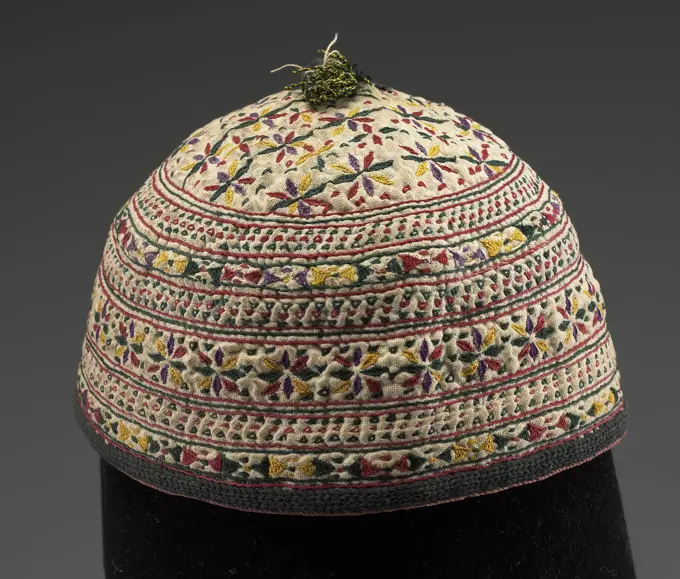
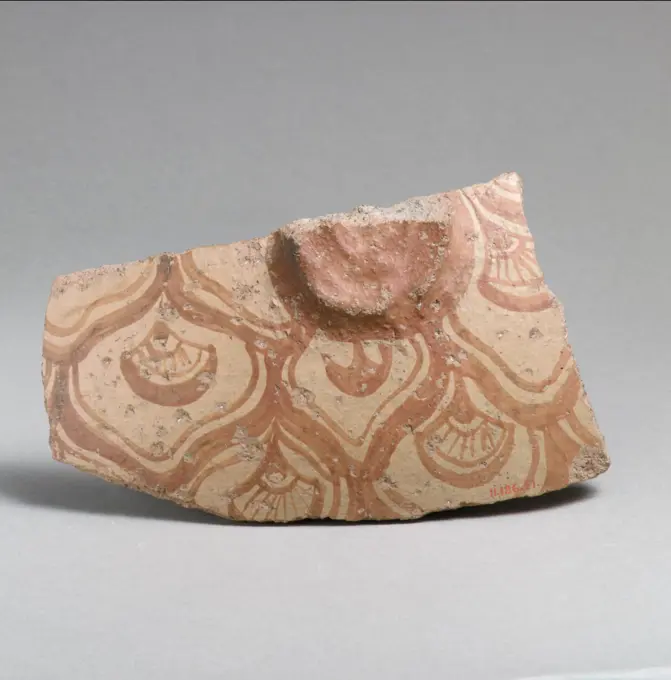
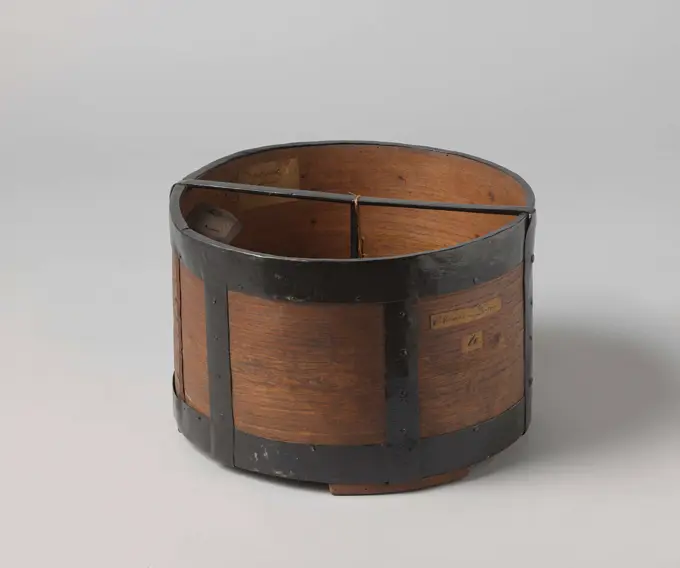
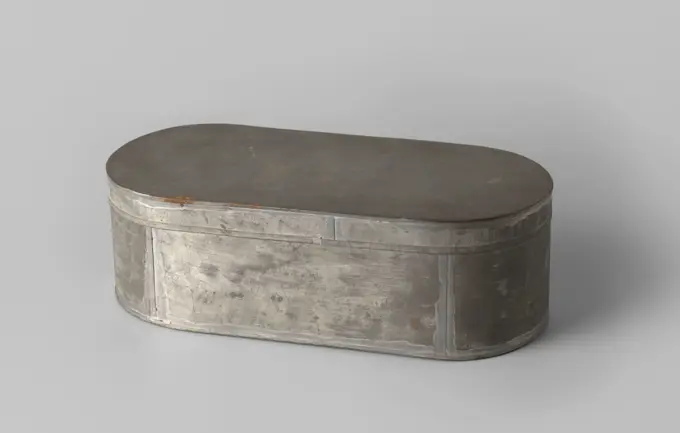
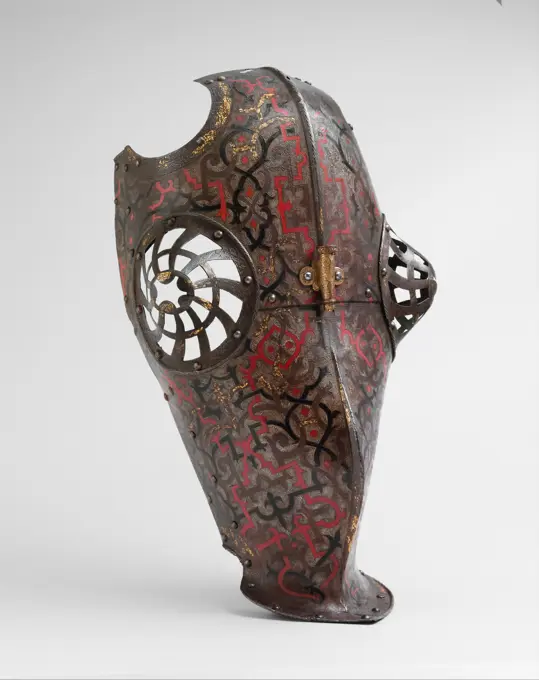
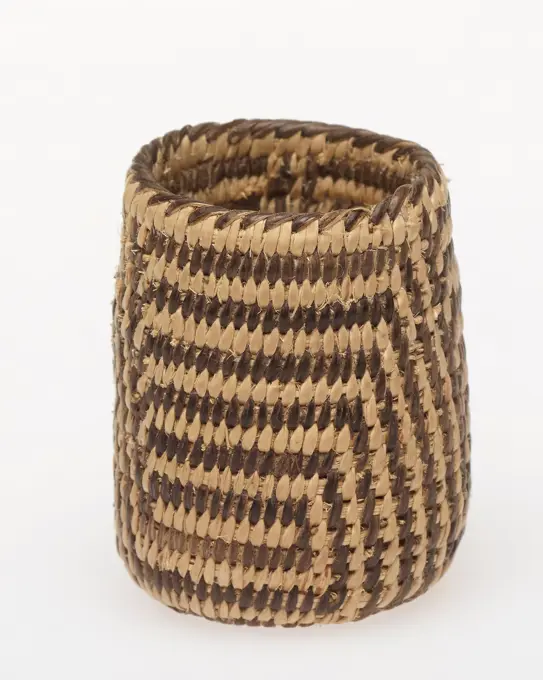
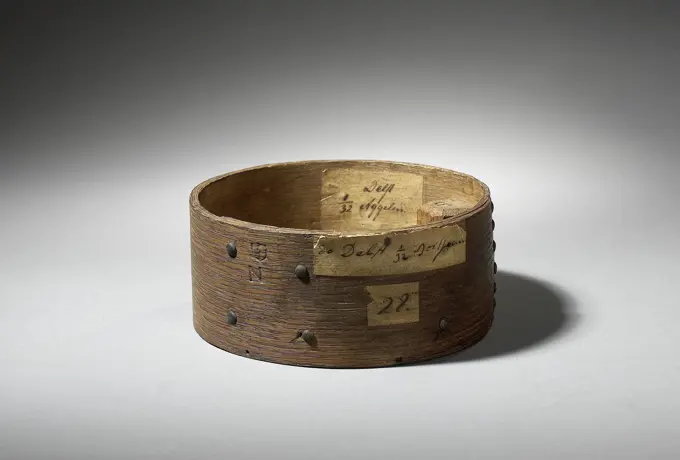
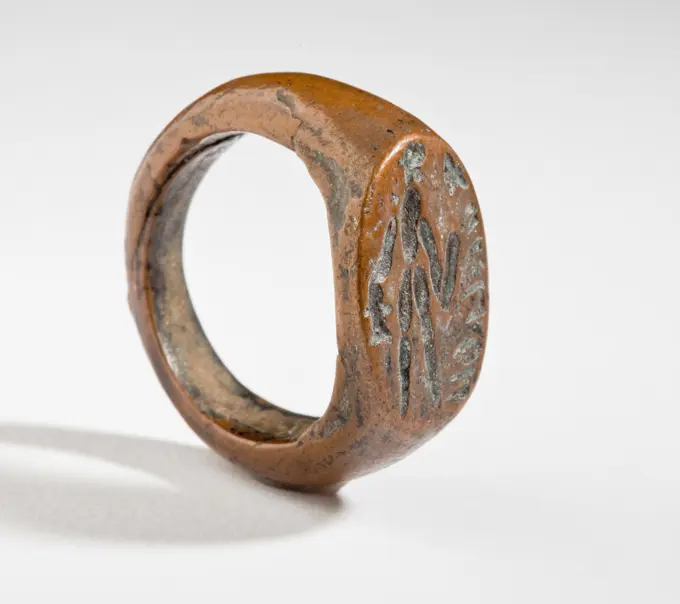
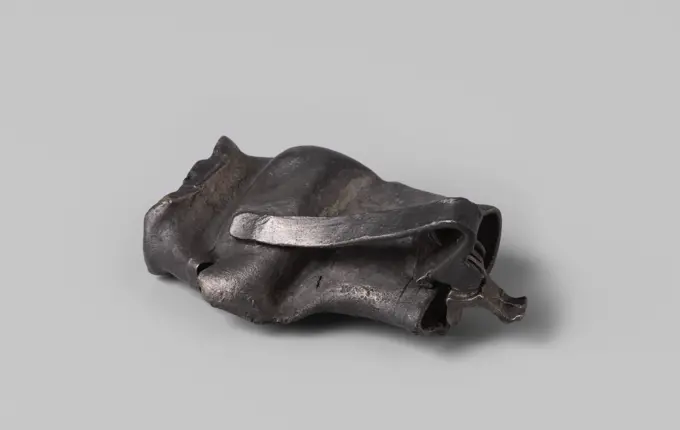
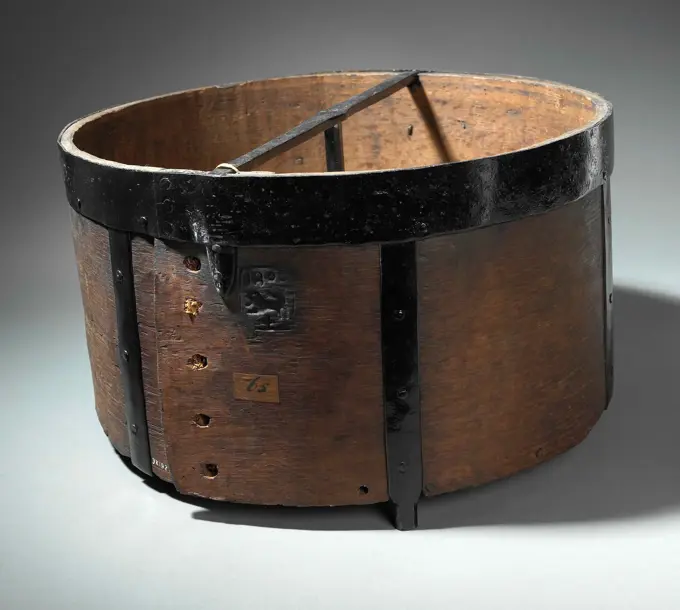
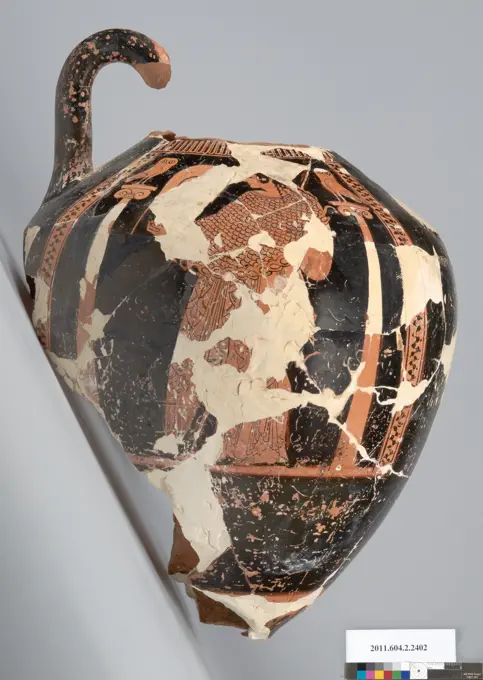
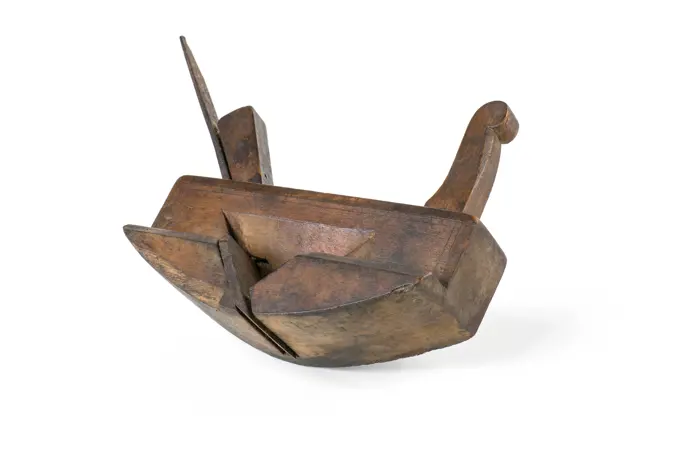
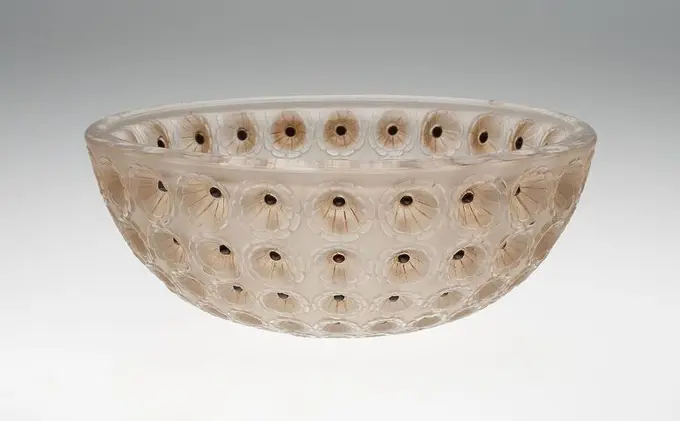
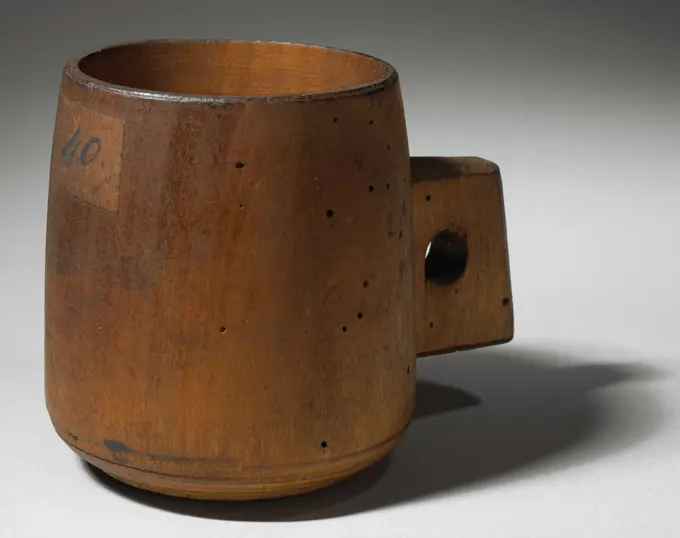
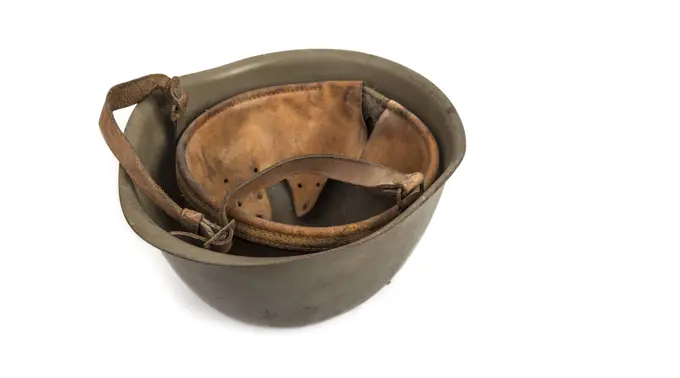
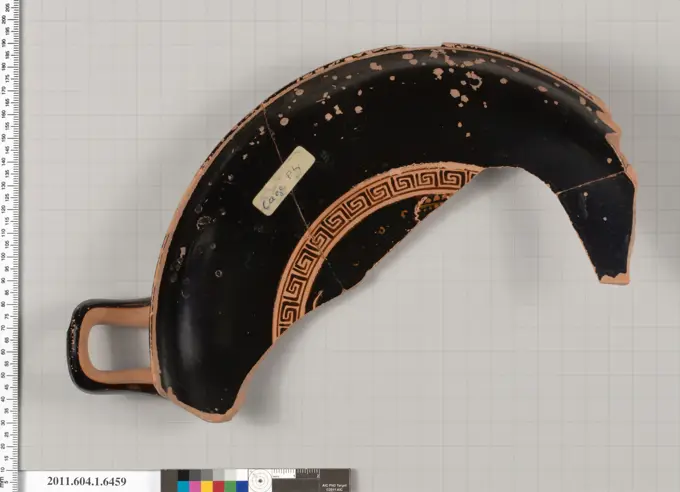
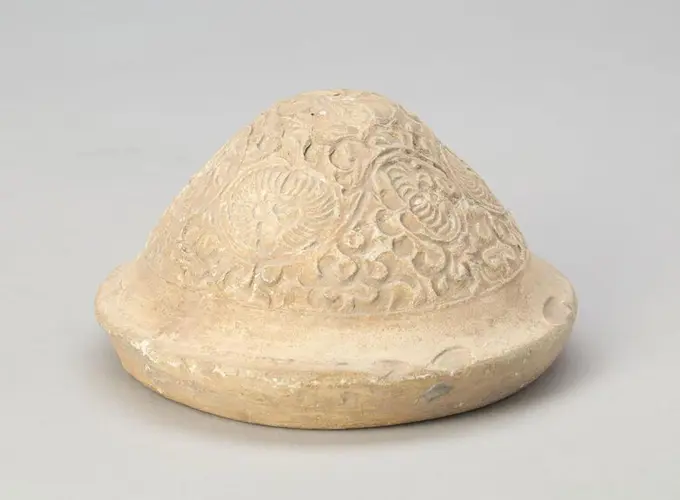
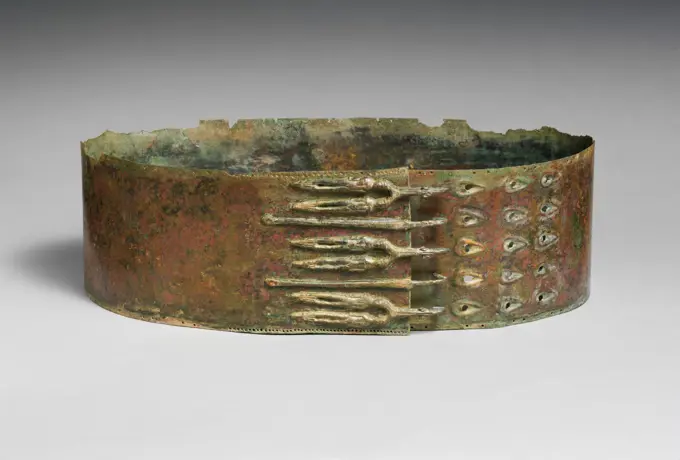
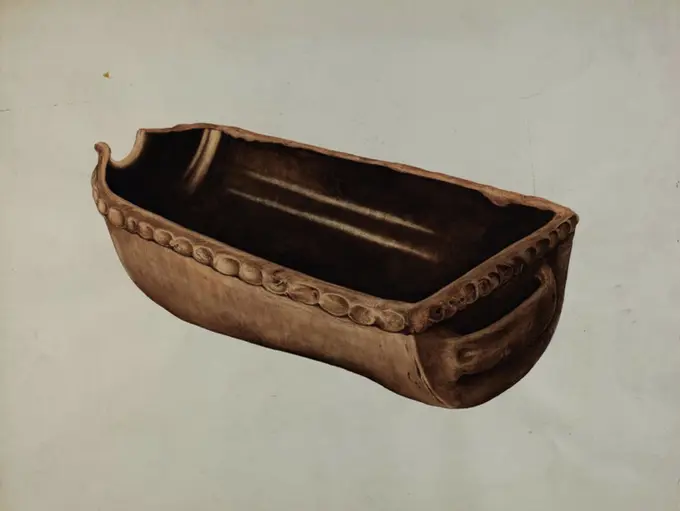
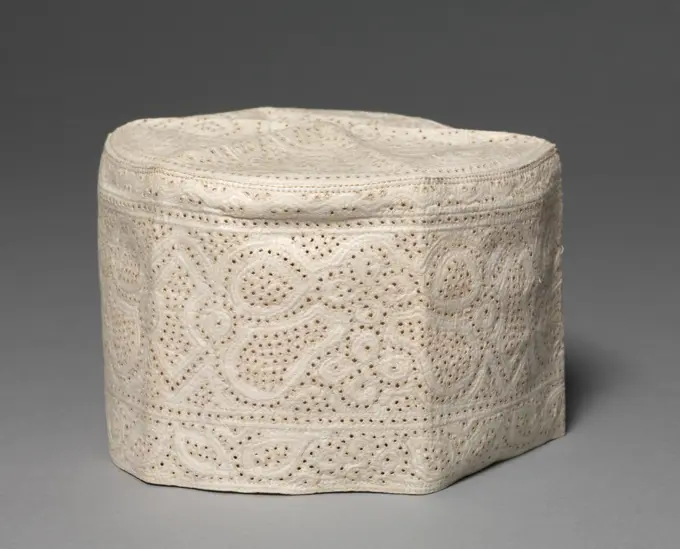
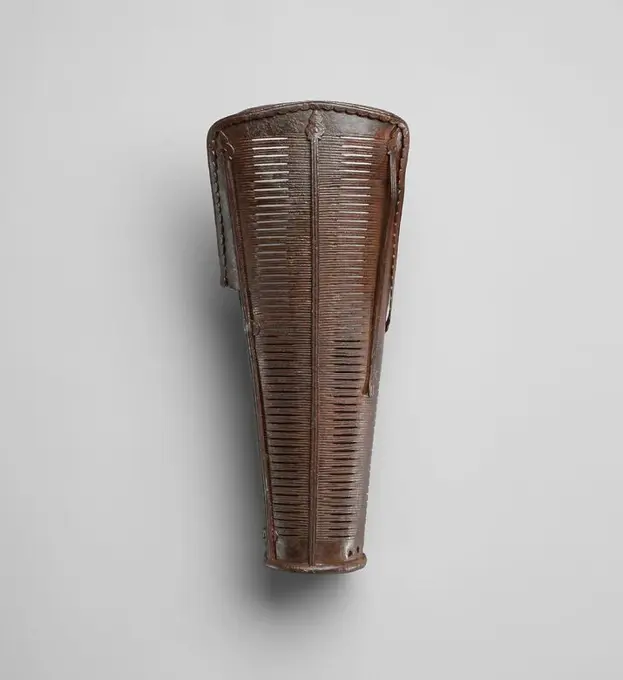
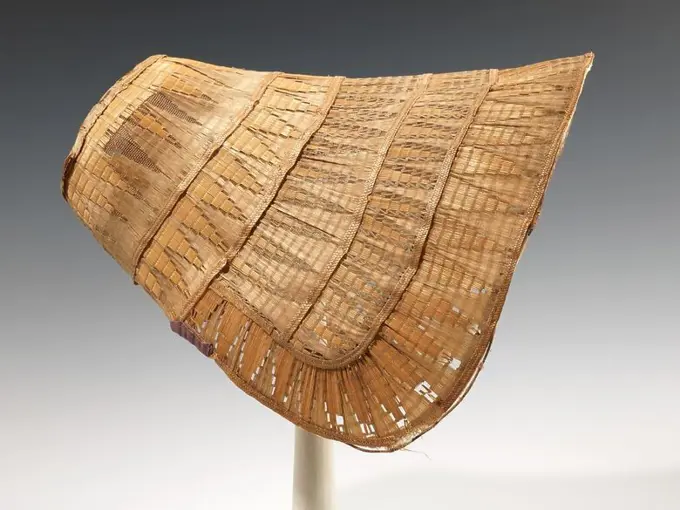
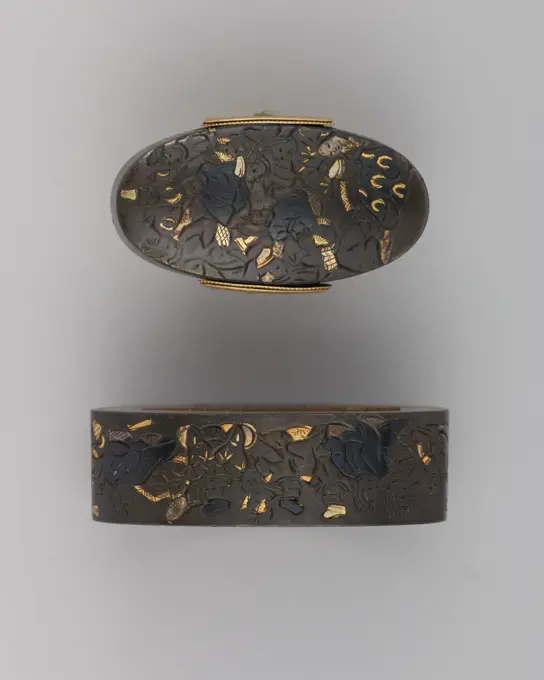
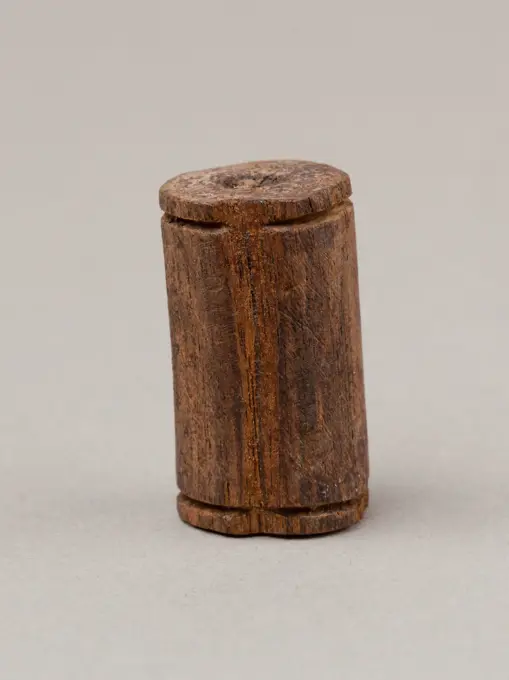
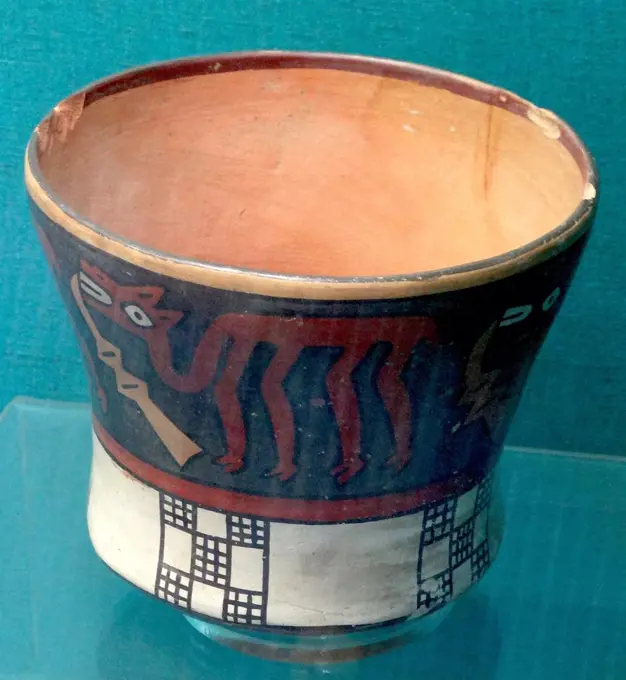
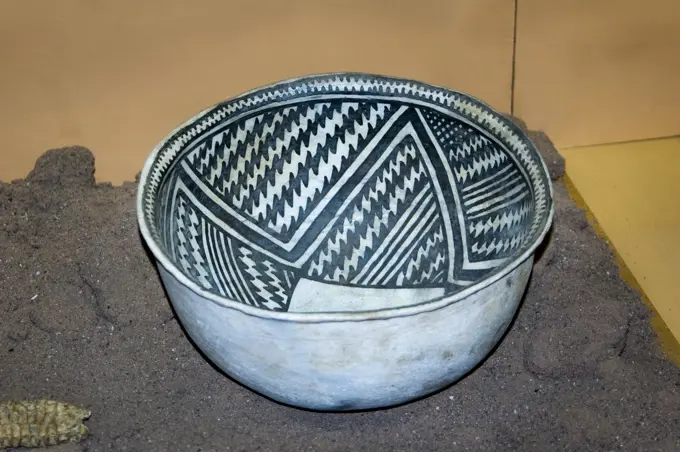
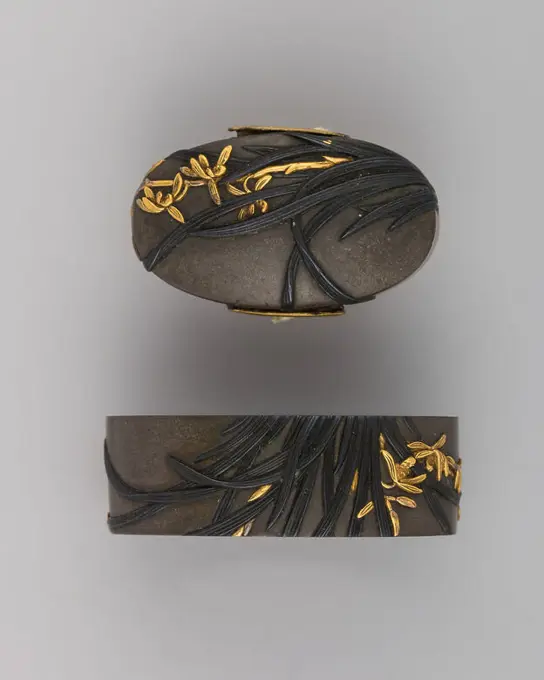
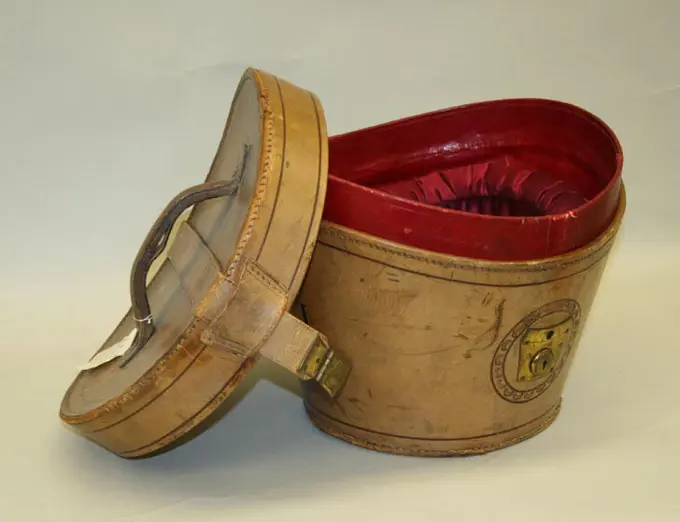
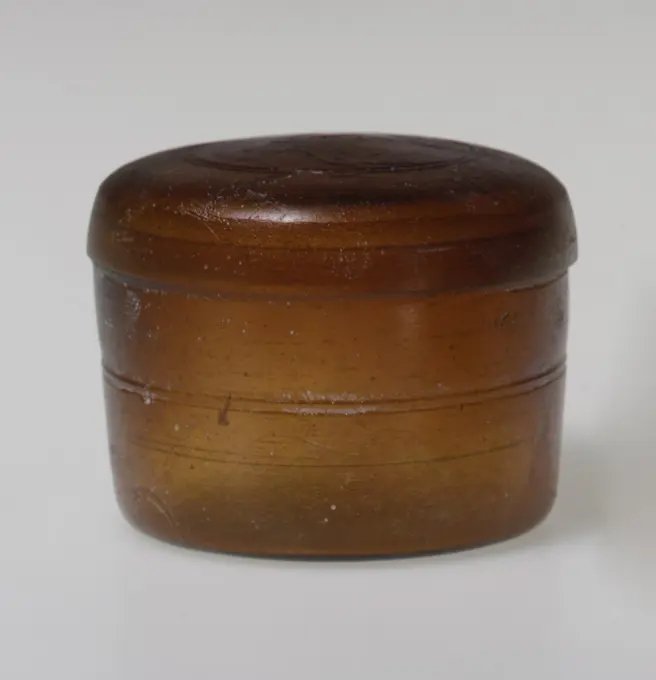
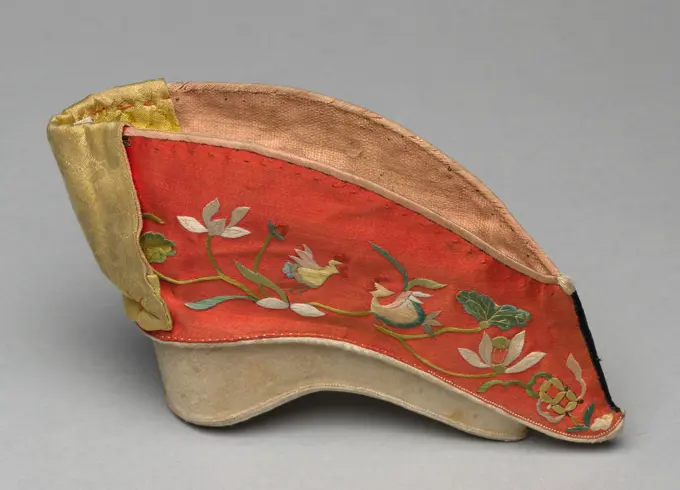
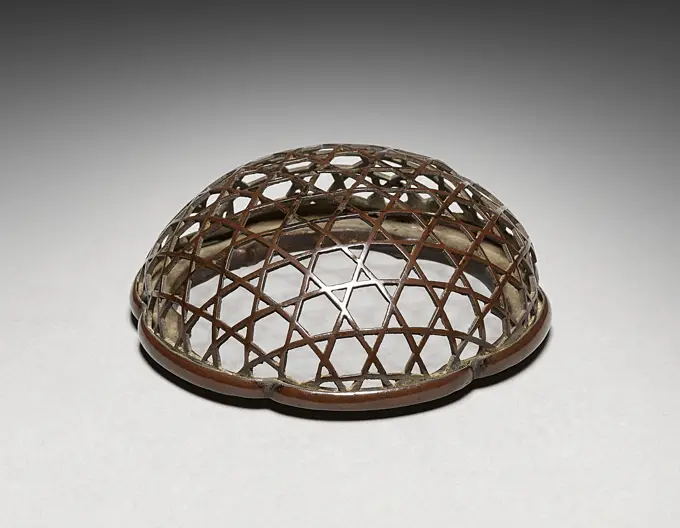
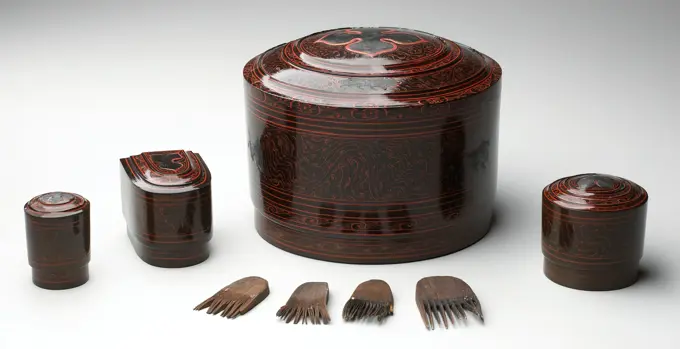
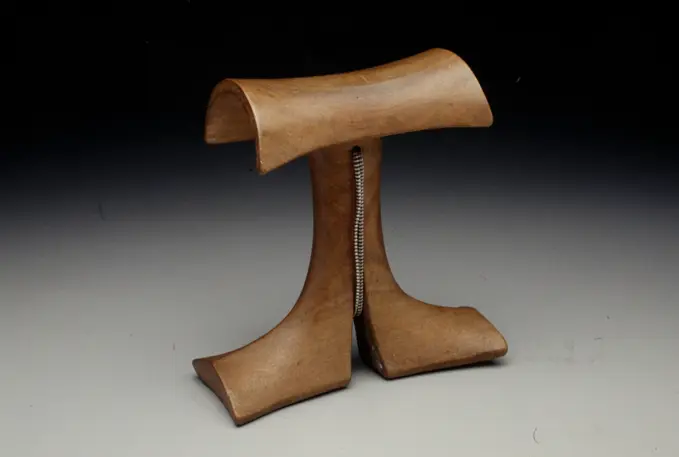
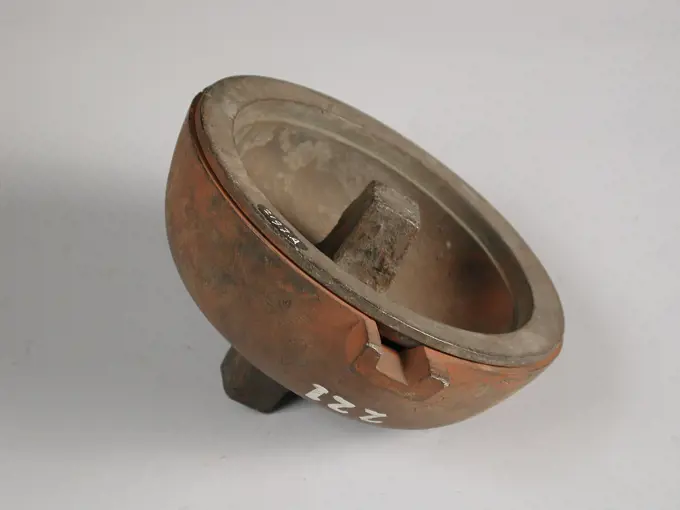
Two-piece bronze mold for brandy bowl, mold casting tool tools kit metal_metal bronze, cast twisted Two-piece bronze mold for pouring brandy bowl with stand ring top, Rotterdam tin tinker tin tableware tin Meeuws Druy craft Shapes are from the van origins 18th century Rotterdam tinnegieter J Druy. The large molds that were not signed or dated were the property of the tinker guild and were rented to the small tin caster.Covered Basket 19th century Japan. Covered Basket 62217Snuffbox 1835-1845 Europe. Burled wood .Basket, early 20th century, 3 x 13 in. (7.62 x 33.02 cm), Plant fiber, United States, 20th centuryVase fragment East Greek/Sardis, Lydian Geometric Rim fragment with basket pattern.Freshwater Jar (Mizusashi) second half of the 17th century Ninsei II. Freshwater Jar (Mizusashi). Ninsei II (Japanese, active ca. 1658-1868). Japan. second half of the 17th century. Stoneware with polychrome overglazes (Kyoto ware). Edo period (1615-1868). CeramicsOctagonal food box with pommel scrolls. Culture: China. Dimensions: Diam. 8 7/8 in. (22.5 cm); H. 51/4 in. (13.3 cm). Date: late 14th-early 15th century. Museum: Metropolitan Museum of Art, New York, USA.Cooking Bowl, before 1927. California (), Native American, Unassigned. Twined; overall: 14.8 x 21 cm (5 13/16 x 8 1/4 in.).San Diego, California. Ancient Native American baskets, Mission Basilica San Diego de Alcala.Cigarette or Needle Case, c 1875- 1917 (source unknown). Arctic, Aleut, Attu, Post-Contact. Plain twine, wild rye grass with crossed openwork, patterned twined start, intersecting layered spokes, and plaited finish; silk embroidery (catalogue card); overall: 2 x 11.5 cm (13/16 x 4 1/2 in.).Cap of silver, Jacobus Carrenhoff (Possible), c. 1785 - c. 1800  Silver roof, formed by a concave band with two rectangular silver plates with pearl edges and rosette. Part of a hood. Zaanstreek silver (metal)CylindricalcontainerFragment 14th century. Fragment 446490Basket, early 20th century, 1 5/8 x 2 5/8 x 2 in. (4.13 x 6.67 x 5.08 cm), Plant fiber, United States, 20th centuryCovered Basket, Unassigned, before 1917. Northwest Coast, Haida, Unassigned. Twilled, imbricated; overall: 3.5 x 13 cm (1 3/8 x 5 1/8 in.).CUNA DE LOS INDIOS DE LAS COSTAS DEL NOROESTE AMERICANO. Location: MUSEO. Rome. ITALIA.Drum, 1800 - before 1865 musical instrument. percussion instrument. drum Trom of the militia. The brass kettle is equipped with a veal sheet on both sides, held by a hoop and tense by means of a tension with tractors and screws. Both hoops are decorated with a motif of triangles in the colors red, white and blue. Netherlands Kettle: Brass (Alloy). Hoop: Wood (Plant Material). Team resort: RopeSword-Hilt Collar and Pommel (Fuchigashira) 18th century Japanese A fuchigashira is a pair of matching sword fittings comprising the fuchi (collar at the base of the grip of the sword hilt) and kashira (pommel cap at the end of a sword hilt).. Sword-Hilt Collar and Pommel (Fuchigashira). Japanese. 18th century. Copper-silver alloy (shibuichi), gold, silver, copper-gold alloy (shakud). Sword Furniture-Fuchi-KashiraChessmanHeadrest of Harmose. Dimensions: H. 18.5 cm (7 5/16 in); w. 30 cm (11 13/16 in); d. 9.5 cm (3 3/4 in). Dynasty: Dynasty 18. Reign: Joint reign of Hatshepsut and Thutmose III. Date: ca. 1479-1458 B.C..Found lying next to Hormose's coffin (36.3.172), this wooden headrest was carved with the octagonal shaft and wide oval base typical of examples of early Dynasty 18. Museum: Metropolitan Museum of Art, New York, USA.Terracotta polychrome tripod vase with feet decorated with the heads of eagles. Artefact from San Pablo Huitzo, Mexico. Mixtec Civilization, post-classical period 900-1521.Dish with the Three Friends of Winter 16th-early 17th century China Pine needles, bamboo leaves, and plum blossoms fill the center of this deeply carved dish. Plum blossoms, which are among the first flowers of early spring, are often associated in Chinese art with evergreen pine and bamboo. Together, the trio are known as the Three Friends of Winter,” a motif symbolizing how a lofty individual perseveres even in the harshest environment.. Dish with the Three Friends of Winter. China. 16th-early 17th century. Carved brown lacquer. Ming dynasty (1368-1644). LacquerTobacco Basket, c 1875- 1900. California, Yurok, late 19th century. Twined grasses; overall: 19 x 17 x 17 cm (7 1/2 x 6 11/16 x 6 11/16 in.); vessel only: 16 x 17 x 17 cm (6 5/16 x 6 11/16 x 6 11/16 in.).Baby's Hat, c. 1920-1930, 3 5/16 x 5 x 5 in. (8.41 x 12.7 x 12.7 cm), Cotton, silk; embroidery, warp twining, Turkmenistan, 20th centuryBowl, c. 1875-1925. Northwest Coast, Washington, Makah, late 19th-early 20th century. Twined grasses; overall: 1.5 x 8.5 cm (9/16 x 3 3/8 in.).Box -Finger Grip before 16th century Mexican. Finger Grip 317414Mile of leather with a pattern leaf on which a zigzag pattern is embroidered with wool (point d'hongrie) and with a silver bump, c. 1660 - c. 1670 Muiltje (trip) of leather with a piercing piece. In front with geometric figures, 'Point the Hongrie' in wool. The sole runs pointy forward and gradually crosses a heel backwards, which runs slanted forwards. At the point a silver bump, 'pelvis'. Netherlands Sole:. Leaf: Linen (Material). Sheet:. Embroidery: Wool. Pump: Silver (Metal). Stitching: rope embroidering / engraving Muiltje (trip) of leather with a piercing piece. In front with geometric figures, 'Point the Hongrie' in wool. The sole runs pointy forward and gradually crosses a heel backwards, which runs slanted forwards. At the point a silver bump, 'pelvis'. Netherlands Sole:. Leaf: Linen (Material). Sheet:. Embroidery: Wool. Pump: Silver (Metal). Stitching: rope embroidering / engravingTerracotta vessel fragment with reticulated pattern enclosing conventional flowers ca. 1450-1400 B.C. Minoan From Knossos, CreteLarge fragment with reticulated pattern enclosing conventional flowers; dark-on-light ware.. Terracotta vessel fragment with reticulated pattern enclosing conventional flowers 248552A boisseeau from Utrecht. Chasing seats for dry goods from 1 boisseeau with bridge and style and block on the inside, v.z.v. Brand, label to a ribbon and labels.Oval tin drum with loose lid, A. de Block (Possible), c. 1800 - c. 1850 Oval tin drum with loose lid. Amsterdam tin plate Oval tin drum with loose lid. Amsterdam tin plateShaffron (Horse's Head Defense) Belonging to an Armor for Field and Tournament Made for Duke Nikolaus "The Black" Radziwill (1515-1565), Duke of Nesvizh and Olyka, Prince of the Empire, Grand Chancellor and Marshal of Lithuania ca. 1555; probably repainted and eye guards restored later Kunz Lochner German This shaffron is part of an important garniture of armor for field and tournament use made for Nikolaus "the Black" Radziwill (1515-1565), duke of Nesvizh and Olyka, prince of the empire, and grand chancellor and marshall of Lithuania--one of the wealthiest and most important nobles in Poland and Lithuania. Several elements of the garniture survive, six of which (including this one) are preserved in the Metropolitan Museum's collection. Made by the distinguished Nuremberg armorer Kunz (Konrad) Lochner, the Radziwill armor, with its overall etched design of interlaced strapwork and brilliant polychromy, is one of the most distinctive and colorful examples of the sixteenth century. (TheSeals Manufacture. Bouquetière cover. Great fire earthenware, polychrome enamels. 2nd half of the 18th century. Museum of Fine Arts of the City of Paris, Petit Palais. Bouquetiere, Faience, Vase, 18th 18th 18th 18th 18th 18th 18th centuryAnonymous. "General's police cap of General Paul Baron Girot de Langlade (12th RCA)". Sheet. 1944-1948. General Leclerc Museum of Hauteclocque and the Liberation of Paris, Jean Moulin Museum. 158815-24CONTENTS OF 1/2 LITER. Span tanage of 1/2 liters.Basket, 1900-1942, 1 1/4 x 7/8 x 7/8 in. (3.18 x 2.22 x 2.22 cm), Plant fibers, United States, 20th century, In the early 1900s, many Euro-American women traveling through the Southwest region of the United States became infatuated with miniature Native American baskets, and some became avid collectors. Native women basket makers responded to this demand by creating ever-smaller baskets, utilizing the same harvesting, processing, and coiling techniques as those for personal use. Creating tightly woven, tiny baskets in an expanding range of designs and styles for their new clientele required the same levels of expertise and knowledgebut perhaps even more dexterity and skill.Plate.  Artist: UnknownSize of 1/32 Boisseau from Delft, Anonymous, c. 1800  Spans size with block of 1/32 Boisseau, with calibration brand and label with number. Delft wood (plant material)   DelftGrenadier cap of the 1st Infantry Regiment of the Duchy of Warsaw unknownMiniature Rhomboidal Basket, Early 1900s. California, Pomo, 20th century (). Coiled; overall: 4.5 x 4.8 cm (1 3/4 x 1 7/8 in.).Element of Wig Decoration , 1980-1801 BC. Egypt, Middle Kingdom, Dynasty 12. Silver; overall: 2.5 cm (1 in.).J Howard Iams, Bread Basket, c 1936 Bread BasketDouble Spout Bottle. Culture: Nasca. Dimensions: H. 4 1/2 in. (11.4 cm). Date: 2nd-4th century.Nazca potters were the first to master the technique of polychrome slip painting. Slips were made of clay particles and mineral pigments suspended in water; they were applied onto the surface of the vessels before the firing process, when the clay was still moist. Whereas solid areas of colored slip may have been applied with smooth cotton fiber, intricate designs and delicate outlines were made with fine brushes. Nazca geometric decorative designs include steps, step frets, stepped pyramids, checkerboards, stars, and zigzag lines, among others. These two vessels are decorated with two rows of stylized step motifs. Kaolin was used as a white pigment; reds and yellows were obtained with iron oxides and black areas were probably made with manganese minerals. The surface of the vessels was burnished with a smooth stone or bone before the clay was completely dry. Repeated step motifs were used iCase (Inr) with Design of Chrysanthemums by a Stream 19th century Japan. Case (Inr) with Design of Chrysanthemums by a Stream. Japan. 19th century. Sprinkled gold lacquer; Ojime: agate, Netsuke: carved wood frog on old bucket. Edo period (1615-1868). InrBowl with Polychrome Decoration on a Red Slip Ground 9th century Bowls made with slips (diluted clay) with wholly local designs were made throughout the area surrounding Nishapur. These slip wares are easily distinguished from the ceramics produced in the rest of the Abbasid Empire to which Nishapur belonged, and bear no relation to the popular Chinese-style ceramics also produced in Nishapur. This bowl combines one of the favored palettesa brownish red, decorated with black and whiteand the motifs typical of this type: strapwork enclosing abstract floral designs. Small bowls such as this were found in quantity in the Sabz Pushan area; they appear to have been common household items made locally.. Bowl with Polychrome Decoration on a Red Slip Ground. 9th century. Earthenware; red slip with polychrome slip decoration under transparent glaze. Excavated in Iran, Nishapur. CeramicsBrushpot, 18th century, 5 9/16 x 4 7/8 in. (14.13 x 12.38 cm), Zitan, China, 18th centuryRing. Western Iran, circa 1350-800 B.C.. Jewelry and Adornments. BronzeModel of a Bell (Goudiao) 480 BCE-221 BCE China. Buff stoneware with incised decoration .Squashed pewter jug from the wreck of the Dutch East Indiaman Hollandia, anonymous, 1700 - in or before 1743  Jug, squashed, lid missing; baluster-shaped, circular rim and base, curved handle, flat in section, terminal eroded, short curved thumbpiece with double-bladed hinge (cf. handle NG 1980-27H942), linear engravings around rim, 2 marks under handle coat of arms of Amsterdam, rose. Netherlands tin (metal)   SecondA boisseeau from Zutphen. Chain chain with iron fittings for dry goods of 1 boisseeau with bridge and style, etc. Brand, label to a ribbon and labels.Bickers - Nest of Cups, 1750-1900. Pinto Collection - Purchased from Edward H Pinto, 1965.. Made in Scotland. This is a very rare nest of bickers made in Scotland in the 18th century. Bickers were traditional Scottish drinking vessels and as shown in this nest, they were made in a variety of sizes.It was said that a skilled craftsman was able to make a bicker using only a knife. It was made of alternate sycamore and alder staves which fitted together with a series of small feather like notches. The whole vessel was then held in place with willow bands which were carefully laced together. A dried pea was inserted into a false base in the largest bicker, so that the cup rattled when a top up was required.Anonymous / 'Case for gadrooned cup with an eagle's head'. 1680 - 1711. Leather, Wood, Metal, Cloth. Museum: Museo del Prado, Madrid, España.Terracotta fragment of a neck-amphora of Panathenaic shape 490-480 B.C. Greek, Attic On the obverse, at the shoulder, a band of tongues; inside the panel, draped Athena to left, wearing her aegis over her chiton, holding her helmet in her left hand; on both the right and left of Athena, Aeolic columns, with owls mounted on top of the capitals; the right and left bands of the panel ornament are comprised of a chain of pomegranates; Reverse, at the shoulder, a band of tongues; inside the panel, athletes; at the left, a nude youth to right, with his arms extended, holding jumping weights in his hand; draped youth to right, leaning on a stick, holding a trainer's wand in his right hand; youth to left, with his right hand raised, and his upper torso seen from the front, holding a diskos in his left hand; part of one handle is preserved; the right and left bands of the panel ornament are comprised of a chain of pomegranates; at the bottom of the vase, above the foot (which is not preserved),old Cooper planer old Cooper planer Copyright: xZoonar.com/BorisxZerwannx 7006063Nemours Bowl. Designed by René Lalique (French, 1860-1945); Manufactured by Lalique et Cie (French, founded 1885). Date: 1929. Dimensions: 8.1 x 25.6 cm (3 3/16 x 10 1/6 in.). Glass; mold pressed, acid etched and enameled. Origin: Paris. Museum: The Chicago Art Institute, Chicago, USA.Half Model of a Launch, anonymous, c. 1780 - c. 1820 ship model. half model. builder's model Polychromed mold model (port) of a sloop. The bowel above the barkhout is closed. Flat mirror with a heckboard; Wide rudder with tiller. De Zeeg rises to both ends; One barkhout. Peaked around. Netherlands wood (plant material)Tabilarity with over. CONTENTS WITH OVER, V.Z.V. label.Old and used metal army helmet on a white Old and used metal army helmet on a white Copyright: xZoonar.com/OttoxxPleskax 19872754Terracotta fragment of a kylix (drinking cup) 490-480 B.C. Attributed to the Cage Painter Interior, back of head of wreathed figure; part of an inscription, KALOS; Exterior, bearded man with a fillet tied around his head, reclining on the ground, with his right arm extended, and his left hand holding a kylix; in the field, a casket; filleted youth, seated on the ground, with his bent right leg draped with a himation, his right hand on top of his head, and his left hand holding a skyphos; wreathed aulos player reclining on the ground, with a himation draped around his waist and legs, leaning against a cushion; draped knee of a fourth reclining symposiast; complete handle with part of handle patch; below rim, four letters of an inscription. Terracotta fragment of a kylix (drinking cup) 710046Mold. China. Date: 1100-1199. Dimensions: H. 6.6 cm (2 5/8 in.); diam. 11.6 cm (4 9/16 in.). Yaozhou ware; stoneware, carved and biscuit-fired. Origin: China. Museum: The Chicago Art Institute, Chicago, USA.Overshoes. Culture: European. Date: 1790-1810.This scarce example of a pair of toe protectors employs refined shaping and attention to detail that preserves the dainty feeling of the shoes over which they were worn. It is hard to see however, how much actual protection they would have provided. As elastic had not yet been invented, the heel strap is constructed of a small metal spring covered in white kid. This style of overshoe became obsolete when heelless shoes attained dominance in the late 1810s, but was revived in an all-rubber form at the end of the century. Museum: Metropolitan Museum of Art, New York, USA.Woollen caps worn by Dutch whalers, anonymous, c. 1700 - c. 1800  Hat with ear valves, made of finely knitted multicolored wool with light brown, light green, dark green and blue horizontal stripes in different widths and slanted squares. Multiple repairs are visible. The inside hat is roughly knitted and light brown in color. Knitted in Tricot stitch. Sewn together in two parts.  wool knitting  Spitsbergen. Zeeuwsche Uytkyck. SvalbardBronze belt ca. 350-325 B.C. Italic, Samnite Thin bronze belts with parallel rows of perforations for attaching leather or cloth linings were frequently worn by ancient Italic warriors. They are found in male burials from the late fifth century into the thrid century B.C. over much of Central and Southern Italy. The type represented here has elaborate solid-cast bronze clasps in the form of nude twins whose heads support a single wolf-head hook. These frequently occur in Samnite contexts and may have been produced at Tarentum (modern Taranto) in Southern Italy.. Bronze belt. Italic, Samnite. ca. 350-325 B.C.. Bronze. Late Classical or Hellenistic. BronzesTo the knight Bayard. "Grandssly Rouvillois Brigadier General Doute". Metal. 1945-1954. General Leclerc Museum of Hauteclocque and the Liberation of Paris, Jean Moulin Museum. 158823-17Salt 1827-35 Boston & Sandwich Glass Company. Salt. American. 1827-35. Pressed glass. Made in Sandwich, Massachusetts, United StatesEarthenware Roasting Pot. Dated: c. 1938. Dimensions: overall: 36.1 x 47.2 cm (14 3/16 x 18 9/16 in.) Original IAD Object: 10 1/2" Wide 15 1/2" Long(not including handle) 4" High. Medium: watercolor, graphite, and colored pencil on paper. Museum: National Gallery of Art, Washington DC. Author: Einar Heiberg.Pair of bracelets (churi), anonymous, c. 1750 Bracelet (Churi) consisting of a turtle -cut ring with a hinge and a golden lock. Enclosed by a simple golden band batter. Forms a few with AK-NM-7053-A. Surat gold (metal). Bracelet (Churi) consisting of a turtle -cut ring with a hinge and a golden lock. Enclosed by a simple golden band batter. Forms a few with AK-NM-7053-A. Surat gold (metal).Cap, c. 1900s. Africa, Zanzibar, 20th century. Cotton on cotton; tabby weave machine quilting and eyelet embroidery; overall: 11.4 x 16.5 x 16.5 cm (4 1/2 x 6 1/2 x 6 1/2 in.).Defense for the Left Forearm. Culture: possibly Tibetan. Dimensions: L. 11 1/4 in. (28.6 cm); W. 4 3/4 in. (12.1 cm). Date: 14th-16th century. Museum: Metropolitan Museum of Art, New York, USA.Poke bonnet. Culture: American. Date: ca. 1835.Because of its inherent fragility, the intricate fancy weave worked on this bonnet is rare, as examples like this usually do not survive. The striking color and design of the straw added an additional decorative touch to the bows, corsages, and ruffles that would have originally decorated the bonnet. Museum: Metropolitan Museum of Art, New York, USA.Sword-Hilt Collar and Pommel (Fuchigashira) 18th century Japanese A fuchigashira is a pair of matching sword fittings comprising the fuchi (collar at the base of the grip of the sword hilt) and kashira (pommel cap at the end of a sword hilt).. Sword-Hilt Collar and Pommel (Fuchigashira). Japanese. 18th century. Copper-silver alloy (shibuichi), gold, silver, copper-gold alloy (shakud). Sword Furniture-Fuchi-KashiraUninscribed cylinder seal ca. 3100 B.C. Early Dynastic Period. Uninscribed cylinder seal. ca. 3100 B.C.. Ebony. Early Dynastic Period. From Egypt, Northern Upper Egypt, Abydos, Umm el-Qaab, Tomb complex of Aha (B16), Egypt Exploration Fund excavations. Dynasty 1Pot painted with llamas, Nasca, Peru, AD 125-250. Llamas were important domestic animal in Peru. They were kept for wool and meat and their bones were used to make tools and flutes.Hopi ancestors, known to scientists as the Anasazi, made pottery such as this black on white designs on this bowl. Walnut Canyon National Monument museum, ArizonaSword-Hilt Collar and Pommel (Fuchigashira). Culture: Japanese. Dimensions: Kashira (a); H. 1 5/16 in. (3.3 cm); Wt. 0.5 oz. (14.2 g); fuchi (b); H. 1 1/2 in. (3.8 cm); Wt. 1 oz. (28.3 g). Date: 19th century. Museum: Metropolitan Museum of Art, New York, USA.Hatbox ca. 1904 American. Hatbox 110003Model of A Hull Section at the Main Frame. Model of a cross-section of a hull at the large trail over the length of four trusses, from outside blanked and grew from inside. The Kiel is composed of inner ware, empty keel and shelves against the sides. The seed wood has been replaced by two bars. The trusses consist of fifteen parts. The deck beams are supported on one side by wooden knees, on the other by art knees.Silver cuff or bracelet 7th-6th century B.C. Cypriot Richly engraved.. Silver cuff or bracelet. Cypriot. 7th-6th century B.C.. Silver. Archaic. Gold and SilverPurse (France); silk, gold-wrapped silkGlass pyxis (box with lid) late 1st century B.C.-mid-1st century A.D. Roman Both lid and pyxis in translucent deep honey brown.Lid slightly domed with rounded edge to downward flaring sides; plain, rounded rim. Slightly inverted, rounded rim to pyxis, with recessed band below; vertical sides, tapering slightly downwards, with rounded edge to flat bottom; slight tooling indent on bottom.On exterior of lid, two fine concentric grooves, and very small circle at center. On exterior of pyxis, raised ledge at base of band below rim, and halfway down side another raised horizontal line flanked by a groove above and below.Intact; some pinprick and large bubbles, with striations; dulling, pitting, and slight iridescent weathering.Rotary grinding marks on interior of lid and on exterior and interior of pyxis. The lid fits but does not sit on the raised ledge below the rim of the pyxis.. Glass pyxis (box with lid). Roman. late 1st century B.C.-mid-1st century A.D.. Glass; cast and cut. Early ImpeTripod vessel ca. 1600-900 B.C. Iran This ceramic vessel is a deep bowl that stands on three legs. It is made of red clay and has geometric decorations below the rim and on the outside of the legs. It was excavated at Tall-i Shogha, a cemetery site in Fars, Iran. No records exist of its exact findspot, but later excavations have found similar vessels in graves there. Fars is poorly documented in the Late Bronze Age, and it remains an open question to what extent the people living there were pastoral nomads or sedentary farmers. In either case, they seem to have buried their dead in cemeteries and provided them with grave offerings, primarily metal objects and ceramics. It is difficult to say what purpose this bowl served, or even to determine whether it was a special funerary item or an object of everyday use.. Tripod vessel 323787BeadedContainerPouch unknown labelDrum, c. 1800 - before 1865 musical instrument. percussion instrument. drum Trom of the militia. The brass kettle is equipped with a veal sheet on both sides, held by a hoop and tense by means of a tension with tractors and screws. Both hoops are decorated with a motif of triangles in the colors red, white and blue. With engraved numbers: 6ba no 4. Netherlands Kettle: Brass (Alloy). Hoop: Wood (Plant Material). Team resorts: RopeShoe, 1800s. China, Qing dynasty (1644-1911). Embroidery, silk; overall: 9 x 5.5 x 13 cm (3 9/16 x 2 3/16 x 5 1/8 in.).Incense Burner (lid), late 1300s. Japan, Nanbokuchō period (1336-92). Bronze with metal rim; overall: 7.7 x 10.8 cm (3 1/16 x 4 1/4 in.). This container's repeated, undulating, rounded sides evoke waves over which the articulated plovers sweep. The bronze cover (probably a later addition) mimics the design of a fishing weir. Overall, the container brings to mind the seashore. The earthy quality of the lacquered surface demonstrates the interaction between a man-made pattern (the plovers) and the somewhat unexpected surface of a natural material such as wood.Tobacco plum on wooden leaves. The inner box of copper hangs in an open frame of silver that rests with three legs on the magazine., Martinus van Stapele, 1783 Tobacco bowl with a copper inner tray hanging in an open frame that rests with three legs on a round wooden leaf. Marked and dated. The Hague silver (metal). copper (metal). wood (plant material) casting Tobacco bowl with a copper inner tray hanging in an open frame that rests with three legs on a round wooden leaf. Marked and dated. The Hague silver (metal). copper (metal). wood (plant material) castingDeux sédriehs en cuivre. Prisse d'Avennes, 1807-1879. Prisse d'Avennes, 1807-1879. Prints, Drawings. 1877. The Miriam and Ira D. Wallach Division of Art, Prints and Photographs: Art & Architecture Collection. Architecture, Islamic, Architecture , Egypt , Cairo, Art , Egypt , Cairo, Art, Islamic, Islamic decoration and ornament, Basins (Containers), Decorative arts, Islamic, Metal-work, IslamicCopper molded thimble and waffle pattern, thimble sewing kit soil find copper brass metal, cast Copper molded thimble with square wells at the top in lines waffle pattern with groove merging into shaft and wheel punch and two grooves on the board archeology Rotterdam sewing protect needle and thread clothing repair finger textile archaeological find in the soil Rotterdam.Basket, early 20th century, 10 3/16 x 10 3/16 in. (25.88 x 25.88 cm), Plant fibers, United States, 20th centuryHobnail Fruit Bowl. Culture: American. Dimensions: H. 3 1/4 in. (8.3 cm); Diam. 8 1/4 in. (21 cm). Maker: Probably Hobbs, Brockunier and Company (1863-1891). Date: after 1886. Museum: Metropolitan Museum of Art, New York, USA.Cosmetic Container, c. 100 BCE -c. 200 CE, 2-1/8 x 2-1/8 x 2-7/8 in. (5.4 x 5.4 x 7.3 cm), Painted lacquer with silver inlay over wood core, China, 2nd century BCE - 3rd century CE, This brilliantly decorated lacquer cosmetic case was recovered intact, complete with three small lacquer boxes inside. Each smaller box is formed and decorated to match the larger case or lien with its delicately drawn scrollwork and silver inlay. The two small circular boxes have silver inlaid quatrefoil on top, and one still contains red face powder. In the narrow D-shaped box are four wooden hair combs of the same shape. The boxes are made of thin wood protected by several coats of dark brown lacquer. They are decorated with elaborate tracery painted in red and ochre lacquer, and their sides and shoulders are inset with silver sheet images of striding animals. The interiors of all boxes and lids are lacquered and embellished with identical scrollwork. This luxurious group of ancient lacquer is one of theMeat-pie dish c 1800-1850 United States. Earthenware . Artist unknownLodewijk XIV, King of France , Anonymous, 1710 medal box. history medal. cameo (sculpture) Cover and bottom consisting of nuthood box; In the inside of the lid: round recess, partially inlaid with glass, in which a silver medal is incorporated. Front medal: breastpiece man inside change. Downside: is not visible; In the inside of soil: Round recess, in which Ivory Camee is incorporated. Front Camee: Bestpiece Male and Woman above the year. Downside: is not visible.  walnut (hardwood). ivory. silver (metal) striking (metalworking) / cuttingCap; silk, metallic threadsHeadrest, 20th century, 7 1/4 x 7 7/8 x 3 5/8 in. (18.4 x 20.0 x 9.2 cm), Wood, cloth, metal, Kenya, 20th century, When boys are initiated into the Pokot social hierarchy, their headrests are adorned with decorations to commemorate this rite of passage. Headrests in Pokot society, like in many other African cultures, denote one's place in a community by showing status and role. Since the Pokot are nomadic pastoralists who also value elaborate coiffures, they need small, portable headrests to protect their hair. This is one of the few regions where headrests are still used today.Architectural Fitting (Gong) Made 770 BCE-481 BCE China. This is one of sixteen hollow bronze fittings in the museumís collection that together comprise rectangular, L-shaped, and cylindrical pieces. In 1973, fittings of similar shape and design were excavated from the site of a palace of the 7th century B.C. in modern-day Fengxiang, Shaanxi province in north China. Most show tightly interlaced surface patterns like those cast in this piece. Archaeologists have conjectured that these fittings, some of which preserve traces of wood, originally served as collars and sleeves that had been socketed over a framework of timber columns and tie beams embedded into the earthen walls. Some of these pieces may originally have been stuffed with silk to tighten them.. Bronze .Carpenter's plane, 19th century, Tomochika, Japanese, 1800 - 1873, 11/16 x 1 15/16 x 1 1/2in. (1.7 x 4.9 x 3.8cm), Ivory, Japan, 19th centuryBestekfoedraal voor twaalfdelig bestek.Scuffle, hemisphere with scalloped edge, lined with leather and lined with red velvet. The fodstral place to place twelve radially placed place settings. On a silver plate on the outside a engraved weapon with two crossed rakes above a hilly landscape, possibly from the Wietzendorff family (Wittendorf) from Hanover.Glass bowl from Nahariya, 4th century.