Traditional Decorative Jars

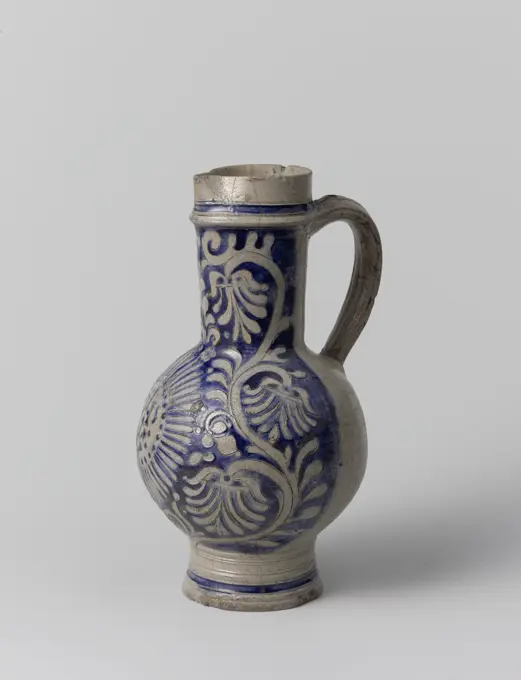
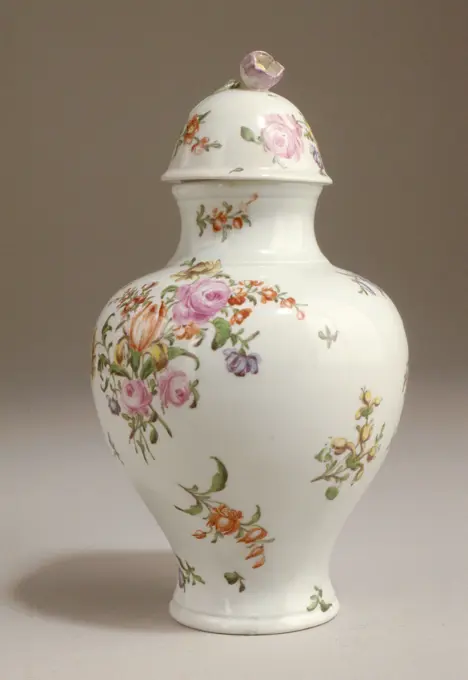
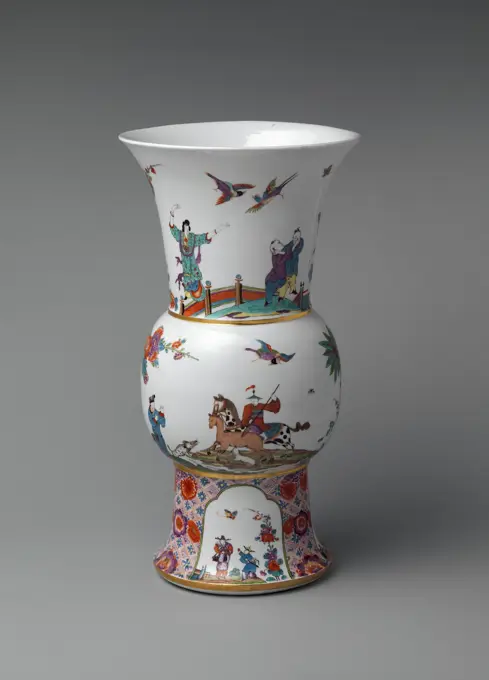
Elegant porcelain jars with intricate blue and polychrome decorations. Features floral motifs and traditional Japanese craftsmanship.
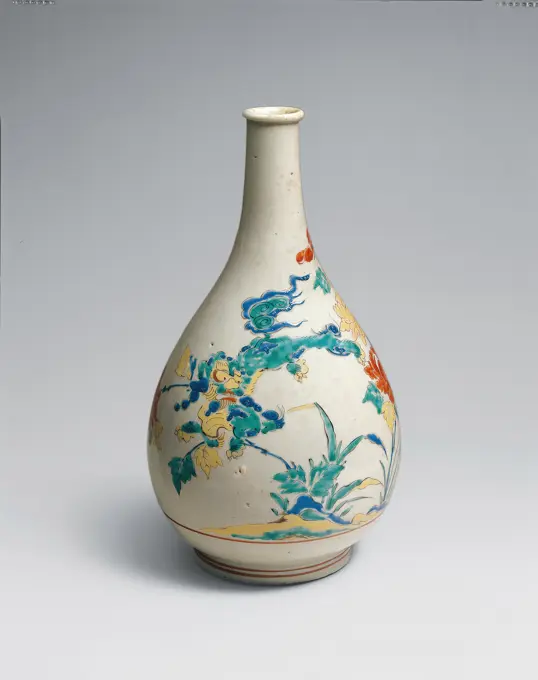
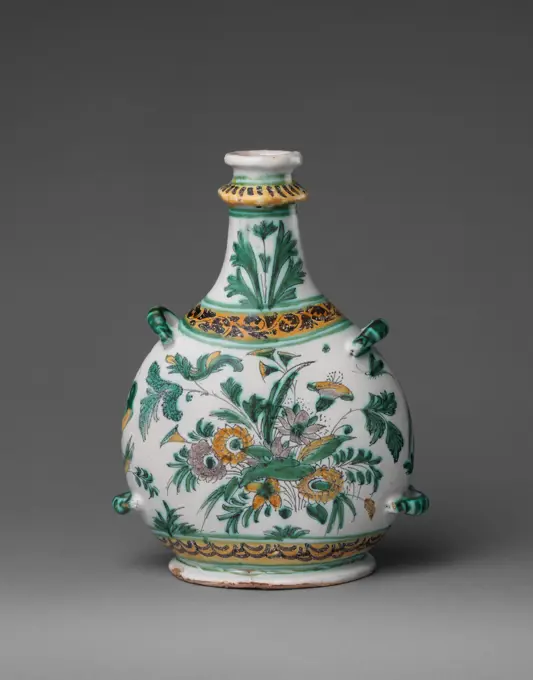
Bottle with peonies and Chinese lion, c. 1660s, Unknown Japanese, 11 3/16 × 6 3/16 × 6 3/16 in. (28.42 × 15.72 × 15.72 cm), Hizen ware, Ko-Imari style; porcelain with overglaze enamels, Japan, 17th century, This elegant, pear-shaped bottle features an auspicious combination of Chinese motifs lush peonies and mythological lion-dogsexecuted in red, blue, yellow, green, and black overglaze enamels. The technique of decorating porcelains by painting designs in multi-colored enamels over glazed, high-fired works was mastered in Japan only in the 1640s. Although also extremely popular within the country, many of these wares were intended for export to Southeast Asia and Europe.
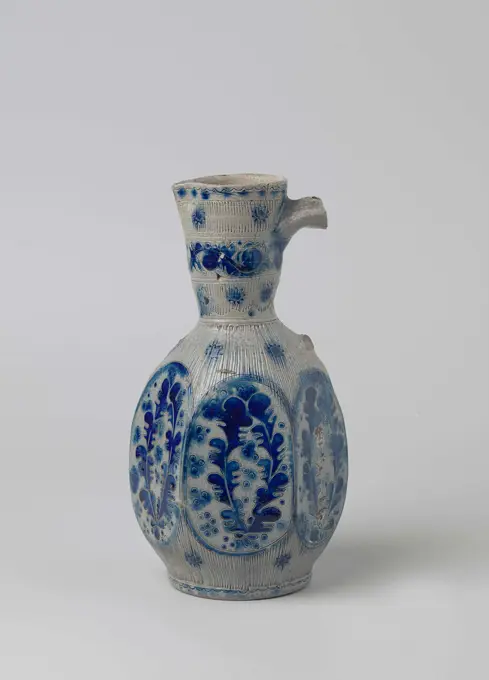
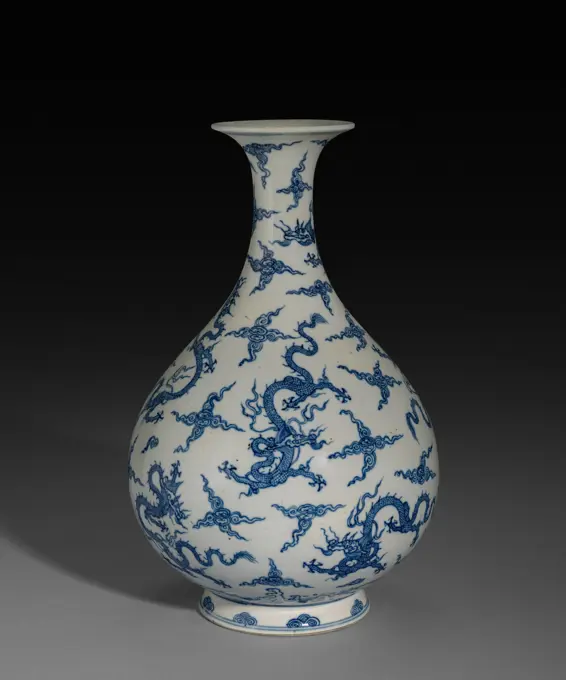
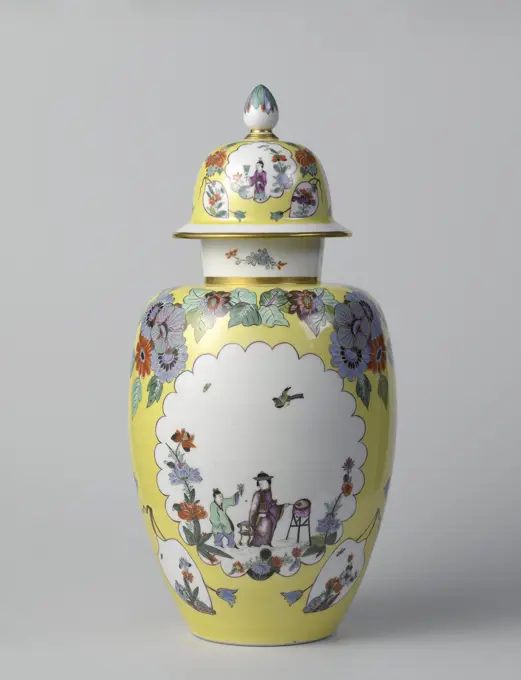
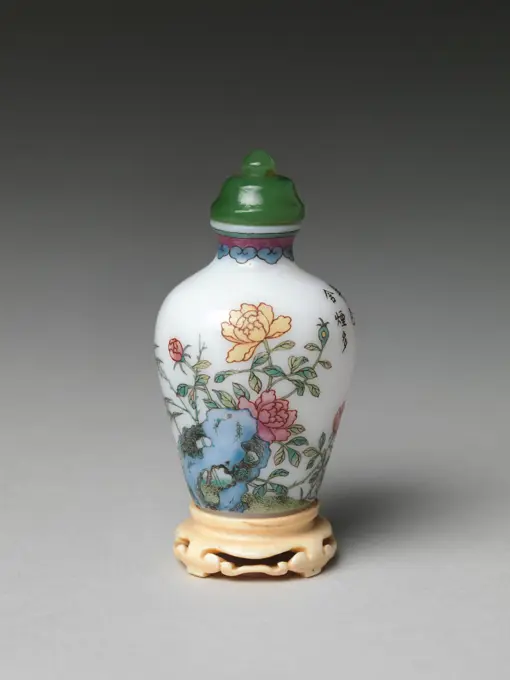
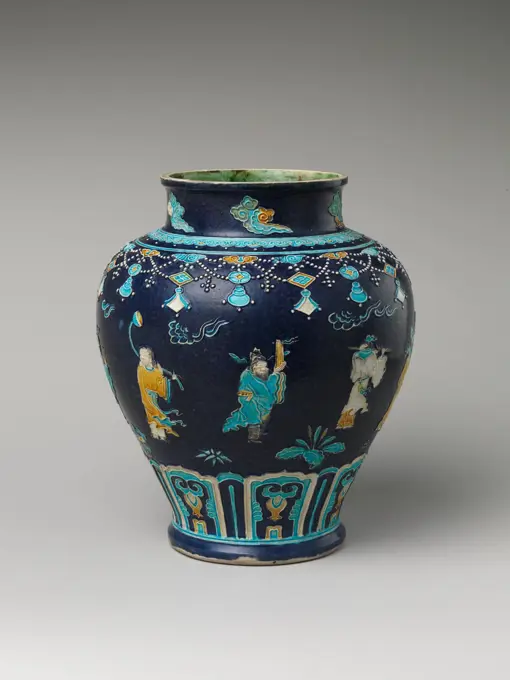
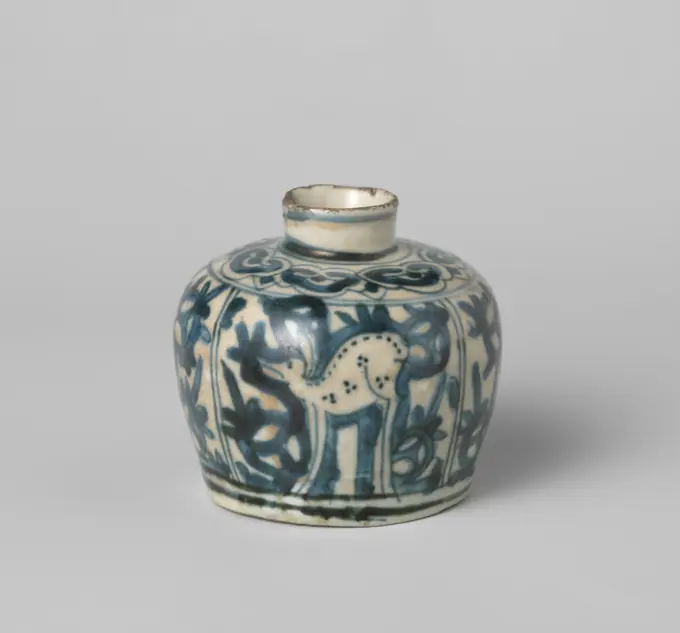
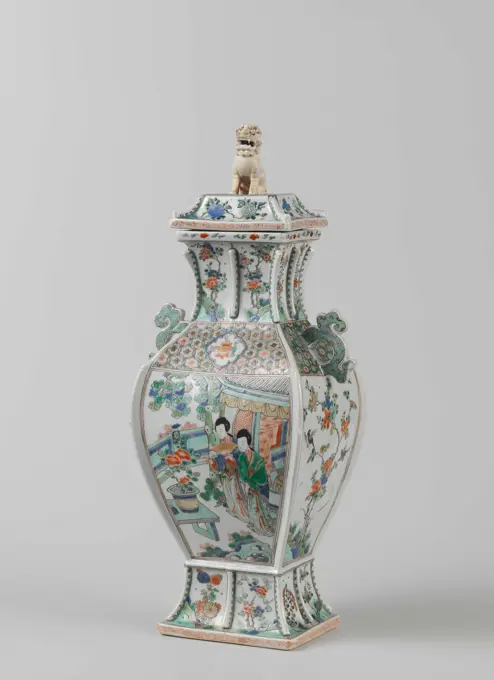
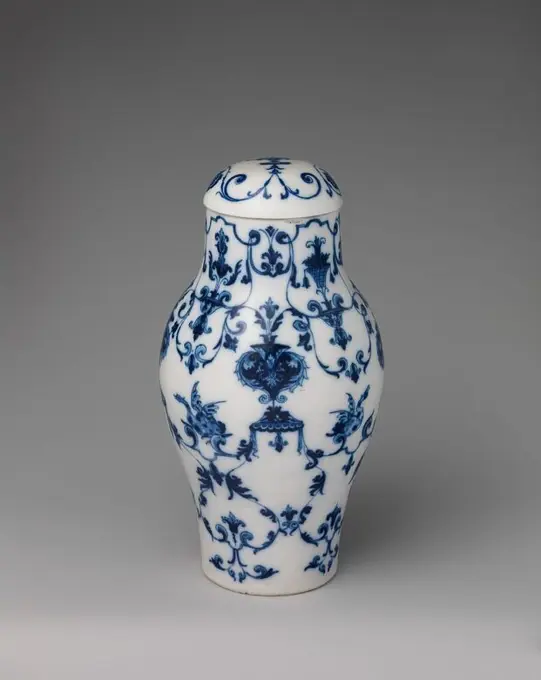
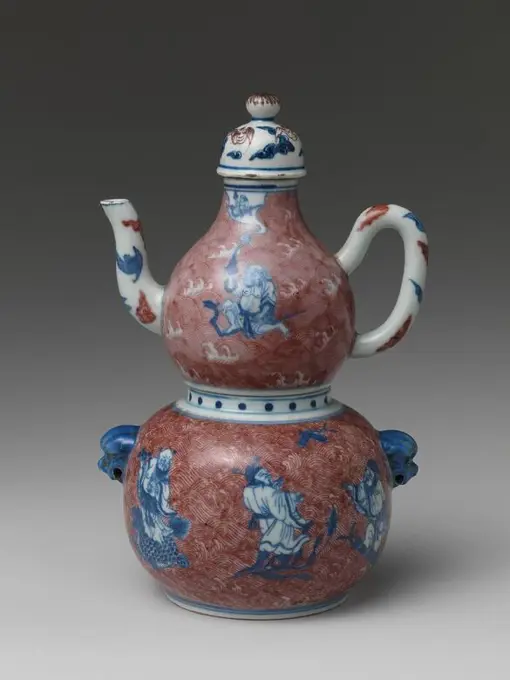
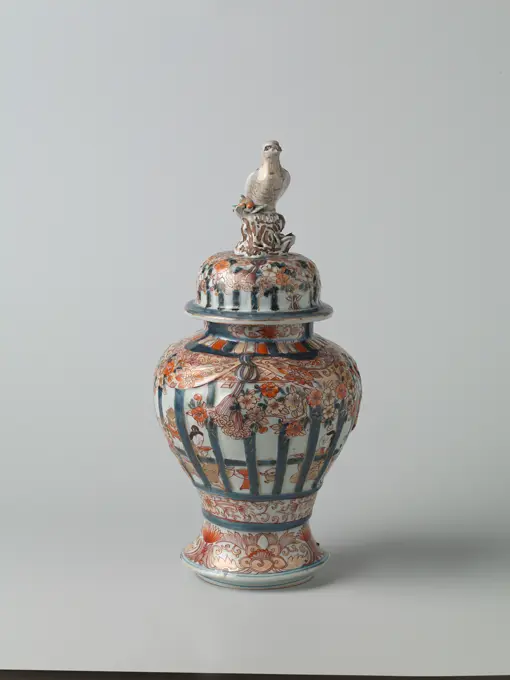
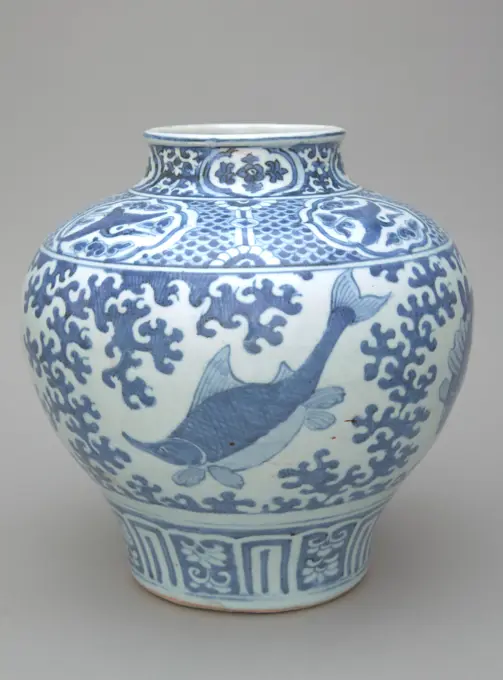
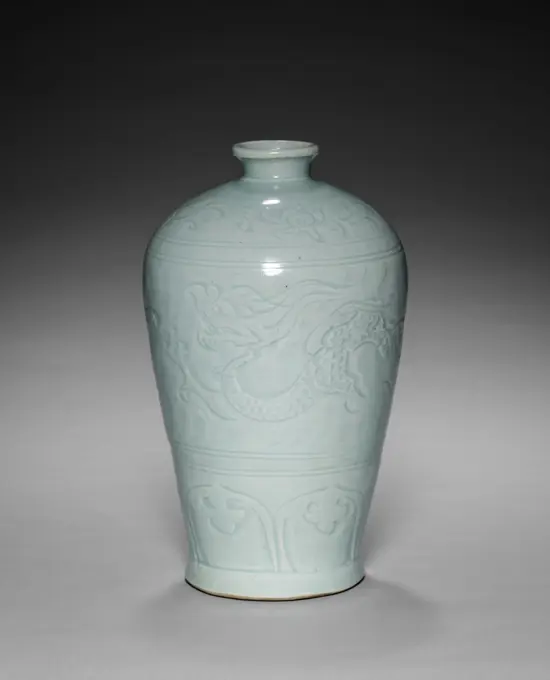
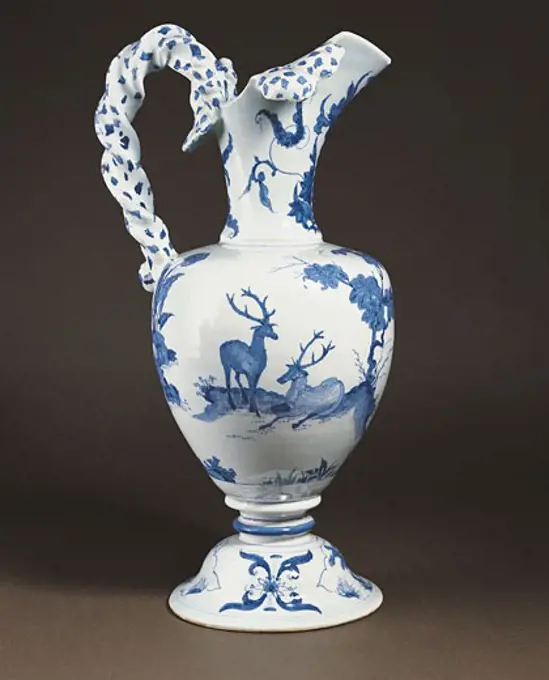
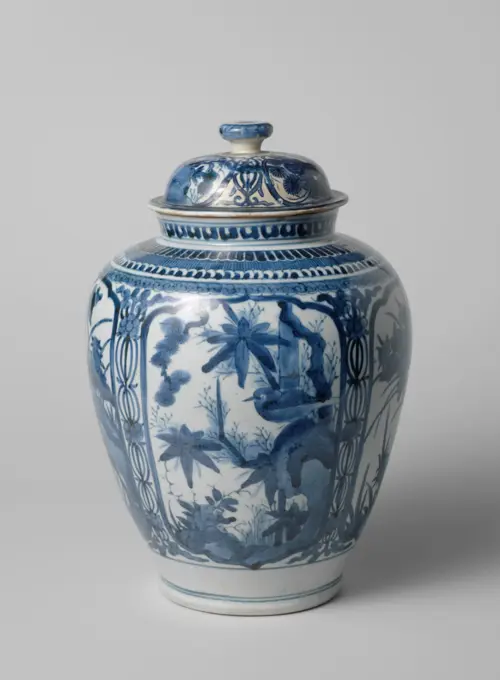
Ovoid covered jar with a bird on a rock and flowering plants in panels, anonymous, c. 1650 - c. 1680 Egg -shaped lid pot of porcelain, painted in underlaze blue. On the abdomen four scalloped cartouches with a bird on a rock in plants in two (pine, bamboo), in the other two a flowering plant (peony) in a rock. Stylized flower vines between the cartouches. A decorative band on the shoulder and the neck. The vase has been broken. Blue White. Japan porcelain. glaze. cobalt (mineral) painting / vitrification Egg -shaped lid pot of porcelain, painted in underlaze blue. On the abdomen four scalloped cartouches with a bird on a rock in plants in two (pine, bamboo), in the other two a flowering plant (peony) in a rock. Stylized flower vines between the cartouches. A decorative band on the shoulder and the neck. The vase has been broken. Blue White. Japan porcelain. glaze. cobalt (mineral) painting / vitrificationLid, octagonal vaulted, with button; Polychrome decorated with flower branches within cartouches, the two Scheepjes, after Jan Gaal, after widow Gaal -van der Plank, 1707 - 1727  Delft earthenware  Delft earthenwareOvoid covered jar with flowering plants in panels and ornamental borders, anonymous, c. 1680 - c. 1700 Porcelain lid of egg -shaped lid jar, painted in underlaze blue. Decorated with two lobed cartouches with flowering plants; Bloemranken in between. A crack in the lid. Blue White. Japan porcelain. glaze. cobalt (mineral) painting / vitrification Porcelain lid of egg -shaped lid jar, painted in underlaze blue. Decorated with two lobed cartouches with flowering plants; Bloemranken in between. A crack in the lid. Blue White. Japan porcelain. glaze. cobalt (mineral) painting / vitrificationTriple-gourd vase with flower sprays and insects, anonymous, c. 1700 - c. 1724 Bottle -shaped vase (lump of lessons) of porcelain, with three -part body and spreading neck, painted on the glaze in blue, red, green, yellow, eggplant, black and gold. The lower part of the body with three flowering branches (peony, chrysanthemum) and a bond with Ruyi motif; the middle part with lotus ranks in reserve against a red soil; the upper lump with three fruit-shaped cartouches with an insect at a plant; Two bamboo branches on the neck; Around the foot a 'crackled ice' pattern in green. A crack in the edge. Old label on the bottom with 'Nightingale Coll: 32.'. Famle Verte. China porcelain. glaze. gold (metal) painting / gilding / vitrification Bottle -shaped vase (lump of lessons) of porcelain, with three -part body and spreading neck, painted on the glaze in blue, red, green, yellow, eggplant, black and gold. The lower part of the body with three flowering branches (peony, chrysanthemum) and a boBottle with peonies and Chinese lion, c. 1660s, Unknown Japanese, 11 3/16 × 6 3/16 × 6 3/16 in. (28.42 × 15.72 × 15.72 cm), Hizen ware, Ko-Imari style; porcelain with overglaze enamels, Japan, 17th century, This elegant, pear-shaped bottle features an auspicious combination of Chinese motifs lush peonies and mythological lion-dogsexecuted in red, blue, yellow, green, and black overglaze enamels. The technique of decorating porcelains by painting designs in multi-colored enamels over glazed, high-fired works was mastered in Japan only in the 1640s. Although also extremely popular within the country, many of these wares were intended for export to Southeast Asia and Europe.Hexagonal jug of stoneware. Hexagonal jug of stoneware, decorated with gray and blue ornaments. The ear is missing.Bottle Vase, 1723-35. China, Jiangxi province, Jingdezhen kilns, Qing dynasty (1644-1911), Yongzheng reign (1723-35). Porcelain with underglaze blue decoration; overall: 28.6 cm (11 1/4 in.).Bottle from V.O.C. ship De 'Witte Leeuw', Anonymous, Before 1613  Bottle from V.O.C. ship the 'Witte Leeuw'. Pear -shaped bottle decorated in underlaze blue. The Decort is divided into narrow and wide fields. In the wide fields on the abdomen flowering plants, on the shoulder and neck, dot and stricter. Coming from the VOC ship 'Witte Leeuw', which was in 1613. The top of the neck is missing, 98 stored. The shard is glassy and has little ingrained dirt. The bottom is glazed and the foot ring is straight and faceted. Little oven sand has been found. Jingdezhen porcelain   Sint-HelenaJar with Basket of Auspicious Flowers 18th century China In some of the porcelain on view, the color green predominates in the painted decoration. In others, such as this jar, it is shades of pink that dominate. As a result, porcelains painted with this palette have generally been known as famille rose (pink family) in Western writings.. Jar with Basket of Auspicious Flowers. China. 18th century. Porcelain painted with colored enamels over transparent glaze (Jingdezhen ware). Qing dynasty (1644-1911), Qianlong period (1736-95). CeramicsLidded Vase, Meissener porcelain manufactory, c. 1735 Vase with lid made of painted porcelain. The vase is covered with a yellow stock, in which two garlands of Indianic blums are painted on the body and lid. In the yellow stock there are two large almost circular fields with lobed edges, in which contour chinoiseries are painted and six pear-shaped fields with birds and flowers. The vase is marked. Float porcelain Vase with lid made of painted porcelain. The vase is covered with a yellow stock, in which two garlands of Indianic blums are painted on the body and lid. In the yellow stock there are two large almost circular fields with lobed edges, in which contour chinoiseries are painted and six pear-shaped fields with birds and flowers. The vase is marked. Float porcelainTranged vase;  2. PO. 19th century (1851-00-00-1863-00-00);Paderewski, Ignacy Jan (1860-1941), Paderewski, Ignacy Jan (1860-1941)-collection, qing (style), Chinese (culture), cloisonné, gift (provenance), floral pattern, meander (ornament), Chinese artBottle, anonymous, 1700 - 1725 Faaience bottle. Multicolored painted with flower branches and a bird. Delft . Faaience bottle. Multicolored painted with flower branches and a bird. Delft .Snuff Bottle with Flowers and Rocks China This snuff bottle and its companion piece both display opaque white backgrounds and poetic inscriptions on their backs, which, together with a shared use of enamel, reflect the ties between the glass workshops in Beijing and the kilns at Jingdezhen. Porcelains that combine paintings with poems are sometimes termed gu yue xuan, or "old moon pavilion"-style wares. They are thought to have been painted at court in Beijing rather than at the Jingdezhen kilns farther south.. Snuff Bottle with Flowers and Rocks 41717Cilindrical vase with dragons and floral scrolls, anonymous, c. 1700 Cylindrical vase of porcelain with a wide, spreading neck, painted in under -glaze blue. The belly is divided into four wide tires with a bond with spared Lotus vranks, one with flower vines, one with two chilongs (polled dragon) with a mushroom (lingzhi) between clouds and one with flower vines interrupted by a sparked lotus drink in A lobed cartouche. On the shoulder and above the foot a band with a zigzag pattern with flowers. The neck with standing, pointed leaf motifs. Blue White. China porcelain. glaze. cobalt (mineral) painting / vitrification Cylindrical vase of porcelain with a wide, spreading neck, painted in under -glaze blue. The belly is divided into four wide tires with a bond with spared Lotus vranks, one with flower vines, one with two chilongs (polled dragon) with a mushroom (lingzhi) between clouds and one with flower vines interrupted by a sparked lotus drink in A lobed cartouche. On the shoulder anCovered vase (one of a pair) ca. 1765 Worcester factory. Covered vase (one of a pair). British, Worcester. ca. 1765. Soft-paste porcelain. Worcester factory (British, 1751-2008). Ceramics-PorcelainBaluster covered jar with lotus plants and cranes, anonymous, c. 1700 - c. 1724 Balus -shaped porcelain lid jar with a spreading base and a wide neck. Painted in underly glaze blue and red and a white sludge. On the wall a continuous representation of a pond with lotus plants and standing and flying cranes. A decorative band around the foot and on the shoulder. The neck with flower branches. A few cracks in the neck of the pot. Marked on the underside with an artemisia leaf in a double circle. Underglaze blue with copper red. China porcelain. glaze. cobalt (mineral). copper (metal) painting / vitrification Balus -shaped porcelain lid jar with a spreading base and a wide neck. Painted in underly glaze blue and red and a white sludge. On the wall a continuous representation of a pond with lotus plants and standing and flying cranes. A decorative band around the foot and on the shoulder. The neck with flower branches. A few cracks in the neck of the pot. Marked on the underside with an arCovered jar with women and flower pots in panels, anonymous, c. 1680 - c. 1720 Balus -shaped porcelain lid jar, painted in underlaze blue. The wall is divided into three rows with hexagonal compartments with alternately a woman (long Lijs) in a fenced garden and a flower vase in a landscape. Two flower branches on the shoulder. Marked on the bottom with the character 'Yù', Jade, in a double circle. A crack in the edge. Part of a cupboard set with number AK-RBK-16290. Blue White. China porcelain. glaze. cobalt (mineral) painting / vitrification Balus -shaped porcelain lid jar, painted in underlaze blue. The wall is divided into three rows with hexagonal compartments with alternately a woman (long Lijs) in a fenced garden and a flower vase in a landscape. Two flower branches on the shoulder. Marked on the bottom with the character 'Yù', Jade, in a double circle. A crack in the edge. Part of a cupboard set with number AK-RBK-16290. Blue White. China porcelain. glaze. cobalt (mineral) painLidded Vase, anonymous, c. 1700 Balus -shaped porcelain lid jar, painted in underlaze blue. The body is completely covered with a continuous flower drink (peony). On the shoulder a band with lambrequins with saved flower and lotus vines against a blue background. Above the foot a band with stylized leaf motifs. The neck with lotus vrocks. The lid with flower vessels; Lid button in the form of a gilt, bronze shishi. Marked on the bottom with a bang Johanneum number 'N393' above a wavy line. Blue White. China porcelain. glaze. cobalt (mineral). gold (metal). bronze (metal) painting / gilding / vitrification Balus -shaped porcelain lid jar, painted in underlaze blue. The body is completely covered with a continuous flower drink (peony). On the shoulder a band with lambrequins with saved flower and lotus vines against a blue background. Above the foot a band with stylized leaf motifs. The neck with lotus vrocks. The lid with flower vessels; Lid button in the form of a gilt, bronze shishi. Ovoid covered jar with a woman reading a letter and finial in the shape of a shishi, anonymous, c. 1650 - c. 1699 Egg -shaped lid pot of porcelain, painted in underlaze blue and on the glaze gold. On the belly two compartments with one sitting woman with a letter in her hand, the other with two flowering trees at rocks and a fence. On the shoulder a bond with sprirals and prunus flowers. Around the foot a band with pointed leaf motifs. The neck with a decorative band. Pot has been broken. Arita, Blauw-Wit. Japan porcelain. glaze. cobalt (mineral). gold (metal) painting / gilding / vitrification Egg -shaped lid pot of porcelain, painted in underlaze blue and on the glaze gold. On the belly two compartments with one sitting woman with a letter in her hand, the other with two flowering trees at rocks and a fence. On the shoulder a bond with sprirals and prunus flowers. Around the foot a band with pointed leaf motifs. The neck with a decorative band. Pot has been broken. Arita, Blauw-Wit. Ovoid covered jar with large peonies, anonymous, c. 1675 - c. 1699 Cover of porcelain jar with a wide neck, painted in underlaze blue. Four large peonies on the wall at two rocks. On the neck a tire with pointed leaf motifs. Lid button in the form of a gilt shishi (lion dog). Lid has been broken. Blue White. China porcelain. glaze. cobalt (mineral). gold (metal) painting / gilding / vitrification Cover of porcelain jar with a wide neck, painted in underlaze blue. Four large peonies on the wall at two rocks. On the neck a tire with pointed leaf motifs. Lid button in the form of a gilt shishi (lion dog). Lid has been broken. Blue White. China porcelain. glaze. cobalt (mineral). gold (metal) painting / gilding / vitrificationBeaker vase with shishi, hoo-birds, flowering plants and floral scrolls, anonymous, c. 1775 - c. 1824 Porcelain cup vayer with trumpet -shaped mouth, painted in underly glaze blue and on the glaze red, black and gold. On the outside wall two large cartouches with a shishi (lion dog) between a flourishing peoning plant; The cartouches are separated by tires of curls containing a lobed cartouche with a Hoo-Vogel surrounded by flower vines. On the outer edge a wide band with chrysanthnums interrupted by lobed cartouches with a shishi between a plant. Around the foot a bond with lotus drinks. A band with curl work on the foot. The inside with a peony and chrysanthemum branch. Is part of a cupboard set. Imari. Japan porcelain. glaze. cobalt (mineral). gold (metal) painting / gilding / vitrification Porcelain cup vayer with trumpet -shaped mouth, painted in underly glaze blue and on the glaze red, black and gold. On the outside wall two large cartouches with a shishi (lion dog) between a floVase;  19th century (1801-00-00-1900-00-00);Pot with lid, part of a cupboard set, the 3 clocks (attributed to), c. 1820 - c. 1850 Pot with lid, of multicolored painted Faïence. The pot is eight -sided and eight courses are painted on the eight sides. In four compartments, a vase with two S-shaped handles, standing on a three-legged pedest and filled with flowers, in the other four compartments is a pot of lid on a three-legged pedestal above which a phoenix. The pot is part of a couple and is marked. Delft earthenware. tin glaze. Pot with lid, of multicolored painted Faïence. The pot is eight -sided and eight courses are painted on the eight sides. In four compartments, a vase with two S-shaped handles, standing on a three-legged pedest and filled with flowers, in the other four compartments is a pot of lid on a three-legged pedestal above which a phoenix. The pot is part of a couple and is marked. Delft earthenware. tin glaze.. Meissen porcelain manufactory ice cream, c. 1725-1730Hard Paste PorcelainJar with immortals late 15th century China Daoist immortalsidentifiable by their wild hair, unkempt clothing, and feats of magiccavort in a garden setting. This vibrant type of ceramic decoration, called fahua, entails applying raised lines and dots of slip with a piping bag, as if decorating a cake, in addition to glazes of various colors.. Jar with immortals 50848Small, Shouldered Vase With Deer Among Foliage. Small vase of porcelain with a wide shoulder, painted in underglaze blue. The wall is divided into four compartments with a deer saved in a blue background of plants; On the shoulder a band with Ruyi motif. Edge is damaged. Swatow (Zhangzhou).Rectangular, covered, Baluster Vase in The Shape of a Bronze Vessel with Two Ladies on a Terrace. Lid of rectangular, baluster-shaped vase of porcelain lid with flower branches and geometric motif; button in the shape of a shishi (lion dog). Crack in the lid. Famille Verte.Blue vase, by Unknown artist, 27 b.C. 68 d. C.,, blue cameo glass. Italy: Campania: Naples: National Archaeological Museum. Whole artwork. Vase amphora cameo glass blue white cupids grape gatherings musicians spirals leaves grape-vine vine-leavesOvoid covered jar with women in a garden, anonymous, c. 1680 - c. 1720 Egg -shaped lid pot of porcelain, painted in underlaze blue. On the wall a scene in a garden with trees, rocks and plants: two women (long lices) looking at a flower vase on a table; Two women at a table and stool, one wears a rabbit, the other has a twig in her hand. The lid with two dancing boys (fools) in rocks and plants. Marked on the underside with an artemisia leaf. A crack in the neck. Blue White. China porcelain. glaze. cobalt (mineral) painting / vitrification Egg -shaped lid pot of porcelain, painted in underlaze blue. On the wall a scene in a garden with trees, rocks and plants: two women (long lices) looking at a flower vase on a table; Two women at a table and stool, one wears a rabbit, the other has a twig in her hand. The lid with two dancing boys (fools) in rocks and plants. Marked on the underside with an artemisia leaf. A crack in the neck. Blue White. China porcelain. glaze. cobalt (mineral) painLidded jar, anonymous, c. 1670 - c. 1685 Faïence lid jar, painted in blue and purple with Chinese figures in a landscape, a decoration to Chinese porcelain from the transition period. Delft . Faïence lid jar, painted in blue and purple with Chinese figures in a landscape, a decoration to Chinese porcelain from the transition period. Delft .Covered cylindrical beaker with flower scrolls, anonymous, c. 1700 Cylindrical cup of porcelain, the body slightly running up, painted in underly glaze blue. Decorated with leaf vines. Some chips in the edge. Blue White. China porcelain. glaze. cobalt (mineral) painting / vitrification Cylindrical cup of porcelain, the body slightly running up, painted in underly glaze blue. Decorated with leaf vines. Some chips in the edge. Blue White. China porcelain. glaze. cobalt (mineral) painting / vitrificationVase;  19th century (1800-00-00-1900-00-00);Vase with cover. Culture: French, Saint-Cloud. Dimensions: Overall (confirmed): 9 15/16 x 5 1/4 x 5 3/16 in. (25.2 x 13.3 x 13.2 cm). Factory: Saint-Cloud factory (French, before 1698-1766). Date: ca. 1695-1710.Of Chinese inspiration, both in its form and blue-and-white color scheme, the jar is painted in a manner that combines Renaissance grotesque elements based on etchings by Jacques Androuet du Cerceau (ca. 1510/20-1585/6) with the contemporary designs by Jean Berain (1637-1711). Museum: Metropolitan Museum of Art, New York, USA.Pilgrim bottle 1650-75 French, Nevers The decoration of flowers in Far Eastern style.. Pilgrim bottle. French, Nevers. 1650-75. Faience (tin-glazed earthenware). Ceramics-PotteryVase, the Greek A, c. 1680 - c. 1685 Octagonal vase of blue painted faience. The belly is canopic and the neck is slim and long and has a sphere under the outstanding mouth edge. The vase is painted in the style of the Chinese transition porcelain. On the abdomen a company (Chinese) is painted in a landscape and above the foot ovals in which figures (Chinese) in a landscape. The vase is marked and the vase includes an identical vase with invnr. BK-1984-160-B. Delft earthenware. tin glaze. Octagonal vase of blue painted faience. The belly is canopic and the neck is slim and long and has a sphere under the outstanding mouth edge. The vase is painted in the style of the Chinese transition porcelain. On the abdomen a company (Chinese) is painted in a landscape and above the foot ovals in which figures (Chinese) in a landscape. The vase is marked and the vase includes an identical vase with invnr. BK-1984-160-B. Delft earthenware. tin glaze.Lobed Covered Jar With Two Bouquets and Flower Scrolls. Porcelain ribbed lid pot with lobby lid edge, painted in underglaze blue and on the glaze red, green, yellow, black and gold. Two bouquets with flowers on the wall, the stems together in a holder; around the foot a bond with curling; On the shoulder boxes alternately covered with red with floral drinks in reserve and light red with flower drinks in gold; On the neck light red with lotus drinks in gold. Famille Verte.Vase with cover ca. 1725-30 Meissen Manufactory German Porcelain vases of this size were technically difficult to produce, often suffering damage during the firing process; this example reflects a notable achievement for the young Meissen factory (established 1710).. Vase with cover 200928Ovoid Jar With Floral Scrolls And Panels With a Figure in a Landscape. Egg-shaped pot of porcelain, painted in underglaze blue. Three scalloped cartouches on the belly with a sitting and a standing person in a landscape with trees, houses and clouds. Between the cartouches styled leaf and flour rinks. A decorative band around the neck. On the neck a band with Ruyi motif. Cracked glaze; Shard missing from the neck; Lid is missing. Blue White.Vase late 18th century China. Vase. China. late 18th century. Porcelain painted in overglaze polychrome enamels. Qing dynasty (1644-1911), Qianlong mark and period (1736-95). CeramicsGu-type vase. unknown, craftsmanBrazier with crane-shaped medallions and ornamental borders, anonymous, c. 1675 - c. 1724 Warm holder of porcelain in the form of a bowl on a high base. Painted in underlaze blue. On the outside of the bowl with foot four medallions in the form of a crane; In between a cloud motif and horizontal lines. Around the foot a band with stylized petals; The outer edge with a decorative band. On the foot three tires: one with a raised leaf motif, one with two flower vessels and one with a meander pattern. The outer wall with four small ears in the form of monster heads. Arita, Blauw-Wit. Japan porcelain. glaze. cobalt (mineral) painting / vitrification Warm holder of porcelain in the form of a bowl on a high base. Painted in underlaze blue. On the outside of the bowl with foot four medallions in the form of a crane; In between a cloud motif and horizontal lines. Around the foot a band with stylized petals; The outer edge with a decorative band. On the foot three tires: one with a raised leaf mAnonymous. "Vase with blue and white decor". Porcelain. Paris, Museum of Romantic Life. VASEWaza (Tsubo);  around 1720-1740 (1720-00-00-1740-00-00);Vase;  19th century (1800-00-00-1900-00-00);Baluster covered jar with floral scrolls and auspicious Symbols. Baluster-shaped porcelain lid pot, painted on the glaze in blue, red, pink, green, yellow and black. On the wall of the vase two groups of lucky objects with valuables (musical stone), lotus drink, tripod, fruit basket and flower vases; around the shoulder a decorative bond with flower and lotus drinks; Two flower branches on the neck; A decorative band around the foot. Family Rose.Baluster vase with deer and cranes in a water landscape.Baluster shaped vase of porcelain with a trumpet-shaped mouth, painted in underglaze blue. On the wall a river landscape with two deer, a flying crane and one on a branch of a pain cream. The same decoration on the neck. The outer edge with a band with cloud motifs. The bottom with a double circle. Blue White.Pot with lid of multicolored painted Faïence, Anonymous, c. 1700 - c. 1735 Pot with Faïence lid. Multicolored painted with flowers on a blue stock. Delft . Pot with Faïence lid. Multicolored painted with flowers on a blue stock. Delft .Apothecary Bottle With Birds, Flower and Fruit sprays and the letters C.B .. Pharmacist bottle of porcelain with spherical body, painted in underglaze blue. On the wall flower and fruit varieties (peony, pomegranate) with birds. A decorative band on the shoulder. The neck with four times a flower branch. On the underside the letters 'c.b.'. Arita, blue-white.Baluster Covered Jar With Lotus Plants And Cranes. Baluster-shaped lid pot of porcelain with a spreading foot and a wide neck. Painted in underglaze blue and red and a white sludge. On the wall a continuous representation of a pond with lotus plants and standing and flying cranes. A decorative band around the foot and on the shoulder. The neck with flower branches. On the lid lotus plants. Marked on the bottom with an artemisia leaf in a double circle. A crack in the neck of the pot. Two shards from the lid. Middle blue with copper red.Baluster covered jar with a continuous landscape with figures, boats and pavillions, anonymous, c. 1850 - c. 1899 Balus -shaped porcelain lid jar, painted on the glaze in blue, red, pink, green, black and gold. On the belly a continuous river landscape with people in boats. In the river a few islands with people on terraces or at pavilions. Different pain and prunus trees in the landscape. Bergen in the background. Around the foot and on the shoulder a band with flower vines interrupted by a chrysanthemum. The neck with three peon branches. The neck of the pot has been broken. Old label in the lid with 'S. Alberge et fils/ antiquaires 11 place .../ la Haye/ Ho ... '. Famle Rose. China porcelain. glaze. gold (metal) painting / gilding / vitrification Balus -shaped porcelain lid jar, painted on the glaze in blue, red, pink, green, black and gold. On the belly a continuous river landscape with people in boats. In the river a few islands with people on terraces or at pavilions. Different pPear-shaped bottle vase with dragons, precious objects and auspicious symbols, anonymous, c. 1675 - c. 1699 Bottle -shaped vase of porcelain with pear -shaped belly on spreading base, painted in underly glaze blue and red. Twice a dragon surrounded by valuables and happiness symbols on the wall; A decorative tire around the foot and the edge. A chip in the edge. Underglaze blue and copper red. China porcelain. glaze. cobalt (mineral). copper (metal) painting / vitrification Bottle -shaped vase of porcelain with pear -shaped belly on spreading base, painted in underly glaze blue and red. Twice a dragon surrounded by valuables and happiness symbols on the wall; A decorative tire around the foot and the edge. A chip in the edge. Underglaze blue and copper red. China porcelain. glaze. cobalt (mineral). copper (metal) painting / vitrificationVase, anonymous, c. 1650 - c. 1660 vase Vase of blue painted faience. The vase has a convex stomach and has a narrow tapered neck. On the belly a landscape with figures (Chinese) is painted and pointed on the neck and stylized flowers. A border with geometric ornaments runs along the foot. The vase is marked. Delft earthenware. tin glaze.. Faience vase, painted in blue in the glaze with a landscape to Chinese example.Vase 1885-90 Ott and Brewer. Vase 19071Ewer 1873 Minton(s) Minton was the most important ceramics factory during the Victorian period and began exhibiting products at the first Great Exhibition of 1851. Founded in 1793 by Thomas Minton at Stoke-on-Trent, the firm initially specialized in transferware pottery before expanding under the ownership of Thomass son Herbert Minton, beginning in 1836. Under the ownership of Colin Minton Campbell, who succeeded his uncle in 1858, the factory became recognized as a specialist producer of Aesthetics movement porcelain, which were inspired by a rich array of exotic and eclectic decorative motifs. Listen to experts illuminate this artwork's story Listen Play or pause #418. Christopher Dresser and the Birth of Industrial Design Supported by Bloomberg Philanthropies We're sorry, the transcript for this audio track is not available at this time. We are working to make it available as soon as possible.. Ewer. British, Stoke-on-Trent, Staffordshire. 1873. Bone china. Ceramics-PorcelainEwer 1785-1795 England. Stoneware (jasperware) . William AdamsCover of a pot of multicolored painted faïence, anonymous, c. 1730 - c. 1760 Lid of pot multicolored painted faïence. Multicolored painted with flower decorations. The pot is part of a cupboard set. Delft . Lid of pot multicolored painted faïence. Multicolored painted with flower decorations. The pot is part of a cupboard set. Delft .Vase. unknown, craftsmanVase with lid. unknown, craftsmanVase, the Moriaanshooft, c. 1685 - c. 1690 Vase of Faience. Multicolored painted with Chinese figures. Delft . Vase of Faience. Multicolored painted with Chinese figures. Delft .Wine Vessel with Daoist Immortals. Culture: China. Dimensions: H. (20.3 cm); W. 5 1/8 in. (13 cm); Diam. of foot 3 in. (7.6 cm).The eight figures belong to a group codified in the twelfth century due to the flowering of Daoist practices at the time. Often based on quasi-historical figures, they are distinguished from one another by the attributes they hold, including the gourds that influenced the shape of this ewer. Museum: Metropolitan Museum of Art, New York, USA.Vase. unknown, craftsmanVase. unknown, craftsmanFlower vase with a kuan type lid. Wolff, Karol (fl. ca 1800), company owner, Bielino (manufaktura fajansu ; 1779-1800), factoryVase in Meiping Shape late 13th-first half of the 14th century China The lively design of cloudlike scrolls on this vase is also depicted in metalwork and lacquer, particularly from the twelfth to the fourteenth century. Vases in this shape became popular after the tenth century due to the growing domestic demand for ceramics for dining and display. Often described as a vase for plum blossom, or meiping, this shape was most likely originally intended as a bottle to hold plum wine.. Vase in Meiping Shape. China. late 13th-first half of the 14th century. Porcelain with incised and carved design under celadon glaze (Jingdezhen Qingbai ware). Southern Song (1127-1279)-Yuan (1271-1368) dynasty. CeramicsJug with lid. Cantagalli, Ulisses (1839-1901/4), company owner, Florencja, factoryCylindrical vase. unknown, craftsmanClove boiler 18th century Japan. Clove boiler. Japan. 18th century. Kiyomizu ware. Edo period (1615-1868). CeramicsDecanter -Vase; Belvedere (faience manufacture; 1770-1780); 1770-1780 (1770-00-00-1770-00-00);Belvedere (faience manufacture- 1770-1780), chinoiserie, Far Eastern motifs, birds, dragonsVase, 17th-18th century, 17in. (43.2cm), Porcelain, China, 17th-18th centuryJar with flowers late 16th-early 17th century China. Jar with flowers 48085Vase. Culture: China. Dimensions: H. 18 1/2 in. (47 cm) without stand. Date: late 17th-early 18th century. Museum: Metropolitan Museum of Art, New York, USA.Tonkselpot, the lampet can, c. 1750 - c. 1825 Pot with lid of blue painted faience. The pot is marked. Delft earthenware. tin glaze. Pot with lid of blue painted faience. The pot is marked. Delft earthenware. tin glaze.Vase. Culture: American. Dimensions: H. 13 9/16 in. (34.4 cm). Maker: Greenwood Pottery Company (American, Trenton, New Jersey, 1861-1933). Date: ca. 1884-93.As an early label on the piece indicates, this vase was exhibited at the World's Columbian Exposition in Chicago in 1893, most likely as a mate to the similar example also in the Museum's collection (2004.93). The vases are unusually large and bear exquisite decoration. The hummingbirds, flowering branches, and insects on this example are clearly the work of talented English immigrants, formerly employed by Royal Worcester and Crown Derby, who were hired by the Greenwood firm to decorate its porcelains. Museum: Metropolitan Museum of Art, New York, USA.Glass; Non -like Lona Huta; around 1840-1850 (1840-00-00-1850-00-00);Fuglewicz Joanna, DarBottle Vase With Powder Blue, Antiques and Flower Sprays. Bottle-shaped vase of porcelain with a wide, flared neck, covered with and painted in underglaze blue. On the belly three scalloped cartouches with antiques (vase with peacock feathers, flower vase, lotus leaf, presser, rolls, impeller, ruyi scepter, incense burner, lotus scepter, books). On the neck two leaf-shaped cartouches with flower branches (Aster, Prachtanjer). Blue Poudré.Tulip vase. Culture: Austrian, Vienna. Dimensions: Overall (confirmed): 6 7/16 x 8 3/8 x 6 9/16 in. (16.4 x 21.3 x 16.7 cm). Factory: Vienna. Factory director: Du Paquier period (1718-1744). Date: ca. 1725.The ceramic manufactory established in Vienna by Claudius du Paquier (died 1751) was the second in Europe to produce hard-paste porcelain. In founding the factory, du Paquier was assisted by Samuel Stözel, the kiln master from the Meissen factory, and the earliest porcelain made in Vienna dates to about 1719. While the porcelain body produced by du Paquier is often very similar to that made at Meissen, the Vienna factory developed its own distinctive style of painted decoration.The decoration of this vase is unusual for du Paquier porcelain because of its subject matter. The main scene depicts a man seated at a tea table with a display of porcelain on a buffet. The inscription around the scene reads in translation: "China, you will not have called your arts unknown any longer; in EBottle with Dragon Chasing Pearl late 17th-early 18th century China. Bottle with Dragon Chasing Pearl. China. late 17th-early 18th century. Porcelain painted with cobalt blue under transparent glaze (Jingdezhen ware). Qing dynasty (1644-1911), Kangxi period (1662-1722). CeramicsJug with roundels, chip carving and medallions, anonymous, c. 1550 - c. 1649  Jug of stoneware on a high base with a spherical body and wide neck. The C-shaped ear is attached to the neck and shoulder. Profiles on the neck and foot. Partly covered with cobalt blue. On the abdomen and shoulder a mirrored decoration of breached leaf motifs filled with a lot of cut, interspersed with a stamped rosette. The belly and shoulder are separated by a profile. On the neck in relief a printed and laid bond with leaf vines interrupted by medallions with masks. Raeren. Rae stoneware. glaze. cobalt (mineral) vitrificationVase. unknown, craftsmanCovered Baluster Jar With Figures in An Interior Behind Framework, Prunus Trees and Floral scrolls. Baluster-shaped lid pot of porcelain with a spreading foot, painted in underglaze blue and on the glaze red, black and gold. On the wall twice two people sitting in an interior behind landscaped and painted railing. This railing is decorated with landscaped and decorated prunus trees and tires with floral drinks. Among the railing a bond with flower drinks. A relationship with lotus drinks around the foot. Three cartouches with lotus drinks on the neck. Imari.Covered Baluster Jar With Figures in An Interior Behind Framework, Prunus Trees and Floral scrolls. Baluster-shaped lid of porcelain, painted in underglaze blue and on the glaze red, black and gold. Grille painted on the wall, decorated with landscaped and decorated prunus trees and tires with floral drinks. Among the railing a bond with flower drinks. A relationship with lotus drinks around the foot. Cover knob in the shape of a bird on a stump. Imari.Przeszo Przyszoci unknownPuzzle jug, c. 1720 - c. 1750 Fopkan van Faience with silver lid. Delft earthenware. silver (metal) Fopkan van Faience with silver lid. Delft earthenware. silver (metal)Faceted Vase ca. first half of the 14th century China. Faceted Vase 42491Mute vase. Mute vase of multicolored painted faience. The vase is octagonal and is painted with plants, flowers and birds in the colors green, red, blue, manganese and black. The vase includes an identical bottle with the Invnr. BK-NM-11637-B.Cooler with two bottles, De Metaale Pot, c. 1695 - 1715 Faaience bottle. Multicolored painted with flower decorations. Delft . Faaience bottle. Multicolored painted with flower decorations. Delft .Vase; Kam- Family (1679-1705), de Drye Vergulde Astonnens (Fiansusu Factory; 1655-1803), Delft (Ceramic family; Ca 1600-); XVII/18th century (1690-00-00-1710-00-00);Meiping Vase with carved Dragon Motif, 1300s. China, Yuan dynasty (1279-1368). Porcelain with pale bluish-white glaze, Qingbai ware with carved decoration; overall: 27.6 x 16.5 cm (10 7/8 x 6 1/2 in.). This 14th-century vase with carved decoration under a transparent bluish-white glaze (qingbai) depicts a coiling dragon amid thick mists and cloudsa symbol of fertility and power. The sturdy shape and lively carving under its bluish glaze are particularly charming as they characterize the ware’s later, more spontaneous and less formalized production under the Mongol occupation.Close-up of a pitcher, Nevers, FranceJug with 'IHS' and floral scrolls, anonymous, c. 1770 - c. 1820 Can be made of stoneware on high base with a bullet -shaped belly and long neck with a pinched spout. The C-shaped ear is attached to the neck and shoulder. Some of the lines of the foot and a profile on the neck. Partly covered with cobalt blue. The front of the jug is covered with blue containing an ingrift flower rosette containing the monogram 'IHS' surrounded by stylized flower vines. Westerwald. Westerwald stoneware. glaze. cobalt (mineral) vitrification Can be made of stoneware on high base with a bullet -shaped belly and long neck with a pinched spout. The C-shaped ear is attached to the neck and shoulder. Some of the lines of the foot and a profile on the neck. Partly covered with cobalt blue. The front of the jug is covered with blue containing an ingrift flower rosette containing the monogram 'IHS' surrounded by stylized flower vines. Westerwald. Westerwald stoneware. glaze. cobalt (mineral) vitrificationWorcester Porcelain Manufactory, Vase and Cover, c. 1772-74, soft-paste porcelain.Pitcher Mi Nia (Meissen). Soft-paste porcelain, underglaze blue . Worcester Royal Porcelain Company (Manufacturer)Puzzle Jug. Fopkan of faience with silver lid.Vase (one of a pair) ca. 1735 Meissen Manufactory German The majority of the porcelain enterprises established on the Continent in the eighteenth century were generally founded and supported by royal or noble patrons, and the funding that they provided was critical to the survival of the factories, which rarely if ever operated at a profit. This financial support also meant that the production of the factories often reflected the taste of the patron rather than the taste of a market to which it had to cater. The passion for the medium itself was the motivation for many of those who founded factories, as well as the prestige accrued from owning such an operation, making the financial return very much a secondary concern. In no instance was this more the case than with Augustus the Strong, whose obsessive interest in porcelain led to the founding of the Meissen factory in 1710 (entry 10). The early history of Meissen has been thoroughly researched and studied thanks to the factorys distTwo Lidded Vases, anonymous, c. 1750 - c. 1780 Balus -shaped porcelain lid jar, painted in underly glaze blue and on the glaze in blue, red, pink, green, yellow, black and gold. On the wall a pheasant on a rock in flowering plants (peony, prunus) and a fence. A second pheasant, butterflies and birds flies in the air. On the ground other flowers (Aster, Lotus, Prachtanjer), Mushrooms (Lingzhi) and a pond with ducks. On the shoulder a decorative strap of small flower rosettes with curl and loose flowers on it. Above the foot a band with stylized leaf motifs filled with garlands with lucky symbols (music stone, mint, window). On the neck a bond with 'crackled ice' and prunus blossoms interrupted by lobed cartouches with a landscape in Ence de Chine. The outer edge in Imari colors with a bond with clouds on architecture interrupted by cartouches with lotus vines. The lid with the same decoration; Lid button in the form of a shishi. Famle Rose. China porcelain. glaze. cobalt (mineral). goldCovered jar with flowers mid-18th century China. Covered jar with flowers 45848Vase;  19th century (1801-00-00-1900-00-00);