Traditional Decorative Jars

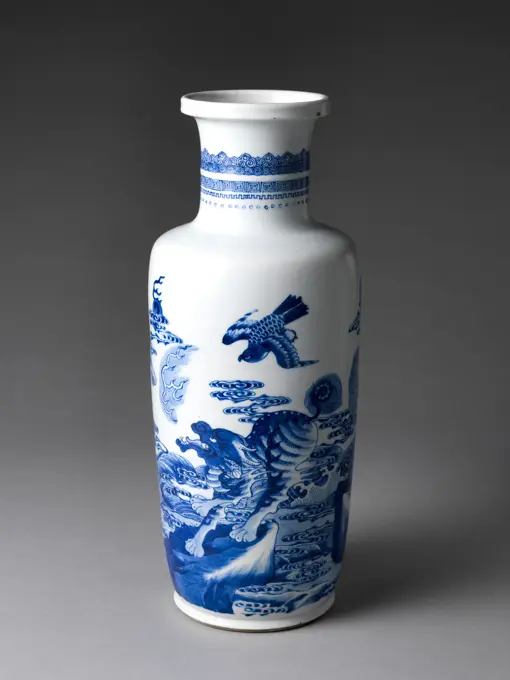
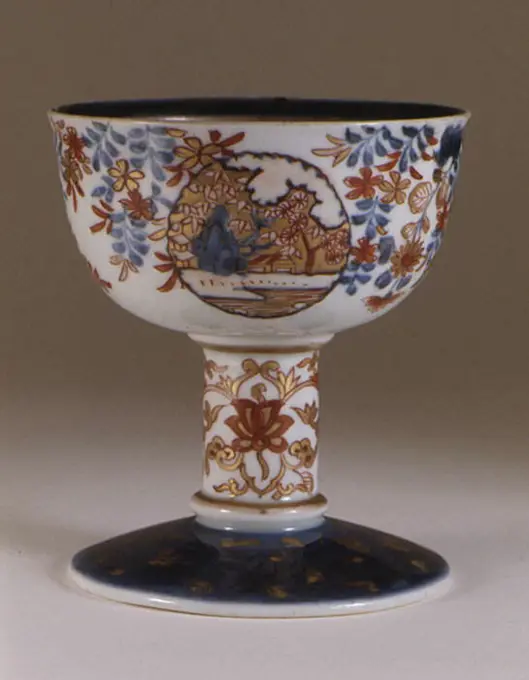
Elegant porcelain jars with intricate blue and polychrome decorations. Features floral motifs and traditional Japanese craftsmanship.
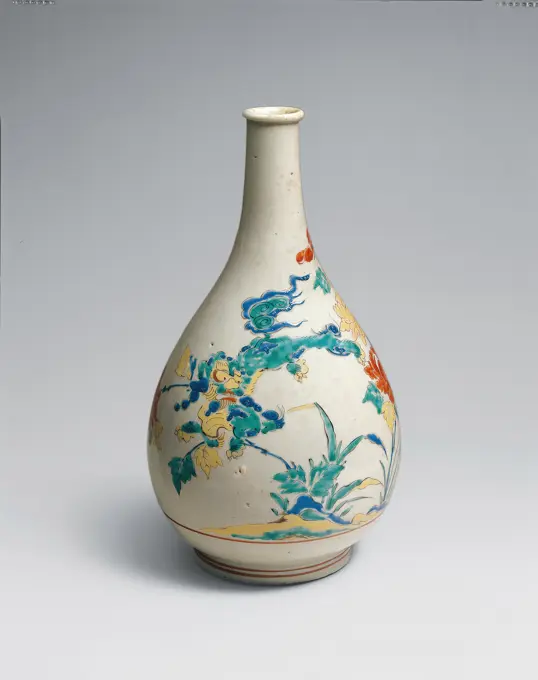
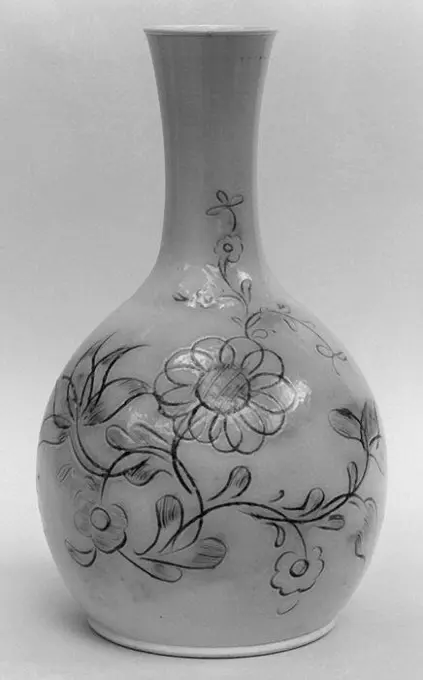
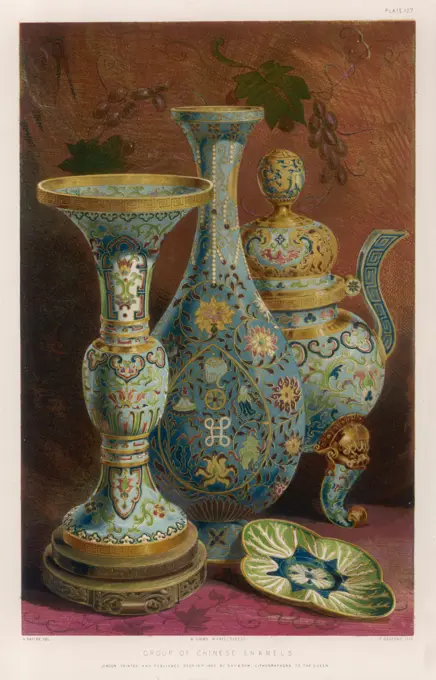
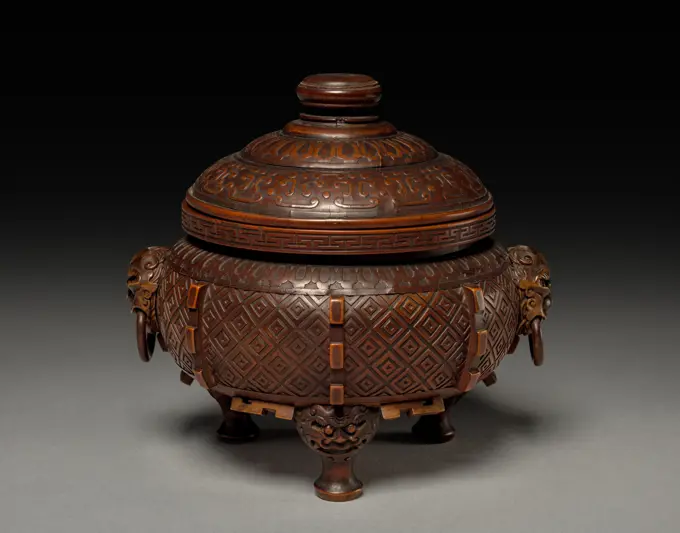
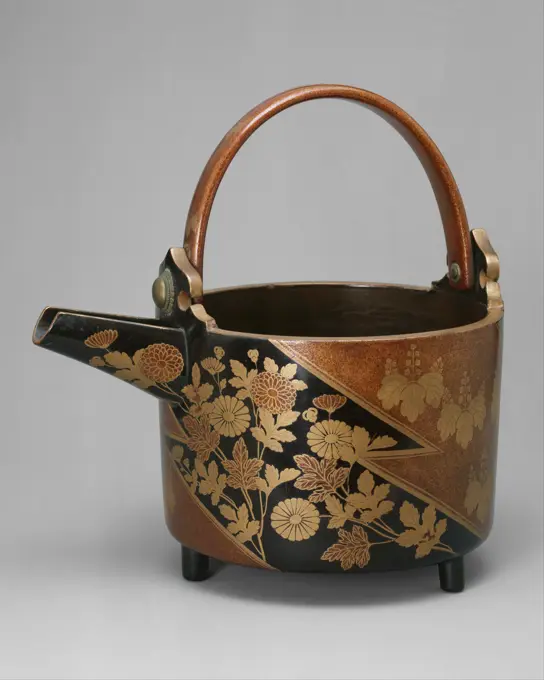
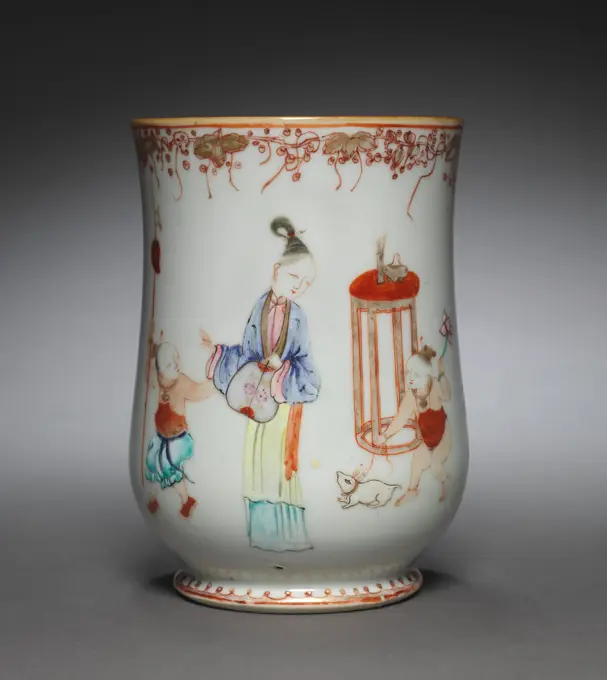
Bottle with peonies and Chinese lion, c. 1660s, Unknown Japanese, 11 3/16 × 6 3/16 × 6 3/16 in. (28.42 × 15.72 × 15.72 cm), Hizen ware, Ko-Imari style; porcelain with overglaze enamels, Japan, 17th century, This elegant, pear-shaped bottle features an auspicious combination of Chinese motifs lush peonies and mythological lion-dogsexecuted in red, blue, yellow, green, and black overglaze enamels. The technique of decorating porcelains by painting designs in multi-colored enamels over glazed, high-fired works was mastered in Japan only in the 1640s. Although also extremely popular within the country, many of these wares were intended for export to Southeast Asia and Europe.
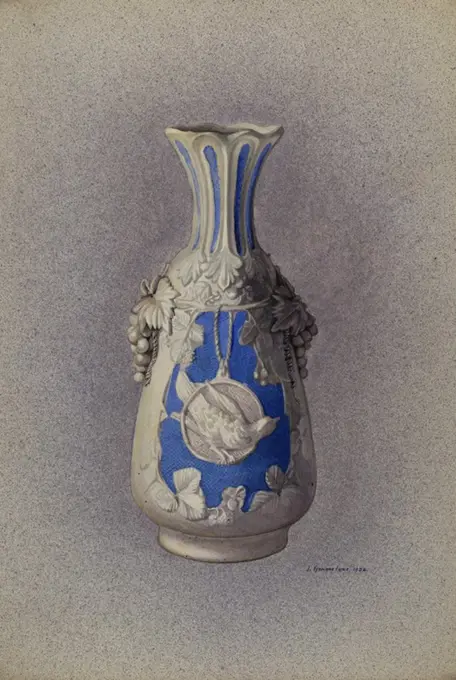
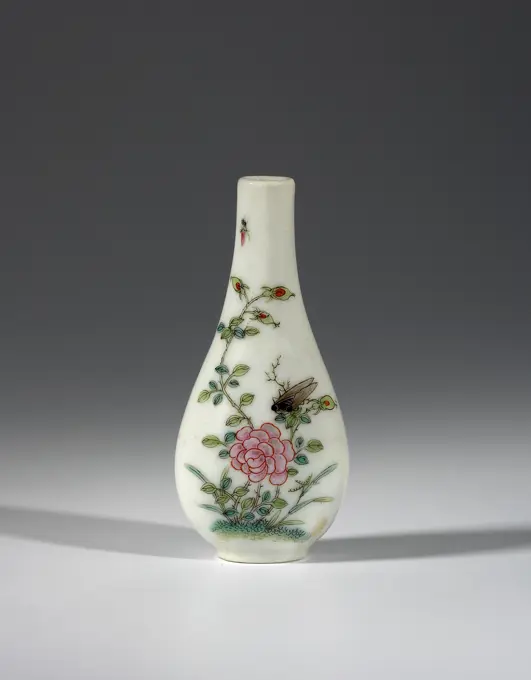
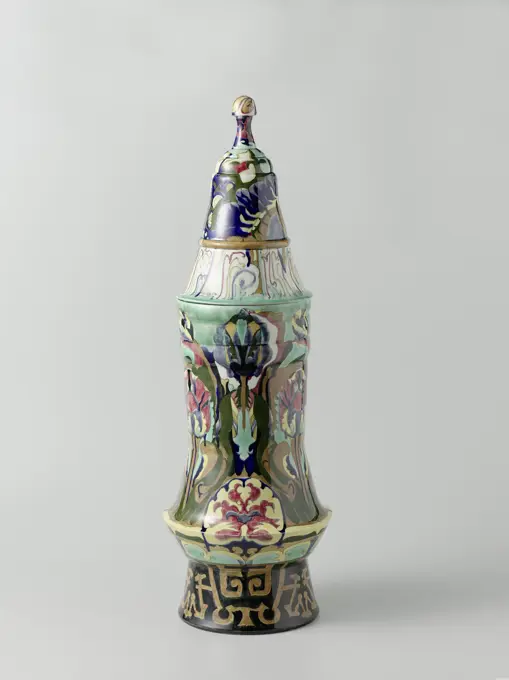
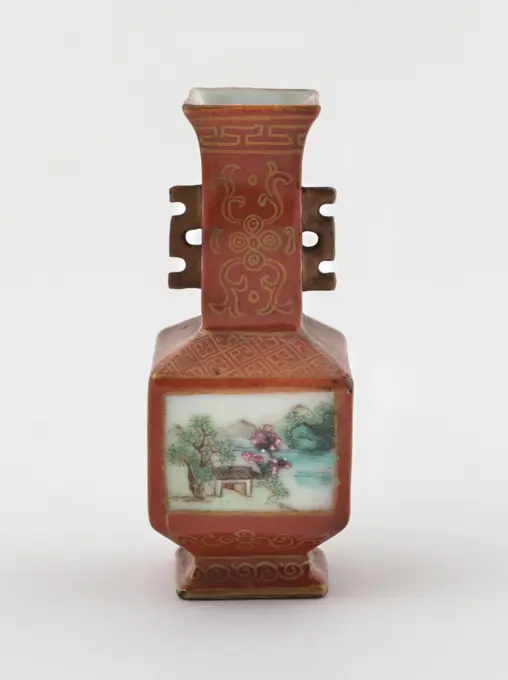
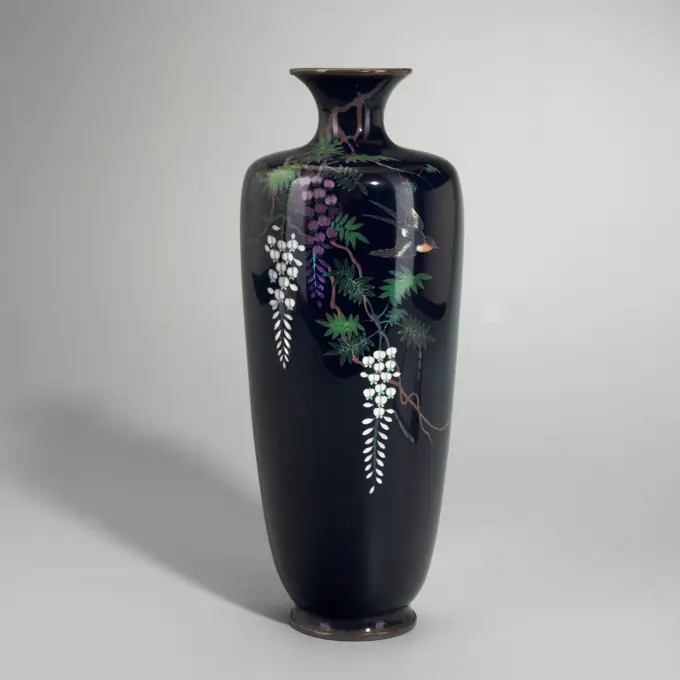
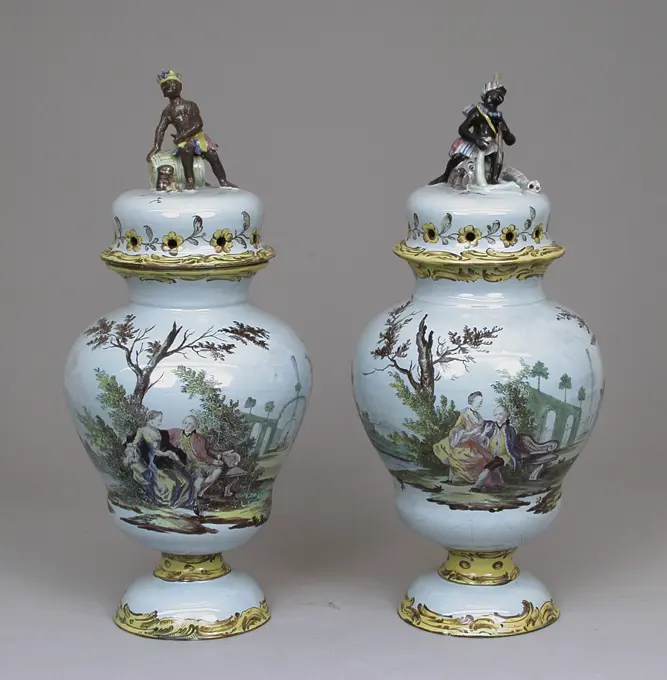
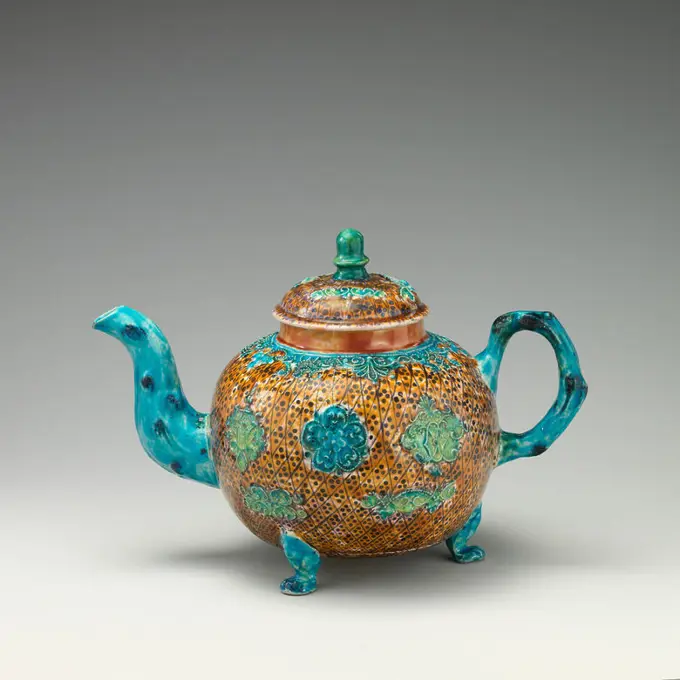
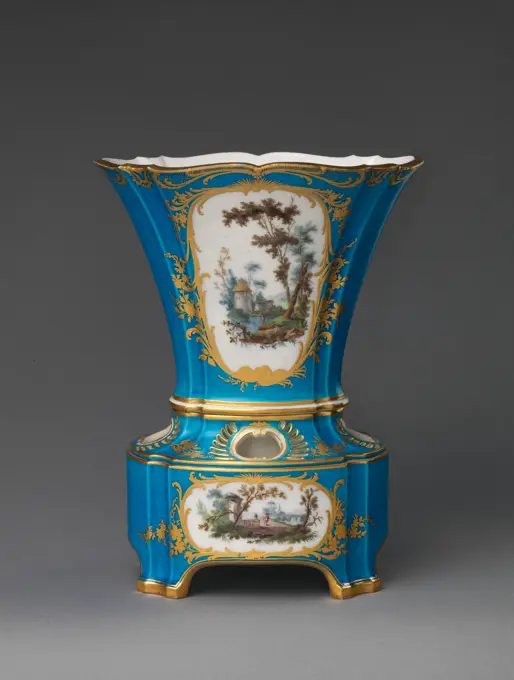
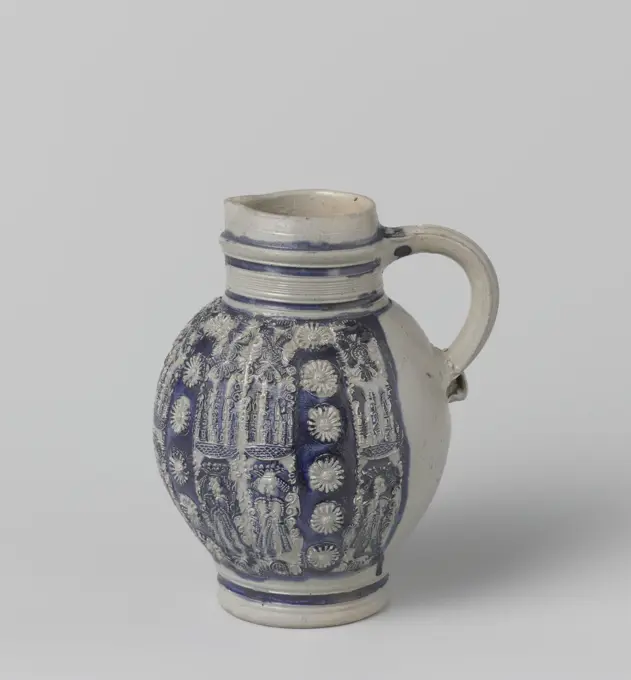
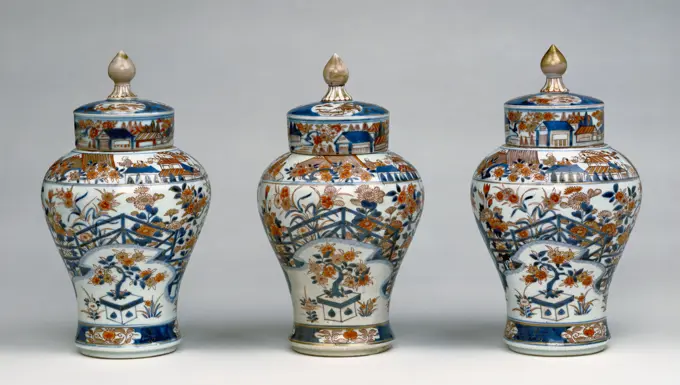
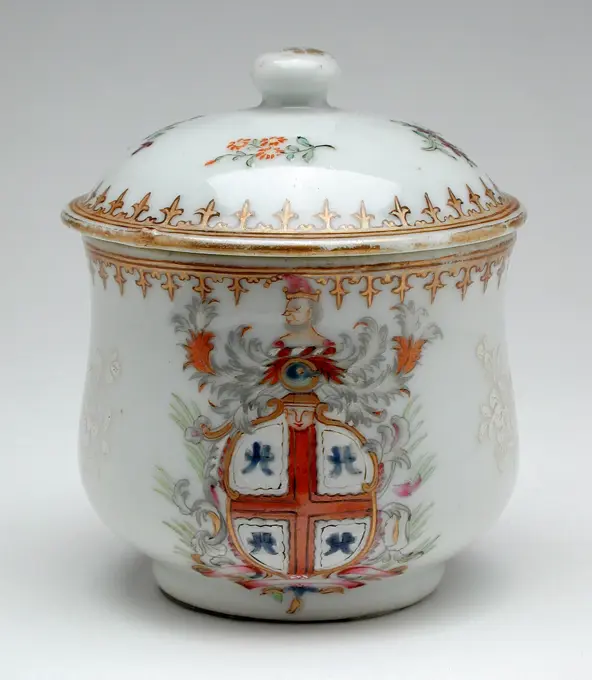
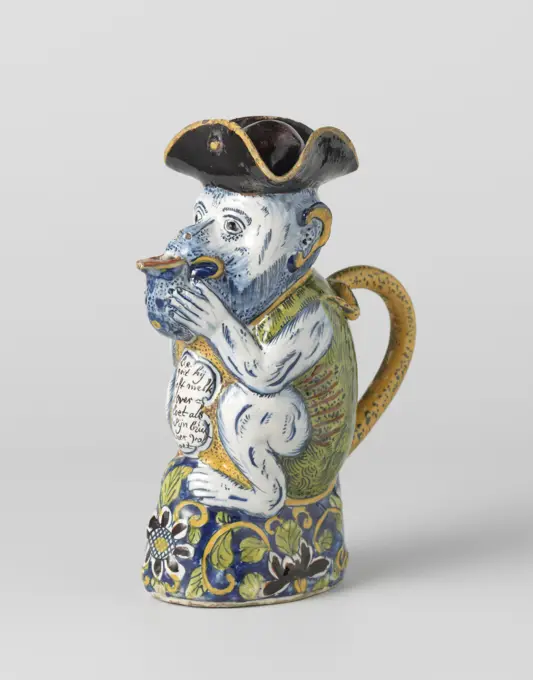
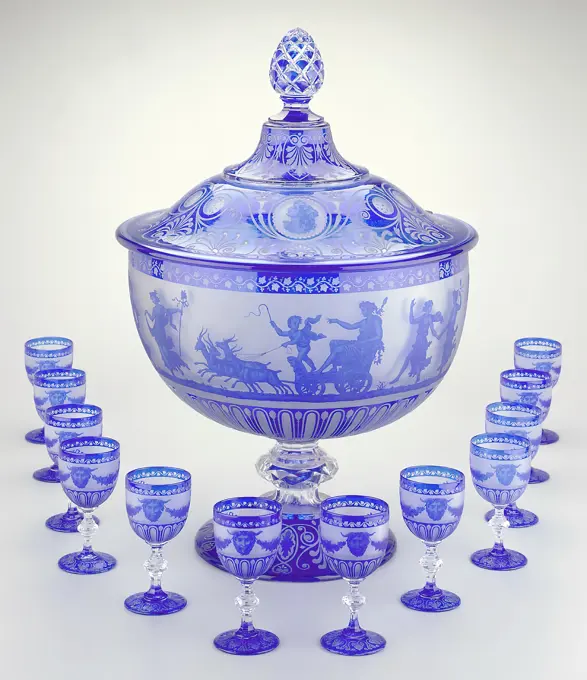
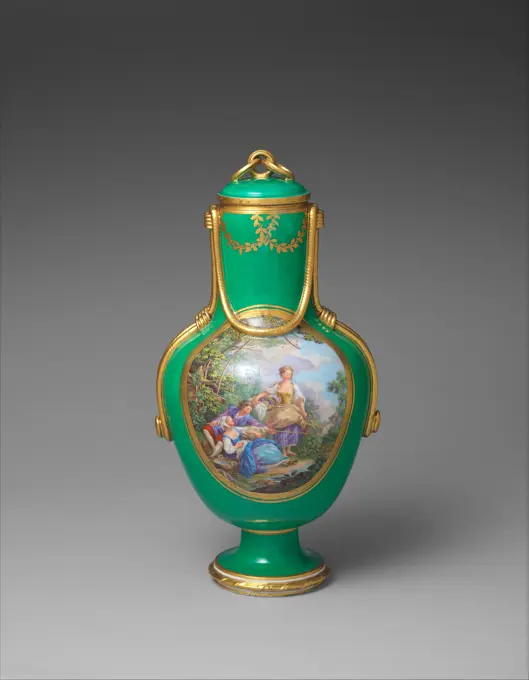
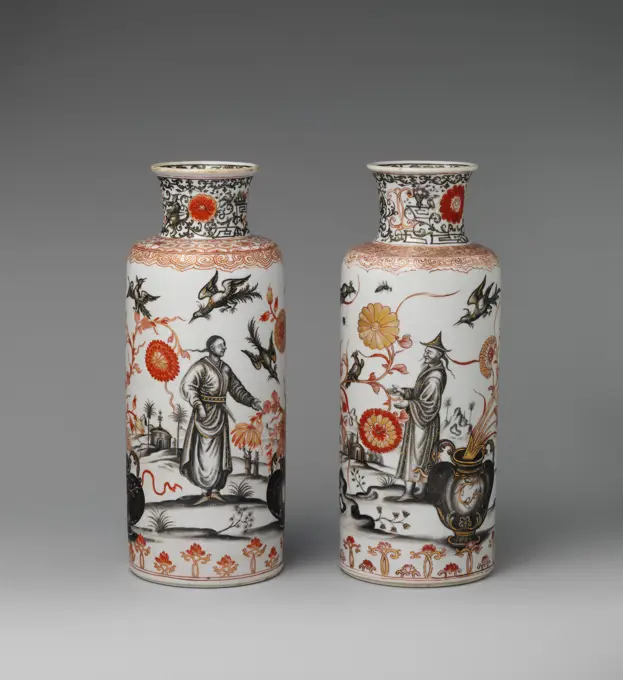
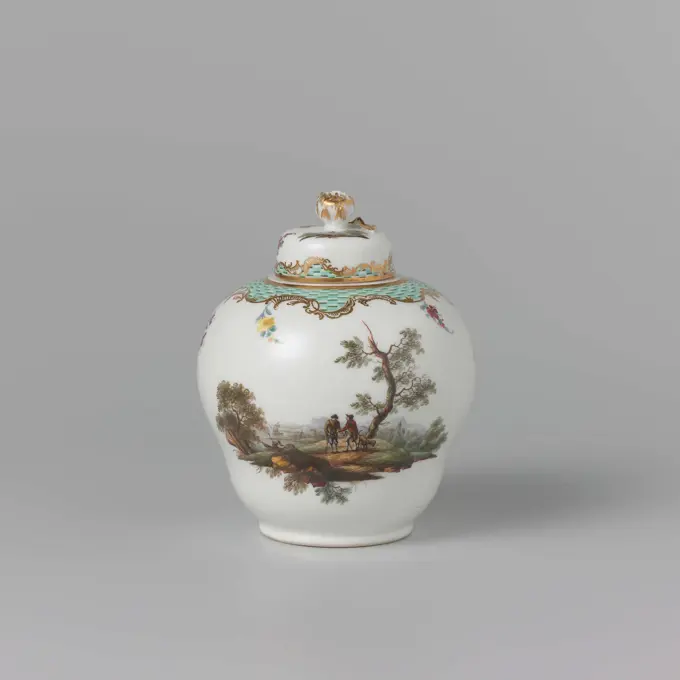
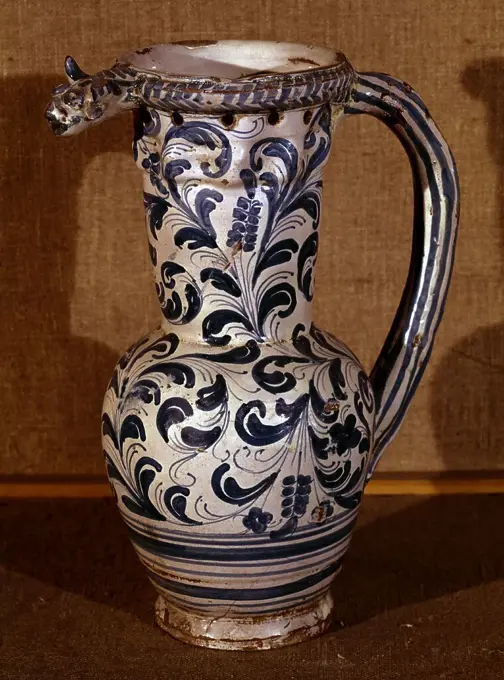
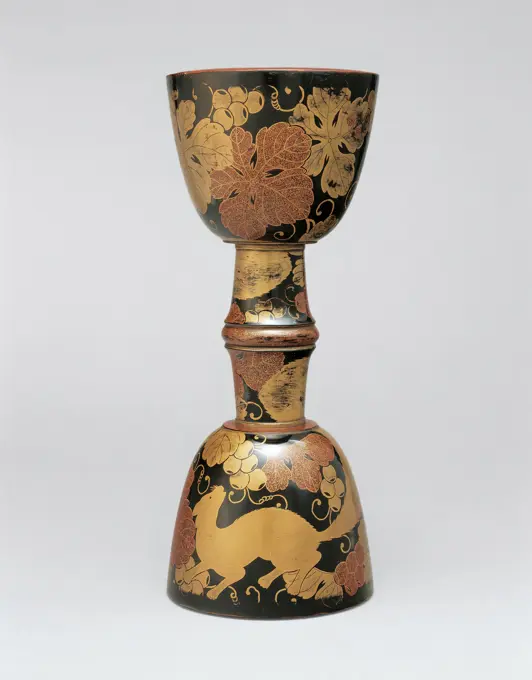
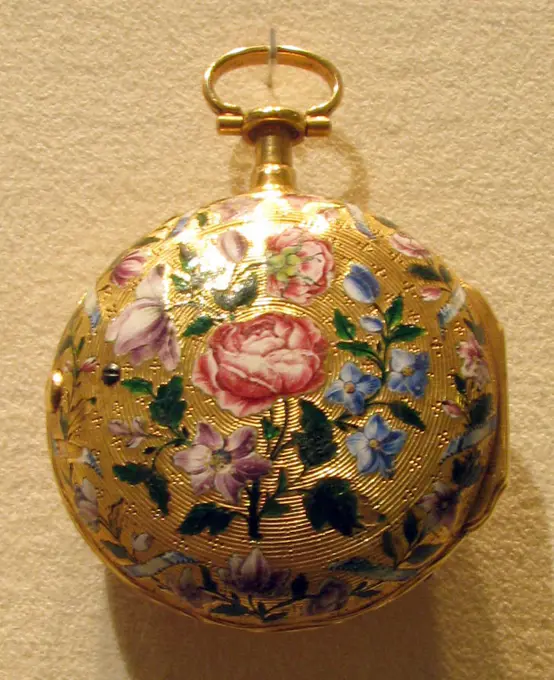
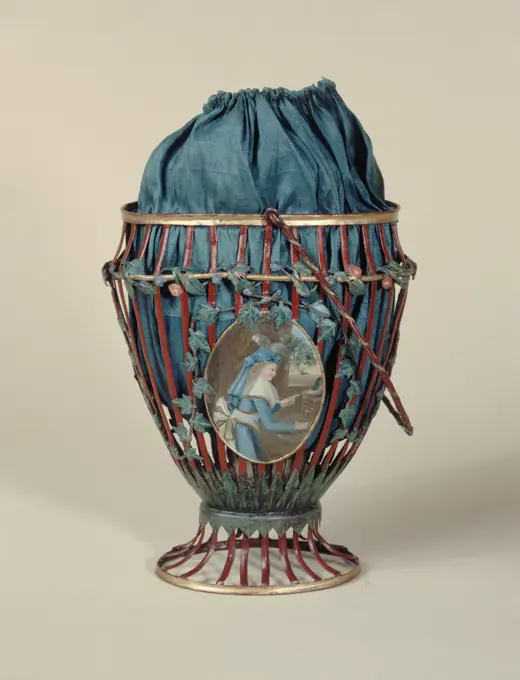
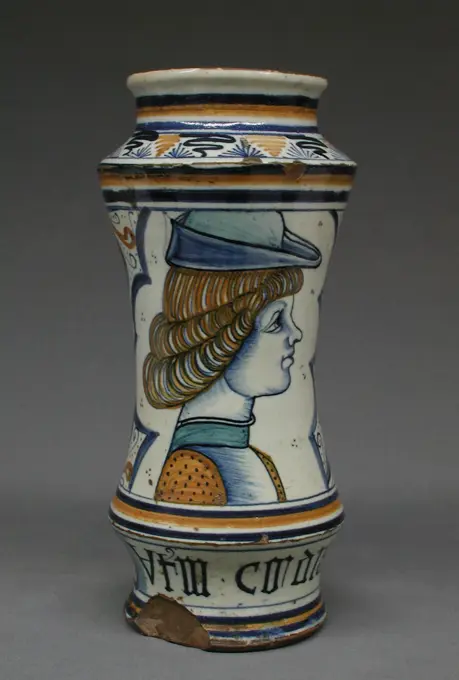
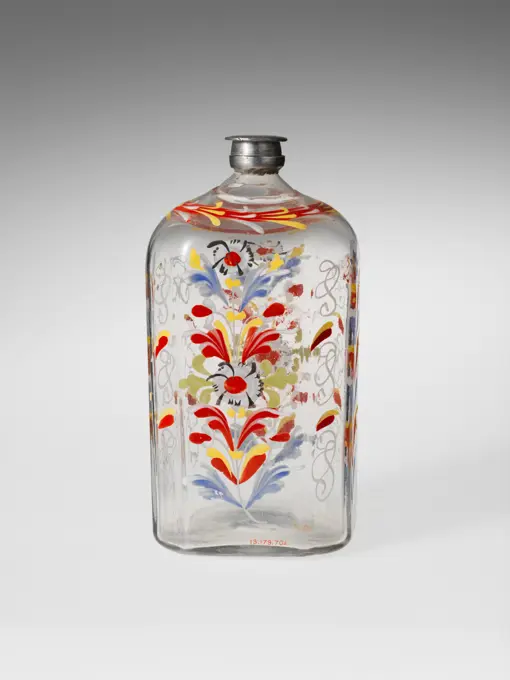
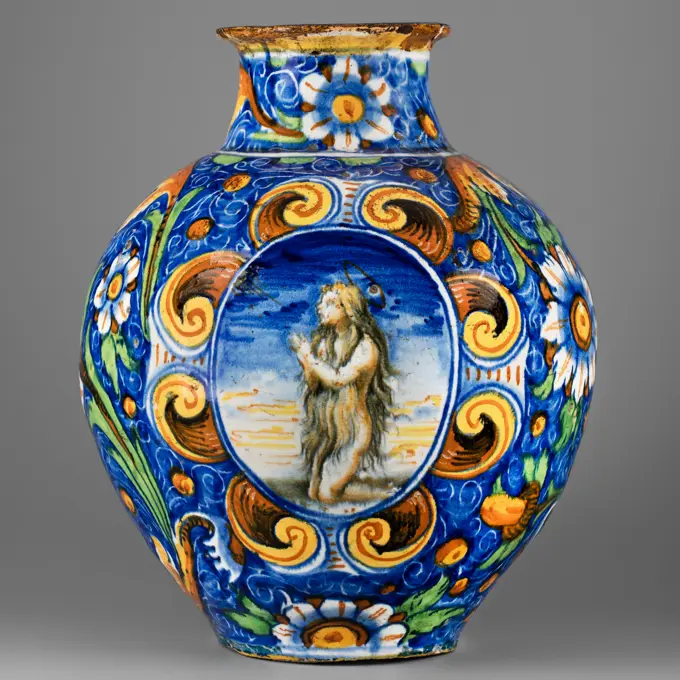
Covered Bowl ca. 1825 Mexican. Covered Bowl 2296Vase. Dated: 1938. Dimensions: overall: 35.6 x 24.2 cm (14 x 9 1/2 in.) Original IAD Object: 8 1/2" High 3 7/8" Dia. Medium: watercolor, graphite, and gouache on paperboard. Museum: National Gallery of Art, Washington DC. Author: J. Howard Iams.Sugar Bowl with Vertical Borders, Porcelain Manufaktur Frankenthal, c. 1765 - c. 1770 Porcelain sugar bowl with an egg -shaped body, painted on the glaze in blue and gold. The belly is covered with vertical tires with alternating blue flower vines or garlands against a golden background and loose flowers and a golden leaf vank that winds around a gold and blue line. Golden foot and edge. The lid with the same decoration and with a lid button in the shape of a flower. Marked on the underside with the crowned CT including a 7, H2 and OC. Frankenthal porcelain. glaze. gold (metal) painting / gilding / vitrification Porcelain sugar bowl with an egg -shaped body, painted on the glaze in blue and gold. The belly is covered with vertical tires with alternating blue flower vines or garlands against a golden background and loose flowers and a golden leaf vank that winds around a gold and blue line. Golden foot and edge. The lid with the same decoration and with a lid button in the shape of a flFlakonik - snack;  1. PO. 19th century (1800-00-00-1850-00-00);Paderewski, Ignacy Jan (1860-1941), Paderewski, Ignacy Jan (1860-1941)-collection, qing (style), ceramics, Chinese (culture), gift (provenance), field horses, colorful porcelain, Chinese artCandlestick, painted multi-colored with Indian Blumen. Candlestick of multicolor and underglazing blue painted porcelain. The candlestick is octagonal, has a vaulted foot and a baluster-shaped, profiled strain. The strain is embossed at the bottom with strands of blast inside boxes and top with gold-plated acanthus leaves. The foot and part of the trunk are painted with Indian Blumen and an insect. A frieze of leaf raft and flowers is painted around the candle holder. The candlestick is noticed.Garniture of five vases, Theo Colenbrander, 1886 Vase with lid from a series of five pieces, design Colenbrander. Marked: WG with the letter F in between with an extra crossbar, hedge and b (= 1886). The Hague earthenware Vase with lid from a series of five pieces, design Colenbrander. Marked: WG with the letter F in between with an extra crossbar, hedge and b (= 1886). The Hague earthenwareVase - moon flask (pilgrim bottle). unknown, craftsmanVase. Porcelain decorated with "pink family" enamels enhanced with gilding. Paris, Cernuschi museum. 78837-30 Asian art, Chinese art, porcelain, container, vaseVase. unknown, craftsmanVase;  around 1900-1910 (1890-00-00-1900-00-00);Cloisonné, bottles, glycine, birds, Japanese art, vasesSnuff Bottle with Dragons Chasing Pearl China. Snuff Bottle with Dragons Chasing Pearl 41325Snuff Bottle, 1800-1900, 3 1/8 x 1 1/8in. (7.9 x 2.9cm), Porcelain, jadeite, ChinaBowl and cover. This possibly relates to the Bristol Carpenters' Company which was in existence in the 17th and 18th centuries.Pair of potpourri vases with covers ca. 1772-74 Abraham Leihamer The figures on the finials are personifications of Africa and America.. Pair of potpourri vases with covers 201750Teapot. Culture: British, Staffordshire. Dimensions: Overall: 4 3/8 × 6 3/8 in. (11.1 × 16.2 cm). Date: ca. 1760. Museum: Metropolitan Museum of Art, New York, USA.Flower vase (vase hollandais nouveau) (one of a pair) 1759 Sèvres Manufactory French. Flower vase (vase hollandais nouveau) (one of a pair). French, Sèvres. 1759. Soft-paste porcelain. Ceramics-PorcelainSand Shaker ca. 1830 Mexican. Sand Shaker 7109The Orpheus Cup Various artists/makers 1641-42, the jeweled elements on the lid in the form of animals, amorini holding bow and quiver, and the statuettes of Orpheus and Diana, Prague, ca.1600 The harmony of this cups complex iconographic composition, expressed in rubies and enameled gold, is the extraordinary achievement of four distinct hands working for the Imperial Courts in Prague and Vienna. The enameled animals and statuettes of Orpheus and Diana on the cover were made around 1600 in the Prague Imperial Workshop by Jan Vermeyen, Emperor Rudolf IIs favorite goldsmith. Forty years later, they were recovered from the Imperial Collection by the ingenious Hans Georg Bramer, goldsmith to Emperor Ferdinand III. Bramer designed the cup to cradle the precious figures perfectly, uniting them within a complex iconographic program of painted enamel ovals illustrating scenes from Ovids Metamorphoses; bringing only the best artisans together. The centrality of Orpheus to the cups design likelJug with towers, female figures and flower roundels, anonymous, c. 1690 - c. 1720 Can be made of stoneware on the stand ring with a spherical body and short neck with a pinched spout. The C-shaped ear is attached to the neck and shoulder. Profiles on the neck and foot. Partly covered with cobalt blue. On the abdomen nine vertical ties in relief with a printed and imposed decoration of seals, (church) towers and crowned female figures. In addition to one, the tires with two are placed next to each other each, separated by a band with small flower straws in relief. Blue lines on the neck and foot. Westerwald. Westerwald stoneware. glaze. cobalt (mineral) vitrification Can be made of stoneware on the stand ring with a spherical body and short neck with a pinched spout. The C-shaped ear is attached to the neck and shoulder. Profiles on the neck and foot. Partly covered with cobalt blue. On the abdomen nine vertical ties in relief with a printed and imposed decoration of seals, (church) towVase lid with alliance weapon and the interior of the Dutch Reformed Church in Wassenaar, N.V. Haagsche Plateel Factory Rozenburg, 1896 Cover of earthenware lid, belonging to a couple of three polychrome painted with sunflowers, weapons and topographical representations. The weapon of the municipality of Wassenaar is depicted on the tuning lid and a sunflower has been painted. The Hague earthenware Cover of earthenware lid, belonging to a couple of three polychrome painted with sunflowers, weapons and topographical representations. The weapon of the municipality of Wassenaar is depicted on the tuning lid and a sunflower has been painted. The Hague earthenwareGarniture of Three Vases. UnknownCustard Cup and Cover. China, circa 1745-1755. Furnishings; Serviceware. Porcelain with glaze, enamel, and gildingVase (USA); Produced by Tiffany and Co. (United States); mold-blown favrile glassA cylindrical mug with floral flagella and medallions with floral motifs unknownBox, c. 1730. Germany, Augsburg, 18th century. Enamel on copper with metal mounts; overall: 6.9 x 7.7 x 5 cm (2 11/16 x 3 1/16 x 1 15/16 in.).Vase with Mythical Creature Chasing Pearl early 18th century China The wonderful beast painted on this vase appears at first glance to be a qilin, a mythical and composite creature that has the body of a deer and the head, horns, and hooves of a dragon. The feet of this creature, on the other hand, appear to be those of a large feline such as a lion or tiger, which makes a positive identification difficult.. Vase with Mythical Creature Chasing Pearl. China. early 18th century. Porcelain painted with cobalt blue under transparent glaze (Jingdezhen ware). Qing dynasty (1644-1911), Kangxi period (1662-1722). CeramicsDecanter. Culture: American. Decorator: Possibly engraved by Henry Leighton. Dimensions: H. 8 7/8 in. (22.5 cm); Diam. 5 1/2 in. (14 cm). Manufacturer: Attributed to New England Glass Company (American, East Cambridge, Massachusetts, 1818-1888). Date: ca. 1860. Museum: Metropolitan Museum of Art, New York, USA.Vase with Prominent Handles and a Flower Decoration in ReIIef unknownBottle British, Staffordshire ca. 1755Copper vase decorated in painted enamels with flowers and a silk wrapper. Qing dynasty, Qianlong mark and period (AD1736-95)Vessel - pot; unpredictable Lona Manufaktura; 1747 (1747-00-00-1747-00-00);Vase (one of a pair) China. Vase (one of a pair). China. Porcelain painted in overglaze famille verte enamels. Qing dynasty (1644-1911). CeramicsMoon flask with gilt floral decoration on pink ground ca. 1875 Minton(s) Minton was the most important ceramics factory during the Victorian period and began exhibiting products at the first Great Exhibition of 1851. Founded in 1793 by Thomas Minton at Stoke-on-Trent, the firm initially specialized in transferware pottery before expanding under the ownership of Thomass son Herbert Minton, beginning in 1836. Under the ownership of Colin Minton Campbell, who succeeded his uncle in 1858, the factory became recognized as a specialist producer of Aesthetics movement porcelain, which were inspired by a rich array of exotic and eclectic decorative motifs.. Moon flask with gilt floral decoration on pink ground. British, Stoke-on-Trent, Staffordshire. ca. 1875. Bone china. Ceramics-PorcelainCovered jar with women on a terrace, anonymous, c. 1700 Drum -shaped lid jar of porcelain with handles in the shape of monster heads, painted in underly glaze blue and on the glaze red, black and gold. Two scenes on the wall of the pot: two women (long lips) with two servants in a fenced garden at a pavilion, one has a rabbit in her arms, the other a fan; The other side is with four musician women in a fenced garden. Around the foot a band with balls in relief). Blue White. China porcelain. glaze. cobalt (mineral). gold (metal) painting / vitrification Drum -shaped lid jar of porcelain with handles in the shape of monster heads, painted in underly glaze blue and on the glaze red, black and gold. Two scenes on the wall of the pot: two women (long lips) with two servants in a fenced garden at a pavilion, one has a rabbit in her arms, the other a fan; The other side is with four musician women in a fenced garden. Around the foot a band with balls in relief). Blue White. China porcelain. gPair of Lidded Bowls. Mounts attributed to Wolfgang Howzer (Swiss, active 1660 - about 1688)Bowl with Cover China. Bowl with Cover. China. Porcelain. Ming dynasty (1368-1644), Wanli period (1573-1620). CeramicsPitcher. Culture: American. Dimensions: H. 11 1/4 in. (28.6 cm). Manufacturer: Harker, Taylor and Company (1846-52). Date: ca. 1846-52. Museum: Metropolitan Museum of Art, New York, USA.Covered jar with lions 19th century China. Covered jar with lions 48772Terracotta lekythos (oil jar). Culture: Greek, Attic. Dimensions: H. 10 15/16 in. (27.8 cm)diameter 3 11/16 in. (9.4 cm). Date: ca. 480-470 B.C..Nike with an oinochoe (jug) above an altarThe point of reference for a vase such as this one is difficult to identify. The image probably represents a libation offered for a victory. It is unclear whether the lekythos was purely funerary in function. If so, the vase may have served for the burial of an athlete. Museum: Metropolitan Museum of Art, New York, USA.Snuff Bottle, 1750-1825, 3 1/8 x 2 1/2in. (7.9 x 6.4cm), Lacquer, jadeite, silver, ChinaCoffeepot with a gothic arcade decoration, Perche, c. 1800 - c. 1899 Coffee pan of porcelain on spreading foot, with an egg -shaped body, bent spout and high ear, painted in under -glaze blue and on the glaze gold. The belly with a gothic arch decoration against a blue background. The foot, the neck, the ear and the spout are covered with gold. The spout ends in an animal head. Saint-Yrieix-la-Perche porcelain. glaze. cobalt (mineral). gold (metal) painting / gilding / vitrification Coffee pan of porcelain on spreading foot, with an egg -shaped body, bent spout and high ear, painted in under -glaze blue and on the glaze gold. The belly with a gothic arch decoration against a blue background. The foot, the neck, the ear and the spout are covered with gold. The spout ends in an animal head. Saint-Yrieix-la-Perche porcelain. glaze. cobalt (mineral). gold (metal) painting / gilding / vitrificationFooted cup early 18th century Japanese The mutual exchange between China and Japan is particularly evident in this cup, in which stylistic mannerisms of both cultures are almost equally balanced.. Footed cup 206897Covered Urn ca. 1800 Chinese. Covered Urn 2552Anonymous / 'Case for oval rock crystal vessel with gadrooned decoration'. 1650 - 1711. Leather, Wood, Metal, Cloth. Museum: Museo del Prado, Madrid, España.. Bottle of quartz frying, painted in underglaze blue, red, green and black. A Schubmotief interrupted on the abdomen by stylized leaves. The neck with dots. Iznik.Vase;  19th century (1801-00-00-1900-00-00);Milk jug in the form of a monkey, anonymous, c. 1760 - c. 1780 Milkkan van Faïence, in the form of a drinking monkey. On his stomach the inscription: Kees is good he gives milk in overfloet if you do his belly full. Delft . Milkkan van Faïence, in the form of a drinking monkey. On his stomach the inscription: Kees is good he gives milk in overfloet if you do his belly full. Delft .Gourd with his cap: busts of men in medallion, Italian majolica of Urbino, between 1570 and 1580 (old bearded man)Punch goblet, 1867, Cristalleries de Baccarat, Baccarat, France, est. 1764, 4 3/4 x 2 7/16 in. (12.07 x 6.19 cm), Cased lead glass, France, 19th centuryVase with cover (vase à flacon) (one of a pair) 1772 Sèvres Manufactory French Works of art by the French artist François Boucher (1703-1770), who held the prestigious title of first painter to the king, served as a highly popular source of inspiration for artists working in a variety of media in the middle decades of the eighteenth century. Prints made after paintings by Boucher were widely circulated and provided artists with compositions that could be faithfully reproduced in smaller scale or adapted to three-dimensional porcelain sculpture. Works by Boucher served as the source not only for the painted scenes on vases and snuffboxes, but also for the porcelain figures which were listed as "Enfants Boucher" (Boucher Children) in the factorys sales ledgers.. Vase with cover (vase à flacon) (one of a pair) 202176Lamp China. Lamp. China. Porcelain painted in overglaze famille verte enamels. Qing dynasty (1644-1911), Kangxi period (1662-1722). CeramicsPair of Jugs. Dr. John Wall (England, founded 1751-retired 1774). England, circa 1760. Furnishings; Serviceware. Porcelain with enamelCup with the Arms of Poland/Saxony and Naples/Sicily ca. 1745-47 Meissen Manufactory German. Cup with the Arms of Poland/Saxony and Naples/Sicily 201710Horn-type vase decorated with phoenixes and karashishi lions among ribbons, peonies and chrysanthemums. unknown, craftsmanBottle And Stopper (Switzerland); glassMing Dynasty vase, China.Gu-shaped beakervase with women and flower pots in panels, anonymous, c. 1700 GU-shaped vase of porcelain with a round thickening in the middle and a spreading neck, painted in under-glaze blue. Alternating a women (long lijs) or a flower pot on a low table in a petal box on the wall; above that flower branches. Up and below the thickened middle part a band with spiral work. The inner edge with a band with a zigzag pattern. Marked on the underside with an artemisia leaf in a double circle. Blue White. China porcelain. glaze. cobalt (mineral) painting / vitrification GU-shaped vase of porcelain with a round thickening in the middle and a spreading neck, painted in under-glaze blue. Alternating a women (long lijs) or a flower pot on a low table in a petal box on the wall; above that flower branches. Up and below the thickened middle part a band with spiral work. The inner edge with a band with a zigzag pattern. Marked on the underside with an artemisia leaf in a double circle. Blue WhiteFigurka boga północy (). unknown, craftsmanCandlestick 1700-1799 Meissen. Hard-paste porcelain, polychrome enamels, and gilding . Meissen Porcelain Manufactory (Manufacturer)Pair of flower vases. Ćmielów (fabryka fajansu i porcelany ; 1804-), factoryPair of Goblets, Meissener Porcelain Manufaktur, c. 1725 Click -shaped cup of multicolored, gold and mother -of -pearl painted porcelain. The cup has a cylindrical tribe and a vaulted foot. A garden is depicted on the Cuppa in which a fence and a wall for which two Chinese women and a woman with a child. On the trunk, a playing boy with a kite () Is depicted between rocks and flowers and on the foot and the inside of the mouth edge half rosettes and leaf vines. The cup is not marked. Float porcelain Click -shaped cup of multicolored, gold and mother -of -pearl painted porcelain. The cup has a cylindrical tribe and a vaulted foot. A garden is depicted on the Cuppa in which a fence and a wall for which two Chinese women and a woman with a child. On the trunk, a playing boy with a kite () Is depicted between rocks and flowers and on the foot and the inside of the mouth edge half rosettes and leaf vines. The cup is not marked. Float porcelainVase (one of a pair) early 18th century, decoration ca. 1729-32 Decorated by the Hausmaler Ignaz Preissler This Chinese vase was initially decorated in red enamel and gilding, but after it was exported to Europe additional decoration in black enamel and gold was applied by Ignaz Preissler (1676-1753). The depiction of Chinese” figures is typical of chinoiserie, a term used to describe the European fascination with the peoples of Asia and their fanciful evocation in European decorative arts.. Vase (one of a pair) 238558Vase with Dragons. China. Date: 1662-1722. Dimensions: H. 24.0 cm (9 7/16 in.); diam. 10.6 cm (4 3/16 in.). Porcelain painted in underglaze blue. Origin: China. Museum: The Chicago Art Institute, Chicago, USA. Richly - some might say TOO  richly - ornamented teapot,  vases and a bowl from China.       Date: 1851Snuff Bottle, 1919, 3 1/8 x 2 1/8in. (7.9 x 5.4cm), Crystal, fluorite, China, Qing dynastyOctagonal ribbed pot of multicolored painted faïence, the metal pot, c. 1695 - c. 1725 Octagonal, ribbed pot of multicolored painted faïence, with a lid. The pot is painted with flowers, rocks, birds and a bird in a tree. The pot is part of a couple, the other parts are: two of this pot of equal pots and two identical vases. The parts are marked. Delft earthenware. tin glaze. Octagonal, ribbed pot of multicolored painted faïence, with a lid. The pot is painted with flowers, rocks, birds and a bird in a tree. The pot is part of a couple, the other parts are: two of this pot of equal pots and two identical vases. The parts are marked. Delft earthenware. tin glaze.Tripod with Cover, late 1700s. China, Qing dynasty (1644-1911). Carved wood; diameter: 12 cm (4 3/4 in.); overall: 11 cm (4 5/16 in.).Candlestick (one of a pair) 1872 Minton(s) Minton was the most important ceramics factory during the Victorian period and began exhibiting products at the first Great Exhibition of 1851. Founded in 1793 by Thomas Minton at Stoke-on-Trent, the firm initially specialized in transferware pottery before expanding under the ownership of Thomass son Herbert Minton, beginning in 1836. Under the ownership of Colin Minton Campbell, who succeeded his uncle in 1858, the factory became recognized as a specialist producer of Aesthetics movement porcelain, which were inspired by a rich array of exotic and eclectic decorative motifs.. Candlestick (one of a pair). British, Stoke-on-Trent, Staffordshire. 1872. Bone china with enamel decoration and gilding. Ceramics-PorcelainCup Loket (Electric Book)Obelisk of multi -colored Faïence, the Metale Pot, c. 1691 - c. 1724 Obelisk of Faïence. Multicolored painted with flower vines. Delft . Obelisk of Faïence. Multicolored painted with flower vines. Delft .Sake Ewer (Hisage) with Chrysanthemums and Paulownia Crests in Alternating Fields early 17th century Japan The Kōdaiji style was the most prominent development in the history of Momoyama-period lacquer art, and is characterized by bold, large-scale patterns, autumn grass motifs, and crests executed in gold hiramaki-e (flat sprinkled picture”) on a black ground. Patronage and construction of the temple for which the style is named are associated with Toyotomi Hideyoshi and his wife Nene (Kōdai-in, 1548-1624), and with shogun Tokugawa Ieyasu (1543-1616), who generously supported the creation of the temple precinct and mausoleum in 1605 in honor of his opponent Hideyoshi. The application of the flat maki-e and large repetitive patterns made it possible to decorate everyday household objects with gold designs. Hideyoshi used this style to represent his political power and authority. Listen to experts illuminate this artwork's story Listen Play or pause #8803. Wine Ewer with Design of ChryTankard, 1765. England, 18th century. Ceramic; diameter: 11.5 cm (4 1/2 in.); overall: 16 x 16.1 cm (6 5/16 x 6 5/16 in.).Pair of Covered Urns, c. 1800. Wedgwood Factory (British). Jasper ware with relief decoration; overall: 19.7 cm (7 3/4 in.).. Can be from stoneware. With a round belly and close, widely ovenproof neck with a spout. Decorated in blue and purple with triangles and floral motifs. On the neck, under the spout a lion mask ().Green vase with colored decoration, isolated on white background. Converted egg-shaped tea bus from painted porcelain. The bus has a small vaulted lid with a button in the shape of a flower on a branch. The bus is painted with landscapes in which figures and along the edge a wide strip of green braid. The bus has been marked.Vase. unknown, craftsmanJARRA - SIGLO XVII - CERAMICA DE ARAGON. Location: MUSEO DEL PUEBLO ESPAÑOL, MADRID, SPAIN.Large hand-drum core with grapevines and squirrels, late 16th century, Unknown Japanese, 11 × 4 1/2 × 4 1/2 in. (27.94 × 11.43 × 11.43 cm), Black lacquer with gold maki-e and pictorial pearskin ground (e-nashiji), Japan, 16th century, These ornately decorated lacquer objects are the cores of handheld drums used in performances of Noh theater and Kabuki. To these cores would have been affixed a drumhead of animal hide.Tea caddy ca. 1750-60 Chinese, for British market. Tea caddy 202596Repeater watch ca. 1755 Watchmaker: Julien Le Roy Julien Le Roy, probably the most inventive clockmaker in eighteenth century France, was appointed clockmaker to Louis XV (1710-1774), an honor that allowed him a workshop in the Louvre. The movement of the watch strikes hours and quarters on the back of the case instead of on a bell. This type of repeater, called a dumb repeater, allowed the user to tell the time unobtrusively by counting the vibrations of the case. The style of the case, with its beautiful opaque-enameled flowers that seem to float on an engraved gold ground, was fashionable among Parisian makers of watchcases and gold boxes about the middle of the eighteenth century.. Repeater watch 194157Jar and lid. Terracotta. Vietnam. Paris, Muse Cernuschi. Jar and lid Asian art, art of extreme orient, art of Vietnam, Vietnamese art, terracotta, dishes. Pharmacist spot from blue painted faience with inscription: El / Hirae Picrae. The cylindrical pot has a thrilled neck and foot and has been marked.Metallic reticle "To lovers": cut sheet painted in red leaf and gold, interior taffeta green, enamel medallion on the two sides of the bag, on this medallion side which represents a young girl with a bird and its cage, 1794. Galliera , fashion museum of the city of Paris. 34755-17 Accessory, cage, feminine, woman, young girl, email medallion, bird, reticat, red, bag, green taffeta, tole decoupeePair of vases (vases à perles or vases à panneaux), Manufacture de Sèvres, c. 1771Milk Jug (part of a Coffee Service). Vienna State Porcelain Manufactory; Austrian, 1744-1864. Date: 1765-1775. Dimensions: H. 10.2 cm (4 in.); diam. 8.6 cm (3 3/8 in.). Hard-paste porcelain, monochrome black (Schwartzlot), polychrome enamels, and gilding. Origin: Vienna. Museum: The Chicago Art Institute, Chicago, USA.Portland vase, copy. Josiah Wedgwood & Sons (Stoke-on-Trent ; wytwórnia ceramiki ; 1790-1895), factoryAlbarello ca. 1475 Italian, Faenza Storage vessels were among the most frequently produced maiolica wares in late medieval and Renaissance Italy. Made in fairly standard shapes, they were designed to fit with dozens of others on a shelf, often in a pharmacy or shop. Their handles therefore tend to fit within the vessels profile, and the cylindrical albarello type is generally narrower at the middle than at the top or bottom, making it easy to grip. Other common features include inscriptions indicating contents and flanged lips to help secure cloth or paper seals. The decoration, usually more elaborate on one side than the other, can sometimes link pieces to a known dispensary or specific workshop or artist.. Albarello. Italian, Faenza. ca. 1475. Maiolica (tin-glazed earthenware). Ceramics-PotteryChinese, Snuff Bottle, porcelain.Jardiniere, c. 1900, Unknown Japanese, 17 1/2 × 20 3/8 in. (44.45 × 51.75 cm), Porcelain, Japan, 20th centurySquare bottle with figures in a landscape, a flower vase and a flowering plant near a rock, anonymous, c. 1660 - c. 1680 Square bottle of porcelain, painted in under -glaze blue. Four different representations on the wall: one with two women with a fan in a landscape for a large tree with two birds, a flower vase with a woman with a fan, a flowering chrysanthemum in rocks and a water carrier at a house and a large tree With a bird. The shoulder with flower vines. The lid with three branches is not matching. Arita, Blauw-Wit. Japan porcelain. glaze. cobalt (mineral) painting / vitrification Square bottle of porcelain, painted in under -glaze blue. Four different representations on the wall: one with two women with a fan in a landscape for a large tree with two birds, a flower vase with a woman with a fan, a flowering chrysanthemum in rocks and a water carrier at a house and a large tree With a bird. The shoulder with flower vines. The lid with three branches is not matching. Arita, BlauBottle 1700-1800. Bottle. 1700-1800. Non-lead glass with enamel decoration. Made in Bohemia, Czech RepublicPharmacy Jar. Culture: Spanish. Dimensions: Overall: 12 1/2 x 6 1/16 in. (31.7 x 15.4 cm). Date: 16th century. Museum: Metropolitan Museum of Art, New York, USA.JARRA DE LOZA DECORADA CON UNA MUJER CON MANTELETA. Location: PRIVATE COLLECTION. MADRID. SPAIN.Drug Jar for Persian Philonium. UnknownVase;  16th century (1500-00-00-1600-00-00);Da Venezia, Domene, potter - Majolik painter (CA 1520 - 1568), Maria Magdalena (Saint), Akant (ornament), plant decorations, Fiori E frutta (ornament), flowers, saintsCDK unknownInkstone-screen” in the Shape of Mount Fuji mid- 19th century Japan. Inkstone-screen” in the Shape of Mount Fuji 47835Thai traditional porcelain souvenir, Benjarong, it design as furniture with five colors. Colorful ceramic isolated on white background with clipping pathTea and Coffee Service, Meissen Porcelain Manufactory, German, active from 1710 to the present, hard paste porcelain, vitreous enamel, Germany, mid- 18th century, ceramics, Decorative Arts, tea and coffee service, tea and coffee service