Traditional Handwoven Textiles

A collection of intricate oriental carpets and ritual weavings showcasing traditional patterns, rich colors, and historical craftsmanship.

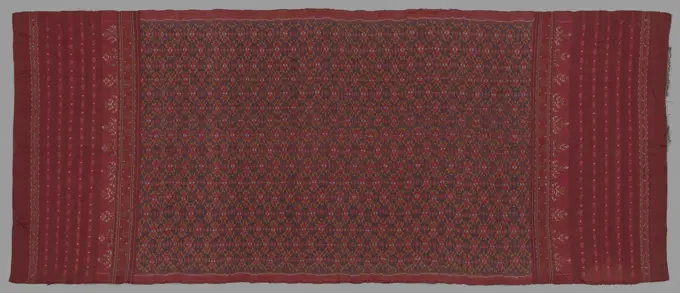
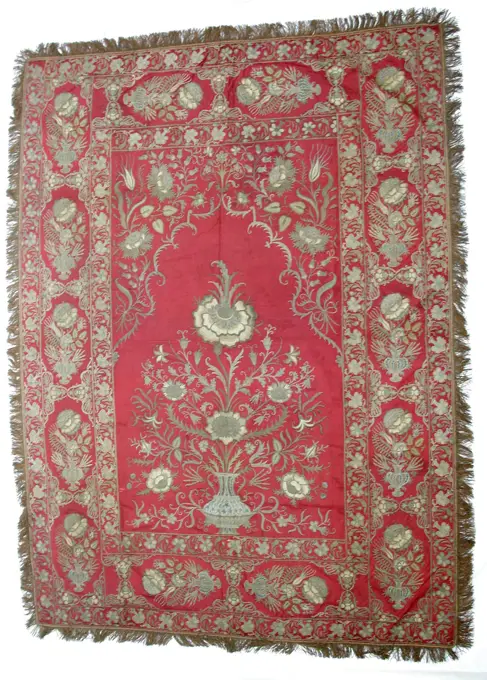
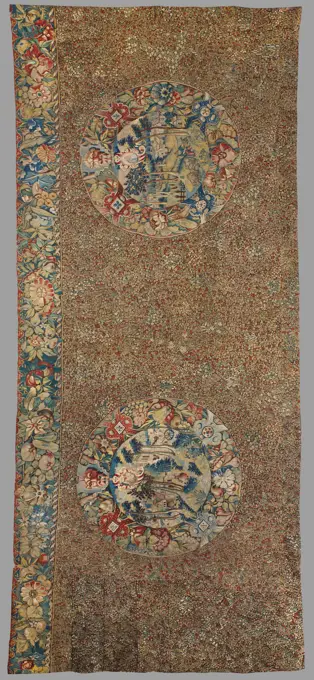
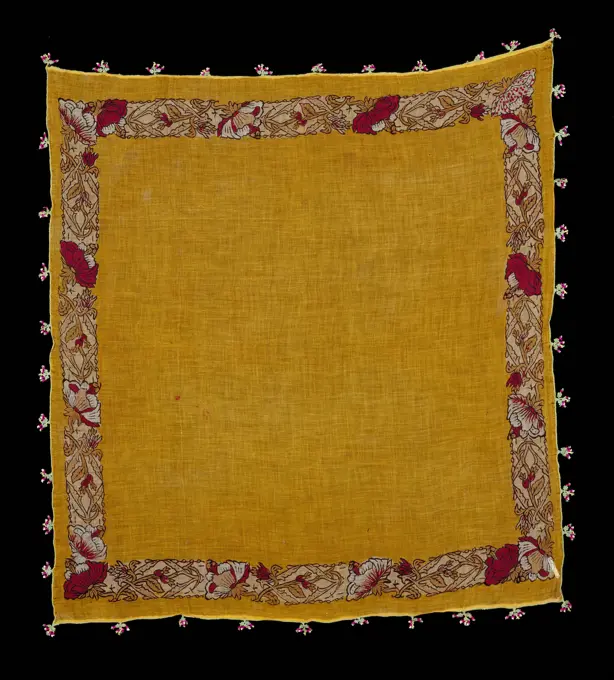
Woman's festival head covering, late 19th-early 20th century, 78 3/16 x 57 3/4 in. (198.6 x 146.69 cm), Cotton, metallic threads; dyed, India, 19th-20th century
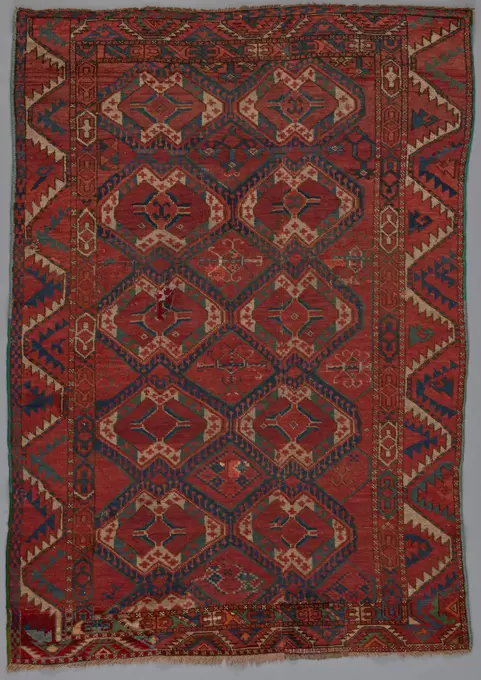
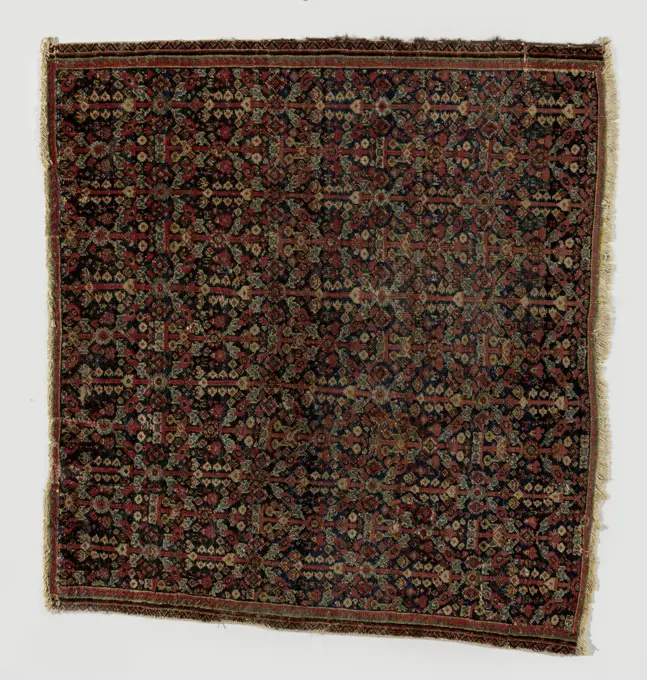
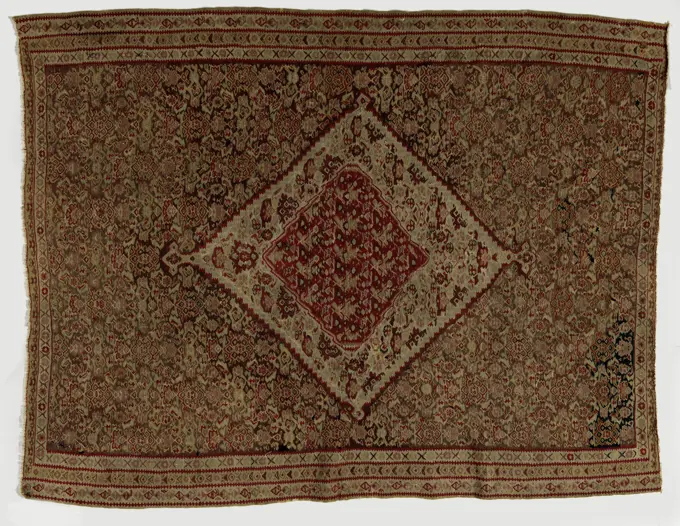
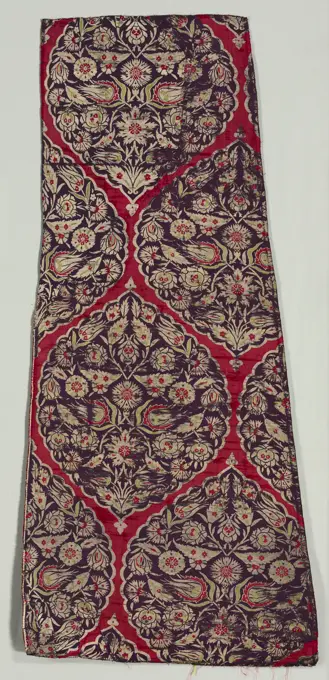
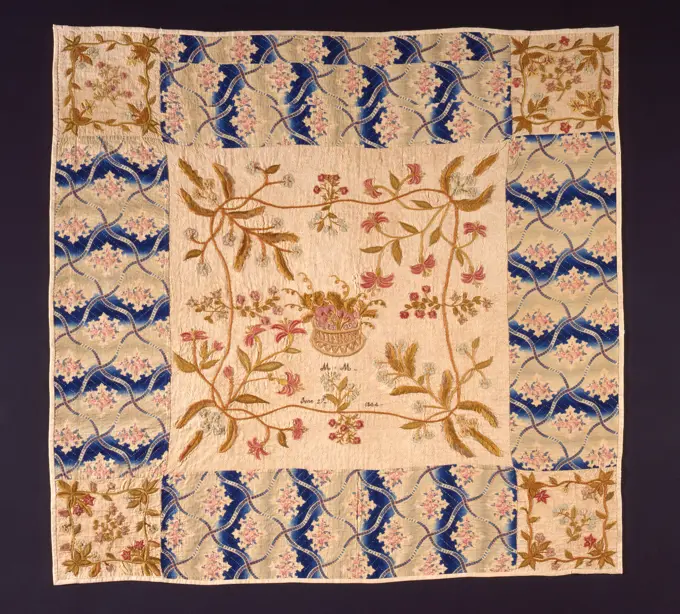
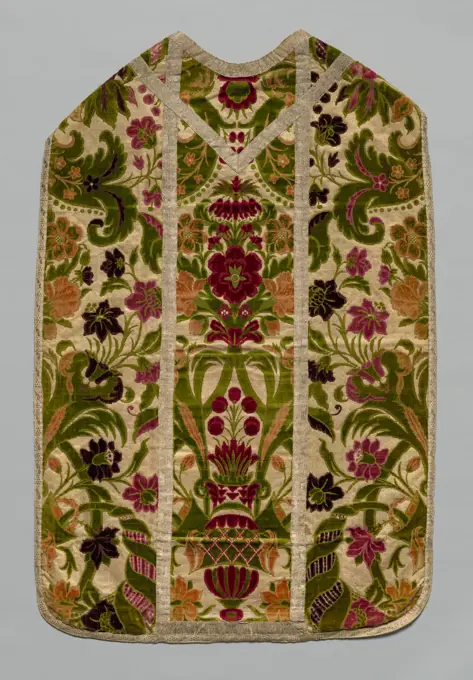
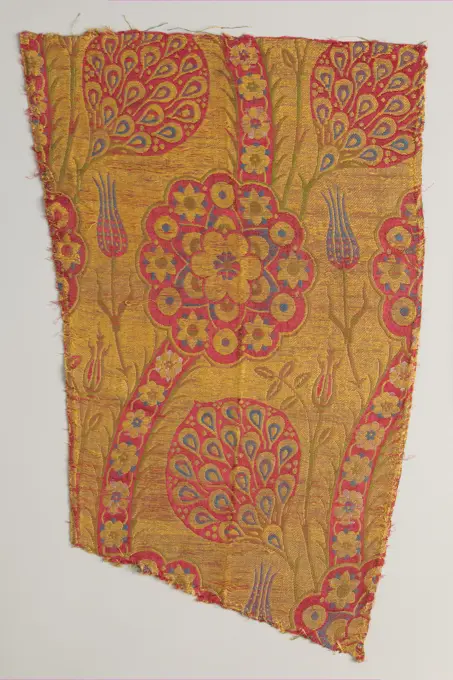
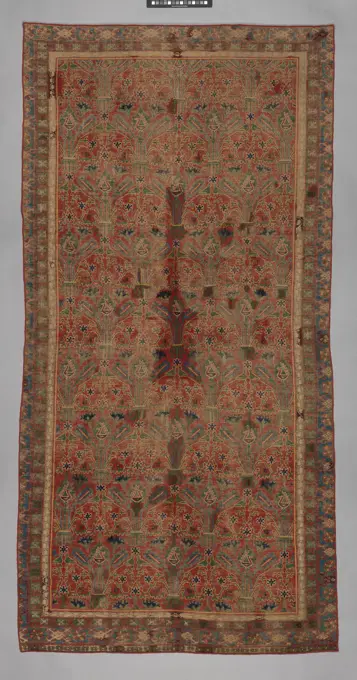
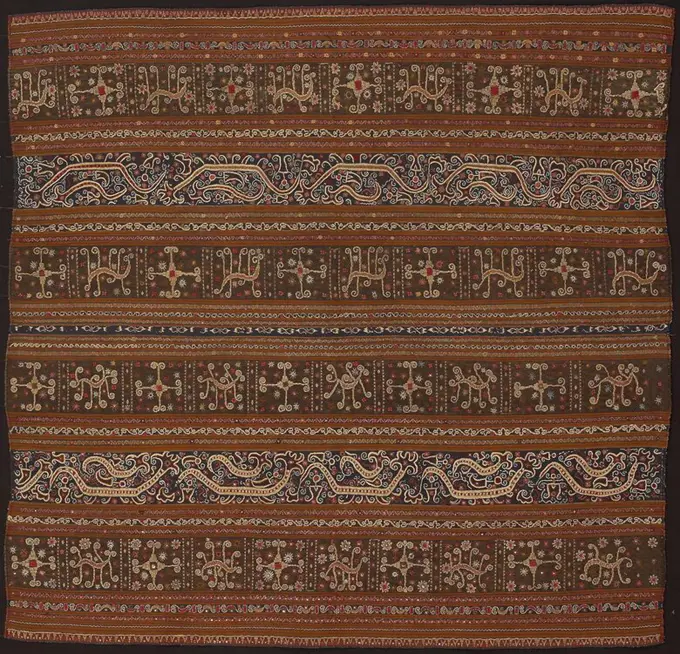
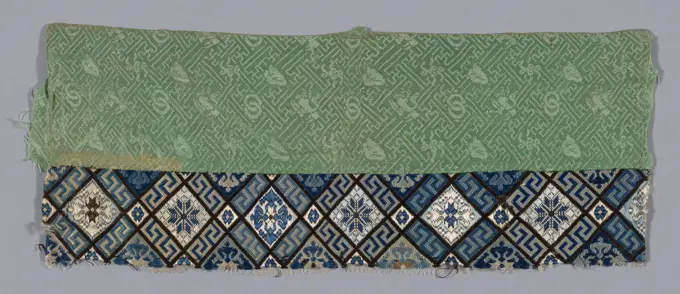
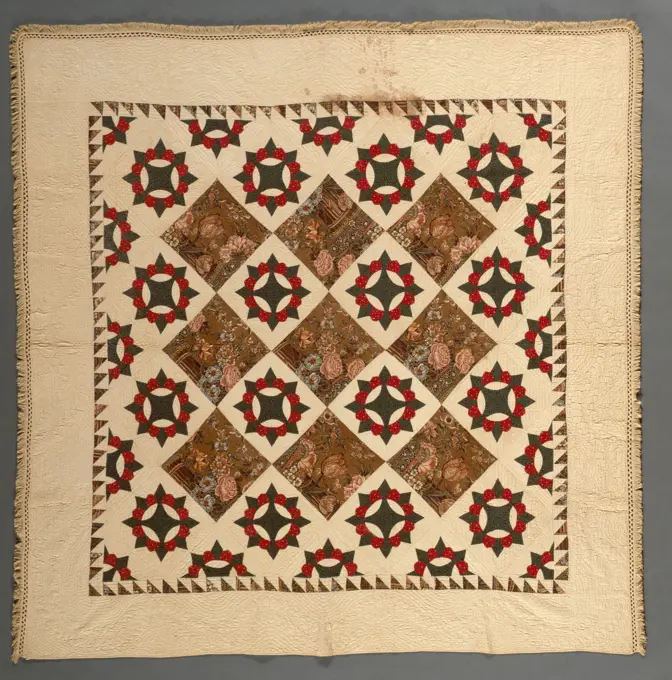
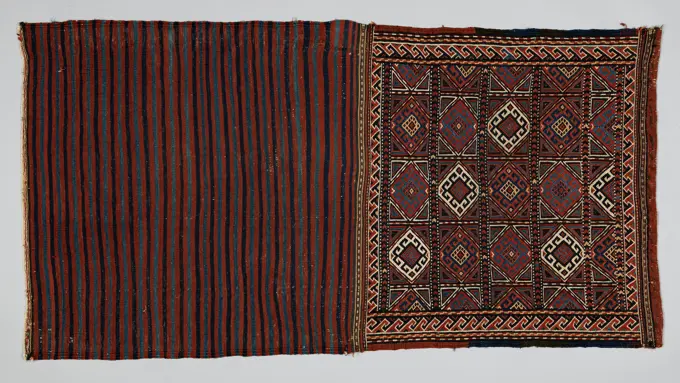
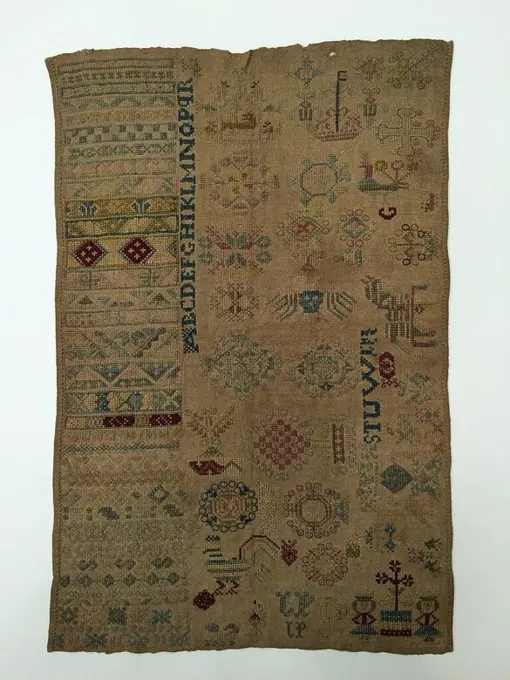
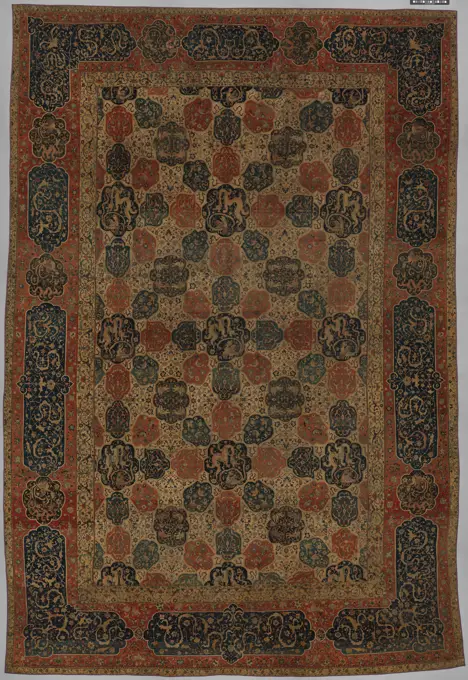
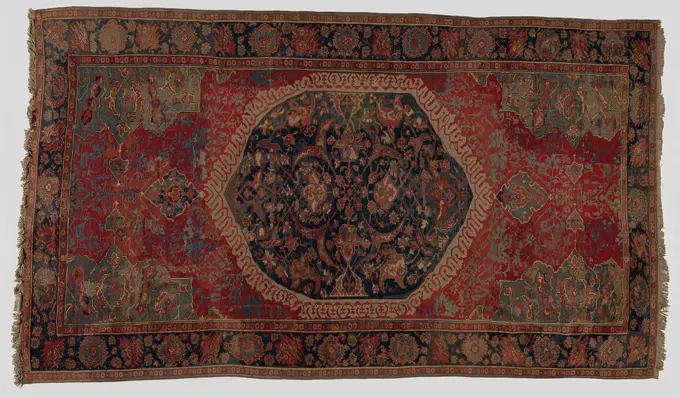
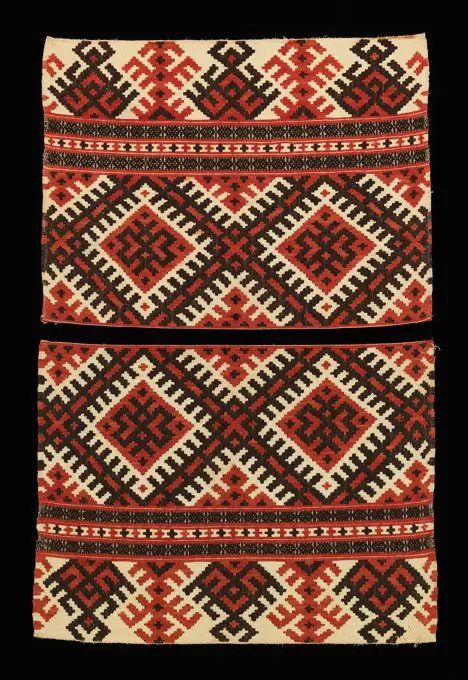
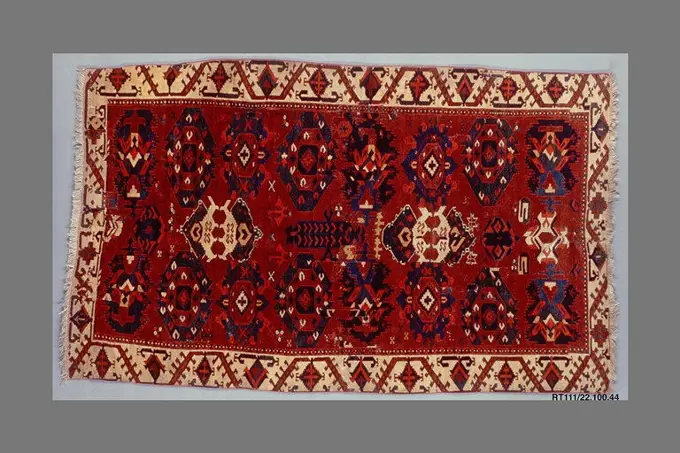
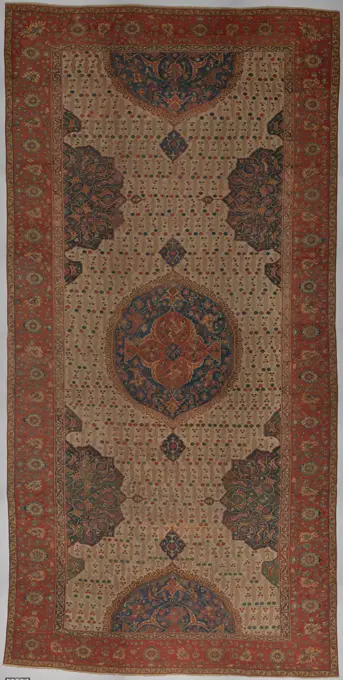
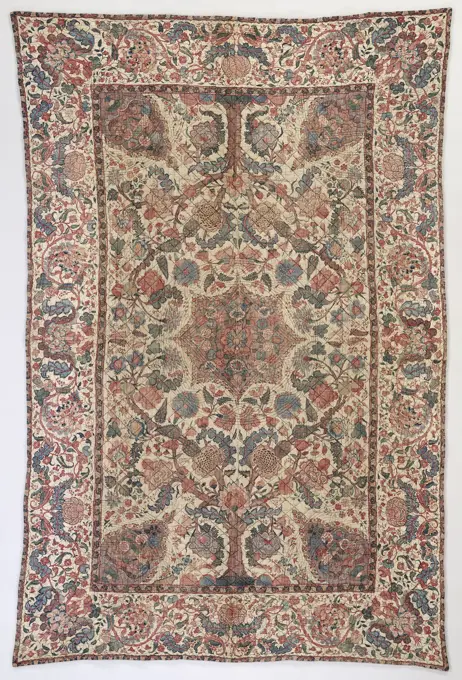
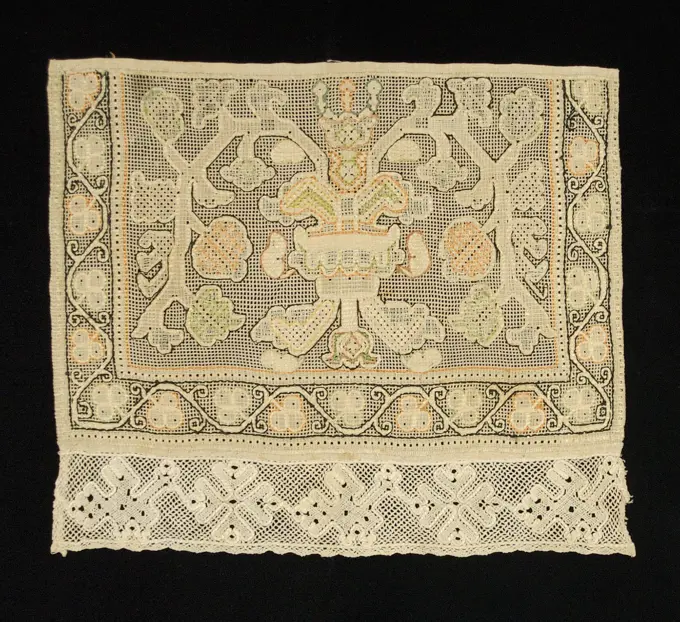
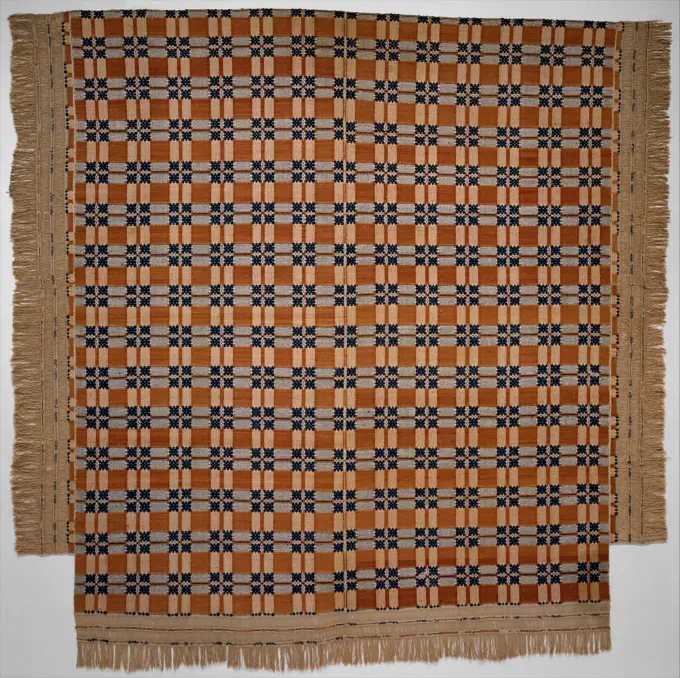
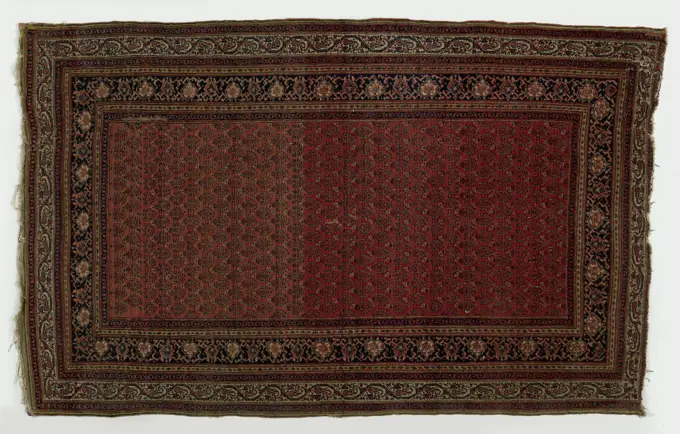
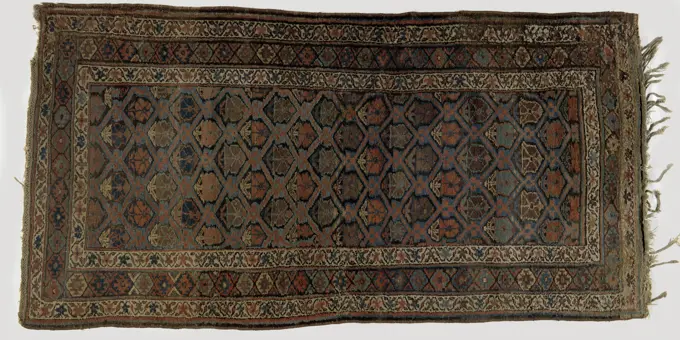
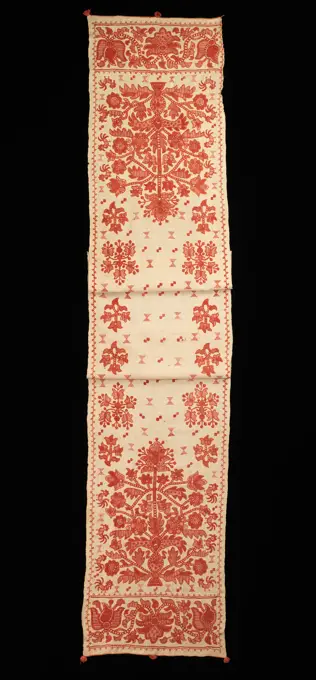
Oriental carpet ,, 1850 - 1900 Oriental carpet, flower rug. Botehs composite in midfield against a dark brown background. Triple edge, the widest of which with flower branches. Hamad Necklace and impact: Wool Oriental carpet, flower rug. Botehs composite in midfield against a dark brown background. Triple edge, the widest of which with flower branches. Hamad Necklace and impact: WoolFragment of a Ritual Weaving(Cepuk)Ritual Weaving(Tampan)Carpet 18th century. Carpet 447576Woman's festival head covering, late 19th-early 20th century, 78 3/16 x 57 3/4 in. (198.6 x 146.69 cm), Cotton, metallic threads; dyed, India, 19th-20th centuryFragment of an oriental carpet, Ersari people, c. 1800 - c. 1900 Fragment of an oriental carpet, medailla rug. In midfield a large middle medallion and two smaller ones at the top. The field is decorated with a herati pattern. No edges. Beshir (possessibly) maker: amudar'ya ketting: goat hair. inslag: wool Fragment of an oriental carpet, medailla rug. In midfield a large middle medallion and two smaller ones at the top. The field is decorated with a herati pattern. No edges. Beshir (possessibly) maker: amudar'ya ketting: goat hair. inslag: woolDowntown skyline, New York CityPanel, Medium: silk on cotton Technique: embroidered, Heavy white cotton embroidered solidly with dark blue and rose silk. Two horizontal repeats of design showing geometric ornament perhaps derived from floral motifs., North Africa, 19th century, embroidery & stitching, PanelPrayer Mat,  India, early 19th century. Block printed and painted quilted cottonFragments, Medium: silk, wool Technique: woven, Large discs framed by curved leaves. Fragments of a cushion cover or panel., Turkey, 16th century, woven textiles, FragmentsBliżej Kultury unknownExcerpt of an oriental carpet ,, 1850 - 1900 Fragment of an oriental carpet, flower rug. In midfield a grid pattern filled with stylized flowers and flower bouquets and small animal figures along the vertical axes against a dark blue background. Head edge is missing. Ferahan Ketting an element: Cotton (Textile) Fragment of an oriental carpet, flower rug. In midfield a grid pattern filled with stylized flowers and flower bouquets and small animal figures along the vertical axes against a dark blue background. Head edge is missing. Ferahan Ketting an element: Cotton (Textile)Ster-onohak or star medium rug. Lakrood field with star-on-axle composition. Lacquer red edge., C. 1600 - c. 1699 Ster-onohak or star medium rug. Lakrood field with star-on-axle composition. Lacquer red edge. Note: shortened at the top. West Anatolia wool Ster-onohak or star medium rug. Lakrood field with star-on-axle composition. Lacquer red edge. Note: shortened at the top. West Anatolia woolBand (Greece); silk embroidery on linen foundationPrayer rug with top panels, Ladik ,, 1840 - 1860 Prayer rug with top panels, Ladik. Midfield: Red Mihrab with three -part, in the middle raised top façade, crowned with hooks. Two oil tans and a long flower stem hang from the top. The you are in white with red and blue lancet leaves on a carnation branch in many colors. A white "omegalijn" upstairs tilt in white border blue grabs in a red upper ware panel, on which light blue (3) and white (2) tulips alternate. Edges: triple. The main edge is blue, with rosette flowers and sloping tulips in red and white, light red and brown and yellow and red. The inner zoom of brown with rosettes is contained in narrow white frames. The entire field is surrounded by a tricolor classified list; around the swicks red; In addition to the Mihrab blue and at the bottom light blue. Ladik wool Prayer rug with top panels, Ladik. Midfield: Red Mihrab with three -part, in the middle raised top façade, crowned with hooks. Two oil tans and a long flower stem hanSampler (England); silk embroidery, wool foundation; Warp x Weft: 32.5 x 30 cm (12 13/16 x 11 13/16 in.); Bequest of Mrs. Henry E. Coe; 1941-69-210Border second half 16th century Italian. Border 222883Oriental carpet. Fragment of an oriental carpet, medallole. In the midfield, an eight-pointed sterm deedaillon with countless geometriache motifs and two animal figures.Cover Made 1801-1900 India. Silk; embroidered in ladder, buttonhole stitched interlaced on herringbone and inset with tiny mirrors .Medaillon suffering covered with floral motifs, a herati pattern, on blue soil. Concentric red window with floral pattern and bird -like ornaments. Triple edge., Anonymous, 1800 - 1950 Eastern carpet, medaillas in Kelim technology. The blue field is covered with floral motifs, a Herati pattern. The same Herati pattern is reflected in the white medallion; The concentric red diamond shape has a floral pattern with bird -like ornaments. Triple edge. Sanandaj (possibly) ketting: cotton (textile) Eastern carpet, medaillas in Kelim technology. The blue field is covered with floral motifs, a Herati pattern. The same Herati pattern is reflected in the white medallion; The concentric red diamond shape has a floral pattern with bird -like ornaments. Triple edge. Sanandaj (possibly) ketting: cotton (textile)Drapery fabric 1875-80 American. Drapery fabric 20177Brocaded silk with foliate medallions from a kaftan, 1525-75. Turkey, Istanbul, Ottoman period. Silk: lampas weave, silver-metal thread; overall: 105.7 x 49.5 cm (41 5/8 x 19 1/2 in.); mounted: 110.5 x 54.6 cm (43 1/2 x 21 1/2 in.).Blanket (Hanbel), late 19th-early 20th century, 97 1/4 x 60 5/16 in. (247.02 x 153.26 cm), Wool, cotton, sequins; plain weave, pile weave, Morocco, 19th-20th centuryBid rug, so -called Zevenburgen, Anonymous, 1680 - 1700 Bid rug, so -called Zevenburgen. Midfield: In a double lacquer-red mihrab with high whimsically contoured top façades there is a yellow vase with symmetrical palm with and rosette flowers in yellow/blue/white in every top, with cross stems in brown, with crocheting volumes. Just above the middle two carnations and a few angular arabesks. The you are blue on which a rosette flower in white/red, including a tulip and a lancet leaf. Rand: triple. The main edge is yellow with pent stalks grouped into octagons that are colored diagonally in blue/red and blue/ocher yellow and that with the four of us enclose a rosette. The inner zoom is black with colorful sloping S-sen. The outside zoom is red with Xs and Sterroettes along which an interior list is still with stretched S-sen. Asia Minor (Possible) wool Bid rug, so -called Zevenburgen. Midfield: In a double lacquer-red mihrab with high whimsically contoured top façades there is a yellowPanel (Furnishing Fabric). China, Guangzhou (Canton) or Macao. Date: 1620-1700. Dimensions: 105.7 x 52.7 cm (41 5/8 x 20 3/4 in.). Silk, warp-float faced satin weave self-patterned by ground wefts bound in twill interlacings. Origin: Macao. Museum: The Chicago Art Institute, Chicago, USA.Child's Quilt. United States, Massachusetts, 1844. Textiles; quilts. Cotton plain weave, printed and linen plain weave with wool embroidery, pieced and quilted.Chasuble, c 1600- 1700. Italy, Genoa, 17th century. Woven polychrome silk and gilt metal threads, cut and uncut velvet; overall: 106 x 68.3 cm (41 3/4 x 26 7/8 in.). This sumptuous polychrome velvet displays a central vase with abundant flora and exotic leaves flanking curving blossoming fronds on a gilt-metal thread ground. The pattern was created with five colors of cut and uncut (loops) velvet pile. Only the pile warps for the lush green velvet occur across the entire cloth, while each additional color appears in vertical stripescrimson, peach, rose, and purple. These widely acclaimed velvets from Genoa were the most colorful woven in Europe. Both the long stole and the shorter maniple are insignia of the office of deacons, priests, and the higher clergy. The stole was worn under a chasuble according to the office and the maniple was hung on the left forearm. The burse is a stiff receptacle in which the folded corporal, a white linen cloth on which the sacred bread and chalice areBorder Fragment of a Shawl, late 1700s - early 1800s. India, Kashmir, late 18th - early 19th century. Tapestry twill; wool; overall: 23.5 x 17.8 cm (9 1/4 x 7 in.).Silk Fragment with Wavy-vine Pattern on Green Ground 16th century Spectacular, large-pattern silks were favored materials for luxury garments among the courtly elite of sixteenth-century Istanbul, and were often used for the bold, richly colored kaftans of the Ottoman sultans. This rectangular silk fragment features a design of red undulating vines bearing rosettes, on a gold-green ground. A series of small rosettes of gold, blue, green, and yellow fill each vine, and larger rosettes punctuate the vine. Emanating from the vines are peacock tails and tulips, with details executed in blue, green, and pink.. Silk Fragment with Wavy-vine Pattern on Green Ground. 16th century. Silk, metal wrapped thread; lampas (kemha). Attributed to Turkey, Bursa or Istanbul. Textiles-WovenFragment 17th century Italian. Fragment 230063Fragment (Spain); silk; Warp x Weft: 19.4 x 43.8 cm (7 5/8 x 17 1/4 in.)Waist Wrapper (Kumbut Juangga,Cindé)Oriental carpet ,, 1800 - 1850 Oriental carpet, ersari carpet, hugs rug. In midfield, octagon in three jobs of six against a red long distance. Filling of flower and stars. Widest edge decorated with a checkered mountain and descendant and triangles. Central Asia wool Oriental carpet, ersari carpet, hugs rug. In midfield, octagon in three jobs of six against a red long distance. Filling of flower and stars. Widest edge decorated with a checkered mountain and descendant and triangles. Central Asia woolPanel (Dress Fabric) Made 1701-1900 Iran. .Kokerdoek, anonymous, 1900 - 1949 Tube cloth with geometric motifs. Bali silk Tube cloth with geometric motifs. Bali silkPrayer rug with top panel, Mudjur ,, 1840 - 1860 Prayer rug with top panel, mudjur. Midfield: Cherry Red Mihrab with high top façade with five -colored step lines. The you are gray -green with two red oil plans. A narrow Frisian shows a yellow "omegalijn" that divides the panel into blue and black tilting. Randn: multiple. The widest is yellow with saved pure squares, filled with a star flower and apart from that standing leaves in many colors, finely divided. The inner hem in blue with windows is contained in two equally speckled piping. The outside zoom is black. Mudjur wool Prayer rug with top panel, mudjur. Midfield: Cherry Red Mihrab with high top façade with five -colored step lines. The you are gray -green with two red oil plans. A narrow Frisian shows a yellow "omegalijn" that divides the panel into blue and black tilting. Randn: multiple. The widest is yellow with saved pure squares, filled with a star flower and apart from that standing leaves in many colors, finely divided. Towel Made 1501-1600 Italy. Five bands of linen, plain weave; pulled thread work with silk in Italian cross stitches and embroidered with silk in back stitches; alternating with four bands of linen, knotted square netting; embroidered with linen in darning stitches; edged with silk and linen, plain weave with extended ground weft fringe .Carpet late 15th century Spanish. Carpet 466358Medaillonkleed, anonymous, c. 1600 - c. 1609 Medaillon suffering with Ghiordes button: on a deep blue fond a lobed medallion with a red contour, crowned at the top and bottom with an arabesk-palmet. The edge consists of a deep blue stock with broken running slender with alternating rosette and chalice in red, blue, white, green and black. Konya ketting/pool: wool. inslag: cotton (textile) Medaillon suffering with Ghiordes button: on a deep blue fond a lobed medallion with a red contour, crowned at the top and bottom with an arabesk-palmet. The edge consists of a deep blue stock with broken running slender with alternating rosette and chalice in red, blue, white, green and black. Konya ketting/pool: wool. inslag: cotton (textile)Oriental carpet. Oriental carpet, medal felt, the midfield of which is decorated with three medallions on a blue fond. In the gap rosettes and arabesque and smaller animal, star and cross motives. The middle edge is decorated with star rosing.Ceremonial Skirt (tapis). Abung people; Indonesia, South Sumatra, northern Lampung area, Monggala. Date: 1801-1825. Dimensions: 110.5 x 113.7 cm (43 1/2 x 44 3/4 in.). Two panels joined: cotton and silk, stripes of warp-faced, weft ribbed plain weave; warp-faced, weft ribbed plain weave with supplementary brocading wefts, and warp resist dyed (warp ikat) plain weave with supplementary brocading wefts; appliquéd with wool, plain weave; embroidered with silk, cotton, pineapple fiber, silver-leaf-over-lacquered-paper strip wrapped cotton and silver-leaf-over-lacquered-paper strip wrapped bast fiber (probably ramie) in buttonhole, double running, split, stem, straight and surface satin; laidwork and couching; embellished with metal-backed glass mirrors. Origin: Indonesia. Museum: The Chicago Art Institute, Chicago, USA.Pillow Cover Made 1601-1700 Greece. Cotton, plain weave; embroidered with silk in running stitches (pattern darning) .Embroidered pall unknownEdging 16th century Italian or Spanish. Edging 217782Prayer cloth with top panel, mud jur. Prayer cloth with top panel, mud jur. Midfield: Cherry red Mihrab with high top façade with five-colored step lines. The switches are gray-green with two red oil men. A narrow frieze shows a yellow "omegaline" that divides the panel into blue and black tilting. Randn: Multiple. The widest is yellow with saved pure squares, filled with a star flower and separate overhanging leaves in many colors, fine kaleidoscopically subdivided. The indoor zoom in blue with windows is caught in two equal speckled piping. The outside zoom is black.Piece 18th century Japan. Piece 71161Band (from Woman's Trousers or Robe) Made 1875-1900 China. .Oriental carpet, Anonymous, 1800 - 1900 Oriental carpet, prayer rug, knotted wool, decorated with a blue mihrab, stepped gable top, filled with white arrow motifs. Three edges and four spiral seams around midfield. Ghiordes (possibly) wool Oriental carpet, prayer rug, knotted wool, decorated with a blue mihrab, stepped gable top, filled with white arrow motifs. Three edges and four spiral seams around midfield. Ghiordes (possibly) woolBand (Italy); silk on linen; Bequest of Marian Hague; 1971-50-93Oriental carpet. Oriental carpet of knotted wool with herati pattern and three edges, the middle of which is decorated with tendrils, arabesque and palmets and rosettes.Cushion with middle pattern divided into windows on which cross flowers with hooks. Edge with roses., Jaffi people, c. 1800 - c. 1900 Cushion, originally bag, Jaffi Kurdistan-Mosul. Midfield is divided into windows with the same cross flowers with hooks. The edge is decorated with rosettes. At the top a beard with cracks. The back is woven flat with a few stripes. Kurdistan Necklace and impact: Wool Cushion, originally bag, Jaffi Kurdistan-Mosul. Midfield is divided into windows with the same cross flowers with hooks. The edge is decorated with rosettes. At the top a beard with cracks. The back is woven flat with a few stripes. Kurdistan Necklace and impact: WoolALFOMBRA DE AFGANISTAN.Fragment; silk, metallic threadFragment from an apron (opreg cu ciucuri) Romanian, Banat area late 19th century This woven fragment belongs to the upper part of an opreg cu ciucuri, a fringed apron traditionally worn by women from the Banat area of Romania and Serbia. The warp of the fragment's ground woven component is made of course, long wool fibers from the back of Turcana sheep. Highly twisted during spinning and dying, these fibers give desirable weight and stiffness to the apron. The decorative band was woven separately, and geometric motifs were embroidered over both fabrics. View more. Fragment from an apron (opreg cu ciucuri). Romanian, Banat area. late 19th century. Background: twill weave (warp: Turcana wool, Z spun, 24 per cm; weft: metal-wrapped thread; wool, Z spun, 14 per cm; cotton, 2Z spun, S plied); decorative panel: tapestry weave (warp: cotton, 2Z spun, S pliz, 16 per cm; weft: linen, Z spun, 38 per cm; silk, 2Z spun, S plied; metal-wrapped thread, 64 per cm); embroidery: metal-wrapped thread, mEastern carpet, Quli Ghani (Possible), 1800 - 1900 Eastern carpet of knotted wool, of which midfield is decorated with rows of Boteh's composed of colorful flowers and leaves, against a blue stock. Three edges of which the middle is decorated with flowers. Hardly readable inscription, translated as the signature of a quashghai weaver: "The work of Quli Ghani". Southern Persia wool Eastern carpet of knotted wool, of which midfield is decorated with rows of Boteh's composed of colorful flowers and leaves, against a blue stock. Three edges of which the middle is decorated with flowers. Hardly readable inscription, translated as the signature of a quashghai weaver: "The work of Quli Ghani". Southern Persia woolFragment (Dress Fabric) Made 1700-1801 Iran. .Quilt, 'Full-Blown Tulip'. United States, circa 1830. Textiles; quilts. Pieced, quilted, and embroidered cottonHalf of Double Saddle Bag (Khorjin) ca. 1880-1900. Half of Double Saddle Bag (Khorjin). ca. 1880-1900. Wool; sumak brocaded, tapestry weave. From probably Northwestern Iran. Textiles-Woven-BrocadeChasuble. England. Date: 1601-1700. Dimensions: 123 × 75.2 cm (48 1/2 × 29 1/2 in.). Silk, plain weave; appliquéd with linen, plain weave; embroidered with silk in chain, individual back, running, and stem stitches; spangles; edged with silk, warp-faced cut weft fringe; lined with silk, plain weave. Origin: England. Museum: The Chicago Art Institute, Chicago, USA.Oriental carpet ,, 1700 - 1900 Oriental carpet, prayer rug with two key hole motifs. In the dark brown -red midfield key hole motifs and a star motif. A blue border with multicolored flowers stands between hems with equal tenders. Button: Ghiordes Knoop. Asia Minor (Possible) Bergama (Possible) Central Asia (Possible) Necklace and impact: Wool Oriental carpet, prayer rug with two key hole motifs. In the dark brown -red midfield key hole motifs and a star motif. A blue border with multicolored flowers stands between hems with equal tenders. Button: Ghiordes Knoop. Asia Minor (Possible) Bergama (Possible) Central Asia (Possible) Necklace and impact: WoolSari Made 1801-1900 India. Border of multicolor floral and palmette pattern .Embroidered sampler. Culture: Dutch, Marken Island. Dimensions: 17 7/8 × 12 1/4 in. (45.4 × 31.1 cm). Date: 17th century.This sampler, which features various geometric motifs, and an alphabet, is typical of Marken Island samplers, which are characterized by bands of colorful patterns. Girls stitched these bands to practice patterns for "vernaaide linten"- ribbons that were attached to a cap and which were an important part of the costume tradition on Marken Island. These ribbons consisted of black embroidery on white linen. The women of Marken are said to have kept their samplers in or near their kitchens for handy reference, so much of the needlework appears darkened from residue from cooking fires. Samplers from this area, including this one, often include striped horses. Other motifs include a ship, dog in a house or other enclosure, and striped rooster. The initials "LP," which are stitched several times, are probably the initials of the sampler's maker. Museum: Metropolitan MuseuCarpet with a Compartment Design first half 16th century This magnificent jewel-colored carpet, with its elegant, curvilinear "compartments" based on a geometric star pattern, is filled with creatures borrowed from Chinese art, such as the dragon and phoenix in combat. The benevolent phoenix has its counterpart in Persian lore, where it is known as the simurgh, also a wise and protective bird. Other compartments contain decorative arrangements of Chinese ch'i-lin and flying geese, as well as the purely Islamic arabesque. The border with its medallions and cartouches reflects those of Safavid bookbindings, which also make great use of ribbonlike Chinese cloud bands, by now thoroughly assimilated into Persian art. With its fine weave (550 knots per square inch), silk foundation, and the close relationship between its elaborate pattern elements and the art of the book, it seems likely that this carpet was designed in the book atelier working in the service of the shah.This carpet has beenHanging or Prayer Rug 18th century. Hanging or Prayer Rug. 18th century. Taffeta, metal thread. Attributed to Turkey. Textiles-EmbroideredSampler 19th century Spanish. Sampler 228194Window rug. Midfield with grid work within which cross-shaped geometric ornaments. Blue border with eight-pointed stars and volunteer ... Oriental carpet, Windows. In The Midfield A Diamond Shaped Grid With Cross-Shaped Geometric Ornaments. The Blue Border is decorated with Eight-Pointed Stars and Volunteer.Medallide, Z.G. Medallonushak. Medallide, Z.G. Medallonushak. Midfield: Kersrode Fond, on which a sapphire blue six-sided medallion with wide-sleeved outline in light turkois green. In the heart a fine red eight-handed star with four radiating symmetrical palmettes with light blue, white and yellow motifs and four light red arabesk leaves to ranke stems. They also grow two darker red and two yellow arabesken and two pairs of large chalice flowers. At the top and foot of the medallion each time a blue palmet. In the corners StermEDAILOs - slightly higher than a quarter star - in bottle green with yellow-rimmed red arabic and palmets. Field filling with solid cobalt blue branched whimsical leaf refines. Edge: sapphire blue border with palm tree flowers in red, light blue and yellow, interspersed by leaves in red, on which flowers in loose rosettes in blue, yellow, green and brown.Sarong; silk, metallic threadTowel border 1840-70 Russian This object is from the collection of Natalia de Shabelsky (1841-1905), a Russian noblewoman compelled to preserve what she perceived as the vanishing folk art traditions of her native country. Traveling extensively throughout Great Russia, she collected many fine examples of textile art of the wealthy peasant class. From the 1870s until moving to France in 1902, Shabelsky amassed a large collection of intricately embroidered hand-woven household textiles and opulent festival garments with rich decoration and elaborate motifs. The Brooklyn Museum holdings include many fine examples including the majority of the garments. Portions of Shabelsky's collection are also housed at the Museum of Fine Arts, Boston, the Cleveland Art Museum, and the Russian Museum of Ethnography in St. Petersburg.Kilim or split tapestry is a hand weaving technique most usually used to produce heavyweight rugs. Kilim weaves produce no pile and have a characteristic geometric pattern..Border. Turkey, 18th century. Textiles; borders. Linen plain weave with silk embroideryTent Door Hanging (Ensi). Dimensions: Rug: H. 76 1/2 in. (194.3 cm)W. 54 in. (137.2 cm). Date: first half 19th century.Admired for their deep, rich hues and the strength of their design, the textile arts of the Turkmen weavers combine a stark, dramatic beauty with absolute functionality. The seasonal migrations of the Turkmen tribes require that their every possession--even their homes--be collapsible and portable. This large, knotted-pile textile, similar in most respects to a carpet, likely served instead to cover the entrance to a Turkmen tent. Such tent door hangings, called ensi, with their thick, densely knotted pile, not only protected the family from the outside elements, but also added further color and comfort to an interior living space already replete with soft carpets, cushions, and laden storage bags. Museum: Metropolitan Museum of Art, New York, USA.Yamut Main Carpet late 18th-early 19th century In Turkmen tents a main carpet’ covered the floor, while storage bags with carpet-woven faces hung from the tent walls and carpet-woven door hangings protected the entrance. This carpet contains V-shaped motifs similar to those found in some Turkmen jewelry.. Yamut Main Carpet 447503Bidkleed, , c. 1775 - c. 1900 Oriental carpet, prayer rug. In midfield a terra red mihrab. A large window in the niche. Triple edge, of which the widest corn yellow with a meanderrank. A red perch in the bottom and top. Button: Ghiordes Knoop. Asia Mountain Necklace and impact: Wool Oriental carpet, prayer rug. In midfield a terra red mihrab. A large window in the niche. Triple edge, of which the widest corn yellow with a meanderrank. A red perch in the bottom and top. Button: Ghiordes Knoop. Asia Mountain Necklace and impact: WoolUshak Medallion Carpet on White Ground first half 17th century Medallion Ushak carpets usually have a red or blue field decorated with a floral trellis or leaf tendrils, central medallions, and a border containing palmettes on a floral and leaf scroll, and pseudo-kufic characters. In this example (partially restored), a typical white-ground field pattern is combined with the Medallion Ushak to form a new category of Ottoman carpets. Its triple spots-and-wavy double stripe pattern, called çintamani, appears frequently in Ottoman art from the sixteenth century on tiles, paintings, book bindings, and particularly on textiles and garments. Unlike other white-ground categories, this field pattern never appears in European paintings of the sixteenth and seventeenth centuries.. Ushak Medallion Carpet on White Ground. first half 17th century. Wool (warp, weft and pile); symmetrically knotted pile. Attributed to Turkey. Textiles-RugsBrocade, 1800s. India, Benares , 19th century. Brocade, "kimkhwab"; silk and gold; overall: 8.9 x 14.6 cm (3 1/2 x 5 3/4 in.).Tunic Fragment 7th-8th century Moche-Wari. Tunic Fragment 312613Tapiser;  End of the 16th century (1590-00-00-1600-00-00);Arrasa, tapestries, flowers, Mille Fleurs (tapiseries), fruit, landscapesSitsen bedspread with a symmetrical ornament and a red, silk lining, anonymous, c. 1700 - c. 1725 Sitsen bedspread with a multi -colored, symmetrical ornament. The bedspread is lined with red, stitched silk. Eastern textile. Coromandelkust silk printing Sitsen bedspread with a multi -colored, symmetrical ornament. The bedspread is lined with red, stitched silk. Eastern textile. Coromandelkust silk printingBedcover Made 1700-1900 Greece. Linen, plain weave; embroidered with silk in chain, running (pattern darning), and satin stitches; three loom widths joined .Towel border 1800-1850 Russian. Towel border. Russian. 1800-1850. Drawnwork, embroidery, crochet, linen and silk. Textiles-LacesFragment; silkThe sea book..., Binding. 1850 - 1883. bindings (gathered matter components), Book covers. Spencer Collection. Gauffered edges (Binding) , Great Britain , 19th centuryCoverlet ca. 1825 American This overshot coverlet is woven of undyed cotton and blue and orange wool in two panels and seamed at the center. There is an applied woven fringe along each side and along the bottom edge. The piece is T-shaped to accommodate bedposts.. Coverlet 13635Blanket for cradle or cot made of silk in satin binding, padded, stitched and embroidered, anonymous, c. 1675 - c. 1700 Dean for cradle or cot, from silk in satin binding, padded, stitched and embroidered with arabesks and a floral border in a red and green silk. Model: rectangular. Filling of two woven woolen layers. Lining of plain silk in flat binding. Blind zoom. Decoration: midfield with a mirrored pattern of linear curls twice. The embroidery on the top has been worked through the top layer of the wool filling. The silk lining in flat binding is stitched through with the lower wool intermediate layer in a typical Dutch pattern of 'shells'. Northern Netherlands whole: Silk. intermediate layer: Wool Dean for cradle or cot, from silk in satin binding, padded, stitched and embroidered with arabesks and a floral border in a red and green silk. Model: rectangular. Filling of two woven woolen layers. Lining of plain silk in flat binding. Blind zoom. Decoration: midfield with a mirrored Ralph Atkinson, Coverlet, 1937 CoverletOriental carpet, Anonymous, 1800 - 1900 Oriental carpet of knotted wool, of which the midfield is decorated with rows of left to the left or right mir-i-bota. Two decorated edges. Serabend wool Oriental carpet of knotted wool, of which the midfield is decorated with rows of left to the left or right mir-i-bota. Two decorated edges. Serabend woolFragment, Medium: silk embroidery on linen foundation Technique: embroidered in cross and Rhodian cross stitches on plain weave, Vertical design of leaves and abstract in red, green, blue and beige. Piece probably salvaged from a bed curtain., Greece, 18th century, embroidery & stitching, FragmentHead scarf with Oya, 1940-1950, 31 3/8 x 39 3/16 in. (79.69 x 99.54 cm) (without trim), Silk; blockprint; dyed, Turkey, 20th centuryPercival Jenner, Man's Linen Kerchief, c 1937 Man's Linen KerchiefCarpet Made 1875-1900 Turkey. Wool, plain weave with supplementary wrapping wefts forming cut pile through a technique known as Ghiordes knots ; warp fringe .Flower Dress, Kazak ,, 1850 - 1900 Flower rug, Kazak. Midfield: Brown -black fond with grid pattern in light blue randed red in which a flower always stands in muted colors: English red, light brown, blue, old pink and for the stems and leaves pale yellow. Edges: triple. The middle one is brown -black with entire hexagons and half window in yellow, pink, blue and turqoise. Equal indoor and outside of white on which a flower drink in black with red and blue flowers. Beards: short beige beards, at the bottom with a zigzag line n at the top with long braided fringe. Jumper wool Flower rug, Kazak. Midfield: Brown -black fond with grid pattern in light blue randed red in which a flower always stands in muted colors: English red, light brown, blue, old pink and for the stems and leaves pale yellow. Edges: triple. The middle one is brown -black with entire hexagons and half window in yellow, pink, blue and turqoise. Equal indoor and outside of white on which a flower drink in black with red aPanel Made 1875-1900 China. Forty-four pairs and eight odd pieces of embroidered sleeve, ankle bands, etc. on gauze. . Han-ChineseFragment Made 1625-1675 Italy. silk .Panel; silk, metallic threadTrimming of embroidered shawl unknownTextile Fragment 4th century. Textile Fragment. 4th century. Wool, linen; tapestry weave. Made in Egypt. TextilesTowel early 19th century Russian This object is from the collection of Natalia de Shabelsky (1841-1905), a Russian noblewoman compelled to preserve what she perceived as the vanishing folk art traditions of her native country. Traveling extensively throughout Great Russia, she collected many fine examples of textile art of the wealthy peasant class. From the 1870s until moving to France in 1902, Shabelsky amassed a large collection of intricately embroidered hand-woven household textiles and opulent festival garments with rich decoration and elaborate motifs. The Brooklyn Museum holdings include many fine examples including the majority of the garments. Portions of Shabelsky's collection are also housed at the Museum of Fine Arts, Boston, the Cleveland Art Museum, and the Russian Museum of Ethnography in St. Petersburg.Towels such as this were often given as wedding gifts and used in religious ceremonies to hang over mirrors and sacred trees. Cocks, as the harbingers of daylight, were Towel Made 1401-1500 Perúgia. This complete towel entered the collection in 1899. The design is formed of addorsed and confronted animals specifically to be identified as wyverns. According to The Oxford English Dictionary a wyvern is a ìchimerla animal imagined as a winged dragon with two feet like those an an eagle, and a serpent-like barbed tailî. It is the same animal which one also finds, however, with its wings spread, in the lower part of the Borghese coat-of-arms. Towels of this kind can be found in Early Renaissance paintings and manuscript pages where they were used either as table covers or as overtowels.. Linen, bands of weft-float faced diamond twill weave; weft-faced, warp-ribbed plain weave with supplementary patterning wefts .Piece 18th century Japan. Piece 71173Panel Made 1575-1625 Turkey. Silk, cotton, and gilt- and silvered-metal-strip-wrapped silk, satin weave with supplementary brocading wefts and cut voided velvet .