Traditional Handwoven Textiles

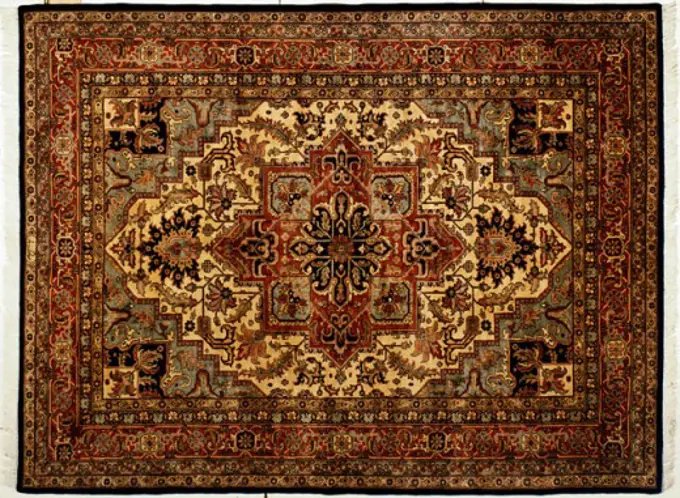
A collection of intricate oriental carpets and ritual weavings showcasing traditional patterns, rich colors, and historical craftsmanship.

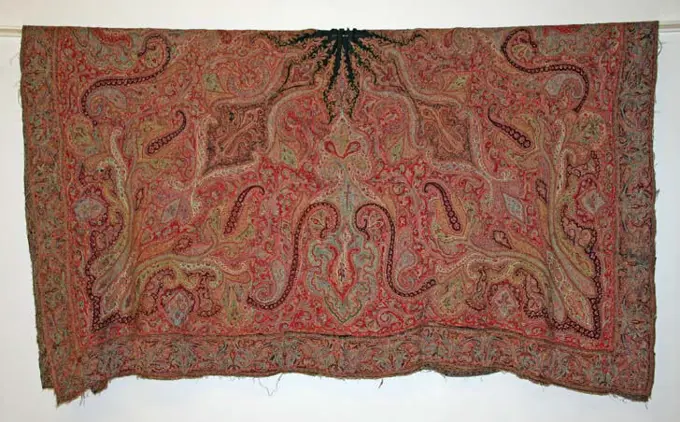
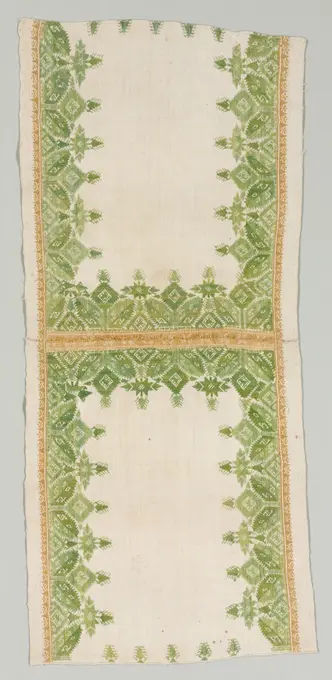
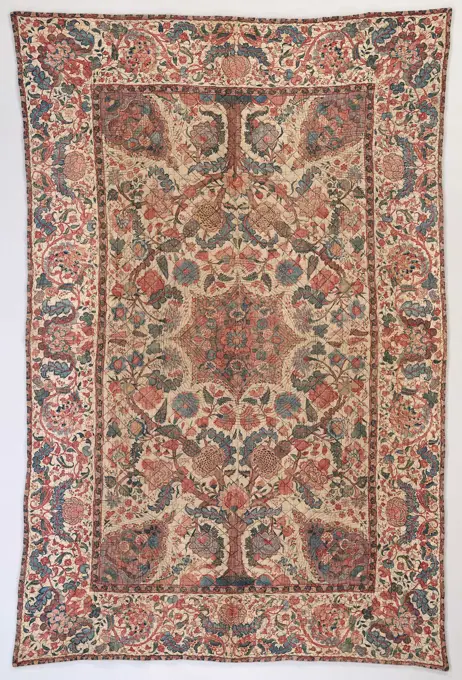
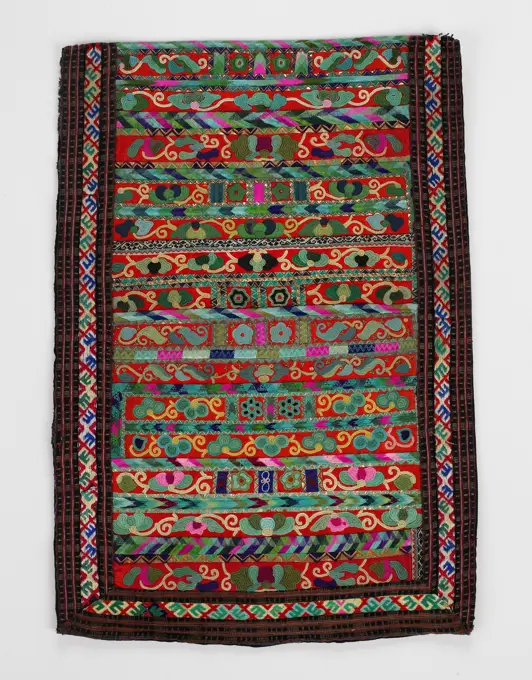
Woman's festival head covering, late 19th-early 20th century, 78 3/16 x 57 3/4 in. (198.6 x 146.69 cm), Cotton, metallic threads; dyed, India, 19th-20th century
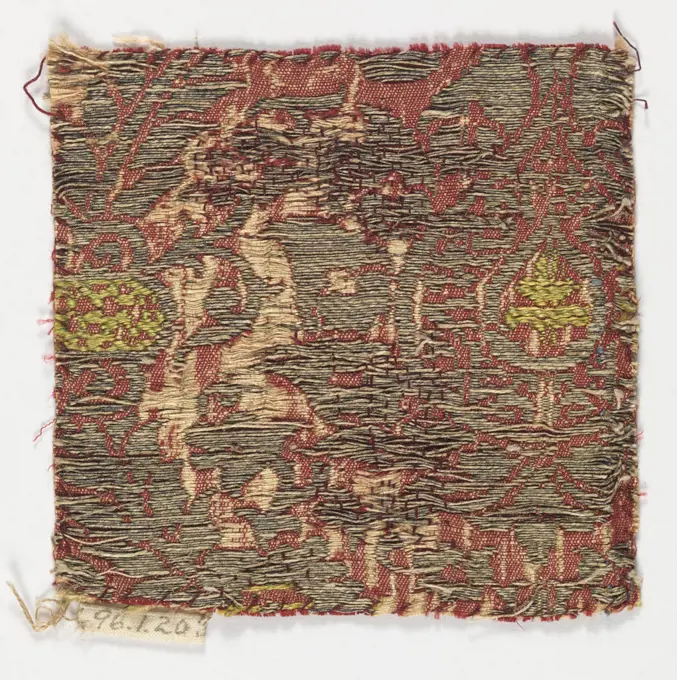
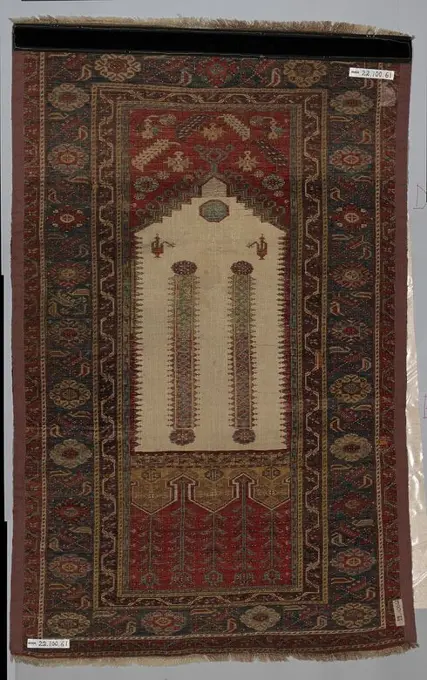
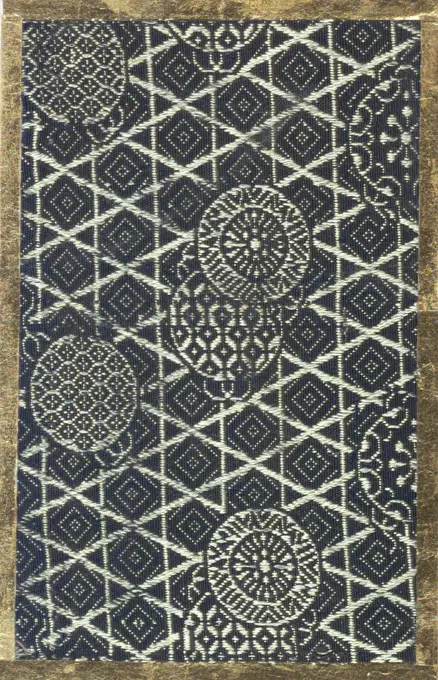
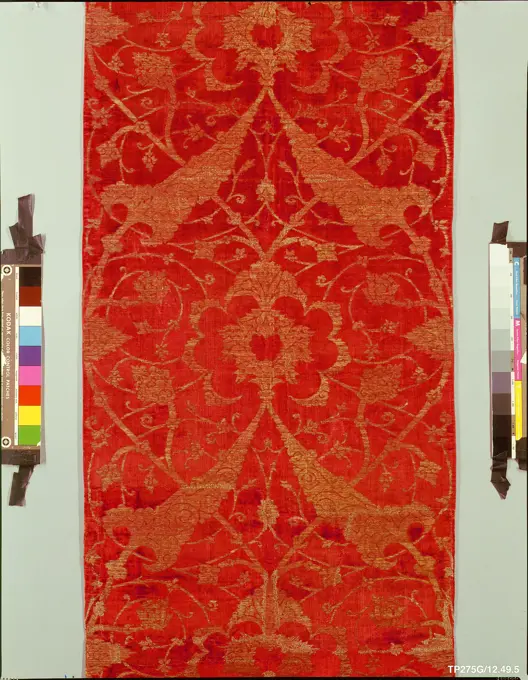
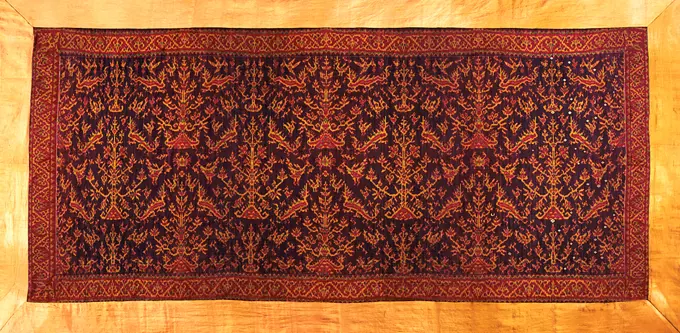
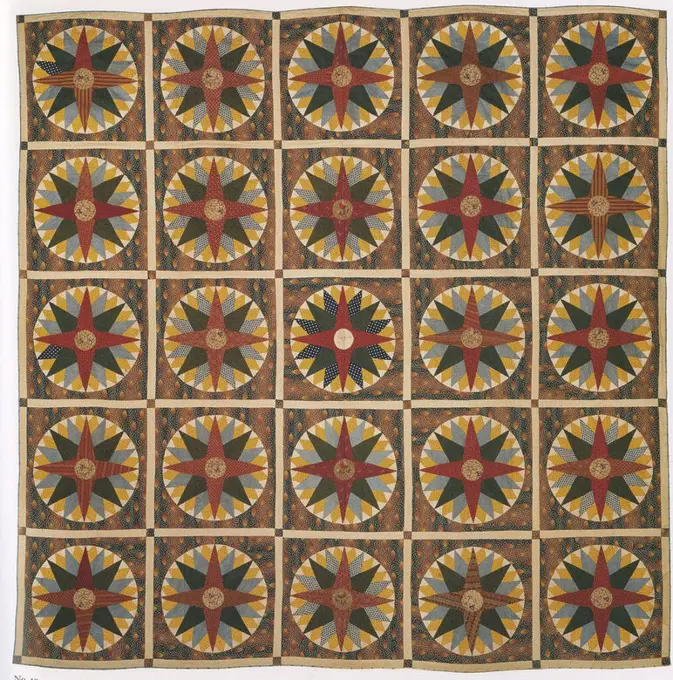
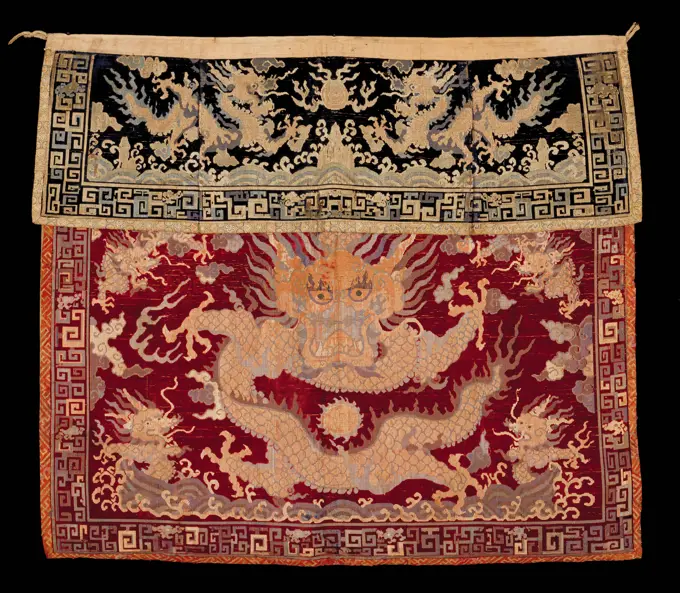
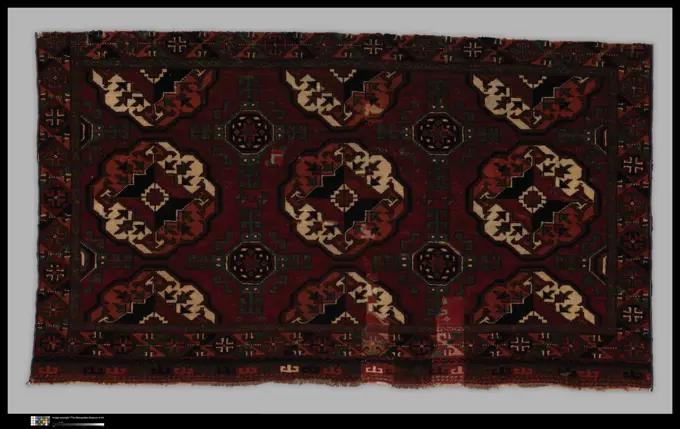
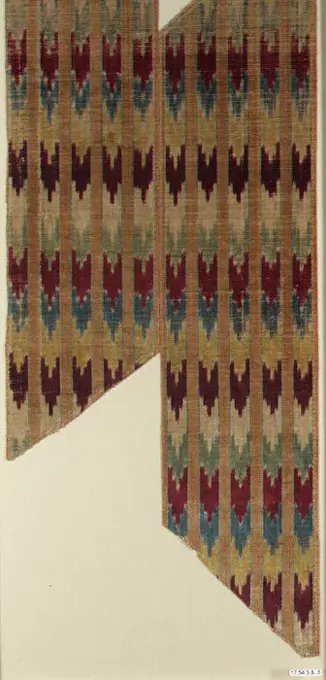
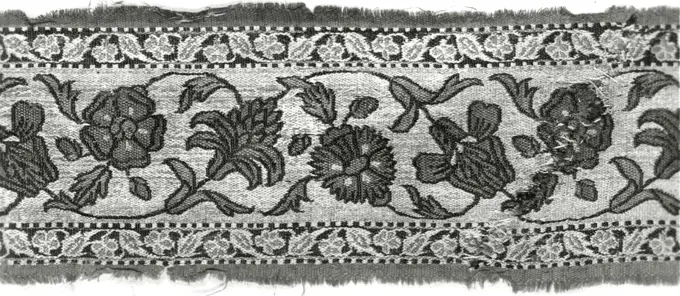
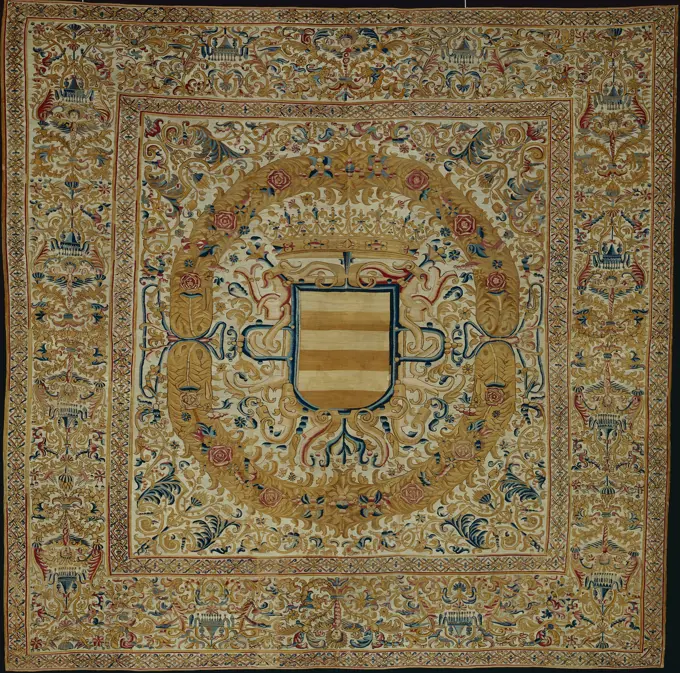
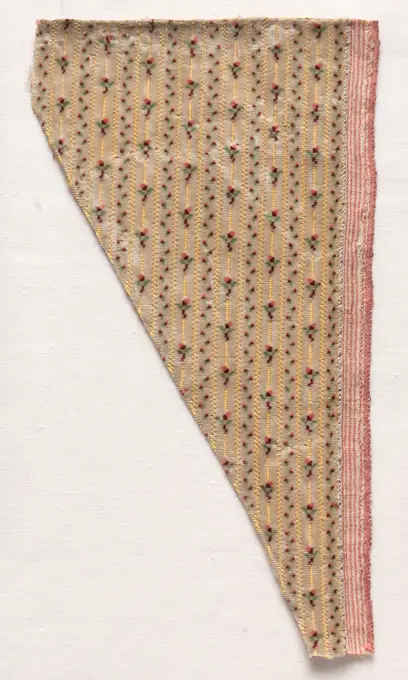
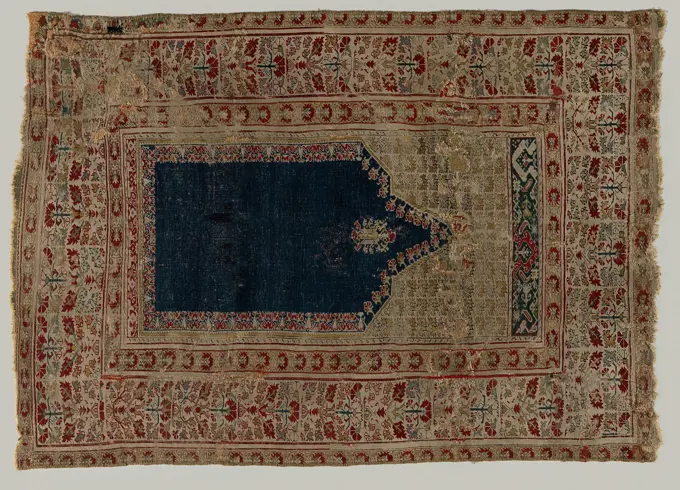
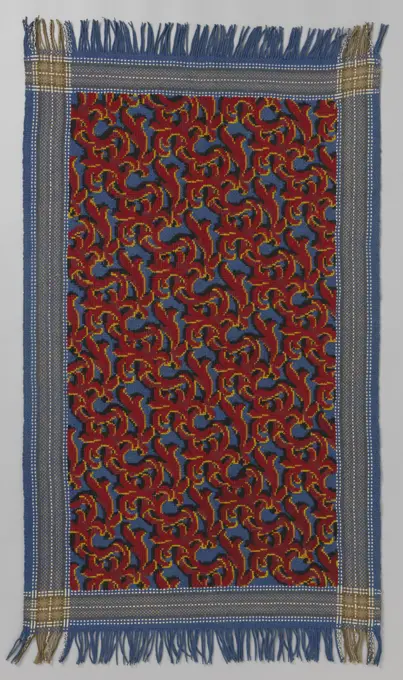
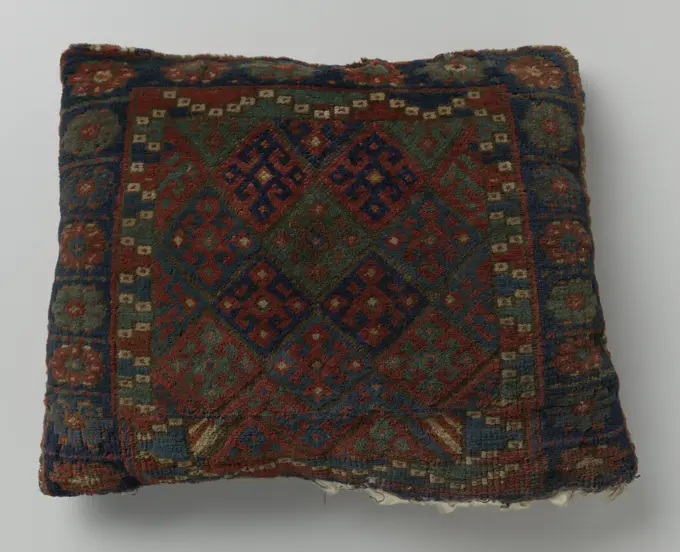
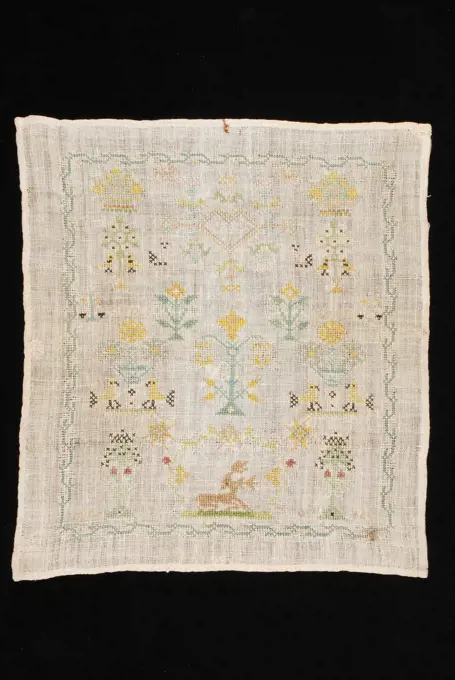
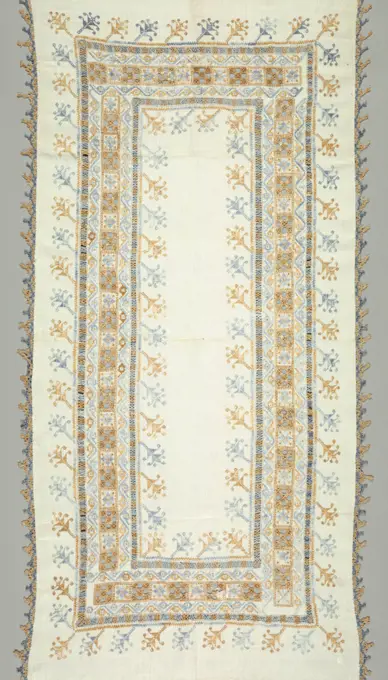
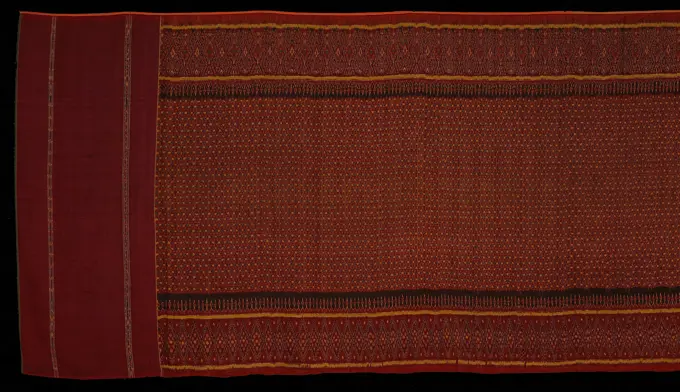
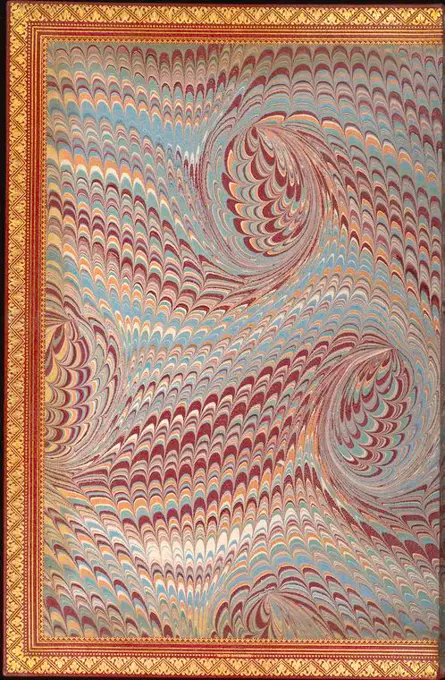
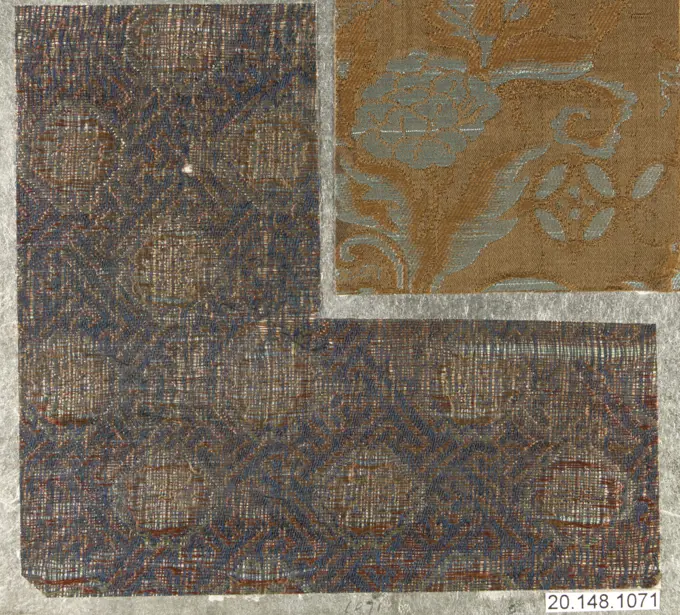
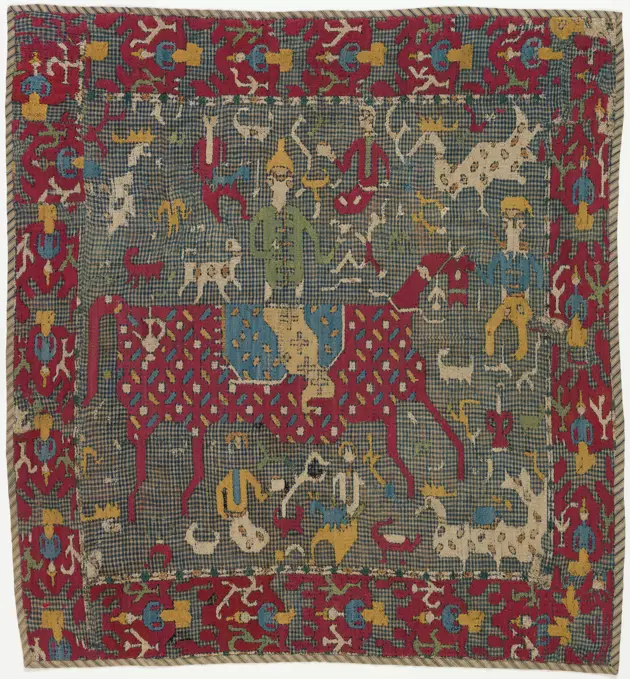
Table cover with fringe. Culture: American. Dimensions: 65 x 65 in. (165.1 x 165.1 cm). Date: ca. 1885. Museum: Metropolitan Museum of Art, New York, USA.Fragment; silk, metallic threadFragment jacquardweefsel met patroon "Orchidee".Fragment of double tissue in Jaquard technique, in lavender blue on ocher-colored soil with the "orchid" pattern, consisting of staggered rows of flowers in lavender blue on ocher-colored background. At the rear right an oval label made of paper with inscription in ink: kW and stamped: 12. Condition: here and there gray spots on the front.Length of voided velvet 17th century Italian. Length of voided velvet 222630Sampler (Netherlands); silk embroidery on cotton foundationSuzani, late 19th-early 20th century, 100 x 80 1/2 in. (254 x 204.47 cm), Silk, cotton, linen; continuous-thread couching, open chain stitch, Uzbekistan, 19th-20th centuryShawl 1850-75 Indian. Shawl 123076Fragment, Medium: silk and metal thread, Red and green silk with metal thread., 17th century, woven textiles, FragmentUlos Ragidup (ceremonial Shoulder Cloth) (Indonesia); cottonPrayer Rug. Dimensions: H. 78 in. (198.1 cm)W. 45 in. (114.3 cm). Date: 1795-96. Museum: Metropolitan Museum of Art, New York, USA.Wari textil Wari culture 500AC-1000AC Perú.Poncho, 20th century, 64 x 66 1/2 in. (162.6 x 168.9 cm), Cotton, Peru, 20th centuryPiece 18th-19th century Japan. Piece 66425Fragment of silk fabric  lace pattern unknownSampler (Italy); silk embroidery on linen foundationFragment (Japan)Waist Wrapper (Kain Panjang,Lengko-Lengko)Piece late 15th century Italian or Asia Minor. Piece 219393Fragment 16th-17th century Italian or Greek. Fragment 215466Fragment (Japan)Pyx veil, embroidered unknownHandkerchief; linenHanging or Cover (Pidan Hol). Cambodia, Kampot province, Takev (Takeo), Khmer people, 19th century. Textiles. Silk twill, tie-resist dyed weft ikat, with silk embroideryChurch tablecover. unknown, authorMariner's Compass Quilt. Culture: American. Dimensions: 108 x 107 1/2 in. (274.3 x 273.1 cm). Maker: Barbara Ann Miller. Date: 1847.This beautiful quilt, signed in the center in ink "Barbara Ann Miller/her quilt/1847", exemplifies the German approach to the English tradition of quiltmaking. Pennsylvania German quilts are typically more boldly colored and patterned than those from other areas of the Northeast. The emphasis on ornate patterning is thought to reflect the influence of the German and central European folk-art traditions that the Pennsylvania Germans carried with them to America. The Mariner's Compass pattern, which demanded incredibly precise stitching, was one of the most popular sewn by Pennsylvania German women in the nineteenth century. Museum: Metropolitan Museum of Art, New York, USA.Fragment (China); silkOriental carpet. Oriental carpet, floral rug. In the midfield a herati pattern against a dark blue background. Multiple edge, the widest of which is decorated with flowers.Sampler (England); silk embroidery, linen foundationBaby Carrier, 23 1/2 x 20 1/8 in. (59.69 x 51.12 cm), Cotton; needlework, ChinaBaby Carrier, 39 1/2 x 22 5/8 in. (100.33 x 57.47 cm) (without straps), Cotton, silk, sequins, synthetic fibers; needlework, ChinaBaby Carrier, 25 1/2 x 24 1/2 in. (64.77 x 62.23 cm), Cotton; needlework, ChinaTextile Fragment 5th century. Textile Fragment 443842Altar Apron, 1368-1644, 37 x 39in. (94 x 99.1cm), Woven fabric; velvet, China, 14th-17th centuryCoverlet (Fragment) Made 1875-1900 United States. Cotton and wool, plain weave with plain interlacings of secondary binding warps and patterning wefts (Beiderwand); woven on loom with Jacquard attachment .Satin chalk rug with embroidery from flax side and gold and silver thread, 1600 - 1699 Chalice dress with embroidery. In the middle there is a rays in which the letters Mar is embroidered, including a heart pierced by a sword. VoluTranken runs from the corners and the middle of the sides. Flowers spring from the tiflens in the corners. The rug is trimmed all around with bobbin: gold side.  silver thread. satin embroidering / bobbin lace Chalice dress with embroidery. In the middle there is a rays in which the letters Mar is embroidered, including a heart pierced by a sword. VoluTranken runs from the corners and the middle of the sides. Flowers spring from the tiflens in the corners. The rug is trimmed all around with bobbin: gold side.  silver thread. satin embroidering / bobbin laceTextile (India); silkTurban. Culture: Chimú. Dimensions: L.180 x W. 6 1/2 in. (457.2 x 16.5 cm). Date: 12th-15th century. Museum: Metropolitan Museum of Art, New York, USA.Celtic ornamentPillow Cover, 1700s. Greece, Cyclades Islands, Amorgos, 18th century. Embroidery; silk and gold filé on linen; overall: 105.8 x 46.4 cm (41 5/8 x 18 1/4 in.).Coverlet fragment, Medium: wool, cotton Technique: plain weave with supplementary weft patterning (overshot), Squares with various geometric fillings formed by dark blue pattern wefts on a cloth ground of undyed cotton. Reversible., Ohio, USA, early 19th century, woven textiles, Coverlet fragmentMud cloth skirt, mid 20th century, 35 1/2 x 57 in. (90.17 x 144.78 cm), Cotton, Mali, 20th centuryEmbroidery, 17th century. Switzerland, 17th century. Embroidery; silk on linen; average: 255.3 x 63.5 cm (100 1/2 x 25 in.).Baby Carrier, 16 1/2 x 14 1/2 in. (41.91 x 36.83 cm), Silk, metallic tape, sequins, metal circles, cotton; needlework, ChinaSpread or Cover Made 1801-1900 India. White with brocaded motifs in blue silk and gold threads .Carpet 17th century. Carpet 447511Border, 18th century, 17 x 16 1/4 in. (43.18 x 41.28 cm), Linen, silk; embroidery, 18th centuryStorage Bag (Chuval) Face early 19th century Identifiable by the unique design vocabulary adopted by each Turkmen tribal group, these rare and important textiles are one of only a few known works attributable to the Arabatchi Turkmen. Although identical in technique to that used for carpet weaving, these fragments once formed the faces of a chuval, a type of deep storage bag. Suspended from the trellislike structure of a Turkmen tent interior, these chuval served to hold family belongings somewhat akin to a wardrobe, but eminently more portable.. Storage Bag (Chuval) Face 447499Textile Fragment 16th century. Textile Fragment 446884Headdress. Culture: Russian. Date: fourth quarter 18th century. Museum: Metropolitan Museum of Art, New York, USA.Fragment (Border) Made 1601-1700 Iran. Brocaded compound cloth .Fragment of a Storage Bag. Dimensions: H. 32 1/2 in. (82.5 cm)W. 49 3/16 in. (125 cm). Date: first half 19th century. Museum: Metropolitan Museum of Art, New York, USA.Large Hanging with Crown and Escutcheon Made 1680-1720 Peru (Object made in), Andes (Object made in), South America (Object made in), Lima (Object Probably made in). Cotton and wool (presumably camelid hair), single interlocking tapestry weave with eccentric wefts .Textile Fragment, 1774-1793. France, late 18th century, Period of Louis XVI (1774-1793). Velvet; overall: 19.7 x 10.5 cm (7 3/4 x 4 1/8 in.).Oriental carpet. Oriental carpet, prayer cloth, of knotted wool, decorated with a cornificuer mihrab, pointed and toothed top, in which a stylized lamp hangs. Beige switches with planting leaves. Around midfield three edges and solid gray intermediate.Fragment, Medium: silk, metal thread Technique: appliqué of silk on velvet with embroidery, Appliqué with vase and pomegranate motifs on red velvet ground. Couching with metal thread. Embroidery in colored silks. Textile is a fragment of a larger piece., France or Italy, 17th-18th century, embroidery & stitching, FragmentSampler. Germany. Date: 1601-1700. Dimensions: 54.6 x 50.8 cm (21 1/2 x 20 in.). Linen, plain weave; embroidered with silk. Origin: Germany. Museum: The Chicago Art Institute, Chicago, USA.Hawaii, Hawaiian Tapa Cloth Closeup Of Pattern, Detail. Slashes spread with a multicolor, symmetrical ornament. The bedspread is lined with a red, stitched silk. Oriental textile.Embroidered rug or runner, anonymous, c. 1820 - c. 1850 Carpet, woven in white blue, brown, mocha and embroidered in red, orange, yellow and black, with frills at the ends and lined with glued blue cotton. Netherlands wool. cotton (textile) embroidering Carpet, woven in white blue, brown, mocha and embroidered in red, orange, yellow and black, with frills at the ends and lined with glued blue cotton. Netherlands wool. cotton (textile) embroideringSutra Cover. China. Date: 1590-1599. Dimensions: 35 × 12.1 cm (13 3/4 × 4 3/4 in.)Repeat: 13.8 × 10.6 cm (5 3/8 × 4 1/8 in.). Silk, plain weave with supplementary patterning wefts. Origin: China. Museum: The Chicago Art Institute, Chicago, USA.Kisses or bag, with griddessin, divided into windows with crucifix., Jaffi people, c. 1800 - c. 1900 Cushion, originally bag, Jaffi Kurdistan-Mosul. The midfield is divided by a brown grid into windows with a crucifix. Triple edge whose middle is divided into rectangles on which there is always a loose rosette. Kurdistan wool Cushion, originally bag, Jaffi Kurdistan-Mosul. The midfield is divided by a brown grid into windows with a crucifix. Triple edge whose middle is divided into rectangles on which there is always a loose rosette. Kurdistan woolMan's blanket, late 20th century, 65 1/4 x 43 in. (165.74 x 109.22 cm) (without fringe), Cotton; plain weave, India, 20th centuryCDV, Sampler, worked in colored silk in cross stitch and star stitch on cream colored linen, marked CDV 1807, sampler embroidery needlework images linen silk, textile embroidery cross stitch Lap of bleached loosely woven linen with hem edge around 0.4 cm. The piece is embroided in cross stitch in the colors gray blue light pink satin white yellow dark yellow dark pink beige medium brown gray blue gray light blue black and pink red. The patch has symmetrical layout and the motifs are the same both on the left and the right of the center axis. The patch has simple zigzagging surrounding edge with stylized flower buds embroided on the piece: C.D.V OUD 13 YEARS AN 18 07 NO needleworkFragment (Japan); silkSquare Textile (Indonesia); cottonCarpet late 18th century. Carpet 453358Chair Seat Cushion 17th century Italian or Spanish Italian or Spanish, 17th century. Chair Seat Cushion 460372Design for a rug, Unknown, Pen and ink, watercolor on paper, Vertical rectangle. Design for the lower right section of a rug, in the Oriental style. Central field and borders show use of stylized flower motifs., USA, about 1905 (), textile designs, Drawing, DrawingTable cover, Medium: linen, silk Technique: plain weave embroidered in satin, running, and wrapped double-running stiches; drawnwork with wrapping and interweaving, bobbin braid, hem-stitching at each end of fabric., Rectangular linen cover dominated by a complex border of four panels combining drawn work and embroidery. The inner section is made up of alternating squares of embroidery and drawn work with geometric floral vine guard stripes. The border is completed on the inside and outside by continuous narrow bands of drawn work in alternating light blue and orange, from which stems elaborate leaf or flower-like forms, alternating in blue and orange. The outer edge is trimmed with a randa of continuous bobbin braided trim in orange and blue., Spain, 18th century, embroidery & stitching, Table coverFragment of embroidery unknownEmbroidery Sample, 23 7/8 x 16 in. (60.64 x 40.64 cm), Silk, cotton, sequins, yellow metal bands; needlework, ChinaOriental carpet, Anonymous, 1800 - 1900 Oriental carpet, prayer rug, knotted wool, decorated with a corn -blue mihrab, pointed stepped gable top, along the circumference filled with carnations. The you are vertically striped and filled with carnations. Around the midfield three edges separated by spiral seams. Ghiordes (possibly) wool Oriental carpet, prayer rug, knotted wool, decorated with a corn -blue mihrab, pointed stepped gable top, along the circumference filled with carnations. The you are vertically striped and filled with carnations. Around the midfield three edges separated by spiral seams. Ghiordes (possibly) woolFragment; silk, metallic thread; Bequest of Richard Cranch Greenleaf in memory of his mother, Adeline Emma Greenleaf; 1962-56-114Textile, Medium: wool Technique: length of rep with warp-patterned stripes, Broad dark brown stripes alternating with groups of cream, tan, yellow, pink, blue, and brown pencil-stripes, with central geometrically decorated stripes in same colors, warp-patterned. Narrow bright blue selvages continuous with field. Double loom cord, top and bottom., Bolivia, early 19th century, woven textiles, TextileHood of a Cope Made 1801-1900 Spain. Silk in satin weave; lining is recent; braid in pattern in gilt metal and yellow silk floss; fringe of yellow silk wrapped with gilt metal with ornaments made of thin gauge metal in various shapes, embossed (brass color) over cardboard shapes padded with yellow silk floss, with edges formed of spiral gilt wires wired to gilt wrapped fiber cord, and additional ornaments of this construction and bowknots of wide plate wrapped around paper ( ) core. FrisÈ holds ornaments together; braid and gilt-wrapped fiber used in pairs and gilt cord knotted in pattern hold groups of 4 ornaments in series; also silk floss in color, silver frisÈ; stitches satin (or float) long and short, stem, couching, outline .Floral appliqué quilt, c. 1860s-70s, 90 1/8 x 86 1/2 in. (228.92 x 219.71 cm), Cotton; pieced, appliquéd, and quilted, United States, 19th century, Many quilts from the 1700s and early 1800s featured a large central motif, called a medallion. But in the mid-1800s, block-style quilts surged in popularity. This one has nine blocks, each punctuated with a spray of green and red tulips. One advantage of such quilts was that the squaresusually one or two feet widewere easy to carry along on social visits, allowing women to stitch as they chatted. This meant 'free time' was always productive. The quilter could never be accused of ignoring her household duties, even when she was away from home.Textile (Northern France); cotton; 1980-1-1-a,bPiece 18th century Japan. Piece 71665Embroided Chairice Voli unknownClyde L Cheney, Quilt, c 1938 QuiltBedcover (Sunburst or Feathered Edged Star Quilt) Made 1825-1835 United States. .Skirt, 1930, 117 x 34 3/4 in. (297.18 x 88.27 cm), Silk, Cambodia, 20th centuryFragment (Spain); silk, metal-wrapped silk core; Warp x Weft: 40 x 11.5 cm (15 3/4 x 4 1/2 in.)Carpet Manufacture, Cappadocia, Turkey, Cappadocia, Turkey, AsiaFragment, Medium: silk Technique: supplementary warp forming pile on a stin foundation (velvet), Plant forms in green on red ground., 17th century, woven textiles, FragmentFragment of a Chasuble, 1600s. Italy, 17th century. Damask, silk; overall: 43.2 x 64.1 cm (17 x 25 1/4 in.).Cover 19th century Russian (). Cover 461655Skirt, first third of the 20th century, 34 x 31 1/2 in. (86.36 x 80.01 cm), Cotton, wool, Myanmar (Burma), 20th centuryTextile Fragment 4th century. Textile Fragment 443979Carpet weaving, handicrafts in Madurai, South India, India, AsiaFragment, Medium: silk, metallic yarns Technique: woven with discontinuous supplementary weft patterning (brocade), Woven silk with red ground and gold metallic pomegranate pattern. Badly abraded., Italy, 15th century, woven textiles, FragmentPiece 18th century China. Piece 71542Front doublure. Laborde, M. de (Jean-Benjamin), 1734-1794. bindings (gathered matter components), Book covers. 1773. Spencer Collection. BookbindingSilk Kashan Carpet. Dimensions: Rug: L. 96 in. (243.8 cm)W. 65 in. (165.1 cm)Mount: L. 101 3/4 in. (258.4 cm)W. 72 1/2 in. (184.2 cm)D. 3 in. (7.6 cm)Estimated weight: 200 lbs.. Date: 16th century.This carpet was possibly woven in Kashan, an important center for silk trade and carpet manufacture during the Safavid period. Decorative elements on this and other related carpets from Kashan and Tabriz indicate that weavers may have used pattern books containing popular motifs to guide them in production. These designs, including the medallions at the center and four corners of this carpet, are also present in other media, particularly in bookbinding and manuscript illumination. The cloud bands and peonies that appear throughout the work originated in Chinese art but had been fully assimilated into Safavid artistic production by this period. Museum: Metropolitan Museum of Art, New York, USA.Tissue fragment, anonymous, 1500 - 1999 Fragment of two pieces stuck together with decoration of alternating human and geometric figures in white, red, yellow and black on yellow soil. Southern peru ketting: cotton (textile). inslag: wool tapestry Fragment of two pieces stuck together with decoration of alternating human and geometric figures in white, red, yellow and black on yellow soil. Southern peru ketting: cotton (textile). inslag: wool tapestryPiece 18th century Japan. Piece 72056Fragment; silkHeirloom Textile Made 1400-1700 India. Cotton, plain weave; resist-dyed; two loom widths joined, all selvages present .Cover (Iran); cotton foundation, silk embroidery threads