Traditional Handwoven Textiles

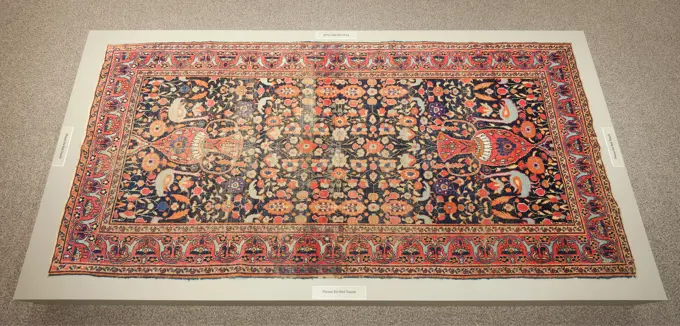
A collection of intricate oriental carpets and ritual weavings showcasing traditional patterns, rich colors, and historical craftsmanship.

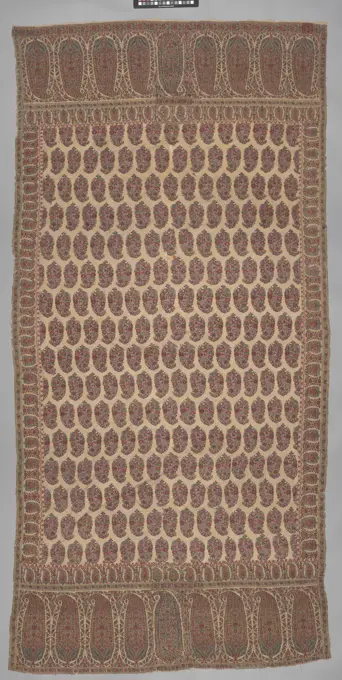
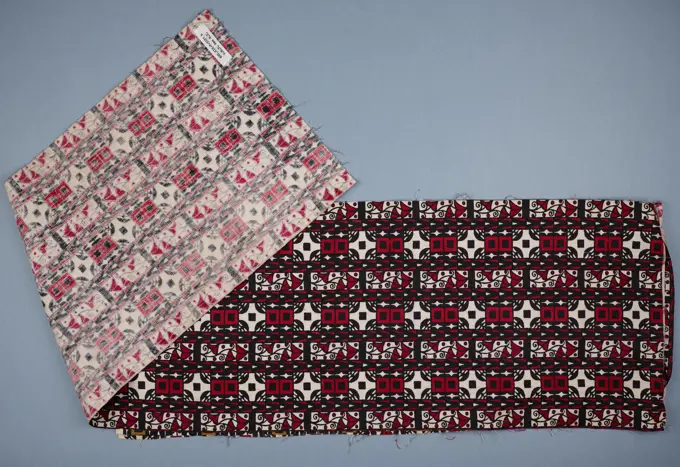
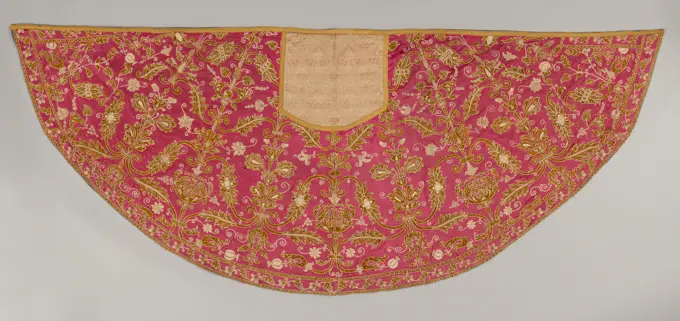
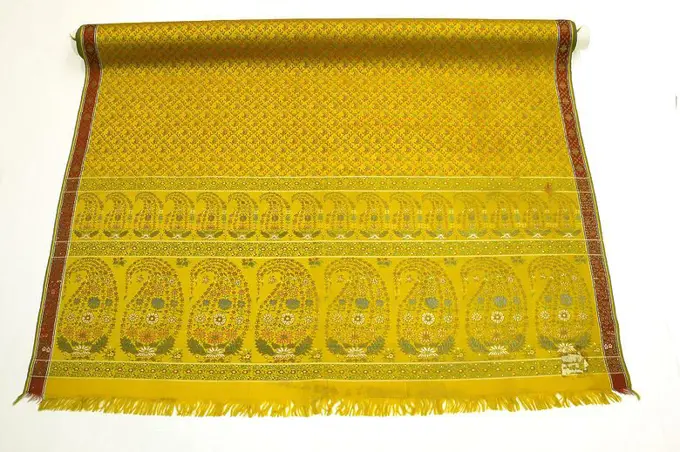
Woman's festival head covering, late 19th-early 20th century, 78 3/16 x 57 3/4 in. (198.6 x 146.69 cm), Cotton, metallic threads; dyed, India, 19th-20th century
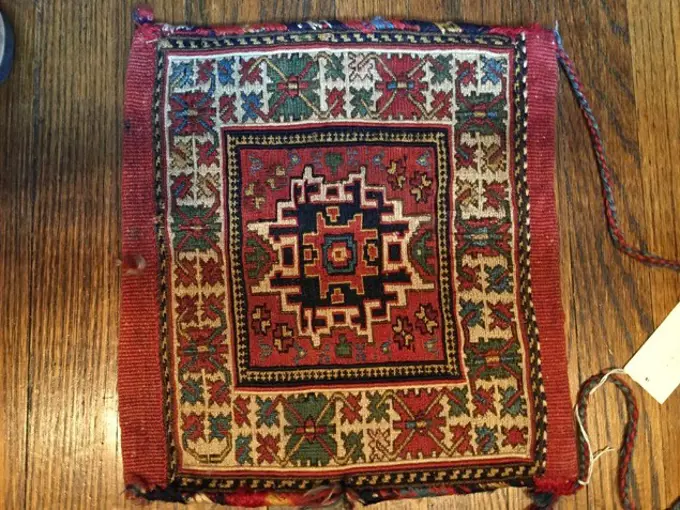
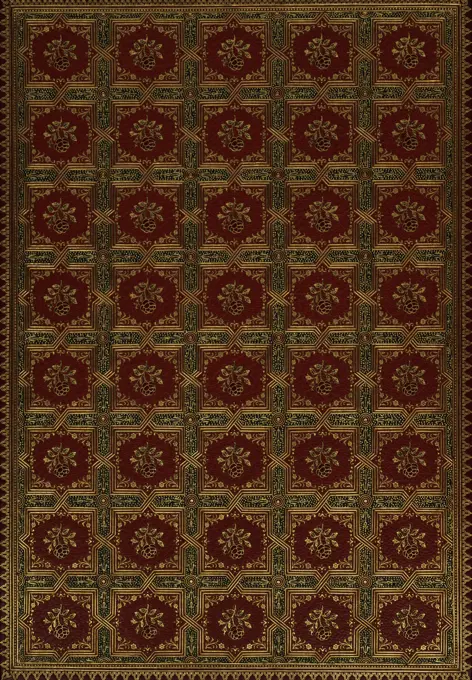
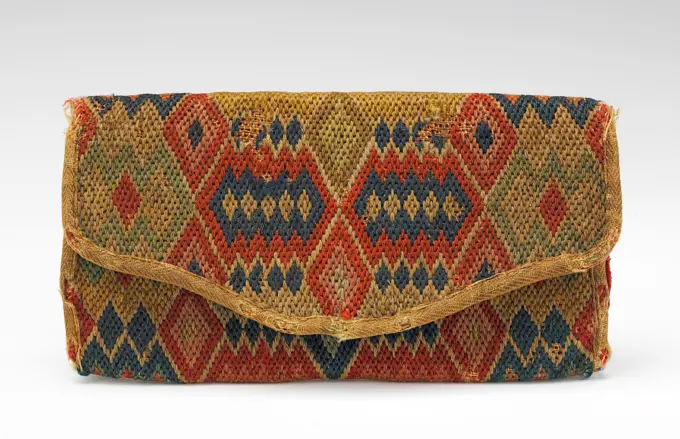
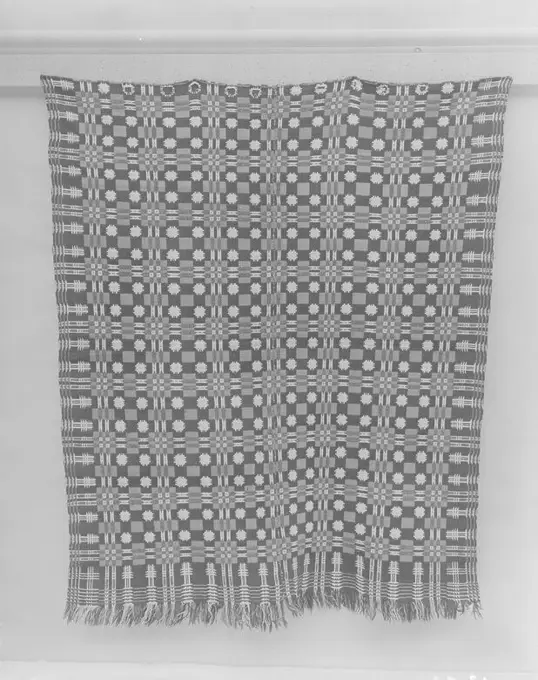
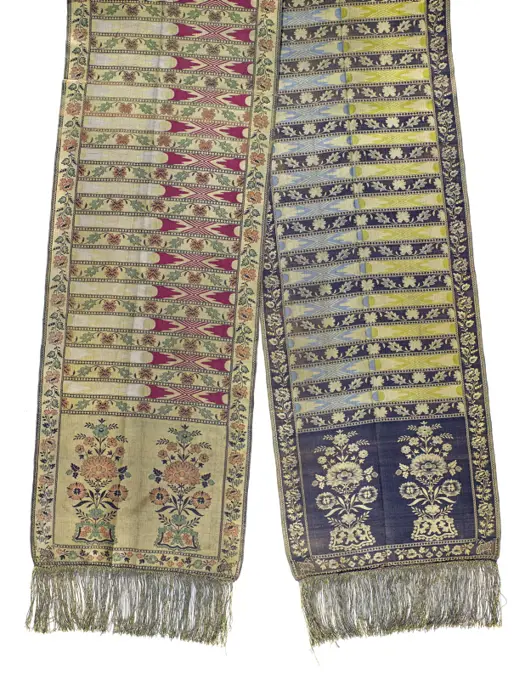
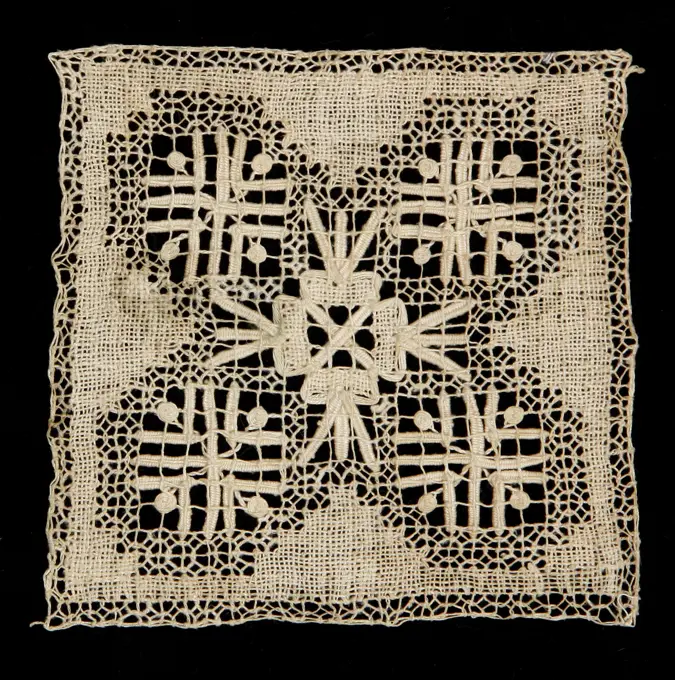
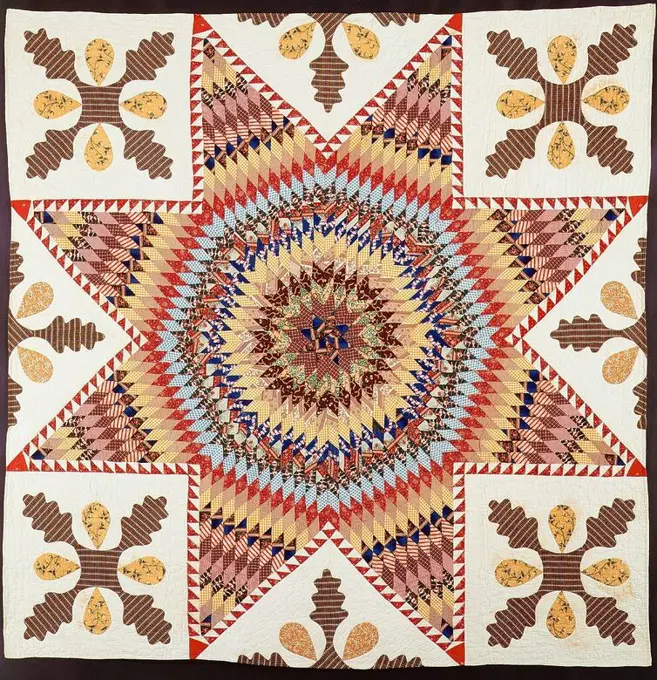
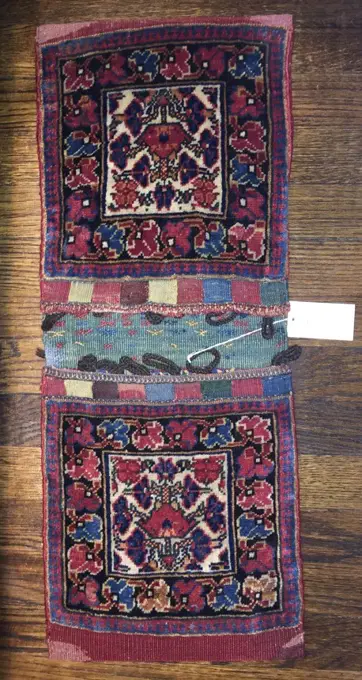
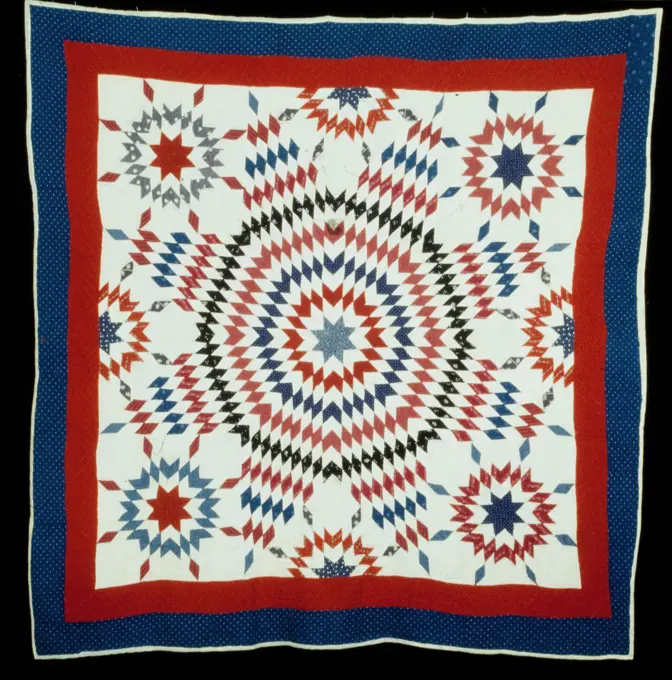
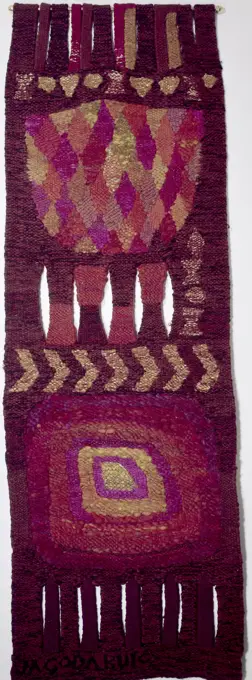
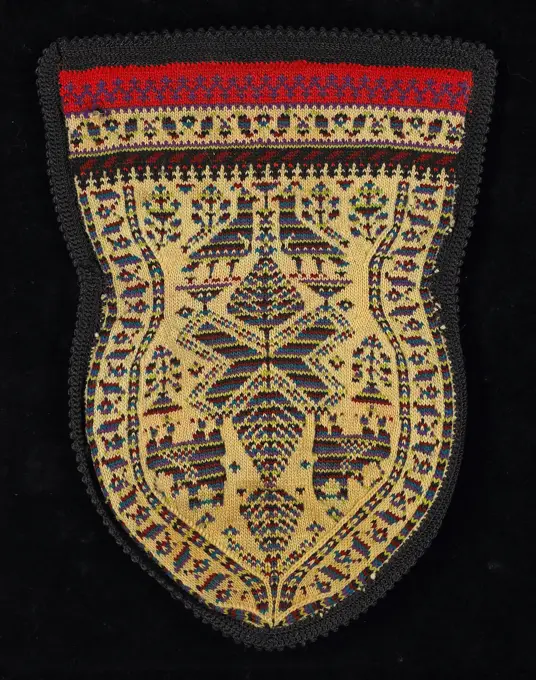
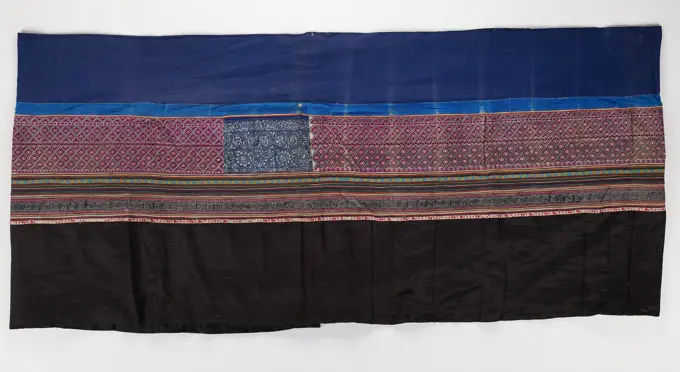
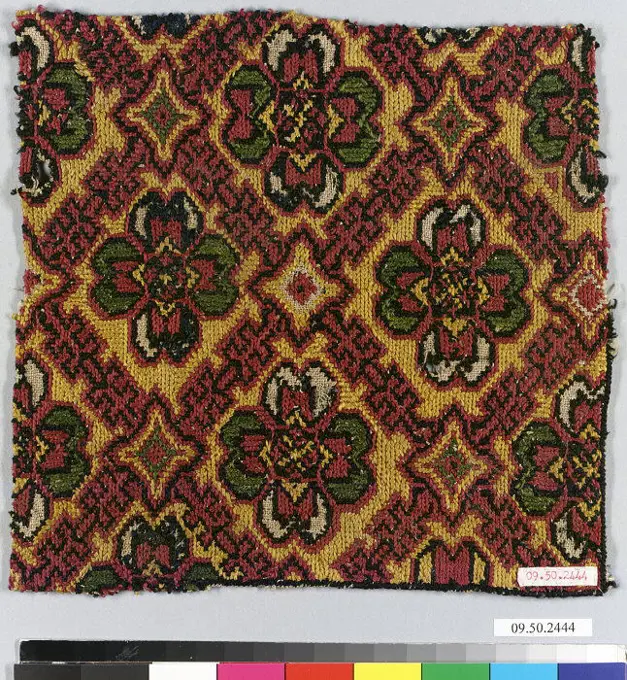
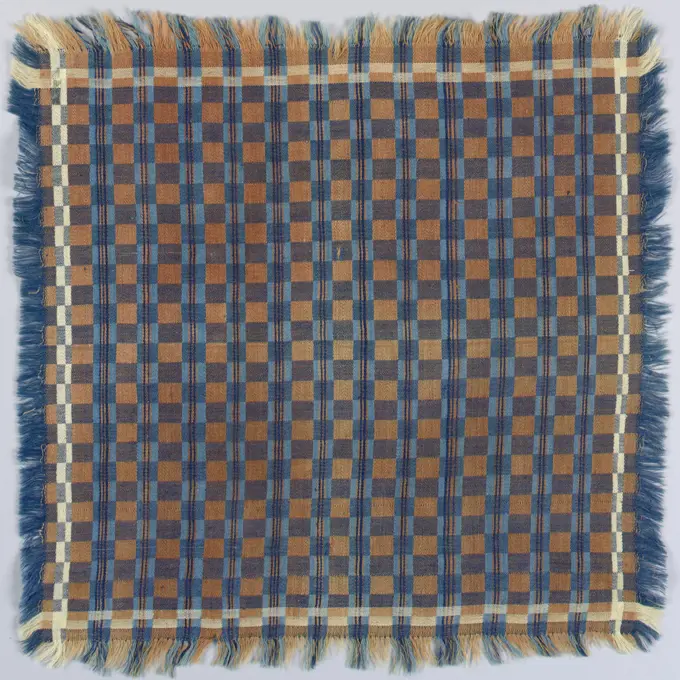
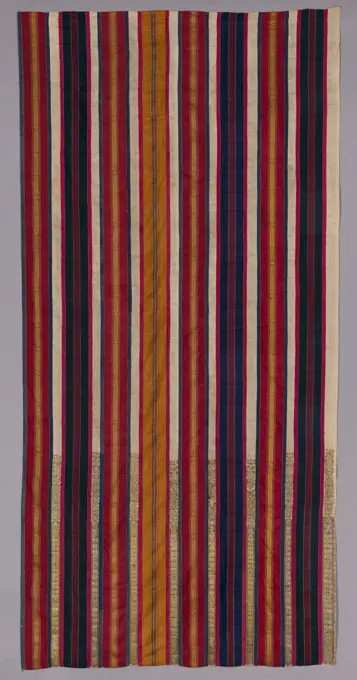
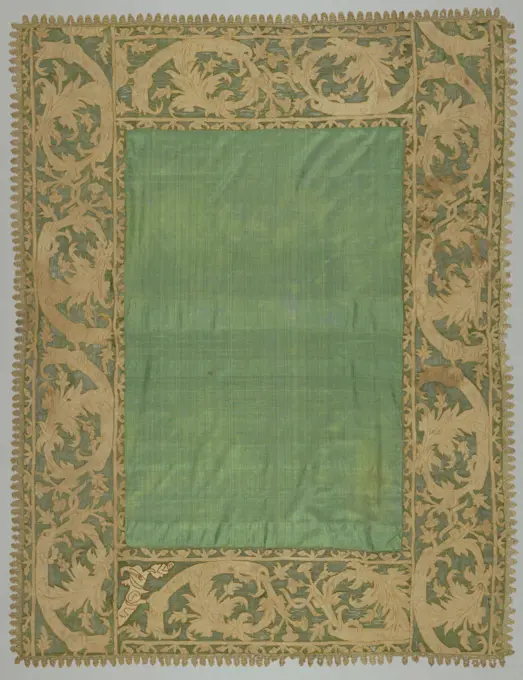
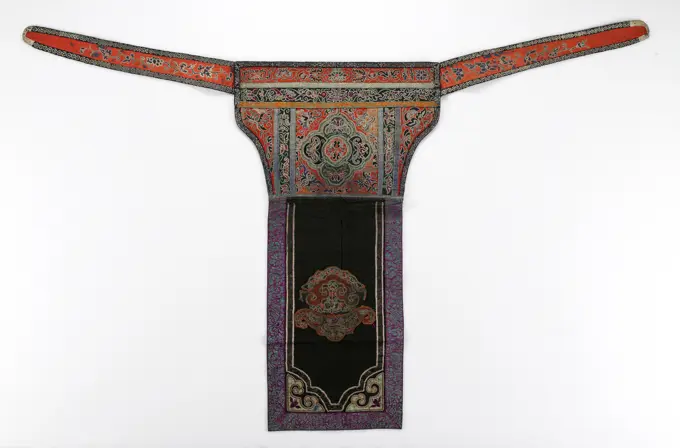
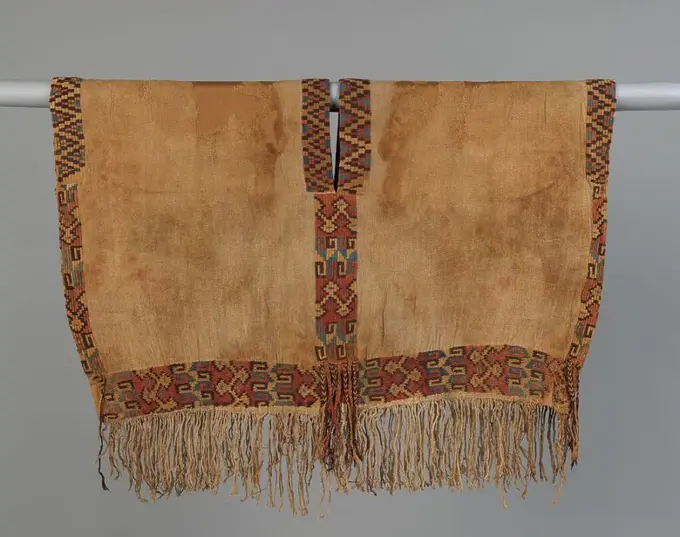
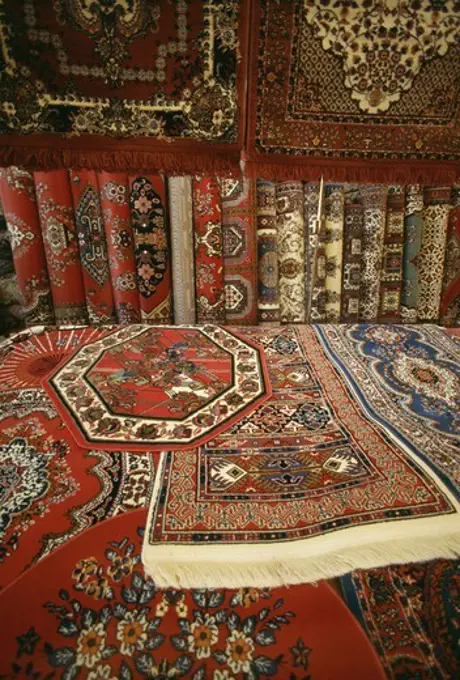
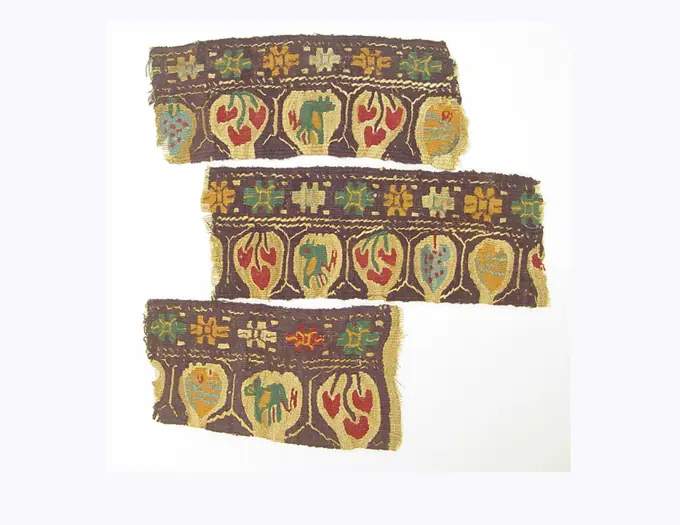
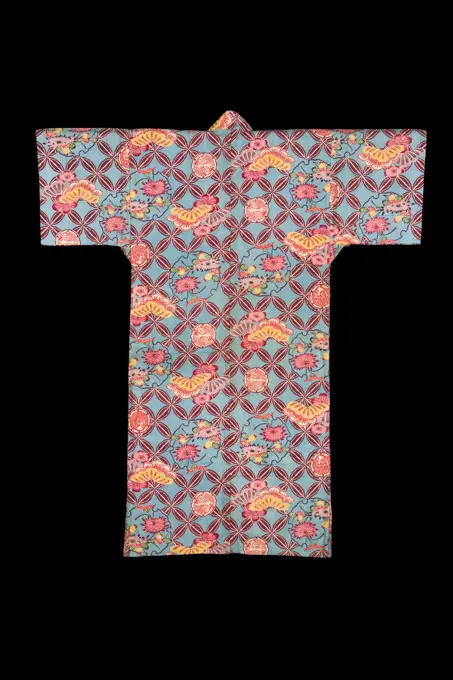
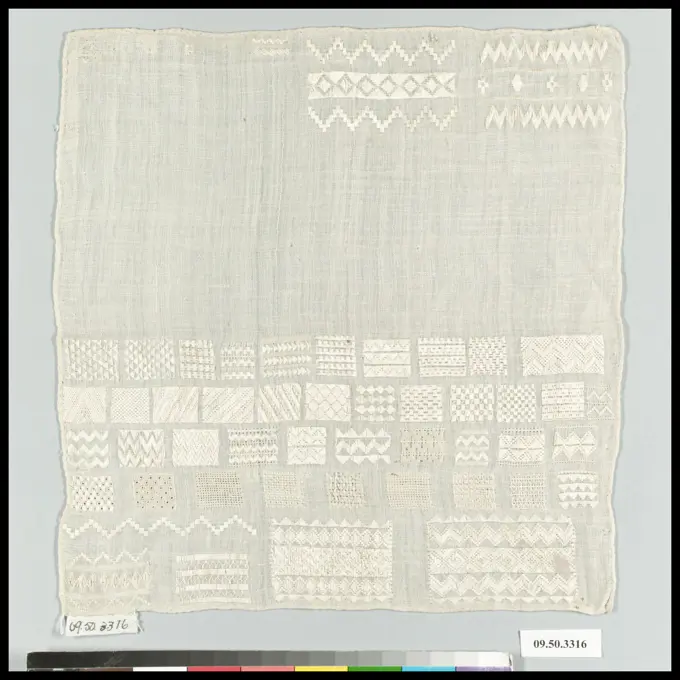
Square, Medium: silk Technique: Jacquard woven, Woman's kerchief with a dark blue center has an allover diaper pattern of stars and rosettes in short loose warp floats, weft on the reverse. Four side borders in white and red., Ambridge, Pennsylvania, USA, 1839, woven textiles, SquareAltar Frontal (Italy); linenBaby carrier panel, ChinaPiece 18th century French. Piece 229704Pall, embroidered, green  Paschal Lamb unknownShahsevan Small Bag ca. 1870 While the term "carpet" evokes a heavy, large rectangular textile (either knotted pile or flat-woven tapestry, called kilim) that covers a floor, a vast array of rug genres and techniques can be found in the Islamic world, where they serve various functions in nomadic encampments, villages, cities, and palaces. Flat-woven and richly embroidered textiles, such as this one, belong to the kinds of smaller tribal weavings that were common in the Middle East from Anatolia to Iran; it was generously given to The Met by Inger G. and William B. Ginsberg of New York. Such textiles were woven by nomadic tribes as containers for everyday items. Some were designed specifically to transport or store bedding, flour, salt, and wooden spindles used to make the woolen yarns from which these works were woven. Others were of smaller size, comparable to cross-body women's handbags, or çanta, or also possibly used by children. Most notable is the ubiquitous double saddlebag, knCover 17th century This square textile, sometimes known as a bukhcha, may have been used to wrap or organize items for storage. The floral designs on the front are woven directly into the silk, while the back of the textile features a bright cotton print of red carnations on a yellow ground. The design of staggered rows of blossoming branches was popular in seventeenth-century Safavid textile production. Textiles like these were favored abroad as well as in Iran, and were exported to the West, where they were prized as expensive luxury items.. Cover. 17th century. Silk; woven. Attributed to Iran. TextilesCarpet 17th century. Carpet 452562Sampler 19th century German. Sampler 228613Doek, Anonymous, 1900 - 1999 Cloth with tires and rosettes. Sumatra cotton (textile). Cloth with tires and rosettes. Sumatra cotton (textile).SERVATE;  19th century (1801-00-00-1900-00-00);Tapestry. unknown, authorShawl of Joined Fragments second quarter 19th century and later. Shawl of Joined Fragments 453287Back doubleur, 1899 - 1902, Paris, Publisher, L. Conquet, BookbindingTable Cover; silk and metal embroidery on linen foundationPurse fourth quarter 18th century Deborah Hill. Purse 156594Coverlet, Four Snowballs pattern with Pine-tree border. Culture: American. Dimensions: 77 3/4 x 65 1/4 in. (197.5 x 165.7 cm). Date: ca. 1830.This double cloth coverlet is woven in two panels from undyed cotton and dark blue, light blue, and salmon-colored wool. It is seamed at the center and hemmed at the top. The bottom edge is finished with a natural fringe. Museum: Metropolitan Museum of Art, New York, USA.Eva Wilson, Cotton Towel, c 1937 Cotton TowelHandkerchief Made 1790-1825 Mulhouse. Cotton, plain weave; roller or block printed; edge oversewn in buttonhole stitch .Kontusz sash. Manufaktura Paschalisa Jakubowicza (Warszawa ; wytwórnia pasów ; 1788-1794), manufactureMat, 1900s, Devon, maker unknown. Gift of Doris Bennett, 1983.Quilt, Star of Bethlehem. Culture: American. Dimensions: 76 1/4 x 75 7/8 in. (193.7 x 192.7 cm). Maker: Members of the congregation of the First Baptist Church, Perth Amboy. Date: ca. 1845-48.According to his granddaughter-in-law, Reverend George Faitute Hendricksen (1817-1894) received this quilt as a gift from his congregation during a church Harvest Festival. A minister for over fifty years, Hendricksen served as pastor of the First Baptist Church of Perth Amboy from 1845 to 1848. It was not uncommon for congregations to create quilts for ministers when they departed for another church; perhaps that is the reason this quilt was made. Museum: Metropolitan Museum of Art, New York, USA.Drape. unknown, authorValance (For Bed) Made 1601-1700 Greece. Linen, plain weave; embroidered with silk in double running, running (pattern darning), split, and stem stitches; attached cut fringe .Strip -Shawl (aso oke) 19th century Yoruba peoples. Shawl (aso oke). Yoruba peoples. 19th century. Cotton and silk. Nigeria. Textiles-SculptureRibbon (USA); silk, cottonCloth; Kain Songket. Cloth with geometric motifs.Sampler, Juliana Vieytez, Medium: silk embroidery on linen foundation Technique: embroidered in cross, long-armed cross, satin, double running, and aztec stitches (running stitch and wrapping over withdrawn elements) on plain weave foundation, Three columns of geometric and floral patterned bands in many colors. Pelicans in middle of right hand column. An inscription at the top center reads Juliana Vieytez 1833., Mexico, 1833, embroidery & stitching, SamplerHead Cloth (kain Kepala) (Indonesia); cottonBookbinding 17th century. Bookbinding 451291Brocade Textile, early 1600s. France or Italy, early 17th century. Brocade; silk and metal; overall: 27.9 x 42.5 cm (11 x 16 3/4 in.).Fragment; silkSample of printed IInen Unknown, Wiener WerkstätteSampler, Medium: silk embroidery on linen foundation Technique: embroidered in double running, stem, cross, satin, and long armed cross stitches on plain weave foundation, Bands of pattern arranged horizontally and vertically., Morocco, probably late 19th century, embroidery & stitching, SamplerFringe, Medium: silk Technique: woven, Red fringe with a patterned heading, wide band in a trellis pattern and skirt threads., Greece, 17th century, trimmings, FringeKontusz sash/belt. Pracownia Daniela Chmielewskiego (Kraków ; wytwórnia pasów ; 1796-1825), atelierEmbroidered Mantle Fragment 5th-2nd century B.C. Paracas. Embroidered Mantle Fragment 308068Piece 18th century China or Japan. Piece 71681Chair Seat. France. Date: 1601-1700. Dimensions: 72.7 × 75.2 cm (28 5/8 × 29 5/8 in.). Hemp, plain weave; embroidered with silk in cross and tent stitches. Origin: France. Museum: The Chicago Art Institute, Chicago, USA.Piece 18th-19th century Japan. Piece 66788Darning sampler. Date/Period: 1816. Darning sampler. Medium: silk embroidery on linen foundation. Technique: embroidered in satin, cross, and running stitches (pattern darning) on plain weave foundation. Height: 260 mm (10.23 in); Width: 320 mm (12.59 in). Author: UNKNOWN.'Bookbinding in Blue Morocco with Inlay and Gold Tooling', 1914. Artist: Edward Sullivan.Old hand made carpet and rugs of  traditional typesShawl Russian 19th century This shawl was knit in geometric patterns with thread made of fine cashmere goat fibers, which have a diameter of 12 to 20 micrometers, as indicated by microscopic examination of the fiber. In order to withstand the knitting process and daily wear, the thread was highly twisted during its spinning and plying. The small diameter of the fiber explains the shawl's fine quality and silk texture. View more. Shawl. Russian. 19th century. Knitted cashmere goat fiber, Z spun, 2S plied. Textiles-LacesLetter Case (Spain); silk, leather, and silver-wrapped silkBOLSA DE LOS PEINES DE S RAMON. Location: CATEDRAL. RODA DE ISABENA. HUESCA. SPANIEN.Fiji, Yasawa Islands. Colorful fabrics with native prints.Man's Wrapper, 20th century, 107 x 107 in. (271.8 x 271.8 cm), Cotton; stripwoven with stamped patterns; printed, Ghana, 20th centuryDecorative round Palestinian Tatreez design element over white background, vector illustrationRed and White Napkin (Deer Design). Dated: 1935/1942. Dimensions: overall: 49.9 x 53.3 cm (19 5/8 x 21 in.). Medium: watercolor and graphite on paper. Museum: National Gallery of Art, Washington DC. Author: Arthur G. Merkley.Rugs and Carpets: Caucasus region - 19th century. Kuba carpetKashan rug, c. 1910, Wool, Iran, 20th centuryBliej Kultury unknownNeriz Double Saddle Bag late 19th century While the term "carpet" evokes a heavy, large rectangular textile (either knotted pile or flat-woven tapestry, called kilim) that covers a floor, a vast array of rug genres and techniques can be found in the Islamic world, where they serve various functions in nomadic encampments, villages, cities, and palaces. Flat-woven and richly embroidered textiles, such as this one, belong to the kinds of smaller tribal weavings that were common in the Middle East from Anatolia to Iran; it was generously given to The Met by Inger G. and William B. Ginsberg of New York. Such textiles were woven by nomadic tribes as containers for everyday items. Some were designed specifically to transport or store bedding, flour, salt, and wooden spindles used to make the woolen yarns from which these works were woven. Others were of smaller size, comparable to cross-body women's handbags, or çanta, or also possibly used by children. Most notable is the ubiquitous double Band (Greece); silk embroidery on linen foundationClose-up of cushions with Indian-carpet coversStar quilt, late 1800s, 77 × 76 in. (195.58 × 193.04 cm), Cotton; pieced and quilted, United States, 19th century, Pieced stars were popular in the United States from the 1840s to 1875, perhaps owing to the influence of kaleidoscopes. First manufactured in 1816, kaleidoscopes were perfected in the following decades.Eva Wilson, Damask Coverlet, c 1938 Damask CoverletSpread for crib, painted cotton (sits), lined with cream colored silk. Spread for the crib, from bischilderde cotton (sits), lined with cream colored silk, without intermediate layer; Dessin a stylized floral pattern with tires in light blue, red, dark red and light brown, dropped off with border (sewn, sewn, three sides).Egyptian OrnamentHeadcovering, Medium: silk and metallic thread on cotton Technique: embroidered on plain weave, Firm white cotton cloth with large irregular medallions in dark rust with touches of blue and green; metallic thread around border. Narrow embroidered edge in same colors. Tassels on four corners., Debar, Macedonia, late 19th-early 20th century, embroidery & stitching, HeadcoveringWoven wall hangingBag, early 20th century, Unknown (Aleppo), 7 1/2 x 5 1/2 in. (19.05 x 13.97 cm), Wool, silk, Syria, 20th centuryBaltimore Album Quilt Top Various artists 1845-48 This quilt is comprised of 32 full blocks and 16 half blocks, each in different patterns popular with 1840s Baltimore quiltmakers and set on the diagonal with red cotton sashing between the blocks. Most of the blocks are signed in ink by their makers. Several of the signatures on this quilt can also be found on another Baltimore quilt in the Mets collection (1988.134). The two quilts also share some of the same block patterns, pointing to sharing and reuse of paper patterns among members of the Baltimore community of quilters. The center block of the quilt shows an animated red and brown rooster, the emblem of the Democratic Party (founded in 1828). The symbol, which had its origins in the 1840 election, had probably become familiar by the 1844 election, when Democrat James Polk defeated Whig Henry Clay. Polk was the sitting President when this quilt was made. View more. Baltimore Album Quilt Top. Various artists. American. 1845-48. CotBorder Made 1801-1900 England. Linen, plain weave; block printed .Sampler, Teresa Sepeda, Medium: silk embroidery on linen foundation Technique: embroidered in chain, satin, cross, four-sided and running stitches with withdrawn element work on plain weave foundation, Sampler divided into twenty squares, nineteen with small geometric patterns and one with the inscription., Mexico, early 19th century, embroidery & stitching, SamplerTube skirt, ChinaFragment early 19th century Swedish. Fragment 217114Womans Ceremonial Skirt (Tapis)Napkin, Medium: linen Technique: 5-harness satin 2-block damask, Small fringed napkin woven in a block design of brown, blue, tan and purple., USA, early-mid-19th century, woven textiles, NapkinRug with vases and peacocks, 19th century, 113 1/2 x 57 3/8 in. (288.29 x 145.7 cm), Cotton, wool, Iran, 19th centuryClose-up of a weaving made from wool dyed with natural dyes at a weavers home in Teotitlan del Valle, a small town in the Valles Centrales Region near Oaxaca, southern Mexico.Unfinished Sampler Panel on Loom 10th-15th century Peru; central coast (). Unfinished Sampler Panel on Loom 308378Handkerchief (USA); cotton, woolSampler, E. Grant, Medium: silk embroidery, cotton foundation Technique: cross, square, tent and satin stitches on plain weave, Upper portion shows a house with trees and birds; lower portion depicts Adam and Eve with small detached motifs including animals, trees, houses, flowers; signatures; enclosed in vine-patterned border., England, 1812, embroidery & stitching, SamplerRank Badge (China); satin, silk, metal thread, coral beads. Tile of quartz frites with lead decorated with cloud motif in blue, white, black and red under transparent lead-alkali tinglaze.Length of Lace. Probably France or Italy, 18th century. Textiles; textile lengths. Gilded silver thread with silk core bobbin lace with gilded silver strips, metal sequinsFestival Apron, 19th-20th century, 29 x 25 1/2 in. (73.66 x 64.8 cm), Cotton, silk(), embroidery, China, 19th-20th centuryBaby Carrier, 12 5/8 x 55 1/2 in. (32.07 x 140.97 cm) (without tassels), Cotton, silk, beads; needlework, ChinaMiami tribe traditionally finger woven fabric made from colorful yarn and made into a pillow cover.Curtain, 1600s-1700s. Africa, North Africa, Tunisia, Djerba, Tunisian weaver(s) and embroiderer(s). Silk, linen, metal, and dye; overall: 276.8 x 136.7 cm (109 x 53 13/16 in.). One of a pair, this curtain displays colorful silk bands with woven geometric motifs, and cream bands with gold-embroidered plants, birds, six-pointed stars, and the khamsah (), an open five-fingered hand. Birds and the tree of life were popular good luck or fertility symbols linked to marriage. This curtain’s cosmopolitan motifs would have resonated with Jews, Muslims, and Christians alike, reflecting its creation on multiethnic and multireligious Djerba, an island off the Tunisian coast. There, both goldsmithing and gold thread embroidery were done by Jewish artisans (male and female, respectively). The fine materials suggest this curtain once hung in a wealthy home or for special occasions; interior wall hangings were typically made from rough wool.Headcloth, 19th-20th century, 56 x 78 in. (142.24 x 198.1 cm), Silk; needlework, India, 19th-20th centuryTable cover, Medium: silk, linen Technique: appliqué on gauze weave, needle lace, Oblong table cover of dark green silk bordered with green net in an appliqued design of foliage in reversed scrolls that terminate in lilies. Applique is natural colored linen embroidered in dark yellow silk. Edged with natural colored needle lace., Italy, 16th-17th century, embroidery & stitching, Table coverBaby Carrier, 37 7/8 x 21 5/8 in. (96.2 x 54.93 cm), Cotton, yellow metal; needlework, ChinaSari. India, Tamil Nadu, Ayyampettai. Date: 1820. Dimensions: 734 x 112.4 cm (289 x 44 1/4 in.). Silk and cotton, compound satin weave. Origin: India. Museum: The Chicago Art Institute, Chicago, USA.Wrapper, 20th century, 68 x 44.5 in. (172.7 x 113.0 cm)(w/o fringe), Cotton, lurex thread, Nigeria, 20th centuryGaming scholarship. GAL1971.21.16Tunic. Culture: Nasca. Dimensions: Overall: 33 in. (83.82 cm)Other: 24 in. (60.96 cm). Date: 7th century. Museum: Metropolitan Museum of Art, New York, USA.Oriental rugs, Turkey.Fragments 5th-7th century. Fragments 456915Scarf Sample (France); silkLaos: Woven silk at Lao Textiles, Vientiane. Lao Textiles is a showroom and weaving studio based in Vientiane, Laos. The business was founded by American, Carol Cassidy in 1990, and produces a wide range of hand-woven, silk textiles including brocade, tapestry wall hangings and curtain fabrics.Light blue-ground Ryūkyūan robe (ryūso) with pine and snowflake motif, 19th century, Unknown Ryukyuan, 44 5/8 × 51 in. (113.35 × 129.54 cm), Cloth: cotton; bingata (stencil resist with applied pigments), Japan, 19th centuryCoverlet Made 1835-1850 New York. Cotton and wool, plain weave double cloth; woven on loom with Jacquard attachment; two loom widths joined; fringed .Tatreez ornament template 17Huaxi Apron, 14 3/8 x 13 in. (36.51 x 33.02 cm) (without ties), Cotton, ChinaEmbroidered darning sampler late 18th century German. Embroidered darning sampler 217884Turkish Rugs on display, Cappadoccia Turkey