Traditional Textile Fragments

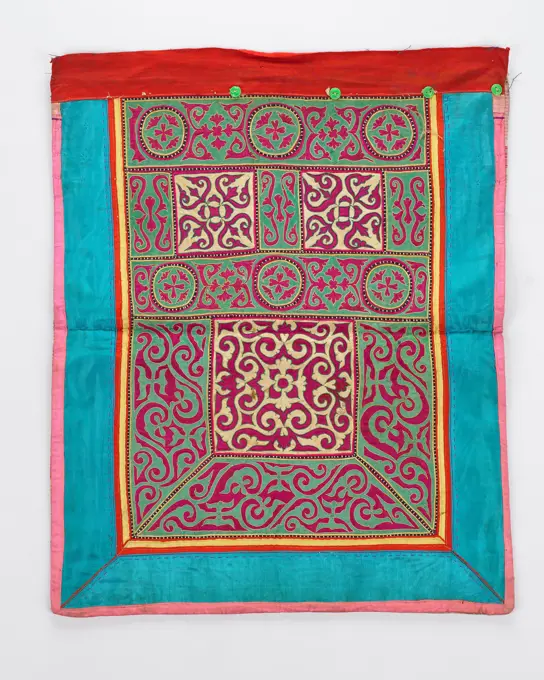
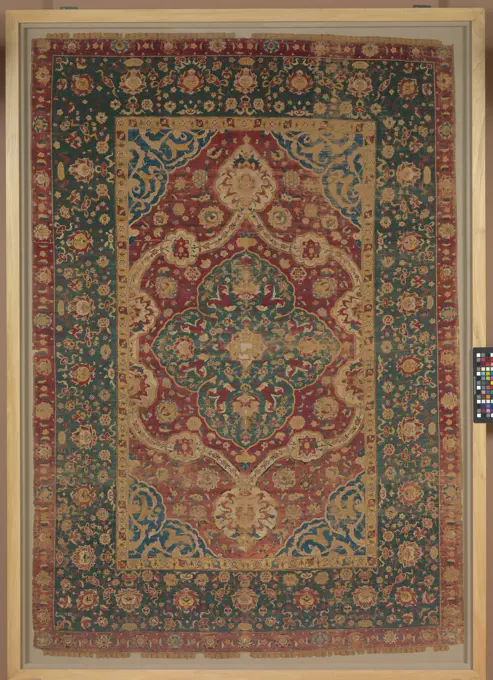
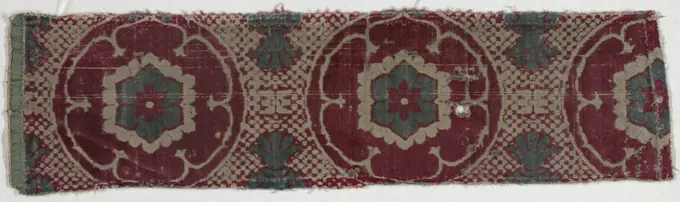
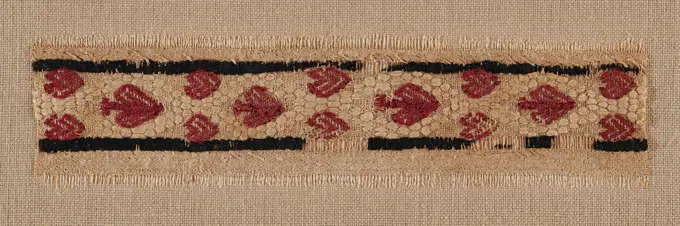
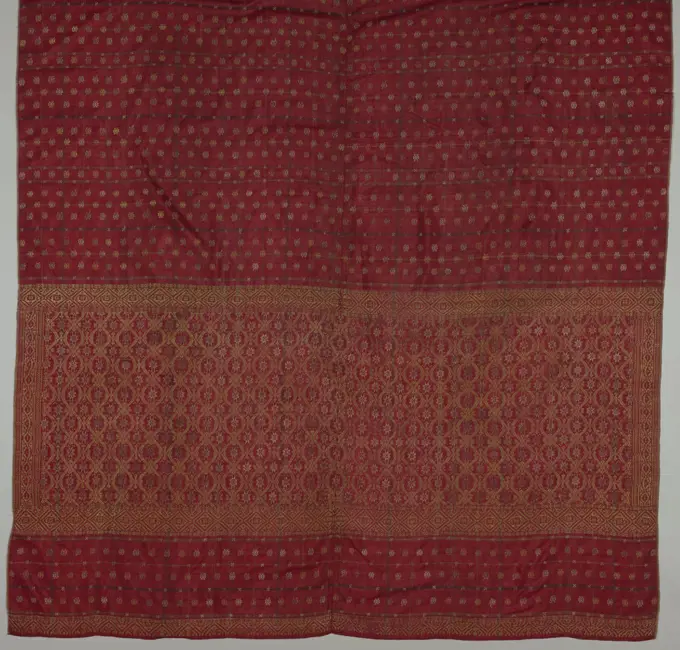
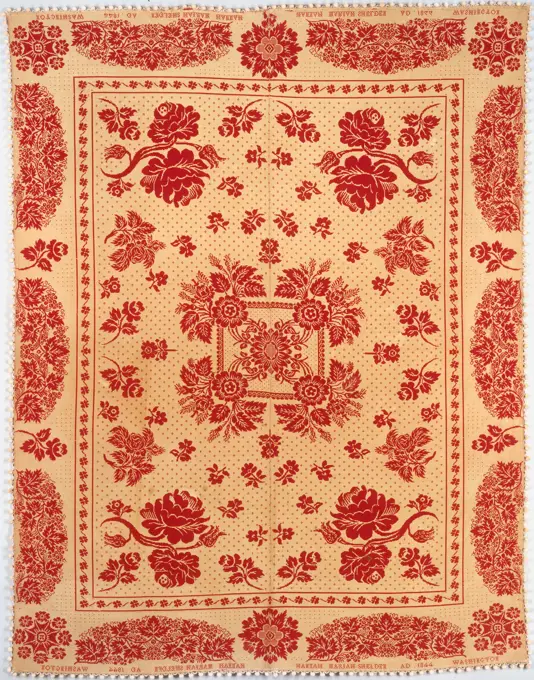
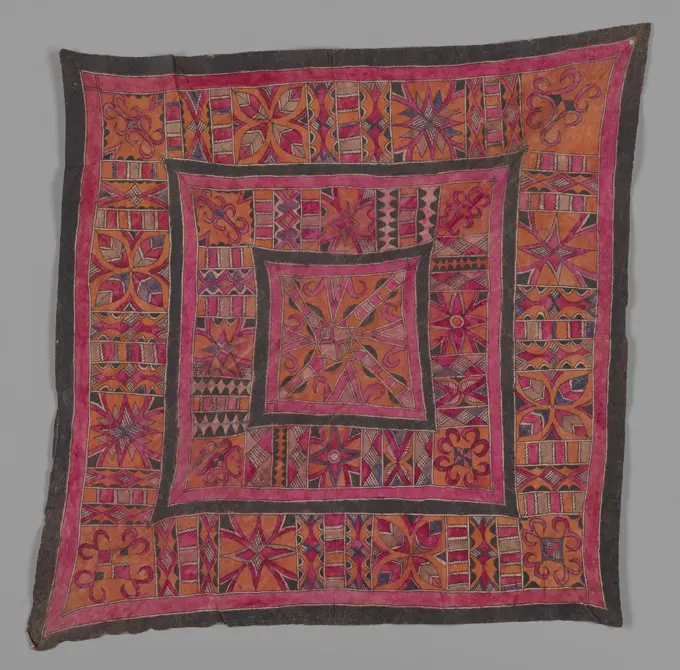
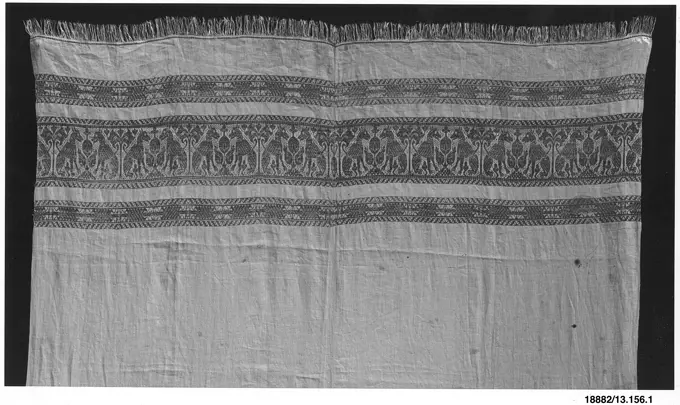
Various intricate textile fragments showcasing historical patterns and designs, reflecting cultural significance and craftsmanship in vibrant colors and textures.

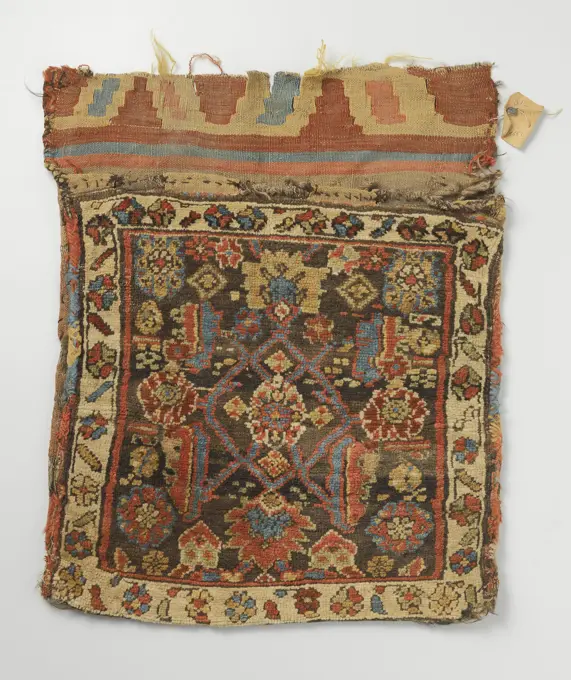
Oriental carpet, Anonymous, 1850 - 1900 Eastern carpet of which the midfield is decorated with a grid with blossom branches. Multiple edges with stiff floral ornaments around midfield. Central Persia (Possible) wool Eastern carpet of which the midfield is decorated with a grid with blossom branches. Multiple edges with stiff floral ornaments around midfield. Central Persia (Possible) wool
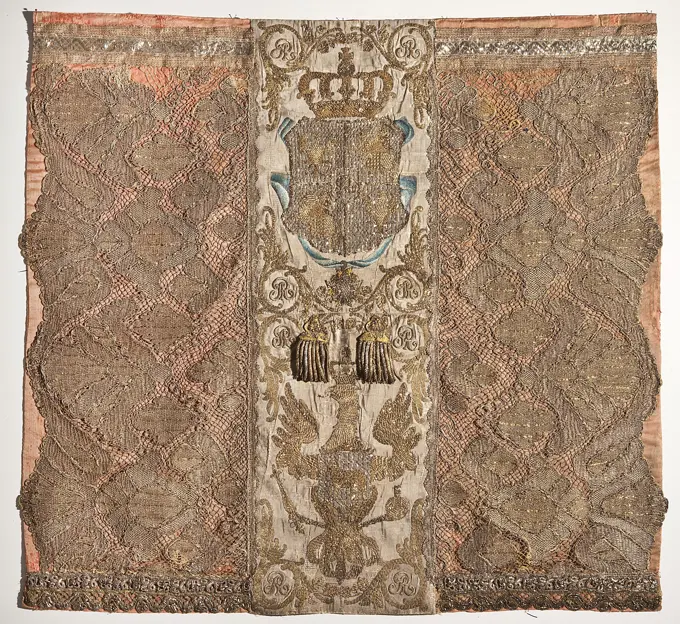
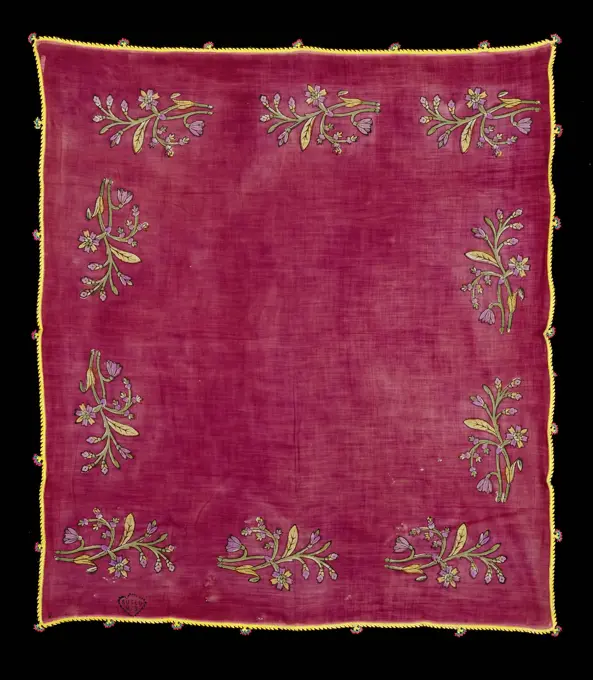
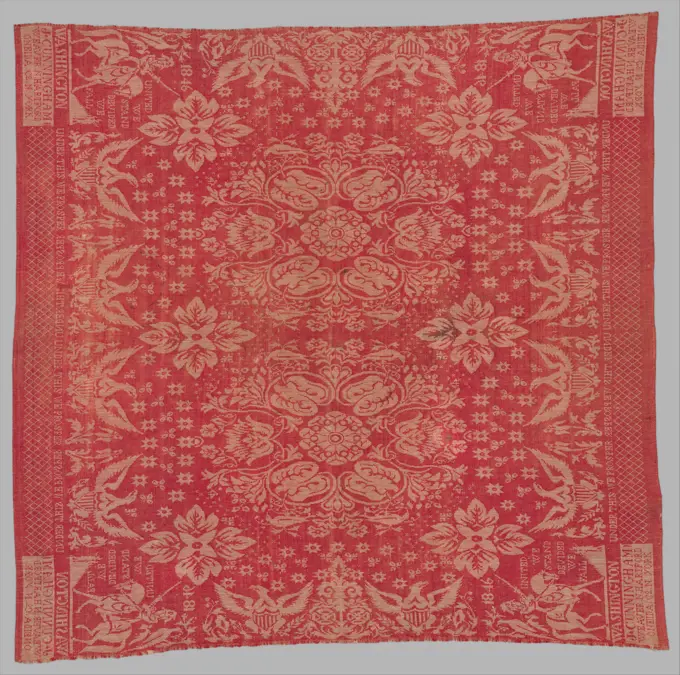
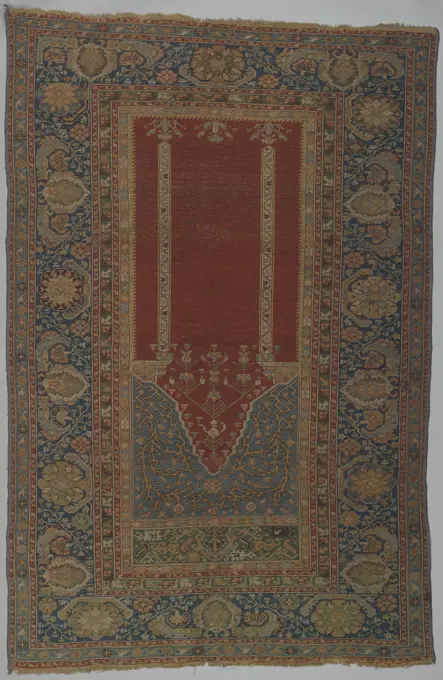
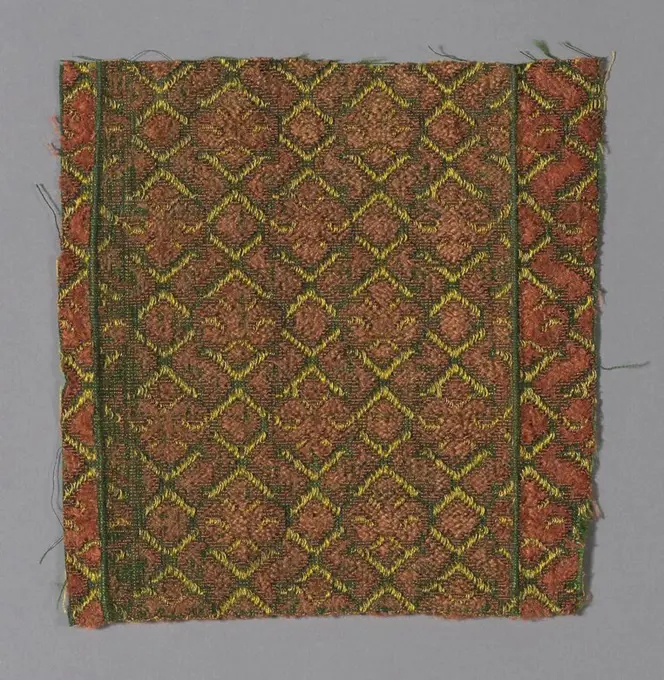
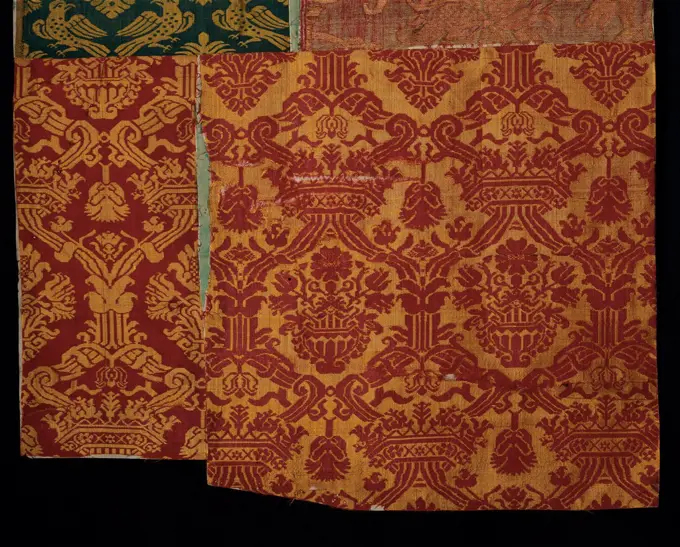
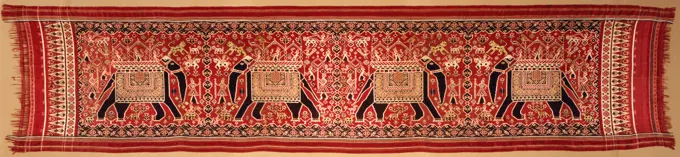
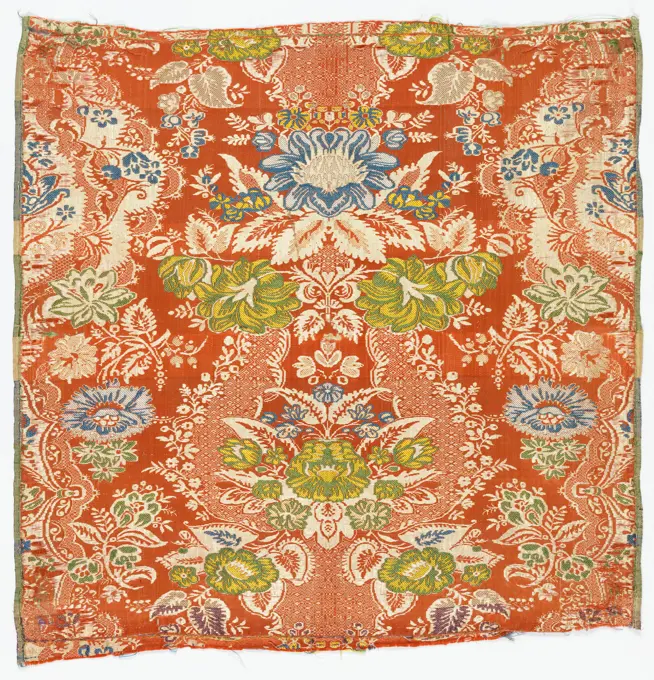
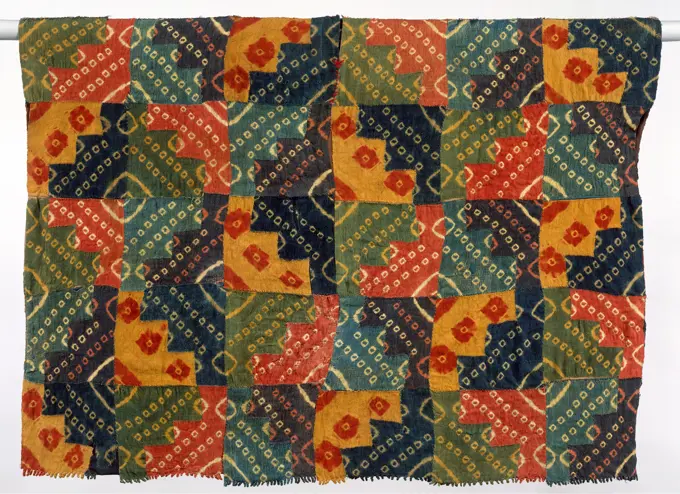
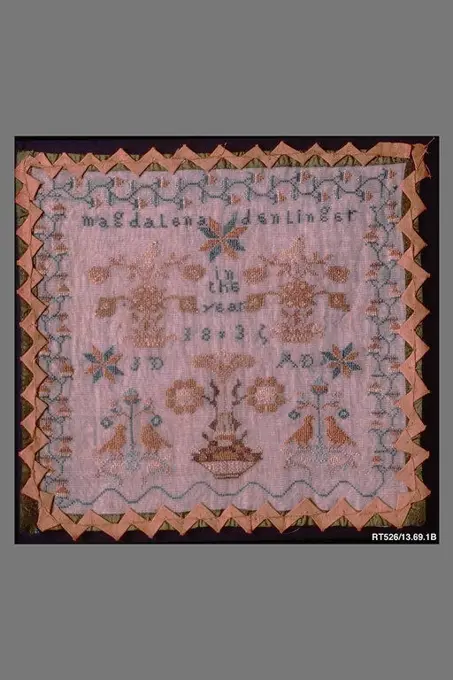
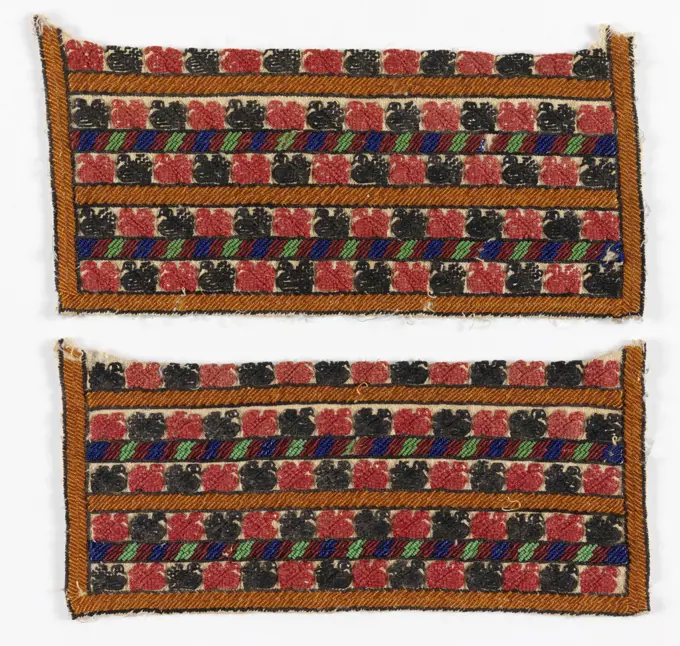
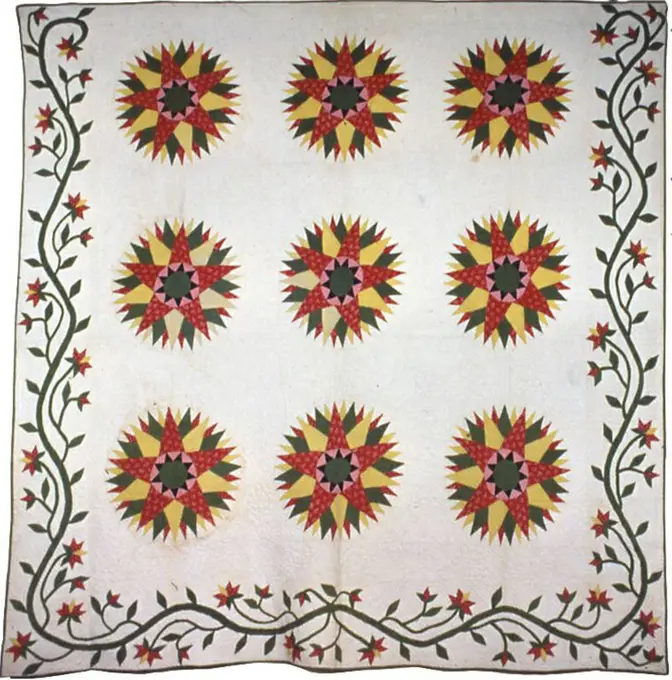
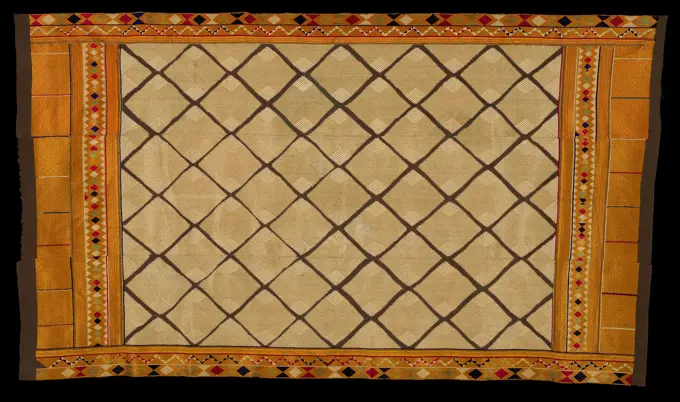
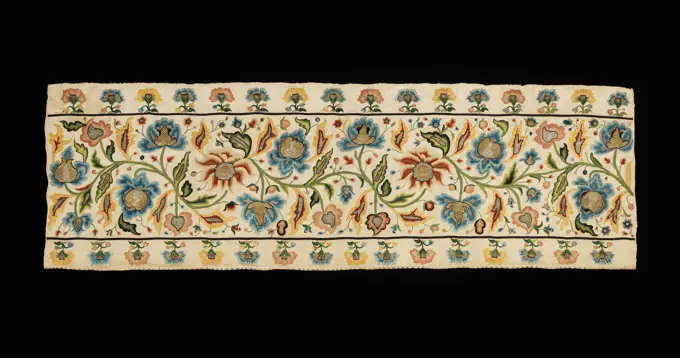
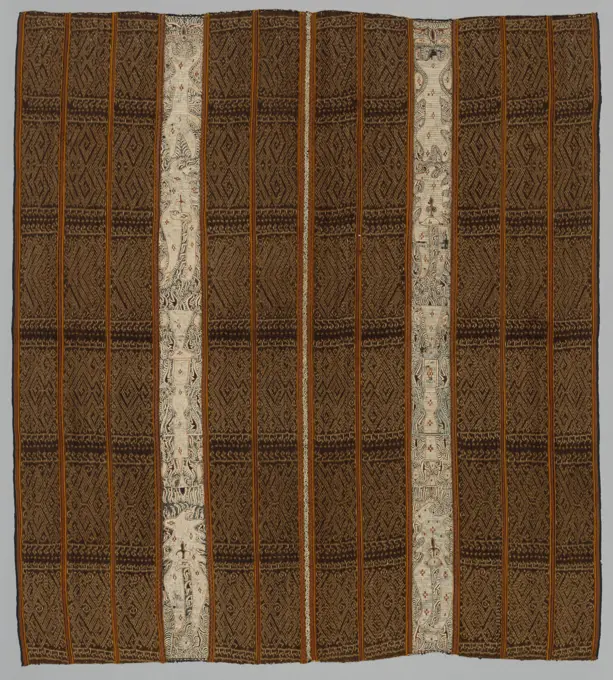
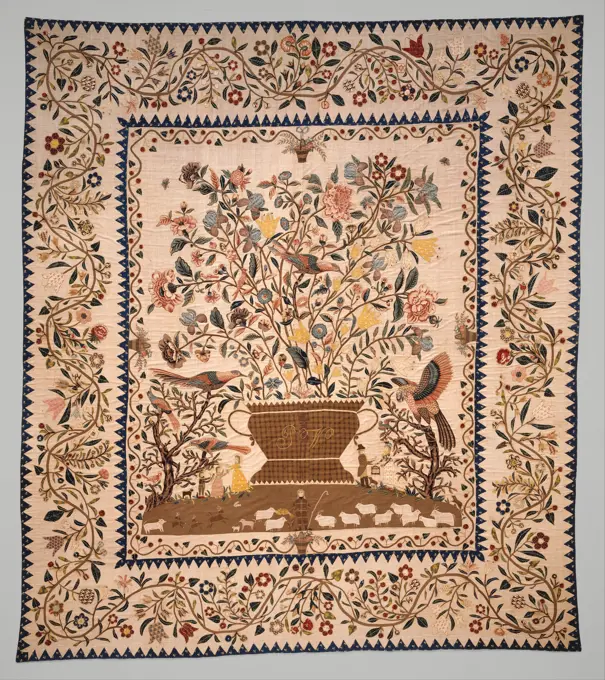
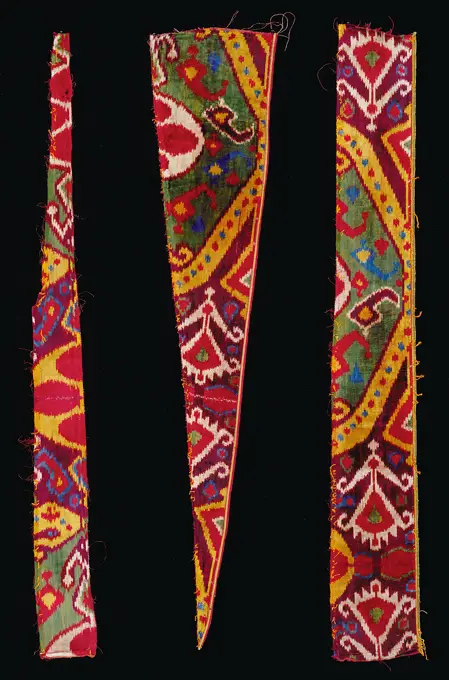
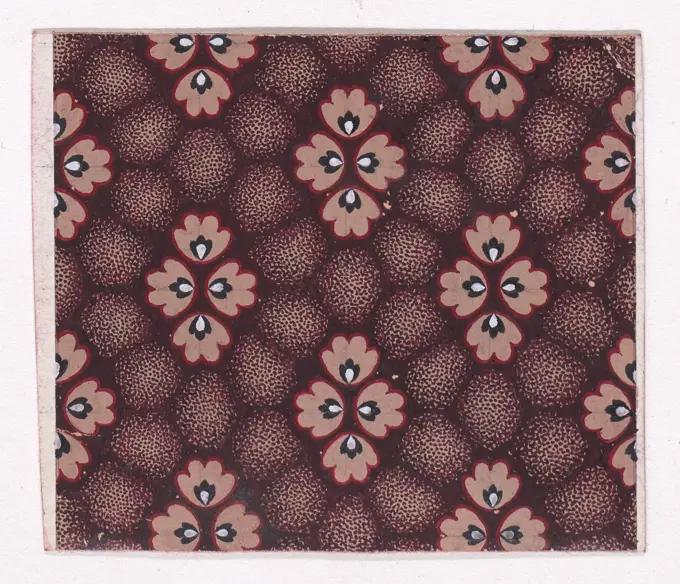
Textile Design with Rosettes with Pearls as Pistils Grouped Together to Form Stylized Flowers over an Abstract Honeycomb Pattern in the Background 1840 Anonymous, Alsatian, 19th century Rectangular sheet of paper with a textile design from a group, dated 1840, made in Mulhouse, Alsace, which was an important nineteenth-century center for textile production in the Haut-Rhin region of France. The design consists of groups of four rosettes of light tan color with outlines of red color and pearls of white color as pistils over a background of an abstract honeycomb pattern rendered with stipples of dark reddish-brown color over a light tan base. The rosettes have the form of stylized petals, so that the groups of four rosettes look like larger stylized flowers.. Textile Design with Rosettes with Pearls as Pistils Grouped Together to Form Stylized Flowers over an Abstract Honeycomb Pattern in the Background. Anonymous, Alsatian, 19th century. 1840. GouachePiece 18th-19th century Japan. Piece 66045Cap (Peru); woolTextile; bast fiber. Oriental carpet, flower and vas rug, the midfield of which is decorated with Candelaber motifs made up of vases and Arabesken.Tapestry;  2. PO. 18th century (1751-00-00-1800-00-00);White Eagle Order, White Eagle (coat of arms), Pogoń (coat of arms), Makaty, monograms, Weexille, purchase (provenance)Head scarf with Oya, 1940-1950, 31 x 27 5/8 in. (78.74 x 70.17 cm) (without trim), Silk; blockprint; dyed, Turkey, 20th centuryCushion Cover Made 1601-1650 Turkey. Velvet .Fragment, Medium: silk, metallic Technique: woven, Tile-like design in red, white and metallics on blue ground. Incomplete floral border at one side., Persia, 17th century, woven textiles, FragmentCover. Dimensions: Textile: L. 50 in. (127 cm) W. 46 in. (116.8 cm). Date: first half 17th century. Museum: Metropolitan Museum of Art, New York, USA.Tablecover 1846 J. Cunningham. Tablecover 14127Transylvanian prayer rug early 18th century Turkish, possibly Kula region. Transylvanian prayer rug 461347Cushion cover, ChinaWilloughby Ions, Coverlet, 1935 1942 CoverletBand 16th century Italian or Greek. Band. Italian or Greek. 16th century. Drawnwork. Textiles-LacesSilk Kashan Carpet 16th century This carpet was possibly woven in Kashan, an important center for silk trade and carpet manufacture during the Safavid period. Decorative elements on this and other related carpets from Kashan and Tabriz indicate that weavers may have used pattern books containing popular motifs to guide them in production. These designs, including the medallions at the center and four corners of this carpet, are also present in other media, particularly in bookbinding and manuscript illumination. The cloud bands and peonies that appear throughout the work originated in Chinese art but had been fully assimilated into Safavid artistic production by this period.. Silk Kashan Carpet 446645Bandanna (USA); Manufactured by Elephant Brand; cottonFragment, Medium: silk Technique: 5-harness satin patterned with supplementary warp pile (voided velvet), Concentric six-lobed floral medallion in red and blue-green velvet and ivory satin (voided velvet) on a speckled background of red velvet and ivory satin. The repeat is not complete, but each medallion may have had a pineapple-like appendage in blue-green velvet outlined in red velvet at top and bottom connecting it with teh staggered rows above and below., Italy, 16th century, woven textiles, FragmentFragment pasa dekoracyjnego. warsztat egipski, workshopFragment. Italy. Date: 1601-1700. Dimensions: 14 x 14 cm (5 1/2 x 5 1/2 in.). Ciselé fancy cloth velvet. Origin: Italy. Museum: The Chicago Art Institute, Chicago, USA.Coverlet, 19th century. America, Connecticut , 19th century. Cotton; overall: 253 x 207 cm (99 5/8 x 81 1/2 in.).Damask, by Italian workmanship, 16th Century, two-coloured damask. Italy, Liguria, Genoa, Palazzo Spinola National Gallery. Whole artwork. Tissue: fabric lobe amphorae net decoration flowers.Double Flour Bag. Dimensions: H. 40 1/2 in. (102.9 cm)W. 56 in. (142.2 cm). Date: last quarter 19th century.The large double flour bags created by Bakhtiari weavers usually feature pile with symmetrical knots at the bottom to protect the bag in areas of extreme wear. Unlike the other Bakhtiari double flour bag on view (MMA 2015.490.8), the ground here is executed in weft-faced plain weave using white cotton, and the patterning is made in sumak extra-weft wrapping with wool threads. The weaver chose to decorate the bag with repeating lozenges and other geometric motifs, as well as stylized human figures and animals.The closure is composed of a sumak band with slits finished with two-color overcast stitching on the front and braided loops at the back. Similar to the other double flour bag, a band of twining is worked into the plain-weave structure on the back, creating a more durable construction. This band also extends into the three-dimensional loops used for the closure. Museum: MeWaist Wrapper (Sarung, Bang Hijau TanahanUkel)Bidkleed, anonymous, c. 1875 - c. 1900 Oriental carpet, prayer rug. In midfield a mihrab with a blue grid and flowers. In the top of the Mihrab an amulet -shaped ornament in the form of a double boteh. Four-time edge, the widest of which is decorated with sloping S-motifs. Shirvan (possibly) ketting: wool. inslag: cotton (textile) Oriental carpet, prayer rug. In midfield a mihrab with a blue grid and flowers. In the top of the Mihrab an amulet -shaped ornament in the form of a double boteh. Four-time edge, the widest of which is decorated with sloping S-motifs. Shirvan (possibly) ketting: wool. inslag: cotton (textile)Morocco, Marrakech, Medina, Detail Of Wall HangingPiece 17th century Northern Italian. Piece. Northern Italian. 17th century. Bobbin lace. Textiles-LacesCover sheet saddle bag, decorated with grid work in which cross flowers. Cover sheet of a saddle bag, Jaffi Kurdistan Mosul. Midfield is divided into windows through a grid work in which cross flowers. Double edge. Bearded bearded beard at the top.Ceremonial Cloth (Elephant Patolu). Western India, Gujarat, Patan, early 19th century. Textiles. Resist-dyed silk warp and weft (double ikat) plain weave, metallic-wrapped supplementary weft.Panel, Medium: silk, linen, wool, and metallic yarns Technique: supplementary warp pile (velvet) in plain weave foundation, cut and voided Label: silk cut and uncut voided velvet with supplementary weft, Fragment of woven velvet with pomegranate pattern surrounded by a framework of branches, in red silk pile and gold supplementary weft patterning., Italy, 15th century, woven textiles, PanelEva Wilson, Linen Towel, c 1937 Linen TowelWoven, knotted and embroidered Glaoui carpet or rug, detail view, Marrakech, Morocco, AfricaRoda Island, Old Cairo, Cairo, Egypt. Antique oriental rugs at the Prince Mohamed Ali Palace. (Editorial Use Only)Unfinished Baby Carrier, 29-13/16 x 27-3/4 in. (75.7 x 70.5 cm), Cotton, ribbon; needlework, ChinaHeadcloth 18th-19th century Palembang. Headcloth 309546Floral art pattern example of the Ottoman timeTextile (Greece); silk embroidery on cotton foundationFragment, 1800s. China, 19th century. Silk; overall: 18.5 x 18.5 cm (7 5/16 x 7 5/16 in.).Woman's Overskirt Made 1801-1900 Democratic Republic of Congo. Raffia, plain weave; pieced; embroidered in lateral looping, and stem and running stitches cut to form pile; couching; joined by buttonhole, pearl, and trammed twisted buttonhole stitches; edged in lateral looping stitches . KubaFragment; silkPanel, c. 1780-1840. Russia, Tambov province. Linen: plain weave; silk; embroidery; overall: 14.6 x 46 cm (5 3/4 x 18 1/8 in.). This Russian embroidered panel was likely used to embellish the end of a bathing towel. Textiles of this type are valuable for their fine embroidery of ancient folk motifs, ritual significance, exemplification of the role of textiles in their society, and in this case, connection to a prominent woman collector, Natalia de Shabelsky, without whom this textile and others like it might have been lost.Carpet with, among other things, a medallion with four curved chandelier arms. Western rug. Midfield: Within a solid white trim and a Chinese-inspired meander list, in black and white, is a raised medallion in brown and black, up and down with a turning and aside with inside, shelter of white, on which a angular meander line is located. On a smaller central medallion, in brown and beige, four curved chandelier arms are made of white, with flower celk as a crowning. The intermediates are lavish and drawn in black / beige, black / white and black / beige / brown with arrangements and meanders. Marked in large crucial sign on the back: Kinheim. Design Carel Adolph Lion Cachet. Note: Carpet from the house of Mr Th.G. Dentz van Schaick, Frederiksplein 50 in Amsterdam.Pair of Women's Shawls, 20th century, 86 1/2 x 57 3/8 in. (219.71 x 145.7 cm), Cotton, silk embroidery, India, 20th centuryFragment textile. Textile fragment, embroidery of flower leaves in diamond-shaped motifs.Long sarong, Medium: silk, metallic threads Technique: embroidered on plain weave, Textile, probably a sarong, of dark red ground with blue plaid all-over design showing small pattern of metallic embroidery. Wide border shows geometric lattice design., Bali, Indonesia, 19th century, woven textiles, Long sarongTextile (England); cotton; Warp x Weft: 72.5 x 89 cm (28 9/16 x 35 1/16 in.) Repeat L: 42.5 cm (16 3/4 in.)Coverlet 1844 American This red wool and undyed cotton double cloth coverlet is woven in two panels and seamed at the center. It has a central floral medallion and four large roses in the field. The border has clusters of grapes and leaves, which alternate with single-stemmed roses on the left and right sides and with three snowflake motifs within the top and bottom borders.. Coverlet. American. 1844. Wool, cotton, woven. Made in Dutchess County, Washington Hollow, New York, United StatesCermonial Textile Made 1801-1900 Bali. Cotton, bast fiber (probably ramie), and gold-leaf-on-paper-strip-wrapped bast fiber (probably ramie) bands of plain weave, weft resist dyed (weft ikat) plain weave and weft-faced plain weave; knotted main warp fringe .Cotton, block printed textile - 'Eyebright', green and yellow design sample, 1882-83. Designer: William Morris. Manufacturer: Morris & CoFragment Made 1701-1800 Japan. Fancy compound satin, silk and gilt paper; two strips to m.m. .Panel, 20th century, 25 3/4 x 13 in. (65.41 x 33.02 cm), Cotton, silk; woven fabric, Myanmar (Burma), 20th centuryHeadhunters Turban (Siga)Sprei or tablecloth from Sits with the coat of arms of the Burmania family, Anonymous, c. 1700 - c. 1725 Sprei or tablecloth of painted and painted sits with the coat of arms of the Burmania family, with slanting vases with flowers and winding flowering branches in the edges, which come from vases in the corners. Coromandelkust cotton (textile) Sprei or tablecloth of painted and painted sits with the coat of arms of the Burmania family, with slanting vases with flowers and winding flowering branches in the edges, which come from vases in the corners. Coromandelkust cotton (textile)Textile, Medium: cotton, silk Technique: counted stitch embroidery, Cotton mesh solidly embroidered in multicolored silk. Scallop design in flame stitch., Europe, early 19th century, embroidery & stitching, TextileCover 16th-17th century Italian or German. Cover 219556Deken ,, 1860 - 1870 Blue children's blanket with red, purple, white and yellow cross stripes. Netherlands (possibly) cotton (textile) Blue children's blanket with red, purple, white and yellow cross stripes. Netherlands (possibly) cotton (textile)Saddle bag, decorated with crossed treings and leaves and four rosette flowers ,, c. 1800 - c. 1900 Saddle bag, Kurdistan. The Middenvlde is decorated with crossed tendrils with leaves that form a window. Four rosette flowers come from the center window. Rand with roses and leaves. On one side a beard with splitting, on the other hand, goat hair closing loops on the back. Back of flat tissue with cross bars. Kurdistan Chain and impact: Wool. Goat Hair Saddle bag, Kurdistan. The Middenvlde is decorated with crossed tendrils with leaves that form a window. Four rosette flowers come from the center window. Rand with roses and leaves. On one side a beard with splitting, on the other hand, goat hair closing loops on the back. Back of flat tissue with cross bars. Kurdistan Chain and impact: Wool. Goat HairChair Cover, 1723-1735, H.34-7/8 x W.38-1/8 in., silk, China, 18th centuryShawl (Llklla), 1965-1975, 36 x 36 in. (91.4 x 91.4 cm), Wool, Bolivia, 20th centuryBorder mid-19th century Russian. Border 222662Shawl, mid 19th century, 72 x 73 in. (182.88 x 185.42 cm), Wool; supplementary weft patterning, Scotland, 19th centuryPair of curtains early 18th century British. Pair of curtains 229273Byzantine ornamentTextile; silk on linenPoncho, c. 1850-1900, 87 x 44 1/2 in. (220.98 x 113.03 cm), Wool and cotton, Mexico, 19th-20th centuryTunic 700-850 Wari The so-called patchwork tunics of Peru, which date from the eighth to ninth century, comprise individual pieces of fabric that were woven exactly to shape and dyed before being sewn together. Their brilliantly hued patterns are often complex, with diagonal repeats of specifically colored patches that make for intriguing combinations and a lively surface. These lightweight tunics were woven from the hair of Andean camelids such as the alpaca, a kind of fiber that can be dyed to intense color. This tunic is among the oldest patchwork textiles in the collection of the Metropolitan Museum.. Tunic 315050Fragment. Dimensions: 11.75 in. high 9.75 in. wide (29.8 cm high 24.8 cm wide). Date: 13th-14th century. Museum: Metropolitan Museum of Art, New York, USA.Lucille Lacoursiere, Woven Coverlet, c 1938 Woven CoverletRug, 20th century, 74 x 53 1/2 in. (188 x 135.9 cm), United States, 20th centurySquare Shawl. Possibly Austria, Vienna. Date: 1835-1850. Dimensions: 168.8 x 166.6 cm (66 1/2 x 65 5/8 in.). Cotton and wool, center of weft-float faced 1:3 'Z' twill weave; patterned areas of weft-float faced 3:1 twill weave with supplementary patterning wefts bound in weft-float faced 1:3 'Z' twill interlacings over warp-float faced twill weave; main warp fringe; woven on loom with Jacquard attachment. Origin: Vienna. Museum: The Chicago Art Institute, Chicago, USA.Embroidered Sampler 1835 Magdalena Denlinger Magdalena's sampler is very similar to her sister Anna's (13.69.1a), probably because both girls looked at their mother's sampler for inspiration. Pennsylvania German samplers often show a continuum of favored motifs from generation to generation within a family. Both Anna's and Magdelena's samplers are trimmed with fancy fabric borders, an indication that these samplers were intended for display more than for the transmission of information.. Embroidered Sampler 14045Collar mid-19th century European, Eastern. Collar 125421Cotton canvas bag beaded with multicolor jet forming a Deco pattern, tortoise clasp and frame, detail, 1928-1930, fashion accessories, Italy, 20th century.Flower Pot, Medium: cotton Technique: printed over resist on plain weave, Small-scale symmetrical design of vases and flowers in continuous ogival framework, in pink, white, yellow, green and blue on a dark blue ground., England, designed 1883, printed, dyed & painted textiles, Textile, TextileCornelius Christoffels, Coverlet Detail, c 1938 Coverlet DetailWari textil Wari culture 500AC-1000AC Perú.Cover (Spain); linen, silkPair of cuffs, Medium: cotton embroidery on linen foundation, glass beads Technique: embroidered on plain weave, Pair of woven linen cuffs embroidered with cotton and glass beads in an alternating pattern of stripes and leaves in orange and black., 19th century, embroidery & stitching, Pair of cuffsCoffin screen, 287 11/16 x 18 3/4 in. (730.73 x 47.63 cm) (approximately), Cotton, silk, LaosCloth; PA Moon. Cloth with geometric motifs.Bedcover (Slashed Star or Rose Window Quilt) Made 1835-1845 United States. Cotton, plain weave; appliquÈd with plain weaves; roller printed; backed with plain weave; quilted .Textile (Peru); wool; Warp x Weft: 85.5 x 90 cm (33 11/16 x 35 7/16 in.); 1933-4-2Wedding veil (Chand bagh), late 19th-early 20th century, 94 3/4 x 53 1/4 in. (240.67 x 135.26 cm), Cotton, silk; embroidery, Pakistan, 19th-20th century, The Punjab region of India and Pakistan once was famous for darning stitch embroidery called phulkari, or flower work. Some designs were distinctly floral; others severely geometric. When the embroidery densely covered the cloth's surface, the 'flowers' were said to form a bagh, or garden. And when shimmering white silk stitches floated on a dark background as in this veil, the flower garden became a heavenly 'moon garden' (chand bagh).Blue Silk Tapestry  Artist Unknown Fragment of a shirt fourth quarter 18th century Ukrainian This object is from the collection of Natalia de Shabelsky (1841-1905), a Russian noblewoman compelled to preserve what she perceived as the vanishing folk art traditions of her native country. Traveling extensively throughout Great Russia, she collected many fine examples of textile art of the wealthy peasant class. From the 1870s until moving to France in 1902, Shabelsky amassed a large collection of intricately embroidered hand-woven household textiles and opulent festival garments with rich decoration and elaborate motifs. The Brooklyn Museum holdings include many fine examples including the majority of the garments. Portions of Shabelsky's collection are also housed at the Museum of Fine Arts, Boston, the Cleveland Art Museum, and the Russian Museum of Ethnography in St. Petersburg.. Fragment of a shirt 157572Tapis (Garment), 1800s. Indonesia, Sumatra, Lampung, 19th century. Tabby weave, warp ikat; cotton / embroidery; silk; overall: 130.2 x 117.8 cm (51 1/4 x 46 3/8 in.). "Tapis" from central and southern Sumatra combine warp ikat with embroidery. The angular, geometric designs of the warp ikat can be traced back to the bronze age culture of China. During the first millennium B.C., elements of that culture spread to Indonesia where they survived in remote areas well into the 20th century. Completely different are the mysterious, curvilinear forms of the embroidered bands. Some of these have become too abstracted to identitfy; but others can be recognized as human figures wearing the feathered and horned headdresses of head-hunting rituals. Embroidery designs were presented by a man to his prospective bride, and their motifs were inspired by activities specifically performed by men, such as wood carving, metalwork, and headhunting.Phebe Warner Coverlet ca. 1803 Probably Sarah Furman Warner Williams American Made in about 1803 for Phebe Warner of New York, this bedcover's design relates more closely to eighteenth-century sources than to those of the nineteenth century. The maker was influenced by the central flowering-tree motif common to popular imported Indian bed hangings, called "palampores," as well as by the pastoral landscape needlework pictures often worked by young women. The coverlet's linen ground is appliquéd with large-patterned cotton chintzes and printed linens, as well as smaller-patterned cotton calicos and plaids, most of which were made in England.. Phebe Warner Coverlet 13606Carpet Made 1775-1825 China. Cotton and wool, plain weave variation with supplementary wrapping wefts forming cut pile through a technique known as Persian (Sehna) knots; main warp fringe .Woman's mantle (Awayo), 19th century, 31 x 32 in. (78.74 x 81.3 cm), Alpaca, Bolivia, 19th centuryLeather binding with lacquer painting. Date/Period: 1560. Leather binding. Leather Leather. Height: 240 mm (9.44 in); Width: 170 mm (6.69 in). Author: UNKNOWN ARTIST.Kontusz sash/belt. Pracownia Daniela Chmielewskiego (Kraków ; wytwórnia pasów ; 1796-1825), atelierElaborate patterns on a Moroccan knotted rug, Morocco, AfricaApron, 14 3/8 x 20 7/8 in. (36.51 x 53.02 cm) (without fringe or ties), Cotton, silk, metal bar beads, ChinaTextile fragment, 1860-1880, Silk; ikat velvet, Uzbekistan, 19th centuryField of sixteen tiles with grape roses. Field of sixteen tiles (4 x 4) each with a multi-colored (blue, green, orange and yellow) painted grape tray, diagonally placed. Along the edges, half a rosette and in the corners, a lily.Funeral banner, mid 20th century, 247 3/8 x 16 15/16 in. (628.33 x 43.02 cm) (without fringe), Cotton, silk, Vietnam, 20th centuryEmbroidery Sample, 36 1/2 x 35 1/2 in. (92.71 x 90.17 cm), Cotton; needlework, ChinaBedcover (India); cottonPanel (From a Chasuble) Made 1700-1800 France. Silk, gilt-metal strip, and gilt-metal-strip-wrapped silk, plain weave with supplementary patterning and brocading wefts .ALFOMBRA TIPO ALMIRANTE. Location: INSTITUTO VALENCIA DE DON JUAN-COLECCION. MADRID. SPANIEN.