Traditional Textile Fragments

Various intricate textile fragments showcasing historical patterns and designs, reflecting cultural significance and craftsmanship in vibrant colors and textures.

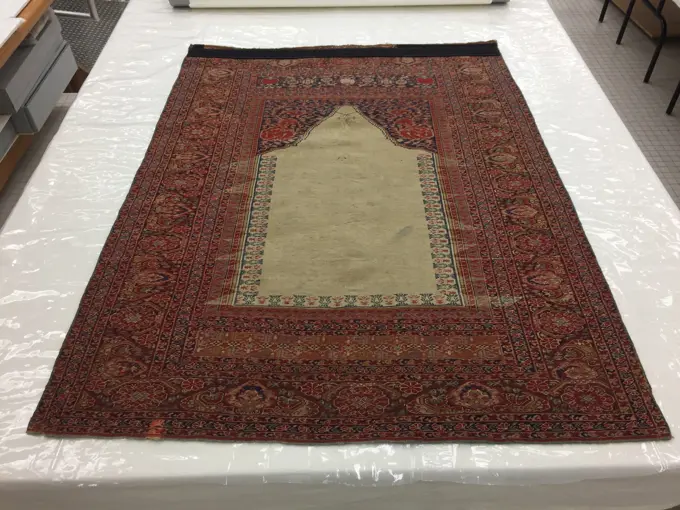
Oriental carpet, Anonymous, 1850 - 1900 Eastern carpet of which the midfield is decorated with a grid with blossom branches. Multiple edges with stiff floral ornaments around midfield. Central Persia (Possible) wool Eastern carpet of which the midfield is decorated with a grid with blossom branches. Multiple edges with stiff floral ornaments around midfield. Central Persia (Possible) wool
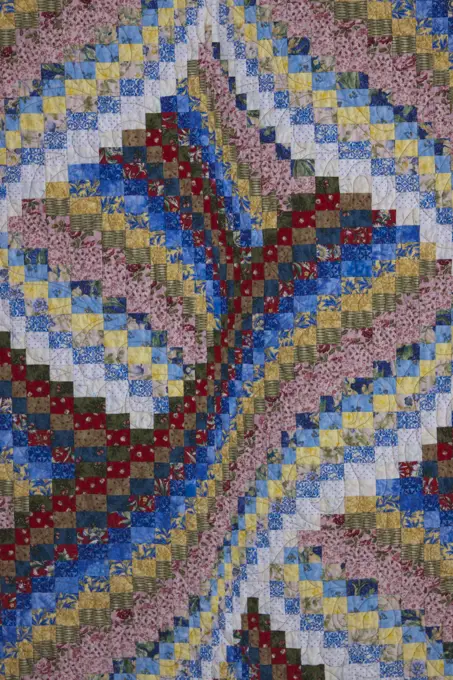
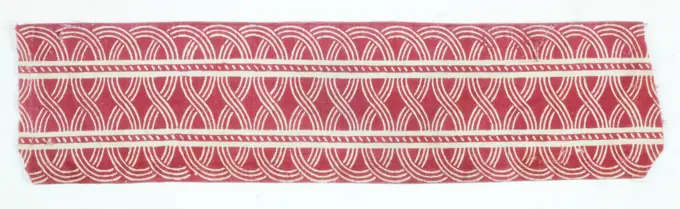
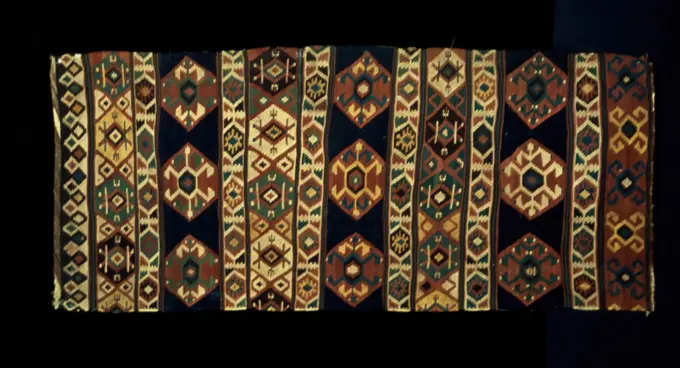
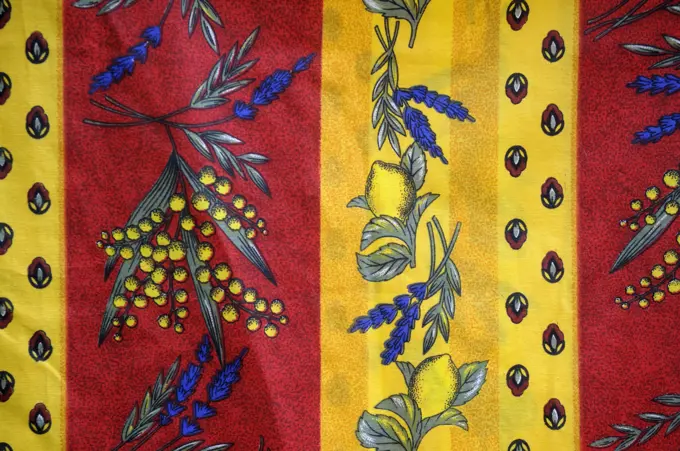
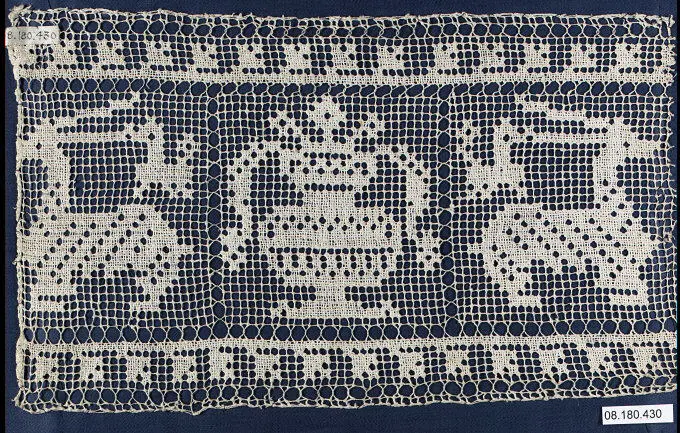
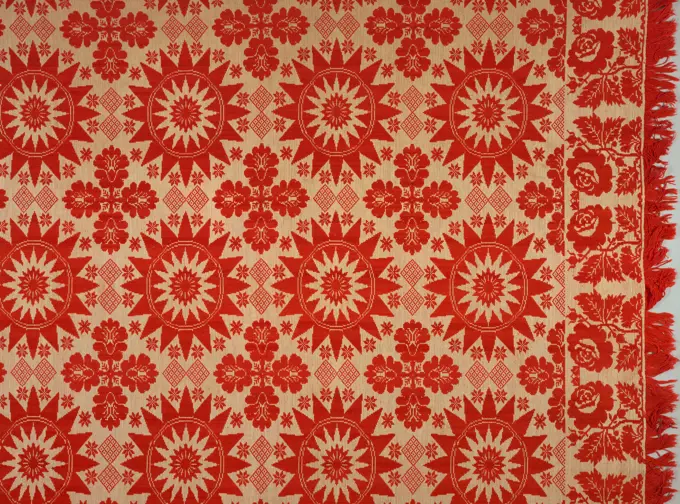
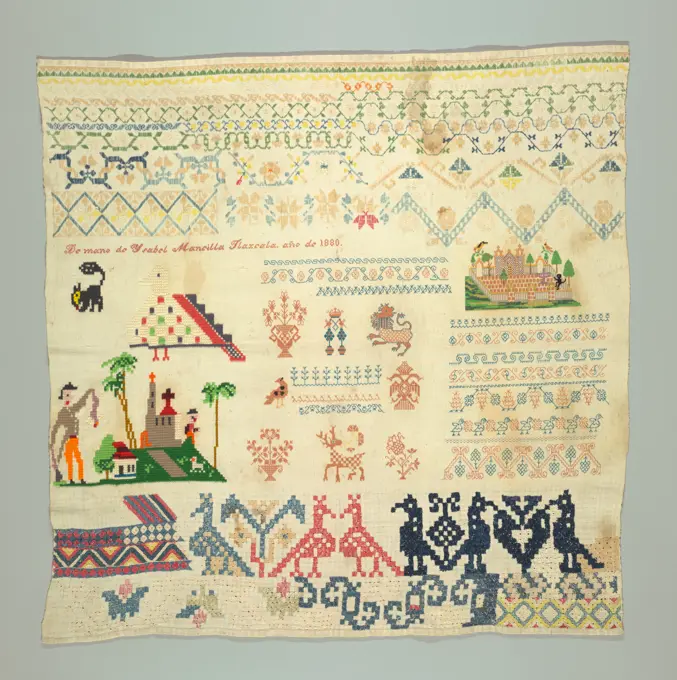
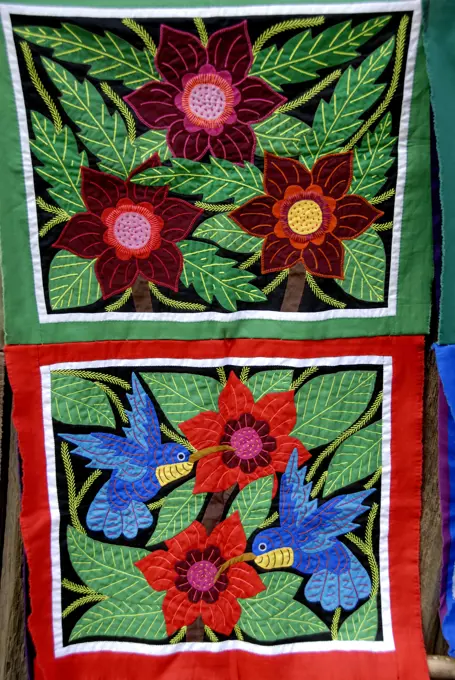
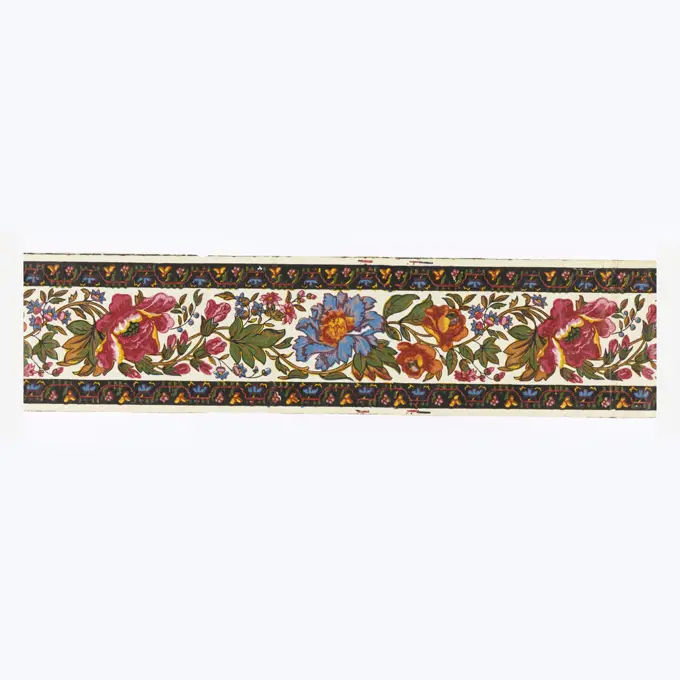
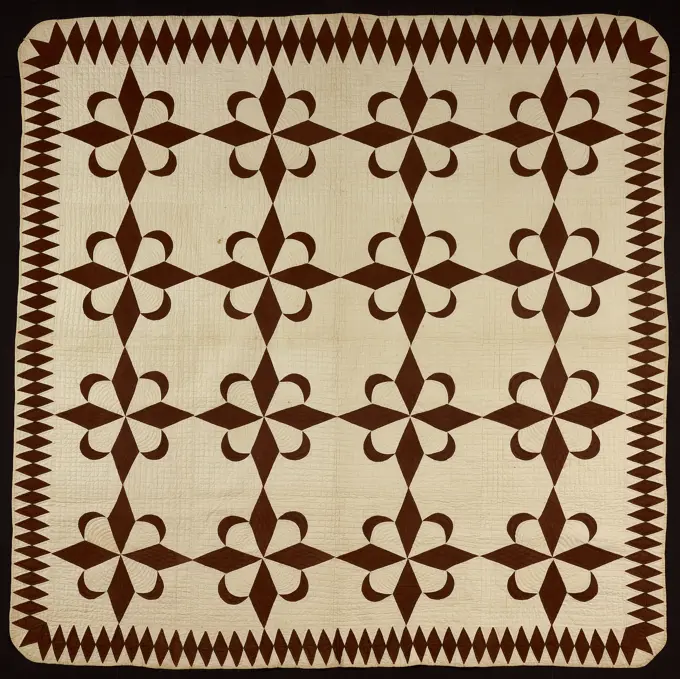
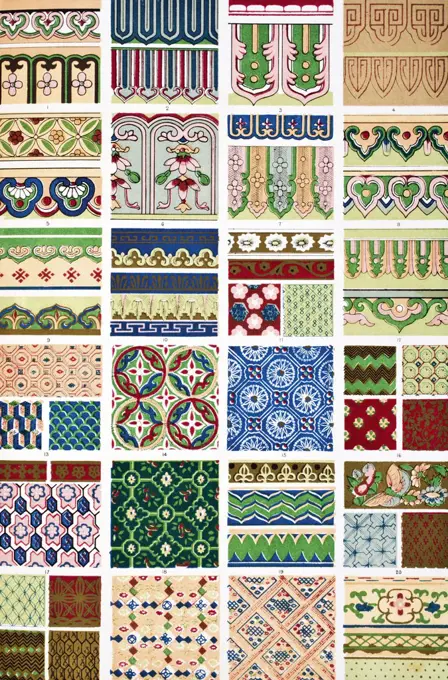
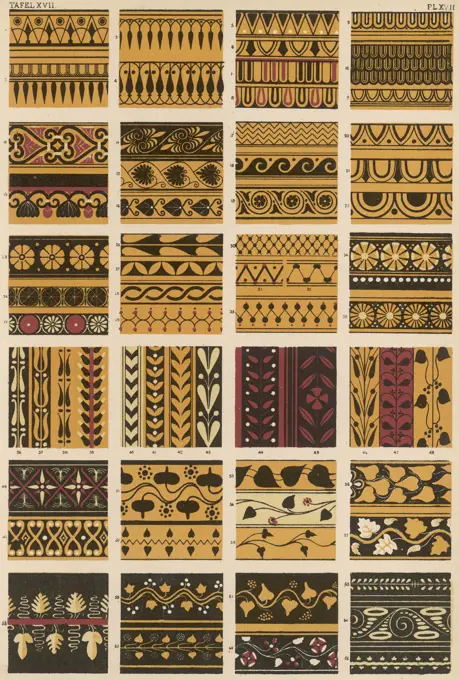
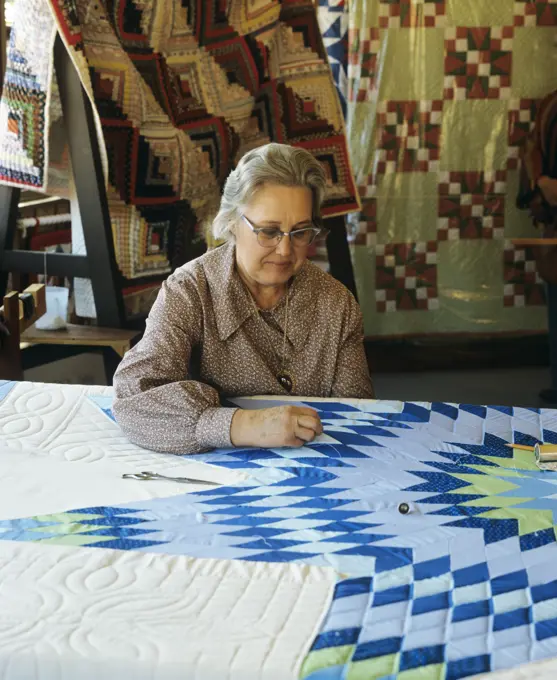
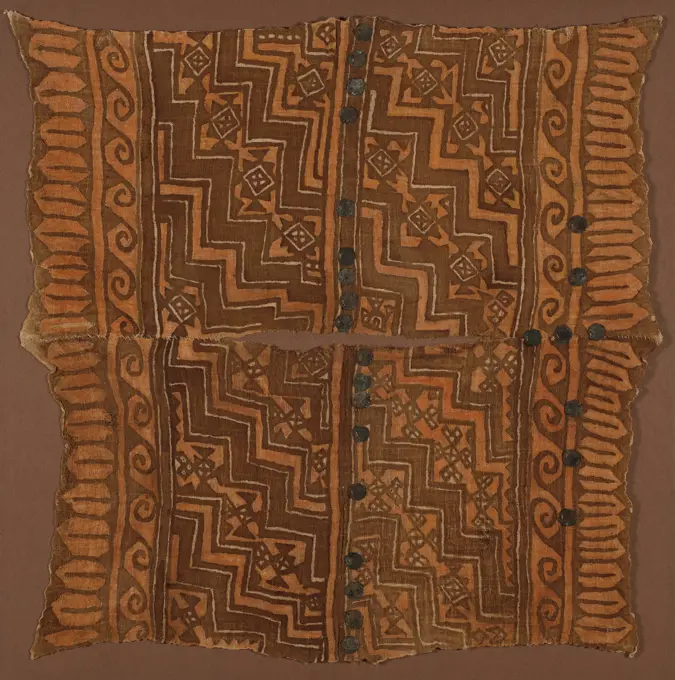
Tunic Made 1470-1532 Peru. Cotton, plain weave; painted; applied metal ornaments . ChimúNorth America, USA,  Georgia; Quilts on display in Savannah.Shawl 1820-30 British. Shawl 84625Trim, printed cotton border, 18th-19th century, 8 x 2 in. (20.32 x 5.08 cm), Cotton; passementerie, 18th-19th centuryEmbroidery Tatreez pattern, Palestinian fashion vector ornamentRug, 19th century, L.120 x W.54 in., Wool, 19th centuryExcerpt of a carpet, from Calkar, in or before 1826 Fragment of a carpet with edge pattern of edges with oriental geometric (flower) designs. Deventer wool Fragment of a carpet with edge pattern of edges with oriental geometric (flower) designs. Deventer woolAltar Frontal, Kangxi period, 1662-1722, L.43 x W. 39-1/4 in., silk, cotton, China, 17th-18th cenuryTraditional Georgian folk art embroidery vector patternMan's Cap (Unassembled) Made 1601-1625 England. Linen, plain weave; embroidered with silk and gilt-metal-strip-wrapped silk in bullion, buttonhole, couched buttonhole, chain, hollie, and single satin stitches; darned couching .Man's wrapper, 20th century, 49 x 74 in. (124.46 x 187.96 cm), Cotton; woven fabric, Myanmar (Burma), 20th centuryReplica Ancient Egyptian Mat work hangings. Copied from woven mats made of reeds; they were in use as wall decorations in official dwellings and official buildings as well as tombs throughout ancient Egypt. Recreated in 2011Quilt - Log Cabin Pattern. Dated: c. 1936. Dimensions: overall: 35.5 x 28.7 cm (14 x 11 5/16 in.) Original IAD Object: 70" square. Medium: watercolor, graphite, and gouache on paper. Museum: National Gallery of Art, Washington DC. Author: Magnus S. Fossum.Saint's Rebozo, early 20th century, 82 x 19 in. (208.28 x 48.26 cm) (includes fringe), Silk, Guatemala, 20th centuryMantle Nasca. Mantle, 0-100 C.E. Camelid fiber, 108 11/16 x 50 13/16 in. (276.1 x 129.1 cm).   Arts of the Americas 0-100 C.E.North America, USA,  Georgia; Quilts on display in Savannah.Europe, France, Provence-Alpes-Cote d'Azur, Bouches-du-Rhone. Aix-en-Provence. Red and Yellow Textiles, Cours Mirabeau Market.Taoist Robe, Tao Kuang period, 1821-1850, L.58-1/2 x W.51-1/2 in. (from base of neck), silk, China, 19th centuryLotto Carpet 17th century The palette and design of this carpet recalls the famous "Lotto" carpets, named after a well-known altarpiece by Italian Renaissance painter Lorenzo Lotto, that depicts a piece with a striking field pattern of geometrically stylized vegetal arabesques in yellow on a red ground. While the earliest examples of carpets using this design probably date from before 1500, the design remained popular for several centuries, and large numbers were exported to Europe they frequently appeared in paintings. The pattern of this carpet is designed around the motif of a stylized peony blossom repeated in a linear movement in both the field and the border. While the floral style of this Lotto carpet points to a seventeenth century dating, the fine lines dividing the center field in three parts and converging at one end to form a triangle, recall the niche design of Anatolian prayer rugs, in which the mihrab or prayer-niche remained a popular motif.. Lotto Carpet. 17th century.Carpet, 18th century, L.135-1/4 x W.73 in, silk with metal threads, China, 18th centuryTrimming (France); silkBorder 16th century Italian or German. Border. Italian or German. 16th century. Embroidered net. Textiles-LacesCoverlet (USA); wool, cottonEgyptian OrnamentOrnate decoration on the backside of a deck of cardsKapa (tapa) textilesembroidery pattern National art of embroidery. Copyright: xZoonar.com/andriixsalivonx 1331868Chintz appliqued quilt ca. 1800 American This quilt has a central flowering tree of appliquéd chintz, surrounded by appliquéd blue and pink calico vines, swags, and sawtooth and scalloped borders. The outermost border is shell quilted, while the inner area is quilted with roses, leaves, vines, and grapes. There are some modern replacements to the chintz areas. A cotton fringe is attached on three sides. The back is of plain white woven cotton.. Chintz appliqued quilt 13870Sampler (Mexico); Embroidered by Ysabel Mancilla; wool, silk, and cotton embroidery on cotton foundationCentral America, Panama, San Blas Islands (aka Kuna Yala). Colorful hand stitched molas made by the Kuna Indians.Coverlet. Samuel Mundwiler (American, active 1848-1851); United States, Ohio, Seneca County, Hopewell Township. Date: 1848. Dimensions: 68.1 x 80 cm (26 3/4 x 31 1/2 in.). Cotton and wool, plain weave with supplementary patterning wefts bound in plain interlacings; extended supplementary patterning weft cut fringe; woven on loom with Jacquard attachments. Origin: Ohio. Museum: The Chicago Art Institute, Chicago, USA.Bedcover (Star of Bethlehem Quilt). United States, New York, possibly Newburgh. Date: 1820-1840. Dimensions: 306.7 x 320 cm (120 3/4 x 126 in.). Cotton, various plain weaves; printed; some calendarized and glazed; pieced; lined with cotton, plain weave; pieced; batting: cotton; quilted. Origin: New York. Museum: The Chicago Art Institute, Chicago, USA.Turkey, Turkish rugsConciliate belt;  18th century (1701-00-00-1800-00-00);Band showing a Water Cat”.  Artist: UnknownHandkerchief handkerchiefsHanging, Medium: silk on silk foundation, metallic thread Technique: embroidered, Hanging of dark red silk embroidered along all sides with a border showing a floral pattern in metallic thread and multicolored silk. Center shows an oval-shaped sun filled a pierced heart and other symbolic devices., Italy, late 18th-early 19th century, embroidery & stitching, HangingVanuatu, Efate Island, Port Vila. National Museum of Vanuatu - Woven designs of the Cheifs' Nakhamal (tribal leadership house)Poncho, 1960-1970, 50 x 50 in. (127 x 127 cm), wool, Bolivia, 20th centuryBorder, Block-printed on handmade paper, The edgings consist of two bands of imitation woven flowers. Between them is an assortment of flowers and foliage positioned along an undulating stem. Block-printed with shiny, oily pigments on joined sheets of paper., H# 290, France, 1825-50, Wallcoverings, BorderWoman's Ceremonial Shawl, 72 x 24 in. (182.88 x 60.96 cm) (with fringe), Silk, cotton, Myanmar (Burma)Bedcover ( Star and Crescent Quilt) Made 1800-1830 United States. Cotton, plain weaves; pieced; quilted; backed with cotton, plain weave; printed; edged with cotton plain weave .Pair of Women's Shawls, 20th century, 94 1/8 x 54 in. (239.08 x 137.2 cm), Cotton, silk embroidery, India, 20th centuryParallel of historical ornament, Byzantine and Romanesque , Architectural decorations & ornaments, Capitals Columns. Louis Prang & Company CollectionTextileChinese No 2 Plate LX From The Grammar of Ornament by Owen Jones published by Day & Son London 1865Prayer Rug with Niche Design late 18th-early 19th century This prayer rug was woven in Gördes, a famous carpet weaving center located in Western Turkey on the Aegean cost. Typical for prayer rugs, it is of small size and is dominated by a niche-design, evoking a mihrab, an Islamic prayer niche indicating the direction of Mecca. Characteristic for Gördes is a series of borders - larger and smaller ones - showing alternating patterns made of colorful flowers and medallion-like motifs surrounding the niche, which is against a white background. The pattern and motifs follow those of classical Ottoman art. Hence, we find rosettes, palmettes, carnations, tulips, pomegranates, as well as spandrels on the sides of the triangular arch of the niche, which are reminiscent of Ottoman tiles, carpets and other media. The possible comparison with classical Ottoman art points to a rather early date in the workshop production of Gördes, which was particularly active in the nineteenth and twentieth centCrazyQuiltOrnaments from Greek and  Etruscan vases in the British  Museum and the Louvre        Date: 186880 Heller from Kirchberg am Wagram,Notgeld.  Mint: Kirchberg am Wagram, AustriaCeremonial Tzute, 1959, Cotton, silk; supplementary weft patterning, Guatemala, 20th centuryAlbum Quilt. Designed and executed by Sarah Ann Wilson; American, active c. 1854. Date: 1854. Dimensions: 217.1 x 255.8 cm (85 1/2 x 100 3/4 in.). Appliquéd, pieced and embroidered quilt; dyed, undyed and printed cotton plain weave fabrics and cotton and silk velvet fabric; cotton embroidery threads. Origin: New York. Museum: The Chicago Art Institute, Chicago, USA.Fabric swatch isolatedIran, Isfahan, Carpet Shop1970s 1980s SENIOR WOMAN QUILTING SEWING QUILT WITH BLUE STAR PATTERN