Traditional Textiles

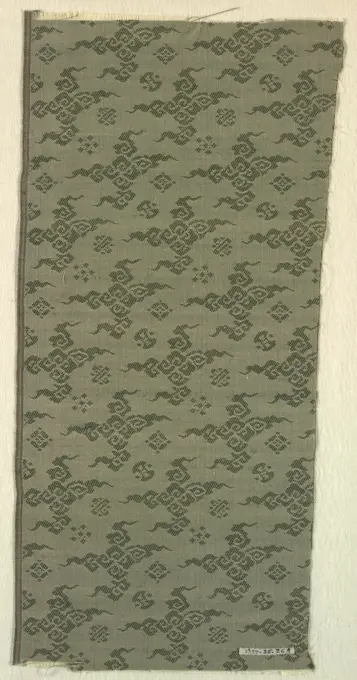
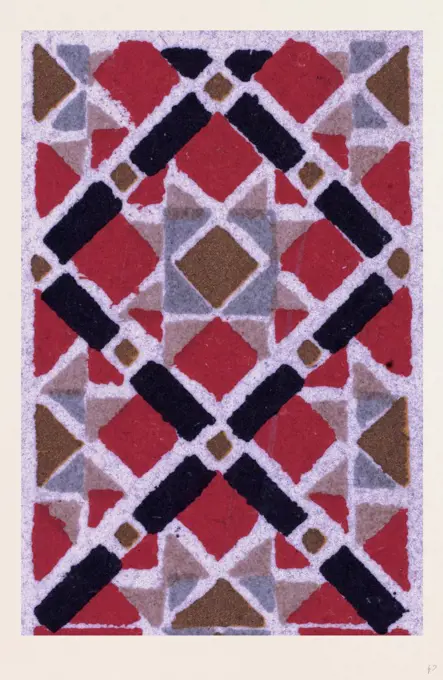
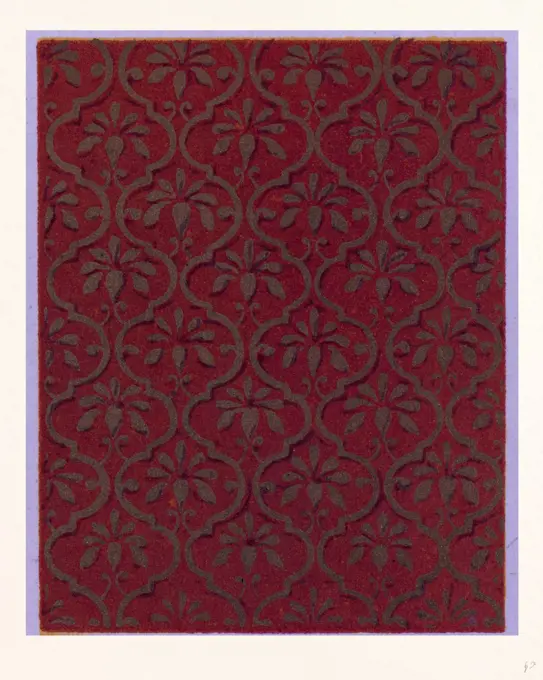
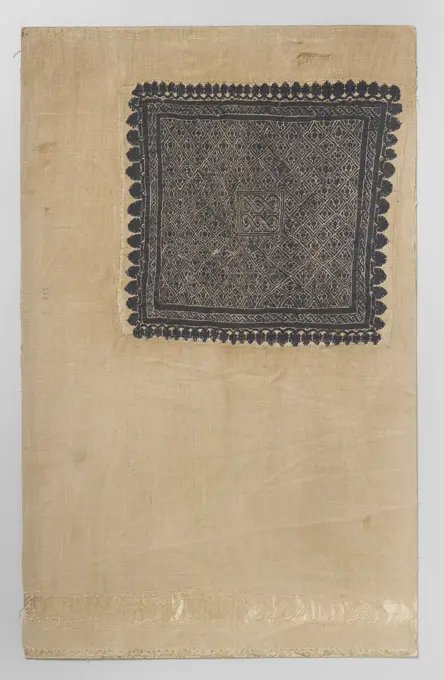
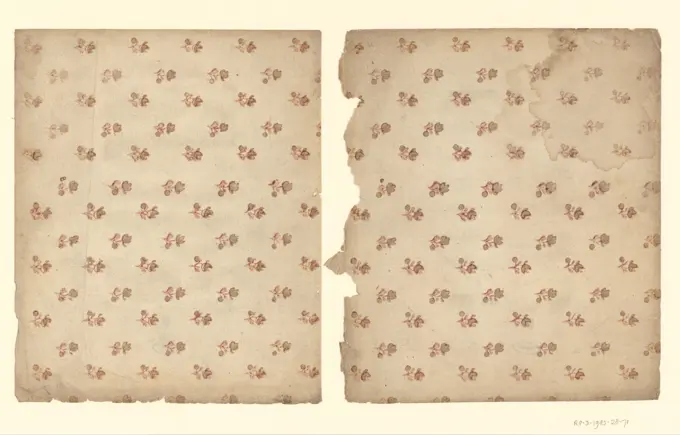
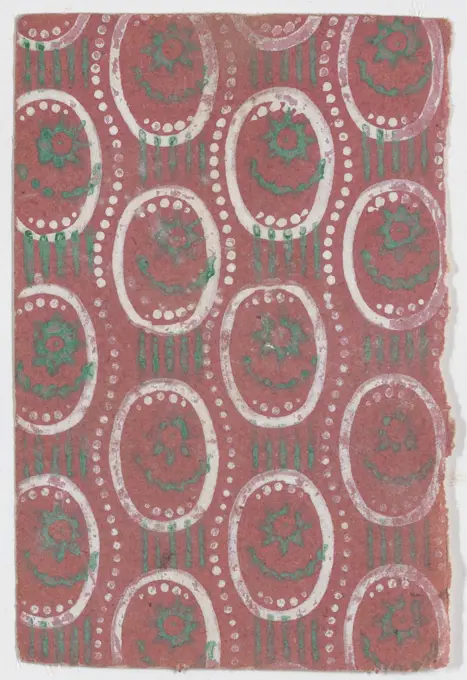
Beautiful fabric patterns including floral designs, silk fragments, and quilts showcasing intricate craftsmanship in muted and rich colors.
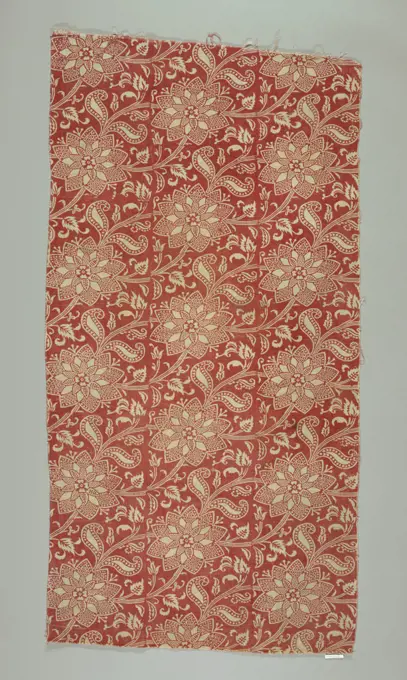
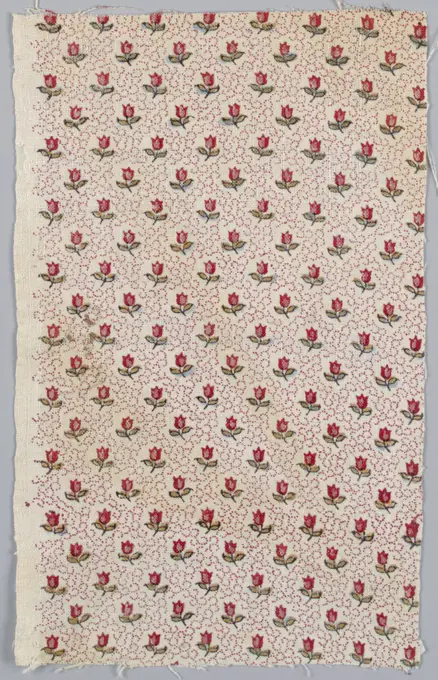
Textile, Medium: cotton Technique: block printed on plain weave, Large flowers and diagonally moving stems. Pattern reserved. Red on white., France, late 18th century, printed, dyed & painted textiles, Textile
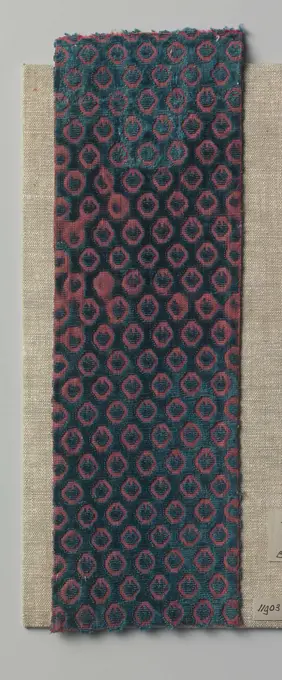
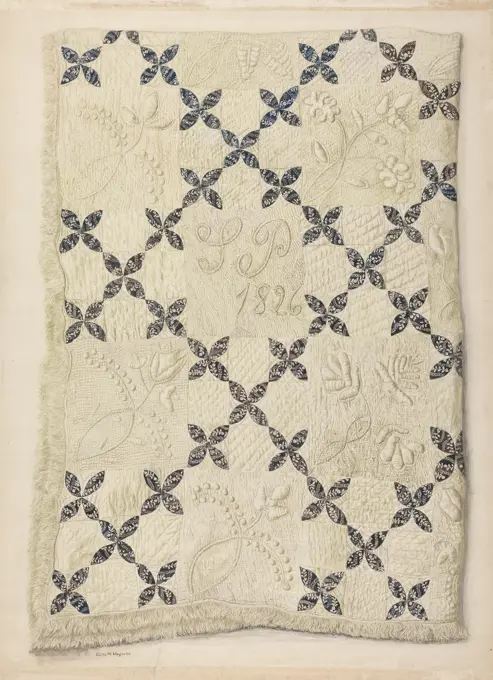
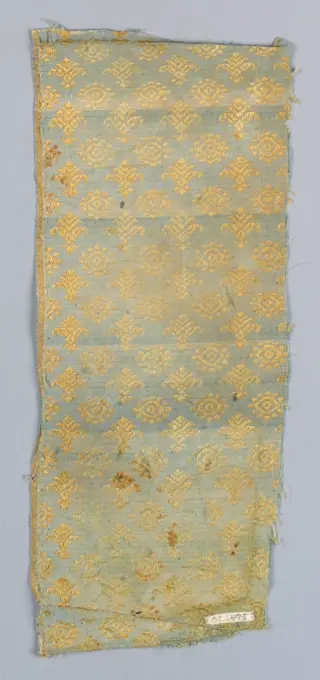
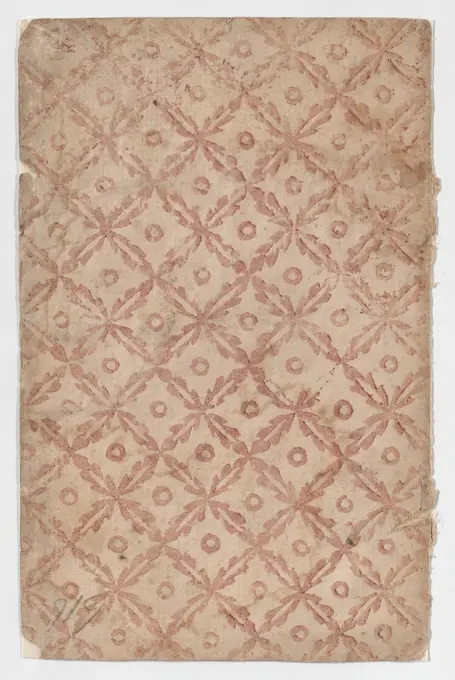
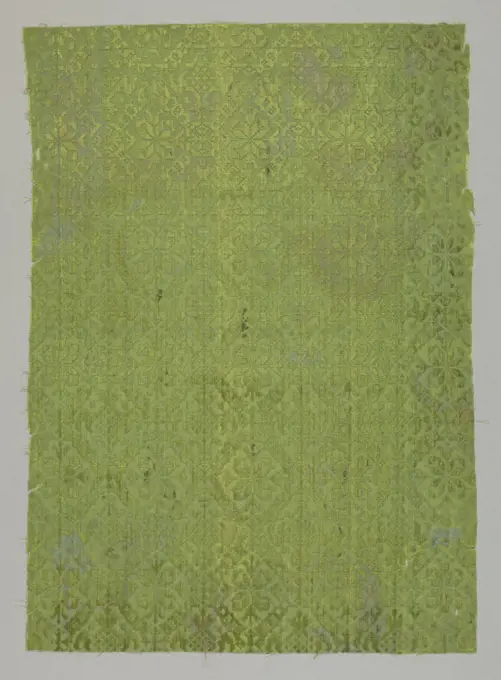
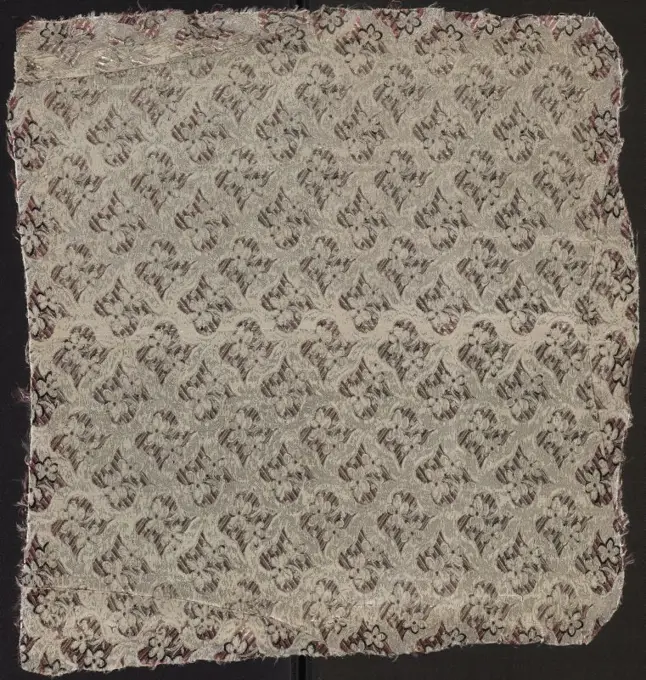
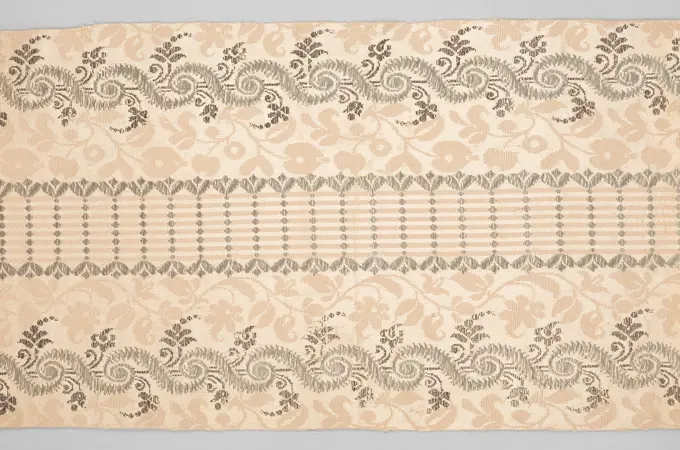
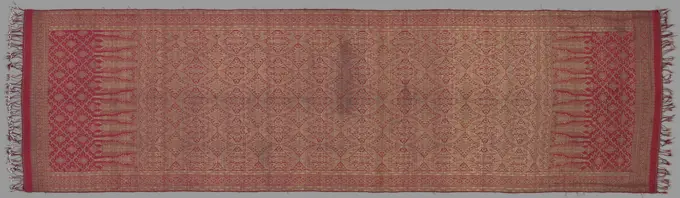
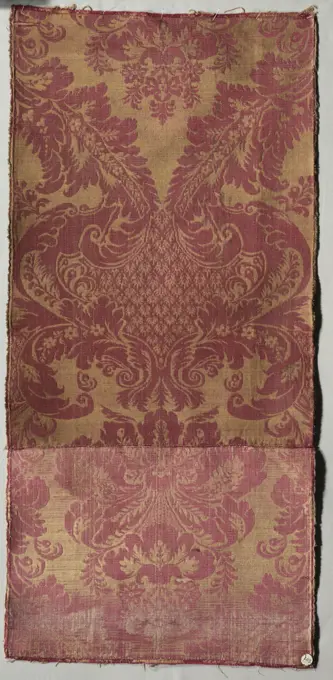
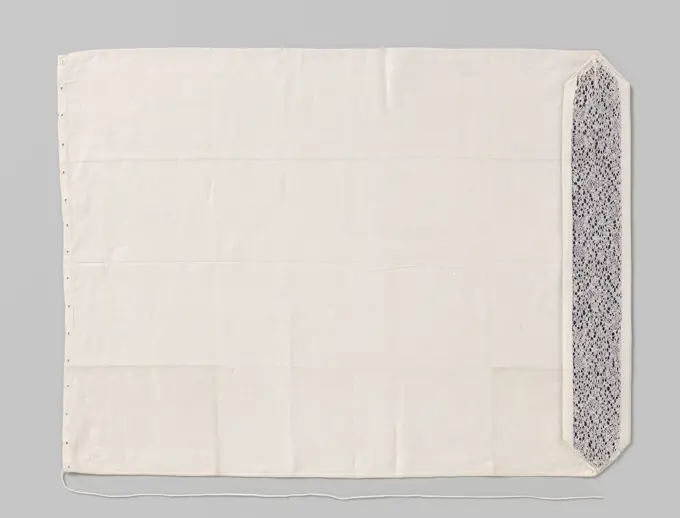
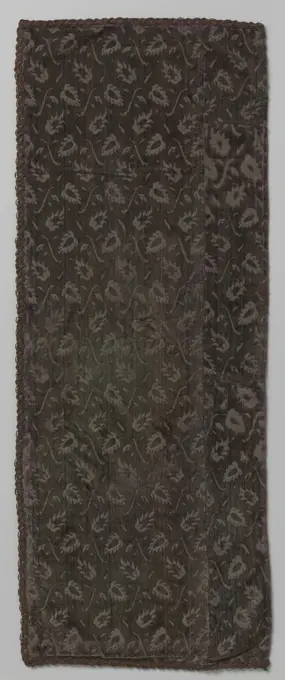
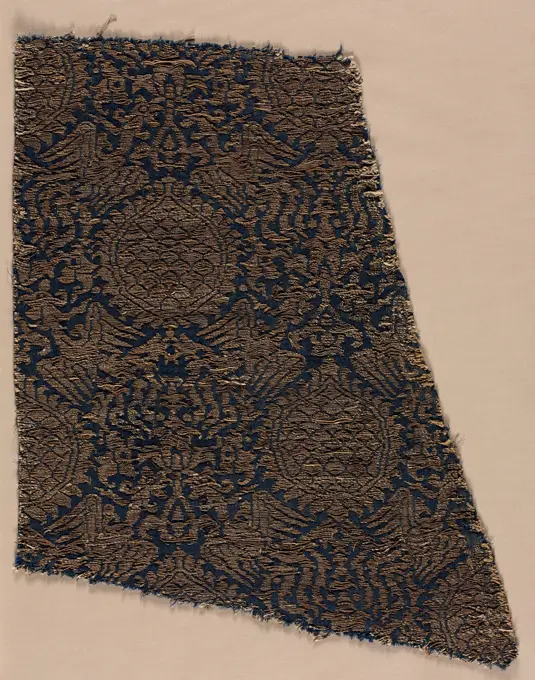
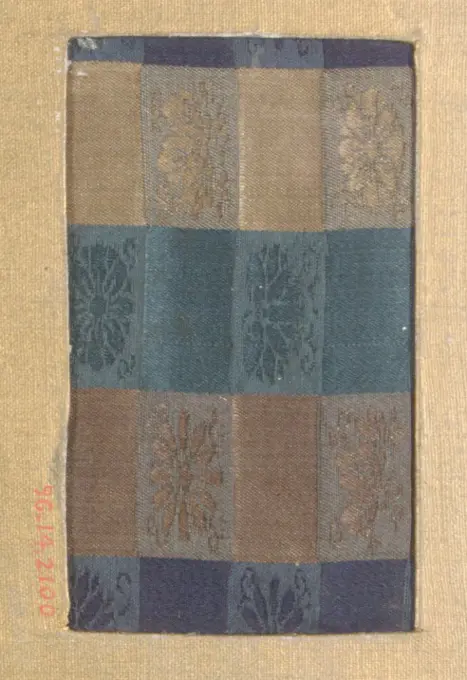
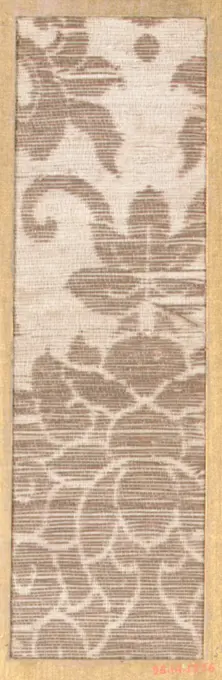
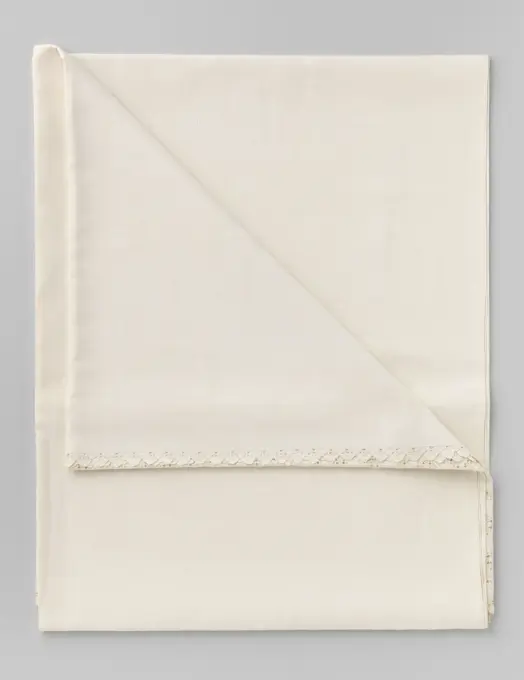
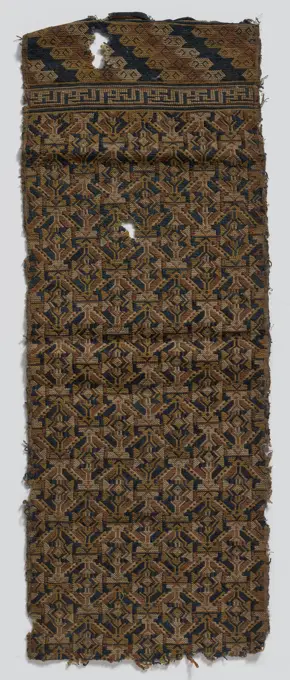
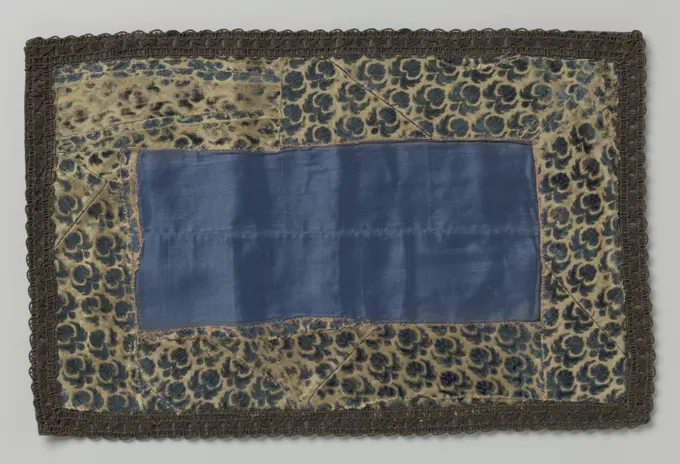
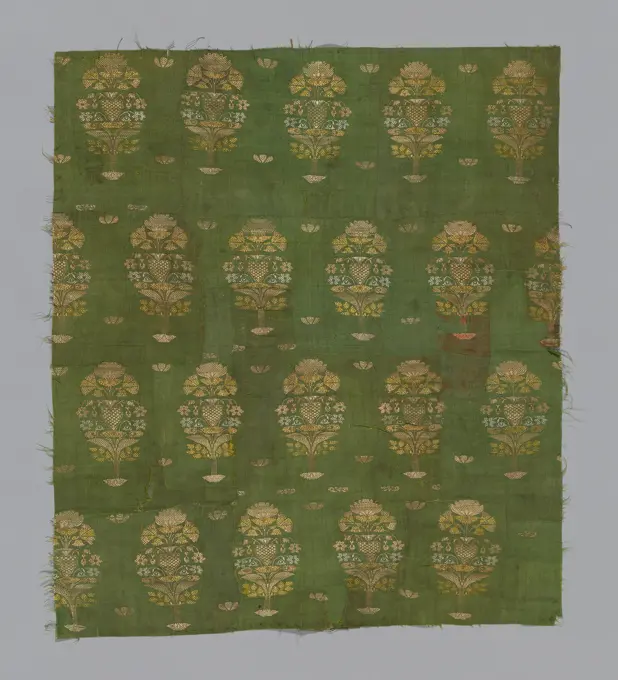
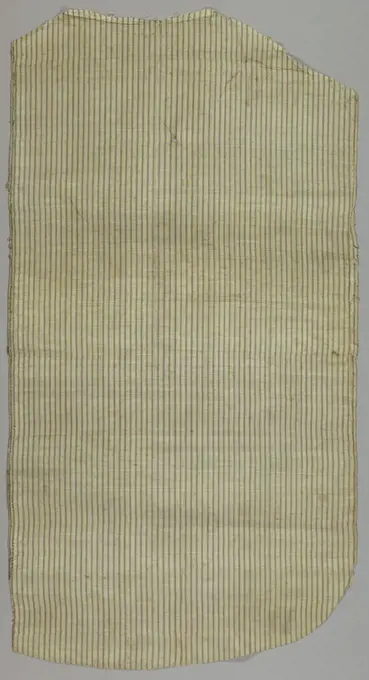
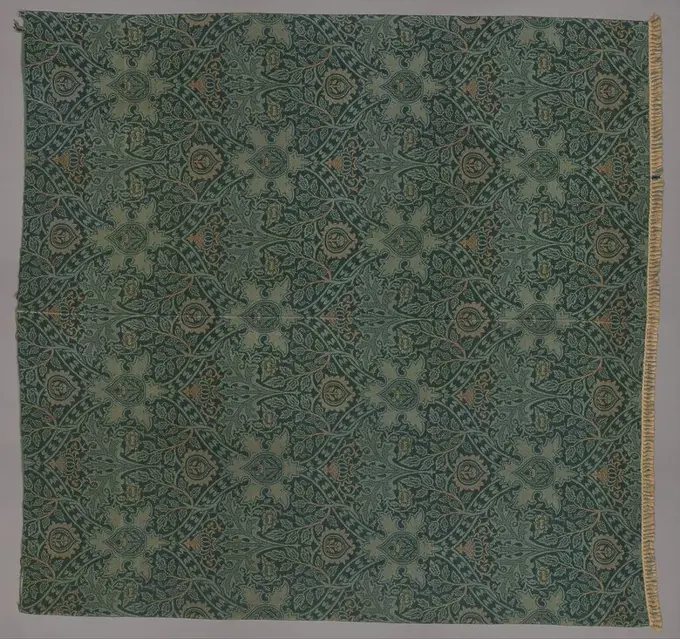
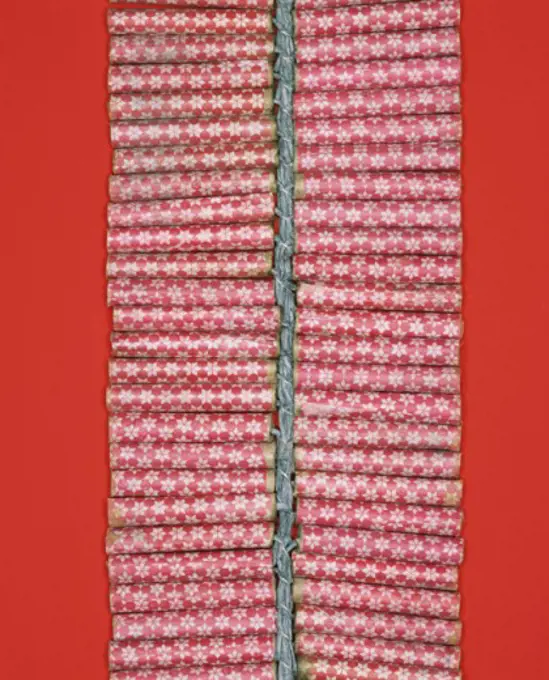
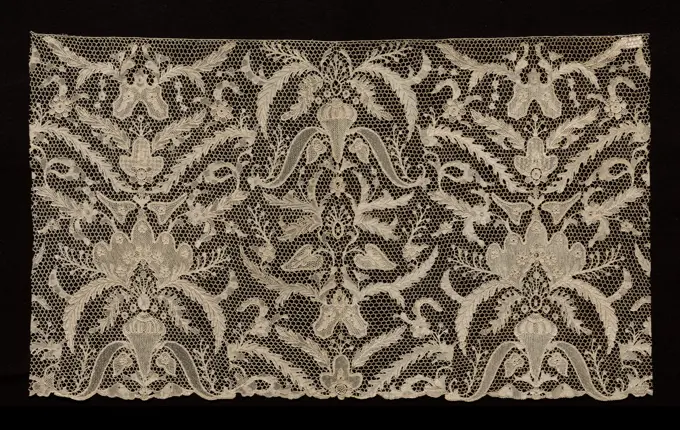
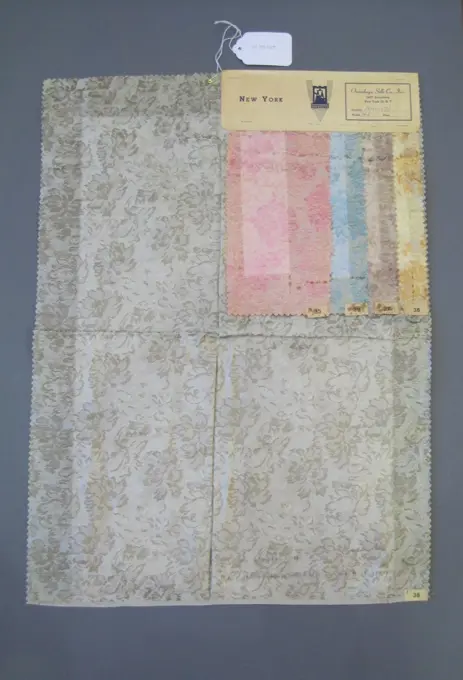
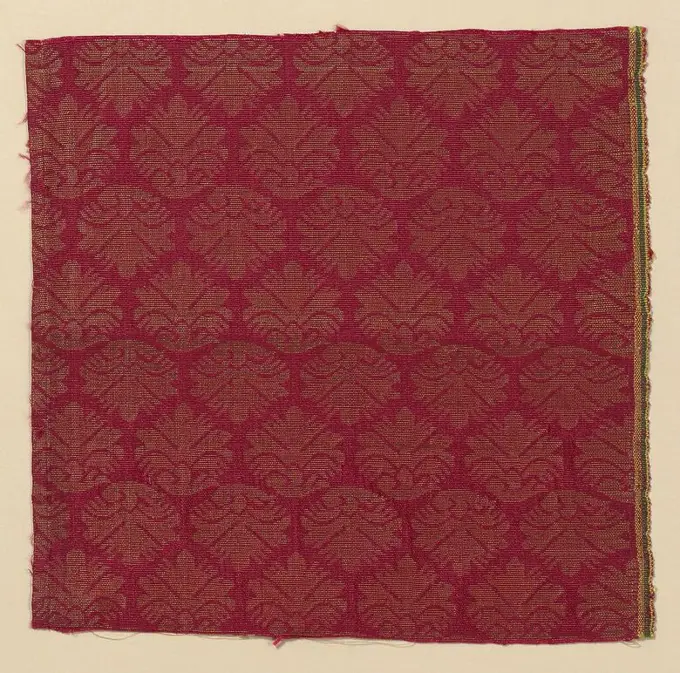
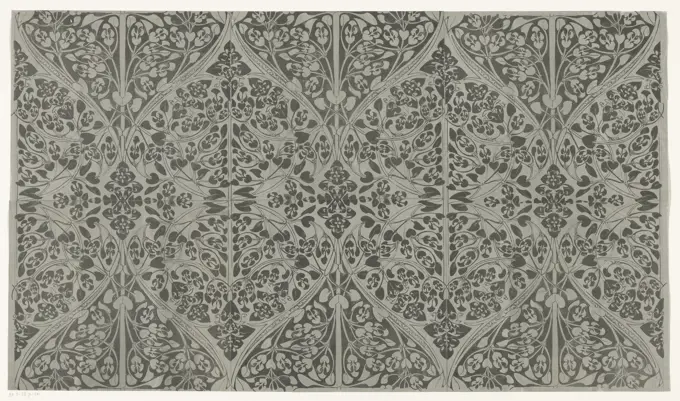
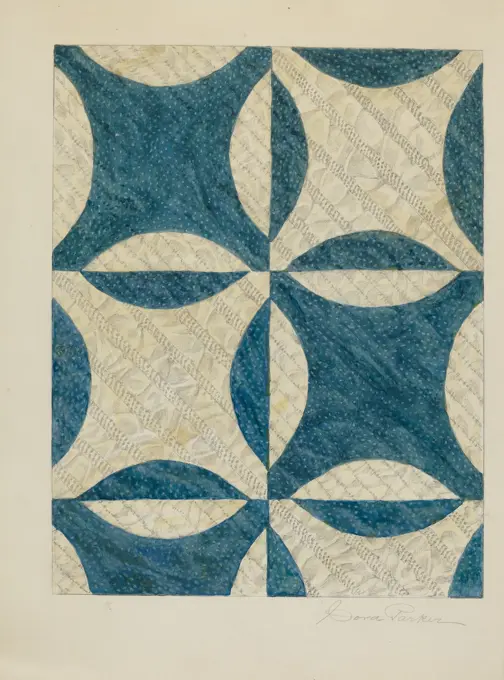
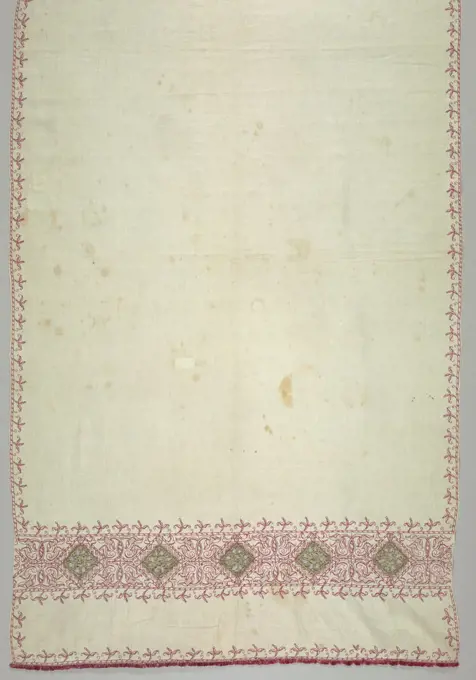
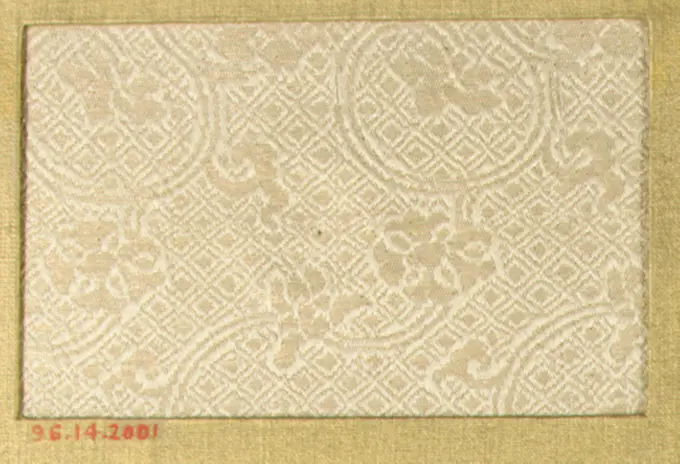
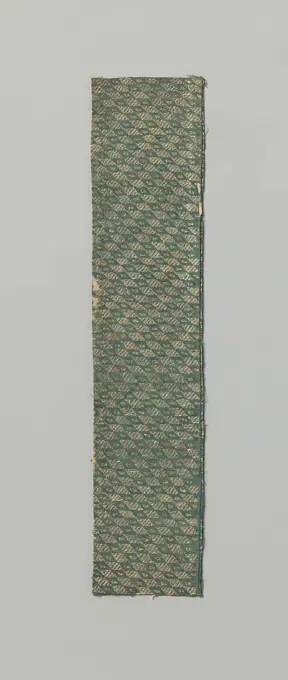
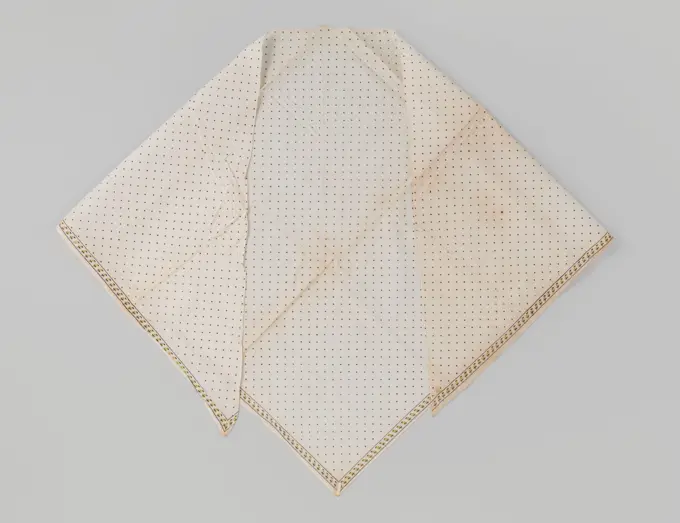
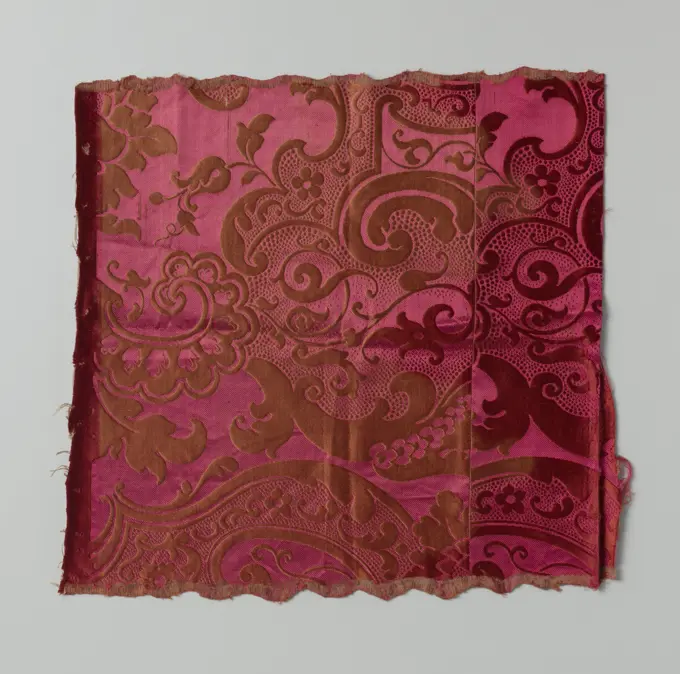
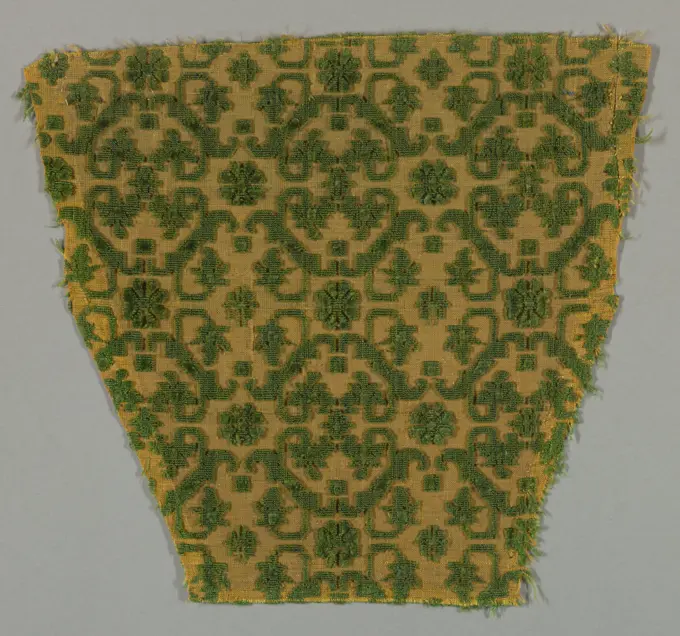
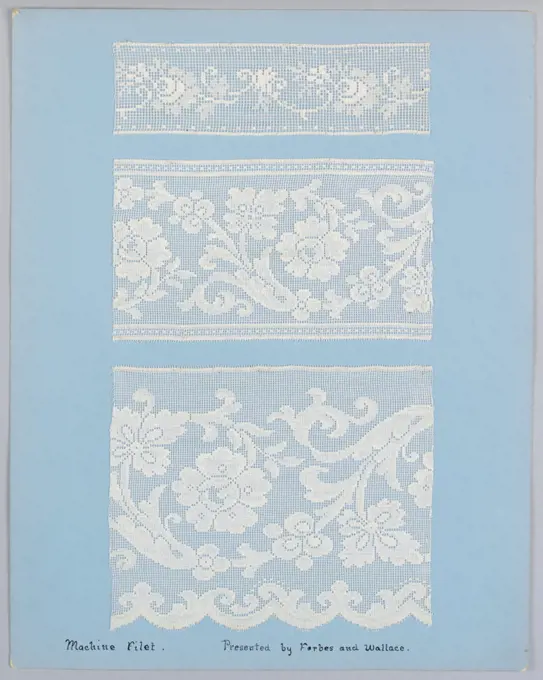
Baan silk with a design of Swastica's contained in a "window" of cloud tires with circular flowers at the intersections of the window, c. 1900 - c. 1920 Baan silk with design of Swastica's contained in a "window" of cloud tires in golden brown shades, with circular flowers in pink, beige, red and purple on a dark brown stock at the intersections of the window. Eastern textile. Japan silk Baan silk with design of Swastica's contained in a "window" of cloud tires in golden brown shades, with circular flowers in pink, beige, red and purple on a dark brown stock at the intersections of the window. Eastern textile. Japan silkFragment blue ciselé velvel with red fond on which pattern of hexagons.fragment Blue Silk Ciselé Velvel with Recesses With Red Fond on Which Pattern of Hexagons.Edith Magnette, Quilt, c 1942 QuiltFragment; silkSheet with overall pattern of flowers and circles 19th century Anonymous. Sheet with overall pattern of flowers and circles. Anonymous , 19th century. 19th century. Relief print (wood or metal). PrintsFragment Silk flows with stylized flower branches, c. 1550 - c. 1650 Fragment polychrome silk flows. The pattern has a yellow soil with red stylized flower branches.  silk. velvet (fabric weave). ciselé velvet Fragment polychrome silk flows. The pattern has a yellow soil with red stylized flower branches.  silk. velvet (fabric weave). ciselé velvetTextile (Iran); silk, metallic threadsTextile, Medium: cotton Technique: block printed on plain weave, Large flowers and diagonally moving stems. Pattern reserved. Red on white., France, late 18th century, printed, dyed & painted textiles, TextileFragment, Medium: silk Technique: supplementary warp forminf raised cut pile in plain weave foundation, Diamond grid pattern containing quatrefoil flowers in green., 16th-17th century, woven textiles, FragmentPiece of fabric. unknown, authorFragment of silk fabric unknownShoulder Cloth(Selendang)Fragment sits with pattern of stripped cherries on eggplant soil ,, c. 1790 - c. 1830 Fragment sits with a printed pattern of stripped cherries on eggplant soil. The cherries hang in bunches of two pieces in four staggered rows above each other, always in a combination of two colors, alternately in red, white, pink and yellow and with a gray -green leaf rosette. Europe cotton (textile) chintz Fragment sits with a printed pattern of stripped cherries on eggplant soil. The cherries hang in bunches of two pieces in four staggered rows above each other, always in a combination of two colors, alternately in red, white, pink and yellow and with a gray -green leaf rosette. Europe cotton (textile) chintzPiece 19th century Japan. Piece 65967Length of Brocatelle Textile, late 17th-early 18th century. Italy or Spain, late 17th-early 18th century. Plain compound satin (brocatelle): silk and linen; average: 112.4 x 54 cm (44 1/4 x 21 1/4 in.).Lumbar ,, 1728 Lende run of linen with Entre-Deux van Kloskant, brand Kroon GW6 and 1728. Northern Netherlands linen (material). bobbin lace Lende run of linen with Entre-Deux van Kloskant, brand Kroon GW6 and 1728. Northern Netherlands linen (material). bobbin laceKleed van paarse zijden fluweel.A dress of purplish silk, composed of four pieces. Spreading pattern of twigs, partially saved. Three sides lined by a dark tinted gold galon.Lampas with phoenixes and palmettes, late 1200s or 1300s. Iran, Ilkhanid period. Lampas: silk and silver thread; overall: 28.6 x 25.4 cm (11 1/4 x 10 in.).Piece 15th-16th century China. Piece 69811Carpet first half 19th century. Carpet 454036Piece 18th-19th century Japan. Piece. Japan. 18th-19th century. Silk. Textiles-WovenPiece 18th-19th century Japan. Piece 66975Fragments, Medium: silk Technique: velvet, Panel of green silk velvet, cut and uncut, on yellow ground; feathered twining foliage forms and bars., Italy, 16th-early 17th century, woven textiles, FragmentsMoire Silk; silkTextile, Medium: linen Technique: two plain weave structures interconnected in areas, Brick repeat of dovetailed rows of a white flowering plant on a blue ground. The motif in alternate rows is counterfaced., Switzerland, 17th century, woven textiles, TextileCloths with Kloskant and Point Coupé intermediate sinks. Initials KVB., Anonymous, 1600 - 1650 Bedslaken with intermediate sinks from Kloskant and Point Coupé. Along the cover a scalloped bobbin side. Two track widths linen are connected by the intermediate creature, which is very narrow and has a geometric pattern of spikes, stars and meshes. The Point Coupé replaces this Entre-Deux to the height of the cover and has a pattern of crosses interspersed with angular S-sen. In the middle of the lanes Linen, also on the cover, three initials of Point Coupé were installed, contenting KVB. Finished all around with double open zoompje. Probably Frisian. Friesland (possibly) linen (material). bobbin lace Bedslaken with intermediate sinks from Kloskant and Point Coupé. Along the cover a scalloped bobbin side. Two track widths linen are connected by the intermediate creature, which is very narrow and has a geometric pattern of spikes, stars and meshes. The Point Coupé replaces this Entre-Deux toTextile; cottonPiece 18th-19th century Japan. Piece 67446Fragment, Medium: silk on linen Technique: embroidered on plain weave, Band fragment with a design of geometric leaves in yellow silk on a linen foundation., Italy or Spain, 16th century, embroidery & stitching, FragmentFragment, Medium: linen warp, cotton weft Technique: block printed (2 reds, yellow), blue applied by brush over yellow, plain weave foundation., Small buds facing alternately left and right on a patterned picottage background., Jouy, France, 1750-1800, printed, dyed & painted textiles, FragmentFragment, Medium: silk, metallic thread Technique: plain compound weave, Undulating bands and branching small floral sprigs on a yellow ribbed ground., Italy or Spain, 17th century, woven textiles, FragmentFragment, 1800s. China, 19th century. Silk; overall: 76.8 x 78.7 cm (30 1/4 x 31 in.).Textile; bast fiberTextile Fragment, 1774-1793. France, late 18th century, Period of Louis XVI (1774-1793). Velvet (cut and uncut), on a white satin ground; overall: 7.6 x 6 cm (3 x 2 3/8 in.).Fragment, Medium: silk Technique: plain compound satin, Allover geometrical design in rose and blue on light blue ground., China, 19th century, woven textiles, FragmentRibbon French 19th century View more. Ribbon. French. 19th century. Textiles-TrimmingsFragment Made 1601-1700 Netherlands. Silk and linen, warp-stripe satin weave self-patterned by reversing of faces .Fragment, Medium: silk Technique: cut and uncut supplementary warp pile (velvet) in a plain weave foundation, Fragment of green cut and uncut velvet on a dark yellow ground in a stylized flower and barrette pattern., Italy, 16th-17th century, woven textiles, FragmentPiece 18th-19th century Japan. Piece. Japan. 18th-19th century. Silk. Textiles-WovenSkirt (Longyi), mid 20th century, 45 1/2 x 30 1/2 in. (115.57 x 77.47 cm), Silk, cotton, Myanmar (Burma), 20th centuryJamdani Sari, 1870, 189 9/16 x 45 3/8 in. (481.53 x 115.24 cm), Cotton, metallic thread; supplementary weft patterning, Bangladesh, 19th centuryFragment (Russia); linenRebozo, Medium: silk, metal-wrapped silk core Technique: embroidered plain weave with supplementary warp, Rebozo woven in dark blue, light blue and white stripes. Supplementary warp patterning in simple geometric designs in dark blue and gold thread. Embroidered with dark and light blue silks and gold thread with figures, buildings and animals., Tlacotalpan, Veracruz, Mexico, late 18th or early 19th century, embroidery & stitching, RebozoPiece 18th-19th century Japan. Piece 66762Piece 18th-19th century Japan. Piece. Japan. 18th-19th century. Silk. Textiles-WovenSampler, Medium: cotton embroidery on linen foundation Technique: embroidered with drawnwork on plain weave, Rectangle of fine linen divided by chain stitch into thirty-five small squares, inside each of which a variety of drawnwork and darning methods are worked in white cotton., Europe, late 18th-early 19th century, embroidery & stitching, SamplerRibbon French 19th century View more. Ribbon. French. 19th century. Textiles-TrimmingsFragment (Spain); silkBorder (China); cottonFragment (Italy); silk; Warp x Weft: 71 x 54 cm (27 15/16 x 21 1/4 in.); 1972-81-13Table Cover. Italy. Date: 1601-1700. Dimensions: 170.3 X 115 cm (67 X 45 1/4 in.)Point repeat: 45.8 cm (18 in.). Silk, plain weave; edged with silk, plain gauze weave; embroidered with silk in satin and stem stitches. Origin: Italy. Museum: The Chicago Art Institute, Chicago, USA.Panel from a bed cover (xilankapu), late 19th century, 10 3/8 × 27 3/4 in. (26.35 × 70.49 cm), Cotton, China, 19th century, Tujia is the sixth largest ethnic minority in China. Tujia women are best known for their heavy, woven bedcovers known as Xilankapu ('bedcover with local flowers'), which were often part of their trousseau. Most Tujia Xilankapu bedcovers are constructed of three woven panels sewn together, usually with matching borders on the top or bottom and occasionally on all four sides. Made of a cotton weave with natural plant dyes, they are often designed in a diamond pattern filled with dense geometric shapes in indigo and other colors.Dress of satin with ciselé velvet ,, 1500 - 1600 A rug composed of fifteen fragments of silk with a spread pattern of blue palmets on beige satin soil. The center of the rug, as well as the lining, is made of blue satin. Lined by brown -tinted gold galon. NOTE: Consists of Galon: 2.3 cm, edge velvet 15 fragments, satin (mid field). Sijdefluweel Identic to the Zijdefluweel BK-15368. Italy silk. velvet (fabric weave). ciselé velvet. satin. cotton (textile) A rug composed of fifteen fragments of silk with a spread pattern of blue palmets on beige satin soil. The center of the rug, as well as the lining, is made of blue satin. Lined by brown -tinted gold galon. NOTE: Consists of Galon: 2.3 cm, edge velvet 15 fragments, satin (mid field). Sijdefluweel Identic to the Zijdefluweel BK-15368. Italy silk. velvet (fabric weave). ciselé velvet. satin. cotton (textile)Fragment (Dress Fabric) Made 1675-1725 Iran. Ispahan .Textile, Medium: silk Technique: plain weave, Striped taffeta from a chasuble lining. White ground with fine stripes of brownish lavender and faded rose with a brownish stripe., France, early 19th century, woven textiles, TextileIspahan. Culture: British, Merton Abbey, Surrey. Designer: William Morris (British, Walthamstow, London 1834-1896 Hammersmith, London). Dimensions: L. 82 1/4 (incl. fringe) x W. 95 7/8 inches (208.9 x 243.5 cm). Manufactory: Morris & Company. Date: designed ca. 1888. Museum: Metropolitan Museum of Art, New York, USA.FirecrackersPiece 18th-19th century Japan. Piece. Japan. 18th-19th century. Silk. Textiles-WovenShawl, 19th century, 88 x 40 1/4 in. (223.52 x 102.24 cm), Cotton, silk; embroidery, Pakistan, 19th centuryKain of Eastern textile; Silk tissue, anonymous, c. 1400 - c. 1850 Cain of IJzerrode silk with a decor in gold thread woven. The midfield is decorated with geometric ornaments. On the narrow sides a wide decoration of edges with different motifs. Padang silk. metal thread Cain of IJzerrode silk with a decor in gold thread woven. The midfield is decorated with geometric ornaments. On the narrow sides a wide decoration of edges with different motifs. Padang silk. metal threadTextile Fragment, 20th century. France, 20th century. Rayon and cotton; overall: 53.3 x 127.6 cm (21 x 50 1/4 in.).Piece 18th-19th century Japan. Piece 66311Shaped border 18th century Italian, Venice. Shaped border 212550Needlepoint (Point de France) Lace Edging, 20th century. France, 20th century. Lace, needlepoint: linen; average: 29.9 x 51.2 cm (11 3/4 x 20 3/16 in.).Cuff bands, one of a pair, 20th century, 12 x 11in. (30.5 x 27.9cm), Velvet, gold thread; needlework, India, 20th centuryTextile Swatches Onondaga Silk Company, Inc. (1925-1981). , 1948-1959. Silk, 23 1/2 x 17 in. (59.7 x 43.2 cm).    1948-1959Dress with serabent motifs, filled with flowers, anonymous, c. 1700 - c. 1799 Dress with serabent motifs, filled with flowers. Rug is trimmed with a border with rosettes. Cotton lining in green/red. Eastern textile. Persia Necklace and impact: Silk. Lining: Cotton (textile) twill Dress with serabent motifs, filled with flowers. Rug is trimmed with a border with rosettes. Cotton lining in green/red. Eastern textile. Persia Necklace and impact: Silk. Lining: Cotton (textile) twillFragment. Italy. Date: 1625-1675. Dimensions: 23.2 x 23.5 cm (9 1/8 x 9 1/4 in.). Plain compound cloth. Origin: Italy. Museum: The Chicago Art Institute, Chicago, USA.Piece 16th century Italian. Piece 223113Ornament with tibs and flowers, Gerrit Willem Dijsselhof, 1876 - 1924 print Design for wallpaper.  paper  ornament derived from plant formsFragment (France); silkCora Parker, Quilted and Pieced Coverlet, c 1938 Quilted and Pieced CoverletFragment Made 1601-1700 Italy. Silk, cut, stamped velvet against twill weave foundation .Towel, Medium: silk on linen Technique: stitch using silk: double running; cut out areas filled with metal-wrapped silk secured by buttonhole stitch, Towel showing a floral band with needlework insets at each end and a floral border all around. Fringe at each end. Red silk on linen, insets in metallic thread., Italy, 17th century, embroidery & stitching, TowelSampler, Mary Brown, Medium: silk and linen embroidery on linen foundation Technique: embroidered in satin, stem and buttonhole stitches, with cutwork with needle-made loop-and-twist fillings (hollie point), on plain weave foundation, Small square sampler of fine white linen with five rows of squares and circles cut out, with needle lace and hollie point fillings. White geometric bands in between the rows, and a border of acorns in curving vine., England or Scotland, 1732, embroidery & stitching, SamplerEmbroidered whitework sampler 17th century British Whitework samplers typically consist of a variety of stitches and lace-making techniques, all stitched in white thread. Based on the small number of documented seventeenth-century embroiderers who made multiple samplers, it is thought that samplers containing whitework, cutwork, drawnwork, and lace designs were stitched only after multi-colored band samplers were finished, as whitework techniques are more difficult. While many surviving English samplers include lace, cutwork, and drawnwork, few examples of seventeenth-century lace have been attributed to English manufacture.This sampler is worked in whitework and reticella, which requires a stitcher to remove warp and weft threads from a piece of fabric before stabilizing the fabric with buttonhole stitches and creating designs based on the grid of the linen. The top of the sampler, worked in satin, eye, and line stitches, features the initials "MD" (presumably the initials of the makeFragment (Japan); silkByzantine ornamentTextile; Manufactured by Claflin's Inc.; cottonPiece 18th-19th century Japan. Piece 67713Fragment oosterse textiel.A fragment of green tissue with peeling diamonds from yellow silk with gold thread. Note: Self side; 6 mm, plain bond.Textile (USA); cottonLength early 19th century French. Length 229953Fichu, triangular, cotton printed with black dots and a decorative edge of yellow apples, anonymous, c. 1800 - c. 1900 Fichu, three -hand shawl, cotton printed with black dots on a white stock and a decorative border of yellow apples. Friesland cotton (textile) printing Fichu, three -hand shawl, cotton printed with black dots on a white stock and a decorative border of yellow apples. Friesland cotton (textile) printingRibbon, Medium: silk Technique: plain and satin weave, Ivory ribbon of the same design as 1937-63-17. Alternate wavy bands of satin and plain cloth weave. Scalloped edges., France, ca. 1805, woven textiles, RibbonPiece ca. 1725 Italian, Venice. Piece 227846Fragment rood zijdeweefsel, anonymous, c. 1840 - c. 1874 Excerpt interior textiles; Red silk with red-orange brochure in Jaquard tissue. The pattern has leaf vines and volutes. France silk. cotton (textile). brocatelle twill Excerpt interior textiles; Red silk with red-orange brochure in Jaquard tissue. The pattern has leaf vines and volutes. France silk. cotton (textile). brocatelle twillPiece 18th-19th century Japan. Piece 66284Sari 18th century. Sari 448937Indian ornamentTissue fragment with tabula, anonymous, c. 200 - 399 Natural linen tissue fragment with sown tabula made of dark blue wool with a diamond pattern applied in flying wire technology with a geometric layout. In the middle a small rectangle with a recurring seam motif. Around the whole a double edge within which a continuous seam motif and a border with palm -shaped leaf work. The flying wire is mainly natural, here and there light blue and in the central rectangle pink. The ground tissue has a finished 1 cm finished at the bottom and after 3 cm tissue follows an unwanted 3 cm strip. Egypt Ketting an element: Linen (material). Entry: Wool tapestry Natural linen tissue fragment with sown tabula made of dark blue wool with a diamond pattern applied in flying wire technology with a geometric layout. In the middle a small rectangle with a recurring seam motif. Around the whole a double edge within which a continuous seam motif and a border with palm -shaped leaf work. The flying wire is mainlyTwo blades with flower branch straw pattern, Anonymous, 1750 - 1900  Two blades with flower branch spreading pattern. Two separate halves of a cover.  paper. block printing (relief printing process) ornament derived from plant formsVitrage of cotton tulle with tambouring work, anonymous, c. 1900 - c. 1910 Lace -in lace -up work: white tambourer work on natural -colored machine tulle. The pattern has garlands of arches and olive branches, laurel wreaths and a flowerpot, within a soutache ornament. The net curtain is finished on three sides with galon and has sewn -down copper rings along the top. Netherlands cotton (textile). Lace -in lace -up work: white tambourer work on natural -colored machine tulle. The pattern has garlands of arches and olive branches, laurel wreaths and a flowerpot, within a soutache ornament. The net curtain is finished on three sides with galon and has sewn -down copper rings along the top. Netherlands cotton (textile).Sheet with oval and dot pattern 19th century Anonymous. Sheet with oval and dot pattern. Anonymous , 19th century. 19th century. Relief print (wood or metal). PrintsMedieval ornamentFragment; silk, metallic thread (); Bequest of Richard Cranch Greenleaf in memory of his mother, Adeline Emma Greenleaf; 1962-56-147Textile Swatches Onondaga Silk Company, Inc. (1925-1981). Textile Swatches, 1948-1959. 72 silk; 28 metal, (a) - (d): 11 1/4 x 4 1/2 in. (28.6 x 11.4 cm).    1948-1959Coverlet Made 1830-1850 United States. Cotton and wool, plain weave with patterning wefts bound in plain interlacings; woven on loom with Jacquard attachment; two loom widths joined .Linnamast napkin with a flower pattern, c. 1875 - c. 1899 White Linnamasten Napkin with a pattern of stripped flower branches (to 17th century example), brand BHW 12 Wh. Netherlands (possibly) linen (material) White Linnamasten Napkin with a pattern of stripped flower branches (to 17th century example), brand BHW 12 Wh. Netherlands (possibly) linen (material)Machine-made openwork samples, Medium: cardboard, linen, silk, metallic Technique: linen embroidery with ground cloth dissolved Examples of embroidery on net produced by the Schiffli machine Metallic embroidery on net Machine-made openwork in imitation of hand-embroidered net Mostly floral and a few geometric patterns, some designs described as 'Spanish' Imitation hand-made filet Machine filet Imitation filet crochet Ploven (burnt-out lace) Fancy curtain lace made on the Levers machines Real filet (handmade) next to Machine-made filet Spotted curtain nets, made chiefly at Nottingham, England and Caudry, France., Samples of machine-made openwork and several examples of hand made lace mounted on boards. They imitate hand-embroidered net, crochet, or needlepoint. All are floral patterns plus a few of early 1920's geometric style., 'Embroidered net' produced by the Schiffli Machine., USA, ca. 1910, lace, Machine-made openwork samples