Traditional Textiles

Beautiful fabric patterns including floral designs, silk fragments, and quilts showcasing intricate craftsmanship in muted and rich colors.
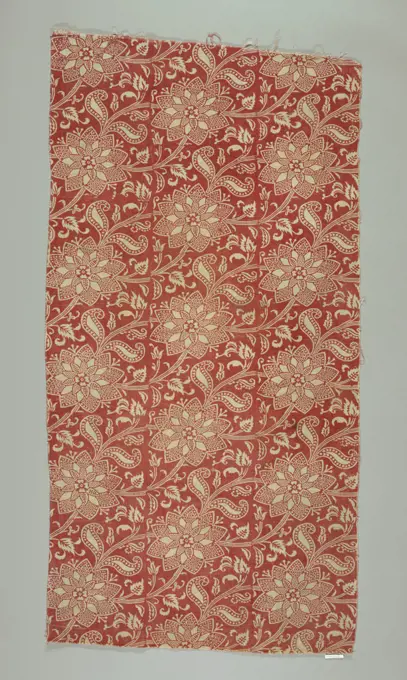
Textile, Medium: cotton Technique: block printed on plain weave, Large flowers and diagonally moving stems. Pattern reserved. Red on white., France, late 18th century, printed, dyed & painted textiles, Textile
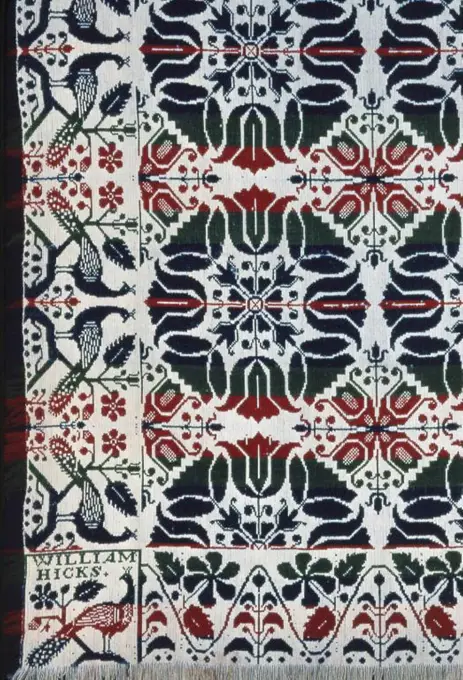
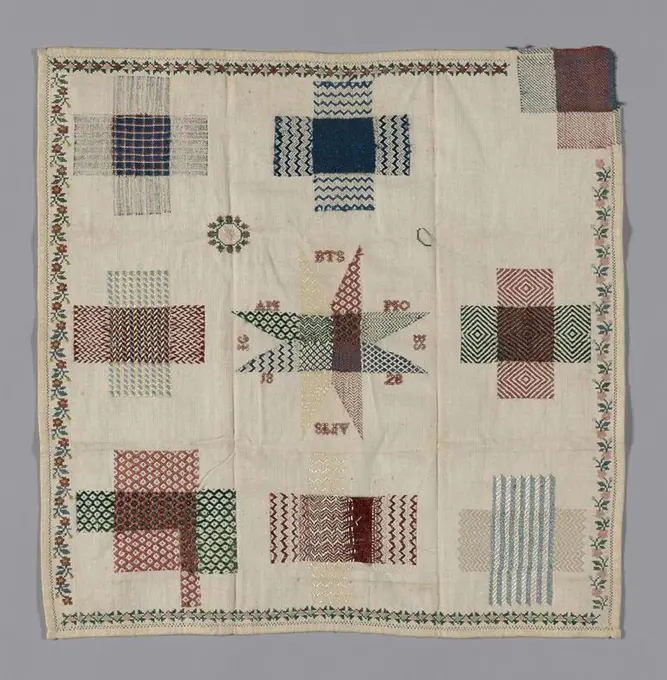
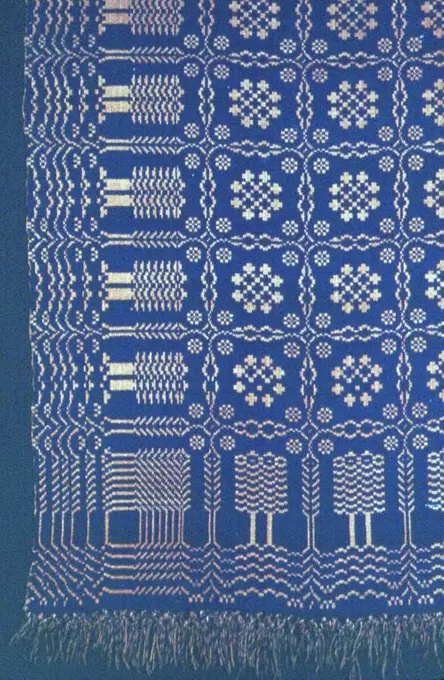
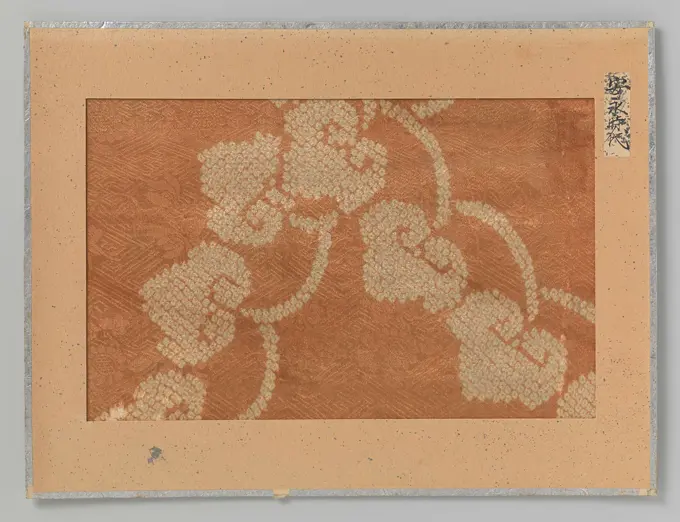
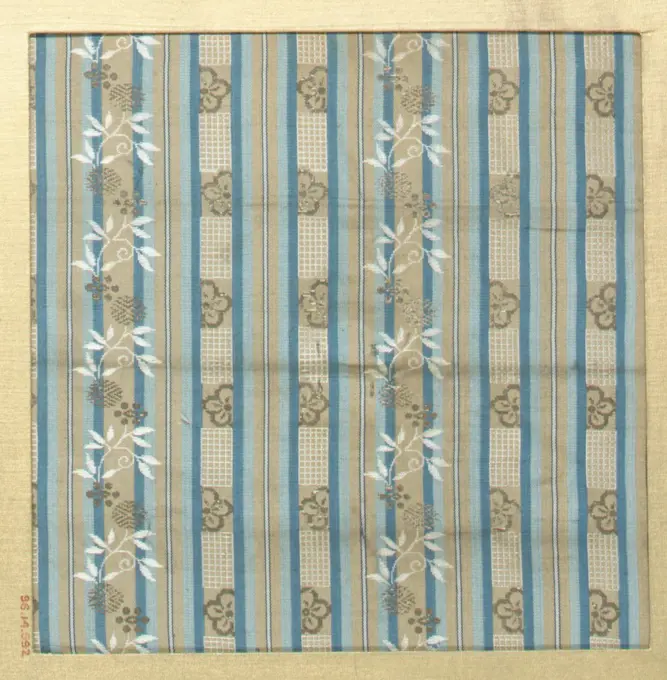
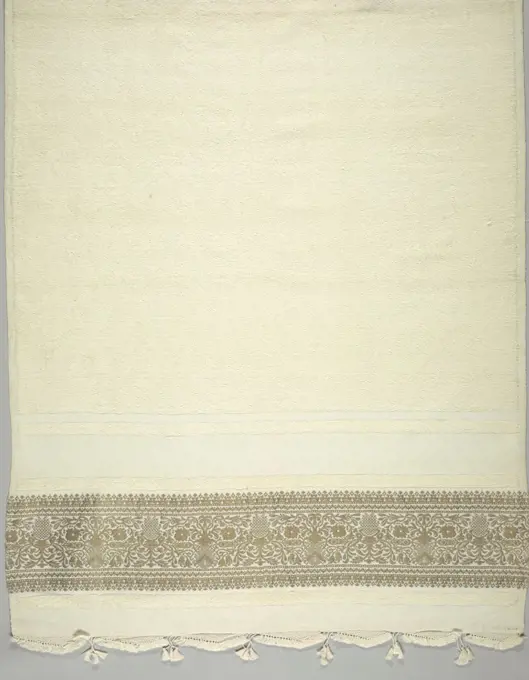
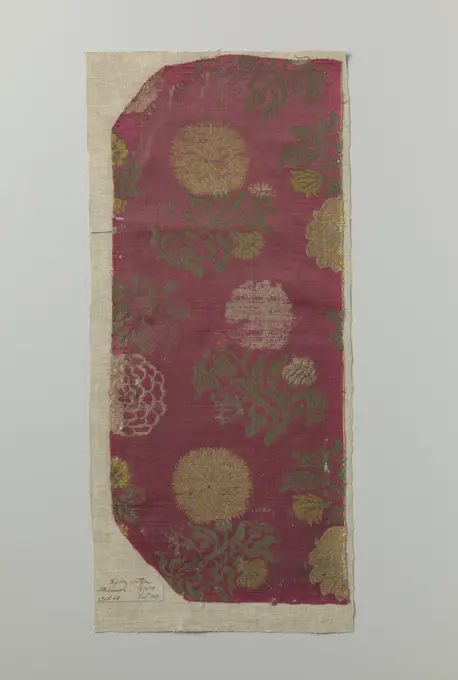
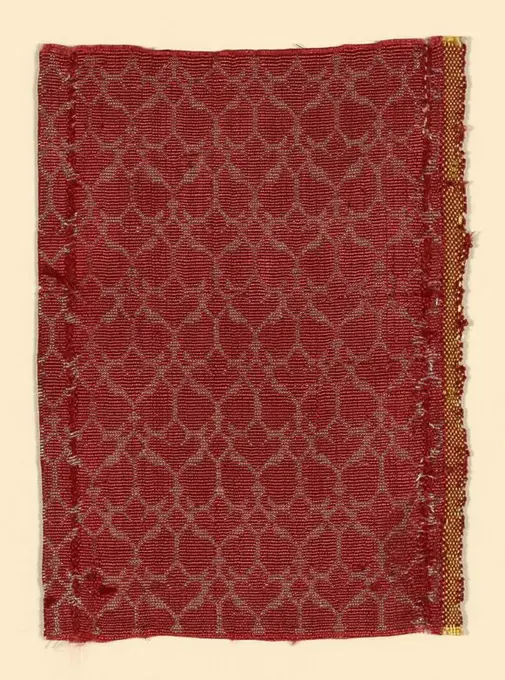
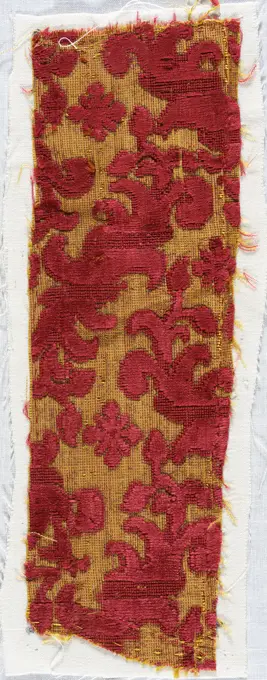
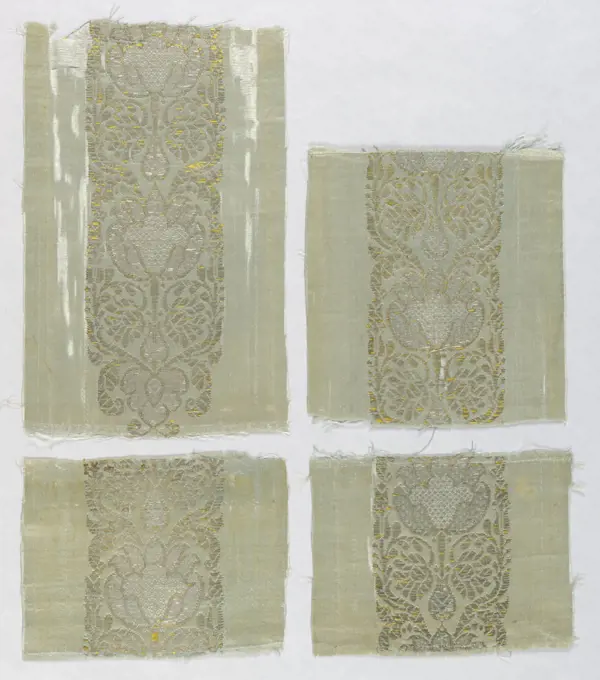
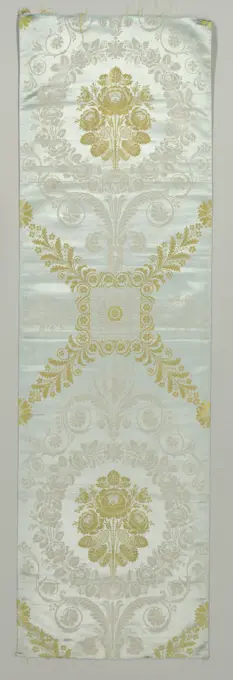
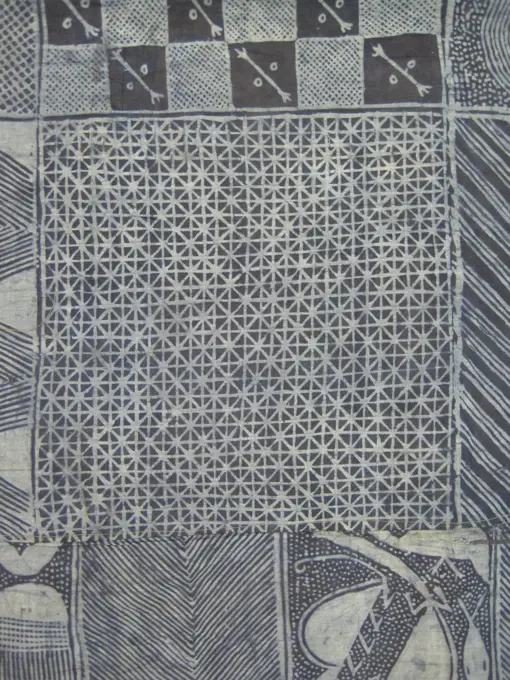
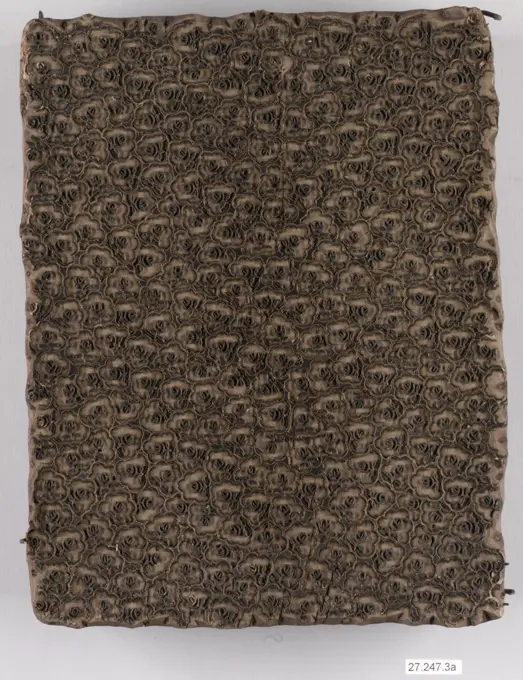
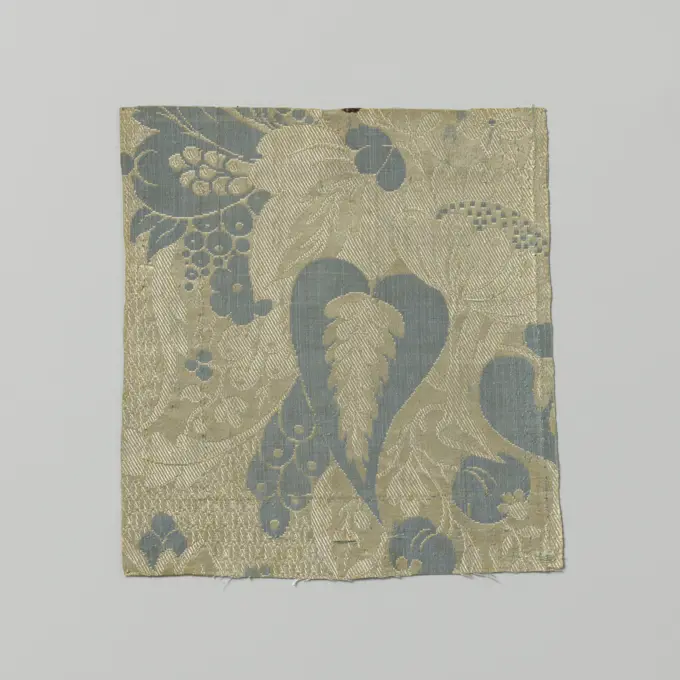
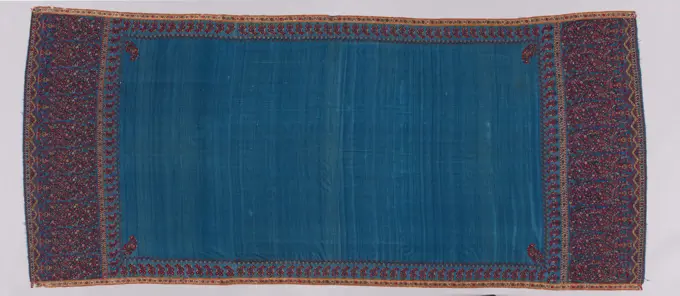
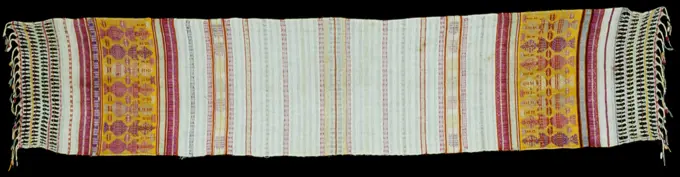
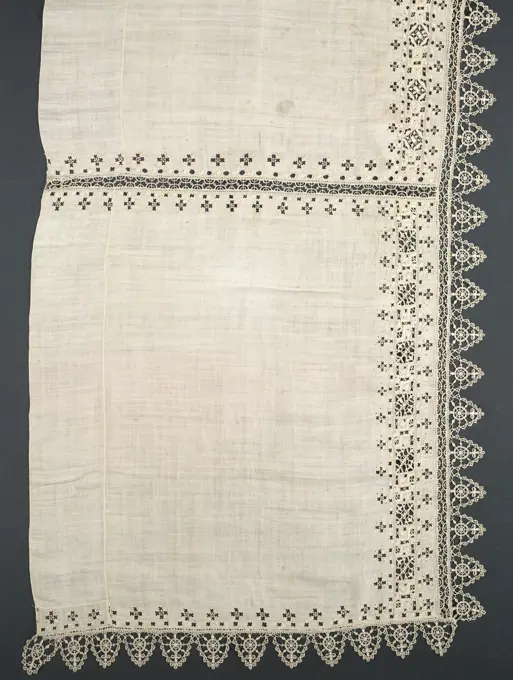
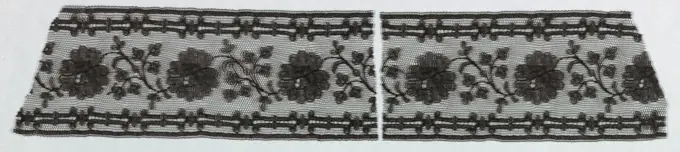
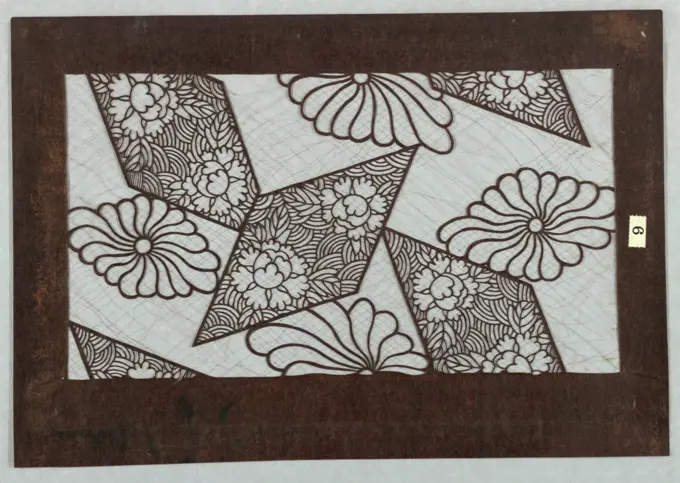
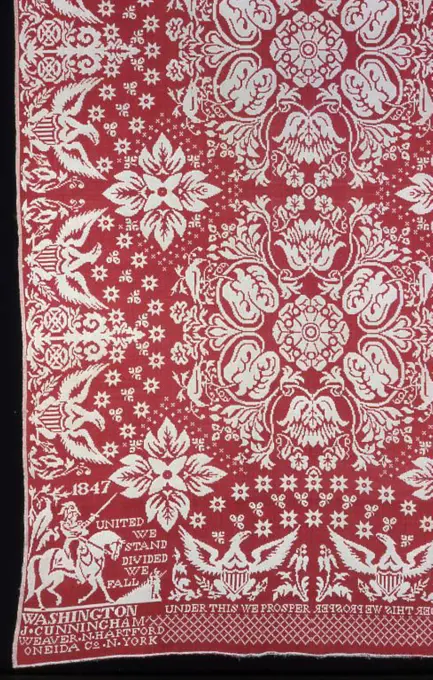
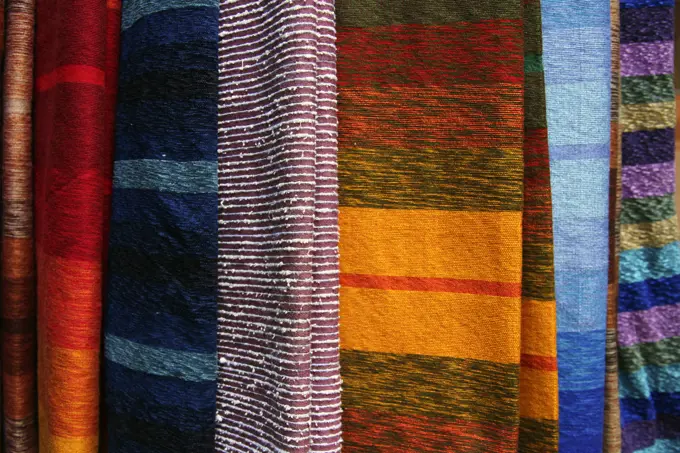
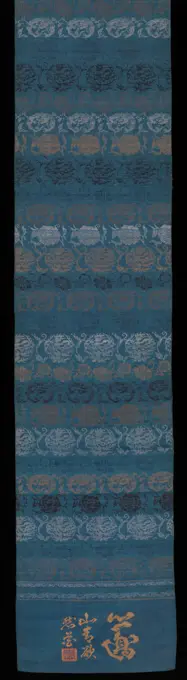
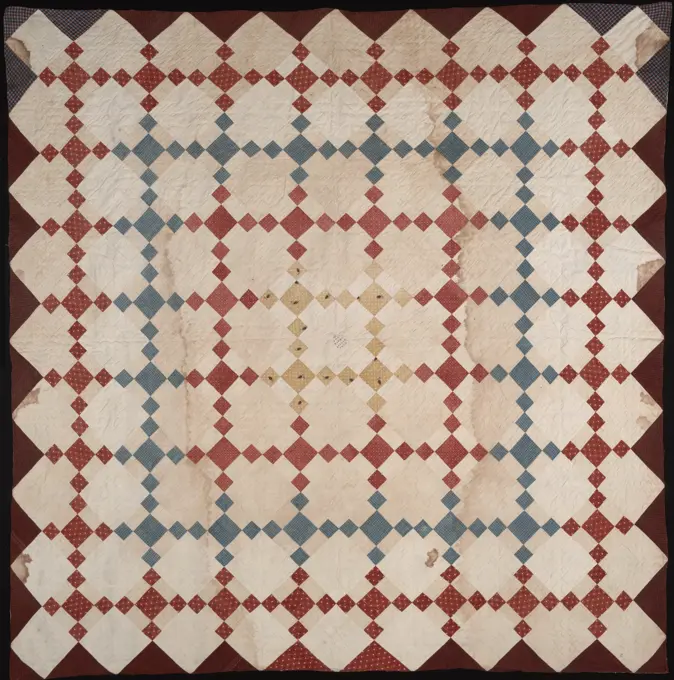
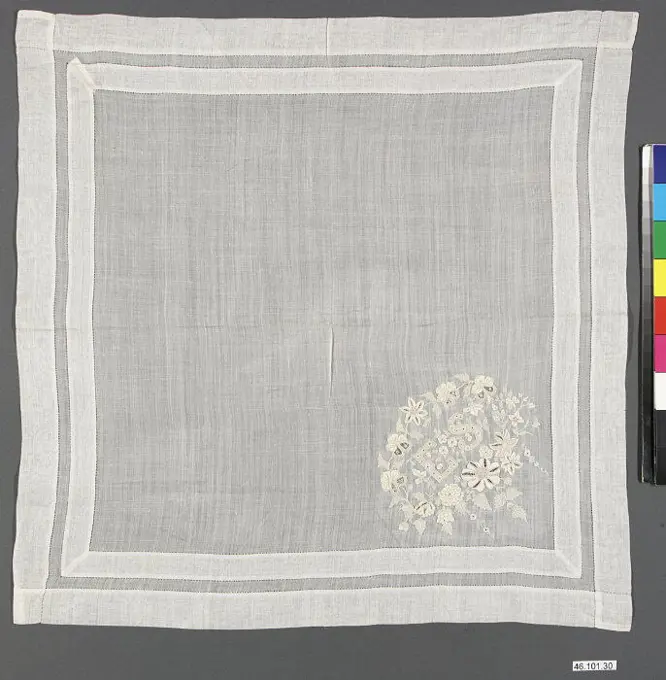
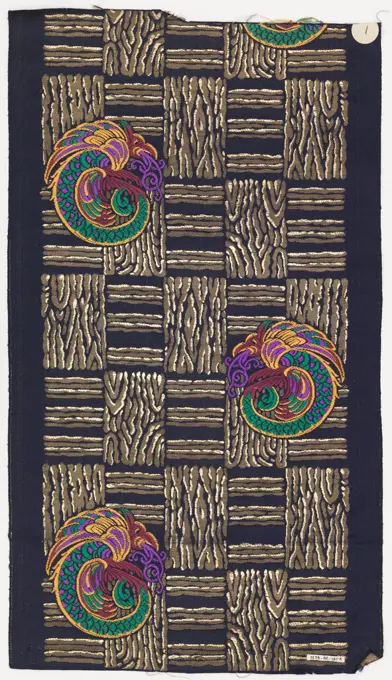
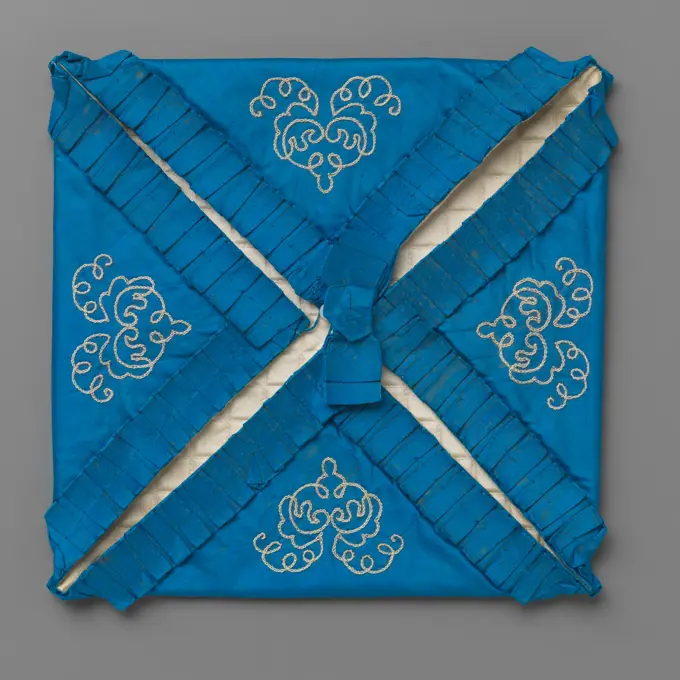
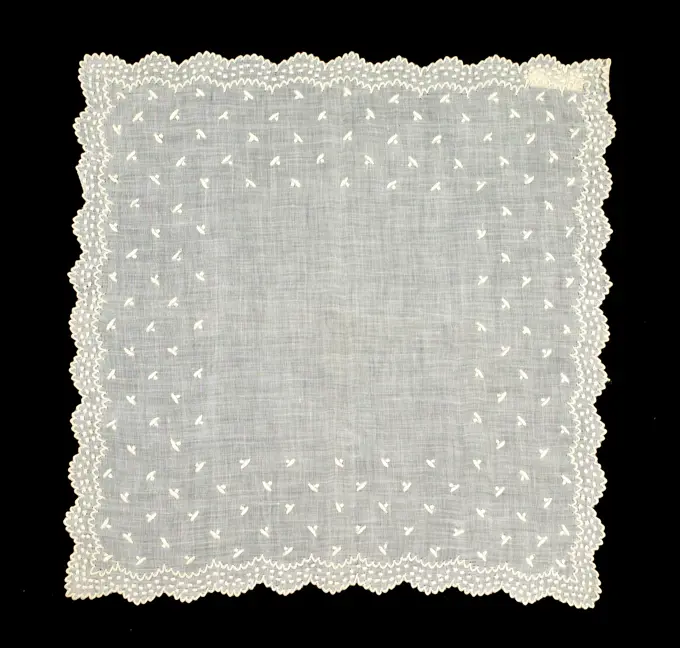
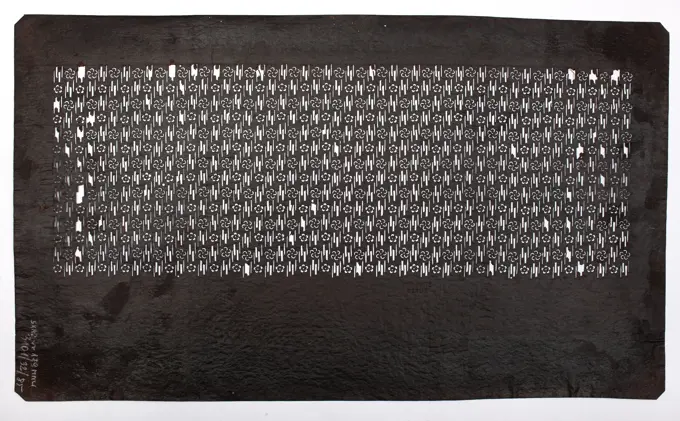
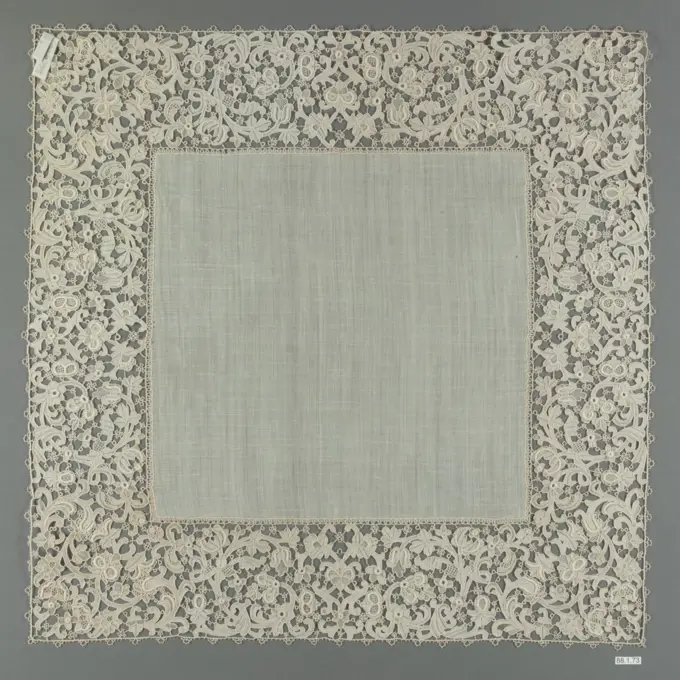
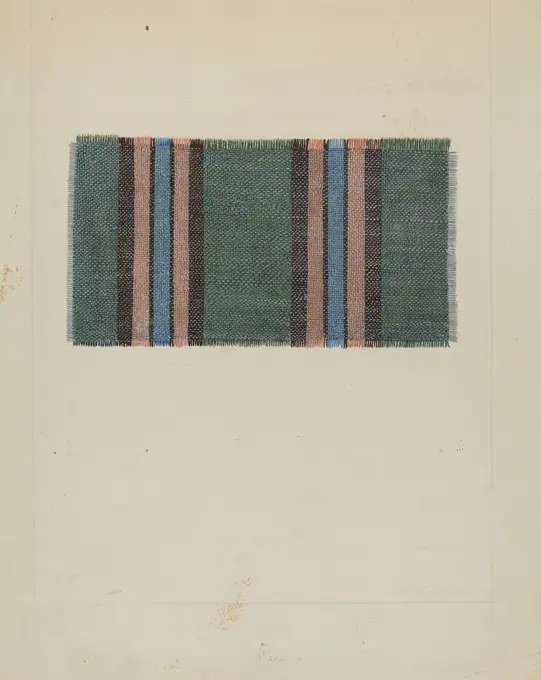
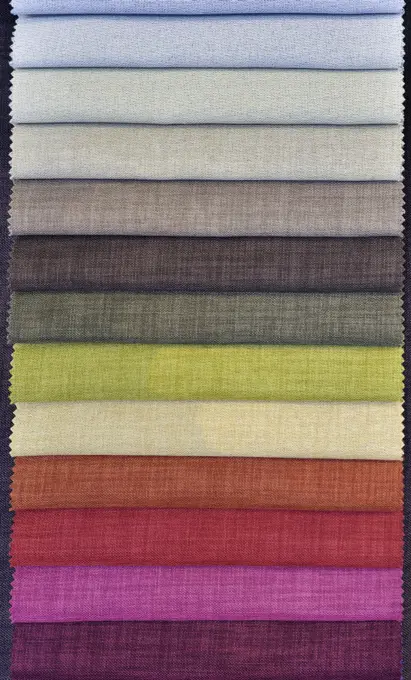
Fragments; silkWallpaper Fragment Wallpaper Fragment, 1790-1810. Paper, 22 x 17 in. (55.9 x 43.2 cm).   Decorative Arts 1790-1810Textile (Japan); silk and metallic yarnsPiece 18th century Japan. Piece 71187Coverlet Made 1850 Indiana. Cotton and wool, plain weave with plain interlacings of secondary binding warps and patterning wefts (Beiderwand); woven on loom with Jacquard attachment; two loom widths joined; fringed . William Hicks (Weaver)Ceremonial Cloth Made 1600-1700 India. Cotton, plain weave, block printed and resist-dyed .Textile samples, from the Franko Prints series ca. 1928 Joseph Urban. Textile samples, from the Franko Prints series 483684Sampler. Europe. Date: 1828. Dimensions: 37.1 × 37.1 cm (14 5/8 × 14 5/8 in.). Cotton, plain weave; examples of darning in polychrome, embroidered around outer edges in silk and in cross stitch with tiny border of punched work held in place by cotton thread stitches. Origin: Europe. Museum: The Chicago Art Institute, Chicago, USA.Handkerchief third quarter 19th century American. Handkerchief 169718Piece 18th-19th century Japan. Piece 67508Sample book, Medium: paper, linen Technique: embroidered net, Small sample book with twenty-one dark blue pages filled with small swatches of various patterns of embroidered net., England, 1800, sample books, Sample bookCoverlet Made 1830-1840 United States. Wool, plain weave double cloth; two loom widths joined; fringed .JamavarShawl, late 18thcentury, Interlocking twill tapestry weave; goat's wool, 42 × 129 7/8 in. (106.7 × 329.9cm), In the early years of Mughal rule, India turned to Persia for artistic guidance, encouraging the emigration of Persian artisans who brought with them the sensibilities of the Safavid court. Nevertheless, Indian weaving evolved separate styles and techniques that came to rival those of Persia. The textile arts were given great impetus under the Mughal rulers Akbar (ruled 1556-1605), Jahangir (ruled 1605-27), and Shah Jahan (ruled 1627-58), whose imperial ateliers produced shawls and sashes prized both in India and abroad. This shawl, a masterwork of design and technique, features a dense network of flowers compacted within narrow bands of red, white, and black. The geometricized blossoms, flattened and made angular by the twill tapestry weave, brilliantly tile the cloth’s surface, successfully integrating the fabric’s structure with itsornament. , India, Indian, IFragment textile. Textile fragment, press on orange-color damask.Textile, Merrimack Manufacturing Company, (American, founded 1822), Medium: cotton Technique: roller printed on plain weave, Offset repeat of a small allover stylized leaf pattern in reddish brown, tan and black on a white ground., Lowell, Massachusetts, USA, 1870-80, printed, dyed & painted textiles, TextileJamavar Shawl of interlocked twilltapestryPiece 18th-19th century Japan. Piece. Japan. 18th-19th century. Silk. Edo period (1615-1868). Textiles-WovenFragment; wool, linenFragment, Medium: silk Technique: 4&1 satin damask, Twining checkered bands forming strapwork that enclose cartouches that contain plant forms., 17th century, woven textiles, FragmentTube skirt, ChinaTowel, Medium: cotton, metallic thread Technique: plain weave with supplementary weft looping and supplementary continuous weft, White solid looped uncut pile except at ends, where on a border of plain weave, a secondary gold weft forms a symmetrical design of palmettes and flower-filled urns, with geometric and highly conventionalized foliate border. Scalloped fringe on ends., Turkey, 19th century, embroidery & stitching, TowelFragment Red brochure seals with floral motifs, anonymous, c. 1590 - c. 1650 Fragment of red silk with pattern in white, green and yellow of large flowers from alternating to the right and left bending pest stalks.  silk Fragment of red silk with pattern in white, green and yellow of large flowers from alternating to the right and left bending pest stalks.  silkFragment. Italy. Date: 1625-1675. Dimensions: . Silk, plain compound cloth. Origin: Italy. Museum: The Chicago Art Institute, Chicago, USA.Textile Fragment. Italy, 1600-1625. Textiles; fragments. Silk cut, uncut, and voided velvet (ciselé)Textile Fragment 17th-18th century. Textile Fragment. 17th-18th century. Silk, metal thread. Made in Iran. TextilesWeefsel voeringstof van dubbelgeruit linnen.Tissue lining fabric (), Double green checked white linen. With green rectangular label with print in oval: Warranted Fast Colors.The Lovers. Culture: French. Dimensions: Overall (a): 55 3/4 x 67 in. (141.6 x 170.2 cm)Overall (b): 71 x 50 in. (180.3 x 127 cm). Date: second quarter 19th century. Museum: Metropolitan Museum of Art, New York, USA.Fragments, Medium: silk, metallic Technique: brocaded satin, Stripe or border of metallic design on satin ground., 17th century, woven textiles, FragmentsWomans Ceremonial Skirt (Tapis)Handkerchief 1840-80 French or Swiss. Handkerchief 236960Length of Damask, 1804-1815. France, early 19th century, Empire Period (1804-1815). Damask, silk; overall: 198.1 x 60 cm (78 x 23 5/8 in.).Quilt (Crib Quilt). Dated: 1935/1942. Dimensions: overall: 48 x 42.6 cm (18 7/8 x 16 3/4 in.) Original IAD Object: 41" square. Medium: watercolor and graphite on paper. Museum: National Gallery of Art, Washington DC. Author: Francis Law Durand.Textile Fragment, 1774-1793. France, late 18th century, Period of Louis XVI (1774-1793). Velvet (cut, uncut, voided, brocaded); silk; overall: 48.2 x 20 cm (19 x 7 7/8 in.).Head Shawl, c. 1920, L.120 x W.21 in., Silk; dyed, Syria, 20th centuryWoman's wrapper (àdìrẹ ẹlé̩kọ) Yorùbá , unknown maker's mark. Woman's wrapper (àdìrẹ ẹlé̩kọ), 20th century. Commercial cotton cloth, synthetic indigo dye, 68 5/8 × 78 × 1/16 in. (174.3 × 198.1 × 0.1 cm).  Àdìrẹ is a Yorùbá textile whose patterns are made through resist dyeing. The àdìrẹ technique used to make this wrapper is àdìrẹ ẹlé̩kọ, wherein female artists paint cassava flour paste on fabric, preventing certain areas from soaking in blue indigo dye. This cloths name is Olókun, identifiable in part by the motif of a circular “stool” surrounded by “leaves.” As goddess of the sea, Olókuns domain is the source of wealth, lending the cloth the associated meaning “life is sweet.” Other àdìrẹ employ tie-and-dye techniques (àdìrẹ oníko), where raffia ties hold small stones or seeds in place to cover areas of the fabric during dyeing, resulting in àdìrẹ eléso patterns. One such àdìrẹ oníko was incorporated underneath a panel in the featured egúngún (see photograph). Arts of Africa 20th cTextile Swatches Onondaga Silk Company, Inc. (1925-1981). , 1948-1959. Silk, 23 x 9 in. (58.4 x 22.9 cm).    1948-1959Embroidery patch of silk on cotton muslin. Embroidery patch of silk on cotton muslin. The piece is lined with a red satinet.Woodblock late 18th century Designed by Swaislands Fabric Printing Works. Woodblock 222130Front doubleur. Brantôme, Pierre de Bourdeille, seigneur de (d. 1614). bindings (gathered matter components), Book covers. 1882. Spencer Collection. BookbindingFragment, 19th century, W.9 X L.25 in., linen; needlework, Uzbekistan, 19th centuryEgyptian OrnamentPiece 18th-19th century Japan. Piece 67714Fragment zijdeweefsel, c. 1690 - c. 1710 Fragment écru silk with pattern in blue of some large flowers and leaves.  Ketting an element: Silk lampas (textile material) Fragment écru silk with pattern in blue of some large flowers and leaves.  Ketting an element: Silk lampas (textile material)Sidewall Sample; machine-printed on paper; 22.5 x 22.5 cm (8 7/8 x 8 7/8 in.)Shawl with boteh, 1820-1830. India, Kashmir. 2/2 twill tapestry weave, double interlocked: wool, possibly pashmina; overall: 325 x 136.5 cm (127 15/16 x 53 3/4 in.).Piece 18th-19th century Japan. Piece 66546Cloth (Subalchi), c. 1920-1940, 78 x 16 in. (198.1 x 40.6 cm), Cotton, silk, Guatemala, 20th centuryDas afgezet met stroken kantborduurwerk op machinale tule.Das of unprocessed natural-colored batist with a narrow strip along the long sides: tuledo stroke on machine tulle. Pattern with mashes above an edge with ovals with plumes. On the short sides, wrinkled wide strip of tote steam work is placed on the machine tulle, with a pattern of flower branches and sprinkled stars.Needlepoint (Cutwork) and Bobbin Lace Altar Frontal, 16th century. Italy, Genoa, 16th century. Lace, needlepoint and bobbin: linen; average: 81.6 x 245.7 cm (32 1/8 x 96 3/4 in.).Fragment. Italy. Date: 1775-1800. Dimensions: 14.9 x 17.7 cm (5 7/8 x 7 in.). Silk; velvet: cut, voided; against plain weave foundation. Origin: Italy. Museum: The Chicago Art Institute, Chicago, USA.Fragment (France); silkFlowers and Rhombuses, Mulberry paper (kozo washi) treated with fermented persimmon tannin (kakishibu), and silk threads (itoire), Peonies and chrysanthemums gather in the shape of rhombuses. Within the geometric structure, abstract ocean waves surround peonies. Silk threads are added to support the stencil structure., Japan, mid 18th - early 19th century, textile designs, Katagami, KatagamiFragment. United States. Date: 1801-1825. Dimensions: 26.7 x 19.8 cm (10 1/2 x 7 13/16 in.). Sample of stripe and check patterns of blue, white and tan. Origin: United States. Museum: The Chicago Art Institute, Chicago, USA.Coverlet Made 1847 United States. Cotton and wool, plain weave double cloth; woven on loom with Jacquard attachment; two loom widths joined . James Cunningham (Weaver)Fragment red silk damest with pattern of stylized flower with vase shaped fruit grid and petals, surrounded by curved leaves and garlands. Fragment red silk damest with pattern of stylized flower with vase shaped fruit grid and petals, surrounded by curved leaves and garlands.Textile Swatches Onondaga Silk Company, Inc. (1925-1981). , 1948-1959. 55 Poliamide, 24 acetate, 21 metal, a: 33 3/4 x 18 in. (85.7 x 45.7 cm).    1948-1959Africa, Morocco, Fes. Woven Moroccan silk textiles and scarves.Obi with Floral Roundels and Dragons second half of the 19th century Japan. Obi with Floral Roundels and Dragons 69183Stop patch of multicolored silk on cotton muslin., 1797 Stop patch with multi -colored embroidery. The embroidery consists of a coat of arms with a crown, the initials AVC and Anno 1797, around which four tucks through. Amsterdam (possibly) cotton (textile). silk embroidering Stop patch with multi -colored embroidery. The embroidery consists of a coat of arms with a crown, the initials AVC and Anno 1797, around which four tucks through. Amsterdam (possibly) cotton (textile). silk embroideringCoverlet Fragments (USA); wool, cottonPiece 18th-19th century Japan. Piece 67720Piece 18th century Japan. Piece 71953Woman's mantle (iscayo), mid 19th century, 52 x 45 in. (132.08 x 114.3 cm), Alpaca, Bolivia, 19th centuryPiece 15th century Japan. Piece 71038Kerchief Scarf. Dated: c. 1938. Dimensions: overall: 22.2 x 30.5 cm (8 3/4 x 12 in.) Original IAD Object: 30" wide; 31" long. Medium: watercolor, pen and ink, and graphite on paperboard. Museum: National Gallery of Art, Washington DC. Author: Erwin Schwabe.Textile Swatch , 1950s to 1960s. Silk, 19 1/4 x 20 1/2 in. (48.9 x 52.1 cm).    1950s to 1960sStaal zijde in album.Steel printed silk, purple, green and yellow on a lilac background, with stylized flower plant within parallelepiped-shaped frame (Dessiner. 7134 1/137).Piece 18th or early 19th century Japan. Piece 65970Textile Fragment 17th century. Textile Fragment 452093Embroidered Handkerchief, 1800s. Italy , 19th century. Embroidered linen; overall: 53.3 x 53.3 cm (21 x 21 in.).Textile (India); silk, gold tinsel on silk coreMary Fitzgerald, Evening Handkerchief, 1935 1942 Evening HandkerchiefWrapper, 20th century, 72 x 48 in. (182.88 x 121.9 cm), Cotton, rayon; supplementary weft patterning, 20th centuryPiece early 17th century possibly German. Piece 226411Band Made 1875-1900 China. Forty-four pairs and eight odd pieces of embroidered sleeve, ankle bands, etc. on gauze. . Han-ChineseHandkerchief Paraguayan 19th centurySample early 19th century French. Sample 224823Cover 16th or 17th century Italian or Spanish. Cover 461631PiecedQuilt.  Maker: Catherine “Caty” Selleck, American, 1783-1874Linnamast napkin with ivy, Chris Lebeau, c. 1904 Linnamast's napkin with ivy: Motif Klimop, Dessin No. 513. The napkin belongs to eleven napkins (BK-1979-262-A to BK-1979-262-L) and two tablecloths (BK-1979-261-A and BK-1979-261-B). Eindhoven linen (material) damask Linnamast's napkin with ivy: Motif Klimop, Dessin No. 513. The napkin belongs to eleven napkins (BK-1979-262-A to BK-1979-262-L) and two tablecloths (BK-1979-261-A and BK-1979-261-B). Eindhoven linen (material) damaskNapkin with fish and shellfish, anonymous, c. 1600 - c. 1649 Linnamast napkin with fish and shellfish. Midfield: Various fish. Standing edges: fishing and fishing. Lying edges: sea gods. Hoek: Krab. Haarlem linen (material) damask Linnamast napkin with fish and shellfish. Midfield: Various fish. Standing edges: fishing and fishing. Lying edges: sea gods. Hoek: Krab. Haarlem linen (material) damaskHandkerchief third quarter 19th century French. Handkerchief 227117Embroidery Pattern, 14 1/2 x 14 1/4 in. (36.83 x 36.2 cm), Cotton, paper, ChinaPanel, c. 1800, H.47 x W.45-1/2 in., silk, China, 18th-19th centuryRibbons (France); silk, metallic threadWaist Wrapper(Sabuk)Paper for diploma Beautiful needlework. Sample, strip of frivolitéin green and white.Piece 18th-19th century Japan. Piece. Japan. 18th-19th century. Silk. Textiles-WovenCollar. Culture: probably British. Date: fourth quarter 17th century.The beautiful fluidity, rhythm and extraordinary detail of this design attest to the early date and fine workmanship of this rare piece. Superimposing flowers over fillings as seen here requires the highest degree of skill, as do the extravagant number of fillings and the intricately decorated brides. It is, moreover, rare to have figures integrated into a design of gros point lace. The free-standing female figure with a front and back is even rarer. It indicates English origins, as figures very much like it are found in embroidered English pictures of the same period. Museum: Metropolitan Museum of Art, New York, USA.Sachet van blauwe taf met wit tamboereerwerk in de hoeken.Sachet of blue taffeta, belonging to two batters handkerchiefs. The sachet has been dropped along the sides with a pleated ribbon in the same blue side and is decorated in the corners with white tamboat. Square model lined with natural-colored quilted silk. The points are folded to the center to close the sachet. A white pearl knot is attached at one corner. Any other corner has a loop that can be beaten around. When the sachet is closed, a blue silk bow, which is sewn on one of the corner points, the closure with button and loops.Handkerchief 1830-50 American. Handkerchief 168754Travel album with photos of PezaVAATEN in Sydney, diverse manufacturers, c. 1890 - c. 1910 folder (container) Archive folder with linen dust valves and locking cords. The front and rear sides have a marble motif in blue, green and black, the dust valves and the inside sides a flower pattern. The folder contains 57 separate cardboard sheets, on which 63 photos are stuck; One photo was found separately. They are mainly recordings of ports, streets, buildings, landscapes, ships, sailors, families and a funeral procession, made in Sydney and the surrounding area. Australia cardboard. linen (material). rope. paper. photographic support albumen print / gelatin silver print travelling; tourism Australia. Sydney. Hobart. Firth of ForthDying template katagami cut into a miniature desee (komon) from the stylized imagination of fog and small flowers;  1868-1912 (1868-00-00-1912-00-00);Drabik, Cezary (Fl. Ca 1960 - 1980) - collection, geometric and reel patterns, Katags, templates, Japanese art, purchase (provenance)Handkerchief 19th century Italian or Belgian. Handkerchief 212546Machine-made Openwork Samples (USA); cardboard, linen, silk, metallic; 1971-26-2-13Piece 18th-19th century Japan. Piece 67649Frank J Mace, Linsey Woolsey, c 1937 Linsey WoolseyTray;  Ok. PO. 20th century (1946-00-00-1955-00-00);Colorful Swatch Curtain Fabric SamplesFragment striped, multicolored sides Mexicaine, Anonymous, 1775 - 1800 Fragment white silk with colored stripes (presumably sleeve garnish). NOTE: MEERSHIP; 5 mm in solid binding. Consists of three jobs of 44.5 cm. Self -sides on the inside plus one self -side folded right inwards. Netherlands silk Fragment white silk with colored stripes (presumably sleeve garnish). NOTE: MEERSHIP; 5 mm in solid binding. Consists of three jobs of 44.5 cm. Self -sides on the inside plus one self -side folded right inwards. Netherlands silk