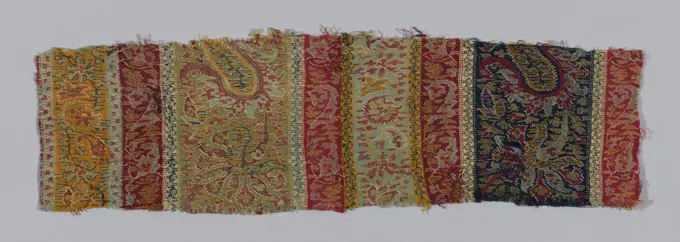
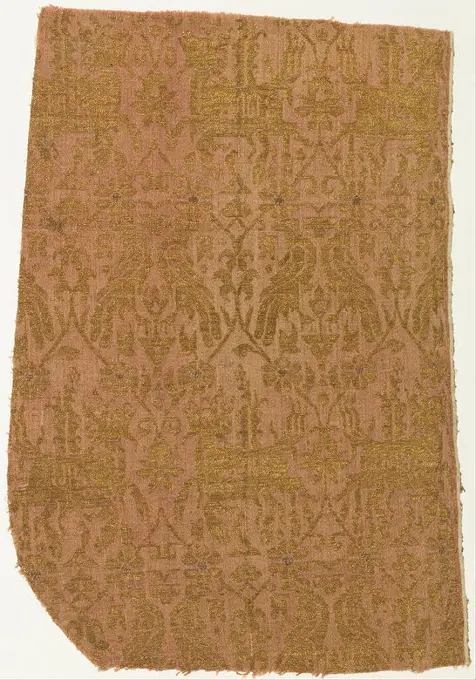
Traditional Textiles

A display of intricate and decorative textiles from various cultures, featuring ceremonial weavings and historical patterns with rich colors and detailed designs.
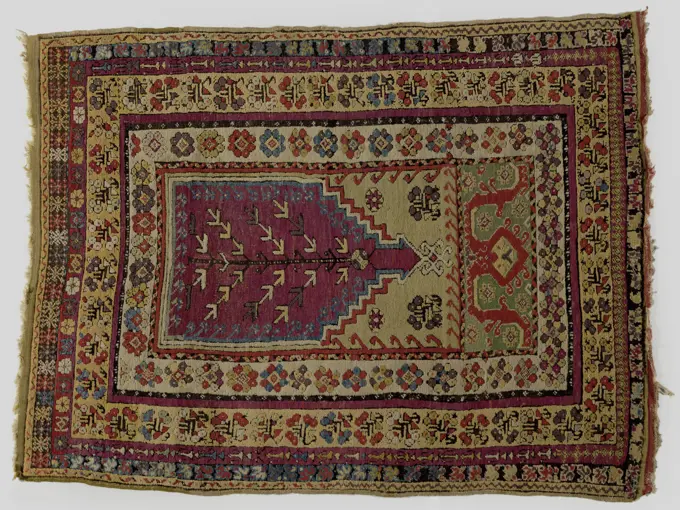
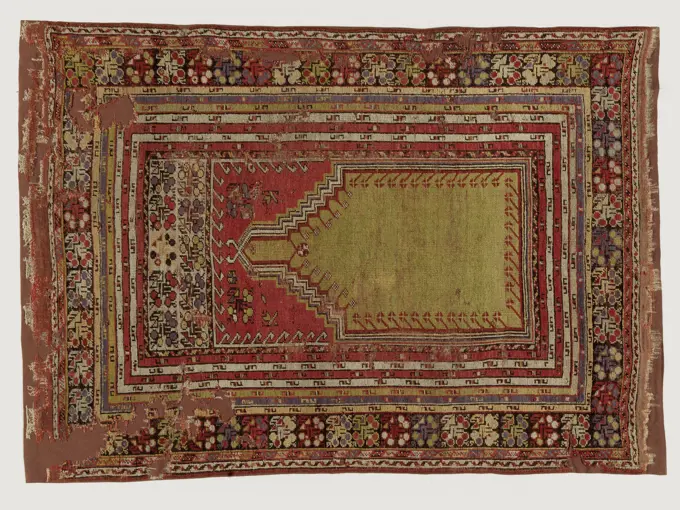
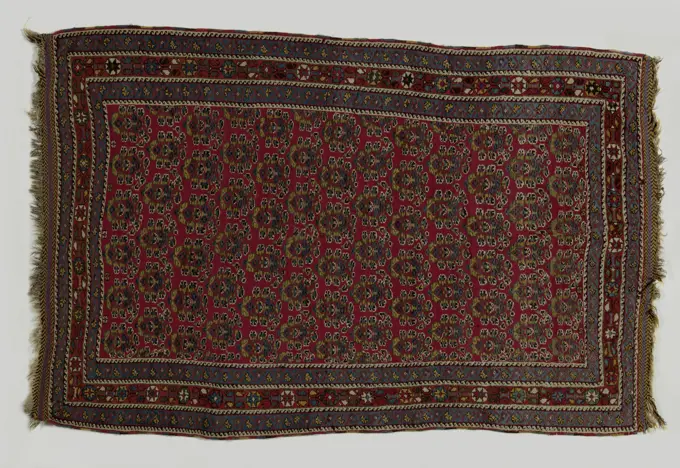
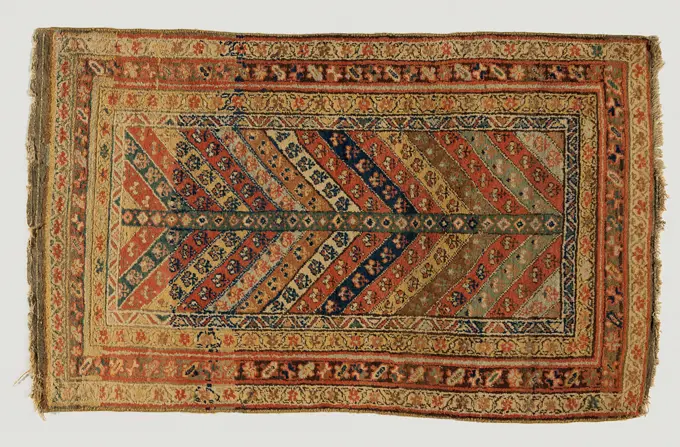
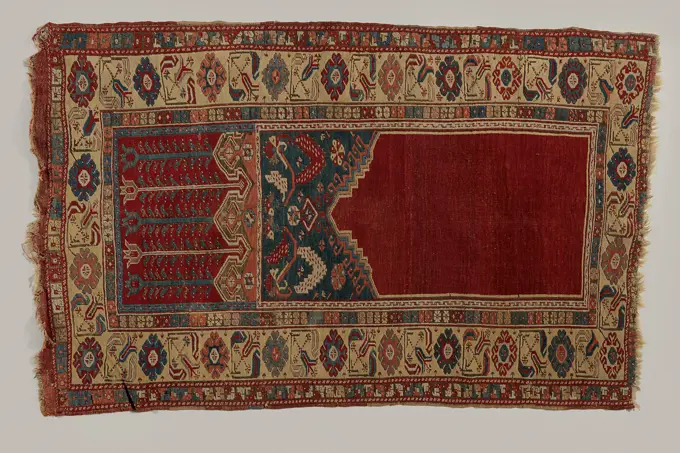
Baddle,, 1800 - 1900 Prayer rug, so -called kirshihir or melas/mucur, red stepped mirab with red stock and yellow, white, yellow, red, blue and yellow edges. Little Asia wool Prayer rug, so -called kirshihir or melas/mucur, red stepped mirab with red stock and yellow, white, yellow, red, blue and yellow edges. Little Asia wool
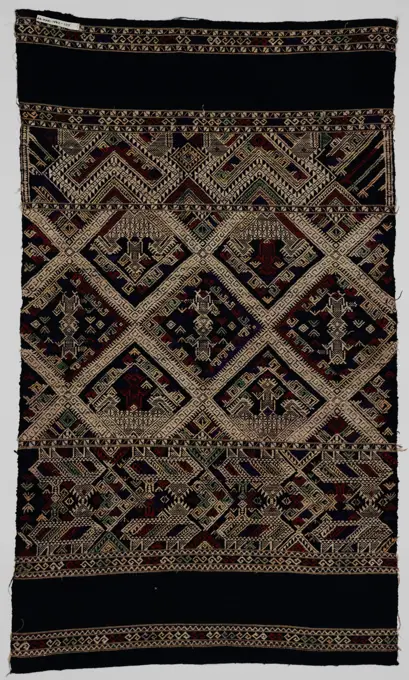
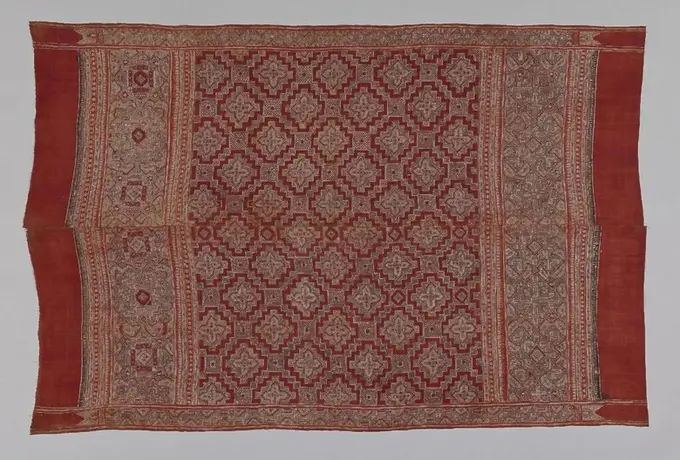
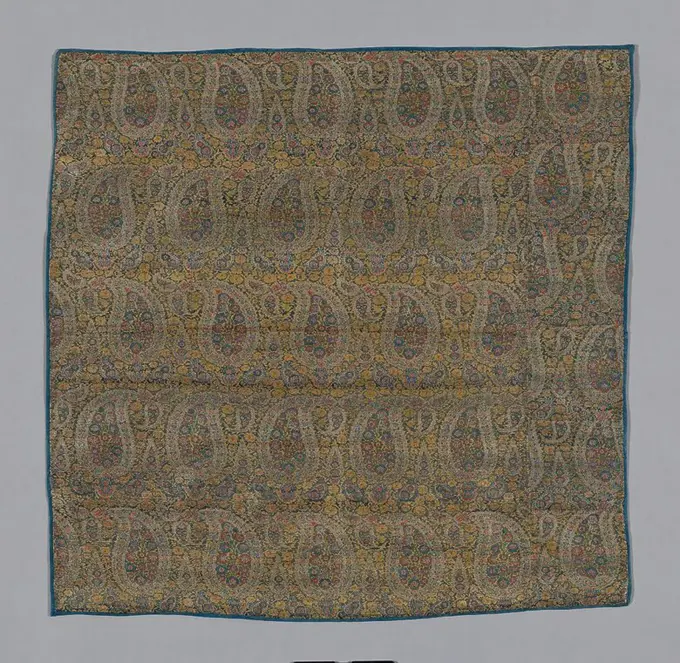
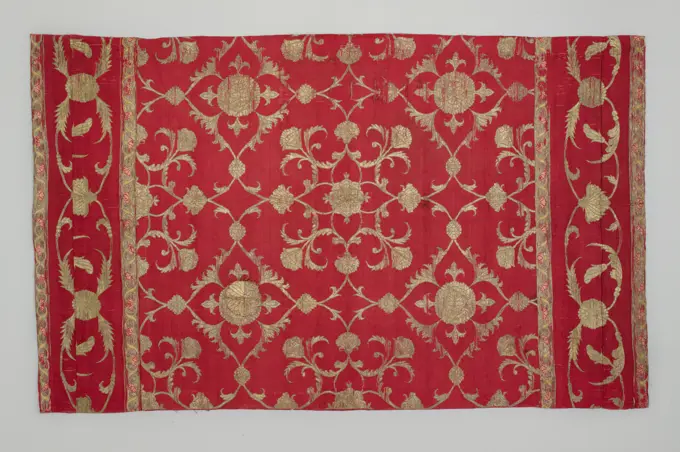
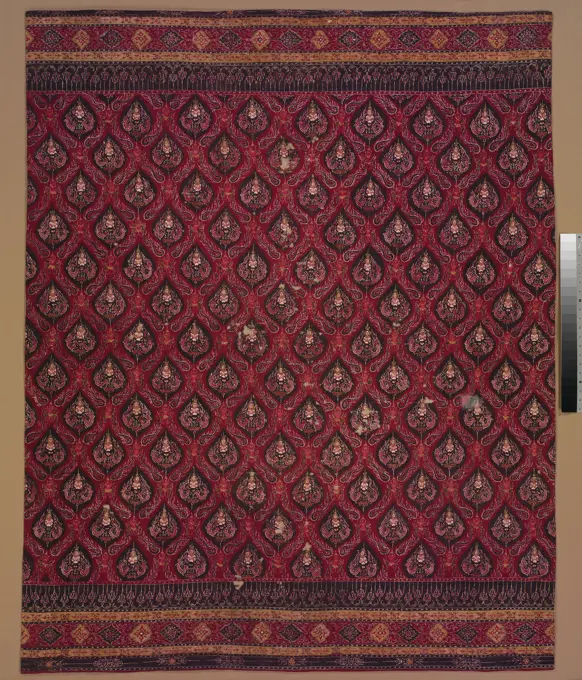
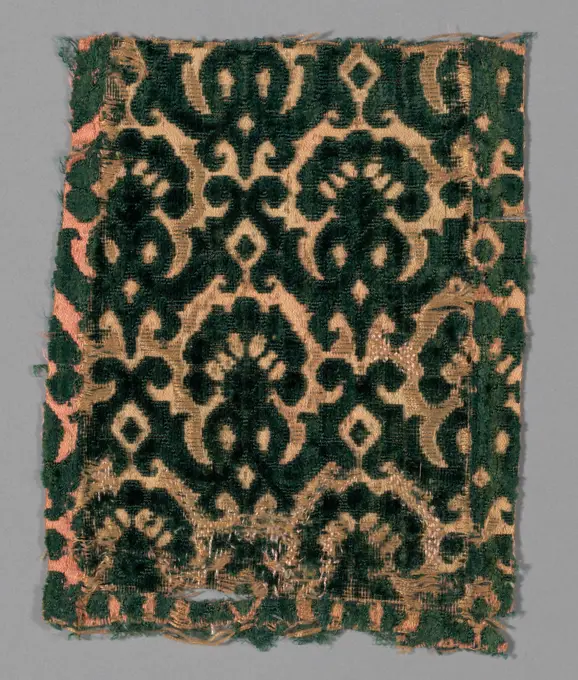
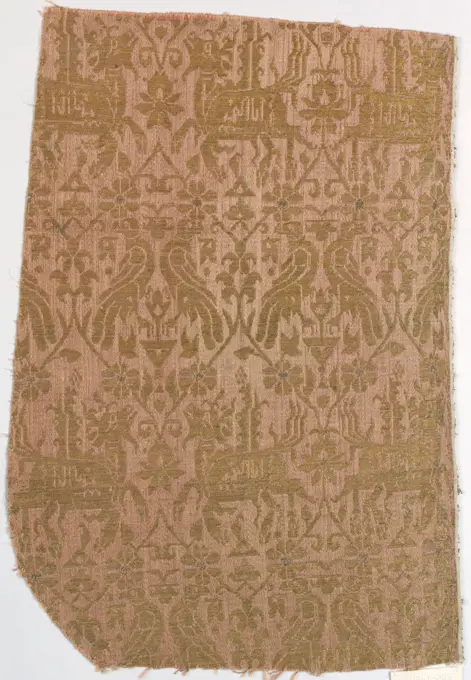
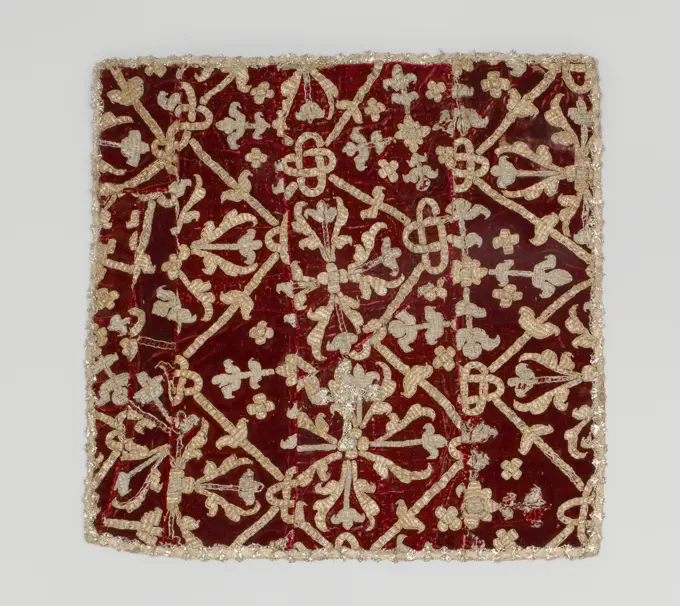
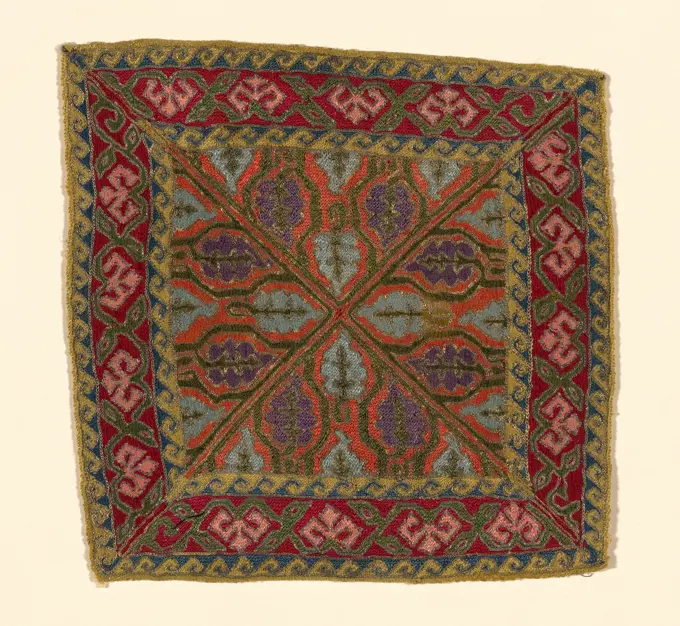
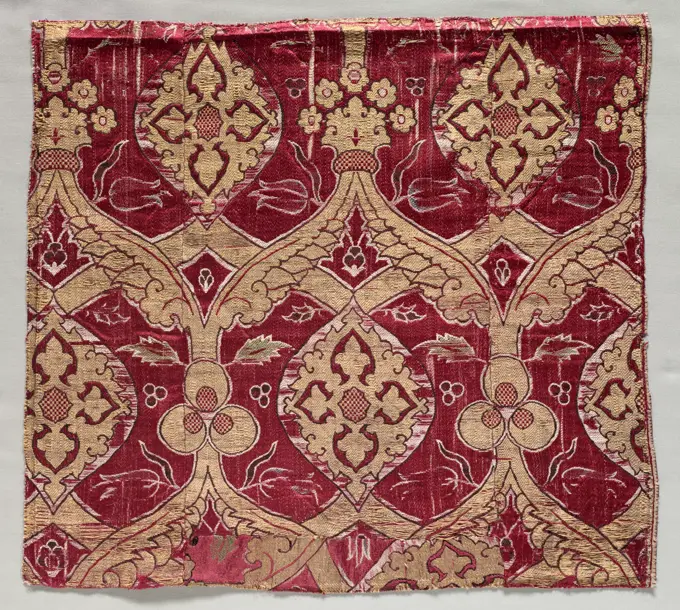
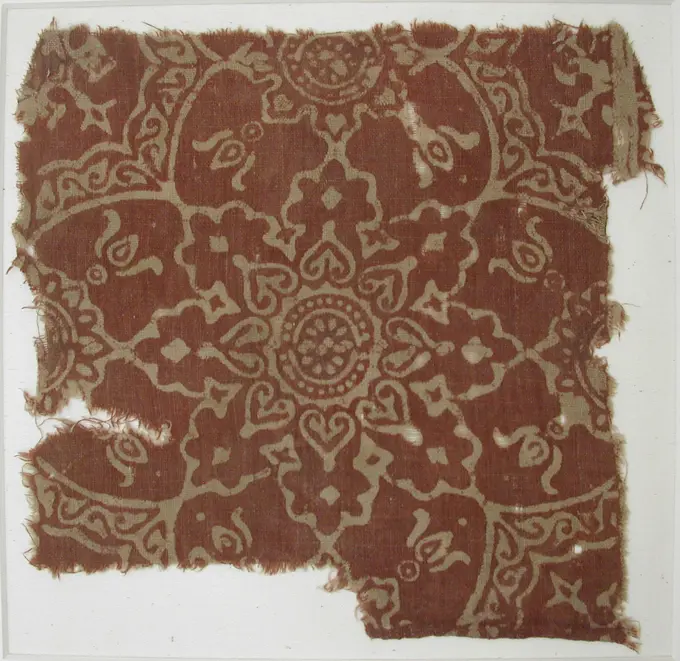
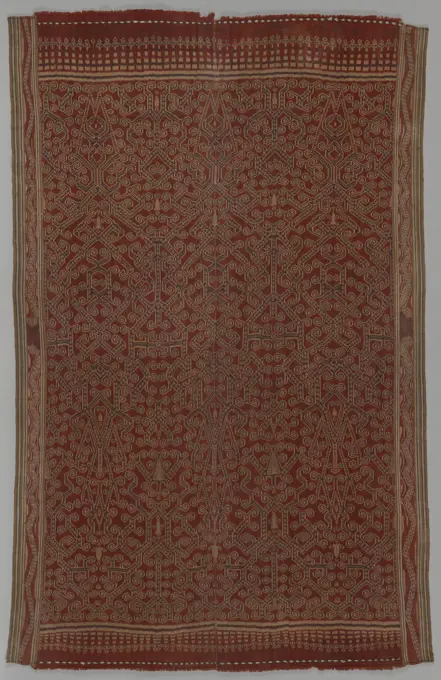
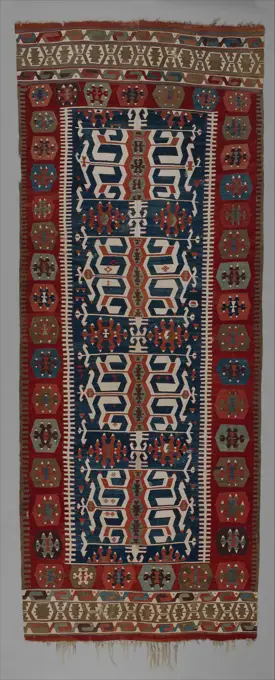
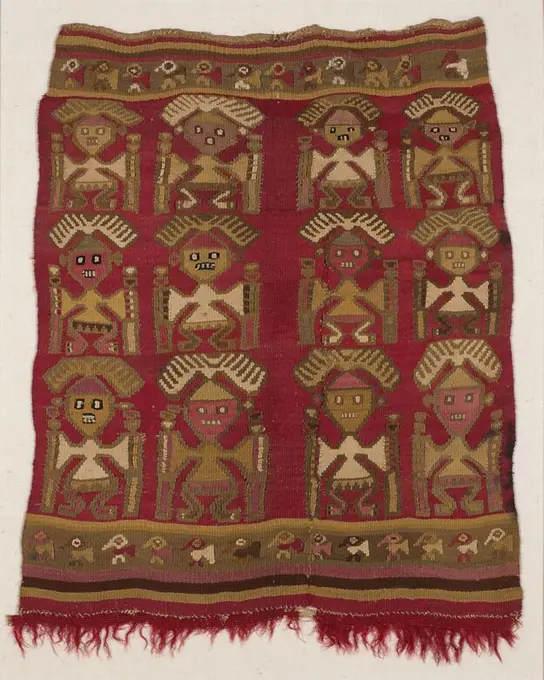
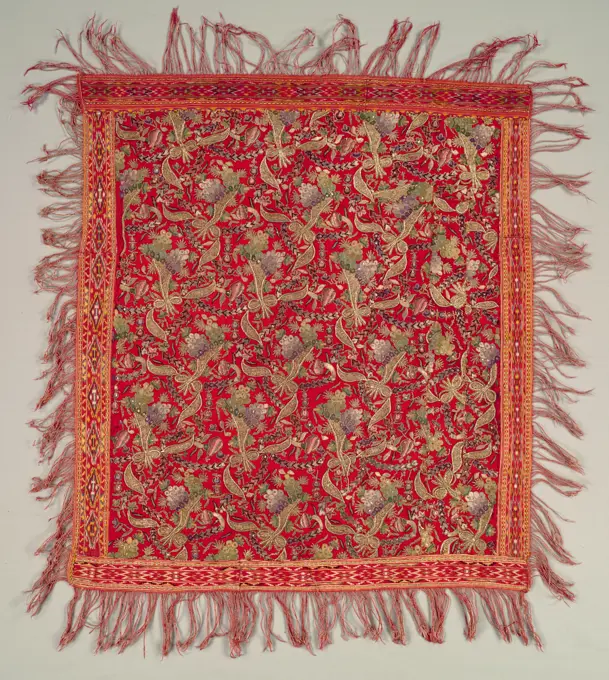
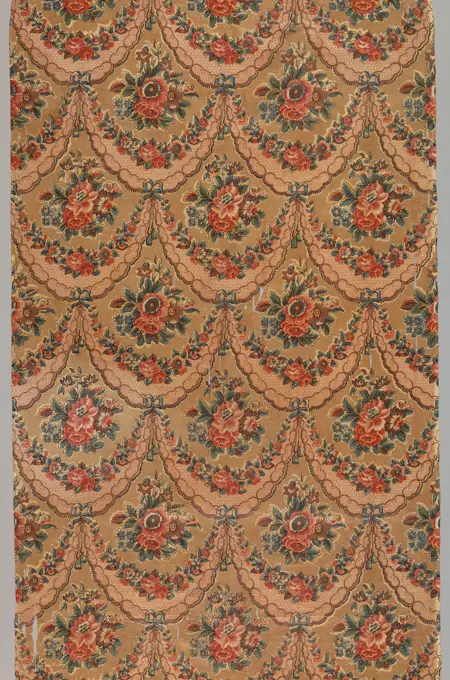
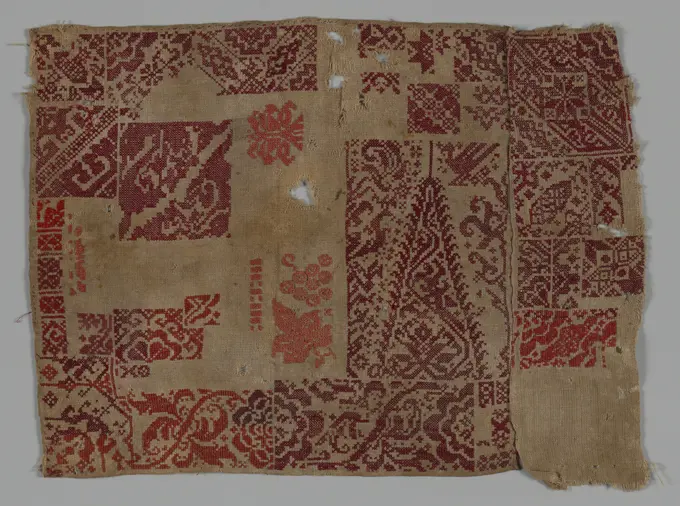
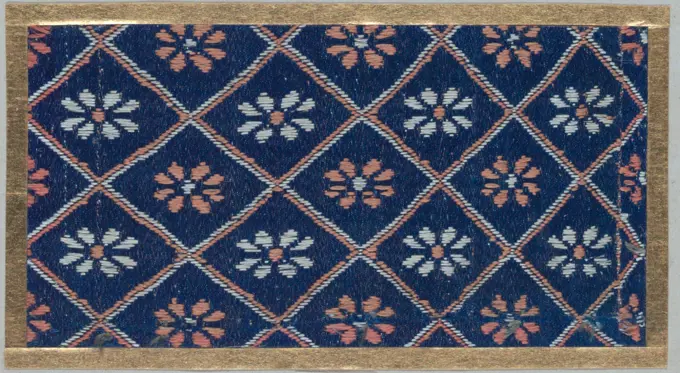
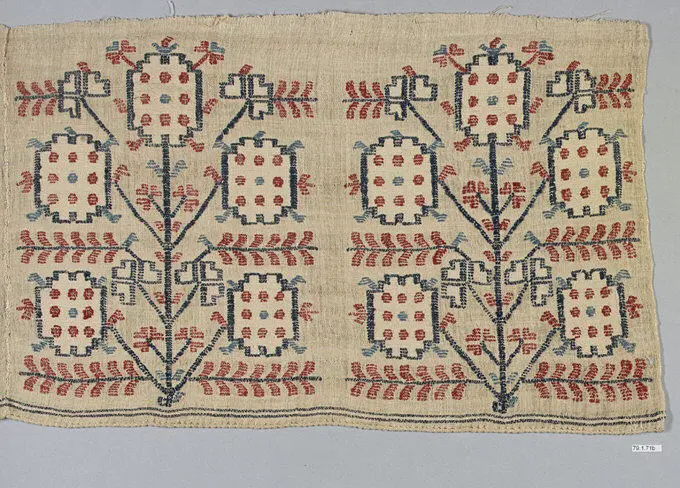
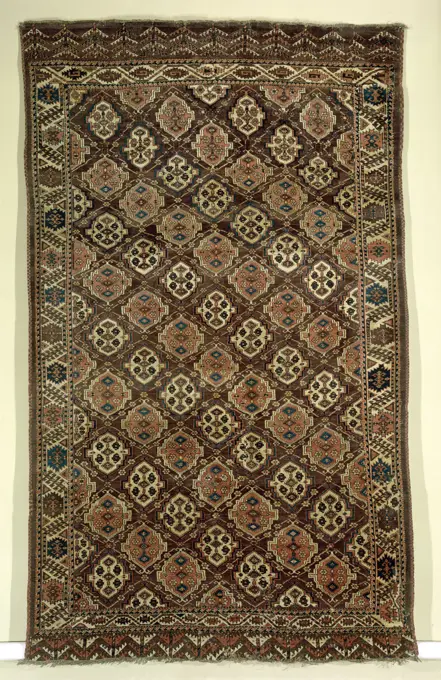
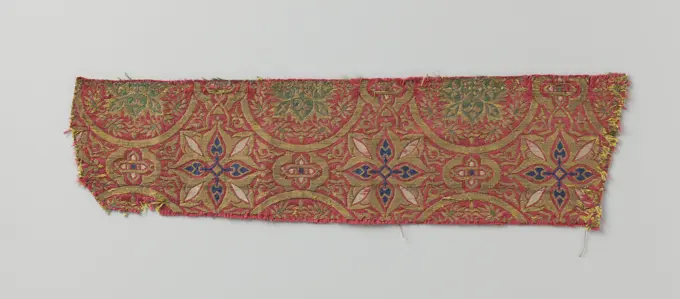
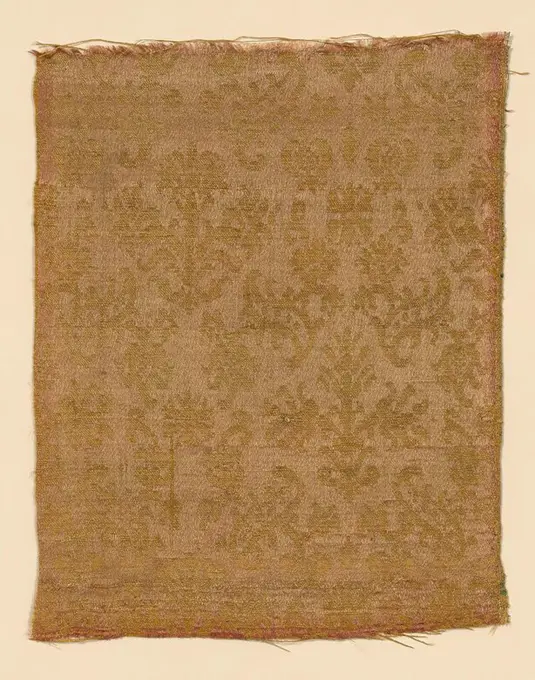
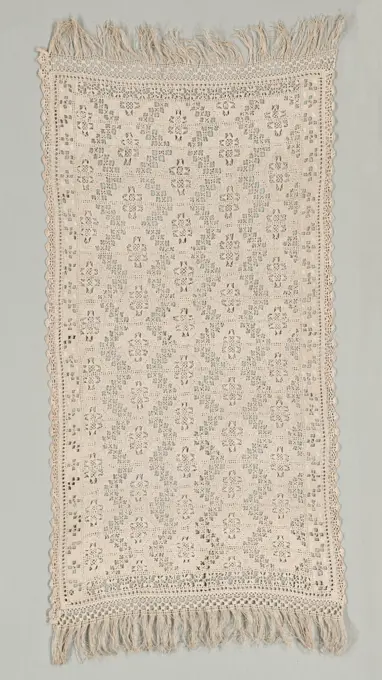
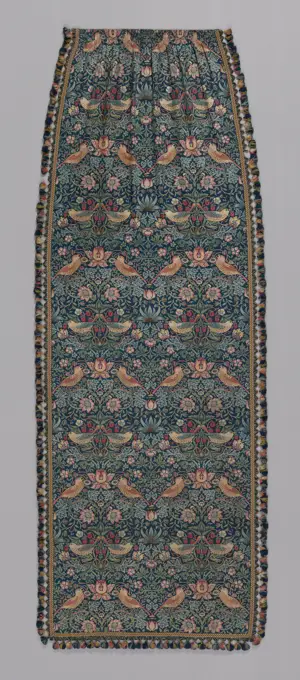
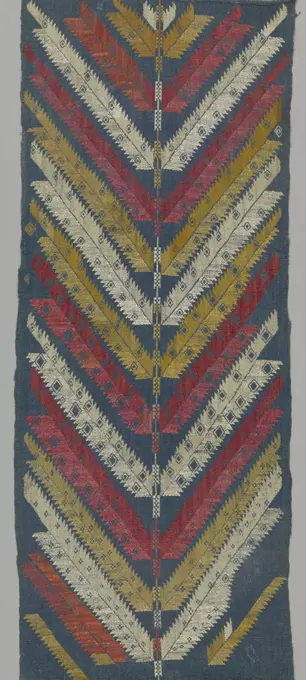
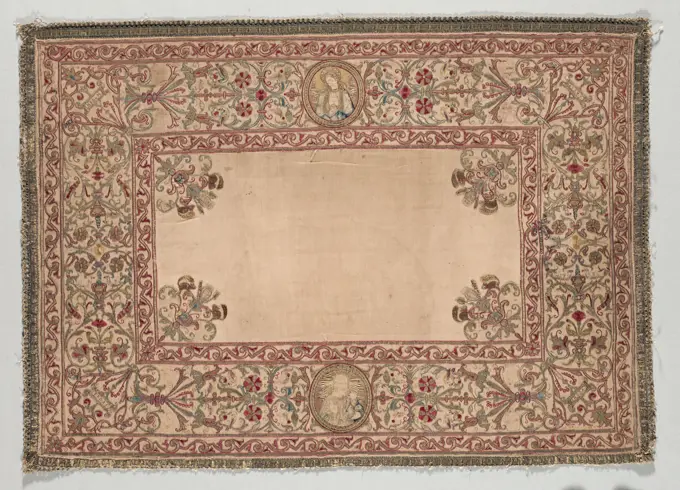
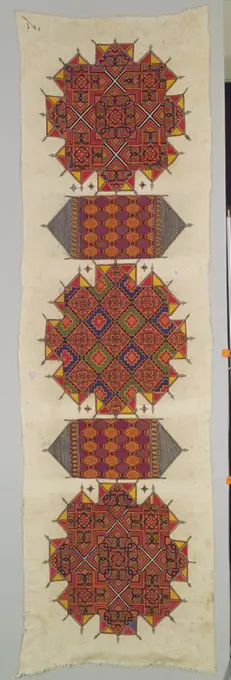
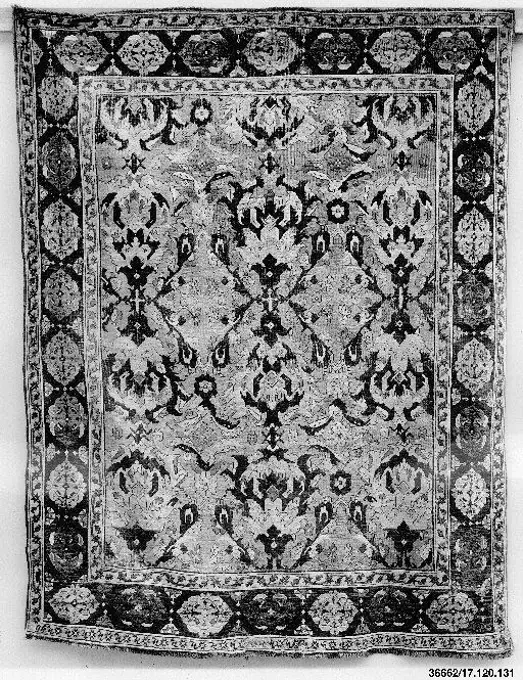
Ceremonial Weaving(Tampan)Doek, Anonymous, 1900 - 1949 Cloth with animal figures. Laos cotton (textile) Cloth with animal figures. Laos cotton (textile)Fragment. Dimensions: Textile: H. 17 7/8 in. (45.4 cm)W. 5 3/4 in. (14.6 cm). Date: first half 16th century.Expensive materials were woven in a sophisticated technique, using silver and metal-wrapped silk, to produce a rare and precious type of Ottoman silk fabrics called seraser. Few examples survive from the early period of production dating from the first half of the sixteenth century. They are usually woven in designs and motifs quite different from the typical Ottoman artistic language, organized in narrow horizontal bands of small-scale decoration. Here, blue diamond-like rectangles, each bearing eight-petalled silver blossoms, are framed by red borders composed of two intertwined silver ribbon-like forms. These wider bands alternate with narrower white-ground bands containing blue undulating vines. The overall effect results from the richness of colored silk accented with the silvery sheen of the metal-wrapped thread. While the later seraser pieces were mainly produced for cerRug;  around 1830 (1825-00-00-1835-00-00);rugHeirloom Textile. India, Coromandel Coast (); Found in the Toraja area of Sulawesi, Indonesia. Date: 1400-1500. Dimensions: 267.3 x 187.96 cm (105 1/4 x 74 in.). Cotton, plain woven, block printed and resist-dyed; two loom widths joined, all selvages present. Origin: India. Museum: The Chicago Art Institute, Chicago, USA.Fragment (Dress Fabric). Iran (Persia). Date: 1801-1850. Dimensions: 69 x 69.5 cm (27 1/8 x 27 3/8 in.). Design in gold, red, blue, green and white on greyish-blue ground. Horizontal rows of floral butes turned alternately in opposite direction, surrounded by smaller butes and flowers. Lined. Satin. Origin: Iran. Museum: The Chicago Art Institute, Chicago, USA.Fragment. Europe. Date: 1650-1700. Dimensions: . Linen and wool, plain weave with supplementary weft floats. Origin: Europe. Museum: The Chicago Art Institute, Chicago, USA.Shroud(Porisitutu’)Baddle,, 1800 - 1900 Prayer rug, so -called kirshihir or melas/mucur, red stepped mirab with red stock and yellow, white, yellow, red, blue and yellow edges. Little Asia wool Prayer rug, so -called kirshihir or melas/mucur, red stepped mirab with red stock and yellow, white, yellow, red, blue and yellow edges. Little Asia woolFragment multicolor silk tissue. Fragment with repeating pattern of 4 flowers in windows shaped by stems with leafwork. Multicolor.Silk wall hanging unknownPainted Cotton with Celestial Deva Design in a Trellis Pattern late 18th-19th century India (for the Thai market). Painted Cotton with Celestial Deva Design in a Trellis Pattern 75306Fragment Made 1600-1650 Italy. Cisele voided satin velvet .Piece 18th century China. Piece. China. 18th century. Silk / Compound weave. Qing dynasty (1644-1911). Textiles-WovenFragment (Italy); silk, metallic threadsFragment, Medium: silk, metallic Technique: plain weave with supplementary weft, Ogival silver palmettes on a red ground., 17th century, woven textiles, FragmentCHAICE VEIL unknownCover (Dress Fabric) Made 1801-1900 Iran. Silk, geometric design with wide border .Textile Fragment, late 16th century. Turkey, Bursa, late 16th century. Brocaded silk with metal thread weft; average: 44.5 x 47.7 cm (17 1/2 x 18 3/4 in.).Textile Fragment 13th-14th century This cotton textile fragment uses block-print in its technique which is revealed in the fragments center and shows a horizontal misalignment of the block-printed design. The design which employs a shamsa-like motif pans out into smaller tendrils that link the medallions to one another. The pattern was probably repeated to decorate the center field of the larger textile which was enclosed within a border, a portion of which can be seen in the fragments top right. Dated to either the thirteenth or fourteenth century, this fragment is one of a larger group of textiles which were found in Fustat, Egypt (known as Old Cairo) but made in Gujarat, India. The textiles vibrant dye, which is still noticeable in this fragment highlights Gujarat as an important dye center throughout the centuries and serves as evidence that they were in high demand across regions connected by the Indian Ocean from the tenth through the nineteenth centuries.. Textile Fragment 4Altar frontal 17th century Italian, Sicily. Altar frontal 227771Sarong Fragment (Indonesia); silk, metallic threadsRitual Textile (PuaKumbu)Shoulder Cloth (Kumbut Juangga,Cindé)Fragment; silk, metallicCarpet ca. 1800 Flatwoven floor coverings representing a vibrant village and nomadic tradition were produced in a wide swathe of the Islamic world from Iran, the Caucasus, and Anatolia to Central Asia. This striking kilim reflects the continuation of a mythological and symbolic decorative repertoire that has long associations with Central Anatolia, here creatively reinterpreted in an early nineteenth-century tribal sensibility.The kilim is woven in a palette of indigo blue and red with accents of brown, green, mauve, and white. The ends are finished with a series of horizontal bands, two of which consist of the "hook," or ҫengal, pattern. A wide border of hexagonal rosettes in green, brown, and mauve, each enclosing a gul, or abstract flower, frames the central field, a compartmentalized vertical composition incorporating a birth goddess motif that has survived in this region from the Neolithic period (2500 B.C.). Like many of the abstract motifs found on Anatolian kilims, this one is Eastern carpet ,, 1800 - 1900 Oriental carpet, prayer rug. Midfield with light green mihrab with stair tile top. Bovenwarspaneel with rows of flower bouquets. Widest edge also decorated with flower bouquets. Kirsehir wool Oriental carpet, prayer rug. Midfield with light green mihrab with stair tile top. Bovenwarspaneel with rows of flower bouquets. Widest edge also decorated with flower bouquets. Kirsehir woolFragment (Loincloth). Chimú; Peru, Probably north coast. Date: 1250-1470. Dimensions: 46 x 38.7 cm (18 1/8 x 15 1/4 in.). Cotton and wool (camelid), slit tapestry weave; edged with plain weave extended weft cut fringe. Origin: Peru. Museum: The Chicago Art Institute, Chicago, USA.Shawl Fragment Made 1810-1820 India. Wool, double interlocking 2 2 'S' twill tapestry weave; warp fringe .Textile Fragment 18th century. Textile Fragment 454595Embroidered Square, 18th-19th century. Turkey, 18th-19th century. Embroidery: silk and metallic thread on wool ground; average: 93.1 x 79.4 cm (36 5/8 x 31 1/4 in.).Textile Fragment 17th-18th century. Textile Fragment 443021Wool carpet decorated with stylized branches and flowers, 1599 - c. 1799 Wool carpet. In the middle pocket a window with red soil, on which a diamond shape in width and stylized branches and flowers. Below and upstairs in the middle section closed with a border of stylized birds with Lanhe Sneaks. An edge of triangles grabbing each other, separated by a red zigzag band.  wool Wool carpet. In the middle pocket a window with red soil, on which a diamond shape in width and stylized branches and flowers. Below and upstairs in the middle section closed with a border of stylized birds with Lanhe Sneaks. An edge of triangles grabbing each other, separated by a red zigzag band.  woolOriental carpet. Oriental carpet, arabic rug, lottery carpet. Bergama or Holbeintapijt. In midfield a large octagon with smaller ones around it. Three edges on the sides, four above and below. Widest edge with squares. Button: Ghiledes knot.Textile (France); cottonOriental carpet, Anonymous, 1800 - 1900 Oriental carpet of knotted wool with a midfield decorated with zigzag tires and the widest edge with oekkoeken. Southern Persia wool Oriental carpet of knotted wool with a midfield decorated with zigzag tires and the widest edge with oekkoeken. Southern Persia woolOriental carpet. Oriental carpet, Ersari carpet, octisk rug. In the middle field, eight corners in three jobs of six against a red fond. Filling of flour and stars. Widest edge decorated with a checkered mountain and dalaria and triangles.Fragment. Date/Period: 15th century. Fragment. Medium: silk. Technique: 4&1 satin patterned with plain weave (lampas). Height: 194 mm (7.63 in); Width: 436 mm (17.16 in). Author: UNKNOWN.Coverlet fragment, Medium: wool, linen Technique: two intercrossed plain weave structures (double cloth), Coverlet fragment in deep blue and undyed wool showing abstract whig rose” pattern., USA, late 18th-mid- 19th century, woven textiles, Coverlet fragmentSkoutari” carpet unknownSampler(Limar)Fragment (Japan)Textile, Snakehead; Made by Morris & Co. (United Kingdom); England; cottonTextile (Italy); pain satin, corded silk.; Overall: 61 x 23 cm (24 x 9 1/16 in.)Eastern carpet ,, c. 1600 - c. 1699 Eastern carpet, arabesk dress, lotto carpet. Midfield with pale -yellow arabesks on a cobalt blue soil. Double edge, the widest of which with crossing tones. Button: Ghiordes Knoop. Small-azia bag Necklace and impact: Wool Eastern carpet, arabesk dress, lotto carpet. Midfield with pale -yellow arabesks on a cobalt blue soil. Double edge, the widest of which with crossing tones. Button: Ghiordes Knoop. Small-azia bag Necklace and impact: WoolFragment red and yellow silk tissue with stylized flower and leaf motifs. Fragment yellow silk with pattern in red and yellow from stretched ovals. Shaped by curled volutes and filled with leafwork.Piece 16th-17th century Italian. Piece 224423Perkurel, Karabagh or Shirwan. Perkurel, Karabagh or Shirwan. Midfield: Dark blue fond with three consecutive hexagons and softened windows. The hexagons of red, light green and red, at which a grilled hexagon, in soft yellow, red and dark blue. Edge: two-fold. The widest is white with octagonal hook motifs in said colors. The indoor zoom is red with rosettes.Textile Fragment 17th century. Textile Fragment 454458Sampler, W.C., Medium: wool embroidery, linen foundation Technique: tent, eyelet, and satin stitches on plain weave, Flowering plant in a vase; two peacocks; initials 'W.C.' and '1864' within border of scrolls with flowers., England, 1864, embroidery & stitching, SamplerFragment, 1800s. China, 19th century. Silk; overall: 55.6 x 17.8 cm (21 7/8 x 7 in.).Leaf with decorative frames, Anonymous, 1700 - 1850  Leaf with lanes of decorative frames. Used as a cover.  paper. block printing (relief printing process) ornament ~ geometric motifsHanging (India); cotton, silk, mirrorsPiece 16th-17th century Italian. Piece 224385Fragment; silkTextile, Medium: linen warp, cotton weft Technique: block printed on plain weave, Curving stripes and flowers in the field. Two shades of red., France, ca. 1780, printed, dyed & painted textiles, TextileOriental carpet decorated with flowers and colored edges ,, 1800 - 1900 Eastern carpet of knotted wool. Midfield: On a cerise red stock there is an infinite report of staggered rows of the min-i-Bota, large-type and bending to the left and right, composed of a bunch of flowers in white, black and yellow. Three edges and four intermediaries with the running dog in white and black, the middle edge is red, on which multicolored obschovers with star figure and interspersed by four small min-i-botas. The inner and outer edges are the same: blue with carnations. The carpet is in a very good condition: high pole and cool beards. Kurdistan wool Eastern carpet of knotted wool. Midfield: On a cerise red stock there is an infinite report of staggered rows of the min-i-Bota, large-type and bending to the left and right, composed of a bunch of flowers in white, black and yellow. Three edges and four intermediaries with the running dog in white and black, the middle edge is red, on which multicoloreTextile, Medium: silk, paper with applied gold foil Technique: plain compound weave, Blue ground with metallic gold continuous geometric pattern with swastikas. Horizontal pattern with alternating large and small flowers in multicolored threads., China, 19th century, woven textiles, TextileTowel End early 19th century. Towel End 443054Oriental carpet with gridwork and flowers, Tschaudor Volk, c. 1800 - c. 1975 Oriental carpet, grid-flower dress, tsoudoren people. In midfield a grid pattern of lightning site lines with Margrites against an eggplant stock. In the Mazen Cartouches with flowers. Rand above and below four -fold, three -time on the sides. North Turkmenie Necklace and impact: Wool Oriental carpet, grid-flower dress, tsoudoren people. In midfield a grid pattern of lightning site lines with Margrites against an eggplant stock. In the Mazen Cartouches with flowers. Rand above and below four -fold, three -time on the sides. North Turkmenie Necklace and impact: WoolFragment red lampas with circles and rosettes in gold and different colors, anonymous, c. 1300 - c. 1499 Elongated fragment red lampas with a pattern in gold. Concentric circles and four passes form a framework on a ground with arabesks and floral motifs. In the circles there are green rosettes within a rough wreath, between every four circles a four -leaf blue rosette with white pivot magazines. Spain silk. lampas (textile material) Elongated fragment red lampas with a pattern in gold. Concentric circles and four passes form a framework on a ground with arabesks and floral motifs. In the circles there are green rosettes within a rough wreath, between every four circles a four -leaf blue rosette with white pivot magazines. Spain silk. lampas (textile material)Fragment. Italy. Date: 1625-1650. Dimensions: 29.6 x 23.8 cm (11 3/4 x 9 3/8 in.)Repeat: 20.6 x 15.8 cm (8 1/8 x 6 1/4 in.). Silk, satin damask weave. Origin: Italy. Museum: The Chicago Art Institute, Chicago, USA.Pillow Cover; linen, silk; Bequest of Marian Hague; 1971-50-246Border Made 1601-1625 Italy. Linen, plain weave; embroidered with silk .Textile Fragment 17th-18th century. Textile Fragment 454455Panel, Medium: cotton Technique: block printed and painted on plain weave, Vertical panel with series of borders around a central field containing serpentine flowering sprays with small birds, arabesque spandrels in corner and arabesque medallion in center, both with flower-filled compartments. Wide inner border of big decorated flower heads in scrolling stems and leaves. Wide outer border with continuous row of tri-lobed forms on cusped bases with flower fillings, scrolling floral guard borders. In red, dark purple, blue, gold on undyed cotton ground. Red and blue remain most strongly. Faced with plain blue cloth around edges; backed with minute floral sprig repeat on undyed cotton. Close-set irregular diamond and diagonal quilting or following lines of the design. In blue and white silk, white cotton., India, 18th century, printed, dyed & painted textiles, PanelSampler, Sarah Harris, Medium: wool embroidery on linen foundation Technique: cross stitches on plain weave foundation, Long vertical rectangle worked in many colors on a natural ground. An alphabet appears at the top. The remainder of the space is filled with pattern lozenges containing flowers, birds and animals. The work is signed 'Sarah Harris' and 'a token of My Love to EG 1786'., England, 1786, embroidery & stitching, SamplerIndian Trade Textile(Sarasa)Carpet, so-called gardens. In midfield V-shaped stripes with flowers and a vertical stripe with windows. Quadruple edge with flour rinks .. Oriental carpet, stripes rug. In midfield V-shaped stripes with flowers and a vertical stripe with windows. Quadruple edge with floral drinks. At the top of an embroidered beard.Piece 18th-19th century Japan. Piece. Japan. 18th-19th century. Silk. Textiles-WovenFragment, Medium: silk Technique: supplementary warp forming cut and uncut raised pile in plain weave foundation, Trellis pattern containing scrolling leaves on a tan background., Italy, 17th century, woven textiles, FragmentLong Shawl 1870-1879 France. Wool and cotton, warp threads dyed in multiple colors prior to weaving; center of warp-float faced 1 2 'Z' twill weave; patterned areas of two layers, plain weave and plain weave with seven-color complementary wefts, floats trimmed on reverse; knotted main warp fringe; woven on loom with Jacquard attachment; two selvages present .Prayer dress with upper resource panel, Ladik. Prayer dress with upper resource panel, Ladik. Midfield: solid red mihrab with a step celestone in the middle. Blue swing with multicolored ster flowers and toothed lancet leaves on a horizontal S-rank. A tilting edge is in pink with white "omegalijn", radically in a red top panel, which contains long tulips, alternately in blue (3) and white (2). Edges: Quadruple. The main drive is soft yellow with diamond-shaped, printed rosette flowers, alternating with oblique, striped tulips. An indoor zoom is black with multicolored rosettes. The outside zoom is also black, with carnations. A white table runs around the niche and the swing; Another list runs on three sides around the top panel. Beard: an effrode beard of 5 cm. Wide is (still ddels) present at the top.Baby Carrier; cottonNeedlepoint (Cutwork) and Bobbin Lace Table Cover, 16th-17th century. Italy, 16th-17th century. Lace, needlepoint and bobbin: linen; average: 48.3 x 104.8 cm (19 x 41 1/4 in.).Fragment of a Floral Carpet 16th century. Fragment of a Floral Carpet 447079Panel Made 1401-1600 Spain. Silk and gilt-metal-strip-wrapped silk, stripes of plain weave, plain weave with supplementary patterning warps, and bands of two- and three-color complementary weft plain weave with inner warps terminating in a plied warp fringe with bands of supplementary discontinuous bast fiber warps imitating an attached woven fringe .Oriental carpet ,, 1850 - 1900 Eastern carpet, stripe rug. The white background of midfield is almost completely filled with three jobs, ending in two sides in points. In between is a chain of double arrows and triangles. Triple edge, the main edge of which has separate flowers. Asiabergama (Possible) Central Klein-Asia (Possible) Necklace and impact: Wool Eastern carpet, stripe rug. The white background of midfield is almost completely filled with three jobs, ending in two sides in points. In between is a chain of double arrows and triangles. Triple edge, the main edge of which has separate flowers. Asiabergama (Possible) Central Klein-Asia (Possible) Necklace and impact: WoolBorder (India); silkShoulder appIIcation from a shirt unknownFragment 18th century Greek, Ionian Islands or Epirus. Fragment 222548Fragment woven textile. Fragment striped fabric with O.A. Decoration of Cherubs.Cover. Italy. Date: 1601-1700. Dimensions: 73.6 × 72.4 cm (29 × 28 1/2 in.). Origin: Italy. Museum: The Chicago Art Institute, Chicago, USA.Carpet Fragments (France); wool, linen or hemp, cottonHooked Rug. Dated: c. 1936. Dimensions: overall: 35.2 x 23.6 cm (13 7/8 x 9 5/16 in.). Medium: watercolor, gouache, and graphite on paper. Museum: National Gallery of Art, Washington DC. Author: Ruth M. Barnes.Table cover, Medium: silk on linen Technique: embroidered, Rectangular table cover in a geometric floral pattern in red silk on linen., Italy, 16th century, embroidery & stitching, Table coverStrawberry Thief (Furnishing Fabric) Made 1890-1899 , Patented 1883 England (Object made in), London (Object made in), Wimbledon (Object made in). Islamic textiles informed the design of this 19th-century printed curtain. William Morris, a key figure in the British Arts and Crafts Movement, reportedly fashioned this pattern after watching birds steal strawberries from his kitchen garden. The flattened profile of the birds as well as the stylization of the plant forms highlight Morrisís appreciation and adaptation of Islamic designs.. Cotton; plain weave, block printed, wool trim with tassels . William Morris (Designer) , Morris & Co. (Producer) , Merton Abbey Works (Printer)Medallion Quilt Elizabeth Welsh (American, active early 19th century). Medallion Quilt, ca. 1830. Cotton, 110 1/2 x 109 in. (280.7 x 276.9 cm).  Elizabeth Welshs use of reverse appliqué, in which the fabric that provides the ground for a design is meticulously cut away from the decorative elements that lie below, shows the care that went into creating this patriotic medallion quilt. Since several nearly identical quilts have been attributed to the Baltimore area, it is likely that Welsh had a connection to this region through friends or relatives. In advance of the national Bicentennial in 1976, this pattern was translated into a popular kit, titled “American Eagle.”  ca. 1830Bed Cover (), 1800s. India, Delhi , 19th century. Embroidery; silk and gold filé on linen; overall: 306.7 x 245.8 cm (120 3/4 x 96 3/4 in.).Textile, Medium: silk embroidery on linen foundation Technique: counted running stitch on plain weave foundation, A very stylized tree form, with sawtooth-edged braches springing diagonally in from a central trunk to form a chevron. The branches are decorated with voided squares and tiny crosses. Embroidered in red, tan, and white silks on a blue linen ground., Thasos, Greece, 18th century, embroidery & stitching, TextileChalice Cover (), 1587. Italy, 16th century. Embroidery; silk and gold filé on linen; overall: 55 x 77.5 cm (21 5/8 x 30 1/2 in.).Hanging (Arid). Dimensions: Textile: H. 106 1/2 in. (270.5 cm) W. 31 3/4 in. (80.6 cm)Mount: H. 109 3/4 in. (278.8 cm)W. 36 1/8 in. (91.8 cm)D. 1 3/4 in. (4.4 cm) Wt. 67 lbs. (30.4 kg). Date: ca. 1800.One of the rarest and finest examples of Moroccan embroidery, this wall hanging (arid) displays the most remarkable achievement of a Chefchaouene needlewoman's skills. The arids were used to cover the surrounding areas of interior arches in matching sets. Worked in plaited stitch, these panels contain geometric motifs based on tracery, arabesques, stars, rectangles, and diamonds, all closely associated with Andalusian tilework, woodcarving, and early textiles. Said to have been used as an altar curtain in a Nestorian church in Jerusalem, this particular piece is certainly conversant with a variety of cultures and civilizations. The importance of embroidery in Moroccan life can be illustrated by the ceremony held for every infant girl at the age of four months, when the baby was placRug;  around 1850 (1845-00-00-1855-00-00);Wierzejski, Tadeusz (1892-1974) - collection, gift (provenance), KilimyCarpet 18th-19th centuryFragment (From a shawl) Made 1800-1850 Iran. Weaving .Suzani (large hanging or cover) Made 1840-1890 Uzbekistan. Densely embroidered with colorful silk threads, this lush hanging or cover exemplifies suzani textiles produced during the latter half of the nineteenth century in eastern Uzbekistan, particularly near the oasis cities of Bukhara and Kokand. Art historians and collectors use the term suzani to describe a family of embroidered textiles made in Central Asia by urban dwelling Uzbek and Tajik women. During the nineteenth century, young women in particular embroidered hangings and covers as well as other household linens for their trousseaux.The design and embroidery of a suzani usually involved a number of steps. The pieced, plain woven cotton cloth that serves as the ground fabric for the embroidery was purchased in a single length, then cut and stitched together to produce a large rectangular panel upon which a designer, known as a kalamkash, could draw the pattern. To complete the embroidery, the embroiders agreed on the colors Russian sash unknown, unknown manufactureTowel fragment, Medium: cotton Technique: twill with supplementary weft forming pattern, Towel fragment with bands of blue pattern containing confronted unicorns on their hind legs and confronted birds with wheel-like shapes., Italy, 17th-18th century, woven textiles, Towel fragmentFragment. Date/Period: 14th-15th century. Fragment. Medium: silk, metallic threads. Technique: two integrated fabric structures, 4&1 satin patterned by plain weave. Height: 438 mm (17.24 in); Width: 295 mm (11.61 in). Author: UNKNOWN.Scarf, 27 3/16 x 10 13/16 in. (69.06 x 27.46 cm), Cotton, China