Traditional Textiles

A display of intricate and decorative textiles from various cultures, featuring ceremonial weavings and historical patterns with rich colors and detailed designs.
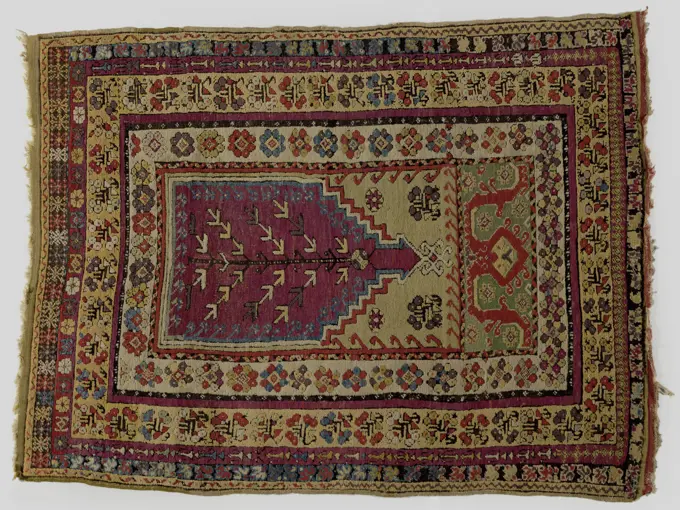
Baddle,, 1800 - 1900 Prayer rug, so -called kirshihir or melas/mucur, red stepped mirab with red stock and yellow, white, yellow, red, blue and yellow edges. Little Asia wool Prayer rug, so -called kirshihir or melas/mucur, red stepped mirab with red stock and yellow, white, yellow, red, blue and yellow edges. Little Asia wool
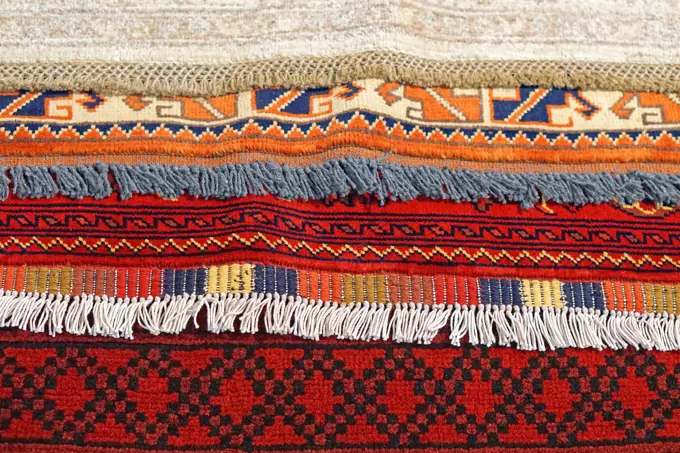
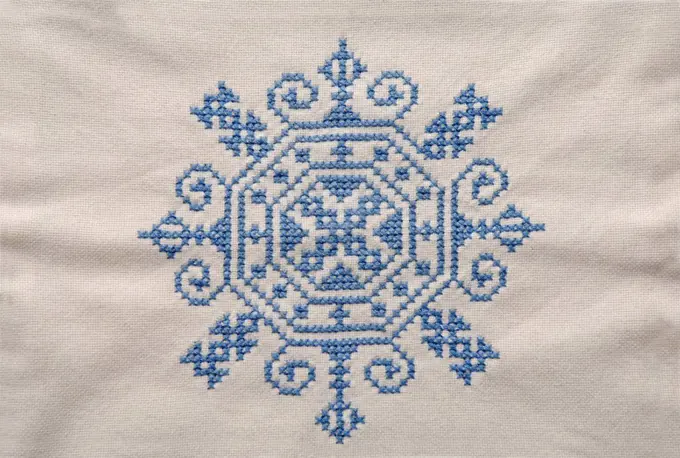
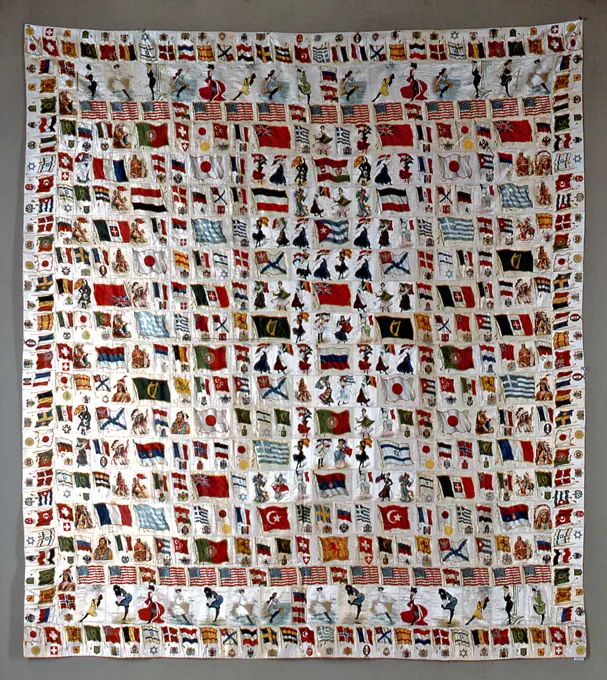
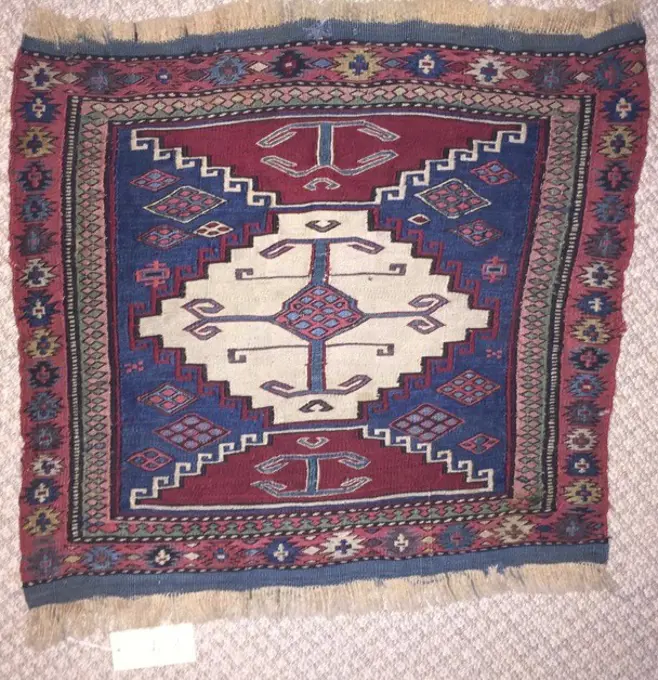
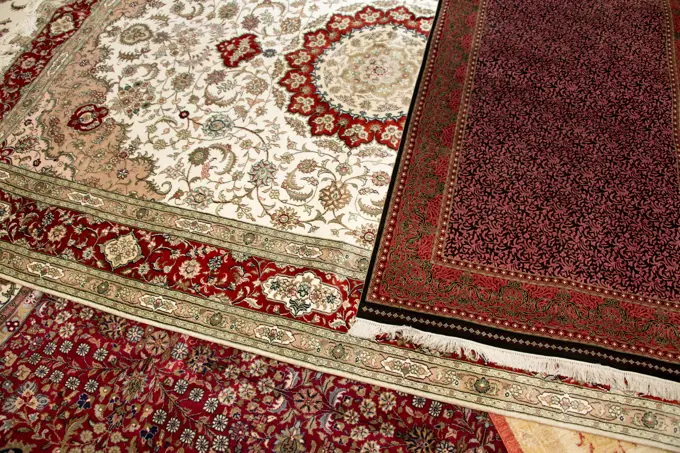
Rug;  Ok. PO. 19th century (1835-00-00-1860-00-00);Bronisław Krystall. Testament (Warsaw - exhibition - 2015/2016), Krystall, Bronisław (1887-1983) - collection, flowers, plant ornaments, testamentary record (provenance)Ahuayo, 20th century, 33 x 31 1/2 in. (83.8 x 80 cm), Alpaca, Bolivia, 20th centuryRank badge, Medium: silk, canvas linen Technique: embroidery (tent stitch), Mandarin Square (P'u-Tzu) for military official of the second rank. Lion on a rock surrounded by wave and cloud forms as well as the Eight Auspicious Signs, worked in a tent stitch. Border of Chinese character alternating with bat motif. Lined with linen., China, 19th century, embroidery & stitching, Rank badgePiece 18th-19th century Japan. Piece 67768Shawl 1800-1850 British. Shawl 123127Rugs Classic style carpets choice selection variety Copyright: xZoonar.com/NikolaxObradovicx 12500088Ribbon with Medici Coat-of-Arms Made 1601-1800 Italy. Silk and cotton, plain weave with supplementary patterning warp and supplementary pile warp forming cut and uncut voided velvet .Sampler (Germany); silk embroidery on linen foundationStrip -Sampler, Medium: silk embroidery on wool foundation Technique: embroidered in cross, half cross, satin, stem and knot stitches on plain weave foundation, Three alphabets and a set of numbers over assorted motifs including two peacocks, a large vase of flowers, six shields containing initials, basket of flowers, elements of the passion, the Pascal Lamb, and two examples of geometric patterns. The Greek letters, alpha and omega, follow the alphabets., Germany, 1795, embroidery & stitching, SamplerEmboidered snow flakeMan's cloth, 19th-20th century, 101 9/16 x 59 13/16 in. (257.97 x 151.92 cm), Cotton, rayon; plain weave, weft face weave, supplementary weft patterning, Ghana, 19th-20th century, Adangbe weavers within the Ewe culture produce exquisite textiles that serve as cultural symbols and as objects of adornment associated with rites of passage or rituals. Both men and women wear wrappers of this type of fabric at formal or ceremonial gatherings such as weddings, funerals, or the enthronement of a chief.Coverlet (Section). Dated: c. 1941. Dimensions: overall: 35.5 x 26.6 cm (14 x 10 1/2 in.) Original IAD Object: 5" long; 5 3/4" wide. Medium: watercolor and graphite on paper. Museum: National Gallery of Art, Washington DC. Author: Cornelius Christoffels.Patchwork Cover (USA); silk, cottonShahsevan Saddle Bag Face ca. 1850 While the term "carpet" evokes a heavy, large rectangular textile (either knotted pile or flat-woven tapestry, called kilim) that covers a floor, a vast array of rug genres and techniques can be found in the Islamic world, where they serve various functions in nomadic encampments, villages, cities, and palaces. Flat-woven and richly embroidered textiles, such as this one, belong to the kinds of smaller tribal weavings that were common in the Middle East from Anatolia to Iran; it was generously given to The Met by Inger G. and William B. Ginsberg of New York. Such textiles were woven by nomadic tribes as containers for everyday items. Some were designed specifically to transport or store bedding, flour, salt, and wooden spindles used to make the woolen yarns from which these works were woven. Others were of smaller size, comparable to cross-body women's handbags, or çanta, or also possibly used by children. Most notable is the ubiquitous double saddlebSampler (England); Embroidered by Harriet McEwen (English); silk embroidery on wool foundationAsia, Turkey, Istanbul. Typical Turkish carpet workshop and store, rug detail. (Large format sizes available)Design for a carpet, unknown, c. 1854 - c. 1864  Manufacturer: Deventeramsterdam paper. gouache (paint) brush  Manufacturer: Deventeramsterdam paper. gouache (paint) brushblur in iran antique carpet textile  handmade beautiful arabic ornamentCoverlet Made 1834 New York. Linen and wool, plain weave double cloth; woven on loom with Jacquard attachment; two loom widths joined . David D. Haring (Weaver)Game Board. Culture: Italian. Dimensions: Overall (closed): 16 5/8 x 9 15/16 x 2 9/16 in. (42.2 x 25.2 x 6.5 cm)Overall (opened): 1 1/4 x 16 5/8 x 19 5/8 in. (3.2 x 42.2 x 49.9 cm). Date: 15th century.Checkered on one side to accommodate a game of chess, this board is marked on the reverse for a game of backgammon. The artist made it foldable for easy storage and transport. Museum: Metropolitan Museum of Art, New York, USA.Trimming (Spain); white, black, and colored silk in velvet weave.; Overall: 26 x 4.8 cm (10 1/4 x 1 7/8 in.)