Traditional Textiles and Bags

Highlights intricate craftsmanship in historical textiles and bags, showcasing unique designs, materials, and cultural significance.
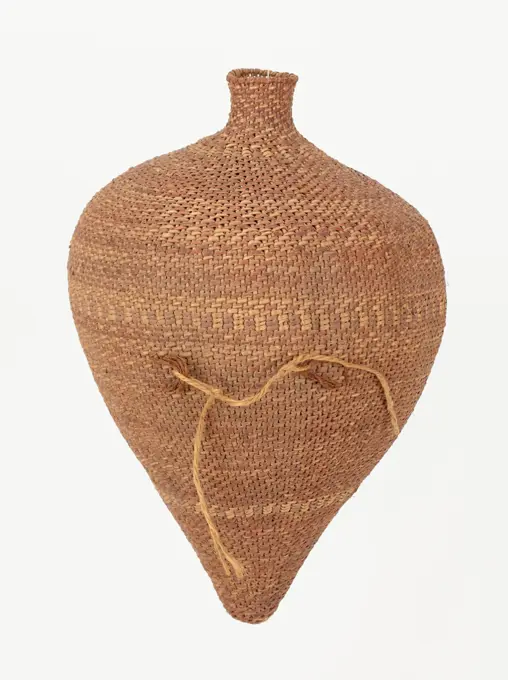
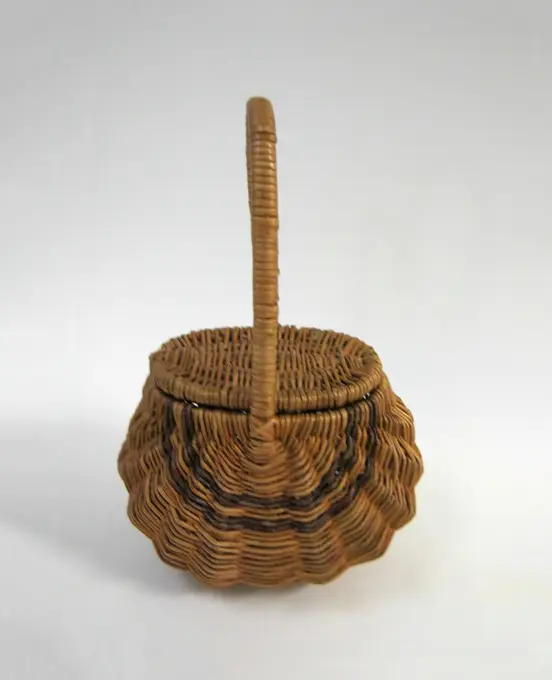
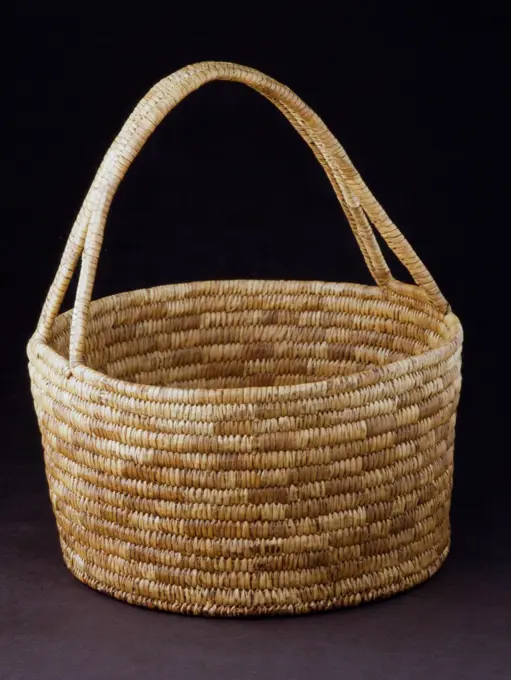
Water Jar, c. 1910-1950, 14 1/8 × 9 1/2 × 9 1/2 in. (35.88 × 24.13 × 24.13 cm), Plant fibers, United States, For thousands of years, Native people have lived in the dry deserts of the North American Southwest, where summer temperatures can reach 130 degrees Fahrenheit. Indeed, the Apache and Tohono Oodham, among other Native peoples, still thrive there. Indigenous knowledge of their environment historically helped them travel great distances with little water to collect certain plants and animals. They still make gathering baskets from local plant fibers, adorned with objects that create pleasing sounds when the baskets are used, Baskets woven so tightly they can store water are both utilitarian and artful, embellished with patterns.
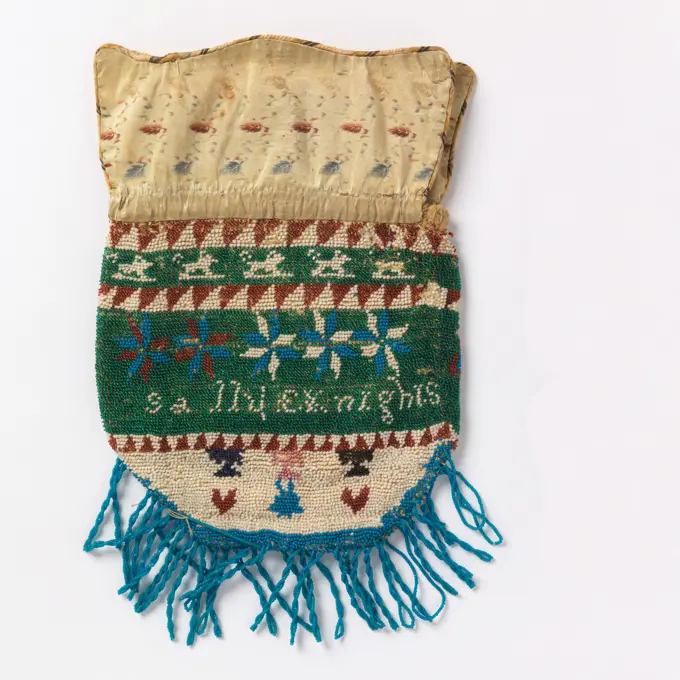
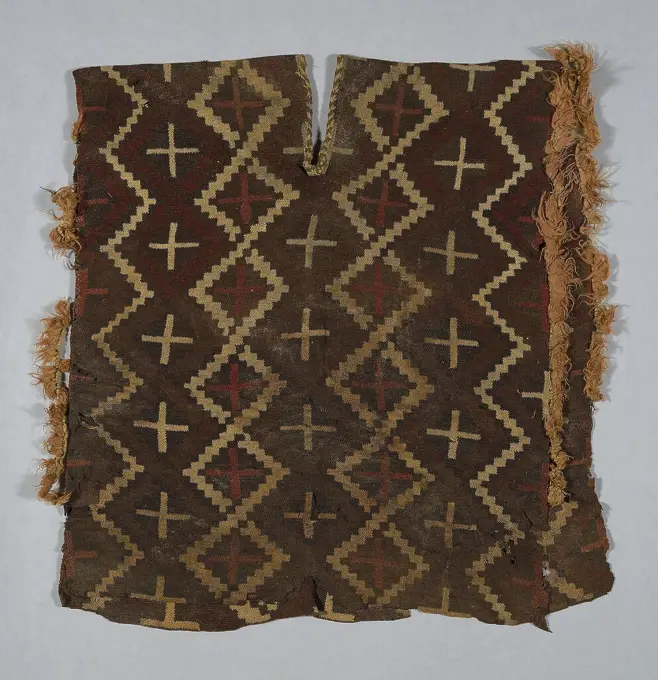
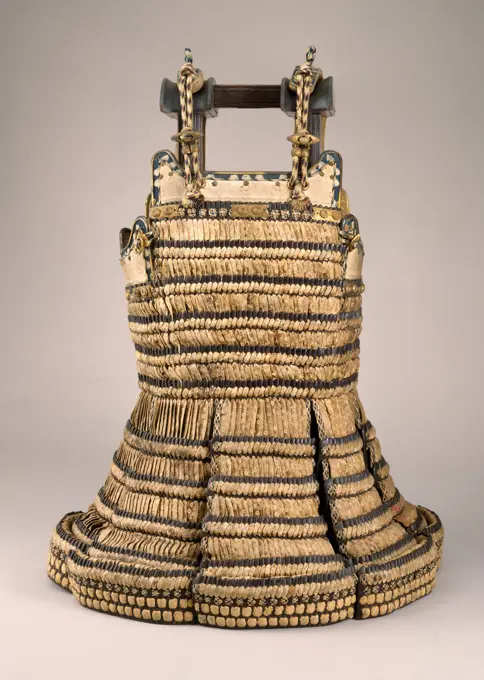
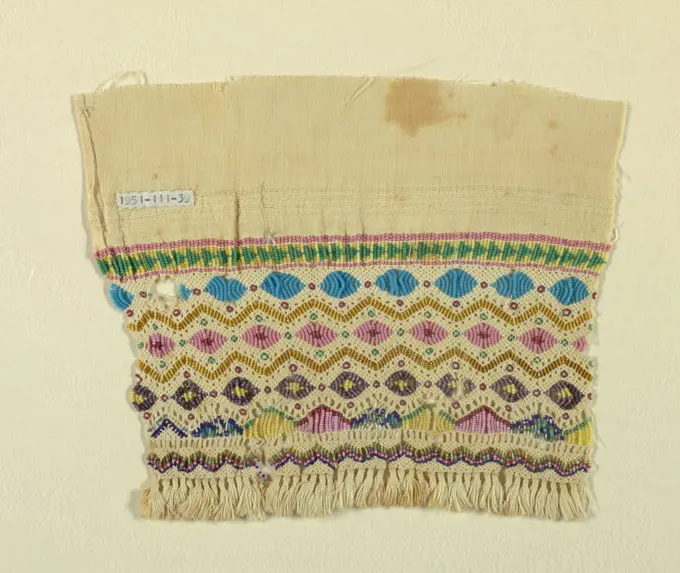
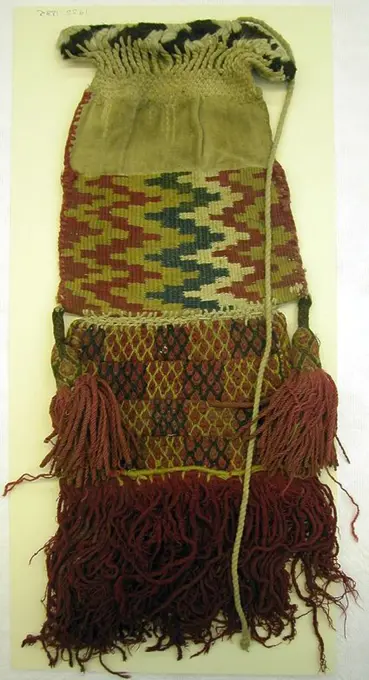
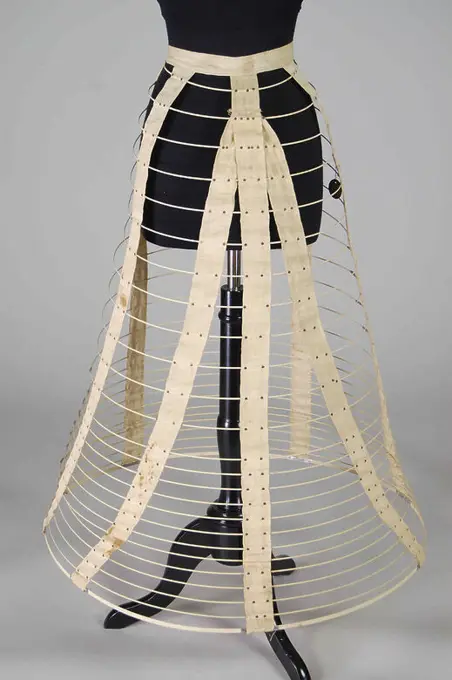
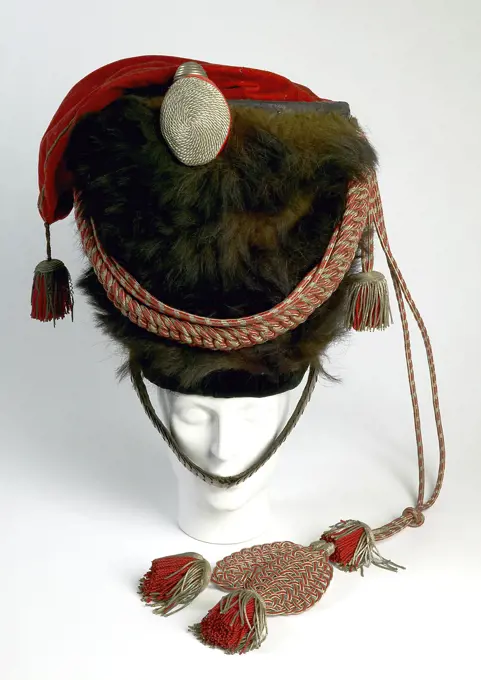
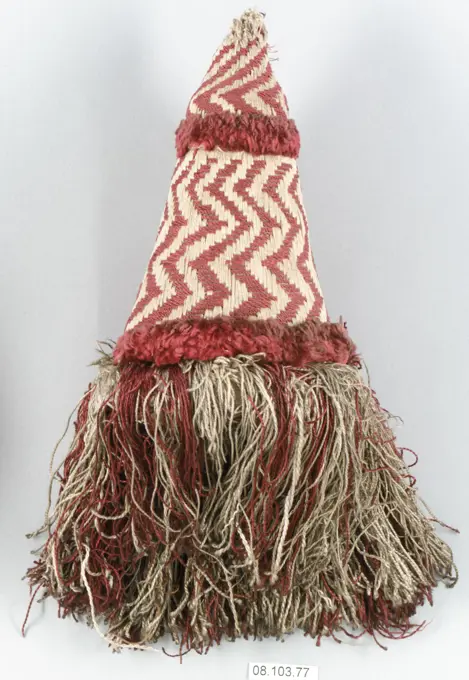
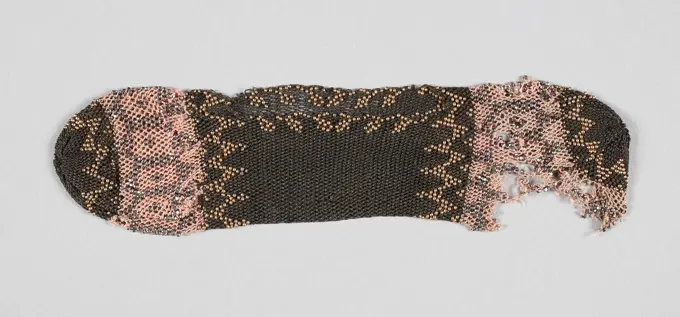
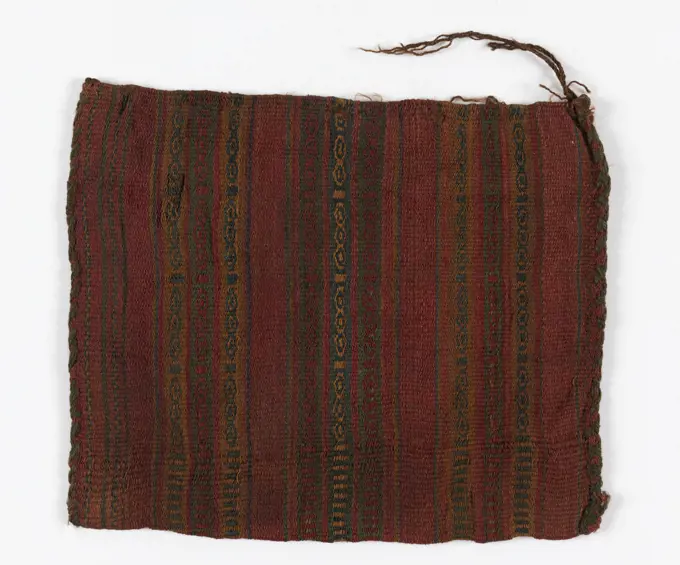
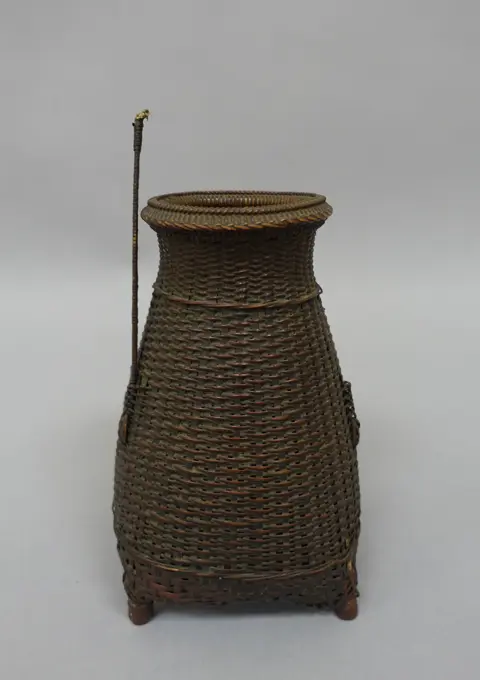
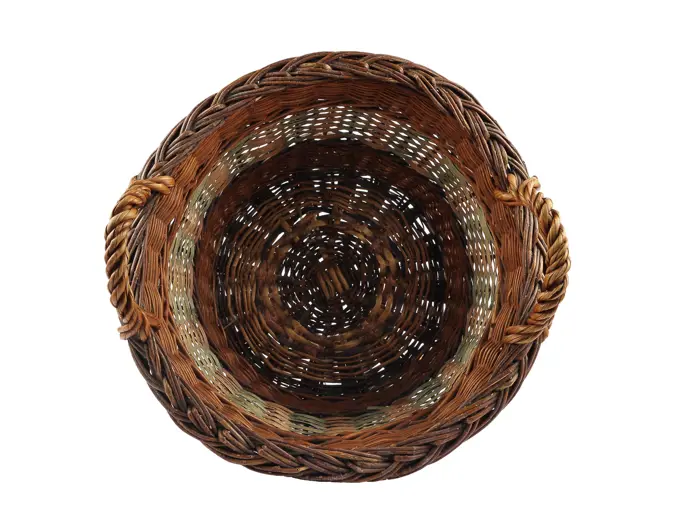
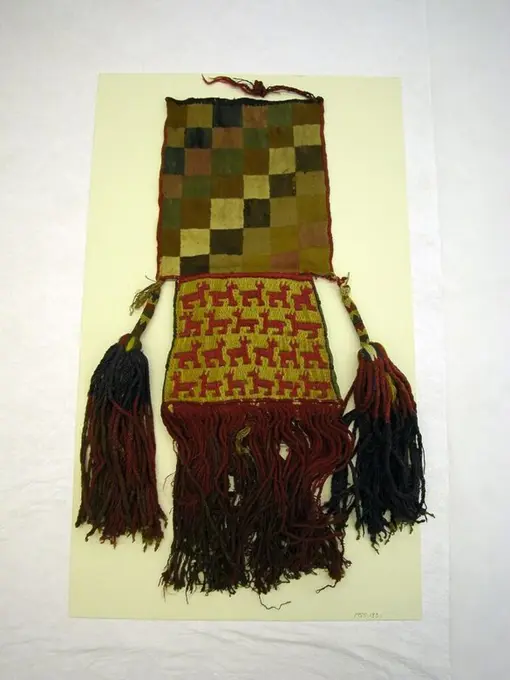
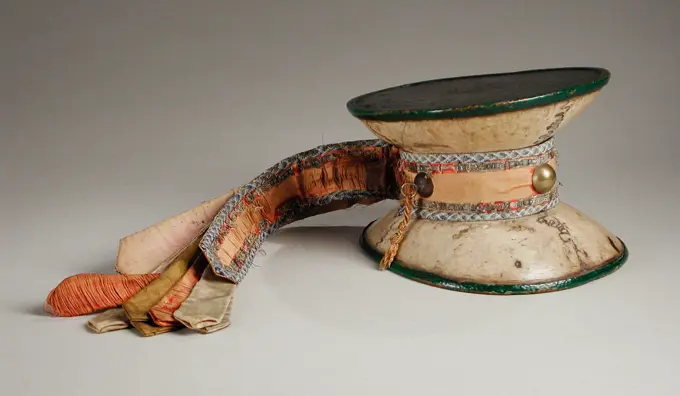
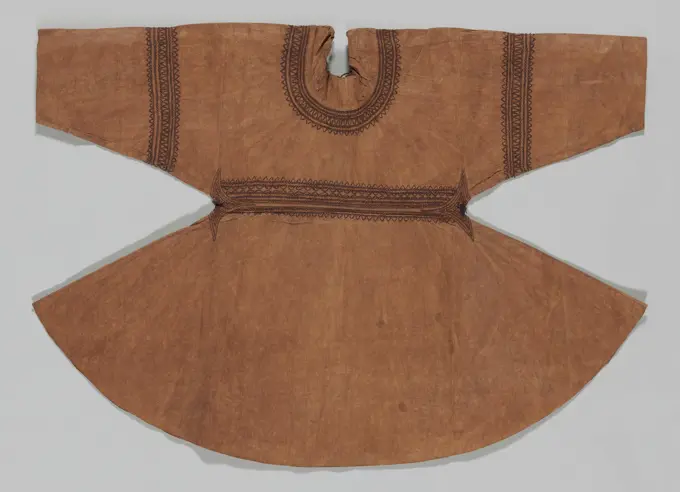
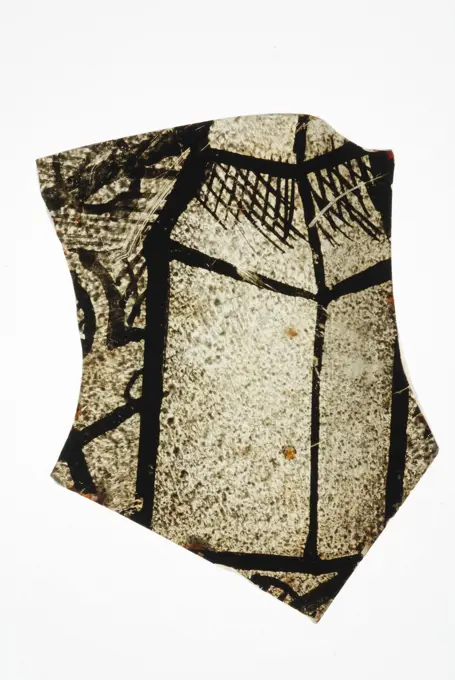
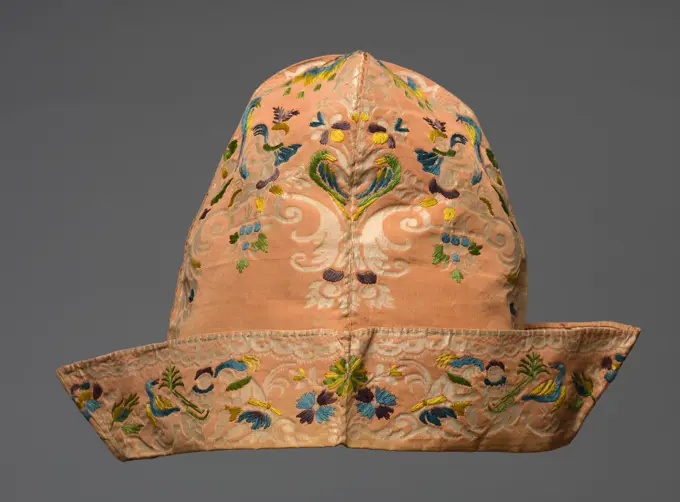
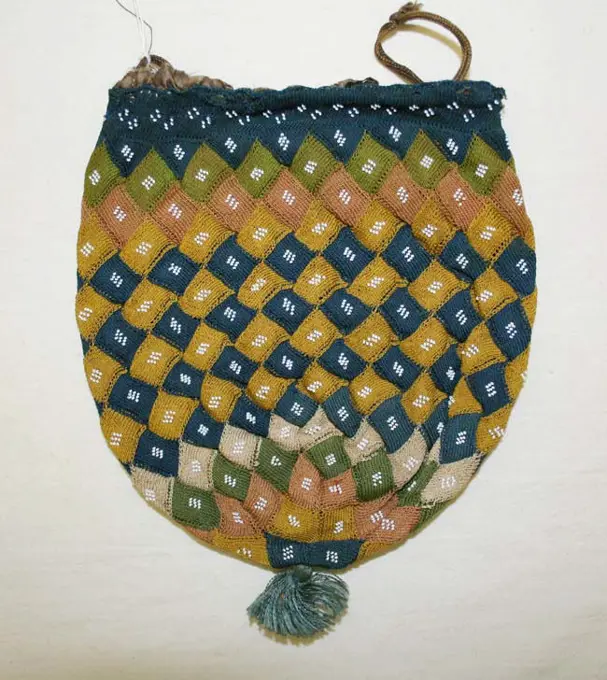
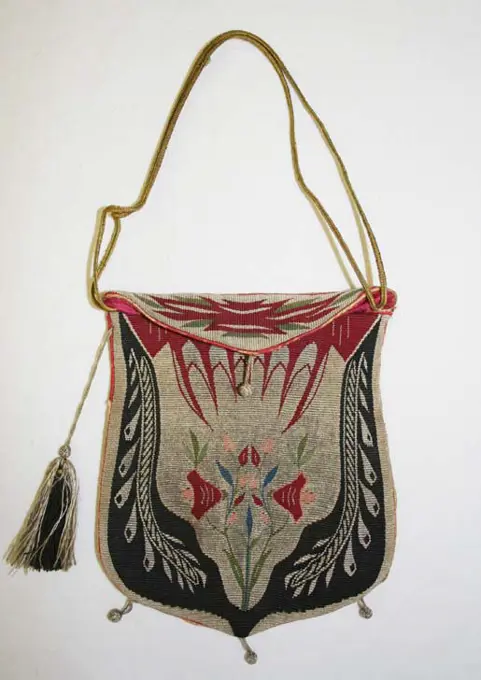
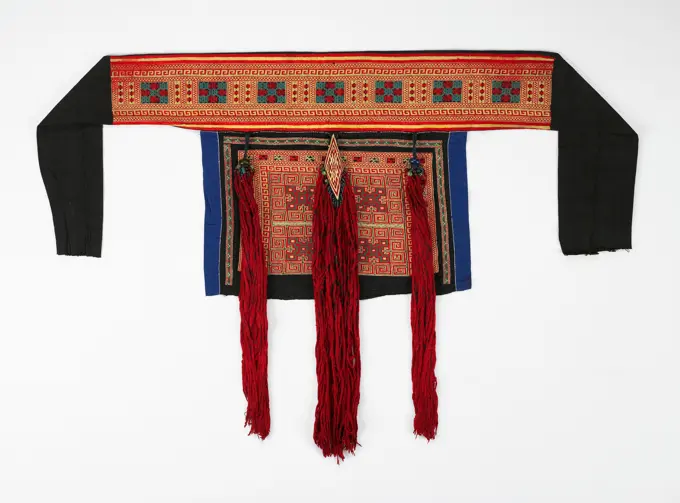
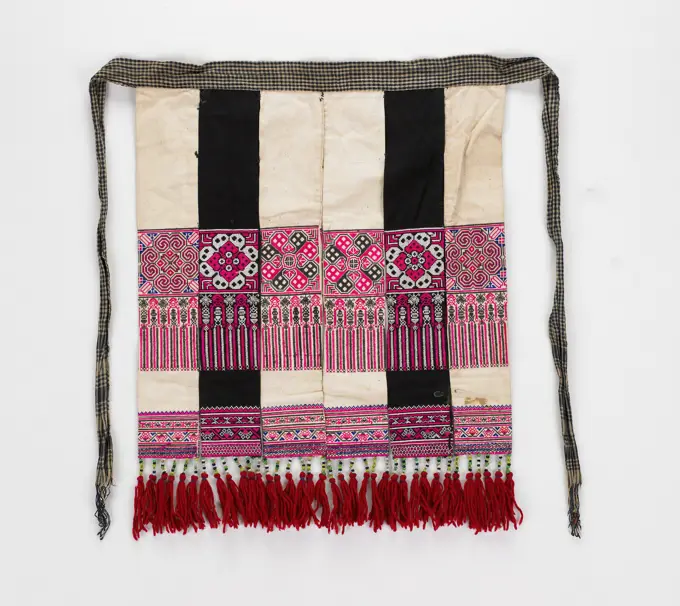
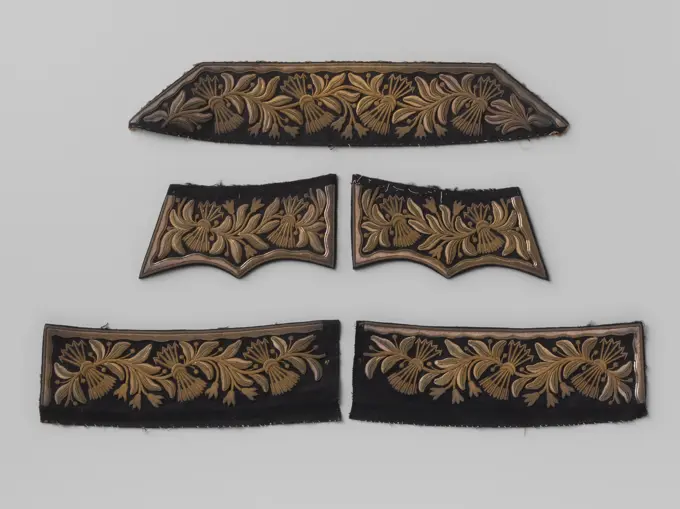
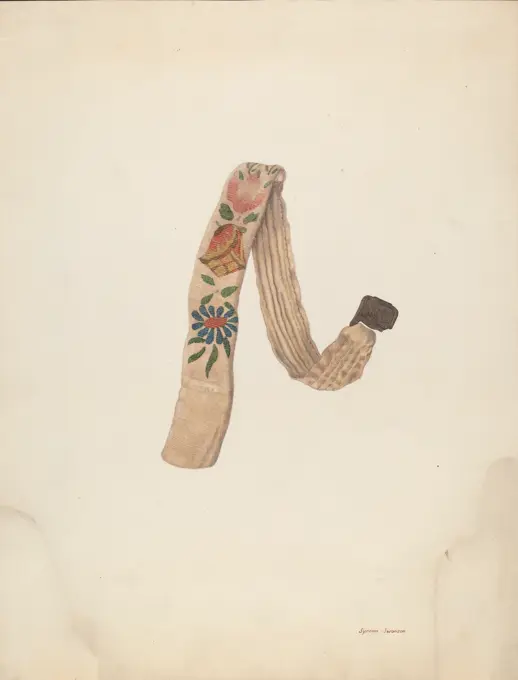
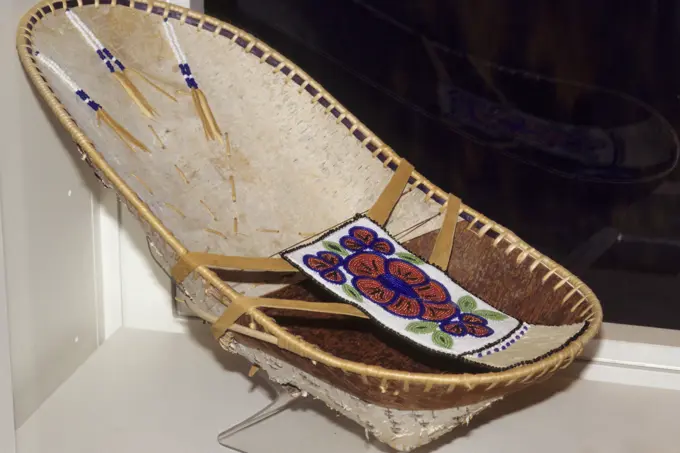
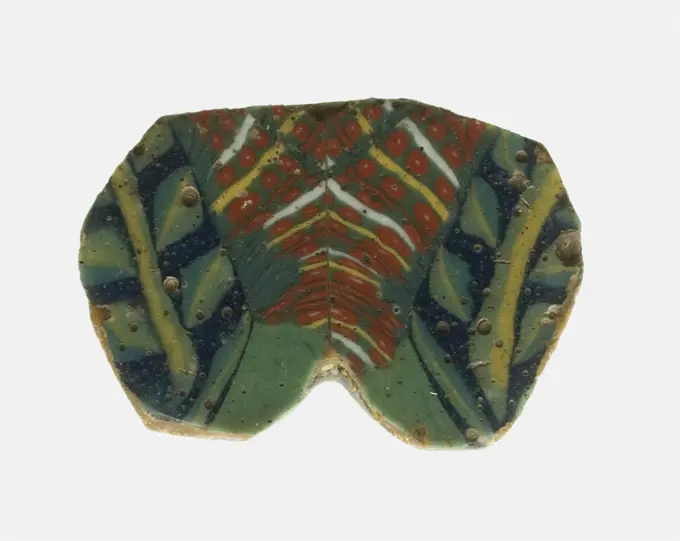
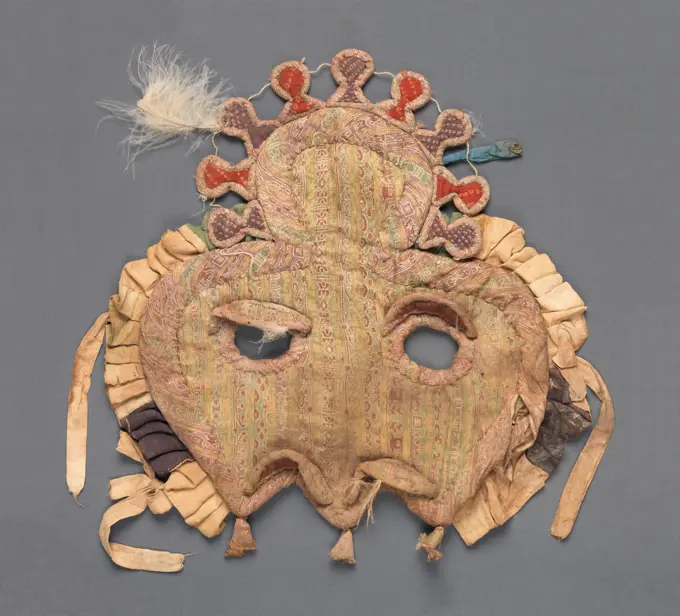
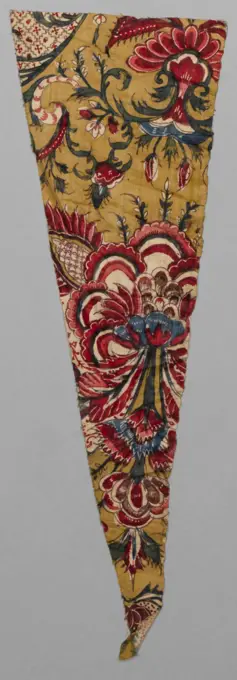
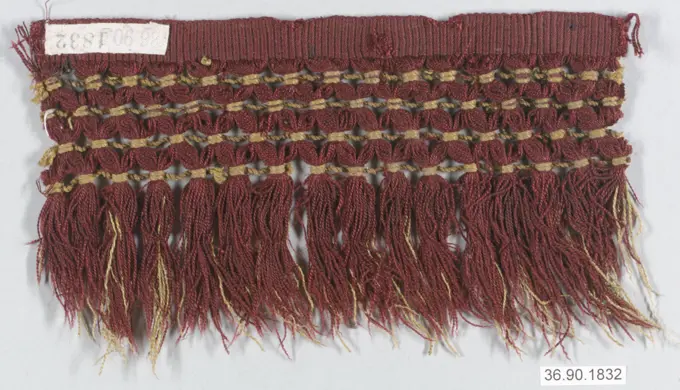
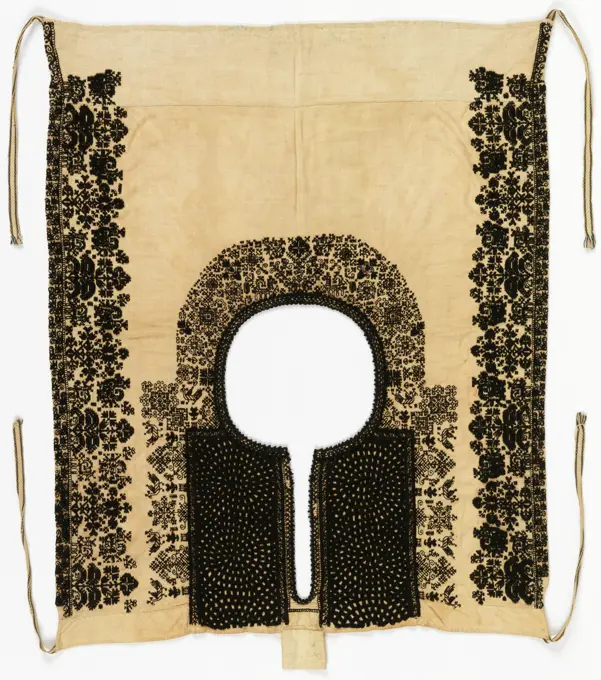
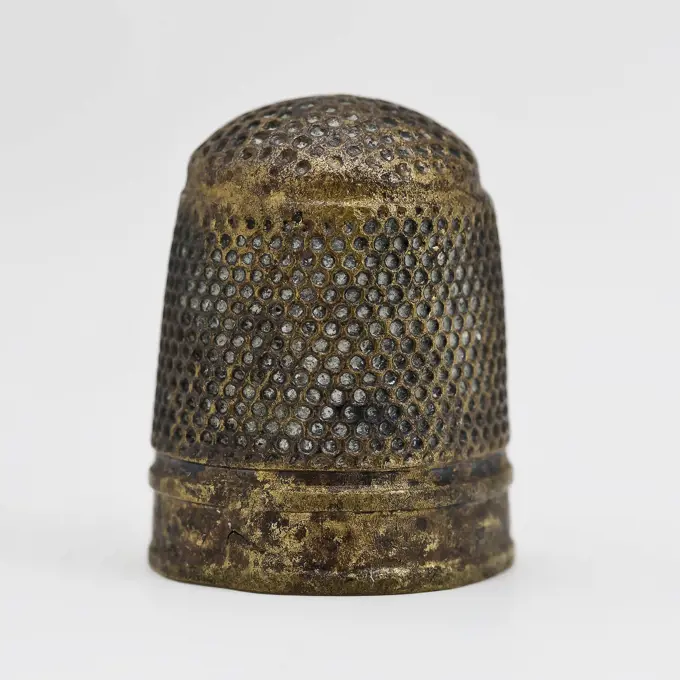
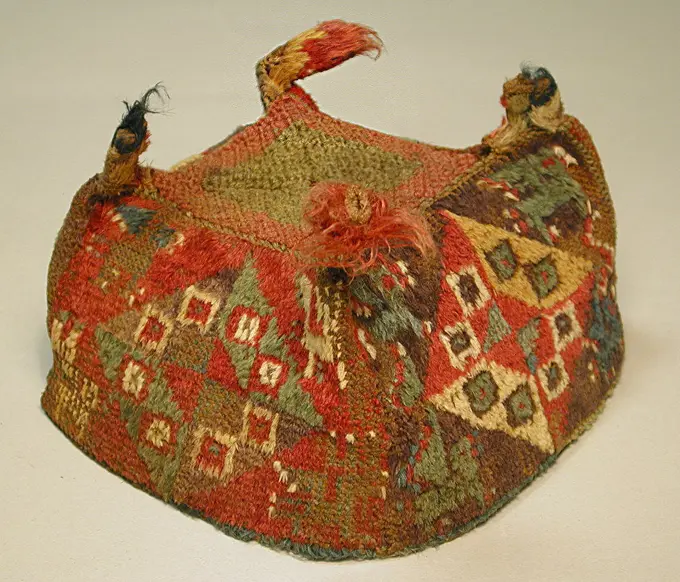
Purse, Medium: silk and metal-wrapped silk Technique: stranded knitting, Miser's purse type, knitted in colored silks with ornamentation in bands showing conventionalized forms and spread eagles with crown and the words 'S.D. Casparre Nicoletti.' Partially lined in red silk., Italy or Spain, 18th century, costume & accessories, PurseWater Jar, c. 1910-1950, 14 1/8 × 9 1/2 × 9 1/2 in. (35.88 × 24.13 × 24.13 cm), Plant fibers, United States, For thousands of years, Native people have lived in the dry deserts of the North American Southwest, where summer temperatures can reach 130 degrees Fahrenheit. Indeed, the Apache and Tohono Oodham, among other Native peoples, still thrive there. Indigenous knowledge of their environment historically helped them travel great distances with little water to collect certain plants and animals. They still make gathering baskets from local plant fibers, adorned with objects that create pleasing sounds when the baskets are used, Baskets woven so tightly they can store water are both utilitarian and artful, embellished with patterns.Saddle Blanket. Dated: c. 1930. Dimensions: overall: 40.7 x 50.8 cm (16 x 20 in.) Original IAD Object: 26" wide; 94" long. Medium: watercolor, graphite, and colored pencil on paperboard. Museum: National Gallery of Art, Washington DC. Author: Ethel Dougan.Gauze Fragment 10th-15th century Peru; central coast (). Gauze Fragment 307886Bag (England); silk, glass beadsBag 7th century Nasca. Bag 308021Fringe European 19th centurycolorful traditional asian skullcap hat with pigtails on a dark background. traditional asian skullcapFringe probably European 19th centuryTunic. Paracas; Peru, south coast, Ica Valley, Ocucaje. Date: 200 BC-1 BC. Dimensions: 76.8 × 74.4 cm (30 1/4 × 29 1/4 in.). Origin: Peru. Museum: The Chicago Art Institute, USA.Hat -Cuirass of a Haramaki late 15th-16th century; probably relaced in the 18th century Japanese. Cuirass of a Haramaki. Japanese. late 15th-16th century; probably relaced in the 18th century. Iron, leather, lacquer, silk lace, gilt copper. Armor PartsTowel end, Medium: cotton, glass beads Technique: interlacing and knotting (macramé), Colored glass beads strung onto the extended threads and then knotted into a pattern., Mexico, late 19th century, knotted, knitted and crocheted textiles, Towel endSash, 19th-20th century, 104 x 1 3/4 in. (264.16 x 4.4 cm) (incl. fringe), Silk, China, 19th-20th centuryPurse (pence Jug) (France); silkSleeve or legging (), ChinaBelt. unknown, authorCoca Bag. Provincial Inca; Peru, Probably south coast. Date: 1476-1532. Dimensions: 44.5 x 15.2 cm (17 1/2 x 6 in.). Origin: Peru. Museum: The Chicago Art Institute, Chicago, USA.Cage crinoline. Culture: American. Date: 1868-70. Museum: Metropolitan Museum of Art, New York, USA.Necklace -Cotton Towel - Blue Border and Fringe. Dated: c. 1937. Dimensions: overall: 35.8 x 27.8 cm (14 1/8 x 10 15/16 in.) Original IAD Object: 25" long; 12 3/4" wide. Medium: watercolor, graphite, and gouache on paper. Museum: National Gallery of Art, Washington DC. Author: Eva Wilson.Fragment, Medium: silk, metallic thread Technique: woven, White herringbone ground with horizontal stripes of varying width, in purely geometric and small-scale conventionalized floral patterns. Stripes are formed by secondary wefts of red, black, blue, pink, purple, green and gold metallic thread., Turkey, 19th century, woven textiles, FragmentLarge high booth of bear's fur from the big tambour of the militia, hanging red velvet pointed hat, cuff with four tassels and silver tulip, cap hat headgear men's clothing workwear clothing uniform hair coat velor leather metal silver, to 115.0 textile Kolbak van bearskin Red bag with silver-red paint brush. White metal storm belt with overlying scales so-called herring. When searching for the red and silver tassels and the so-called 'swings'. Plume of red-black manequins dress head cover man militaria Rotterdam Schutterij tambour-major Gerrit Schuijf Hailing from the warehouse of the Schutterij in the Delftsche Poort.Tassel late 16th-early 17th century French. Tassel 213573Sotck exchange. Around 1858. GAL1984.155.3Headdress Panel, 11 7/8 x 9 3/4 in. (30.16 x 24.77 cm) (including shells), Cotton, cowrie shells; needlework, Indiabook binding ancient book fragment with focus on ragged bookbinding Copyright: xZoonar.com/YuryxZapx 10252311Bag, Medium: silk, metal Technique: plain weave with discontinuous supplementary weft (brocade), Small bag made from four sections of yellow silk brocaded with pink, green and white silk and silver metallic thread in floral desing. Bound with metal thread galoon, with drawstring at top., Spain, 17th century, costume & accessories, BagCoca bag, Medium: wool Technique: Section A) complementary warps, plain weave; Section B) warp-faced plain weave, Small bag, woven in narrow stripes of red, dark green, and brown. Hand stitched at sides to form bag. Warp selvage for bag opening, Peru, possibly 1200, woven textiles, Coca bagFringe mid-19th century Spanish. Fringe 224937Basket 19th century Japan. Basket. Japan. 19th century. Bamboo. Edo (1615-1868) or Meiji period (1868-1912). BasketryBag (Peru); agaveHat probably 5th-8th century Although frequently found in cemeteries, hats such as this example, are rarely recognizably depicted and thus their use is poorly understood. The bag-shaped hats are probably earlier than the tapered examples. The hat is worked in the sprang technique, which produced expandable networks.. Hat. probably 5th-8th century. Wool. Attributed to Egypt. TextilesPurse, Medium: glass beads, silk, metal frame Technique: beaded knitting, Knitted bag, circular in form, with an eight-pointed star in the middle with a floral border. Beaded scallops around edges; metal frame, silk lining., USA, mid-19th century, costume & accessories, PurseBibFringe 18th century Italian or Spanish. Fringe 213707Basket Japan 19th century View more. Basket. Japan. 19th century. Rattan. Edo (1615-1868) or Meiji period (1868-1912). BasketryApron, 20 x 12 in. (50.8 x 30.48 cm) (including fringe), Cotton, seeds, ChinaMiser's Purse (USA); cotton, steel rings and ornamentsWeidenkorb auf weissem Hintergrund - Wicker basket on white background Weidenkorb auf weissem Hintergrund - Wicker basket on white background Copyright: xZoonar.com/lantapixx 12860653Coca Bag. Provincial Inca; Peru, Probably south coast. Date: 1476-1532. Dimensions: 48.3 x 17.2 cm (19 x 6 3/4 in.). Origin: Peru. Museum: The Chicago Art Institute, Chicago, USA.CERAMIC PHARMACY JAR. MANISES. 15th CENTURY. Location: MUSEO ARQUEOLOGICO NACIONAL-COLECCION. MADRID. SPAIN.Ifá diviner's necklace (òdìgbà Ifá), 1900s. Africa, West Africa, Nigeria, Yorùbá-style maker. Cloth, glass beads, cardboard, cotton, probably wool, and wood; overall: 49.5 cm (19 1/2 in.); bag: 21.5 x 19.6 cm (8 7/16 x 7 11/16 in.).Ritual Pellet Drum. Tibet, 18th century. Tools and Equipment; musical instruments. Skull and skin with brass fittings and cloth tasselsBag (USA); silkJacket. Jacket with stitching.Fragment of green window glass with stained-glass decoration, plinth or pedestal, window glass building material soil find glass, cast drawn cut painted baked Fragment of greenish tinted window glass. Stained glass Image shows part of building construction pedestal or pedestal archeology Landpoortstraat Geervliet Bernisse indigenous glasswork adorn living building glasier hof van Putten archaeological find in the soil Geervliet pit Landpoortstraat 1 September 1983.Basket, 13 3/4 x 6 1/8 x 8 9/16 in. (34.93 x 15.56 x 21.75 cm), Willow, United StatesMan's Cap, 1700s. France, 18th century. Brocade, silk; overall: 24.2 x 35.6 x 58.4 cm (9 1/2 x 14 x 23 in.).Reticule 1810-30 probably German. Reticule 116959Purse late 18th century French. Purse 84595Baby Carrier, 22 x 74 in. (55.88 x 187.96 cm) (without tassels), Cotton, silk, glass beads; needlework, ChinaLocking basket. Oval lid basked silver thread. The basket has a hinged lid, two handles and a padlock. The shape of the basket is canopic. The basket has not been marked.Evening pouch. Culture: American. Date: second quarter 19th century. Museum: Metropolitan Museum of Art, New York, USA.Inrô with Hares and TokusaGrass. Artist, school of: Koma Yasuaki (Kyuhaku), Japanese, died 1715Set of five empty clothes hangers hanging on wooden rustic style rod on thick rope, isolated over white studio wall background with copy space for text. Fashion store, sale and retail conceptAnklet  -Woman's mantle (Awayo), 19th century, 38 1/2 x 38 1/2 in. (97.79 x 97.8 cm), Alpaca, Bolivia, 19th centuryCap 1875 American. Cap 169540Apron, ChinaMiser's Purse (France); silk, metalPartial Streamer Skirt, 6 1/2 x 64 in. (16.51 x 162.56 cm) (including ties), Cotton, beads, ChinaEmbroidery for Ja.r. Thorbecke (cuff), c. 1850  Embroidery for jacket belonging to the office of J.R. Thorbecke as Minister of the Interior. Netherlands textile materialsTextile Fragment, undetermined Chimú. , 1000-1532. Cotton, 10 3/4 × 5 1/2 in. (27.3 × 14 cm).   Arts of the Americas 1000-1532Syrena Swanson, Wedding Garter, c 1938 Wedding GarterSewing Instruction Book Samples (USA); 1945-20-14-a/cGolden exhibition of links. The bracket is decorated with Louis XV leaf ornament.Pair of Gauntlets. Culture: Italian, Milan. Dimensions: L. of each 9 1/4 in. (23.5 cm); W. of each 3 3/4 in. (9.53 cm). Date: ca. 1585.These small gauntlets belong to an armor for foot tournament made for the seven-year-old heir to the Spanish throne, the future Philip III (1578-1621, king from 1598). The decoration is typically Milanese, with bands of chiseled and gold-damascened trophy and grotesque ornament outlined with silver dots. A figure of Mars, god of war, is seen at the top of each cuff. Museum: Metropolitan Museum of Art, New York, USA.Coin purse. Culture: Mexican. Date: 1825-35.The two female figures seen here are dressed in fashionable 1830s costume: the seated figure wears a brown dress with puffed sleeves and a feather headdress; the standing figure wears a blue dress and holds a shawl. Although the motifs on the reverse are conventional ones often seen in needlework samplers, the pink animal figures are an idiosyncratic addition. The lining is a dress silk that is consistent with fabrics of the late 1820s to early 1830s. The purse is part of the Mexican beadwork collection of over 600 pieces assembled by Elizabeth Morrow (1873-1955), mother of writer Anne Morrow Lindbergh, the wife of renowned aviator Charles Lindbergh. Morrow collected the objects between 1927 and 1930, when her husband, Dwight Morrow, Sr., served as U.S. ambassador to Mexico. She lent the collection to the Brooklyn Museum in 1938 and upon her death, her children donated it. A collection of 155 pieces of Mexican ceramics and other decorative aFour-case inrô (medicine case). Yamada, school, Yamada, Jôkasai (1811-1879), craftsmanCrocheted hat made of white cotton, decorated with a scalloped edge, stud pattern and floral pattern Crochet baby hat.  cotton (textile) crocheting Crochet baby hat.  cotton (textile) crochetingNorthcoast basket with ducks and whale, 5 1/2 × 12 × 12 in. (13.97 × 30.48 × 30.48 cm), Plant fibers, United StatesWoollen Caps Worn by Dutch Whalers, anonymous, c. 1740 - c. 1760  Hat, finely knitted and multi -colored with red, green, blue, yellow and white horizontal stripes, lined with a coarsely knitted light brown hat. The top of the outer hat falls limp over the inside hat and the whole looks a bit like a sleeping cap. The outer hat is knitted in Tricot-Steek with fifty-five stitches and a hundred needles per ten centimeters and consists of two parts, cut from a large flat flat knit.  wool   Spitsbergen. Svalbard. Zeeuwsche UytkyckTraditional Athabaskan infant cradleboard made from birch bark and decorated with floral beadwork strip. AlaskaFragment of an Inlay Depicting a Fish 100 BCE-100 CE Roman Empire. In ancient Rome, there was a high demand for colorful glass that could dazzle banquet guests alongside the expensive silver and gold serving wares meant to impress. Fragments like this one would have once been a part of larger mosaic dishes. The mosaic pattern was made by sagging molten glass into bowl-shaped molds, a technique used on many of these fragments is similar to millefiori, ìthousand flowersî in Italian, a modern glass-making method in which tiny rods of colored glass are bundled together, wrapped in a sheet of glass, fused, and then thinly sliced to reveal swirls of a flower-like patterns. They were arranged side by side, sometimes together with bits of colored glass, and fused together with heat.. Glass, mosaic technique . Ancient RomanShield. Culture: Philippine, Igorot. Dimensions: H. 35 in. (88.9 cm); W. 9 3/4 in. (24.8 cm); D. 2 5/16 in. (5.9 cm); Wt. 1 lb. 13.5 oz. (836.3 g). Date: 18th-19th century. Museum: Metropolitan Museum of Art, New York, USA.Cap. unknown, authorTobacco scholarship. XIXth. GAL1981.138.21Close-up of old lidded shopping basketBasket, 7 × 14 13/16 × 14 9/16 in. (17.78 × 37.62 × 36.99 cm), Plant fibers, United StatesBridal bag (pouch) of cream -colored charmeuse and silk crepe with towing of satin and decorated with orange blossom of wax, anonymous, 1898 Bridal bag (pouch) of cream -colored charmeuse and silk crepe with towing of satin and decorated with orange blossom of wax. Model: pouch from silk crepe georgette with tunnel so that a double silk ribbon as a tensile closure. This pouch is clamped between two halves, each of which is built up from overlapped petals made of double charm. Decoration: In the heart of both flower halves a dash of wax orange blossom. Egypte (possibly) pouch: Silk. Flower half of the flower: Silk. Lint: Silk. Flowers: wax. Leaves: Cotton (textile). Steel: Metal thread. Steel: Paper   Singapore Bridal bag (pouch) of cream -colored charmeuse and silk crepe with towing of satin and decorated with orange blossom of wax. Model: pouch from silk crepe georgette with tunnel so that a double silk ribbon as a tensile closure. This pouch is clamped between two halves, each of whiLong trade fair, with red and beige side, in which cut steel beads have come. Halfway through the exhibition, an opening has been left, which is closed through two metal shear rings. At the rounded ends are two brushes of elongated, square and round steel beads. In the fair a coin of 2 1/2 cents from 1906 and two semi-cents from 1914 and 1916.Basket, 20th century, 12 x 10 3/8 x 10 3/8 in. (30.5 x 26.4 x 26.4 cm), Raffia, United States, 20th centuryThree brown shawl with fringes along the three sides, Anonymous, c. 1880 - c. 1900 Three brown shawl strips of Chenille, which are sewn together. Fringes of the same material along the three sides. Netherlands whole: sewing Three brown shawl strips of Chenille, which are sewn together. Fringes of the same material along the three sides. Netherlands whole: sewingShaffron (Horse's Head Defense) ca. 5th-7th century Central Asian This shaffron is extraordinarily rare both for being one of only a few known examples of Central Asian textile shaffrons (see also 2016.170) and for the fact that it is a largely intact and complete textile object from a region and period when textile fragments are the norm. The weaving technique and the motifs suggest that the silk was made in Central Asia, inspired by Chinese fabric that was known via commerce on the Silk Road. A ceremonial shaffron (horse's head covering), made of silk, for a small pony. The shaffron has two circular openings for the eyes, a poll piece in the form of a semicircular extension at the center top, and two large v-shaped notches to accommodate the nostrils along the bottom edge. A series of nine rounded tabs extend from the outer edge of the poll piece; a white feather remains attached to one tab. There is a pleated ruff or trim along both side edges. There are applied crescent-shaped piecFragment Sits with symmetrical lace pattern and flower drinks on Oknergele Fond. Fragment Sits. Design: symmetrical striptic, filled with grid pattern, so-called lace pattern, and flower drinks; in the axle large flower arrangements in red, blue, eggplant, yellow and green against an ocheral fond; The fond of the bandwork is white. Hindeloopens fur. Note: Previously other inv.nrs. Given: BK-NM-3725 and BK-NM-12206-B, with references to the catalog of the textile art in the Dutch Museum of History and Art in Amsterdam (1903), Cat.nrs 344 and 345.Hat, c. 1910-1940, 4 × 6 15/16 × 6 15/16 in. (10.16 × 17.62 × 17.62 cm), Plant fibers, United StatesFringe (Spain); 1909-12-10Beads ca. 9th century B.C. Iran. Beads 325329Fringe early 19th century British. Fringe 224918Vestee (Spain); wool embroidery on linen foundationGlass striped mosaic cup fragment. Culture: Roman. Dimensions: 1 5/8 × 1 5/16 × 1/8 in. (4.1 × 3.4 × 0.3 cm)Estimated diameter 2 5/8 in. (6.6. cm). Date: late 1st century B.C.-early 1st century A.D..Rim and side of a cup or beaker.Translucent blue, purple appearing honey brown, light blue appearing green, opaque yellow and white, and colorless.Vertical, rounded rim; straight side, slanting in downward.Striped pattern formed from lengths of different canes, repeated in parallel, almost vertical lines in a combination of lengths and network canes, including one cane in yellow outlined in white, flanked by honey brown, and colorless network canes with white spiral threads; another in fine lengths of blue, green and white together with purple network canes with yellow spiral threads; and a third with lengths in cobalt and turquoise blue with a blue network cane with a white spiral thread. A broad colorless network cane with a double spiral thread is attached as a rim. On exterior beloBoudoir cap -Glass Fragment 15th century European. Glass Fragment. European. 15th century. Pot metal glass. Glass-StainedDrom, old model of the arches. Groom of the militia. The brass boiler is provided with a veal sheet on both sides, held by a hoop and tense by means of a tensioner with tractors and screws. Both hoops are decorated with a motif of triangles in the colors red, white and blue. With engraved numbers: 1847-42.Copper molded thimble, thimble sewing kit soil find copper brass metal, cast Copper molded thimble with round pits on top in lines with groove merging into shaft with wheel punch and two grooves on the board archeology sewing protect needle and thread clothing repair finger textile seamstress tailorFour-Cornered Hat 7th-9th century Wari Finely woven, brightly colored hats, customarily featuring a square crown, four sides, and four pointed tips, are most frequently associated with two ancient cultures of the Andes: the Wari and the Tiwanaku. The Wari Empire dominated the south-central highlands and the west coastal regions of what is now Peru from 500-1000 A.D. The Tiwanaku occupied the altiplano (high plain) directly south of Wari-populated areas around the same time, including territory now part of the modern country of Bolivia. The cultures not only developed and flourished as contemporaries, but also occupied adjacent lands for nearly four centuries. A Wari ceremonial center called Cerro Baúl was located a mere five miles from Tiwanaku-settled fields in the Moquegua Valley of Peru. The two cultures likely encountered each other at Cerro Baúl and elsewhere, but the nature of these interactions remains largely unknown. Four-cornered hats from both the Wari and the Tiwanaku were Parasol 1860s probably French. Parasol 122546Apron, 20th century, 16 1/2 x 22 7/8 in. (41.9 x 58.1 cm), Cotton, China, 20th centuryBonnet ca. 1845 American. Bonnet 169917