Traditional Textiles of Asia

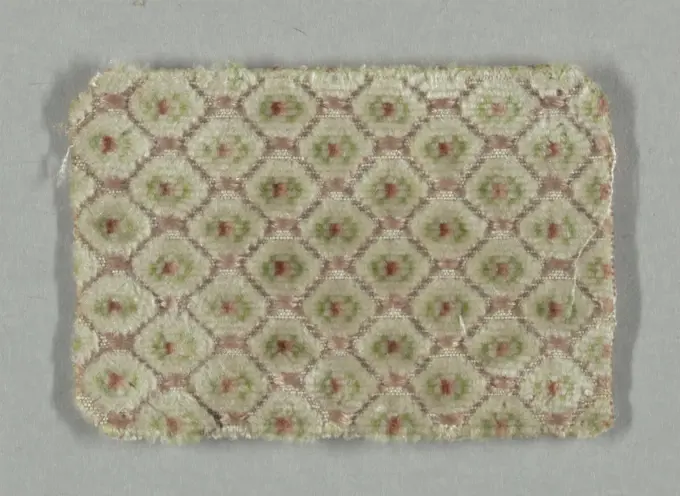
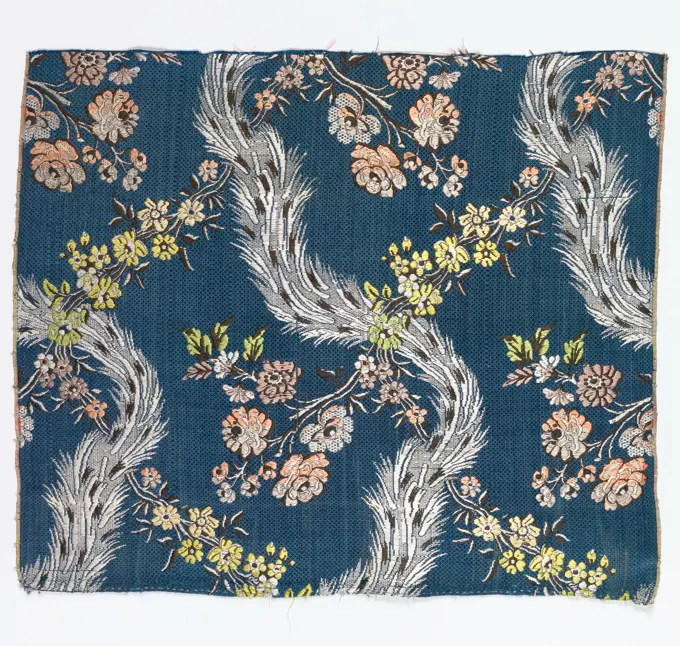
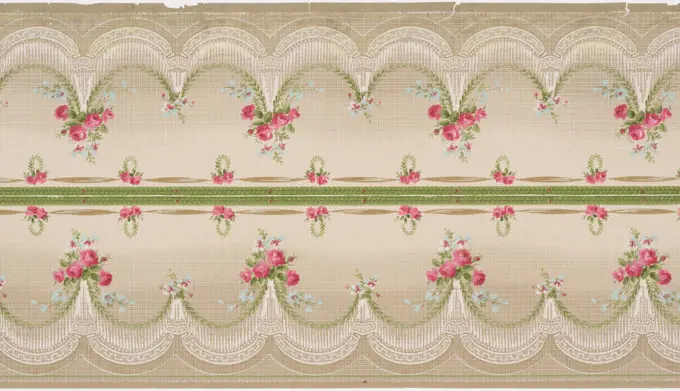
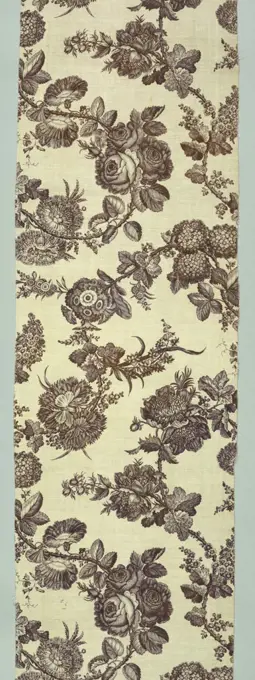
A collection of historic textiles featuring floral and geometric patterns, including stenciled resist and silk brocade designs in varied color palettes.

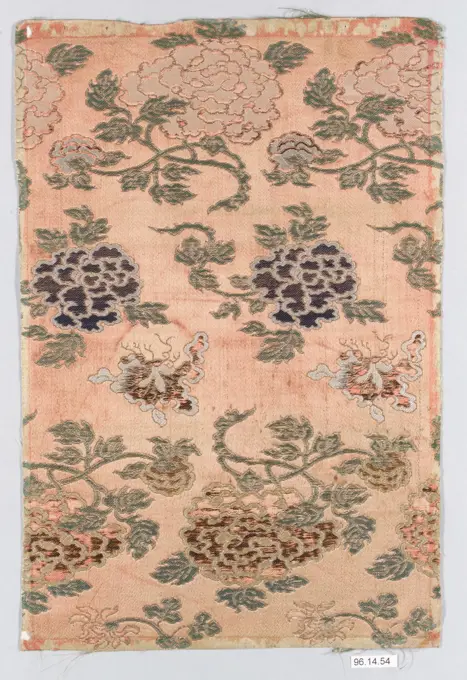
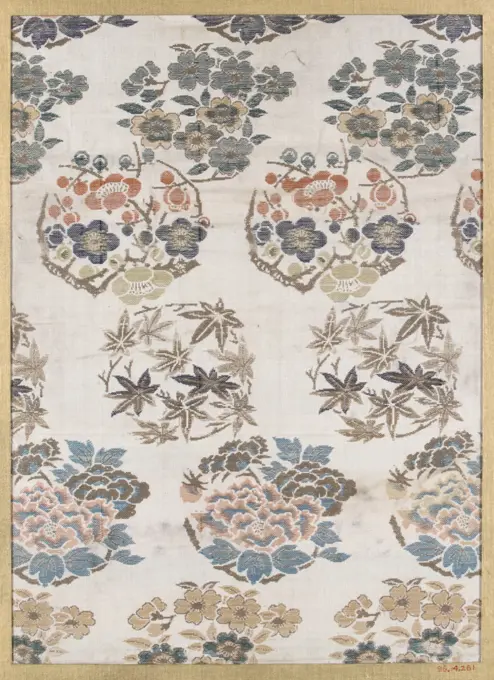
Textile, Medium: cotton Technique: stenciled resist on plain weave (katazome), Two columns of offset hexagons with flower centers. Surrounding hexagons are curling leaves and flowers forming cross shapes. Design is primarily comprised of white dots in reserve and red accents., Japan, 19th century, printed, dyed & painted textiles, Textile
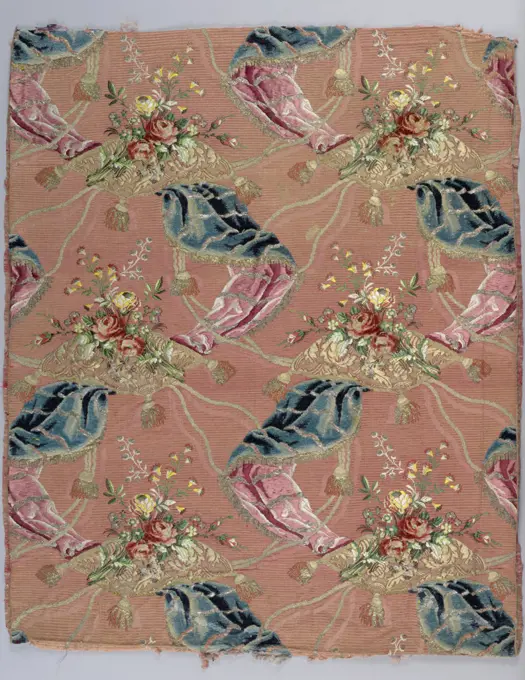
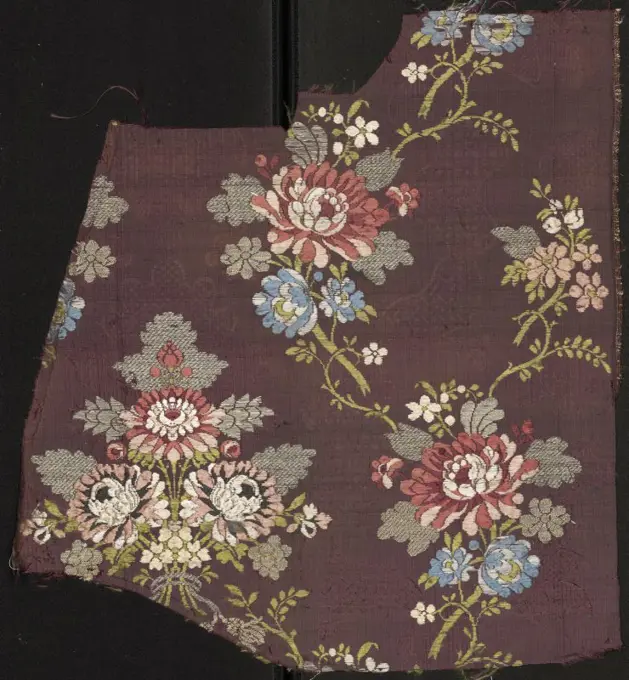
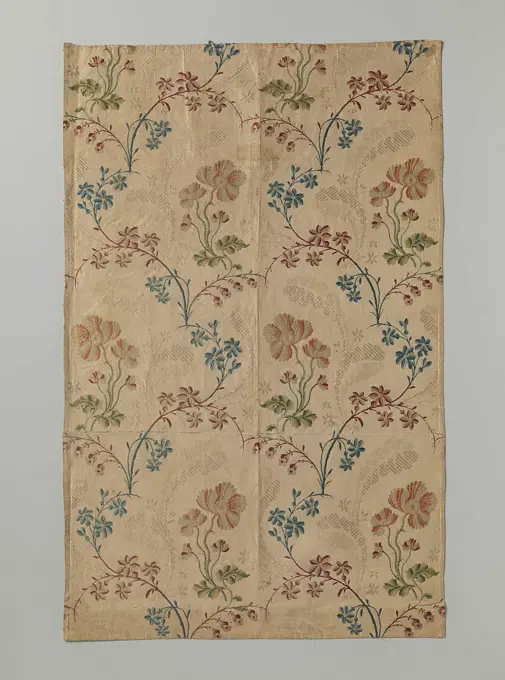
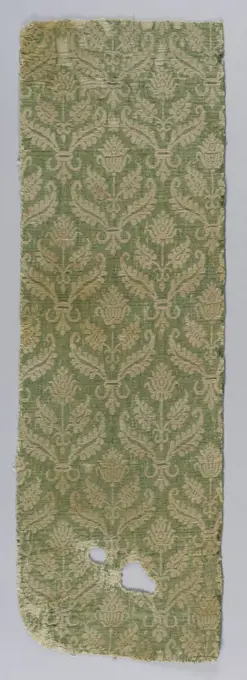
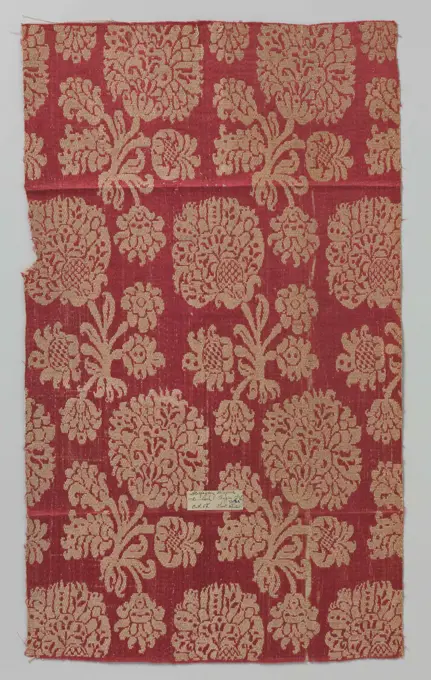
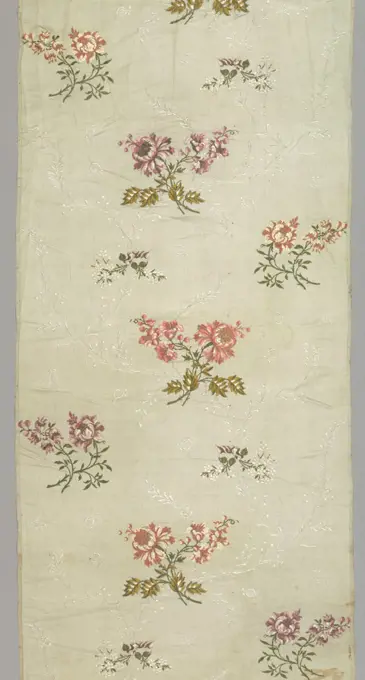
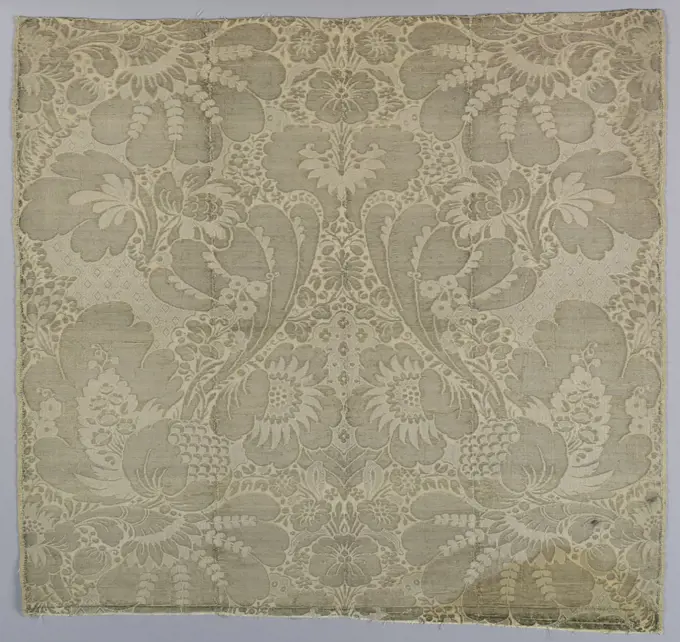
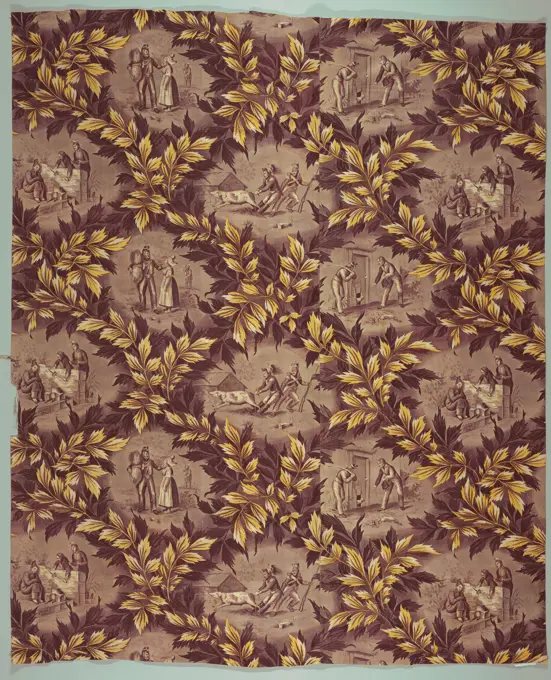
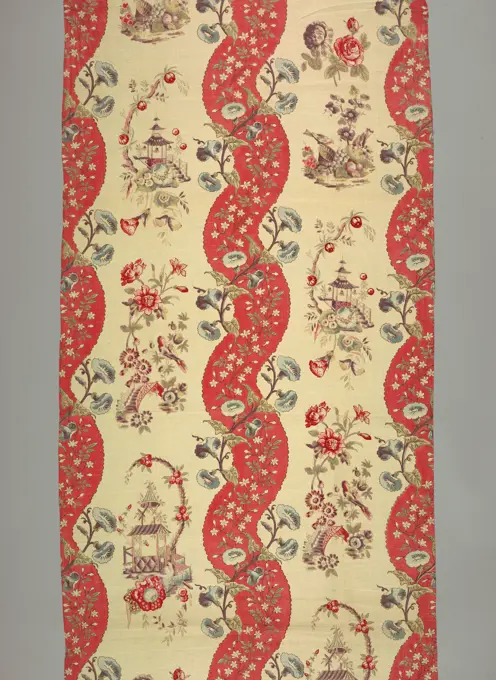
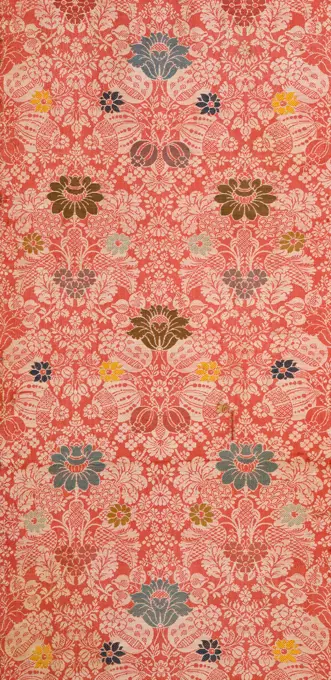
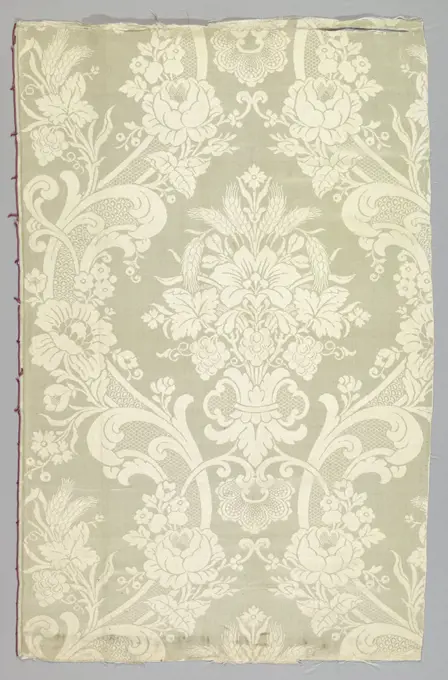
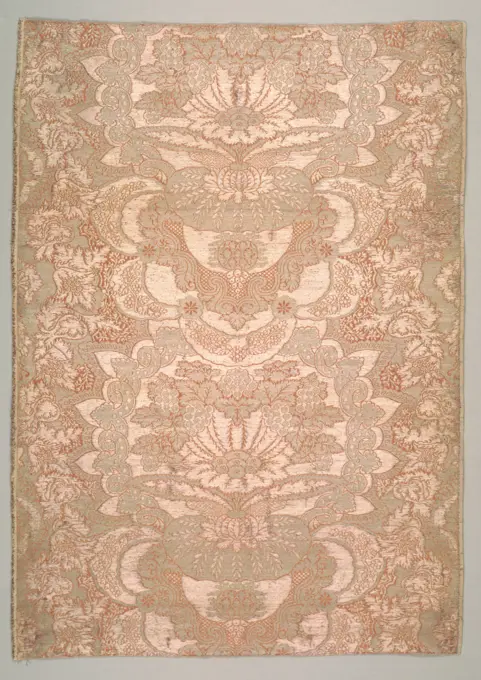
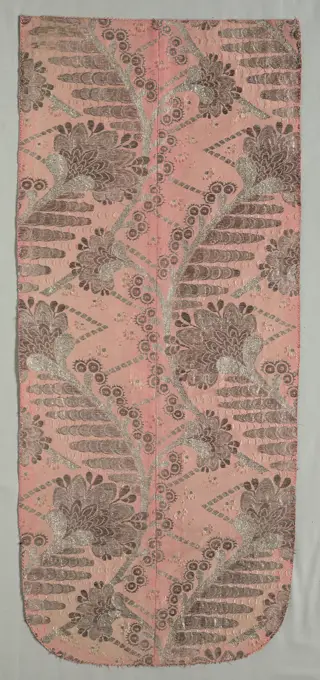
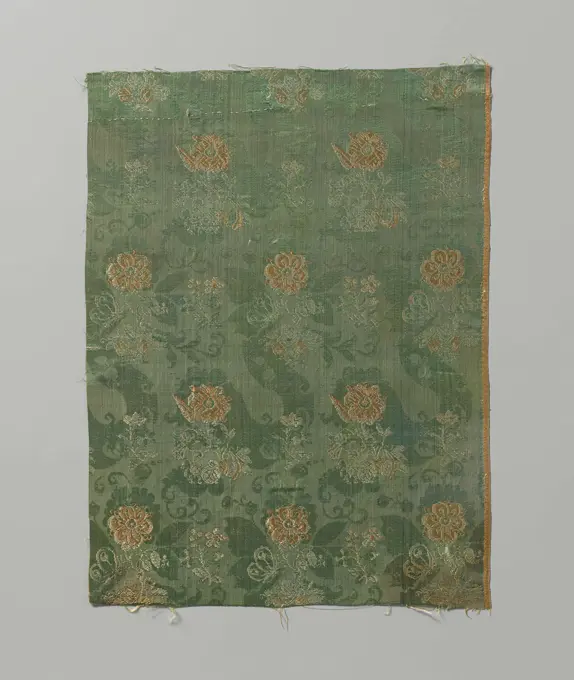
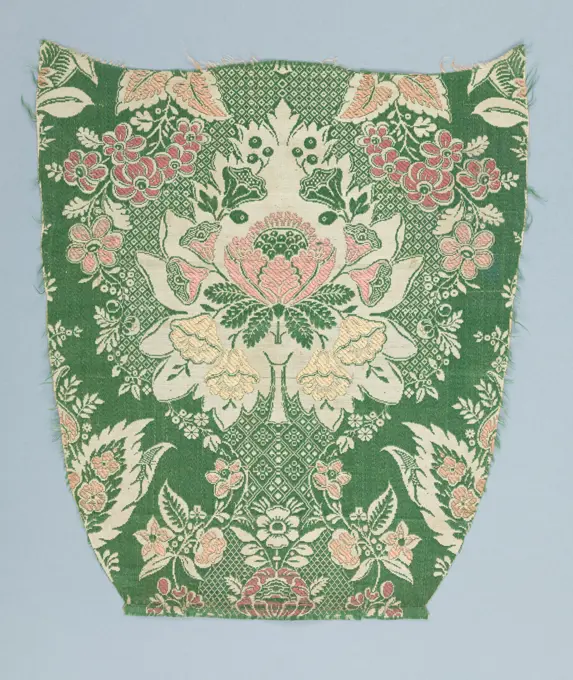
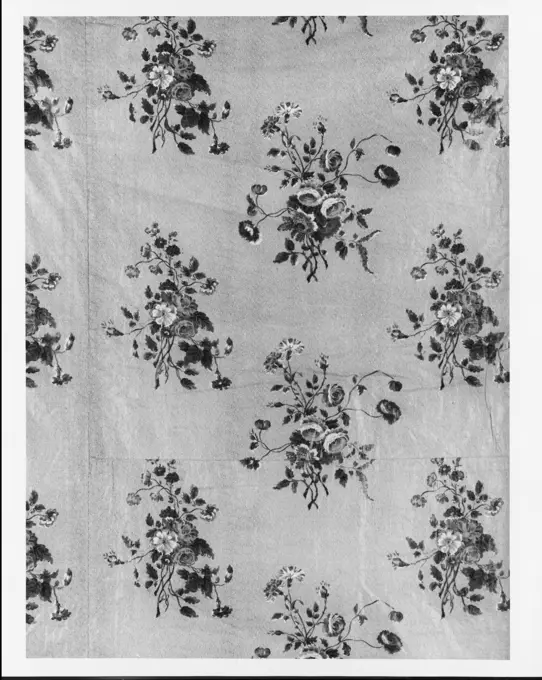
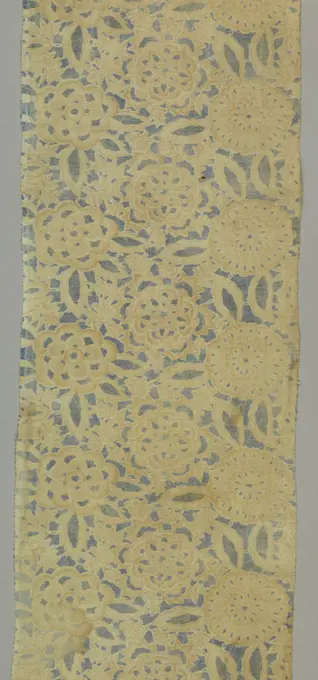
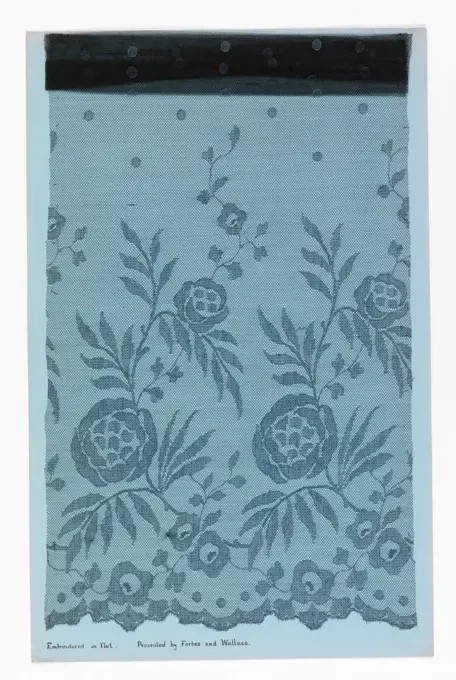
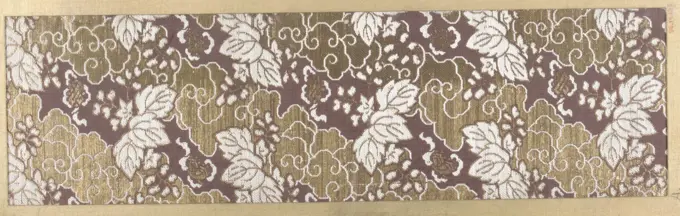
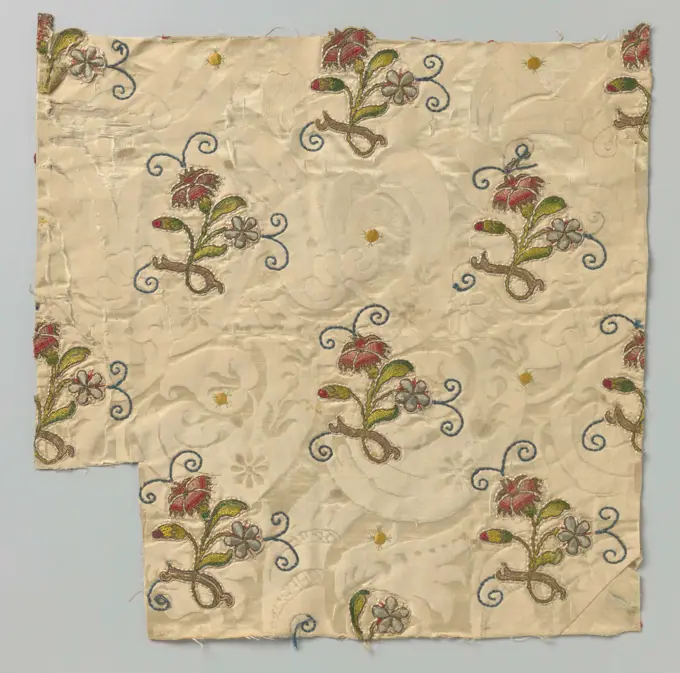
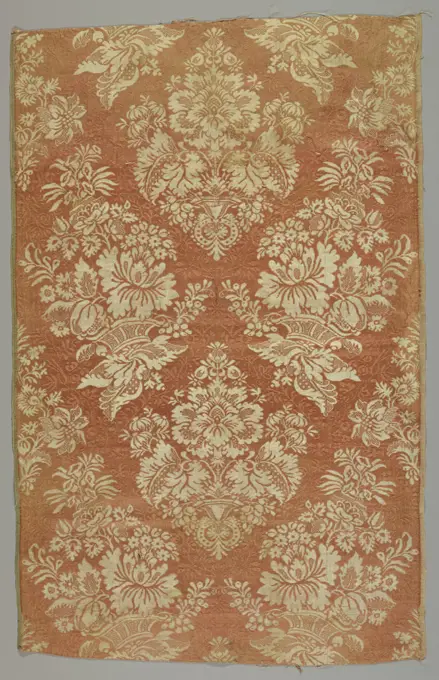
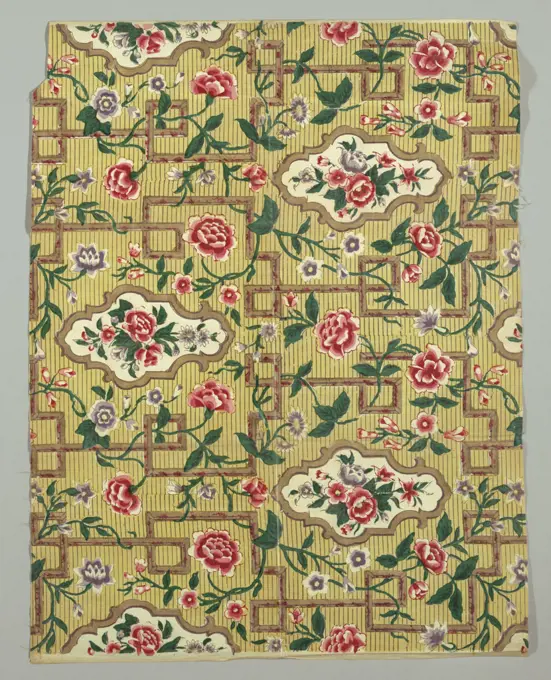
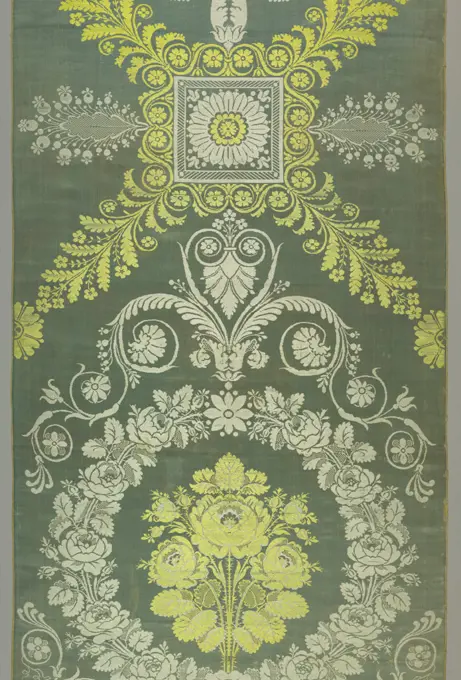
Textile, Medium: cotton Technique: stenciled resist on plain weave (katazome), Two columns of offset hexagons with flower centers. Surrounding hexagons are curling leaves and flowers forming cross shapes. Design is primarily comprised of white dots in reserve and red accents., Japan, 19th century, printed, dyed & painted textiles, TextilePiece 18th century China. Piece 65786Two pieced fragments of each other multicolored brochure side. Two fragments silk tissue. The pattern has white feather-shaped leaves with small flowers and multicolored flower branches.Scarf; linenStrip of Brocaded Silk, 1700s. England, Spitalfields, 18th century. Silk; overall: 76.2 x 53.7 cm (30 x 21 1/8 in.).Textile, Medium: silk Technique: 7 &1 satin damask; warp float face of satin as background, Vertically symmetrical pattern of finely drawn flowers and foliage. Color: off-white., England or Netherlands, 17th-18th century, woven textiles, TextileTextile; cottonFragment, Medium: silk, metallic yarns, cotton Technique: two intercrossed plain weave structures (lampas), Green with silver and tan curling leaves., 17th century, woven textiles, FragmentFragment 17th century Italian. Fragment 230460Fragment van rode zijde.Fragment of red silk with repeating pattern of large flowers.Fragments, Medium: silk, metallic Technique: woven, Large metallic flowers at each edge with blue floral shapes on brown in center., ca. 1725, woven textiles, FragmentsTextile, Medium: silk Technique: Discontinuous supplementary weft (brocade) on a plain weave foundation with auxiliary pattern created by weft floats., Sprays of polychrome flowers and bowknots on a while background. Background is patterned with a white on white design. Both the primary and auxiliary pattern reverse in direction., England, 1740-49, woven textiles, TextileFragment, Medium: silk, metallic yarns Technique: woven, Square fragment of white silk with silver yarns showing design of large-scale symmetrical florals. Both selvages present. Edged with silver galloon., possibly France, possibly Italy, early 18th century, woven textiles, FragmentFragment late 18th century French. Fragment 222661Textile, Medium: silk Technique: taffeta, Short panel of blue and white taffeta with a symmetrical pattern of large flowers and fruit clusters., Italy or Spain, 1800-1850, woven textiles, TextileTextile (France); cotton; Warp x Weft: 129.5 x 109 cm (51 x 42 15/16 in.); Bequest of Elinor Merrell; 1995-50-366Textile (France); cottonTextile Panel. England, Norwich, mid-18th century. Textiles; panels. Wool damask with wool discontinous supplementary-weft patterning (brocade)Sidewall, Block-printed on handmade paper, Floral bouquets, with foliate swags and scrolls, printed in white on blue ground. A lacey white stripe runs vertically through the center of the paper., Hartford, Connecticut, USA, 1821-28, Wallcoverings, SidewallFragment, Medium: silk Technique: 5-harness satin damask, 4&1 satin weave, Short length of red damask in a symmetrical arrangement of large and small blossoms with scrolling leaves., France, 17th-18th century, woven textiles, FragmentFragment, Medium: silk Technique: 5-harness satin damask, White damask with a pattern of symmetrically swinging broad bands with flowers and foliage enclosing central symmetrical group of flowers, grapes and wheat., France, 19th century, woven textiles, FragmentTextile Fragment, early 1700s. France, early 18th century, late Baroque. Plain compound satin; overall: 76.8 x 54.5 cm (30 1/4 x 21 7/16 in.).Fragment, 1723-1774. France, 18th century, Period of Louis XV (1723-1774). Tabby, brocaded; silk and silver filé; overall: 91.9 x 40 cm (36 3/16 x 15 3/4 in.).Fragment silk satin with flowers on a green ground. A fragment of green silk tissue with white flowers, on which rosettes and flowers of light and dark brown. Note: Self side; 5 mm, 4-dr smooth binding the rest satin.Panel 18th-19th century Japan. Panel 70196Textile (England); cotton; Warp x Weft: 244 x 71 cm (8 ft. 1/16 in. x 27 15/16 in.); Bequest of Elinor Merrell; 1995-50-365Length of Textile, 1723-1774. France, 18th century, Period of Louis XV (1723-1774). Brocade; silk and metal; overall: 89.5 x 55.9 cm (35 1/4 x 22 in.).Panel with dragons, pearls, phoenixes, and floral patterns. Date/Period: 1644-1911. Furniture and Furnishing. Silk brocade: silk and metal-wrapped threads. Height: 750 mm (29.52 in); Width: 360 mm (14.17 in). Author: UNKNOWN.Piece 18th-19th century Japan. Piece 65986Textile; silkLength ca. 1730-40 British, London, Spitalfields. Length. British, London, Spitalfields. ca. 1730-40. Silk. Textiles-WovenPiece 18th-19th century Japan. Piece 67146Fragment yellow silk satin with pattern in white and blue, consisting of twigs with curled stylized leafwork and large-leaf flowers. Fragment yellow silk damask with pattern in white and blue, consisting of twigs with curled stylized leafwork and large-leaf flowers.Textile, Medium: cotton Technique: printed by engraved copper plate on plain weave, Continuous meandering rose vine in blue on a speckled gray background. The repeat unit fills the full width of the fabric. Straight repeat., Europe, 19th century, printed, dyed & painted textiles, TextilePiece 1760-70 French. Piece 224338Kosode (Kimono) Fragment with Flowering Cherry Tree Branch and Pine. Japan, Edo period (1615-1868), Genroku era (1688-1704), early 18th century. Textiles. Silk figured satin (rinzu), stenciled imitation tie-dyed (kata kanoko), silk and gilt-paper-wrapped-silk thread embroideryTextile (France); linen warp, cotton weftTextile, Medium: silk, metallic threads Technique: plain weave with discontinuous supplementary weft patterning (brocade) and supplementary warp pile (velvet), Rose ribbed silk ground, brocaded in colored silks, chenille and gold and silver metal threads. The meander is formed by blue velvet drapery which flips back to reveal pink satin linings; floral sprays rest on brocaded cushions with large tassels at the corners. Red roses are also in pile weave., France, mid-18th century, woven textiles, TextilePiece of fabric. unknown, authorFragment Made 1875-1900 Japan. Fancy compound twill, silk. .Textile (France); silk, metallic thread; Anonymous bequest in memory of Albert and Rebecca Elsberg; 1938-82-200-bFragment of silk fabric  lace pattern unknownFragments; silkTextile (France); silk, metallic threadsWholecloth coverlet ca. 1830 American or British The coverlet top is of a glazed floral chintz; it has a beige ground printed with red, blue, and yellow flowers and green foliage. The back is randomly pieced of two chintzes and two brown and red calicos. A piece of the same chintz used for the top is pieced into the back and is inscribed with the fabric printer's name. The edges of the top and back are bound together with striped tape. The coverlet has no batting between the top and back layers and is not quilted.. Wholecloth coverlet 13631Textile, Medium: cotton Technique: stencil resist (katazome) on plain weave, Flat all-over design of large compound flower-heads and various small leaves in golden tan, white, and blue on blue ground. Breadth with two plain selvedges., Japan, late 18th-early 19th century, printed, dyed & painted textiles, TextileElizabethan ornamentSutra Cover 17th-18th century China. Sutra Cover. China. 17th-18th century. Silk, metallic thread. Textiles-WovenMachine-made openwork samples, Medium: cardboard, linen, silk, metallic Technique: linen embroidery with ground cloth dissolved Examples of embroidery on net produced by the Schiffli machine Metallic embroidery on net Machine-made openwork in imitation of hand-embroidered net Mostly floral and a few geometric patterns, some designs described as 'Spanish' Imitation hand-made filet Machine filet Imitation filet crochet Ploven (burnt-out lace) Fancy curtain lace made on the Levers machines Real filet (handmade) next to Machine-made filet Spotted curtain nets, made chiefly at Nottingham, England and Caudry, France., Samples of machine-made openwork and several examples of hand made lace mounted on boards. They imitate hand-embroidered net, crochet, or needlepoint. All are floral patterns plus a few of early 1920's geometric style., 'Embroidered net' produced by the Schiffli Machine., USA, ca. 1910, lace, Machine-made openwork samplesFragment (Spain); silk; Warp x Weft: 34.9 x 30.2 cm (13 3/4 x 11 7/8 in.)Piece 18th-19th century Japan. Piece 65867Sitsen bedspread with colored flowers and palmets, c. 1675 - c. 1700 Seast with red, dark purple and yellow palmets and red flowers with blue hearts on a white, yellow -tinted background. The bedspread is lined with stitched cotton and printed with small red flowers, blacklined on a white background. Eastern textile. Persia (possibly) cotton (textile). chintz chintz Seast with red, dark purple and yellow palmets and red flowers with blue hearts on a white, yellow -tinted background. The bedspread is lined with stitched cotton and printed with small red flowers, blacklined on a white background. Eastern textile. Persia (possibly) cotton (textile). chintz chintzTextile (England); cottonFragment silkedamast with irradiated flower branches. Fragment silkedamast with unauthorized flower branches, Z.G. Prae Bizar, Spain, ca. 1700.Textile, Medium: silk Technique: woven, Length of woven silk with a vertically symmetrical design of baskets of flowers, in white on a rust ground. Interstices filled with floral vine in same color as ground., 1730-50, woven textiles, TextileTextile, Medium: cotton Technique: printed on plain weave, glazed, Allover meandering floral design and widely-spaced cartouches with bouquets on a yellow ground with narrow brown horizontal stripes and a geometric fretwork pattern in brown., England, late 19th century, printed, dyed & painted textiles, TextilePiece 18th century Japan. Piece 65942Ceiling Paper (USA); Manufactured by Maxwell & Co., S.A. (United States); machine-printed paper; 85.5 x 48 cm (33 11/16 x 18 7/8 in.)Textile Fragment, 1800s. Japan, 19th century. Silk; average: 22 x 14 cm (8 11/16 x 5 1/2 in.).Panel Made 1715-1725 England. silk, satin weave with supplementary patterning wefts and self-patterned by areas of weft-float faced twill weave; two selvages present. Central cartouche with inscription surrounded by regularly placed carpenter's tools; say, compass, drill, plane, and mallet, in red on off-white ground .Fragment, Medium: silk Technique: cut voided supplementary warp pile (velvet) in a foundation with supplementary weft, Small-patterned or 'miniature' velvet fragment with a ground divided into minute cut pile white lozenges with a central green and red blossom. Voided ground with secondary pink silk weft floats, outline lozenges., France, 1750-1800, woven textiles, FragmentFragment (France); Printed by Meiller & Co.; cottonBedcover; silkChintz (India); cottonFragment of Velvet Brocade, late 1600s or early 1700s. Italy , late 17th or early 18th century. Brocaded silk velvet; overall: 55.9 x 47.6 cm (22 x 18 3/4 in.).Fragment yellow and blue colored silk tissue. Two clipped fragments. Blue pattern is a symmetrical renaissance ornament, stylized tendrils, flowers and blades on a fond of flottenant yellow silk threads. Note: The flottant yellow wires are almost completely worn out at one fragment.Textile (France); silkFrieze, Machine-printed paper, Two bands of a mirror-reversed repeating design composed of drapery-like swags edged by leaf swags and with flower bouquets at the joining points on a woven ground which becomes darker towards the bottom, with a complementary band of flower and ribbon along the top and bordered on the bottom by a thin horizontal strip. Printed in white, taupe, beige, greens, pink, scarlet, rose and aqua., USA, 1905-1915, Wallcoverings, FriezeTextile, Medium: cotton Technique: printed by engraved plate on cotton plain weave, Design shows a large flowering vine of natural scale roses and morning glories., England, 1760s, printed, dyed & painted textiles, TextileFragmentFragment multicolored sides Mexicaine, Anonymous, 1765 - 1770 Fragment multicolored silk tissue. Part of the fragment has a green striped soil on which pink flowers. A part of the fragment has a brown soil on which flower bouquets in Roo, Purple and White, tied and connected by a blue ribbon. France (possibly) silk Fragment multicolored silk tissue. Part of the fragment has a green striped soil on which pink flowers. A part of the fragment has a brown soil on which flower bouquets in Roo, Purple and White, tied and connected by a blue ribbon. France (possibly) silkTextile; silkBrocade on Tabby, mid 1700s. France, mid-18th century, Period of Louis XV (1723-1774). Brocade on tabby; silk; overall: 43.5 x 49.5 cm (17 1/8 x 19 1/2 in.).Cravat End Made 1700-1750 Flanders. When the heavily Baroque fashions originating at the court of Louis XIV (r. 1643ñ1715) were simplified during the late 1660s, accessories underwent similar changes. Once belonging to a set of two, this splendid piece of Brussels lace may have been made for the Sun King himself shortly before his death. This type of bobbin part-lace, initially produced in Brussels during the eighteenth century, consists of individual motifs made separately but joined together so skillfully that the seams are almost imperceptible. Worn with its mate, slightly gathered at the neck, this rectangular piece of fabric is replete with symbols signifying the elevated status of its wearer. At center are a rooster and trophies, beneath which is the kingís monogram of double Ls. Surmounting this image and supported by two trumpeting angels is a baldachin, a canopy carried over important personages during processions. Armed female warriors appear to the right and left, and gracinCover, Medium: silk Technique: supplementary warp pile (velvet) in a 3&1 twill foundation Label: silk velvet in twill foundation, Velvet panel bound on four sides with a striped floral patterned silk. The velvet is patterned with rows of men standing, seated cross-legged, and confronted seated on chairs with birds, in a garden. In light blue and ivory pile on a pale yellow pile foundation., Iran, late 19th century, woven textiles, CoverTextile, "Labor is Honorable" Unknown. Textile, "Labor is Honorable," ca. 1880. Cotton, 19 x 24 in. (48.3 x 61 cm).    ca. 1880Wallpaper (roll), circa 1905, England, maker unknown. Gift of Mrs P B Harding, 1994.Fragment Italian 16th century View more. Fragment. Italian. 16th century. Silk, woolFragment, Medium: silk, metallics Technique: woven, Fragment from a larger piece that would have has a field and a border. Primarily red with eight-pointed star shapes on it., 19th century, woven textiles, FragmentWeapons Camminga-Ockinga En Grovestian-Jongema and Visening Pattern, Anonymous, 1655 White linnendamastes napkin with fishing pattern and weapons with took Camminga-Ockinga and Grovestins-Jongema, Brand W 22. Northern Netherlands (Possible) linen (material) damask White linnendamastes napkin with fishing pattern and weapons with took Camminga-Ockinga and Grovestins-Jongema, Brand W 22. Northern Netherlands (Possible) linen (material) damaskFragment, Medium: silk Technique: cut and uncut supplementary warp pile (velvet) in a woven foundation, Fragment of cut and uncut blue pile in a ground shot with silver; pattern has small flowers and sprigs., Italy, 16th-early 17th century, woven textiles, FragmentCeiling Paper (USA); Manufactured by Cresswell & Washburn Ltd; machine-printed paper, liquid mica; 86.5 x 49 cm (34 1/16 x 19 5/16 in.)Piece French 19th century View more. Piece. French. 19th century. Textiles-WovenFragment of the fabric;  18th century (1701-00-00-1800-00-00);Fabrics, purchase (provenance)Piece 16th-17th century Italian. Piece 224425Curtain ca. 1790 British. Curtain. British. ca. 1790. Cotton. Textiles-PrintedTextile; cottonPiece 18th century Chinese, for French market. Piece. Chinese, for French market. 18th century. Silk. Textiles-PaintedCeiling Paper (USA); Manufactured by Maxwell & Co., S.A. (United States); machine-printed paper; 82 x 49 cm (32 5/16 x 19 5/16 in.)Textile (England); linen, wool; 1953-207-1-a/dSilk Brocade, 1700s. England, Spitalfields , 18th century. Silk; overall: 106.7 x 54.3 cm (42 x 21 3/8 in.).Fragment of silk fabric  floral twig pattern with flowers unknownFragment 17th century Italian. Fragment 230680Textile, Medium: silk Technique: 8-harness satin (light blue) patterned by weft floats (yellow and white) bound in plain weave or 13 twill by a supplementary warp (light blue). Supplementary warp interlaces with foundation wefts as 2/2 plain weave. Plain weave binding for white weft float. Twill binding for yellow weft float., Empire Period lampas in blue and yellow symmetrical design. Large star motif with rosette in center surrounded by a small square frame and scrolls forming a spray in each corner. Below a garland with three roses in center. Scroll forms a triangle above the garland., France, early 19th century, woven textiles, TextileFragment, Medium: silk Technique: compound weave with discontinuous supplementary weft patterning (brocade), White silk with ground figure of tiny curving vines, brocaded with rows of carnations, alternately red and purple, with yellow centers and green foliage., late 18th century, woven textiles, FragmentFragment, Medium: silk Technique: 5-harness broken satin plus 1/4 twill, Dark yellow-green damask with medium-sized tangent ogives in horizontal rows with stylized symmetrical vase-and-flower motif in center of each., Italy, 16th century, woven textiles, FragmentFragment. Italy, Florence or Lucca. Date: 1400-1420. Dimensions: 38 x 24.1 cm (15 x 9 1/2 in.)Repeat: 24.8 x 20.1 cm (9 3/4 x 7 7/8 in.). Silk, warp-float faced 4:1 satin weave with supplementary pile warps forming cut voided velvet. Origin: Italy. Museum: The Chicago Art Institute, Chicago, USA.Fragment Much tangled silk Mexicainian. A fragment of white, green and pink striped silk, between which small colored bouquets.Russian sash Unknown, Manufaktura KupawnoWoman's Coif (Altered) Made 1575-1625 England. Linen, plain weave; embroidered with silk and gilt-metal-strip-wrapped silk in back, individual back, bullion, chain, plaited braid, and stem stitches; buttonholed couching, darned wheels and French knots .