Unique Historical Artifacts

Images of ornate historical tools and objects from different cultures, featuring intricate designs and materials like gold and iron.

Fish platter fork. Werner, Teodor August (1836-1902), goldsmith, Werner i S-ka (Warszawa ; wytwórnia złotnicza ; 1864-1939), goldsmiths company
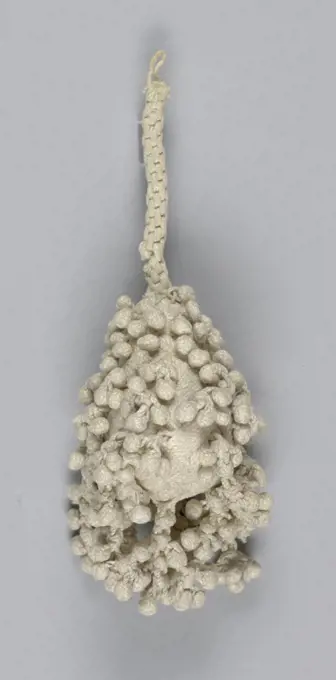
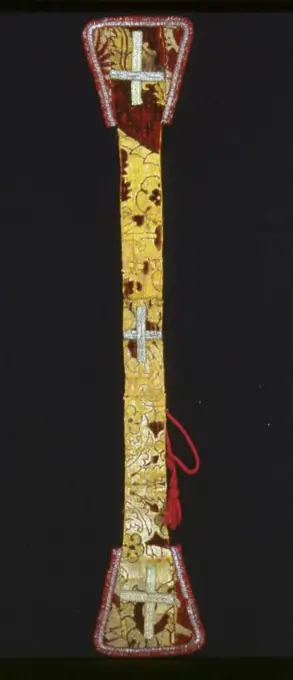
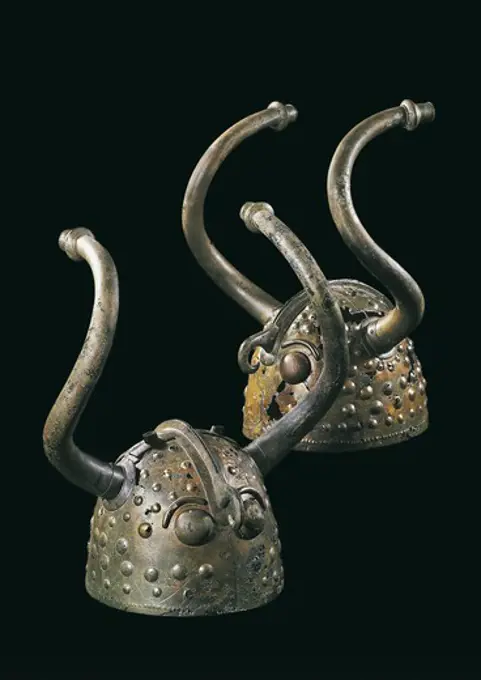
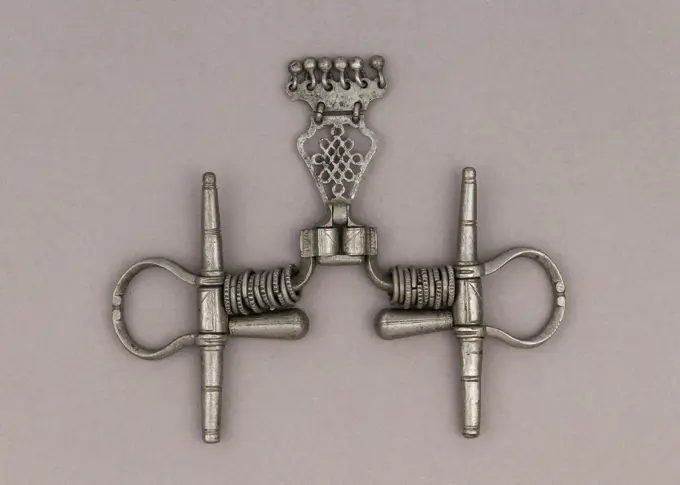
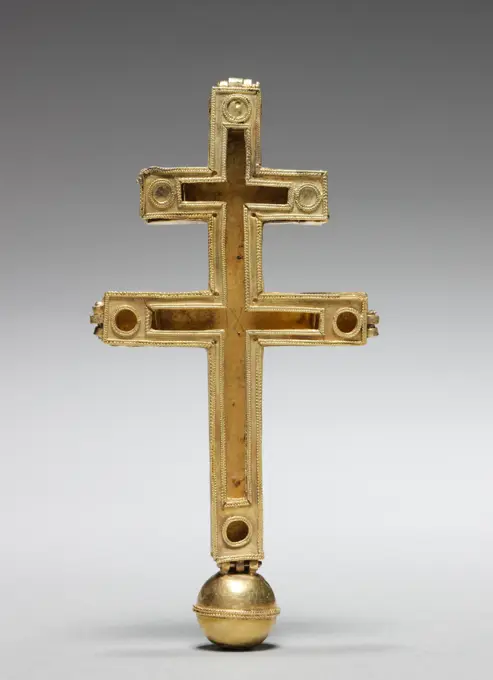
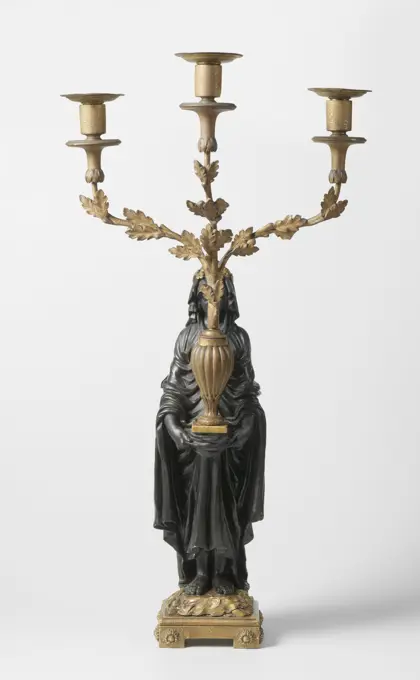
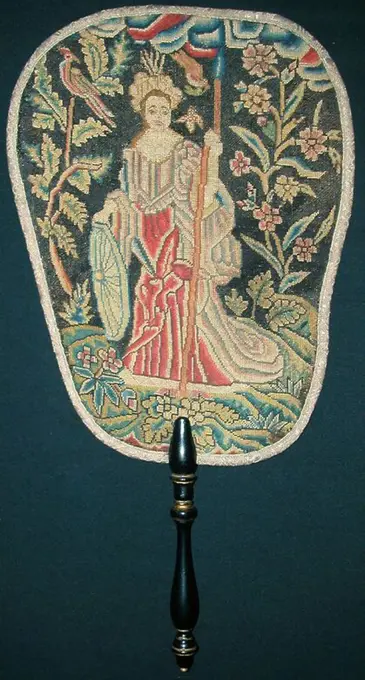
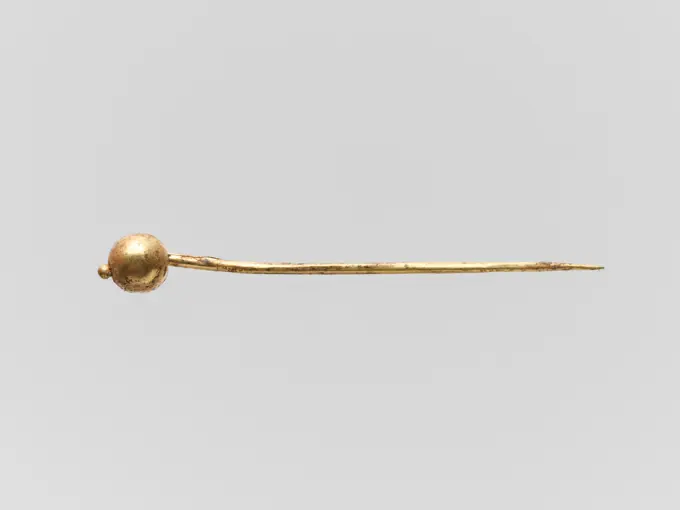
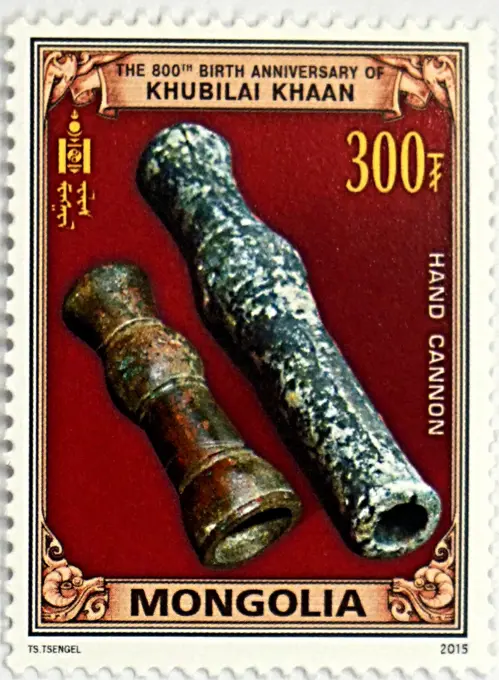
Earring. UnknownFlying-Fish Pendant 10th-15th century Tolima (). Flying-Fish Pendant 312960Tassel, Medium: linen Technique: braided and knotted, White linen tassel with long braided stem attached to a pear-shaped base. Core is braided over with linen yarns worked in groups of seven for a basket-weave effect. Around the base hang tiny braided balls and from the bottom hang a few clusters of the tiny braided balls., Italy, 17th century, trimmings, TasselHair Pin, 6 x 2 11/16 x 3/8 in. (15.24 x 6.83 x 0.95 cm), Silver, ChinaSpain, Madrid, Caravaca or Cehegin gold diadem from El Argar cultureTassel; linenStole Made 1401-1500 Spain. Silk, velvet; cut, voided; additional brocading wefts in gilt strip (wound around silk fiber core) forming loops where required; gilt galloon trim and crosses; two attached silk cords, knotted and fringed .Bronze helmets. Bronze Age. Decorative Arts. DENMARK. ZEALAND. Copenhagen. National Museum. Proc: DENMARK. ZEALAND. COPENHAGEN. Vekso.Snaffle Bit ca. 1600 German According to contemporary equestrian manuals, the mouthpiece of this strong snaffle bit was made for very bad mouths, very thick tongues and low bars (part of the horses jaw without teeth). The central pendant, adorned with a pierced interlaced motif, with its small hanging beads, was meant to ‘entertain the horse, who, by playing with it with its tongue, would salivate and relax its jaw. Such strong mouthpieces are unusual on snaffles. This one may have been used on a sleigh horse.The snaffle bit is the simplest type of horse bit, and it has an effect on the bars and the corners of the lips. The rings on the sides would serve to hang the bit on the headstall and attach the reins, while the cheekpieces would help to hold the mouthpiece in place and would press the sides of the mouth when the reins are pulled.. Snaffle Bit. German. ca. 1600. Iron alloy, tin. Equestrian Equipment-BitsHunting knife and sheath that belonged to the Marquis de Valseca, vintage engraved illustration. Magasin Pittoresque 1873.Arrow-Head, 1923. Artist: UnknownSword with gold hilt. Gold, copper. Middle Bronze Age. Province of Guadalajara, Spain. National Archaeological Museum, Madrid. Spain.Double-Arm Reliquary Cross, c. 1100-1200. Latin Kingdom of Jerusalem, Jerusalem, Gothic period, 12th century. Gold; overall: 10.5 x 5.3 x 1.5 cm (4 1/8 x 2 1/16 x 9/16 in.); former: 11.5 cm (4 1/2 in.).Pair of candelabra, anonymous, c. 1780 - c. 1800 A wooden, standing female figure on a square plinth. She is wearing a three -light candeletry, which comes from a vase on a square plinth. The arms of the Kandelaber are made in the form of oak branches. The bobèche is loose. The woman is painted black and the rest is gilded. The pate layer is damaged in some places, especially with the candle holders. Netherlands wood (plant material). paint (coating). brass (alloy). composition (material). gilding (material). oak (wood). rosewood (wood). copper (metal). marble (rock) gilding A wooden, standing female figure on a square plinth. She is wearing a three -light candeletry, which comes from a vase on a square plinth. The arms of the Kandelaber are made in the form of oak branches. The bobèche is loose. The woman is painted black and the rest is gilded. The pate layer is damaged in some places, especially with the candle holders. Netherlands wood (plant material). paint (coating). brass (alloFire Fan. England. Date: 1701-1725. Dimensions: 30.5 × 25.8 cm (12 × 10 1/8 in.). Linen, plain weave; embroidered with silk and wool in tent stitches; edged with silk and silvered-metal-strip-wrapped silk, plain weave with supplementary patterning wefts; backed with linen, plain weave; glazed; wood handle. Origin: England. Museum: The Chicago Art Institute, Chicago, USA.Pair of doors. Morocco. Date: 1301-1400. Dimensions: 373.3 × 104.2 × 7.6 cm (149.32 × 41 × 3 in.). Wood with iron bolts and rings. Origin: Morocco. Museum: The Chicago Art Institute, Chicago, USA.Beaker with Arms of the Holy Roman Empire (Reichsadler Humpen). Bohemia (now Czech Republic), 1574. Furnishings; Serviceware. Glass, enamelCarriage sign of a weaver guild, anonymous, 1585 - 1600 Silver carrying sign from a weaver guild. The round plate shows a coil and two cards in the middle. A double necklace is attached to the plate, on which a carded and a coil hang. With inscriptions. Northern Netherlands silver (metal). gilding (material) gilding Silver carrying sign from a weaver guild. The round plate shows a coil and two cards in the middle. A double necklace is attached to the plate, on which a carded and a coil hang. With inscriptions. Northern Netherlands silver (metal). gilding (material) gildingGold pin 6th century B.C. East Greek Straight pins were used to hold garments together. Since Greek clothing was not sewn, straight pins and fibulae (safety pins) served to fasten a garment at the shoulders, the sleeves, over the chest, and at other critical points.. Gold pin. East Greek. 6th century B.C.. Gold. Archaic. Gold and SilverOld used pan on a dark slate plate, vintage kitchen toolsVintage antique candelabrum with burning candles  isolated on a white backgroundRizzio Guitar. 'Drum and wind instruments of the tribe of Baniva Indians, Venezuela.', 1948. Artist: Unknown.Mongolian stamp celebrating Kublai (1215 - 1294), also known as the Emperor Shizu of Yuan, fifth khagan-emperor of the Mongol Empire, reigning from 1260 to 1294, although after the division of the empire this was a nominal position. He also founded the Yuan dynasty of China in 1271, and ruled as the first Yuan emperor until his death in 1294.