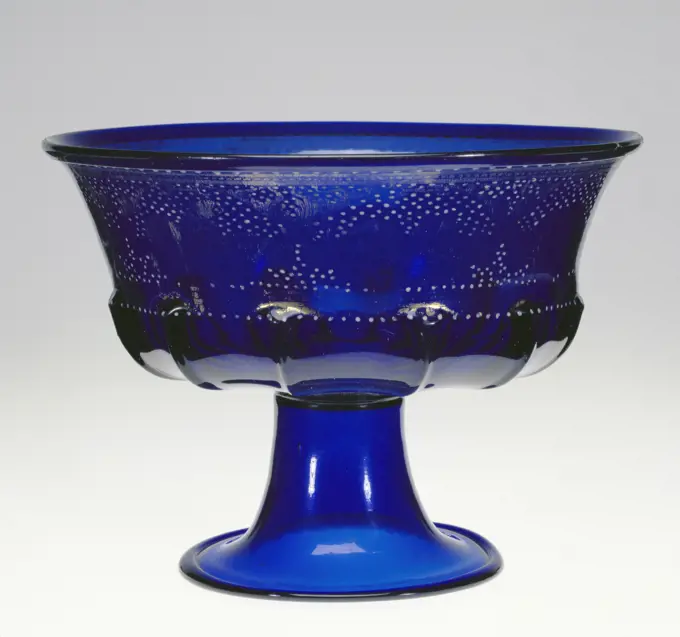
Various Decorative Vases and Urns

A collection of decorative vases and urns in diverse styles, featuring celadon glazes, turquoise hues, and intricate glasswork, highlighting elegance and historical craftsmanship.

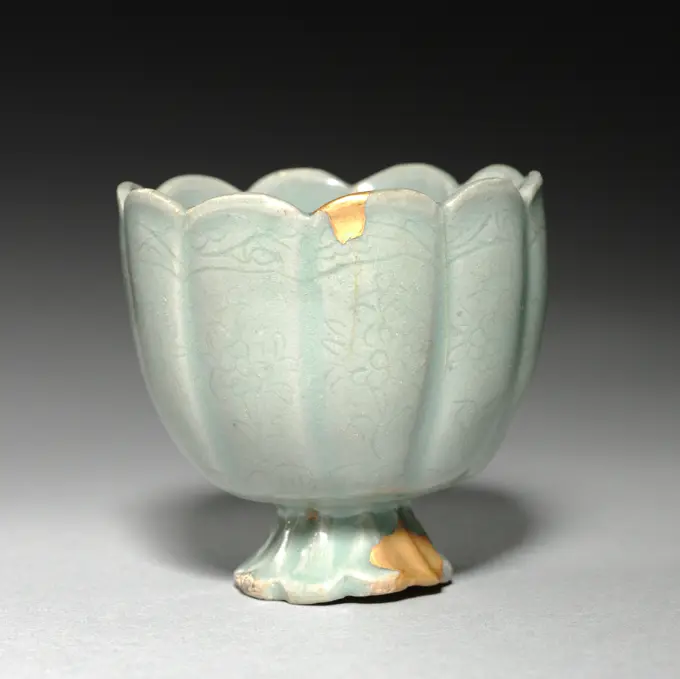
Anonymous Coupe Porte (Haidai) (usual name), 1832. Sandstone, Céladon covered. Cernuschi Museum, Asia Museum of Asia in the city of Paris.
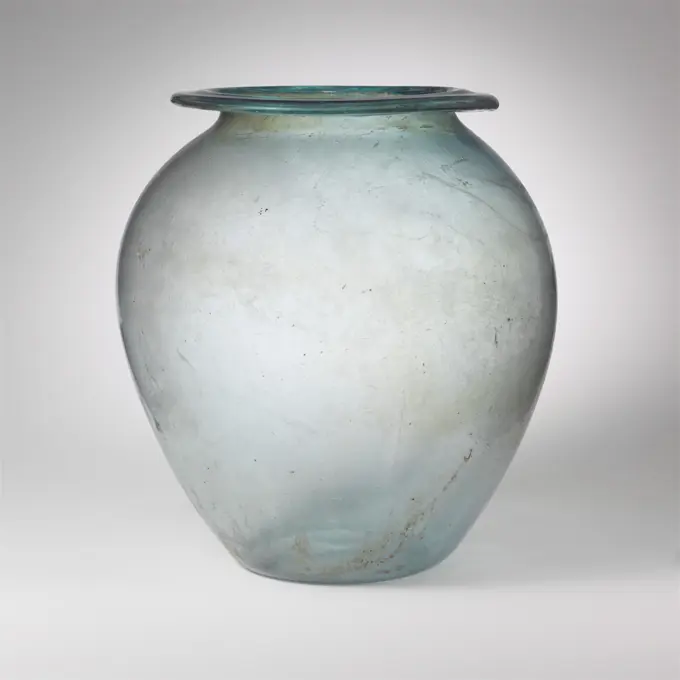
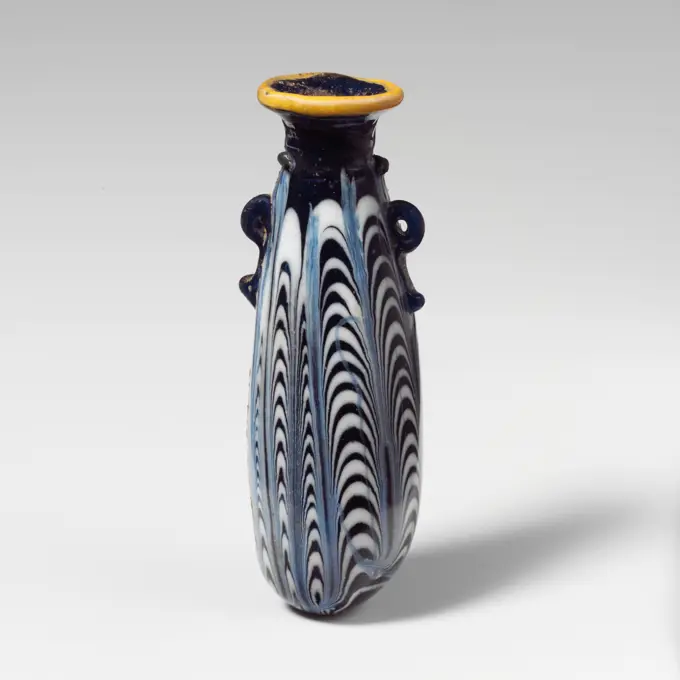
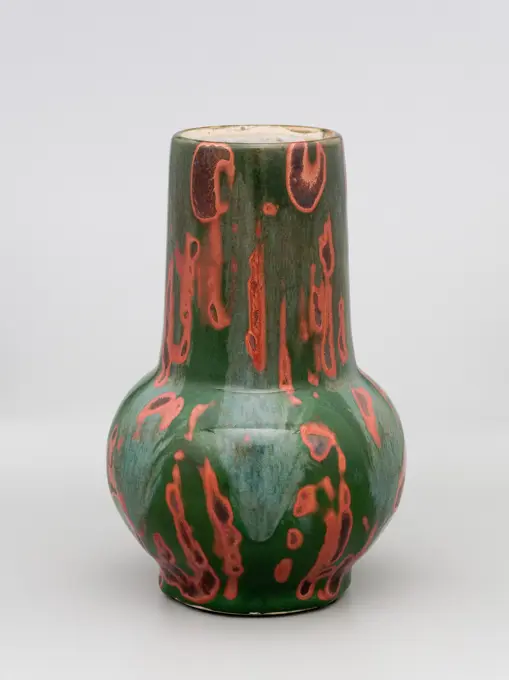
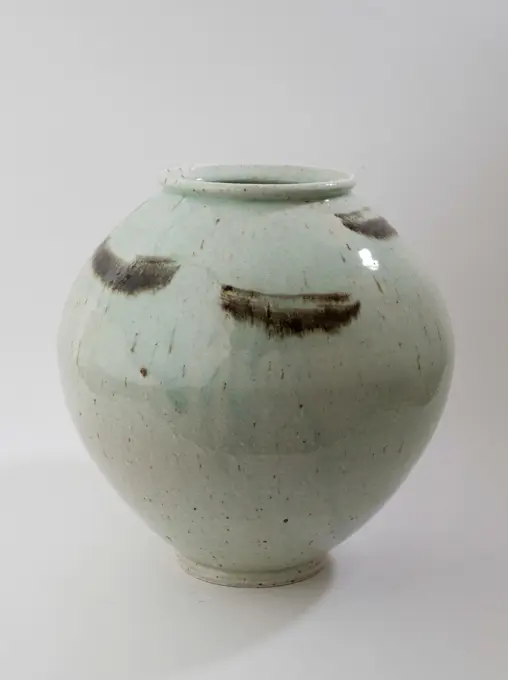
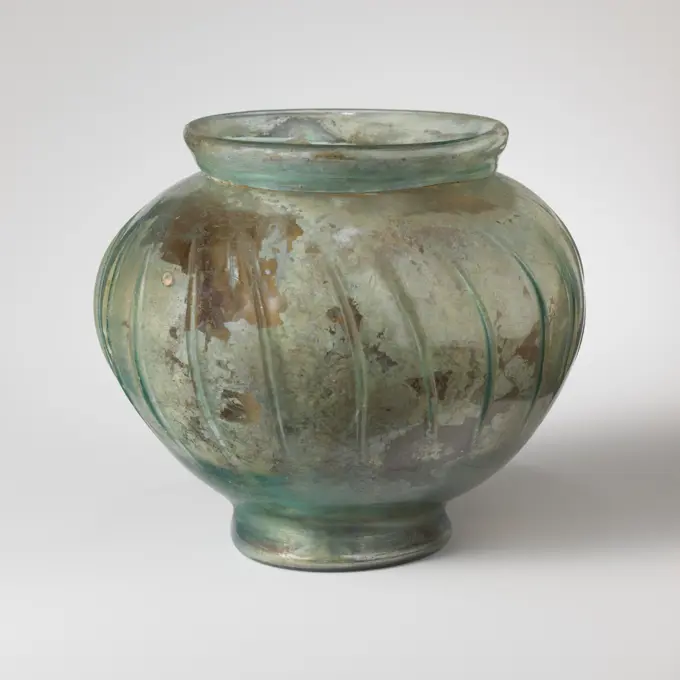
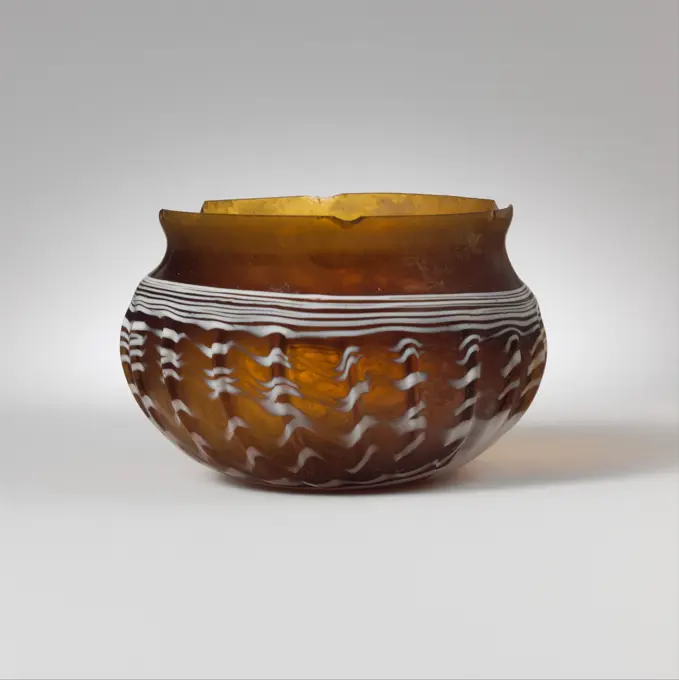
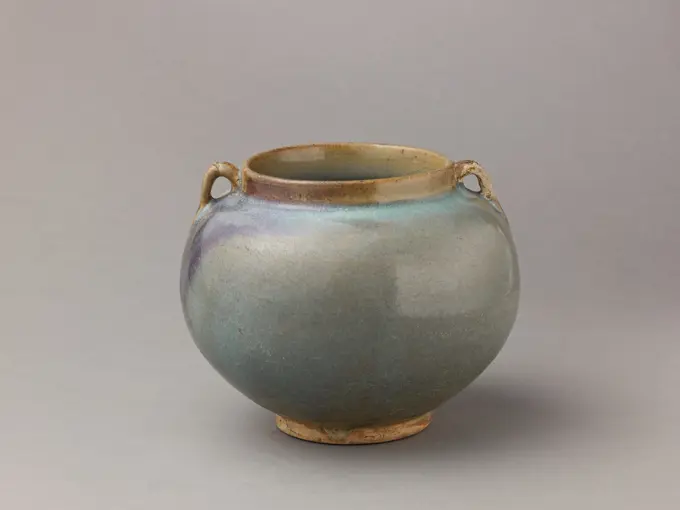
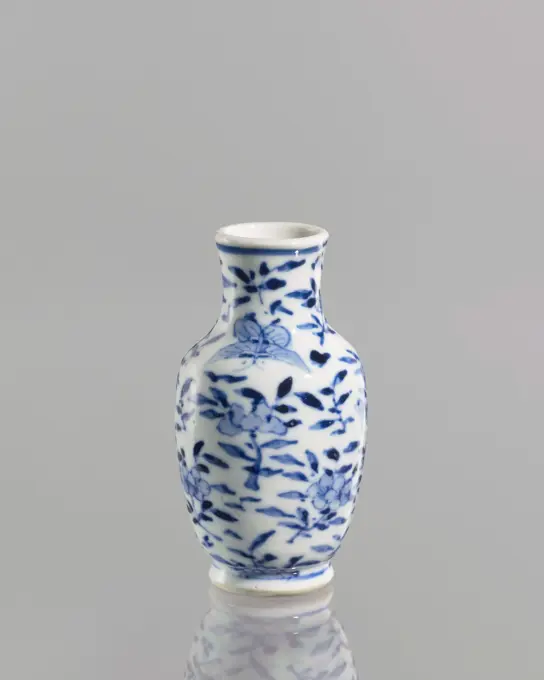
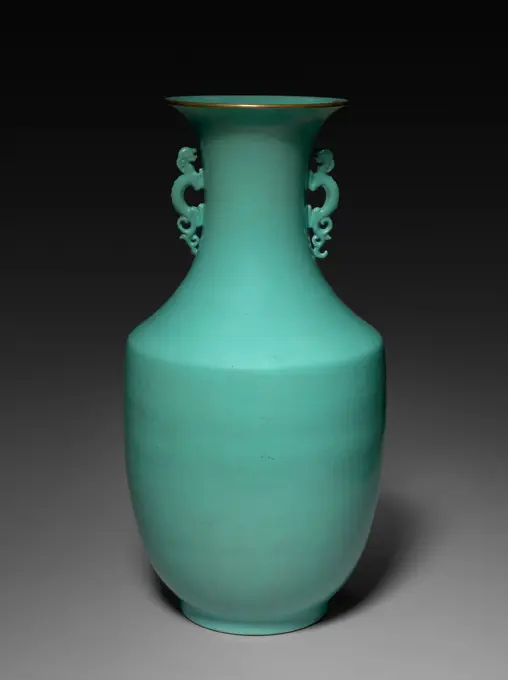
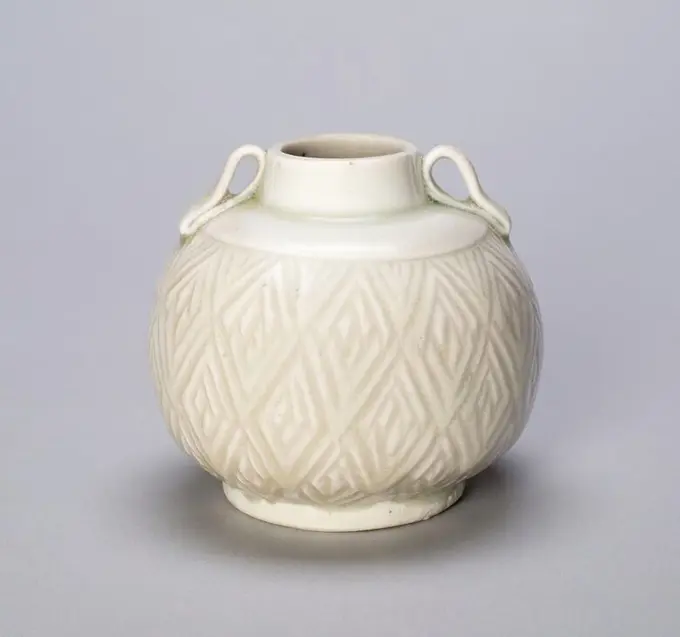
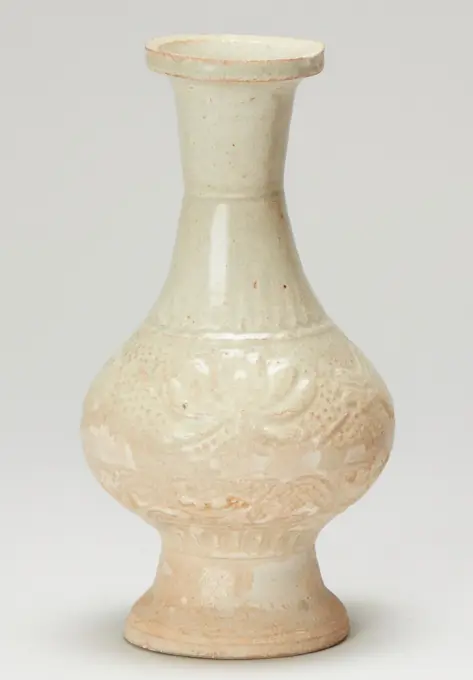
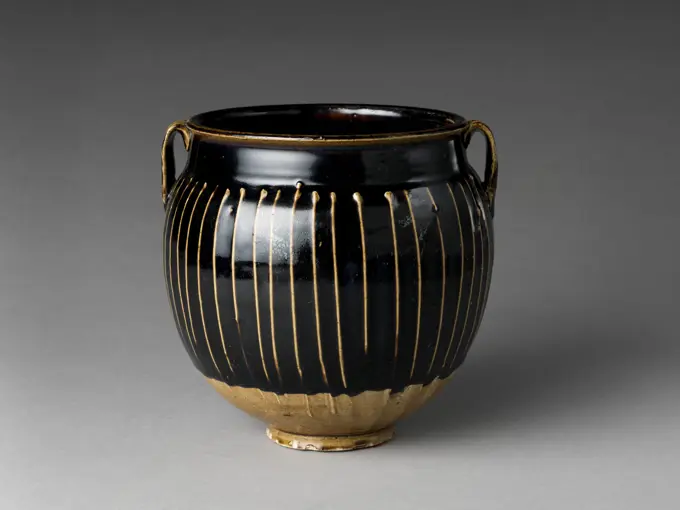
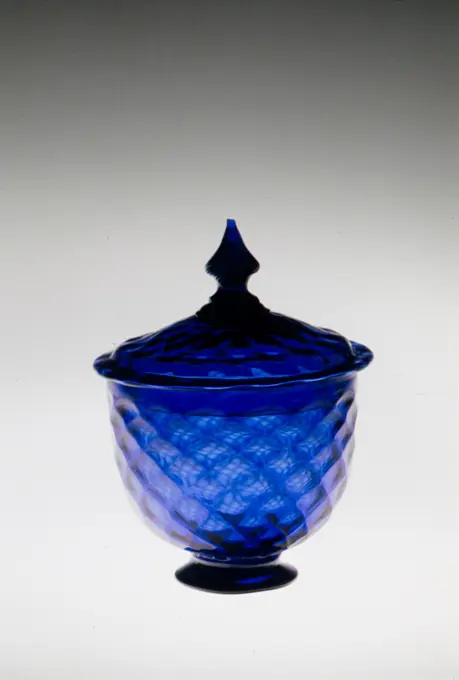
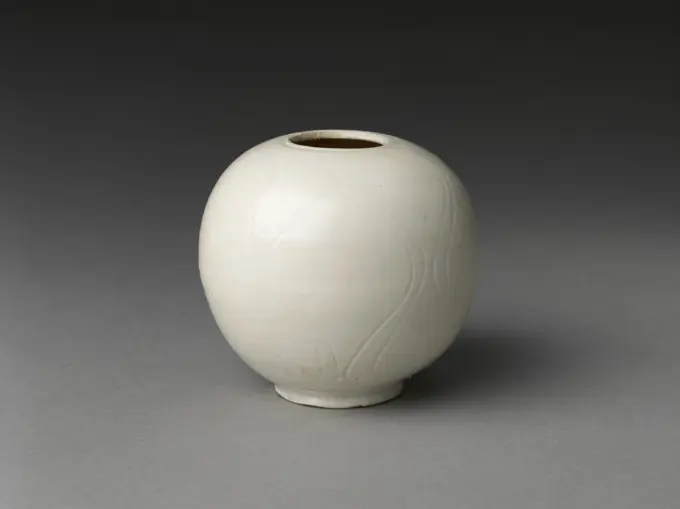
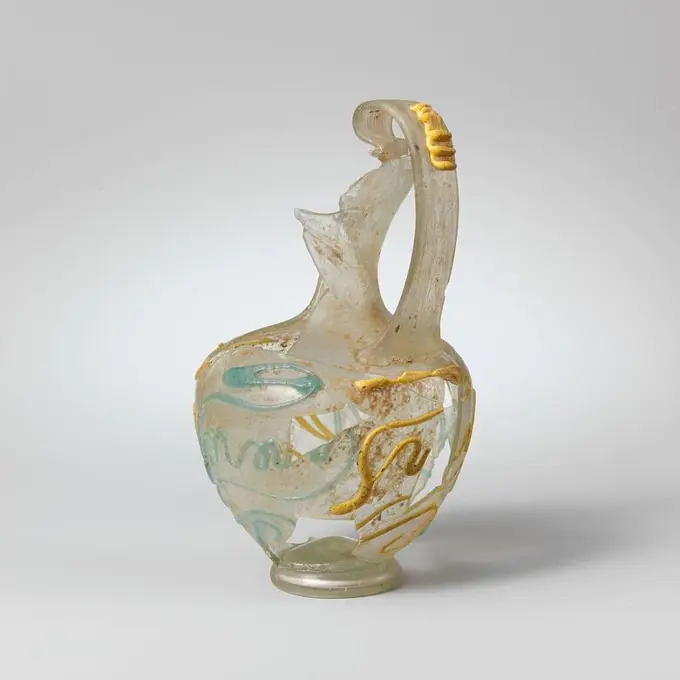
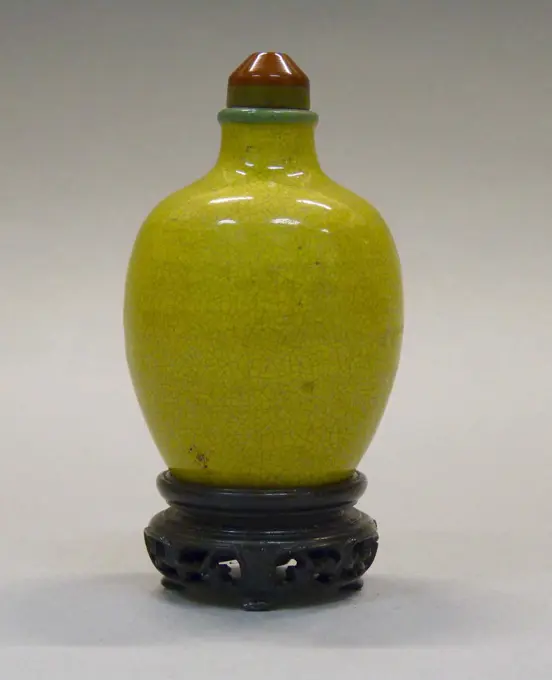
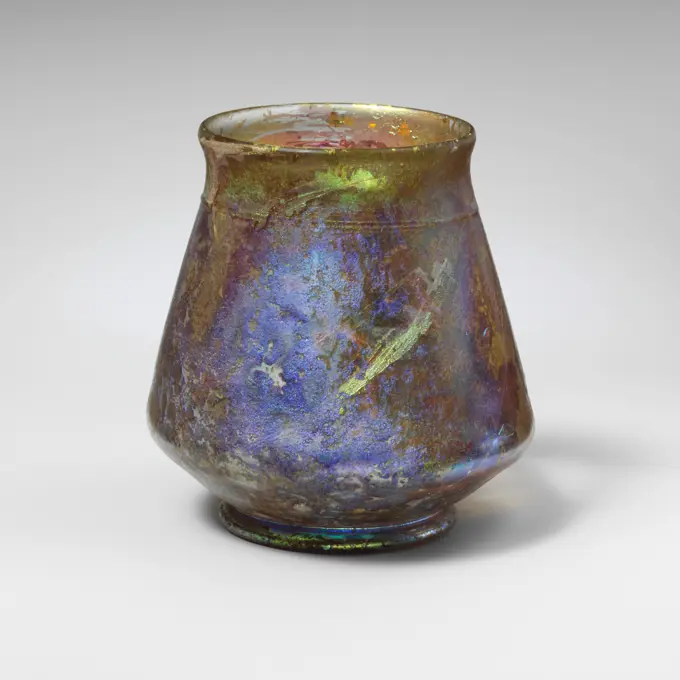
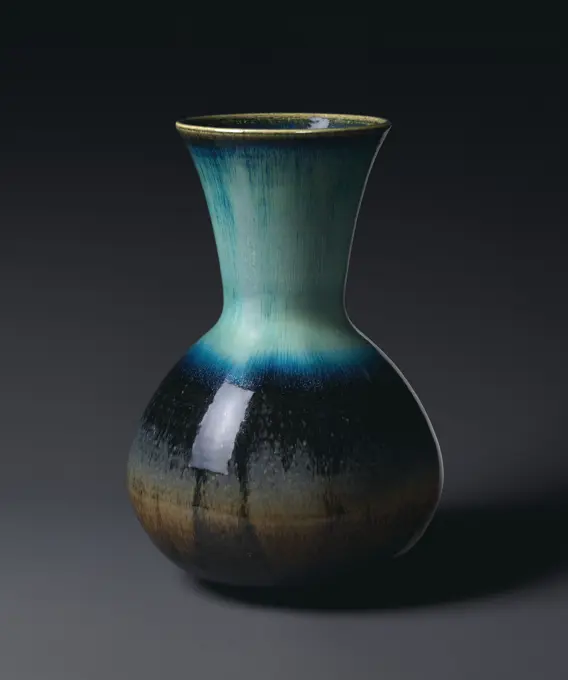
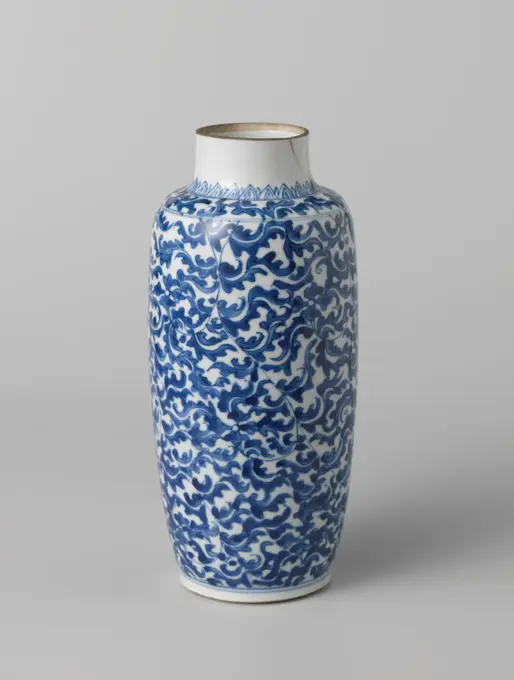
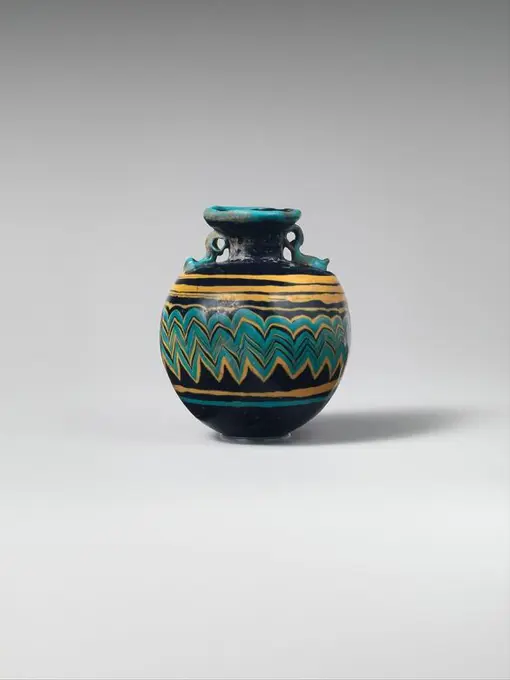
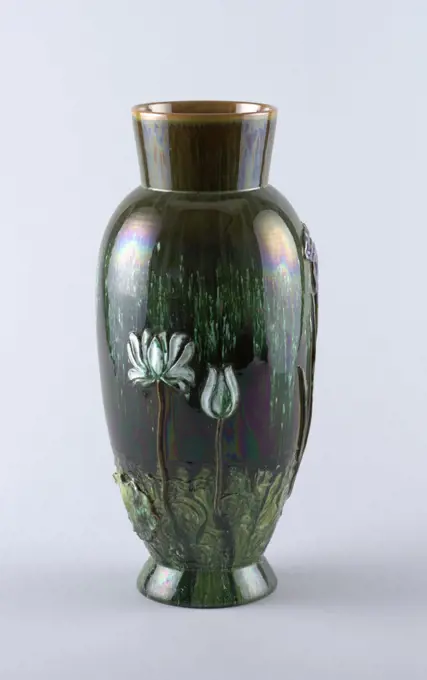
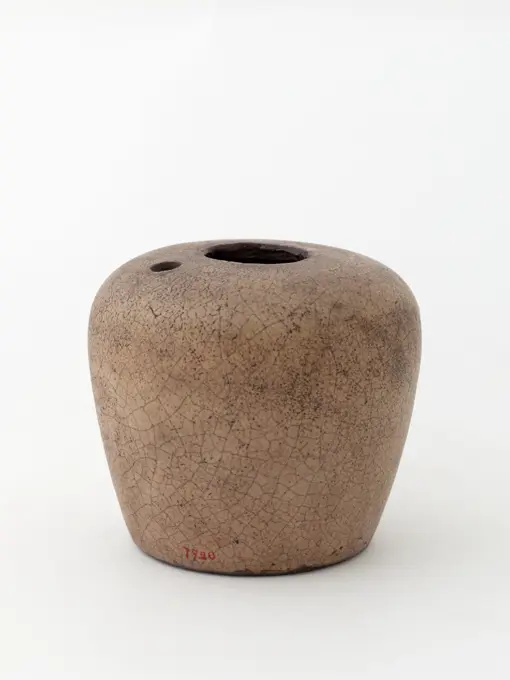
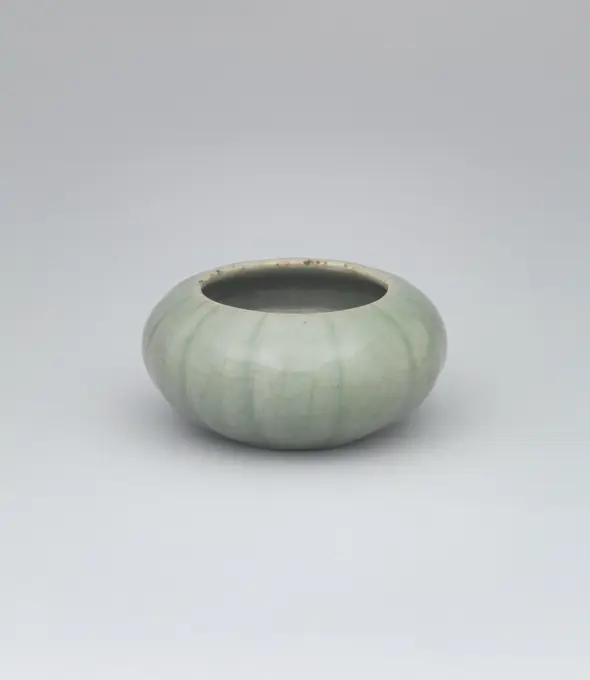
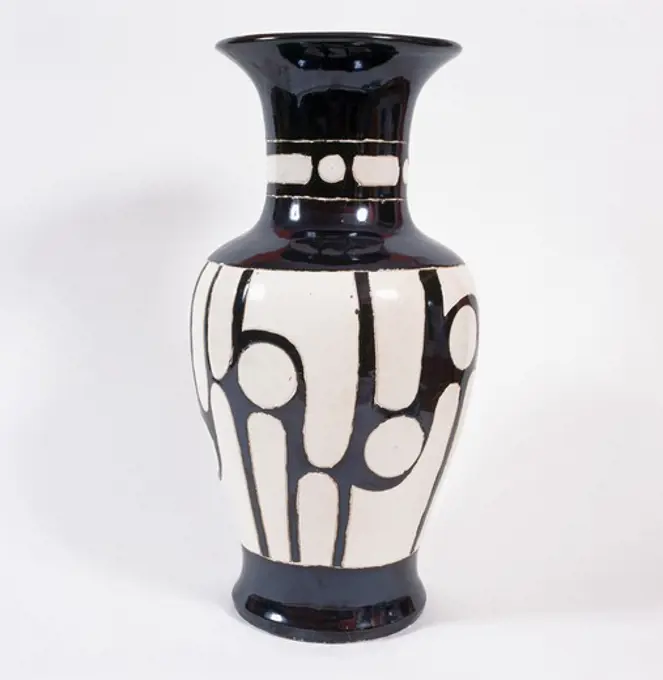
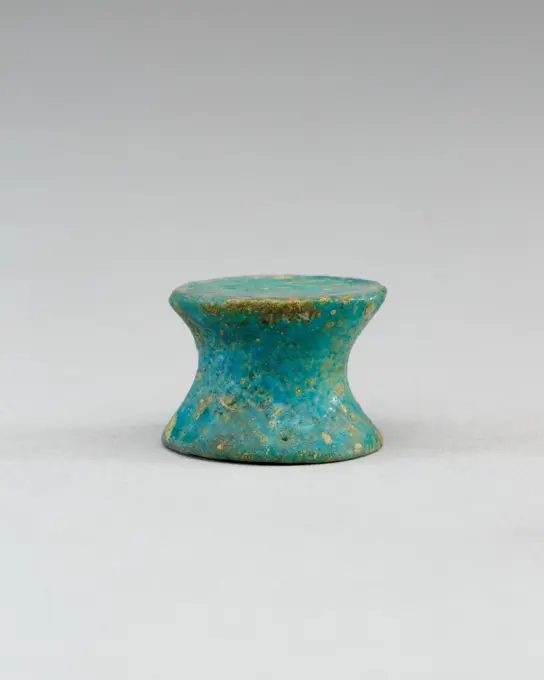
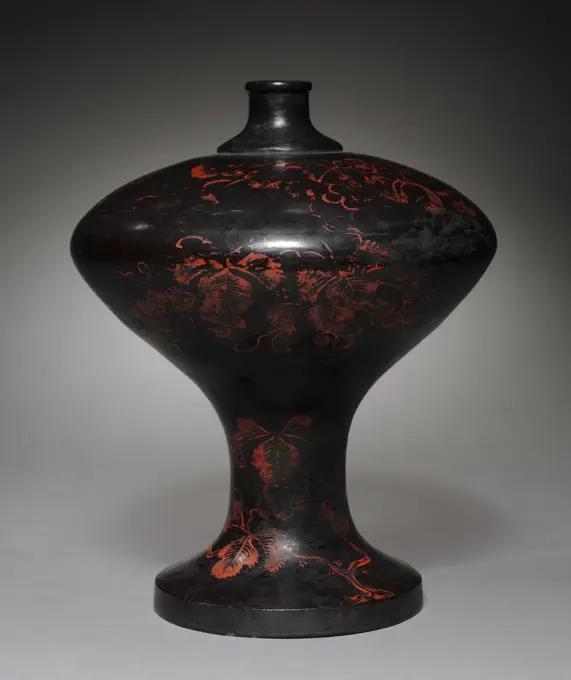
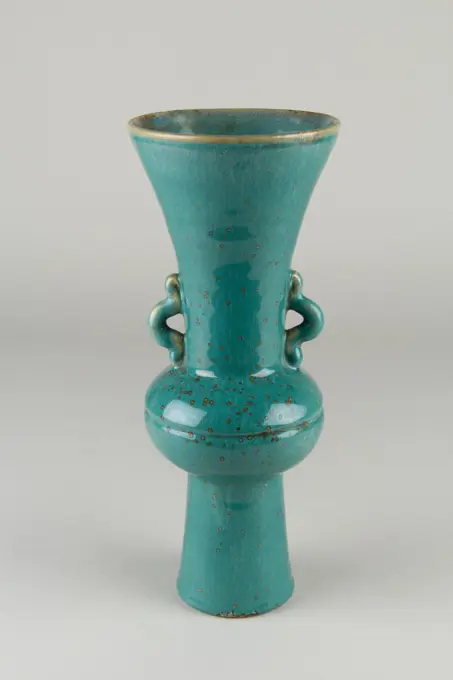
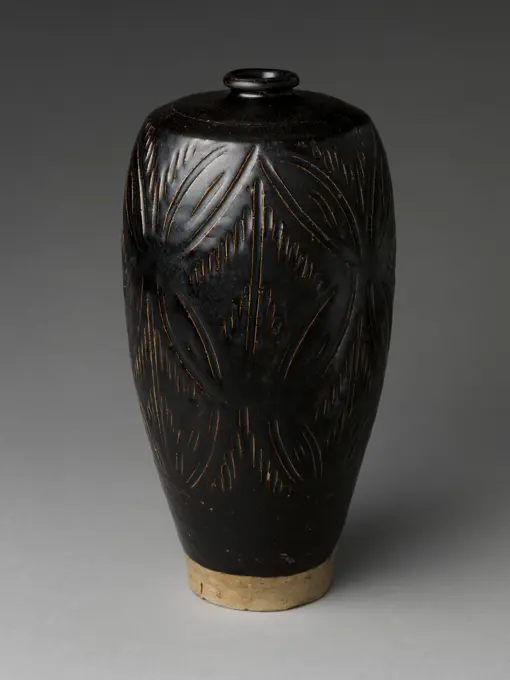
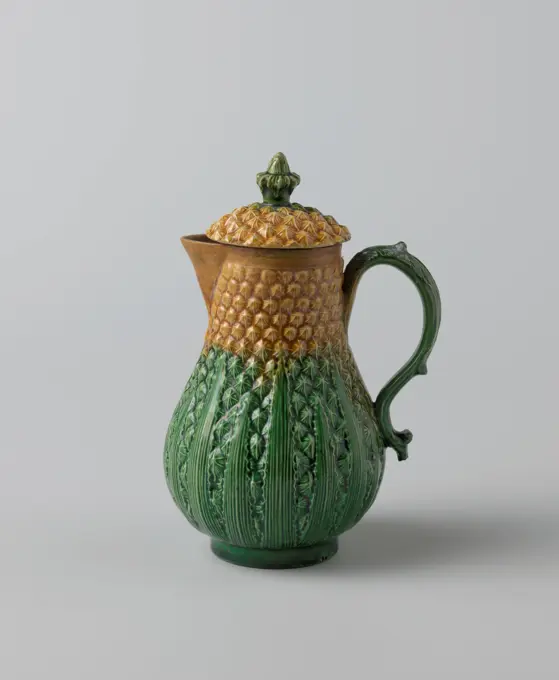
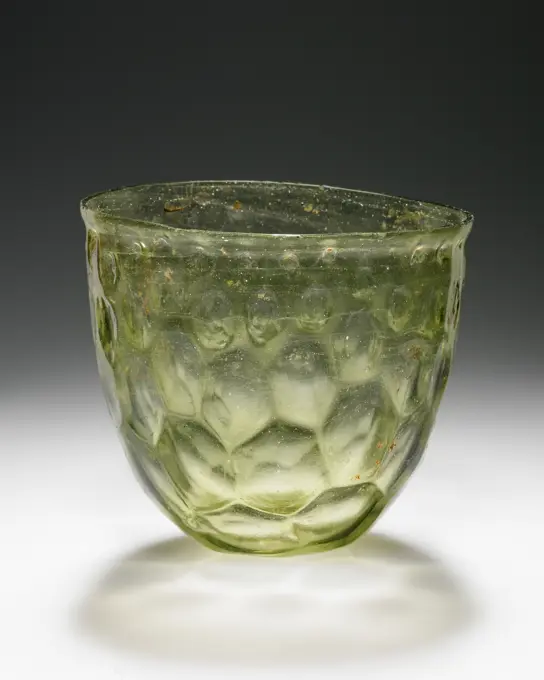
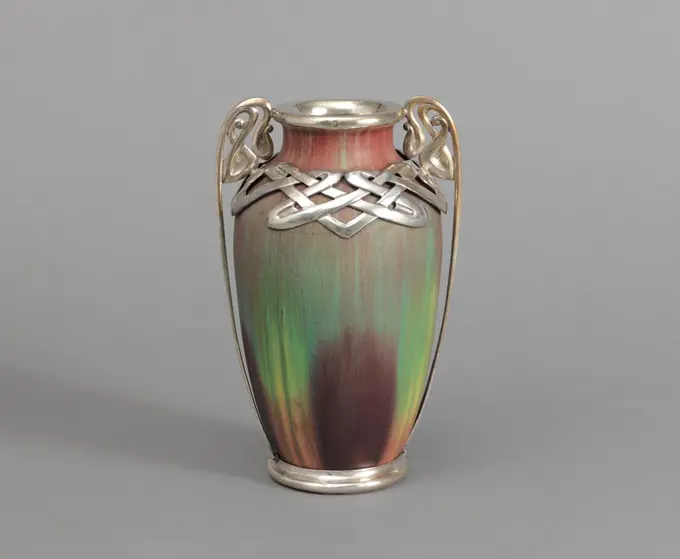
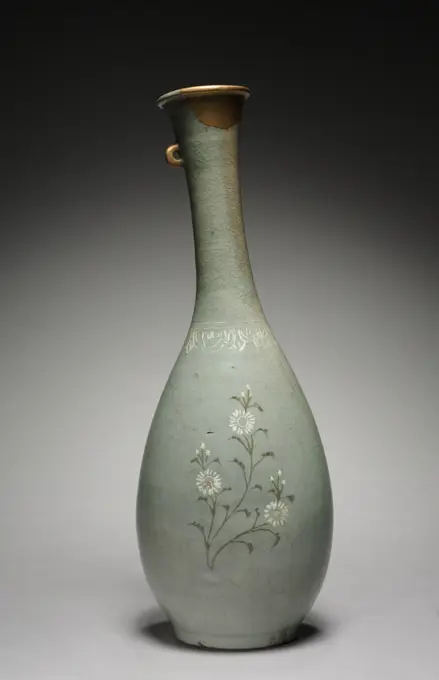
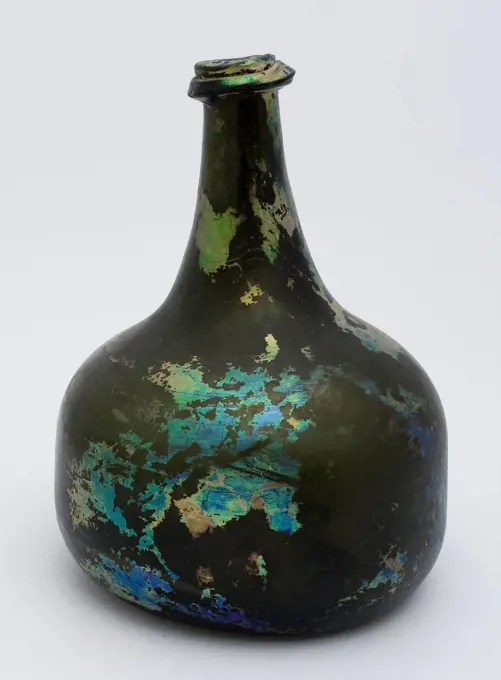
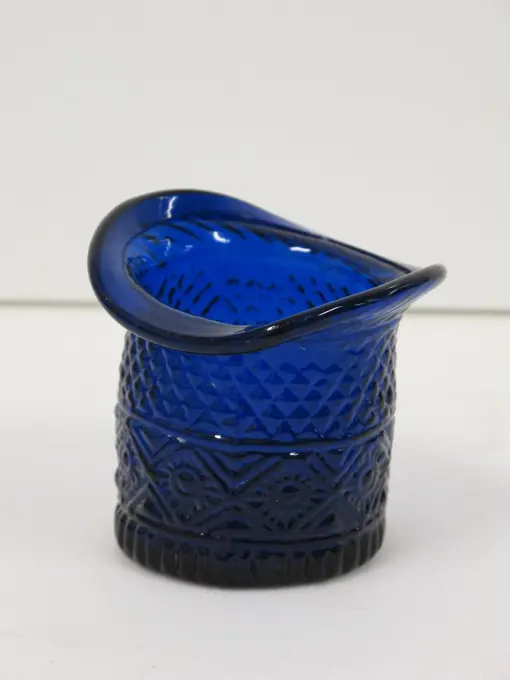
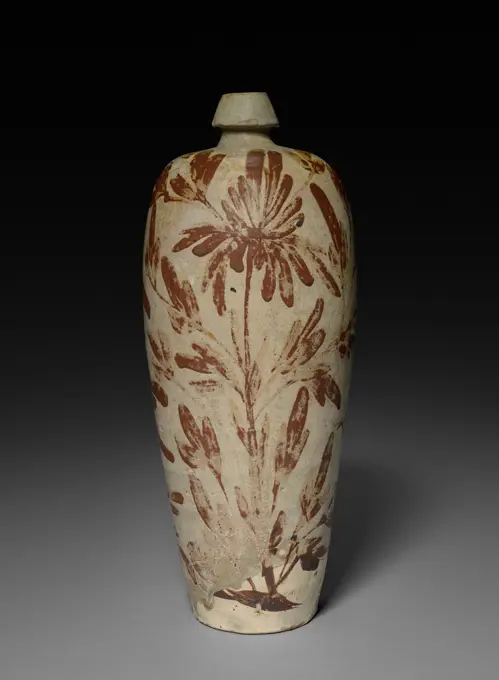
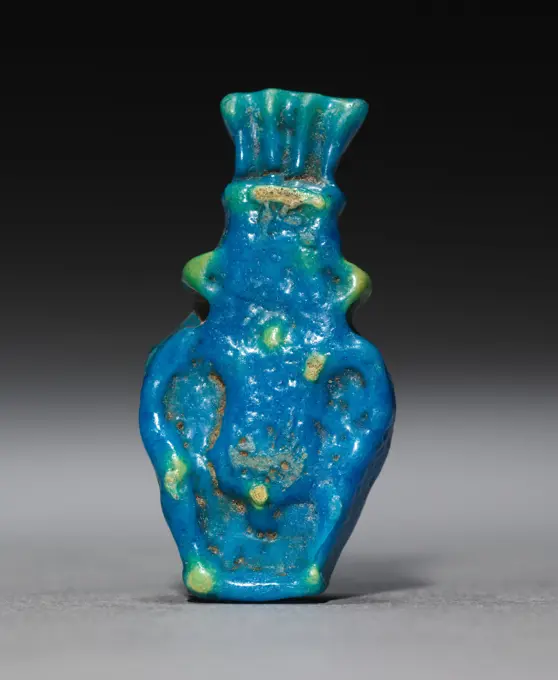
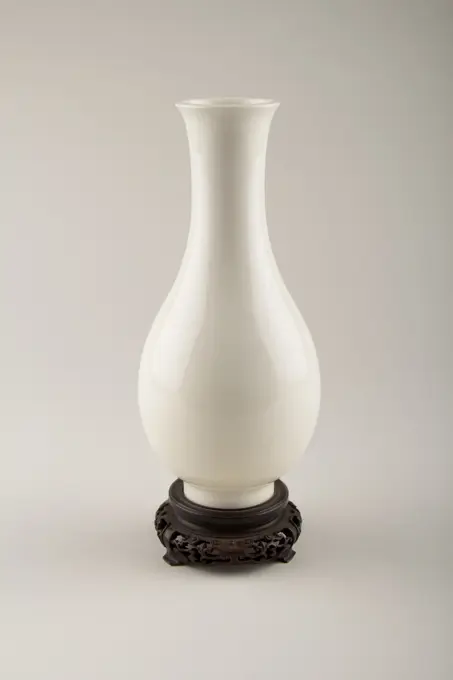
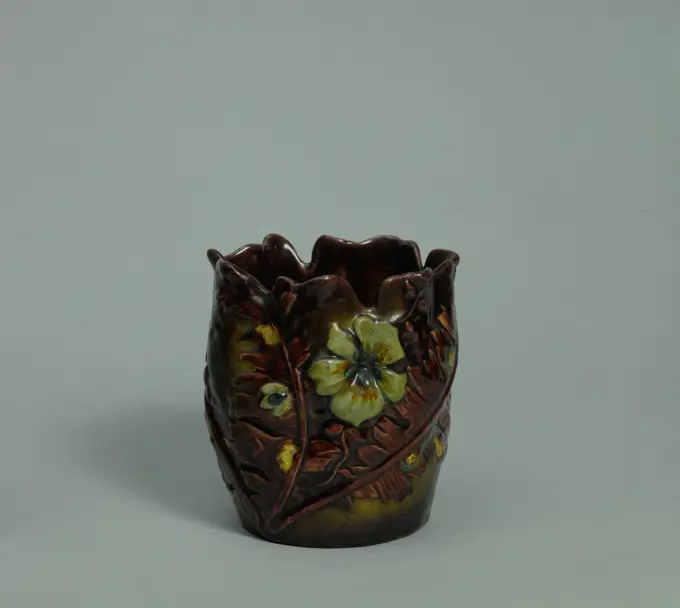
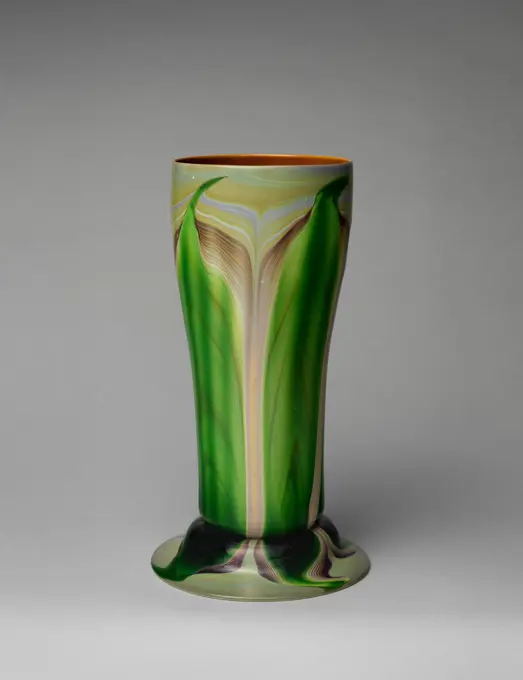
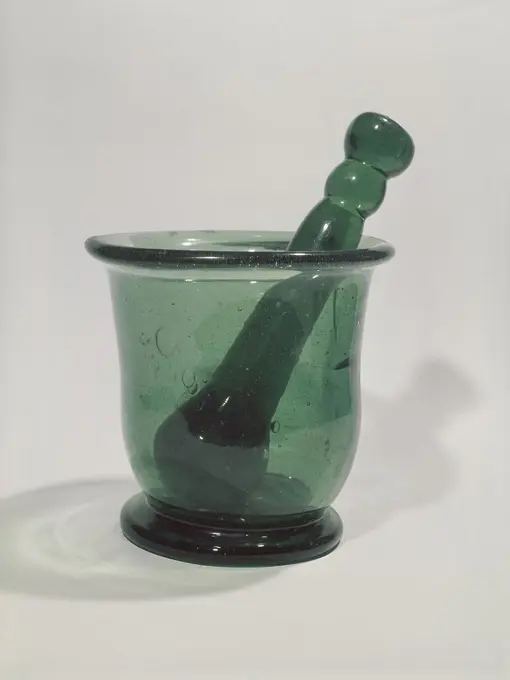
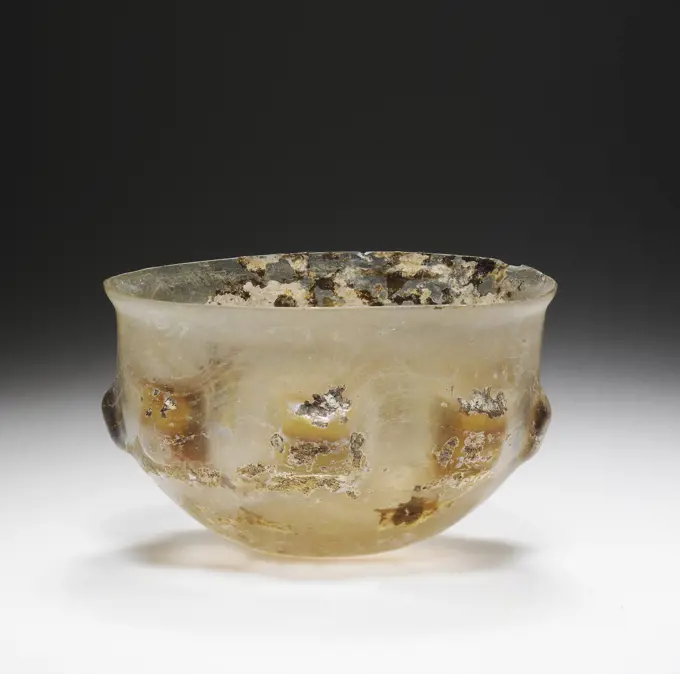
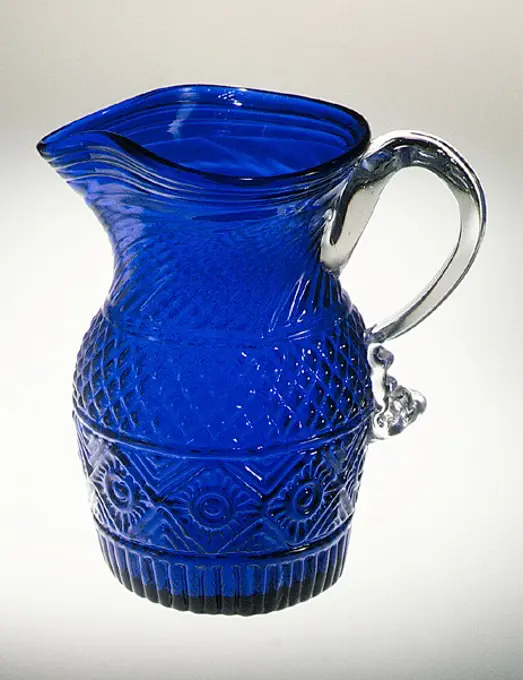
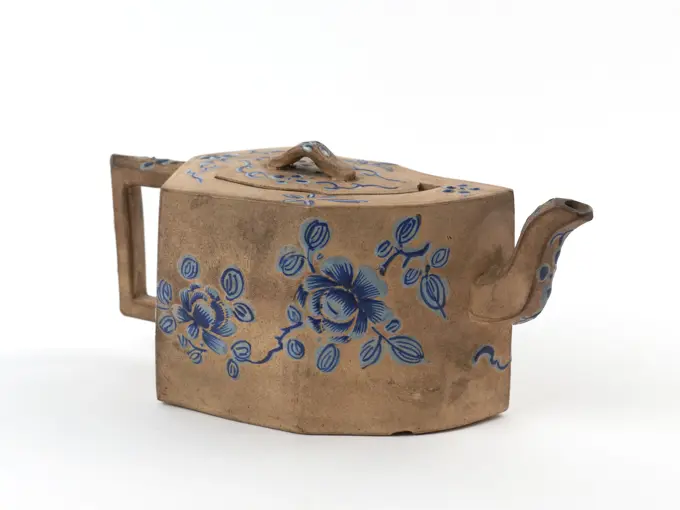
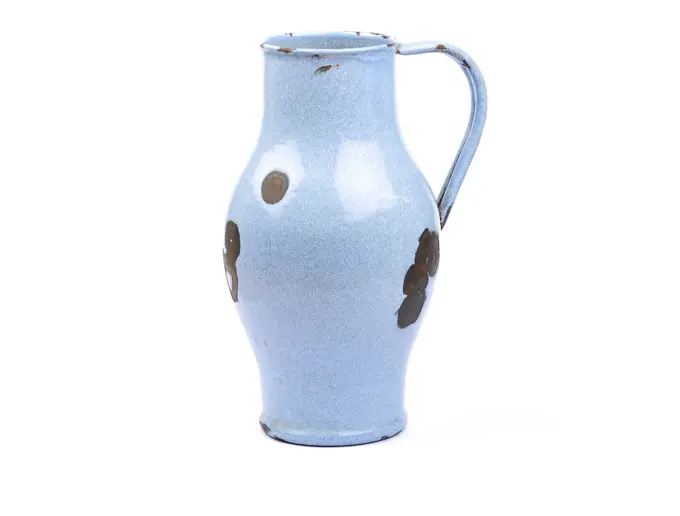
Baluster Bottle Vase With Celadon Glaze, Rocks and Fruit Spray. Bottle-shaped vase of porcelain with baluster-shaped body, straight neck and spreading edge, painted in underglaze blue and with celadon green and brown glaze. The body is largely covered with a celadon green glaze; a brown band; a fruittak and a rock group on the shoulder; around the neck a decorative band. Monochrome celadon green with blue and white.Glass cinerary urn (olla) mid-1st-2nd century A.D. Roman Translucent blue green.Broad, tubular rim, folded out, down, and in, forming uneven upper surface; tall ovoid body; shallow concave bottom.Intact; pinprick and some larger bubbles, with glassy and gritty inclusions; faint dulling and iridescent weathering.. Glass cinerary urn (olla). Roman. mid-1st-2nd century A.D.. Glass; blown. Early to Mid Imperial. GlassVase, anonymous, c. 1750 - c. 1799 Square vase of porcelain with flat body and neck, rounded parts on the shoulder and above the foot and square, wide neck with a flat edge, covered with a slightly crawling, monochrome turquoise glaze. Two ears modeled in the form of an elephant head with ring. Monochrome. China porcelain. glaze vitrification Square vase of porcelain with flat body and neck, rounded parts on the shoulder and above the foot and square, wide neck with a flat edge, covered with a slightly crawling, monochrome turquoise glaze. Two ears modeled in the form of an elephant head with ring. Monochrome. China porcelain. glaze vitrificationGlass alabastron (perfume bottle) late 6th-5th century B.C. Greek, Eastern Mediterranean Translucent cobalt blue, with handles in same color; trails in opaque yellow and opaque white.Narrow, inward-sloping rim-disk, with outsplayed rounded edge; short cylindrical neck with tooled indent around base; very small angular shoulder; convex sides to cylindrical body, tapering upwards; convex bottom; two vertical ring handles with knobbed tails, applied over trail decoration.A yellow trail attached at edge of rim-disk; a white trail applied on upper body, wound down, tooled into an inverted festoon pattern, with ten irregular downward strokes mixing and blurring trails with blue ground.Intact; some dulling and encrustation on one side, and faint iridescence.. Glass alabastron (perfume bottle). Greek, Eastern Mediterranean. late 6th-5th century B.C.. Glass; core-formed, Group I. Classical. GlassGlass ribbed bowl 1st century A.D. Roman Translucent blue green.Vertical unworked rim; pronounced concave shoulder expanding downwards; convex sides sloping inwards towards projecting rounded base ring; bottom with concave depression and projecting knob at center. Two mold seams visible only on shoulder.On sides, forty vertical rounded ribs (nineteen on one half of mold, twenty-one on the other).Intact; pinprick and some large bubbles; faint dulling and iridescence, patches of brown encrustation and weathering on interior.Greenish ribbed bowl.. Glass ribbed bowl 249429Vase ca. 1896-1908 Dedham Pottery Steeped in ceramics from birth, Hugh C. Robertson pursued his craft with fierce devotion and a passion for experimentation. From a family of trained English ceramists, he honed his skills in New Jersey before settling in Massachusetts as one of the founders of Chelsea Keramic Art Works and later, Dedham Pottery. Robertsons lifelong explorations in glazes, particularly their color and texture, make him one of the key figures of American art pottery at the turn of the twentieth century.From Chelsea to Dedham, Robertson continued to pursue his passion for innovation, employing the grayish-white stoneware used for Dedhams dinnerware to throw simple forms covered with bold combinations of colored and textured glazes. Despite his financial backers stipulation against further research into sang-de-boeuf, or oxblood, glazes, Robertson did not entirely abandon that costly pursuit. Many of his Dedham vessels have brilliant layerings of red and purple glazes. Shin Gyung Kyun. Jarrre "Nuage". Porcelaine. 2014. Paris, Muse Cernuschi. Porcelain covered with a cracked greenish cover. Iron brown projection on the entire surface and wide -brown lines on the shoulder. Asian art, jar cloud, porcelain, vaseAnonymous Coupe Porte (Haidai) (usual name), 1832. Sandstone, Céladon covered. Cernuschi Museum, Asia Museum of Asia in the city of Paris.Glass jar 2nd half of 1st-mid-2nd century A.D. Roman Translucent blue green.Rounded, flaring, tubular rim, folded out and down, forming collar around neck; broad globular body; bottom pushed in to form hollow foot ring.On body, twenty-two projecting roughly vertical ribs of differing lengths and shapes (some almost straight, others sinuous).Intact, except for one chip in rim and another chip on one of ribs; some bubbles and many surface scratches; slight dulling and pitting on exterior, thick yellow brown weathering and brilliant iridescence covering most of interior.Ribbed jar.. Glass jar. Roman. 2nd half of 1st-mid-2nd century A.D.. Glass; blown and tooled. Early Imperial. GlassGlass ribbed bowl 1st-3rd quarter of 1st century A.D. Roman Translucent deep honey yellow; trail in opaque white.Knocked-off, uneven rim; short concave neck; globular body curving in to thick bottom, flat but slightly concave at center.Trail applied to bottom and wound spirally around body, with large patch on lower side, ending in a fine trail on shoulder; side tooled into twenty-one irregular, vertical ribs.Intact, except for four chips in rim; a few pinprick bubbles; dulling, faint iridescent weathering, and weathering of trail between ribs.Dark amber ribbed cup with white lines around shoulder and body.. Glass ribbed bowl 249517Snuff Bottle, 1644-1911. China, Qing dynasty (1644-1911). Glass; overall: 5.8 cm (2 5/16 in.).Close-up of a vase, FranceTwo-eared jar, Jun ware ca. 13th century Chinese. Two-eared jar, Jun ware 461493Small vase. unknown, craftsmanFigure of a bird and a lidded pot, anonymous, c. 618 - c. 906 Cover of pottery with a spherical body, covered with a green, brown and cream -colored enamel. The lid with brown and green spots. Sancai, Tang. China earthenware. glaze vitrification Cover of pottery with a spherical body, covered with a green, brown and cream -colored enamel. The lid with brown and green spots. Sancai, Tang. China earthenware. glaze vitrificationAnonymous vase in the shape of a double gourd (common name), 1700. Sandstone sandstone lustrous brown. Cernuschi Museum, Asia Museum of Asia in the city of Paris.Vase, 1736-1795. China, Qing dynasty (1644-1911), Qianlong reign (1735-1795). Porcelain; overall: 75 cm (29 1/2 in.).Vase. Porcelain Green covered cracked. Paris, Cernuschi museum. 78840-12 Asian art, container, vaseGlobular Loop-Handled Jar with Diamond Pattern. China. Date: 900 AD-1099. Dimensions: H. 6.7 cm (2 11/16 in.); diam. 7.5 cm (3 in.). Ding-type ware; porcelain with underglaze carved decoration. Origin: China. Museum: The Chicago Art Institute, Chicago, USA.Vase, 960-1127, 7 7/8in. (20cm), Stoneware, glaze, China, 10th-12th century, During the Northern Song, a thriving urban class grew, and the desire for porcelain filtered down from the upper strata. Economic restrictions prevented those of a lower rank from attaining true porcelain, and as a result, stoneware objects meant to imitate porcelain, such as this vase were produced in order to satisfy this desire. One can see from the crumbled glaze that this vase does not possess the vitrified qualities of porcelain.Jar with Handles 12th century China. Jar with Handles. China. 12th century. Stoneware with applied white slip ribs and black glaze (Cizhou ware). late Northern Song (960-1127)-Jin (1115-1234) dynasty. CeramicsVase van Faience with flowers decorated, anonymous, c. 1740 - c. 1770 Vase of Faience. Multicolored painted with flowers. Delft . Vase of Faience. Multicolored painted with flowers. Delft .Sugar bowl 1769-75 American or British. Sugar bowl. American or British. 1769-75. Blown pattern-molded glass. Possibly made in England; Possibly made in United StatesPocket bottle 1815-40 American. Pocket bottle. American. 1815-40. Blown, pattern-molded glass. Possibly made in Pennsylvania, United States; Probably made in Ohio, United StatesRosewater sprinkler or bottle with light brown and auspicious symbols, anonymous, c. 1700 - c. 1724 Rose water drops or point bottle on a high base of porcelain with spherical body and long, narrow neck, covered with a cafe-au-lait glaze and painted in under-glaze blue. Saved in the light brown glaze three round fields with lucky symbols (roll, pearl, artemisia leaf, tripod, books, ruyi-skept, mint, window, double ax, go-board) in underlaze blue. Monochrome brown with blue and white. China porcelain. glaze. cobalt (mineral) painting / vitrification Rose water drops or point bottle on a high base of porcelain with spherical body and long, narrow neck, covered with a cafe-au-lait glaze and painted in under-glaze blue. Saved in the light brown glaze three round fields with lucky symbols (roll, pearl, artemisia leaf, tripod, books, ruyi-skept, mint, window, double ax, go-board) in underlaze blue. Monochrome brown with blue and white. China porcelain. glaze. cobalt (mineral) painting / vitrJar 10th century China The inscription reading xin guan, or new official ware,” carved into the bottom of this small jar indicates that it was produced for use at one of the many competing courts in north China during the tumultuous tenth century. In addition to use at the court, wares of this type, produced primarily in Hebei Province, were traded to Southeast Asia, the Islamic world, and Africa.. Jar. China. 10th century. Porcelain with incised decoration under transparent glaze (Xing ware). Five Dynasties (907-960). CeramicsVase, Tiffany Glass and Decorating Company, American, 1892 - 1900, Mold-blown favrile glass, Gray metallic luster on ribbed gourd-shaped body. Opaque white glass inside lip and probably most of interior., New York, NY, USA, ca. 1900, glasswares, Decorative Arts, VaseNaczynie. unknown, authorGlass jug with snake-thread decoration. Culture: Roman, Rhenish. Dimensions: H. with handle 5 3/8 in. (13.6 cm). Date: late 2nd-3rd century A.D..Colorless with pale green tinge; handle in same glass; trails in translucent light blue and opaque yellow.Funnel-shaped neck; broad, sloping shoulder; convex curving side, tapering downwards; outsplayed tubular base ring, made by folding; kick in bottom with central pontil scar; strap handle applied to shoulder, drawn up and outward in a gentle curve, then folded in, down, and back, and trailed onto top of rim.On body, two blue and two yellow partially serrated snake-thread trails in an alternating pattern of similar abstract curvilinear designs; on upper part of handle, a short yellow trail, tooled into horizontal ribs.Broken and repaired, with all of rim and most of neck missing, and several large holes in body; few bubbles, but many elongated bubbles and a few black impurities in handle; dulling, faint iridescence, and patches of browniTea Cup, early 1500s. China, Ming dynasty (1368-1644). Guri lacquer; diameter: 6.4 cm (2 1/2 in.); overall: 7.6 cm (3 in.).. Vase of faience. Blue painted with a Dutch water landscape. The vase is part of a cabinet set.Snuff Bottle China. Snuff Bottle. China. Porcelain with amber stopper. Qing dynasty (1644-1911), Qianlong period (1736-95). Snuff BottlesGlass cup 2nd-3rd century A.D. Roman Colorless with greenish tinge, with trail in same glass.Plain, rounded rim; short, flaring neck; carinated body with straight, conical sides, then angled in to integral, tubular base ring; broad, flat bottom with slight small central kick.Single horizontal trail around upper body, then spiral up to end below rim.Complete, except for large hole in one side; many pinprick bubbles; heavily weathered and pitted, with brilliant iridescence; some soil encrustation and black, enamel-like weathering on interior.. Glass cup 239825Bottle ca. 1760 British. Bottle 620Ovoid bottle with a continuous pattern of floral scrolls, anonymous, anonymous, c. 1680 - c. 1720  Stock or pharmacist's bottle of porcelain with an egg-shaped body, painted in underlaze blue. The bottle is covered with a continuous pattern of flower vines with the exception of the foot ring, a strap around the foot and the lip edge. Thickening in the neck on which the missing lid would rest. Arita, Blauw-Wit. Japan porcelain. glaze. cobalt (mineral) painting / vitrification  JapanVase 1926 Charles Fergus Binns Charles Fergus Binns can be considered the father of American art and studio pottery, and one of the most influential educators in the field of ceramics in the United States. A product of the English pottery industryhis father was art director and co-managing director of the celebrated Royal Worcester Porcelain Works in Staffordshirethe young Binns perfected his skills in clay before immigrating to the states in 1897. He first settled in Trenton, New Jersey, which had a thriving ceramics industry, and served as an advisor to a number of firms. He is best known, however, for his role in the newly formed New York State School of Clay-Working and Ceramics (now the New York State College of Ceramics at Alfred University), the first American institution to grant a degree in ceramics. The program he led was the most renown in the country, and he trained and mentored numerous art potters, including Arthur Baggs, of the Marblehead Pottery, and Frederick WalrathOvoid covered jar with continuous foliate scrolls, anonymous, c. 1680 - c. 1720 Egg -shaped lid pot of porcelain, painted in underlaze blue. The wall and shoulder covered with continuous leaf vines. On the neck a band with pointed leaf motifs. Marked on the underside with the four-character brand of Keizer Chenghua. Rand is unglazed; Lid is missing. Two cracks in the edge. Blue White. China porcelain. glaze. cobalt (mineral) painting / vitrification Egg -shaped lid pot of porcelain, painted in underlaze blue. The wall and shoulder covered with continuous leaf vines. On the neck a band with pointed leaf motifs. Marked on the underside with the four-character brand of Keizer Chenghua. Rand is unglazed; Lid is missing. Two cracks in the edge. Blue White. China porcelain. glaze. cobalt (mineral) painting / vitrificationGlass aryballos (perfume bottle). Culture: Greek, Eastern Mediterranean. Dimensions: H. 2 3/8 in. (6 cm). Date: late 6th-5th century B.C..Translucent dark cobalt blue, with handles in opaque turquoise blue; trails in opaque turquoise blue and opaque yellow. Thick inward-sloping rim-disk; short cylindrical neck; almost horizontal sloping shoulder; sperical body; convex, slightly pointed bottom; two vertical ring handles with knobbed tails extend from shoulder to underside of rim-disk.Turquoise blue trail applied to outer edge of rim-disk; a yellow trail applied to outer edge of shoulder and wound spirally, at first in four horizontal lines, then tooled into a zigzag pattern around central section of body, formed by shallow vertical tooling indents, where a turquoise blue trail is added, mingling with the yellow; below this, a yellow trail and a turquoise blue trail wound once around body.Intact; slight dulling and pitting, and small patches of iridescent milky weathering on rim, necHanging Lamp 10th-11th century The squat body, short flared neck, and low foot of this object are typical of lamps produced before the thirteenth century. The characteristic suspension rings around the bodies of these lamps are another prominent feature. This example probably once had a vertical glass tube attached to its base to float a wick in oil.. Hanging Lamp 451747Tea Caddy. Culture: Japan. Dimensions: H. 3 1/2 in. (8.9 cm); Diam. 2 3/4 in. (7 cm). Date: 18th century. Museum: Metropolitan Museum of Art, New York, USA.Vase Necel, Franciszek (1868 1935)Vase. Culture: American. Designer: Designed by Kate B. Sears. Dimensions: H. 7 1/2 in. (19.1 cm). Manufacturer: Manufactured by Ceramic Art Company (American (Trenton, New Jersey), 1889-1896). Date: ca. 1892.Walter Scott Lenox left Willets in 1889 to found the Ceramic Art Company, later Lenox China. Production of art porcelain was the company's sole aim. In a departure from the firm's characteristic decoration in enamels and raised gold paste, the decorator Kate Sears, about whom little is known, painstakingly carved delicate vignettes on the sides of porcelain vessels such as this vase, with its nymphs in petal skirts personifying flowers. Museum: Metropolitan Museum of Art, New York, USA.Vase. Culture: American. Dimensions: 7 3/4 x 4 3/8 in. (19.7 x 11.1 cm). Maker: George E. Ohr (American, Biloxi, Mississippi 1857-1918 Biloxi, Mississippi). Date: 1897-1900.In many ways George Edgar Ohr was the quintessential Arts and Crafts potter, combining artistic vision with extraordinary skill with his hands. Working in the seaside resort town of Biloxi, Mississippi, he dug the clay, processed and prepared it, threw the shape on the wheel, altered the piece according to his vision, mixed and applied his own glazes, fired the kiln, created his own style of advertising, and took his wares on the road. Ohr's personal mantra was "no two alike," and he was as eccentric as his work was individualistic, with its manipulated forms on ultra-thin thrown vessels, crimping, ruffling, off-centering, and twisting, to create unprecedented forms for the 1890s. To these forms, he applied his own completely new and unusual glazes, applied by sponging, splashing, and spattering, resulting in worksVase, Christopher Dresser, Scottish, 1834 - 1904, Linthorpe Pottery, Yorkshire, 1879-1889, Henry Tooth, Glazed earthenware, overglaze lustre, Red earthenware body. Elongated ovoid shape, flared foot, flared 'collar' neck. Body applied with molded iris with purple glaze, and white water lilies, both with foliage emerging from stylized water lines. Body glazed in striated brown, green and white, with surface iridescence. Interior glazed., Middlesbrough, England, 1880-82, ceramics, Decorative Arts, VaseAriel Vase. Designed by Edvin Öhrström; Swedish, 1906-1994; Made by Orrefors Glassworks (Glasbruk); Småland, Sweden, founded 1898. Date: 1950-1960. Dimensions: 16.5 x 12.7 cm (6 1/2 x 5 in.). Glass. Origin: Orrefors. Museum: The Chicago Art Institute, Chicago, USA.Vase in Shape of Archaic Chinese bronze second half of the 18th century Japan. Vase in Shape of Archaic Chinese bronze 50349Cup on foot ", glass of Venice, anonymous, 16th century, between 1470 and 1500. Museum of Fine Arts of the city of Paris, Petit Palais. 24105-6 Anonymous, foot cut, art object, Venice glassSalt barrel with lobed edge and wall, with two volute -shaped ears, on a base with the lowering edge. Undecorated., Anonymous, c. 1650 - c. 1680 Wide canopic salt barrel of undecorated faience, on a base and with a downward -covering edge. The edge and the wall are lobed and the barrel has two volute -shaped ears. Delft (possibly) earthenware. tin glaze. Wide canopic salt barrel of undecorated faience, on a base and with a downward -covering edge. The edge and the wall are lobed and the barrel has two volute -shaped ears. Delft (possibly) earthenware. tin glaze.Vase ". Terracotta. Vietnam-Xe-Xive s. Paris, Cernuschi museum. 72185-45 Vietnamese object, terracotta, vaseLobed Celadon Brush Washer, 19th century, Aoki Mokubei, Japanese, 1767 - 1833, 2 × 4 1/8 × 4 1/8 in. (5.08 × 10.48 × 10.48 cm), Glazed porcelain, Japan, 19th century, Aoki Mokubei, a potter, painter, and scholar, probably made this small bowl, which used to hold water for washing ones calligraphy and paint brushes. Mokubeis porcelain works tend to relate to scholarly pursuits, Chinese learning, and sencha or steeped-tea ceremony.Close-up of black and white pottery vasePierced jar in the shape of a basket with two crabs and a conch, anonymous, c. 1875 - c. 1899 Pot of stoneware in the form of a basket with openwork wall and two small, raised ears, painted on the glaze in blue and green. Two modeled scratches and a shell on the outside wall. Six holes in the soil. Japan stoneware. glaze. vitrification Pot of stoneware in the form of a basket with openwork wall and two small, raised ears, painted on the glaze in blue and green. Two modeled scratches and a shell on the outside wall. Six holes in the soil. Japan stoneware. glaze. vitrificationMycenaean Piriform Vase. UnknownSpool-Shaped Game Piece ca. 1504-1447 B.C. New Kingdom The first room that the Museum's excavators cleared in the family tomb of Neferkhawet was the east chamber. In the northwest corner of this room they found a mis-matched partial set of gaming pieces. The two types, conical and spool-shaped, are common components of the board games senet and 20-squares which were usually combined in a single game box with the game boards on opposite sides, and a drawer for the gaming pieces and the throw sticks or knuckle bones that were used like dice to determine how the pieces were moved on the boards. The eight gaming pieces, five conical and three spool-shaped, were lying on their sides next to the outlined remains of an insect-eaten game box.. Spool-Shaped Game Piece. ca. 1504-1447 B.C.. Faience. New Kingdom. From Egypt, Upper Egypt, Thebes, Asasif, Tomb of Neferkhawet (MMA 729), east chamber, northwest corner, MMA excavations, 1934-35. Dynasty 18, earlySake Flask, 1500s. Japan, Muromachi period (1392-1573). Black laquered wood with red lacquer; diameter: 24 cm (9 7/16 in.); overall: 30.5 cm (12 in.). This flask contained rice wine, or sake. Its wood body was shaped by a lathe before black lacquer was applied to the surface. A red lacquer design of grapevines, an auspicious motif, covers the surface. With their numerous, long-lasting fruits, grapevines traditionally symbolized fertility and longevity in East Asia.Water Container with StylizedFlowers, late 17th-early 18thcentury, Porcelain painted with underglaze copper red an cobalt blue (Jingdezhen ware), 2 3/4 × 3 3/4 in. (7 × 9.5cm), China, Chinese, Qing dynasty (1644-1911), Kangxi period(1662-1722), Containers -CeramicsVase (France); Designed by Monsieur de Varreux (de Vez); Manufactured by Cristallerie de Pantin; glassVase mid-19th century Japan. Vase 46165Tea caddy with a brown spotted glaze, anonymous, anonymous, c. 1400 - c. 1950 Dust bar or Chare of stoneware with an ivory lid, partially covered with a brown spotted glaze. The lower part of the bus in unggestive. Old label on the bottom with 'W623'. SETO. Japan stoneware. glaze. deksel: ivory vitrification Dust bar or Chare of stoneware with an ivory lid, partially covered with a brown spotted glaze. The lower part of the bus in unggestive. Old label on the bottom with 'W623'. SETO. Japan stoneware. glaze. deksel: ivory vitrificationVase with abstract decoration 13th-14th century China. Vase with abstract decoration. China. 13th-14th century. Stoneware with carved and incised design under celadon glaze (Cizhou ware). Yuan dynasty (1271-1368). CeramicsCan of hard baked pottery; Whieldon Ware, Pineapple Ware, Anonymous, c. 1765 - c. 1775 Pear-shaped can of hard baked pottery, the jug has a SNEB, a C-shaped ear. The jug has the appearance of a pineapple due to the decoration in relief and the colors yellow and green. England earthenware Pear-shaped can of hard baked pottery, the jug has a SNEB, a C-shaped ear. The jug has the appearance of a pineapple due to the decoration in relief and the colors yellow and green. England earthenwareLid of hard baked pottery; Whieldon Ware, Pineapple Ware, Anonymous, c. 1765 - c. 1775 Lid of hard baked pottery with floral button. England earthenware Lid of hard baked pottery with floral button. England earthenwareCup. UnknownTea caddy with lid. unknown, craftsmanRing-Handled Cup with lid with finial 618 CE-906 CE China. Slip-coated earthenware with three color (sancai) lead glazes, wood and stone .Flat vase. .Jug early 19th century British, Staffordshire. Jug. British, Staffordshire. early 19th century. Pottery. Ceramics-PotteryVase Vase; Designed by Baudry (French), Lucien Gaillard (French, 1861 - 1942); Made by Eugène Baudin (French, 1843 - 1907), Alphonse-Edouard Debain; stoneware, silverBottle with Chrysanthemum Design, 1200s-1300s. Korea, Goryeo period (918-1392). Celadon ware with inlaid white and black slip decoration; diameter: 14.7 cm (5 13/16 in.); overall: 40.4 cm (15 7/8 in.).Belly bottle, bottle bottle bottle holder soil find glass, free blown and shaped glass application Circular bottle in clear green glass. Pontil mark under wide raised bottom to which remains glass adheres Body with light inwardly inclining almost vertical flat wall Short rejuvenated neck (is tilted) with imposed all-round sharp glass wire under slightly dilated irregularly flattened lip archeology packagingSugar Bowl And Lid (France); Designed by Jean Elysée Puiforcat (French, 1897-1945); silver, walnut; Overall: 11 x 8.5 x 8 cm (4 5/16 x 3 3/8 x 3 1/8 in.)Vase. Culture: China. Dimensions: H. 5 1/4 in. (13.3 cm). Date: 19th century. Museum: Metropolitan Museum of Art, New York, USA.HatSalt.   Maker: Boston and Sandwich Glass Works, American, 1826-88Vase late 17th-early 18th century China. Vase. China. late 17th-early 18th century. Porcelain with ox-blood glaze (Jingdezhen ware). Qing dynasty (1644-1911), Kangxi period (1662-1722). CeramicsFigured flask 1855-73 Louisville Glass Works. Figured flask. American. 1855-73. Free-blown molded glass. Made in Louisville, Kentucky, United StatesVase: Cizhou ware, 12th Century. China, Northern Song dynasty (960-1127). Buff stoneware with underglaze slip coating; overall: 42.9 cm (16 7/8 in.).Tea Caddy 18th century Japan. Tea Caddy 62592Amulet of Bes, 30 BC-AD 395. Egypt, Greco-Roman Period, Roman Empire. Polychrome faience; average: 3.7 x 1.8 x 0.7 cm (1 7/16 x 11/16 x 1/4 in.).Vase China. Vase 46958Emile Gallé (1846-1904). Vase with floral decor, last quarter of the 19th century. Ceramics, enameled earthenware, gold enhancement. Museum of Fine Arts of the City of Paris, Petit Palais. Ceramic, Floral Decor, Emaillee Faience, Various Object, Réhaut OR, VaseFloral-shaped Cup with Incised Chrysanthemum Design, 1100s-1200s. Korea, Goryeo period (918-1392). Celadon; diameter of mouth: 7.1 cm (2 13/16 in.); overall: 6.9 cm (2 11/16 in.).Vase. Maker, attributed to: Congressville Glassworks, American, 1865-ca. 1890Vase with Mock Animal Mask Ring Handles and Hexagonal Panels with Stylized Leaves 1600-1699 China. Porcelain with cobalt blue glaze and resist decoration .Cachepot - Bretby Art Pottery Bretby Art PotteryVase 1893-96 Designed by Louis Comfort Tiffany American This object forms part of a group of over forty given to the Museum in 1896 by Louisine and Henry Osborne Havemeyer (96.17.9-.56). The gift was the first American glass to enter the Museum's collection. Most likely prompted by Louis Comfort Tiffany, the Havemeyers presented their collection of Tiffany Favrile glass to the Museum only three years after Tiffany started making decorative blown-glass vessels. The shapes, colors, and finishes of Tiffany's vases and plaques were inspired by the natural world and ancient glass.. Vase. American. 1893-96. Favrile glass. Made in Queens, New York, New York, United StatesToilet vase ca. 1550-1458 B.C. New Kingdom. Toilet vase 547039White glazed jar with "hidden" (anhua) design, 1500s-1600s. China, Jiangxi province, Jingdezhen kilns, Ming dynasty (1368-1644). Porcelain with "sweet-white" (tianbai)-type glaze; overall: 13.9 x 16.4 cm (5 1/2 x 6 7/16 in.).ALMIREZ DE VIDRIO VERDE. Location: MUSEE D'ARTS DECORATIFS. MADRID. SPANIEN.Vessel for Ritual Offering (Gui). Culture: China. Dimensions: H. 10 3/4 in. (27.3 cm).These vessels (25.143.1-.3) were used in state rituals held in the first lunar month of the year, during which the emperor made offerings to heaven at the Altar for Bountiful Harvest (Qigutan), part of the Temple of Heaven in Beijing. In shape and decoration, these ceramic vessels--a gui and two dou--are modeled on bronze grain receptacles of the Eastern Zhou dynasty (770-256 B.C.), which would have formed part of a larger set of objects, employed in ritual offerings, that included containers for wine and meat. In later times, ceramic took the place of bronze, and vessels were color-coded according to one of four ritual altars at which the emperor conducted ceremonies: blue for heaven, yellow for earth, red for the sun, and white for the moon. Museum: Metropolitan Museum of Art, New York, USA.Ribbed Bowl; Eastern Mediterranean; 1st century B.C; Glass; 5.6 x 9.3 cm (2 3,16 x 3 11,16 in.)Terracotta one-handled cup late 8th century B.C. Greek, Attic From the Hymettos deposit (see 30.118.1). Terracotta one-handled cup. Greek, Attic. late 8th century B.C.. Terracotta. Geometric. VasesJug 12th-18th century Ancestral Pueblo. Jug 310675Melon-Shaped Jar 618 CE-907 CE China. Earthenware with three-color (sancai) lead glazes .Czarka with white enamel and rug ideograms unknownCream Jug 1820-40 American. Cream Jug 2582Tea bowl, anonymous, anonymous, c. 1775 - c. 1825 Theekom van Steengoed, partially covered with a black glaze. On the outer wall, three flame motifs have been saved in the enamel. The lower part of the bowl is unglazed. Marked on the bottom:  'Raku'. Raku (black). Japan stoneware. glaze vitrification Theekom van Steengoed, partially covered with a black glaze. On the outer wall, three flame motifs have been saved in the enamel. The lower part of the bowl is unglazed. Marked on the bottom:  'Raku'. Raku (black). Japan stoneware. glaze vitrificationThéière .. Sandstone with blue enamel decoration, Qing dynasty (1644-1912). Provenance: China. Paris, Cernuschi museum. 78839-21 Asian art, Chinese art, living art, ceramic, Ching dynasty, Qing dynasty, Tsing, GRES dynasty, service to the, theiere, dishesPitcher. Culture: American. Dimensions: H. 7 3/4 in. (19.7 cm). Maker: Jersey City Pottery (1855-92). Date: ca. 1850. Museum: Metropolitan Museum of Art, New York, USA.Emaillekrug - Enamel jug Emaillekrug - Enamel jug Copyright: xZoonar.com/lantapixx 5694226Footed Bowl (Coppa); Venice, Veneto, Italy; about 1500; Free- and mold-blown cobalt-blue glass with gold leaf and enamel decoration; 17.8 x 24.1 cm (7 x 9 1,2 in.)