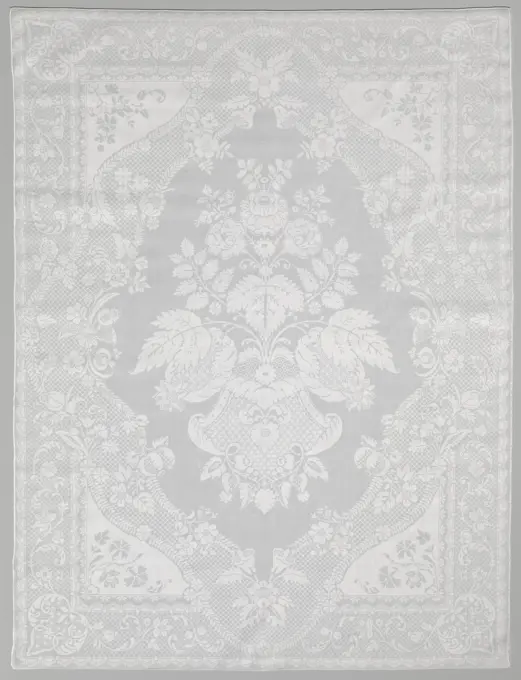
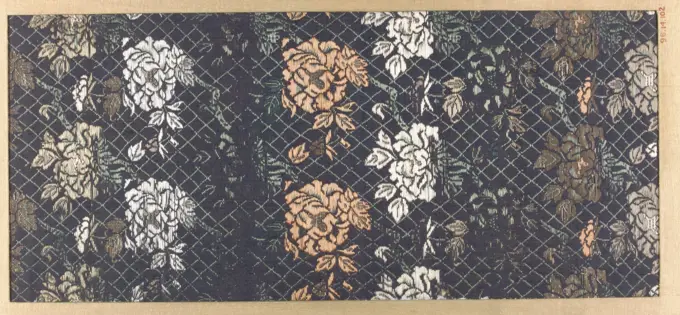
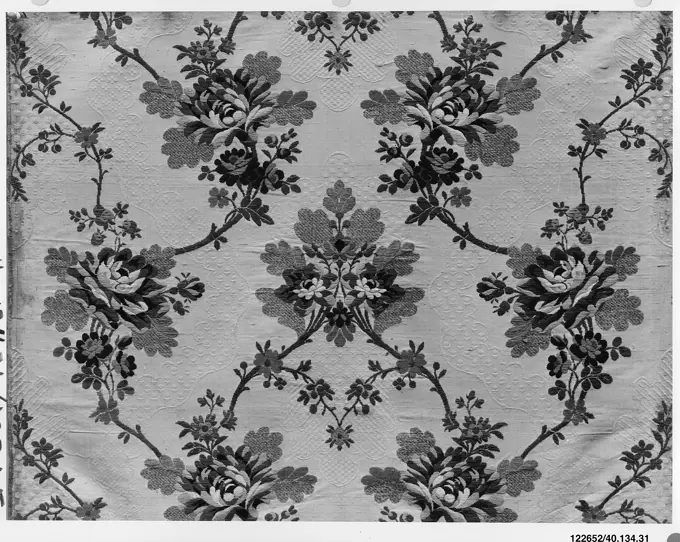
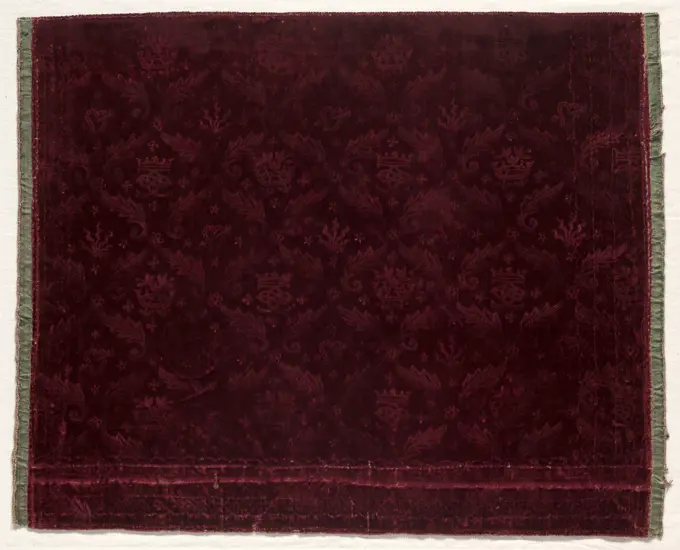
Victorian Textiles

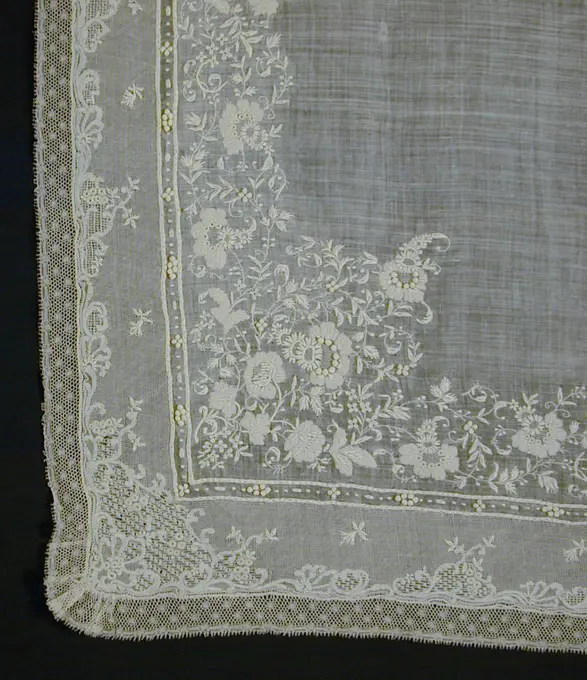
A collection of exquisite 19th-century textiles featuring intricate floral patterns, elegant colors, and various lace techniques, highlighting vintage French craftsmanship.

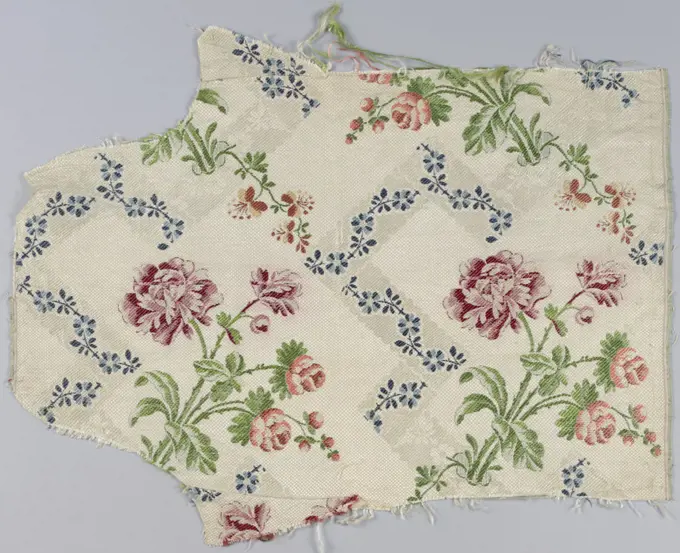
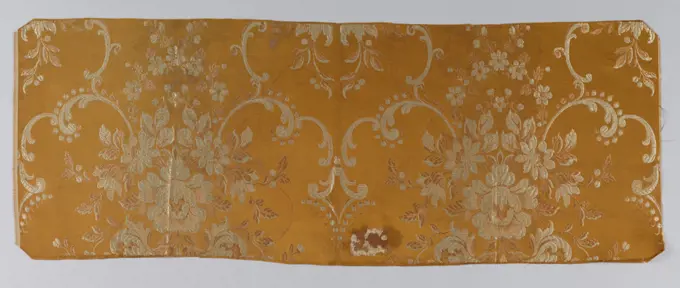
Fragment, Medium: silk Technique: 5-harness satin damask, Medium-scale design of delicate symmetrical bouquets, each diamond shaped and closely placed so that a trellis shape is created by the negative space of the pattern. Two salmon and yellow striped selvages in warp twill., France, mid-18th century, woven textiles, Fragment
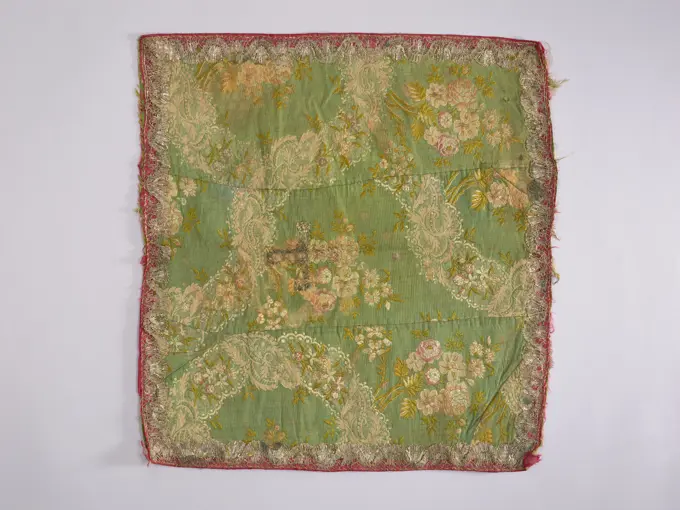
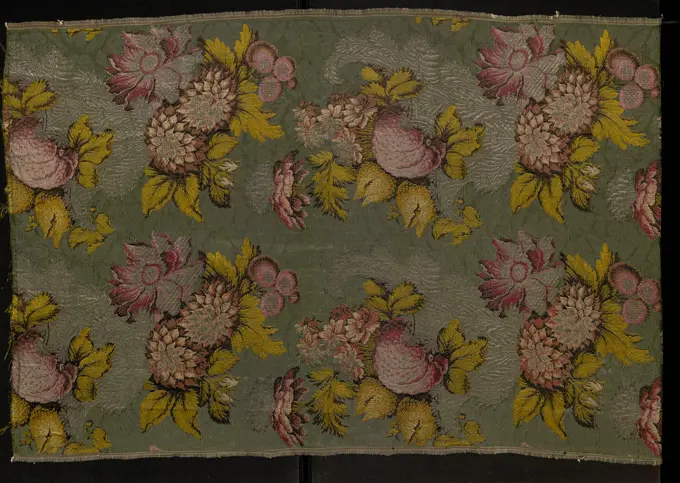
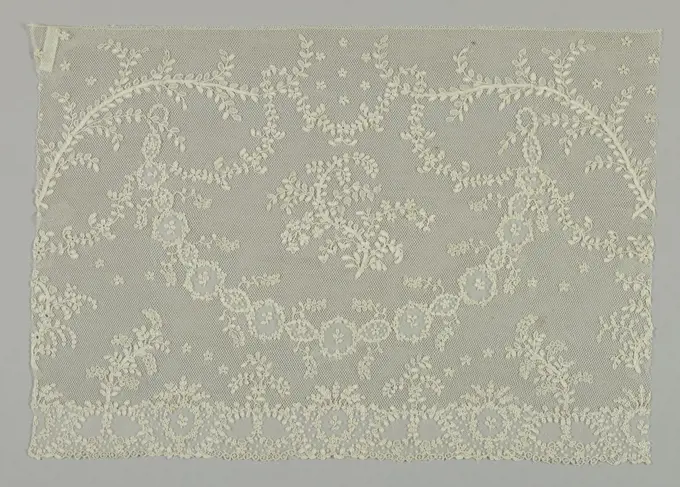
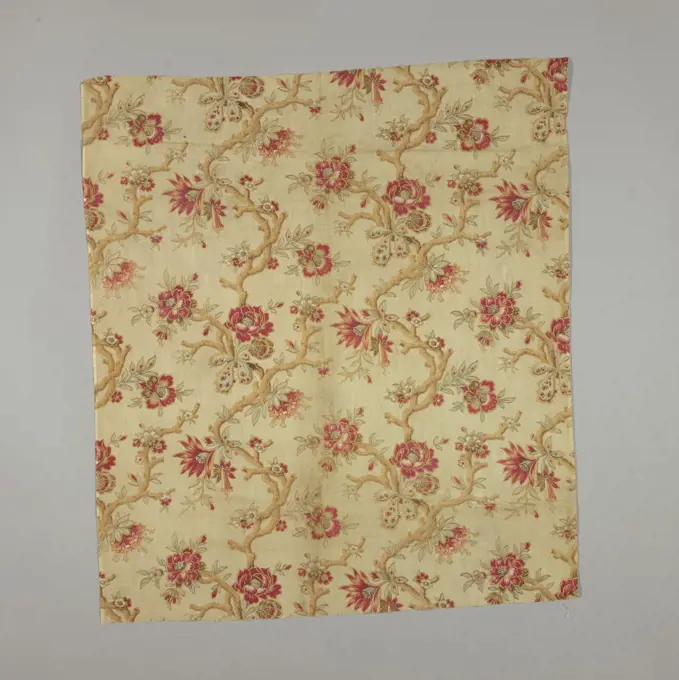
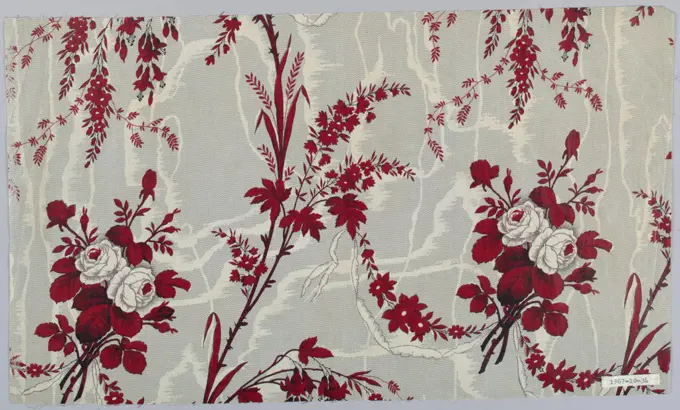
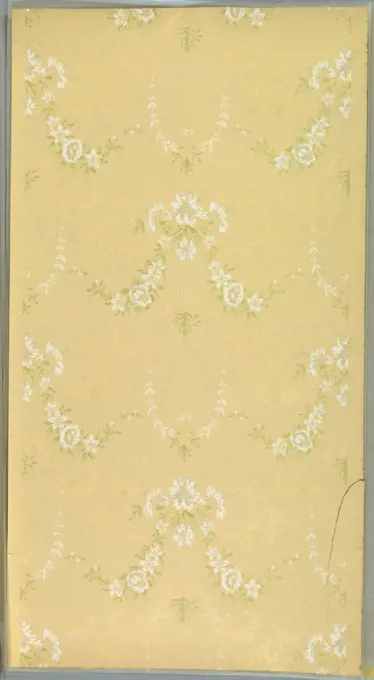
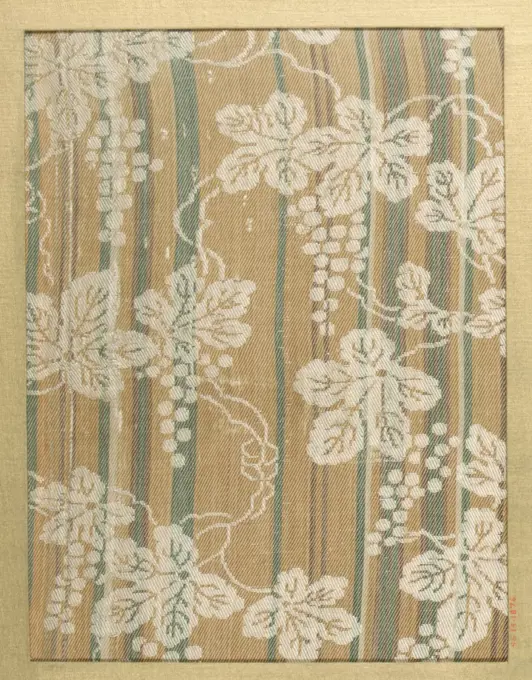
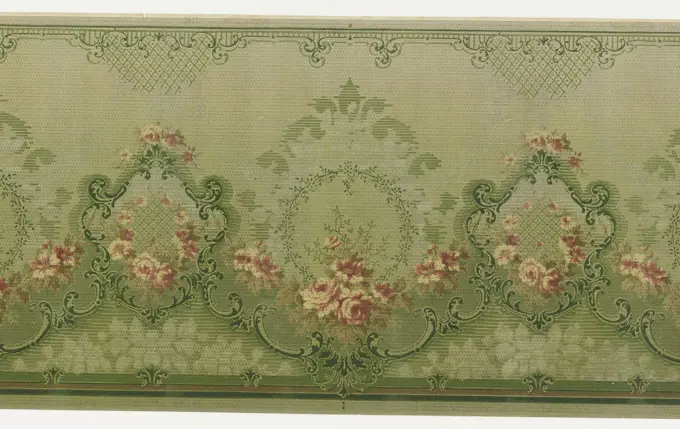
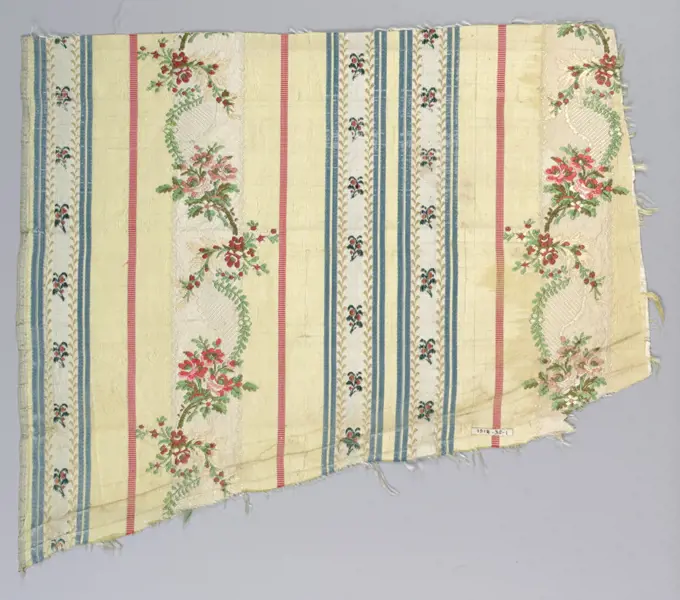
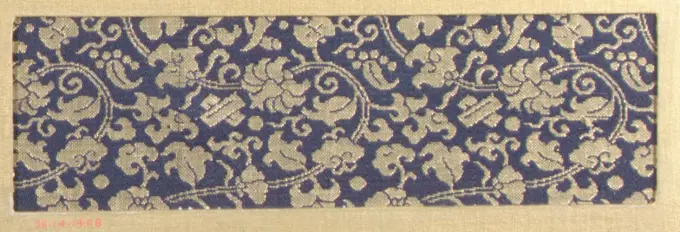
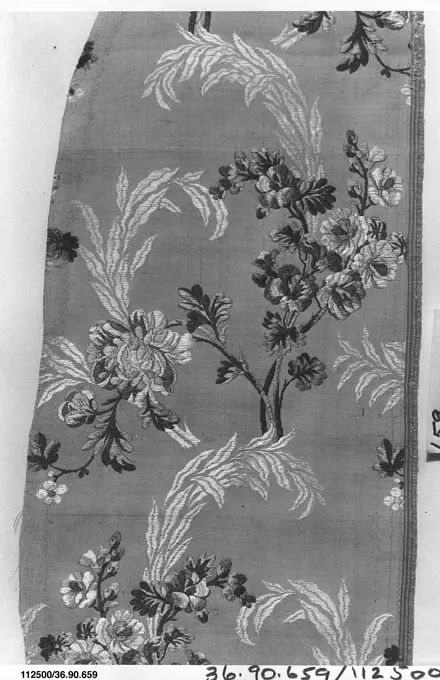
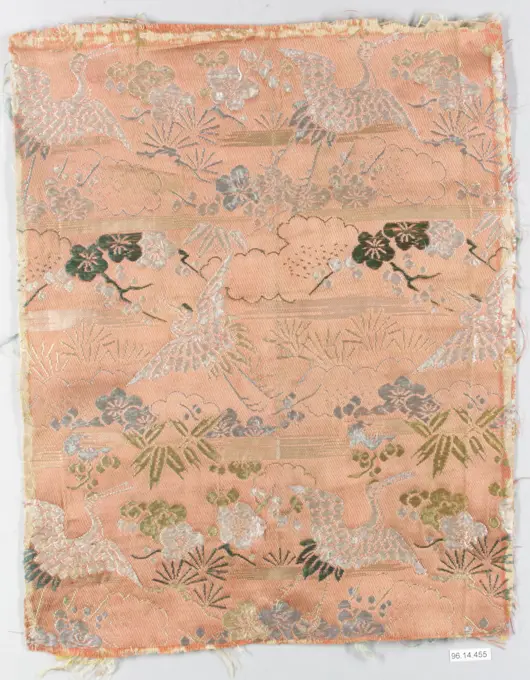
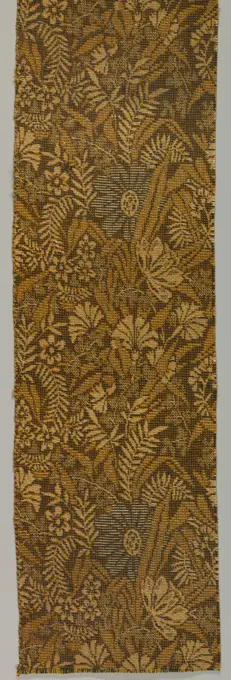
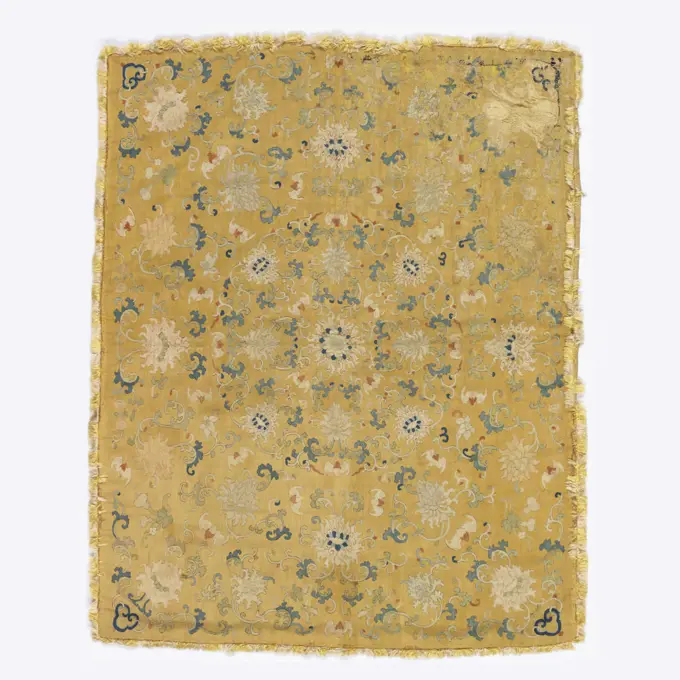
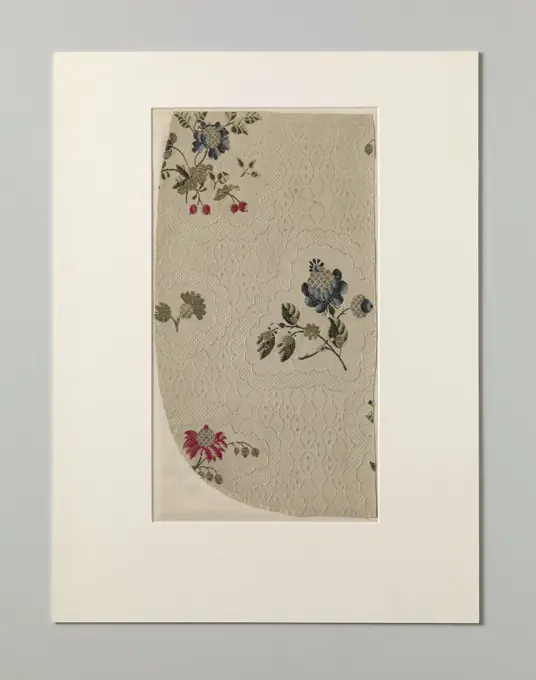
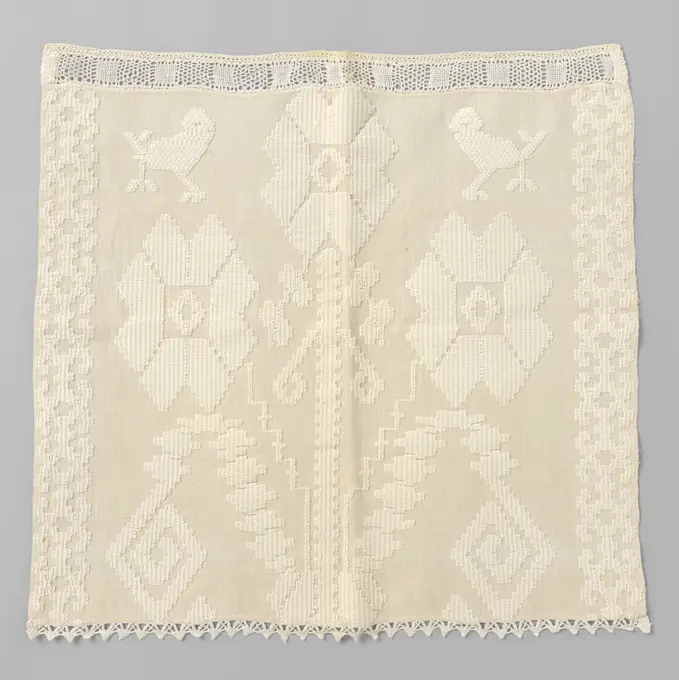
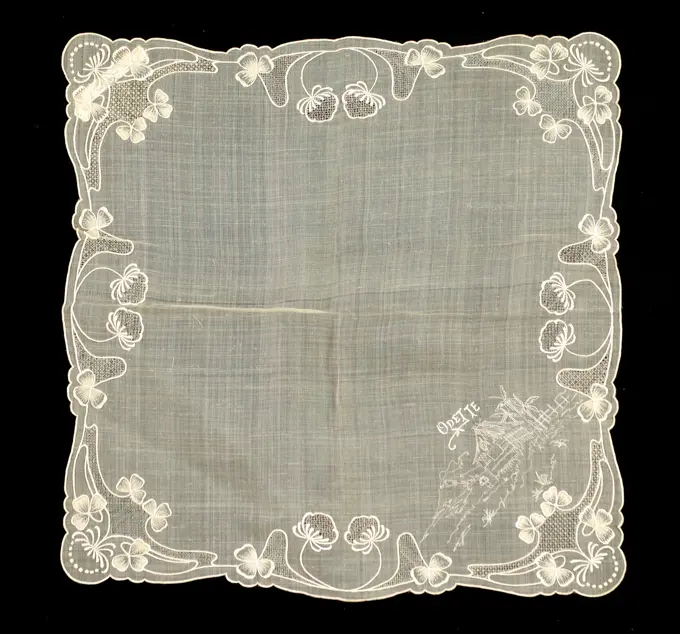
Ceiling Paper (USA); Manufactured by Maxwell & Co., S.A. (United States); machine-printed paper; 92.5 x 49.5 cm (36 7/16 x 19 1/2 in.)Welum;  2nd half 18th century (1751-00-00-1800-00-00);Gros de Tours fragment, possibly the upper part of a choral mantle, c. 1735 - c. 1740 Gros de Tours fragment, possibly the upper part of a choral mantle. Dessin: Purple -repeating horizontal tires alternately to the left and right -loving flower arrangements, sprouting at one track from a spherical shape, in the other from a basket, in two colors pink, orange, brown and green on a green stock. The silk tissue consists of five pieces sewn together in a semic circular shape, with remains of a natural -colored track on the edge. Label on which printed: French and Co inc.; the number 10420; Price 125. Painted paper with the letter V. France silk. Gros de Tours fragment, possibly the upper part of a choral mantle. Dessin: Purple -repeating horizontal tires alternately to the left and right -loving flower arrangements, sprouting at one track from a spherical shape, in the other from a basket, in two colors pink, orange, brown and green on a green stock. The silk tissue consists of five pieceFragment multicolored brochure silk ,, 1750 A fragment of pink silk with white tendrils, between which multi -colored flower branches. France silk A fragment of pink silk with white tendrils, between which multi -colored flower branches. France silkFragment of the fabric;  18th century (1735-00-00-1740-00-00);Fabrics, purchase (provenance)Welum;  End of the 19th century (1891-00-00-1900-00-00);Border, Medium: linen, horsehair Technique: needle lace with 6-sided reworked ground, Border with a spray of foliage surrounded by garlands of medallions and floral sprays in symmetric design. Pattern outlined by cordonnet., France, 1770-90, lace, BorderTextile, Medium: cotton Technique: printed by engraved roller on plain weave, Half dropped curving vine floral stripe on a dark grey background four inch wide alternating with a two inch wide stripe containing symmetrical floral forms. Full repeat length of wider floral stripe., Europe or USA, 1850-1900, printed, dyed & painted textiles, TextileFragment; silk, metallicPiece 18th-19th century Japan. Piece. Japan. 18th-19th century. Silk. Textiles-WovenTextile, Medium: cotton Technique: printed by engraved roller on plain weave, Length of printed cotton with half-drop repeat of flowers on a curved branch. Many colors on a tan background, in the style of the 18th century., 1830-50, printed, dyed & painted textiles, TextileCeiling Paper (USA); Manufactured by Maxwell & Co., S.A. (United States); machine-printed paper; 83.5 x 49.5 cm (32 7/8 x 19 1/2 in.)Fragment, Medium: silk; tempera Technique: painted on plain satin weave, Satin ground has alternating broad white and narrow green vertical stripes. Over white stripes are powdered small floral sprays painted in tempera., China, 18th century, printed, dyed & painted textiles, FragmentViolet and Columbine, William Morris, (British, 1834-1896), Medium: wool, mohair Technique: woven on hand-loom jacquard, Large scale flowers, twining stems and leaves in soft shades of green, salmon, orange and pale pink on a dark blue background., England, 1883, woven textiles, Fragment, FragmentTextile, Medium: cotton Technique: printed by engraved roller and block printed, Ground molette printed in grey zig-zags which form moire pattern. Overprinted with sprays of roses and wild flowers in shades of dark red and white, form being given to the white roses by means of tiny dots. Trailing white ribbons, outlined by dots, connect the design elements., 1851-63, printed, dyed & painted textiles, TextileFragment, Medium; silk, metallic thread Technique: woven, Saw tooth-edged discs with crescent and ball motif on a silver ground., Turkey, 16th century, woven textiles, FragmentPiece late 16th century Spanish. Piece 226503Piece of fabric. unknown, authorPiece 18th-19th century Japan. Piece 67254Corncockle Made 1917-1925 England. Cotton, plain weave; block printed . William Morris (Designer)Sidewall (USA); Manufactured by Maxwell & Co., S.A. (United States); machine-printed paper, liquid mica; 83 x 49 cm (32 11/16 x 19 5/16 in.)Textile (France); cottonTextile, Medium: silk Technique: stencil resist (katazome) on plain weave crepe, Design of scattered fruits in white showing crackle of paste reserve on a dark purple ground., Japan, late 18th century, printed, dyed & painted textiles, TextileNapkin van Linen with design number 509: Roos, Chris Lebeau, 1925 Napkin of linen with design number 509: Roos. Manufactured for Queen Wilhelmina in 1925. Eindhoven linen (material) damask Napkin of linen with design number 509: Roos. Manufactured for Queen Wilhelmina in 1925. Eindhoven linen (material) damaskFragment of a Shawl, mid 1800s. India, Kashmir, mid-19th century. Tapestry twill; wool; overall: 49.5 x 71.6 cm (19 1/2 x 28 3/16 in.).Piece 16th century Spanish or Italian. Piece 229382Sidewall, Machine-printed paper, liquid mica, Small four-flower bouquets connected by layers of floral swag, foliate scrolls, ribbon swag, vertical lines, and twig-like swag. Ground is a light beige. Printed in greens, white, white mica, orange, grey and silver mica. Large tear., USA, 1905-1915, Wallcoverings, SidewallPiece 18th century Italian. Piece 217160Lace Pattern (USA); cotton; 1973-61-3Chintz (India); cotton; Warp x Weft: 88 x 72 cm (34 5/8 x 28 3/8 in.)Piece 18th-19th century Japan. Piece. Japan. 18th-19th century. Silk. Textiles-WovenFrieze, Gledhill Wall Paper Co., New York, New York, founded 1900, Machine-printed paper, Floral bouquet set within a wreath, alternating with medallion containing bouquet. Bands of scrollwork with lattice run along both top and bottom edges., USA, 1905-1915, Wallcoverings, FriezeNapkin of white linen, anonymous, 1660 - 1670 White Linnamasten napkin with a pattern of stripped flowers, flower branches and fruits. Northern Netherlands (Possible) linen (material) damask White Linnamasten napkin with a pattern of stripped flowers, flower branches and fruits. Northern Netherlands (Possible) linen (material) damaskPiece 1750-60 French. Piece 223295Floral print late 18th century Spanish. Floral print 221935Fragment; cottonChaIIce veil, embroidered, white unknownBlade with flower pattern, anonymous, 1800 - 1900  Leaf with regular spray pattern of flower pattern.  paper. block printing (relief printing process) ornament derived from plant formsFragment, Medium: silk Technique: plain weave with supplementary weft, Yellow and white striped dress fabric with serpentine flower and sprigs. Narrow white stripes have blue double guard borders with repeating sprig motif. Wider yellow stripes have two thin rose stripes and a central white stripe with trailing serpentine flower bouquets., France, 1750-1800, woven textiles, FragmentFragment, Medium: silk, metallic Technique: supplementary warp forming raised pile in plain weave foundation (velvet) with supplementary wefts, Sprigs of large leaf and small flower in green velvet facing in alternate direction on white faced with silver., Curved shapes as if the piece was a fragment from a chasuble., 17th century, woven textiles, FragmentSamples (USA); Manufactured by Orinoka Mills (United States); Warp x Weft (a): 27.5 × 24 cm (10 13/16 × 9 7/16 in.) Warp x Weft (b): 21.5 cm (8 7/16 in.) Warp x Weft (c): 18.5 × 24 cm (7 5/16 × 9 7/16 in.)Steel curtain fabric to the design of Theo Nieuwenhuis in Passe-partout, Theo Nieuwenhuis, c. 1910 Steel curtain fabric to the design of Theo Nieuwenhuis in original passe-partout. The pattern consists of lanes with rush -hourly, in which stylized leaves and grape bunches, which alternate with vertical lanes with vines and grape bunches on either side. Purple impact on natural necklace. Netherlandsmaker: Helmond Staal: Cotton (Textile). PASE-PARTOUT: Cardboard jacquard Steel curtain fabric to the design of Theo Nieuwenhuis in original passe-partout. The pattern consists of lanes with rush -hourly, in which stylized leaves and grape bunches, which alternate with vertical lanes with vines and grape bunches on either side. Purple impact on natural necklace. Netherlandsmaker: Helmond Staal: Cotton (Textile). PASE-PARTOUT: Cardboard jacquardHoward H Sherman, Coverlet, 1935 1942 CoverletLinnamast napkin with a edge pattern, anonymous, c. 1650 - c. 1700 Linnamast napkin with a edge pattern. The napkin belongs to a napkin (BK-1977-295-A) and a tablecloth (BK-1977-294). Flanders (Possible) linen (material) damask Linnamast napkin with a edge pattern. The napkin belongs to a napkin (BK-1977-295-A) and a tablecloth (BK-1977-294). Flanders (Possible) linen (material) damaskPiece 18th-19th century Japan. Piece 65834Piece possibly ca. 1735 Spanish or Portuguese. Piece 213113Piece 1730-40 French. Piece 220503Fragment white sides atine with multicolored flower branches, anonymous, c. 1700 - c. 1800 Fragment white silk tissue with multicolored flower branches. Germany silk Fragment white silk tissue with multicolored flower branches. Germany silkPiece probably early 19th century French, Lyons. Piece 226525Fragment of Stamped Velvet, 1600s. France or Spain, 17th century. Stamped velvet; overall: 47.3 x 52 cm (18 5/8 x 20 1/2 in.).Fragment, Medium: silk Technique: cut and uncut supplementary warp pile (velvet) in a satin foundation, Fragment of an incomplete curving floral design in cut and uncut red velvet on a yellow satin ground., Italy or France, 17th century, woven textiles, FragmentPiece 18th-19th century Japan. Piece 67472Bedcover (Spain); linenTextile; silkFragment, Medium: silk Technique: cut and uncut supplementary warp pile (velvet) in a twill foundation, Sample of 'velours miniatures' has a diagonal arrangement of isolated leaves in green, pink and black., France, late 18th century, woven textiles, FragmentPiece 18th-19th century Japan. Piece 67121Fragment, Medium: silk Technique: continuous ivory and discontinuous polychrome suplementary wefts plus supplementary warps ivory in a plain weave foundation ivory., Fragments of an all-over pattern made up of a bunch of roses with trailing floral vine and a fine detached flowering vine arranged in a group. The groups are placed side by side and reversed end to end to counter balance movements. Polychrome pattern on an 'ivory on ivory' geometric-patterned background., France, late 19th century, woven textiles, FragmentFragment; silk, metallic threadFragment Made 1800-1825 Japan. Silk, satin weave with supplementary patterning wefts bound by secondary binding warps in plain interlacings .Fragment (France); silk (); Warp x Weft: 36.3 x 28.9 cm (14 5/16 x 11 3/8 in.)Fragments; silk, metallic threadNapkin with lace pattern and flowers. White Linnendamasten napkin with a 'side' pattern and leaf motif in the corners. In the middle, completely freestanding, an ornament with moazin filling and with leaves, flowers and fruits. Around a wide scalloped band with various mosaic fills and with leaf volutes and flowers. In the corners a fan-shapedly pleated ornament. Landscape and running edges: ornaments with mosaic fills, volutes, branches with flowers and berries. In the corners a diagonally placed leaf ornament.Piece 1750-60 French. Piece 223760Blade with floral pattern on points stock, anonymous, 1750 - 1900  Leaf with vertical job pattern of flowers on point stock, separated by decorative moldings. Half of a cover.  paper. block printing (relief printing process) ornament derived from plant formsIndian ornamentPiece 17th century Japan. Piece 66180Piece 18th century Japan. Piece 65799Fragment early 19th century French. Fragment 221848Textile; cottonCarpet Fragment (USA); woolKant, c. 1890 - c. 1925 photogram   paper cyanotype laceCarpet 16th century Portuguese. Carpet. Portuguese. 16th century. Wool. Textiles-Rugs. Hannah Hinman Twitchell PierceTextile Panel 18th century. Textile Panel 446867Bliżej Kultury unknownSidewall (USA); block-printed on handmade paper; 15.5 x 30.5 cm (6 1/8 x 12 in.)Piece 16th century Italian or Spanish. Piece 230900Sample, Orinoka Mills, (Philadelphia, Pennsylvania, USA), brown/red warp with white and pink wefts, USA, ca. 1910, woven textiles, SamplePiece French second half 19th centuryPiece 18th century Attributed to Lazareff. Piece 222388Cushion cover, Medium: silk Technique: plain weave with discontinuous wefts (tapestry or k'ossu), Cushion cover of yellow silk tapestry with a radiating design of small chrysanthemums in off-white and blue with touches of red. With birds, scrolls, and other flowers. Lined with yellow silk damask. Yellow and white silk fringe on all sides., China, 17th century, woven textiles, Cushion coverPiece 18th-19th century Japan. Piece. Japan. 18th-19th century. Silk. Textiles-WovenTextile Fragment late 17th century. Textile Fragment 454487Piece 18th-19th century Japan. Piece 67824Handkerchief with mixed side with bell -shaped corner reserves, anonymous, c. 1875 - c. 1899 Natural mixed side handkerchief: Brussels Duchesse. Around a large, hollow scalloped batisten centerpiece runs a lace edge with large oval -shaped links or medallions with a fine Maas soil (needle side), on which a flower branch lies. In the corners, the links are cut by a large, overhoeks -placed bell -shaped reserve, with a braid ground on which a standing oval medallion (needle side). The links are surrounded by rough rosettes. Each medallion is decided between two acanthus leaves. A nice godron edge runs along the edge. Netherlands linen (material) mixed lace Natural mixed side handkerchief: Brussels Duchesse. Around a large, hollow scalloped batisten centerpiece runs a lace edge with large oval -shaped links or medallions with a fine Maas soil (needle side), on which a flower branch lies. In the corners, the links are cut by a large, overhoeks -placed bell -shaped reserve, with a braid groPiece 17th century Italian. Piece 220529Sidewall - Sample (USA); Manufactured by W.H. Mairs & Co.; machine-printed; 67 x 48 cm (26 3/8 x 18 7/8 in.)Fragment. Netherlands. Date: 1601-1700. Dimensions: 16.5 x 22.5 cm (6 1/2 x 8 7/8 in.). Linen and wool; compound weave (i.e. Beiderwand or Lampas 2:1). Origin: Netherlands. Museum: The Chicago Art Institute, Chicago, USA.Dress or Furnishing Fabric Made 1675-1700 Iran. Silk, gilt-metal-strip-wrapped silk and silver-metal-strip-wrapped silk; twill weave foundation with supplementary twill weave and brocading wefts .Textile (India); silk, gold foil on silk corePiece 16th-17th century Italian. Piece 223512Handkerchief. lace made Belgium, Western Flanders; embroidery possibly Phillipines, mid-19th century. Costumes; Accessories. Linen plain weave with cotton embroidery, drawnwork, and bobbin lace (valenciennes)Fragment of silk fabric  pattern made of floral twig with big flowers in twists unknownPiece 1750-60 French. Piece. French. 1750-60. Silk and metal thread. Textiles-WovenFlounce (Italy); linenFragment van een veelkleurig zijdedamast.On a red satin ground a symmetrical branch gold or silver interwoven leaves, two blue carnations and a light-salmon-colored rose. Two pieces sewn together.Fragment brochure silk, anonymous, 1750 Fragment white silk tissue on which a white edge pattern in which saved fields within which a multi -colored flower branch. Netherlands silk. metal thread Fragment white silk tissue on which a white edge pattern in which saved fields within which a multi -colored flower branch. Netherlands silk. metal threadRug of écru cotton with woven white relief motifs with three very large rosette flowers, above which two winter trays; at the top of the puntrand., Anonymous, 1885 - 1915  Romania cotton (textile). bobbin lace  Romania cotton (textile). bobbin laceHandkerchief fourth quarter 19th century Philippine. Handkerchief 169423Ruth M Barnes, Coverlet, c 1937 Coverlet