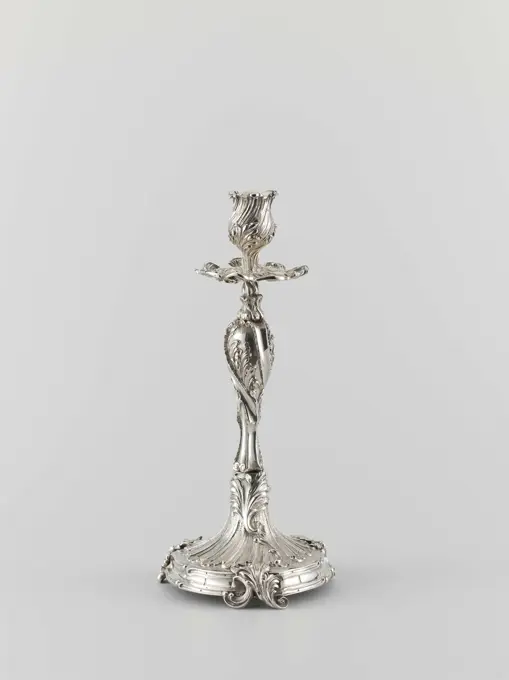
Vintage Candlesticks and Vessels

Artistic antique bronze and silver candlesticks and vessels, showcasing intricate designs and historical craftsmanship from various eras.
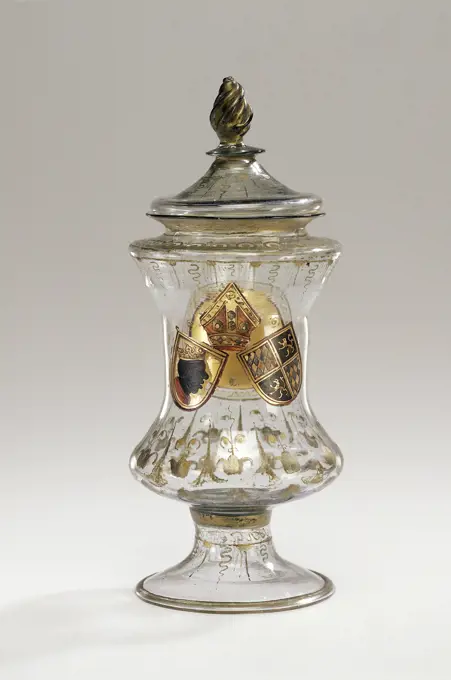
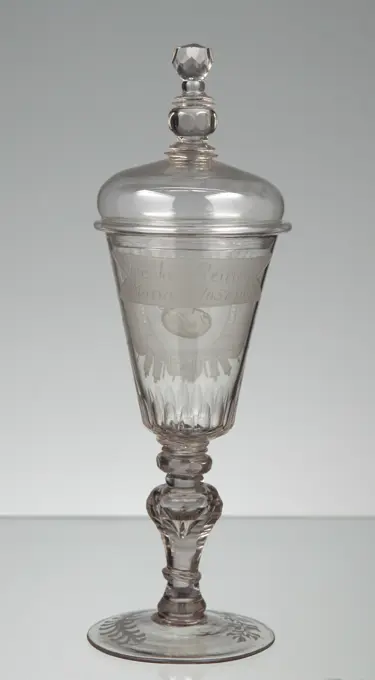
Covered Vessel; Façon de Venise, possibly the Glashütte of Wolfgang Vitl (Austrian, active 1534 - 1540); Hall, Austria; about 1536 - 1540; Free-blown colorless (slightly purplish-gray) glass with applied decoration, gilding, and cold painted decoration; 19.1 cm (7 1,2 in.)
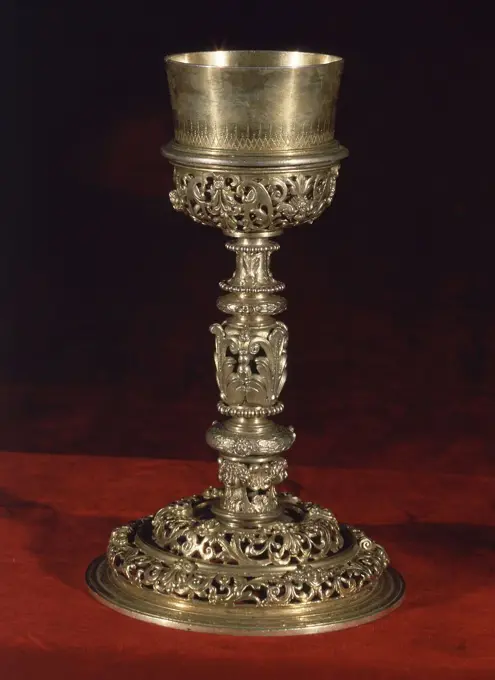
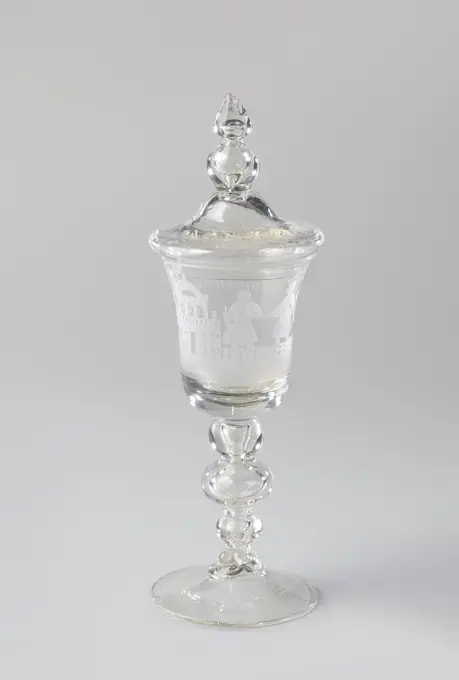
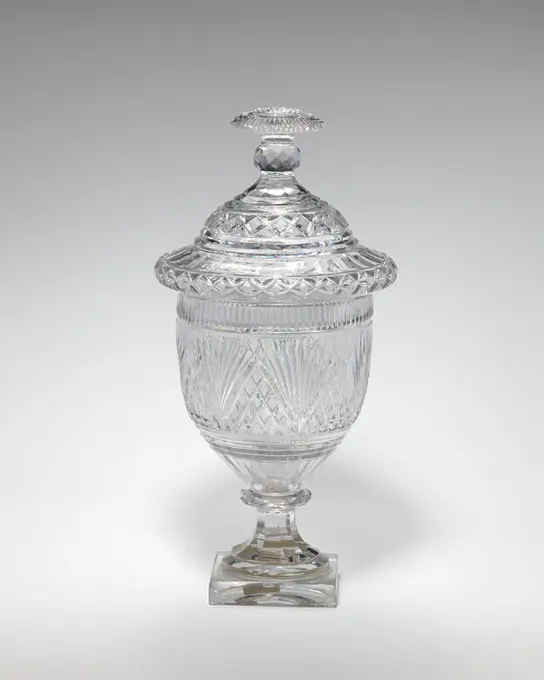
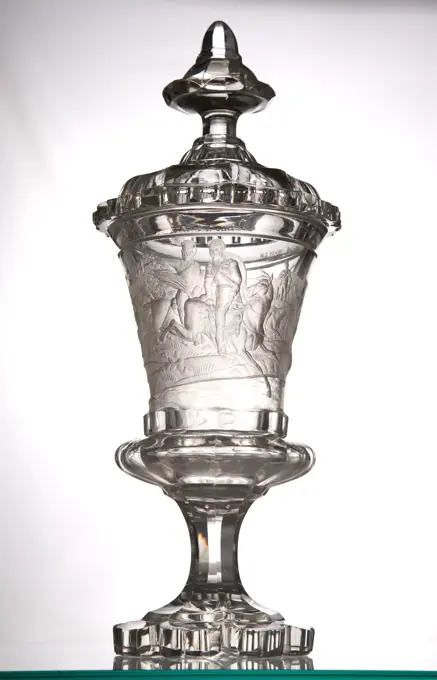
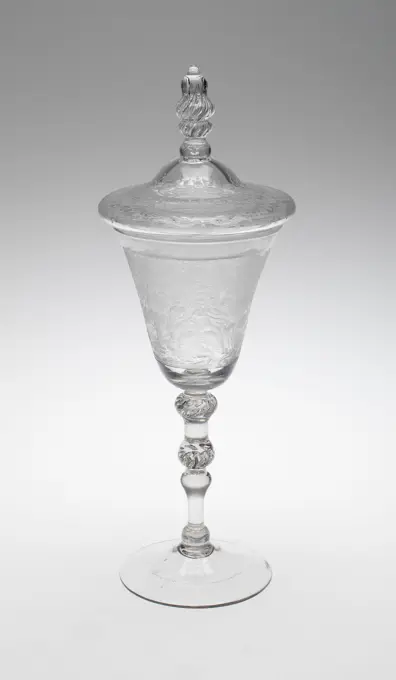
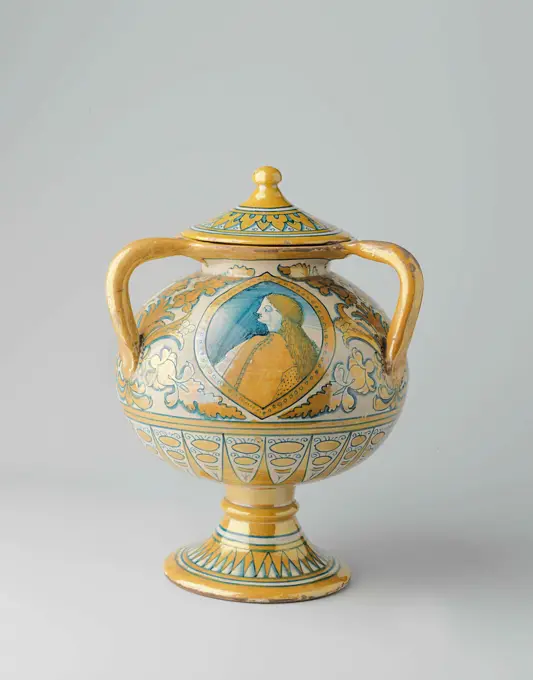
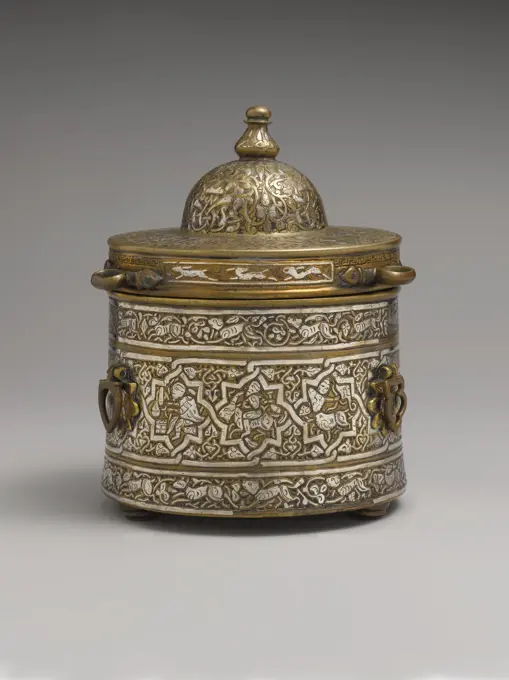
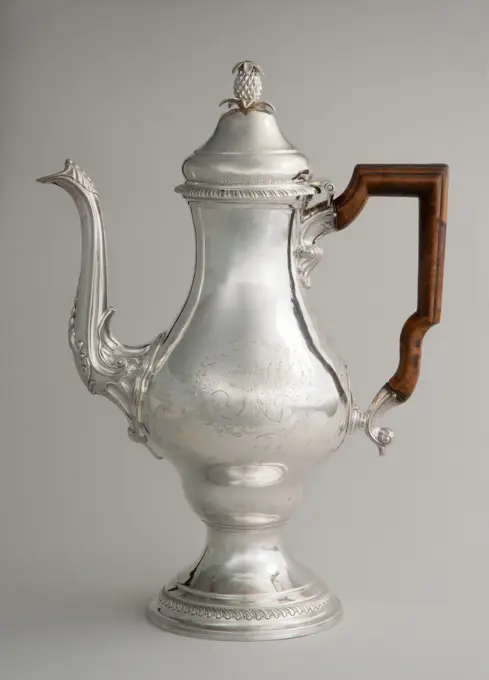
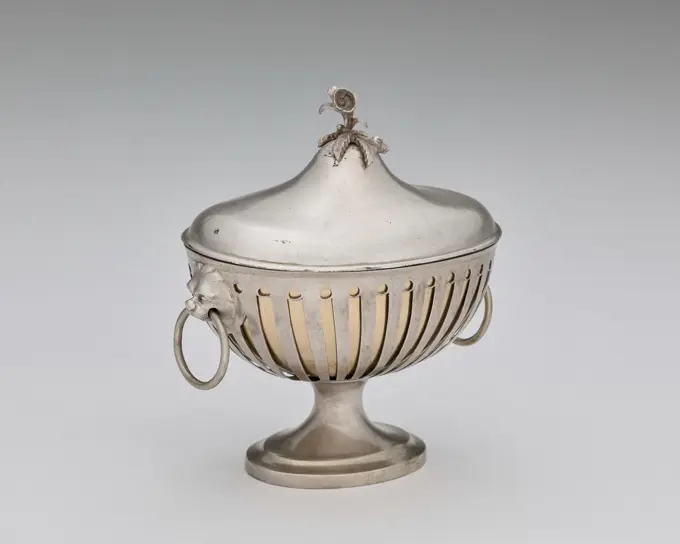
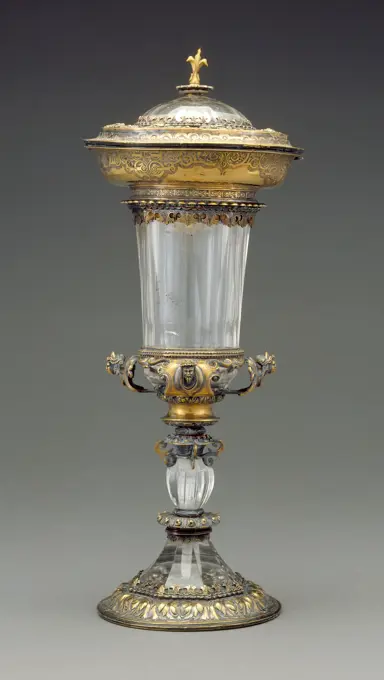
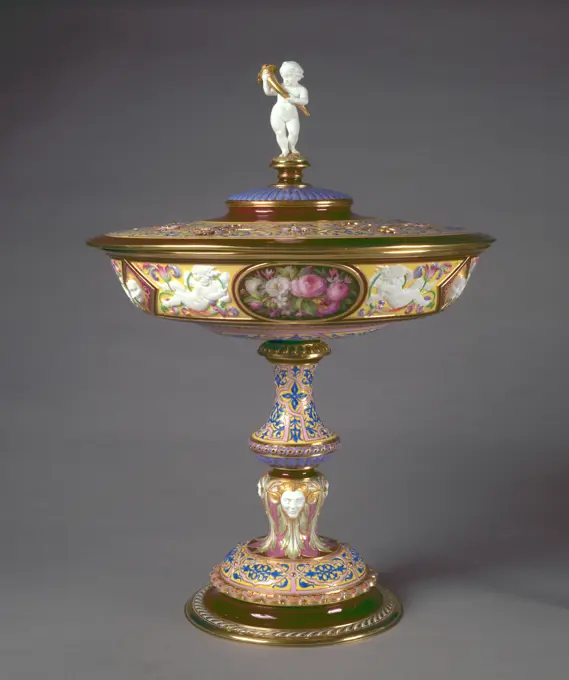
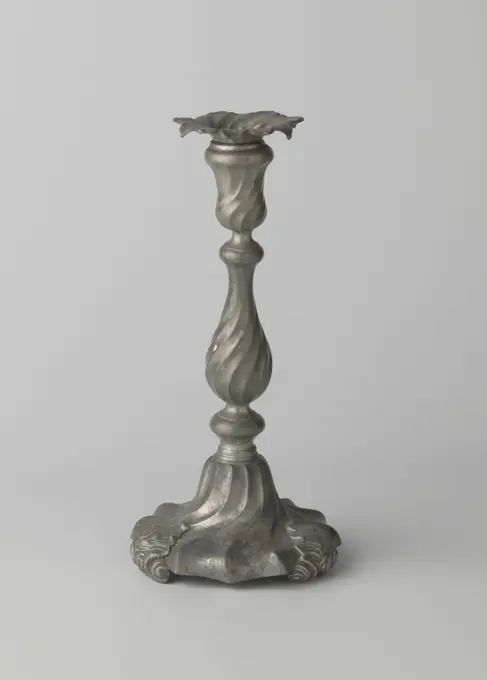
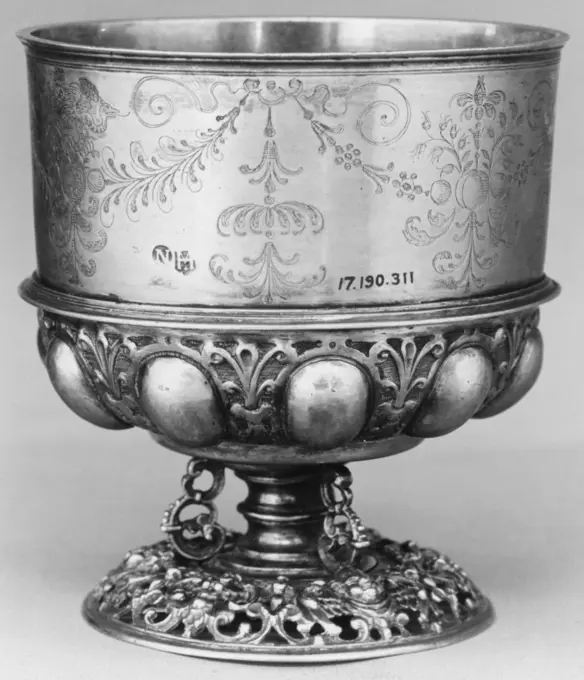
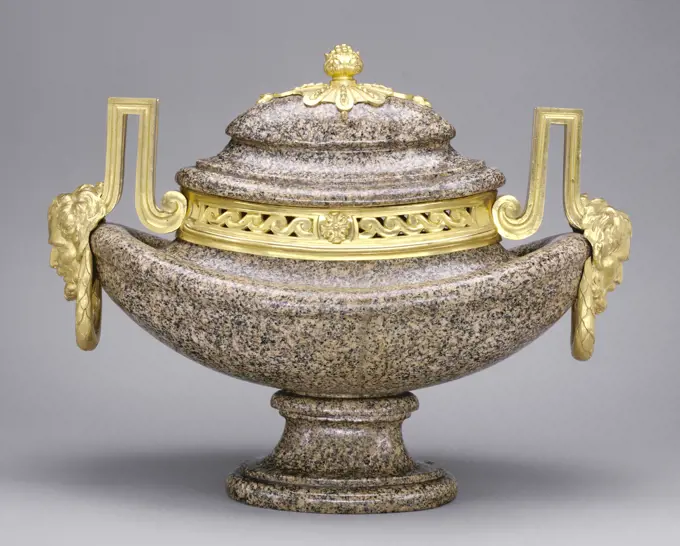
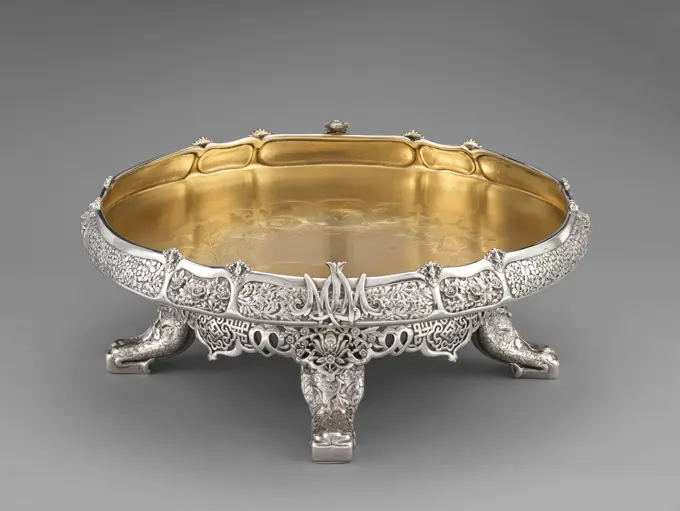
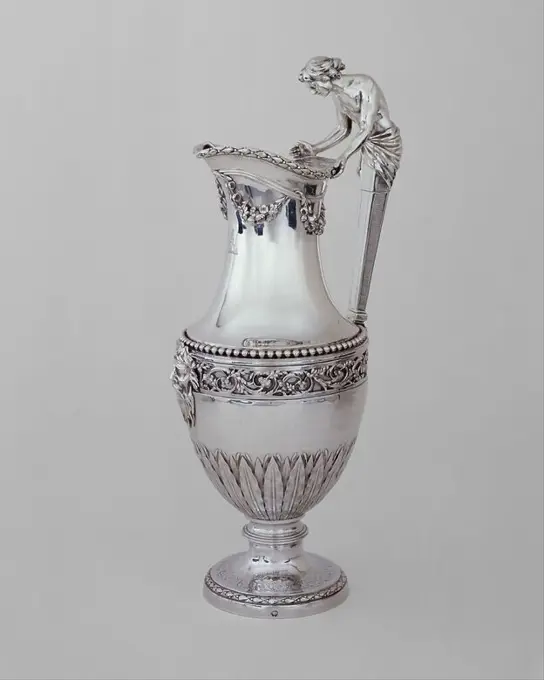
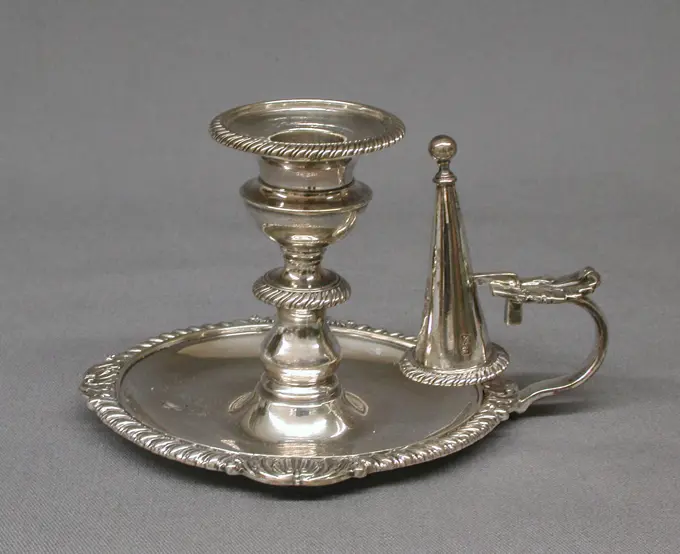
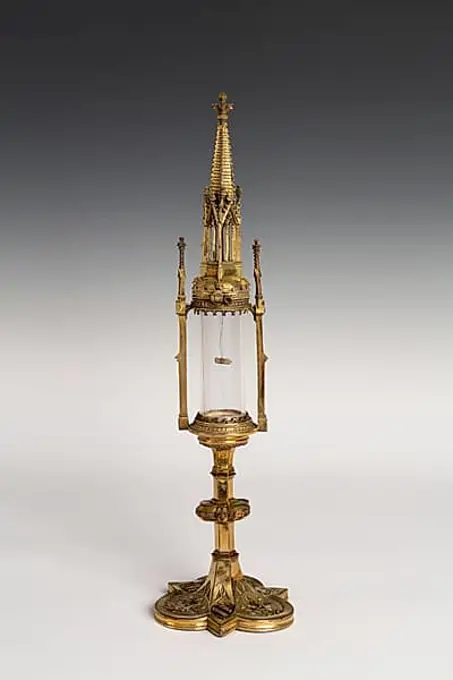
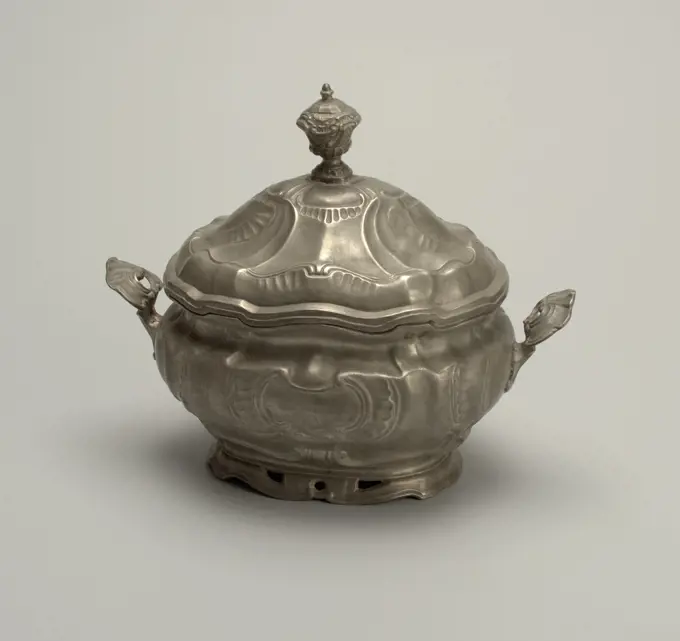
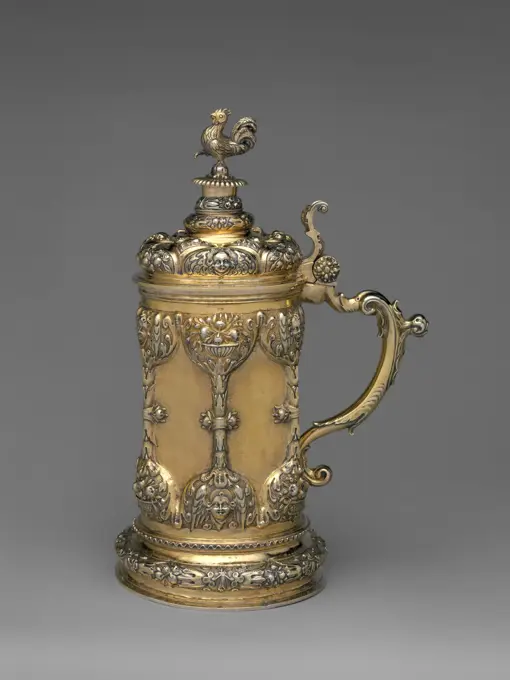
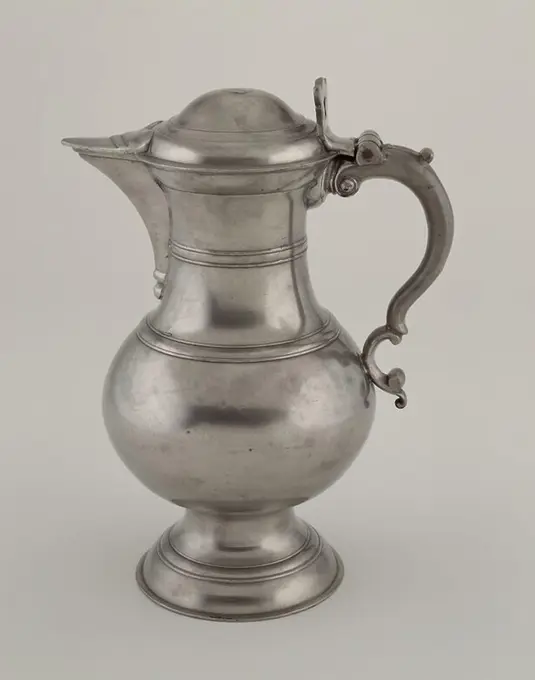
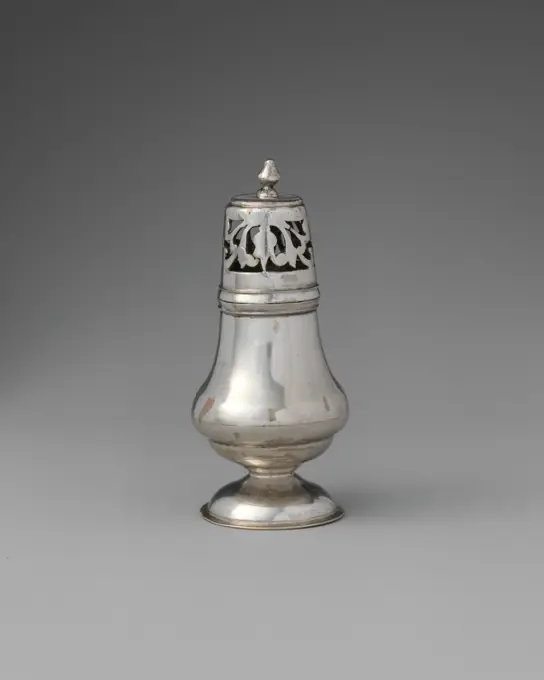
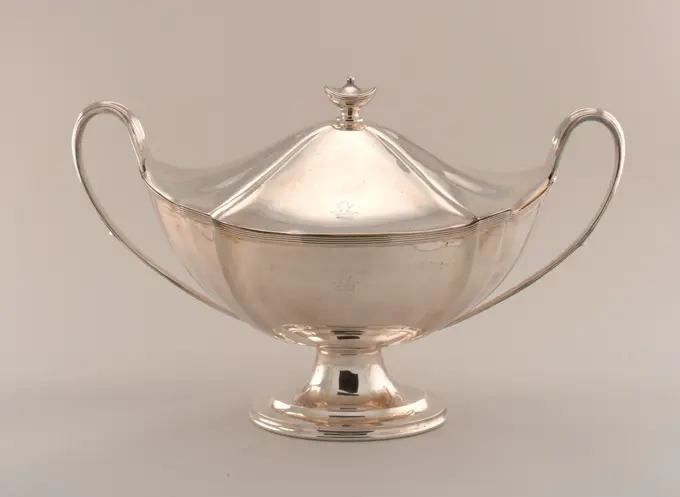
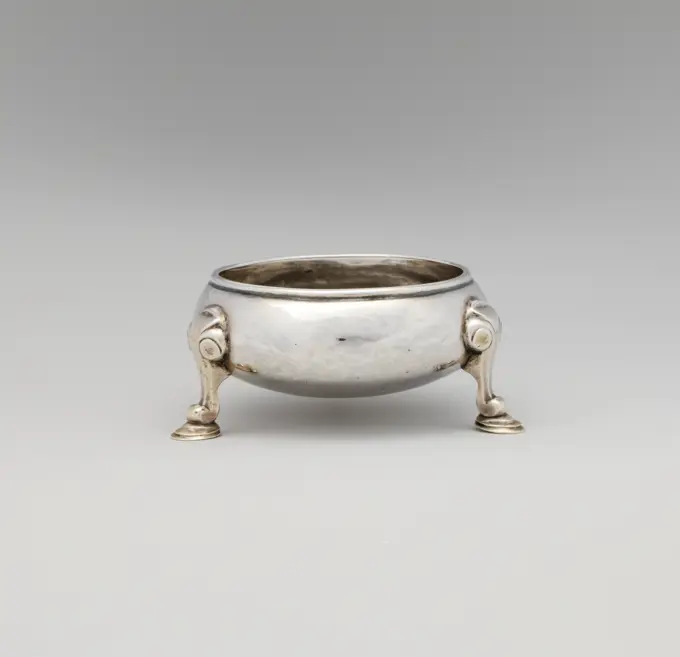
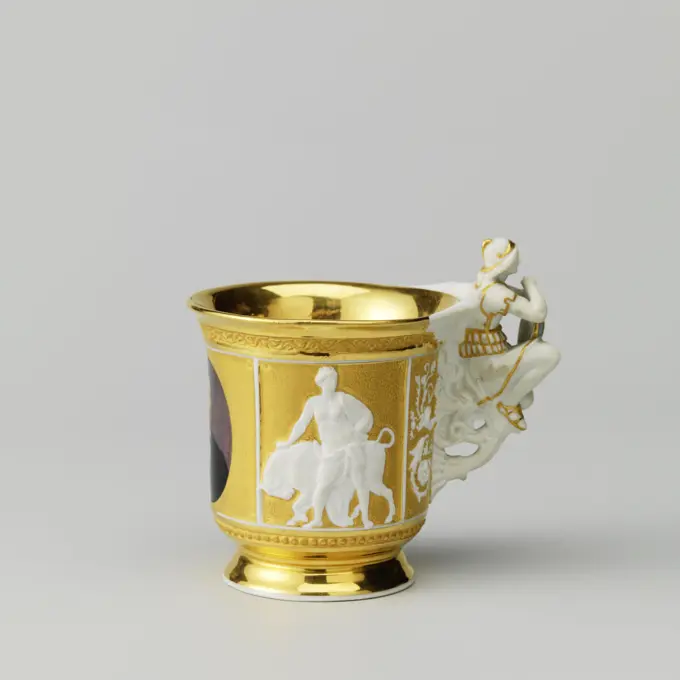
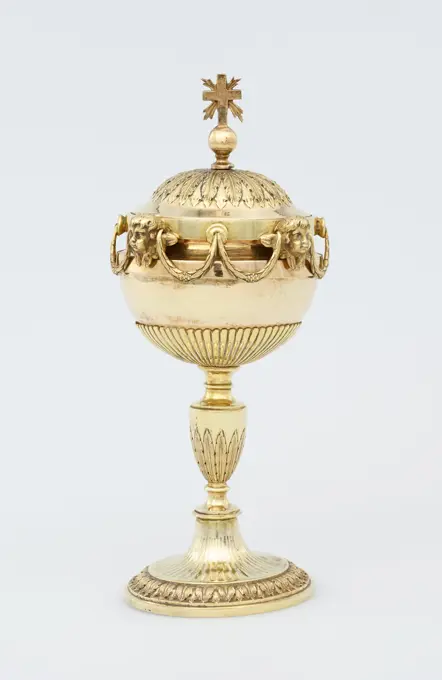
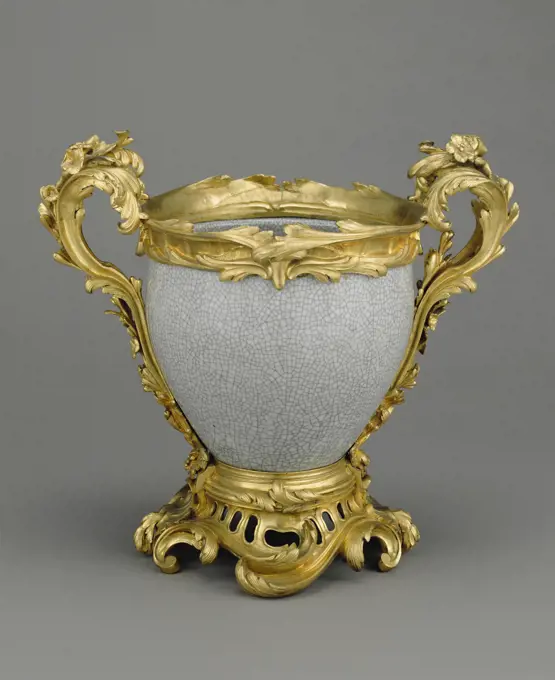
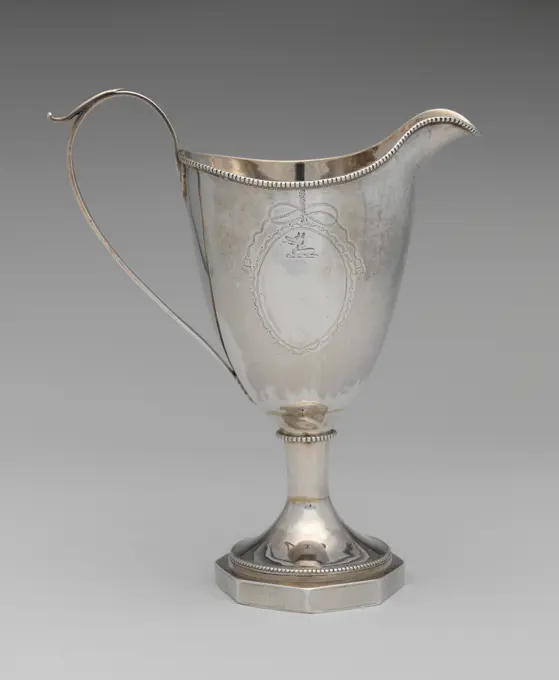
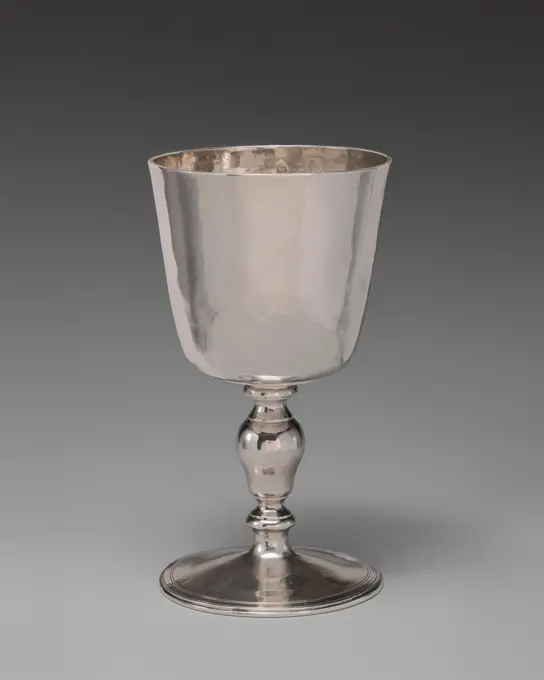
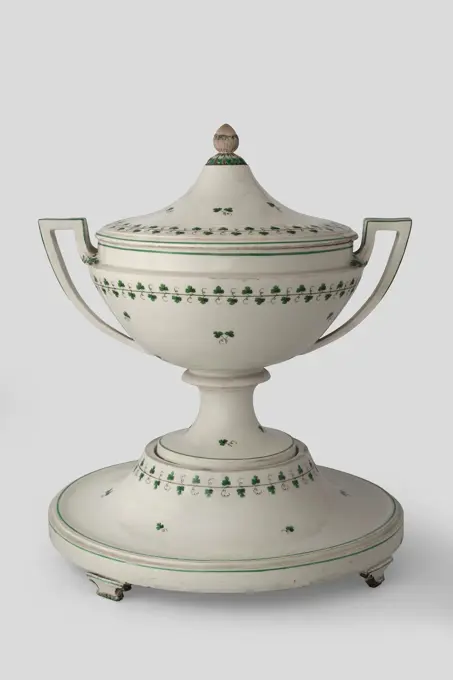
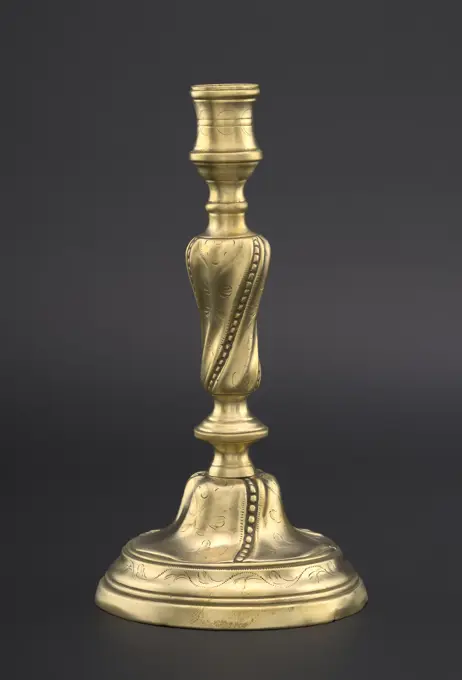
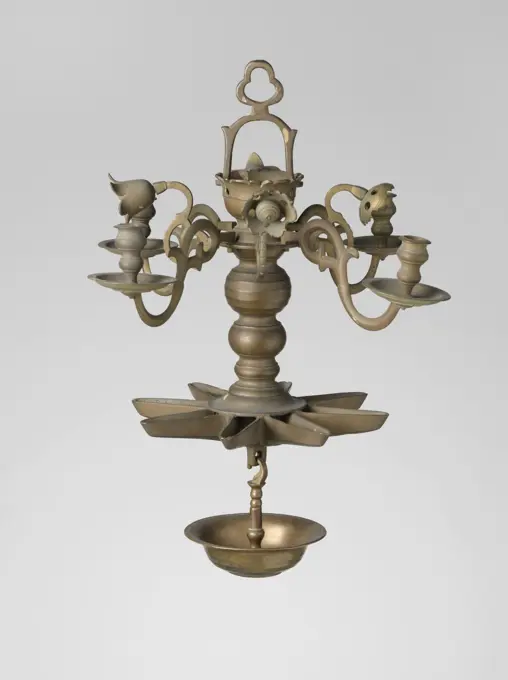
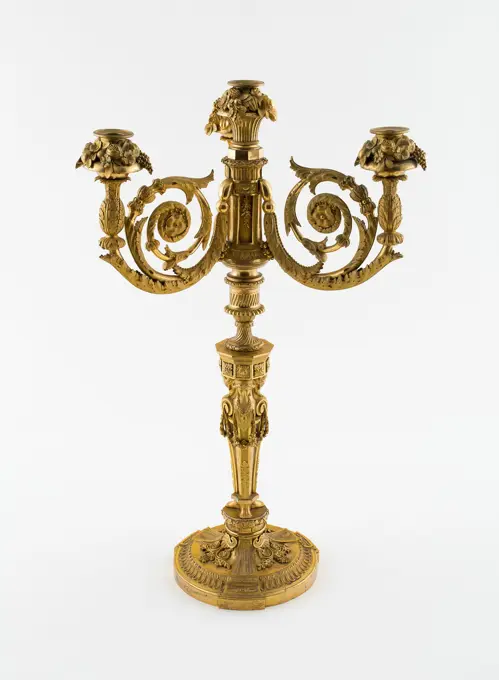
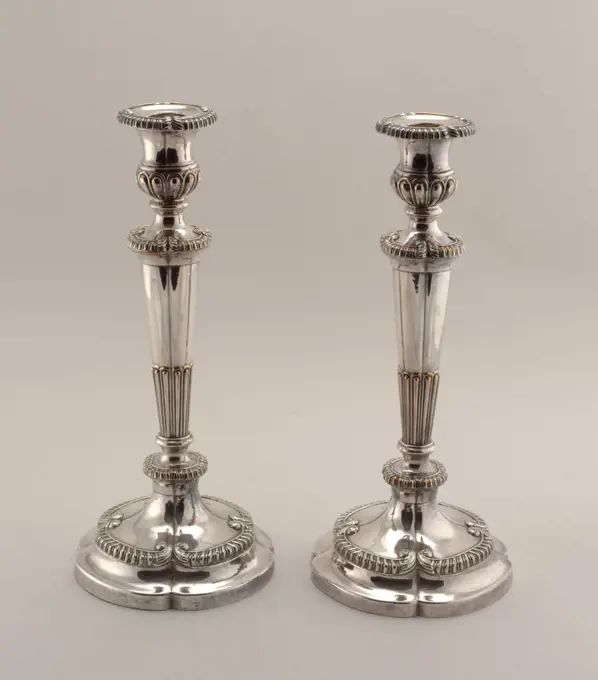
Candlestick. Anonymous bronze, 19th century. Museum of Fine Arts of the City of Paris, Petit Palais. CHANDELIER BRONZE, CANDELABRA, CANDLESTICK, CHANDELIERCALIZ DEL SIGLO XVI. Location: CATEDRAL. LUGO. SPAIN.Covered Vessel; Façon de Venise, possibly the Glashütte of Wolfgang Vitl (Austrian, active 1534 - 1540); Hall, Austria; about 1536 - 1540; Free-blown colorless (slightly purplish-gray) glass with applied decoration, gilding, and cold painted decoration; 19.1 cm (7 1,2 in.)Ding crazy with a cover;  XVIII/19th century (1791-00-00-1810-00-00);Beaker with the Three Magi. Judging from the decoration of this beaker, it is clear that the rendering of ornamental detail calls for different skills than the engraving of scenes. The ornament and the festoons of fruit on this beaker look almost three-dimensional, while the figural scenes appear somewhat stiff and flat. The engraver suggested shadows by combining incised lines and crosshatching of differing depths and varied spacing.. The round misship has a cast, vaulted foot on which in high relief an ox, an eagle, an angel and a lion, the symbols of the four evangelists. These are interspersed with scenes carried out in low relief from the life of Christ on a punched land: birth, crucifixion, resurrection and the Ascension. The foot has a flat bottom edge surrounded by curling, flameous ornaments. These ornaments are repeated in more powerful implementation and mirrors. The narrow tapered upper portion of the foot is decorated with acanthus leaves around. The strain consists of a reverse pear-shaped nodus between two narrow, articulated nodi. These parts are decorated with vines and cornerschiefs, the lower part of the large noda with acanthus leaves, all on a roughened ground. The low, smooth cuppa is caught in a counter-cuppa on which four angels were driven between wine rinks of which three sufferers are wearing and the fourth sweat cloth of Saint Veronica. The top edge of the counter cuppa consists of soft,Bokaal, with a house and two gentlemen and the inscription: the prosperity of Dese, Anonymous, c. 1725 - c. 1750 Conical foot with turned around. Stam with three hollow knots, by the way of thick glass. On the chalice a house and two gentlemen in 18th-century traditional costume between flower wreaths. Behind it: sailing/ from the hoy/ se. A flower owl on the lid. glassblower: GermanyNorthern Netherlands glass glassblowing Conical foot with turned around. Stam with three hollow knots, by the way of thick glass. On the chalice a house and two gentlemen in 18th-century traditional costume between flower wreaths. Behind it: sailing/ from the hoy/ se. A flower owl on the lid. glassblower: GermanyNorthern Netherlands glass glassblowingUrn (one of a pair). Culture: Irish. Dimensions: Height: 11 3/4 in. (29.8 cm). Date: 1800-1815. Museum: Metropolitan Museum of Art, New York, USA.Kelkglas, anonymous, c. 1550 - c. 1650 Flat base with turned around. Holle, baluster -shaped tribe, blown in the form with mascarons and a garland with rosettes under a grunt edge above which a ribbed nodus. Eight -lobe chalice, decorated with three flat, vertically ribbed tires. On the upper edge and on the trunk, there are remains of gilding. Venice glass glassblowing / gilding Flat base with turned around. Holle, baluster -shaped tribe, blown in the form with mascarons and a garland with rosettes under a grunt edge above which a ribbed nodus. Eight -lobe chalice, decorated with three flat, vertically ribbed tires. On the upper edge and on the trunk, there are remains of gilding. Venice glass glassblowing / gildingCup with cover. Glass . Jacob Sang (Signed by)Communion set. Central to the Protestant celebration of the Holy Communion is the remembrance of the Last Supper, when Christ and his disciples gathered for the last time. Christ asked that his suffering and death be commemorated with a communal meal. This is why wine is poured into cups and bread is placed on plates during religious services. This communion set from Dordrecht ranks among the most richly decorated altar plate.Galvanoplastic Reproductie van de "Cup with Jonas" Uit Het Lüneburg Council, Fa. Vollgold & Sohn, 1533 Galvanoplastic reproduction of a jar of gilded silver, known as the Pocal Mit Jonas of 156. With lid (BK-NM-5356-2). Berlin copper (metal). silver (metal) gilding Galvanoplastic reproduction of a jar of gilded silver, known as the Pocal Mit Jonas of 156. With lid (BK-NM-5356-2). Berlin copper (metal). silver (metal) gildingVase with three ears and a lid, painted multi-colored with spitsavals within which man portraits, and flower and leaf refines. Spherical vase of multi-colored painted majolica, at a high foot. The vase has three ears and a lid. There are three striker ovals on the belly in which a portrait of a shifted man with long hair. Flower and leaves are painted between the ovals. The vase is painted in yellow luster and in blue (circumference) on white.Galvanoplastic reproduction of a KUMFOR, FA. Elkington & Co., after 1868 - Before 1878 Galvanoplastic reproduction of a KUMFOR. Gilded. London copper (metal). silver (metal) gilding Galvanoplastic reproduction of a KUMFOR. Gilded. London copper (metal). silver (metal) gildingDrinking scale with scylla and minos, anonymous, 1598 Round, soil surrounded by a leaf wreath of gilded silver drinking bowl (see above). In the middle Minos, the investor, seated on his left -leaving horse, in front of the gate of Niseia, the city that fell in his hands through the betrayal of the King's daughter Scylla. She stands on the tower and shows the enemy, for whom she ignored in love, the golden hair of her father, Nisus, from which he derived his power and that she arises at night. In the foreground two sitting and two standing soldiers. On the second plan: left three women, on the right a martial procession. In the background the city on the water with ships. Maker: Bredaferter Design by: Nurembergmaker: Breda silver (metal) engraving / gilding Round, soil surrounded by a leaf wreath of gilded silver drinking bowl (see above). In the middle Minos, the investor, seated on his left -leaving horse, in front of the gate of Niseia, the city that fell in his hands through the beInkwell with Zodiac Signs early 13th century One of the innovations of the Khurasani metalworkers is the development of animated inscriptions, in which parts of letters are transformed into animal or human figures. Here, the tall letters of the inscription on the lid are embellished with human heads. The use of animated inscriptions traveled westward, appearing on metalwork produced in western Iran, Iraq, and Syria, but was never adopted in other media. The body of the inkwell is decorated with the twelve signs of the zodiac.. Inkwell with Zodiac Signs. early 13th century. Brass; cast, inlaid with silver, copper, and black compound. Attributed to probably Iran. MetalSilver miniature sconce with stand, sconce dolls toy relaxant miniature model silver, Round sconce with three hooks hanging on stand; standard consists of two rings and receptacle that are connected to each other by three volutes with dragon's head. This whole stands on stem that ends in three volute-shaped paws to decorate illuminate home interiorIce bucket, Fa. Elkington & Co., 1878 Ice bucket of glass with frames of silver -plated, partially gilded copper. Birmingham glass. silver (metal). gilding (material) gilding Ice bucket of glass with frames of silver -plated, partially gilded copper. Birmingham glass. silver (metal). gilding (material) gildingCiborium. Culture: South Netherlandish. Dimensions: Overall: 8 1/2 x 4 9/16 in. (21.6 x 11.6 cm). Date: 16th century. Museum: Metropolitan Museum of Art, New York, USA.Joseph Anthony Jr., Coffeepot, c. 1785, silver and wood.A large (A) and two small (B and C) Oval Terrines in Louis XVI style, Philippus Priee, 1773 A small (B and C) oval terrine in Louis XVI style decorated with driven cannelures, garlands wrapped with ribbons, appliqued festons and pearl edges. Each terrine has a lid with a button and stands on four legs. All terrines marked under soil: Middelburg; Annual letter K - 1773; mt. P above prie = Philippus prié; crowned o = release stitches; ax = tax inspection. Terrine BK-1995-14-B is engraved on the inside with N: 1. Note: All terrines have an inner box. Middelburg silver (metal) A small (B and C) oval terrine in Louis XVI style decorated with driven cannelures, garlands wrapped with ribbons, appliqued festons and pearl edges. Each terrine has a lid with a button and stands on four legs. All terrines marked under soil: Middelburg; Annual letter K - 1773; mt. P above prie = Philippus prié; crowned o = release stitches; ax = tax inspection. Terrine BK-1995-14-B is engraved on the inside with N:Urn from Biscuit, Louis XVI, white with straight ears, Manufacture de Monsieur Le Duc, c. 1780 - c. 1790 Biscuit lid. The button in the shape of a flower bud. Paris biscuit (porcelain, material) Biscuit lid. The button in the shape of a flower bud. Paris biscuit (porcelain, material)Tazza, Commemorating the Relief of Bergen op Zoom, anonymous, c. 1625 Drinking scale on the foot of driven silver. In the middle the gold -plated weapon of Bergen op Zoom, held by two wild men. Above the weapon a banderolle with inscription. Vegetable and cartouches on the foot. Bergen op Zoom silver (metal). gilding (material) gilding  Bergen op Zoom Drinking scale on the foot of driven silver. In the middle the gold -plated weapon of Bergen op Zoom, held by two wild men. Above the weapon a banderolle with inscription. Vegetable and cartouches on the foot. Bergen op Zoom silver (metal). gilding (material) gilding  Bergen op ZoomDing- type utensil. unknown, craftsmanSmall vase. Bandau, Johann Georg II (1778-1828), goldsmithCup and Cover. Diebolt Krug (Germany, Strasbourg, active mid-16th century). Germany, Strasbourg, circa 1560. Furnishings; Serviceware. Silver gilt, rock crystalStanding Cup and Cover, 1844. Sèvres Porcelain Factory (French, est. 1756), Hyacinthe-Jean Regnier (French, 1803-1870), Francois-Hubert Barbin (French, 1786-), Jacques-Nicolas Sinsson (French). Porcelain; diameter: 35.6 cm (14 in.); overall: 49 cm (19 5/16 in.).Kraantjeskan, round, decorated with an applivated profile edge with lambrequins, Pieter de Keen (attributed to), 1733 The round can rest on three legs and has a tap, two ears with hinged handles and a loose lid. The legs are each made up of a C-Volute raised at the bottom, octagonal in diameter, and above it the connecting piece with the body that is covered by four stylized leaves. The low, convex belly is separated by a corrugated profile from a constricted part, which is crowned by a wide, convex edge above which the S-shaped curved mouth edge. The curved tap is four sides with corners of the front of the front part. At the start, he curls the sides on allvier and the end is also decorated with a curling lip. In the middle he has a cube -shaped widening, in which the rotating tap fits. This has a handle in the shape of a fan motif resting on a profiled pedestal and crowned by a leaf, and is closed on the bottom by a drop shape. The tap has a back plate that shows notches on differenVase with swans. Vase of porcelain, decorated with matte and shiny golden swans.White sugar bowl with gold-colored flower, acorn and leaf decoration, sugar bowl holder coffee service tea set tableware ceramics porcelain enamel enamel, baked glazed Coffee pot teapot sugar bowl milk jug 10 cup and saucers bowl bowl serve serve tea set. According to legend, Saint George killed a fierce dragon, saving the life of a beautiful princess. This heroic deed is represented twice: in relief on the bowls and in a small figurine surmounting each lid. The cups were commissioned in 1603 by the militia guild of the town of Gorinchem in the province of South Holland. Saint George was the patron saint of archers, among others.Beaker 1721-22 Gabriel-Joseph Moillet Derived from French ornament, Laub- und Bandelwerk was used by artists working in many different media. It is often found either molded or engraved in silver, such as on this French beaker, but porcelain enabled the introduction of brilliant color. On the porcelain beaker 40.65.8a, b, the fluted form is highlighted by alternating pendant ornaments, a technique also found on the silver example.. Beaker 200135Candlestick Van Tin, Get Ordered Model, Anonymous, 1700 - 1800 Tin candlestick. The twisted foot is on three low legs, formed by volutes. The baluster -shaped tribe is twisted with a cup shape above, on which the flower -shaped fat catcher is applied. Netherlands tin (metal) casting Tin candlestick. The twisted foot is on three low legs, formed by volutes. The baluster -shaped tribe is twisted with a cup shape above, on which the flower -shaped fat catcher is applied. Netherlands tin (metal) castingVase.Cup early 17th century Heinrich Mack. Cup 193460. Used oil and vinegar set as a square. The chassis in the middle rests on four places. Master Sign: Flower on Steel.Etagere. "Stupid servant", made up of four Chinese vases and three Japanese Imari plates with the weapons of Brederode-van Buren. The foot and vases are decorated with lacquer: the foot in gold on black ground, with medallions showing multicolored birds on a golden ground. The vases also carry such medallions.Chalice of Ter Honnepe. The chalice is formed by a polished coconut, caught in silver. Along the three vertical tires and along the wide output board a toothed leaf edge. The trunk is formed by two half-nodi with leaf decoration, between which six detached volutes. On the nodus a shield with a shared weapon: van Ghemen and Van Aeswijn (probably for Jodocus of Ghemen and Hendrika van Aeswijk). To the vaulted foot a wreath of egg-shaped, driven swellings.Flower basket; Dawson, Stewart & Co Ltd (London; company z Otnicz; Fl. 1907-1935); 1910/11 (1910-00-00-1911-00-00);Candlestick, painted multi-colored with a kakiemon decor. Candlestick of painted porcelain. The candlestick has a round, scalloped foot with a profiled strain with two nodi. The 'Altbrandenstein' pattern has been painted on the candle holder and the foot edge. A tiger is painted on the foot to a bamboo stalk in flowers. The candlestick is noticed.Presentation Vase, The McKeon Vase”. Designer Robert Ball Hughes, American, 1806-1868 Maker: James Thomson, American, active ca. 1834-41Censer. Silver censer, with high, four times around, vaulted lid. On a chain with a sun shaped chain plate.Cablite with cover; Dresden (Huta Szk A; 1699-Post 1756); around 1739/1740 (1735-00-00-1740-00-00);Domaradzki Czesław KS, Lubomirski (family), coats of arms, genre scenes, symbolic scenes, purchase (provenance)Chalice. The object consists of foot, tribe, nodus and cuppa. A copper edge is soldered against the base of the base, consisting of six pieces. To be the tribe resp. The lower stem part, the nodus and the upper part applied and riveted. The cuppa placed on a yellow copper rosette has been made from red copper and has been titled inside. The object is gold-plated, with the exception of the bottom of the foot. The foot has six lobes with awkward engraved three-pun ornament in Gothic trant and a Maltese cross. The foot runs up to the middle. The tribe has also been structured. Nodus has six facets, on which stylized four-leaves are engraved, and furthermore six protrusions with engraved three-pass decoration on top and bottom. Furthermore, puff edges cast on both sides of the nodus.Garden Vase, anonymous, c. 1700 - c. 1725  Northern or Southern Netherlands marble (rock)   Castle Enguizen  Northern or Southern Netherlands marble (rock)   Castle EnguizenGranite Vase; Paris, France; about 1770; Granite with gilt bronze mounts; 37.1 x 48.3 x 21.6 cm (14 5,8 x 19 x 8 1,2 in.)Galvanoplastic reproduction of a candlestick with twisted strain with mythological representations from the popta treasure. Galvanoplastic reproduction of a candlestick with a round foot and a twisted trunk with mythological representations.Compote - Starflower pattern Burlington Glass Works Burlington Glass WorksIce Cream Dish from Mackay Service Tiffany & Co. 1878 This silver ice cream dish and accompanying plates are part of one of the most renowned and lavish dinner services ever created in America. Commissioned in 1877 by John W. (1831-1902) and Marie Louise Hungerford (1843-1928) Mackay, the dinner service for twenty-four consisted of over 1,250 pieces. A poor Irish immigrant with little education, John W. Mackay became one of the wealthiest men in America when he and three partners, James Fair, James Flood, and William OBrien, struck a silver deposit known as "The Big Bonanza" at Nevadas Comstock Lode in 1873. During a visit to the mine, Marie Louise asked her husband for a silver dinner service "made by the finest silversmith in the country." Her husband responded, "You shall have it. I like the notion of eating off silver brought straight from the Comstock." He proceeded to have a half ton of silver delivered from the mine to Tiffany & Co., where two hundred men worked for almost two yPair of vases (vase hollandais nouvelle forme). These vases were used as planters for bulbs or other plants, which were nourished with water that filled the stands. The delicately painted motifs of Chinese figures and flowers derive directly from 18th-century Chinese art: porcelain, enamels or paintings on paper. The highly talented Dodin was the only painter of this kind of decoration on Sèvres porcelain.Ewer. Culture: French, Paris. Dimensions: Height: 12 15/16 in. (32.9 cm). Maker: Jean-Baptiste-François Chéret (1728, master 1759, recorded up to 1791). Date: 1784-85.The draped garlands below the rim, the scrolling bands of arabesques in the middle, and the water leaves above the foot of this ewer are standard Neoclassical motifs typically found on late eighteenth-century French silver. The unexpected feature of the ewer, however, is the handle in the form of Narcissus emerging from a pedestal. The half bust of Narcissus is placed so that he leans forward, gazing down at the undecorated but highly reflective surface of the hinged cover. The three-dimensional representation of the Narcissus story, very cleverly conceived, distinguishes this ewer as an exceptional example of French silver of the late eighteenth century.The ewer would have been accompanied originally by a basin, and both would have been used for washing as part of the daily ritual and grooming known in France as la toiCovered Diamond-Engraved Armorial Marriage Goblet. England. Date: 1695-1714. Dimensions: 48.5 × 15.2 × 15.2 cm (19 1/8 × 6 × 6 in.). Diamond-engraved lead glass. Origin: England. Museum: The Chicago Art Institute, Chicago, USA.Covered tea -mer with landscapes and flowers decorated, anonymous, c. 1775 - c. 1850 The painted, looks tea -mmer consists of the bucket and the lid. The square base of the bucket runs into a round trunk, on which the actual bucket rests. This is ribbed at the bottom and turns into a slightly wider cylinder form. The edge is decorated with imposed, gilded garlands and gilded rams heads, where two rings are hung. Two medallions with landscapes and figures are painted on the cylindrical bucket, surrounded by flowers. The lid falls just over the edge of the bucket and becomes narrower upwards, first full -round, then hollow round. A vase shape is placed on the lid as a button, which looks like a smaller version of the tea -mer. Netherlands paint (coating) The painted, looks tea -mmer consists of the bucket and the lid. The square base of the bucket runs into a round trunk, on which the actual bucket rests. This is ribbed at the bottom and turns into a slightly wider cylinder form. The edgVase on wooden stand. Kinkôzan, workshopChamberstick (one of a pair) William Elliott 1816-17Bread basket, oval. With hinged handle, Francois Marcus Simons, 1803 Oval basket on a foot with a hinged handle. Marked and dated. The Hague silver (metal) casting Oval basket on a foot with a hinged handle. Marked and dated. The Hague silver (metal) castingPrzeszo Przyszoci unknownSt Catherine's reliquary in the German Blade MuseumTureen and cover, pewter, 1775-78, metalwork, Decorative Arts, Tureen and coverSamuel Taylor, Tea Canister, 1755/56, silver.Tankard late 17th century Georgius Olescher Sr. It is unclear if this tankard was made for private use or if it was always intended to serve as a communion vessel, which was its function after it arrived in England. The overall ornamental symbolism is connected to vanity. Fruit and foliage represent life, and stylized hourglass motifs divide the main body into six plain panels (for this vanity tradition see, Wolfram Koeppe. Die Lemmers-Danforth Sammling Wetzlar. Heidelberg, 1992, pp. 464-465, cat. GO 8). The cast finial plinth supports a cockerel standing on one foot, a pose adopted by the bird when it senses approaching danger.LiteratureTihamér Gyárfás. A brassai ötvösség története. Brassó, 1912, p. 125, no. 278, p. 319, no. 45.European Silver / Pièces dorfèvrerie. Sale cat., Christies, Geneva, November 18, 1981, p. 29, no. 62.Judit H. Kolba. Hungarian Silver: The Nicolas M. Salgo Collection. London, 1996, p. 95, no. 73.ReferencesElemér Kőszeghy. Magyarországi ötvösjegyek a középkorRoemer with two rows of Braamnoppen, Anonymous, c. 1690 - 1800 Roemer with inserted bottom on high, conical, spun from a wire. The spherical chalice blown as a whole with the trunk, which is set with two rows of brambles. The transition from the chalice to the trunk indicated by a ribbed thread. Low Countries glass glassblowing Roemer with inserted bottom on high, conical, spun from a wire. The spherical chalice blown as a whole with the trunk, which is set with two rows of brambles. The transition from the chalice to the trunk indicated by a ribbed thread. Low Countries glass glassblowingCache KorzecTazza with polychrome painting, anonymous, c. 1500 - c. 1525 Tazza with trumpet -shaped base with turned around. The massive, cylindrical trunk, that is separated from the chalice and the trunk, has a ribbed nodus between two discs in the middle. Scale -shaped chalice, optically blown with ribs ribs and a wide, flat edge. The foot decorated with leaf vines, the trunk with white rings, the edge of the chalice with a gilded scaly motif, enlivened with dots. On the nodus remains of gilding. Venice glass. gilding (material) glassblowing / gilding Tazza with trumpet -shaped base with turned around. The massive, cylindrical trunk, that is separated from the chalice and the trunk, has a ribbed nodus between two discs in the middle. Scale -shaped chalice, optically blown with ribs ribs and a wide, flat edge. The foot decorated with leaf vines, the trunk with white rings, the edge of the chalice with a gilded scaly motif, enlivened with dots. On the nodus remains of gilding. Venice glass. gildiArm with candle crown candle holder, Anonymous, 1795 - 1800 The S-shaped arm has a curl at the end at the tribe side and turns outside into a thickening with screw hole. The candle holder is secured with the fat catcher. The round holder has a hol round pedestal, narrows upwards and then has an excellent edge. The fat catcher has a grooved ring at the top. This is the first arm, numbered with 1 round point. Amsterdam brass (alloy) casting The S-shaped arm has a curl at the end at the tribe side and turns outside into a thickening with screw hole. The candle holder is secured with the fat catcher. The round holder has a hol round pedestal, narrows upwards and then has an excellent edge. The fat catcher has a grooved ring at the top. This is the first arm, numbered with 1 round point. Amsterdam brass (alloy) castingLampet kan with partially ribbed belly, highly vaulted ribbed foot. Lampet can from unforded faience, on a high vaulted and ribbed foot. The bottom of the belly of the can be ribbed. The top edge of the can be scalloped and has a wide lip. The ear is s-volutely.Lantern, four -sided with truncated corners and articulated roof, crowned by flat ring in which Halmen, Anonymous, 1725 - 1775 A four -sided lantern with truncated corners and a roof consisting of two sections. The roof is crowned by a flat ring in which there are some culms and a knife (). The lantern that gradually narrows down is decorated here and there with leaves and ends in a leaf. Paper for the windows. Italy (possibly) iron (metal). paper. gilding (material) gilding A four -sided lantern with truncated corners and a roof consisting of two sections. The roof is crowned by a flat ring in which there are some culms and a knife (). The lantern that gradually narrows down is decorated here and there with leaves and ends in a leaf. Paper for the windows. Italy (possibly) iron (metal). paper. gilding (material) gildingGoblet ca. 1815 Anthony Rasch. Goblet 4129Flagon. Attributed to William Will; American, born Germany, 1742-1798; Philadelphia, Pennsylvania. Date: 1765-1780. Dimensions: 28.5 × 20.3 cm (11 1/4 × 8 1/4 in.). Pewter. Origin: Philadelphia. Museum: The Chicago Art Institute, Chicago, USA.Fragment of Nargilli;  19th/20th century (1890-00-00-1909-00-00);Cream Pot c 1765-1776 New York City. Silver . Myer MyersPharmaceutical mortar Gerhard II BenningMiniature cruet with cover 1738 S. A.. Miniature cruet with cover. Dutch, Amsterdam. 1738. Silver. Metalwork-Silver-MiniatureTureen And Cover (England); Manufactured by Thomas Bradbury and Son; fused silver plating over copper; 24.2 x 37 x 19 cm (9 1/2 x 14 9/16 x 7 1/2 in.); Bequest of Walter Phelps Warren; 1986-61-3-a,bPair of Compotiers 1800-1850 Paris. Bronze gilt and crystal . Jean Baptiste Claude OdiotSalt 1755-65 Josiah Austin American. Salt 7082Cup with the portrait of Philips, Count of Flanders, c. 1867 Porcelain head on foot, painted on the glaze in email colors and gold. The outer wall is divided into four courses with a medallion with the portrait of Philip, count of Flanders, signed 'A. Ambronn '. On both sides of this in relief a classic performance: Hercules with the lion and Europe with the bull. The ear is in the form of a winged, classically dressed person, kneeling on curl work that runs out in leaf vines upside down. The figure leans with both arms on a coat of arms with the alliance weapon of the couple with the motto 'Nichts Ohne Gott'. Marked on the underside with the scepter including a medallion with the eagle, a scepter and a globe in his claws. The edge script reads' Koenigl. Porzellan Manufaktur '. In addition, the letter S and D. Berlin porcelain. glaze. gold (metal) painting / gilding / vitrification Porcelain head on foot, painted on the glaze in email colors and gold. The outer wall is divided into fouTravel pyxis, 1811-1814, Giovacchino Belli, Italian, 1756-1822, 6 5/16 × 2 7/16 × 2 11/16 in. (16.03 × 6.19 × 6.83 cm), Parcel-gilt silver, Italy, 19th century, In the Catholic church, a pyxis serves as a receptacle for the Blessed Host. The four cherub heads, which decorate its cover, allude to the divine content, but they also refer to the teaching, according to which the Mass on earth is mirrored by the divine liturgy of the angels in the parallel universe of heaven.Cadel from the cover based on;  18th century (1701-00-00-1800-00-00);Galvanoplastic reproduction of the "Interim Pokal" from the Lüneburger Ratssilber. Galvanoplastic reproduction of the "interim spokal". Driven and gilt.Vase; Unknown maker; China; porcelain about 1740; mounts about 1750 - 1755; Hard-paste porcelain; gilt bronze mounts; 36.2 x 41.3 x 27.9 cm (14 1,4 x 16 1,4 x 11 in.)Creamer 1790-1800 Charles Faris. Creamer 2672Three Vases, Part of a Garrionure, Meissener Porcelain Manufaktur, c. 1735 - c. 1740 Balus -shaped vase of painted porcelain. The vase is contained in a gilded bronze frame. The vase is painted on one side with a landscape in which a kneeling woman with a standing woman next to her and a boy on a monster in the air. A landscape is painted on the other side in which two women with baskets full of flowers. The vase is marked. Float porcelain. bronze (metal). gilding (material) gilding Balus -shaped vase of painted porcelain. The vase is contained in a gilded bronze frame. The vase is painted on one side with a landscape in which a kneeling woman with a standing woman next to her and a boy on a monster in the air. A landscape is painted on the other side in which two women with baskets full of flowers. The vase is marked. Float porcelain. bronze (metal). gilding (material) gildingKiddush (sanctification) cup, c. 1900, 4 1/8 x 1 13/16 x 1 13/16 in. (10.48 x 4.6 x 4.6 cm), Silver, PolandPair ofDecantersCommunion cup (one of two) 1631/32 I T British In the mid-sixteenth century, thousands of Protestants immigrated to England from the Spanish Netherlands, where they had been subject to persecution by the Inquisition. Some were French-speaking Walloons (a distinct community within present-day Belgium), while others were Dutch-speaking Flemings. This pair of communion cups was used in the Walloon chapel in Canterbury Cathedral. After 1685, when French Protestants (Huguenots) lost their protection from persecution, an even larger wave of immigrants arrived in England.. Communion cup (one of two). British, London. 1631/32. Silver. Metalwork-SilverWaza to the soup with covers From the basics; Kaiserliche Porzellanmanufaktur in Wien (1744-1864); 1802-1809 (1802-00-00-1809-00-00);Krystall, Bronisław (1887-1983) - collection, cornflower, gift (provenance), empire (style), table vessels, soup vasesCoconut Cup With Silver Mounts,  c.1670Buddhist Ceremonial Bell (Kongōrei): Pagoda Finial Bell (Tōrei) Type 13th century Japan Bells used in Esoteric Buddhist rituals often had handles shaped like vajra (thunderbolt) ritual tools with five prongs. This one, however, is equipped with a handle that represents a pagoda formed of the five elements of the cosmos. Earth, at the base, is a square; water a sphere; fire a pyramid; wind a half-moon; and air, at the peak, a jewel.. Buddhist Ceremonial Bell (Kongōrei): Pagoda Finial Bell (Tōrei) Type 36117Candlestick;  19th century (1801-00-00-1900-00-00);Vase 1800-1830 British. Vase. British. 1800-1830. Earthenware, lusterware. Made in EnglandArm van sabbathlamp, unknown, 1700 - 1800 Arm from a Sabbath lamp. The S-shaped arm ends towards the trunk in a curl and turns outside into a flat mounting part, in which the bulb and hollow round is screwed to the base of the foot on the profiled round fat catcher. This is the second arm, numbered with 2 round points. Nuremberg brass (alloy) casting Arm from a Sabbath lamp. The S-shaped arm ends towards the trunk in a curl and turns outside into a flat mounting part, in which the bulb and hollow round is screwed to the base of the foot on the profiled round fat catcher. This is the second arm, numbered with 2 round points. Nuremberg brass (alloy) castingSierelement van sabbathlamp, unknown, 1700 - 1800 Sabbath lamp ornamental arm. The S-shaped arm ends towards the trunk in a curl. To the outside, it turns into a wider part, in which the wide openwork flower is screwed with a large, round -profiled core. This is the third arm, numbered with 3 round points. Nuremberg brass (alloy) casting Sabbath lamp ornamental arm. The S-shaped arm ends towards the trunk in a curl. To the outside, it turns into a wider part, in which the wide openwork flower is screwed with a large, round -profiled core. This is the third arm, numbered with 3 round points. Nuremberg brass (alloy) castingPair of Candelabra 1784-1794 France. Bronze gilt . In the manner of Pierre GouthièreCandlestick, Copper, silver plate, Four-lobed foot with gadrooned C-scrolls and collar. Four-lobed column, fluted in lower part, with gadrooned collar. Urn-shaped candle holder with gadrooned four-lobed rim. Weighted., USA, 19th century, metalwork, Decorative Arts, CandlestickKadzielnica (kôro) with covers;  End of the 19th century (1880-00-00-1900-00-00);. Candlestick of silver, part of an ensembleTureen, c. 1830-50. England, Sheffield. Silver plated on copper (Old Sheffield Plate); overall: 25.9 x 107 x 40.5 cm (10 3/16 x 42 1/8 x 15 15/16 in.).Teakettle - Exotic fruit basket