Vintage Candlesticks and Vessels

Artistic antique bronze and silver candlesticks and vessels, showcasing intricate designs and historical craftsmanship from various eras.
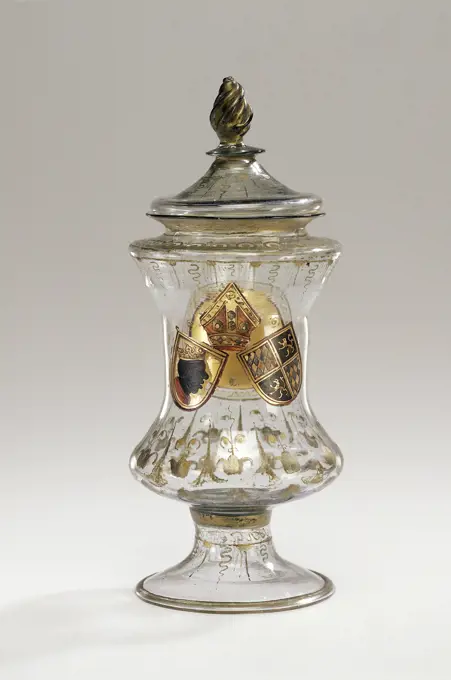
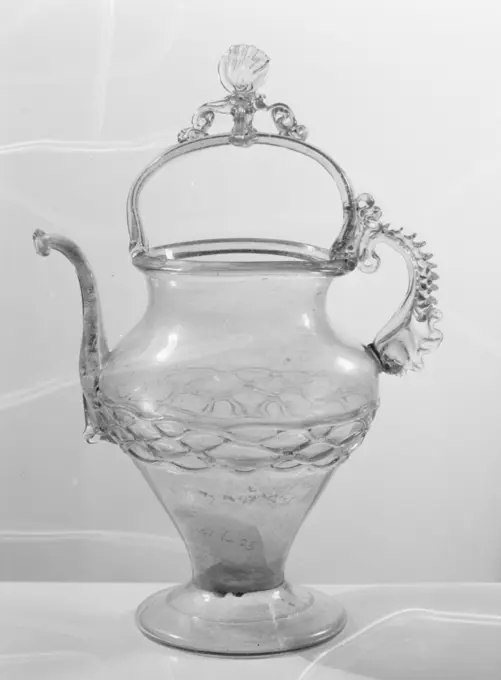
Covered Vessel; Façon de Venise, possibly the Glashütte of Wolfgang Vitl (Austrian, active 1534 - 1540); Hall, Austria; about 1536 - 1540; Free-blown colorless (slightly purplish-gray) glass with applied decoration, gilding, and cold painted decoration; 19.1 cm (7 1,2 in.)
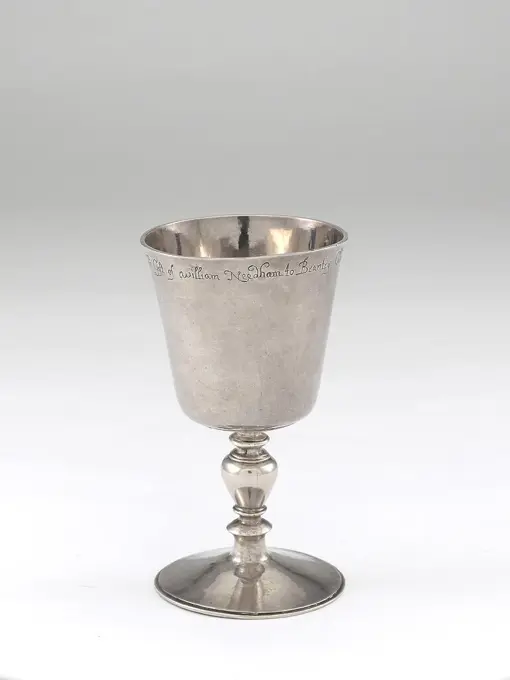
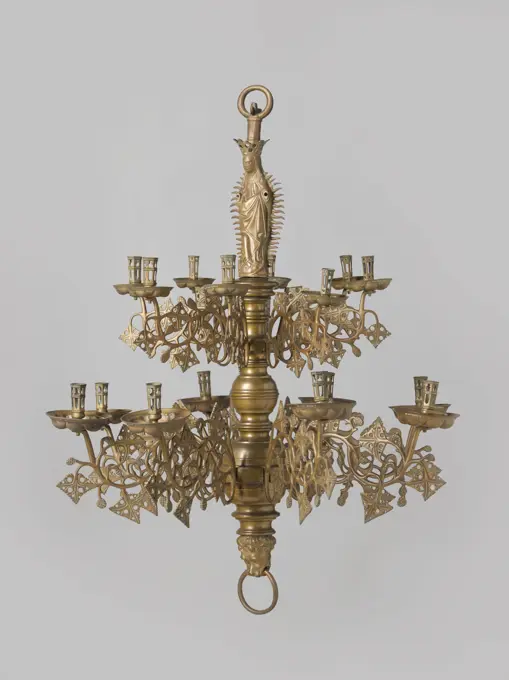
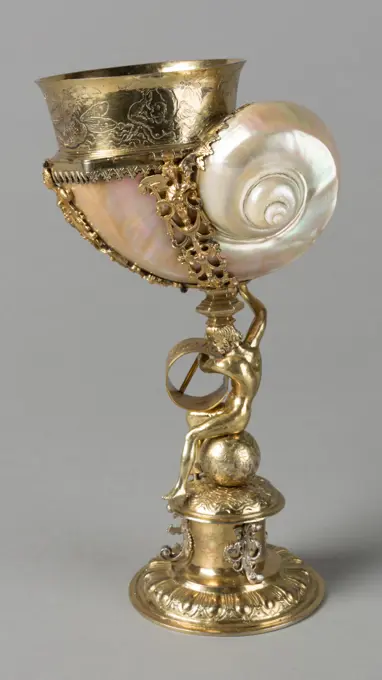
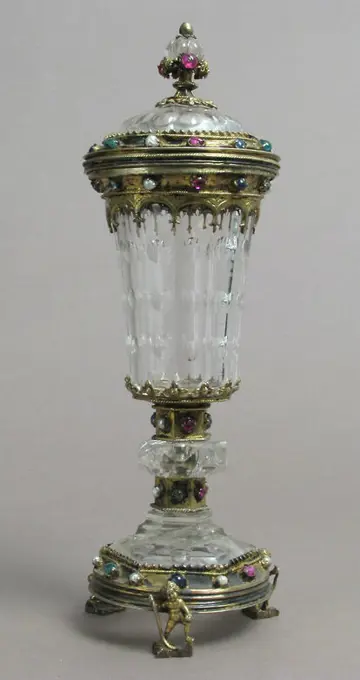
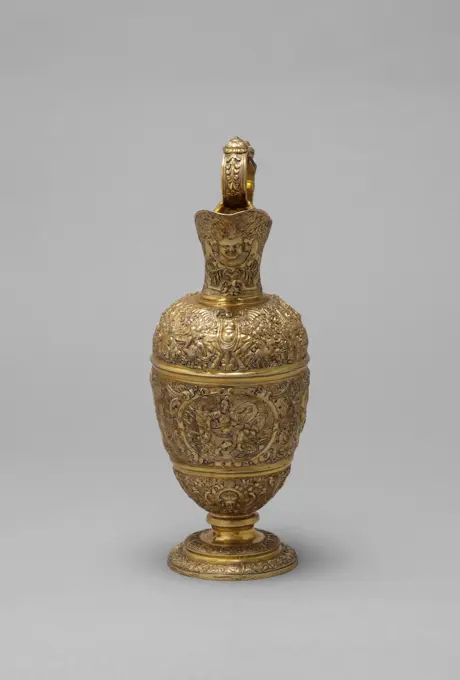
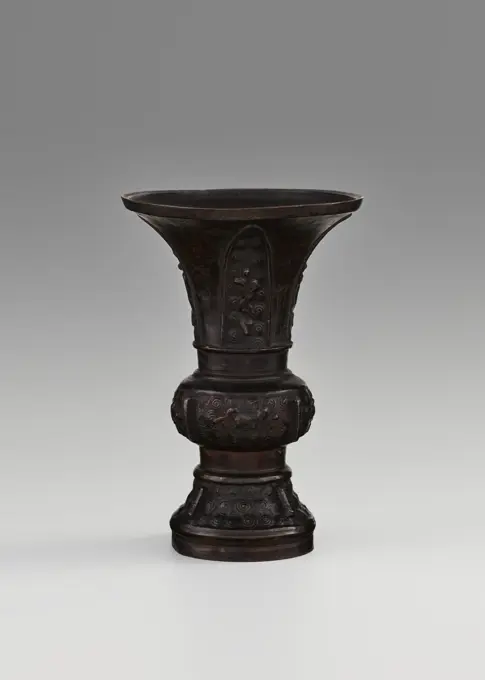
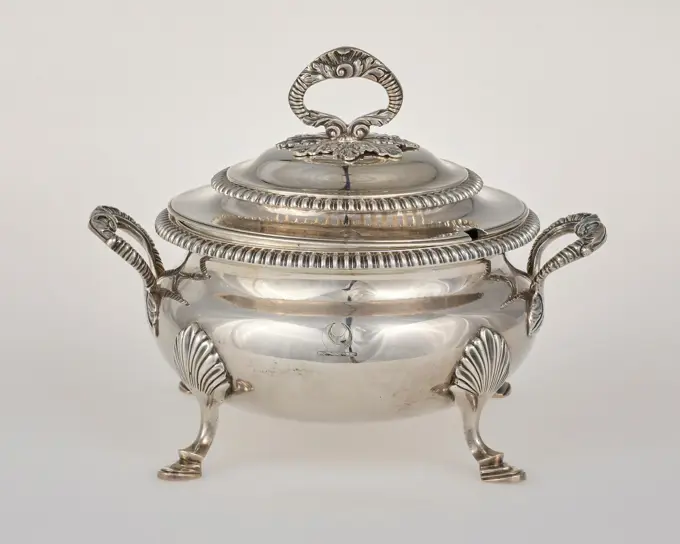
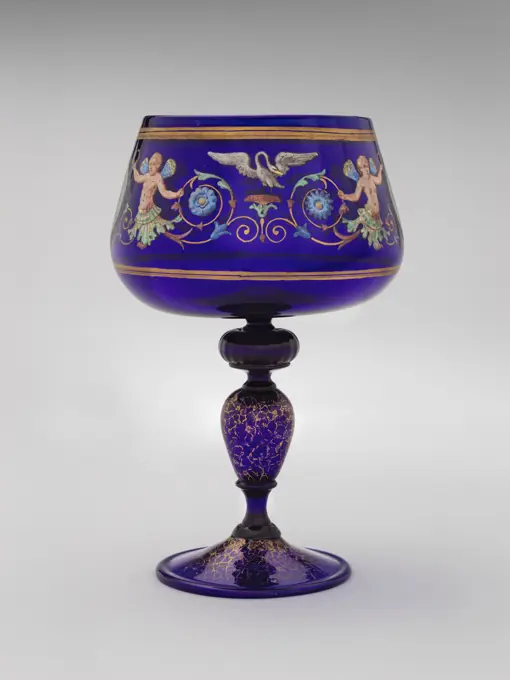
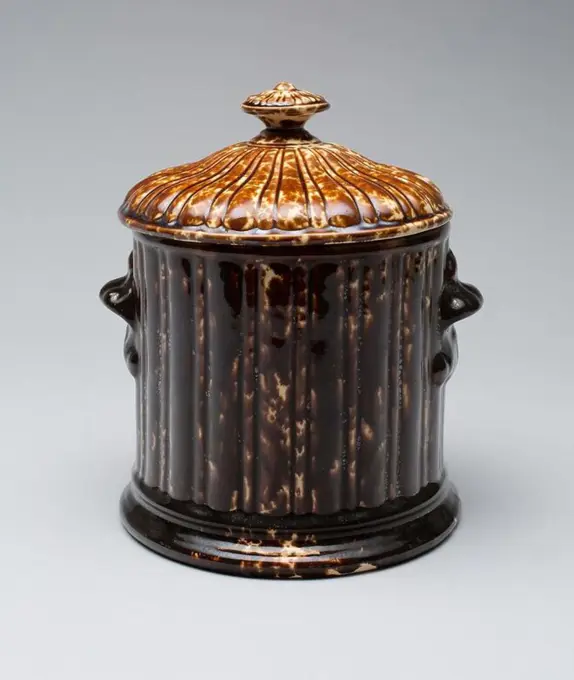
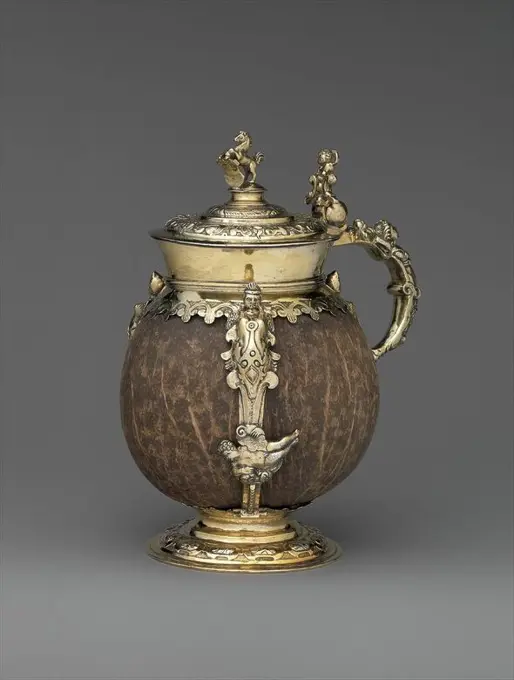
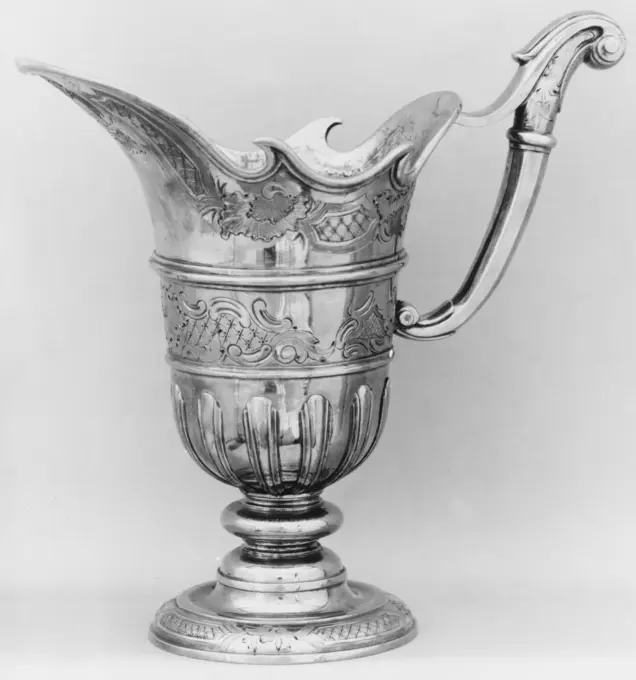
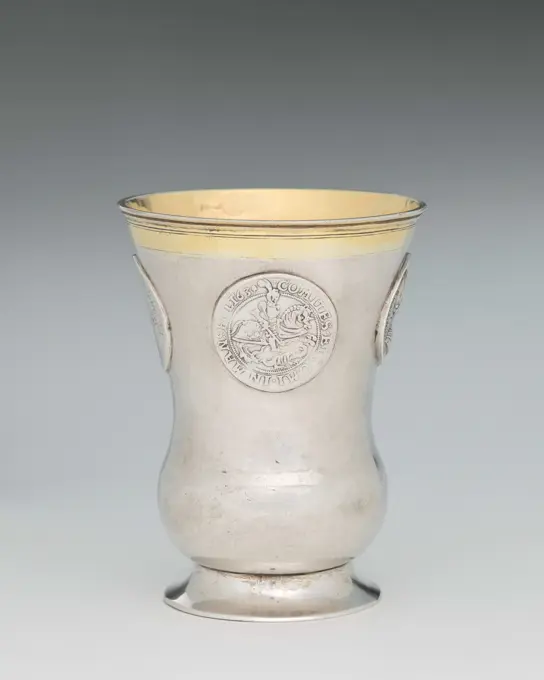
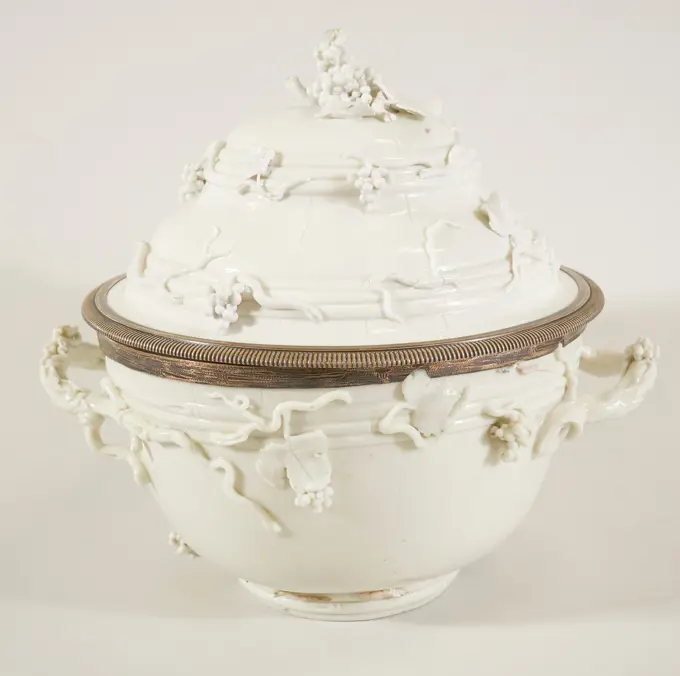
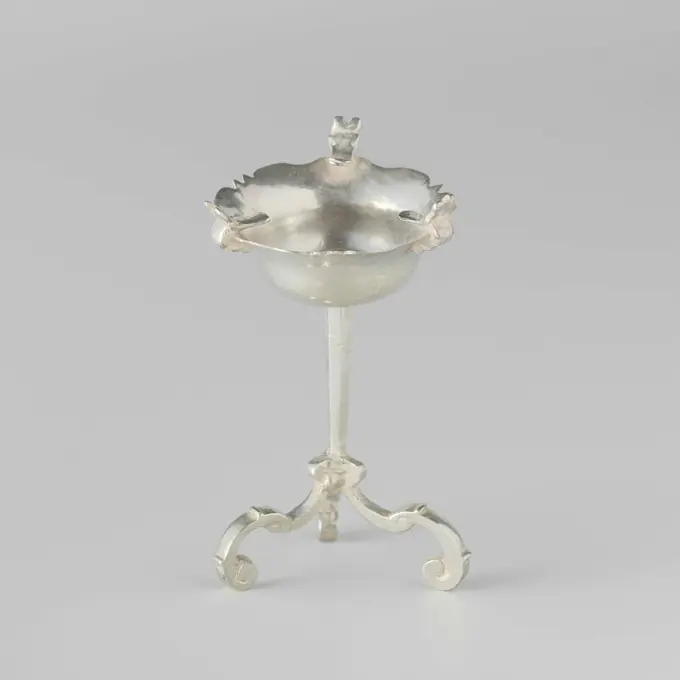
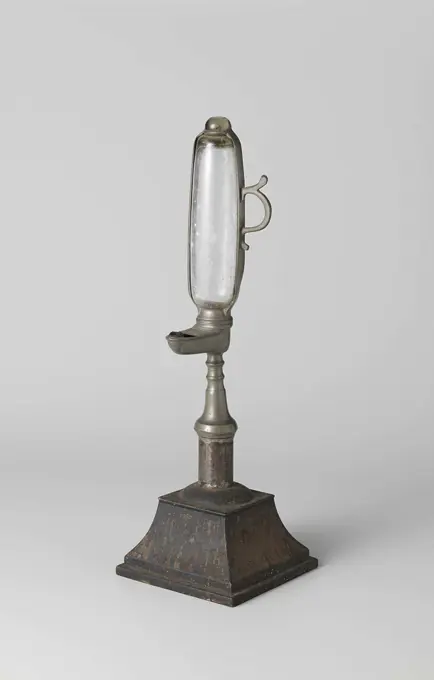
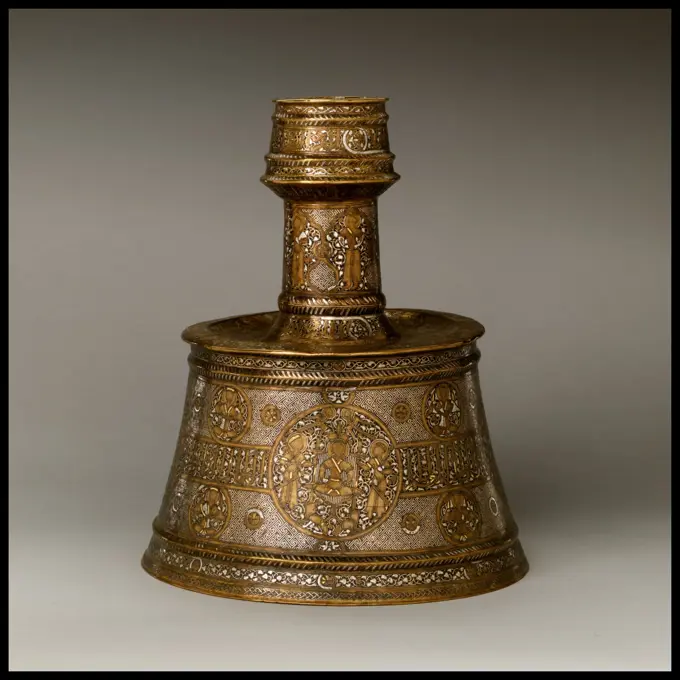
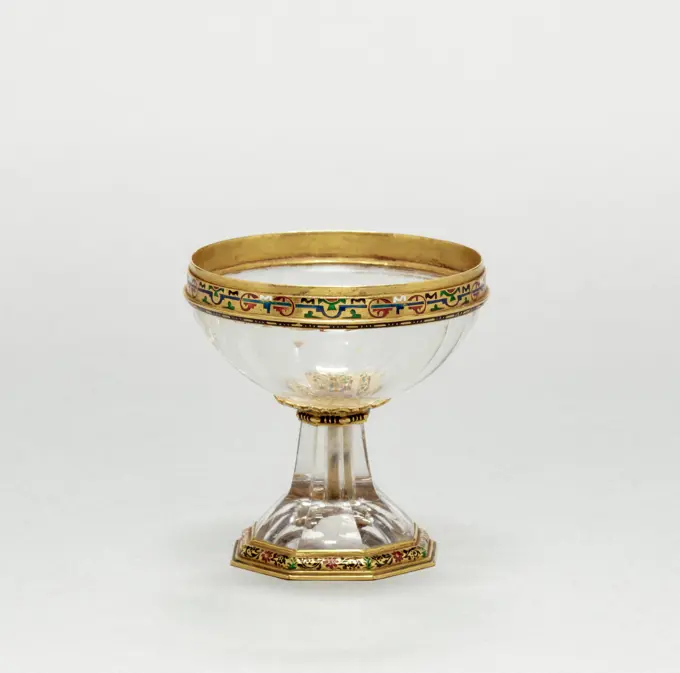
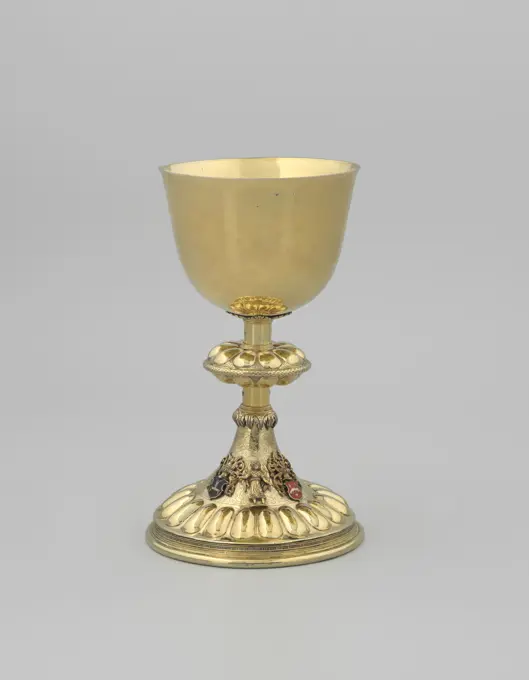
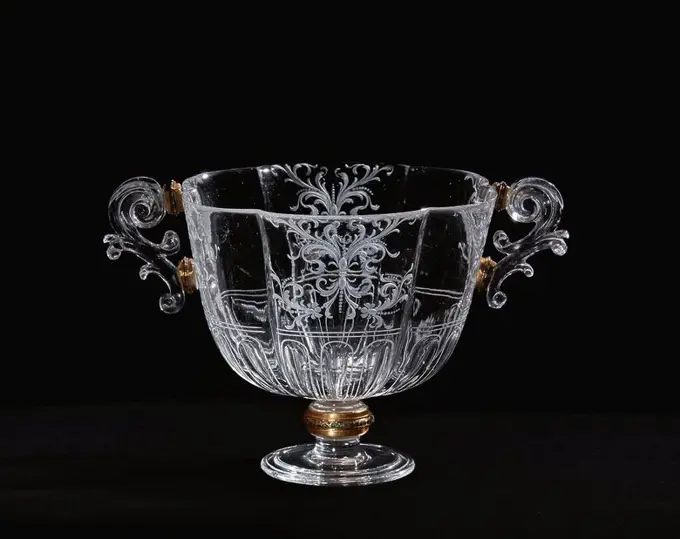
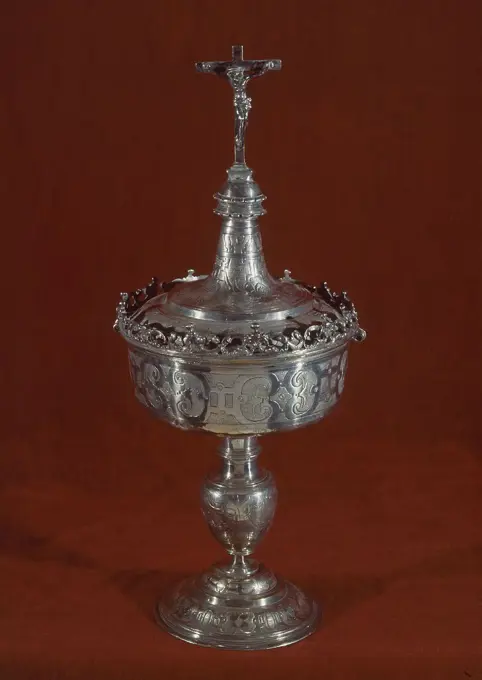
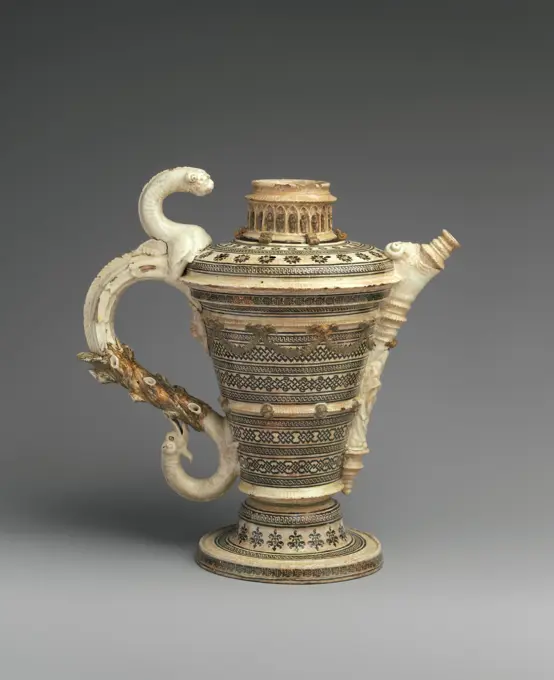
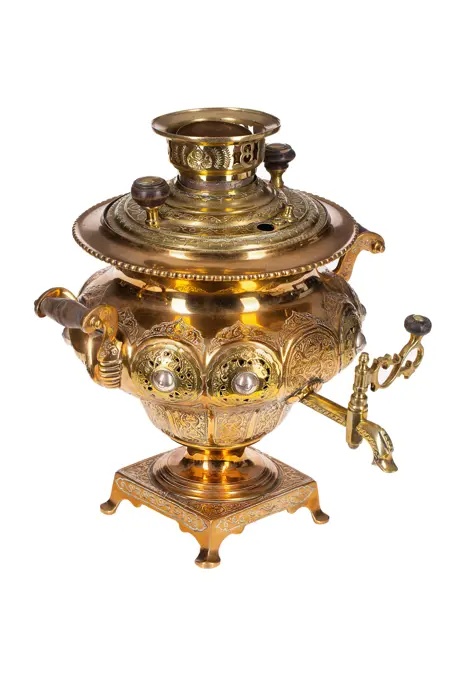
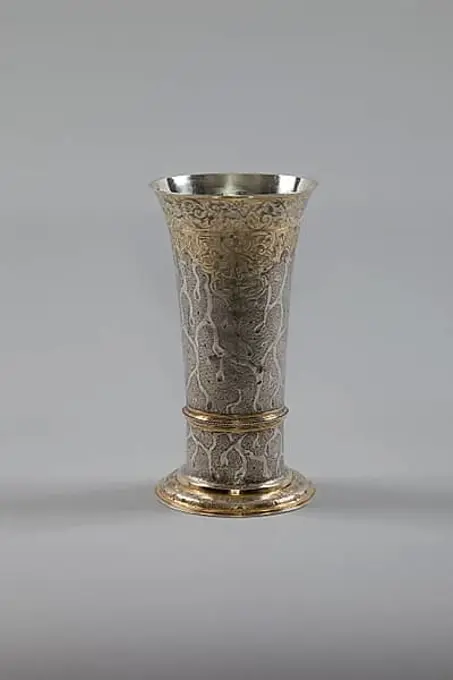
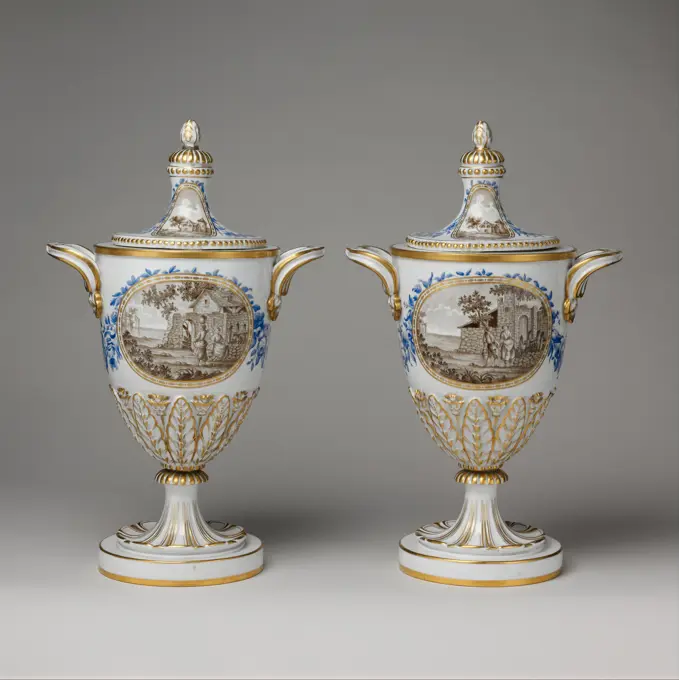
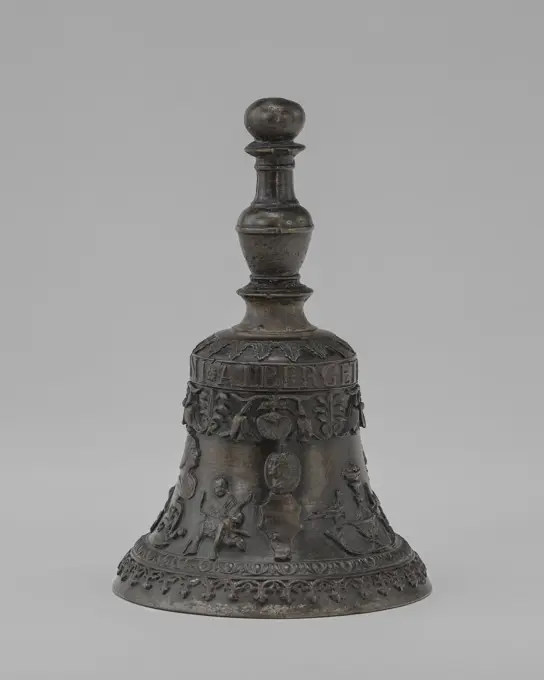
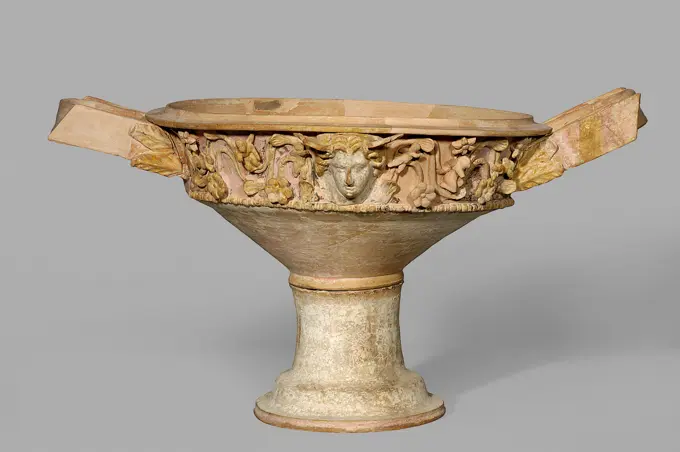
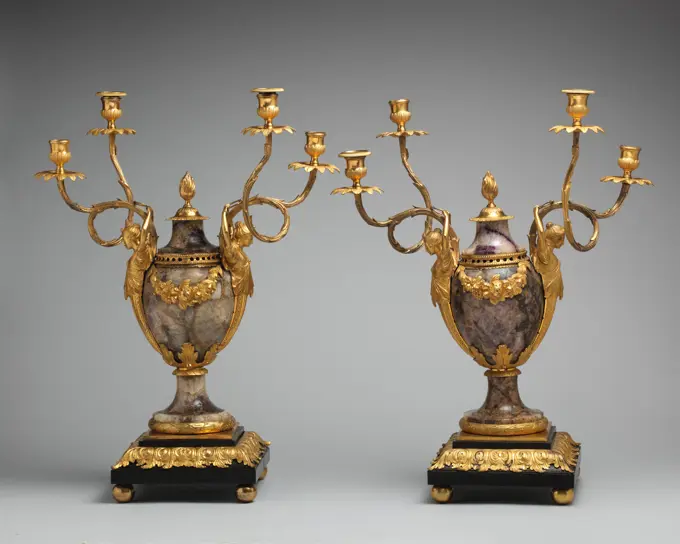
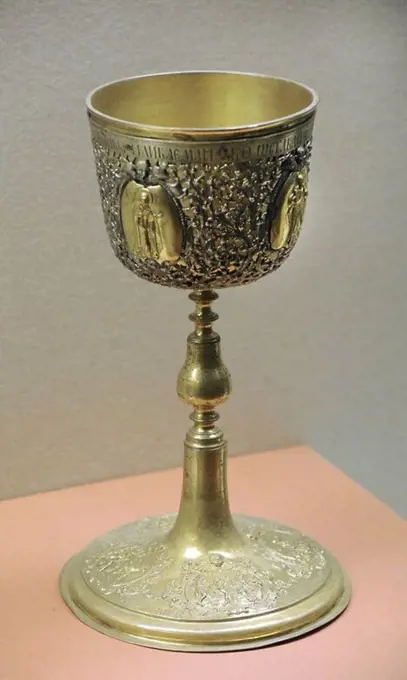
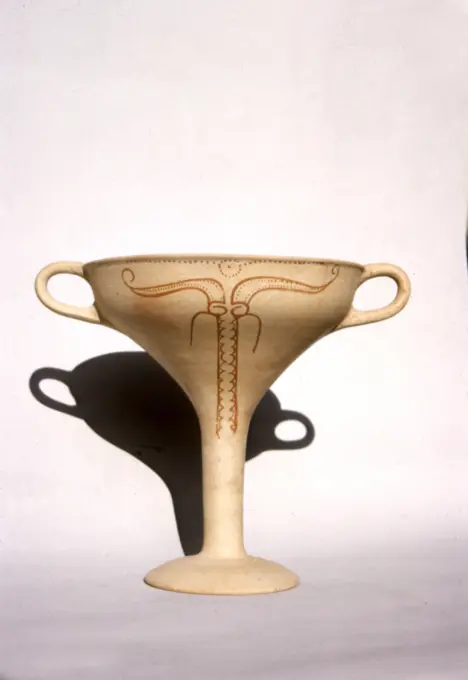
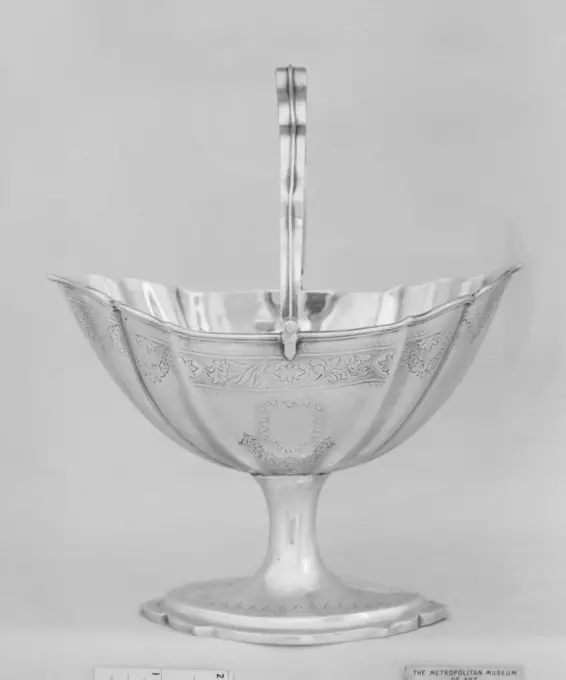
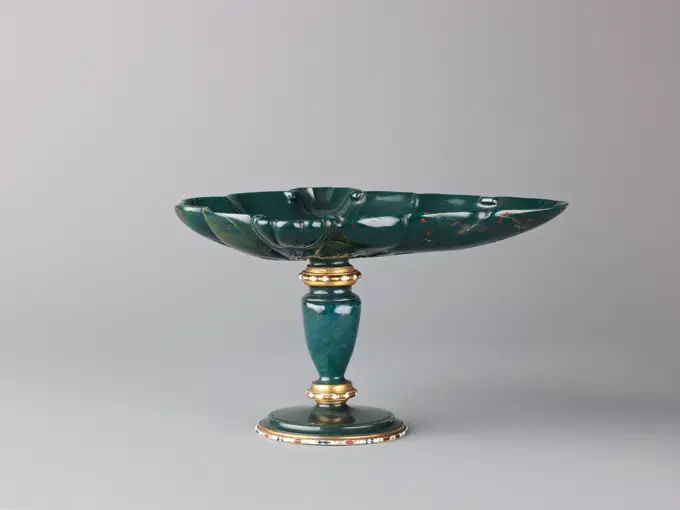
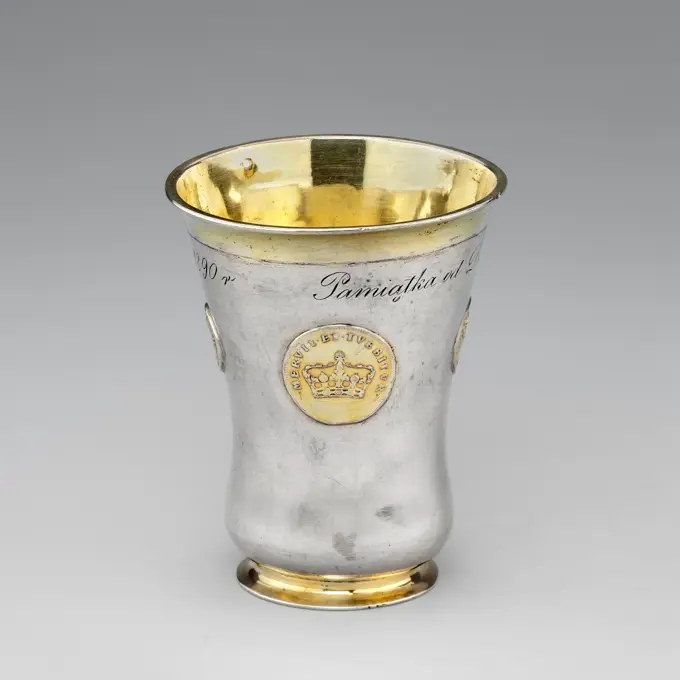
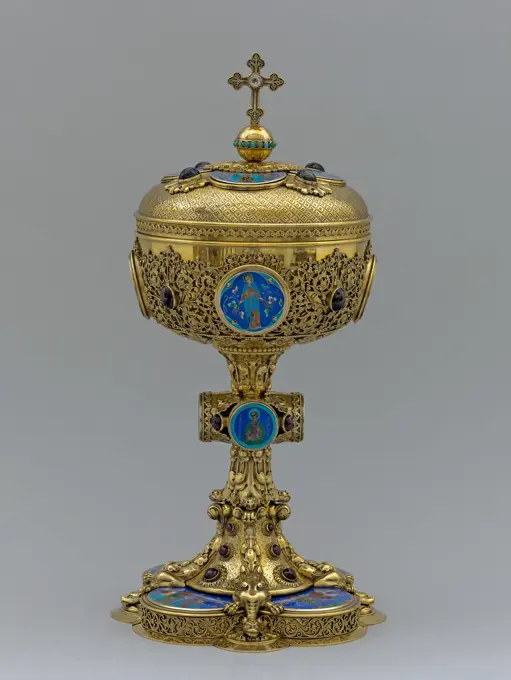
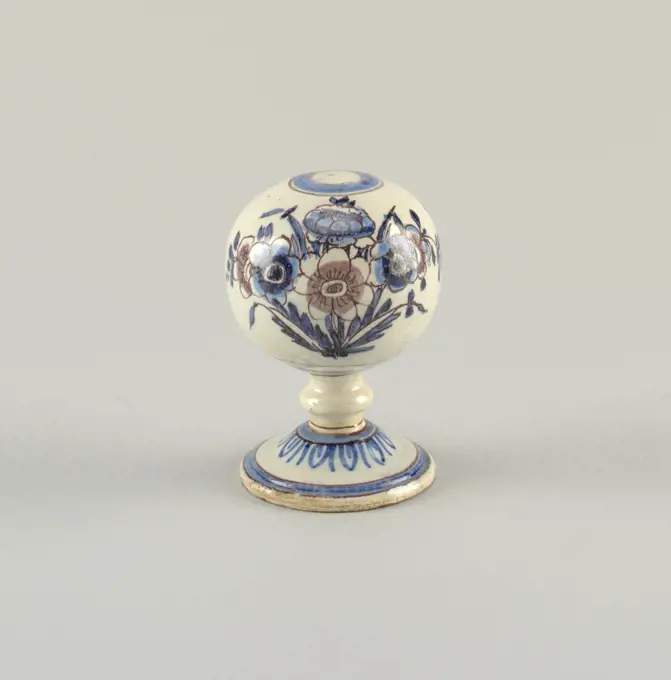
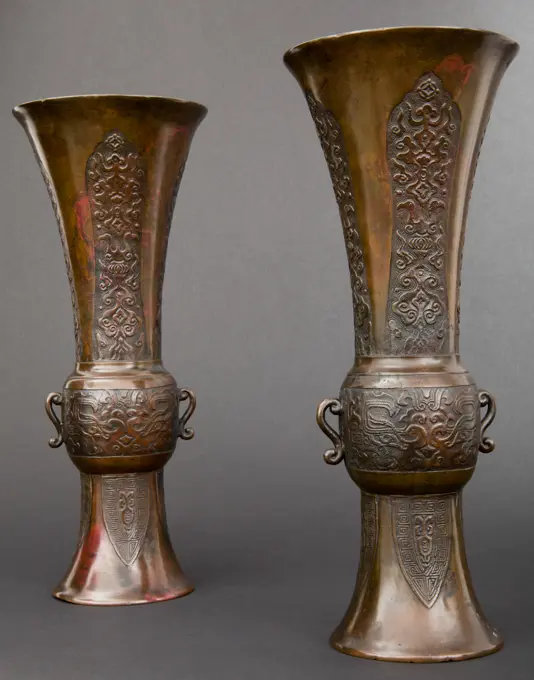
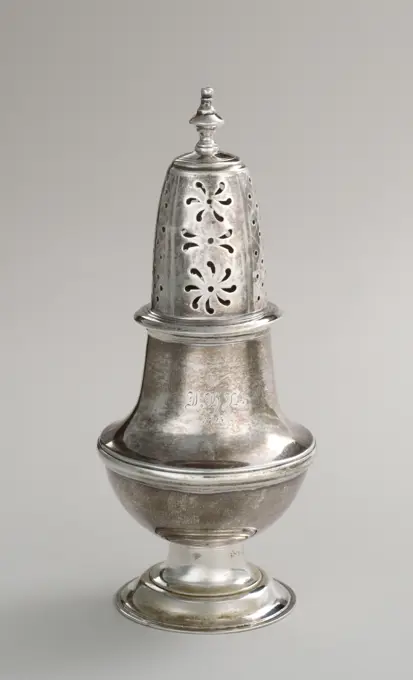
John Leacock, Caster, c. 1765, silver.Mount; L x W x D: 11 x 10 x 3.6 cm (4 5/16 x 3 15/16 x 1 7/16 in.)Wine Cup. John Hull; American, born England, 1627-1683; Robert Sanderson; American, born England, c. 1608-1693; Boston, Massachusetts. Date: 1655-1665. Dimensions: 17.2 × 9.2 × 9.4 cm (6 3/4 × 3 5/8 × 3 11/16 in.). Silver. Origin: United States. Museum: The Chicago Art Institute, USA.Cup with lid (Vasenpokal), Anonymous, 1875 - 1899 Bokaal with flat foot and baluster -shaped trunk with four lion masks and four discs. Vertically ribbed chalice, consisting of a wide, round, flattened bottom piece, transfer in an almost cylindrical neck, the edge of which is slightly bent. Three studs on the chalice. Pointed lid with a button on top and three studs. The entire glass and the lid engraved with the diamond in a pattern of stylized twigs. Venice glass glassblowing Bokaal with flat foot and baluster -shaped trunk with four lion masks and four discs. Vertically ribbed chalice, consisting of a wide, round, flattened bottom piece, transfer in an almost cylindrical neck, the edge of which is slightly bent. Three studs on the chalice. Pointed lid with a button on top and three studs. The entire glass and the lid engraved with the diamond in a pattern of stylized twigs. Venice glass glassblowingArm with candle holder of candle crown of two heights, each with eight arms, 1525 - 1550 Candle arm belonging to a candle crown of two heights with maria figure at the top. The arm is bent twice and is decorated with nine grape bunches and five vine leaves. The round fat catcher is decorated at the bottom with six round lobes. The candle holder is six -flared, opened, placed on a double hollow -round -profiled pedestal, transferring to a protruding with thread. This is the third arm of the bottom ring, numbered with 3 round points. The candle holder is unnumbered. Southern Netherlands brass (alloy) casting Candle arm belonging to a candle crown of two heights with maria figure at the top. The arm is bent twice and is decorated with nine grape bunches and five vine leaves. The round fat catcher is decorated at the bottom with six round lobes. The candle holder is six -flared, opened, placed on a double hollow -round -profiled pedestal, transferring to a protruding with thread. This is tGalvanoplastic reproduction of a jar decorated with tire work, maskerons and email, fa. Elkington & Co., after 1865 - Before 1881 Galvanoplastic reproduction of a cup decorated with tire work, maskerons and leaf work surrounded by three tires with email; Three panels on the wall and three panels on the lid contain biblical scenes in low relief. Gilded. With lid (BK-NM-5317-2). London copper (metal). silver (metal) gilding Galvanoplastic reproduction of a cup decorated with tire work, maskerons and leaf work surrounded by three tires with email; Three panels on the wall and three panels on the lid contain biblical scenes in low relief. Gilded. With lid (BK-NM-5317-2). London copper (metal). silver (metal) gildingCoupe of red -brown spotted chalcedone with foot of gold, anonymous, 1640 - 1660 Lid of red-brown spotted chalcedone. On the edge of the lid multicolored flowers in translucid enamel; And on top of an enamelled flower in white and blue. As a crowning a gold putto on a sphere of blue email to zodiac. Eastern Europe chalcedony. gold (metal). Lid of red-brown spotted chalcedone. On the edge of the lid multicolored flowers in translucid enamel; And on top of an enamelled flower in white and blue. As a crowning a gold putto on a sphere of blue email to zodiac. Eastern Europe chalcedony. gold (metal).Coupe of red -brown spotted chalcedone with foot of gold, anonymous, 1640 - 1660 Coupe, the vessel with lid of red-brown-spotted chalcedone is worn by a Hercules figure, as well as the three-lobby curved foot of gold. On the foot and around the edge of the lid multicolored flowers in translucid enamel; Under the barrel and on top of an enamelled flower in white and blue. As a crowning a gold putto on a sphere of blue email to zodiac. Eastern Europe chalcedony. gold (metal). Coupe, the vessel with lid of red-brown-spotted chalcedone is worn by a Hercules figure, as well as the three-lobby curved foot of gold. On the foot and around the edge of the lid multicolored flowers in translucid enamel; Under the barrel and on top of an enamelled flower in white and blue. As a crowning a gold putto on a sphere of blue email to zodiac. Eastern Europe chalcedony. gold (metal).William Charnelhouse, Coffeepot, 1703/4, silver.Nautilus cup Mader, Michael (1573 1632)Candlestick with two arms, anonymous, c. 1450 - c. 1500 The profiled Konical foot has a raised edge at the top, so that he can also serve as a fat catcher. The round trunk is sounding on the foot, which is decorated with three knots. The upper part of the trunk, which is partly provided with a thread, runs so that it can be used as a candle pin. The transition from the foot to the trunk is marked by shells. The two-armed turner is placed on the trunk, which has a round hole in the middle with a thread that fits on that of the shaft. The arms have the shape of three passes. In the round or pointed ends, the candle pins are screwed onto the fat catchers. The latter have six tilting and are decorated with six ornaments of three holes each. Northern Netherlands (possibly) brass (alloy) casting The profiled Konical foot has a raised edge at the top, so that he can also serve as a fat catcher. The round trunk is sounding on the foot, which is decorated with three knots. The upper part of theTureen. Culture: French, Paris. Designer: Charles Percier (French, Paris 1764-1838 Paris); Pierre François Léonard Fontaine (French, Pontoise 1762-1853 Paris). Dimensions: 18 1/4 x 14 1/8 in. (46.4 x 35.9 cm); Other: 20 1/8 in. (51.1 cm). Maker: Martin-Guillaume Biennais (French, 1764-1843, active ca. 1796-1819). Date: 1794-1814.This tureen is part of a large table service reputedly given by Napoleon I to his sister Pauline and her husband, Prince Camillo Borghese. Museum: Metropolitan Museum of Art, New York, USA.Covered Cup. Culture: German. Dimensions: Overall: 9 7/16 x 3 1/4 in. (24 x 8.2 cm)without lid: 7 3/16 x 3 1/4 in. (18.3 x 8.2 cm)lid only: 2 3/8 x 3 1/16 in. (6.1 x 7.8 cm). Date: 15th century.Rock crystal was valued most highly throughout history for its hardness and brilliant clarity. In the Middle Ages is was viewed by the Church as a symbol of unblemished purity, and thus a most appropriate material for containers of holy relics and for other ecclesiastical vessels. For kings, princes, and other high-placed persons, drinking vessels made of cut and highly-polished rock crystal and decorated with precious metals and jewels had great appeal. Various locations in Central and Western Europe have been suggested as fourteenth- and fifteenth- century centers for the cutting of crystals, including Paris, Burgundy, Prague, Nuremberg, Venice, and Freiburg im Breisgau. Rock-crystal vessels cut with a pattern of concave roundels, such as this beaker, are usually considered to be of French Cántaro de bautizo, siglo XVIII. Museu Català de les Arts i Tradicions Populars.Jug with cover (one of a pair). Culture: British, London. Dimensions: Overall (confirmed): 11 3/8 in., 64.34oz. (28.9 cm, 1824g). Maker: Simon Pantin I (British, ca. 1672-1728). Date: 1713/14.The arms of later owners Frederick Augustus (1763-1827), Duke of York,and his wife, Frederica Charlotte of Prussia, are engraved on the sides. Museum: Metropolitan Museum of Art, New York, USA.Ewer with Relief Scenes of Allegories of War, Peace, and Abundance, 1645-65. Workshop of Caspar Enderlein (German), copy after François Briot (French), Hans Sigmund Geisser (German). Silver gilt; diameter of base: 10.4 cm (4 1/8 in.); with handle: 27.9 cm (11 in.); without handle: 25.1 cm (9 7/8 in.).Cream jug ca. 1750 Irish, Dublin. Cream jug 198034Anonymous / 'Case for small agate cup with dark bands'. 1650 - 1711. Leather, Wood, Metal, Cloth. Museum: Museo del Prado, Madrid, España.Double-Ended Cup, 1700-1800. Pinto Collection - Purchased from Edward H Pinto, 1965.. Made in Sweden. This birch burr fluted double cup is Swedish, dating from the 18th century. Burr wood was used for many luxury drinking vessels as not only is it both rare and beautiful, but it is capable of withstanding both dry and damp conditions. The diagonal flutes on this cup mirror the designs found on Swedish silver at this time.Tankard with cover 19th century British, after German, possibly Augsburg original This electrotype is after an original treasure of the Kremlin, Moscow, at the time of reproduction.. Tankard with cover 186574GU vessel;  18th century () (1701-00-00-1800-00-00);Sauce tureen, one of a pair, c. 1822, Joseph Craddock; Maker: William Reid, English, 6 x 7 1/2 x 6 in. (15.24 x 19.05 x 15.24 cm), Silver, England, George IVPie de relicario, siglo XIV, Catedral de Tortosa.Goblet ca. 1868 Dr. Antonio Salviati Company The portrait and arms of Niccolò da Porte (doge of Venice 1578-86) are from the series of seventy-six doges in the Ducal Palace painted on the frieze in the halls of the Maggior Consiglio and the Scrutinio by Jacopo Tintoretto and assistants.. Goblet. Italian, Venice (Murano). ca. 1868. Glass. GlassSilversmith's art, Italy, 17th century. B. Guariniello, silver ewer. From Naples.Jar. Lyman, Fenton & Company; American, 1849-52; Bennington, Vermont. Date: 1849. Dimensions: 17.8 × 14.6 cm (7 5 3/4 in.). Earthenware. Origin: Bennington. Museum: The Chicago Art Institute, Chicago, USA. Author: Bennington Pottery.Candlestick 1670-1700 A typical household in seventeenth-century New England owned several metal or ceramic candlesticks. Wax candles were an expensive raritymost colonists made their own candles from tallow (animal fat).Coupe. This variety of quartz was prized more highly than rock crystal for its golden yellow colour. Only a few vases made of this precious material are known, which because of the abstract shapes of the cutting are associated with the famous lapidary workshops of Ottavio and Dionyso Miseroni. Cameos have been incorporated into the luxurious mount, including several with portraits.Coconut tankard. Culture: Hungarian, Nagyszeben. Dimensions: Overall: 7 1/4 x 3 7/16 in. (18.4 x 8.8 cm). Maker: Andreas Fleischer (active 1605-18). Date: early 17th century.Vessels such as this one embody the late Renaissance taste for uniting exotic natural materials with artistic craftsmanship. Coconut shells, treasured since ancient times, were thought to have miraculous powers, including the ability to neutralize poisoned wine. With the fibrous husk removed, the shell could be polished and mounted as a lavish drinking vessel. The sculptural handle is derived from a model used around 1600 by goldsmiths in Augsburg, Regensburg, Cologne, and elsewhere. These models were acquired as lead casts by journeymen during the travels they were obliged to make before becoming a guild master.LiteratureFine European Silver. Sale cat., Sotheby's, Zurich, November 18, 1977, p. 89, no. 188, and frontispiece.Judit H. Kolba. Hungarian Silver: The Nicolas M. Salgo Collection. London,Ewer 1734 Christoffel Radijs. Ewer 191821incense to incense with the coat of arms Jastrz  1545 (1545-00-00-1545-00-00);Jastrzębiec (coat of arms), Madonna with the Child (iconogr.), Herby, incense, renaissance (style), purchase (provenance)Candlestick (A and B) of silver with cylindrical trunk on a high round base. Decorated with edges with oak magazine, anonymous, c. 1400 - c. 1950 Silver candlestick. The round, high foot turns into the cylindrical trunk. Decorated with edges with oak magazine. Brands: Rad, 13 in Rectangle, LM in rectangle, crowned V.  silver (metal) Silver candlestick. The round, high foot turns into the cylindrical trunk. Decorated with edges with oak magazine. Brands: Rad, 13 in Rectangle, LM in rectangle, crowned V.  silver (metal)Mug with coins. Hardwald, Salomon (fl. ca 1700-ca 1750), goldsmithEwer 18th century Spanish, Catalonia or French, Catalonia. Ewer. Spanish, Catalonia or French, Catalonia. 18th century. Glass. GlassFlagon.  Maker: John Will, American, 1696-1775Milk with a lidBranches;  around 1820 (1815-00-00-1825-00-00);Foot fragment goblet or flute glass, balusterkerk in stem, pontilmerk, flute glass drinking glass drinking utensils tableware holder soil find glass, blown in shape goblet or flute glass Slight discolouration due to irisation. Foot with soul pontilemark in the middle In the trunk slightly twisted balusterkish Probably the basis of conical or funnel shaped chalice archeology Valckensteyn Poortugaal Albrandswaard drink beverage wine beer serve Soil discovery: castle Valckensteyn in Poortugaal now Albrandswaard 1961-1962.Cup with floral and fruit scrolls, anonymous, c. 1820  Porcelain head on high, spreading base, flared edge and high, curled ear, painted on the glaze in blue, pink, green, purple and gold. The outside wall is divided into four tires in a matte green background. Two of them are filled with a fruit or flower drink. The foot, outer edge, inner wall and the ear are covered with gold. In the curl of the ear a head in relief. France porcelain. glaze. gold (metal) painting / gilding / vitrificationWine bowl with cover, c. 1750-1780, Capo di Monte, Italian, 11 1/2 in. (29.21 cm), Soft-paste porcelain with later silver mounts, Italy, 18th centuryVase with a protome featuring a rams head from Narce, Calcata, Viterbo ProvinceCandlestick with a twisted trunk, decorated with flowers and putti, sigismundus zschammer (attributed to), 1689 Silver candlestick, with curved foot standing on 3 Bolpootjes. The tribe is twisted. Decorated with flower vines. Amsterdam silver (metal) Silver candlestick, with curved foot standing on 3 Bolpootjes. The tribe is twisted. Decorated with flower vines. Amsterdam silver (metal)Abruzzo L'Aquila Castelvecchio Subequo S. Francesco, Museum8. Hutzel, Max 1960-1990 Reliquaries, processional cross (15th century) statues- including a silver Madonna and Child with Angels, sculpture-including wooden statue of Christ, and frescoes Roman sculpture fragments, bronze sculpture, bronze plate, iron sword, roman coins German-born photographer and scholar Max Hutzel (1911-1988) photographed in Italy from the early 1960s until his death. The result of this project, referred to by Hutzel as Foto Arte Minore, is thorough documentation of art historical development in Italy up to the 18th century, including objects of the Etruscans and the Romans, as well as early Medieval, Romanesque, Gothic, Renaissance and Baroque monuments. Images are organized by geographic region in Italy, then by province, city, site complex and monument.Cloches (dish covers), coolers, soup tureens, sauceboats, salt cellars, pepper and mustard pots, Jean Baptiste Claude Odiot, c. 1819 Empire sauce bowl of gilded silver. With a high handle, formed from a boy's figure with a horn of abundance. The whole rests on a rectangular base that is supported by 4 female semi -figures on lion's claw. Engraved with the weapon of Potemkin. Paris silver (metal). gilding (material) gilding Empire sauce bowl of gilded silver. With a high handle, formed from a boy's figure with a horn of abundance. The whole rests on a rectangular base that is supported by 4 female semi -figures on lion's claw. Engraved with the weapon of Potemkin. Paris silver (metal). gilding (material) gildingSalt cellar; Koenigliche Porzellan Manufaktur (KPM; Berlin; 1763-1918); 1837-44 (1832-00-00-1850-00-00);Komfoor on tripod. Around Komfoor on a high tribe that runs into a tripod. The edge of the komfoor is scalloped and has three supports for a boiler. The Komfoor has been marked: STK. = Amsterdam, JRL. = B (1736), Mt. = Frederik from STRANT II.Canister. Culture: Hungarian, possibly Fogaras. Dimensions: Overall: 6 11/16 x 4 in. (17 x 10.1 cm). Date: 1681.The six dynamic semicircular lobes are reminiscent of Byzantine and later orthodox sacred architecture but the Ottoman-influenced engraved floral decoration of pomegranates, tulips, and roses against black enamel suggests the canister served a useful purpose. When the domed lid is screwed down, it holds in place a second tidily inserted lid to hermetically seal the gilt interior. The arms belong to Michael Teleki of Szk and his third wife Judith Wer de Krstarcsa, to whom the inscription VER JUDIT refers.LiteratureFine Russian Works of Art, Faberg, Watches and Clocks . Silver / Objets d'art russes, Faberg, montres et pendules . orfvrerie europenne. Sale cat., Christie's, Geneva, November 12-15, 1984, p. 181, no. 529.Judit H. Kolba. Hungarian Silver: The Nicolas M. Salgo Collection. London, 1996, p. 81, no. 59.Wolfram Koeppe in "Recent Acquisitions: AOlielamp van tin, dienst doende als klok.Tin oil lamp, which can be used as a clock. The iron base is square, conversely conical and shows traces of black and red paint. In the middle on the foot a cylindrical shaft runs up, on which the tin oil lamp is placed. The oil lamp starts at the bottom with a conical shaft, above which two slight nodi can be seen. Above the spout and the glass lamp. The surrounding pewter frame has a handle on one side. The other side is decorated with Roman numerals.Candlestick late 13th-first half 14th century In the medallions decorating this candlestick sits a ruler on a lionthrone with harpies and attendants, and figures holding a crescent personifying the Moon. Arabic inscriptions around the base and neck wish the owner well and list his princely titles, reinforcing the themes of royal authority and prosperity conveyed in the imagery.. Candlestick. late 13th-first half 14th century. Brass; inlaid with silver, gold, and black compound. Attributed to Western Iran, Northern Iraq, or Northern Syria. MetalMessingleuchter, Messing, Messingfuß, Halbedelmetall, Kupferlegierung, McPKST McP_WAL_2024_002516 *** Brass chandelier, Brass, Brass base, Semi-precious metal, Copper alloy, McPKST McP Wal 2024 002516 McPKSTDouble Cup (Lower Cup), late 16th century. Italy, late 16th century (possibly 19th century forgery, or 16th and 19th century pastiche). Rock crystal set in enameled gold; overall: 11.8 cm (4 5/8 in.); part 1: 6.1 cm (2 3/8 in.).Wine cooler, c. 1825, Paul Storr, English (London), English, 1771-1844, 11 1/4 x 10 1/2 x 10 1/2 in. (28.58 x 26.67 x 26.67 cm), Silver, gilt, England, 19th centuryChalice, anonymous, c. 1574 Miskelk of gilded silver, on a round foot. At the foot of the trunk are an angel and 2 coats of arms with a helmet sign. At the bottom of the chalice, the same alliance weapon is engraved with year 1574. Cologne (possibly) silver (metal) gilding Miskelk of gilded silver, on a round foot. At the foot of the trunk are an angel and 2 coats of arms with a helmet sign. At the bottom of the chalice, the same alliance weapon is engraved with year 1574. Cologne (possibly) silver (metal) gildingAnonymous / 'Foot and stem fittings of a glass with several missing figures'. 1675 - 1700. Enamel, Gold. Museum: Museo del Prado, Madrid, España.Kettle, base - three -day;  19th century (1801-00-00-1900-00-00);Workshop of the Sarachi () / 'Drinking vessel with six lobes and scroll-shaped handles'. 1575 - 1660. Rock crystal / Hyaline quartz, Enamel, Gold. Museum: Museo del Prado, Madrid, España. Author: TALLER DE LOS SARACHI.OSTENSORIO DE PLATA. Location: MUSEE D'ARTS DECORATIFS. MADRID. SPANIEN.Oil Lamp 1790-1800. Oil Lamp. 1790-1800. Sheffield silver plate. Made in South Yorkshire, Sheffield, EnglandWaszek from the cover;  1764/65 (1764-00-00-1765-00-00);Ewer ca. 1550 French, Saint-Porchaire or Paris This ewer is one of the largest and most impressive examples of a low-fire white pottery made in France in the middle years of the sixteenth century. Known as Saint-Porchaire ware, this group of elaborate and often architectural pieces is distinguished by the complex interlace designs of colored clays inlaid into the cream-colored earthenware body. These wares were believed to have been produced in the town of Saint-Porchaire in western France, but a Paris origin has also been suggested due to their technical sophistication and the ambition of their designs.Jeffrey H. Munger, 2011. Ewer 194243Butter fleet with Jugendstil motifs, Orivit, c. 1900 Butter fleet consisting of four parts. The underpot, the outer tray and the lid are made of tin and are decorated Meet Jugendstil-flower motifs. The undecorated inner box is made of glass. Germany tin (metal). glass Butter fleet consisting of four parts. The underpot, the outer tray and the lid are made of tin and are decorated Meet Jugendstil-flower motifs. The undecorated inner box is made of glass. Germany tin (metal). glassRussian Traditional Water Boiler Russian traditional water boiler on isolated background Copyright: xZoonar.com/AndreyxSkatx 8079737Bell Salt 1601-1602 London. Silver gilt .Communion cups, goldsmithing and textile art from the 16th to the 20th century, St., Sankt, SaintVase with cover (one of a pair) 1784-95 Real Fabrica de Buen Retiro The Buen Retiro factory was established in 1759 when Charles VII of Naples became Charles III of Spain. In that year, Charles disbanded the porcelain factory at Capodimonte in Naples and moved the enterprise, with workers and raw materials, to the palace of Buen Retiro outside Madrid. The new factory continued to use the Capodimonte mark of a fleur-de-lis for its products.The early wares and figures made at Buen Retiro are often difficult to distinguish from objects made at Capodimonte, but the fully Neoclassical character of these vases marks them as Buen Retiro, as the Capodimonte factory was closed before the Neoclassical style took root. The form of the vase is based on an antique model, and the oval medallions on one side are painted with figures from classical antiquity. Further classicizing details include the stylized molded water leaves located above the stem, and the painted garlands that frame the medallionsVase with cover (vase de coté de Paris) (one of a pair). Culture: French, Sèvres. Decorator: Pictorial decoration attributed to Jean-Louis Morin (French, active 1754-87); Decoration of trophies attributed to Nicholas Petit (Petit l'aîne) (active 1756-1806); Probably gilded by Étienne-Henry Le Guay (French, active 1748-49, 1751-97). Dimensions: Height: 12 7/8 in. (32.7 cm). Manufactory: Sèvres Manufactory (French, 1740-present). Modeler: Pierre-Adrien Paris (French, 1747-1819). Date: ca. 1775. Museum: Metropolitan Museum of Art, New York, USA.Cup, purple red with golden edges and ear. Cup of porcelain, part of a coffee set. Body purple red with golden edges and ear. On top of the broad golden trim in which an engraved leaf drink. No brand.Mounted Vase; China; porcelain about 1662 - 1722; mounts about 1745 - 1749; Porcelain; gilt bronze mounts; 31.8 x 35.6 x 26.7 cm (12 1,2 x 14 x 10 1,2 in.)Two-handled vase. Culture: American. Dimensions: H. 12 3/4 in. (32.4 cm). Manufacturer: Manufactured by Columbian Art Pottery (Morris and Willmore) (1893-1905). Date: 1893-1900. Museum: Metropolitan Museum of Art, New York, USA.Pair of Sugar Casters. Simon Gallien (French, died 1757, master 1714)Teapot 1779-80 Probably by Francis Stamp. Teapot. British, London. 1779-80. Silver. Metalwork-SilverTea Urn And Base (England); silverPrzeszo Przyszoci unknown. This is not just any service. These objects belong to a huge coffee and tea service that originally comprised more than a thousand pieces. The Russian tsar Nicholas I bought it from the French silversmith Biennais in 1817. The pieces are double gilded, so they look like they are made of solid gold. The geometric shapes and type of rims are typical of the early Empire style.Tobacco Box. Netherlands. Date: 1755-1765. Dimensions: 17.2 x 15.2 x 10.8 cm (6 3/4 x 6 x 4 1/4 in.). Pewter. Origin: Netherlands. Museum: The Chicago Art Institute, Chicago, USA.Anonymous / 'Case for vase with handles in the form of female hybrid figures'. 1650 - 1711. Leather, Wood, Metal, Cloth. Museum: Museo del Prado, Madrid, España.Offering Container in Form of Alms Bowl, 18th Century or later. China, Qing dynasty (1644-1911). Jade; overall: 17.8 cm (7 in.).Teapot 1840-50 George B. Foster. Teapot. American. 1840-50. Silver. Made in Boston, Massachusetts, United StatesCandlestick 1835-40 Boston & Sandwich Glass Company. Candlestick. American. 1835-40. Pressed amethyst glass. Made in Sandwich, Massachusetts, United StatesCan with a cover;  the beginning of the 20th century (1900-00-00-1910-00-00);Zuanne I (Zanin) Alberghetti, Table Bell with Portrait of Lodovico Maria Sforza, 1451 1508, called Il Moro, 7th Duke of Milan 1494 1508, possibly c 1494 1499 Table Bell with Portrait of Lodovico Maria Sforza, 1451-1508, called Il Moro, 7th Duke of Milan 1494-1508Trek rod with brass button of a candle arm of two heights, Anonymous, 1650 This part of a candle crown consists of two parts: the wrought iron stroke and the brass button. In the upper end, the drawbar has a gap for the split pin, with which the whole can be attached to the hanging ring. The brass button is browned and intended as the lower part of a candle crown. With inscription: Hendrick Scholten 1650. Amsterdam (possibly) iron (metal). brass (alloy) forging / casting This part of a candle crown consists of two parts: the wrought iron stroke and the brass button. In the upper end, the drawbar has a gap for the split pin, with which the whole can be attached to the hanging ring. The brass button is browned and intended as the lower part of a candle crown. With inscription: Hendrick Scholten 1650. Amsterdam (possibly) iron (metal). brass (alloy) forging / castingLekanis (misa na nóżce) dekorowana głową Meduzy i postaciami amorków. unknown, authorLantern, four -sided with truncated corners and a articulated roof, crowned by flat ring in which Halmen, Anonymous, 1725 - 1775 A four -sided lantern with truncated corners and a roof consisting of two sections. The roof is crowned by a flat ring in which there are some culms and a knife (). The lantern that gradually narrows down is decorated here and there with leaves and ends in a leaf. Paper for the windows. Italy (possibly) iron (metal). paper. gilding (material) gilding A four -sided lantern with truncated corners and a roof consisting of two sections. The roof is crowned by a flat ring in which there are some culms and a knife (). The lantern that gradually narrows down is decorated here and there with leaves and ends in a leaf. Paper for the windows. Italy (possibly) iron (metal). paper. gilding (material) gildingParts of a candle wreath; Four big poor. .Candelabrum perfume burner (one of a pair) ca. 1770 Matthew Boulton British A candelabrum of this design sold in 1771 was described in the sale catalogue as "a large vase of radix amethysti and or moulu lined with silver and perforated for insence with four branches for candles, supported by two caryatids standing on an ornamented ebeny plinth.". Candelabrum perfume burner (one of a pair). British, Soho near Birmingham. ca. 1770. Derbyshire spar, gilded bronze, wood, silvered copper. Metalwork-Gilt BronzeTripod Brazier, c. 1400-1450. Italy, Siena, 15th century. Wrought iron and copper; overall: 116.8 cm (46 in.).Chalice. Silver; gilding, chasing. Saint Petersburg. 1726. The State Hermitage Museum. Saint Petersburg. Russia.Greek Mycenaean period kylix, wine cup with stylised octopus, 1600 BC. Knossos. GREECE.Basket 1798-99 Possibly by Randall Cashell. Basket 192165Tazza ca. 1575-1625 with 19th century additions probably Italian, Milan. Tazza. probably Italian, Milan. ca. 1575-1625 with 19th century additions. Bloodstone, gold, and enamel.A mug decorated with numismates; Hardwald, Salomon (Fl. CA 1700-Ca 1750); 1. PO. 18th century (1701-00-00-1750-00-00);Baroque (style), dedications, numismatsWineglass 18th century Bohemian. Wineglass. Bohemian. 18th century. Zwischengold glass. GlassDrinking bowl. Drinking dish, round, baluster-shaped strain. The foot is vaulted and decorated. A six-leaf flower is engraved in the dish. The drinking scale has not been marked.Sugar basket, 1794, Peter Bateman; Designer: Ann Bateman, British, 1740-1825, 4 3/4 x 4 5/8 x 6 1/4 in. (12.07 x 11.75 x 15.88 cm), Silver, England, 18th centuryPerfume burner (one of a pair) Matthew Boulton British and James Fothergill probably ca. 1770 Called "sphinx" vases, the sphinx supports were probably based on a design by Sir William Chambers (1723-1796), architect to George III, who supplied Boulton with several models for gilt bronze in 1770.Placide Poussielgue-Rusand (1829-1889). "Ciborian". Golden silver, stamped, molded and chopped, enamels, grenats, turquoise and rock crystal. After 1850. Museum of Fine Arts of the City of Paris, Petit Palais. 71340-5 Silver dore print, silver cisele mold, chretian, ciborium, rock crystal, cross, email, evangelist, garnet, book, religious object, orfevrery, precious stone, Catholic religion, saint, turquoise, 19th centuryCap stand, Tin-glazed earthenware, Cobalt blue and manganese purple decoration showing flowers and a bee on globe. Ring of leaves at base of neck. Circles at edge of foot and top of globe., Nevers, France, mid-18th century, ceramics, Decorative Arts, Cap standArm with candle holder of candle crown of two heights, c. 1525 - c. 1575 Candle arm belonging to a candle crown of two heights with naked woman at the top. The arm has a sphere and hollow-rounded nodus in the middle and thickens a little on both sides. At the trunk she ends in a spiral curl. She flows out in the screw end of iron. On it is the round fat catcher with a rim at the bottom. The round in each other's extended openwork candle holder has a holy -round base that is screwed onto the arm. This is the first arm of the bottom ring, numbered with 3 diamond -shaped points. The candle holder is unnumbered. Northern Germany (Possible) brass (alloy) casting Candle arm belonging to a candle crown of two heights with naked woman at the top. The arm has a sphere and hollow-rounded nodus in the middle and thickens a little on both sides. At the trunk she ends in a spiral curl. She flows out in the screw end of iron. On it is the round fat catcher with a rim at the bottom. The round in eachA pair of vases with archaic motifs unknown