Vintage Candlesticks and Vessels

Artistic antique bronze and silver candlesticks and vessels, showcasing intricate designs and historical craftsmanship from various eras.
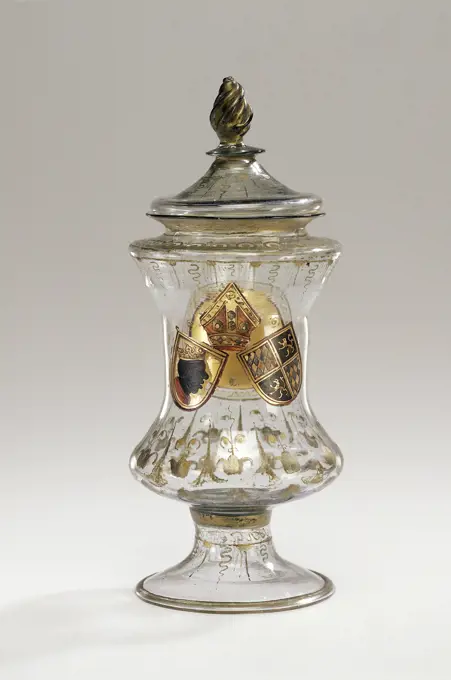
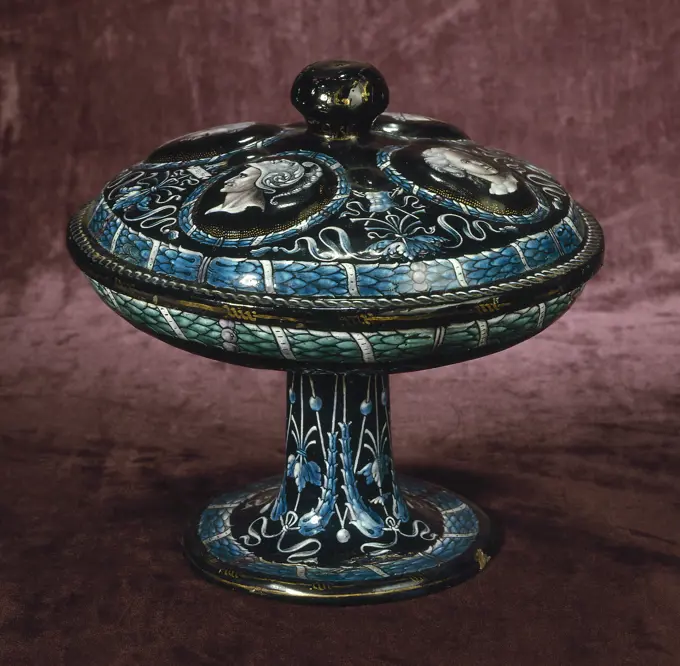
Covered Vessel; Façon de Venise, possibly the Glashütte of Wolfgang Vitl (Austrian, active 1534 - 1540); Hall, Austria; about 1536 - 1540; Free-blown colorless (slightly purplish-gray) glass with applied decoration, gilding, and cold painted decoration; 19.1 cm (7 1,2 in.)
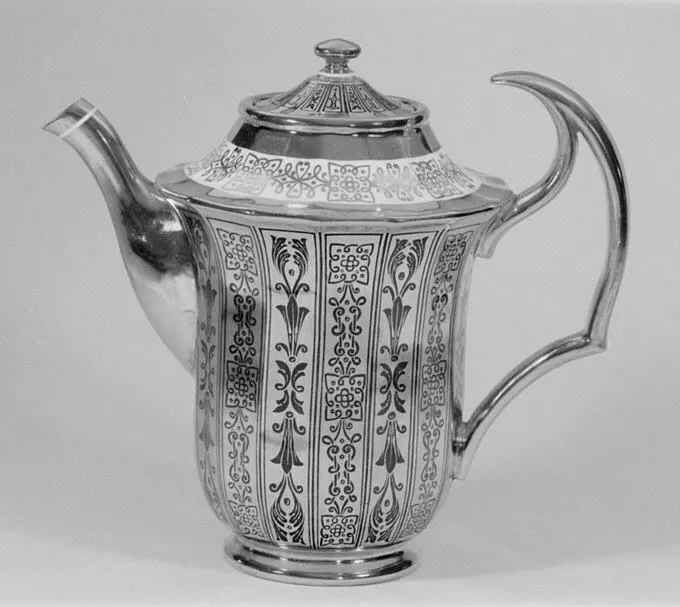
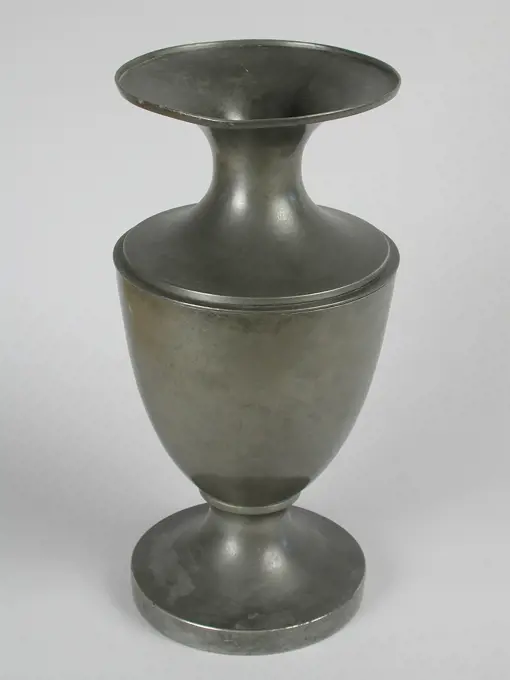
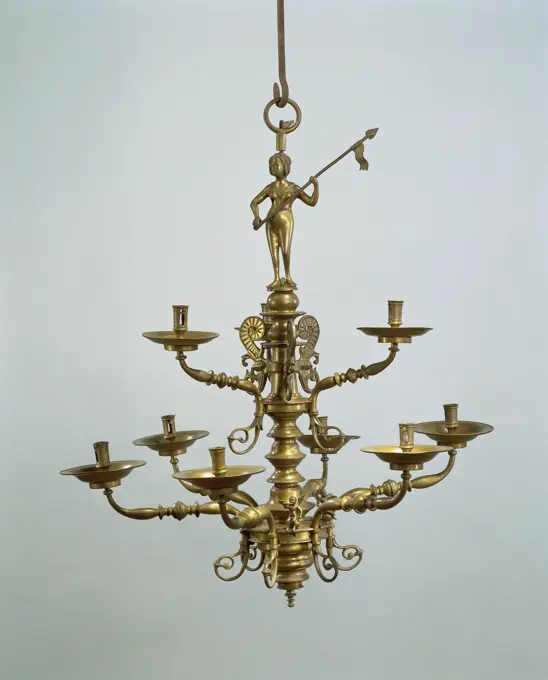
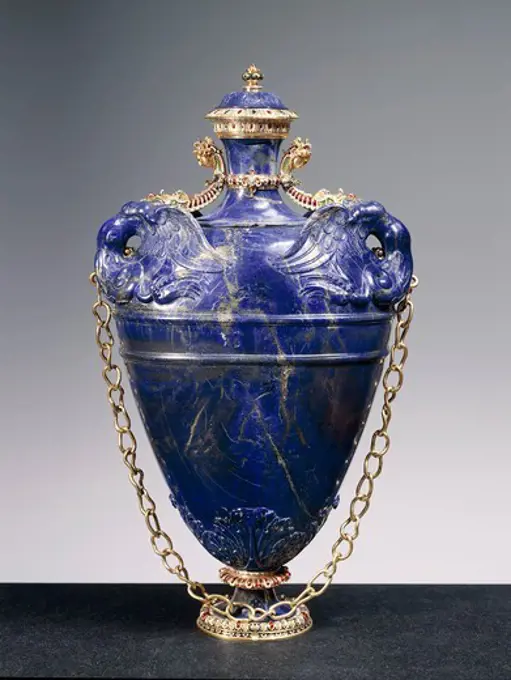
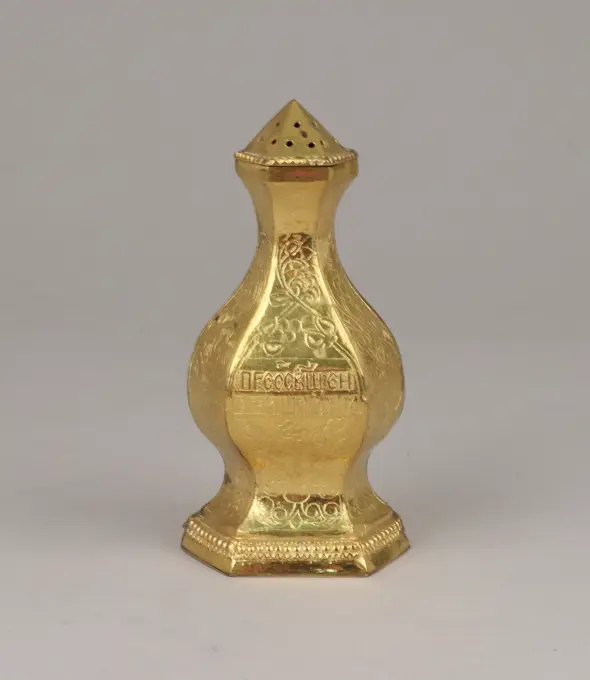
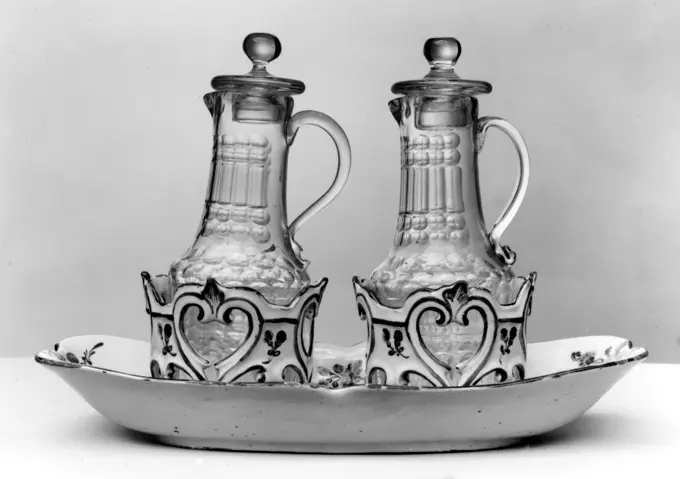
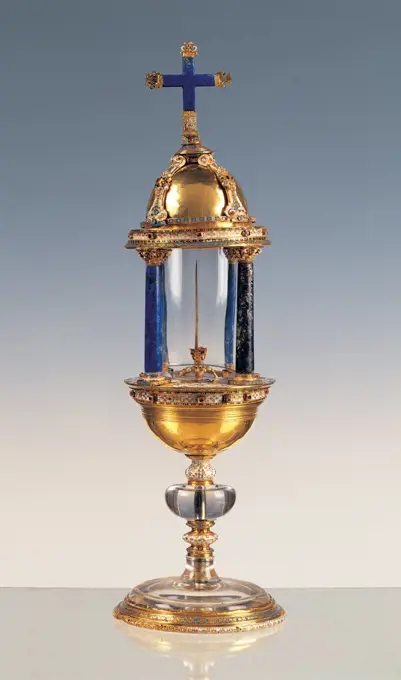
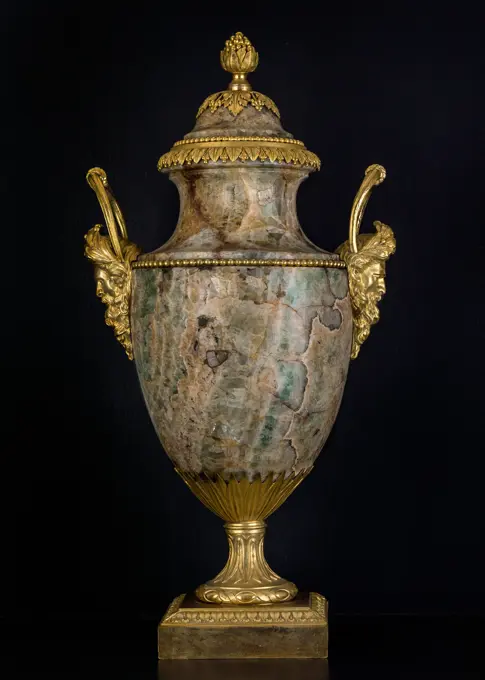
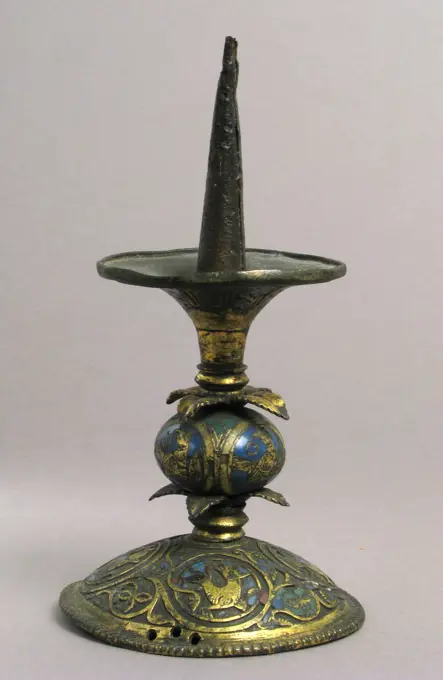
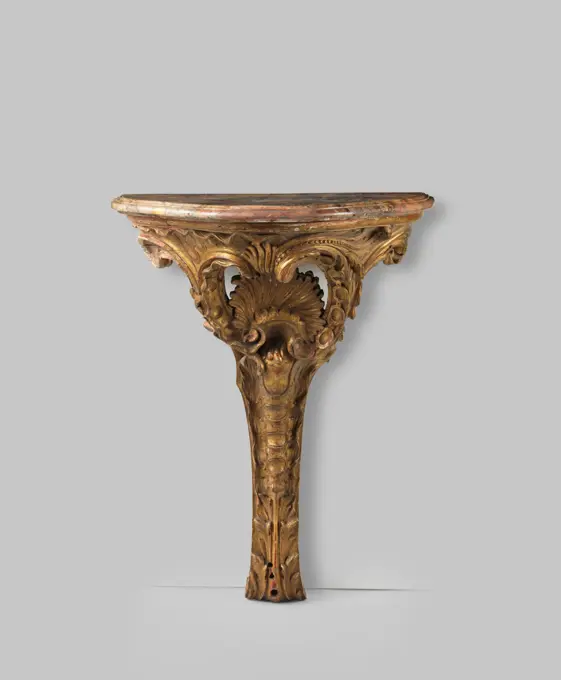
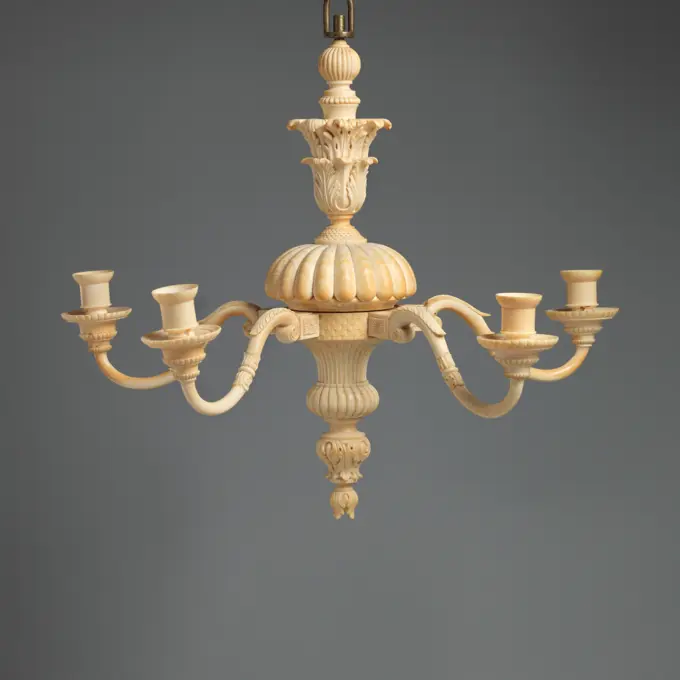
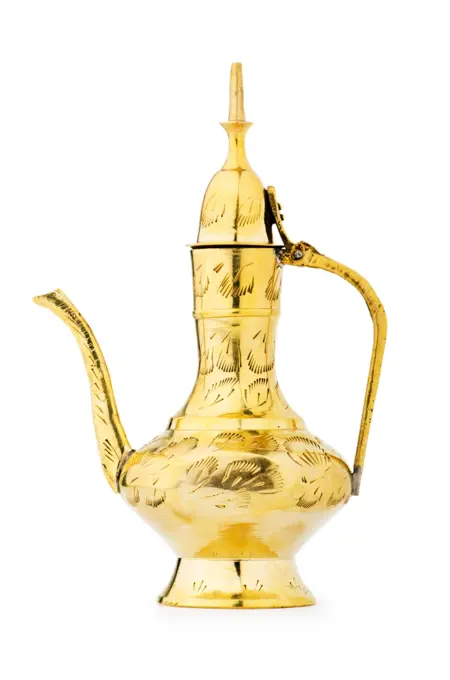
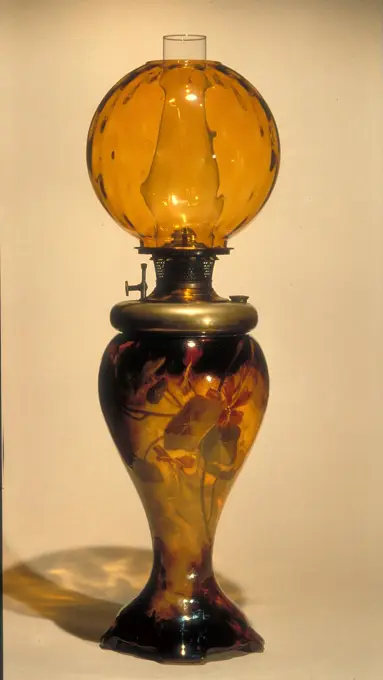
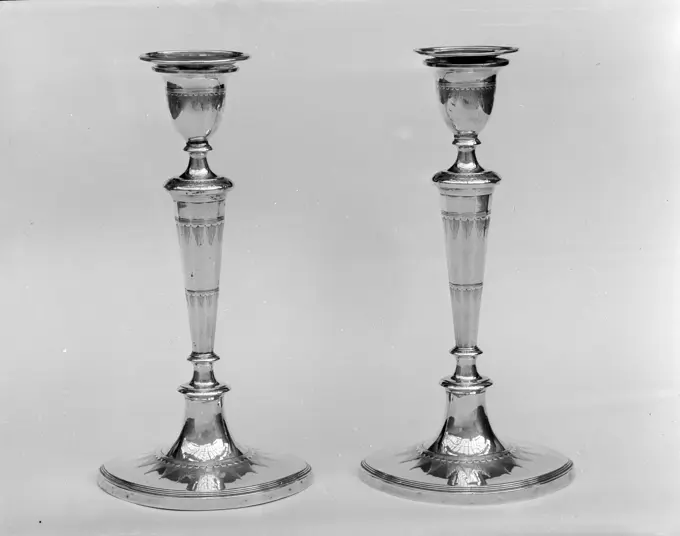
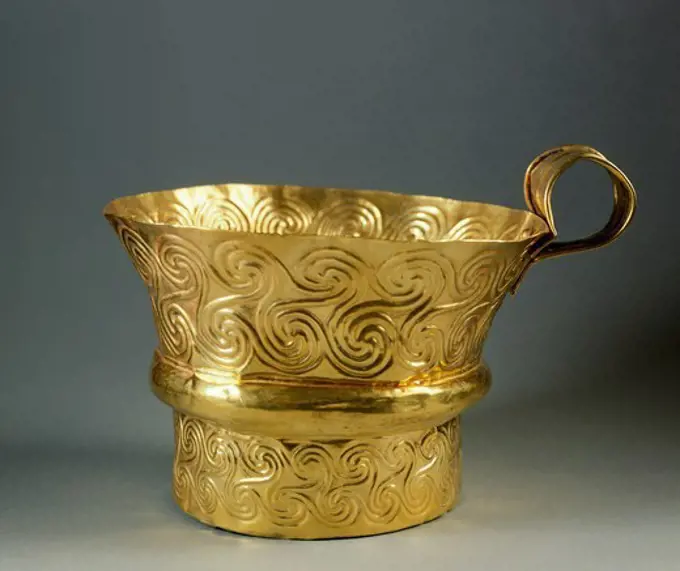
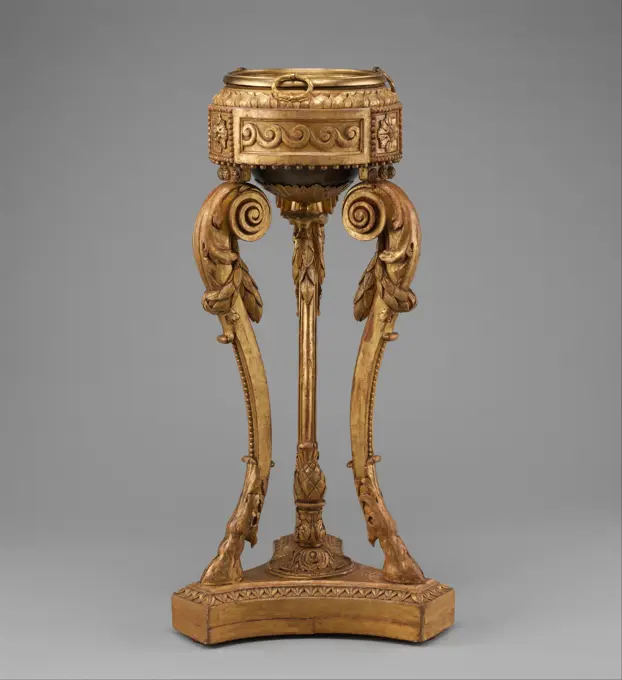
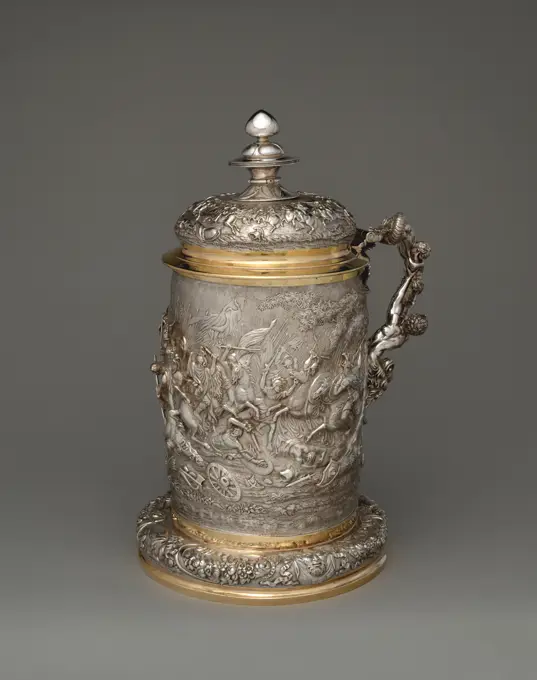
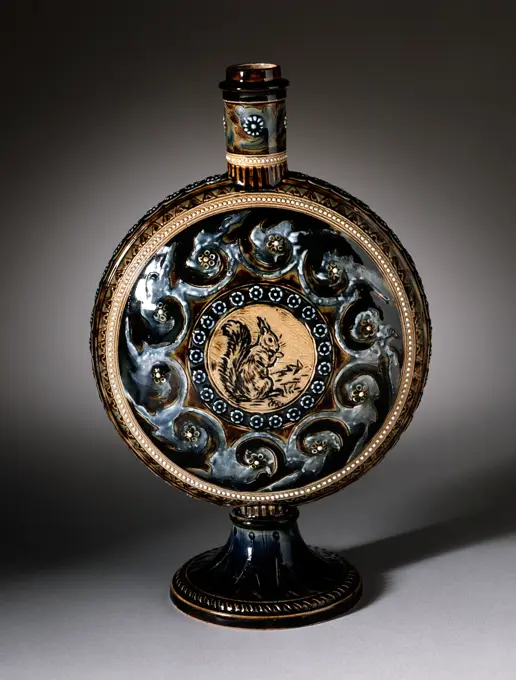
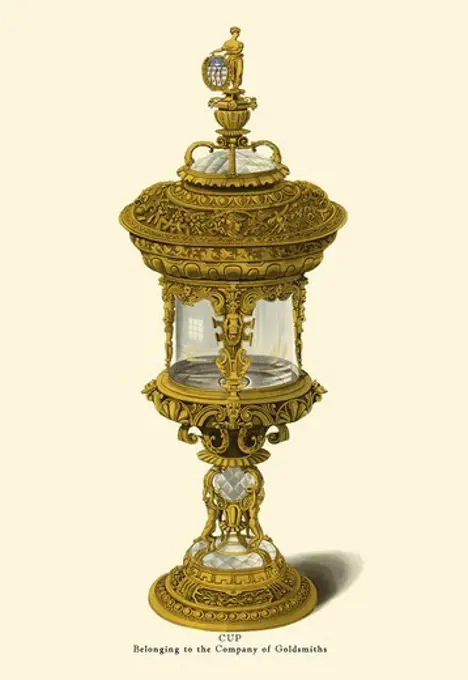
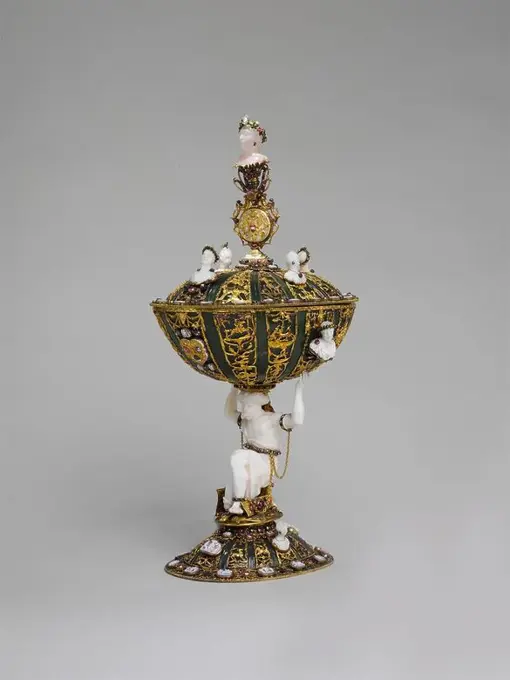
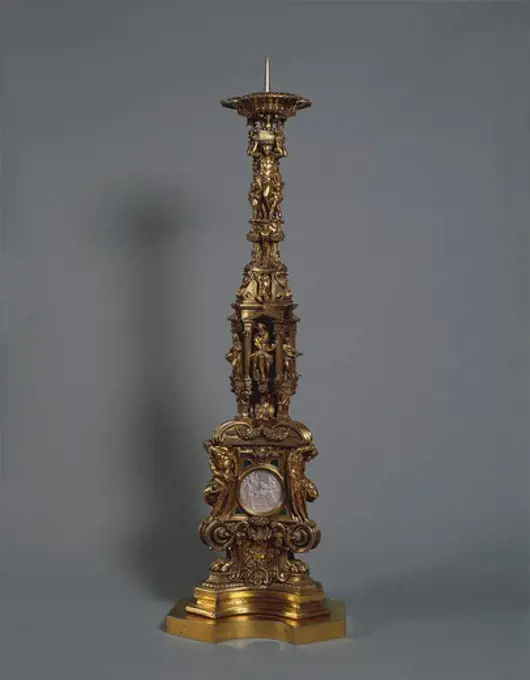
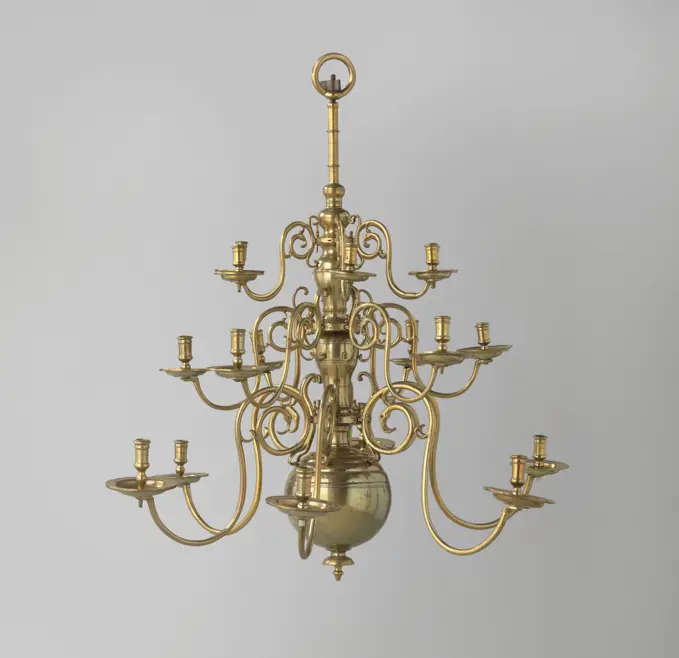
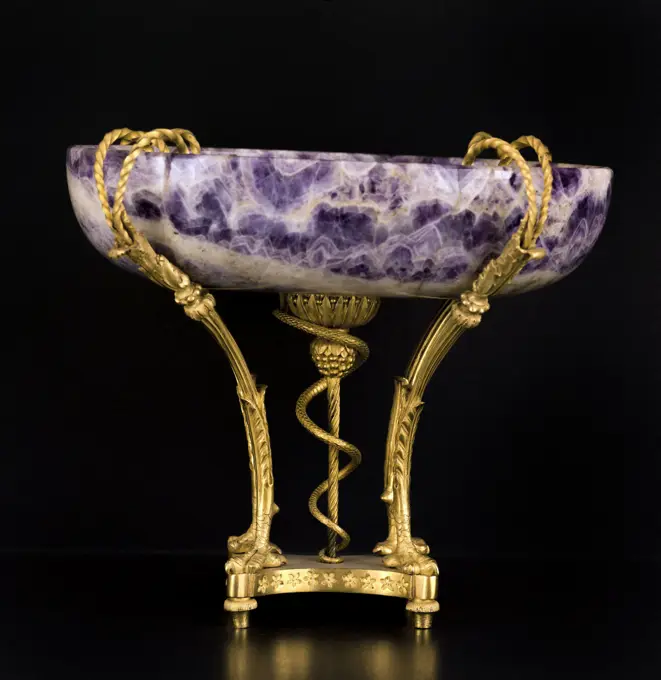
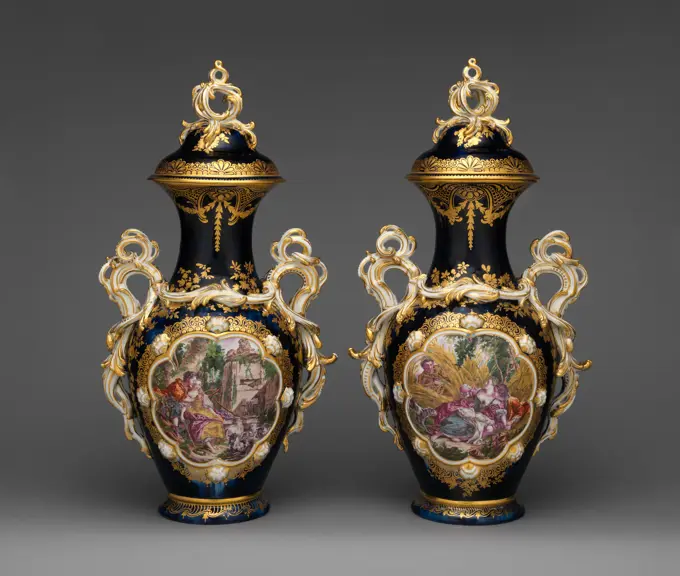
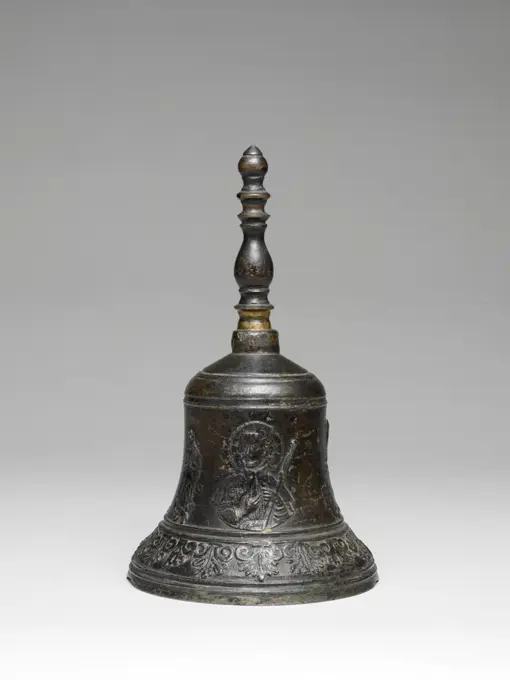
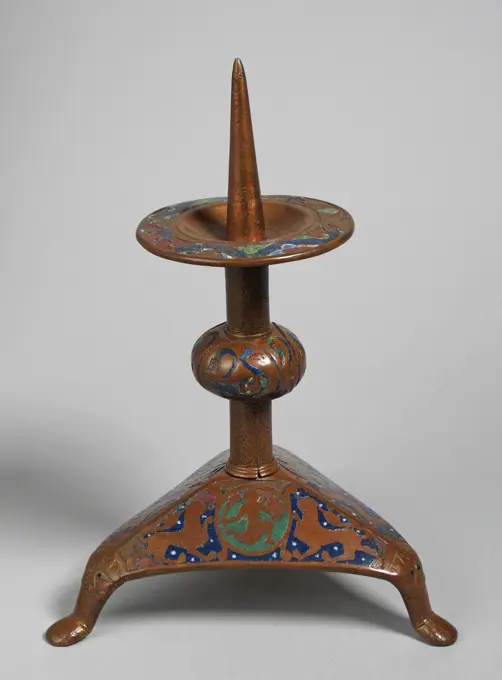
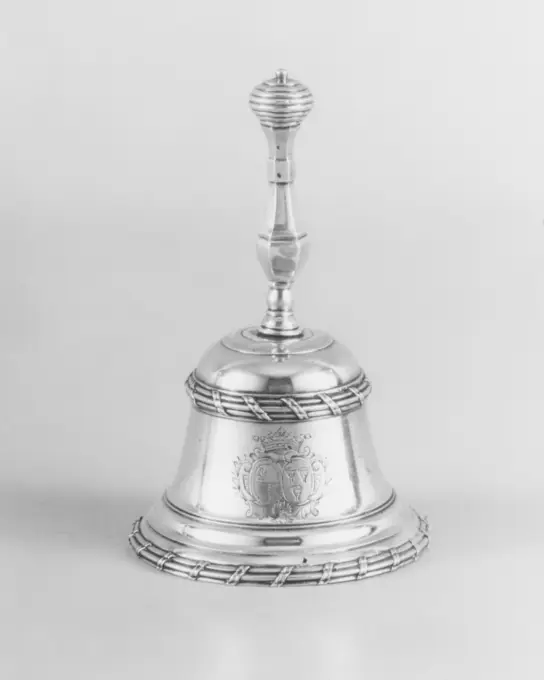
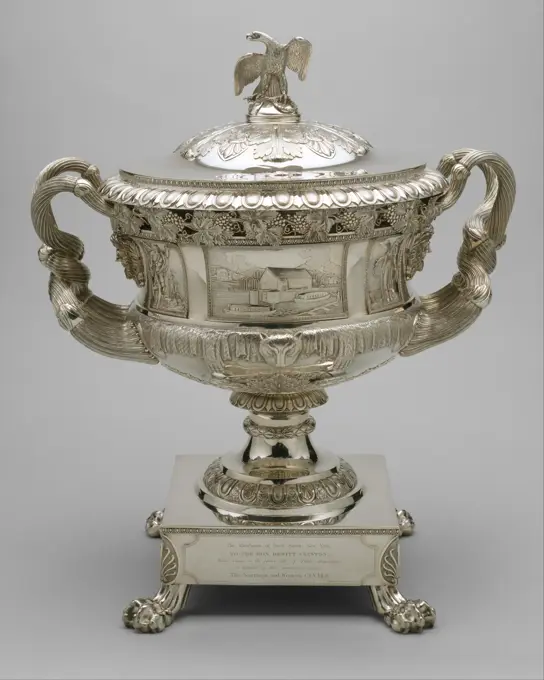
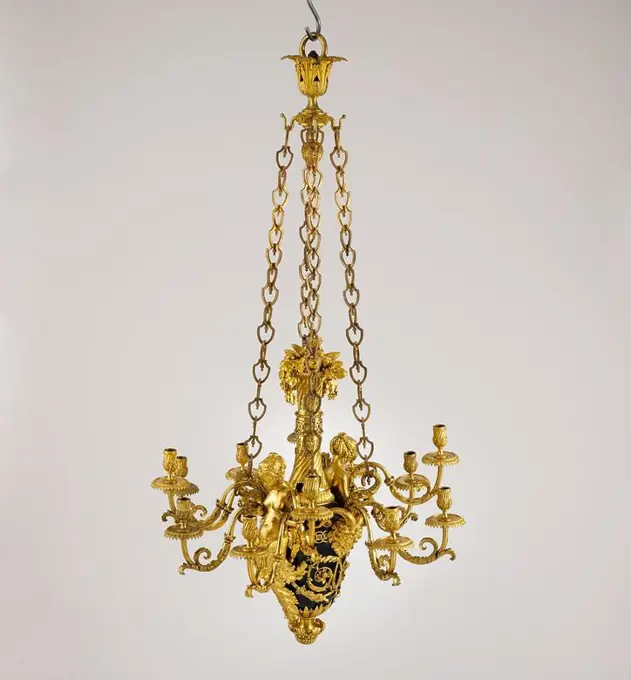
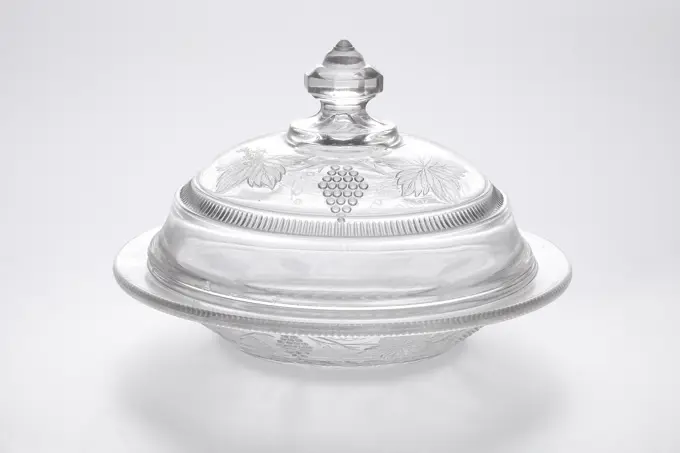
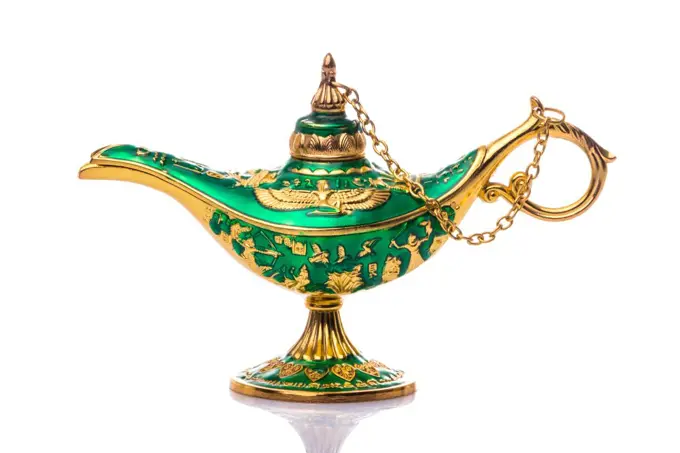
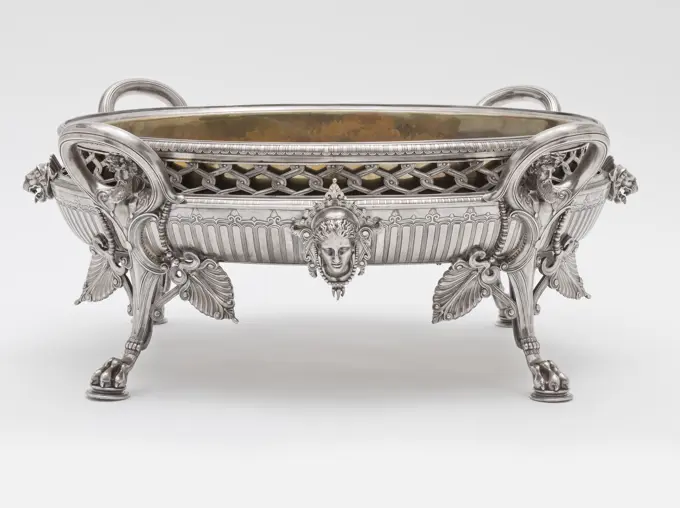
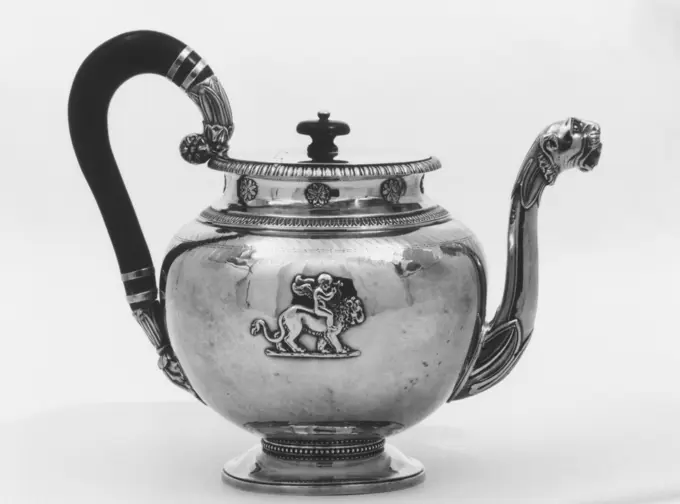
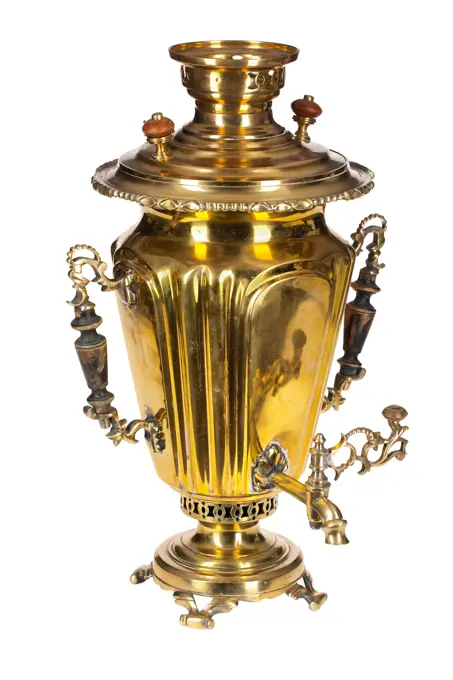
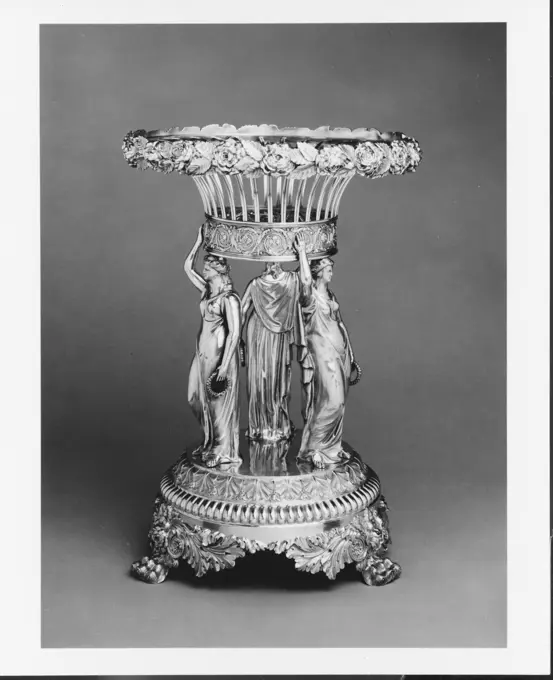
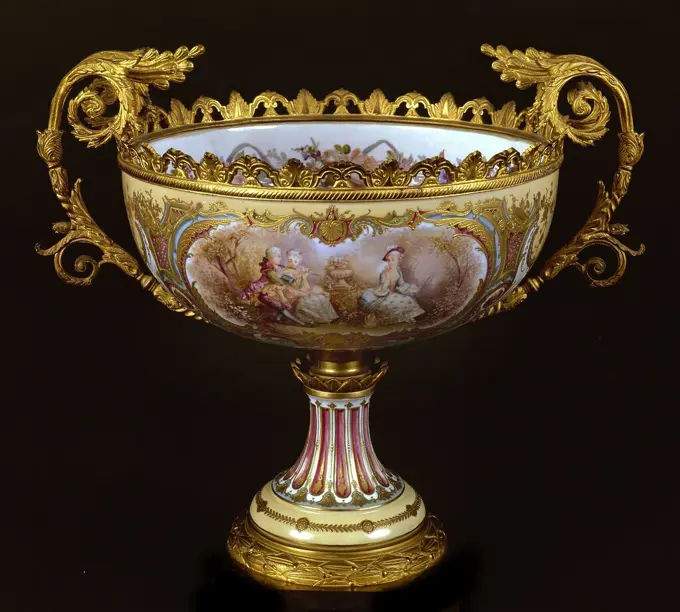
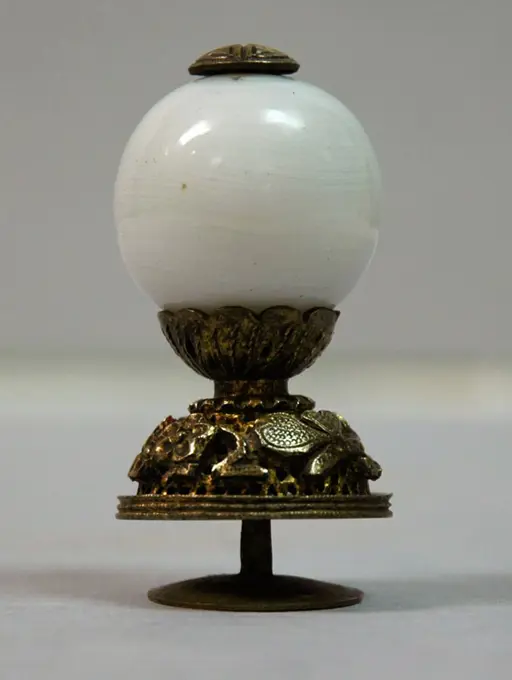
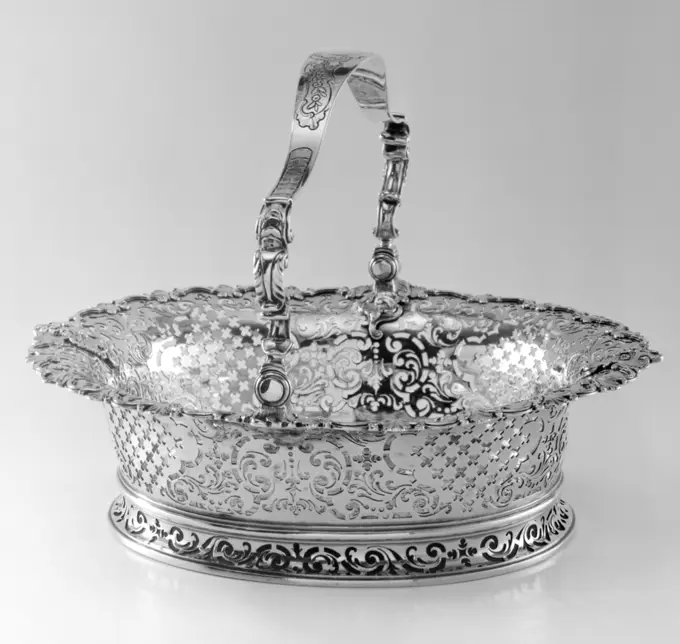
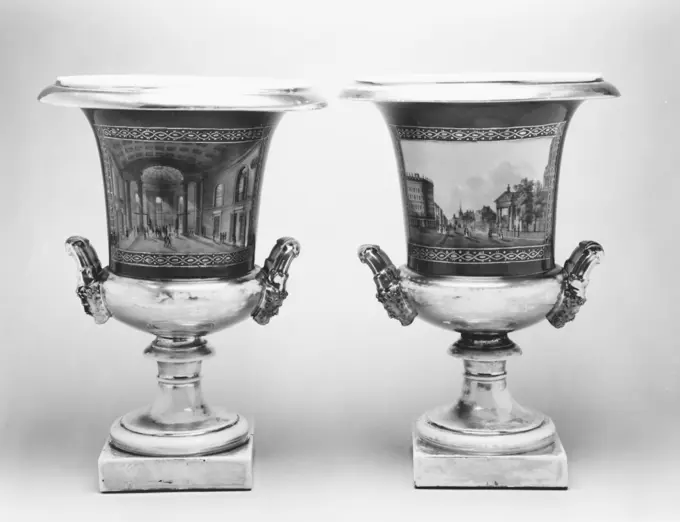
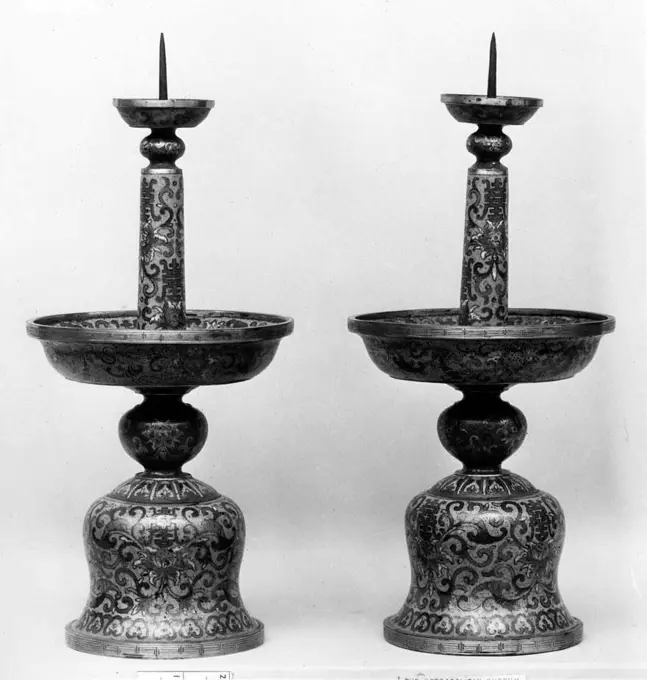
Cup (one of a set) 16th century Flemish. Cup (one of a set) 193461Coffeepot (part of a tea service) 1834 Imperial Porcelain Manufactory, St. Petersburg Russian This group is part of a tea and coffee service of twenty-nine pieces (69.162.1-.29). The design of the service reflects the widespread fascination of the nineteenth century with a variety of pseudo-styles and their indigenous interpretation by the Imperial Porcelain Manufactory.. Coffeepot (part of a tea service) 209461Tinsmith: Johannes Daniël Druy, Tin sacrificial vase, sacrificial vase vase tableware holder tin wool sheep wool, cast sheet textile Hollow hollow bottom closed vase shaped body, diabolo-shaped upper (); in vase loose bag of green cloth attached with iron wire. Raised edges at transition foot to belly outside edges upper part mark below the foot: ID standing angel lion and bunch of grapes with crowned X below banderole ROTTERDAM metal watering can religion supper church Middelharnis protestantism church eucharist religious ceremony ceremony. Large arm with the accompanying fat catcher and holder. The labeled arm has a bol and hollow-profiled nodus in the middle and thickened a little on either side. At the trunk she walks out in spiral curls. It goes outwards in the screw ends of iron, on which the candle holder can be attached. The round fat catcher has lowered edges. The round in each other's extended openwork holders have holronde feet, which are screwed on the arms.Goldsmith's art, Italy, 16th century. Bernardo Buontalenti (1531-1608), Jacques Bylivelt (1550-1603), Lapis lazuli flask with cover, gold chain and enamelled gold and gilded copper strips, 1583. Height cm. 40.5Pepper caster 19th century, after 17th century original British, after Russian original This electrotype is after a seventeenth-century original in the Botkine collection, St. Petersburg, at the time of reproduction.. Pepper caster. British, after Russian original. 19th century, after 17th century original. Silver on base metal. Metalwork-Electrotype. This early Meissen porcelain tea service is richly painted with chinoiserie. A special stand was made for it in an even costlier material, silver gilt. The ensemble is a splendid decoration for the table, in which the individual pieces all contribute to the grand total impression. The service was probably made for Tsarina Elizabeth of Russia.Cruet-stand with cruets ca. 1788 Levavasseur Faience, or tin-glazed and enameled earthenware, first emerged in France during the sixteenth century, reaching widespread usage among elite patrons during the seventeenth and early eighteenth centuries, prior to the establishment of soft-paste porcelain factories. Although characterized as more provincial in style than porcelain, French faience was used at the court of Louis XIV as part of elaborate meals and displays, with large-scale vessels incorporated into the Baroque garden designs of Versailles. Earlier examples of French faience attest to the strong influence of maiolica artists from Italy. Later works demonstrate the ways in which cities such as Nevers, Rouen, Lyon, Moustiers, and Marseille developed innovative vessel shapes and decorative motifs prized among collectors throughout Europe. While faience can be created from a wide mixture of clays, it is foremost distinguished by the milky opaque white color achieved by the addition Vase. Culture: German, Berlin. Dimensions: Overall (confirmed): 17 3/16 x 11 3/4 x 11 3/8 in. (43.7 x 29.8 x 28.9 cm). Manufactory: Royal Porcelain Manufactory, Berlin (German, founded 1763). Date: 1820-25.The unusual decoration of this vase comprises the family tree of the Hohenzollerns, the royal family of Prussia. The tree charts the family's genealogical history from 800 to 1820, which provides an approximate date for the manufacture of the vase. The early history of the vase is not known, but it seems almost certain that, due to its subject matter, it was made for a member of the royal family. It is distinguished by the rich gilding that decorates much of the surface. Museum: Metropolitan Museum of Art, New York, USA.Reliquary of the Holy Thorn, by Paris work, 1260 - 1270, 13th Century, silver partially gilded, rock crystals. Italy: Umbria: Perugia: Assisi: Treasury Museum of San Francesco Basilica: cassa VIII. Reliquary of the Holy Thorn Cross gold glassFlakon with lid; Gardner, Francis (Porcelain Manufaktura; 1766-1917); around 1840 (1835-00-00-1845-00-00);Jug European 19th centuryMount assigned to Pierre-Philippe Thomire (1751-1843), Parisian bronzier. Vase mounted. Marble, gilded bronze, 1775-1785. Paris, Cognacq-Jay museum. 78927-15 Anse, bronze gilded, Parisian bronzier, lid, gilding, man, marble, decorative object, vase monte, face, 18th 18th 18th 18th 18th 18th 18Salt ca. 1785-95 Possibly David Tyler. Salt 7093Pricket Candlestick with Birds, Vines, and Leaves 1175-1200 German. Pricket Candlestick with Birds, Vines, and Leaves. German. 1175-1200. Champlevé enamel, copper-gilt. Made in possibly Hildesheim, Germany. Enamels-ChamplevéCandlestick with Two Branches. Culture: French, Paris. Dimensions: H. 25.2 cm. (excluding upper section) and 40.2 cm.. Date: ca. 1745-60 or 19th century. Museum: Metropolitan Museum of Art, New York, USA.Silversmith's art, Germany, 18th century. Embossed silver ewer. Augsburg, 1764.Pair of candlesticks mid-18th century British, Staffordshire. Pair of candlesticks. British, Staffordshire. mid-18th century. Enamel. EnamelsConsolet table of Gilded Lindehout, Anonymous, 1750 Sound of consolet table of gilded Lindehout. The scalloped, profiled marble cover plate is supported by two twisted C-Voluten, which flanks a crested shell; Two C-Voluten left and right. The whole rests on a bottom piece that consists of a large acanthus leaf, above which a caterpillar -shaped motif. France (possibly)Germany (possibly) wood (plant material). linden gilding Sound of consolet table of gilded Lindehout. The scalloped, profiled marble cover plate is supported by two twisted C-Voluten, which flanks a crested shell; Two C-Voluten left and right. The whole rests on a bottom piece that consists of a large acanthus leaf, above which a caterpillar -shaped motif. France (possibly)Germany (possibly) wood (plant material). linden gildingPrzeszo Przyszoci Lever, Peter Andreas (fl. 1671 1699)Chandelier late 18th century possibly Indian The general form of this chandelier follows a wooden type current in England about 1700, but the rosettes at the base of each arm and the beading around the finial are Neoclassical details that became stylish in the 1770s.. Chandelier. possibly Indian. late 18th century. Ivory. Natural Substances-IvoryWilliam Fountain, Pair of Bowls and Covers with Liners, 1806/7, silver.Ancient lamp isolated on the whiteLamp.   Maker: Weller Pottery, American, active 1872-1948  Maker: Bradley and Hubbard Manufacturing Company, American, active 1854-1940Candlestick ca. 1790. Candlestick. ca. 1790. Silver plate on copper. Probably made in South Yorkshire, Sheffield, EnglandGold cup with spirals from Tomb IV of the Circle A of Mycenae (Greece). Goldsmith art, Mycenaean Civilization, 16th Century BC.Reliquary Monstrance 1301-1400 Limoges. Gilt copper alloy, champlevÈ enamel, rock crystal .Waza from the cover; Deruta (ceramic family; Ca 1500-), Andreoli, Giorgio (CA 1470-1553), Gubbio (Ceramic family; Ca 1500-1600); 1520-1530 (1520-00-00-1530-00-00);Pair of tripod stands (athèniennes) ca. 1773 After a design by Jean-Henri Eberts The athénienne was a completely new, multifunctional type of French Neoclassical furniture derived from the tripod-shaped perfume burner of classical antiquity. It could be used as a washstand, perfume burner, food warmer, and jardinière. It was invented, probably in 1773, by Jean-Henri Eberts, editor of Le Monument du Costume (a series of etchings on the history of French costume in the eighteenth century), and was first advertised in L'avantcoureur in September 1773. Only a single engraving of the advertisement, now in the Library of the University of Warsaw, appears to have survived (Daniëlle O. Kisluk-Grosheide, Wolfram Koeppe, and William Rieder. European furniture in the Metropolitan Museum of Art: highlights of the collection. New York and New Haven, 2006, fig. 97). Eberts stated in his advertisement that the athénienne could be examined and acquired at the shop of the gilder and color-merchant JeanTankard (one of a pair) 1824-25 Edward Farrell This pair of tankards if an outstanding example of the daring, eclectic historicism that was a specialty of the London silversmith Edward Farrell who collaborated with Kensington Lewis, a retailer. Farrell's work is characterized by boldly chased and cast decoration inspired by Renaissance, Baroque and Rococo designs. Lewis supplied silver to many patrons in the circle of the Prince Regent, but it was famously Prince Frederick Augustus, Duke of York who was his most voracious client.. Tankard (one of a pair). British, London. 1824-25. Silver, gilded silver. Metalwork-SilverFlask with Squirrels. Arthur B. Barlow (England, active 1871-1878)Doulton & Co. (England, London, Lambeth, founded 1815-1956 and Straffordshire, Burslem, 1877-present)Hannah Barlow (England, 1850-1916). England, 1875. Tools and Equipment; flasks. Salt-glazed stonewareVase from a swan" dinner set. Kaendler, Johann Joachim (1706-1775), sculptor, Eberlein, Johann Friedrich (1695-1749), sculptor, Koenigliche Porcellain Fabrique, Meissen (1710-1763), manufactureSilversmith's Art, England 20th century. Pair of silver, two-branched candlesticks.Anonymous. "Little vase called romantic". Porcelain, gilding. Paris, Museum of Romantic Life. PORCELAINPair of tripod stands (athèniennes). Culture: French. Designer: After a design by Jean-Henri Eberts. Dimensions: Height (each): 37 1/4 in. (94.6 cm); Diameter (each): 18 1/2 in. (47 cm). Date: ca. 1773.The athénienne was a completely new, multifunctional type of French Neoclassical furniture derived from the tripod-shaped perfume burner of classical antiquity. It could be used as a washstand, perfume burner, food warmer, and jardinière. It was invented, probably in 1773, by Jean-Henri Eberts, editor of Le Monument du Costume (a series of etchings on the history of French costume in the eighteenth century), and was first advertised in L'avantcoureur in September 1773. Only a single engraving of the advertisement, now in the Library of the University of Warsaw, appears to have survived (Daniëlle O. Kisluk-Grosheide, Wolfram Koeppe, and William Rieder. European furniture in the Metropolitan Museum of Art: highlights of the collection. New York and New Haven, 2006, fig. 97). Eberts statedCup, Belonging to the Company of Goldsmiths, Costume & Decorations of the Middle AgesDrug Jar for Theriac. Attributed to Annibale Fontana (Italian, about 1540 - 1587)Arm with candle holder of candle crown of two heights with eight arms each, c. 1525 - c. 1550 Candle arm belonging to a candle crown of two heights with maria figure at the top. The arm is bent twice and is decorated with four grapes bunches and five vine leaves. The round fat catcher is decorated with fish bladder motifs at the bottom and has an excellent edge of cross flowers towards the middle, which masks the placement on the arm. The candle holder is six -flat, opened, placed on three vertical styles, transferring to a threaded protrusion. This is the seventh arm of the upper ring, numbered with 7 round points. The candle holder is unnumbered. Southern Netherlands brass (alloy) casting  Barneveld Candle arm belonging to a candle crown of two heights with maria figure at the top. The arm is bent twice and is decorated with four grapes bunches and five vine leaves. The round fat catcher is decorated with fish bladder motifs at the bottom and has an excellent edge of cross flowers toWineglass 1860-75 Dr. Antonio Salviati Company. Wineglass. Italian, Venice (Murano). 1860-75. Glass. GlassStanding Cup and Cover Supported by an Enchained Turk. Culture: German, perhaps Frankfurt-am-Main. Dimensions: H. 16 in. (40.6 cm). Date: ca. 1705-11.This domed cup supported by the figure of a bearded Turk is richly decorated in many precious materials worked in a variety of techniques. The carved alabaster figure, enchained in jewels, bears a jade cup and cover surmounted by an elaborate finial. Pierced gold hunting figures, trophies, classical statues, birds, and beasts radiate from the center of the cup and lid, all enframed in garlands and blossoms. Eight chalcedony male and female busts, some with rose diamonds, rubies, and enameled coronets, encircle the cup and its base. The finial has a circular medallion of chalcedony and gold that displays the double eagle of the Habsburg empire. The coat of arms of three ecclesiastical electors appears on the opposite side of the medallion. The front and back of the cup also display the arms of electors: Brandenburg, Hanover, Bohemia, and Vijzel with inscription Gertken Wlffers AO 1605, Hendrick Wegewart (attributed to), 1605 The cast round mortar extends upwards, has a protruding profiled edge and a flared profiled foot. On the edge in Latin Majuskels the inscription Gertken Wlffers AO 1605 with punctuations consisting of a window (four times). The upper Frisian consists of a repeat of three flowers on stealing in a flat scale. The lower frieze consists of a repetition of a four -leaf rosette. Simple dolphin ears. Northern Netherlands bronze (metal) casting The cast round mortar extends upwards, has a protruding profiled edge and a flared profiled foot. On the edge in Latin Majuskels the inscription Gertken Wlffers AO 1605 with punctuations consisting of a window (four times). The upper Frisian consists of a repeat of three flowers on stealing in a flat scale. The lower frieze consists of a repetition of a four -leaf rosette. Simple dolphin ears. Northern Netherlands bronze (metal) castingGoldsmith's art, Italy, 16th century. Antonio Gentili da Faenza (1519-1609), Candlestick, 1581"Saracenic" Coffee Pot and Sugar Bowl. Design attributed to Edward C. Moore; American, 1827-1891; Tiffany and Company; American, founded 1837; New York, New York. Date: 1895. Dimensions: Coffee Pot: 23.5 x 16.1 x 8.5 cm (9 1/4 x 6 3/4 x 3 3/4 in.); Sugar Bowl 6.6 x 9.8 x 10.1 cm (2 5/8 x 3 7/8 x 4 7/8 in.). Silver and silver gilt. Origin: New York City. Museum: The Chicago Art Institute, Chicago, USA. Author: Tiffany and Company.Arm with candle holder of candle crown of three heights, c. 1675 - c. 1725 Candle belonging to a brass candle crown of three heights. The S-shaped arm has a curl and turns outside into the flat thickening with a screw hole. The candle holder is secured with the fat catcher. The fat catcher is ribbed at the bottom of the opening and also has two grooved rings. The cylindrical candle holder, who has a profiled excellent edge, two grooved rings and a thickening, turns into a baluster with the end of threads at the bottom and a button in which the center hole can be seen. This is the third arm of the middle stand ring, numbered with 3 round points. The pin, to attach the arm to the stand ring, has a round button on top. Southern Netherlands (possibly) brass (alloy) casting Candle belonging to a brass candle crown of three heights. The S-shaped arm has a curl and turns outside into the flat thickening with a screw hole. The candle holder is secured with the fat catcher. The fat catcher is rThree Vases, Part of a Garrionure, Meissener Porcelain Manufaktur, c. 1735 - c. 1740 Cylindrical vase with a constricted base and a wide -ranging mouth, made of painted porcelain. The vase is painted on one side with a woman sitting against a tree with a woman on the floor next to her, the other side with a woman on a swing with a boy on the floor next to her. The vase is marked. The vase was originally caught in a gilded bronze frame. Float porcelain. bronze (metal). gilding (material) gilding Cylindrical vase with a constricted base and a wide -ranging mouth, made of painted porcelain. The vase is painted on one side with a woman sitting against a tree with a woman on the floor next to her, the other side with a woman on a swing with a boy on the floor next to her. The vase is marked. The vase was originally caught in a gilded bronze frame. Float porcelain. bronze (metal). gilding (material) gildingAnonymous. Vase mounted. Amethyst, golden bronze, 1780-1790. Paris, Cognacq-Jay museum. 78927-13 Amethyst, bronze gilded, gilding, bronze frame, decorative object, vase Monte, 18th century 18th 18th 18th 18th 18th centuryVase (one of a pair) ca. 1762 Chelsea Porcelain Manufactory No works better express the rich style characteristic of the porcelain produced at Chelsea during the Gold Anchor period (1758-69) than these two elaborately decorated vases.1 Their ambitious enamel painting, extensive gilding, sculptural embellishments, and large scale reflect the taste associated with Gold Anchor Chelsea at its most lavish, and also indicate the strong influence of Sèvres porcelain from the late 1750s and 1760s. The products of the French royal manufactory from these years are distinguished by their vivid ground colors, richly applied gilding, and masterly enamel decoration, as well as by the use of novel shapes. Because the Sèvres factory became the taste setter in Europe following the decline of the Meissen factory during the Seven Years’ War (1756-63), numerous porcelain factories, including Chelsea, looked to Sèvres for inspiration. The deep-blue ground color of these vases closely copies a similar bluHandbell 19th century Possibly Italian. Handbell. Possibly Italian. 19th century. Metal. Italy. Idiophone-Struck-bell-without clapperTwo candlesticksDesign for a Chalice with Lid 19th century Anonymous, French, 19th century French. Design for a Chalice with Lid. Anonymous, French, 19th century. 19th century. Pen and brown ink, watercolor. Framing lines in pen and gray ink. Design pasted onto mounting paper.. DrawingsPricket Candlestick (one of a pair) ca. 1180 French. Pricket Candlestick (one of a pair). French. ca. 1180. Copper: engraved, scraped, stippled, and gilt; champlevé enamel: dark, medium, and light blue; green, yellow, red, and white on bronze. Made in Limoges, France. Enamels-ChamplevéBell 1738-39 French, Paris. Bell 200279Mug adorned with numismats. Hardwald, Salomon (fl. ca 1700-ca 1750), goldsmithGoblet. unknown, glass worksHandbell. Bell-shaped table bubble with handle. The handle is baluster-shaped. A wreath of leaves is engraved to the switching of the handle. The bell is halfway through a tilted trim. The table bell is noticed, but the brand is unreadable.Cann c 1765 Boston. Silver . Benjamin BurtPedestal ca. 1865 American. Pedestal. American. ca. 1865. Walnut, ebonized. Made in United StatesCarafe with cork; Beykoz (Huta Szk A); 19th century (1801-00-00-1900-00-00);Bronisław Krystall. Testament (Warsaw - Exhibition - 2015/2016), Krystall, Bronisław (1887-1983) - collection, purchase (provenance)Presentation Vase 1824 Thomas Fletcher American In New York City, the most significant event of the early nineteenth century was the creation of the Erie Canal. Upon its completion, New York gained easy access to the country's interior, and its commercial hegemony was secured. A group of New York merchants commissioned a pair of monumental vases to be presented in 1825 to New York's governor DeWitt Clinton (1769-1828), in gratitude for his promotion of the canal's construction. The bodies and handles are modeled on the famous Roman urn known as the Warwick Vase, which was excavated in 1770 near Hadrian's villa at Tivoli. Thomas Fletcher's competition-winning design for these vases features a scheme of allegorical figures and American vistas along the route of the canal. On the front of this vase, the figures of Mercury (commerce) and Ceres (agriculture) flank a view of the canal's guard lock and basin at Albany; on the back, Hercules (strength) and Minerva (wisdom) are depicted with thChalice, Léonard de Bommershoven (attributed to), 1519 Miskelk, gilded, on six lumpy base with open -worked four passes along the base and sliced, driven bladder shapes on the curve. The hexagonal trunk is decorated with imposed tracing work, interrupted twice by coats of arms, one of which with a crowned climbing lion to the right (probably Limburg); The second weapon is probably from Elisabeth d'Arschot, Lady of Schoonhoven and Thys (1531), widow, since 1503, by Herman van Eynatten, lord of Heuckelom, governor and Drossaert of the Land of Stochem. Around the Nodus six strongly protruding windows with alternating green and blue, enamelled surfaces; Pointed arches engraved on top and bottom. The cone -shaped cuppa and the underside of the trunk are contained in Gothic leaf work. A small crucifix is attached to the foot; Under the foot the inscription: "+ me. Fieri. Fecit. D. Tilman de Herckenroede. Iunior. Canc. Ecclies. Johiewan in Leod'etdecan 'Cenacen ano 1519" (made me make tilman Oil Lamp, anonymous, c. 1300 - c. 1500 Garuda holds a woman on his left thigh and is armed with a long sword or stick. The woman holds a conically shaped object in every hand. East Java bronze (metal) Garuda holds a woman on his left thigh and is armed with a long sword or stick. The woman holds a conically shaped object in every hand. East Java bronze (metal)SpoutCup.  Maker: Nathaniel Morse, American, 1685-1748Twelve-light chandelier (lustre). Culture: French, Paris. Dimensions: H. 55 in. (139.7 cm); Diam. 28 1/2 in. (72.4 cm). Maker: Attributed to Pierre Rémond (French, Paris 1747-1812 Paris). Date: ca. 1785.The metal body of this graceful chandelier is composed of a vase fitted with a slender, spiral-fluted neck of gilt bronze, topped by an arrangement of various fruits. Two pairs of S-shaped candle branches emerge from the folded arms of two beautifully modeled female half-figures evolving from acanthus leaves, while additional branches spring from between the horns of two satyr masks. The combination of varnished metal and gilt bronze offers the kind of rich and sophisticated contrast favored during the late eighteenth century. This chandelier has been attributed to the bronze worker François Rémond, based on similarities with some of his documented work. A highly successful artist, Rémond worked for the marchand-mercier Dominique Daguerre and was patronized by the comte d'Artois and MaSilver salt barrel on pedestal, Francois Marcus Simons, 1804 Silver salt barrel. On a rectangular pedestal carried on four bol feet, there are two half -bolle on the inside gilded vessels on four lion claws; Each barrel is decorated with two ring -bearing lion heads and a narrow profile edge. The handle like a thickening column with four lion claws on a plinth. From above a button with two lion masks that carry a flat lamp with two flames. Brand Van The Hague: Climbing Lion; yearl. I (1804). MOTOR SLEASE F.S. from Francois Marcus Simons. See foot 170. The Hague silver (metal) Silver salt barrel. On a rectangular pedestal carried on four bol feet, there are two half -bolle on the inside gilded vessels on four lion claws; Each barrel is decorated with two ring -bearing lion heads and a narrow profile edge. The handle like a thickening column with four lion claws on a plinth. From above a button with two lion masks that carry a flat lamp with two flames. Brand Van The Hague: Climbing LionButter dish - Lamont Glass Company Lamont Glass CompanyVintage lamp of Aladdin. Old style oil lamp. Ancient lamp. Genie lamp also called Aladdin lamp with pharaonic symbolsJardinière. Maison Ferdinand Barbedienne (France, Paris, 1834-1954)Louis-Constant Sévin (France, Versailles, 1821-1888). France, circa 1860. Furnishings; Serviceware. Bronze with silvering and gildingTeapot ca. 1810 Jean-Baptiste-Claude Odiot French Odiot was the foremost practitioner of this elegant, rather spare Empire style.. Teapot 205481Cruet Frame. Paul de Lamerie (Holland, active England, London, 1688-1751). England, London, 1714-1715. Furnishings; Serviceware. Silver, colorless cut glassVase with a clock.Royal Porcelain Factory Dommer & Co.Newer-Amstel, c. 1809-1814Hard-Paste Porcelain, Brass, EnamelMonumental vase. Culture: probably Italian, Florence and French, Paris. Dimensions: Overall: H. with pedestal 109 1/4 in., Wt. 1575lb. (277.5 cm, 714.4153kg); Vase: H. without pedestal 63 3/4 x Circum. at top 54 x Circum. at bottom 30 (161.9 x 137.2 x 76.2 cm); Pedestal: H. 45 1/2 x W. 37 1/2 x D. 37 1/2 in. (115.6 x 95.3 x 95.3 cm). Maker: Pedestal and mounts by Pierre Philippe Thomire (French, Paris 1751-1843 Paris). Date: lapidary work: early 19th century; pedestal and mounts: 1819.Malachite is a carbonate mineral often associated with copper ores. As explained by Jeffrey Post, it "grows in layers of tiny crystals, and its colors correlate with different crystal sizes: smaller crystals form light green bands and larger crystals make darker ones."1 In the late eighteenth and nineteenth centuries, most malachite came from mines in Russia owned by the noble Demidov family, who exploited hardstone quarries and metal deposits on their estates in the remote Ural Mountains. One of the gPierre Raymond (1534-1578). Cutted cutting: Didon feast and inée (cut with lid placed on it). Museum of Fine Arts of the City of Paris, Petit Palais. 26307-1 Cup, lid, covered, feast, painted, mythological character, Trojan prince, Tyrian princess, RenaissancePAREJA DE JARRONES DE SEVRES - 1771 - FRANCIA - PINTURA DE ROCHE - PORCELANA Y BRONCE - 50 CM DE ALTURA. Author: Roche. Location: BANCO HIPOTECARIO. MADRID. SPAIN.Bird-shaped Vase, by Saracchi workshop, 1589, 16th Century, crystal. Italy: Tuscany: Florence: Palazzo Pitti. Whole artwork. Vase crystal dragon goldCreamer after 1864 Portland Glass Company. Creamer 2699Candelabrum (one of a pair) 1800-1850 British. Candelabrum (one of a pair). British. 1800-1850. Cut blown glass, gilt bronze. GlassLewis Herne and Francis Butty, Jug and Cover, 1758/59, silver.Arm with candle holder of candle crown of two heights, c. 1800 - c. 1875 Candle belonging to a brass candle crown of two heights. The S-shaped arm has a curl at the start, halfway through a dolphin head and turns outside into the flat thickening with a screw hole. The candle holder is secured with the fat catcher. The fat catcher is ribbed at the bottom of the opening and has a slightly excellent edge and is decorated with grooved hefty rings. The Cylindrian candle holder has a profiled and a little excellent edge, two grooved rings, a rib and a profiled hollow bottom, which turns into a protrusion with a thread with a center hole. This is the first arm of the upper position ring, numbered with 1 round point. Netherlands brass (alloy) casting Candle belonging to a brass candle crown of two heights. The S-shaped arm has a curl at the start, halfway through a dolphin head and turns outside into the flat thickening with a screw hole. The candle holder is secured with the fat catcher. The Tankard late 17th century Hans Nicolaus Müllner German The oval reliefs on the side and the lid of this monumental tankard contain allegories of four continents: Europe, America, Asia, and Africa. Like the Four Elements (see the Hungarian charger with this motif on display nearby), these personifications were an important part of Baroque imagery. The volume of this large tankard is very unusual for Nuremberg silver, suggesting it was specially commissioned for ritual drinking ceremonies at the festivities of a corporation or civic club. Objects of this size appear more often in Scandinavian countries and along the Baltic coast.. Tankard. Hans Nicolaus Müllner (German, active 1644-88). German, Nuremberg. late 17th century. Silver, partly gilded. Metalwork-SilverVase. Culture: American. Dimensions: H. 9 5/8 in. (24.4 cm). Date: 1840-60. Museum: Metropolitan Museum of Art, New York, USA.Russian Traditional Water Boiler Russian traditional water boiler on isolated background Copyright: xZoonar.com/AndreyxSkatx 8079731Centerpiece 1821-22 Benjamin Smith, II British. Centerpiece. British. 1821-22. Silver. Made in London, England. Candle arm belonging to a candle wreath of two heights with maria figure at the top. The arm is bent twice and is decorated with four grape fees and five winger leaves. The round fat catcher is decorated at the bottom with fishing blozen motifs and has a downward edge of cross flowers in the middle, which masks the placement on the arm. The candle holder is sixted, opened, placed on three vertical styles, overtreen in a thread protrusion. This is the fourth arm of the upper ring, numbered with 4 round points. The candle holder is unnumbered.Candlestick (one of a pair) 1747-49 Candlestick made by Michel II Delapierre. Candlestick (one of a pair) 856693FRUTERO BARROCO - SIGLO XVIII. Location: PRIVATE COLLECTION. MADRID. SPAIN.Pair of Wine Ewers 1735-1745 Dublin. Silver . David Bomes. Candlestick with foot. Signature and dated.. The woodcarver who made this chandelier gave free rein to his penchant for fanciful shapes. The form of the canopy and the ornamentation bring to mind rocks, waves, water, plants and other natural phenomena. This asymmetrical, seemingly weightless object is a textbook example of the Rococo style.Travelling Cup with Cover. Master Marie Joseph Gabriel Genu (France, 1788-1811). France, Paris, 1798-1805. Furnishings; Serviceware. Silver giltPrzeszo Przyszoci Holl, Johann Gottfried (16.. ca 1690)Hat Finial China Hats were an important part of official dress at all levels of government, and the finial worn atop a hat was an indicator of the wearer's rank. The finials shown here (1973.132.1-.3)red, blue, and whitecorrespond to three different ranks, from higher to lower.. Hat Finial 60887John Coburn, Coffeepot, c. 1765, silver.Ewer 1744-46 Jean Tugot. Ewer 200225Fruit basket 1741-42 David Willaume II British. Fruit basket 200574Cistern or Fountain early 20th century (original dated 15th century) German. Cistern or Fountain 463093Napoleon Entering Cairo 1895-1905 France. Gilt bronze . Jean Léon GérômeUrn ca. 1831-35 French One of a pair of vases that feature two views of New York City copied from a portfolio of prints entitled "Views in New York and Its Environs" (1831-34). This vase depicts "Broadway from the Park," with some of lower Broadway's notable buildings, including St. Paul's Chapel and P. T. Barnum's American Museum. In an unusual departure, the other (38.165.36), is decorated with a building interior, that of the Merchant's Exchange on Wall Street, the center of commerce in what was quickly becoming the country's major commercial center. Listen to experts illuminate this artwork's story Listen Play or pause #4540. Urn Supported by Bloomberg Philanthropies We're sorry, the transcript for this audio track is not available at this time. We are working to make it available as soon as possible.. Urn. French. ca. 1831-35. Porcelain, overglaze enamel decoration, gold, painted with views of New York City. Made in FranceCandlestick from a Set of Five-Piece Altar Set (Wugong) China Cloisonné is the technique of creating designs on metal vessels with colored glass paste placed within enclosures made of copper or bronze wires, which have been bent or hammered into the desired patterns. Known as cloisons (French for "partitions"), the enclosures are generally either glued or soldered onto the metal body. The glass paste, or enamelwhich gets its color from metallic oxidesis painted into the contained areas of the design. The vessel is usually fired at a relatively low temperature, about 800 degrees Celsius. Enamels tend to shrink during firing, and the process is repeated several times to fill in the design. Once this process is completed, the surface of the vessel is rubbed until the edges of the cloisons are visible.. Candlestick from a Set of Five-Piece Altar Set (Wugong) 40725Sword Pommel Made 1500-1700 Italy. Iron .Snella, zinc cover; Siegburg (Ceramic family; Ca 1300-Ca 1900); 19th century (1801-00-00-1900-00-00);Bible, New Testament, decoration with overlays, inscriptions, ribbons