Vintage Candlesticks and Vessels

Artistic antique bronze and silver candlesticks and vessels, showcasing intricate designs and historical craftsmanship from various eras.
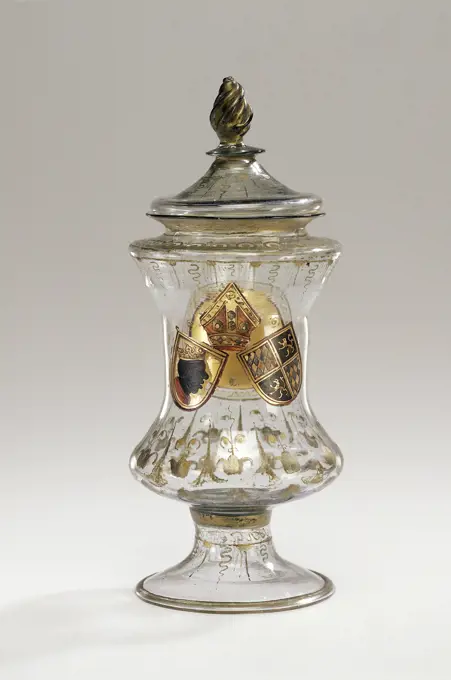
Covered Vessel; Façon de Venise, possibly the Glashütte of Wolfgang Vitl (Austrian, active 1534 - 1540); Hall, Austria; about 1536 - 1540; Free-blown colorless (slightly purplish-gray) glass with applied decoration, gilding, and cold painted decoration; 19.1 cm (7 1,2 in.)
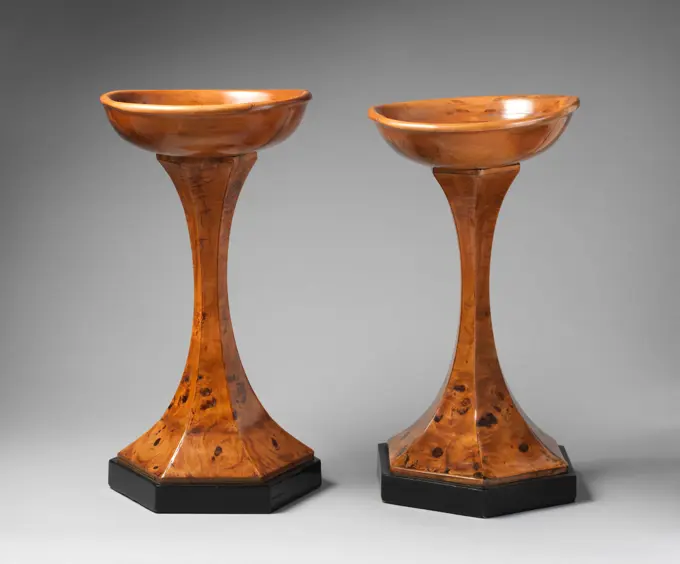
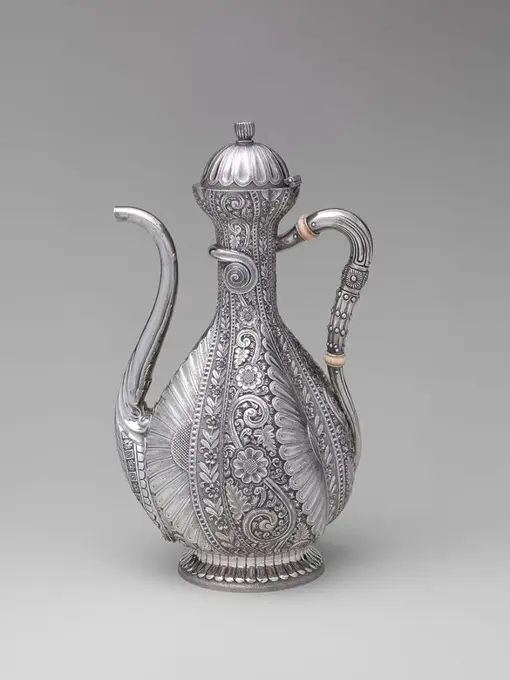
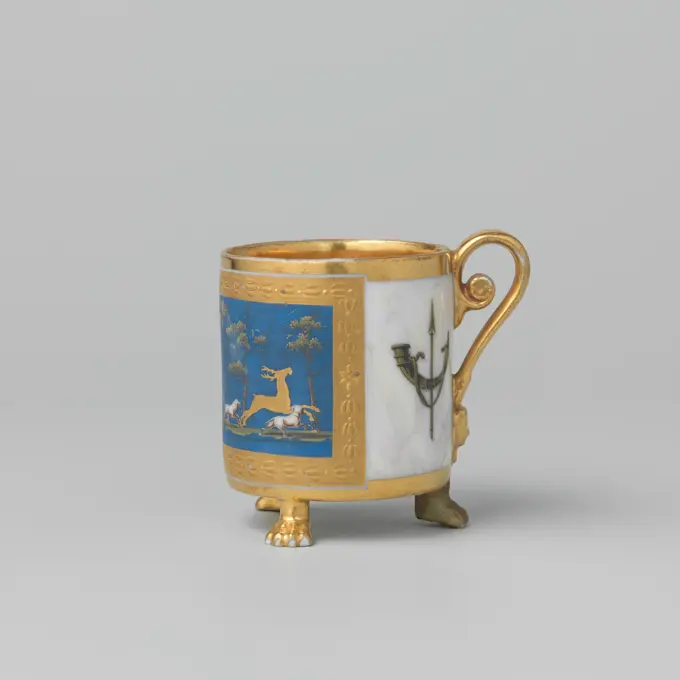
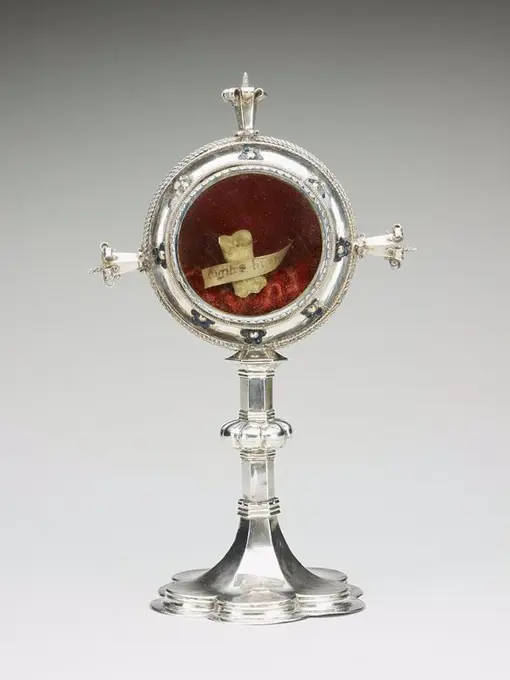
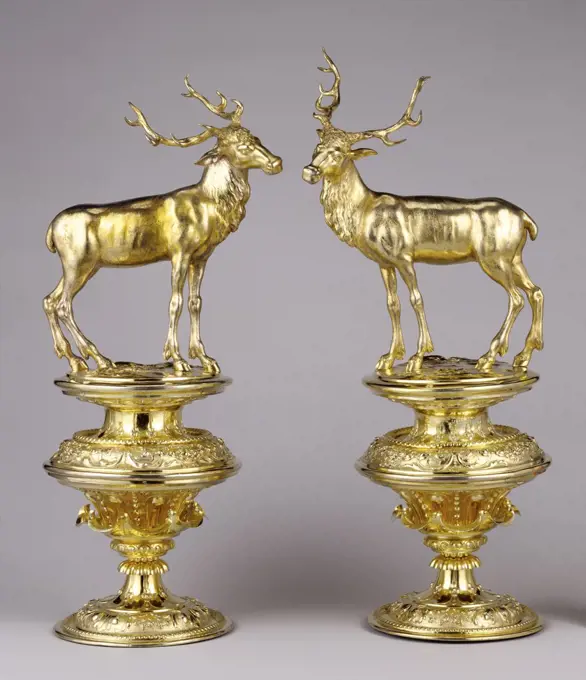
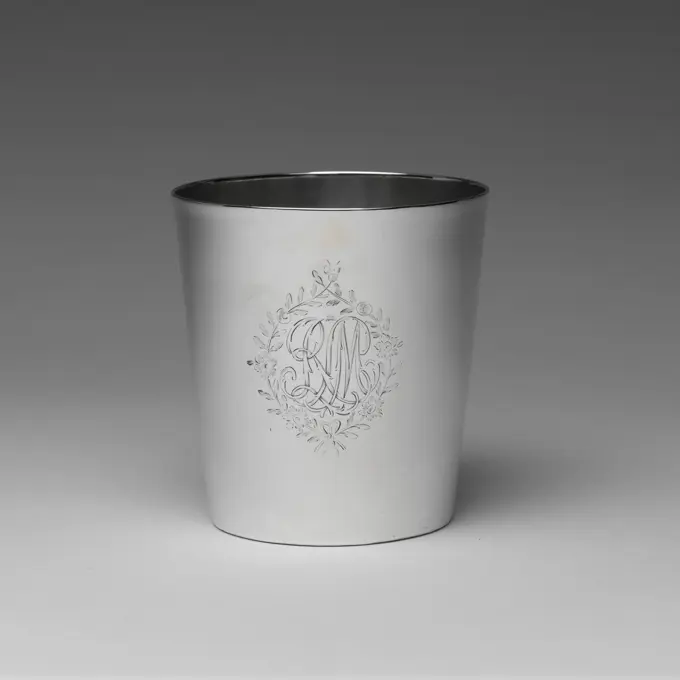
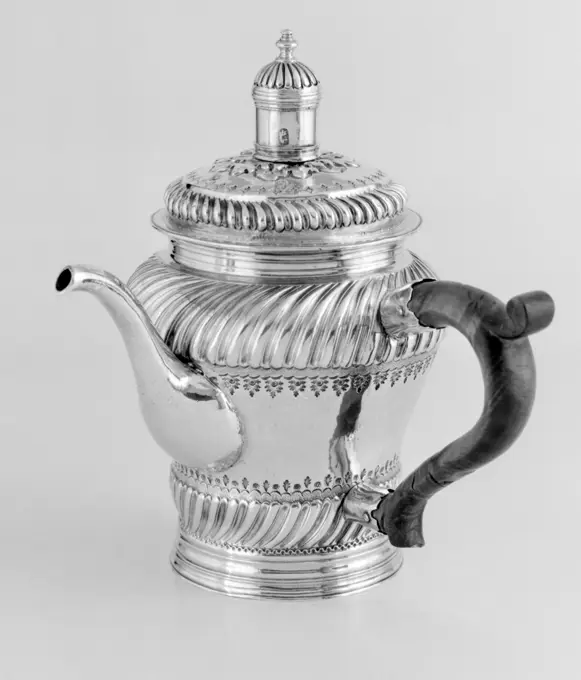
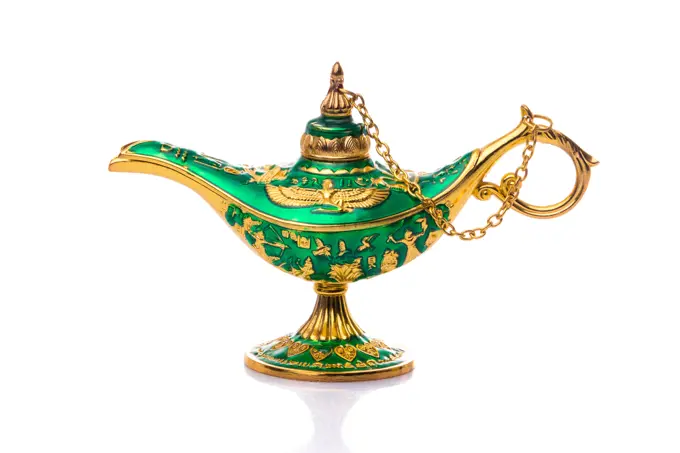
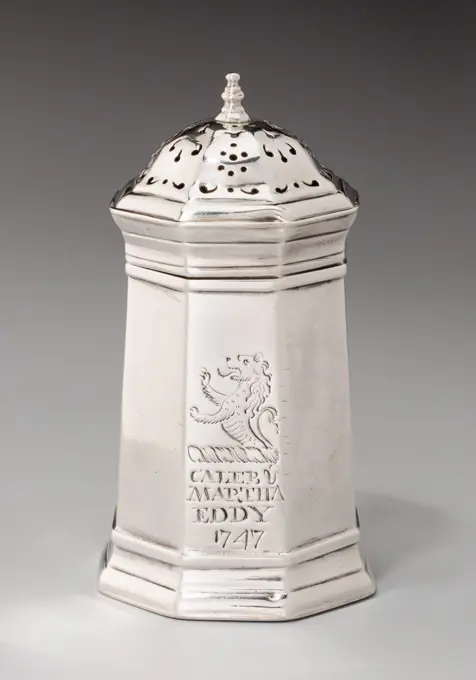
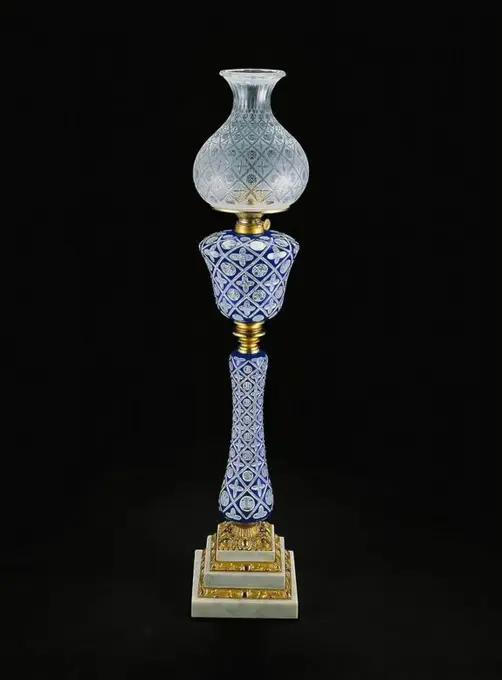
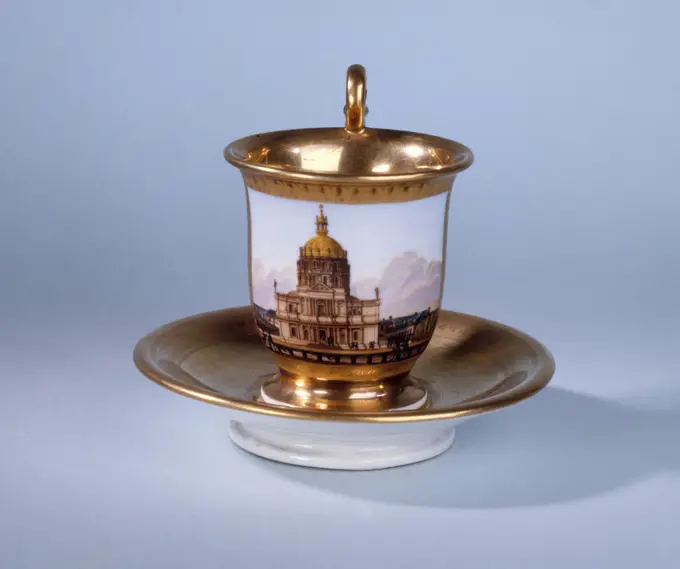
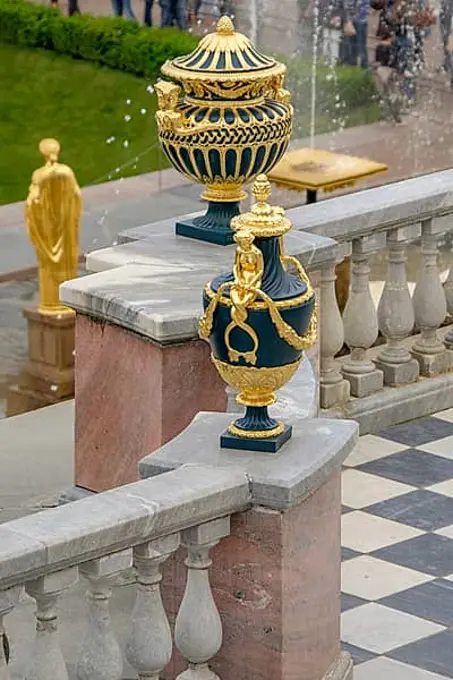
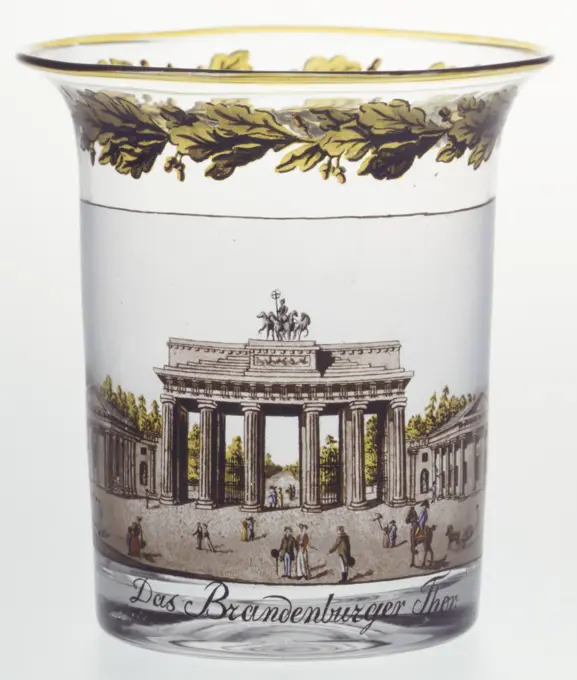
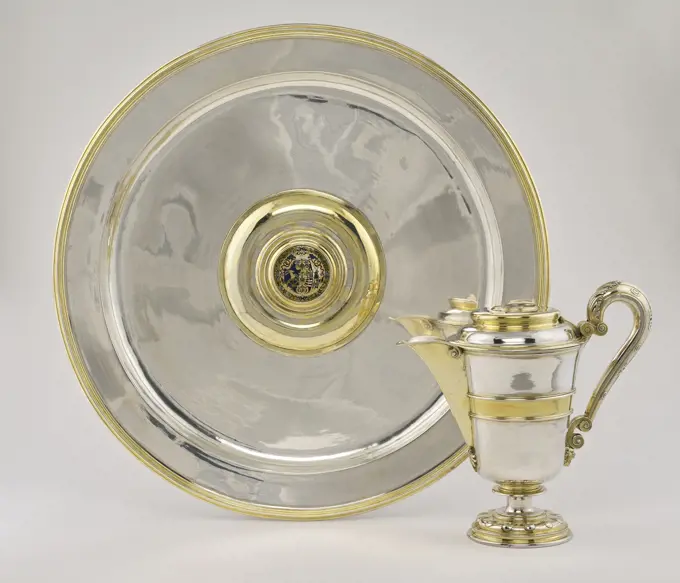
Ewer and Basin; Abraham Pfleger I (German, died 1605, active from 1558); 1583; Partially gilt silver with enameled plaques and engravingCopa de plata, obra de Ramon Sunyer Clarà, 1920. Colección privada.Pair of spitoons ca. 1830 Austrian. Pair of spitoons. Austrian. ca. 1830. Elm veneered on coniferous wood; poplar; ebonized wood base; 1 base with 2 pieces of oak with ebonized surface. Woodwork-Furniture. Bell-shaped head of porcelain with a straight wall, painted on the glaze in black and gold. On the outside twice a representation of the crucifixion with the two Maria's; the bottom with a sprig; On the inner edge a band with a decorative pattern. Part of a tea service. European performance in Encre de Chine.Coffeepot. Culture: American. Dimensions: 10 5/8 × 6 × 4 7/8 in., 30oz. 9dwt. (27 × 15.2 × 12.4 cm, 947.2g). Manufacturer: Gorham Manufacturing Company (American, 1831-present). Date: 1881.Made as singular or limited production "specials," this sinuous coffee pot and tray epitomize the eclectic tastes and sensibilities that characterize the Aesthetic movement. Here exotic near-eastern forms and decoration are combined with conventionalized plant motifs inspired by the British design reform movement. The exquisitely crafted result is an inventive amalgam that is at once complex and coherent, showcasing Gorham designers and craftsmen at their best. Museum: Metropolitan Museum of Art, New York, USA.Cup, decorated with hunting scenes. Cup of porcelain, peacoon with marbled border with hunting horns and vignettes with yacht scenes on blue ground. With associated dish (B). Not noticed. Note: Probably Brussels.Cup in the form of a peacock. Culture: possibly Hungarian. Dimensions: Overall: 8 3/8 × 11 3/8 in. (21.3 × 28.9 cm). Date: 1791 ().This cup was the only silver animal-form drinking vessel from Hungary or the surrounding areas that belong to the Metropolitan Museum before the acquisition of the Salgo Collection. It originates from the legendary holdings of the banker-collector J. Pierpont Morgan. Museum: Metropolitan Museum of Art, New York, USA.FACISTOL FLAMENCO - CORO DE LA CATEDRAL DE CORDOBA - SIGLO XV. Location: CATEDRAL-INTERIOR. CORDOBA. SPAIN.Pyx. Culture: Franco-Sicilian. Dimensions: Overall: 3 1/4 x 2 7/16 in. (8.2 x 6.2 cm). Date: 14th century. Museum: Metropolitan Museum of Art, New York, USA.Dish With Lid And Stand (Ireland); glassTeapot. Culture: American. Dimensions: 7 5/16 x 9 15/16 x 5 3/4 in. (18.6 x 25.2 x 14.6 cm); 26 oz. 2 dwt. (811.8 g). Maker: Joseph Lownes (1758-1820). Date: ca. 1815. Museum: Metropolitan Museum of Art, New York, USA.Reliquary Monstrance with a Relic of Saint Christina. German; probably Brunswick ( Braunschweig). Date: 1450-1500. Dimensions: 22.2 × 8.9 cm (8 3/4 × 3 1/2 in.). Silver, rock crystal, and enamel. Origin: Brunswick. Museum: The Chicago Art Institute, Chicago, USA.Silver tea set Old luxurious silver tea set at tray Copyright: xZoonar.com/Baloncicix 14222380Pair of Stags; Johann Ludwig Biller the Elder, German, 1656 - 1732; Germany, Europe; about 1680 - 1700; Silver gilt; Various, see extensionsBeaker ca. 1770 Cary Dunn This handsome pair of beakers was supplied by maker Cary Dunn to accompany a similarly engraved tankard (13.197.1). The set descended in the Livingston-Tillotson family.. Beaker 419Chocolate pot 1697-98 Isaac Dighton Based on a Chinese vase form, this chocolate pot is the earliest type and is quite rare. It has a high-shouldered body, a short vertical neck, and a low-domed cover with raised detachable cap for the insertion of a flanged rod (Spanish, molinillo) to stir the heavy sediment just before pouring.. Chocolate pot 199382Set of ancient vase hand drawn ink sketch. Engraved style vector illustration.Perra;  19th century (1801-00-00-1900-00-00);Vintage lamp of Aladdin. Old style oil lamp. Ancient lamp. Genie lamp also called Aladdin lamp with pharaonic symbolsJacob Hurd, Pepper Box, 1747, silver.Silver cochlear (spoon). Culture: Roman. Dimensions: length 4 7/8 in. (12.3 cm). Date: mid-1st century B.C..The pointed end was used to extract the snail from its shell. Museum: Metropolitan Museum of Art, New York, USA.crystal decanter engraved with feminine handle, from the Louvre, Charles Thurston Thompson, c. 1866 - c. 1890.Vase 1800-1830 French. Vase 9216Double-Plated Lamp. Boston and Sandwich Glass Company; American, 1825-1888; Sandwich, Massachusetts. Date: 1860-1870. Dimensions: H. 97.8 cm (38 1/2 in.) to top of shade. Cobalt blue, opaque white, and clear glass, gilt bronze, and marble. Origin: Sandwich. Museum: The Chicago Art Institute, Chicago, USA.Cup with saucer Les Invalides, part of the porcelain cabaret decorated with views of Paris in 1820. Paris, Carnavalet museum. 34713-7 Arrondissement, cabaret, Hotel des Invalides, porcelain, saucer, cup, VIIEME VII 7th 7, city viewSpoon (USA), 1880; Manufactured by Gorham Manufacturing Company (United States); silver, gold (gilt); L x W: 11.7 x 2.4 cm (4 5/8 x 15/16 in.)Two decorative vases with golden ornaments on a stone balustrade in the park, saint petersburg, baltic sea, russiaThe Brandenburg Gate 1816 Carl von Scheidt This beaker painted with a view of the Brandenburg Gate, which closes the famous Unter den Linden allée in Berlin, is an example of the new medium of translucent enamels developed by a porcelain painter, Samuel Daniel Mohn (1762-1815) about 1805. He worked in Dresden, with a workshop of painters he had trained in the technique. Among his followers, who carried the art to Berlin and Vienna, were Gottlob Samuel Mohn, his son; Carl von Scheidt, who signed and dated this beaker and Anton Kothgasser. It was a cool, delicate medium, especially suitable for topographical views on small objects. However, Gottlob Samuel Mohn also executed stained-glass windows in the technique at the Imperial Palace at Laxenburg for Emperor Francis II of Austria.. The Brandenburg Gate. German, Berlin. 1816. Glass, enameled and gilt. Glass